By Owen Blot · Founder, Maynox · Last updated May 13, 2026
You don't look like the guy you remember in the mirror
Here's the part nobody tells you. Bad posture doesn't show up overnight.
It creeps in over ten or fifteen years. The desk job. The phone. The commute. The kid you used to throw in the air who now weighs 140 pounds. One morning you catch your reflection in a storefront window and you don't recognize the shape standing there. Shoulders rolled forward. Head pushed out. A subtle hump where your neck meets your back. The clothes that used to look sharp on you now look like they're hanging off a coat hook.
The good news: this is mostly fixable. The bad news: most men try to fix it the wrong way. They Google a stretch, do it for three days, give up, and decide they're "just getting older." The truth is they're skipping three of the four layers that actually matter.
This is the plan that works. No gimmicks. No $300 posture braces.
Why posture quietly falls apart for men after 40
You're not imagining it. Posture does get harder to hold as you age — but not for the reasons most articles tell you.
The desk-job spine
Sit at a desk eight hours a day for two decades and your body adapts to that shape. Your chest muscles shorten. Your upper-back muscles weaken from never being used. Your hip flexors lock down from sitting. Your head drifts forward toward the screen. None of this is dramatic on day one. Over 5,000 working days, it's catastrophic.
The CDC reported in 2021 that 39% of U.S. adults experienced back pain in 2019 — and most of that pain is muscular, not structural. Translation: it's the kind of pain you can actually reverse.
The sarcopenia tax (it starts at 45, not 65)
Around age 45, men begin losing muscle mass at roughly 1% per year if they don't actively train. That's the muscle that holds your shoulder blades back. That's the muscle that keeps your head stacked over your spine. Lose the muscle, lose the posture. The slouch isn't a habit anymore — it's the path of least resistance for a body that no longer has the strength to do anything else.
This is the part most posture content ignores. You can't stretch your way out of a muscle deficit. You have to rebuild.
The compounding effect
Sit slouched for ten years and your body is now genuinely tighter in front and weaker in back. The muscles haven't just "forgotten" the right shape — they've physically reorganized around the wrong one. A 2017 NIH article noted that more than 80% of Americans have dealt with posture-related issues at some point in their lives (source). You are not the exception. You're the rule.
The fix isn't more willpower. It's a system that addresses all four causes at the same time.
The 4-layer fix that actually holds
Every layer below does one specific job. Skip one and the system collapses.
Layer 1 — Awareness
You cannot fix what you can't feel. Most men have no idea what their posture actually looks like because they've felt the slouch as "normal" for so long that good posture feels weirdly tense.
Two cheap awareness tools:
- The wall test. Stand with your heels, butt, shoulder blades, and back of your head against a wall. If your head doesn't touch without you cranking it back, you have forward head posture. Do this every morning for two weeks. It resets your sense of "neutral."
- The phone-camera audit. Have someone film you walking past them from the side. Watch it back. The first time men do this, they're shocked. Your perception of how you carry yourself is almost always 10–15 degrees more upright than reality.
No exercises yet. Just notice. This layer alone fixes about 20% of posture problems because once you can feel the slouch, you instinctively correct it dozens of times a day.
Layer 2 — Daily 5-minute mobility
Mobility opens what's locked. For men over 40, the four sticky spots are: thoracic spine, chest, hip flexors, and the front of the neck. Free those and your body can finally hold an upright shape without effort.
The 5-minute routine:
- Doorway pec stretch — both forearms in a doorway, step one foot forward, lean in. 30 seconds each side.
- Thoracic spine extension over a foam roller — roller under your upper back, hands behind head, drop your head back. 60 seconds.
- Chin tucks — sitting tall, slide your chin straight back like you're making a double chin. 10 slow reps.
- Couch stretch — kneel facing away from the couch, top of one foot on the cushion, opposite knee on the floor, tuck your hips forward. 45 seconds each side.
Do it every morning. Not three times a week. Every morning. The whole thing takes less time than scrolling Instagram while your coffee brews.
Layer 3 — Strength: three moves, three days a week
This is the layer that separates men who actually fix their posture from men who endlessly stretch and never get results. Stretching loosens. Strength holds.
The three moves that do 80% of the work:
| Exercise | Sets × Reps | Why it matters |
|---|---|---|
| Bent-over rows (dumbbell or barbell) | 3 × 10 | Builds the mid-back muscles that pull your shoulders back. A physical therapist quoted in Men's Journal calls this the single most effective movement for undoing slouching in men over 40. |
| Face pulls (cable or band) | 3 × 15 | Targets rear delts and rotator cuff — the muscles that disappear from a desk job and let your shoulders roll forward. |
| Wall slides | 3 × 12 | Trains your shoulder blades to glide correctly. Harvard Health specifically recommends this exercise to "loosen tightness in the back and shoulders that can cause slumping." |
Three sessions a week. Twenty minutes each. That's it. You don't need a gym membership — a pair of dumbbells and a resistance band cover all three.
Layer 4 — Real-time support during your worst hours
Here's the layer almost every posture article skips, and it's the reason most plans fail. You spend more time at your desk and in your car than you spend exercising. By a factor of fifty. If your worst posture hours don't get a fix, the other three layers are fighting a losing battle.
Three high-leverage interventions:
- Set up your workstation correctly once. Monitor at eye level. Elbows at 90°. Feet flat. Lumbar support. Spend 20 minutes on this today and you'll save your back for the next decade.
- Move every 25 minutes. Set a timer. Stand up. Walk to the kitchen. Sit back down. Your spine is designed to be a bridge that moves, not a pillar that holds.
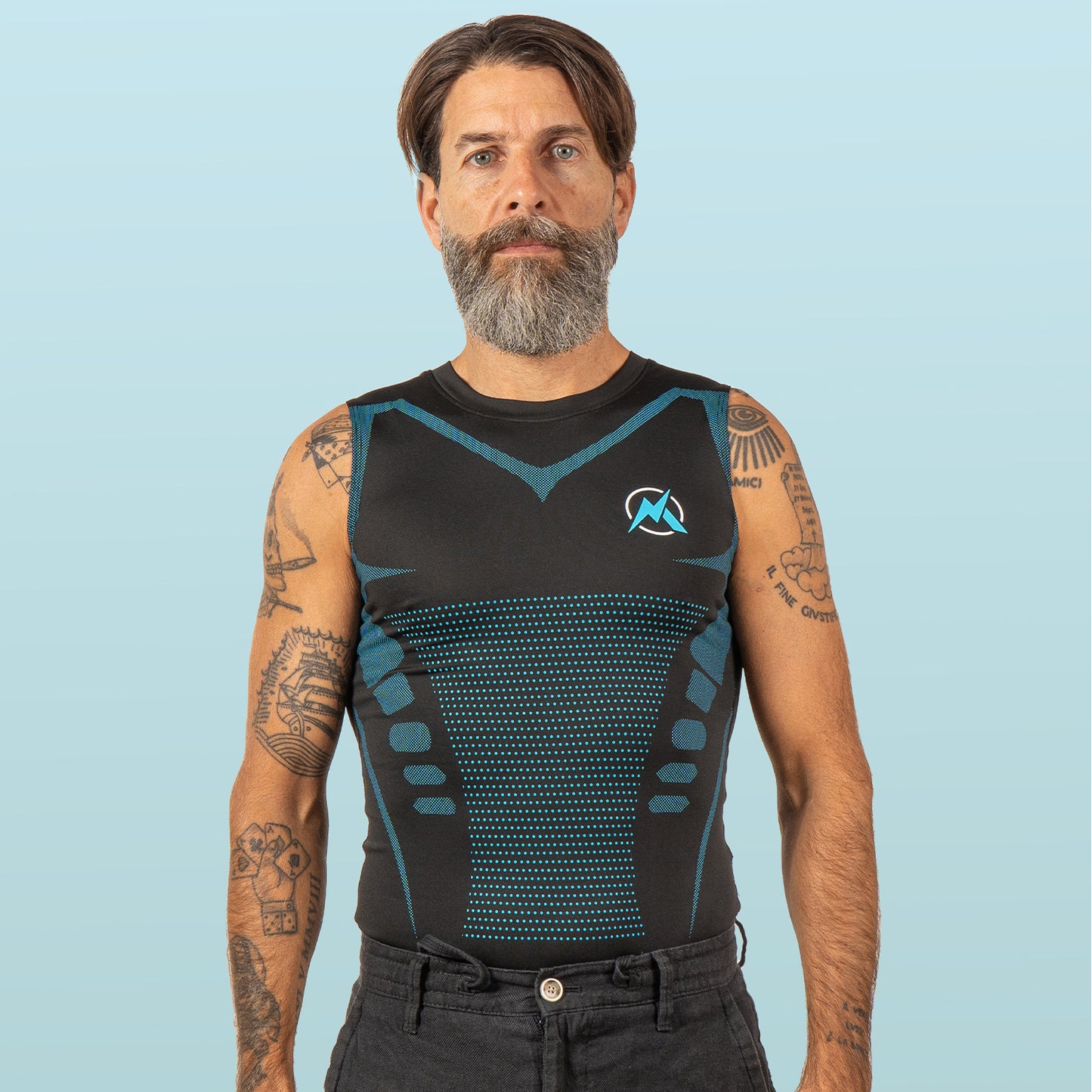
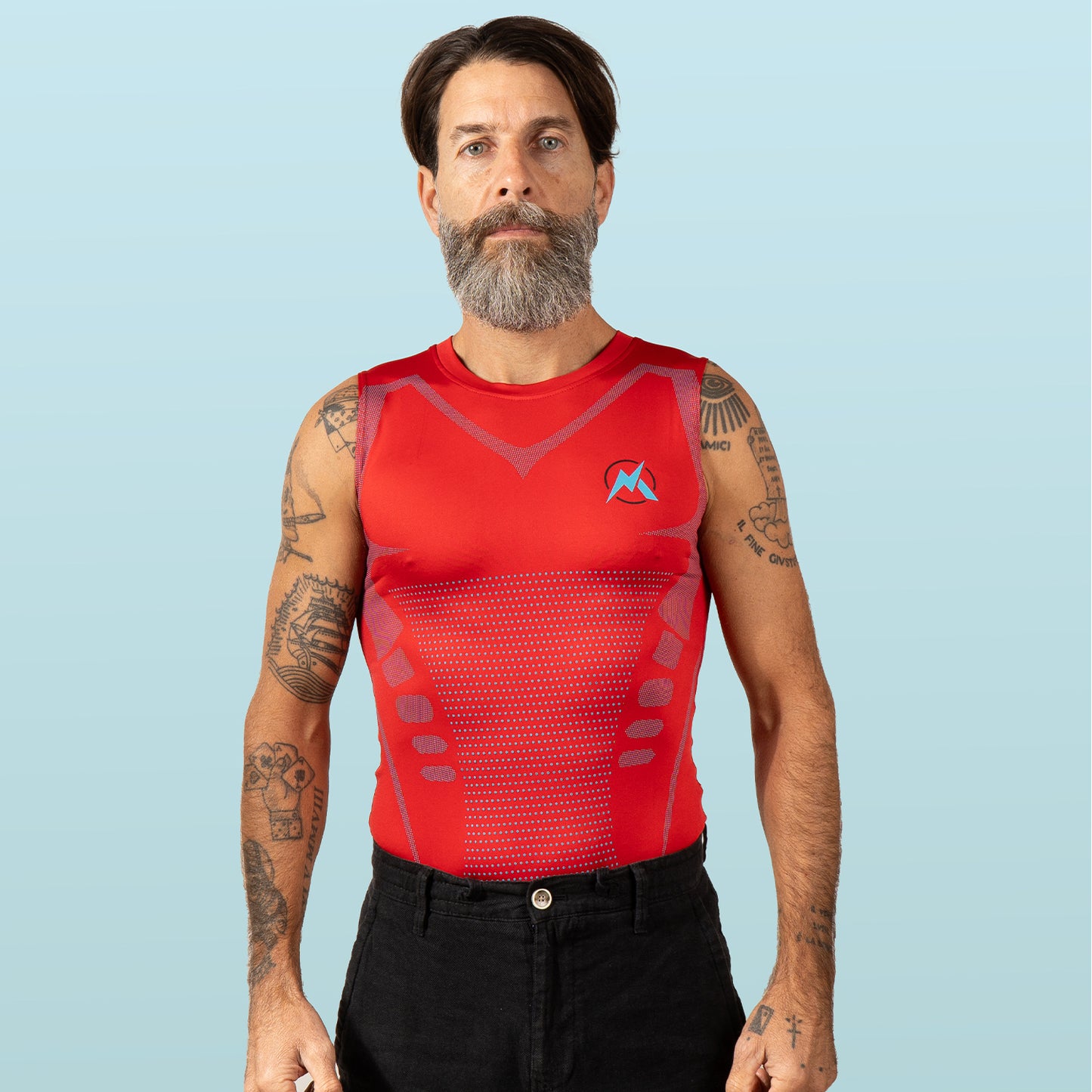
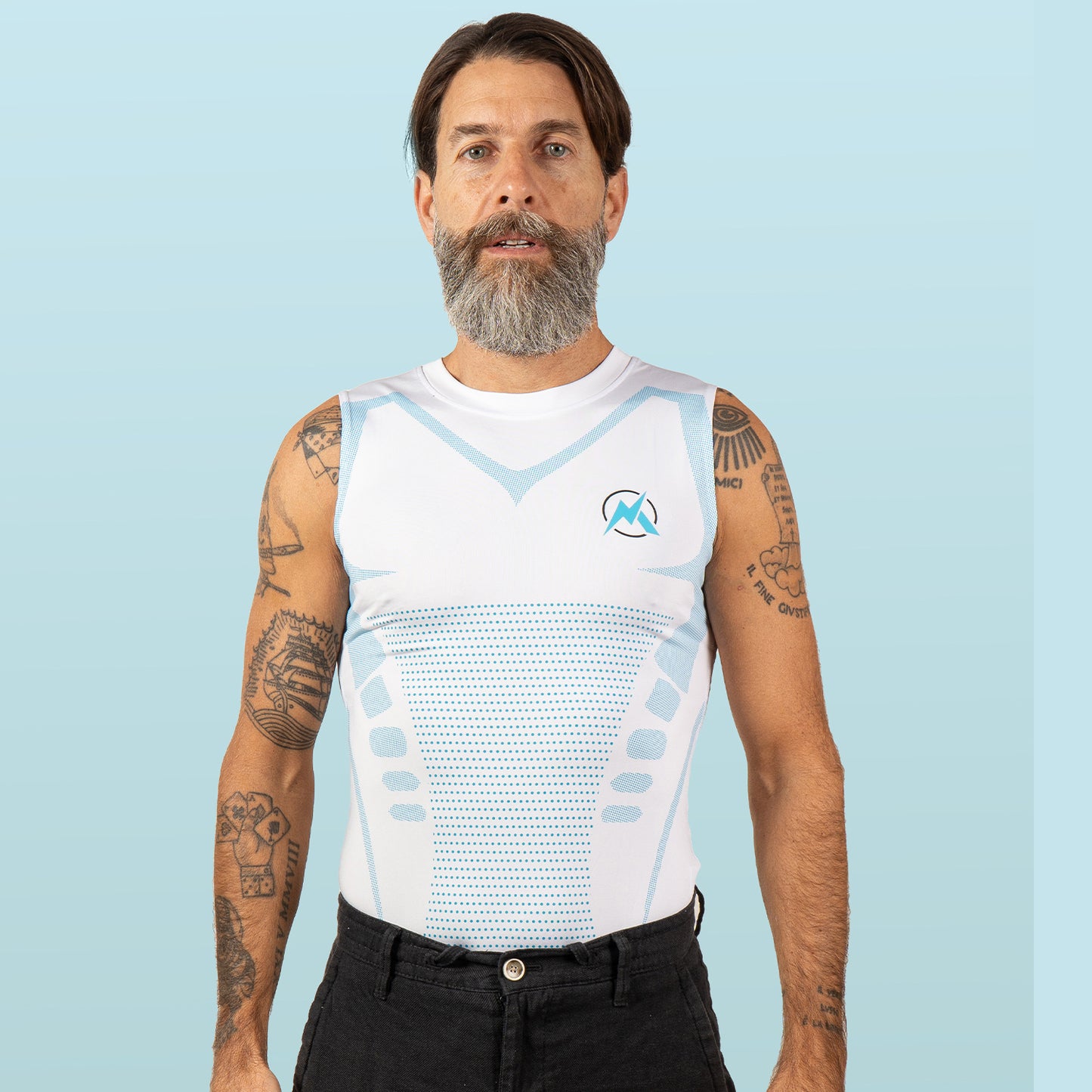
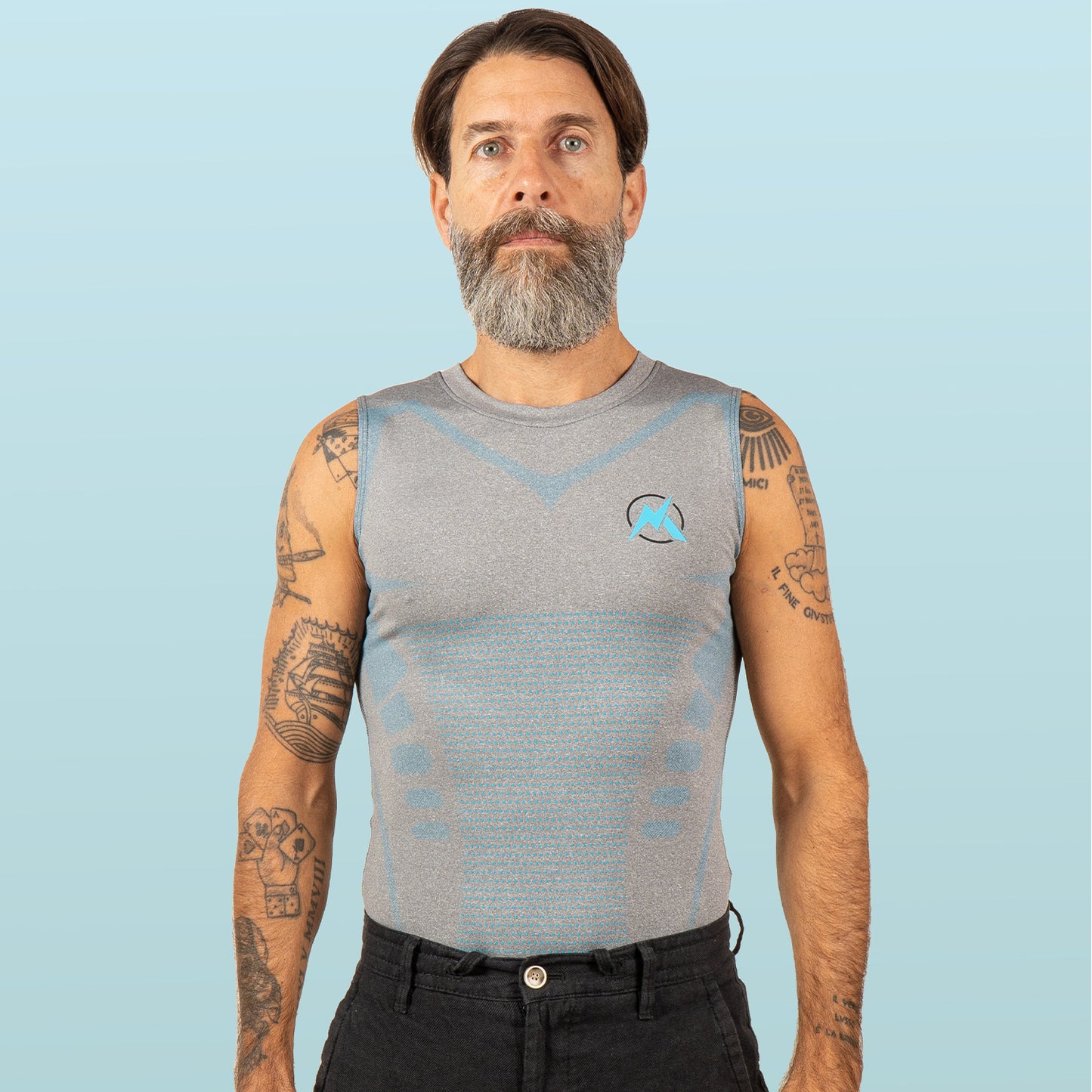
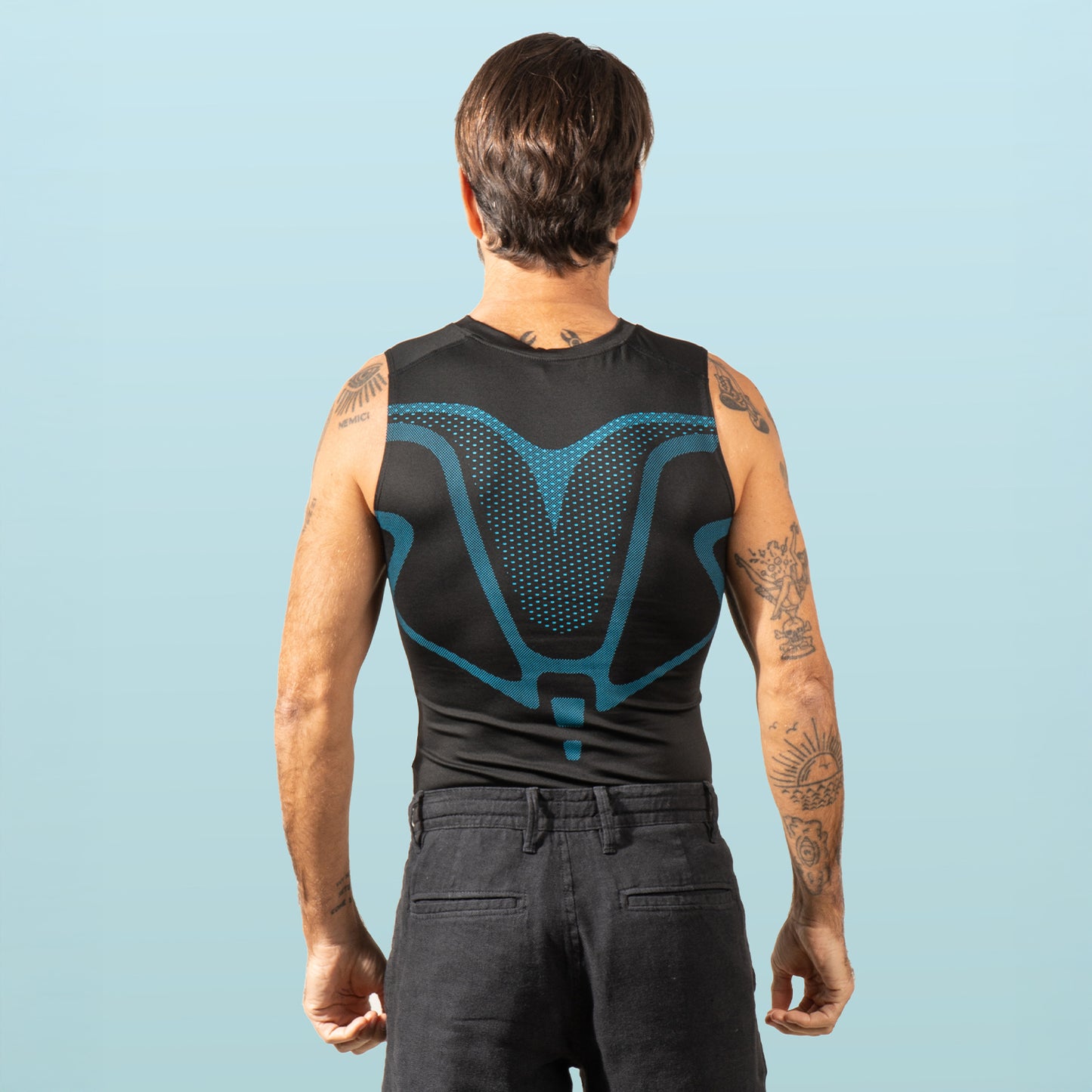
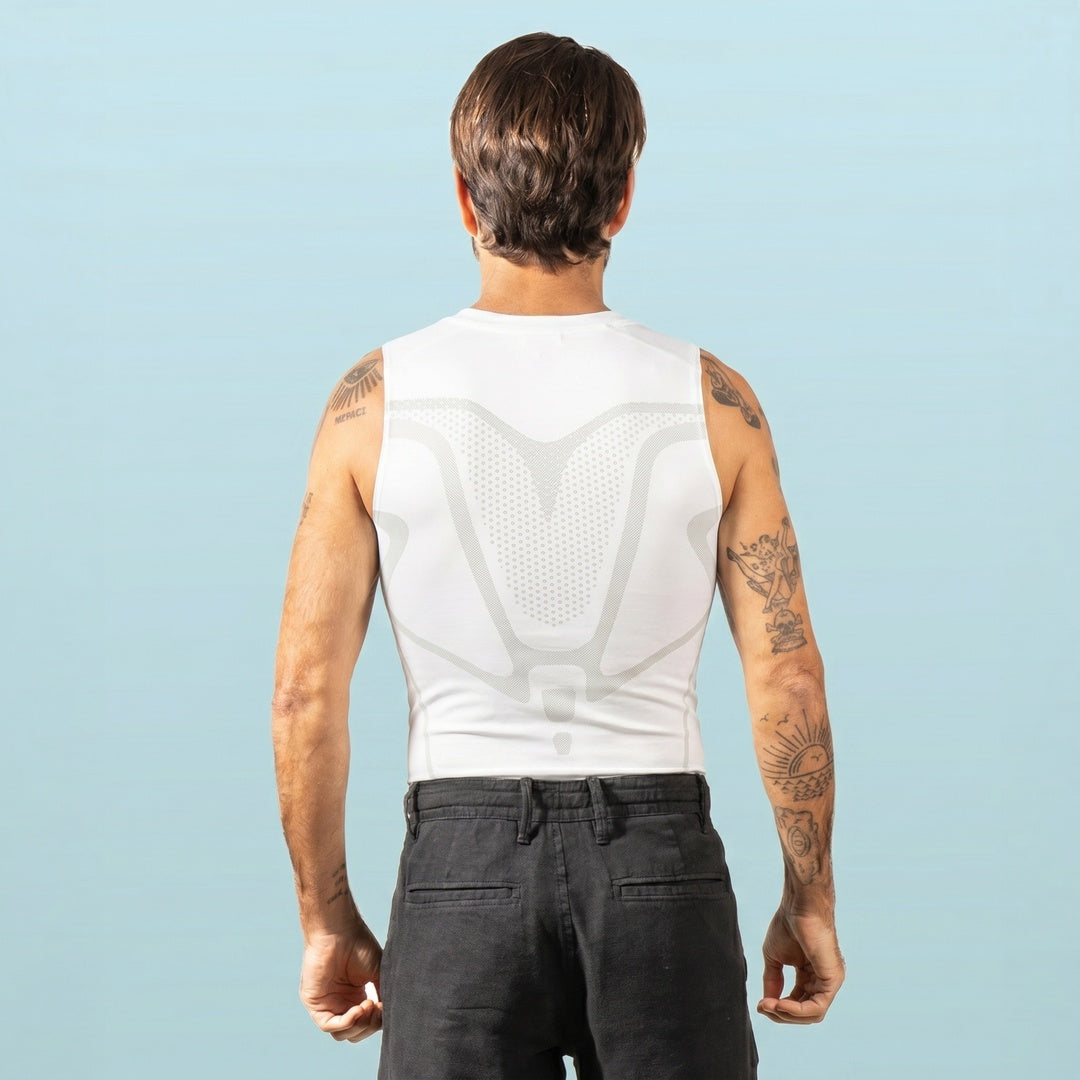
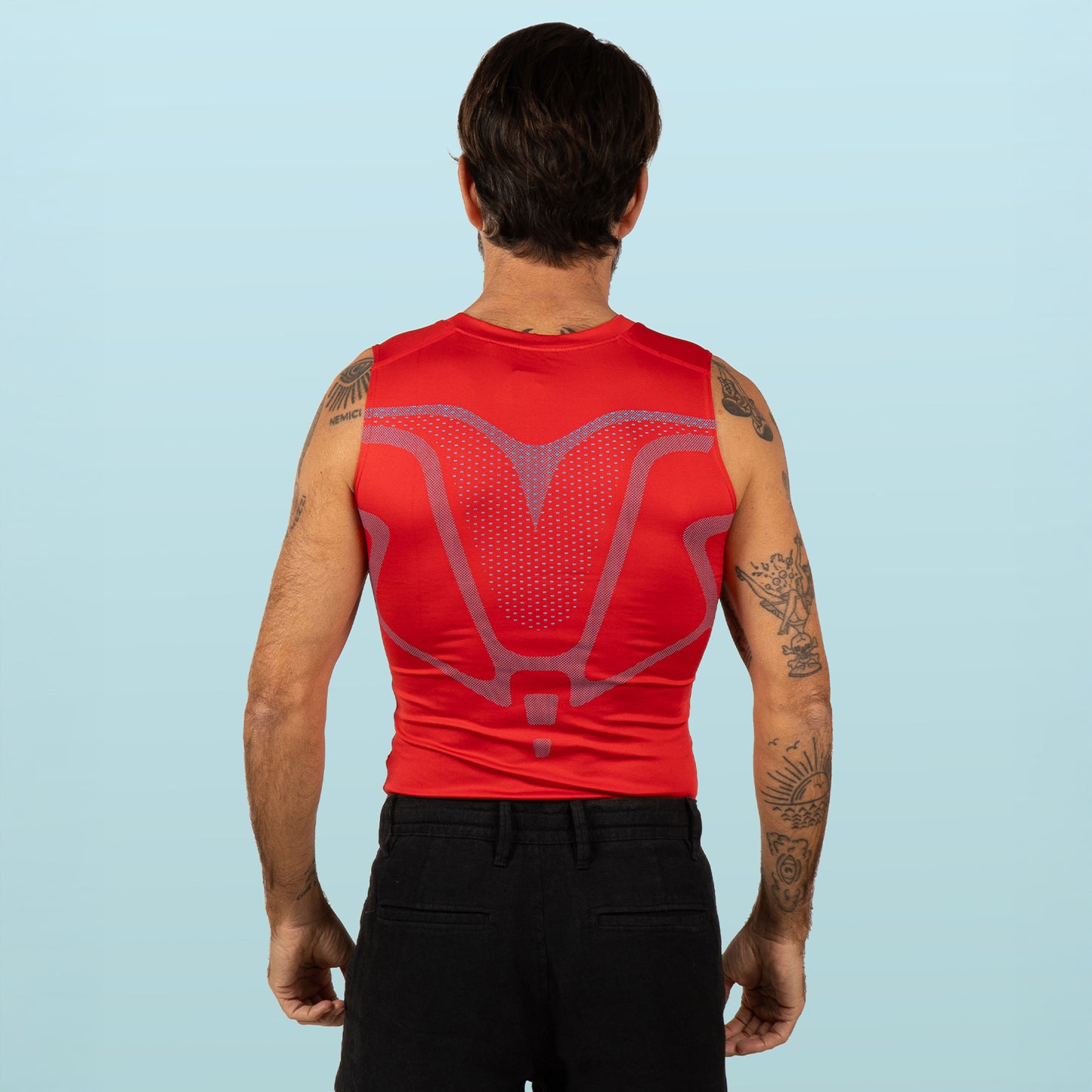
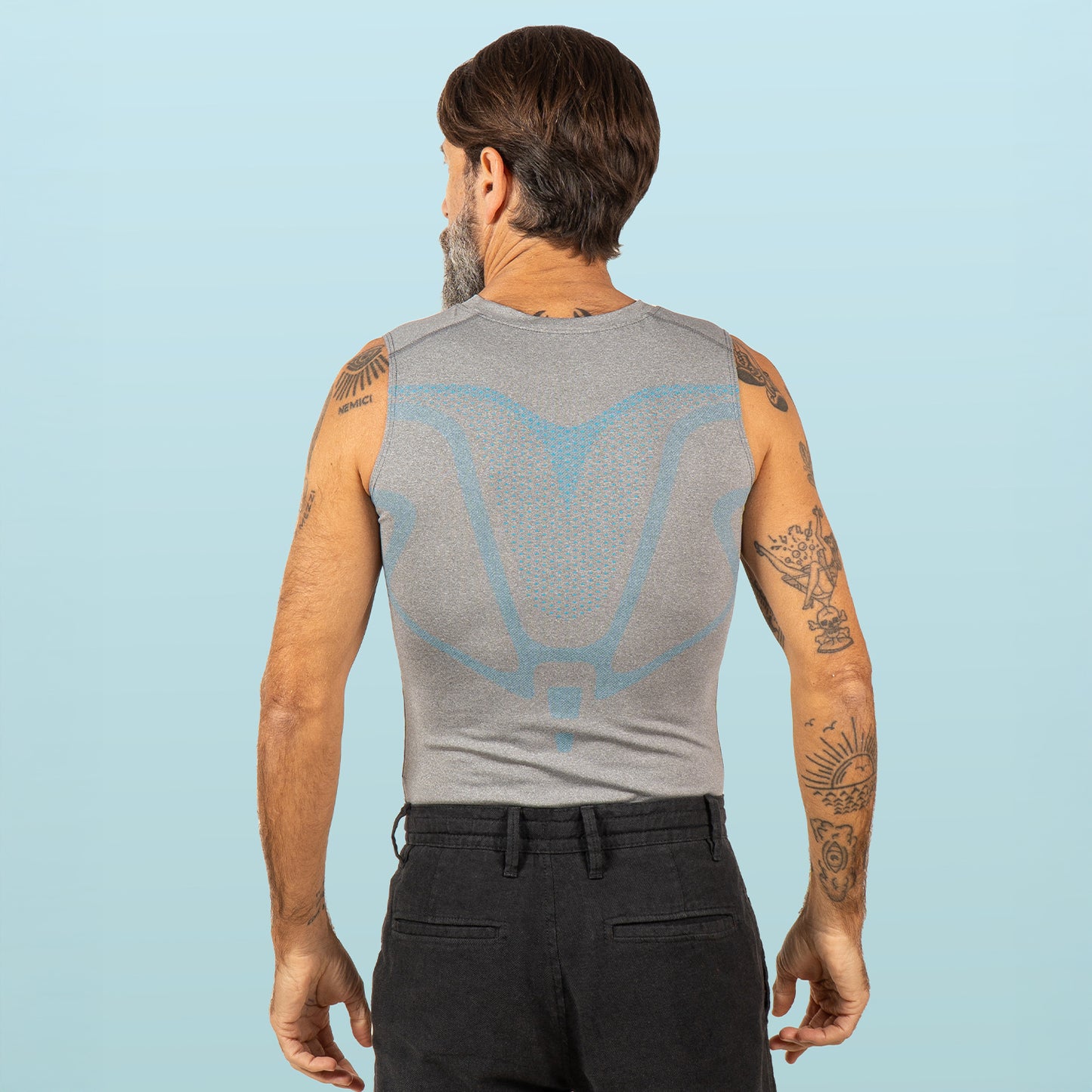
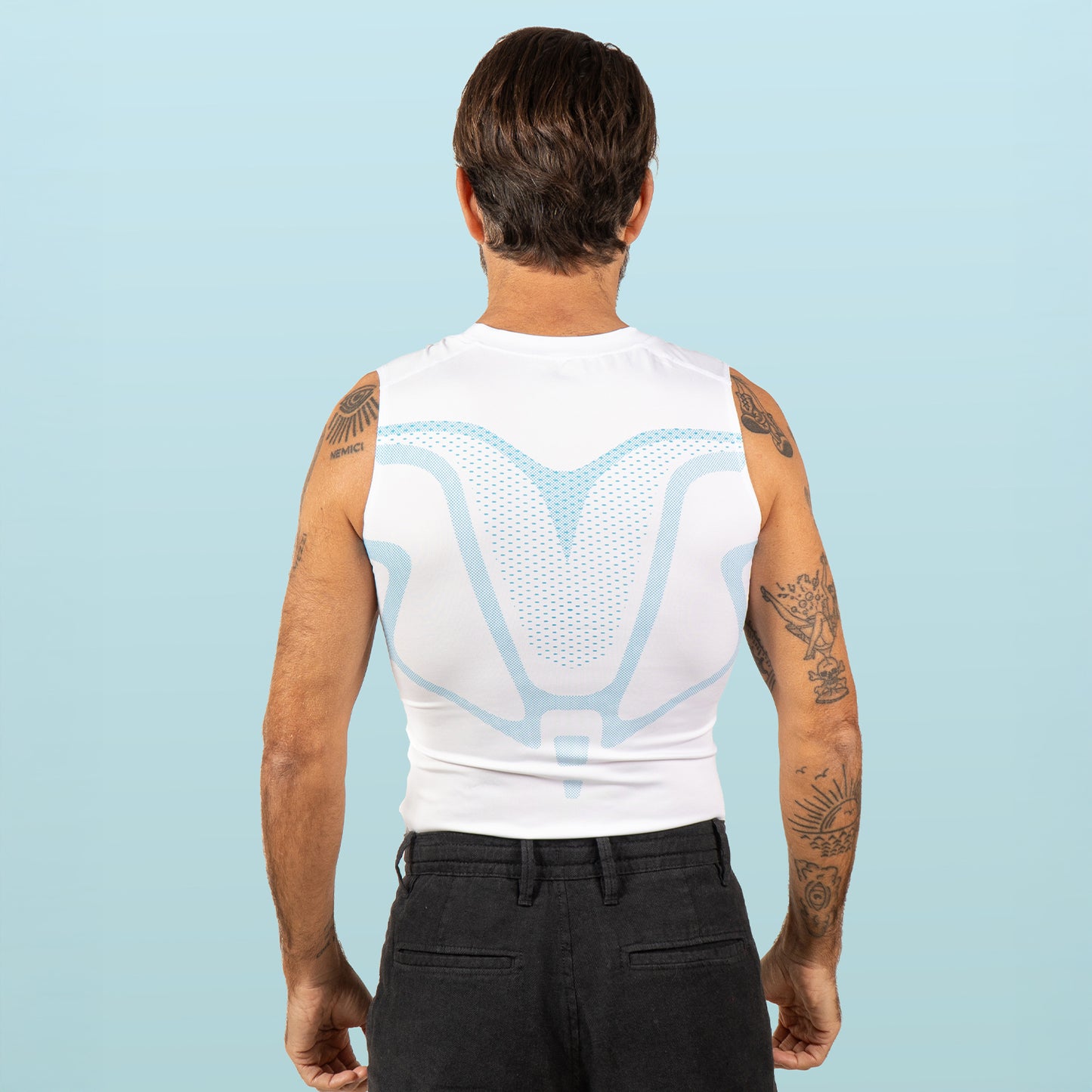
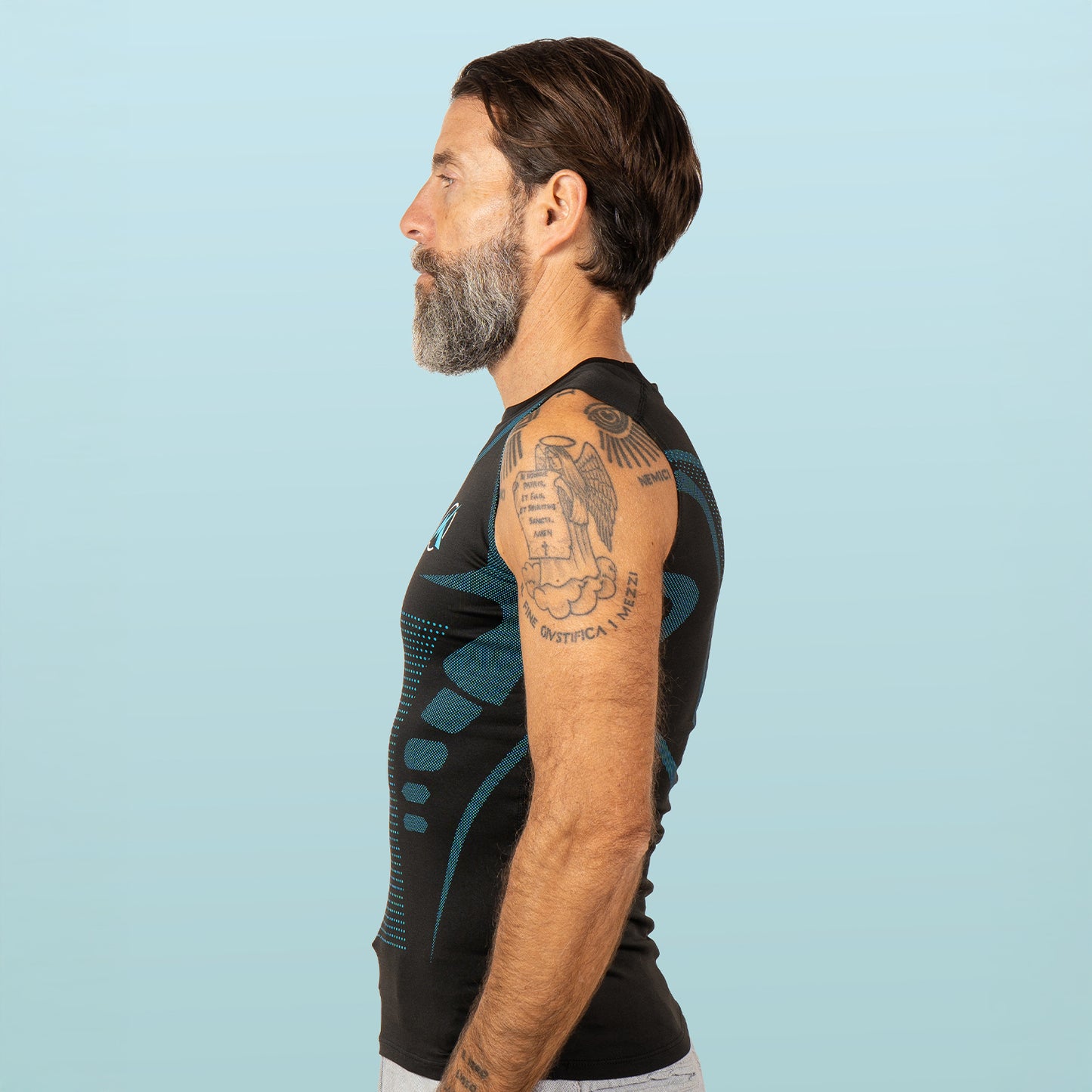
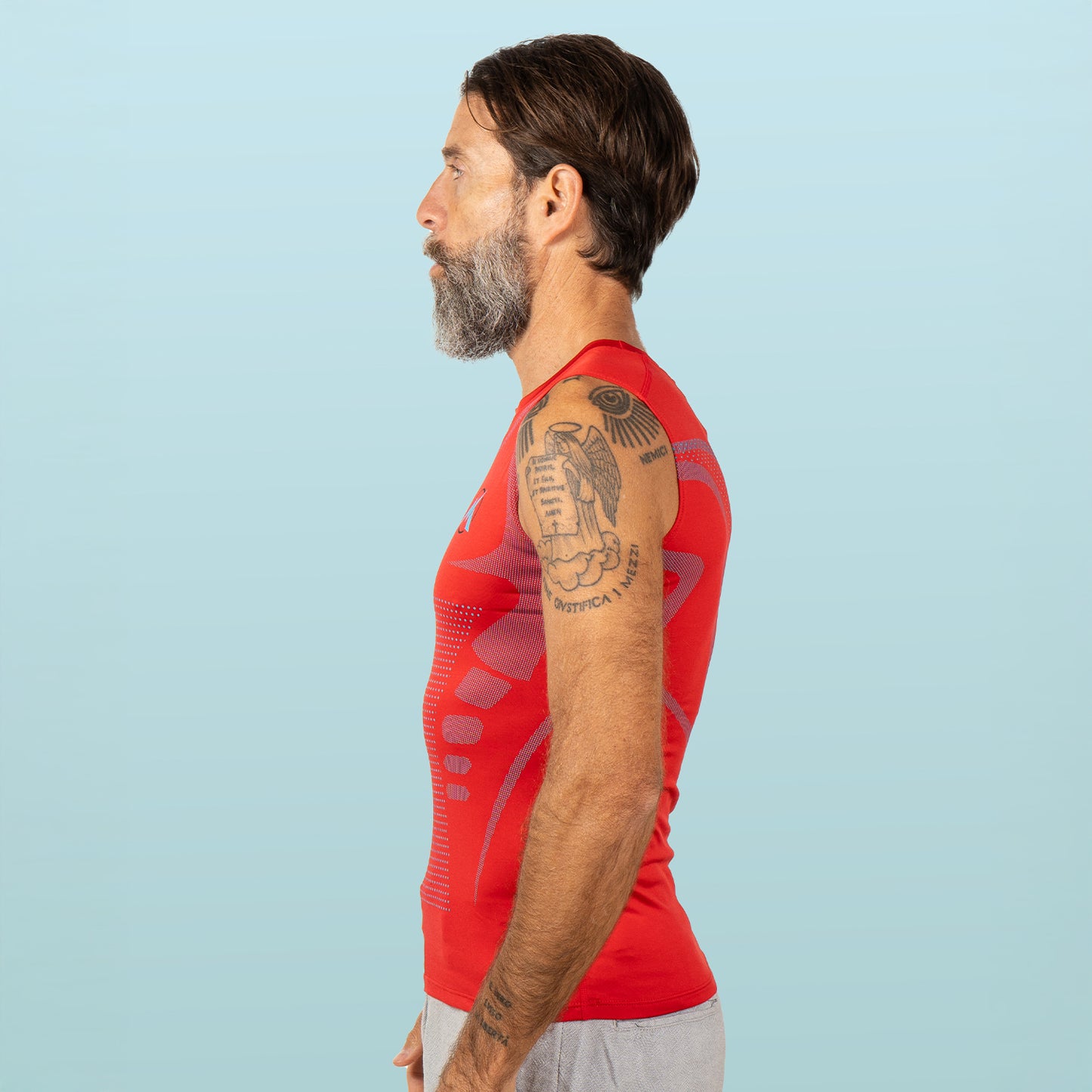
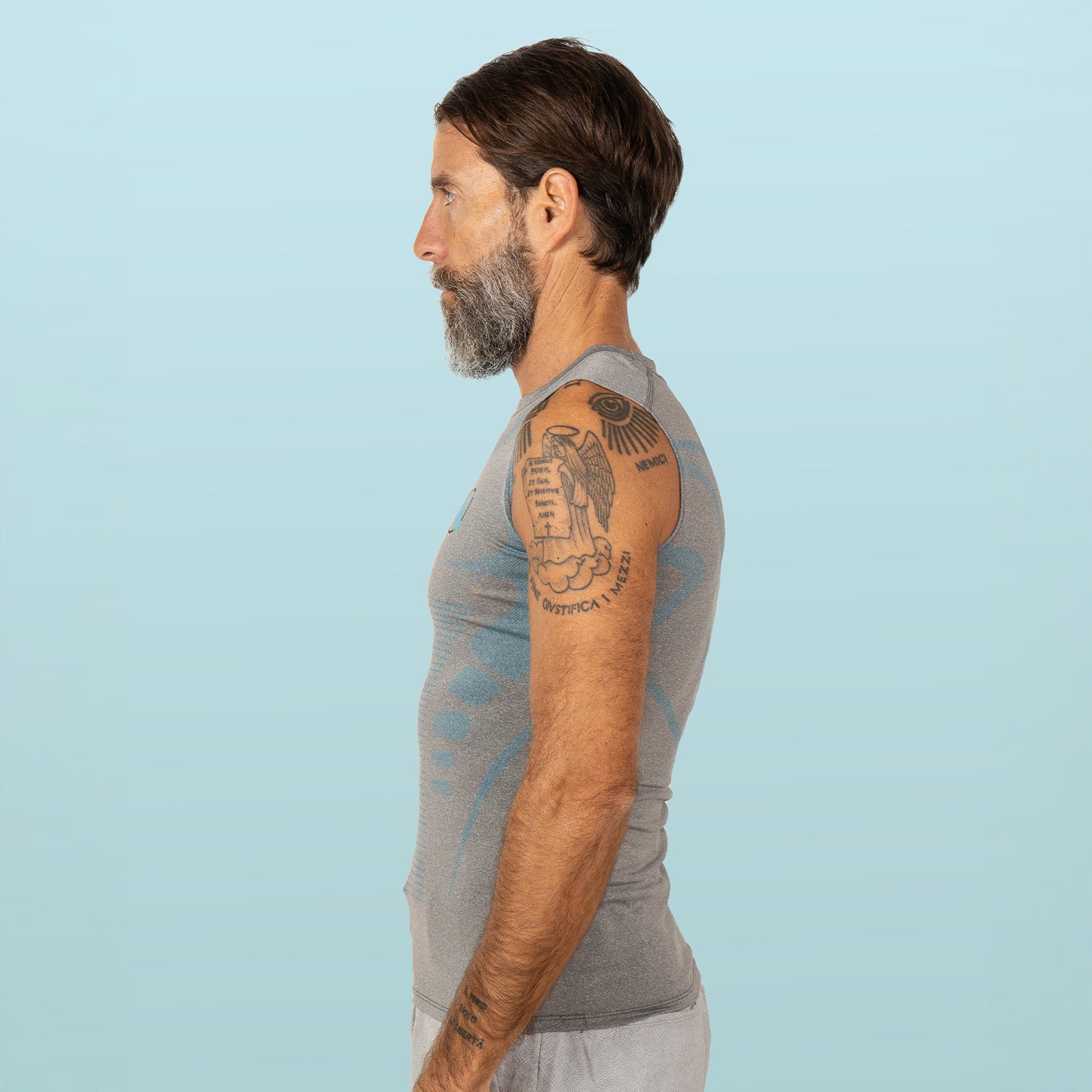
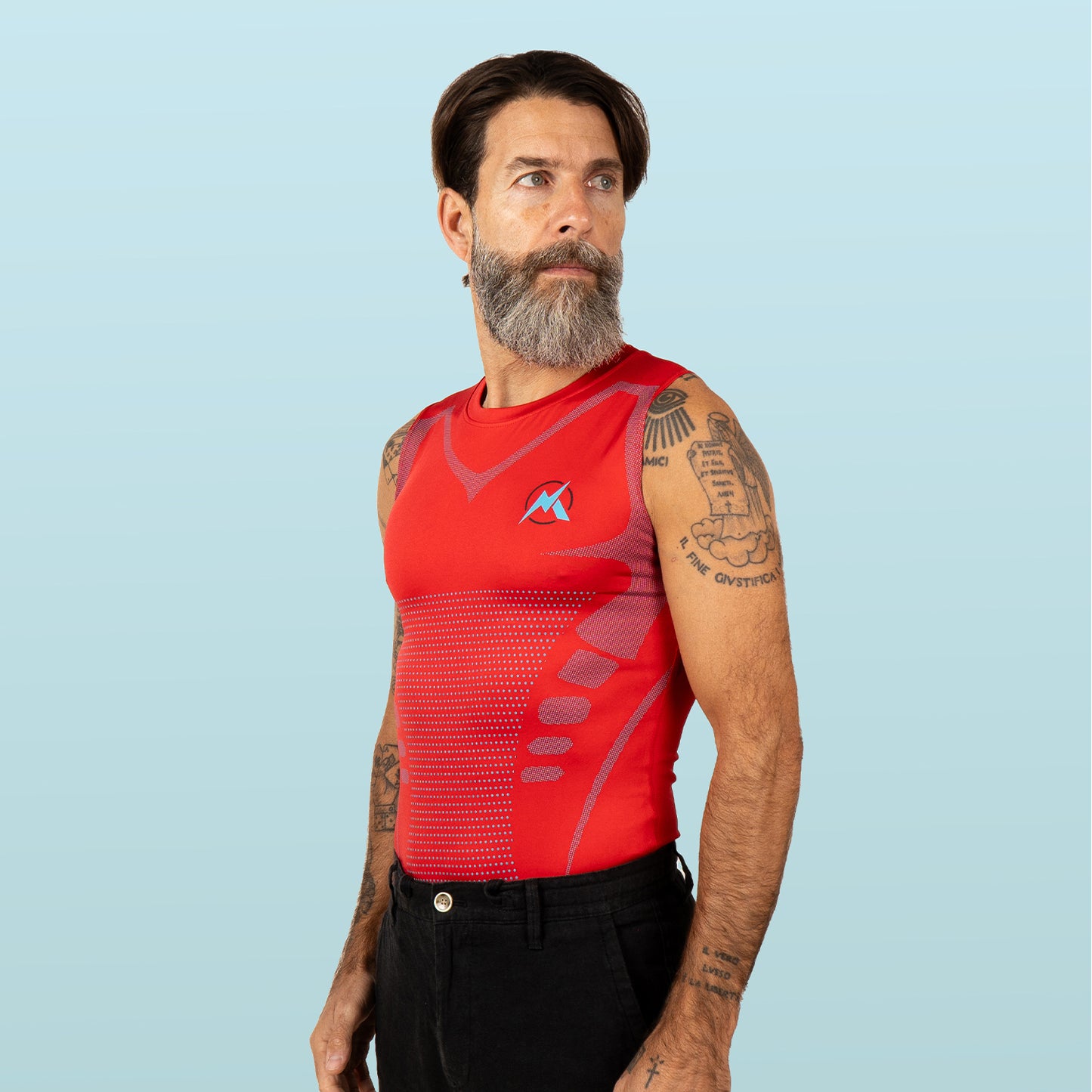
- Wear something that gives you a constant kinesthetic cue. A snug compression layer under your shirt gently reminds your shoulders to stay back without you having to think about it. Maynox's VitaBoost compression tank was built for this exact problem — it sits invisibly under any shirt and gives you a low-grade pull toward an upright shape all day. Many men report standing taller within the first week of consistent wear. It doesn't replace the strength work. It complements it during the hours when willpower runs out.

The four layers stack. Awareness wakes you up. Mobility unlocks the body. Strength rebuilds what time stole. Real-time support carries you through the hours where the first three can't reach.
A 12-minute daily protocol you can run forever
| Time slot | What you do | Minutes |
|---|---|---|
| Morning, in your bathroom | Wall test + 5-min mobility routine | 6 |
| Mid-morning, at desk | Chin tucks × 10 + 60-second pec stretch | 2 |
| Mid-afternoon, at desk | Stand up, walk, sit back down | 2 |
| Evening, before shower | 60-second wall slide + 60-second foam roller thoracic | 2 |
| 3× per week | Strength session (rows + face pulls + wall slides) | +20 |
12 minutes baseline. 20 extra minutes on strength days. That's the entire program.
What changes at 30, 60, and 90 days
Set the expectation early. Men quit because they expect a 7-day transformation. Realistically:
Day 30 — You stop catching yourself slouching as often. The wall test gets easier. Your upper back feels less tight by evening. You probably still look the same in photos.
Day 60 — Partners and coworkers start mentioning something — "did you lose weight?" or "you look different." You haven't. You're just standing 1.5 inches taller. Shirts fit differently.
Day 90 — Your default posture has measurably changed. The slouch is no longer the path of least resistance. A piece from Harvard Health notes that even older adults can see meaningful improvement in thoracic kyphosis after 8 to 12 weeks of consistent posture-focused exercise (source). If they can do it, so can you.
After 90 days, the protocol shifts from "fixing" to "maintaining." You're not done. You just don't have to think about it as hard.
5 mistakes that keep men slouching
- Doing only stretches. Stretching without strengthening is like loosening a screw and walking away. Within weeks, your body returns to the same slouched shape.
- Buying a posture brace and calling it done. Braces hold you up for a few hours, then your own muscles get weaker from not having to work. Use sparingly.
- Training only on weekends. Two strength sessions on Saturday and Sunday won't beat sitting for 50 hours during the week.
- Ignoring the hip flexors. Tight hip flexors tilt your pelvis forward, which yanks your lower back into a curve and pushes your shoulders forward to compensate. You can't fix the top without fixing the bottom.
- Quitting at week 3. The first three weeks feel pointless. Weeks 4–8 are where the change actually happens. Most men quit one week before it would have worked.
When to see a physical therapist
Most men can run this plan on their own. See a PT if:
- You have sharp, shooting pain that radiates down an arm or leg.
- You've noticed a measurable height loss (more than half an inch in a year).
- Your upper-back hump (kyphosis) doesn't reduce when you stand against a wall.
- You feel numbness or tingling in your hands.
A PT can measure the angles of your neck and spine and design a program around your specific imbalances. For everyone else, the 4-layer plan above will get you 90% of the way there.
Frequently asked questions
Can you fix bad posture after 40?
Yes. Muscle imbalances that cause most posture problems are reversible at any age. The timeline is longer than it would be at 25 — usually 8 to 12 weeks of consistent work — but the mechanism is identical. Structural changes like advanced disc degeneration may not fully reverse, but the muscular support around them can dramatically improve.
How long does it take to correct bad posture?
Most men notice subtle improvements within 2 to 4 weeks (reduced tension, increased awareness). Visible postural change happens between 8 and 12 weeks. Permanent change — where the new posture is your default — takes about 90 days of consistent daily mobility plus 3 strength sessions per week.
What causes bad posture in men?
A combination of lifestyle and aging. Long hours at desks, prolonged phone use, weak back and core muscles, tight chest and hip flexor muscles, and age-related muscle loss (which begins around age 45) are the main drivers. Underlying conditions like osteoporosis can also play a role, especially in older men.
What is the best exercise for posture?
For men over 40, bent-over rows are the single most effective movement, according to physical therapists. They directly strengthen the upper-back muscles that counteract slouching. Combined with face pulls and wall slides, they cover roughly 80% of the postural muscles men typically neglect.
Does walking improve posture?
Yes, but only if you walk with intent. Mindless walking with your head down at your phone makes posture worse. Walking with your gaze on the horizon, shoulders relaxed, and core gently engaged is genuinely corrective — and gets you breaking up the sitting hours that damaged your posture in the first place.
Sources
- CDC NCHS Data Brief 415 — Back, Lower Limb, and Upper Limb Pain Among U.S. Adults, 2019
- NIH News in Health — Getting It Straight: Improving Your Posture
- Harvard Health — Is It Too Late to Save Your Posture?
- Harvard Health — In a Slump? Fix Your Posture
The bottom line
You didn't slouch yourself into this shape in a week. You won't fix it in a week. But three months of stacking these four layers — awareness, mobility, strength, and real-time support — will give you a posture you haven't had since your thirties.
If you want a head start on Layer 4, Maynox's VitaBoost compression tank is the simplest tool to add to the system: pull it on under your shirt, forget about it, get a constant gentle reminder to stand tall for the next 14 hours. Currently BUY 1 GET 1 FREE — $59.99 → $15.
Shop VitaBoost — Buy 1 Get 1 Free
This article is for general educational purposes and is not a substitute for medical advice. If you have persistent pain, see a licensed clinician.