Monday morning. You button your shirt. The middle button pulls. You feel the fabric press against your stomach when you sit down at your desk. You spend the rest of the day adjusting your jacket, sucking it in for photos, and wondering when this happened.
If you're between 45 and 55, this is the universal moment. And here's what nobody tells you: most of the time, the problem isn't 8 extra pounds. It's how to look thinner in a dress shirt — a problem of cut, fabric, posture, and what you wear underneath. Below are 7 honest fixes you can apply tonight. No diet. No gym. No gimmicks.
Why Your Dress Shirt Looks Tighter Than It Used To
It's not always about extra weight
A man's frame at 50 is not the same frame he had at 35. Even if the scale shows the same number, weight redistributes — more around the midsection, less in the chest and shoulders. The shirt that fit five years ago wasn't designed for the body you have today.
How a man's shape shifts after 45
Posture also changes. Hours at a desk pull shoulders forward and round the upper back. That single shift makes any dress shirt look two sizes too small in the front and one size too big in the back. You're not bigger. You're collapsed forward.
The good news: most of this is fixable in minutes, not months.
Fix #1: Get the Cut Right Before You Fix Anything Else
This is where most men over 45 lose the battle before they leave the closet. They keep buying "slim fit" because that's what's marketed everywhere — and slim fit is rarely cut for a real adult body.
Slim, classic, tailored — what each one really does
- Slim fit is built for narrow torsos. It tapers aggressively at the waist. If you have any midsection at all, it will pull at the buttons and pool at the hips.
- Classic fit is the opposite mistake. Lots of room everywhere. You'll look bigger because the extra fabric balloons under the jacket.
- Tailored fit (sometimes called "modern fit" or "regular slim") sits between the two. It's contoured but not aggressive. For most men 45+, this is the right starting point.
The shoulder seam test (the only fit test that matters)
Ignore the chest. Ignore the waist. Look at the shoulder seam. It should land exactly on the corner of your shoulder bone — not on your bicep, not on your collarbone. Get the shoulder right and a tailor can fix the rest for around fifteen dollars.
Fix #2: Pick Fabrics That Don't Cling
A perfectly cut shirt in the wrong fabric will still betray you.
Why polyester blends betray you
Cheap polyester blends cling to skin when you sweat. They show every contour. They also reflect light in a way that highlights every fold of fabric across the stomach. By 11 a.m., you're wearing a topographical map of your torso.
Cotton, twill, oxford — what to actually look for
Look for medium-weight cotton with structure: twill, royal oxford, or a heavier poplin. Heavier fabric drapes instead of clinging. It hangs straight down from the chest instead of mapping the belly. Avoid anything labeled "ultra-soft" or "stretch" if your priority is silhouette — those are comfort fabrics, not slimming fabrics.
Fix #3: A Compression Tank Underneath Changes the Silhouette

This is the lever almost no one talks about, and it's the single biggest visual upgrade most men over 45 can make in thirty seconds.
How a compression undershirt smooths the midsection
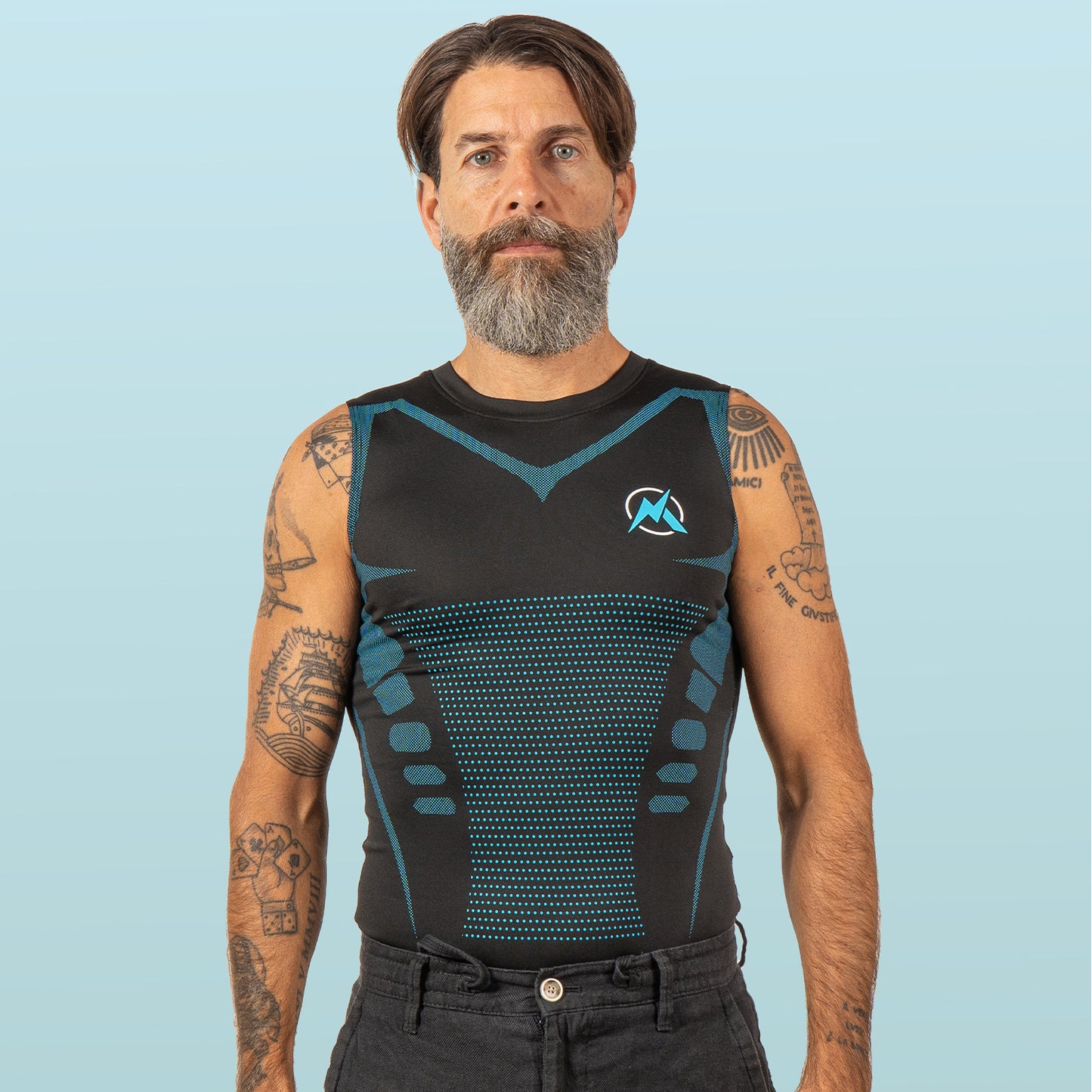
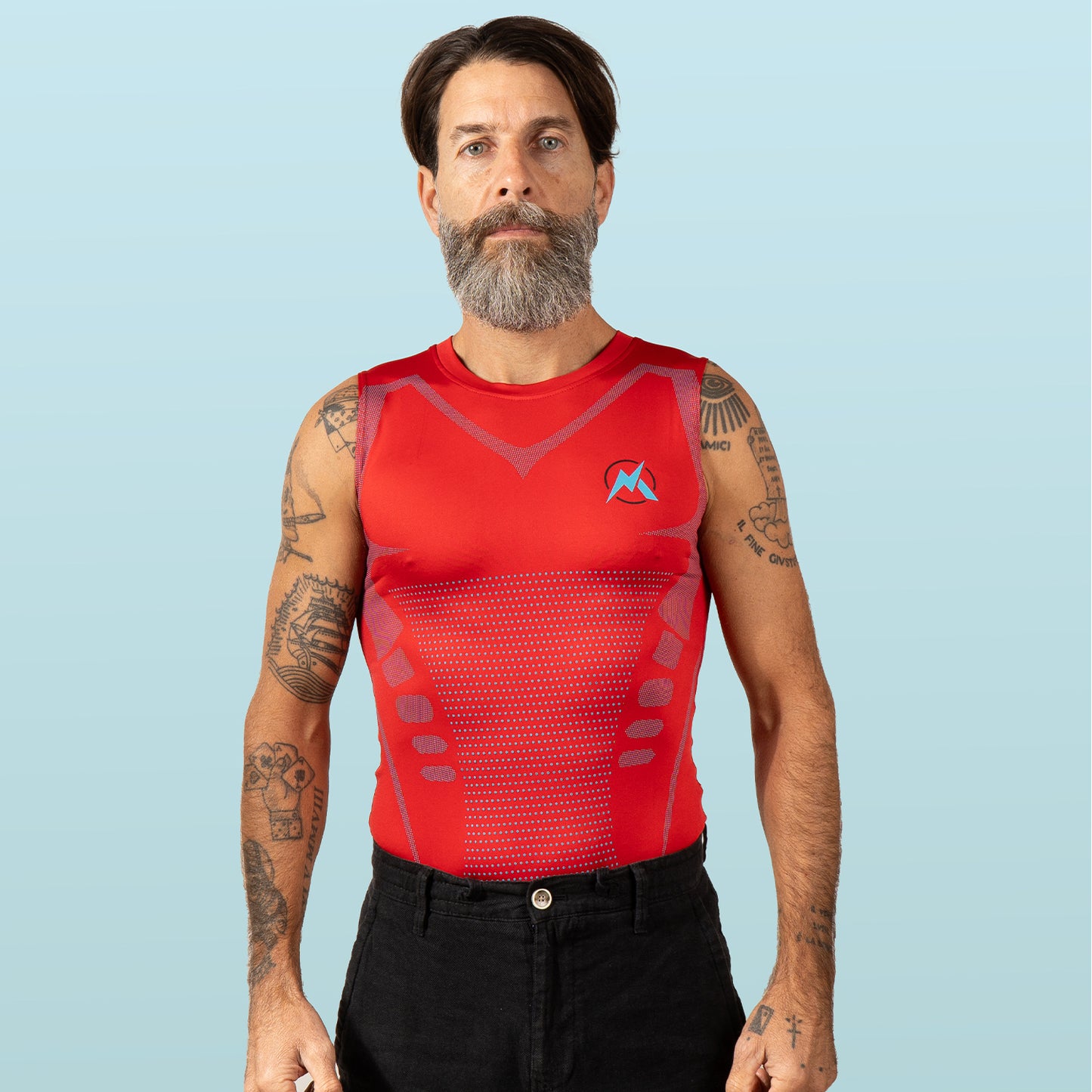
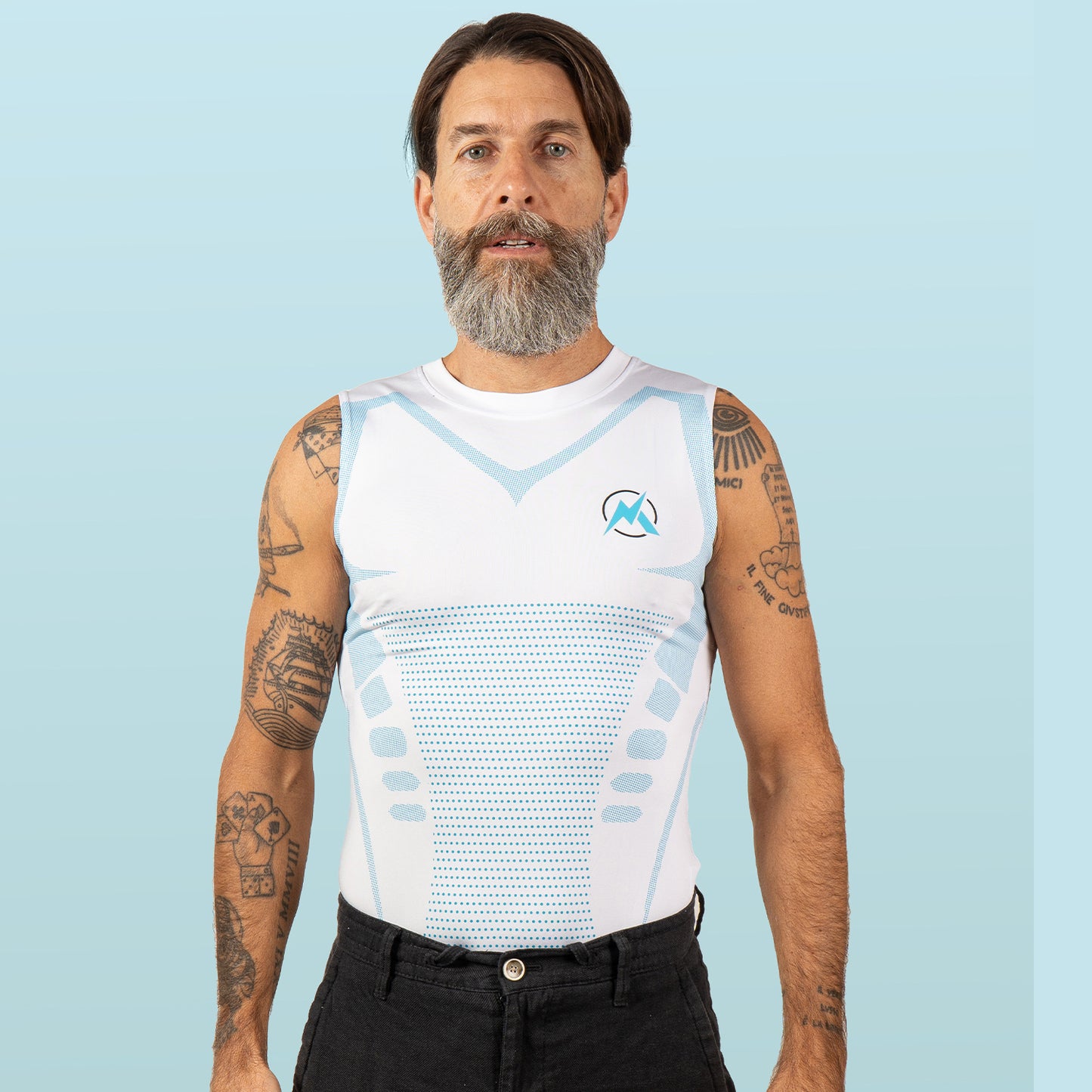
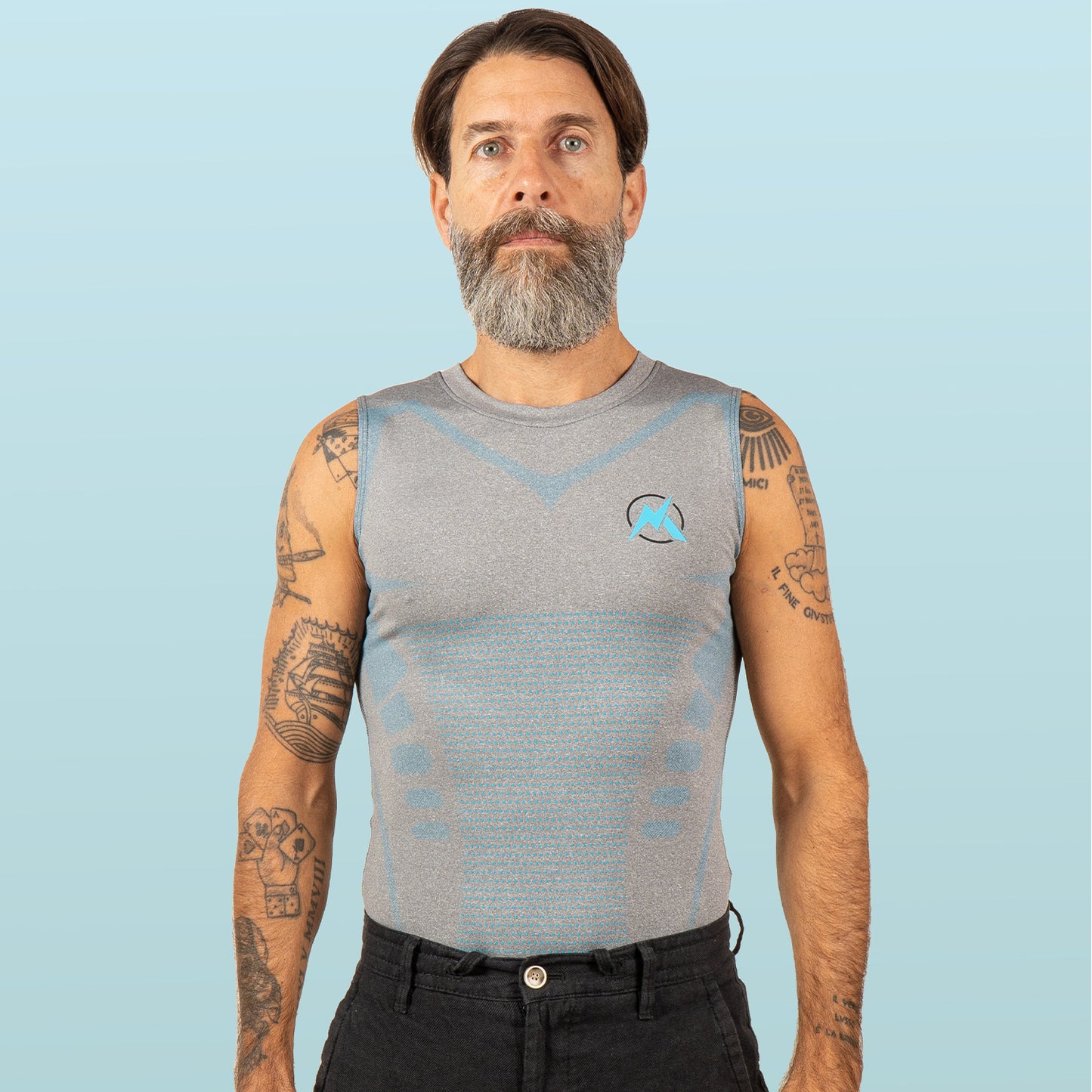
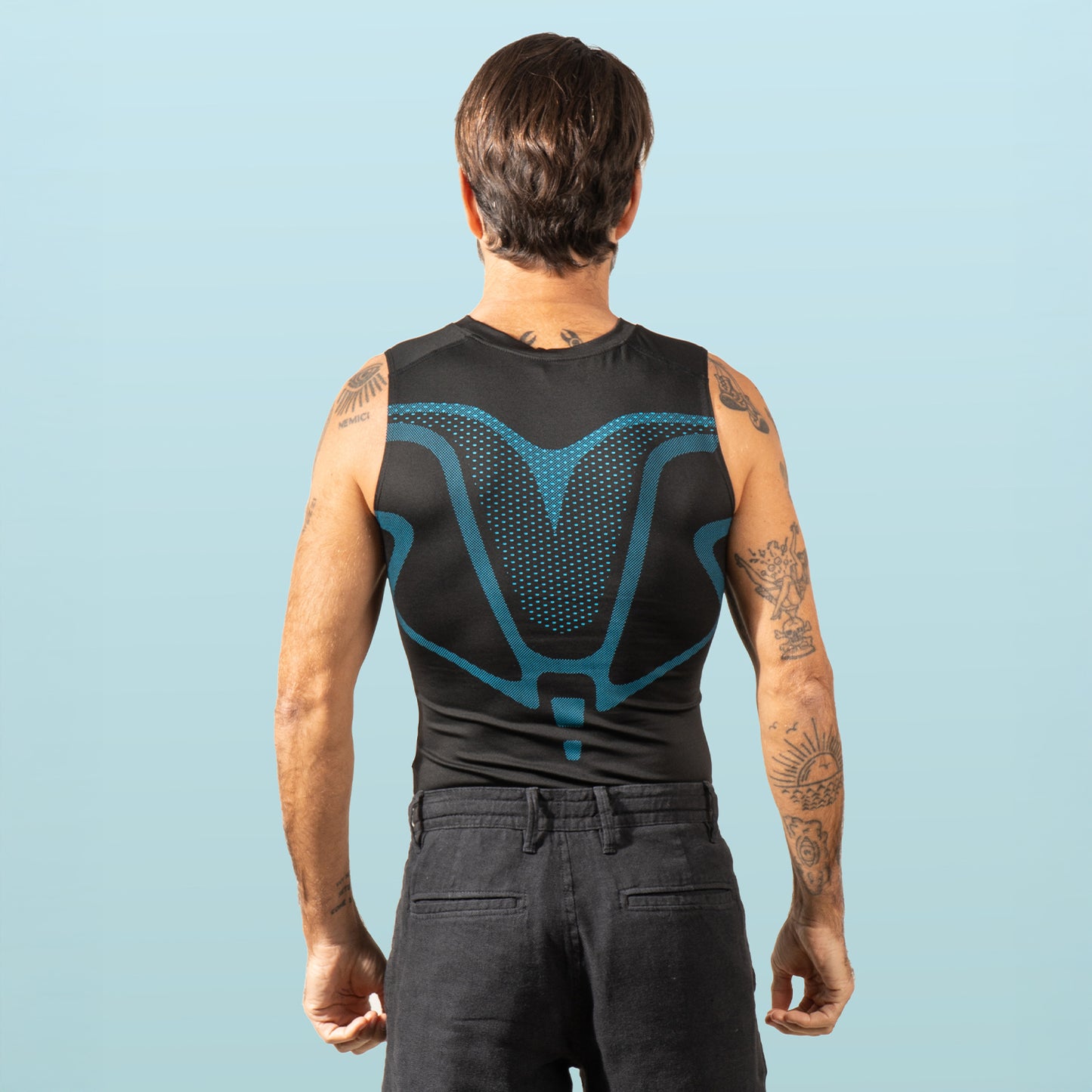
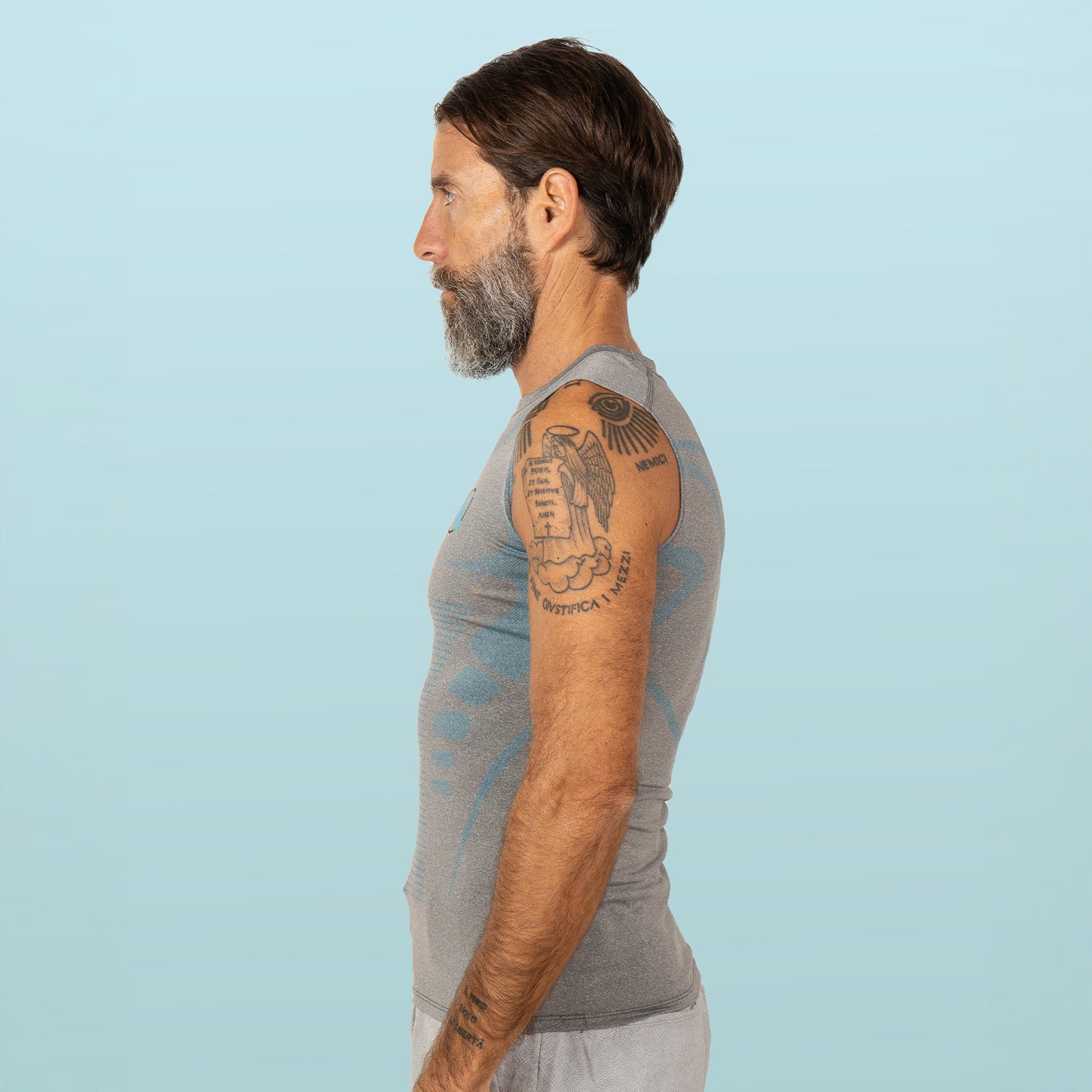
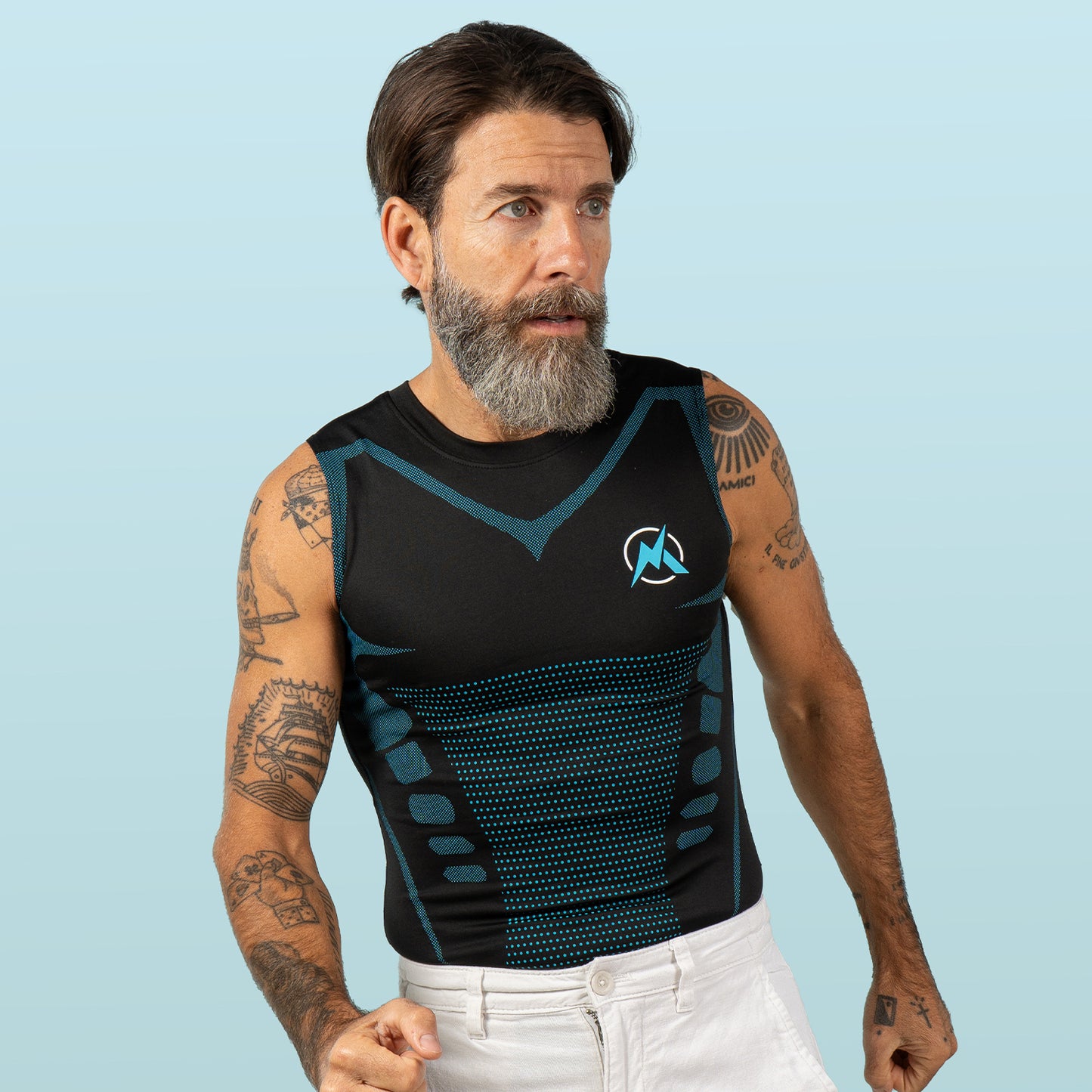
A men's compression tank applies even, gentle pressure across the torso. The result: a smoother line under any shirt, less fabric pull at the middle button, and a cleaner front profile in photos. Compression garments have been worn in athletics and daily life for decades. They're not magic. They're geometry.
What to look for in a men's compression tank
Three things matter:
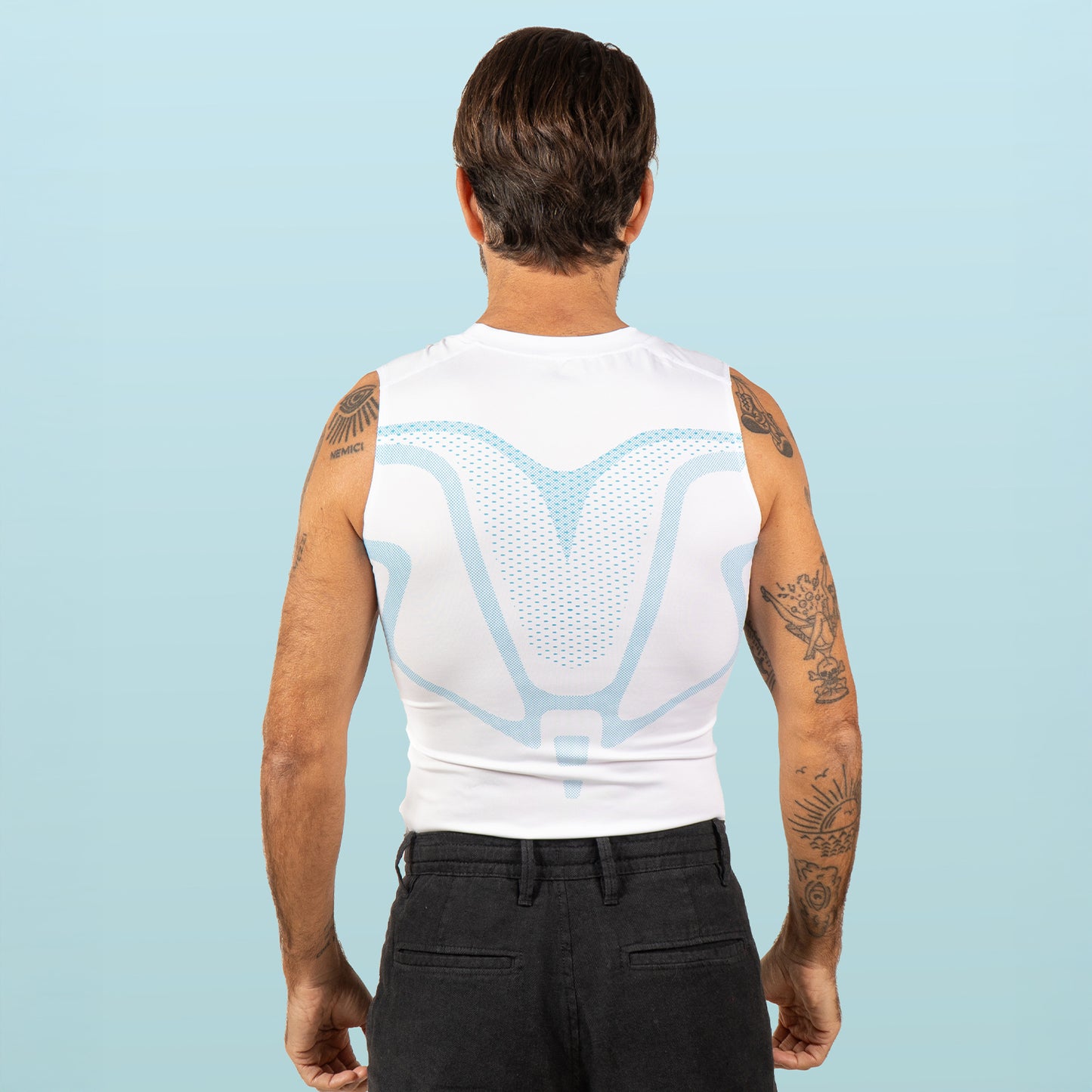
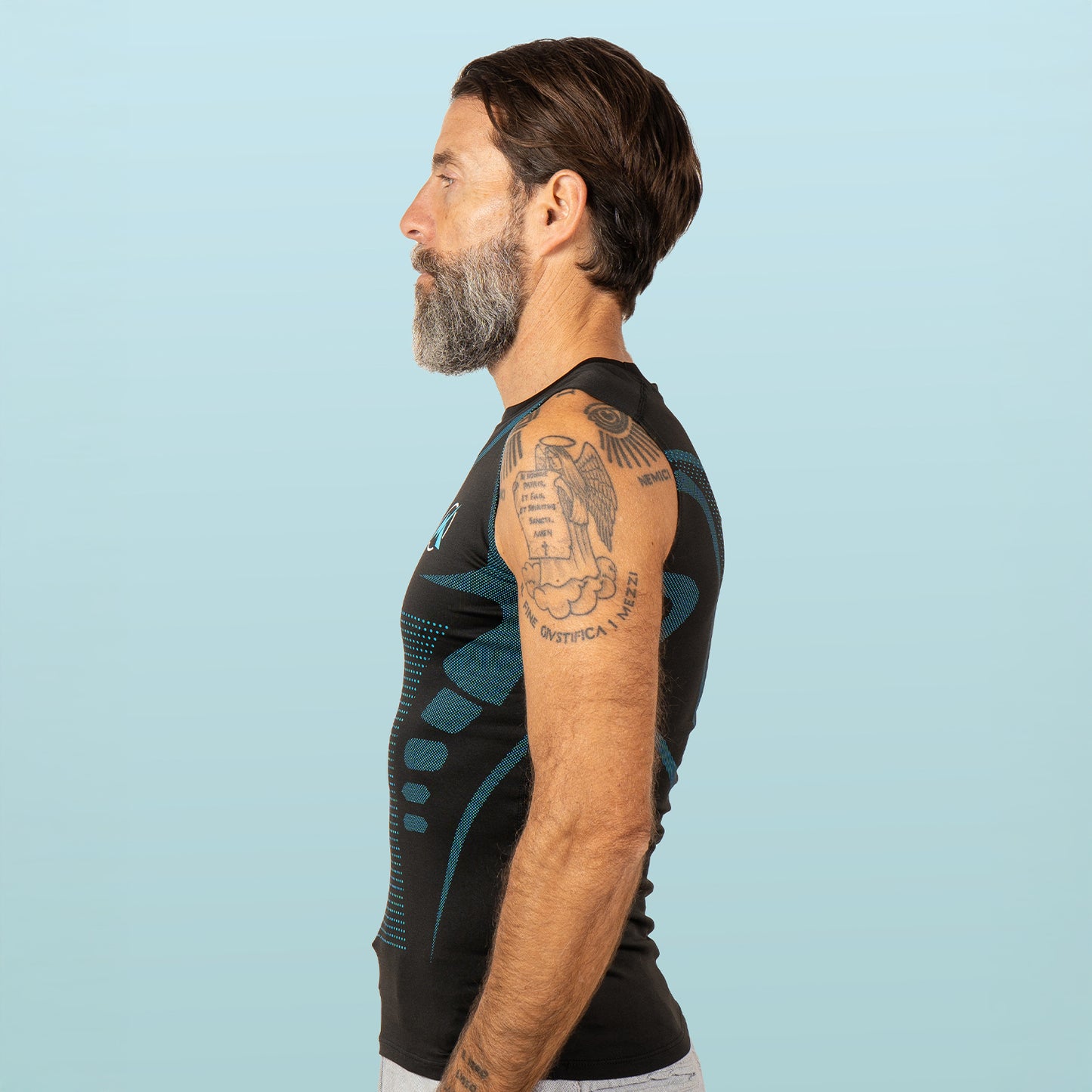
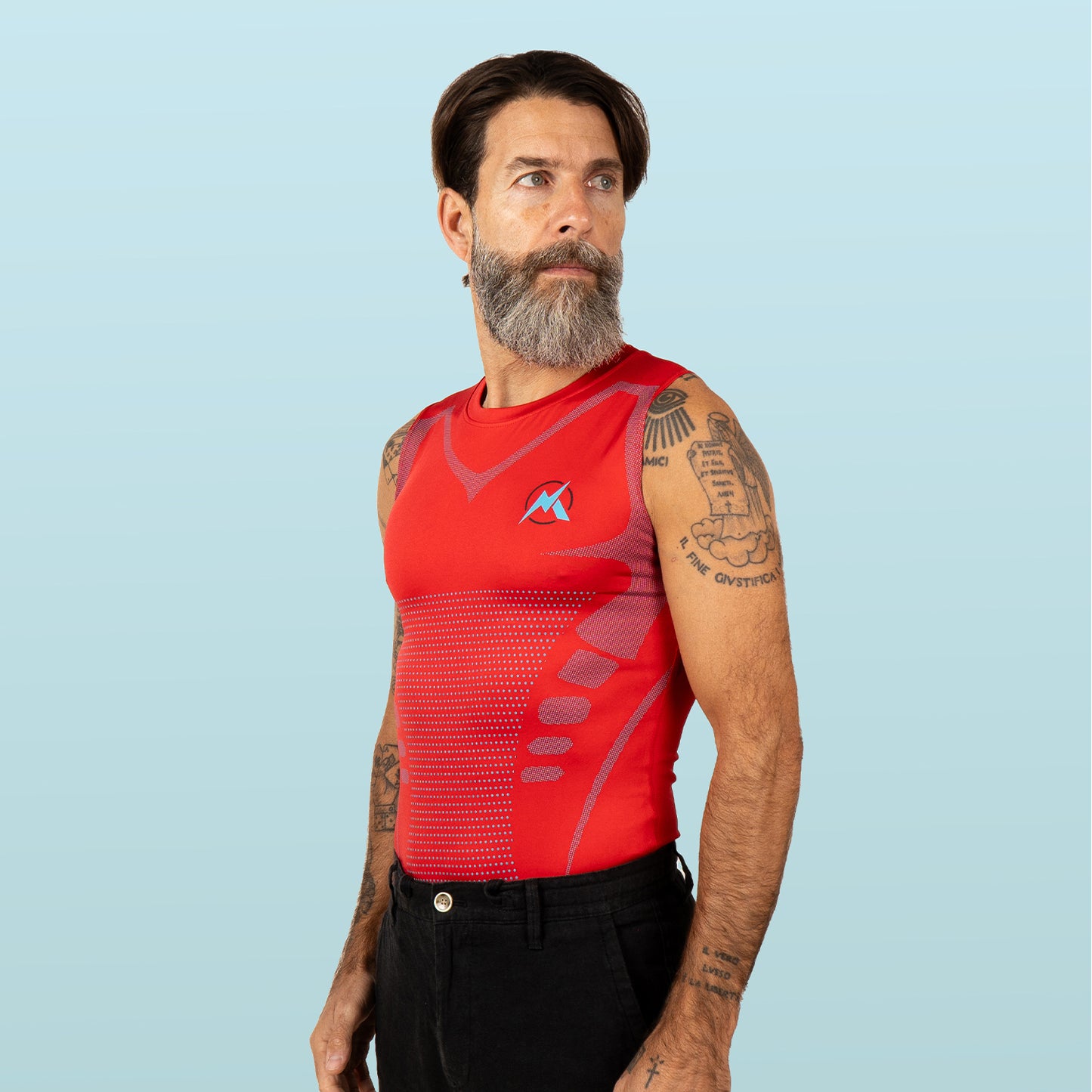
- Sleeveless cut, so it never shows under a short-sleeve polo or a thinner dress shirt
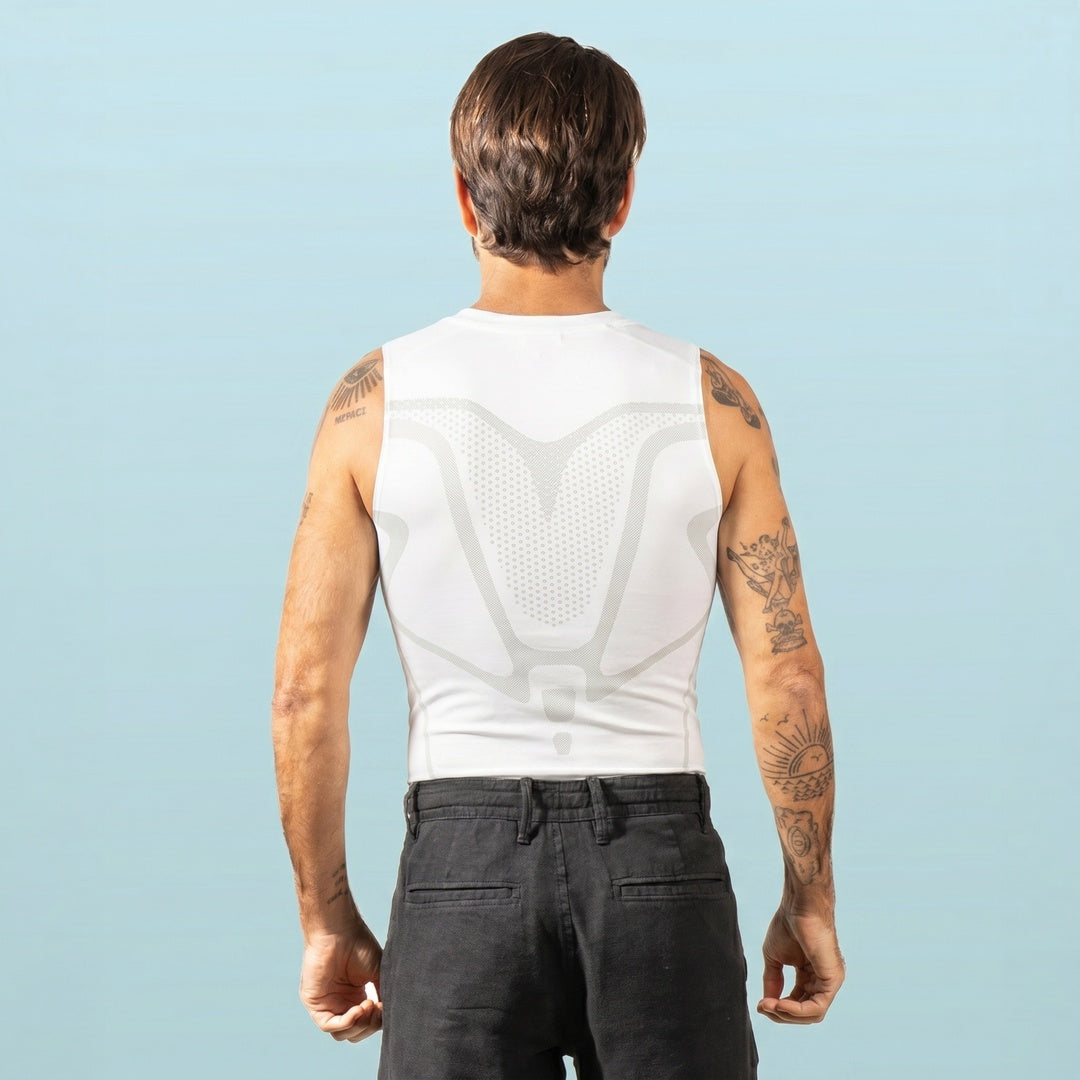
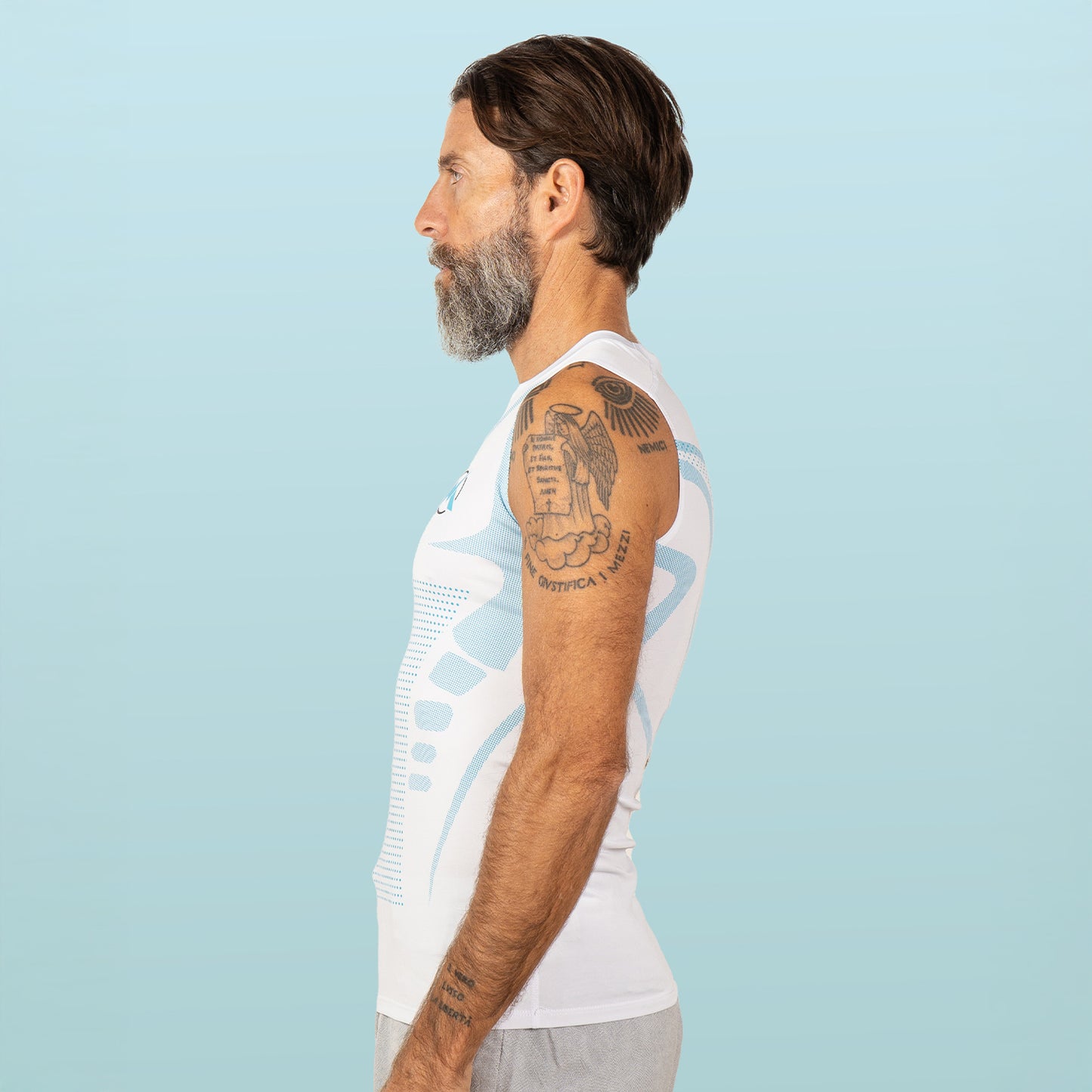
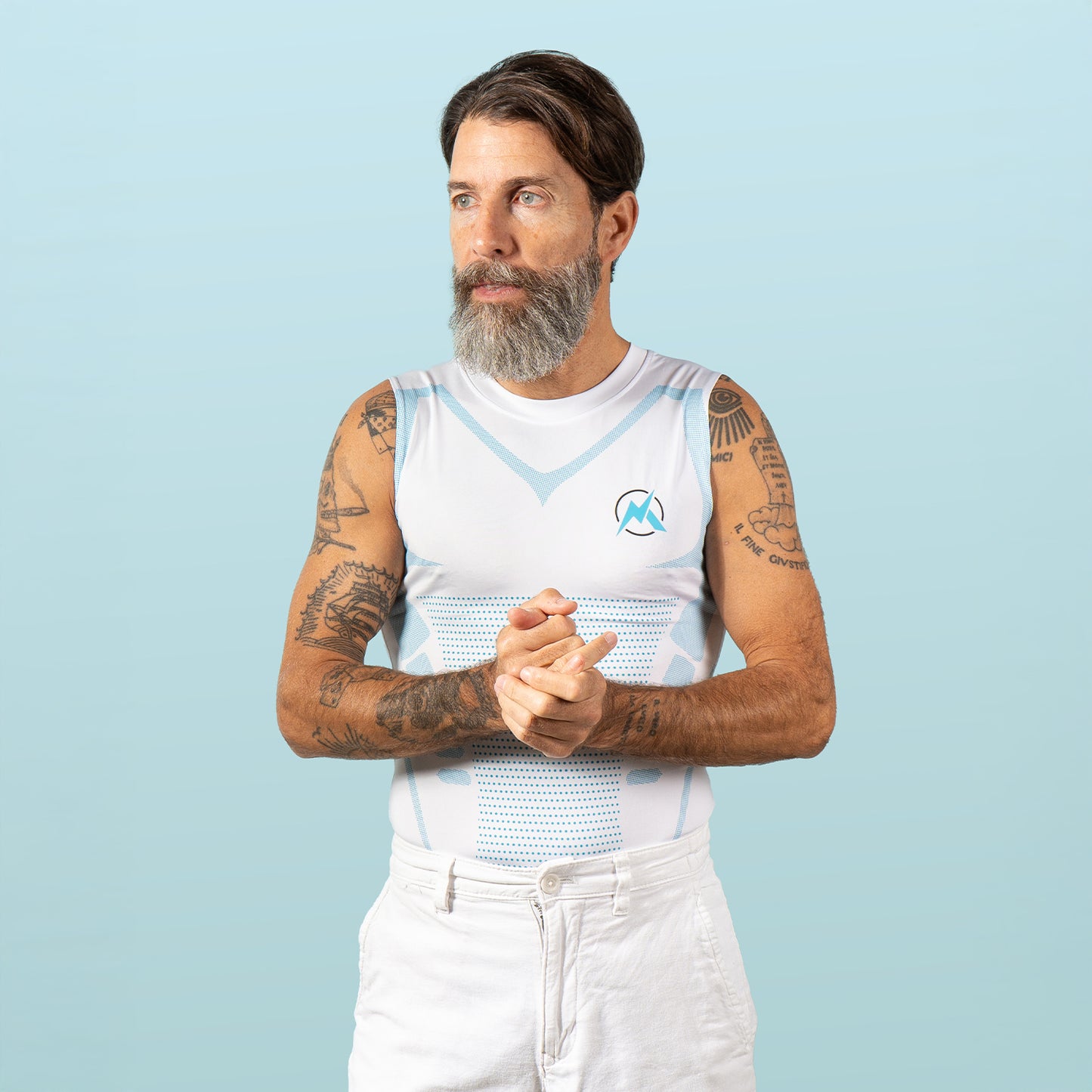
- Color match — black under dark shirts, white under white shirts. Anything else creates shadows
- All-day comfort — if it pinches at hour three, it's the wrong garment
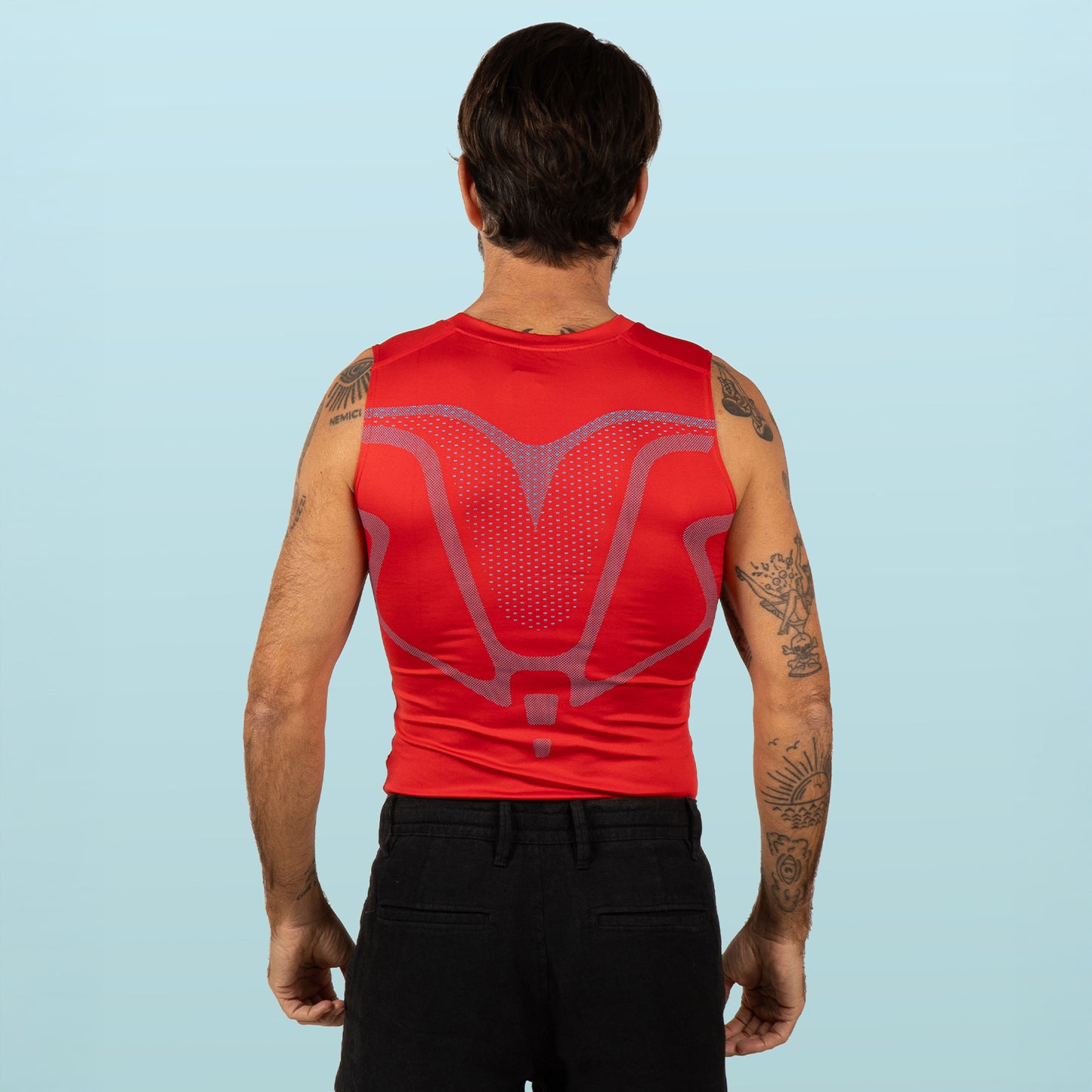
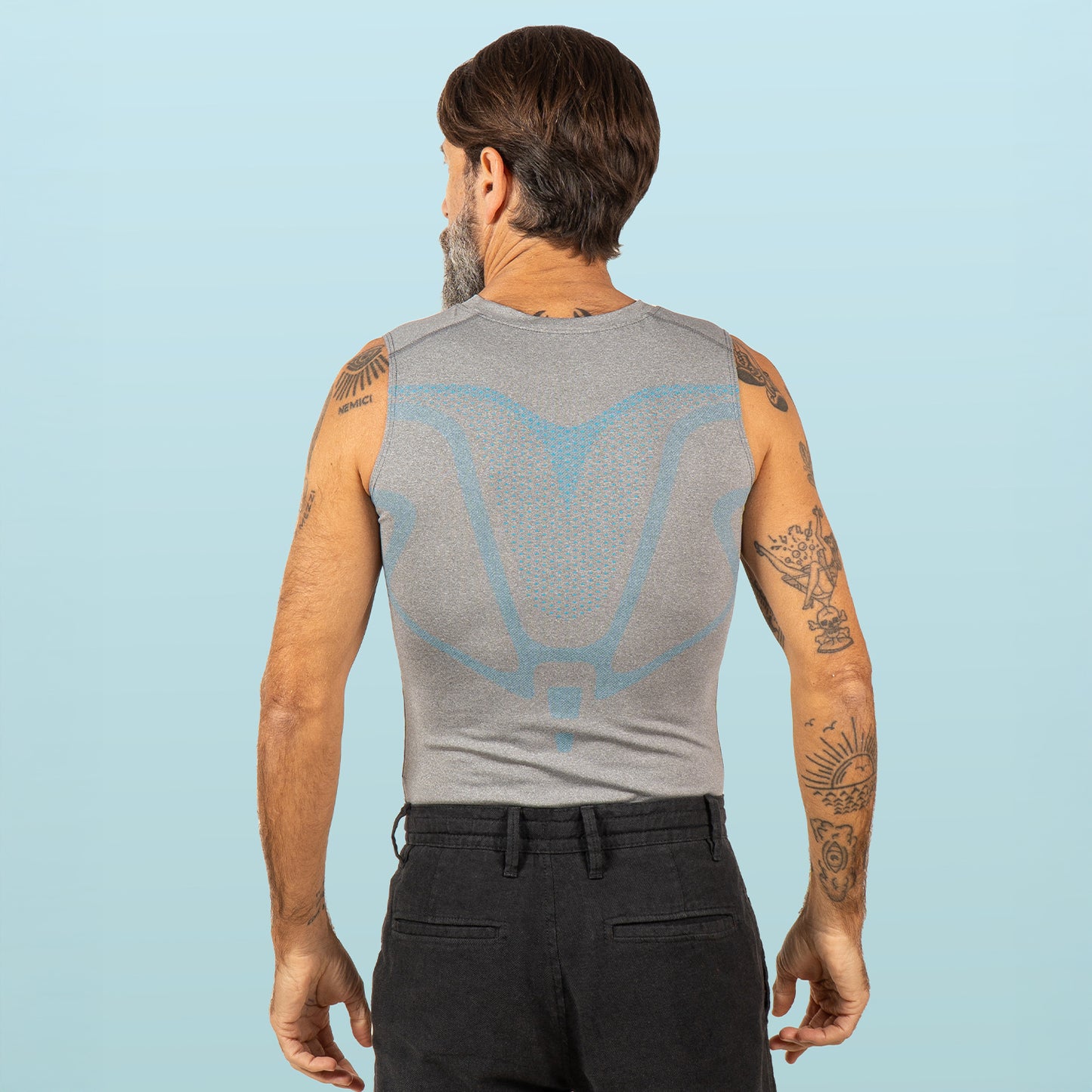
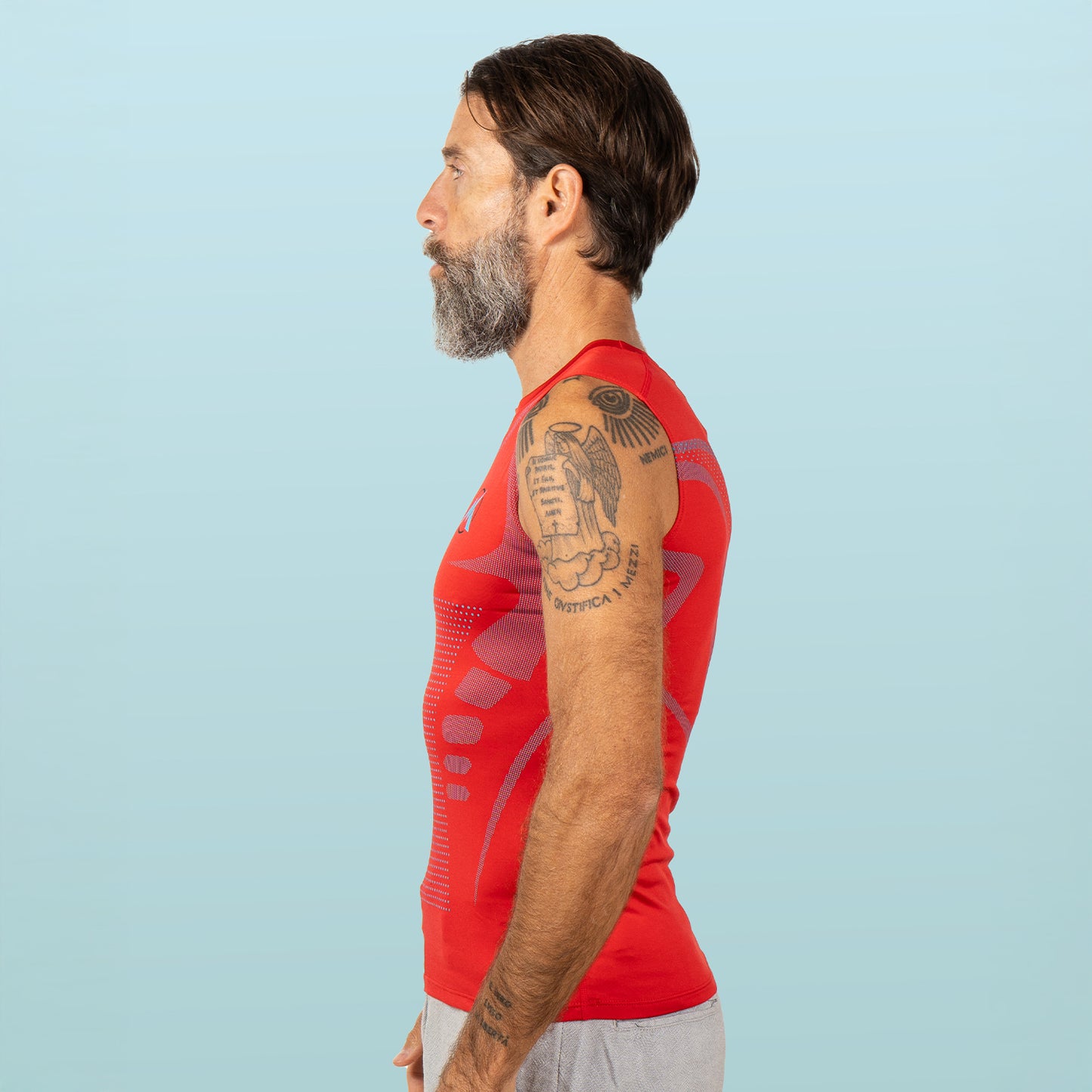
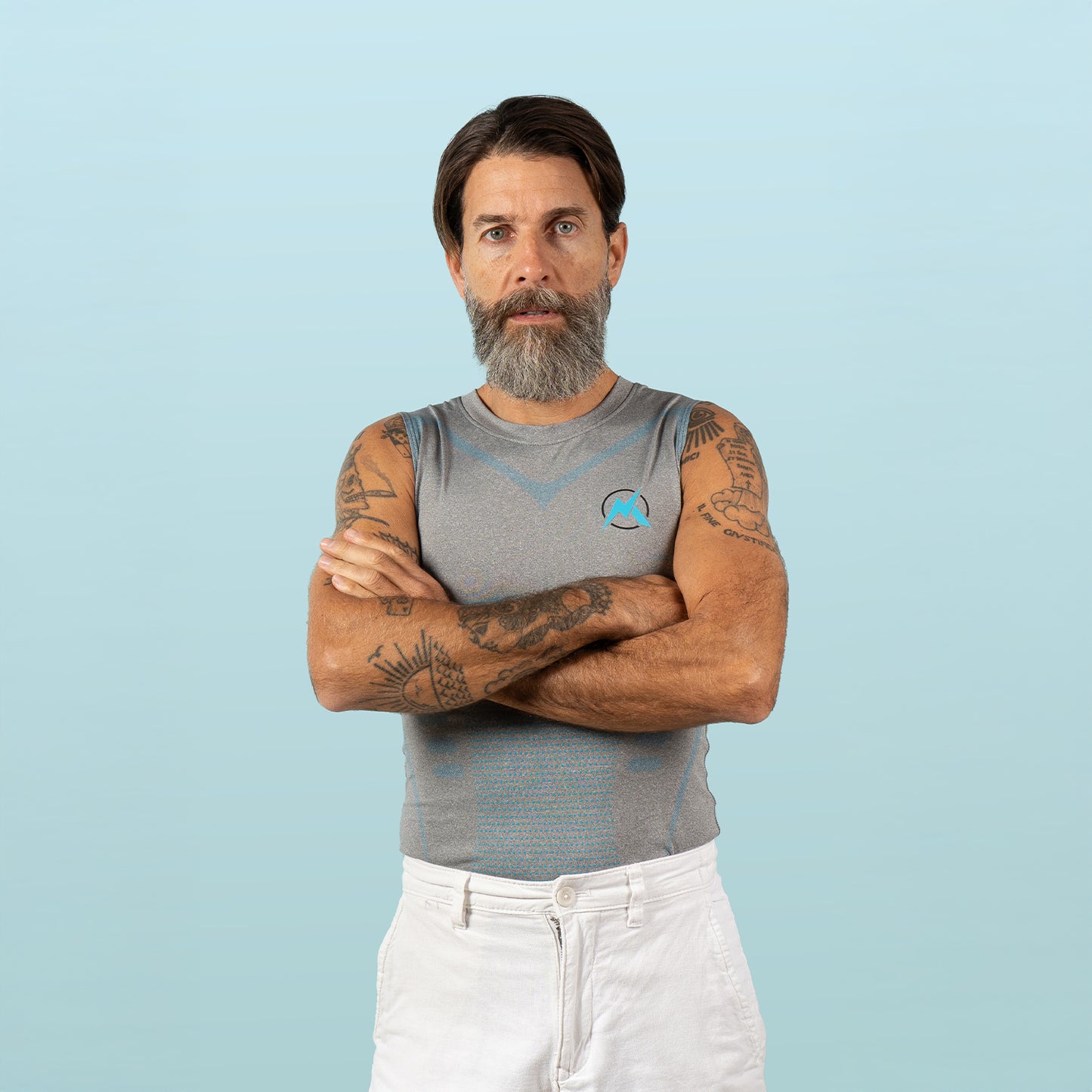
VitaBoost was built specifically for this use case: a sleeveless compression tank designed to disappear under a dress shirt, hold consistent support across a full workday, and smooth the silhouette without the corset feel of traditional men's shapewear. Many men report feeling more upright the moment they put it on — not because the shirt got bigger, but because they stopped slouching against it.
Fix #4: Posture Does More Than Any Diet (in Under a Second)
Stand in front of a mirror. Now roll your shoulders back and pull them down — like you're tucking your shoulder blades into your back pockets. Watch what happens to the front of your shirt.
The fabric flattens. The middle button stops pulling. Your chest fills out the shirt the way it was designed to.
That single move shaves a visual inch or two off your waistline without any other change. The hard part isn't doing it. The hard part is remembering to do it for more than thirty seconds. According to Harvard Health Publishing, small adjustments to how you carry yourself can meaningfully shift how you look and feel over time.
A compression tank helps here too — it gives your back something to push against, which makes the upright position feel like the default instead of the effort.
Fix #5, #6, #7: Small Details That Stack Up
Each of these is small. Together they're what separates a man who looks noticeably leaner in a shirt from one who doesn't.
The military tuck (Fix #5)
Tuck your shirt in normally. Then pinch the side seams of the shirt and fold them backward toward your spine. Hold them flat against your body and tighten your belt over them. The shirt now sits flat against your sides instead of ballooning out. Takes fifteen seconds. Free.
Belt placement and the waistband line (Fix #6)
Wear your belt at your natural waist — at the navel, not below it. Lower belt placement creates a visible roll above the buckle and a longer torso line that makes the midsection look heavier. Higher placement does the opposite.
Pattern, color, and vertical lines (Fix #7)
- Solid colors in the medium-to-dark range (navy, charcoal, slate, deep burgundy) are the safest slimming choices.
- Pinstripes and subtle vertical patterns add height and length to the torso.
- Avoid horizontal patterns and contrast pockets across the chest — they cut the silhouette in half visually.
The Honest Combo Most Men Over 45 Should Try Tonight
Here's the stack, in order of impact:
- A tailored-fit shirt in medium-weight cotton, sized correctly at the shoulder
- A compression tank underneath
- Shoulders rolled back and down
- Belt at the natural waist with a clean military tuck
- A solid medium-dark color or a subtle pinstripe
That combination is the difference between a Monday-morning shirt that pulls and one that hangs the way it was designed to.
If you want the shortcut on point #2, VitaBoost is the compression tank built for this exact problem — designed for men 45 and up, sleeveless to stay invisible under dress shirts, and currently running a buy 1 get 1 free offer at $15. Two pieces means one in the wash, one on you, every day of the work week.
This article is not medical advice. If you're experiencing persistent back pain or posture problems, talk to a healthcare professional.
FAQ
What's the single fastest way to look thinner in a dress shirt?
Roll your shoulders back and down, then check your shirt size at the shoulder seam. Posture and shoulder fit together account for most of how a shirt reads on a man over 45. Both are free, both work in under a second, and both can be reinforced with a well-fitted compression tank underneath.
Does a compression tank really make a difference under a dress shirt?
Yes — visually and in how you carry yourself. A compression tank smooths the contour of the torso, reduces fabric pull at the middle buttons, and gives your back something to engage against, which improves how you stand. The effect is immediate. It's not a transformation, it's a cleaner line.
Are slim-fit shirts a bad idea after 45?
For most men, yes. Slim fit is cut for narrow, young torsos. After 45, body proportions usually shift toward a fuller midsection and a slightly broader frame. A tailored fit (sometimes called modern fit) is almost always more flattering and more comfortable.
How do I know if my dress shirt size is wrong?
Three signals: the buttons pull when you sit, the shoulder seam falls onto your bicep instead of the corner of your shoulder, and the fabric balloons at the lower back when tucked in. If two of those three are true, the shirt is the wrong size or the wrong cut.
Can the right shirt make you look ten pounds lighter?
No shirt can make a literal weight claim, and any brand that promises it is selling you a fantasy. What the right combination of cut, fabric, posture, and a compression tank can do is change how the eye reads your silhouette — which is what people actually notice.
Your shirt isn't the enemy. The defaults are. Fix the cut, fix what's underneath, fix the way you stand — and the Monday-morning shirt stops winning the argument.