You don't need a 12-week cut. You don't need to skip the steakhouse on Friday. If you want to hide your belly under a shirt, men over 45 already have most of the tools — they just use them wrong.
Most guys focus on losing weight first. Then they buy a shirt. That's backwards. The fastest way to look 10-15 pounds leaner under a shirt is to fix what the shirt is doing right now — fabric, fit, base layer, posture, and color. None of that requires a diet. None of it costs hours.
Here are 6 fixes that work today.
Why your belly looks bigger under a shirt than it actually is
A shirt is a piece of fabric draped over your torso. Whether your belly looks like a "gut" or a "guy who used to play ball" depends on how that fabric falls. Three things create the illusion of a bigger stomach:
- Drape pooling at the front. Soft fabric collapses where your stomach is widest, then puffs out below.
- Fabric tension on the buttons. Pulling between buttons creates the dreaded gap and emphasizes the curve.
- Vertical lines breaking around the waist. When your shirt cuts horizontally across the widest point, the eye stops there.
You don't need a smaller stomach to fix any of this. You need a different shirt setup.
Fix #1 — Choose the right shirt fabric
Soft fabrics drape onto you. Structured fabrics stand off your body. The first one shows every roll. The second one hides the same belly under a clean vertical line.
Avoid these:
- Thin jersey cotton tees (they cling)
- Linen blends with no body (they pool)
- Stretch knits in light colors (they highlight)
Reach for these instead:
- Mid-weight oxford cotton (the classic dress shirt — has body, doesn't cling)
- Two-ply Egyptian cotton (drapes flat without sticking to skin)
- Heavier piqué or interlock knit polos (structured, not soft)
A thicker fabric isn't hot — it just has body. Body is what stops the shirt from showing you off.
Fix #2 — Get the cut right (slim ≠ tight)
Most men over 45 wear shirts one size too small in the chest and one size too big in the waist. They were sold "slim fit" and assumed it meant athletic. It doesn't. Slim fit cuts fabric closer to the body — including over your stomach. That's the opposite of what you want.
Look for these terms instead:
- Classic fit or regular fit through the body
- Tapered at the side seams (so the shirt doesn't billow like a sail)
- Straight hem that breaks at the hip, not above the belt buckle
The goal is a shirt that is close to your shoulders and chest, then falls vertically past your stomach without grabbing it. If you can pinch more than two inches of fabric at your side seams, the shirt is too big. If the buttons strain when you sit, it's too small. Aim for the gap between.
We covered the dress shirt version of this in detail in How to Look Thinner in a Dress Shirt — the fit principles are identical for polos and casual button-downs.
Fix #3 — Wear a base layer that holds you in
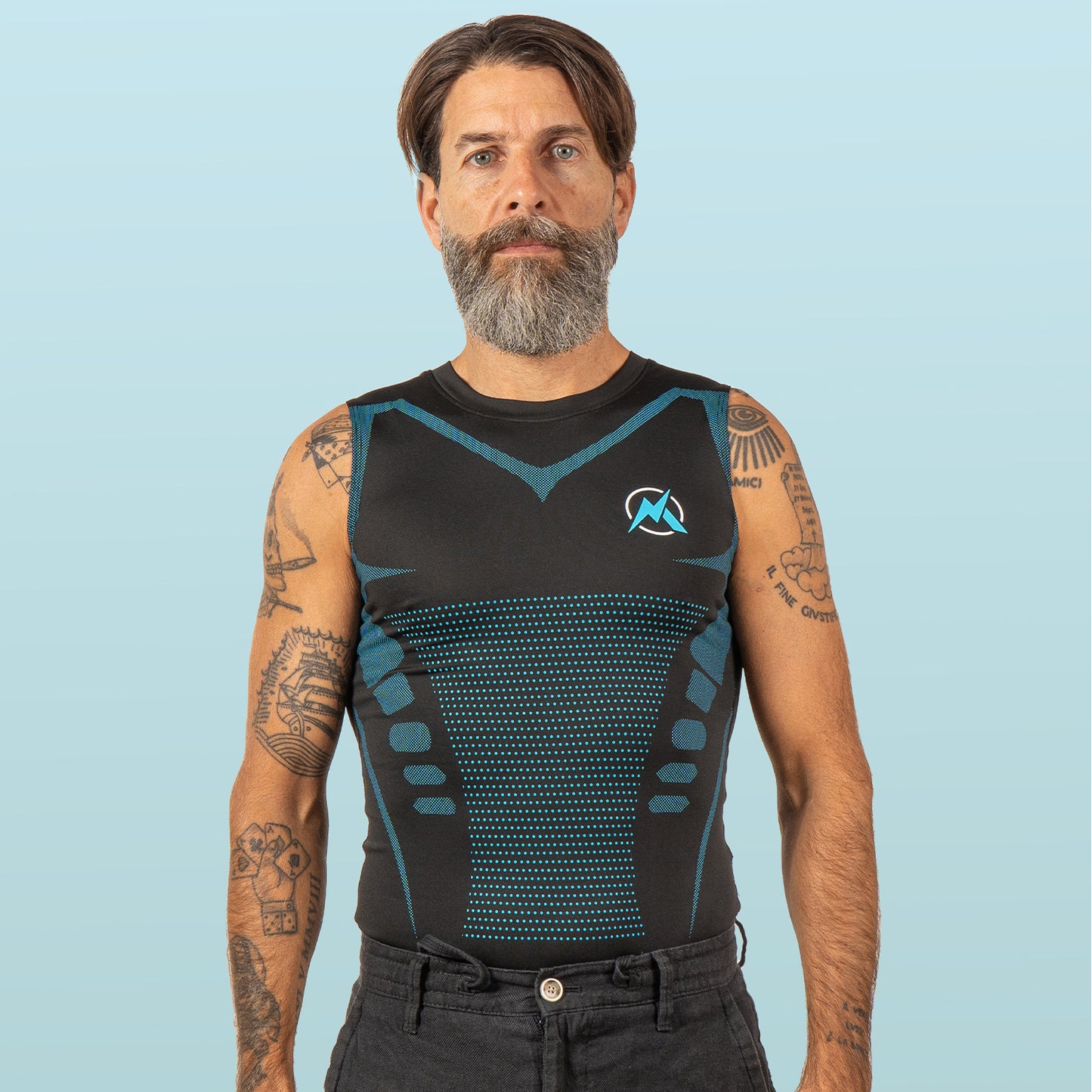
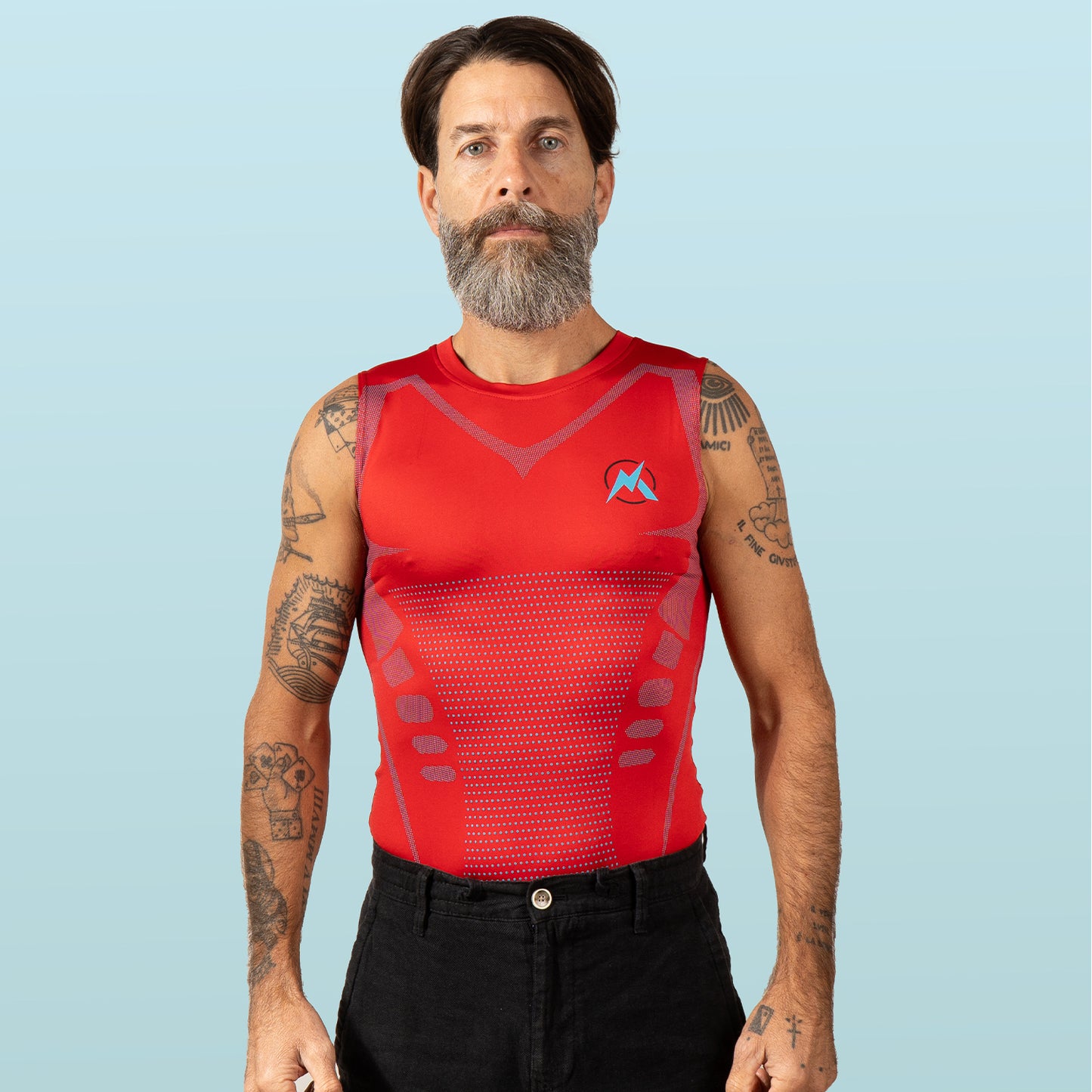
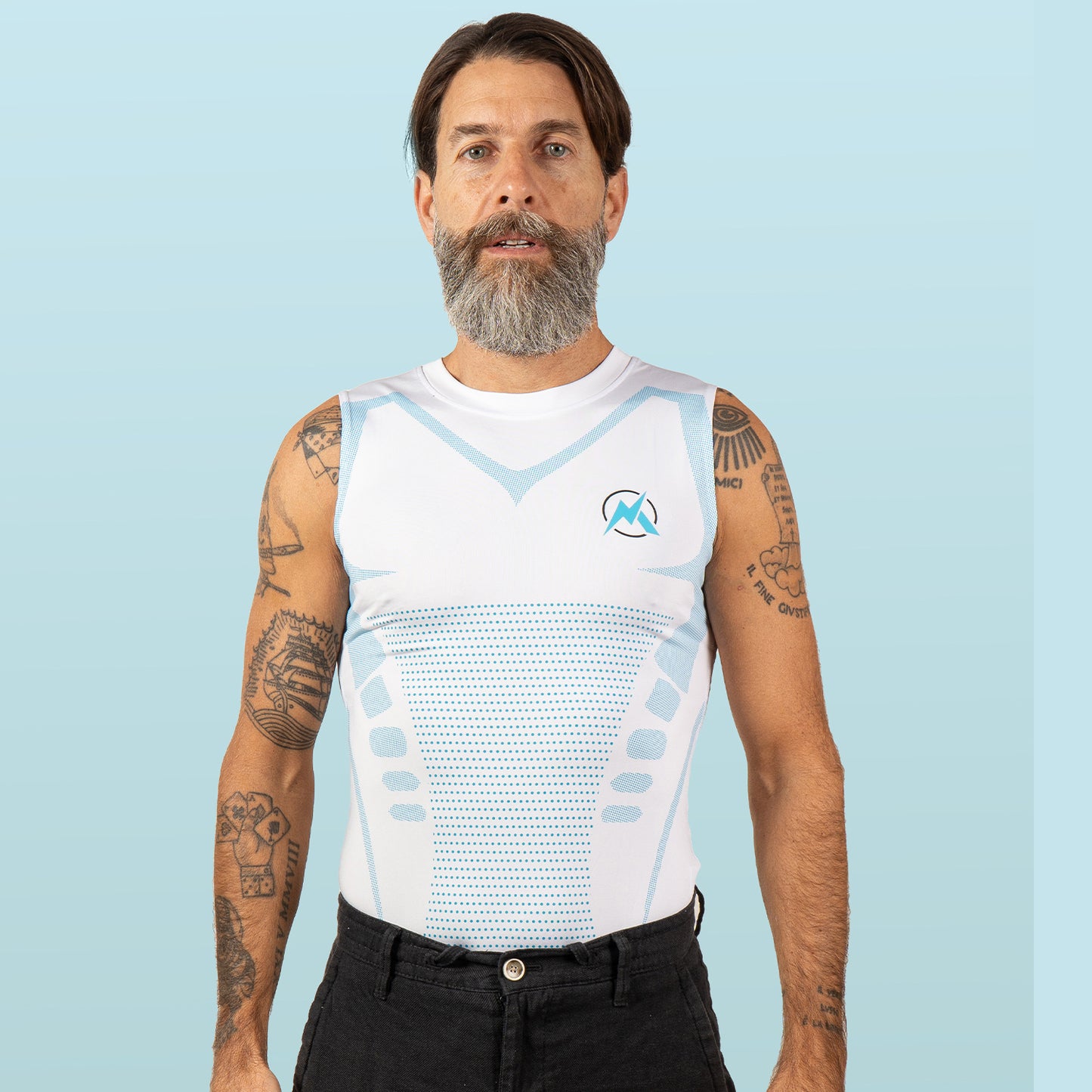
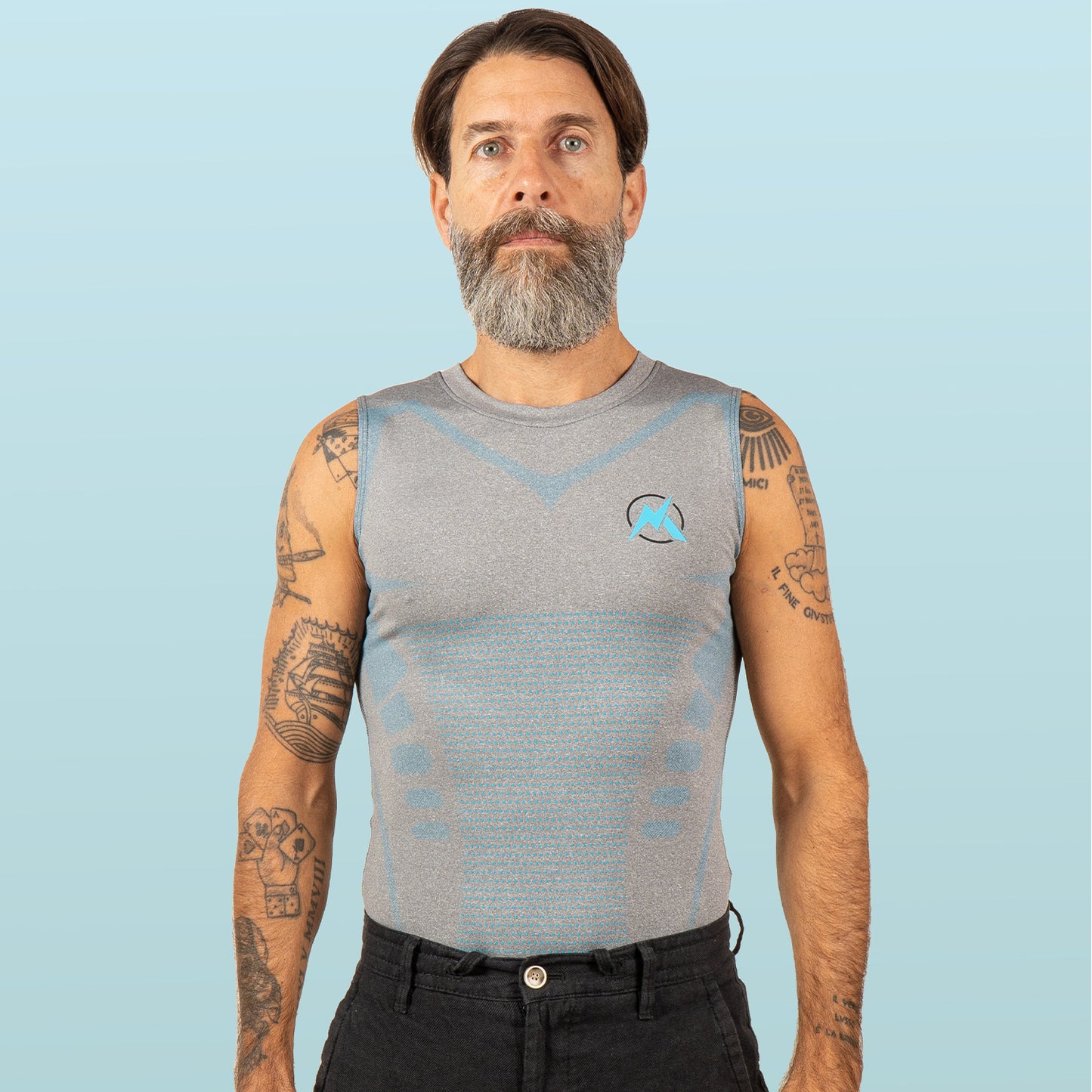
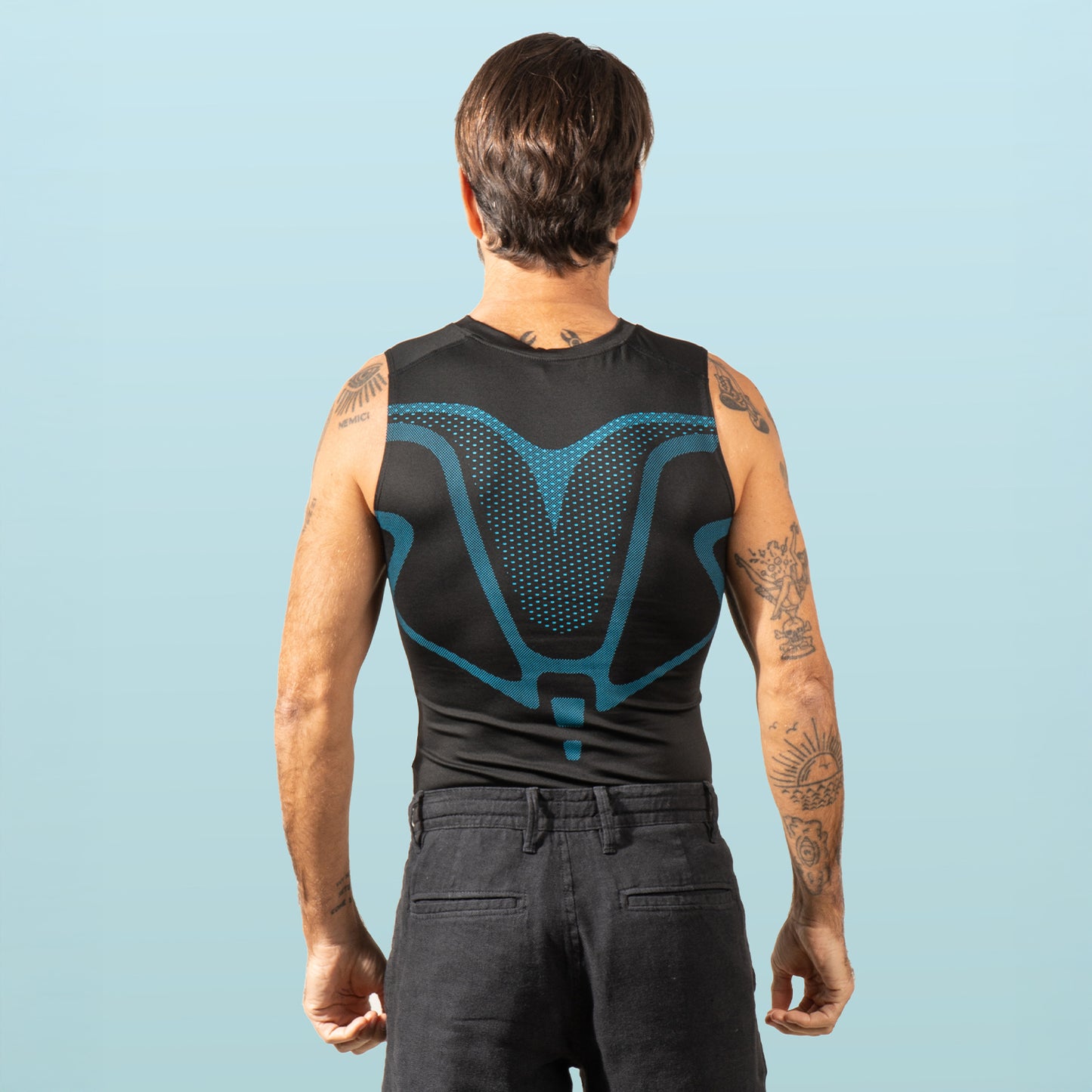
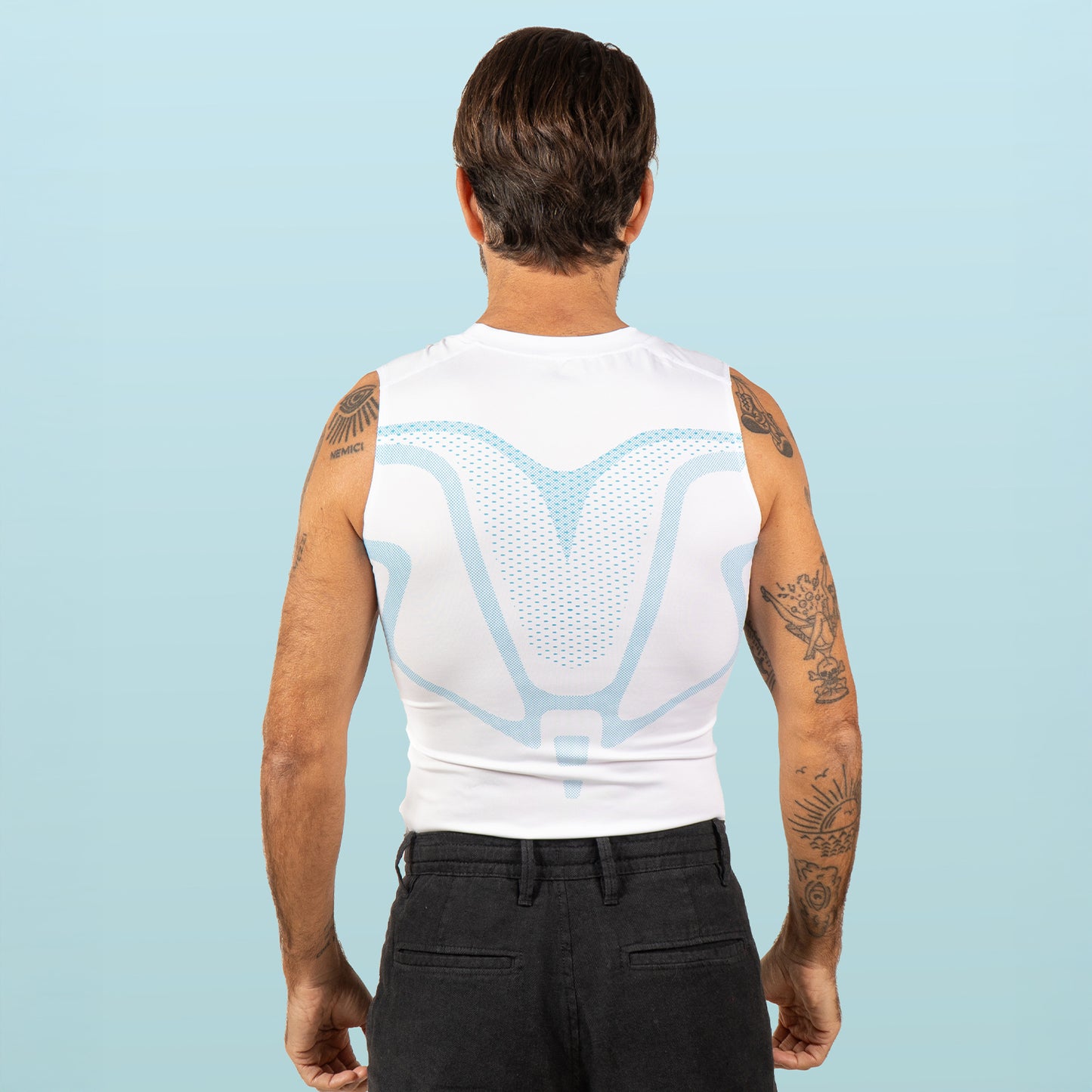
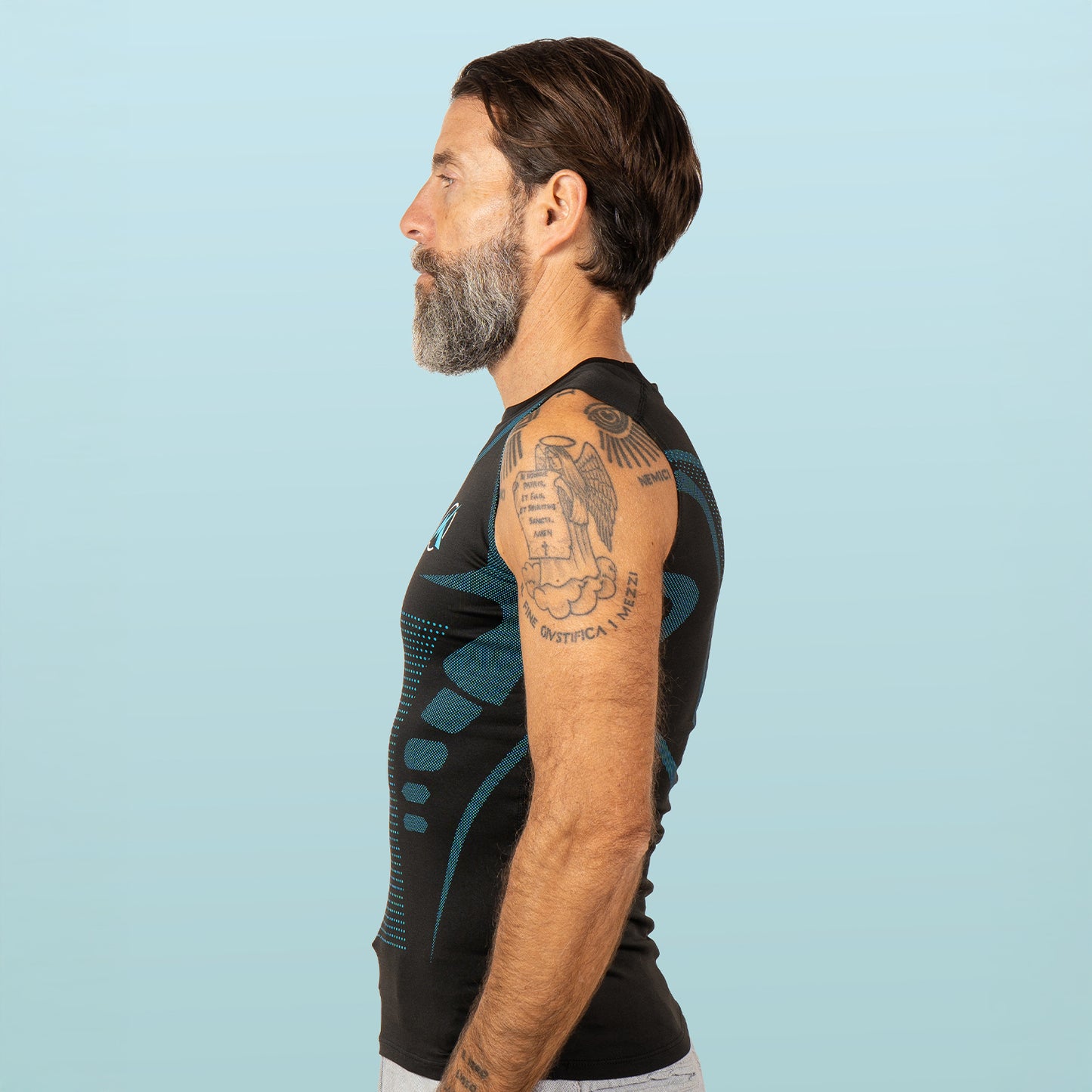
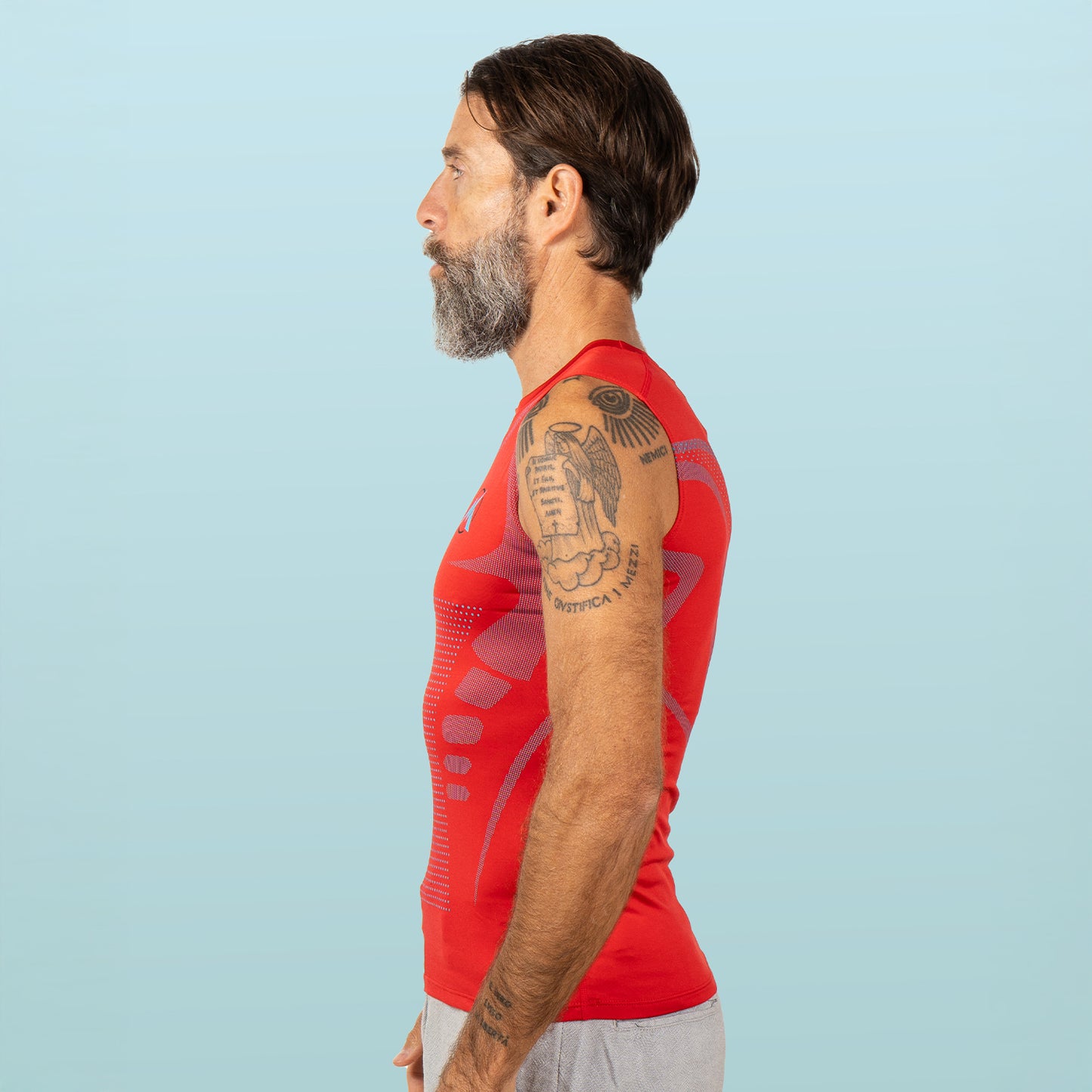
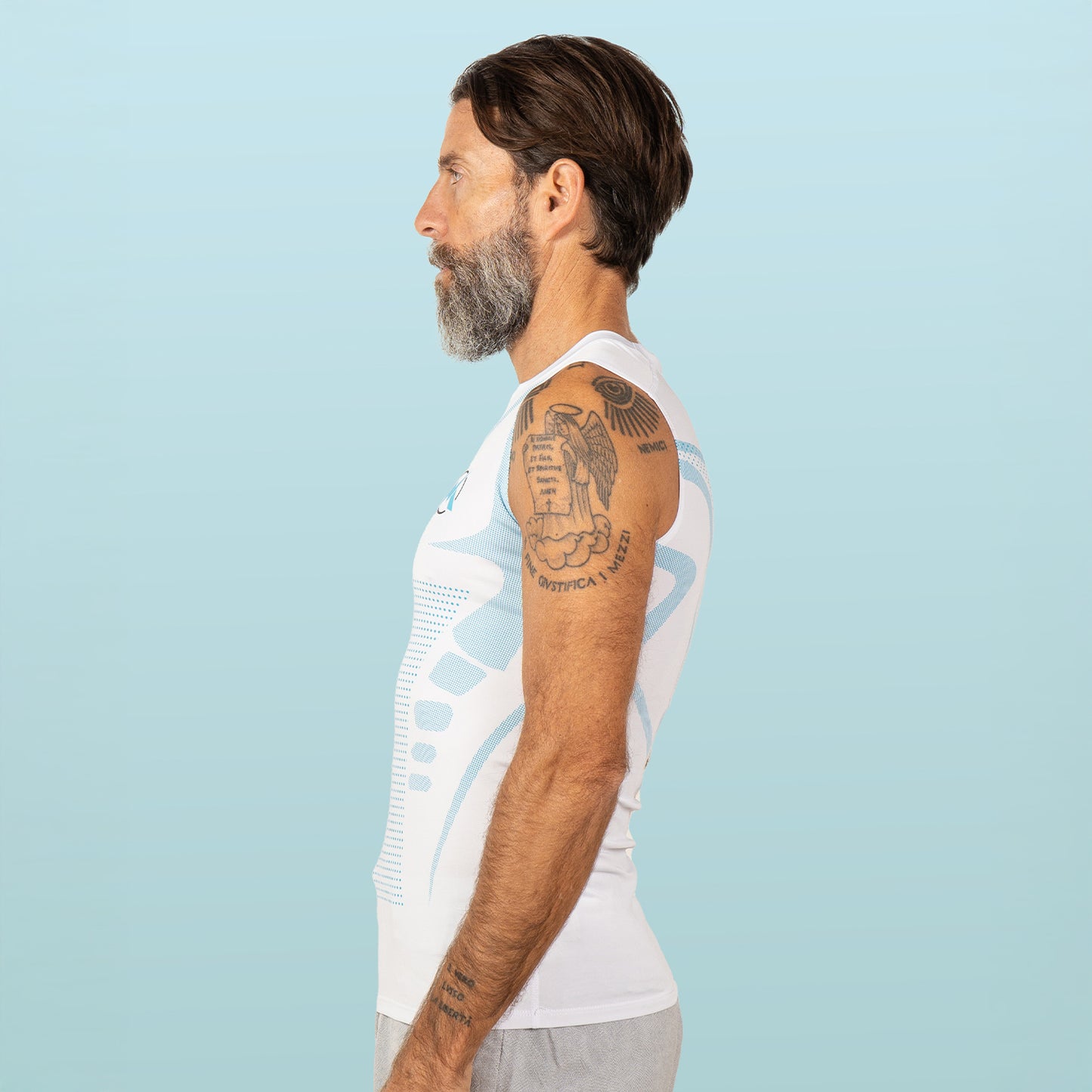
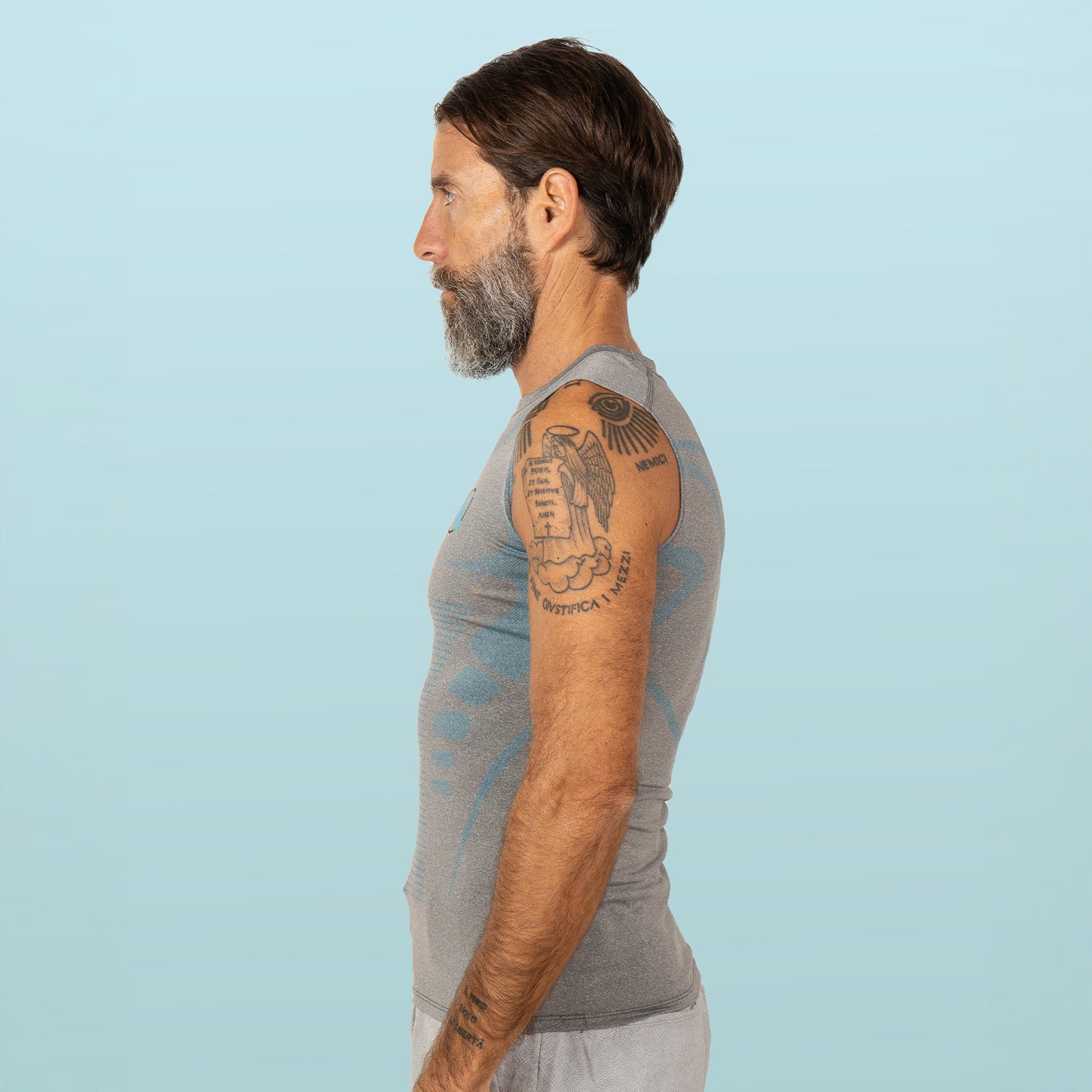
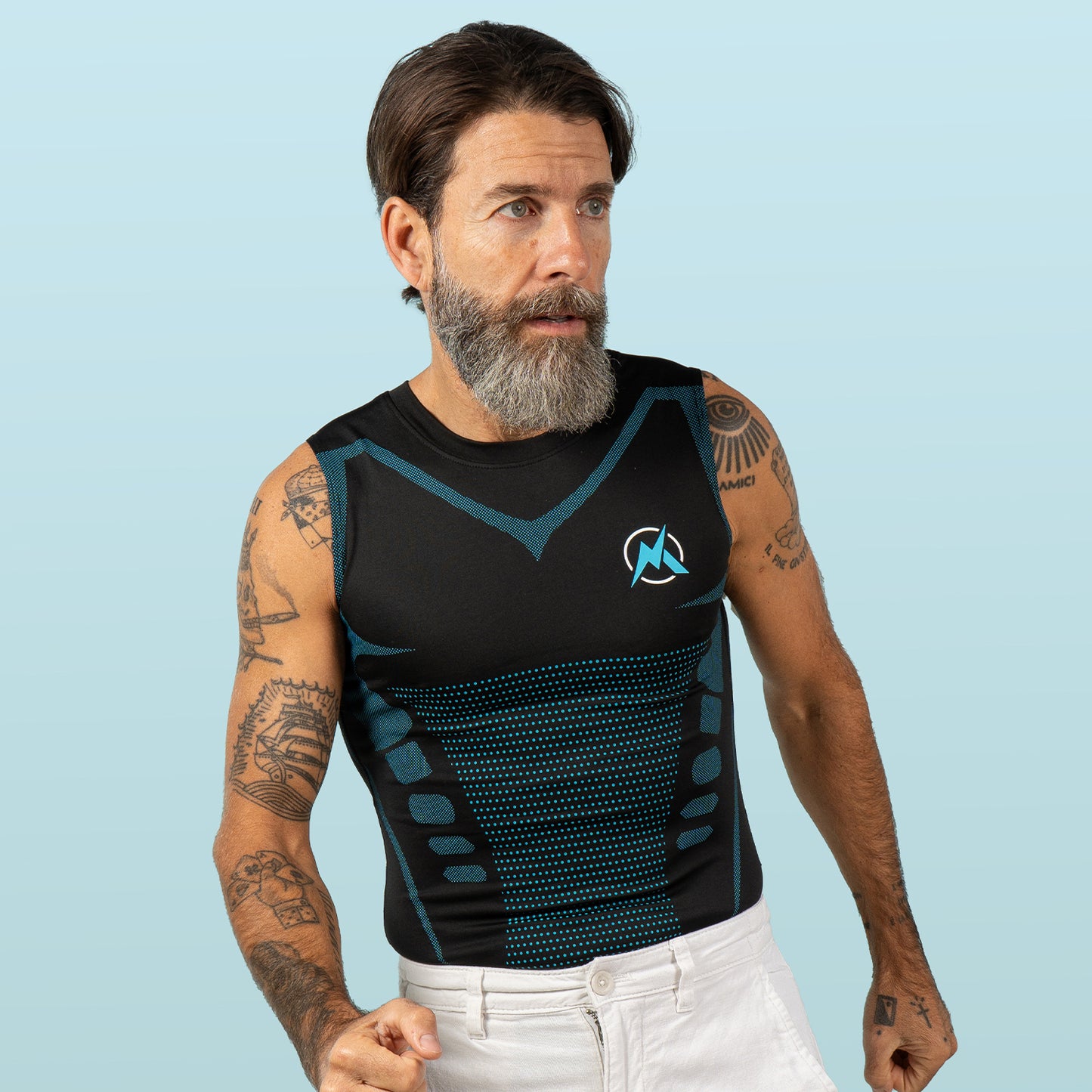
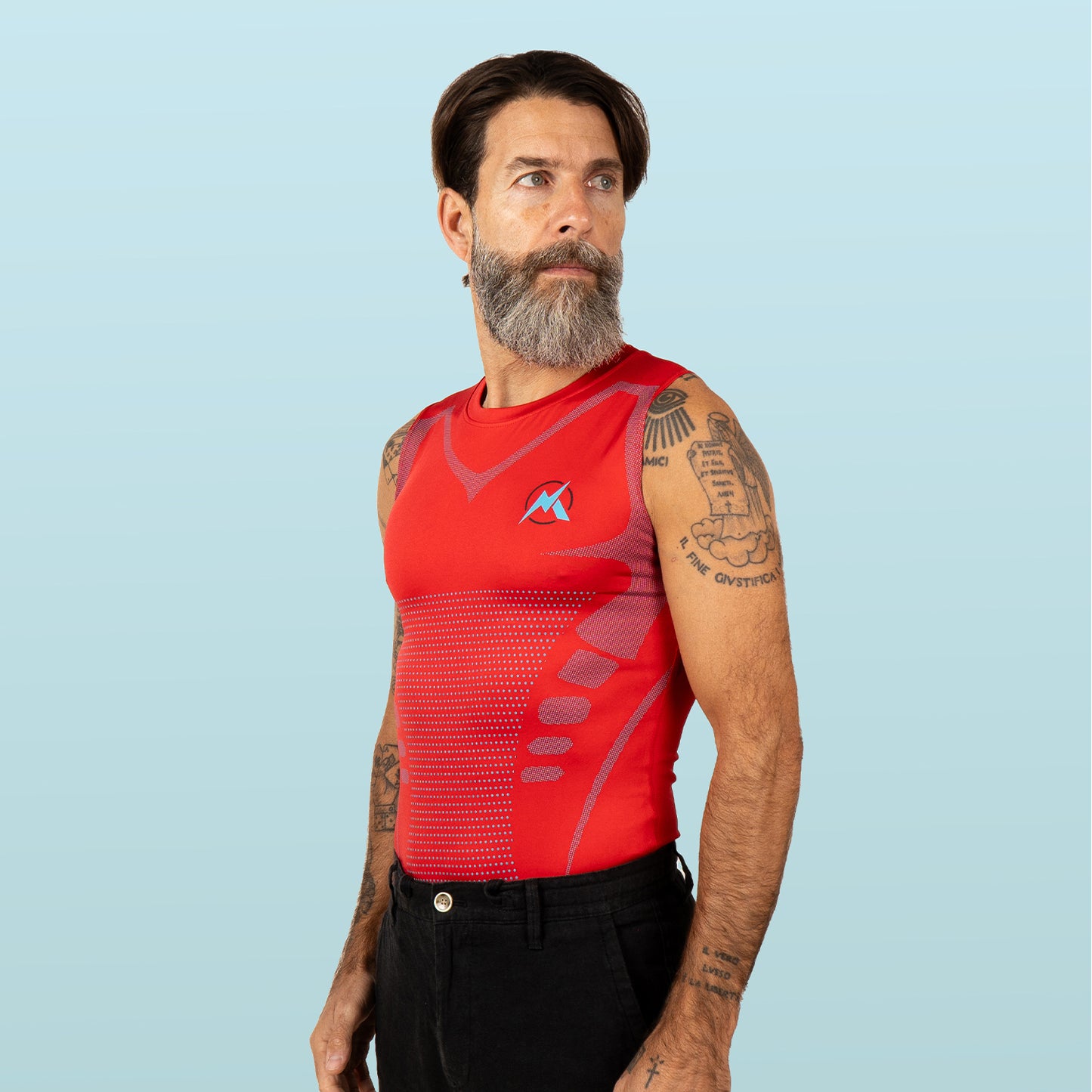
This is the move most men over 45 skip. A compression base layer under your shirt does three things at once: it smooths the front, it holds soft tissue closer to your frame, and it gives your dress shirt or polo a flat surface to drape on. The result is a clean vertical line from your chest to your belt.
Many men report standing taller and looking more upright the moment they put one on, even before adjusting their posture.
What to look for in a compression tank
- Sleeveless cut — sleeves bunch up under shirt sleeves and ruin the line
- A high enough neckline to disappear under an open collar but a deep enough one to vanish under a tee
- A hem long enough to tuck — short hems ride up the moment you sit down
- Firm-but-not-squeezing compression — you should breathe normally, not gasp
- Flat seams — visible seams print through dress shirts, especially in lighter colors
White vs. black — which under your shirt
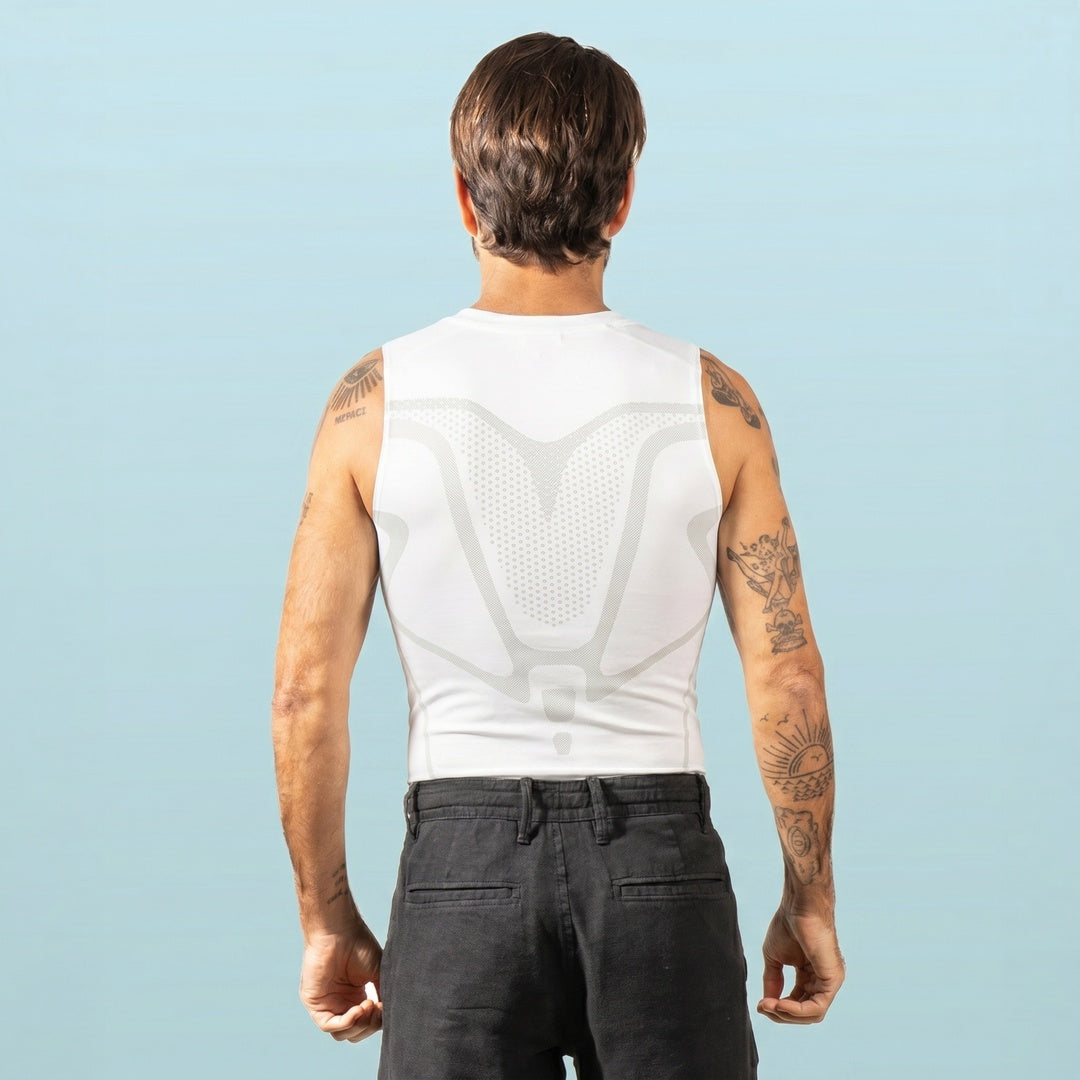
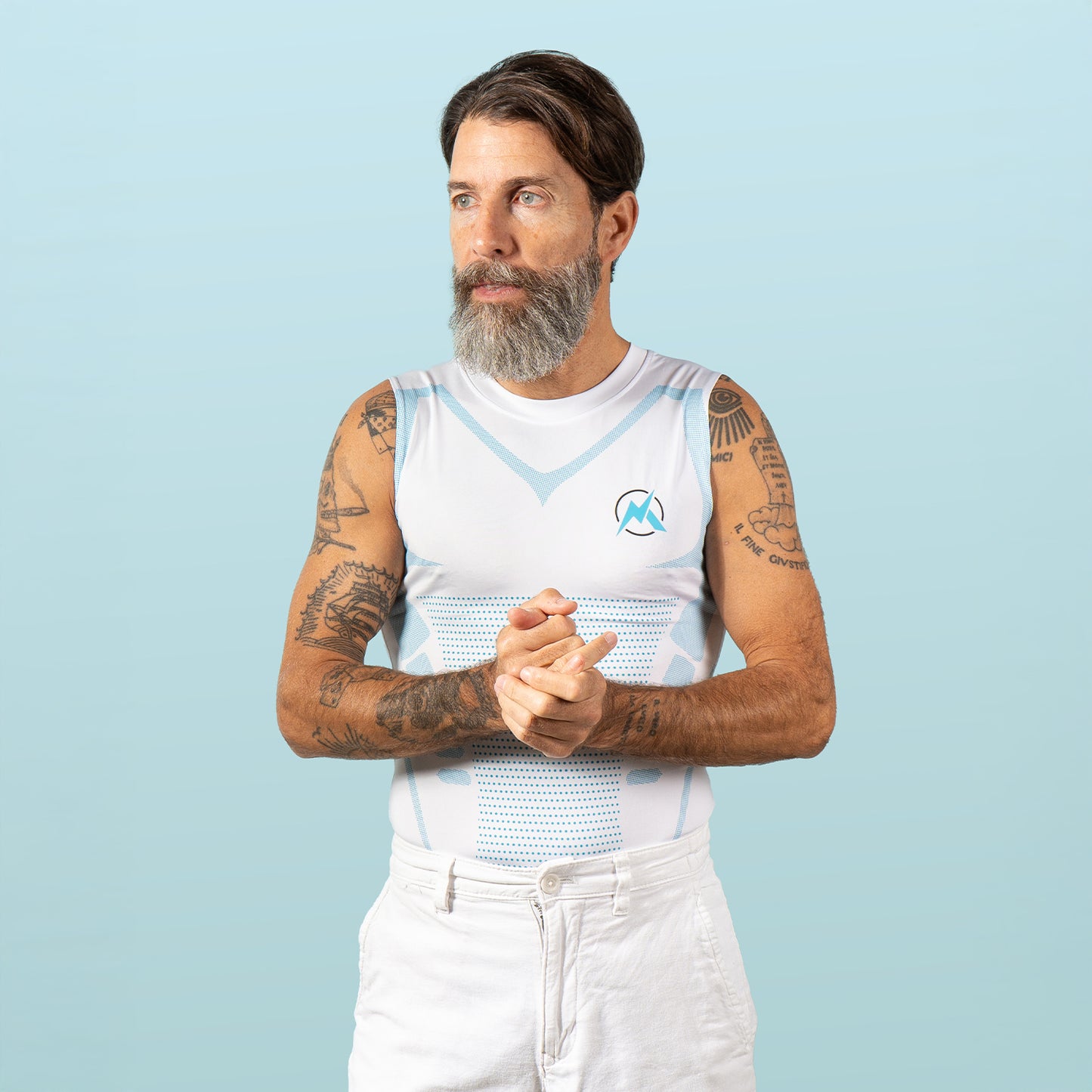
White compression tanks under white dress shirts. Black under black, navy, or any dark color. If you're wearing a light-blue oxford, white still wins — black will shadow through. The wrong color visible through your shirt is the same crime as a visible undershirt collar.

Fix #4 — Tuck the right way (or don't)
A bad tuck creates a horizontal "shelf" right above your belt where extra fabric bunches. That shelf is the single most aging silhouette mistake men over 45 make.
Three rules:
- Front tuck only when you're wearing a heavier overshirt or jacket. The waistband stays clean, the shirt drapes loose over the stomach.
- Full tuck only when the shirt is cut narrow enough through the waist that there's no fabric to bunch.
- Untucked is fine if the hem ends between your belt and the bottom of your zipper — never longer, never shorter. A hem that hits mid-thigh adds visual width.
When in doubt, untuck a casual shirt with the right hem. Tuck a dress shirt over a base layer. Don't half-commit.
Fix #5 — Stand like a man who owns the room
Posture changes how your shirt sits on your body more than almost any fix on this list. When you slouch, your shoulders roll forward, your chest collapses, and your stomach pushes out into the fabric. When you stand tall, your shoulders pull the shirt's drape backward and your stomach falls into a flatter line.
The cue is simple: pull your shoulder blades together and slightly down. Not military stiff — just open. The Mayo Clinic has a clear walkthrough of good standing posture that takes two minutes to read.
This is also why a compression base layer helps even before you think about posture. It cues your body to sit upright in a position you'd have to remember to hold otherwise.
Fix #6 — Color and pattern tricks that flatten the eye
Color and pattern won't shrink your stomach, but they will redirect where the eye stops. Use these to your advantage:
- Darker shirts hide more than lighter shirts. Navy, charcoal, forest green, burgundy. Light gray and white are the hardest to wear with a stomach.
- Vertical stripes draw the eye up and down. Subtle pinstripes work better than wide ones — wide stripes can warp around a curve.
- Avoid bold horizontal patterns. Plaids that have strong cross-lines call attention to the widest part of you.
- Match your bottom and shoe color tone. A monochromatic look (dark shirt, dark trouser, dark shoe) lengthens the body line.
One pattern men over 45 should retire: the small chest pocket on a tight-fitting polo. It pulls the eye to the upper torso, makes the chest look softer, and the stomach below looks bigger by contrast.
The shirt that makes everything else easier
If you only fix one thing on this list, fix the base layer. It's the move that lets fabric, fit, posture, and color all do their job. Without it, you're asking the outer shirt to do work it wasn't designed for.
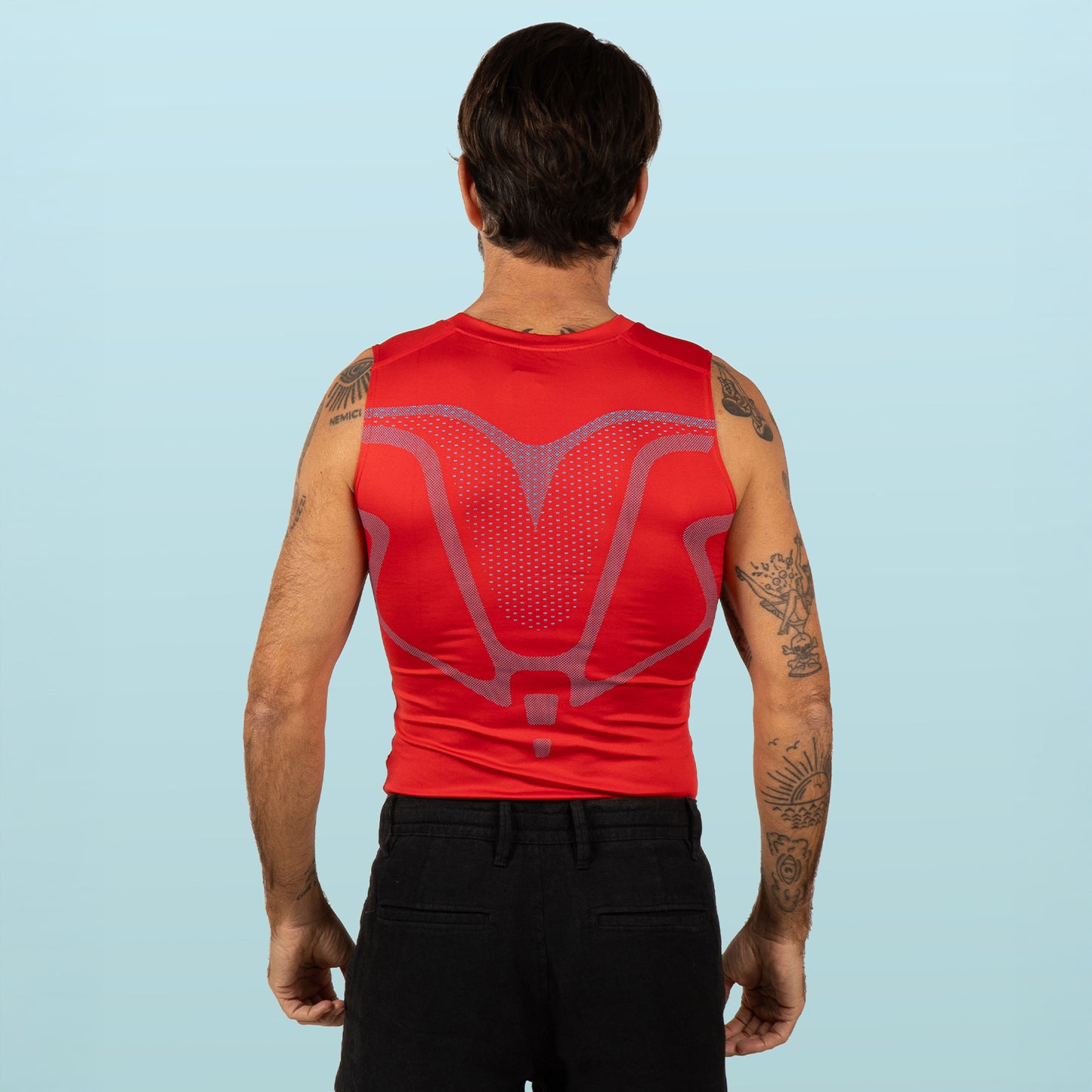
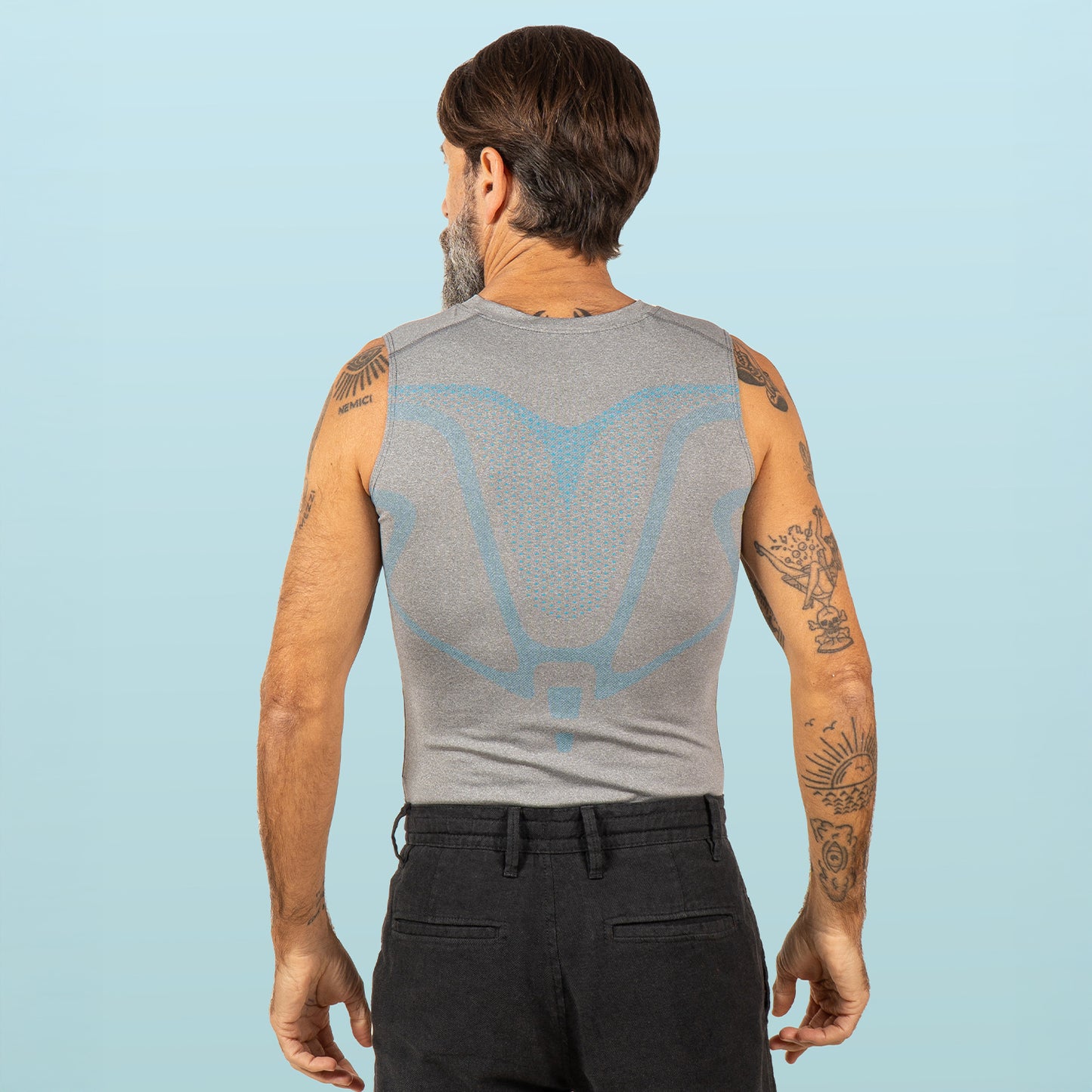
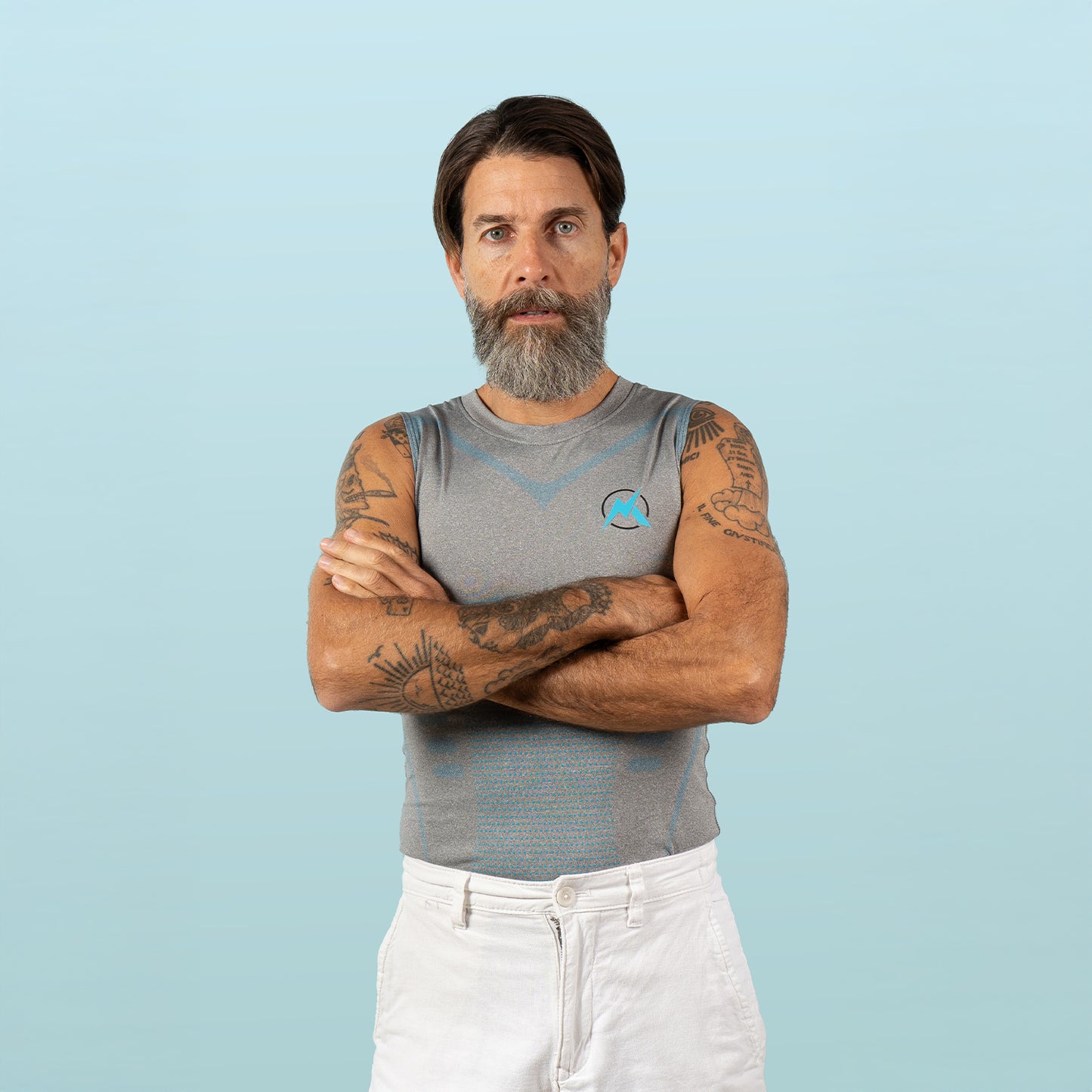
Maynox built the VitaBoost compression tank specifically for the man on the other side of 45 — the guy who isn't competing at the gym, just wants to feel sharp at the wedding, the meeting, the weekend dinner. Sleeveless. Black. Long enough to tuck. Firm enough to do the job. Designed to provide consistent support without crushing you.
It's currently part of a buy-one-get-one-free offer at $15 — half the price of a single shirt at most chains.
Frequently Asked Questions
Will a compression tank really hide my belly under a dress shirt?
A well-fitted compression tank smooths the front of your torso and gives your shirt a flat surface to drape on. It won't make a stomach disappear, but it removes the soft bulges and the cling that make the same belly look bigger. Many men report looking 10-15 pounds leaner once the base layer is right.
What size compression tank should I buy if I'm between sizes?
Size up if you want comfort all day, size down if you want maximum smoothing for a single event. For everyday wear under work shirts, the upper of the two sizes is usually right — you want firm support, not a corset.
Are dark shirts always more flattering than light shirts?
Generally yes for men over 45 carrying weight in the midsection, because dark colors recede visually. That said, a well-fitted light shirt with a base layer beats a dark shirt with poor fit. Fit and base layer beat color every time.
Should I tuck my shirt if I have a belly?
Only if the shirt has a tapered cut and there's no extra fabric to bunch around your waist. Otherwise, leave it untucked with a hem that ends between your belt and zipper. Half-tucked or front-tucked works for casual outerwear, not dress shirts.
How do I keep my shirt from gapping at the buttons?
Three causes: shirt is too small in the chest, fabric is too soft to hold its shape, or your stomach pushes into the placket when you sit. The fix is a heavier fabric, a slightly fuller chest cut, and a base layer that flattens the front. If you still see gapping, you've sized down too far.
You don't have to lose weight to look like a sharper version of yourself in a shirt. Pick a fabric with body. Get the cut right. Put a base layer underneath. Stand tall. Use color and pattern with intention. The same body, the same belly, ends up looking like a different man under the right setup. Start with the base layer — that's the one fix that makes every other fix easier.
This article is for general styling information and not medical advice. If you have specific concerns about back pain or posture, consult a qualified professional.