You don’t need an hour at the gym to fix your posture. Most men over 50 don’t have rounded shoulders, a forward head, or a soft middle because they’ve stopped trying. They have it because thirty years at a desk, in a car, or on a phone slowly bent them into that shape. The fix is the same — small, in the opposite direction, every day.
Five minutes is enough if you pick the right five exercises. Here’s the routine that targets the four posture issues that hit nearly every man past 50, plus what to skip and why most “posture programs” fail this age group.
Why your posture changes after 50 (and what’s actually happening)
Posture isn’t one thing — it’s the resting position of four moving parts: your head, your upper back, your hips, and your glutes. After roughly age 45-50, three things compound:
- Soft tissue gets shorter in the front of your body (chest, hip flexors, neck flexors) because that’s where you live — leaning forward at a desk, screen, or steering wheel.
- Soft tissue gets longer and weaker in the back of your body (mid-back, glutes, deep neck stabilizers) because gravity wins when you stop using those muscles.
- Discs in your spine lose hydration, which slightly reduces your height and increases the tendency for the upper back to round.
The result is the silhouette you probably recognize in your own photos: head forward, shoulders rolled in, mid-back curved, hips tipped forward, stomach pushed out. None of it is permanent. All of it responds to short, daily, targeted work — much faster than most men expect.
Why most posture exercises fail men over 50
Open most “fix your posture” programs and you’ll find the same three problems for our age bracket:
- They’re built around younger bodies. Push-ups and planks for an hour assume a baseline most 50+ men shouldn’t start with.
- They focus on strength, not length. You can’t strengthen a short hip flexor into proper position. You have to lengthen it first.
- They skip the daily piece. Posture is a habit your body builds, not a workout you complete. Five minutes every day beats forty minutes twice a week.
The routine below is built backwards from those problems: short, daily, balanced between mobility and activation, and small enough to actually do.
The 5-minute posture routine: 5 exercises that actually work
One minute each. No equipment. Floor space the size of a yoga mat. Do it in the morning before coffee, or right before your shower — the order doesn’t matter, but the consistency does.
1. Wall angels — 60 seconds
Stand with your back, head, and butt against a wall. Feet about six inches out. Press your low back gently toward the wall to flatten the arch. Lift your arms into a “goalpost” position — elbows at 90 degrees, the backs of your hands and forearms touching the wall.
Slowly slide your arms up and down the wall as far as you can while keeping contact. If your wrists or elbows lift off, that’s your end range — go only to where you can still touch.
This exercise opens the chest, mobilizes the upper back, and trains the shoulder blades to glide where they’re supposed to. It’s the single best counter-move for desk-and-phone shoulders.
2. Chin tucks — 60 seconds
Stand or sit tall. Without tilting your head down, glide your head straight back, like you’re trying to make a double chin. Hold for 5 seconds, release. Repeat for the full minute.
Your forward head — that subtle “turtle” position photos love to show — adds an estimated 10-12 pounds of perceived load to your neck for every inch it sits forward. Chin tucks pull it back over your shoulders where it belongs. Done daily, this single move can change how your jawline reads in photos within a few weeks.
3. Thoracic extension over a chair back — 60 seconds
Sit on the front half of a sturdy dining chair. The top of the chair back should hit somewhere between your shoulder blades. Lace your hands behind your head, elbows pointing forward.
Lean back over the chair, letting your upper back arch over the edge. Keep your low back stable — don’t push your stomach forward. Move slowly, breathe out as you extend, and only go to a comfortable stretch.
This is the move that wakes up the stiff middle of your spine — the part that’s been frozen at a slight forward curve for years. Even a small daily dose here reduces the rounded-back look.
4. Half-kneeling hip flexor stretch — 60 seconds
Get into a kneeling lunge position: one knee on the floor, the other foot flat in front of you, both at 90 degrees. Tuck your tailbone under (think: pelvis tilts back). You should feel a stretch in the front of the hip on the kneeling-leg side.
Hold for 30 seconds, switch sides, hold 30 seconds.
Tight hip flexors are why your stomach pushes forward when you stand and why your low back feels worse the longer you sit. Releasing them lets your pelvis sit neutrally — which automatically pulls your stomach back and lets your glutes engage.
5. Glute bridge — 60 seconds
Lie on your back, knees bent, feet flat on the floor about hip-width apart. Press through your heels and lift your hips toward the ceiling. At the top, squeeze your glutes for 1-2 seconds, then lower with control.
Aim for 12-15 reps in the minute. If your hamstrings cramp, your glutes aren’t firing — drop your range, slow it down, and focus on the squeeze.
The glutes are the single most under-used muscle in men over 50, and they’re the engine of upright posture. Strong glutes pull the pelvis into a neutral position and stop your low back from compensating. This is the move that holds the rest of the routine together.
How long until you see results?
Posture isn’t a number you watch on a scale, so men get impatient. Realistic milestones:
- Week 1: You’ll notice you can stand longer without your shoulders drifting forward.
- Weeks 2-3: People in your life — wife, colleagues — start saying you look “different” or “taller” without being able to name what changed.
- Weeks 4-6: Photos start to look different. The forward-leaning silhouette you used to spot in vacation pictures shifts into something more upright.
- 3 months in: The new posture becomes the resting position. You don’t have to remember it — your body defaults there.
Five minutes a day, every day, beats an hour twice a week. That’s the only rule that matters with this work.
Common mistakes that ruin the routine
Most men who quit posture work blame the program. Usually it’s one of these mistakes:
Doing it sometimes
Three days on, four days off, will not change your posture. The soft tissue and motor patterns you’re rebuilding need daily input. Pick a non-negotiable trigger — first thing out of the shower, before your morning coffee, immediately after brushing your teeth — and stack the five minutes onto it.
Pushing for range you don’t have yet
Wall angels are the most-cheated exercise on this list. If you can’t keep your wrists touching the wall through the whole motion, that’s fine — go only as far as you can with contact. Forcing range pulls your low back off the wall and trains the wrong pattern.
Ignoring the rest of your day
A perfect 5-minute routine followed by 9 hours hunched over a laptop is a slow loss. Pair the routine with two cheap habits: every 30-45 minutes at your desk, stand up, and once during the day, do a single chin tuck and shoulder roll wherever you are. The combined dose is what changes the resting position.
Skipping the hip flexor stretch because “my back is tight”
Almost always, men over 50 have low-back discomfort because their hip flexors are short, not despite of it. The Harvard Health team has a useful primer on why daily stretching matters more after 50 if you want the underlying logic.
The hidden problem these exercises don’t fix
Even with a daily routine, there’s a gap between the posture you train in the morning and the posture you carry into a meeting, a wedding, or a Zoom call by 3 p.m. Soft tissue gets tired. Old patterns return. The shoulders drift forward again.
This is where most posture programs leave you. Five minutes of work, then eight hours of slow drift back into where you started. The covered-up version of this problem is the reason men still look hunched in photos even after weeks of effort.
The simplest fix isn’t another exercise. It’s something that sits on you all day and keeps a gentle reminder where the corrections were.

The base layer that holds the routine in place
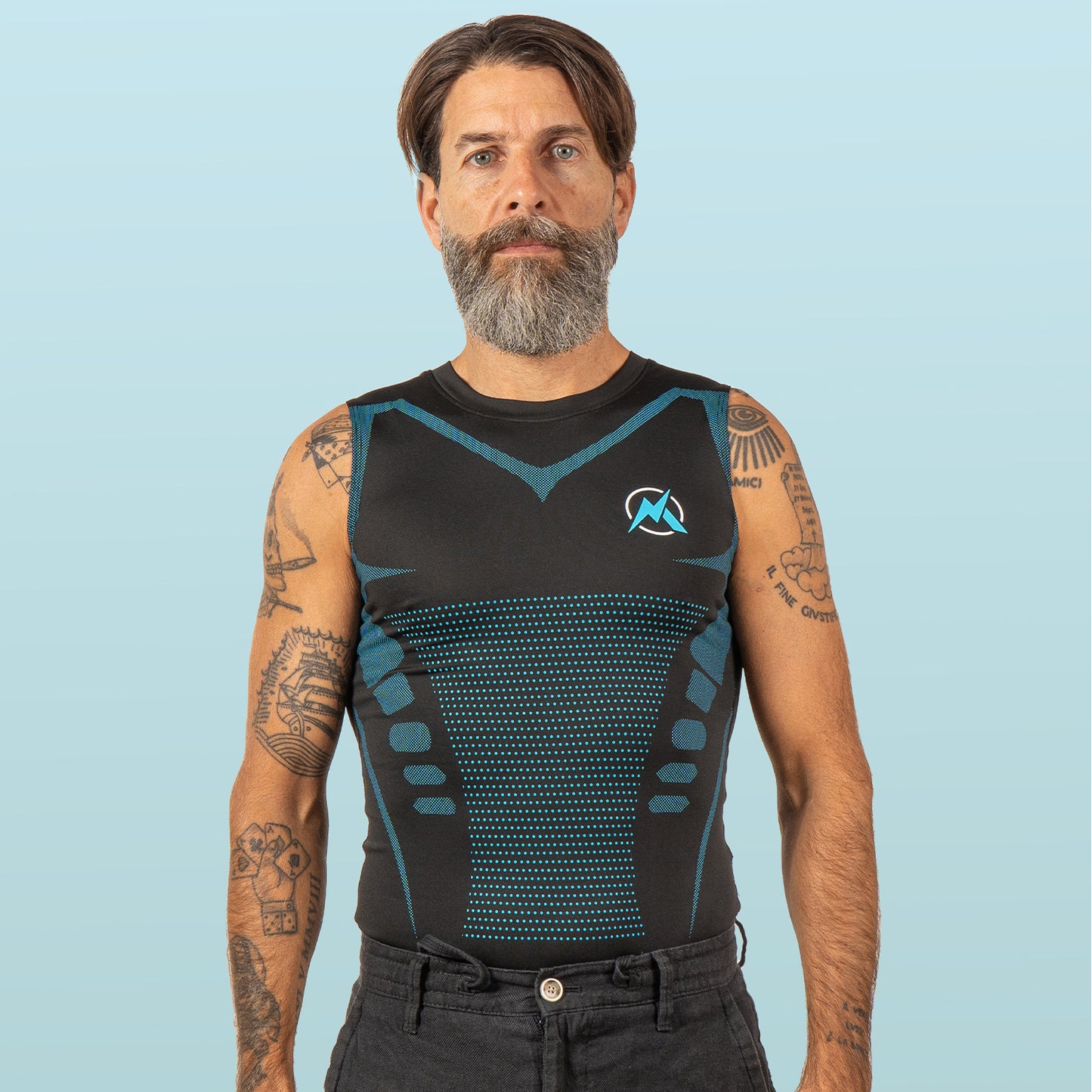
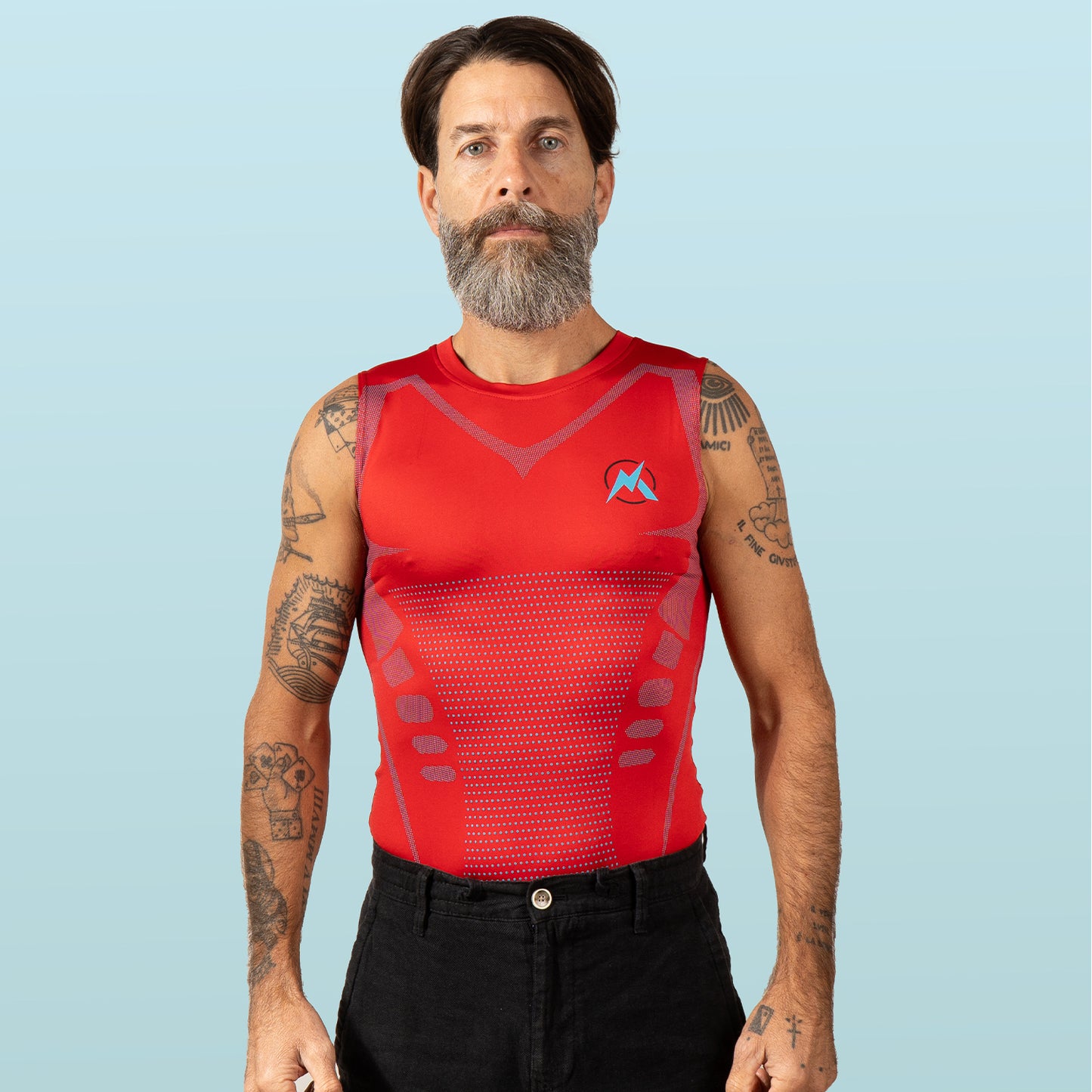
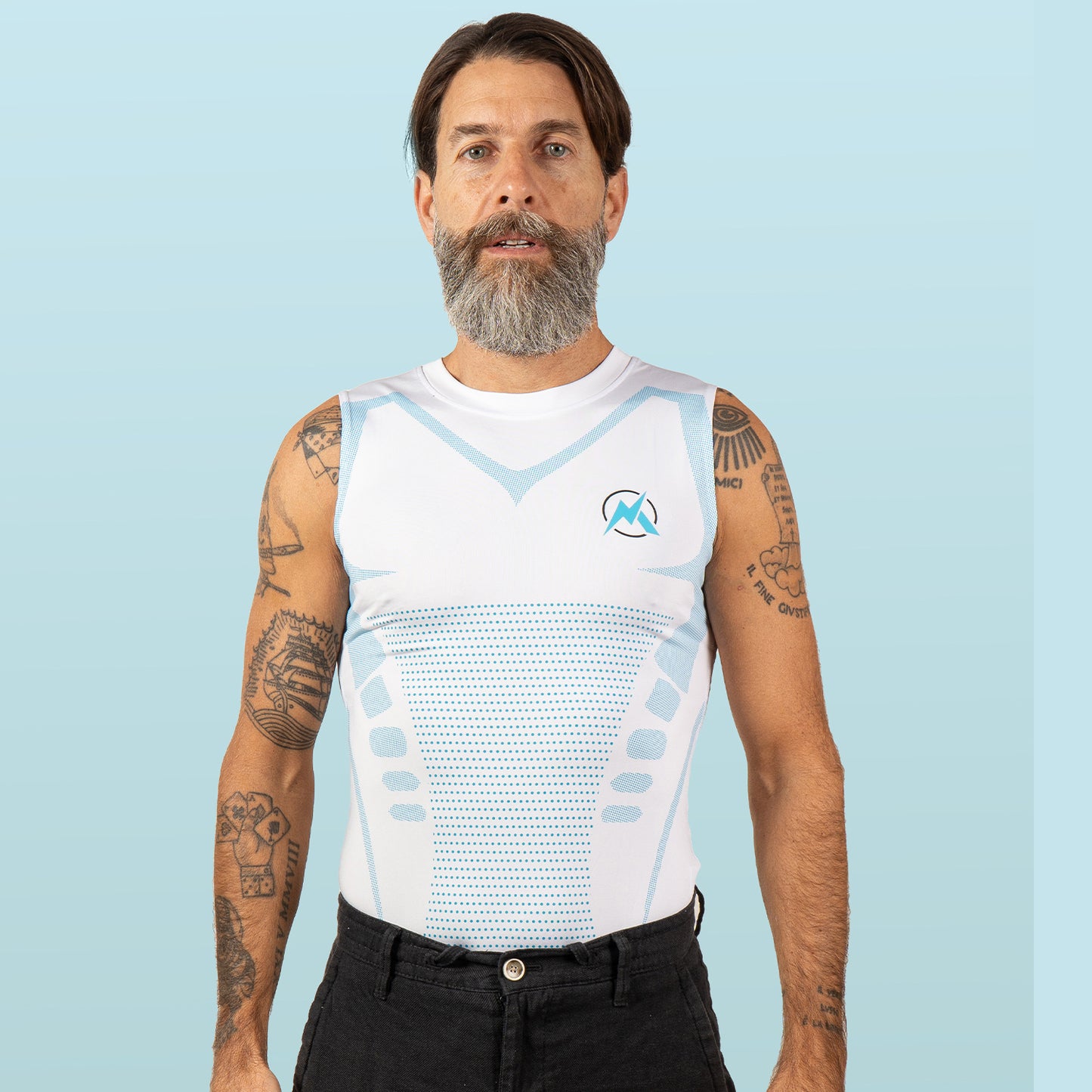
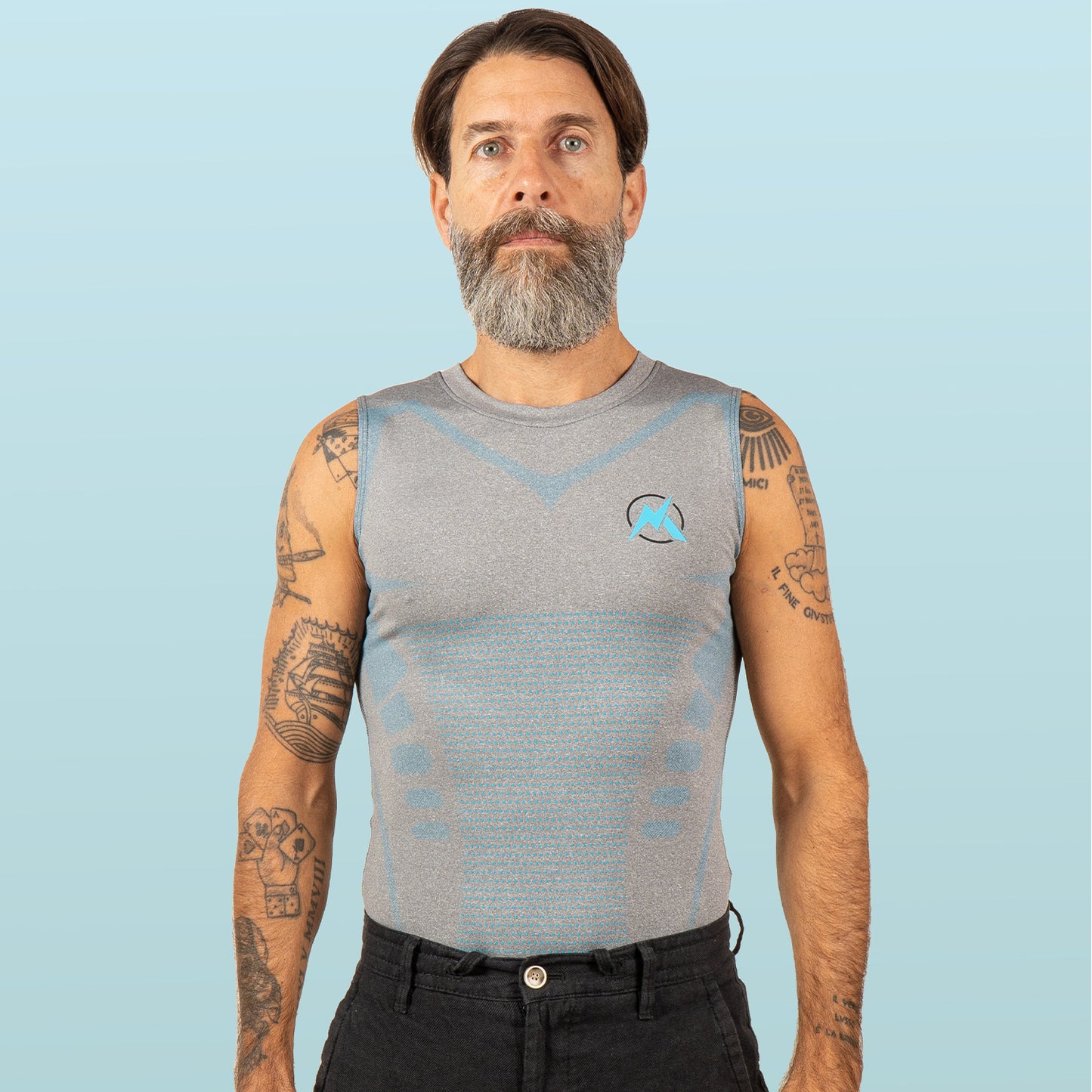
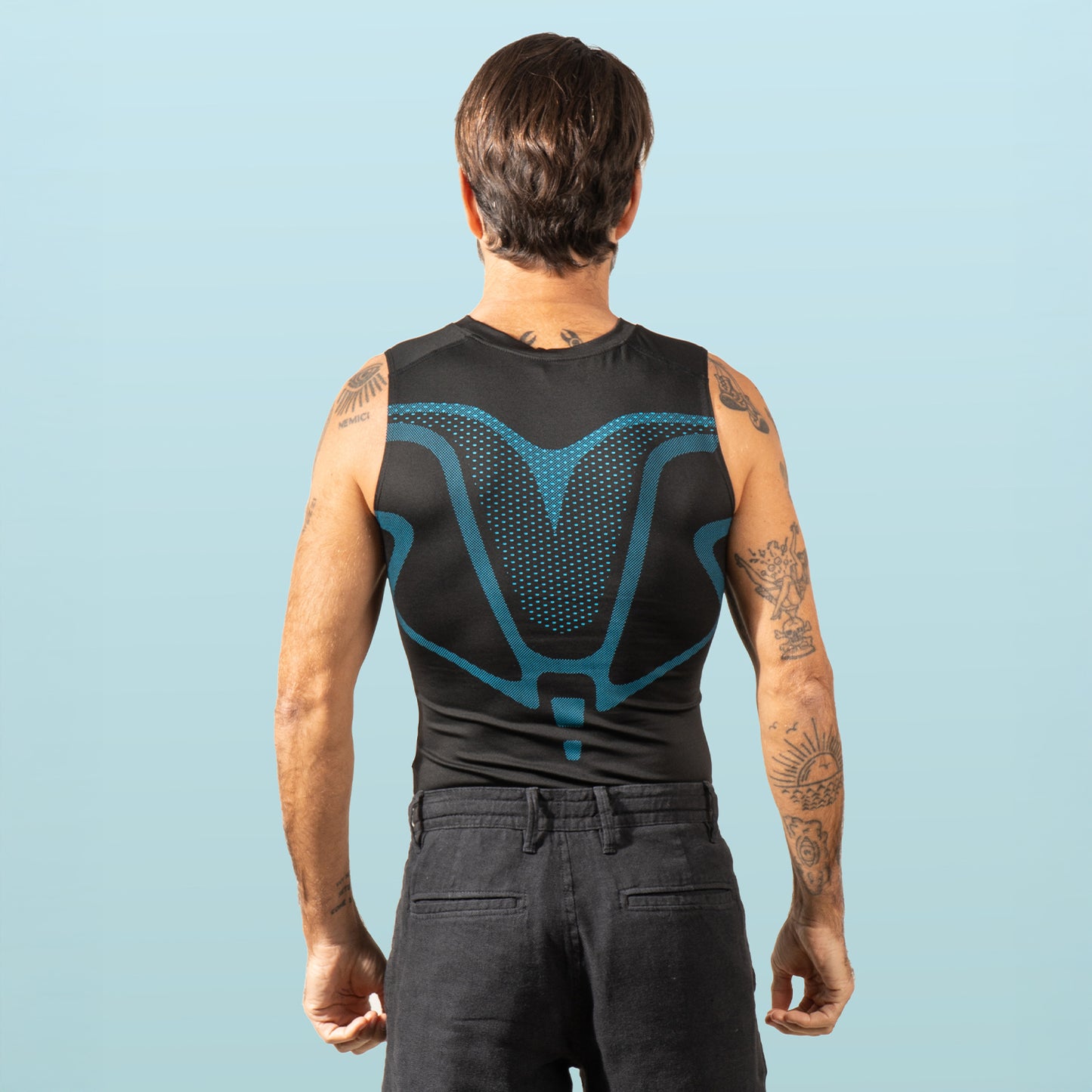
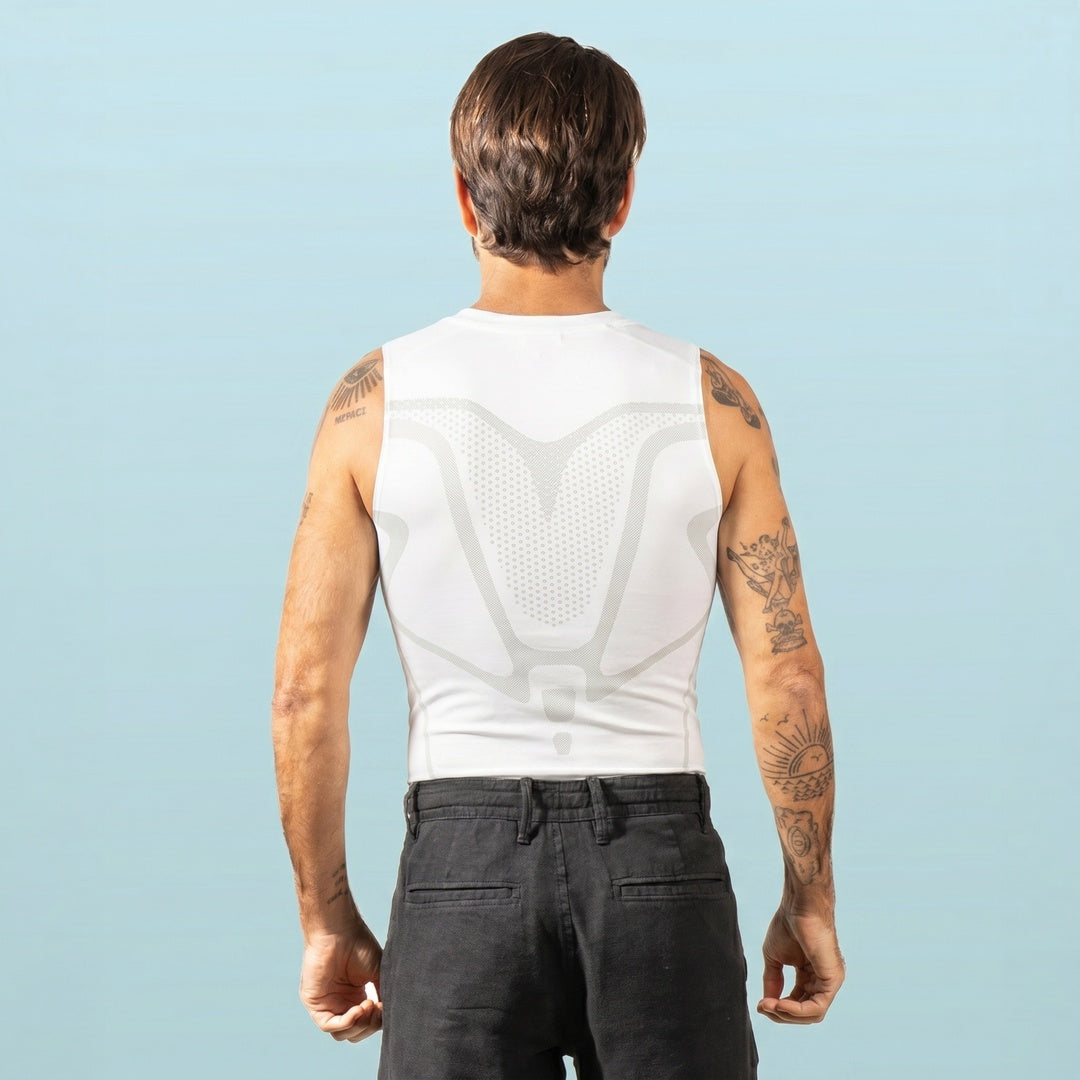
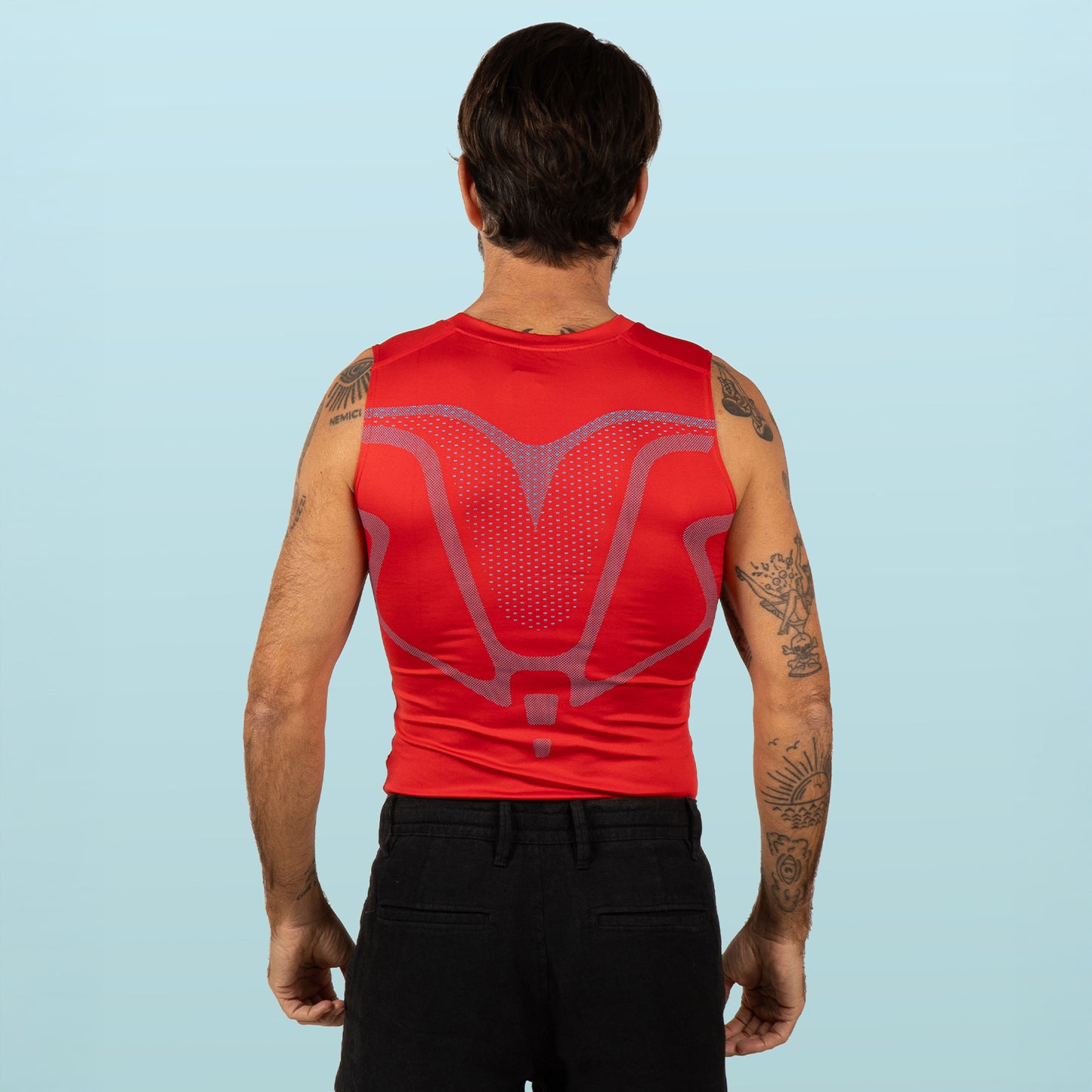
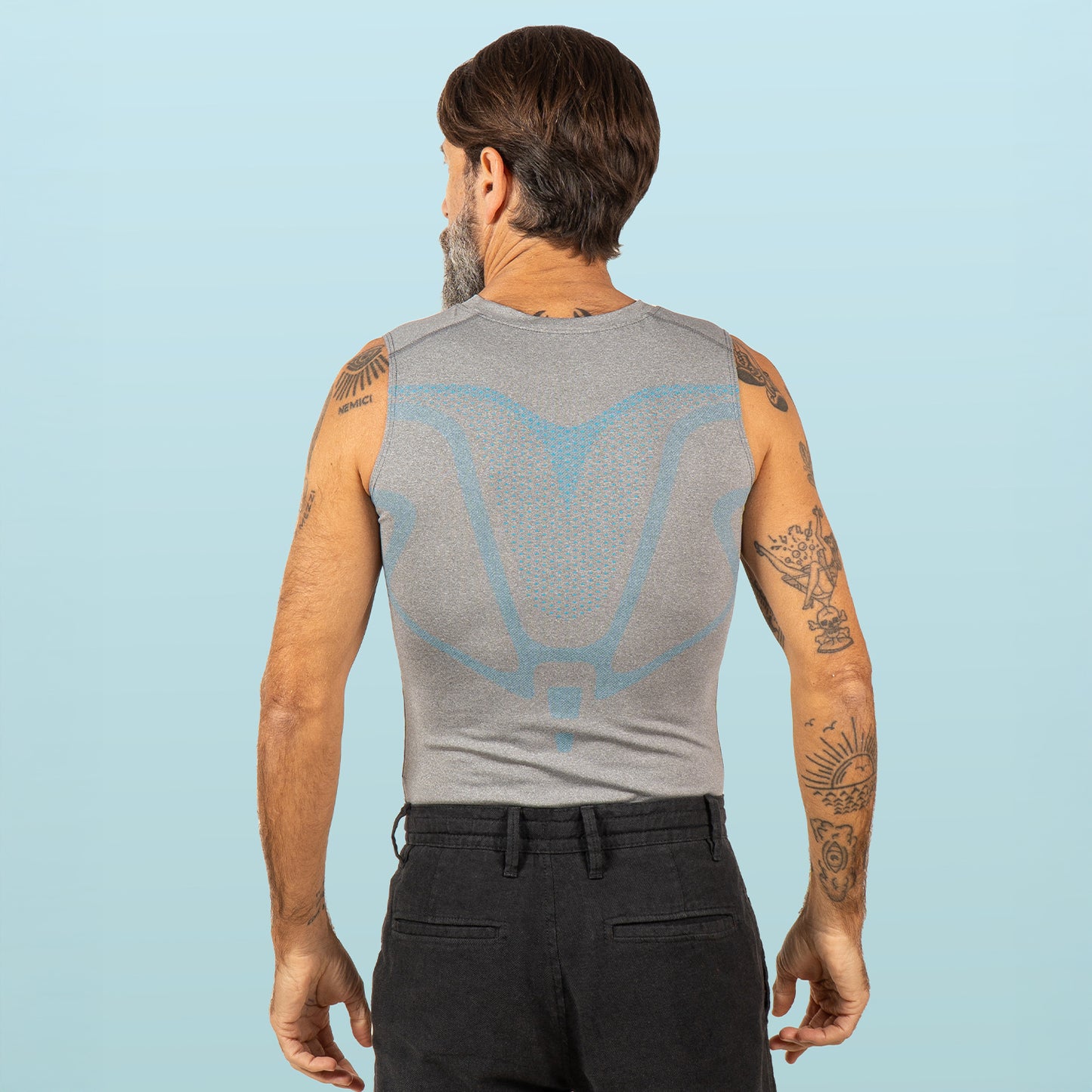
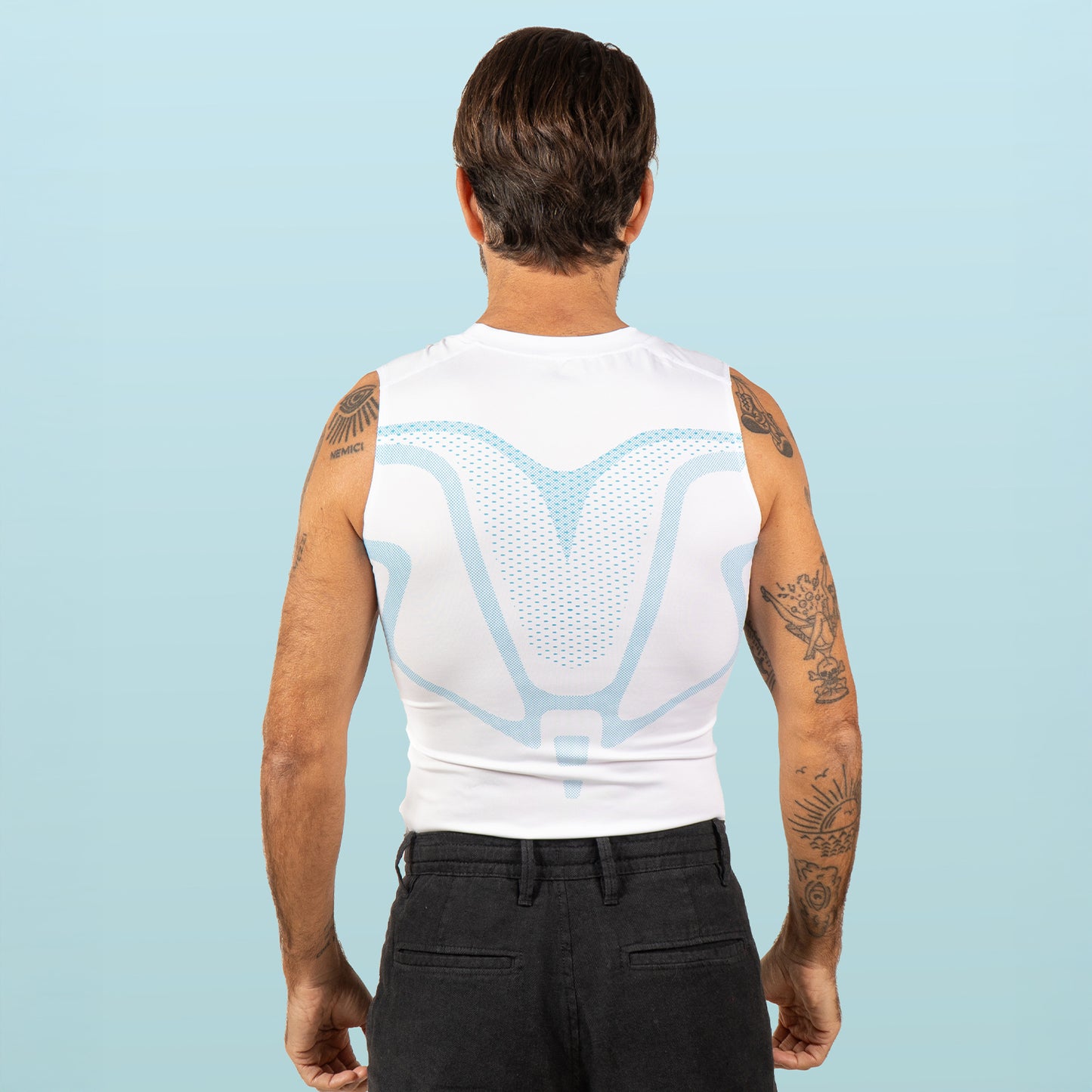
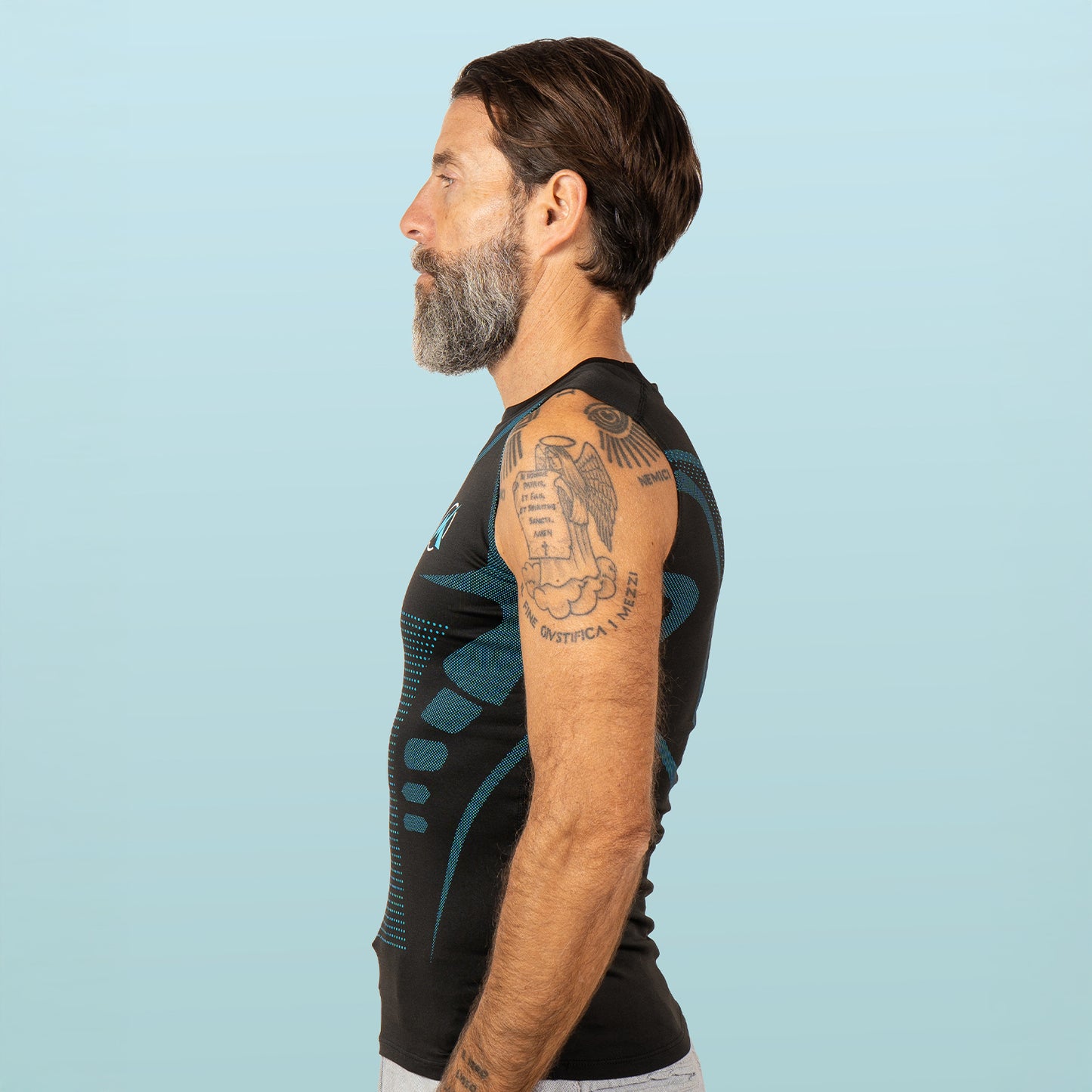
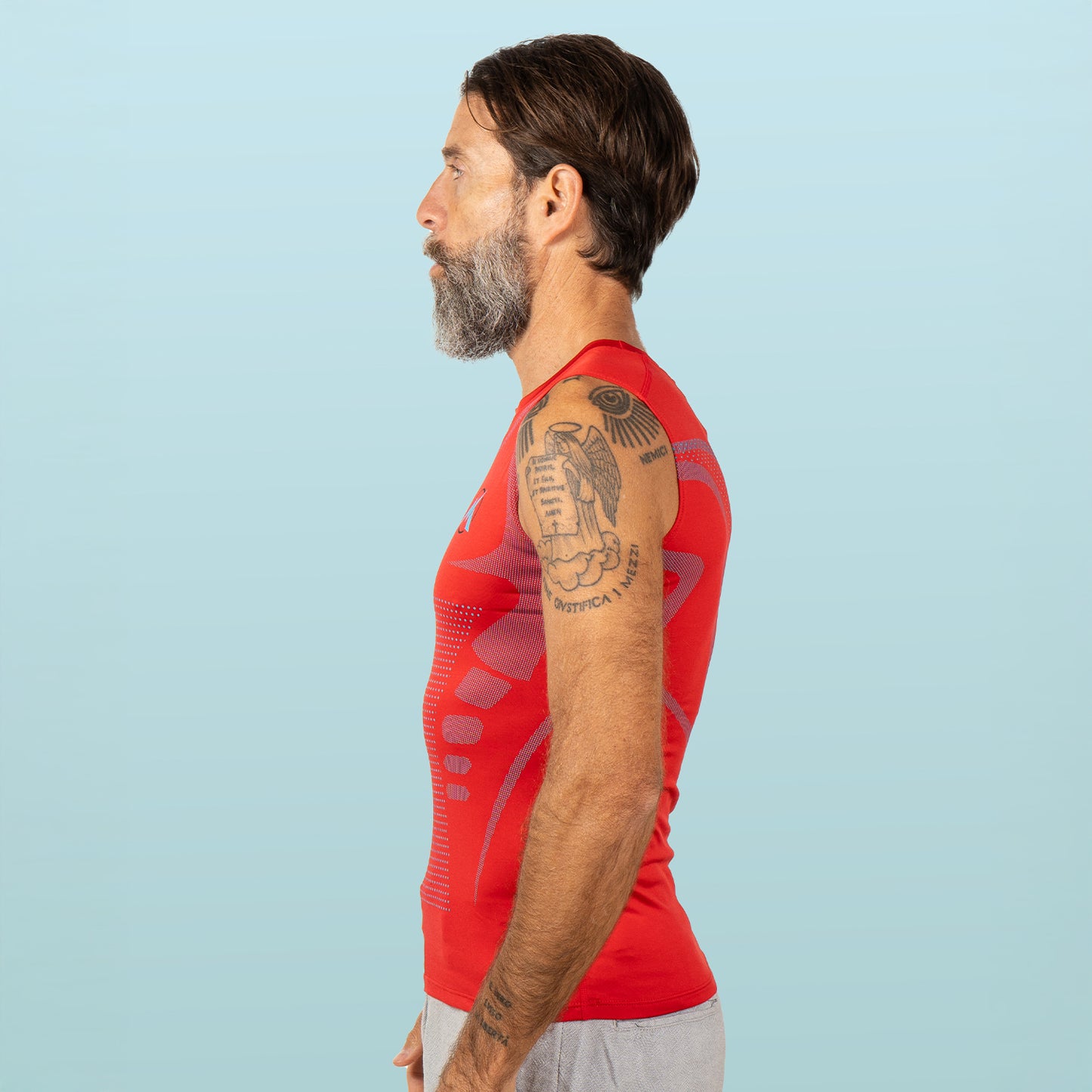
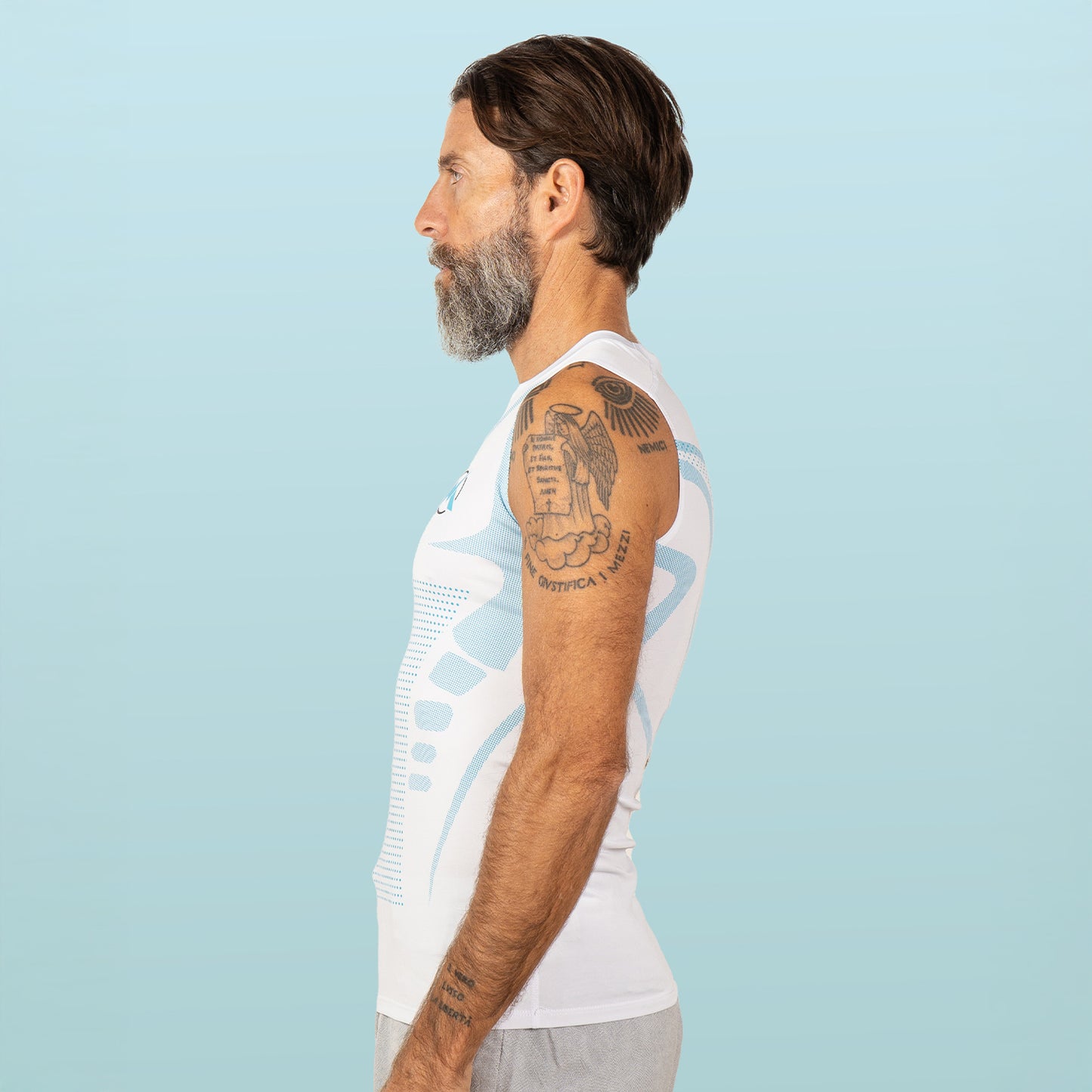
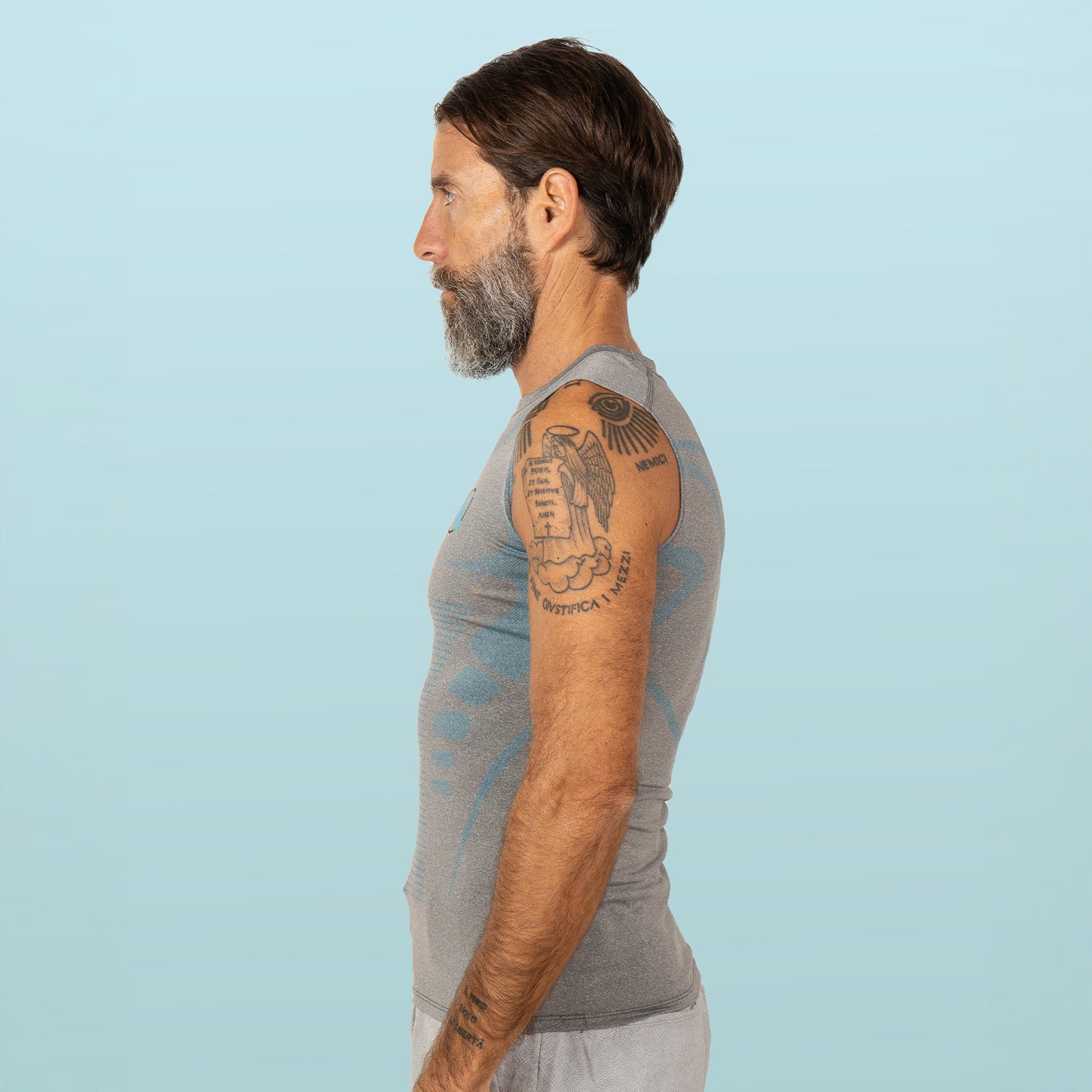
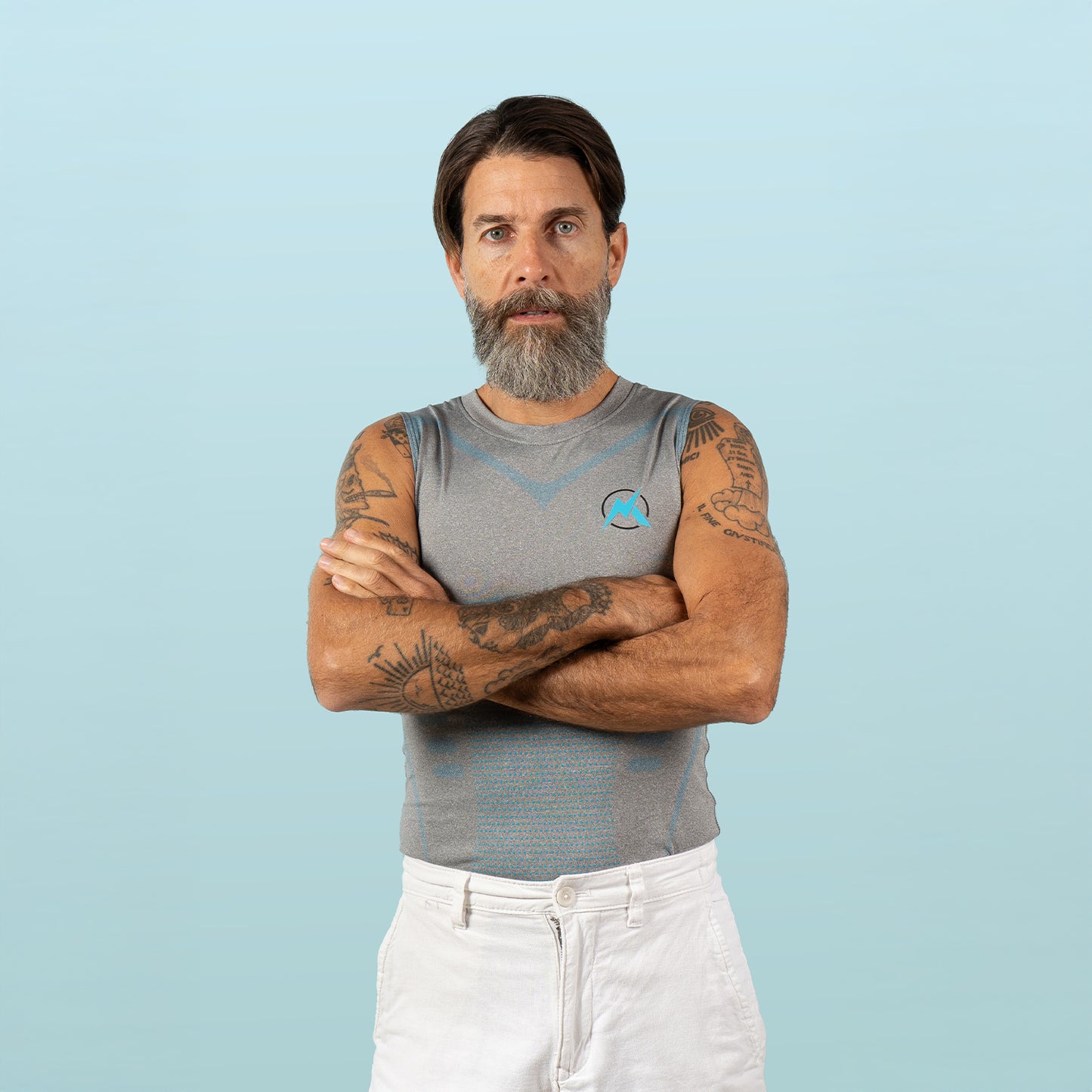
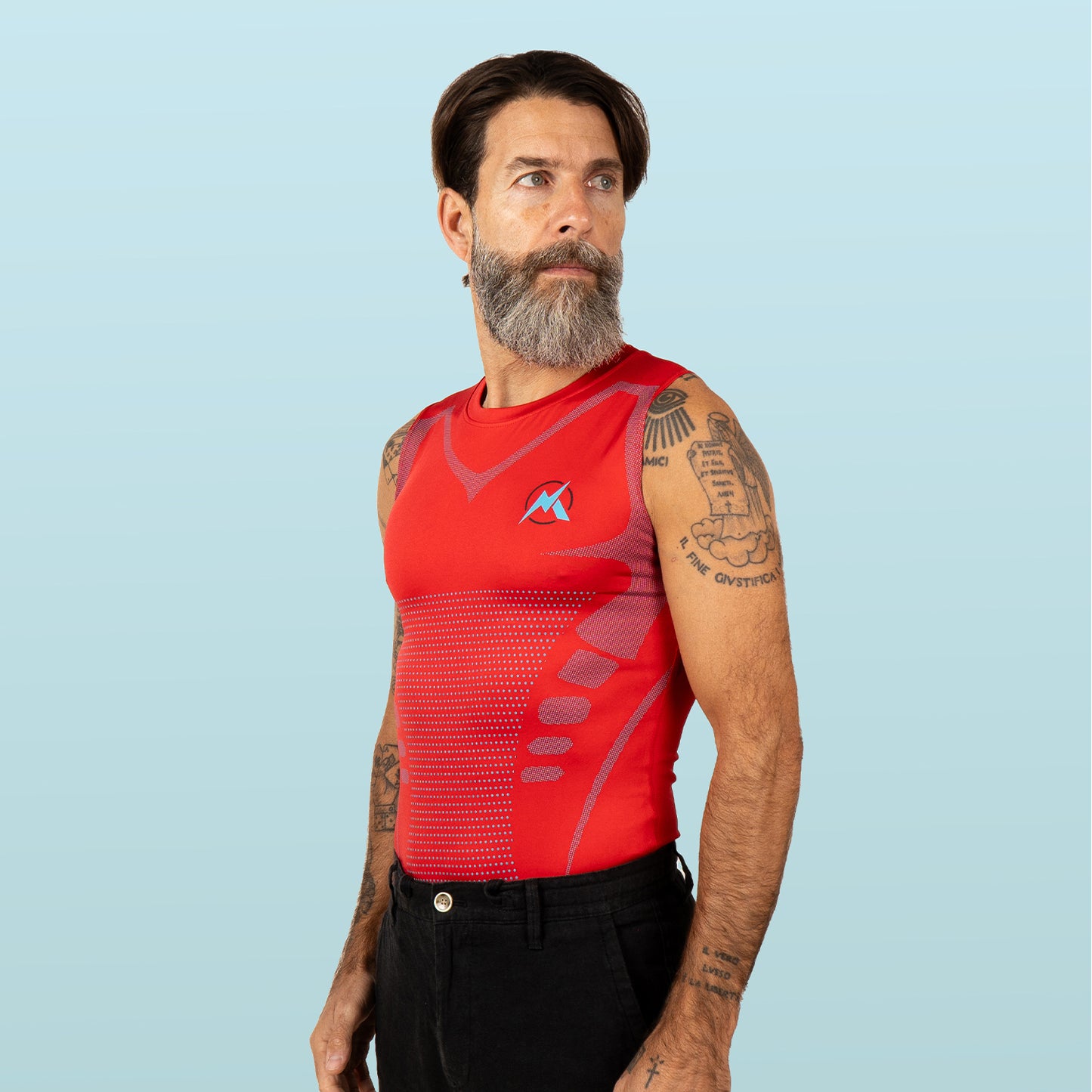
A compression tank under your shirt does what your morning routine started: it cues the chest and shoulders to stay open, it smooths the front of your torso, and it gives a flat surface for your dress shirt or polo to drape on. Many men report standing taller and looking more upright the moment they put one on — the layered effect of the morning routine and the all-day support is bigger than either piece on its own.
We covered this in detail in how to hide your belly under a shirt, where the same base layer plays the supporting role for fit, drape, and color. The principles overlap — posture, base layer, and shirt cut work as a system, not separately.
Maynox built the VitaBoost compression tank specifically for men past 45 — the guy who doesn’t need a gym shirt, just wants to feel sharp at the meeting, the dinner, the family event. Sleeveless. Black. Long enough to tuck. Designed to provide consistent support without crushing you.
It’s currently part of a buy-one-get-one-free offer at $15 — less than the cost of a single basic from most chains.
FAQ
How long does it really take to fix posture after 50?
Most men notice they can stand taller without thinking about it within 2-3 weeks of daily 5-minute work. Visible change in photos usually shows up between weeks 4 and 6. A new resting posture — where your body defaults to upright without you cueing it — typically settles in around the 3-month mark. The single biggest variable isn’t your age, it’s whether you do the work daily.
Can you still improve posture after 50 if you’ve never trained it?
Yes. The soft tissue and motor patterns that drive posture stay responsive at every age. The Mayo Clinic’s guide to good standing posture is a good starting reference point. The work doesn’t get harder after 50 — it just requires more consistency, because old patterns are deeper.
What’s the single best posture exercise for men over 50?
If you can only do one, do wall angels. It opens the chest, mobilizes the upper back, and trains shoulder blade movement — three issues that hit almost every man past 50. Sixty seconds a day will move the needle on its own. The full 5-minute routine works faster, but wall angels are the highest-leverage single move.
Should I do these exercises if I have back pain?
Most of these moves are gentle enough for men with mild back stiffness, especially the chin tuck and the hip flexor stretch. If you have diagnosed back pain — a herniated disc, sciatica, or an active injury — talk to a physical therapist before adding new mobility work. The hip flexor stretch and glute bridge are safe defaults for most low-back tightness; the thoracic extension is the one to skip until you’ve cleared it with a professional.
Will a compression tank fix my posture by itself?
No — and any product claiming to is overselling. A compression tank cues your shoulders open and smooths the front of your torso, which makes upright posture easier to maintain. It doesn’t replace the daily mobility and activation work. The two together — short routine in the morning, supportive base layer through the day — work better than either alone.
Posture after 50 is a problem of daily input, not age. Five minutes, five exercises, every morning. Add a base layer that holds the cue through the rest of the day. Photos start to look different in a month. The man on the other side of a year of this is not the same shape as the one who started.
This article is for general health and styling information and not medical advice. If you have specific concerns about back or neck pain, consult a qualified healthcare professional before starting a new exercise routine.