By Owen Blot · Founder, Maynox · Last updated May 14, 2026
- What's actually happening between 30 and 50
- The four-system stack pushing your belly out
- Why "eat less, move more" stopped working
- The 8-week reset that actually moves the belt
- Foods that quietly grow the belly
- What you wear matters more than you think
- Red flags: when to call your doctor
- Frequently asked questions
You used to be the lean one. Now there's a roll over your belt that wasn't there at 35 — and your wife says nothing but you see her see it. You're not eating worse. You're not drinking more. You haven't sat on the couch for ten years. So why does your gut keep pushing out?
This is the question every man in his mid-40s ends up asking, usually around the time pants size 34 stops fitting. The honest answer isn't laziness, and it isn't bad genes. The reason men get a belly after 40 is a slow, four-system shift inside the body — and the standard advice (eat less, run more) only addresses one of them. Here's what's actually happening, and the protocol that fixes all four.
What's actually happening between 30 and 50
In your 20s, your body ran like a furnace. Eat a pizza on Friday, skip the gym Tuesday, no visible damage. That furnace is still running after 40 — it's just running on a lower setting. The metabolic shift is real, measurable, and well documented.
The Mayo Clinic notes that men in their 50s need roughly 200 fewer calories a day than they did in their 30s just to maintain the same weight (source). That sounds small. Over a year, it adds up to roughly 20 pounds of stored fuel your body has to park somewhere — and after 40, it parks it on your gut.
The fat itself also changes. Younger men carry subcutaneous fat — the soft pinch under the skin. Older men accumulate visceral fat, the harder, deeper fat that wraps around the liver, intestines and pancreas. Cleveland Clinic describes visceral fat as metabolically active tissue that actively releases inflammatory compounds and hormones into your bloodstream (source). That's why a 44-year-old belly often feels firm, not jiggly. It isn't lazy fat. It's working fat — and what it's doing isn't friendly.
The four-system stack pushing your belly out
Most articles on this topic name one cause and move on. Testosterone. Or carbs. Or sleep. The reality is that four systems shift in parallel between 30 and 50, and they reinforce each other. Fixing one without the others is why most men plateau at "I lost eight pounds and then it stopped."
1. Testosterone is quietly leaking out
Testosterone is the hormone that tells your body to build muscle, burn fat for energy and stay insulin-sensitive. Starting around age 30, testosterone declines roughly 1 to 2 percent per year in most men. By 45, you have meaningfully less of it than the version of you who could hit the gym for a week and lose a tire. The body interprets low testosterone partly as a signal to store fat — particularly in the abdominal region.
2. Lean muscle is disappearing faster than you notice
Sarcopenia — age-related muscle loss — starts in your 30s and accelerates after 40. NIH research notes that men accumulate visceral fat partly because they lose lean muscle that would otherwise burn the calories (source). Muscle is your metabolic floor. Less muscle means fewer calories burned at rest — when you're sleeping, sitting in meetings, watching TV. The same calorie intake that kept you lean at 32 becomes a surplus at 47.
3. Insulin sensitivity is sliding
Insulin is the hormone that tells your cells to absorb glucose from your blood. After 40, those cells get stubborn. They respond less. Your pancreas pumps out more insulin to compensate — and high insulin is one of the strongest fat-storage signals the body has. The fat ends up around the middle. This is why the same bagel that didn't matter at 30 sits on your waistline at 45.
4. Sleep is shorter and shallower
The piece almost nobody talks about. Sleep quality drops in the 40s — earlier wake-ups, more fragmented nights, less time in deep sleep. Poor sleep raises cortisol, the stress hormone that directly drives visceral fat storage and crushes testosterone production. Tired men crave high-sugar food, drink more alcohol, train less hard. The whole stack tilts in the wrong direction.
Each of these alone is manageable. All four together — which is exactly the situation most men hit between 42 and 50 — is why the belly seems to appear out of nowhere.
Why "eat less, move more" stopped working
You probably tried it. Skipped lunch for a week, jogged on weekends, lost two pounds, lost momentum, gained three pounds back. Here's why that approach fails after 40:
- Cutting calories without protein accelerates muscle loss. Lose muscle, burn fewer calories, regain faster — every diet you do badly makes the next one harder.
- Steady-state cardio doesn't move visceral fat much. Long jogs help your heart but barely touch belly fat compared to strength training.
- Sleeping six hours and eating clean cancels out. Cortisol wins. Sleep-deprived people on a calorie deficit lose more muscle and less fat than well-rested people eating the same way.
- Stress eating after a 10-hour workday isn't weakness. It's your nervous system asking for sugar to dampen a cortisol spike.
The takeaway: belly fat after 40 isn't a calories problem. It's a hormones-plus-recovery problem. Treat it that way.
The 8-week reset that actually moves the belt
This isn't a 30-day shred. Those don't work past 40 — and even when they "work," the rebound erases the result. The plan below is built to address all four systems above without wrecking your social life, your sleep or your knees.
Weeks 1–2: Sleep first, protein floor
Forget the gym for two weeks. The first move is sleep. Same lights-out time every night, no phone in bed, room cool and dark. Aim for seven hours minimum.
Set a protein floor at every meal — a palm of meat, fish, eggs or cottage cheese. No counting. Just don't eat a meal without protein. This single change protects muscle as you start losing fat, which is the whole game.
Weeks 3–4: Walk daily, lift twice a week
Add a 30-minute walk most days. Brisk, not casual — fast enough that talking is slightly effortful. Harvard Health summarizes the federal guideline as at least 150 minutes of moderate aerobic activity per week for adults (source). A daily walk covers it.
Twice a week, lift heavy-ish. Three movements only: a squat (or leg press), a push (push-ups or dumbbell press), a pull (rows or pull-downs). Three sets of eight reps each. Twenty minutes total. That's it. The goal is muscle preservation and insulin sensitivity — not bodybuilding.
If you've been carrying yourself with rounded shoulders for years, the lifting will feel awkward. That's normal — and it's why fixing your posture in parallel matters more than men think. Stronger posture means better lifts, deeper breaths, less back pain after a day at the desk.
Weeks 5–8: Tighten the eating window
Now compress when you eat — not how much. Push breakfast to 11 a.m. and finish dinner by 7 p.m. That's an 8-hour eating window with a 16-hour fast. Harvard Health notes that calorie-restricted eating patterns outperform unrestricted ones for visceral fat loss, and tighter windows naturally drop intake without counting.
Add a fourth lifting session if your recovery handles it. Keep the walks. Keep the sleep. By week 8, most men report belts moving one notch and pants fitting differently — not from heroic effort, but from removing the systemic drag.
Foods that quietly grow the belly
These aren't the obvious villains. They're the items most men assume are "fine":
- Beer and sugary cocktails. Alcohol parks calories in the liver and stops fat burning for hours. The "beer belly" is real.
- Bread at every meal. Not because bread is evil — because it's how most men over-eat refined carbs without noticing.
- "Healthy" smoothies. Often 60-plus grams of sugar disguised as fruit.
- Late-night snacks. Insulin response is blunted at night. Same calories, more fat storage.
- Restaurant portions. The average restaurant entrée carries close to 1,200 calories before sides.
You don't need to eliminate any of these. You need to know they're the levers — so when you choose them, you choose them on purpose.
What you wear matters more than you think
This part isn't about hiding the belly. It's about momentum.
The first six weeks of an 8-week reset are the worst part. The scale doesn't move much. Your shirts look the same in the mirror. Most men quit here — not because the plan isn't working, but because they can't see the work yet. The men who finish all eight weeks have one thing in common: they kept feeling like the version of themselves they were building toward, even when the numbers hadn't moved.
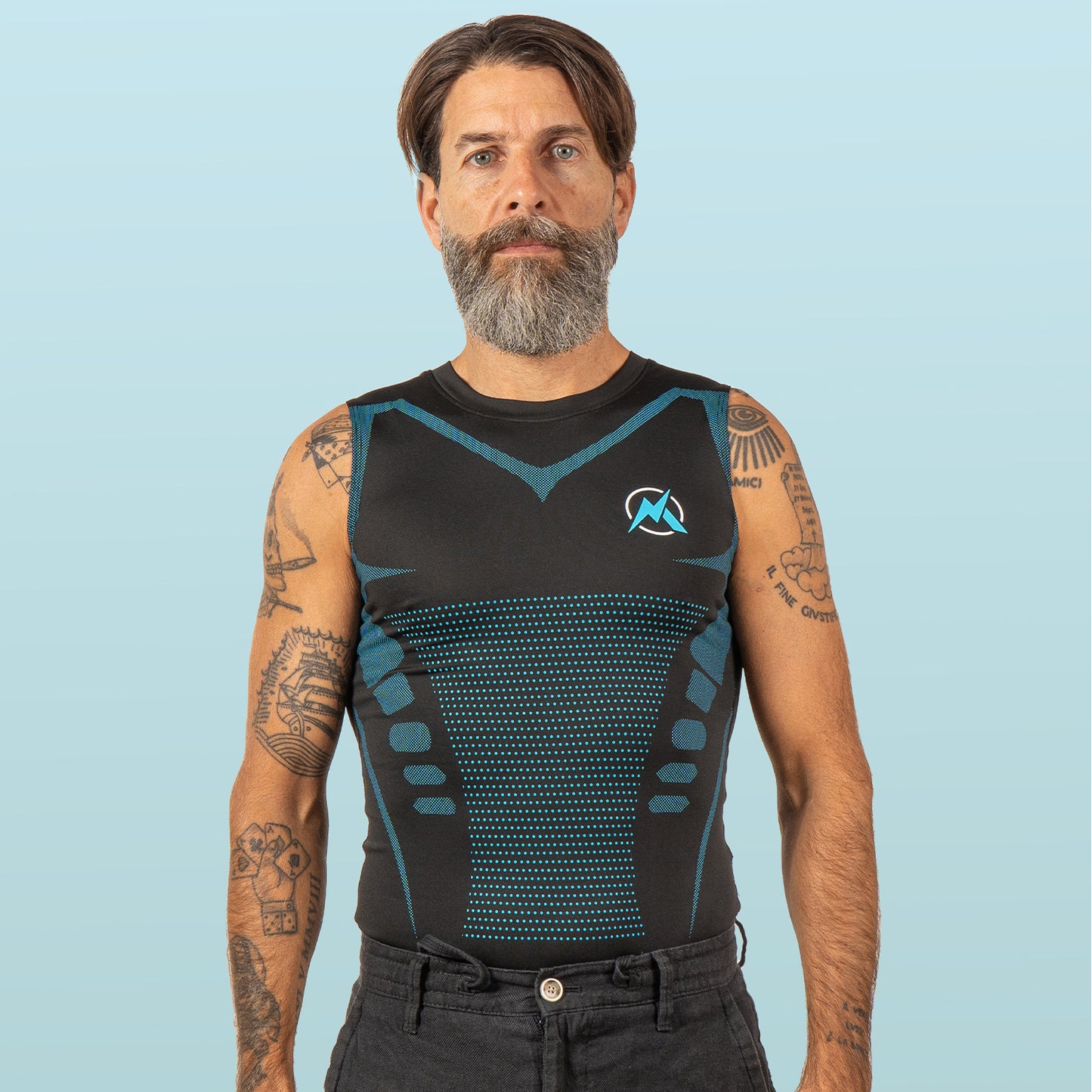
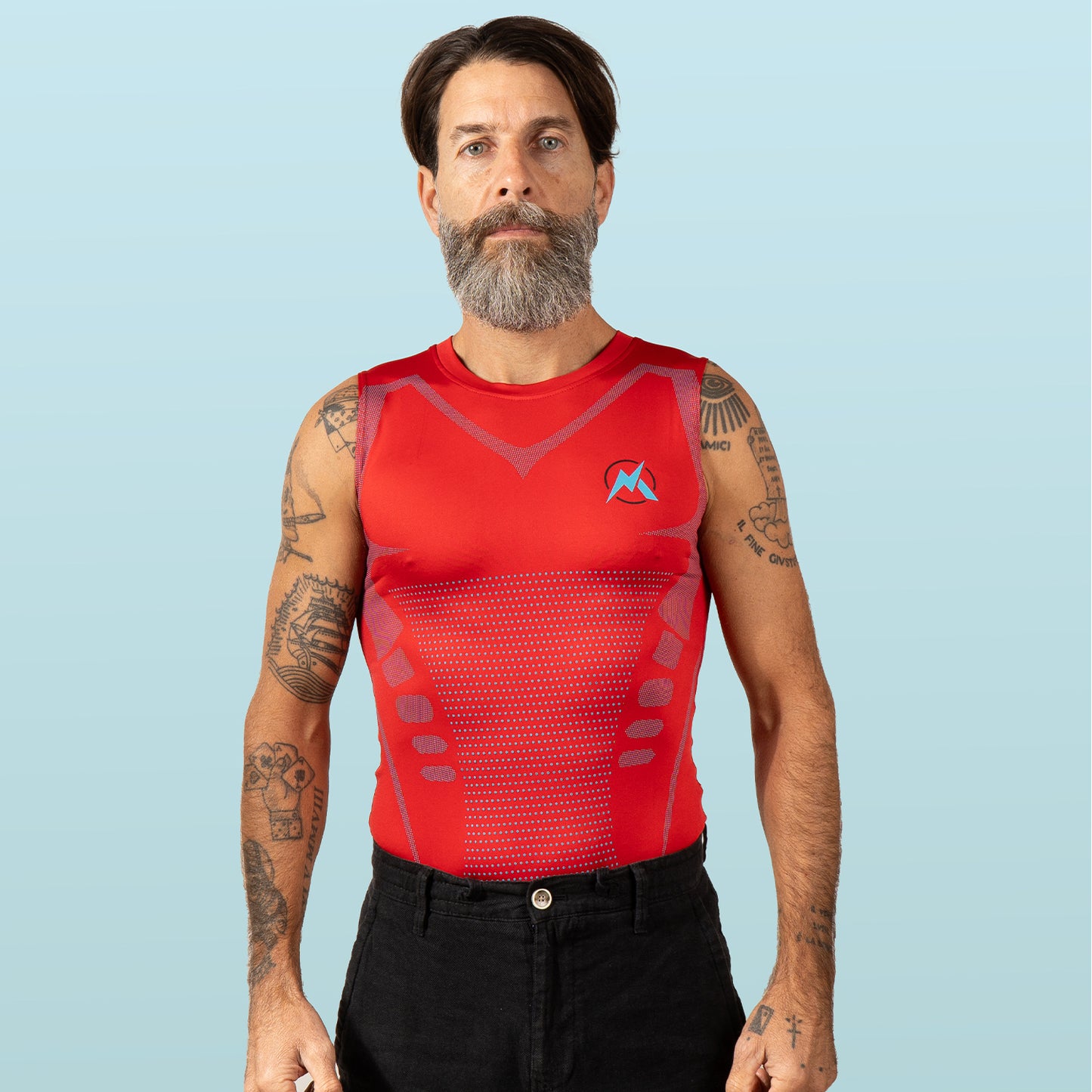
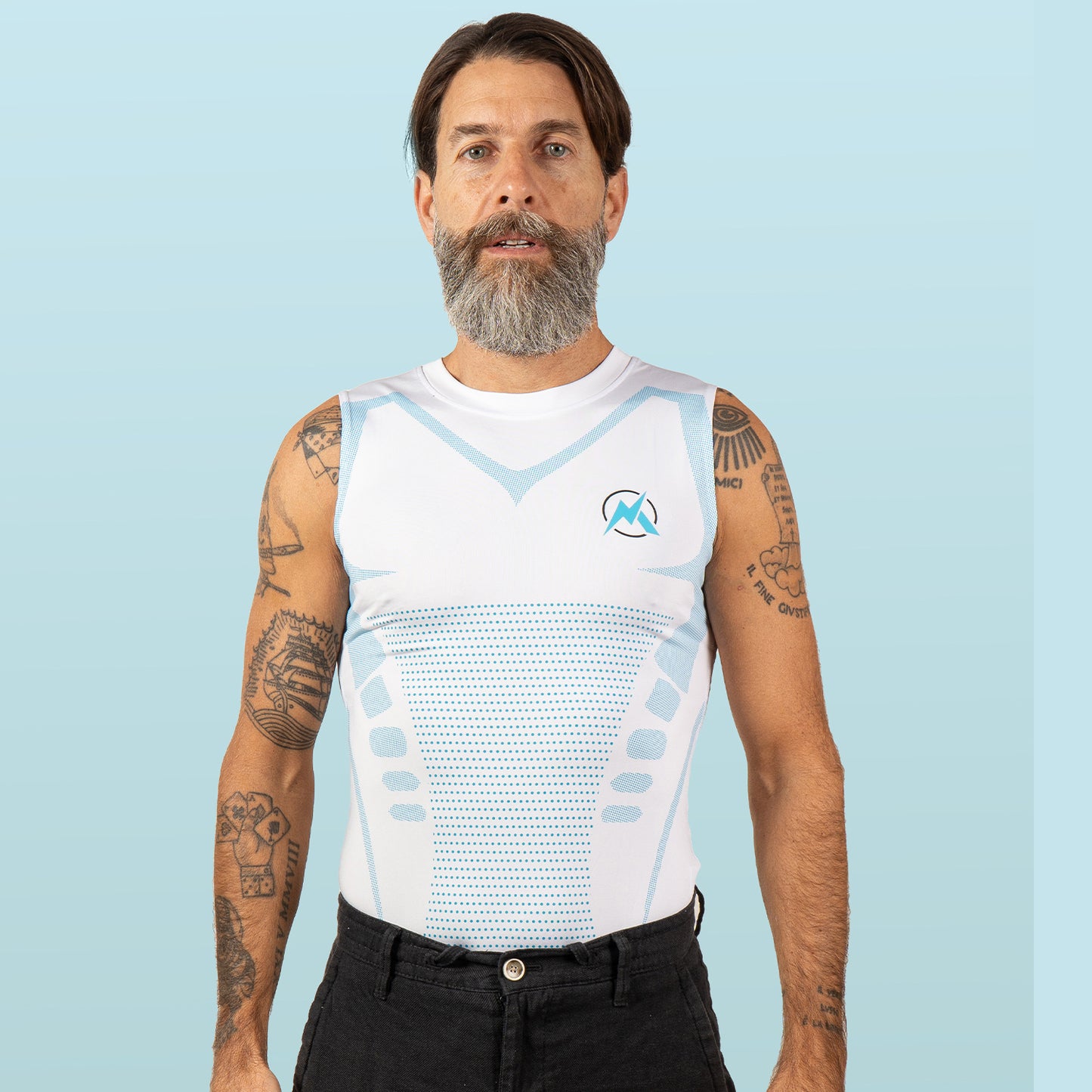
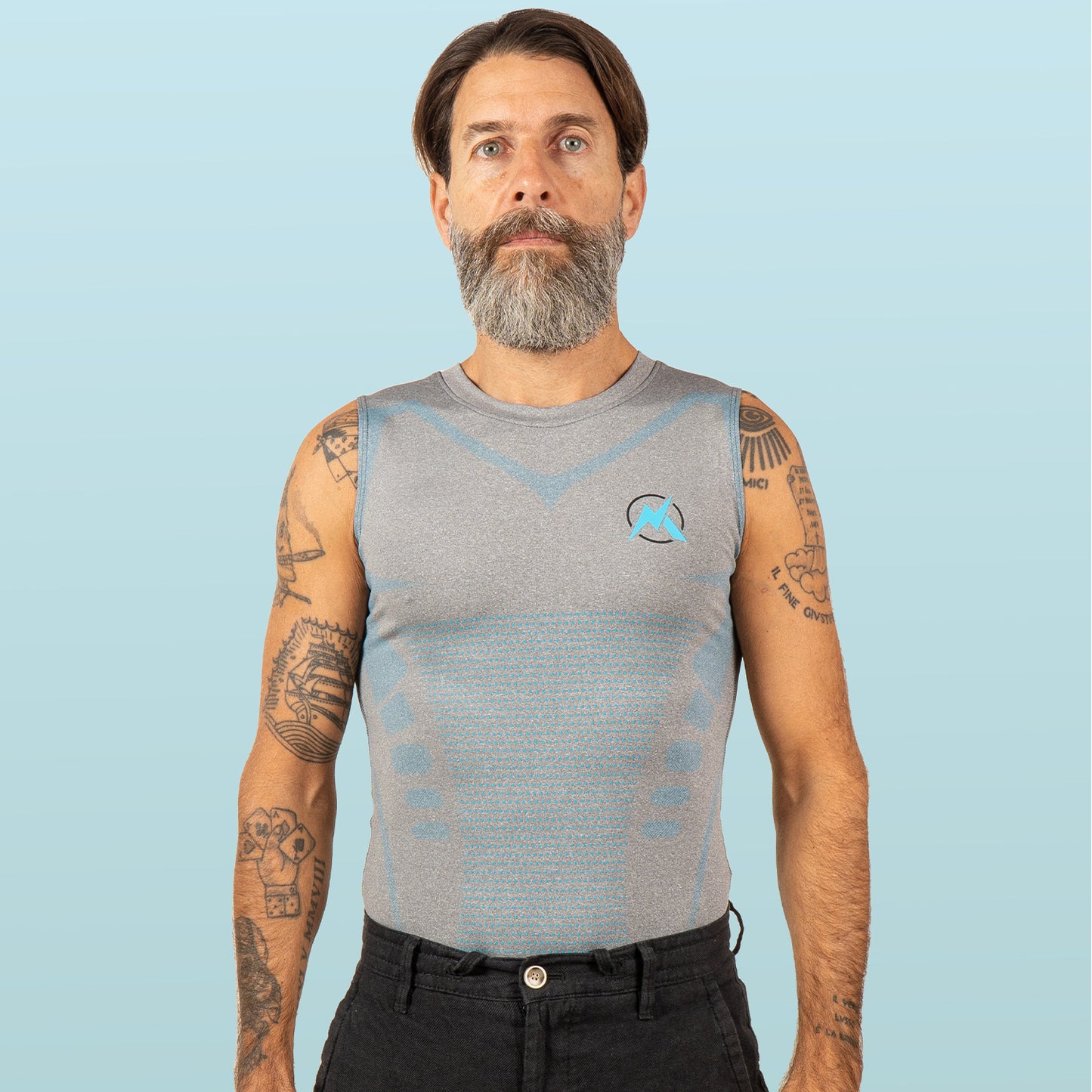
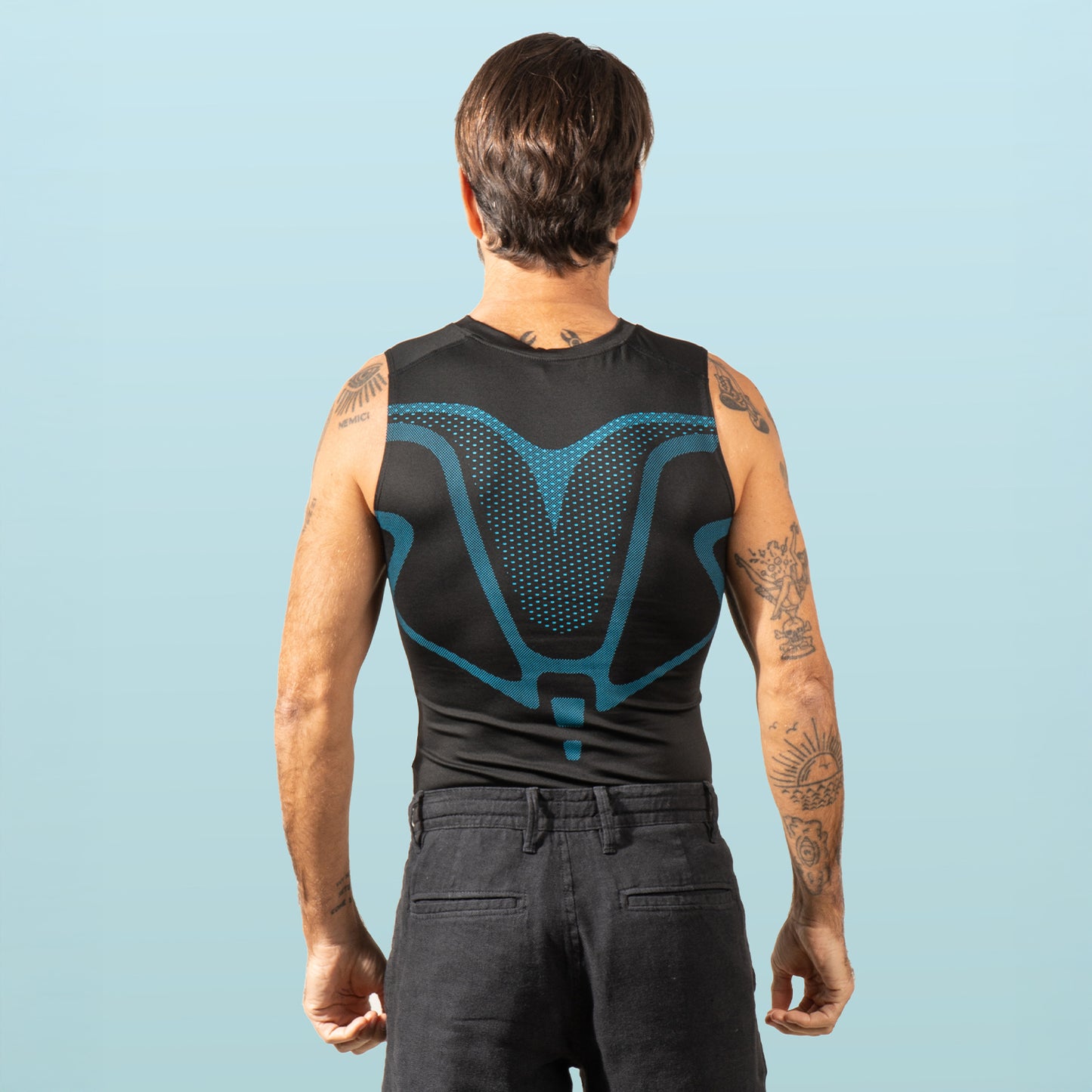
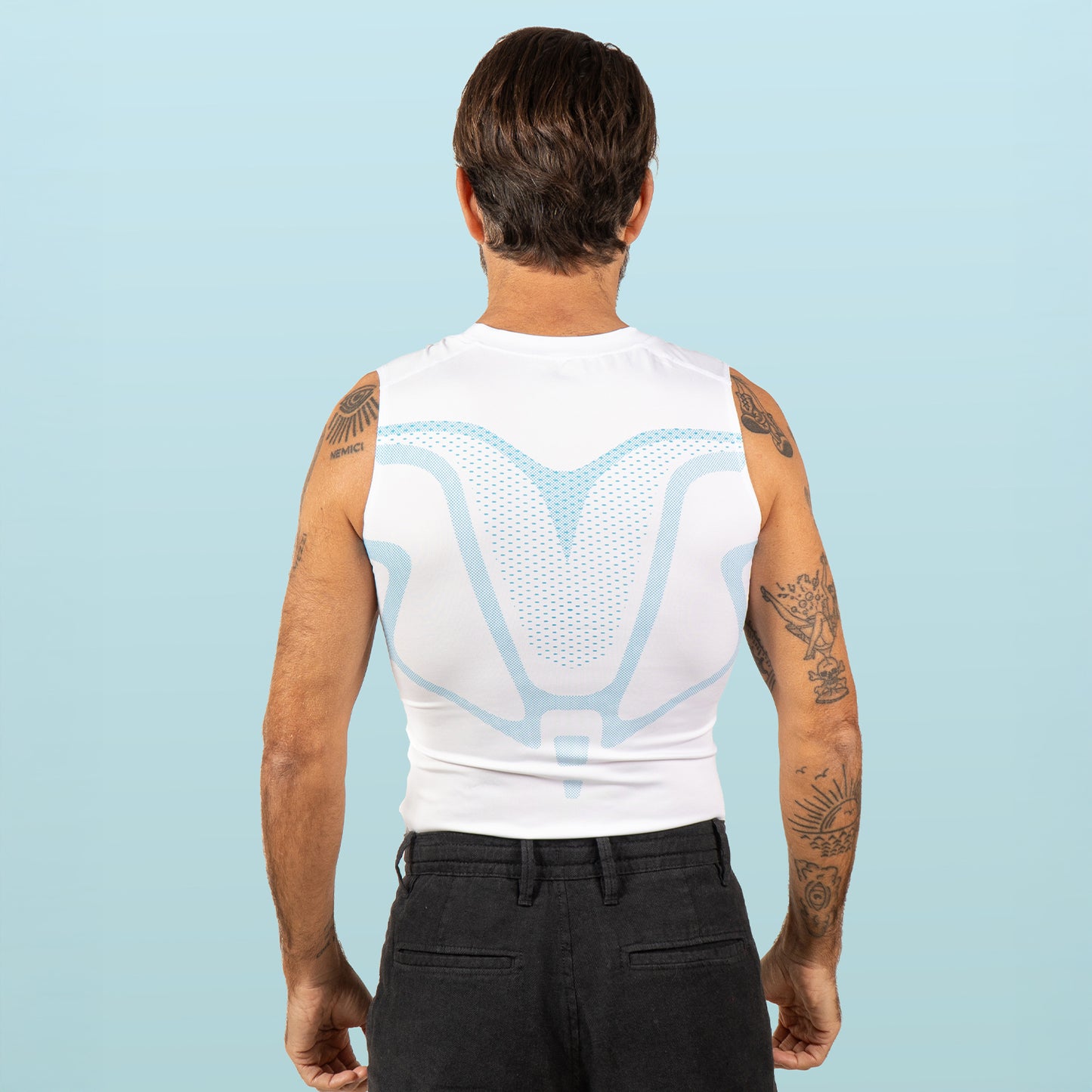
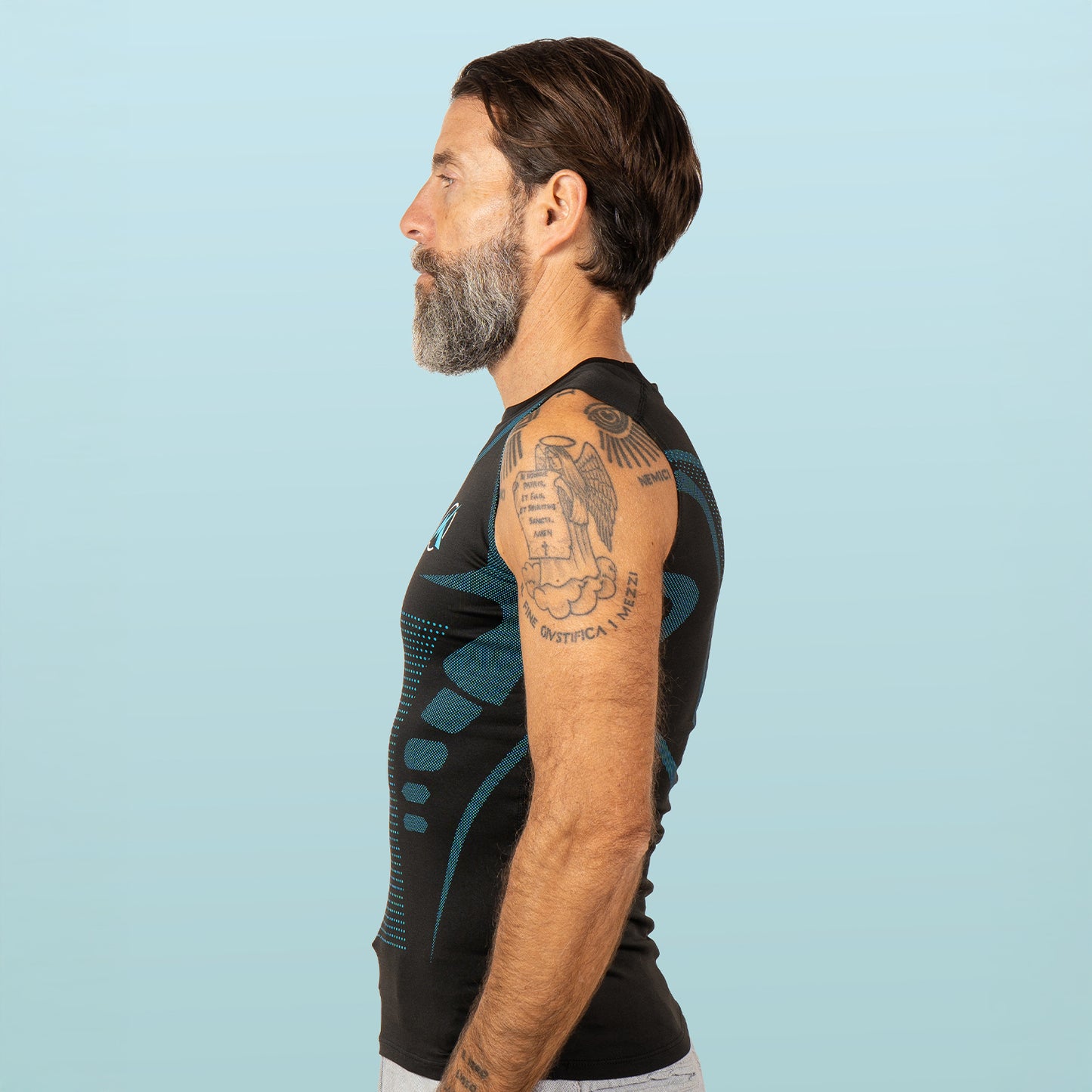
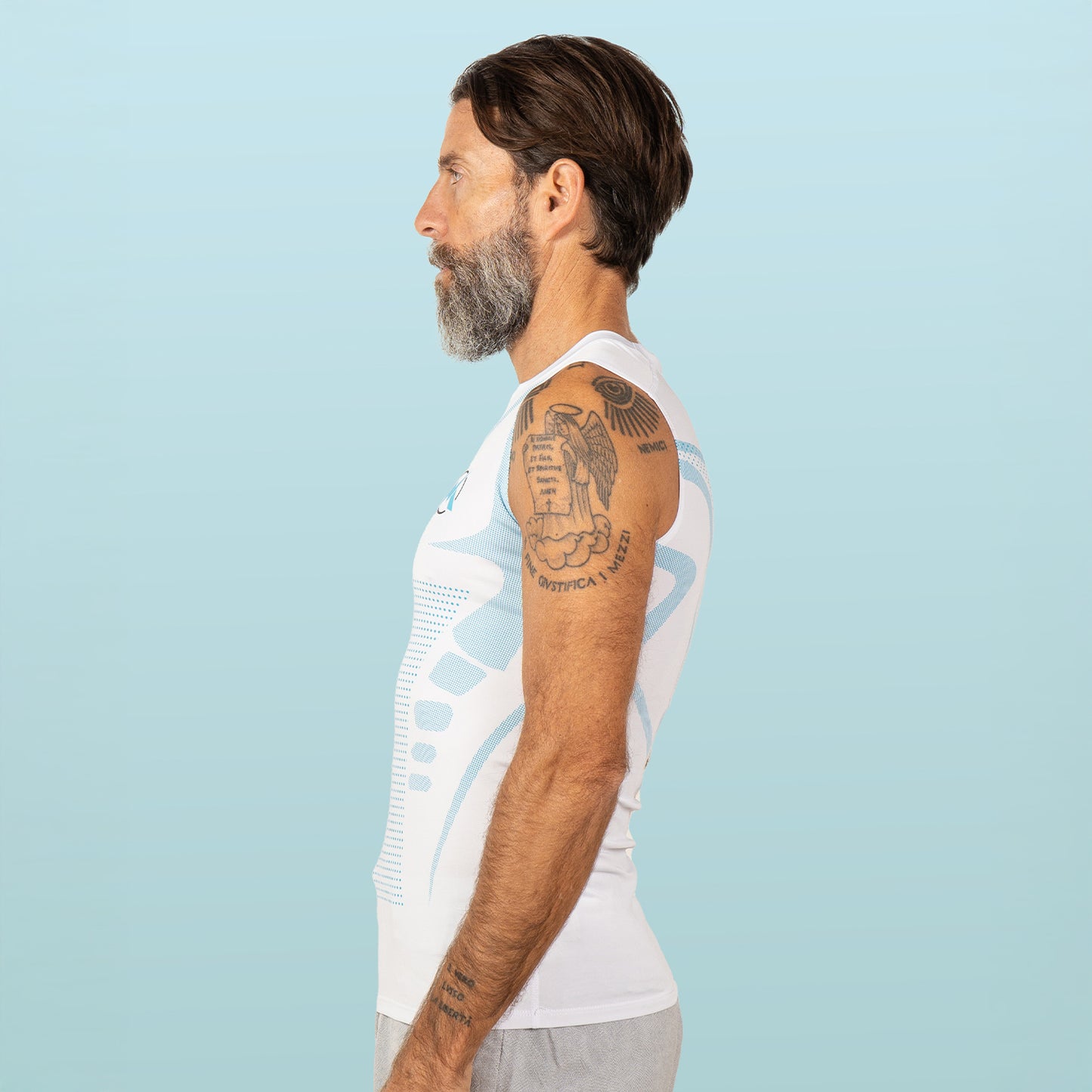
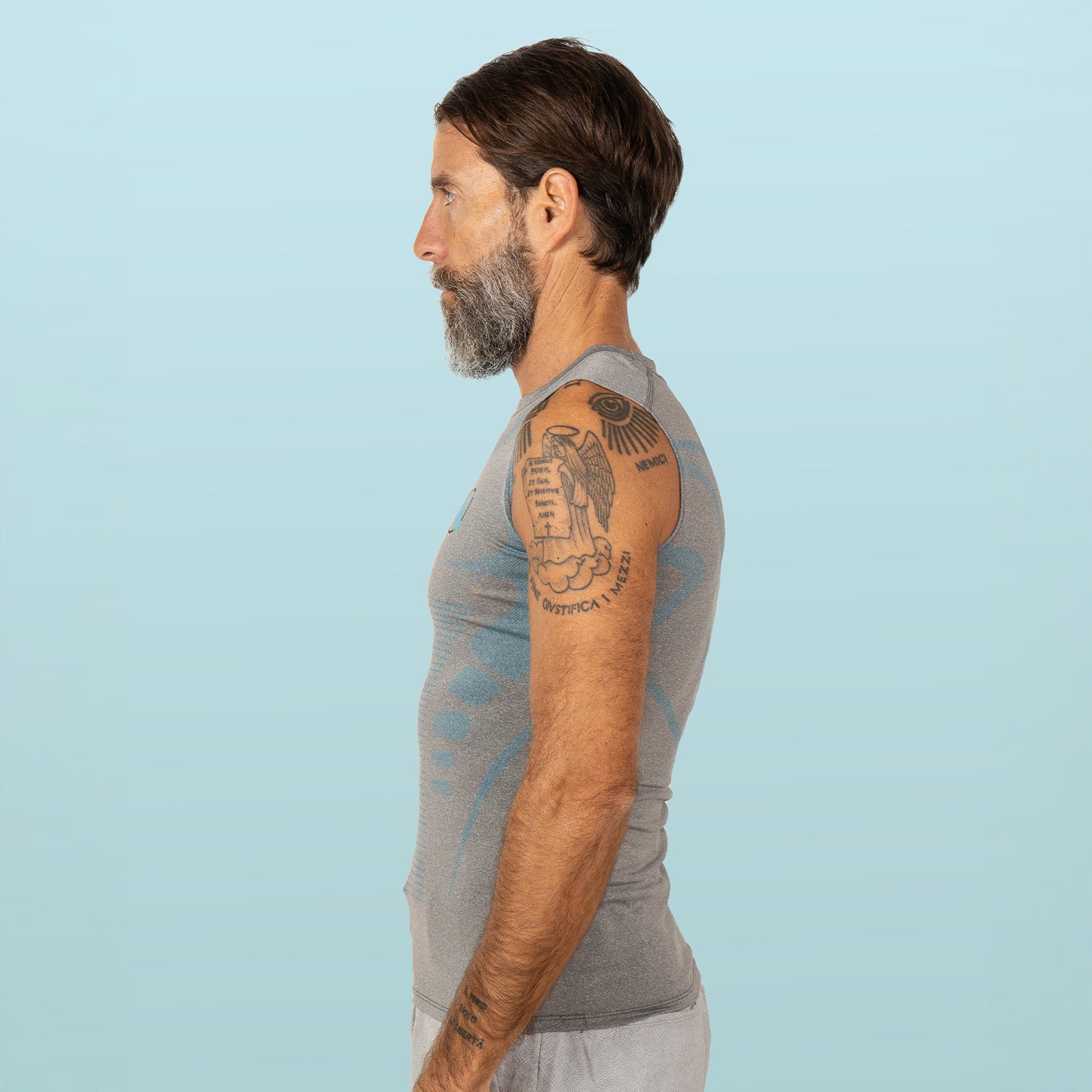
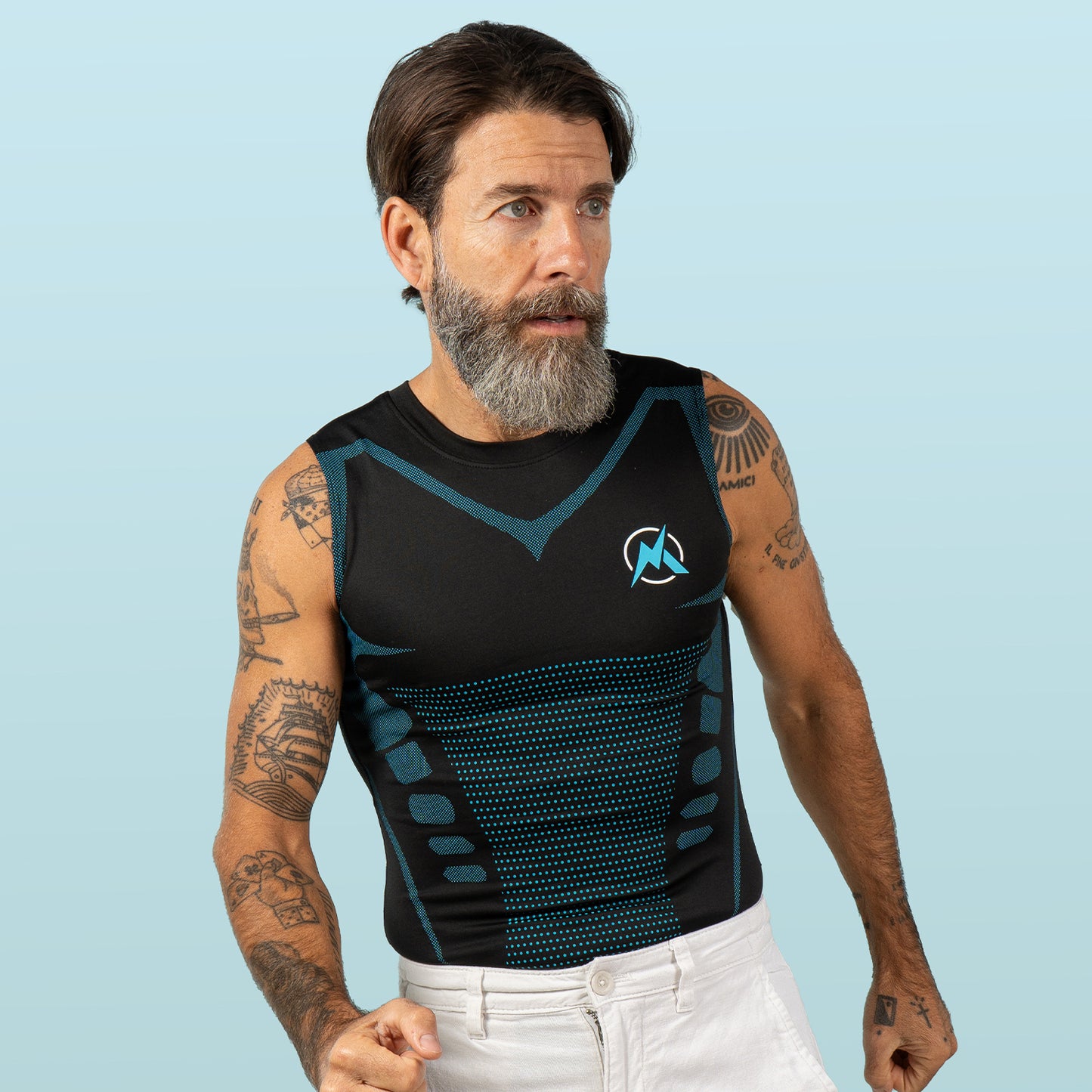
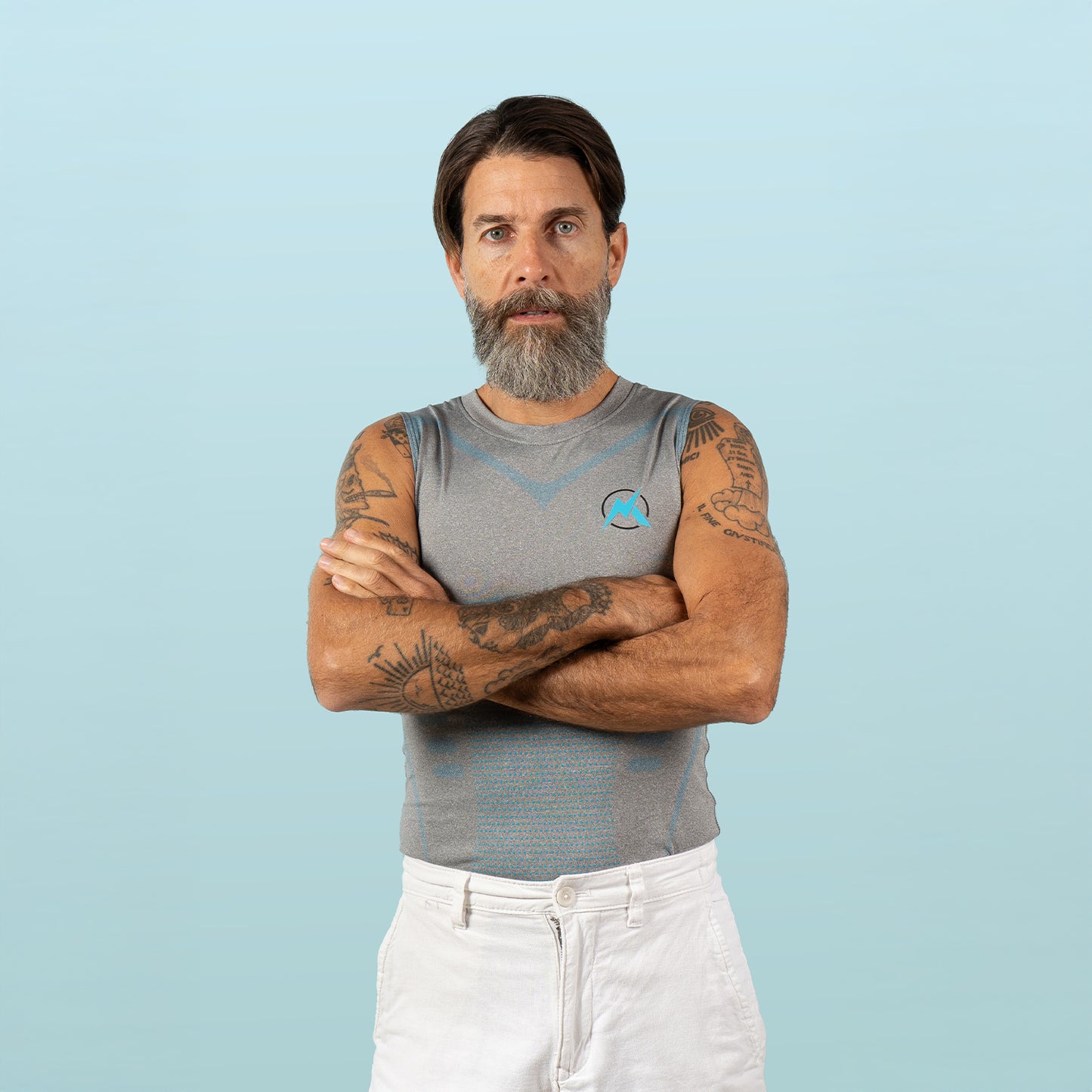
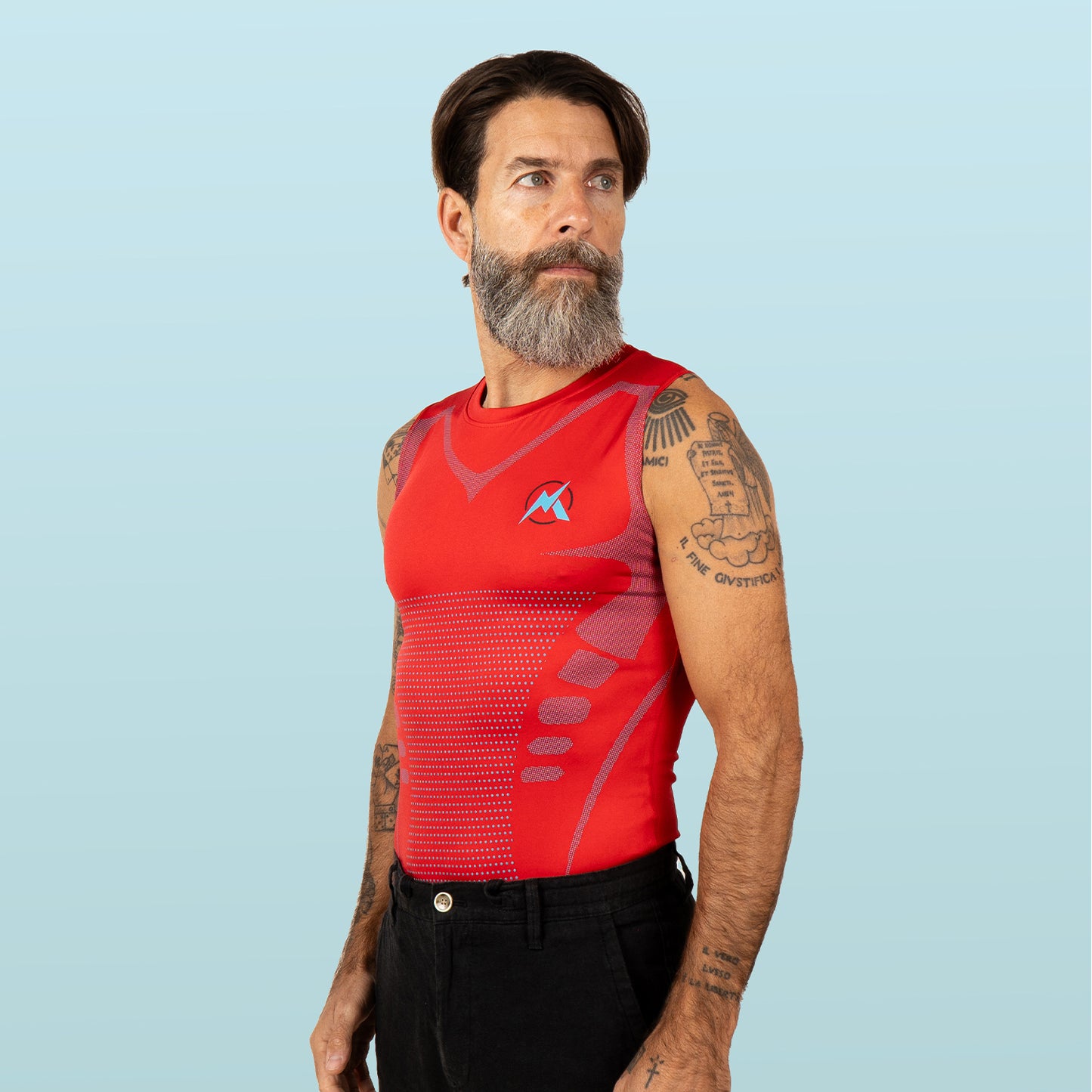
This is where a compression layer earns its keep. A well-cut compression tank pulls in soft tissue at the waist, holds your shoulders back, and changes how clothes fall over you. You look like the guy on week 10 of the plan, not the guy on week 2. That visual win every morning matters. It's the difference between sticking with the walks and skipping them.

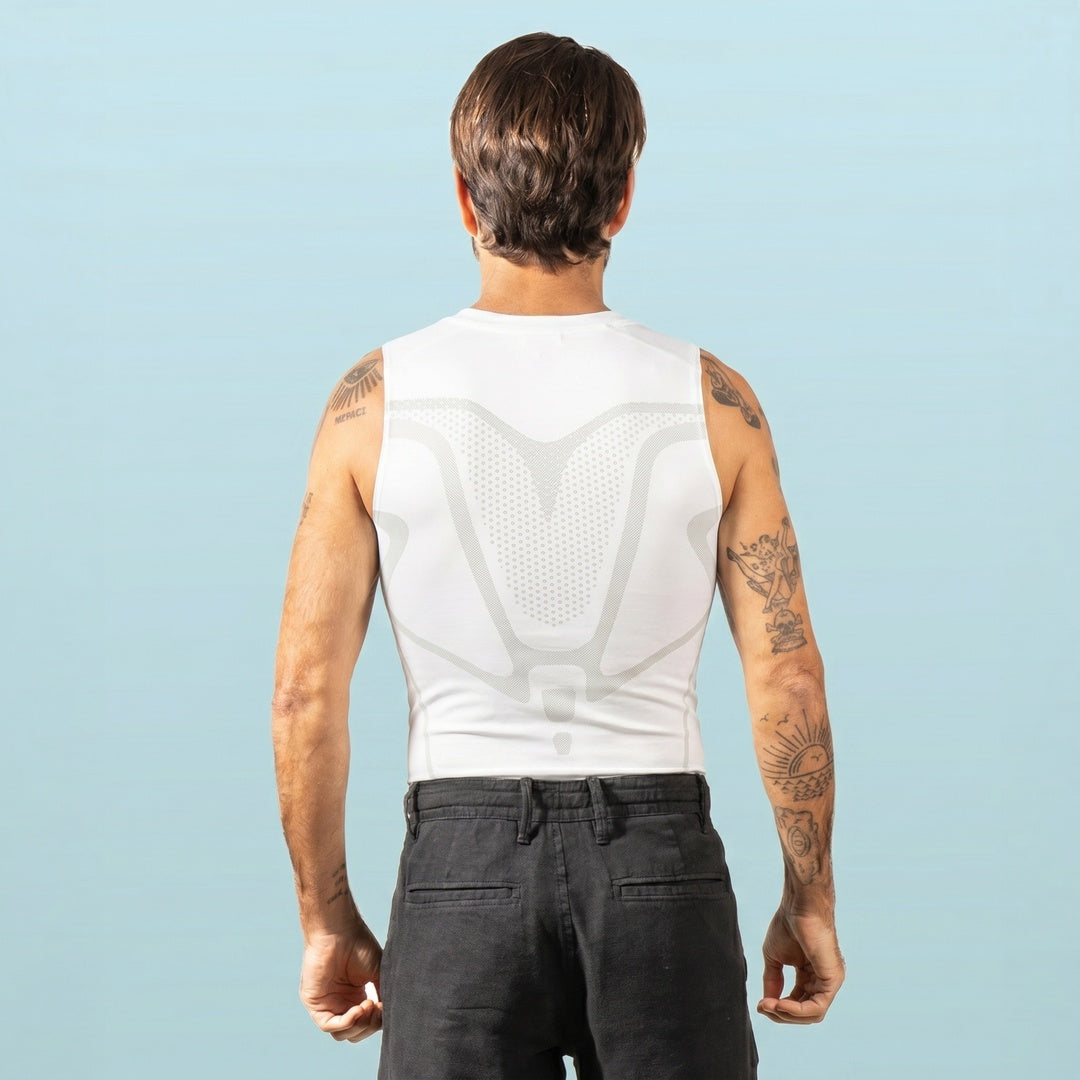
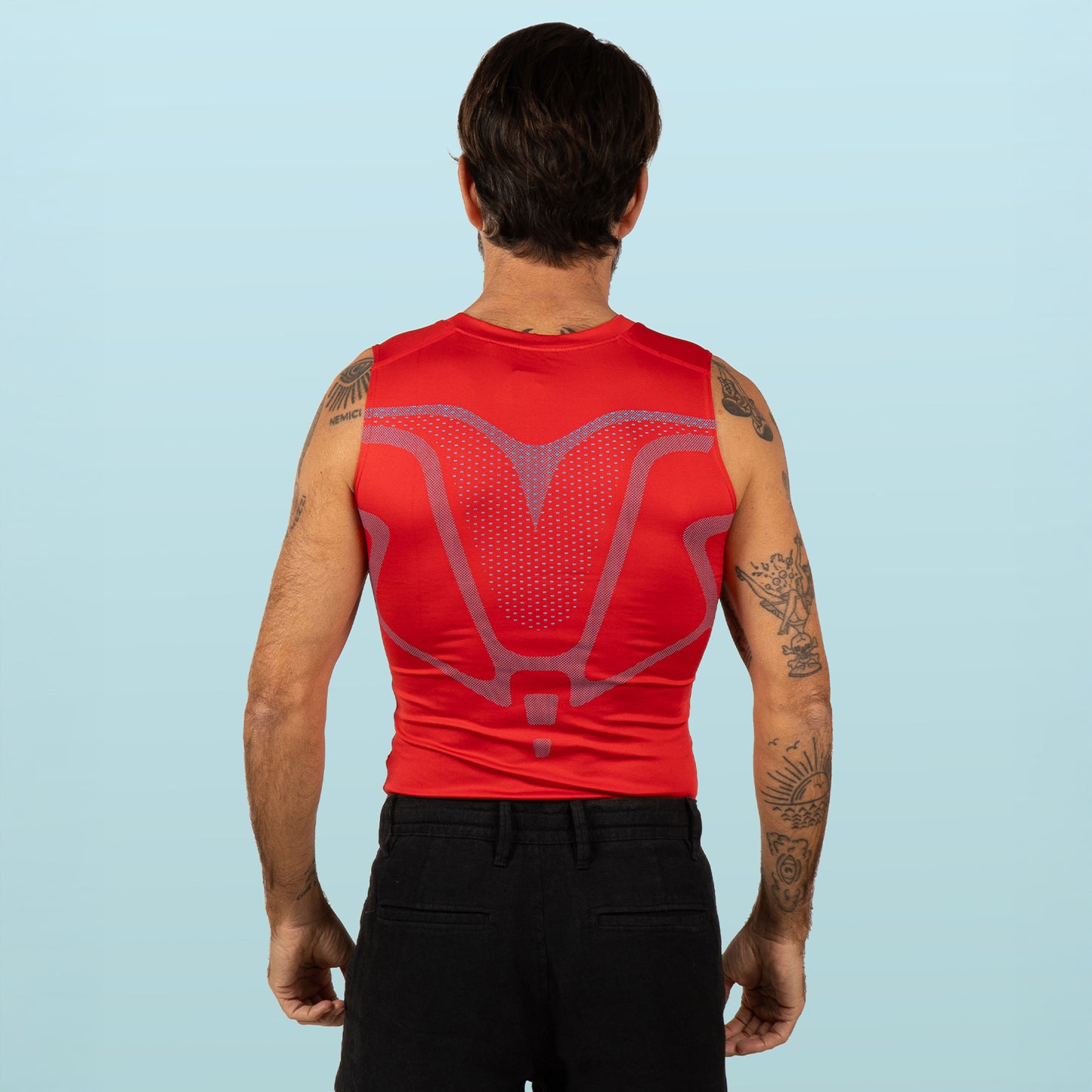
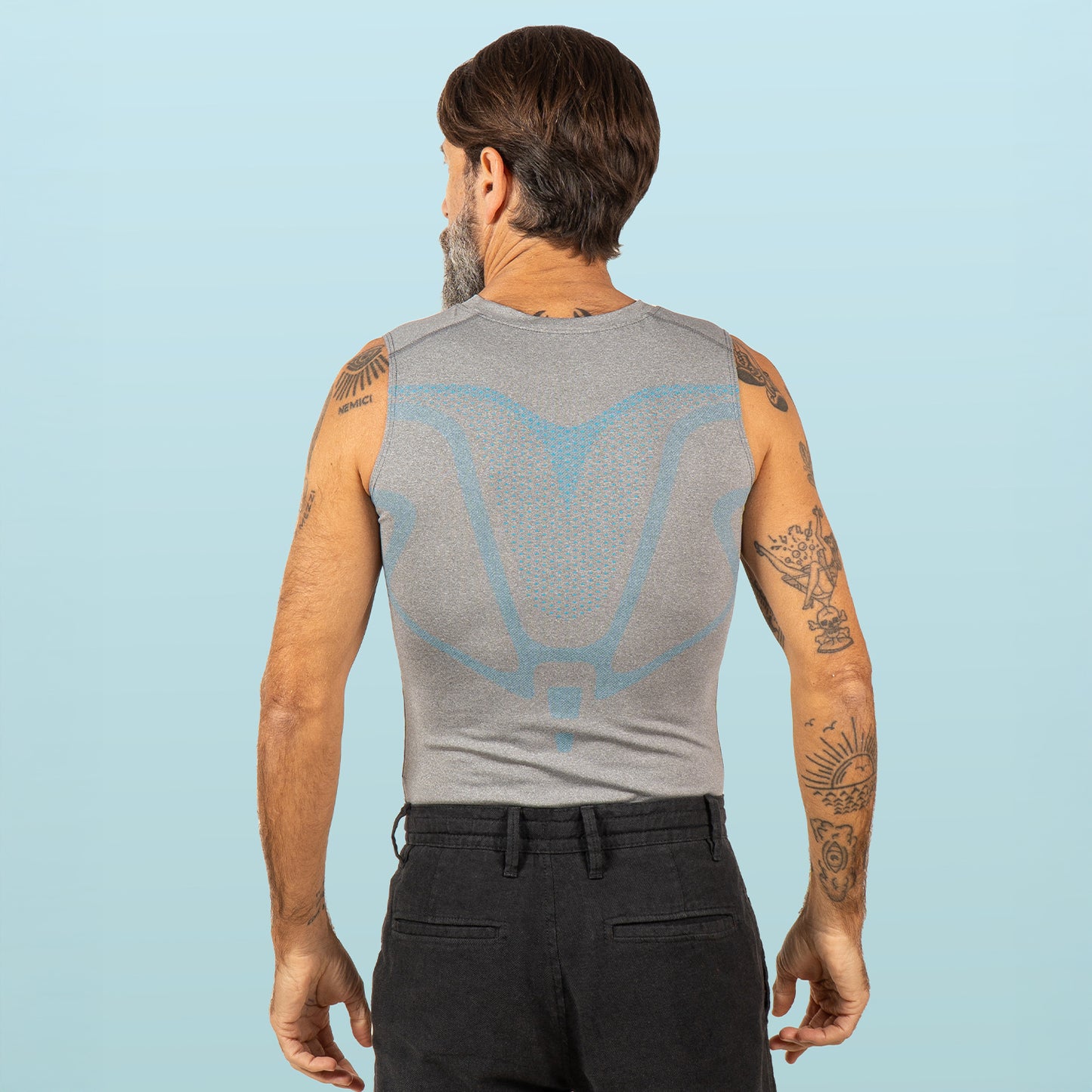
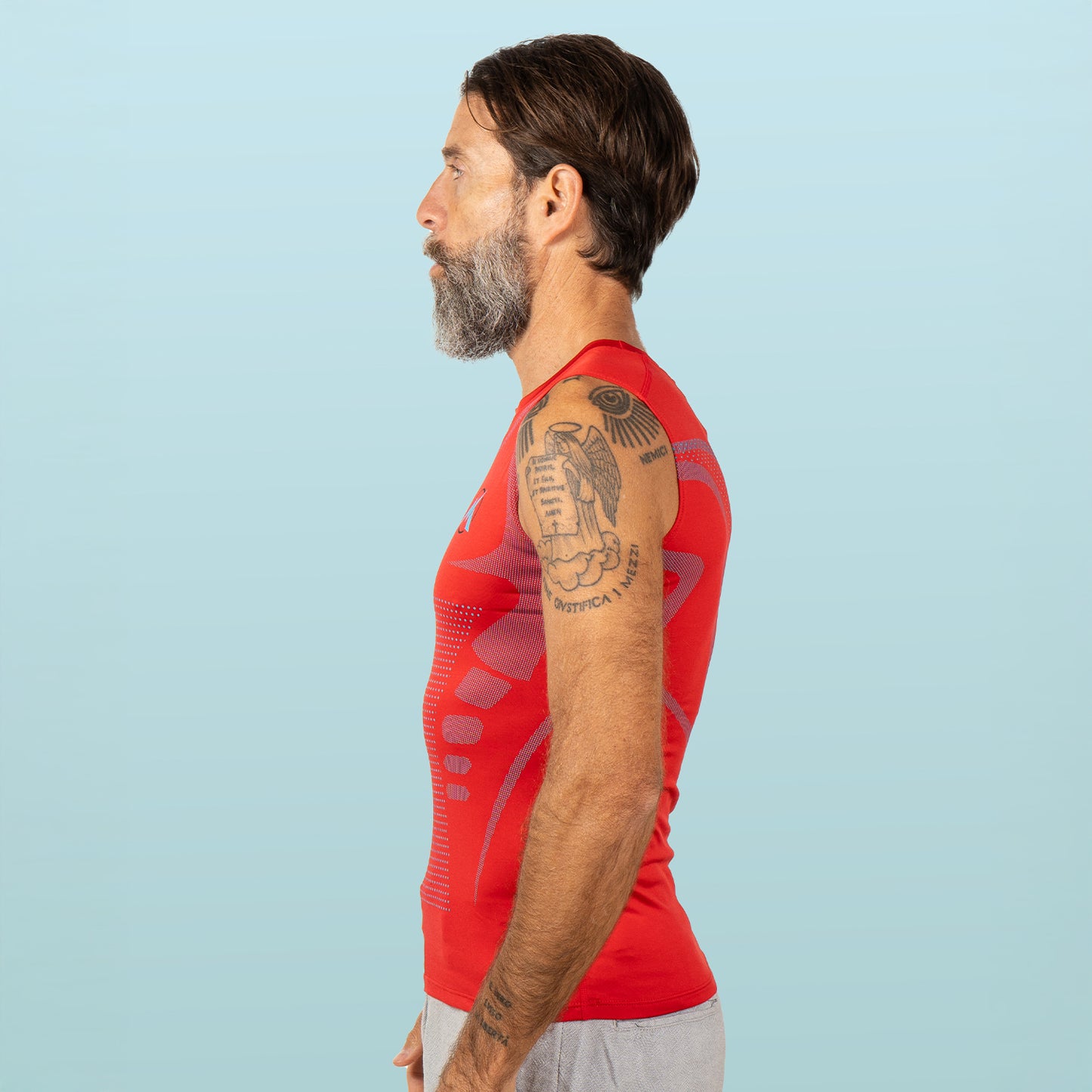
Maynox built VitaBoost for the man in week three of this reset — when the plan is working but the mirror hasn't caught up. Sleeveless, breathable, built to pull the midsection in without flattening your chest or restricting breath. It's not a fix. It's a visual bridge that keeps you in the work.
Worn under a polo, a button-down or a t-shirt, it's invisible to anyone else. To you, looking down at your belt, it's the daily reminder you're done apologizing for your body. Pair it with the posture habits in our posture guide and the visual change in week one is meaningful.
Red flags: when to call your doctor
Not all midlife weight gain is "normal aging." Some of it points at something that needs a workup:
- Rapid weight gain over four to six weeks without diet change
- Persistent fatigue, low libido or low mood alongside the gain
- Belly fat plus elevated blood pressure or sugar readings
- Loud snoring with daytime sleepiness — possible sleep apnea, extremely common in men with abdominal fat
- Family history of type 2 diabetes or cardiovascular disease
If any of these are flagging for you, book a physical. Ask specifically about total testosterone, fasting glucose, A1C, and a sleep study referral if your partner says you snore. None of these are scary in isolation. They're just the numbers that tell you whether you're working against age — or against a medical issue that needs a different fix.
Frequently asked questions
What causes belly fat in men over 40?
A combination of declining testosterone, age-related muscle loss, reduced insulin sensitivity, and lower-quality sleep. These four shifts happen together starting in your late 30s and reinforce each other, so fat begins accumulating around the abdomen even when diet and activity stay the same. Visceral fat — the deeper, harder belly fat — is the typical result.
How can a 40 year old man lose belly fat?
By addressing the underlying systems, not just calories. Lock in seven hours of sleep, hit a palm of protein at every meal, walk 30 minutes most days, lift weights twice a week, and tighten your eating window. Most men over 40 see belts loosen within six to eight weeks following this approach — without extreme dieting or daily cardio.
Why do men get pot bellies as they get older?
Men store fat predominantly in the abdomen due to genetics and hormones — particularly because falling testosterone shifts fat storage toward the visceral area around the organs. As muscle mass declines and insulin sensitivity drops, the storage pattern intensifies. The result is the "pot belly" shape: hard, forward-sitting, often present even on men who aren't overweight overall.
Can men over 40 still get rid of belly fat?
Yes. Body composition responds to training, nutrition and sleep at every age. Men in their 50s and 60s routinely lose visceral fat with the right combination of strength training and dietary changes. It takes longer than at 30, and the approach matters more, but the body still adapts. The slowest stretch is usually the first six weeks.
What is the fastest way for a man over 40 to lose belly fat?
Stack strength training two to three sessions weekly, an 8-hour eating window, protein at every meal, and seven-plus hours of sleep. Cardio alone is the slow route. Diet alone risks losing muscle. The combination — particularly strength training plus a controlled eating window — produces the fastest measurable visceral fat reduction in men over 40 according to Harvard Health.
Sources
- Mayo Clinic — Belly fat in men: Why weight loss matters
- Cleveland Clinic — Visceral Fat: What It Is & How It Affects You
- Harvard Health — How to get rid of belly fat
- NIH PMC — Why Do Men Accumulate Abdominal Visceral Fat?
The bottom line
You don't have a belly because you got lazy. You have a belly because four systems shifted at once, and the playbook from 1995 doesn't address them. Fix sleep first. Protect muscle with protein and lifting. Tighten the eating window. Walk daily. Give it eight weeks. Most men don't quit because the plan failed — they quit because they couldn't see it working. Stay in the work and the body catches up.
Get VitaBoost — Buy 1 Get 1 Free
VitaBoost is a men's compression garment, not a medical device. It does not treat or cure any condition. If you have specific medical concerns about weight gain or hormonal changes, speak with a healthcare provider.