By Owen Blot · Founder, Maynox · Last updated June 23, 2026
- The real difference (it's not just the sleeves)
- Where the compression shirt wins (3 scenarios)
- Where the compression tank wins (4 scenarios)
- The 6-scenario decision matrix
- What the research actually says about posture and recovery
- What doesn't work: 4 mistakes men 40+ make
- The honest verdict for men 40+
You're standing in front of the closet at 7:14 AM. You've got a polo for the office, a dress shirt for the client lunch, and a workout planned at 6 PM. Somewhere on the shelf there's a compression shirt with sleeves. Next to it, a compression tank top. You've worn both. You're not sure which one to grab.
Most articles you'll find on this answer "both are great, pick what feels good." That's useless. The truth is each one wins specific scenarios and loses others — and once you're past 45, the trade-offs (heat, underarm chafing, sleeve binding, polo lines, belly coverage) hit harder than they did at 25. This is the honest decision matrix.
The real difference (it's not just the sleeves)
People think the choice is sleeves vs. no sleeves. It's not. The choice is actually about four trade-offs at once:
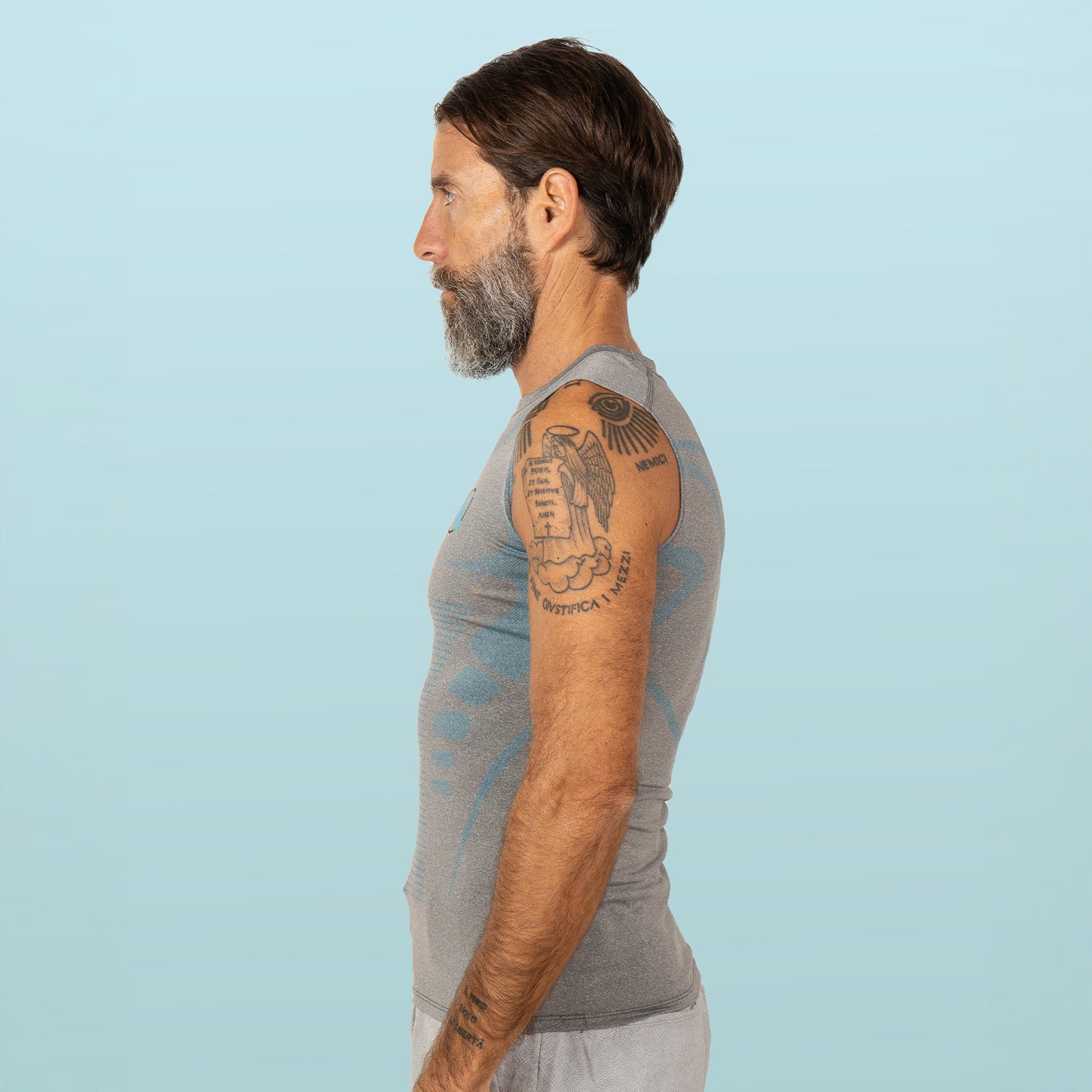
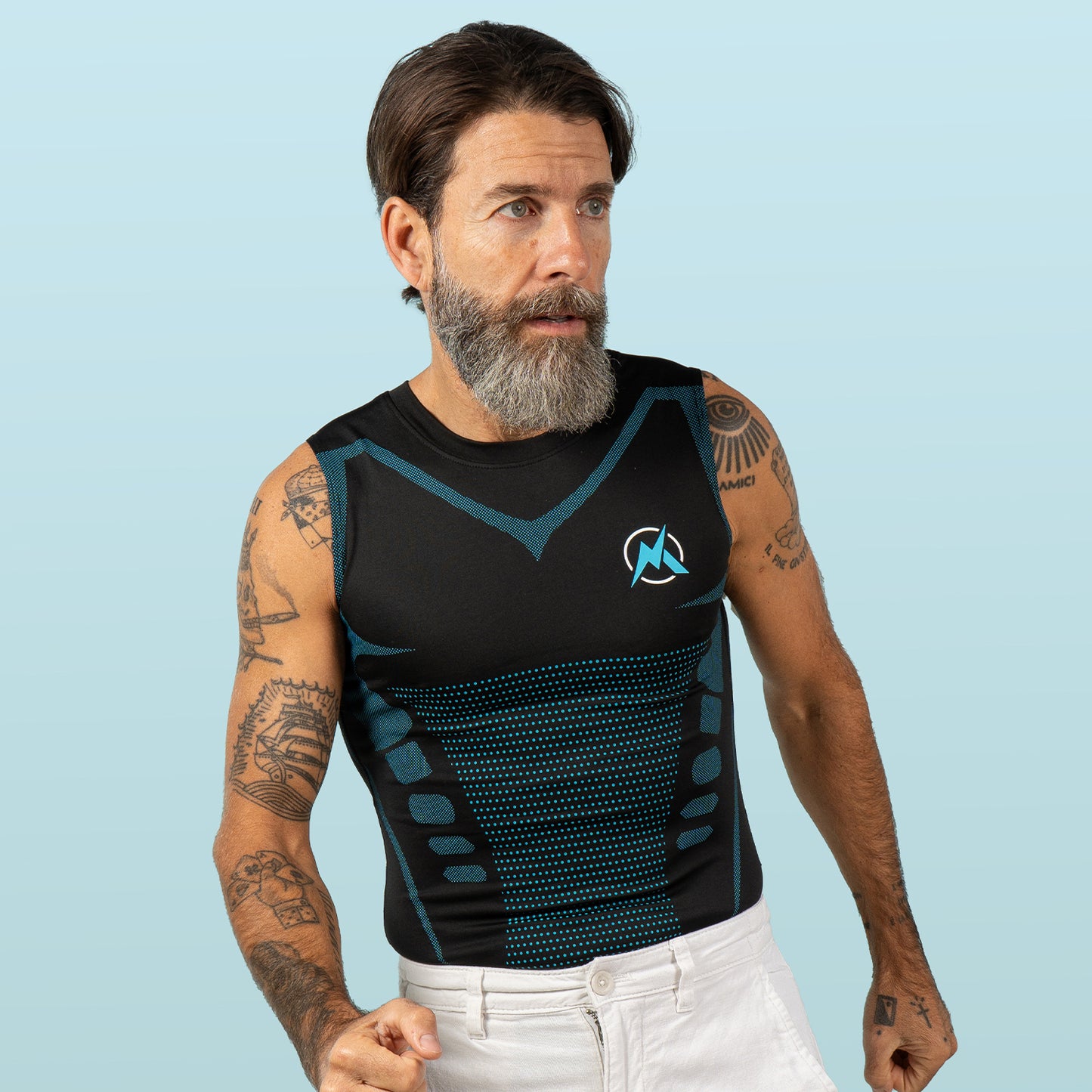
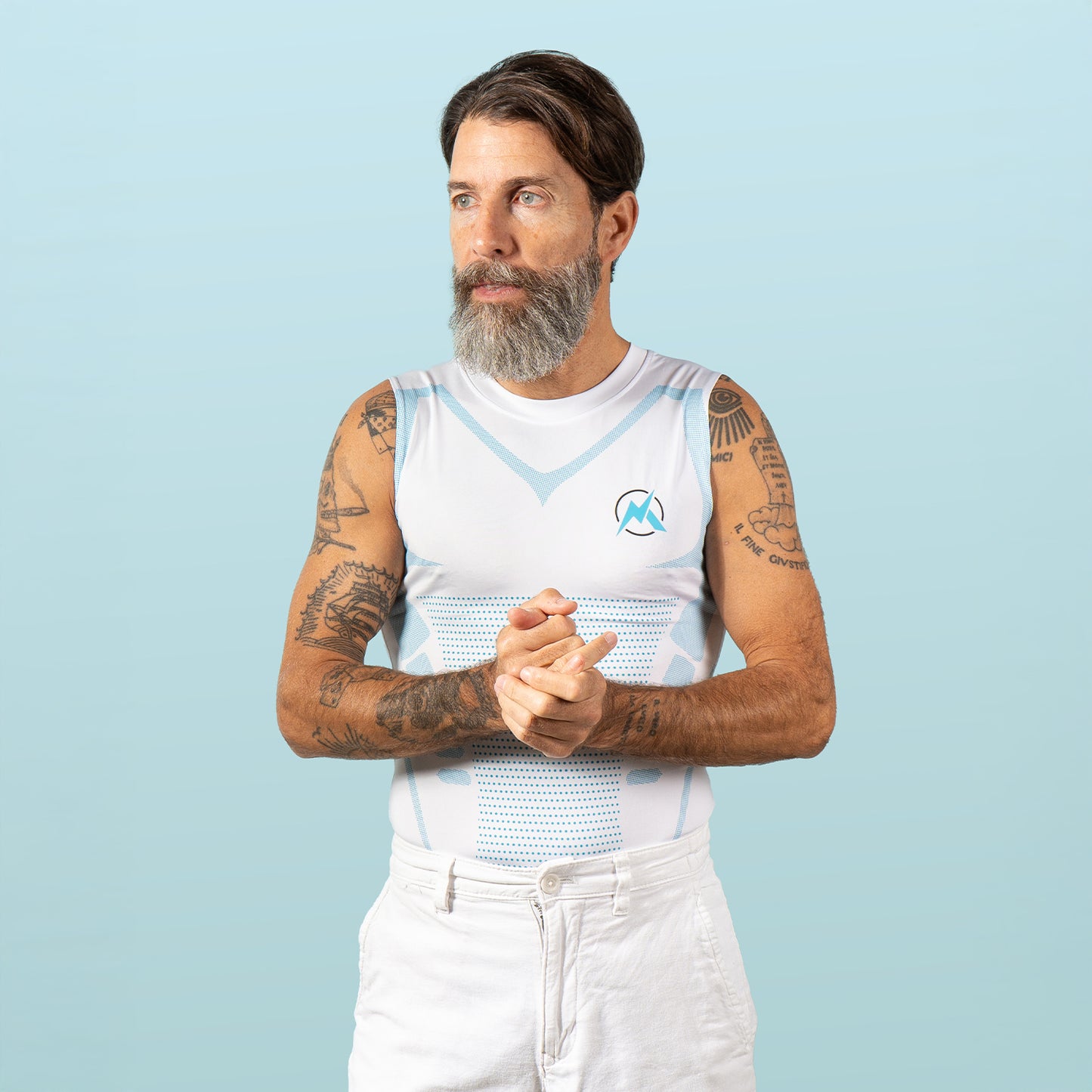
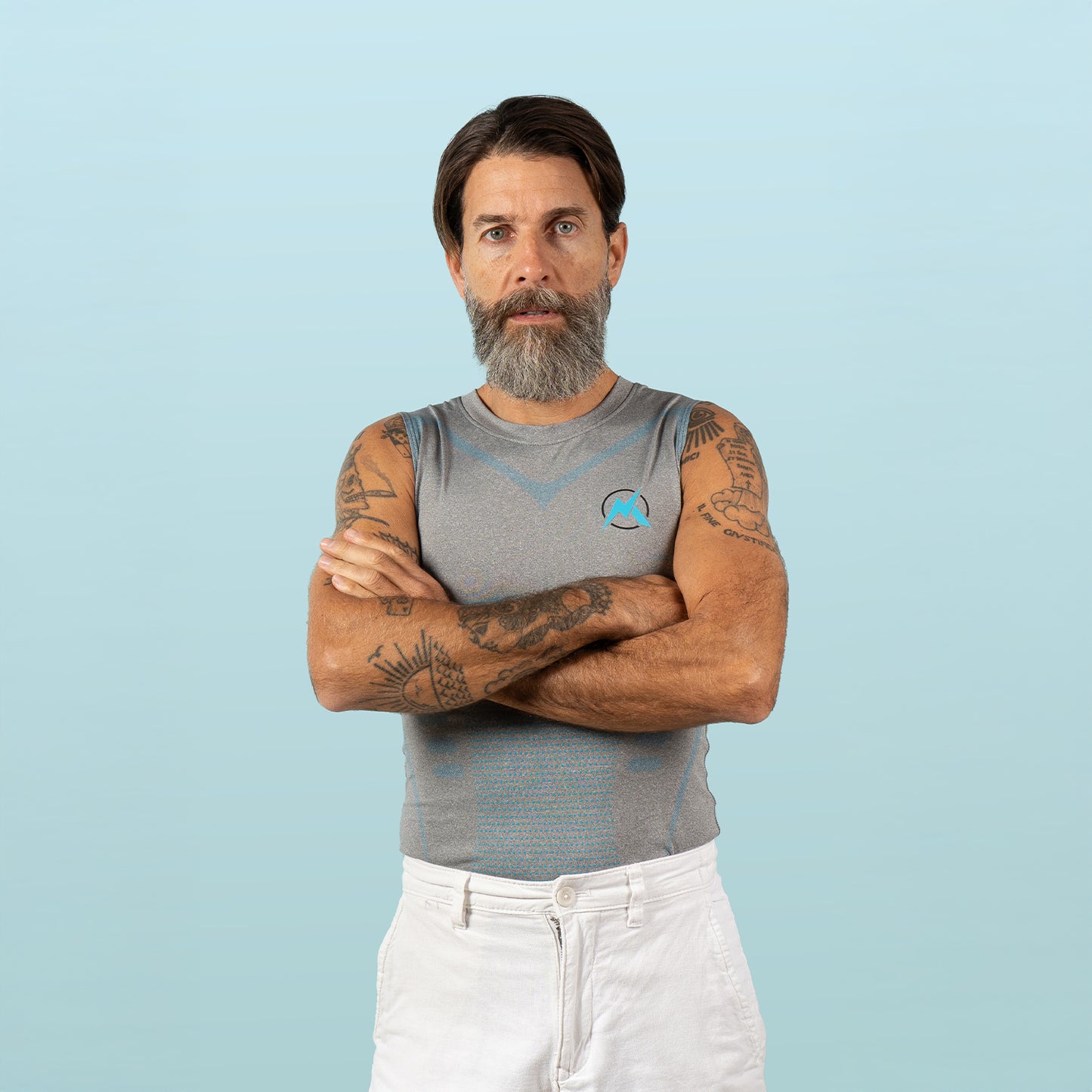
- Coverage zone. Tank covers chest, torso, lower back. Shirt adds shoulders, biceps, triceps.
- Heat load. A second sleeved layer under a polo or oxford in July is misery. A tank breathes through your normal shirt's sleeves.
- Friction surface. Compression sleeves rub against your shirt sleeve all day. Tanks have zero arm contact.
- Visibility under clothes. Sleeves end somewhere — and if the end is visible at your bicep under a fitted polo, it looks weird. Tanks have nothing to give away above the collar.
Once you frame the choice as four trade-offs instead of one, the right answer flips depending on the day. The man who wears a compression shirt every day "because it's more athletic" is paying a tax in summer heat, chafing, and visible bicep lines under his polos. The man who only owns tanks is uncovered when he wants arm support on a heavy push day. You probably want one of each.
If you're brand-new to the category, start with our overview on whether compression shirts actually work for men — it covers the research baseline. This article picks up from there.
Where the compression shirt wins (3 scenarios)
The shirt isn't obsolete. It earns its spot for specific use cases.
1. Cold-weather workouts and outdoor cardio
Below ~55°F, sleeves help. A long-sleeve compression shirt acts as a thermal base layer that keeps muscle temperature stable through the warm-up. A tank leaves your arms exposed to wind chill and slower to warm up, which is a real injury risk for shoulders past 45.
2. Heavy push or pull days where you want arm proprioception
This is the use case research backs most cleanly. A 2022 systematic scoping review in Sports Medicine found that compression garments "likely reduce muscle oscillatory properties and have a positive effect on sensorimotor systems" — meaning the snug fabric gives your brain better feedback about where your limbs are in space (Brown et al., 2022, PMC9023423). For heavy bench, overhead press, or pull-ups where shoulder positioning matters, the full-sleeve version delivers feedback the tank can't.
3. Visible-sleeve outfits (T-shirt, gym tee, polo when you want the "compressed arm" look)
If you're wearing a plain T-shirt and you want the visible arm definition look, only the sleeved version delivers. The tank under a T-shirt gives you torso compression but leaves your arms reading as untrained. For social-event T-shirt wear when you've been training and want the silhouette to show, sleeves win.
Where the compression tank wins (4 scenarios)
For most men 40+ wearing compression as a daily undergarment — not as gym apparel — the tank wins four out of every five days.
1. Under polos, dress shirts, and oxfords (the daily wear win)
This is where it's not close. A compression tank under a polo gives you the smooth chest and flattened midsection without:
- Visible sleeve hem at your bicep (a dead giveaway under a fitted polo sleeve)
- Double-layer drag and bunching at your armpit when you reach for something
- The "I'm wearing a wetsuit under my shirt" feeling by 11 AM
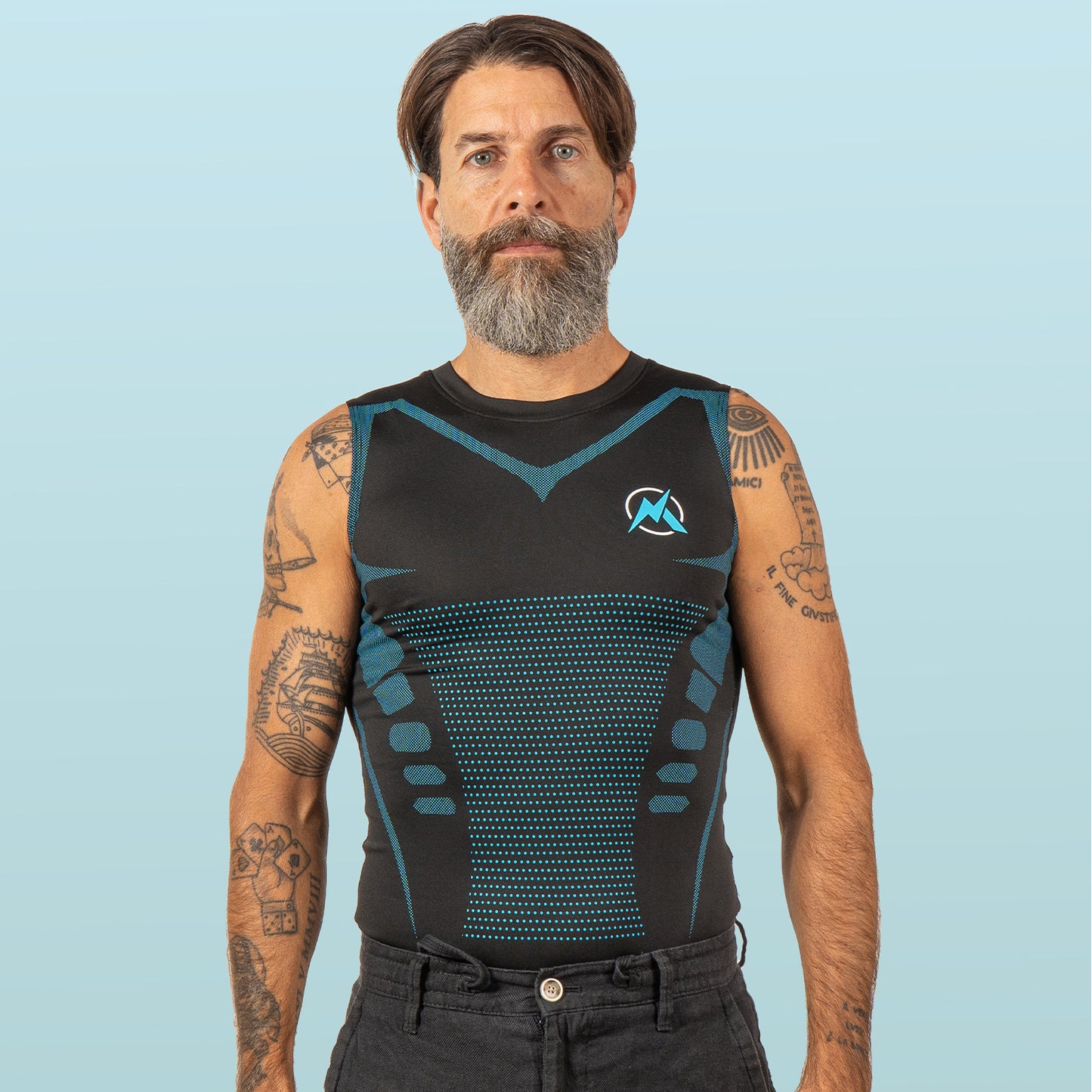
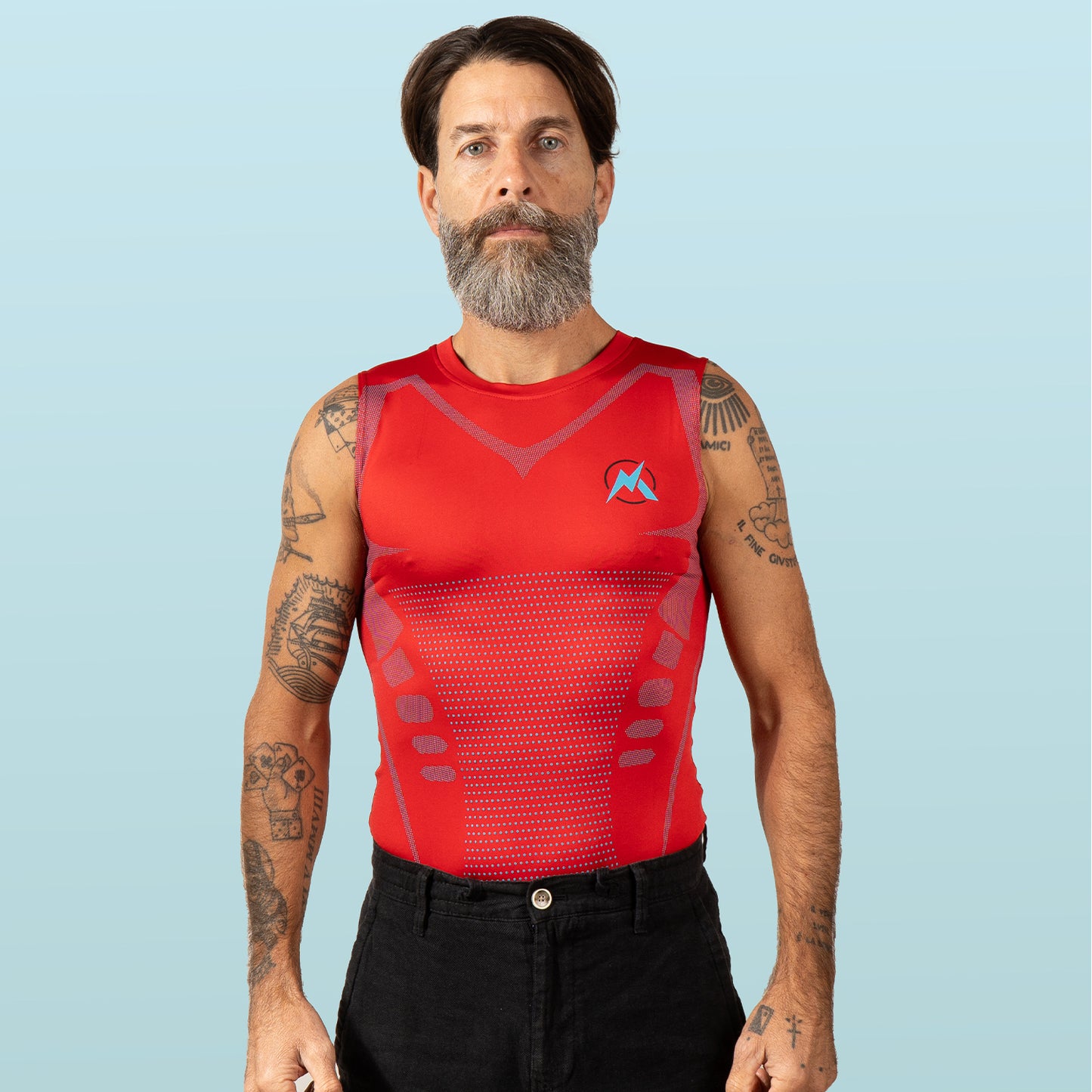
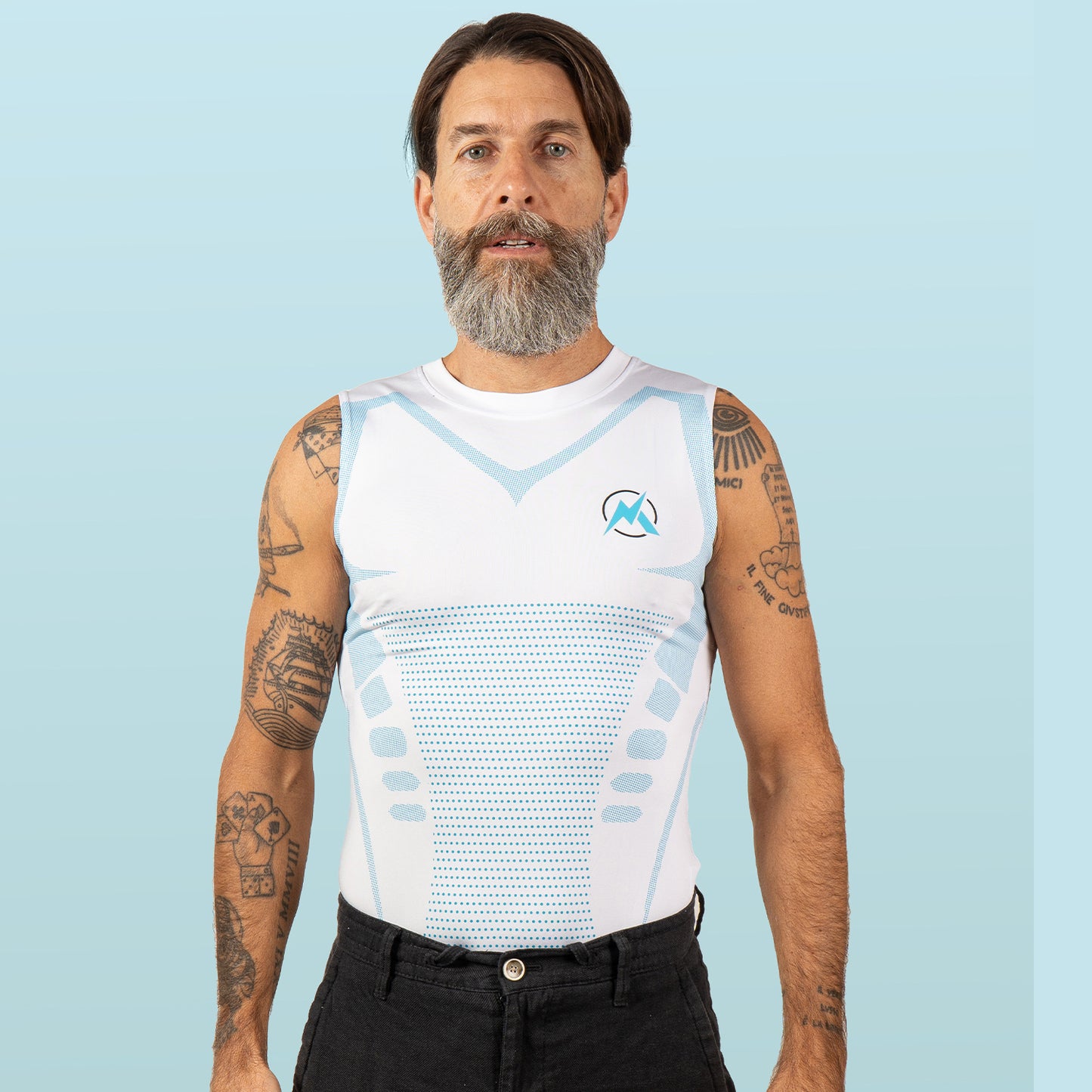
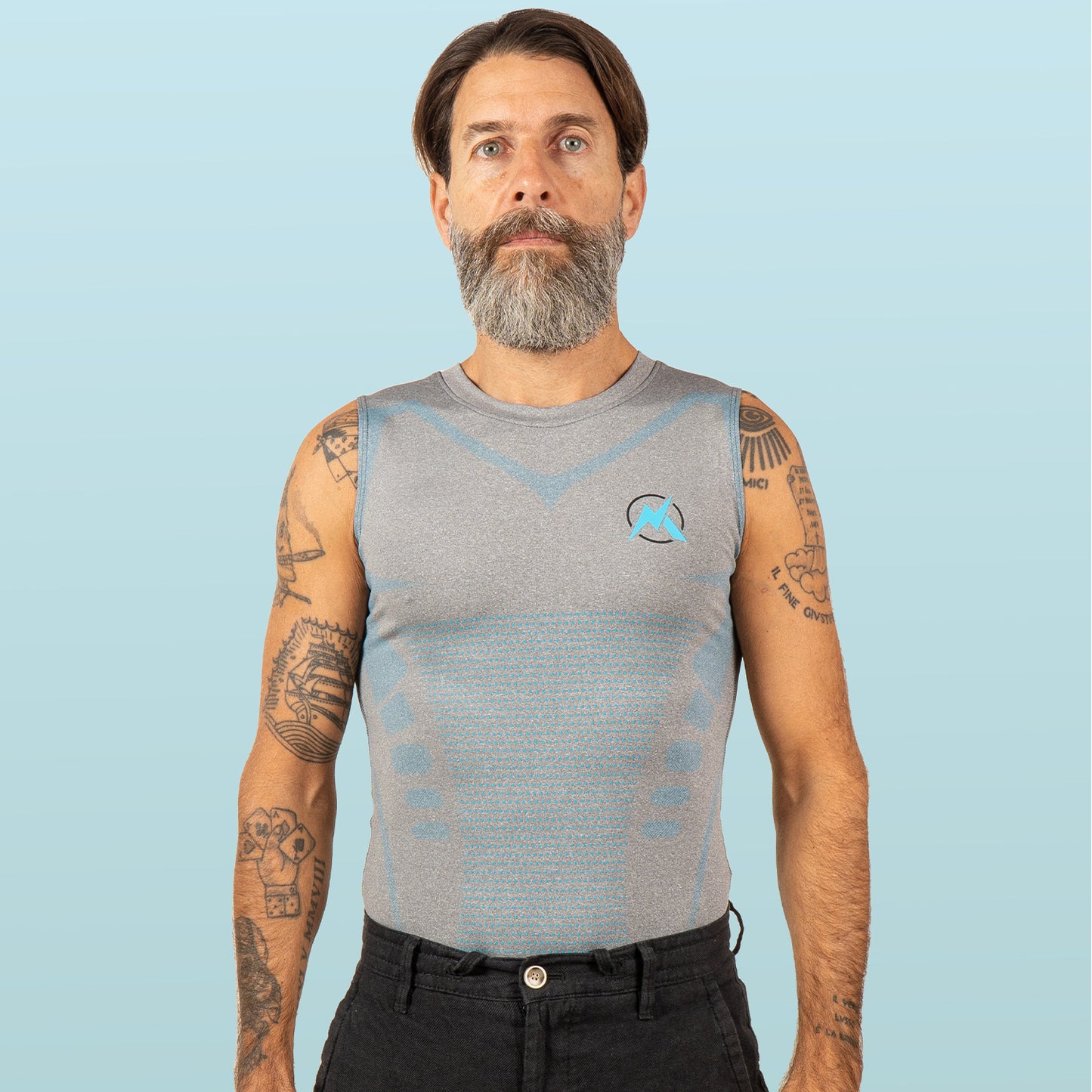
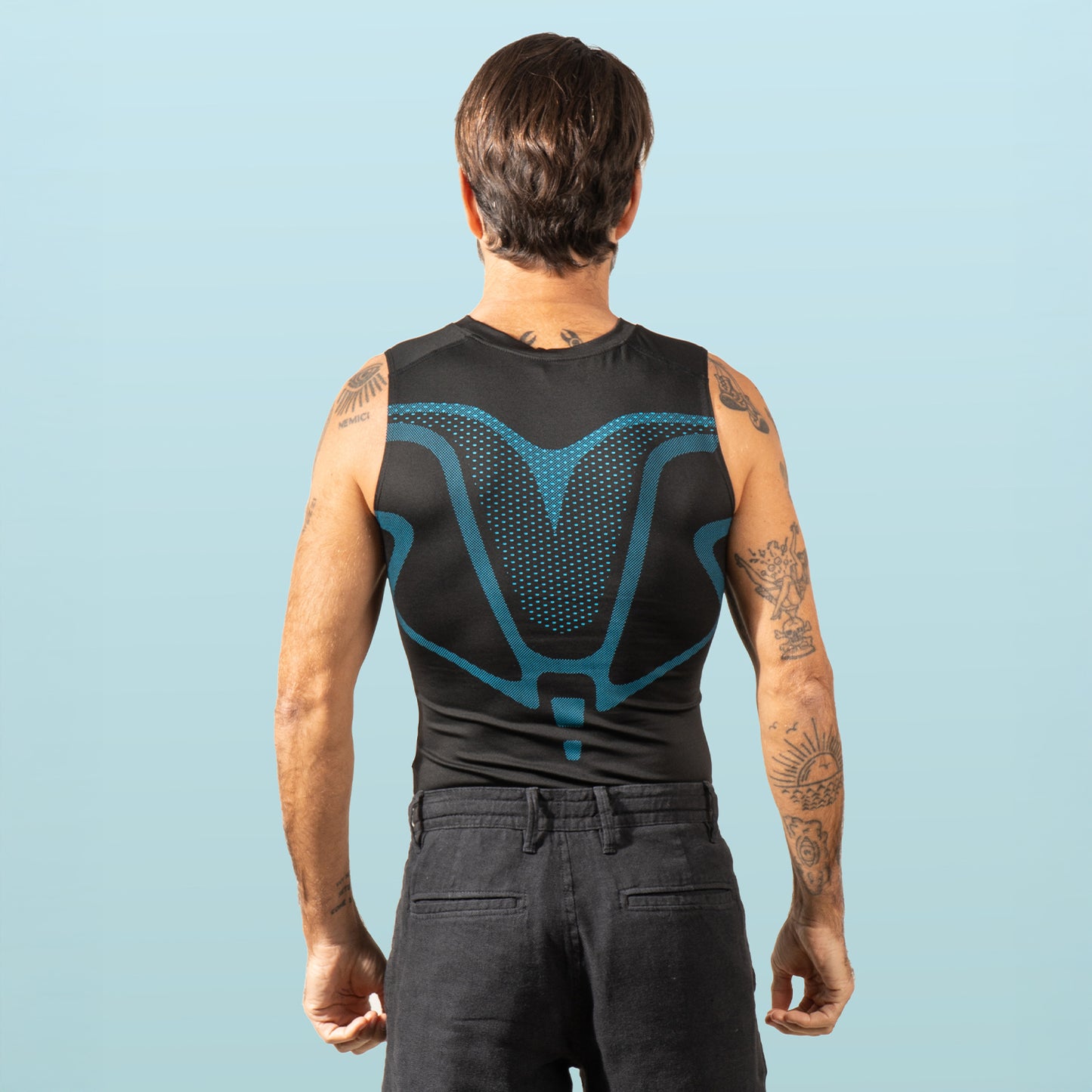
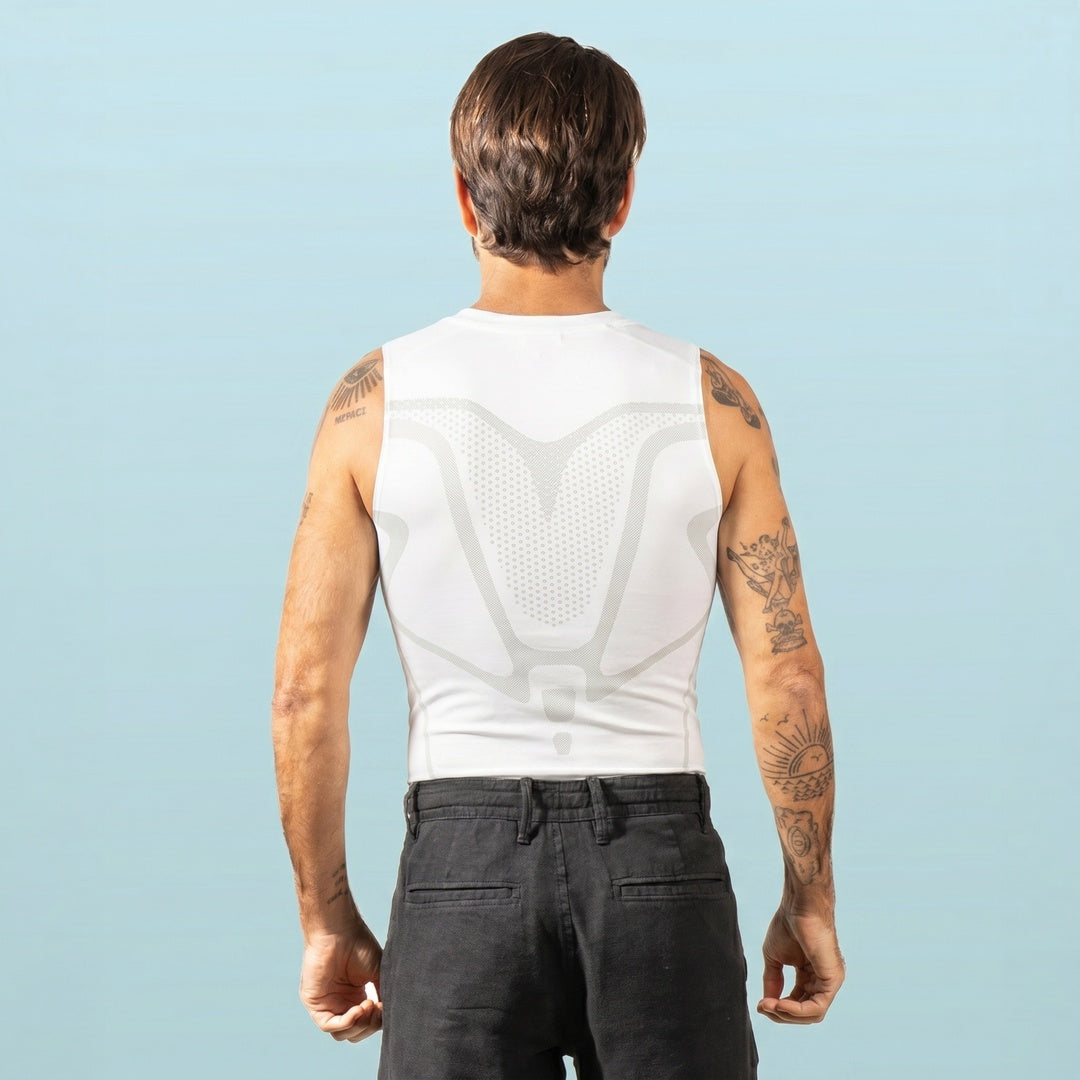
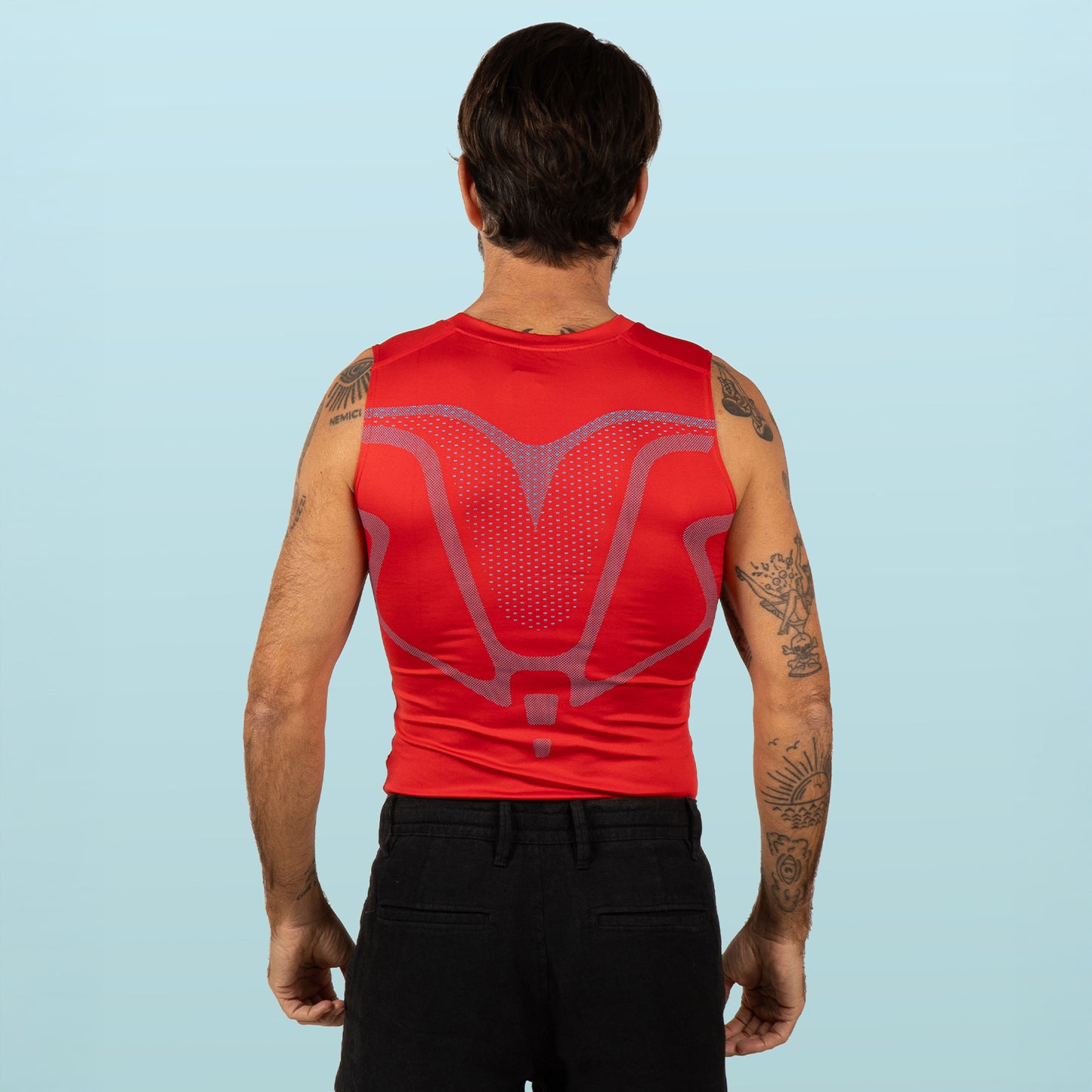
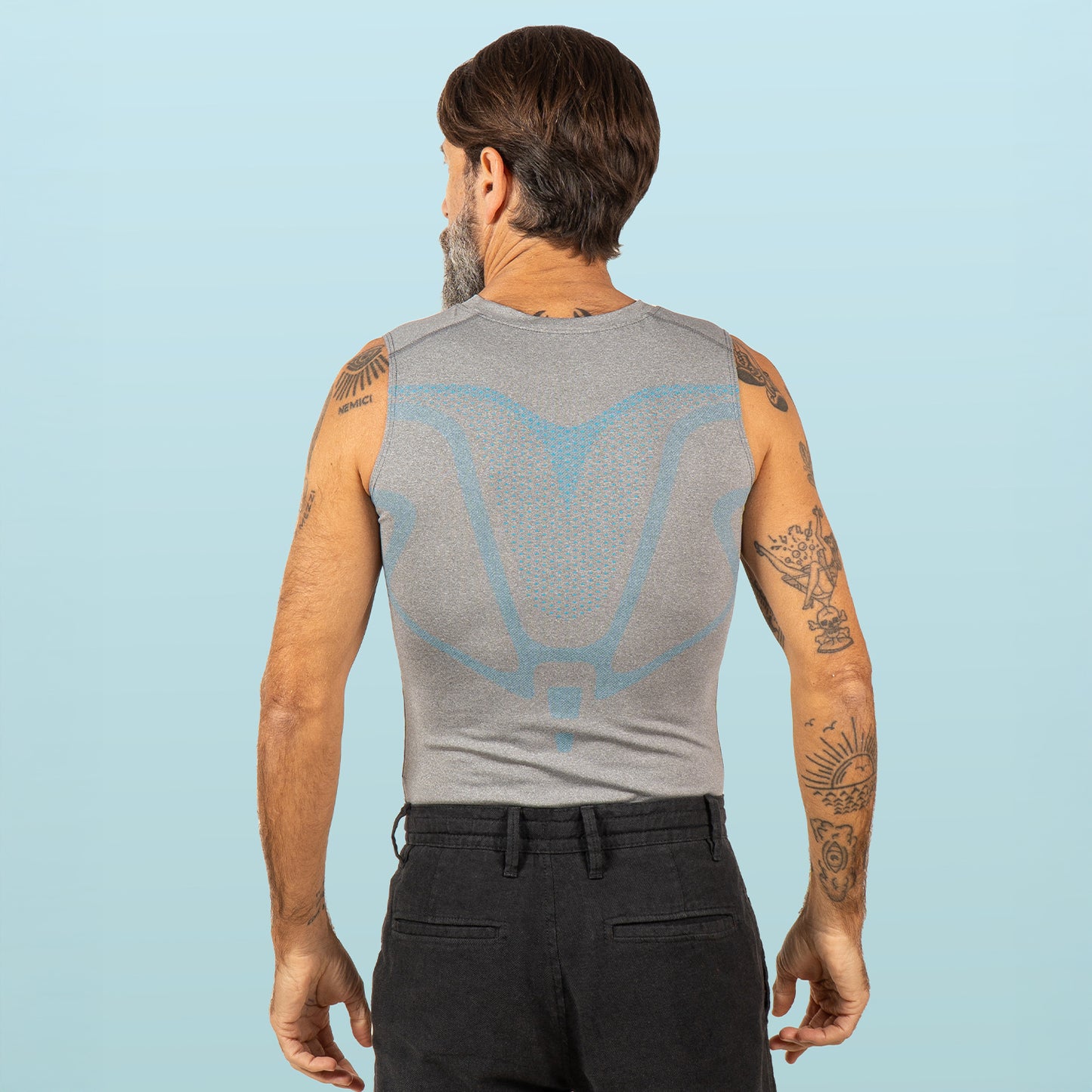
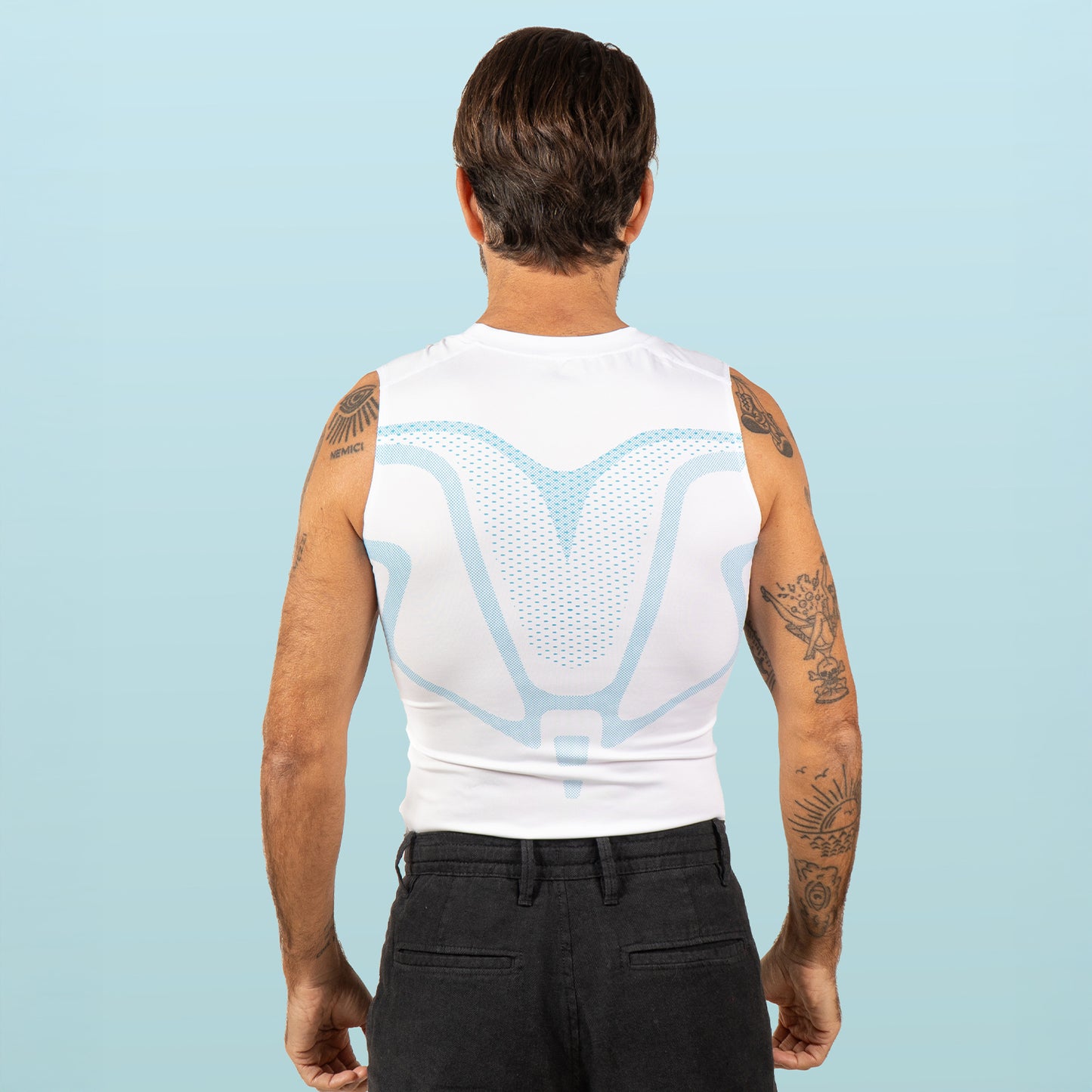
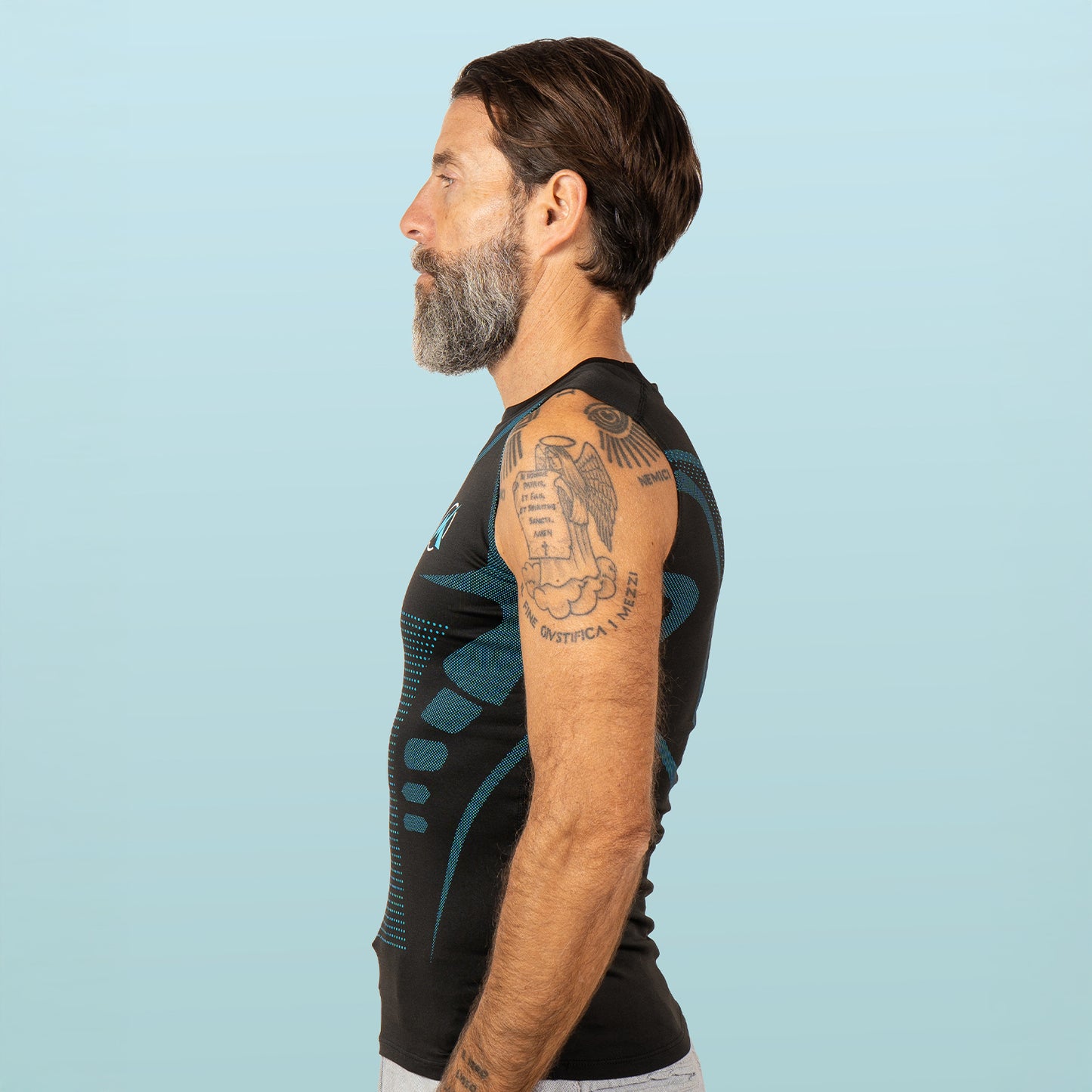
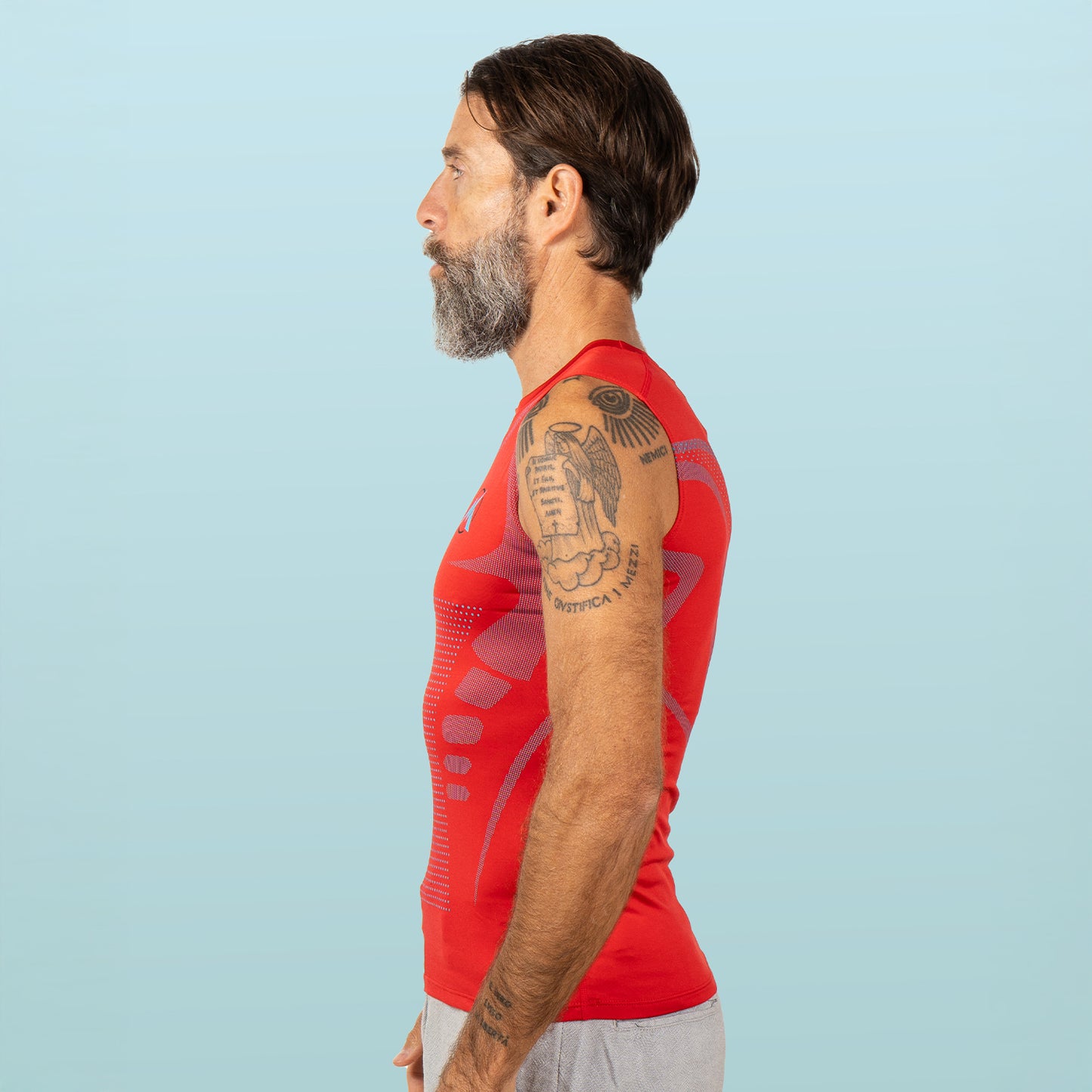
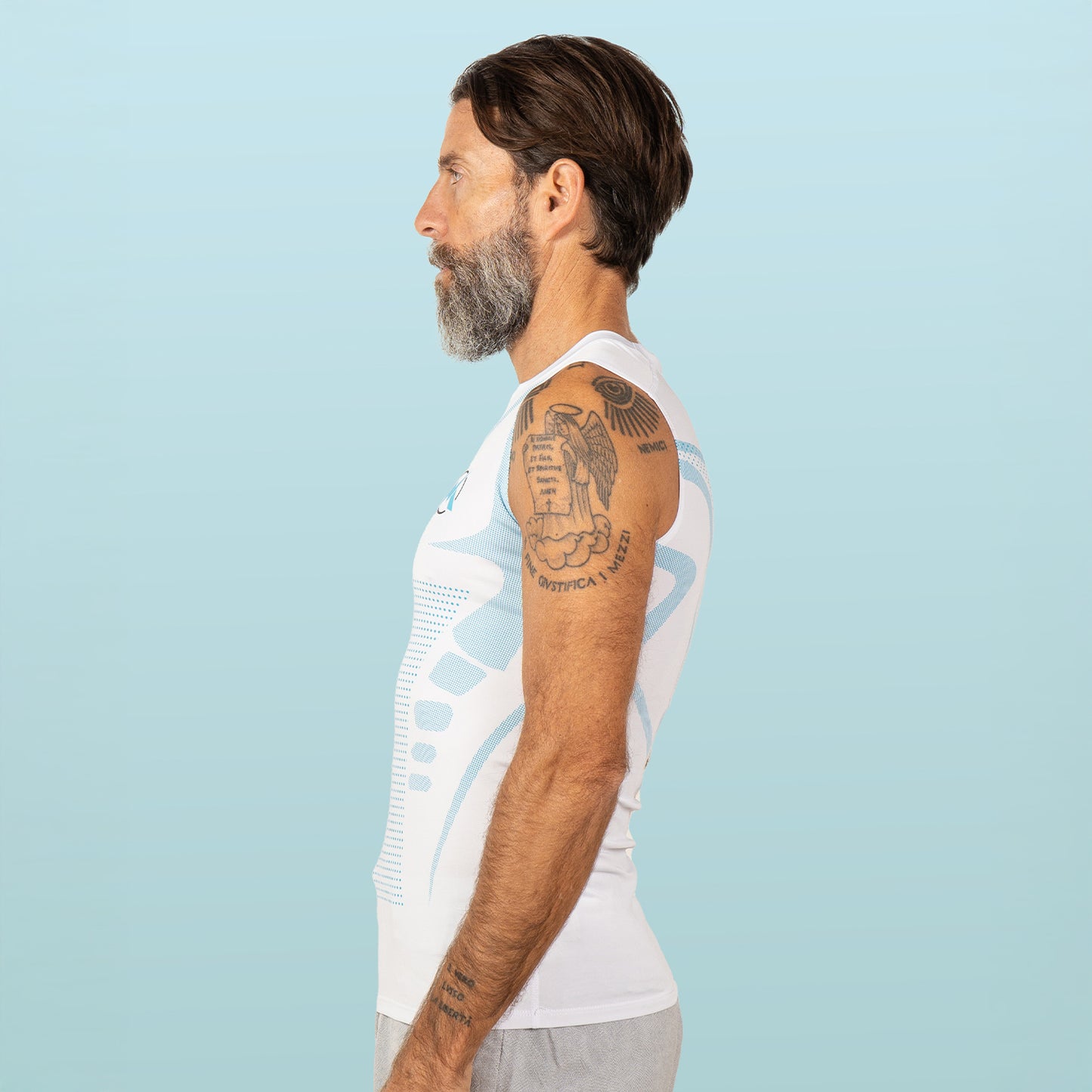
For the man 45-55 who works in an office, wears polos on weekends, and wants to look 10-15 pounds lighter without changing anything else, the VitaBoost compression tank is built specifically for this use case.
2. Summer and hot climates
Body temperature management gets harder past 45. A sleeved compression base layer in July is a heat trap. The tank lets your arm's natural sweat-cooling work normally while still controlling the torso. If you live in Florida, Texas, Arizona, or anywhere humid 6 months a year, a tank-only rotation is the realistic answer.
3. Underarm chafing prevention
Sleeves end at the bicep or near the armpit. After 6-8 hours, that hem can rub. Men with fuller arms or who carry weight in the chest report this constantly. A tank eliminates the friction surface entirely. Zero arm fabric means zero chafe.
4. Love handles and lower-back coverage
The tank's tighter, lower hem (when sized correctly) wraps the lower back and oblique area — exactly where men 45+ carry the visceral and subcutaneous fat that pushes the belt-line out. A long sleeveless tank with a proper hem-anchor under the trouser waistband does more for the "muffin top" silhouette than any sleeved compression shirt. See our guide on best undershirts for men with a belly for the sizing logic.
The 6-scenario decision matrix
Here's the cheat sheet. Bookmark this section.
| Scenario | Winner | Why |
|---|---|---|
| Under a polo or oxford for daily wear | Tank | No visible bicep hem, no double-sleeve bunching, no armpit heat |
| Under a dress shirt for a meeting or wedding | Tank | Cleaner chest line, no sleeve outline through cotton |
| Outdoor workout below 55°F | Shirt | Sleeves keep arm muscles warm and reduce shoulder injury risk |
| Heavy lift day (bench, OHP, deadlift) | Shirt | Arm proprioception feedback for shoulder positioning |
| Summer in a humid climate | Tank | Heat management — arm skin needs to breathe |
| Love handles + lower back coverage all day | Tank | Lower hem anchors under waistband, tighter wrap on obliques |
Tally for the typical 45+ office-and-weekend man: tank wins 4 out of 6 scenarios. That's why the daily-wear silhouette belongs to the tank format — and why most men in this avatar end up wearing the tank 5 days a week and pulling the sleeved version out for gym sessions.
See the VitaBoost compression tank →

What the research actually says about posture and recovery
Most compression brands oversell the science. Here's the honest read of what the literature supports — and what it doesn't.
Posture: cueing effect, not correction
Compression doesn't "fix" posture mechanically. What it does, repeatedly shown in proprioception studies, is give your nervous system a constant pressure cue around your torso and shoulders. That cue makes you more aware of slouching and easier to self-correct (Brown et al., 2022, Sports Medicine review). A 2024 systematic review and meta-analysis in Annals of the New York Academy of Sciences found mixed evidence on joint proprioception specifically — meaning the effect is real but smaller than marketing claims (Ghai et al., 2024, NYAS).
For your purposes: both tank and shirt deliver the torso cueing effect. The shirt adds an arm cueing effect on top. If your slouch is mid-back and shoulders, both work. If you're trying to address shoulders specifically, the shirt has a small edge.
Recovery: the soreness window
A 2025 pooled review of 31 studies in the journal Life found compression garments do reduce perceived muscle soreness in the 24-48h window post-exercise, though the effect on objective performance markers is smaller (Wei et al., 2025, Life). For the man 45+ who already feels soreness lasting 3+ days after a tough session, either format helps — and the choice comes back to comfort, not science.
Stability and blood-flow caveats
The Mayo Clinic notes that compression apparel should fit firm but never restrictive — if you have circulation issues, diabetes, or skin conditions, check with your doctor before extended daily wear (Mayo Clinic, peripheral artery disease overview). The Cleveland Clinic adds that prolonged over-tight compression can impede surface blood flow — sizing up half a size at 45+ is usually the right move (Cleveland Clinic, compression garment guidance).
What doesn't work: 4 mistakes men 40+ make
These are the patterns we see constantly in the inbox. Avoiding them is half the battle.
Mistake 1: Going one size down "for more compression"
This is the most common error. The fabric is already engineered for a target pressure. Going smaller doesn't add support — it cuts off circulation, traps heat, and rolls up your belly into a visible ridge under your shirt. Size to your actual chest measurement. If you're between sizes at 45+, size up.
Mistake 2: Buying only one format and forcing it on every day
If you only own sleeved compression shirts, you'll skip them in July. If you only own tanks, you'll be cold in February. The realistic answer is 3-4 tanks plus 1-2 sleeved shirts in the rotation. Tank for daily wear and summer. Shirt for cold gym sessions and lift days where you want arm proprioception.
Mistake 3: Wearing it all day, every day
6-8 hours is the comfortable max for daily-wear compression. Sleeping in it offers no benefit. Wearing it 14+ hours a day causes skin irritation. Treat it like a tool, not a uniform.
Mistake 4: Expecting it to replace training, protein, or sleep
Compression apparel is a silhouette and a cueing tool. It doesn't burn fat, build muscle, or fix bad sleep. The men we see get the biggest visible result are the ones who pair compression with the basics: protein at every meal, walking daily, sleeping 7+ hours. The shirt or tank is the multiplier on the work — not the work itself. For the full sequencing, see our breakdown on why men get a belly after 40 and what actually works.
The honest verdict for men 40+
Default to the tank. Add a shirt for specific use cases.
If you're a man 45-55 in an office, who wears polos on weekends, who wants to look 10-15 pounds lighter under everyday clothes, who lives somewhere with summer heat, and who isn't doing heavy outdoor cardio in February — the compression tank is your daily driver, four to five days a week. Add one or two sleeved compression shirts for cold-weather workouts and heavy lift days, and your rotation is complete.
If your situation skews the other way — you live in Minnesota, you train outdoors, you spend more days in fitted gym tees than polos — the sleeved version pulls more weight. But for the majority of the men in this avatar, that's not the typical week.
The bottom line: this isn't a contest between two products. It's a 6-scenario decision matrix, and most men 40+ own both — they just wear the tank more often than they realized they would when they bought it.
Get the VitaBoost compression tank — BUY 1 GET 1 FREE →
Frequently asked questions
Should I wear a tank top under a compression shirt?
Not usually. A compression shirt is designed to sit directly against your skin so the fabric can compress evenly. Layering a tank underneath adds bulk, reduces the compression effect, and creates heat. The exception is if your skin reacts to synthetic fabric — a thin cotton liner can help, but for most men, single-layer is the right call.
Is it okay to wear a compression shirt or tank all day?
Up to about 6-8 hours is the comfortable maximum for daily-wear compression. Past that, you risk skin irritation, restricted blood flow at hem points, and trapped heat. Take it off when you get home from work or after your workout. Don't sleep in it — there's no benefit and your skin needs to breathe.
Are compression tanks better than compression shirts for daily wear?
For most men 40+ wearing it under polos, dress shirts, or oxfords — yes. The tank avoids visible sleeve hems at the bicep, eliminates underarm chafing, runs cooler in summer, and is easier to layer. Save the sleeved version for cold-weather workouts and heavy gym sessions.
Do compression tanks help with belly fat?
A compression tank visually smooths your belly under clothes — it doesn't reduce fat. The visual effect is real (you'll look 10-15 pounds lighter under a polo), but the fat loss has to come from diet, training, and sleep. The Mayo Clinic notes that visceral belly fat specifically responds to calorie deficit and resistance training, not garments.
Can compression shirts improve posture?
Compression apparel doesn't mechanically straighten your spine. What it does is provide a constant pressure cue around your torso and shoulders that makes you more aware of slouching, so you self-correct more often. The 2024 NYAS meta-analysis found mixed evidence on proprioception effects — the cueing benefit is real but subtle. Pair compression with daily posture work for real results.
Sources
- Brown F. et al. (2022). Putting the Squeeze on Compression Garments — Sports Medicine systematic scoping review (PMC9023423)
- Ghai S. et al. (2024). Influence of compression garments on proprioception — Annals of the New York Academy of Sciences meta-analysis
- Wei et al. (2025). Compression garments effect on perceived muscle soreness — Life (PMC11944185)
- Cleveland Clinic — Compression garment sizing and circulation guidance
- Mayo Clinic — Peripheral artery disease and compression apparel cautions