By Owen Blot · Founder, Maynox · Last updated May 17, 2026
- What a compression shirt actually is (and isn't)
- What the science says — real evidence, not marketing
- What compression shirts won't do (the honest limits)
- Compression shirts for men over 40: a different use case
- How to choose one that actually fits
- When to wear it — and when to take it off
- The verdict: should you get one?
You've seen the ads. A guy in his late forties pulls on a black shirt. Two seconds later he's standing straighter, his stomach looks flatter, and the voiceover swears his back pain is gone. You scroll past. You wonder. You scroll past again.
Then one day you actually want to know: do compression shirts work for men, or is the whole category a $20 placebo with good lighting?
Here's the answer nobody selling them will give you straight. Compression shirts do something real — but not everything they're sold to do. After reading the meta-analyses, talking to the guys who actually wear them, and four years of running a shapewear brand, here's the version of the truth I'd want a friend to tell me.
What a compression shirt actually is (and isn't)
A compression shirt is a tight-fit base layer made from stretch fabric — usually a nylon-spandex or polyester-spandex blend — designed to apply consistent, gentle pressure across your torso. The pressure is measured in millimeters of mercury (mmHg), the same unit doctors use for blood pressure.
Two things to understand right away:
- Athletic compression shirts (think Under Armour, Nike Pro) are made for movement. They're built around mobility, sweat-wicking, and muscle stabilization during exercise.
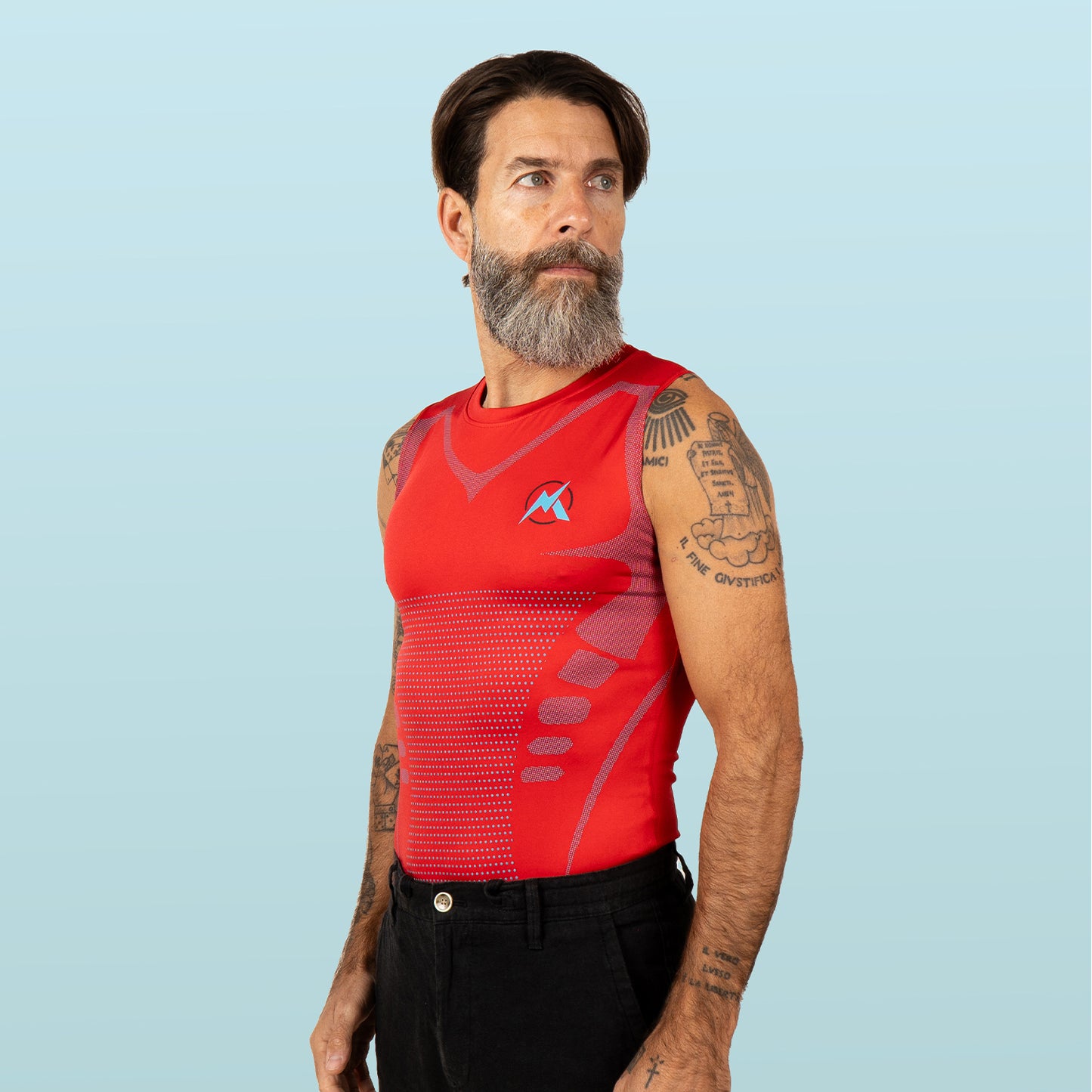
- Shaping compression shirts are built around the silhouette. They use stronger fabric panels in the front and sides to smooth a softer midsection, hold posture, and create a leaner profile under clothes.
Both are "compression." They're not the same product. Confusing them is why most men buy the wrong one and decide compression shirts don't work. A gym shirt won't reshape your silhouette under a polo. A shaping shirt isn't what you want for a barbell session.
What the science says — real evidence, not marketing
Compression garments have been studied for decades, mostly in athletes. The good news: there's a real body of peer-reviewed evidence. The honest news: the effects are modest, situational, and depend on what you're measuring.
Here's what the strongest reviews actually found.
Recovery and muscle soreness
A 2022 systematic scoping review in Sports Medicine looking at the full compression literature concluded that compression garments reduce perceptions of muscle soreness and pain following exercise, even if the underlying mechanisms aren't fully understood (Brown et al., Sports Medicine, 2022).
A 2025 meta-analysis in Life went further on the recovery question. Pooling 31 studies, the authors found that compression garments produced significant improvements in muscle strength and power recovery between 1 and 48 hours post-exercise, with the strongest effects on power output 1–24 hours after a hard session (Wei et al., Life, 2025).
Translation: if you garden hard on Saturday and your back and shoulders ache Sunday, a compression layer worn during the day genuinely seems to help you feel less wrecked. Not a miracle. A measurable nudge.
Circulation
This is the claim brands love to wave around — and it needs nuance. A 2023 meta-analysis on sports compression garments and peripheral blood flow concluded that compression improves peripheral blood flow during exercise, but does not meaningfully improve blood flow at rest (Broatch et al., Sports Medicine, 2023).
So when an ad says "boosts circulation while you sit at your desk," it's overselling. When it says "supports your muscles while you move," that's defensible.
Posture
This one's underrated. Most compression shirts pull your shoulders back slightly and engage your core. They don't fix posture — but they remind you. Posture is a habit, not a one-time correction, and the Cleveland Clinic explicitly recommends mindful, consistent positioning of head, shoulders, and pelvis to prevent the chronic slump that develops with age (Cleveland Clinic, Posture for a Healthy Back). A compression shirt is essentially a soft, all-day reminder.
If you've been working on standing taller — like in our 4-layer plan to fix bad posture for men over 40 — a compression shirt is one of the most consistent reinforcers you can wear.
What compression shirts won't do (the honest limits)
This section is where most blog posts stop. We're not stopping here.
- They don't burn fat. Compression doesn't heat fat cells, doesn't trigger metabolism, doesn't "melt inches." If a product page tells you otherwise, close the tab. Belly fat goes down through diet, sleep, and movement. We broke down what actually moves the needle in why men get a belly after 40 and what actually works.
- They don't permanently reshape you. The moment you take it off, your silhouette returns. That's not a flaw — that's how clothing works. It's why a great compression shirt is a tool, not a treatment.
- They don't replace strength training. Muscles that get smaller because you stopped lifting won't be re-grown by spandex. Compression supports muscle output and recovery; it doesn't build muscle.
- A cheap one won't last. Low-grade spandex stretches out in 6–8 weeks. The compression goes flat, the smoothing disappears, and you decide compression shirts "don't work." They did. The shirt died.
If you go in expecting a comfort layer with modest physiological benefits and a real visual payoff, you'll be satisfied. If you go in expecting a six-pack, you'll be furious.
Compression shirts for men over 40: a different use case
Most compression research is on twenty-something athletes doing eccentric exercise. That's not you. You're 47. You sit through meetings. You play with your kids. You take the dog out. You'd like to look a bit sharper at dinner without doing CrossFit.
For men 40+, the realistic value of a compression shirt looks like this:
- Daily posture cue — gentle reinforcement of shoulders-back, chest-up. Important because slouch worsens with age and screen time, and posture issues affect more than 80% of adults at some point in their lives, per the NIH (NIH News in Health).
- Visual smoothing under work shirts, polos, and dress shirts. The softer midsection that comes with the 40s flattens out instantly under a layered shirt. This is the same idea we covered in how to look 10 pounds thinner without losing a pound.
- Confidence carryover — and this is more real than people admit. Standing taller, looking sharper in the mirror, and not constantly tugging your shirt down is a quiet, daily mood lift.

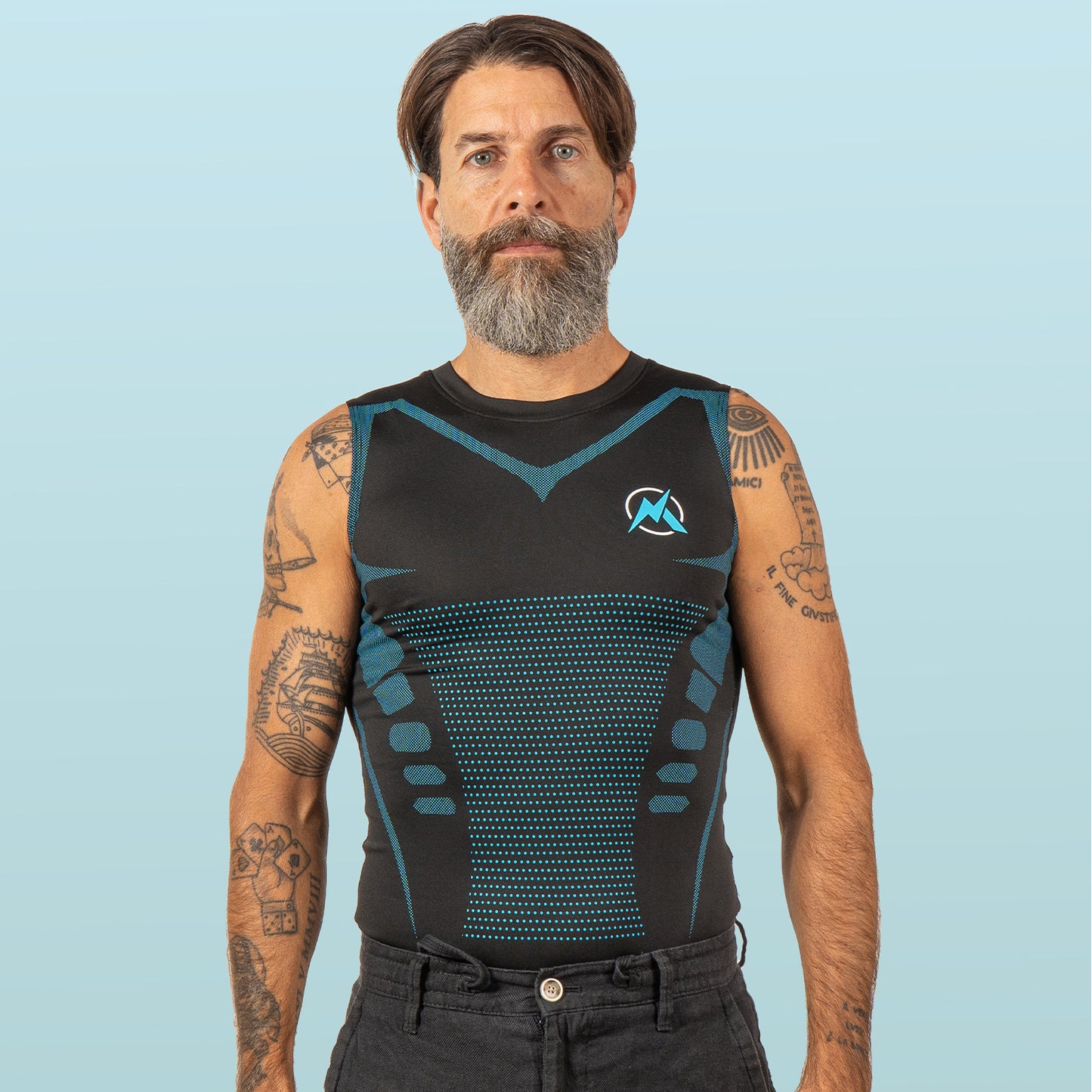
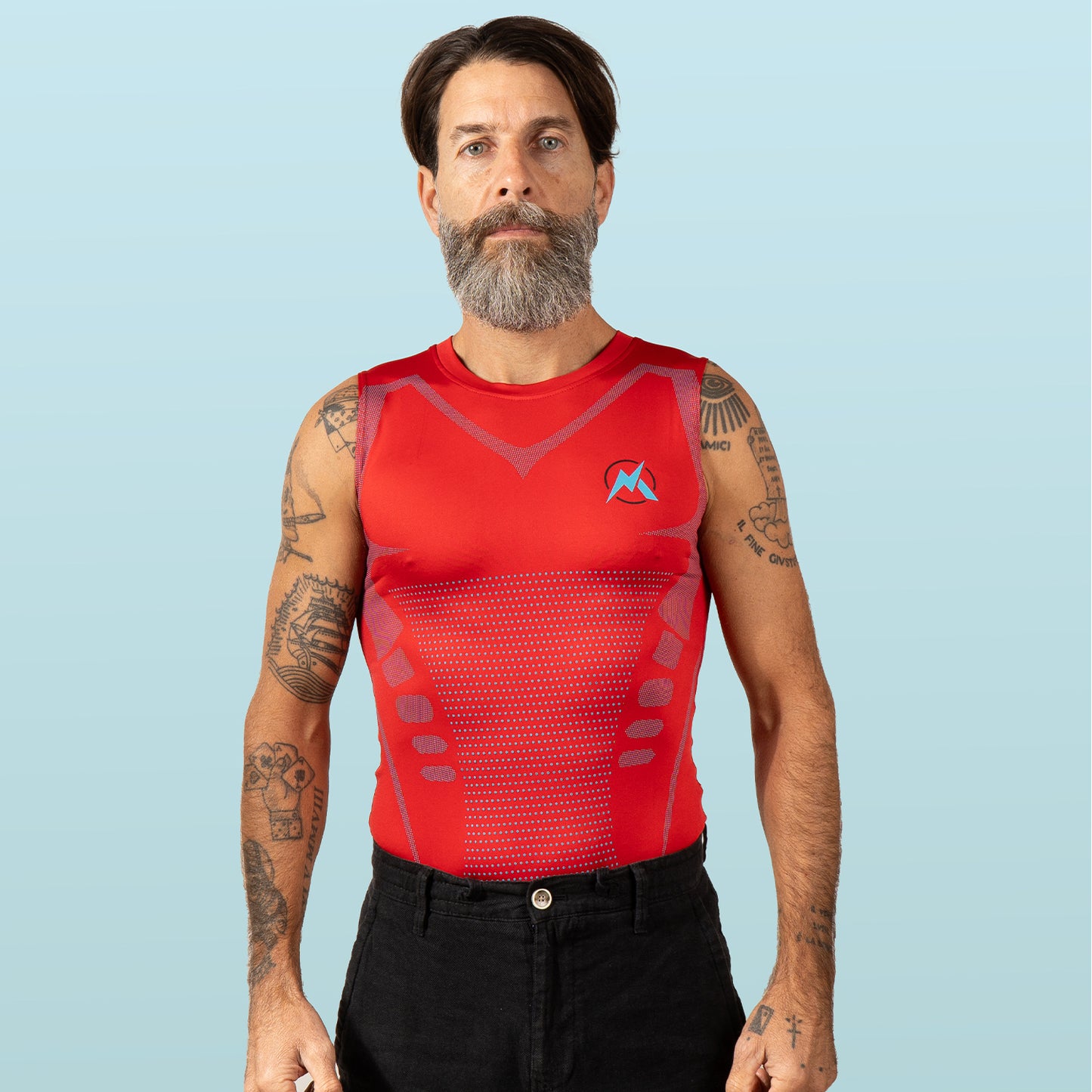
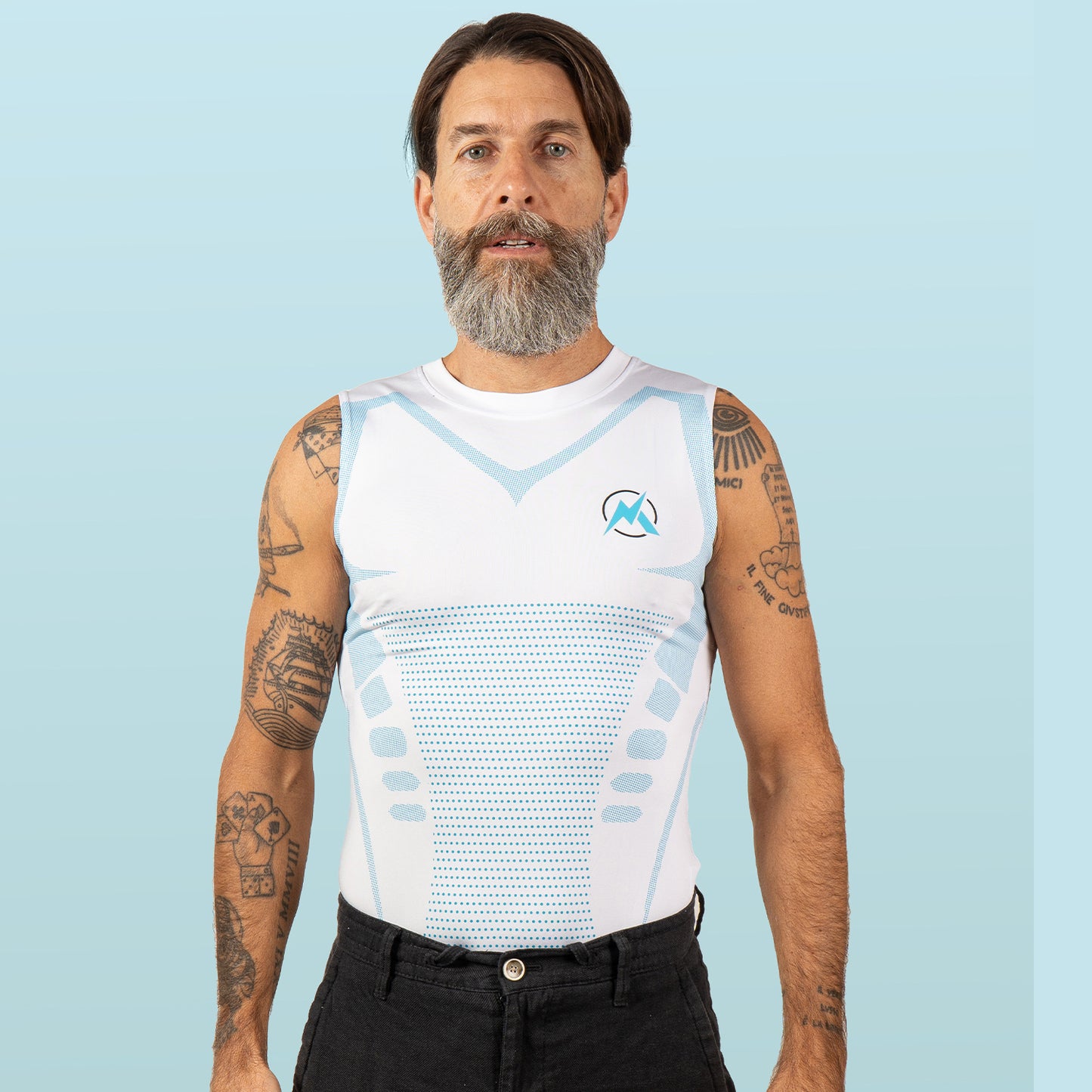
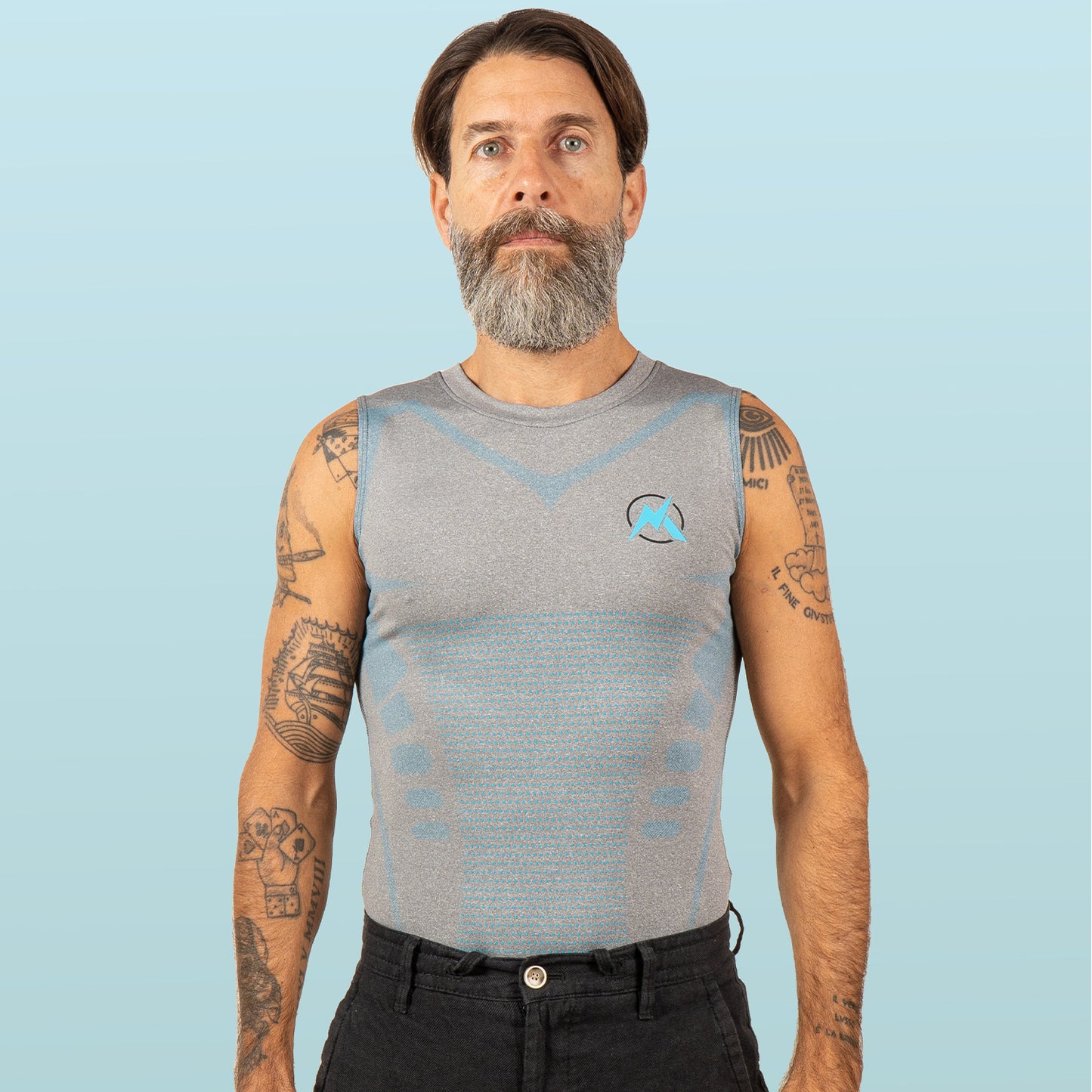
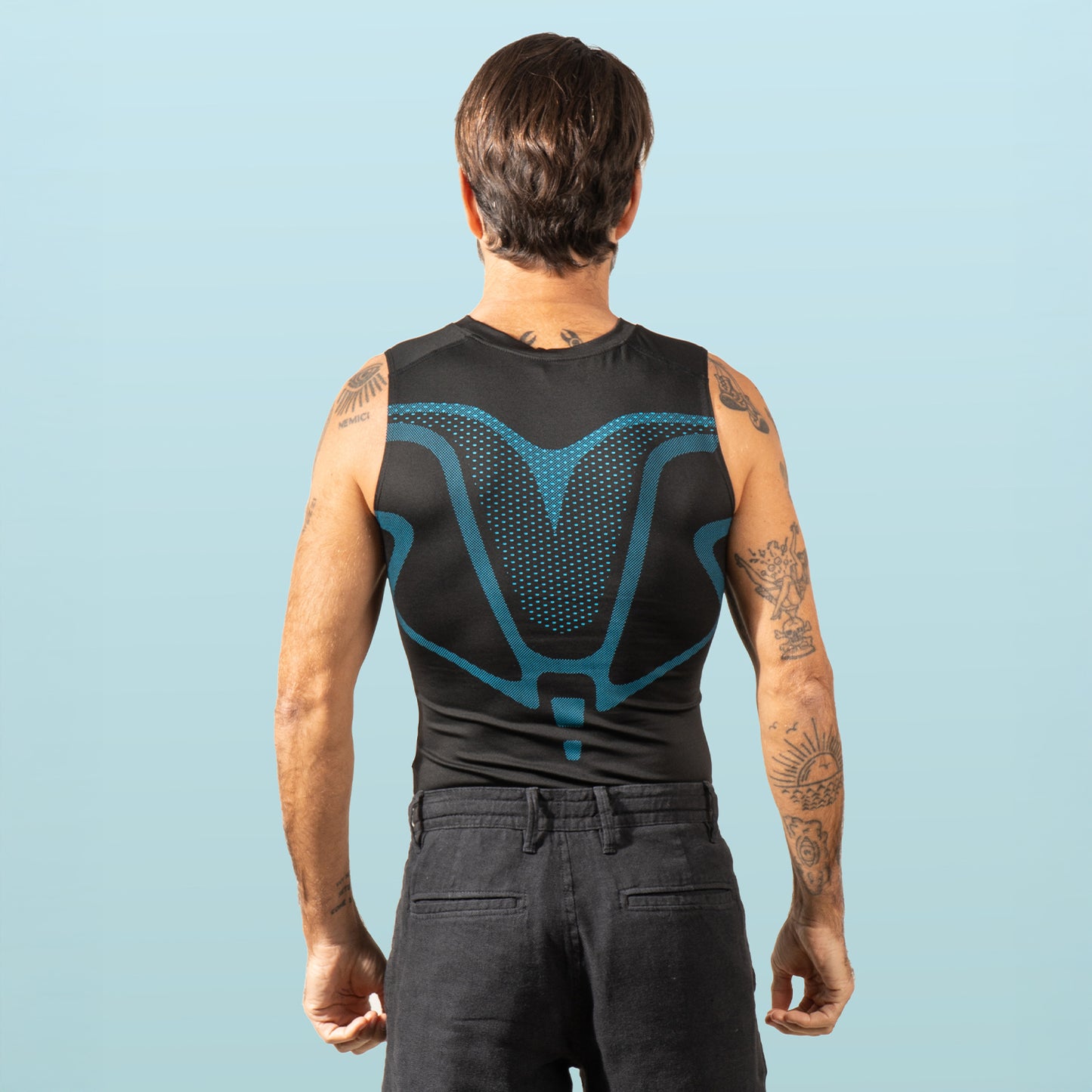
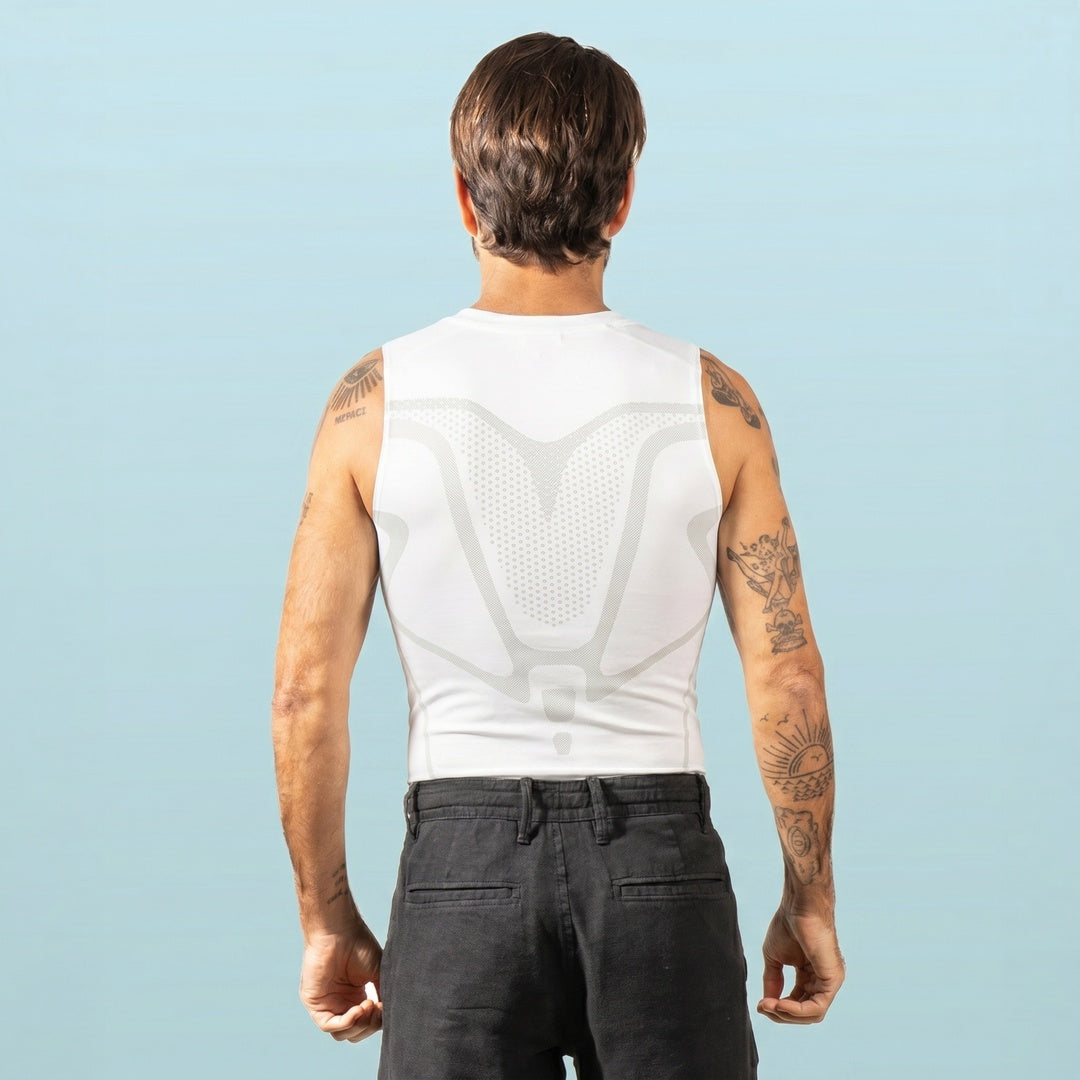
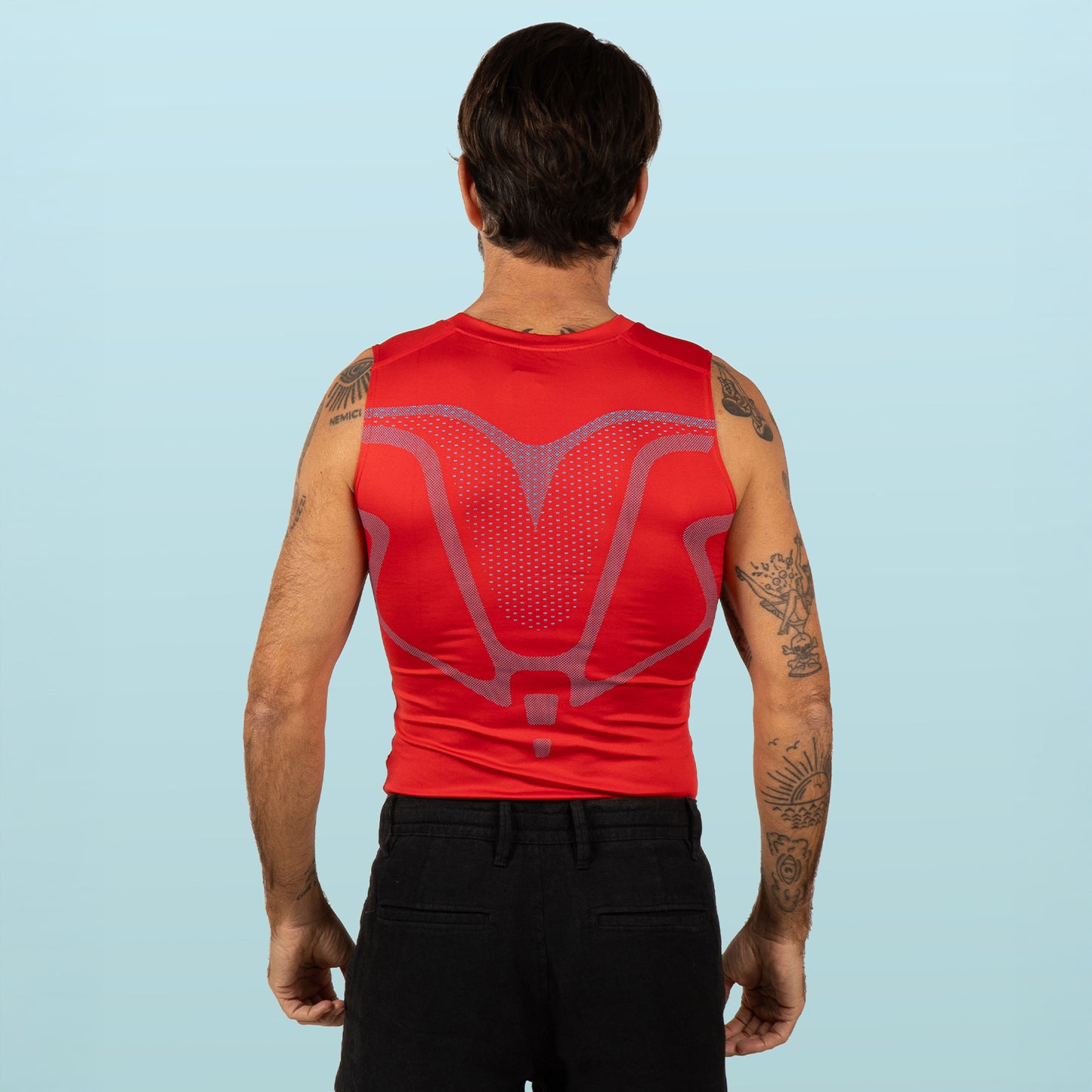
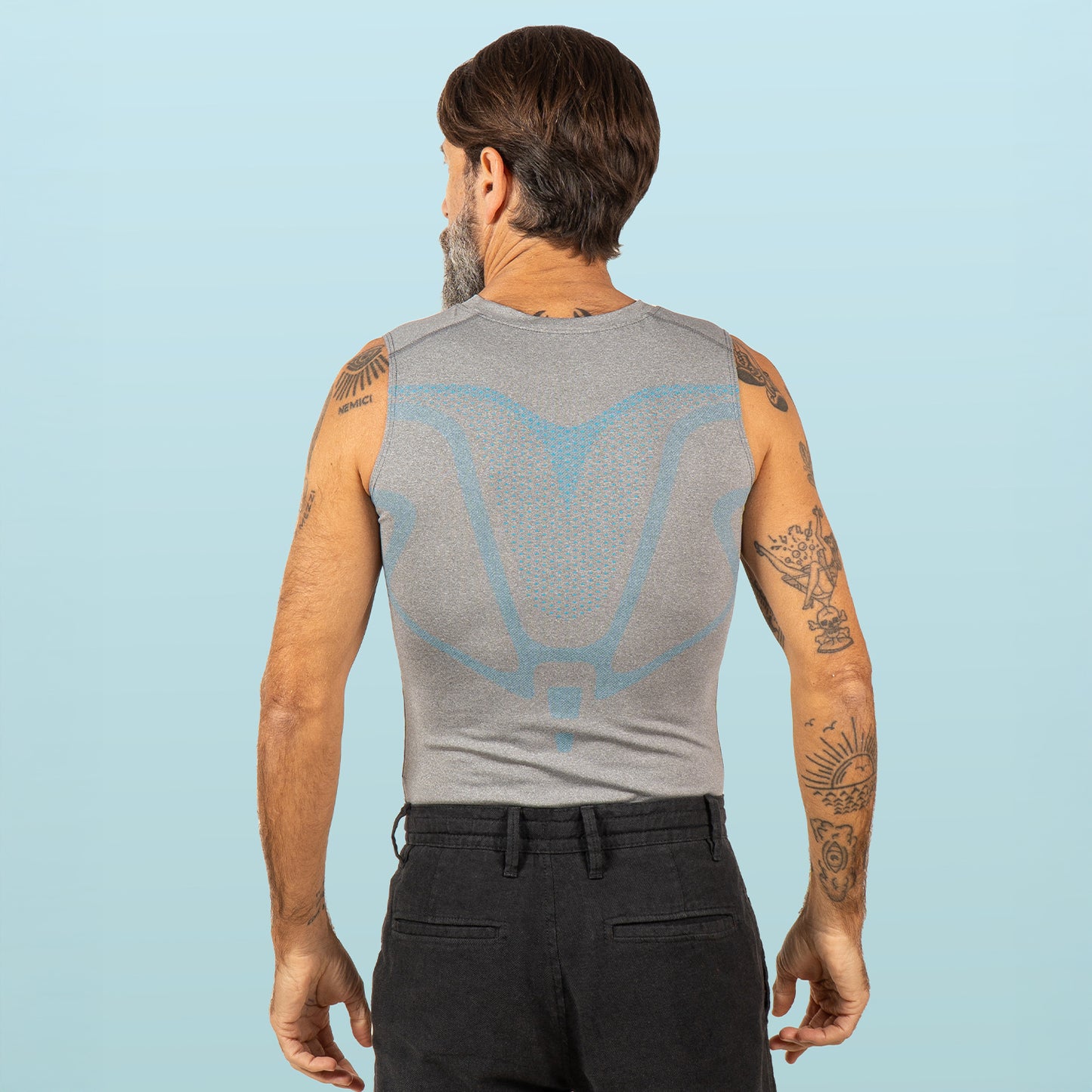
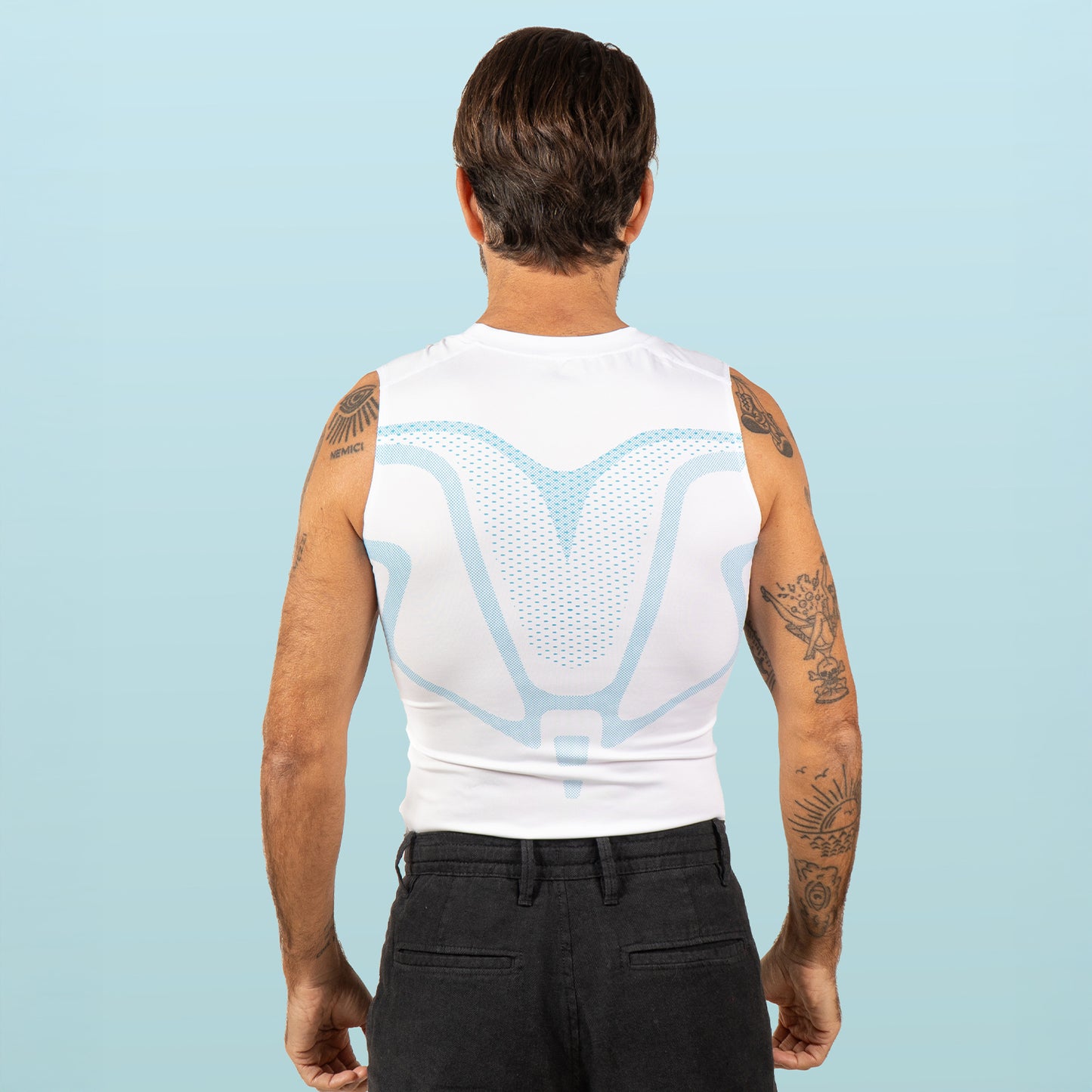
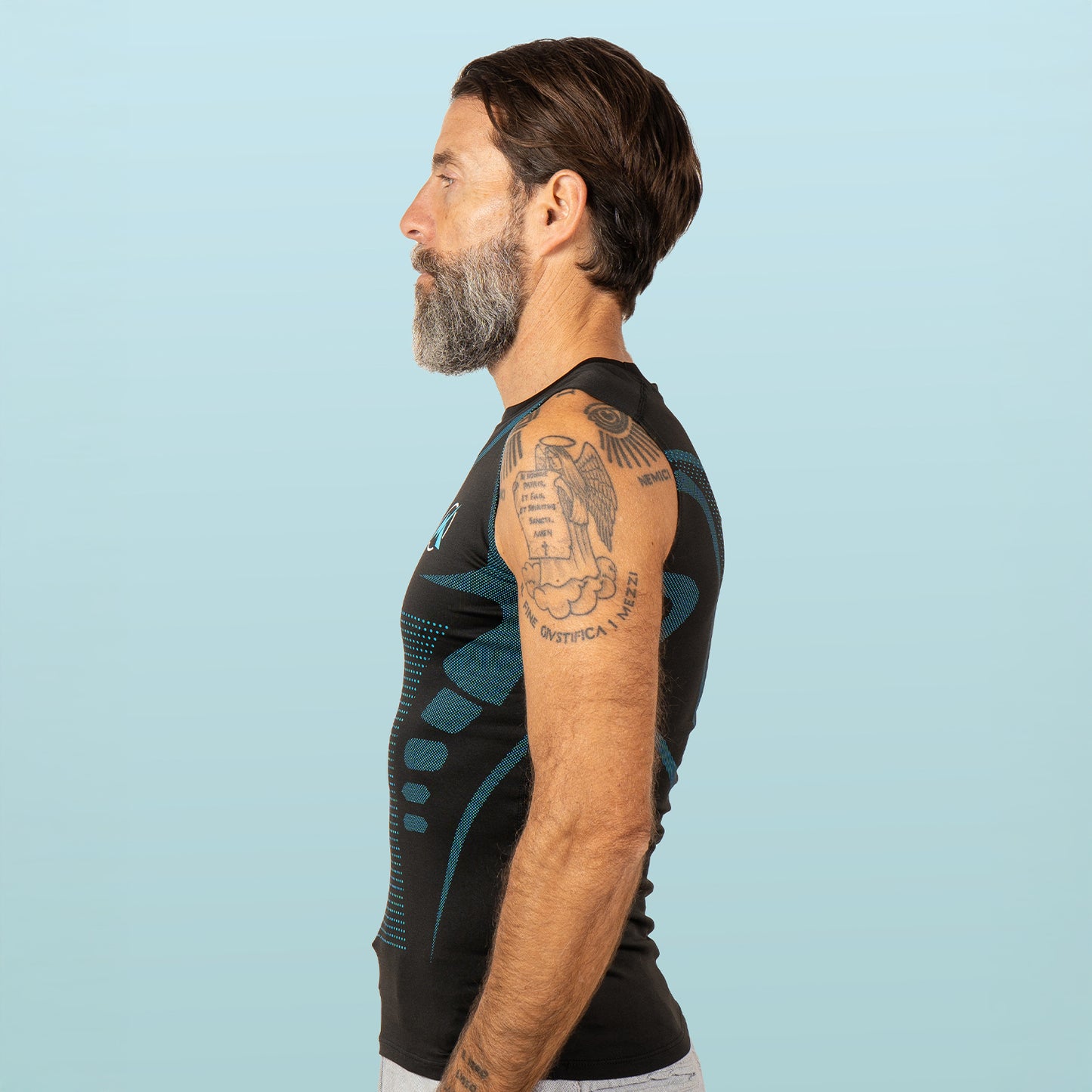
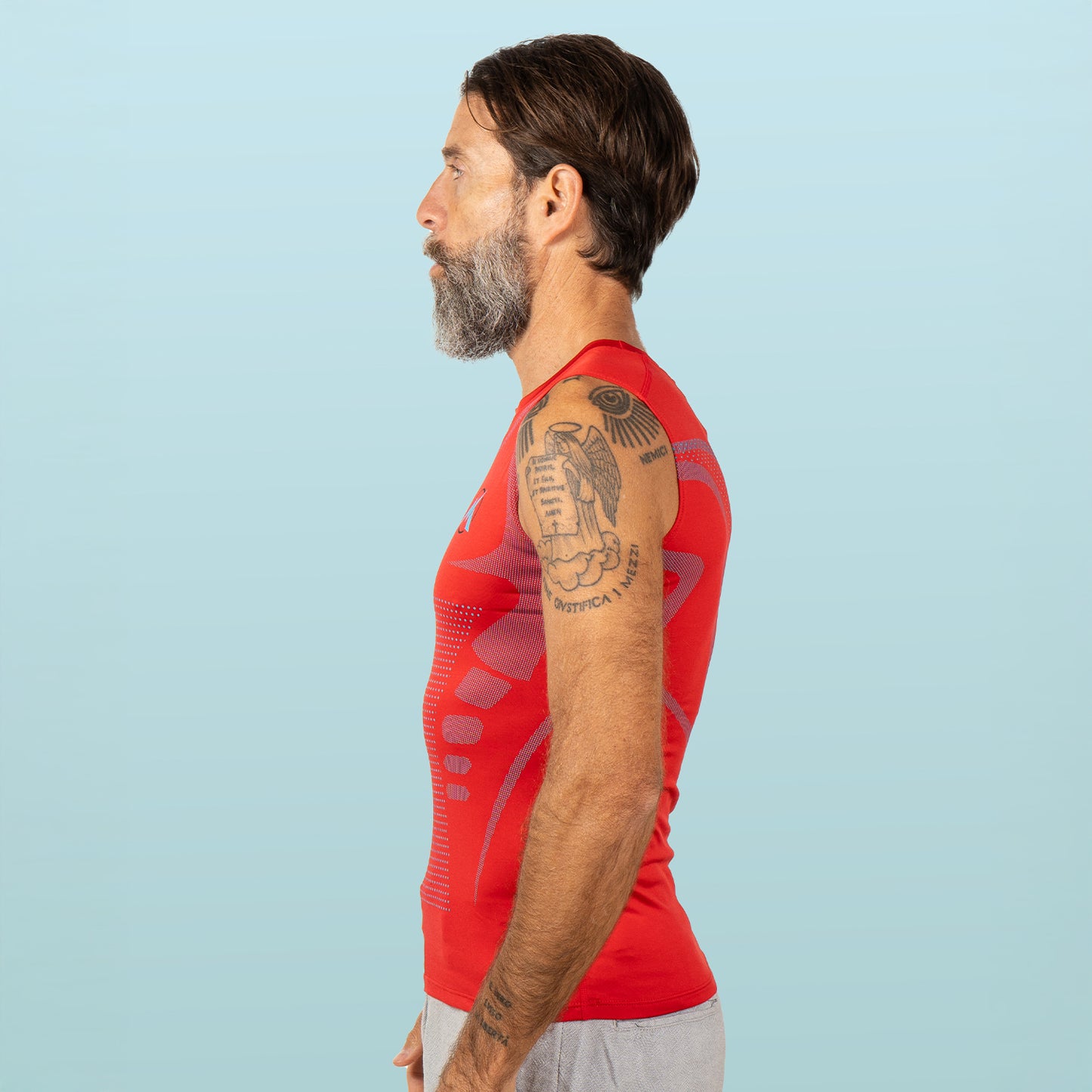
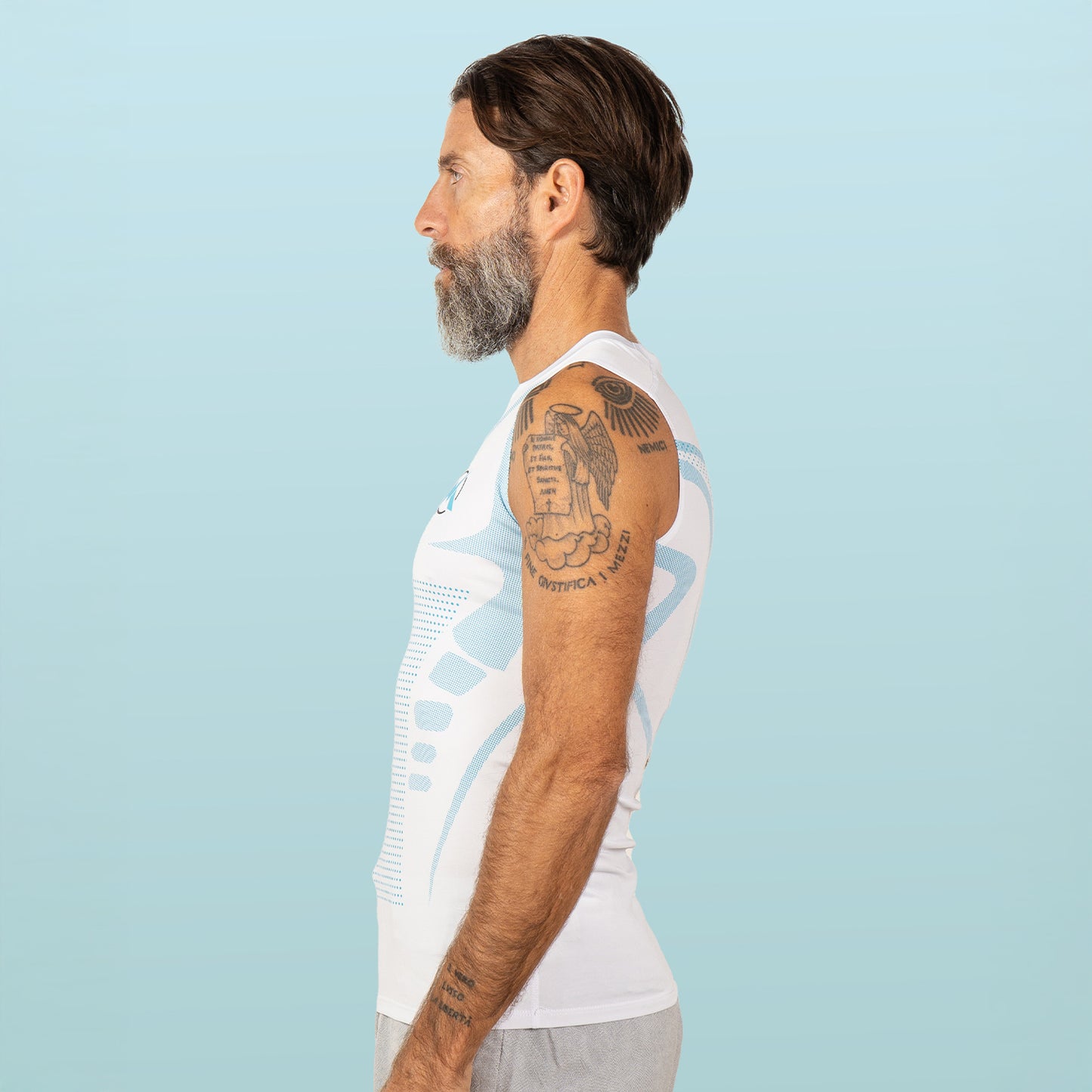
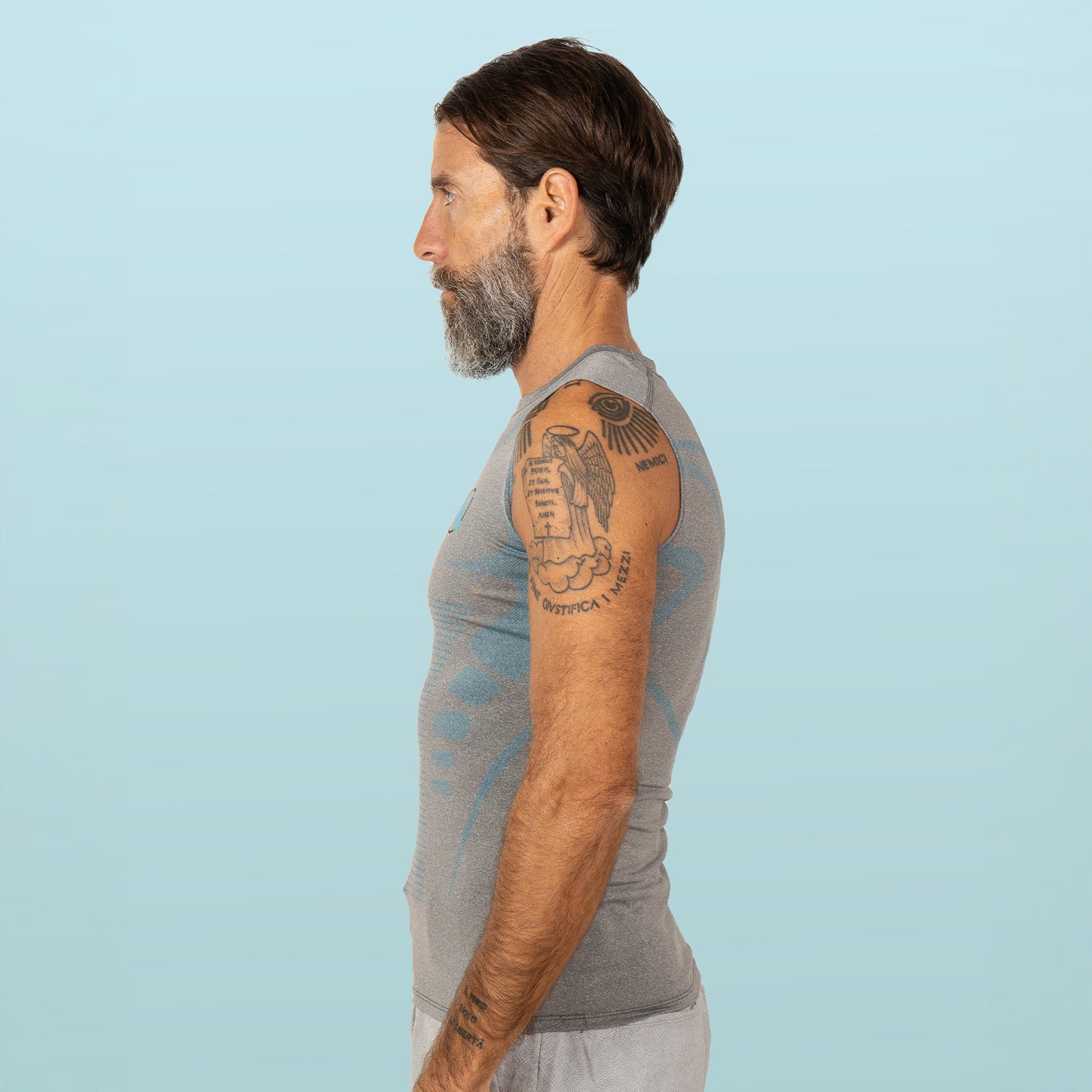
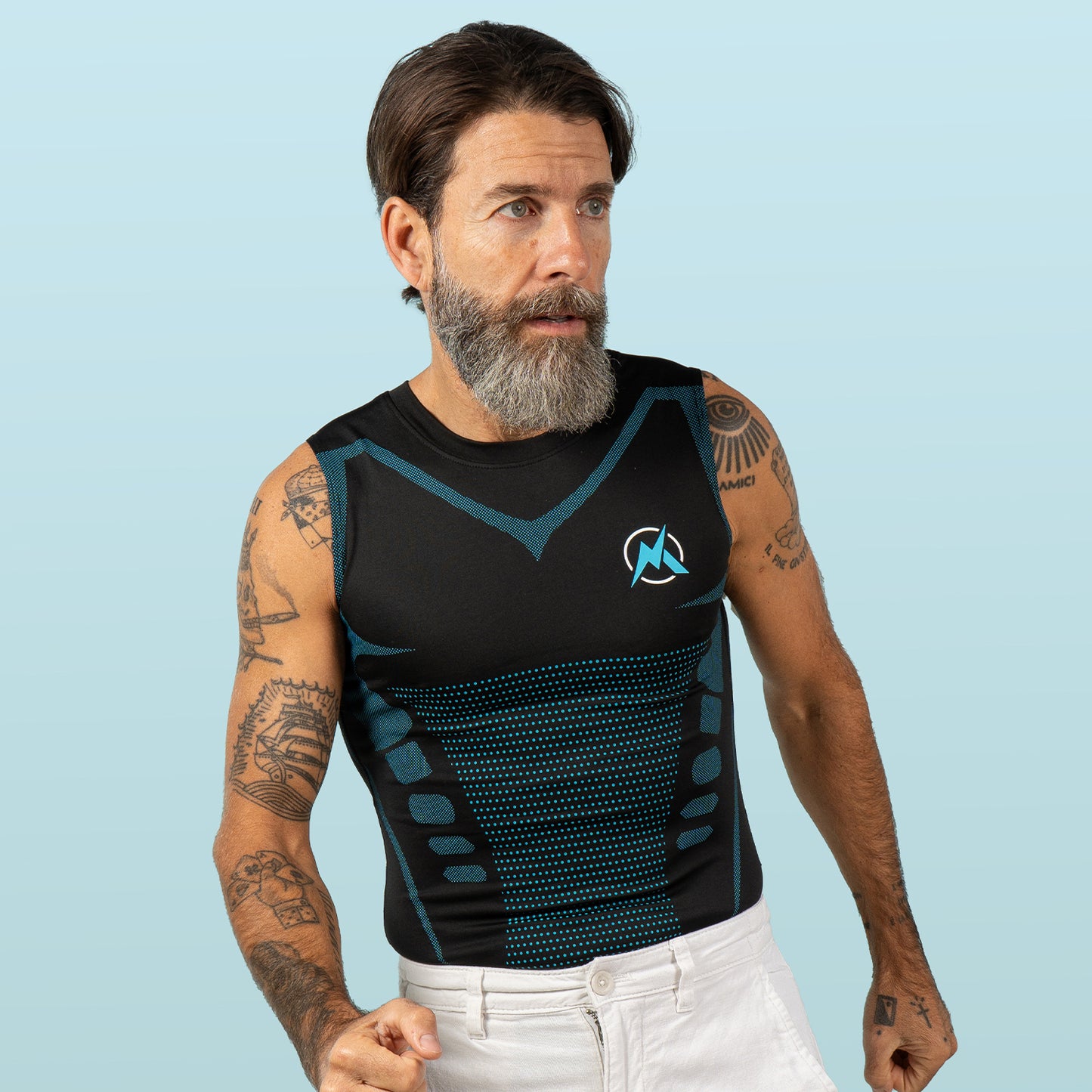
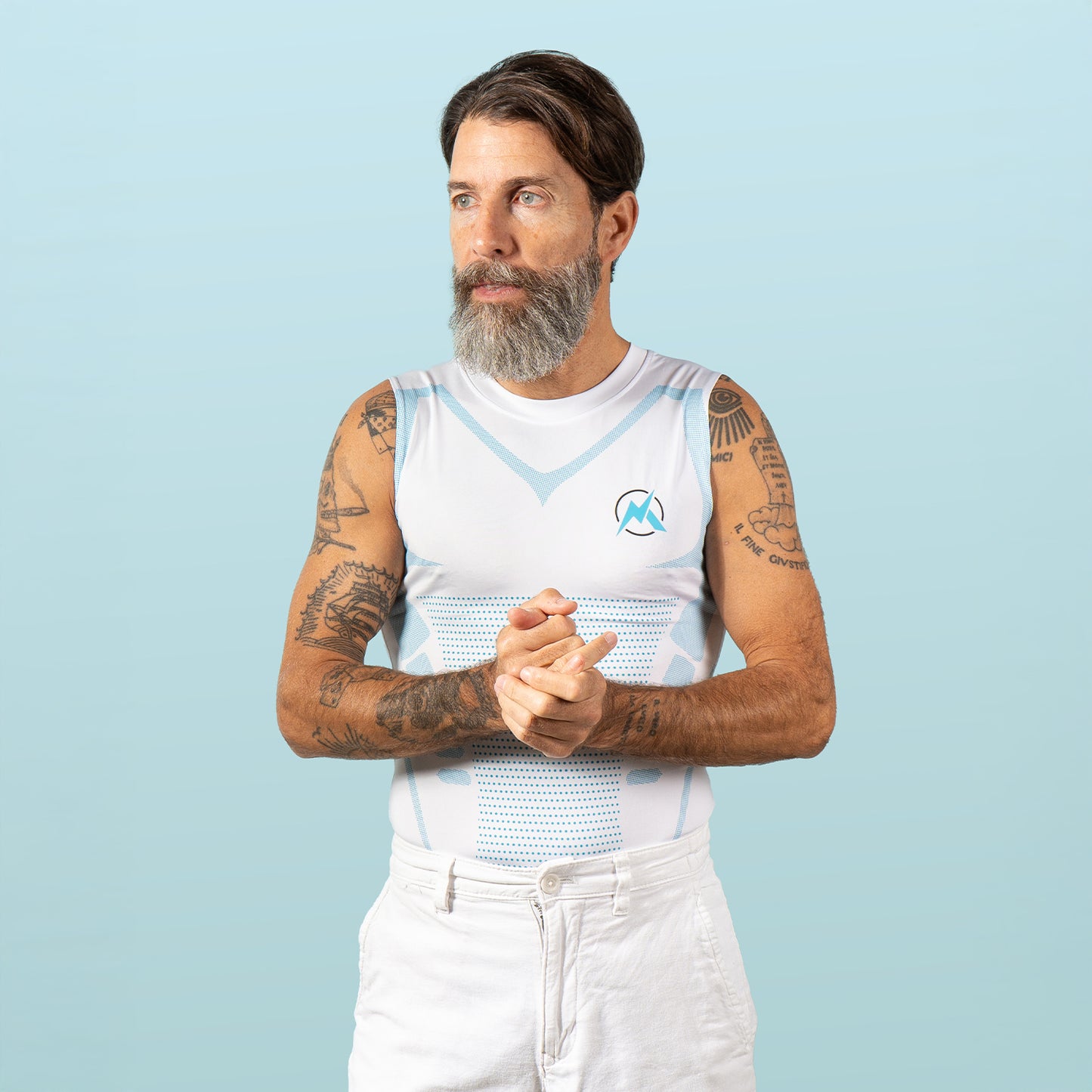
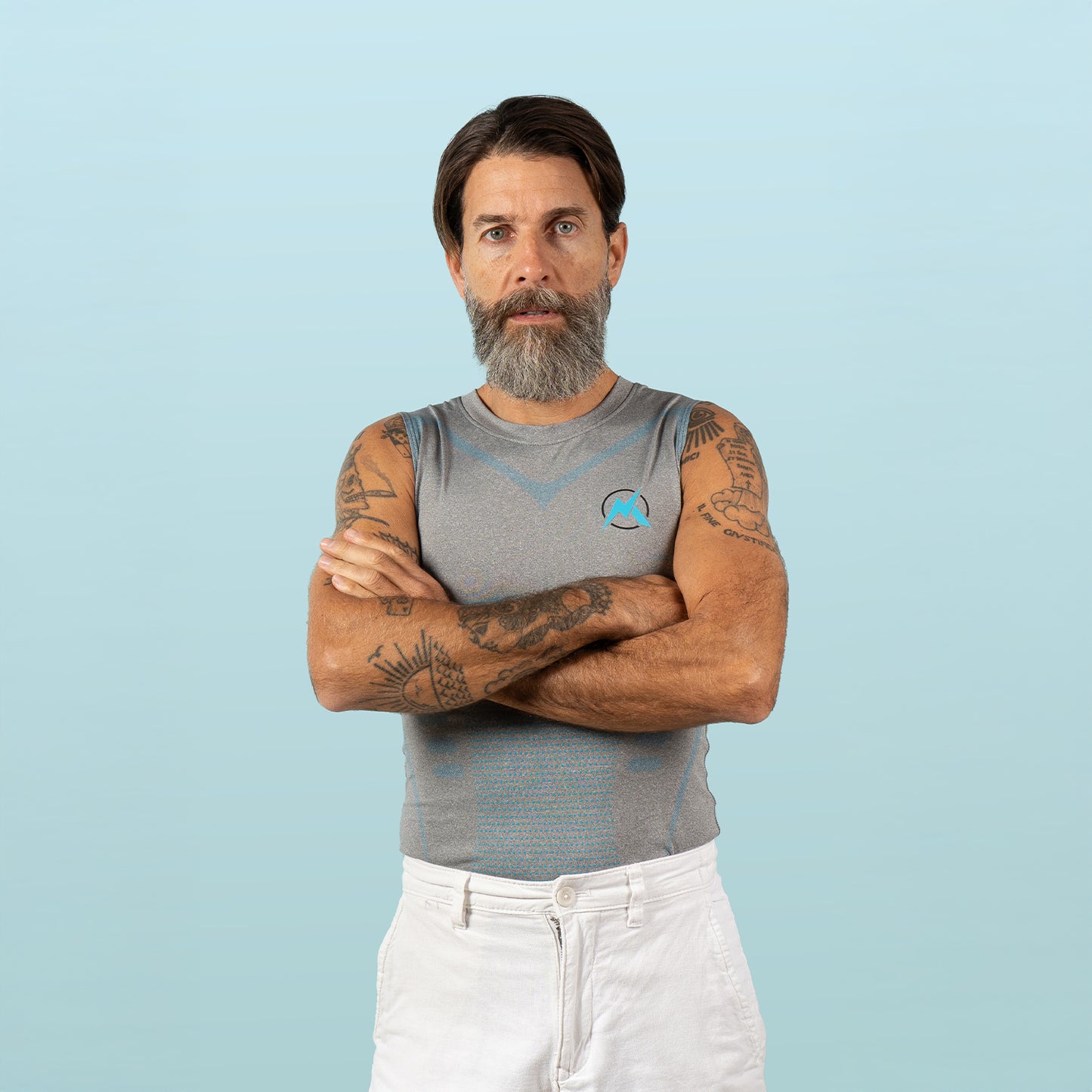
This is why we built VitaBoost the way we did. Sleeveless, jet black, designed to sit invisibly under any shirt. Compression is targeted at the front and sides for silhouette smoothing, with shoulder panels that pull you upright without strangling you. It's not an athletic compression shirt. It's a daily one.
Right now we're running a Buy 1 Get 1 Free promo at $59.99 instead of $15 per piece — basically the lowest entry point we'll ever offer. If you're going to try one, this is the moment.
Try VitaBoost — Buy 1 Get 1 Free
How to choose one that actually fits
This is where most men get burned. A compression shirt that's the wrong fit does nothing — or worse, makes you miserable.
Pressure level
For daily wear, you want light to medium compression, generally rated under 20 mmHg. That's enough to smooth and support without restricting your breathing or making you feel like you're being squeezed by a python at lunch.
Fit, not tightness
A correctly sized compression shirt should feel firm but not painful. You should be able to take a full deep breath. The hem should sit flat against your body, not roll up. The shoulder seams should land on top of your shoulders, not down your bicep.
Sizing rule of thumb: compression shirts run 1 size smaller than your normal t-shirt. If you wear a Large casual tee, your compression size is usually Large in compression sizing — not Medium. Don't try to "force" a size down. It won't shape better; it'll hurt and bunch.
Fabric
Look for at least 15% spandex/elastane in the blend. That's the elastic that gives you actual compression rather than just "snug fit." Below that, the shirt is just a tight tee.
Construction
The signal of a serious shaping compression shirt: panels with different stretch directions — vertical for posture, horizontal for smoothing. Flat-lock seams (so they don't show through your outer shirt). Reinforced stitching at the underarms.
| Type | Pressure | Best For | Not Ideal For |
|---|---|---|---|
| Athletic compression | 15–20 mmHg | Gym, running, sweat-heavy use | Smoothing under dress shirt |
| Shaping compression | 10–18 mmHg | Daily wear, work, social events | Heavy lifting or hot yoga |
| Medical compression | 20–30 mmHg+ | Prescribed conditions | Casual use without consultation |
When to wear it — and when to take it off
Most healthy adults can comfortably wear a properly fitted, light-to-medium compression shirt throughout the day. UPMC notes that lighter-pressure compression garments are generally safe for daily wear, while higher-pressure medical-grade compression is best worn under guidance and removed periodically (UPMC HealthBeat).
Practical rules:
- Take it off to sleep. Your body needs unrestricted rest. There's no benefit to overnight compression for most men.
- Take it off if anything tingles, goes numb, or feels cold. That's a sign the fit is wrong, not that "you'll get used to it."
- Don't wear it in extreme heat workouts unless it's an athletic compression shirt designed for that, with moisture-wicking and ventilation built in.
- Wash it after each wear in cold water. Air dry. Heat kills spandex; a dryer cycle takes years off your shirt.
If you have any cardiovascular issue, deep vein thrombosis history, severe varicose veins, peripheral artery disease, or diabetes with skin sensitivity, talk to your doctor before wearing compression daily. This is general info, not medical advice.
The verdict: should you get one?
If you're a man in your 40s or 50s, sitting more than you used to, carrying a softer midsection, frustrated by how shirts hang, and tired of slouching by 3pm — yes, a compression shirt is one of the highest-leverage $15–30 you can spend on how you feel and look every day. Not because it's magic. Because the evidence says it does several modest, real things at once: it nudges your posture, smooths your silhouette, helps you feel a little less wrecked after physical activity, and quietly bumps your confidence.
If you expect a transformation, you'll be disappointed. If you expect a tool, you'll use it daily and never go back.
Frequently asked questions
Do compression shirts actually work for men?
Yes — within realistic limits. Peer-reviewed research shows compression garments reduce perceived muscle soreness, improve recovery of strength and power 1–48 hours after exercise, and support peripheral circulation during movement. They also smooth your silhouette instantly when worn. They do not burn fat or permanently change your body.
How long can you wear a compression shirt?
Most healthy men can comfortably wear a light- to medium-compression shirt all day, typically 6–10 hours. Remove it to sleep, and take it off sooner if you feel numbness, tingling, or restricted breathing. Higher-pressure medical-grade compression should be worn only as advised by a doctor.
Do compression shirts help you lose belly fat?
No. Compression shirts don't burn fat, heat fat cells, or trigger metabolism. They visually smooth a softer midsection while you wear them, which is genuinely useful — but the moment you take the shirt off, your body returns to its baseline shape. Fat loss requires diet, sleep, and movement.
Are compression shirts safe to wear every day?
For most healthy men, yes — provided the fit is correct and the pressure is light to medium (under 20 mmHg). The shirt should feel firm but allow full breathing and movement. Anyone with cardiovascular conditions, DVT history, diabetes-related skin issues, or peripheral artery disease should consult a doctor first.
How tight should a men's compression shirt be?
Firm but never painful. You should breathe deeply without effort, raise both arms over your head with full range of motion, and feel even pressure across the torso — no pinching, no rolling hems, no shoulder seam slipping down your arm. If it feels like a tourniquet, it's too small.
The bottom line
Compression shirts work — modestly, honestly, and in ways the science backs up. They're not a six-pack in a polybag. They're a daily tool that gives a real visual win and a quiet posture cue. For a man over 40 who wants to feel sharper in his clothes and stand a little taller, a well-built compression shirt is one of the simplest upgrades you can make.
Shop VitaBoost — Buy 1 Get 1 Free at $15
Sources
- Brown F. et al., "Putting the Squeeze on Compression Garments: Current Evidence and Recommendations for Future Research," Sports Medicine, 2022 (Systematic Scoping Review)
- Wei H. et al., "Effects of Compression Garments on Muscle Strength and Power Recovery Post-Exercise: A Systematic Review and Meta-Analysis," Life, 2025
- Broatch et al., Sports Medicine, 2023 — peripheral blood flow meta-analysis
- Cleveland Clinic — Posture for a Healthy Back
- UPMC HealthBeat — Compression Clothing and Circulation Benefits
- NIH News in Health — Getting It Straight: Posture Matters
Disclaimer: This article is for general informational purposes only. VitaBoost is a garment, not a medical device. Consult your doctor before using compression apparel daily if you have cardiovascular, vascular, or circulation-related conditions.