By Owen Blot · Founder, Maynox · Last updated May 11, 2026
- Why most "look younger" advice for men over 50 misses the point
- The 7-second rule: what people actually see first
- Posture — the fastest decade you'll ever drop
- Silhouette — what clothes (and what's underneath) signal
- Skin, sleep, and the boring stuff that actually works
- The 60-second test to do tonight
- Frequently asked questions
You're 52. You catch yourself in a hotel lobby mirror and you don't recognize the guy looking back. Not because of wrinkles. The face is fine. It's the slope from your neck to your shoulder, the way your shirt sits, the angle of your head. You look tired. Heavier than you actually are. Old, in a way that has nothing to do with your skin.
That's the part nobody writes about.
Why most "look younger" advice for men over 50 misses the point
Open any "look younger after 50" listicle and you'll find the same checklist: brighten your teeth, get a better haircut, wear sunscreen, consider Botox, moisturize, trim your beard. All true. All almost completely irrelevant to how old you actually look in real life.
Here's why. The first thing any human notices about you is not your face. It's your silhouette. From eight feet away, your face is a blur. What people register is your shape, your stance, the way you hold your head. By the time they're close enough to see crow's feet, they've already filed you into a mental category — and that category was built on cues you didn't even know you were giving off.
That's the gap. Every grooming-first article skips it because grooming is easier to sell. A $40 moisturizer is a clear product. "Stand differently" doesn't come in a bottle.
This article is about the things that actually move the needle. The good news: they cost nothing. The other news: they take a few weeks to feel automatic.
The 7-second rule: what people actually see first
Psychologists studying first impressions consistently find that judgments about confidence, status, and age form in the first 7 seconds of seeing someone — long before any conversation starts. In those seconds, your face is one of the last signals processed. The brain is faster than that. It clocks three things first:
- Your outline — the shape your body makes against the background
- Your head and shoulder line — head forward or stacked over the spine
- Your movement — how you walk, sit down, reach for something
A 2008 JAMA Dermatology twin study found that for men under 55, being overweight made them look measurably older to outside observers — not because of skin damage, but because of the change in face and neck contour that excess weight produces. Pair a softer outline with rounded shoulders and a forward head, and you can add a decade to perceived age without a single new wrinkle.
The flip side is the opportunity. The same studies suggest that fixing the silhouette and the stance is the single highest-leverage change a man over 50 can make — bigger than skincare, bigger than haircut, bigger than anything that happens above the collar.
Posture — the fastest decade you'll ever drop
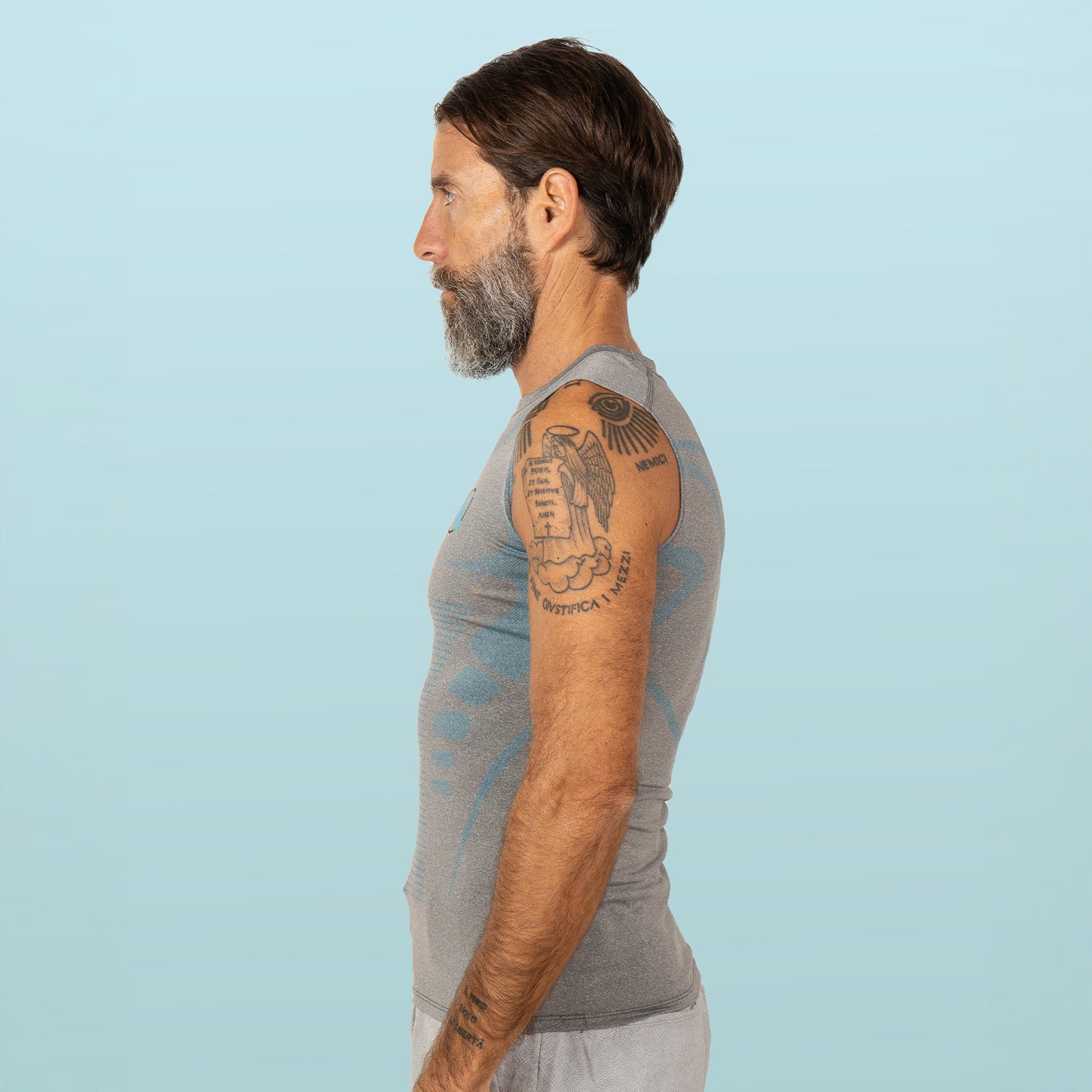
Here's the uncomfortable truth: you've been hunching for thirty years. Desk, phone, steering wheel, laptop. By 50, your default standing position is no longer neutral. Your head sits about an inch and a half forward of your spine. Your shoulders round in. Your chest collapses two inches. Your belly pushes forward to compensate.
That single postural shift does four things to how old you look:
- It adds a visible double-chin shadow, even if you're not heavy
- It makes your shoulders look narrower and your hips wider
- It pushes your gut forward by an inch or two, regardless of actual weight
- It makes your walk look heavier — older men shuffle because their head is in front of their center of mass
The fix isn't complicated. It's repetition. Three exercises, five minutes a day, six weeks: wall angels, doorway pec stretches, and dead bugs. That's it. We laid out the full routine in our posture exercises for men over 50 — five minutes, no gym, no equipment.
If you only do one thing after reading this, do this: stand against a wall with your heels, butt, shoulder blades, and the back of your head all touching it. Hold for 30 seconds. Walk away keeping that stack. That's your real posture. It's also what you looked like at 35.
Silhouette — what clothes (and what's underneath) signal
Posture sets the frame. Clothes either reveal it or destroy it.
The two biggest silhouette killers men over 50 keep wearing:
Shirts that are a half-size too big. Most men gain 15-20 pounds between 35 and 55 and never re-size their shirts. The result: extra fabric pooling at the waist, sleeves drooping past the wrist, a collar that gaps. It reads as "older man wearing his son's shirts." Pull everything out of your closet. If a shirt is more than a half-inch loose around the chest when buttoned, it's aging you. We covered the seven worst patterns in our breakdown of style mistakes men over 45 keep making.
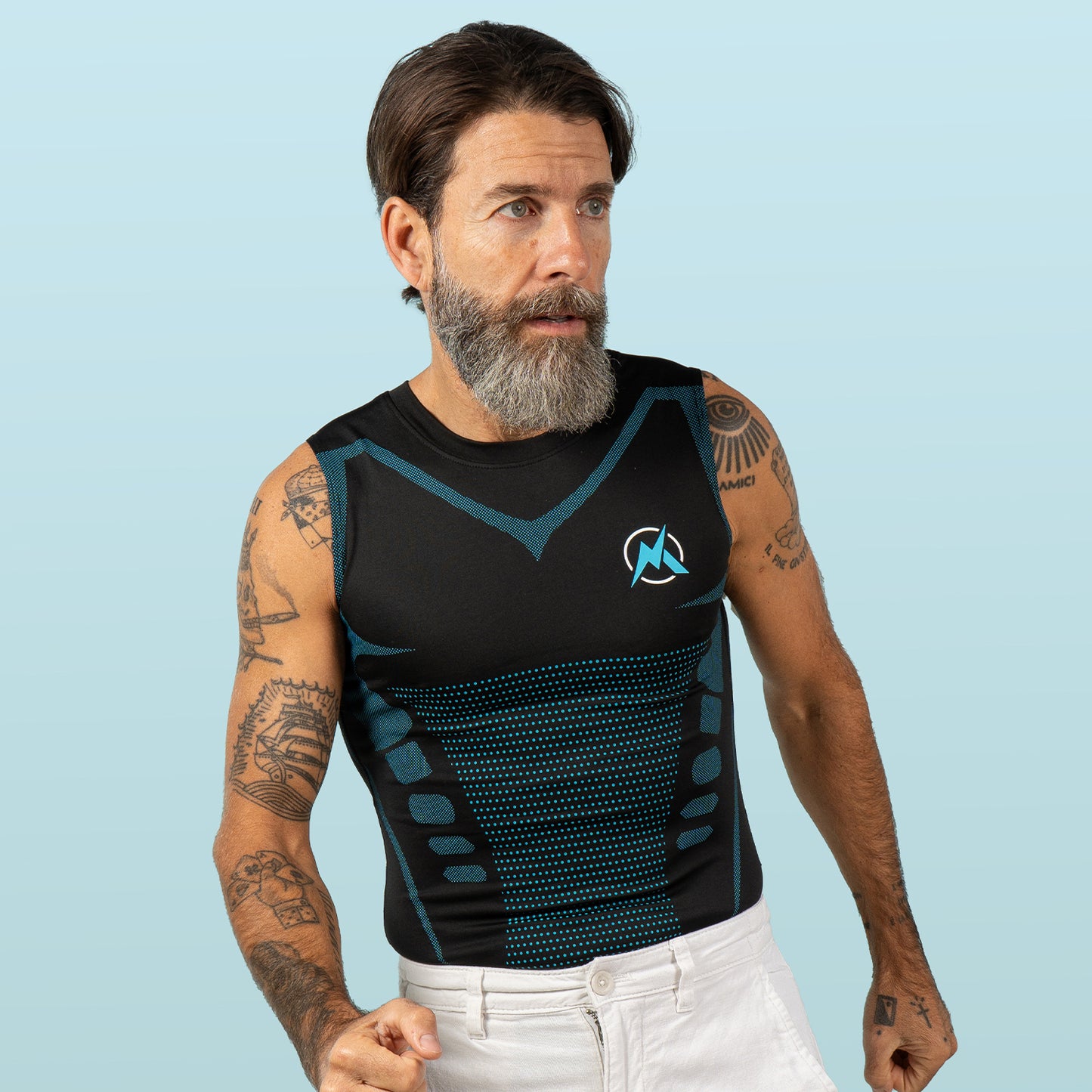
No base layer. This is the one nobody talks about. Whatever you wear on top — polo, oxford, knit — drapes over a soft, unsupported torso. The fabric catches on every roll and seam. A thin, compressive base layer underneath does what posture does on the inside: it pulls everything into a cleaner line. Not a corset. Not shapewear. Just a snug undershirt that lives between you and your shirt and decides whether your shirt drapes like it's on a hanger or like it's on a couch.

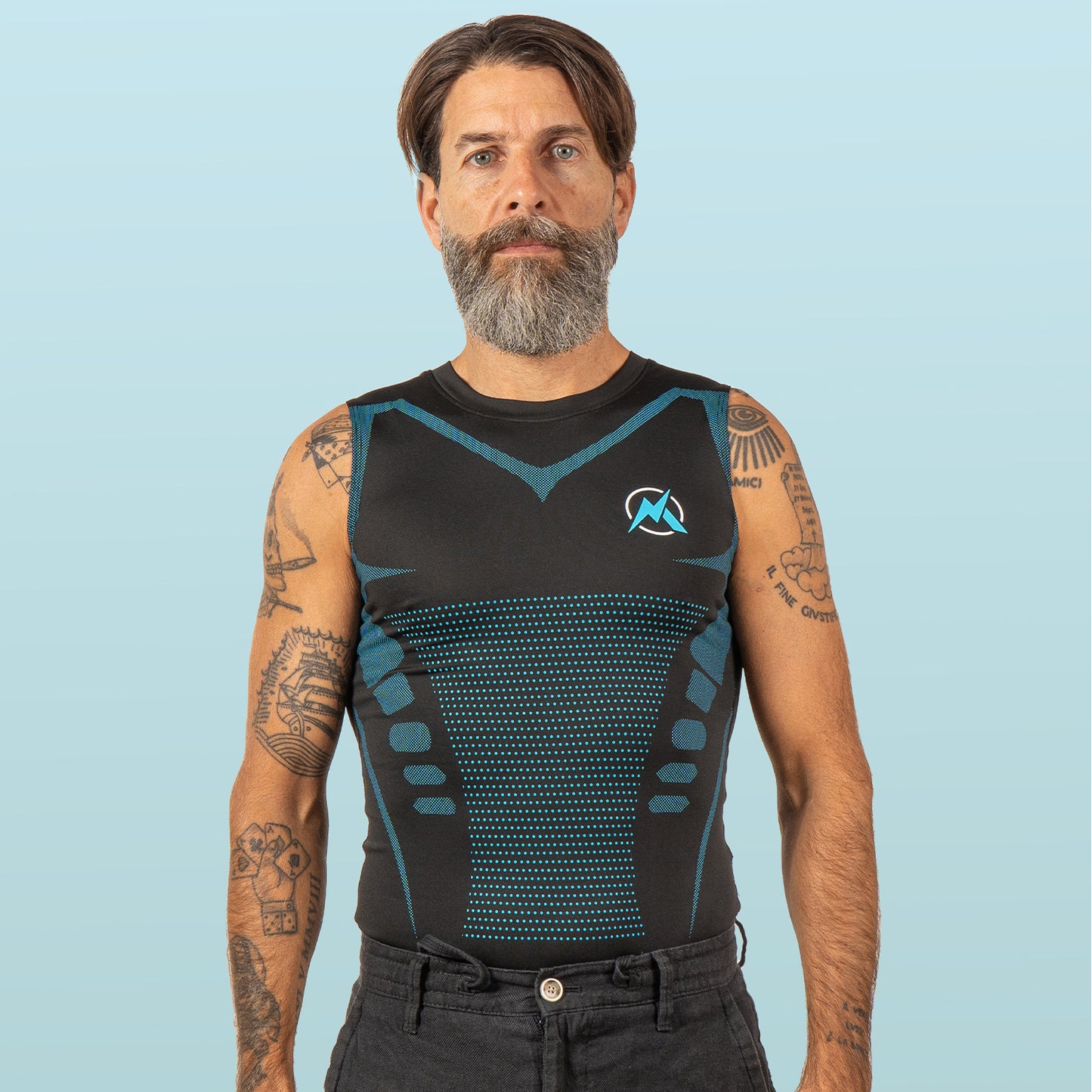
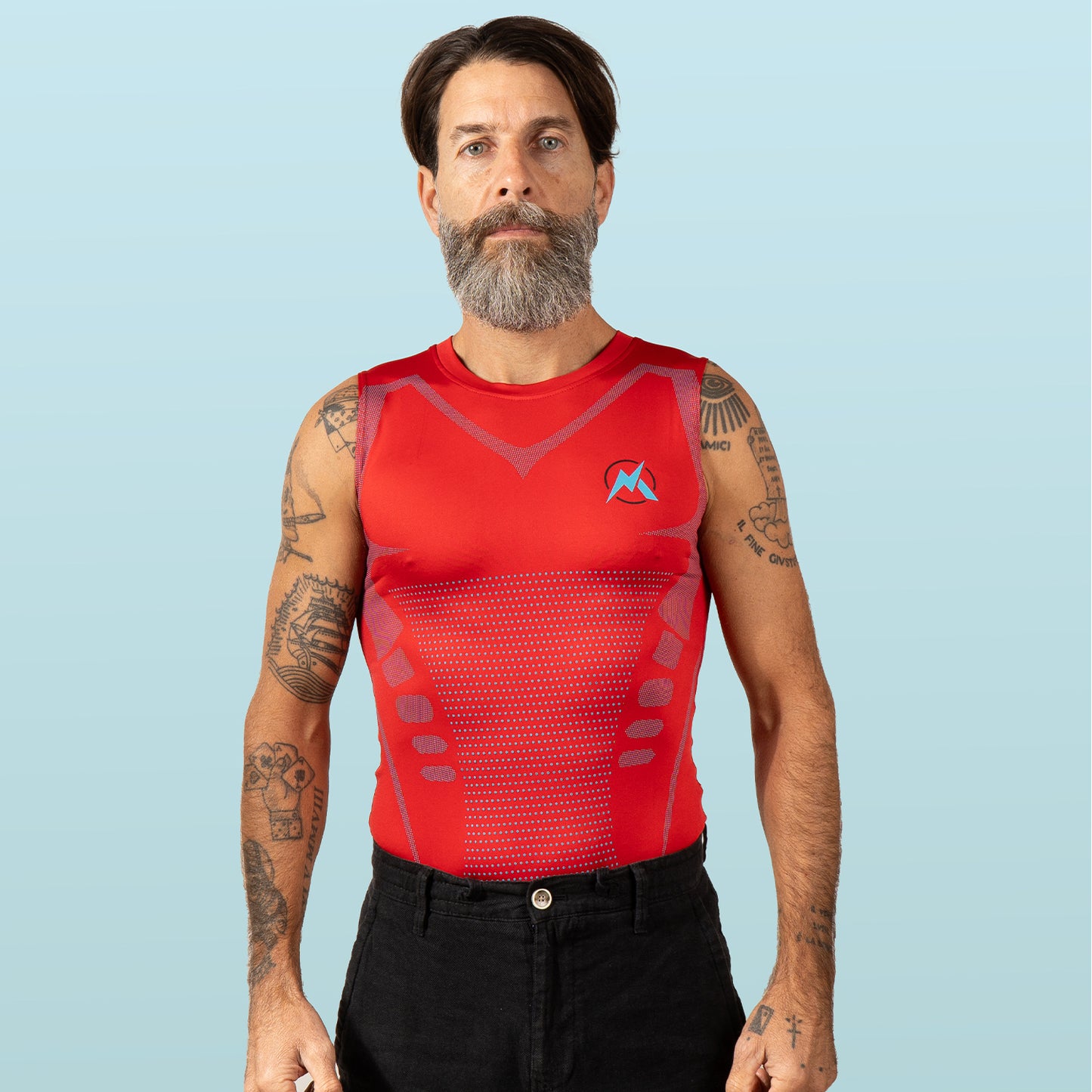
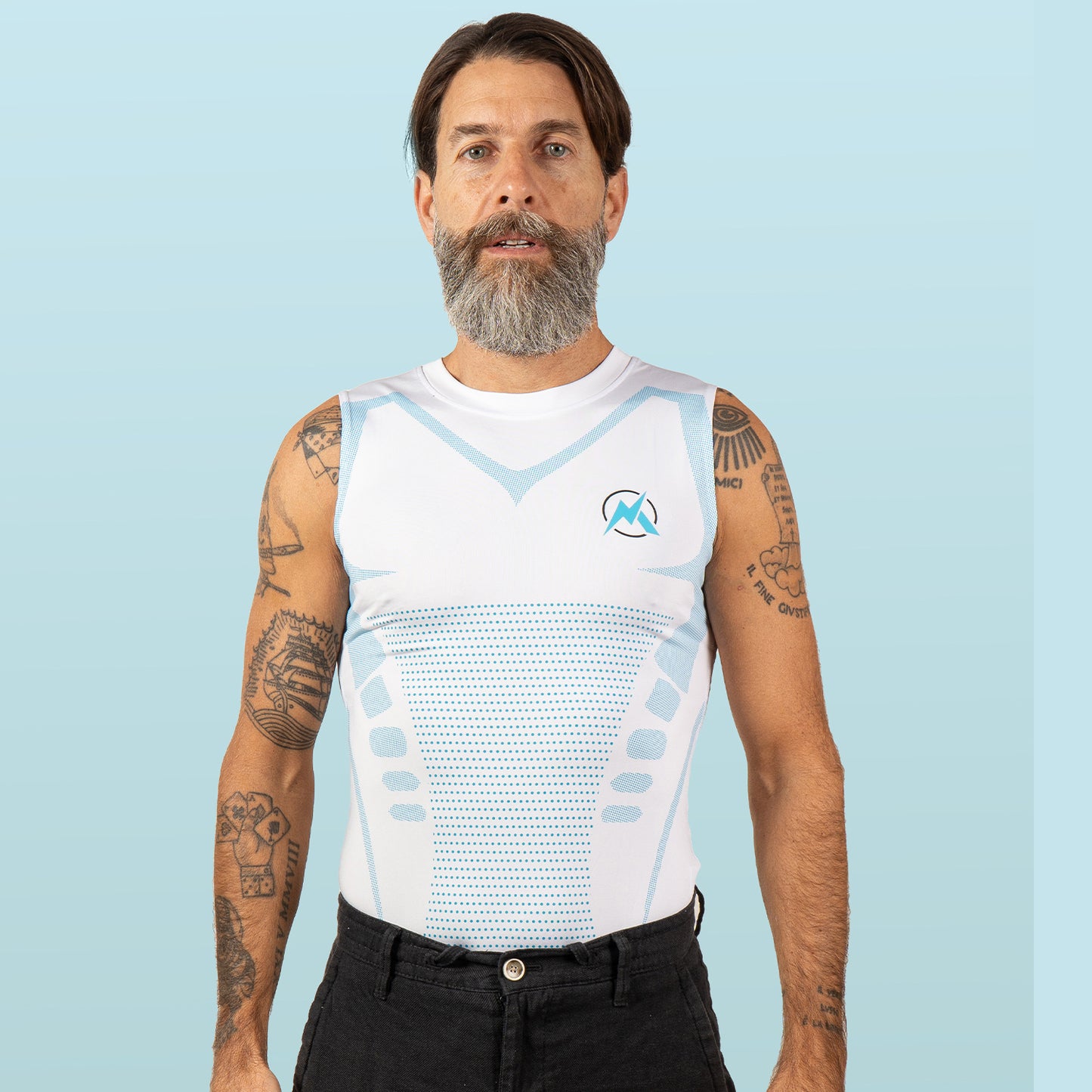
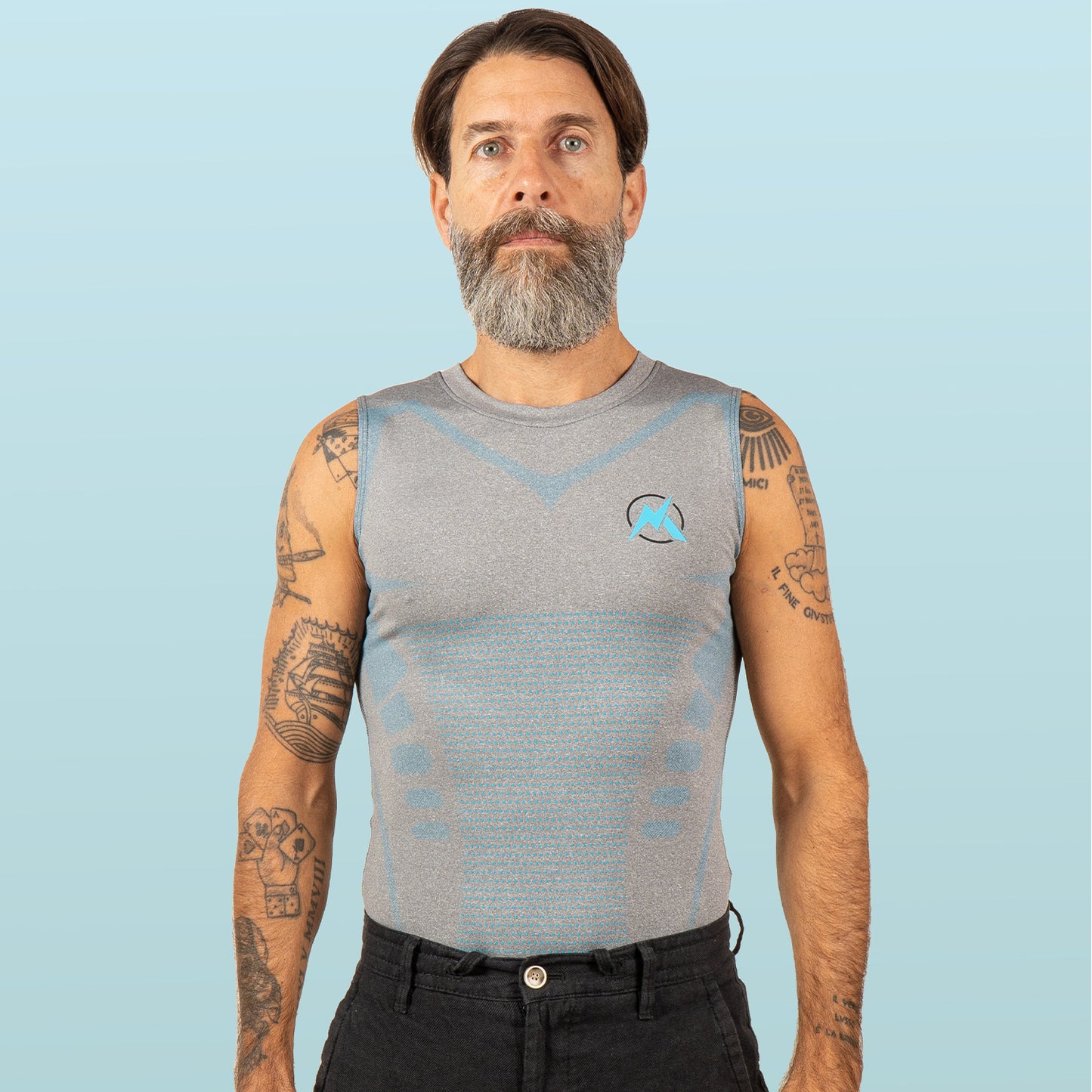
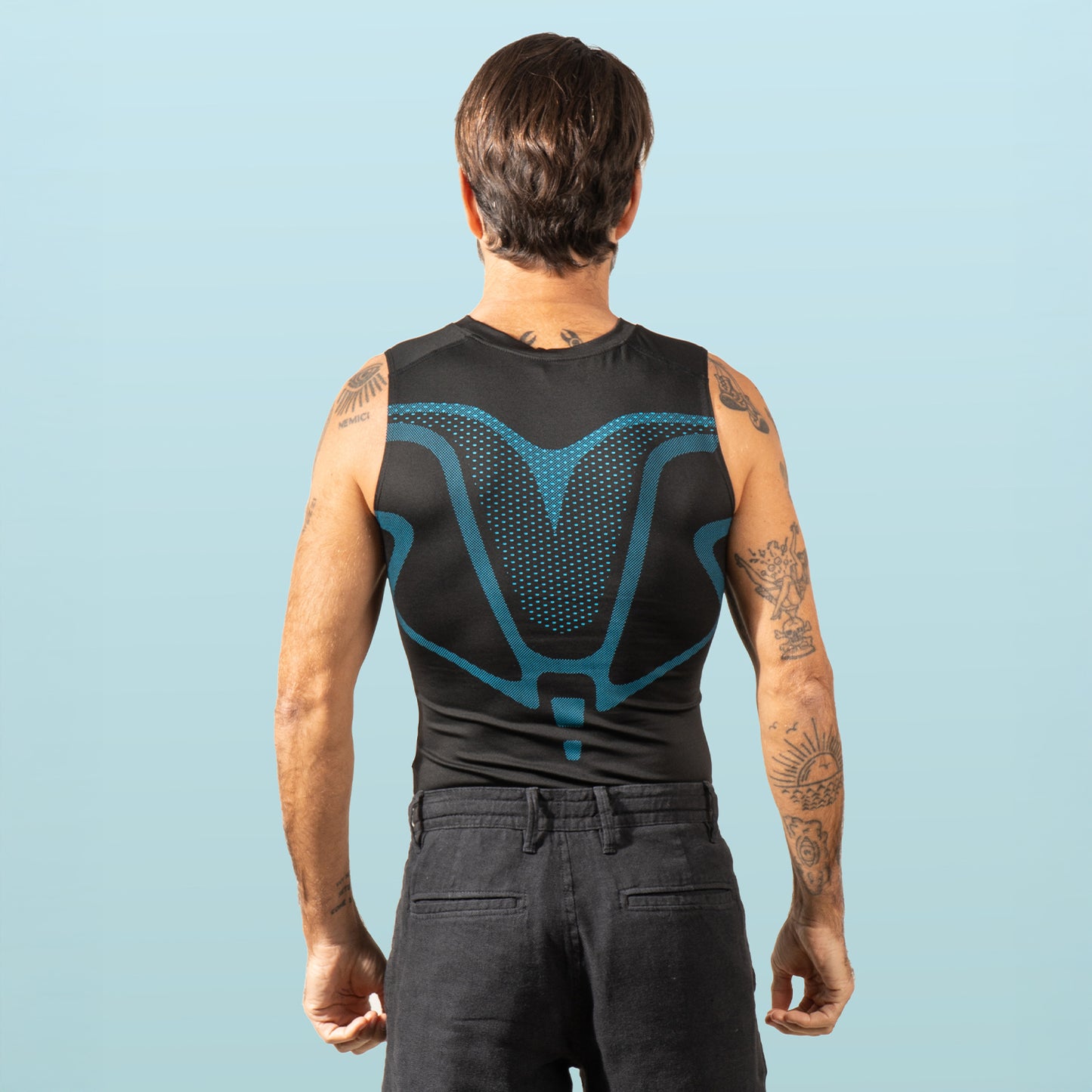
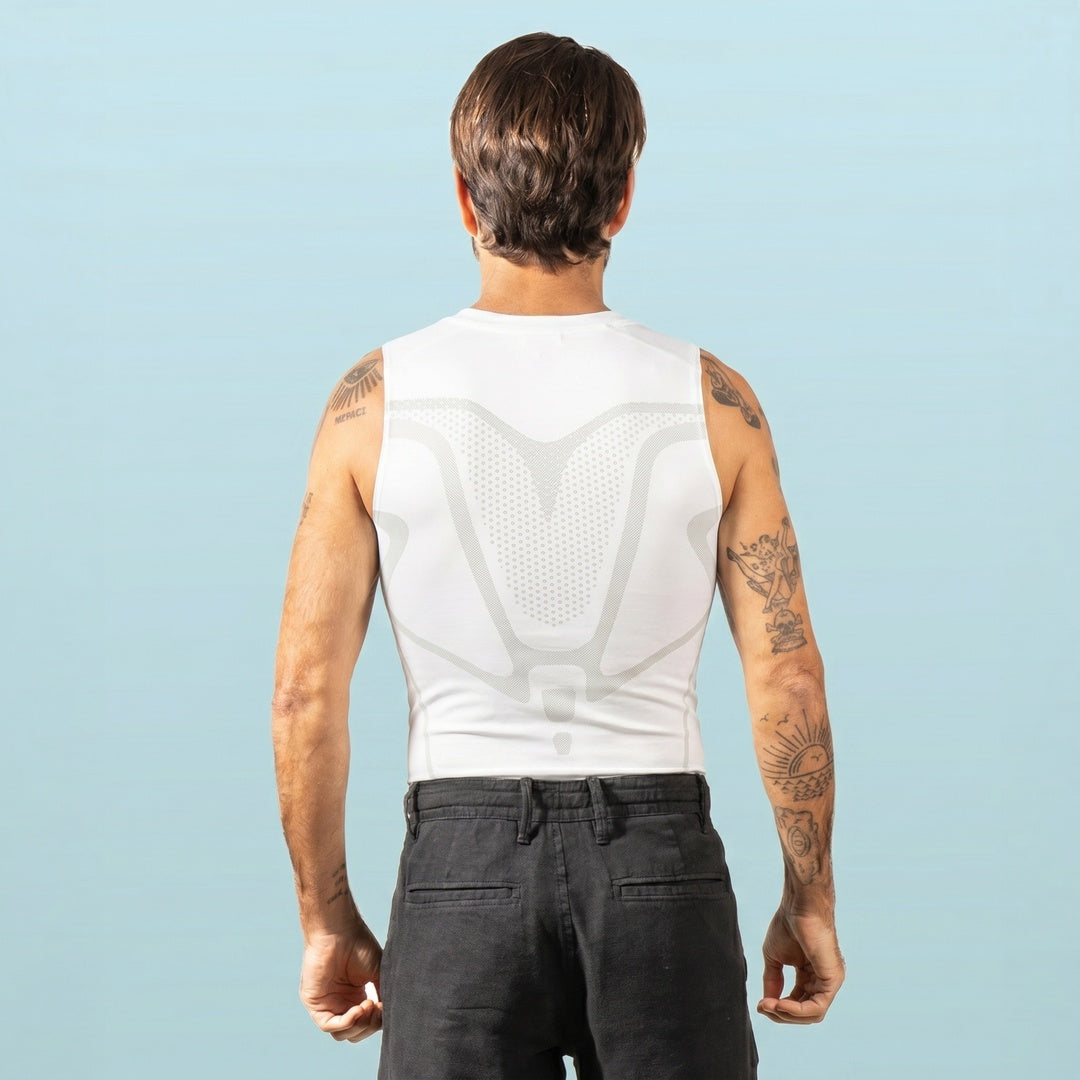
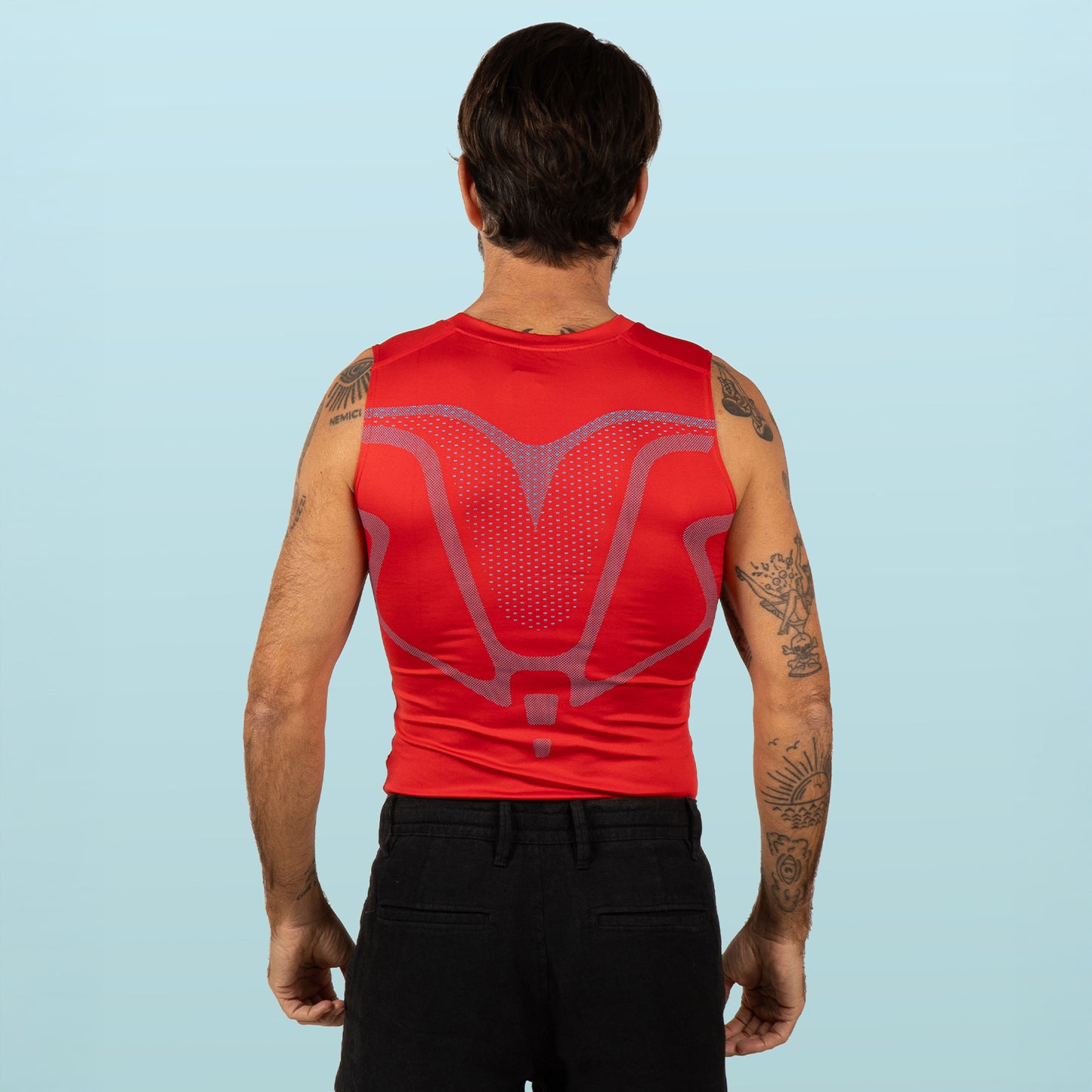
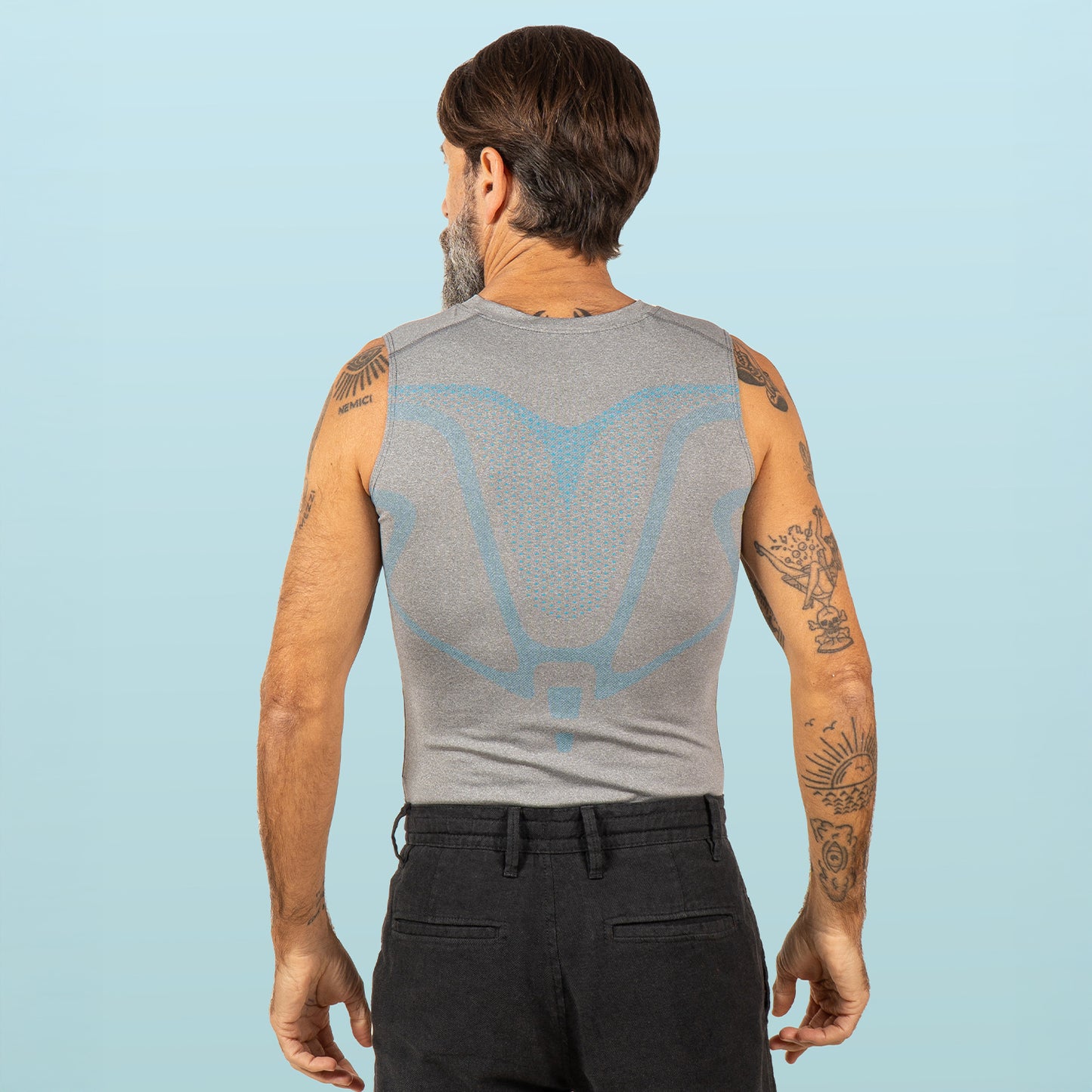
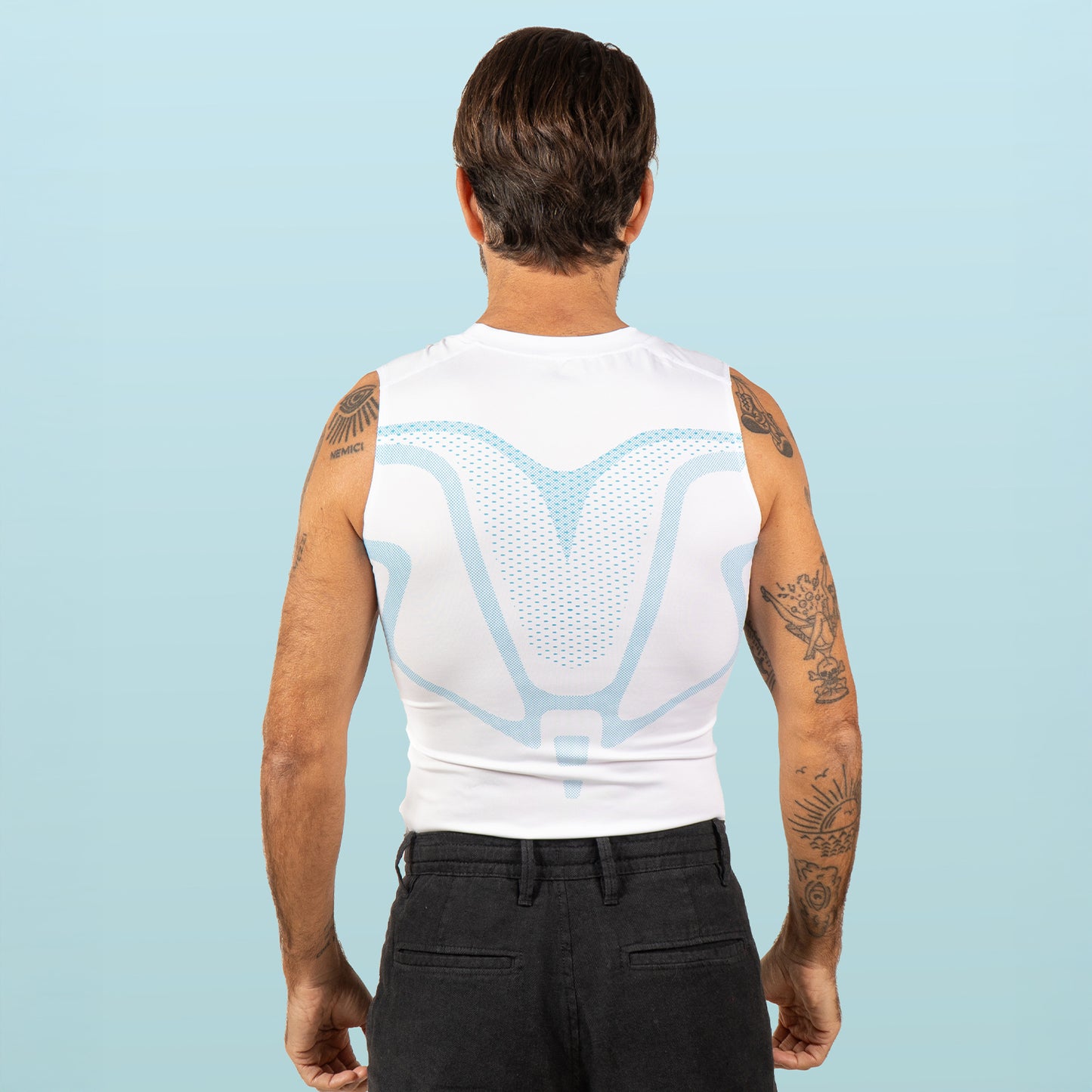
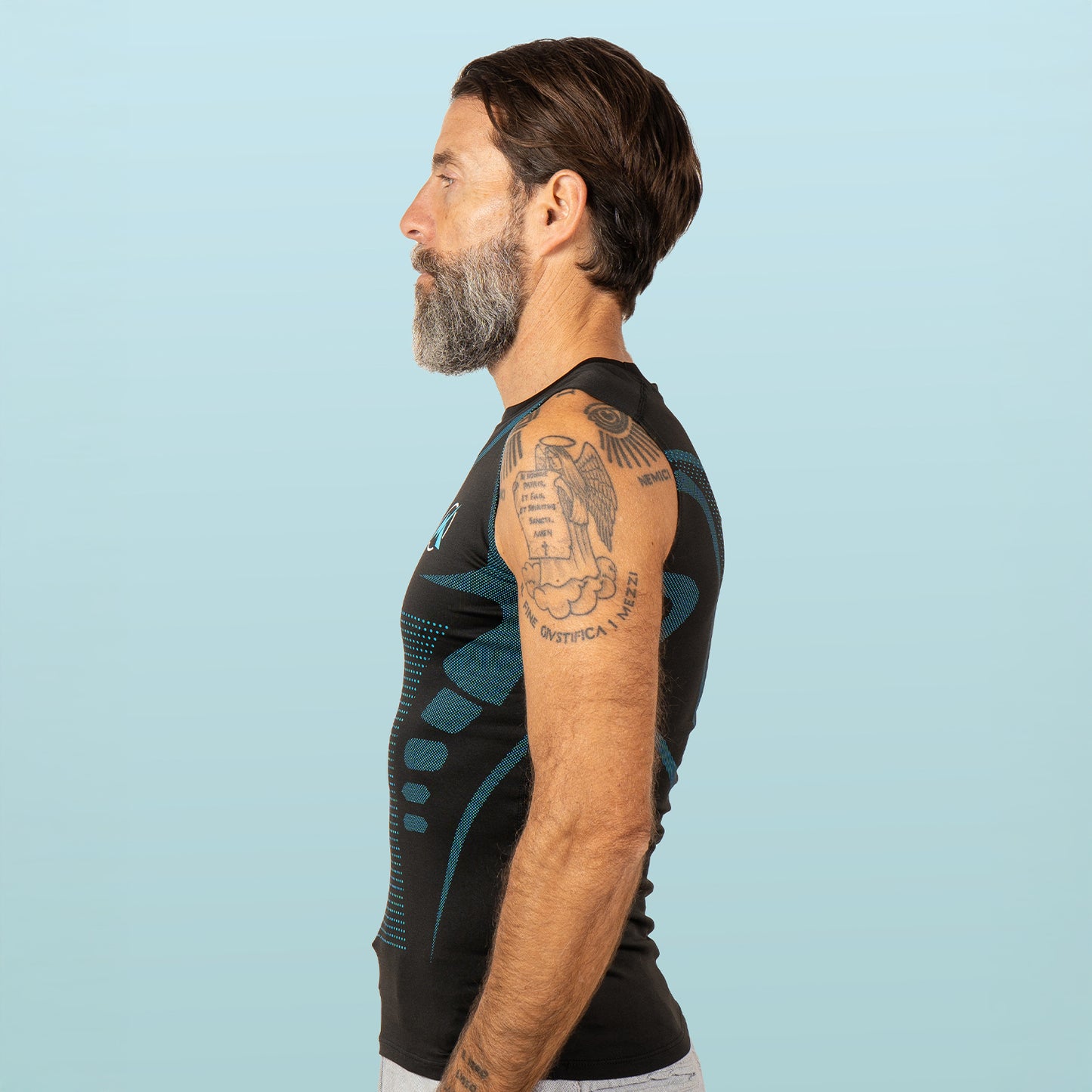
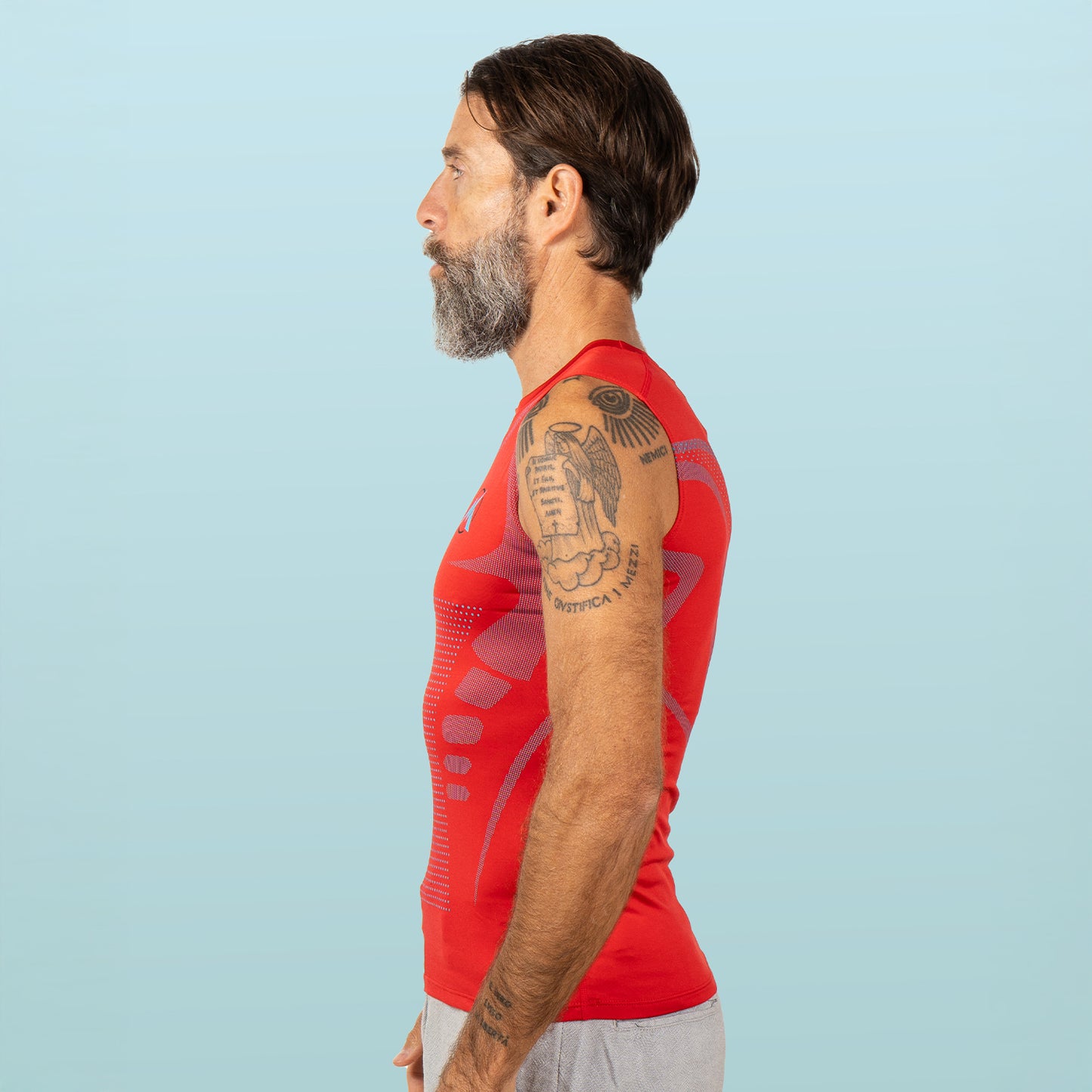
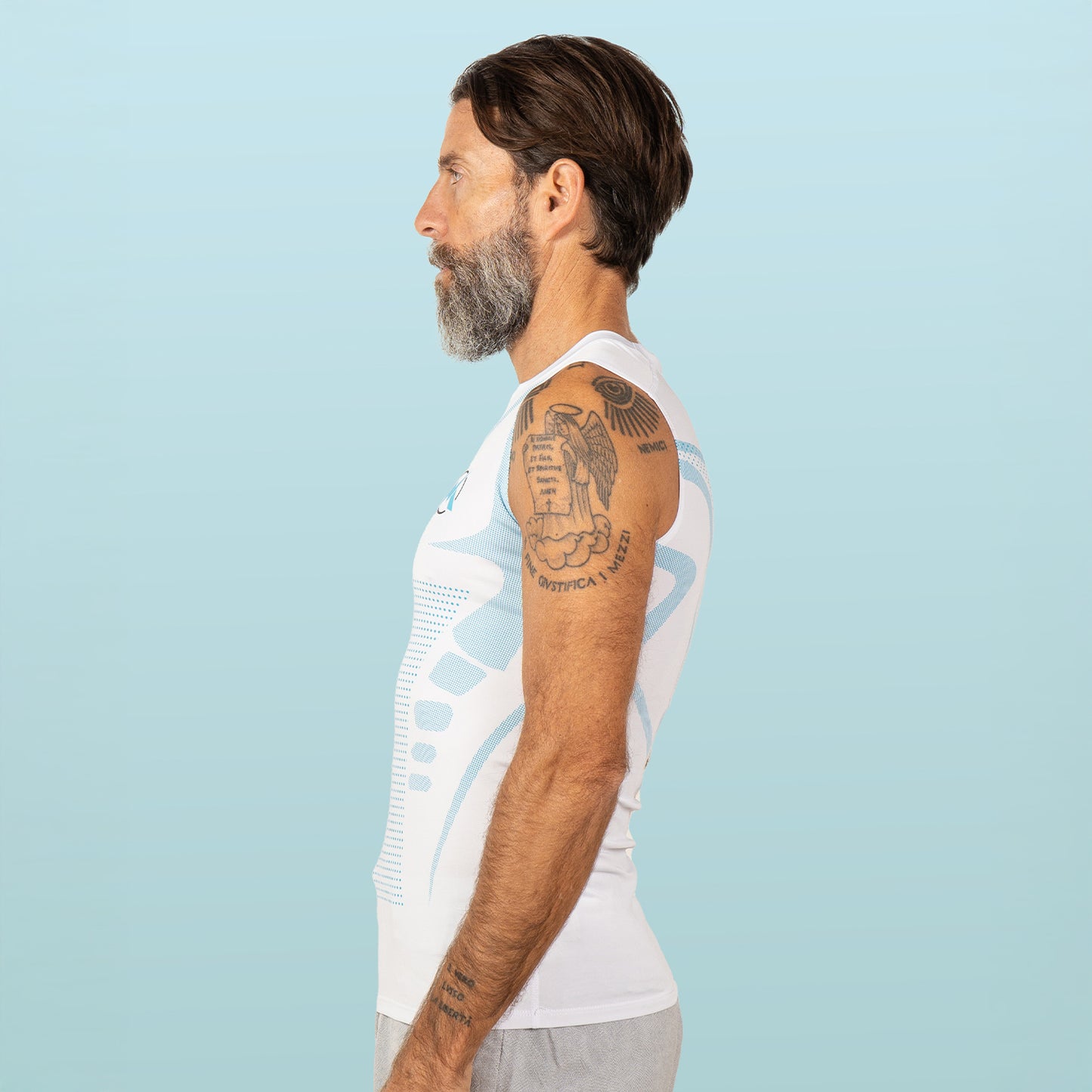
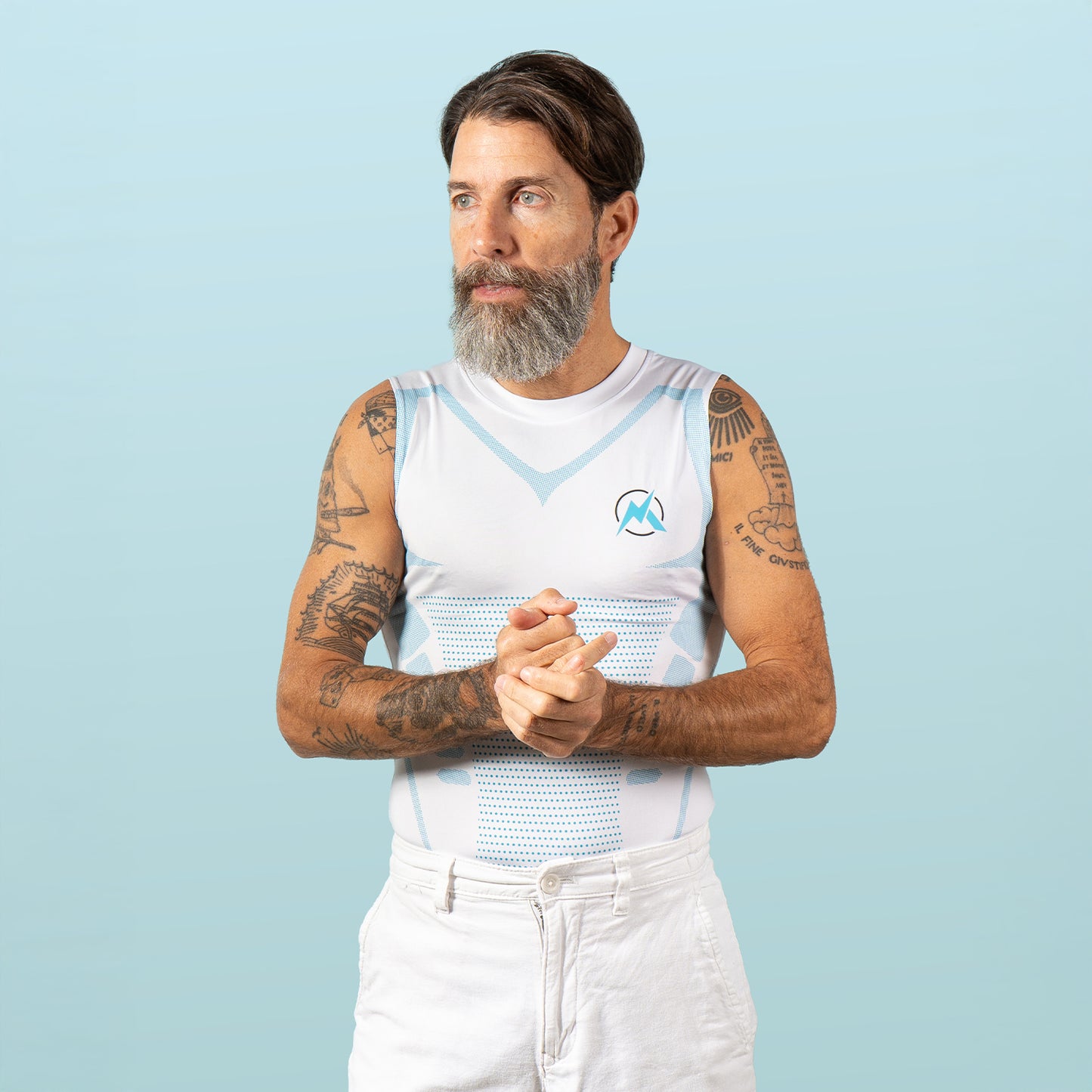
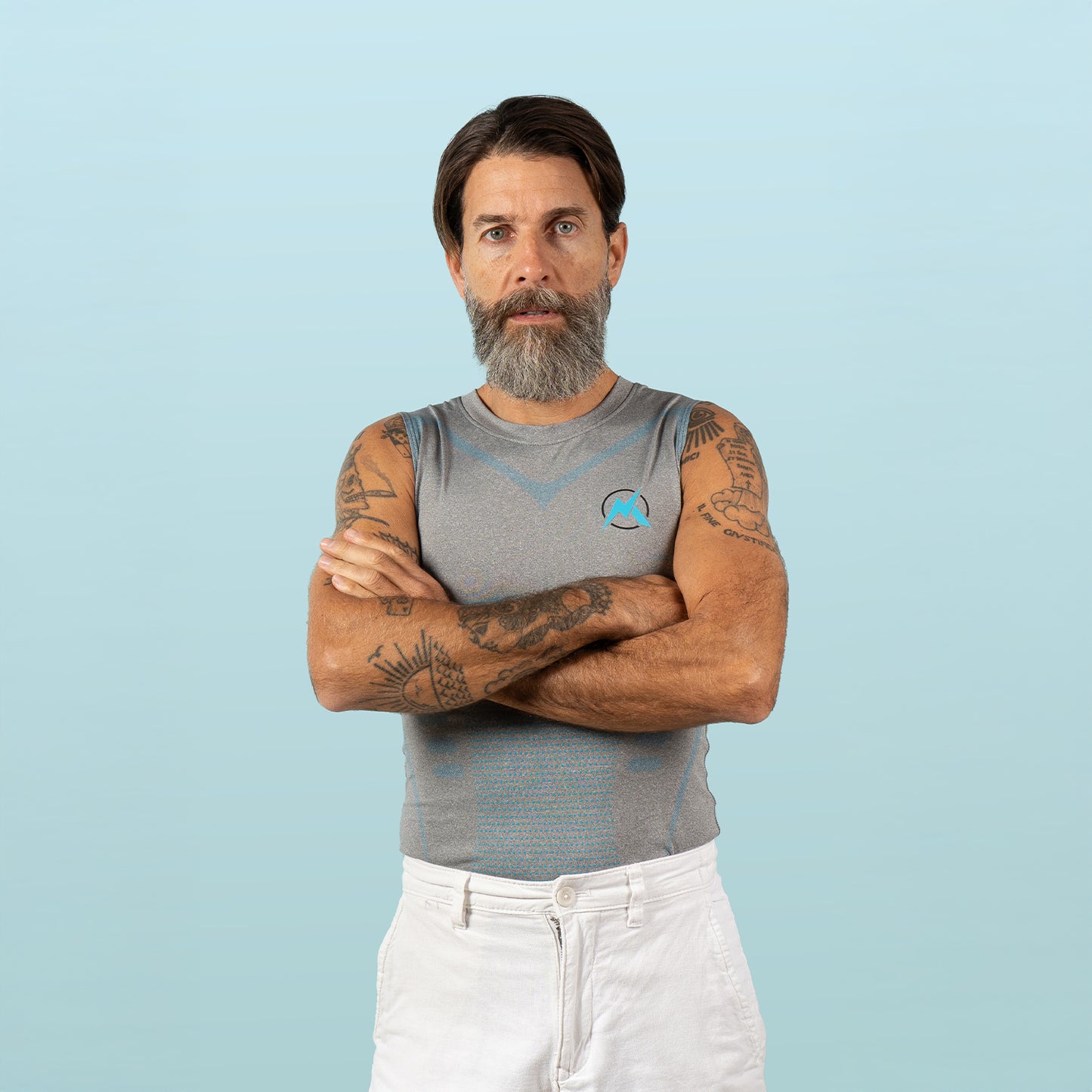
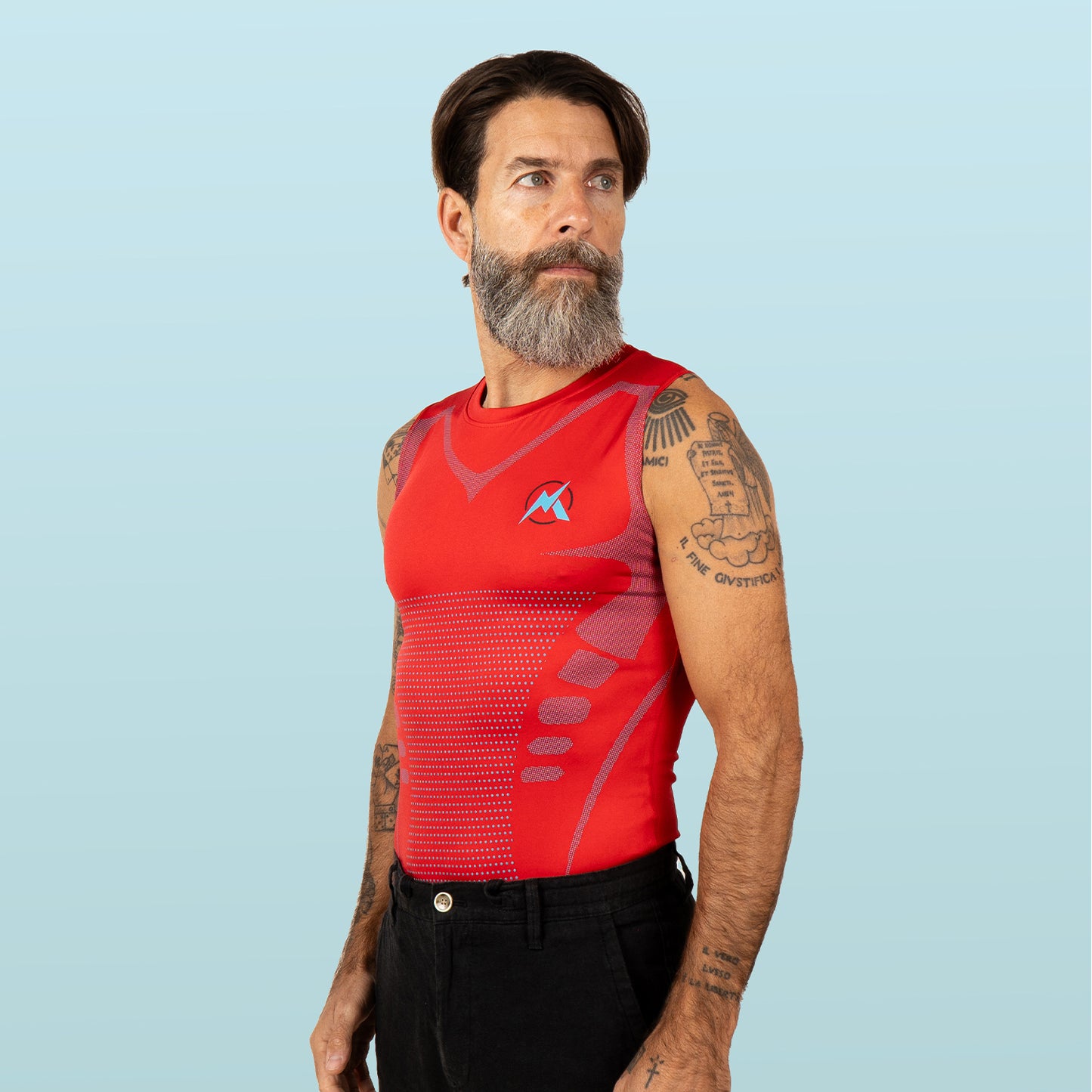
That's where VitaBoost fits in. A black compressive tank with light shoulder support, designed for the way men over 50 actually look — softer chest, softer middle, shoulders that round forward by default. Worn under a polo, oxford, or knit, it pulls the silhouette two inches tighter at the waist and a half-inch broader at the shoulders. Same body. Different read. We get into the practical details in the polo shirt problem after 45.
The right silhouette under the right shirt is the difference between "he's let himself go" and "he's in good shape for his age." That difference is structural, not aspirational.
Skin, sleep, and the boring stuff that actually works
I'll spend less time here because the internet has covered it to death, but a few facts worth carrying:
Sun damage is real and it's most of the visible aging. According to the Skin Cancer Foundation, up to 90% of visible skin aging is caused by the sun, not chronological aging. The bad news: you've already done thirty-plus years of damage. The good news: the Cleveland Clinic confirms that consistent daily SPF can stop further photoaging at any age — even in your 70s. Buy one bottle, put it next to your toothbrush, use it on your face and the back of your hands every morning. That's the whole routine.
Sleep is when your collagen rebuilds. Seven to nine hours, every night. Most men over 50 sleep less than they did at 30 and assume it's normal. It's not, and it's visible on your face within a week. Dark circles, puffy eyelids, dull skin tone — those are sleep debt, not chronological age.
Muscle mass is the silent age tell. The National Institutes of Health reports that after age 50, men lose roughly 1-2% of muscle mass per year — a condition called sarcopenia. Lost muscle gets replaced by fat in the same anatomical spot, which is why your arms get softer even when the scale doesn't move. Two short resistance sessions a week — pushups, rows, squats with whatever you have at home — are enough to reverse most of that drift. It is the cheapest plastic surgery in the world.
Hair, teeth, beard — handle them, but don't expect miracles. They're the trim, not the foundation.
The 60-second test to do tonight
Stand in front of a full-length mirror in your normal clothes. Set a timer for 60 seconds. Don't change anything. Just observe.
- Where is your head sitting? Forward of your shoulders, or stacked over them?
- Where is the shirt collar gapping?
- Where does the shirt fabric pool — at the waist, at the hips?
- What does your shoulder slope look like — square or rolled forward?
- When you breathe normally, does your chest fall or stay open?
Now: pull your shoulders back and down. Tuck your chin a quarter inch. Push the crown of your head toward the ceiling. Don't suck in. Just stack.
The man in the mirror just got five years younger. Without changing his face. Without spending a dollar. Without doing anything that takes practice.
That's the entire premise of this article. Now lock it in.
The bottom line
The "look younger" industry sells $40 creams because they're easy to sell. But the things that actually take a decade off a 50-year-old man are structural, free, and almost embarrassingly simple: stand the way you stood at 35, dress for the body you have, support the silhouette underneath, and put on sunscreen. None of it requires a procedure. All of it works within weeks.
Your face was never the problem. The way you carry it was.
See the VitaBoost compression tank →
Frequently asked questions
How can men over 50 look younger?
The biggest gains come from posture, silhouette, and body composition — not skincare. Stand with your shoulders stacked over your hips, wear clothes that fit your current body, and add a compressive base layer under polos and oxfords. Those three changes alone can shave 5-10 years off perceived age within weeks.
What ages a man's face the most?
Cumulative UV exposure. According to the Skin Cancer Foundation, photoaging accounts for up to 90% of visible skin aging — far more than chronological aging itself. Daily SPF is the single highest-leverage skincare habit a man over 50 can adopt, even if he never wore it before.
Does losing weight make you look 10 years younger?
It depends on how. Body weight loss generally tightens the jawline and improves silhouette, but rapid loss can deflate facial volume and make men look gaunt rather than younger. Slow, muscle-preserving weight loss combined with resistance training usually delivers a clean, younger-looking result.
At what age do men start looking older?
Visible aging signals — fine lines, slight skin texture change, mild postural drift — typically appear in the late 30s. A widely cited British study found that the median age men 'cross over' into being perceived as older by strangers is around 39. The biggest jumps happen in the 40s and 50s, when posture and body composition shift the most.
Can a 50-year-old man still look good?
Absolutely — and often better than at 35. The advantage at 50 is intentionality: clean grooming, well-fitting clothes, deliberate posture, and a base of light strength training produce a silhouette many younger men don't have. The men who look best at 50 aren't fighting aging; they're styling around it.
Sources
- Skin Cancer Foundation — Photoaging: What You Need to Know
- Cleveland Clinic — Sun-Damaged Skin: Photoaging, Signs, Causes & Treatment
- National Institutes of Health — Slowing Sarcopenia (NIH News in Health)
- JAMA Dermatology — Effects of Smoking and Sun on Aging Skin (twin study)
Maynox produces apparel, not medical devices. The information in this article is general lifestyle and style guidance. It is not a substitute for advice from a healthcare professional, especially for posture-related pain or persistent body-image concerns.