You bought a polo shirt last month. It looked fine on the hanger. You put it on, glanced in the mirror, and thought: who is this guy? The polo shirt men over 45 used to swear by has a way of turning on you. Not all at once. Slowly. One photo at a time.
This is not your imagination. The polo shirt has not gotten worse. You did not get fatter overnight. What changed is something most men never have explained to them: the polo shirt is one of the least forgiving garments in your closet after 45. It exposes everything a button-down hides. And nobody — not the brands, not the catalog photos, not the guy at the store — is going to tell you that.
So let's actually talk about it. What goes wrong with the polo after 45, why "more expensive" rarely fixes it, and what actually looks good when you put one on.
Why the polo shirt stops working after 45
The polo was designed in 1933 for a tennis player. It is a knit garment that clings instead of drapes, with a small collar that draws the eye straight to your face and chest. That worked perfectly when you were 28 and the line from your shoulder to your hip was a clean V.
After 45, three things shift at the same time.
Your chest-to-waist ratio changed
In your twenties and thirties, your chest was the widest part of your torso. The polo grabbed your chest, then floated past a flat stomach. The silhouette read athletic. Sometime between 38 and 50, the ratio inverted for most men. Your waist became the widest part of your torso, and the polo started grabbing there instead. Same shirt. Different story.
The fabric is fighting against you
Most polos sold today are 100% cotton piqué or a cotton/poly blend with no stretch. Cotton piqué has a slightly raised texture that catches light unevenly. On a flat stomach it looks crisp. On a softer midsection it makes every shadow and bulge twice as visible. That is not a flattering material — it is a high-contrast one.
The fit got "relaxed" — but in the wrong places
In the last ten years, mass-market polos have been cut wider through the chest and shoulders to accommodate "modern American sizing." That means the shoulder seam often falls onto your arm rather than at the edge of your shoulder. When the seam drops, your shoulders look narrower, the waist looks proportionally wider, and the whole shirt sags. According to research from Harvard Health on body composition changes after 40, body composition shifts gradually for most men in midlife — meaning the same shirt size from five years ago may no longer hang the same way. The shirt didn't change. Your proportions did.
The 5 polos that quietly make every man over 45 look worse
These are the ones to walk past, no matter how good the price.
- The thick cotton piqué in a light color. Cream, sky blue, pale pink. The texture plus the light color is the worst possible combination for showing every bulge.
- The "fitted" polo two sizes too small. Marketed as flattering. Actually shrink-wraps your midsection and makes your chest look smaller than your stomach.
- The boxy "classic fit" polo. The opposite mistake. Hangs straight from the chest to the hip with zero shape, making your whole torso look like a rectangle.
- The shiny performance polo. Polyester with a sheen. Designed for golf, but unforgiving anywhere off the course. Light bounces off the fabric and makes every curve a highlight.
- The polo with a giant logo on the chest. Even a normal logo placement adds visual weight exactly where you want the eye to keep moving. Anything bigger than a thumbnail draws focus to your chest and stops the eye there.
What "good fit" actually means after 45
Three quiet tests separate a polo that flatters you from one that flatters the mannequin in the store.
The shoulder seam test
Stand in front of a mirror, arms relaxed. The shoulder seam should sit exactly at the edge of your shoulder bone — where your arm starts to slope down. Not on your arm. Not pulled up. If it falls onto your bicep, the shirt is too big in the shoulders and your whole frame will look softer than it is.
The drape test
Stand straight, then pinch the fabric at the side seam just above your hip. You should be able to grab about an inch of cloth — not three inches, not zero. Three inches means the polo is hanging like a tent and adding visual width. Zero means it is shrink-wrapping your waist and showing every contour.
The hem rule
The bottom of the polo should land somewhere between the top of your fly and roughly halfway down your zipper. Too long and you look like you're wearing a borrowed shirt. Too short and you risk it riding up every time you reach for something. Most off-the-rack polos run an inch too long after 45 — a quick alteration at any dry cleaner usually fixes it for under $15.
The fabric that beats them all
If you only remember one thing from this article, remember this: after 45, fabric matters more than cut. A merino wool polo in the right weight will outperform a cotton piqué polo three times its price.
The hierarchy, best to worst for the over-45 frame, looks like this:
- Merino wool jersey (190–220 gsm). Drapes like a liquid. Doesn't cling, doesn't tent. Wicks moisture so it doesn't darken at the armpits. Slightly more expensive — but lasts.
- Pima cotton jersey with 2–4% spandex. The little bit of stretch lets the shirt move with you, but the weight of pima cotton drapes instead of clings.
- Modal-cotton blends. Smooth surface that reflects light evenly. Reads expensive even on a $50 shirt.
- Standard piqué cotton. Acceptable in darker colors only. Avoid in light colors after 45.
- Pure polyester performance fabric. Save it for golf. Anywhere else, the sheen is unkind.

The base layer nobody told you about
Here is the part most "what to wear" articles for men over 45 miss completely. The reason your polo cling tells the whole story is because there is nothing between the fabric and your skin. Every shadow on your stomach prints straight through to the outside of the shirt.
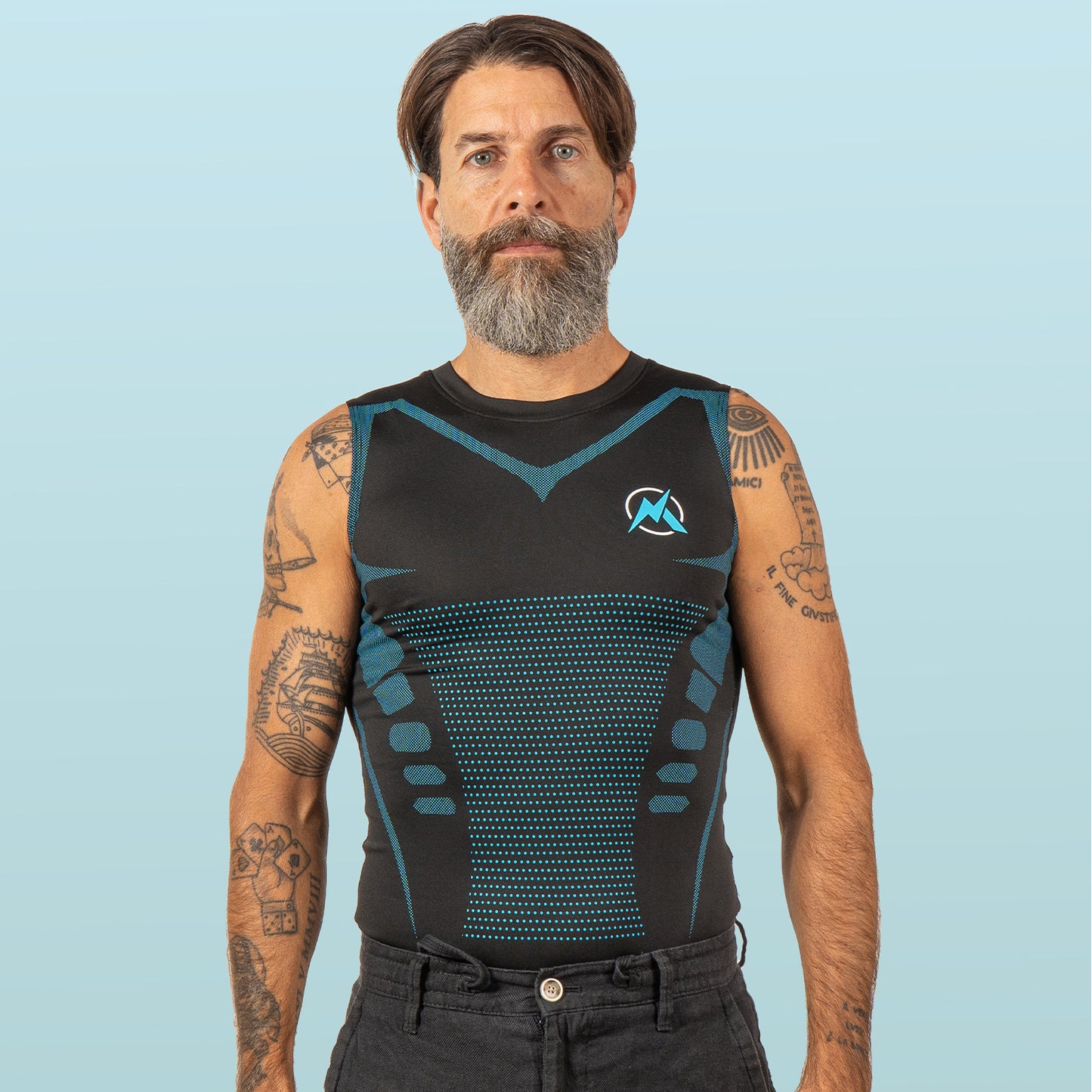
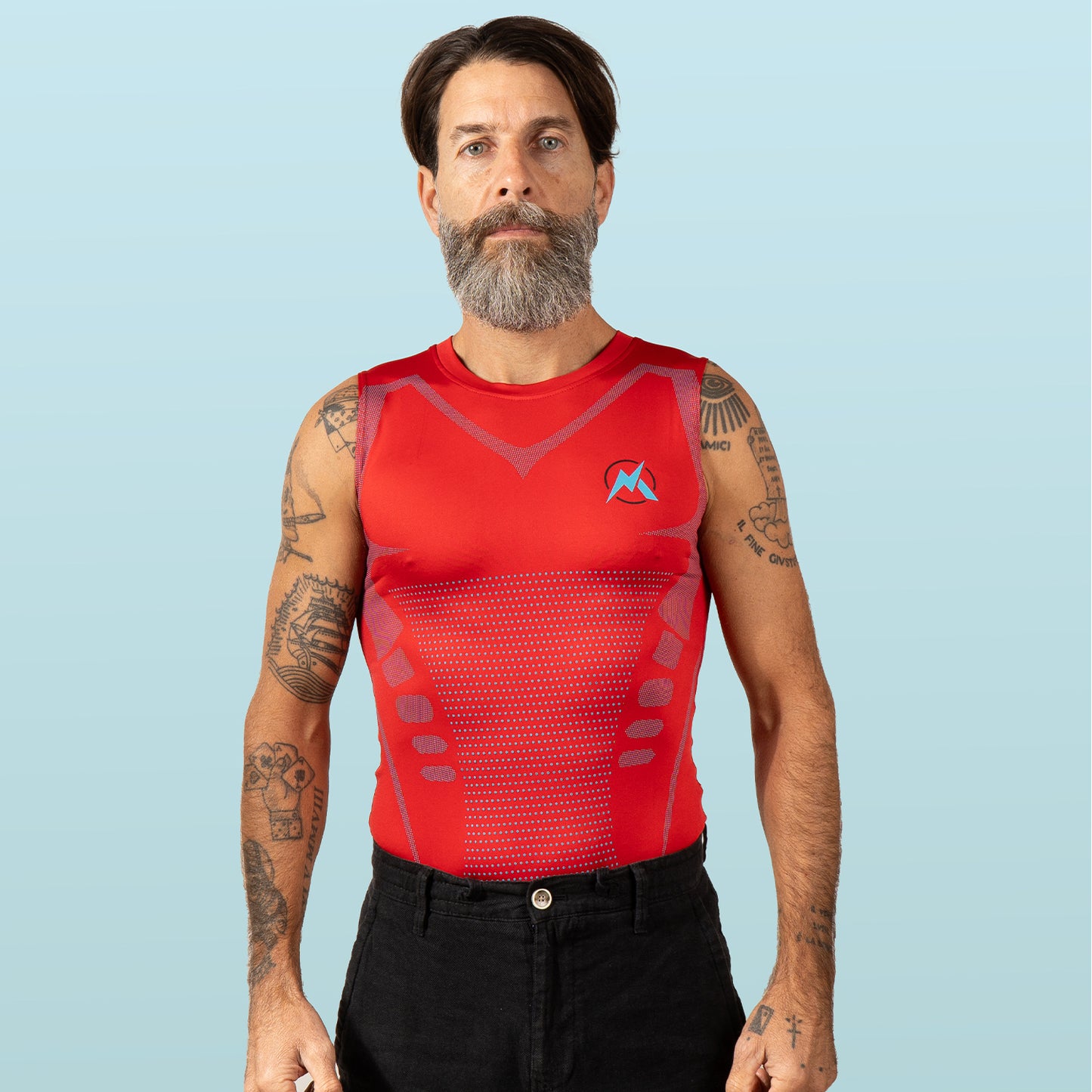
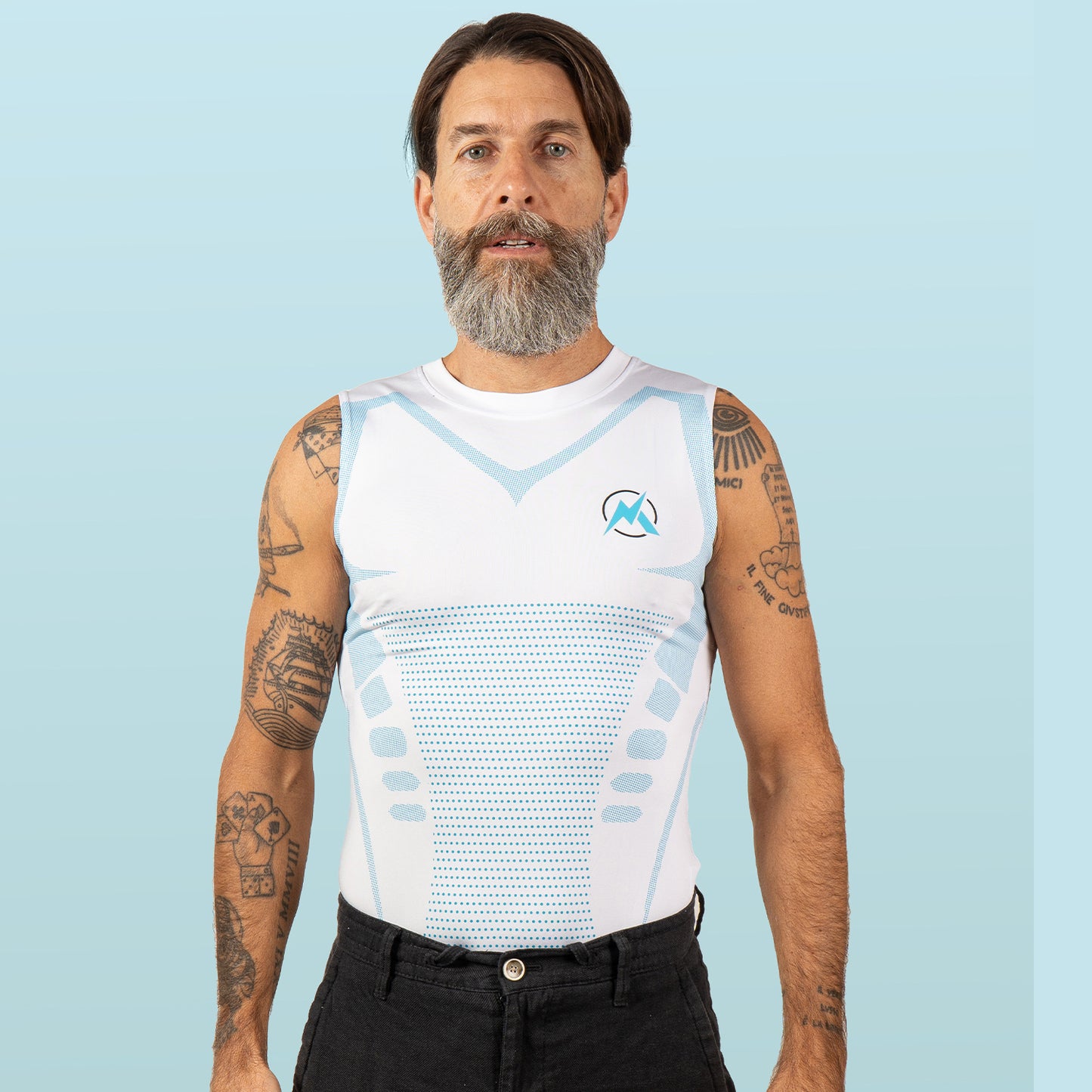
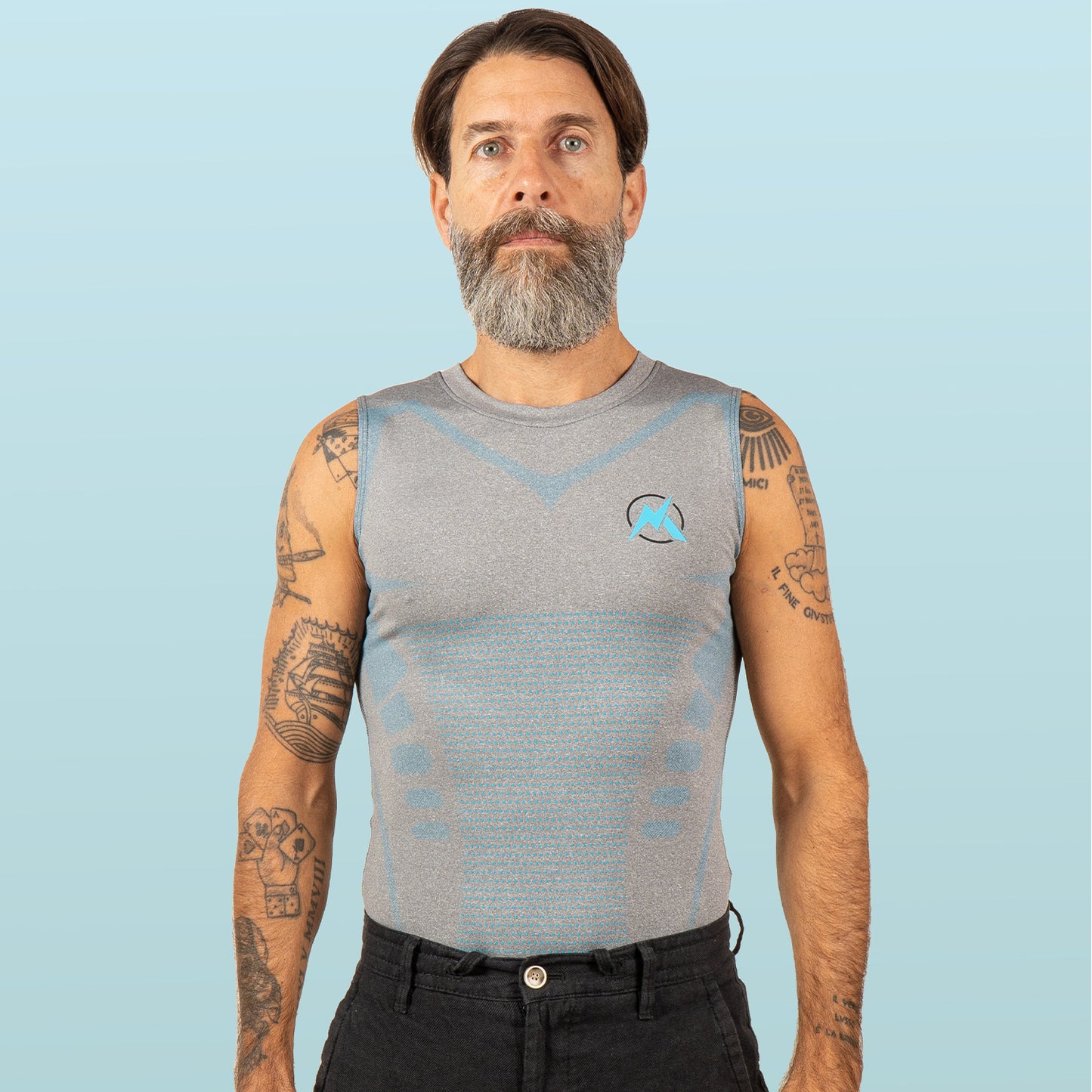
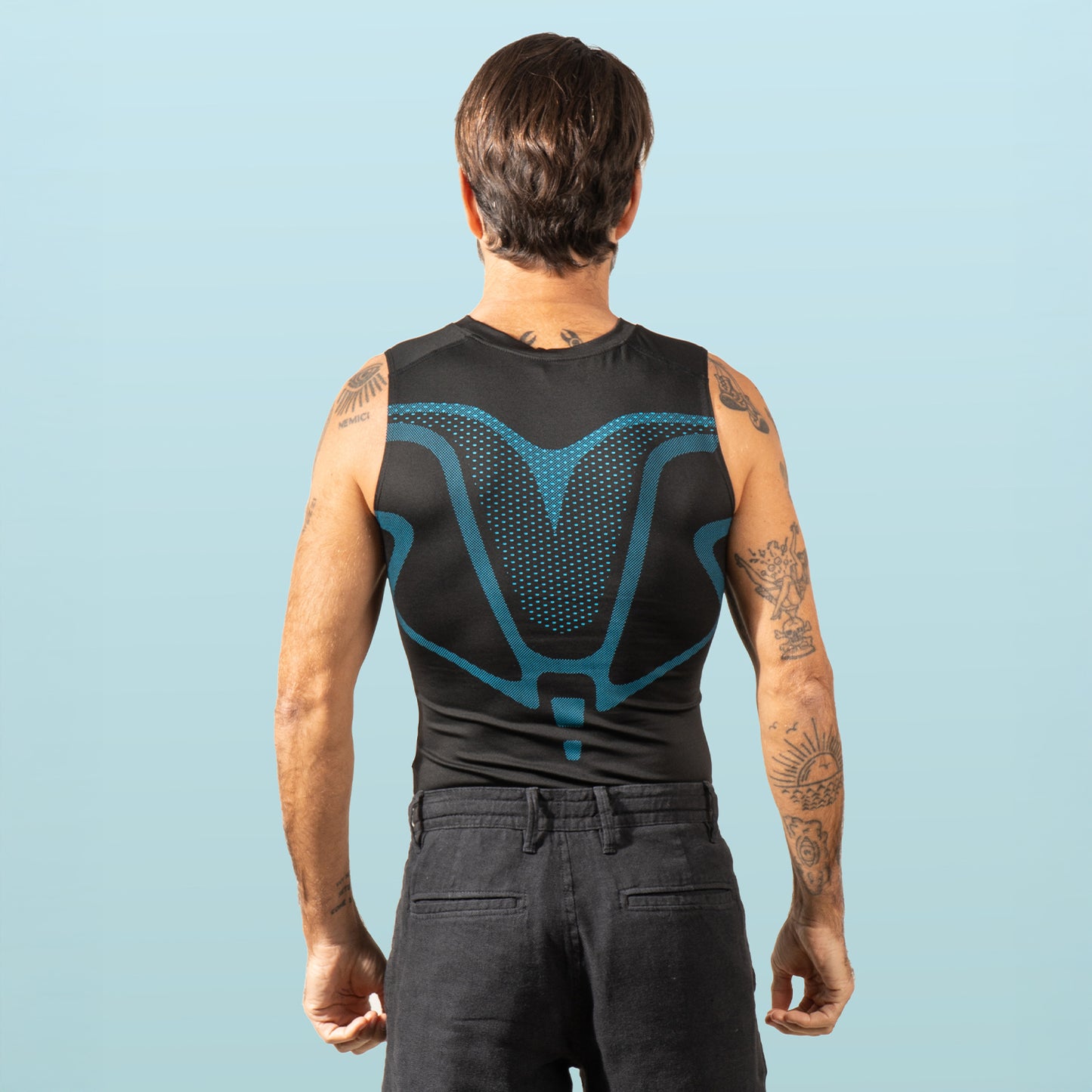
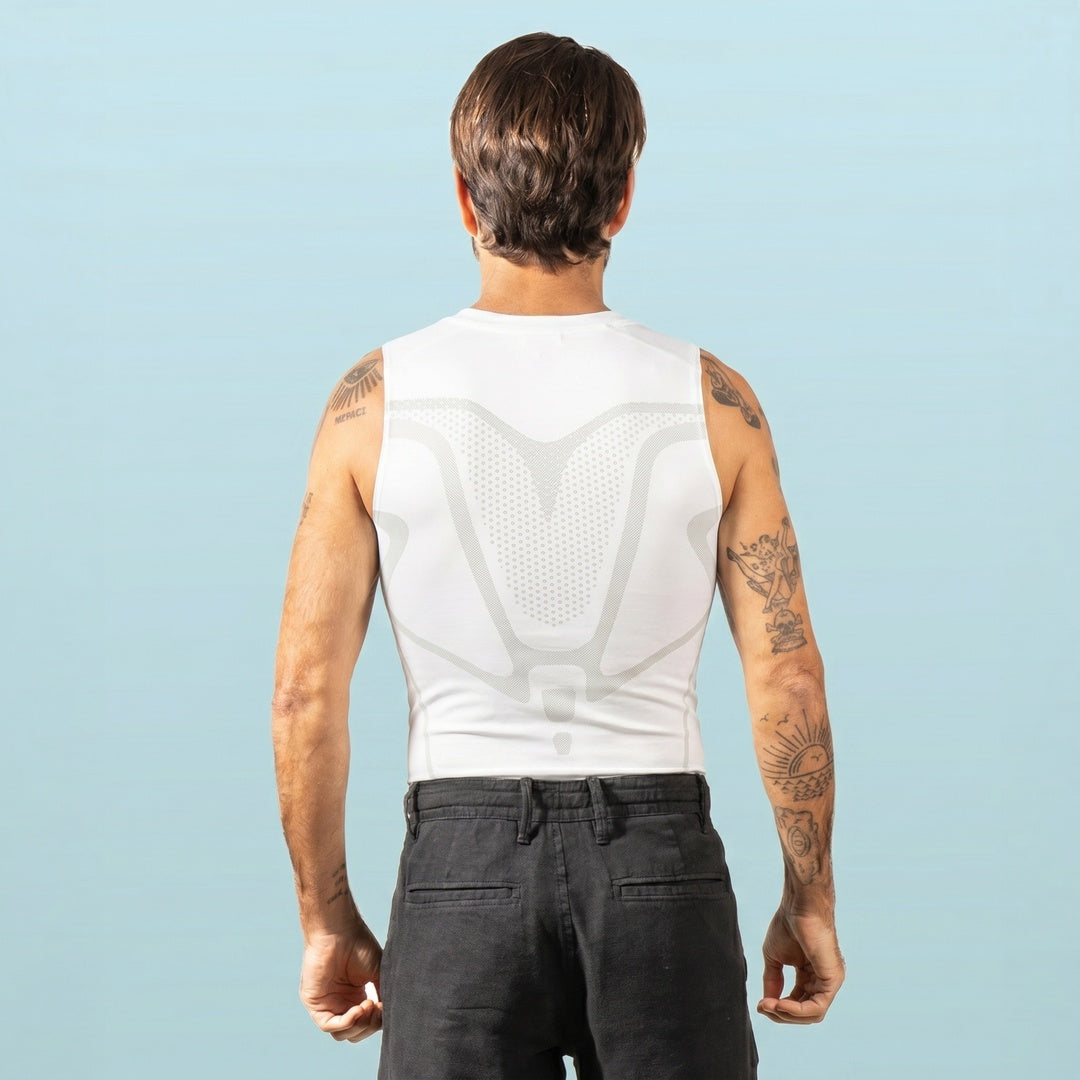
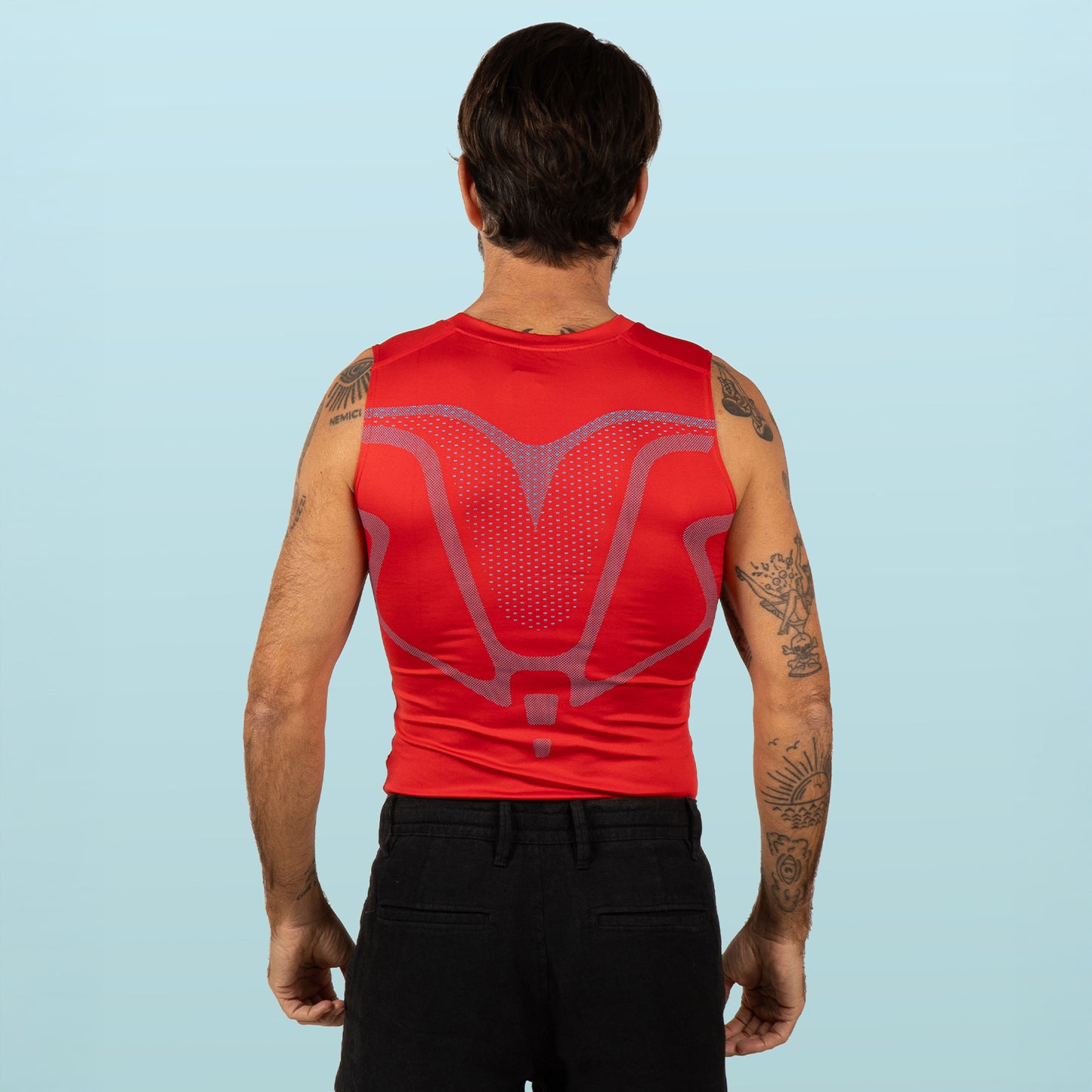
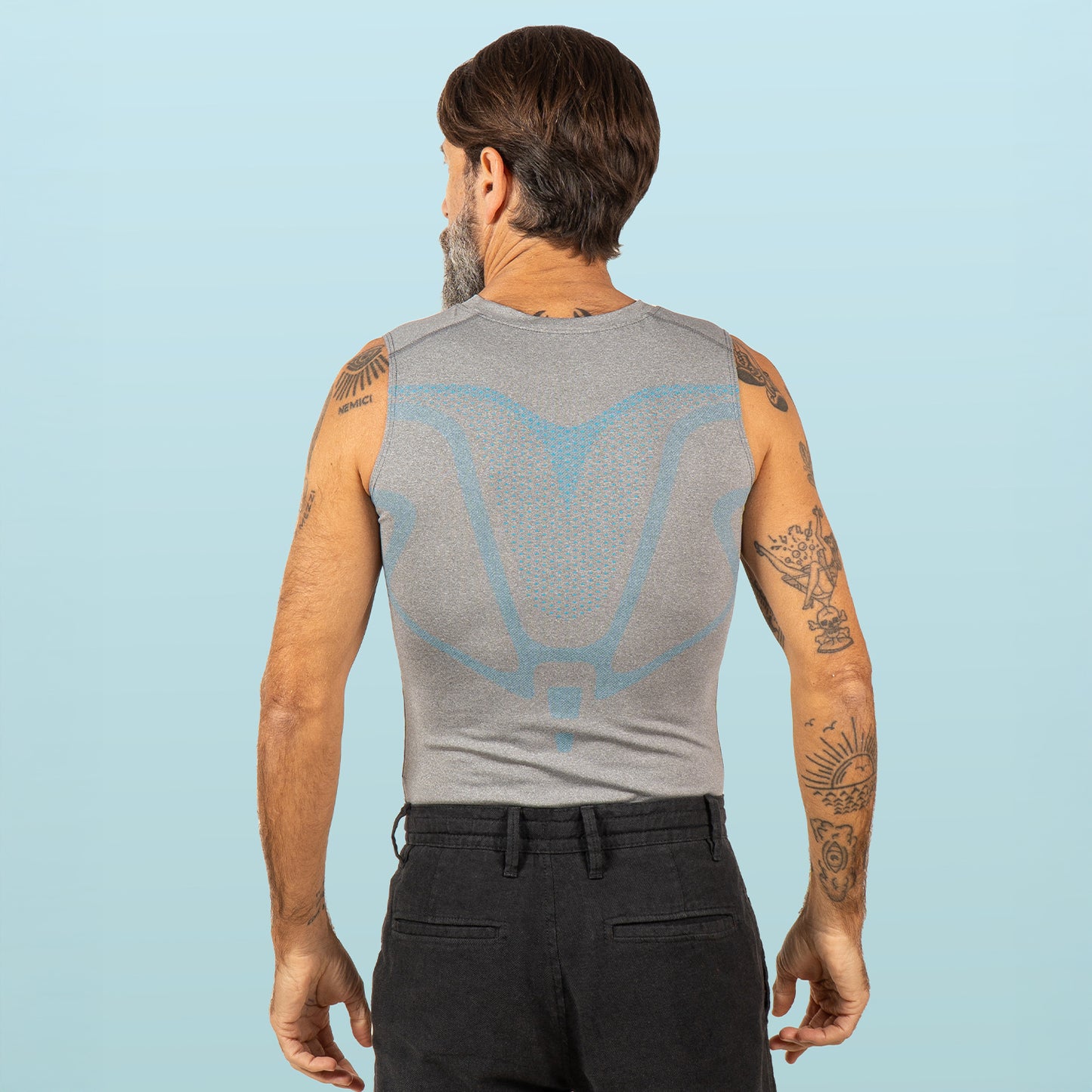
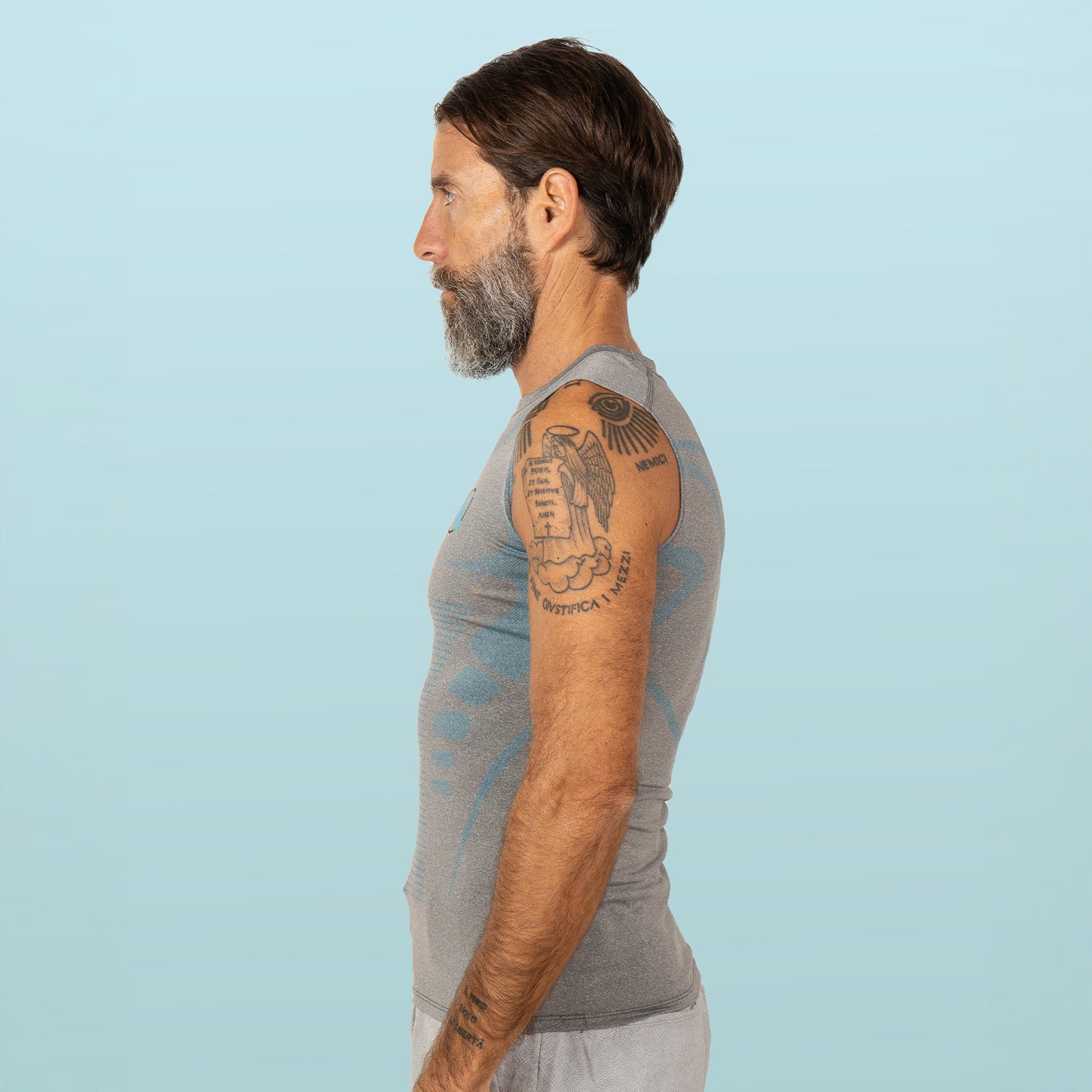
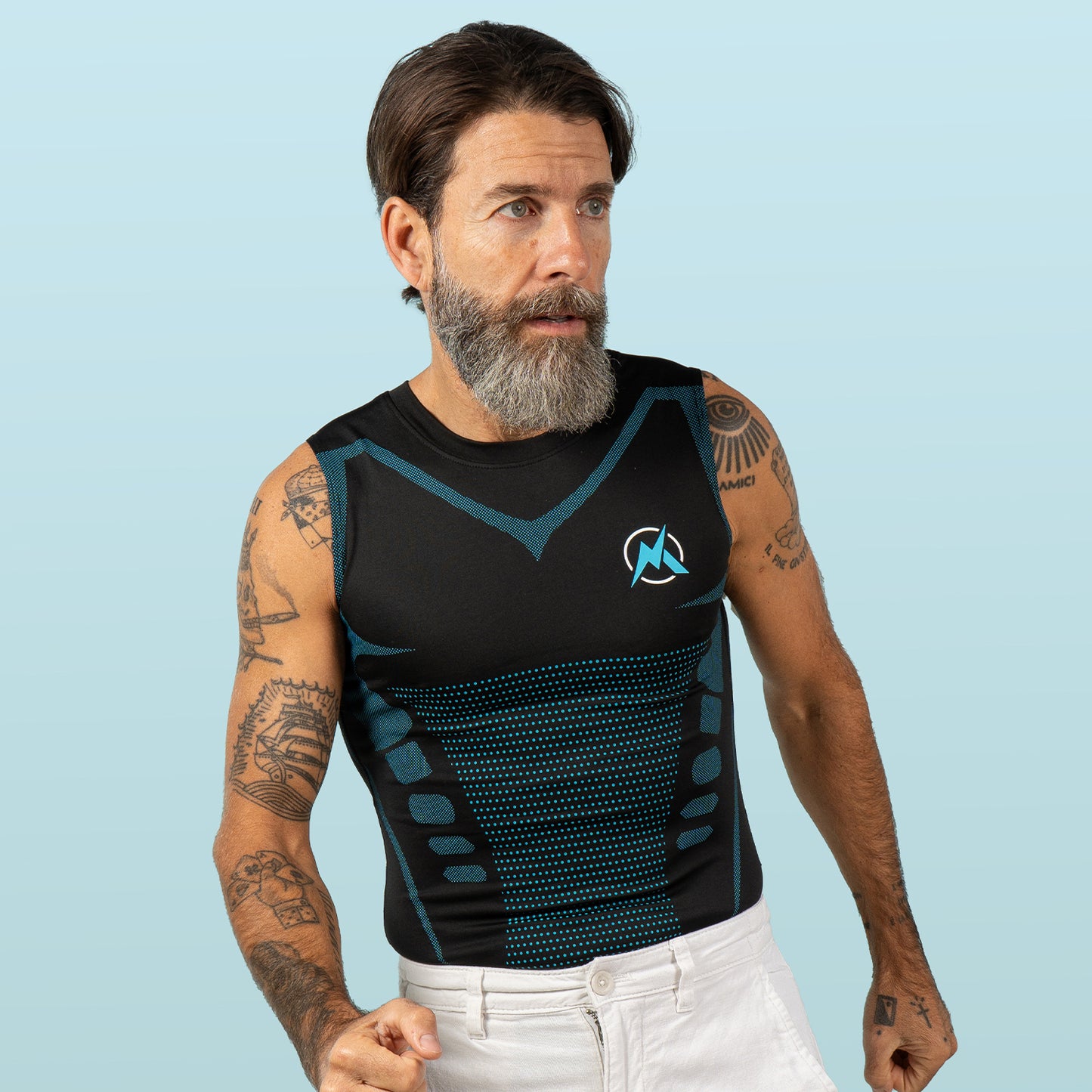
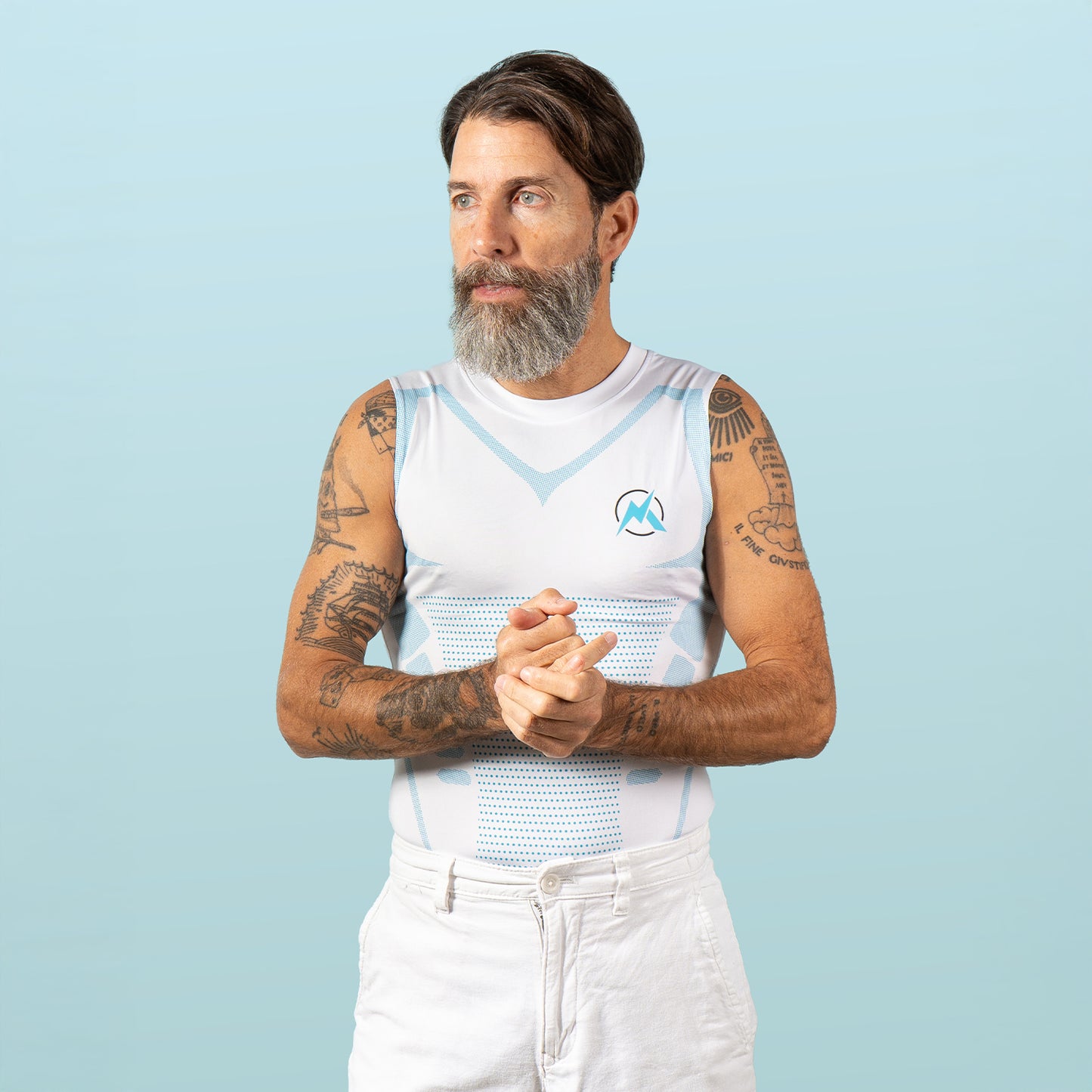
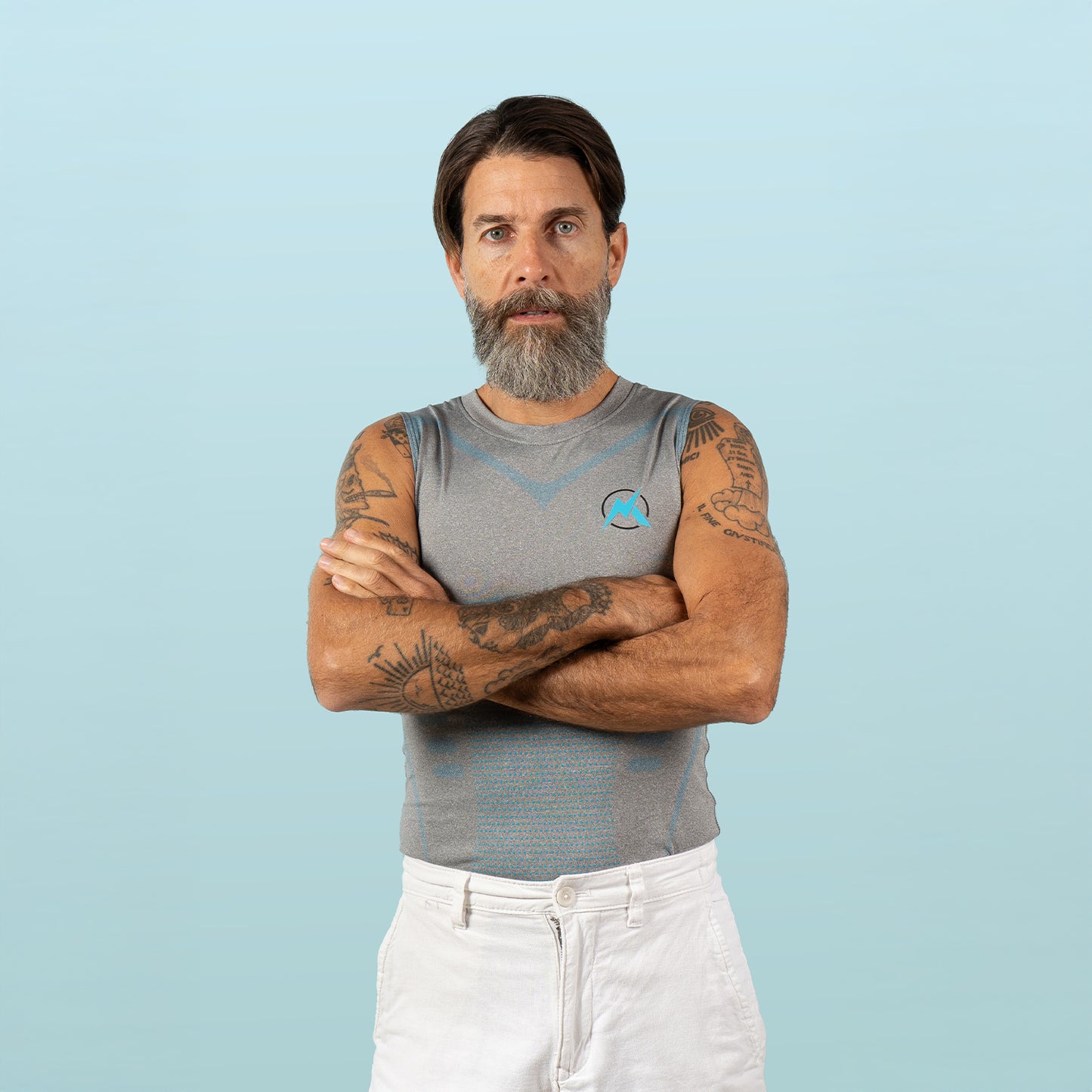
A compression tank under your polo changes that math. A smooth, snug base layer evens out the surface your shirt has to drape over. The shirt no longer has to "hide" anything — it just has to fall cleanly over a smoother line. The effect is the same as the slight forgiveness a suit jacket gives you, except you wear it under a polo instead of over it.
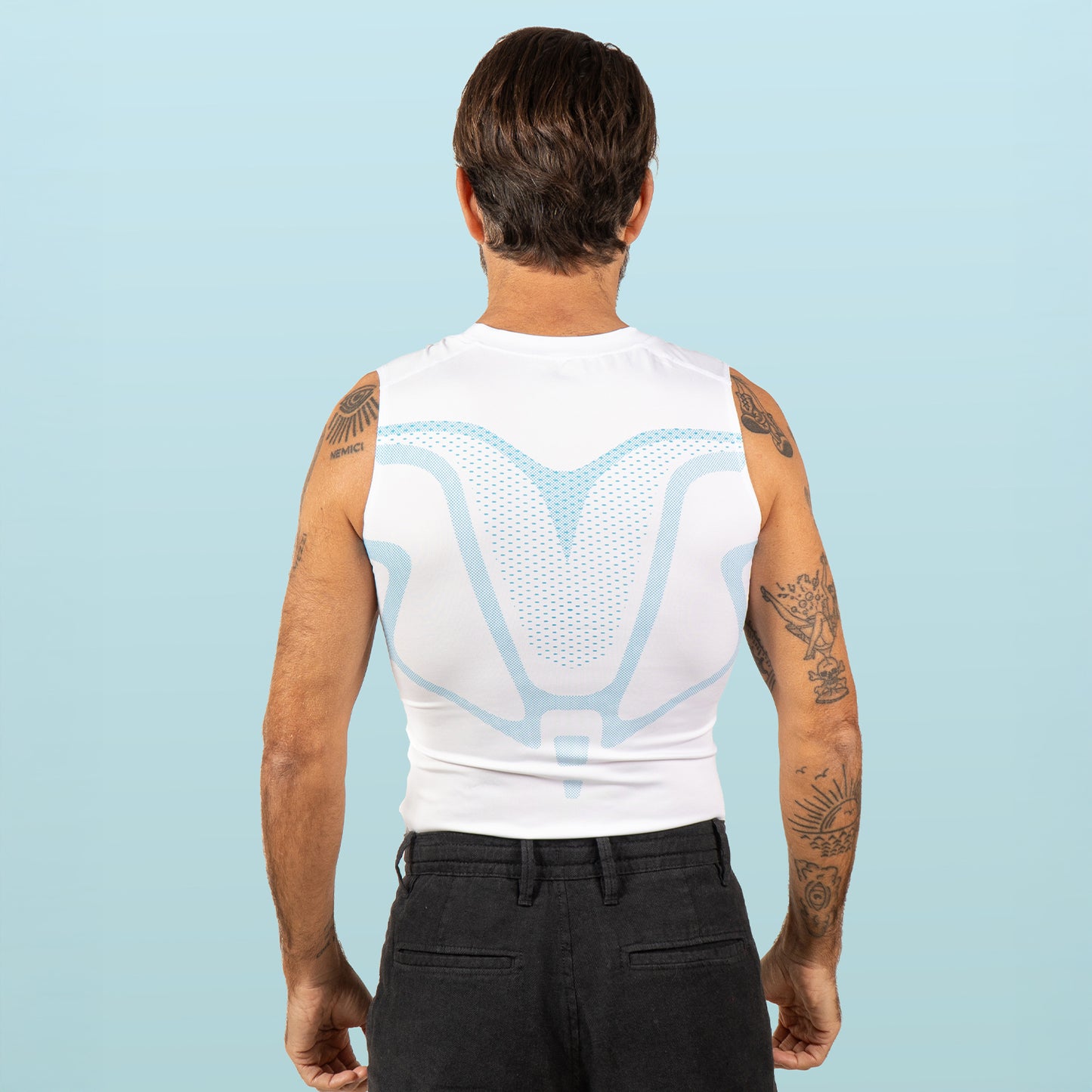
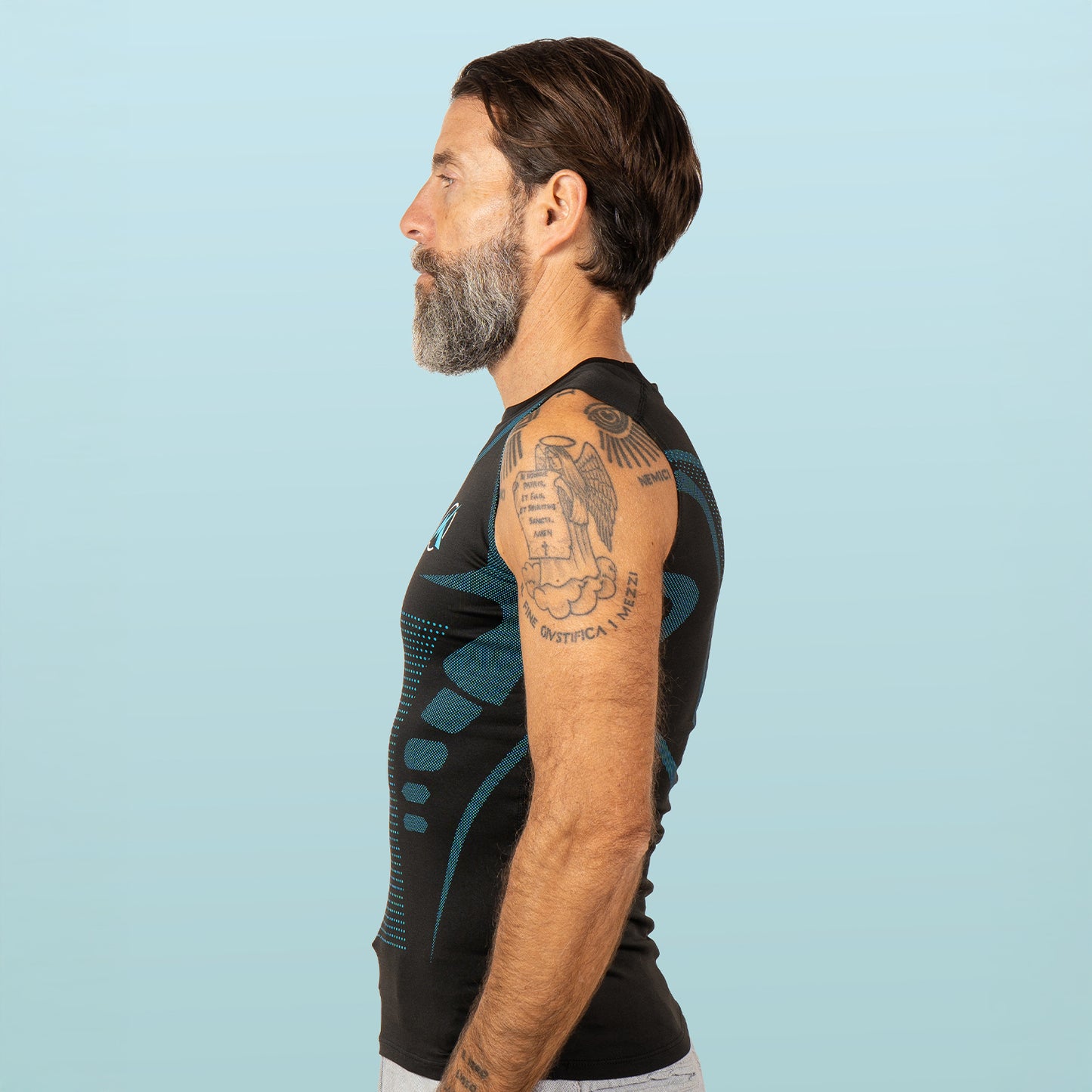
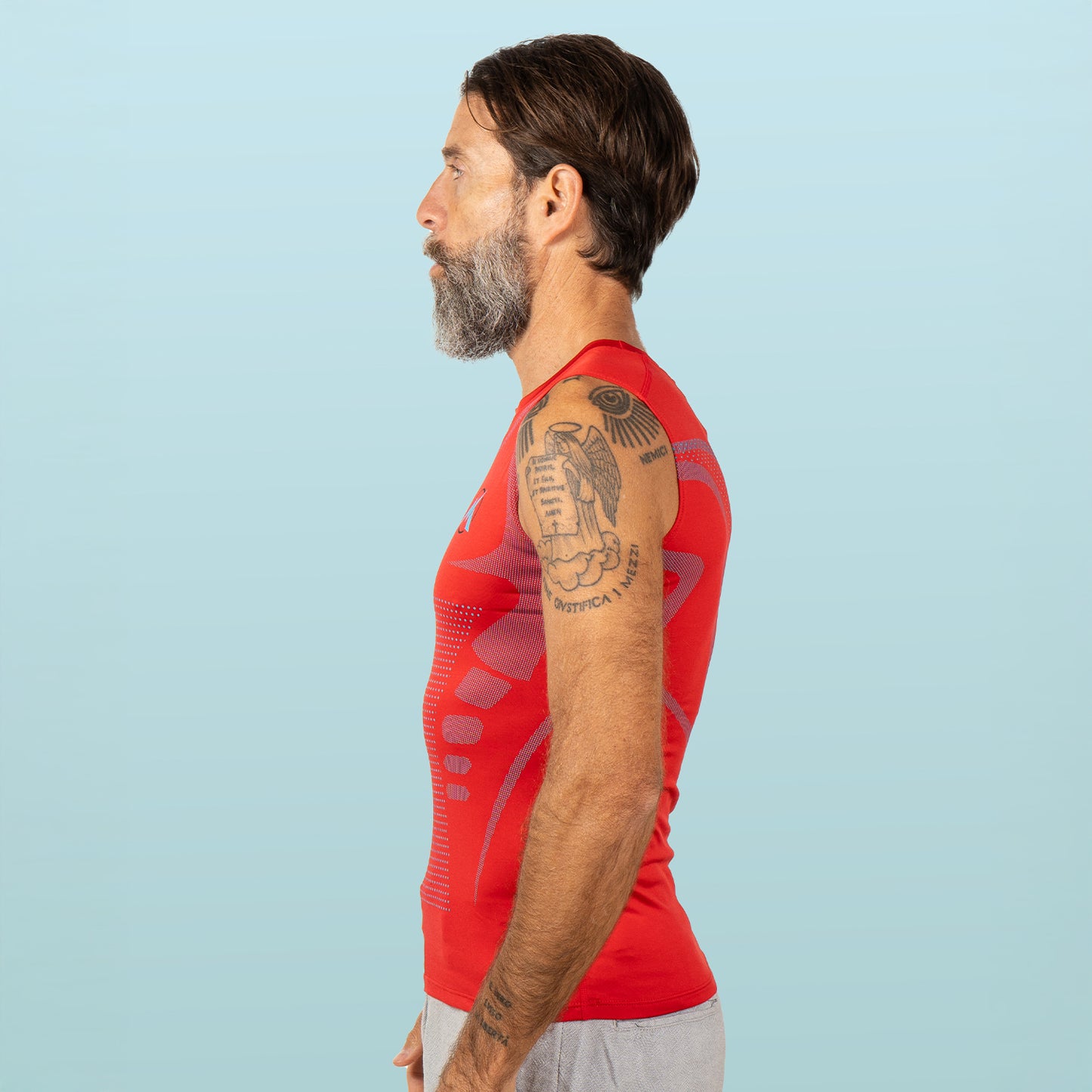
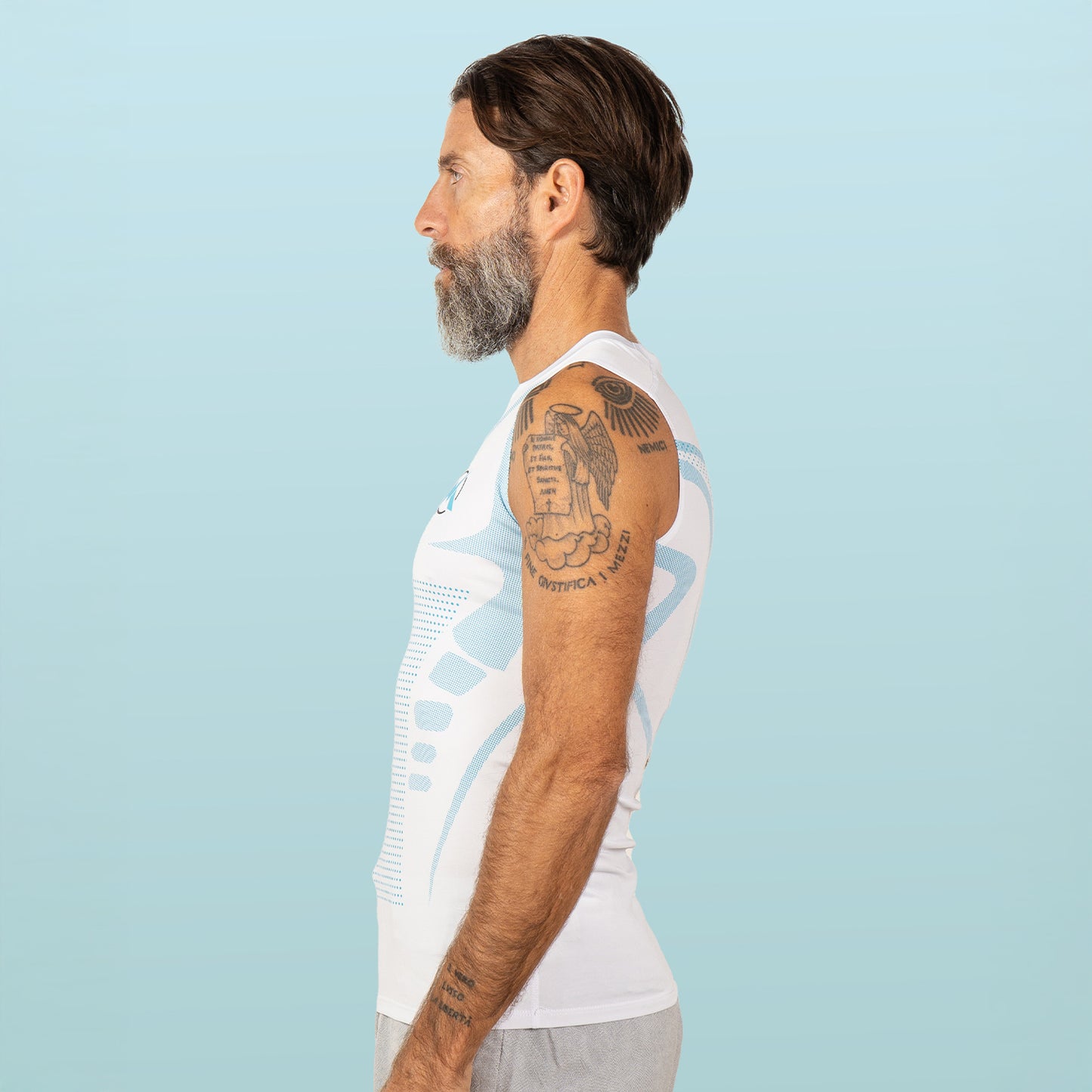
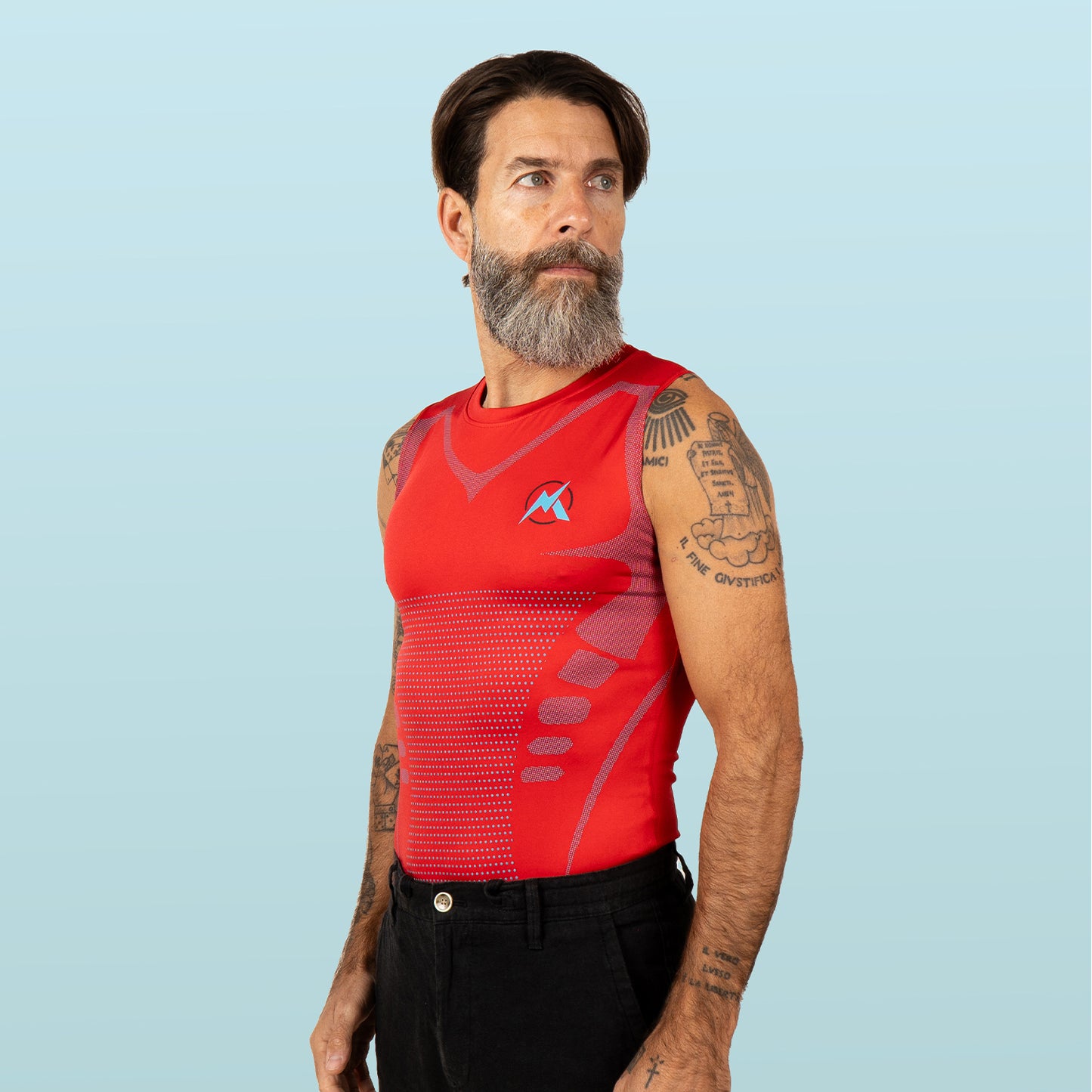
That is the entire idea behind VitaBoost. A black compression tank designed specifically for men 45+, cut to flatten the midsection without restricting your breathing, and thin enough that it disappears under any polo. Many men report standing taller after a few days of wearing one — partly the gentle compression, partly the simple fact that they stopped sucking in.
You can still wear the polos you already own. They just need a different surface to land on.
The colors that work after 45
The color rule for polos after 45 is the opposite of what most catalogs push. Light pastels — robin's egg, salmon, lemon — read younger on a 28-year-old and read tired on a 55-year-old. Deeper, slightly desaturated colors do the opposite.
What works, almost universally:
- Navy. The most forgiving color in a polo, full stop. Looks intentional with chinos, jeans, or shorts.
- Forest green or hunter green. Slightly less common, which makes you look like you thought about it.
- Burgundy or oxblood. Reads expensive and pairs with anything.
- Charcoal — only in merino, never in cotton piqué. The texture matters more than the color in dark neutrals.
- Black — only with a strong jaw and good posture. Black demands the rest of the look be deliberate.
What to avoid: anything pastel, anything washed out, anything with a logo larger than a fingernail.
How to wear a polo so it looks intentional
A polo can read as effortless — the same way it did for you 15 years ago — if a few small things are right.
- Untucked, but only barely. Pull the bottom edge so the hem just covers your belt. Not blousy, not aggressively pulled down. A clean line at the hip.
- Top button open. Always. Buttoning a polo to the neck closes the silhouette and makes your face look heavier. The open V at the throat does about 30% of the work of "looking lean."
- Collar up only at the beach, never in a photo. This rule has not changed since 2003.
- Pair it with a darker bottom. Polo and pants the same value (both light or both dark) flatten you. Polo light and pant dark draws the eye up cleanly.
- Add a watch with weight. A polo strips your wrists bare. A simple watch with a leather or metal band balances the silhouette and reads adult, not college kid.
- Stand. Up. Straight. The polo is unforgiving to slouching the way a button-down is not. If you want to know what better posture in the same shirt looks like, our piece on 5-minute posture exercises for men over 50 walks through the routine. And if you want to understand why the suck-in reflex is sabotaging your polo no matter what fabric you wear, our piece on why sucking in your stomach doesn't work is the companion read.
When the polo just isn't the answer
There are days the polo is the wrong tool. If you've gained more than 20 pounds since the last time you bought one, or if the event matters more than usual — a daughter's wedding, a job interview, a reunion — a soft button-down in lightweight cotton or linen will outperform any polo. The drape of a woven shirt forgives what a knit polo announces. Save the polos for weekends, casual offices, and any time the temperature is above 75 degrees. For the rest, lean on a shirt that hangs instead of clings. The companion read on how to hide your belly under a shirt covers the button-down strategy in depth.
Frequently asked questions
Can a man over 45 still pull off a fitted polo?
Yes — if "fitted" means the shoulder seam sits at the edge of your shoulder, the chest has no pull, and you can pinch about an inch at the waist. What you cannot pull off is a polo so tight you can read the outline of your stomach through it. There is a difference between fitted and shrink-wrapped, and most men over 45 are wearing the second when they think they're wearing the first.
What polo color is the safest bet after 45?
Navy, by a wide margin. It reads sharp on every skin tone, pairs with both jeans and chinos, hides minor stains, and never looks trying-too-hard. If you only own one polo after 45, make it navy in a merino or pima cotton fabric, slim through the shoulders, and slightly tapered at the waist.
Should I size up or down in a polo after 45?
Neither, in most cases. Size for your shoulders, not your stomach. The shoulder is the structural anchor of the shirt — if it fits the shoulder, a good tailor can take in the body. If the shoulder is wrong, no alteration will save it. Most men over 45 instinctively size up to hide their middle, which has the opposite effect: a too-large polo makes you look both wider and softer.
Is a polo with stretch better or worse for men over 45?
A small amount of stretch — 2 to 4% spandex blended into cotton or modal — is almost always better. It lets the fabric move with you instead of pulling at the seams when you sit. What you want to avoid is a polo that is mostly synthetic stretch, which clings to every contour the way a swimsuit does.
Can I wear a polo to work after 45?
In a smart-casual office, yes — but pair it with a structured pant (chino or wool), real shoes (loafer or derby, not sneaker), and a watch. The polo on its own can read too informal in a senior role. With one structured element added, it reads as deliberately relaxed instead of accidentally casual.
The bottom line
The polo shirt didn't get worse. The body underneath did what bodies do, and the polo — being one of the most exposed garments you own — was the first to notice. The fix is not to swear off polos. It's to be a little more selective about which ones you buy, a little more honest about what fits, and a little smarter about the surface they land on. Most men over 45 spend years buying the wrong polos in the wrong fabrics, then blame themselves for how the shirt looks. The shirt was always the problem. You can fix that this week.
This article is informational and reflects general observations about clothing fit. It is not medical advice. If you have concerns about body composition or health changes after 45, consult a physician.