By Owen Blot · Founder, Maynox · Last updated May 15, 2026
You sit on the edge of the bed. Knees crack. Shoulders feel like they belong to someone older. The alarm is still going.
If you're a man over 45, this is the part of the day that quietly decides everything else — how sharp you feel at the 10am meeting, whether you push through the afternoon or coast on caffeine, whether you come home with anything left for your wife and kids. The first hour after waking is the most leveraged hour you have. And most men over 45 are doing it wrong.
This isn't another "do 5 pushups and you'll be a new man" listicle. The morning routine men over 45 actually need is less heroic and more boring than the internet pretends. Below are 7 habits that show up in nearly every credible source, ranked by how much energy they actually return per minute of effort. None of them require a gym membership. None of them require willpower you don't have at 6am.
Why mornings hit different after 45
Two things shift after 45 that change how your mornings feel.
First, testosterone gradually drops by about 1% per year after age 30-40, according to Mayo Clinic. That doesn't sound like much. But after 15 years, the cumulative effect on energy, mood, and motivation is real — and mornings are when you feel it most because testosterone naturally peaks then. Mayo Clinic confirms this is normal physiology, not pathology, for most men.
Second, sleep gets lighter and more fragmented. The CDC reports that 30.5% of US adults don't get the recommended 7+ hours of sleep on a typical night, and men over 45 are over-represented in that group. Less deep sleep means your body finishes the night less recovered. You wake up already in deficit.
Add a stiff back, a stressful job, and a 45-minute commute, and you get the classic "tired the moment my feet hit the floor" feeling. That's not weakness. That's biology asking you to upgrade your inputs.
The good news: the habits that fix this are the same habits that protect your testosterone, your sleep, and your cardiovascular system long-term. You don't need a different routine for energy and for longevity. You need one routine that does both.
The 7 morning habits, ranked by impact
Most articles dump 10 ideas on you and call it a day. We've ranked these by return per minute so if you only have 20 minutes, you know which three to keep.
1. Get 5-10 minutes of direct sunlight within the first 30 minutes (highest ROI)
This is the single highest-ROI habit on the list. Walk out the back door. Stand on the porch. Do not put on sunglasses. Do not look at the sun directly — just be outside in the light.
Sunlight in the early morning signals your hypothalamus to shut down melatonin and ramp up alertness-driving cortisol. It also sets a 14-16 hour timer that helps you fall asleep faster tonight, which compounds tomorrow's energy. On cloudy days you still get plenty of lux outside — it's about 100x brighter than your kitchen at full blast.
- Time cost: 5-10 minutes
- Easiest version: Drink your water (habit #2) outside on the patio
- What to skip: The phone. The whole point is the light, not the screen
2. Drink 16-20 oz of water before anything else
You've gone 7-9 hours without fluid. Your blood is thicker, your brain is dehydrated, and most men reach for coffee — which is mildly diuretic — before fixing it. The grogginess most men blame on age is partially just dehydration.
One full glass of water (16-20 oz) the moment your feet hit the floor. Add a pinch of sea salt if you've been sweating in your sleep. Coffee comes later (habit #5).
- Time cost: 60 seconds
- Pro move: Fill the glass at night and leave it on your nightstand
3. Move for 10-20 minutes (don't call it a workout)
This is where most listicles get carried away. You don't need to bench press your bodyweight before 7am. You need blood flow.
Harvard Health found that just 20 minutes of low-to-moderate aerobic activity, three days a week, raises energy levels — partly because exercise increases the number of mitochondria (the energy plants inside your cells). More mitochondria, more usable energy, all day.
The trick at 45+: protect your joints. Open with mobility, then move. Some honest options ranked easiest to hardest:
- 10-minute walk around the block (perfect day-one option)
- 5 minutes of dynamic stretching + 10-minute walk
- 20 minutes of bodyweight strength: squats, pushups, plank, lunges
- 20-30 minutes of kettlebells or light dumbbells
Pick the one you'll actually do tomorrow. Then do it the next 30 mornings.
4. Stand tall on purpose
This sounds soft until you try it. Most men over 45 have spent 25 years hunched over keyboards, steering wheels, and phones. By 45, that posture is your default. And slouched posture physically restricts your breathing — your diaphragm has less room to move, you take shallower breaths, and you get less oxygen all day. Less oxygen, less energy.
The fix isn't a lecture. It's 60 seconds:
- Stand with your back against a wall
- Heels, glutes, shoulder blades, and back of head all touching the wall
- Breathe deeply for 30 seconds
- Step away and try to hold that shape for the next hour
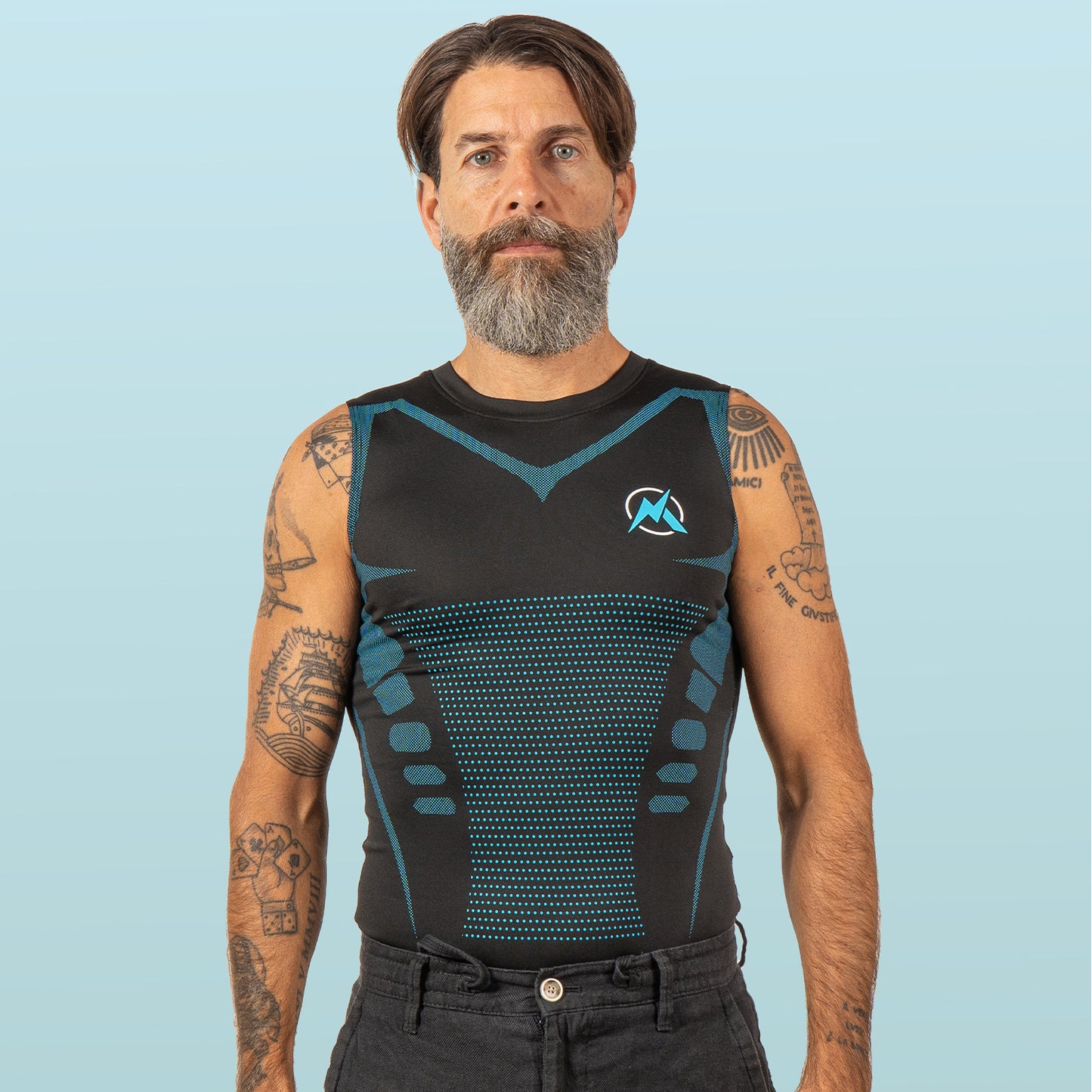
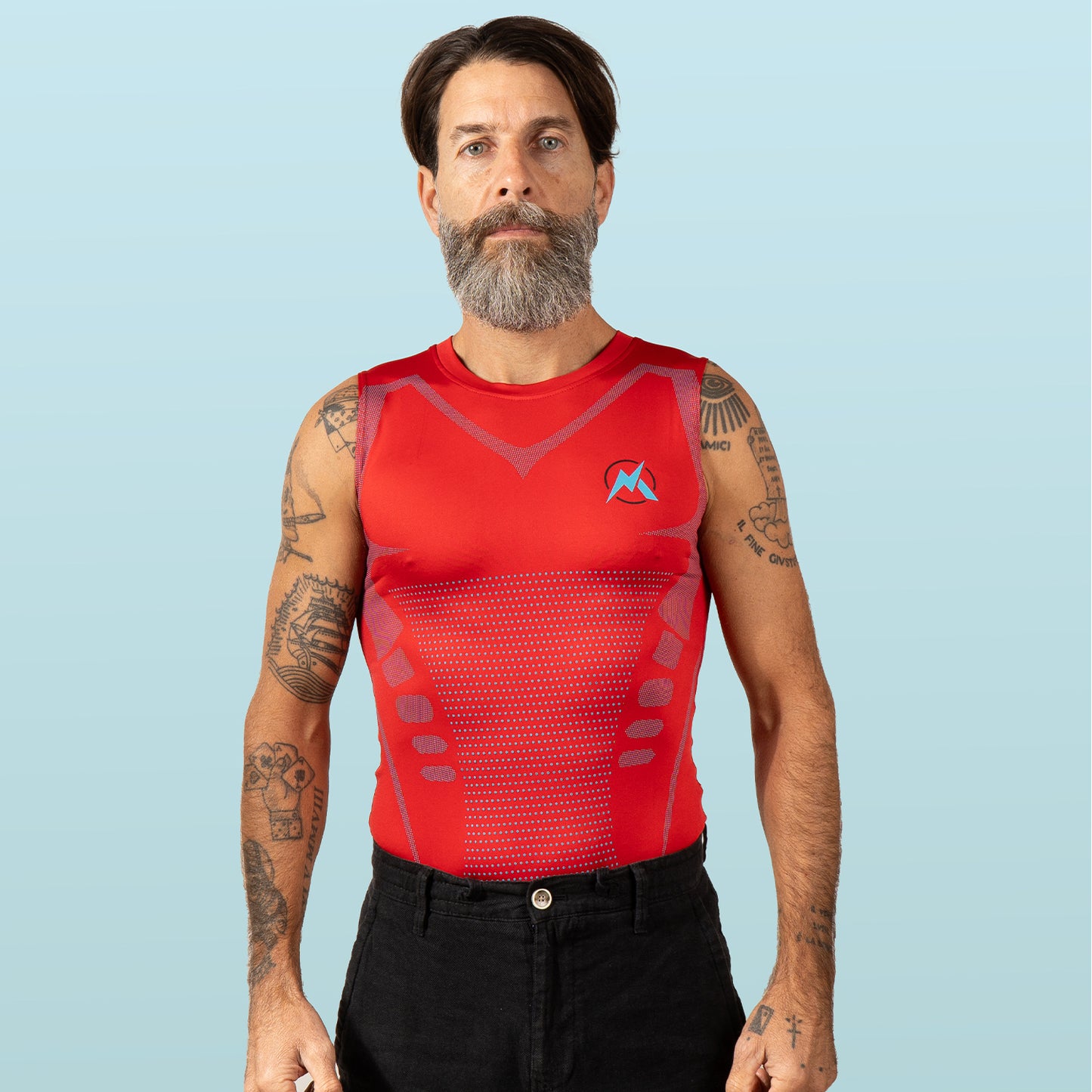
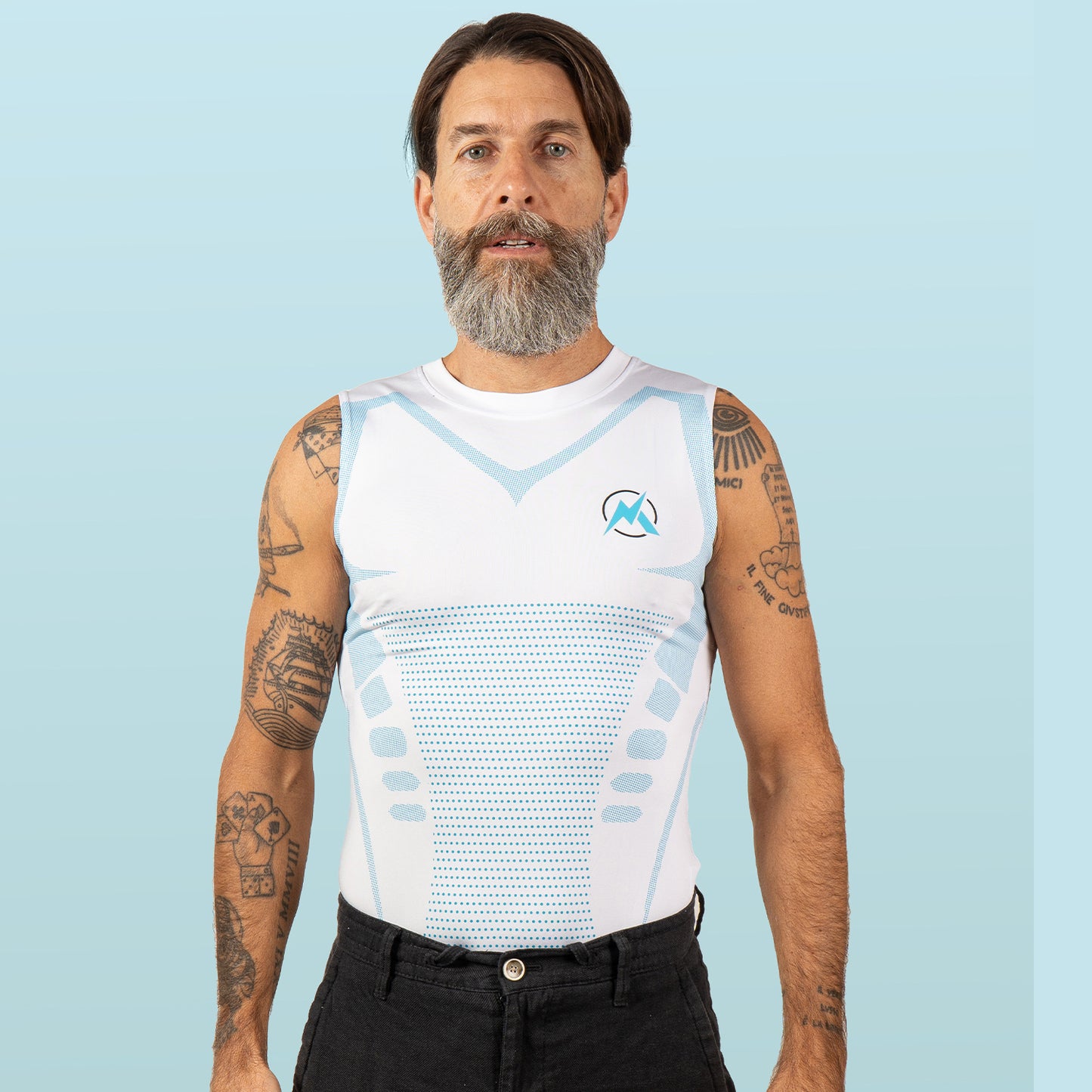
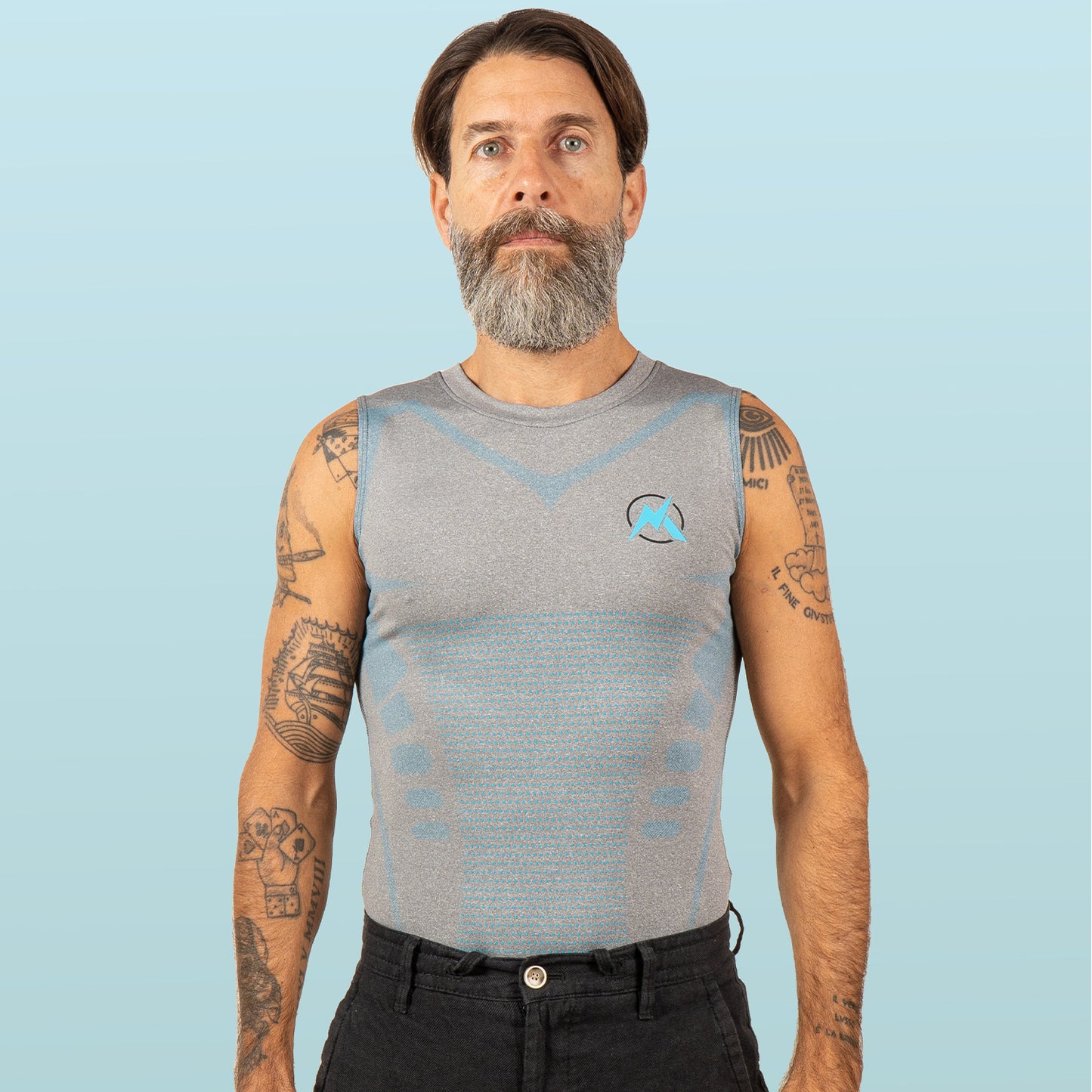
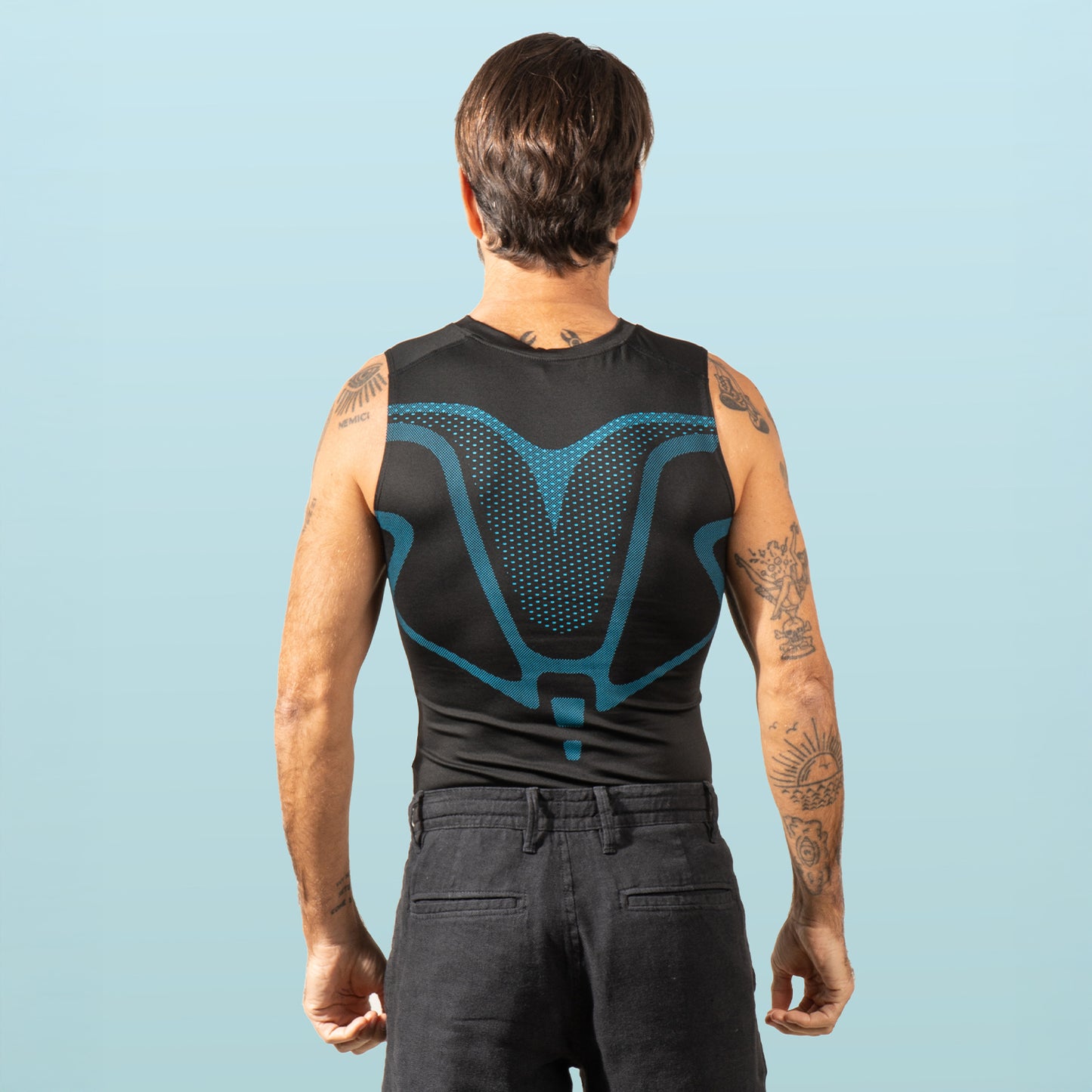
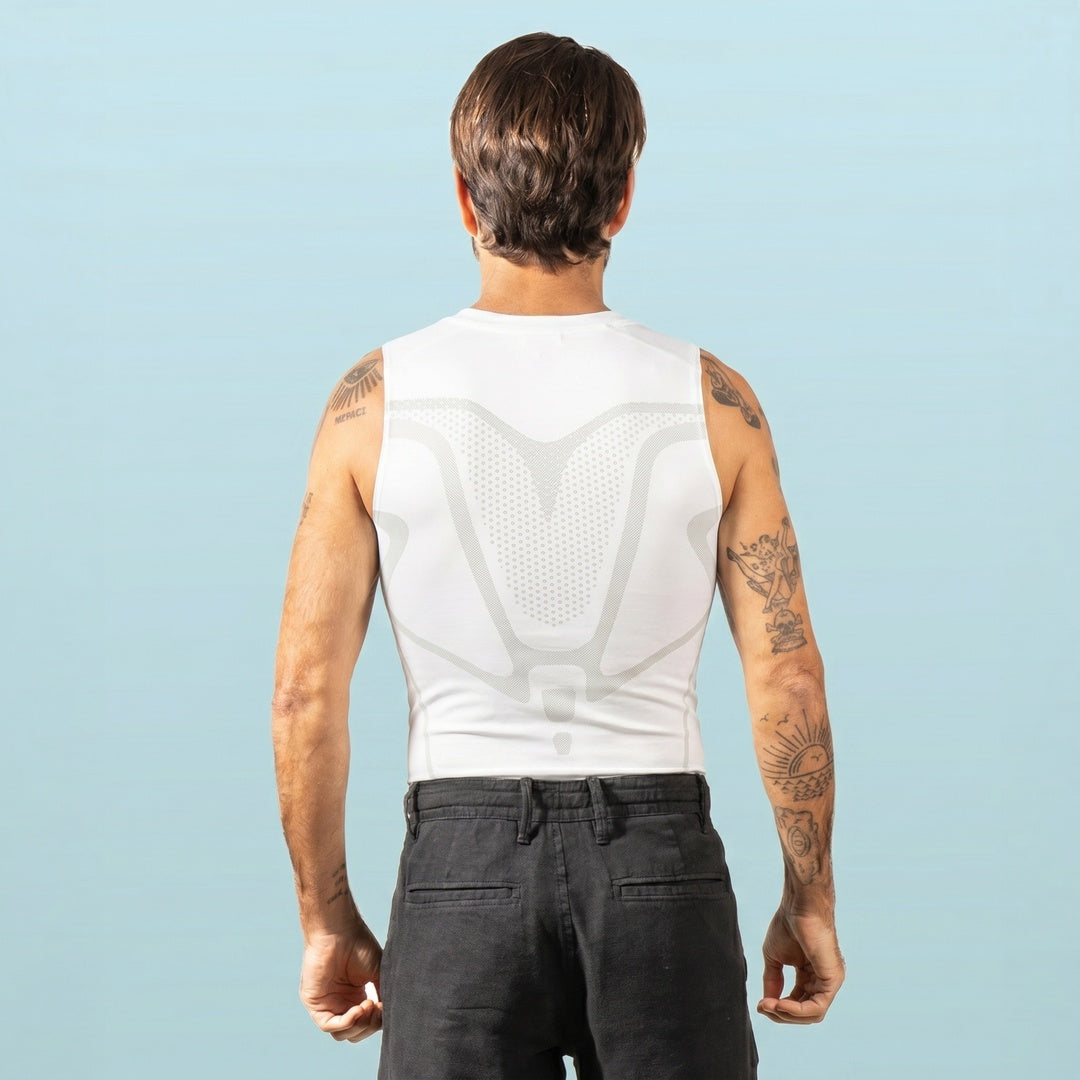
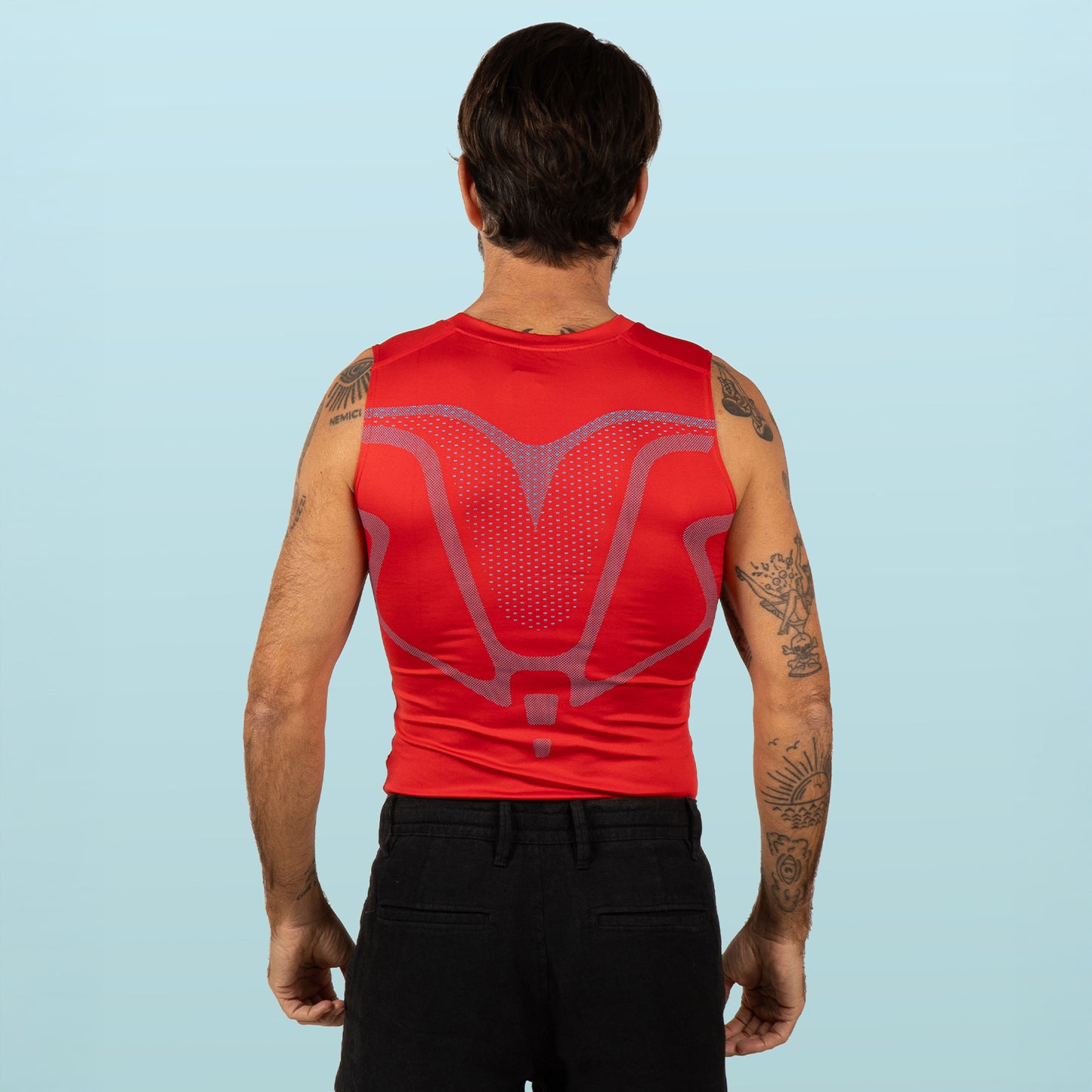
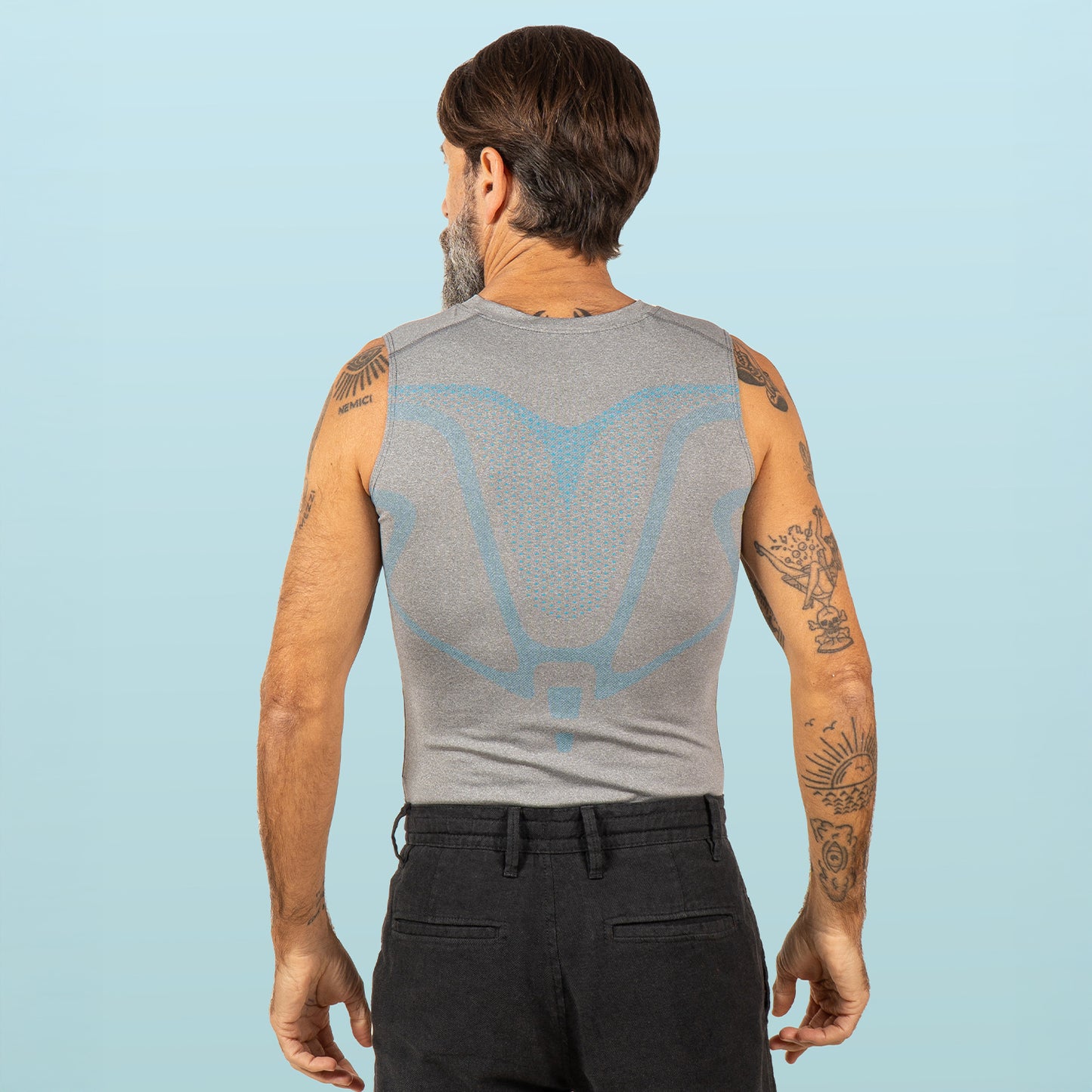
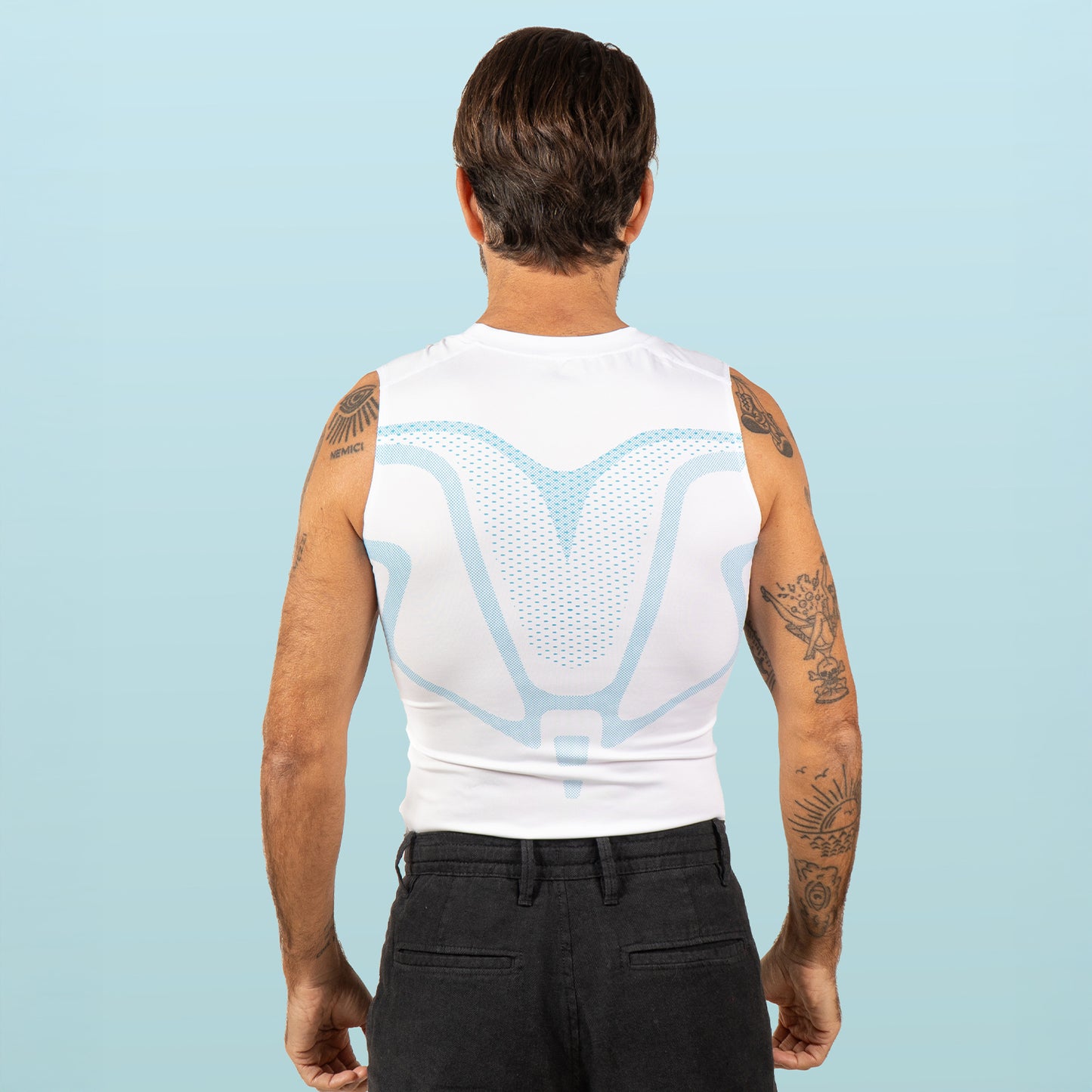
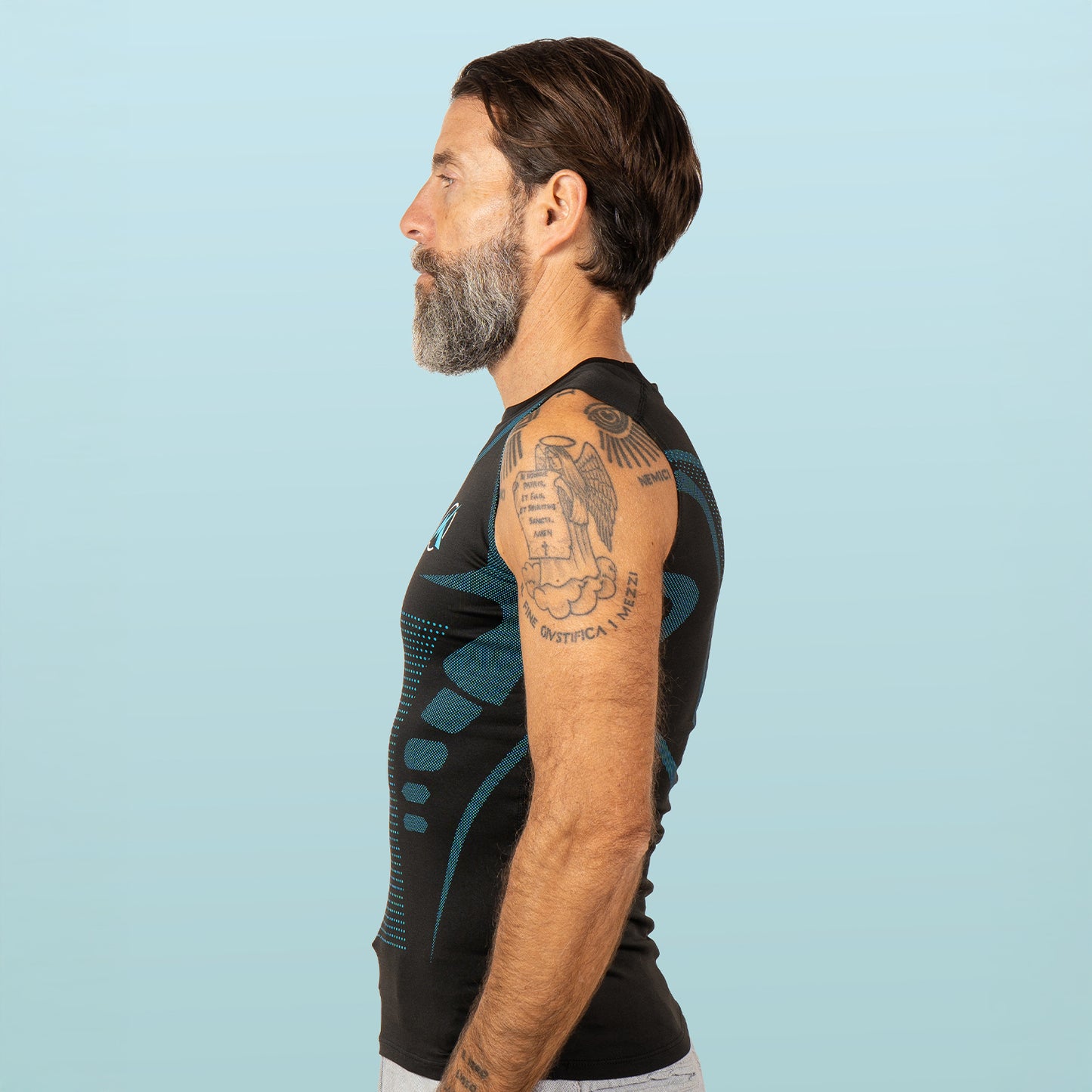
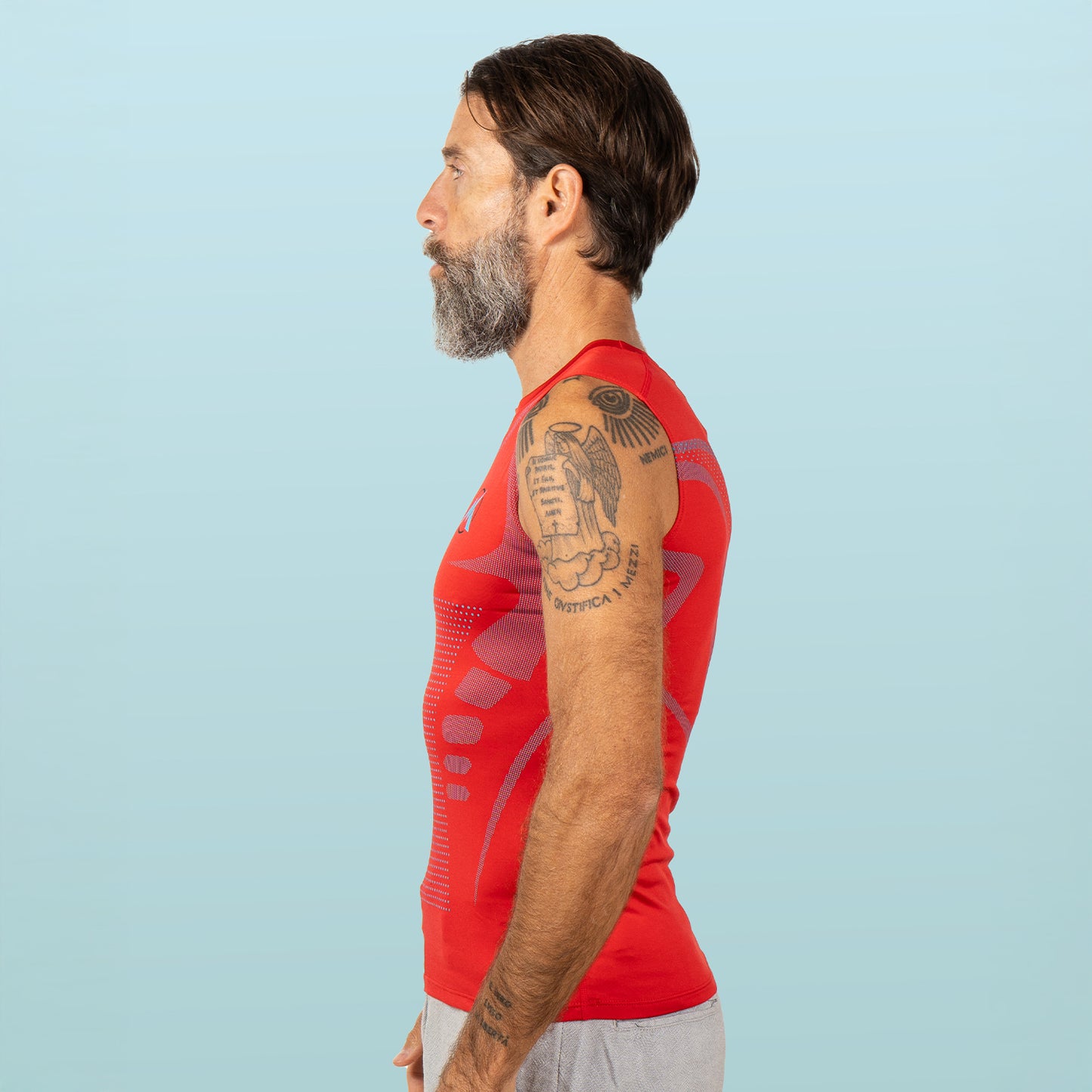
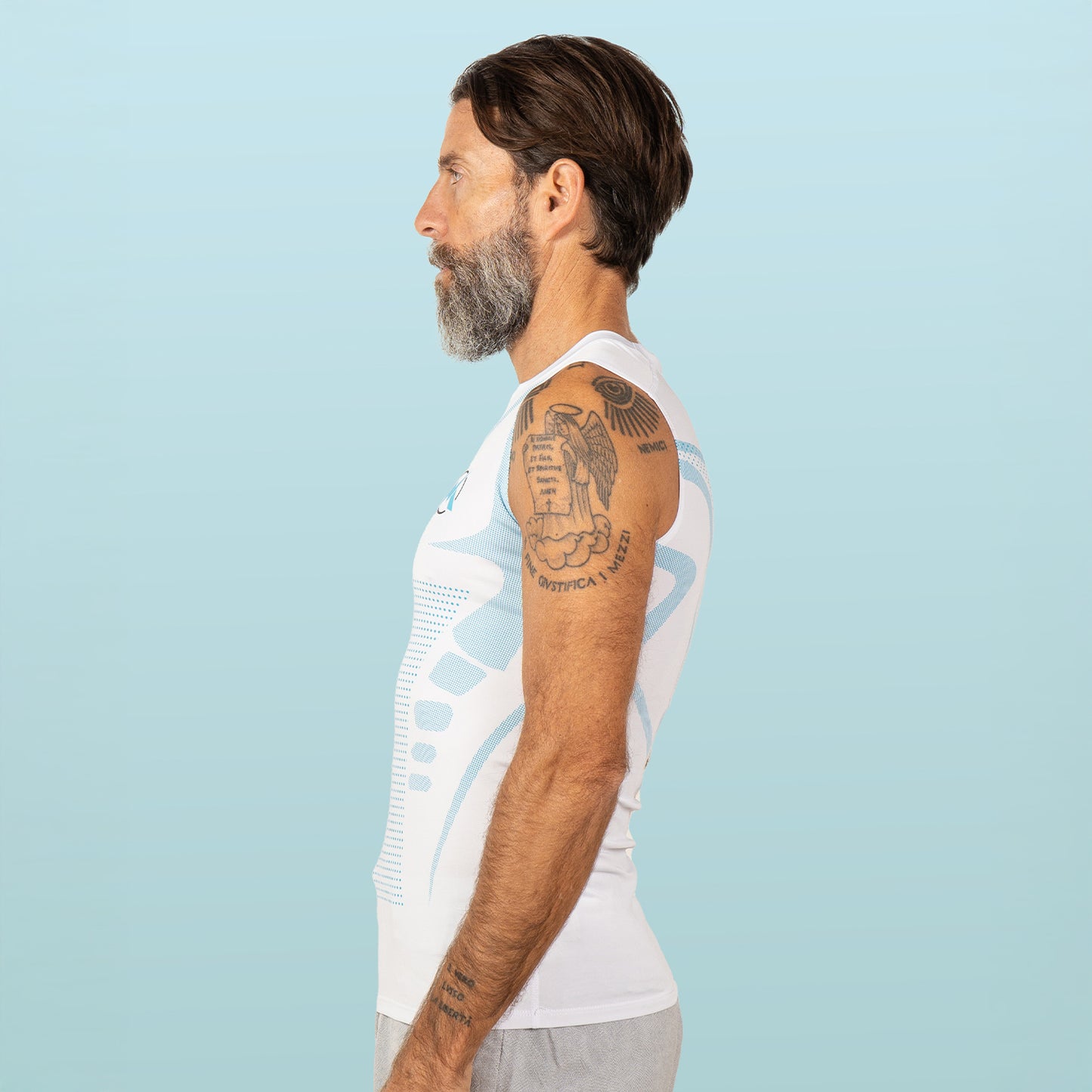
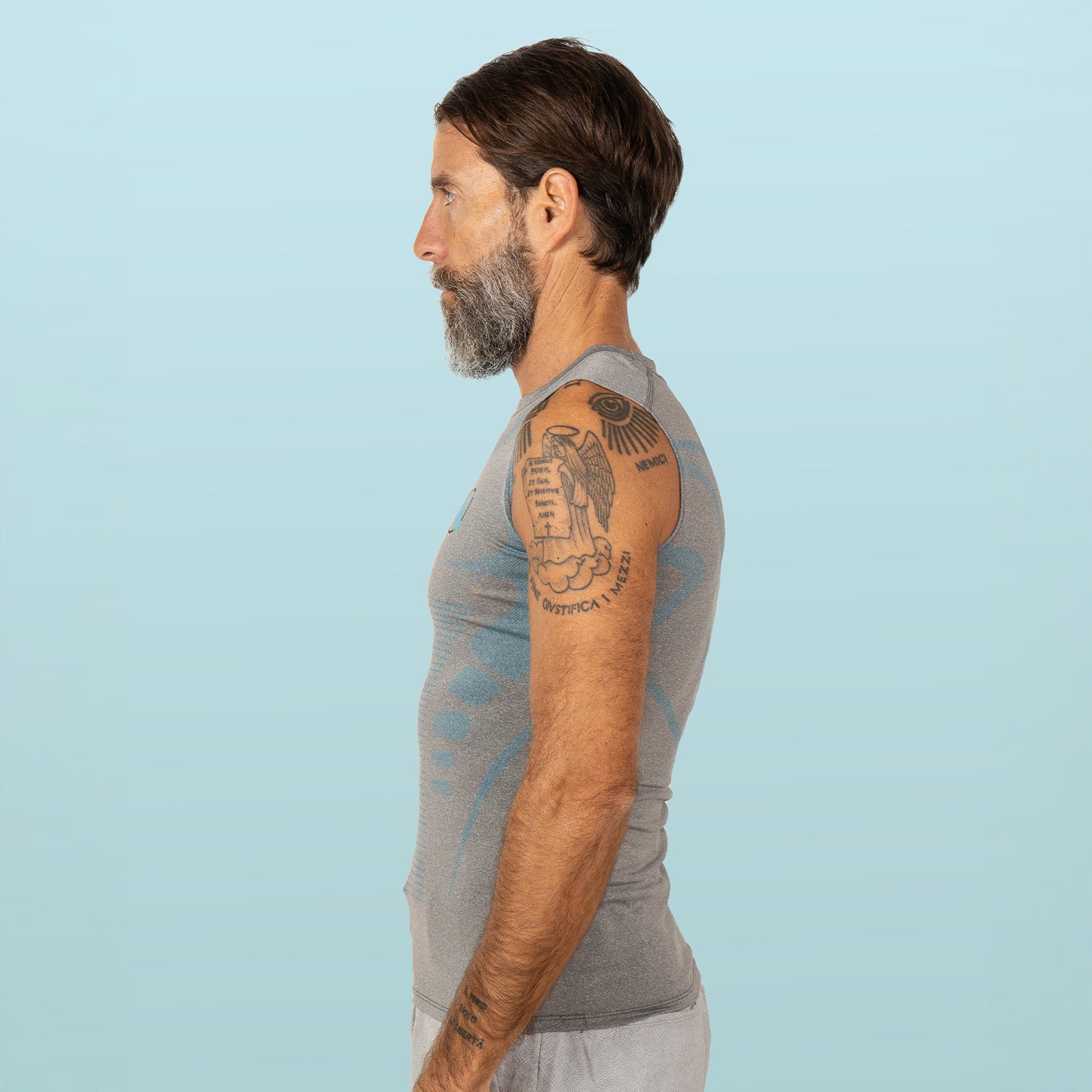
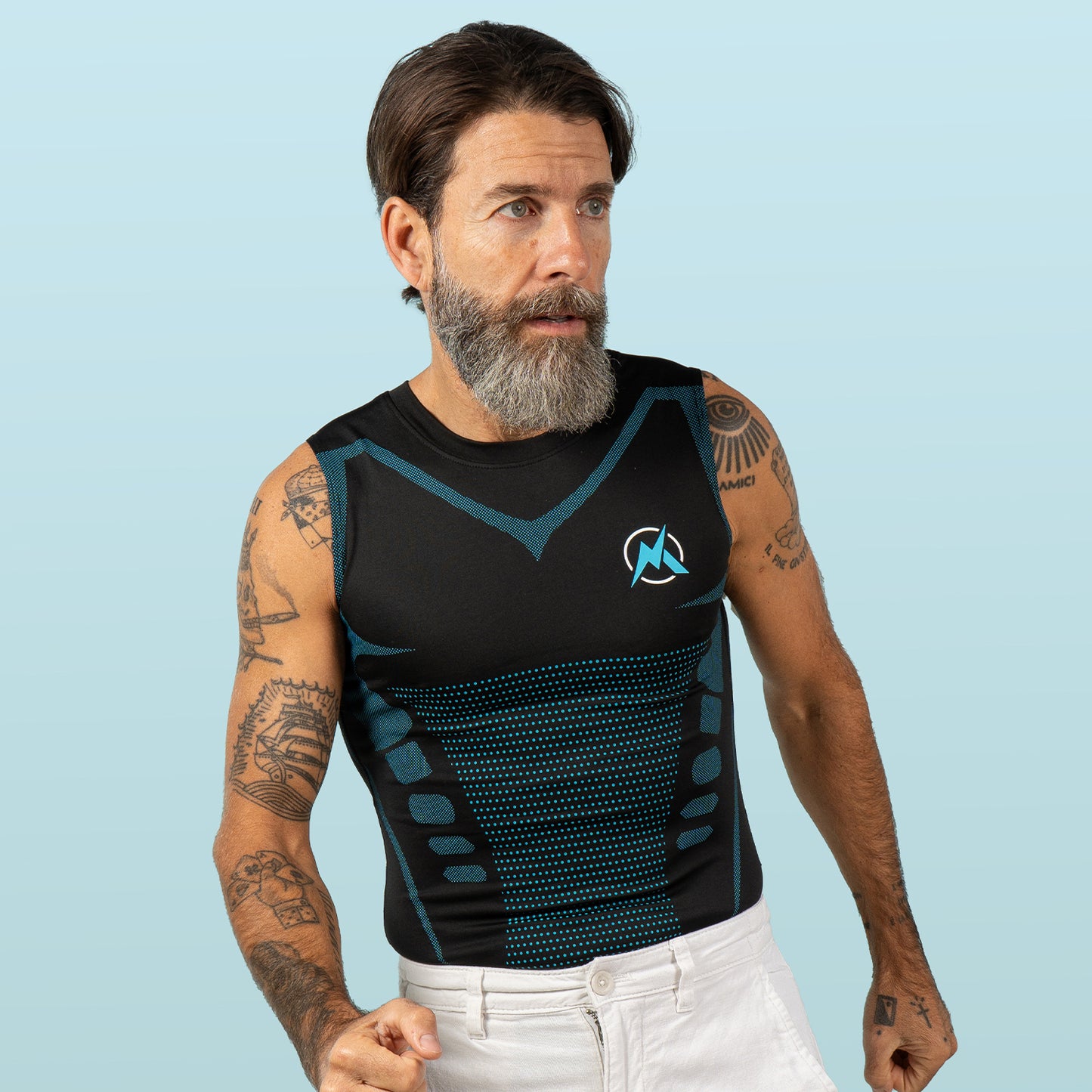
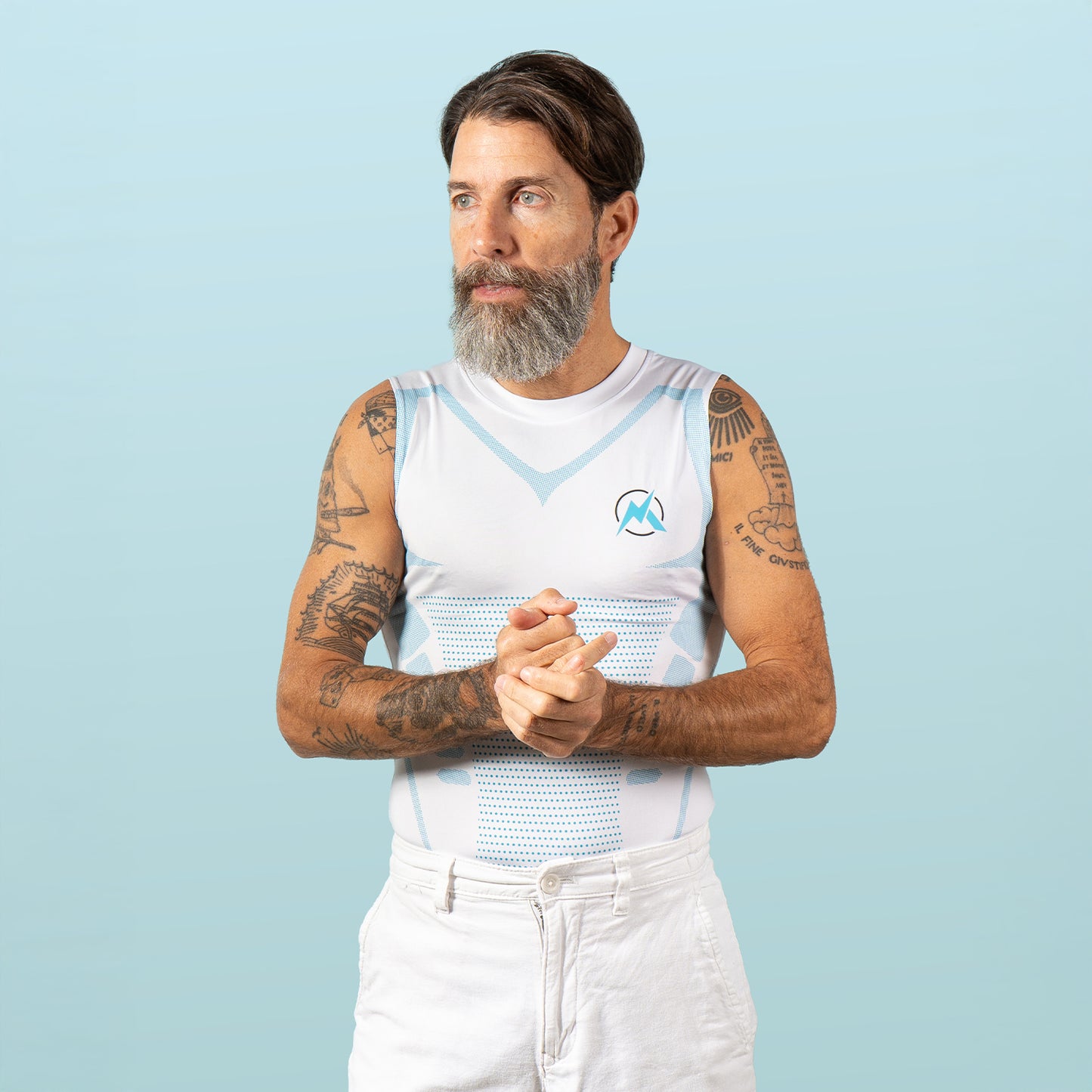
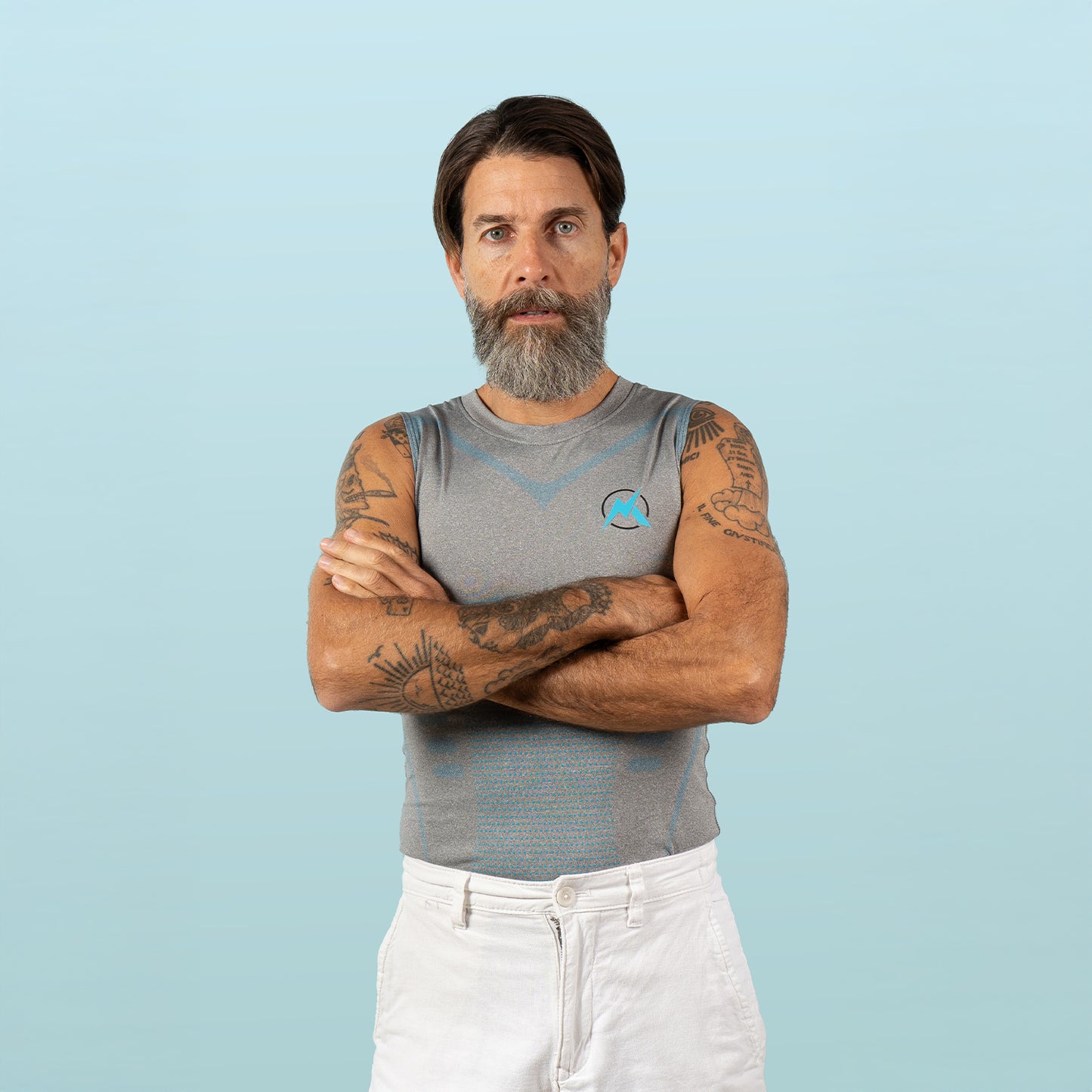
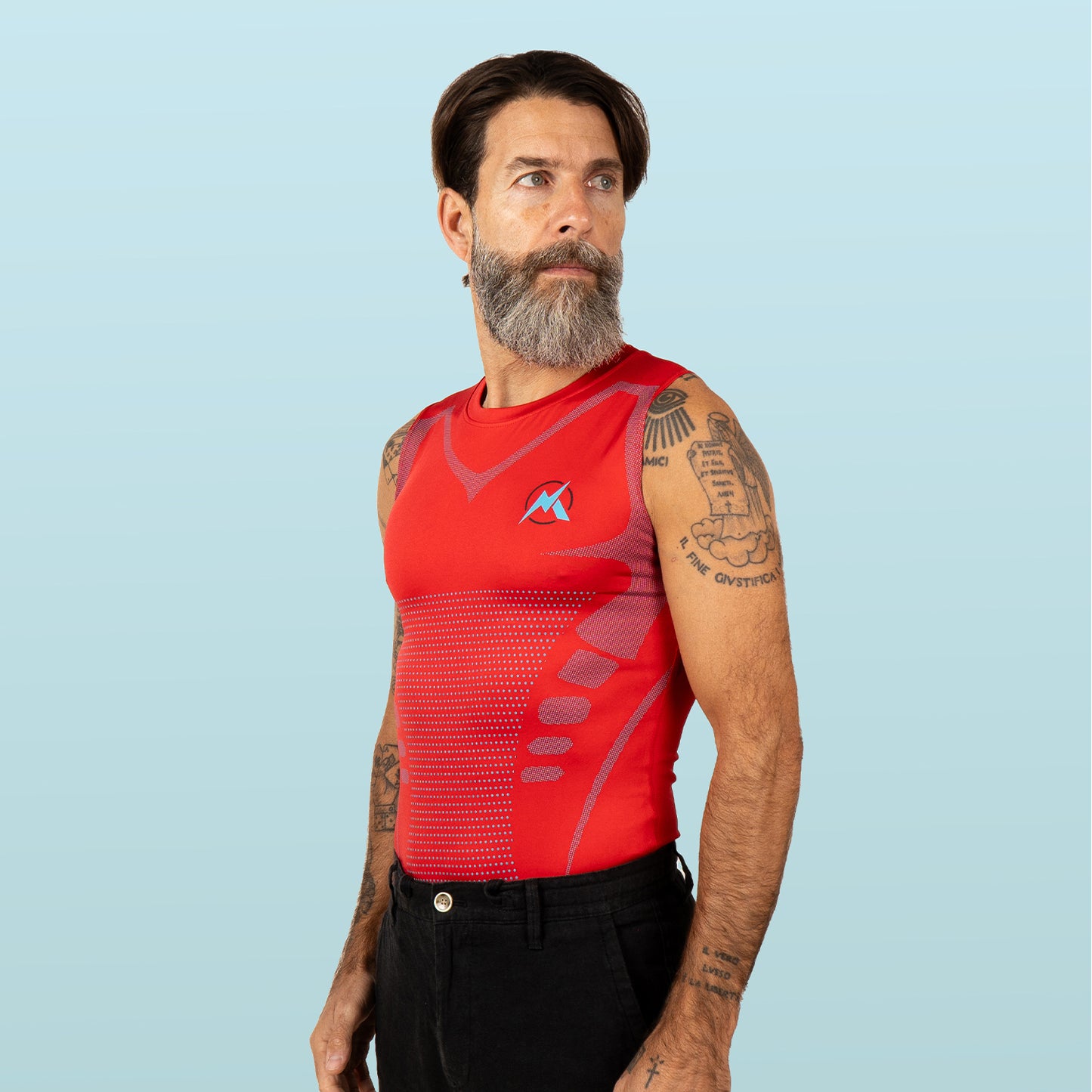
Many men also benefit from wearing a compression shirt under their daily clothes — the consistent gentle pressure on the upper back acts as a tactile reminder to keep your shoulders pulled back. It's not magic; it's a feedback loop. We built VitaBoost for exactly this reason — a sleeveless compression tank that men wear under their work shirt to stop the slouch from coming back the second they sit down at their desk. If you're already doing the morning routine, layer this on. (More on that later.)
5. Delay caffeine by 60-90 minutes
Cortisol — the hormone that wakes you up — naturally peaks around 30 to 45 minutes after waking. If you slam coffee the moment you're vertical, you're stacking caffeine on top of an already-rising cortisol curve. The result: a faster crash by 11am.
Push your first cup back to 60-90 minutes after waking. Yes, the first 3 mornings are rough. By day 5 most men report a much smoother energy line until lunch. This is the easiest habit to swap because you're not removing coffee — you're just moving it.
6. Eat protein first (or skip breakfast on purpose, not by accident)
Two camps, both work. Pick one and commit.
If you eat breakfast, front-load 25-40g of protein: eggs, Greek yogurt, leftover steak, a protein shake. Protein blunts the blood-sugar spike that white toast and cereal give you, which is what causes the 10am crash.
If you fast until lunch (16:8 style), be honest about it: drink water, don't sneak a banana, don't add sugar to your coffee. The energy benefit only shows up if you actually keep insulin low for 4+ hours.
The wrong move is the middle: a muffin and a sugary latte. That's the worst-of-both worlds for a 45-year-old man's metabolism.
7. Decide one thing before you open your phone
Most men open their phone before they're fully conscious. By the time they're brushing their teeth, they've already absorbed 4 work emails, 2 news headlines, and an Instagram doom-scroll. Their nervous system is in reaction mode before 7am.
The flip: write down (on paper, in a note, on a sticky) the one thing that, if you finish today, makes the day a win. Then open your phone. This takes 90 seconds and changes the entire shape of your morning.
How to stack them into a 60-minute routine
Here's how the 7 habits fit together in 60 minutes. Use it as a template, not a prescription:
- 0:00 — Feet on the floor. Water glass from the nightstand. Drink half.
- 0:02 — Outside or by the brightest window. Finish the water. Don't touch the phone.
- 0:10 — Wall posture reset (60 sec). Then 10-20 min of movement (walk, mobility, or bodyweight set).
- 0:30 — Shower. Get dressed. If you slouch by 10am, layer a compression tank under your work shirt.
- 0:45 — Write your one priority for the day. Sticky on the laptop.
- 0:50 — Now open the phone. Now make coffee. Protein-forward breakfast or skip and roll into lunch.
If your morning is 30 minutes, not 60, keep #1, #2, #3, and #7. Drop the rest. Consistency over completeness.
What about coffee, breakfast, and the phone?
The three things every man wants more clarity on:
Coffee: Drink it. Just move it. 60-90 minutes after waking is the sweet spot. Two cups before lunch is fine. After 2pm it starts costing you sleep — and sleep is where energy actually comes from.
Breakfast: Optional. What's not optional is consistency. Either eat protein-forward every morning, or fast every morning. Random switching gives you neither benefit.
Phone: Treat it like a tool, not a roommate. The first 30 minutes of your day are yours. Email and news will still be there. They are never urgent enough to lose your morning over.
What to expect after 14 days
Most men who actually run the routine for two weeks report something like this:
- Smoother energy line from 9am to lunch (no more 11am wall)
- Falling asleep faster at night (delayed coffee + morning sun)
- Less of the "drag" feeling in the first 15 minutes after waking
- Surprisingly, better posture and fewer mid-back twinges (habit #4 quietly compounds)
You won't feel 25 again. That's not the goal. The goal is to feel like the best version of 45+ — sharp, upright, present. That's available to almost every man who runs this routine for a month.
When to talk to a doctor instead
This is a routine for men with normal-but-tired mornings. If your fatigue is severe, sudden, or paired with weight changes, mood crashes, or sleep apnea symptoms (your wife elbowing you for snoring), this isn't an article problem — it's a doctor problem.
The Cleveland Clinic lists thyroid issues, low testosterone, sleep apnea, and certain medications among common medical causes of male fatigue after 40. A simple blood panel costs less than a year of supplements and gives you actual answers. Get the labs first. Then run the routine.
Maynox makes apparel, not medicine. Nothing in this article diagnoses or treats a condition. Talk to a healthcare provider if you suspect something is medically wrong.

A quick note on the posture piece. A lot of men ask me what compression tank to layer under a work shirt. We built VitaBoost specifically for the man who can't go to the gym during his lunch break but still wants to walk into the 2pm meeting looking and feeling upright. Pair it with the 7 habits above and you've stacked the deck. BUY 1 GET 1 FREE — $59.99 → $15, no code needed.
Get VitaBoost — Buy 1 Get 1 Free
If you're not ready for that yet — fine. Run the 7 habits first. Layer the tank later. Either way, the first hour is yours to win or lose.
The bottom line: you don't have a 45-year-old problem. You have a first-hour problem. Fix the first hour and the next 15 hours mostly fix themselves.
For more on staying upright as you age, read our companion piece: How to Fix Bad Posture for Men Over 40. And if the belly is the thing slowing you down most, start here: Why Men Get a Belly After 40 (And What Actually Works).
Frequently asked questions
What is the best morning routine for men over 40?
The best morning routine for men over 40 is short, repeatable, and prioritizes light, water, and movement. Step outside for 5-10 minutes of sun within the first 30 minutes of waking, drink 16-20 oz of water before coffee, and move for 10-20 minutes. Delay caffeine 60-90 minutes. Most men feel a real energy difference within two weeks.
How can I have more energy in the morning after 45?
Three things move the needle most: morning sunlight (sets your circadian rhythm), hydration before coffee (fixes overnight dehydration), and 10-20 minutes of movement (raises mitochondria activity). Add 7+ hours of sleep at night and protein-forward breakfast, and the 11am crash usually disappears within two weeks.
What should I drink first thing in the morning?
Water. 16-20 oz, ideally room temperature, with an optional pinch of sea salt if you sweat at night. After 7-9 hours without fluid, your blood is thicker and your brain is mildly dehydrated. Coffee comes 60-90 minutes later, after your natural cortisol peak. Skip the orange juice and sugary smoothies — the blood-sugar spike will cost you energy by 10am.
How long should a morning routine be?
30 to 60 minutes is the sweet spot for men over 45. Anything shorter and you skip either sunlight or movement (the two habits with the biggest payoff). Anything longer and you stop doing it within two weeks. A bare-bones routine of water, sun, movement, and one written priority can fit in 30 minutes if you're tight.
Why do I feel tired in the morning at 45?
Mostly three things: dropping testosterone (about 1% per year after 30-40, per Mayo Clinic), lighter sleep architecture, and overnight dehydration. Lifestyle factors — alcohol, late screens, inconsistent wake times — usually make it worse. If the fatigue is severe or sudden, check with a doctor about thyroid, sleep apnea, and testosterone before assuming it's just age.