By Owen Blot · Founder, Maynox · Last updated June 4, 2026
- What this comparison is actually about
- How the specs actually compare
- Where Under Armour clearly wins
- Where VitaBoost clearly wins
- What compression shirts CAN'T do (either brand)
- The use-case map: who should buy which
- How long should you actually wear either one each day?
- The verdict: what to buy
- Frequently asked questions
What this comparison is actually about
You typed "vitaboost vs under armour" because you're tired of guessing. Compression shirts all look the same online. Black, tight, "men's compression." But the second you put two of them on side by side, you realize they were engineered for two completely different bodies, with two completely different goals.
Under Armour HeatGear is a performance baselayer. It was designed in the 1990s for football players who needed something that could hold muscle tight, wick sweat fast, and survive a 100-degree practice. It still does that better than almost anyone.
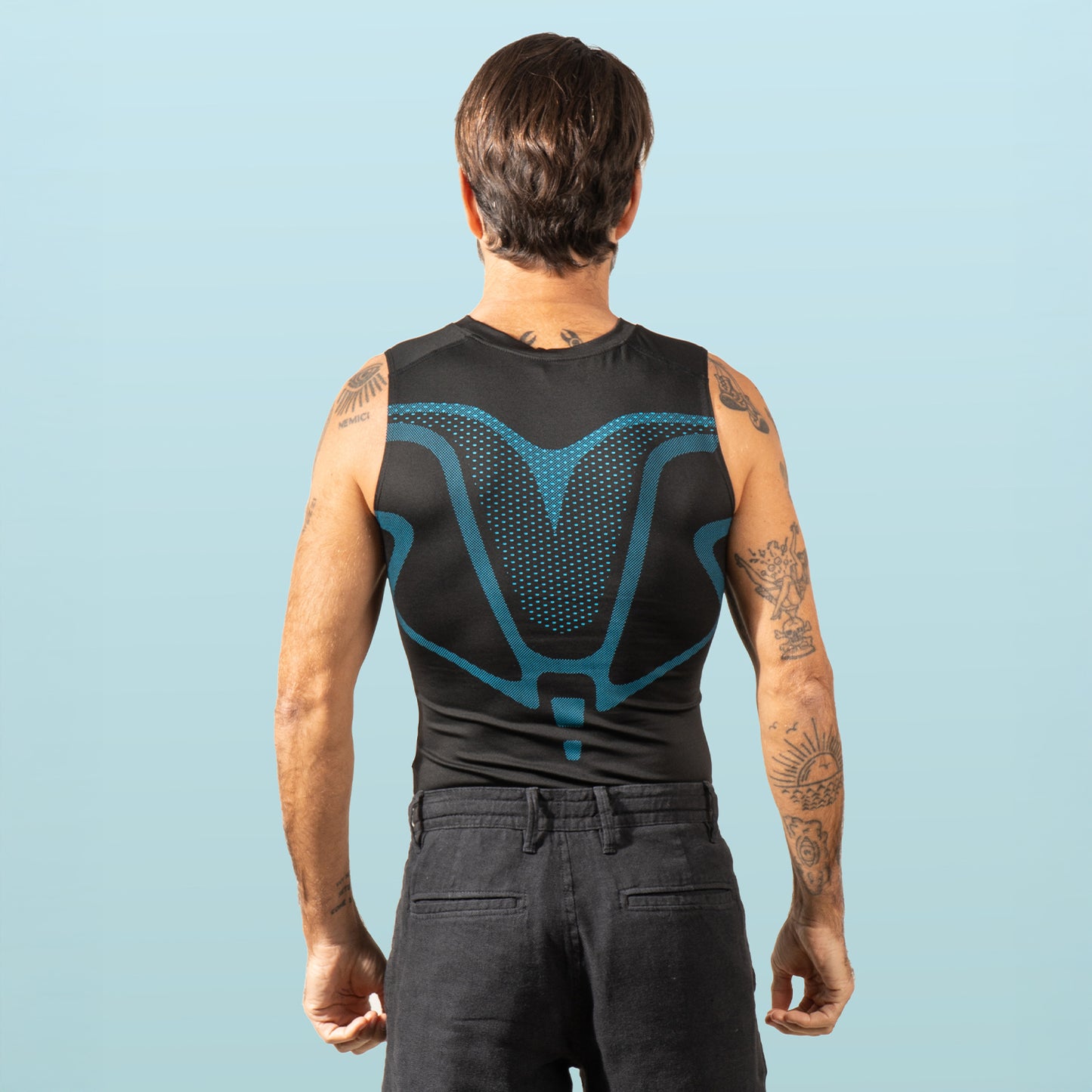
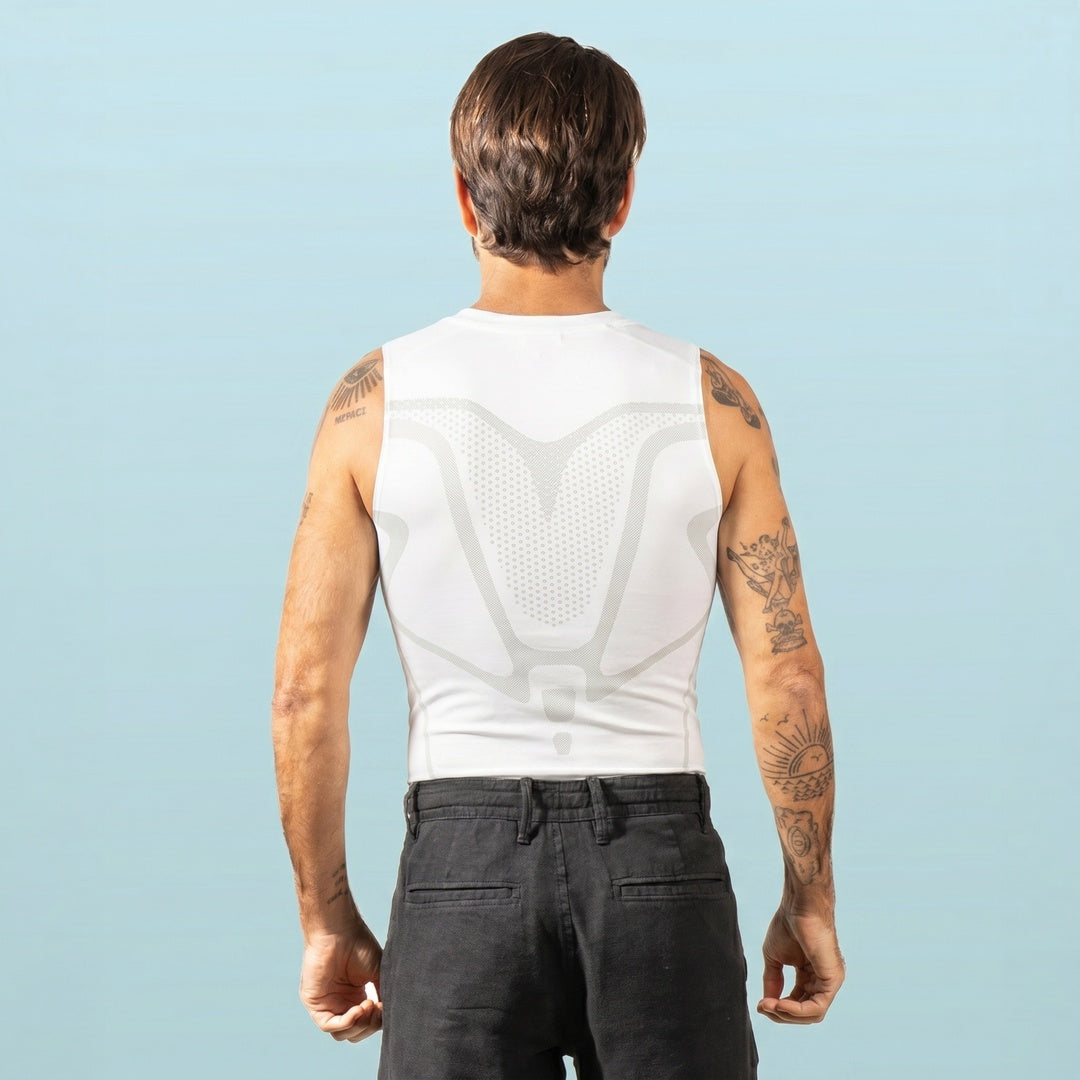
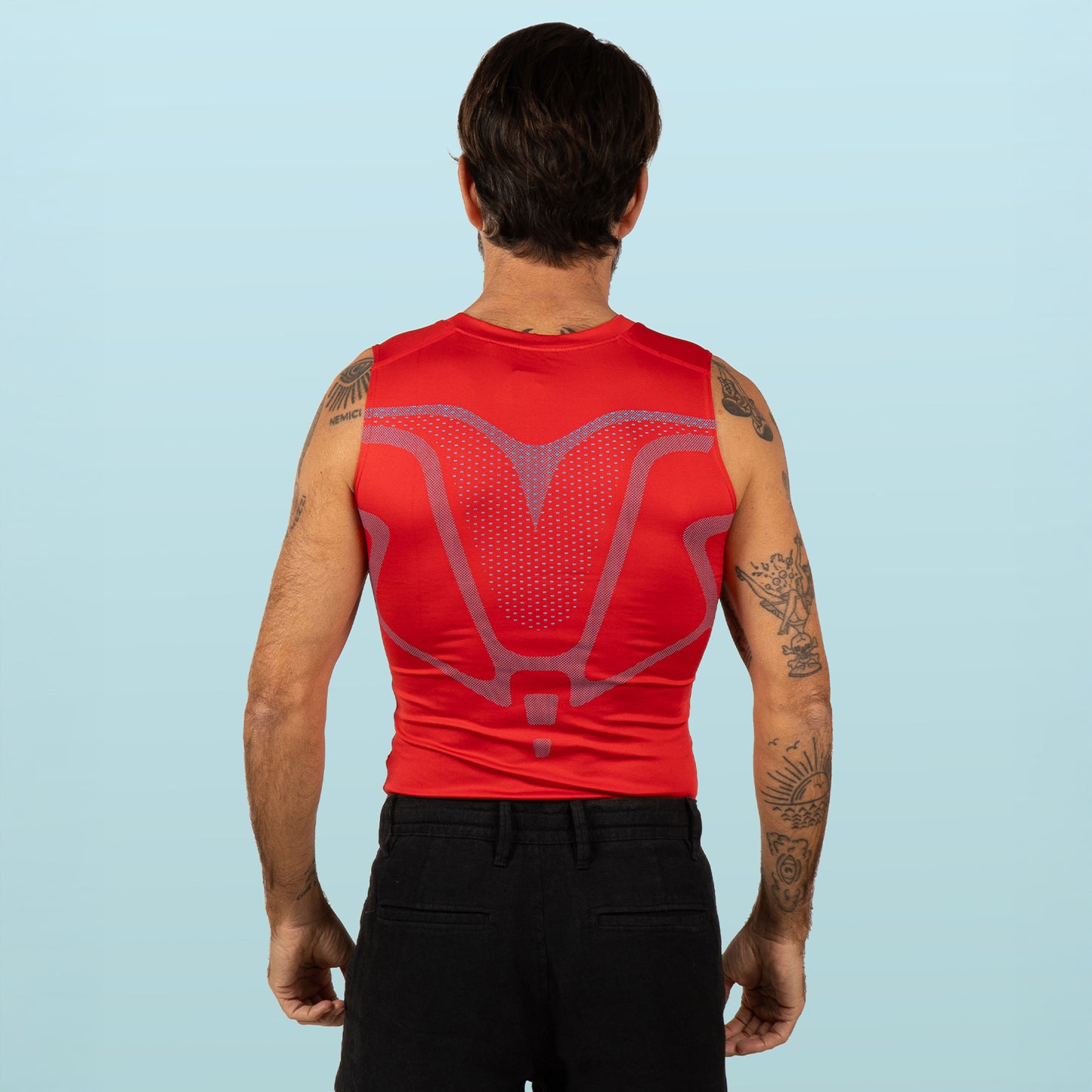
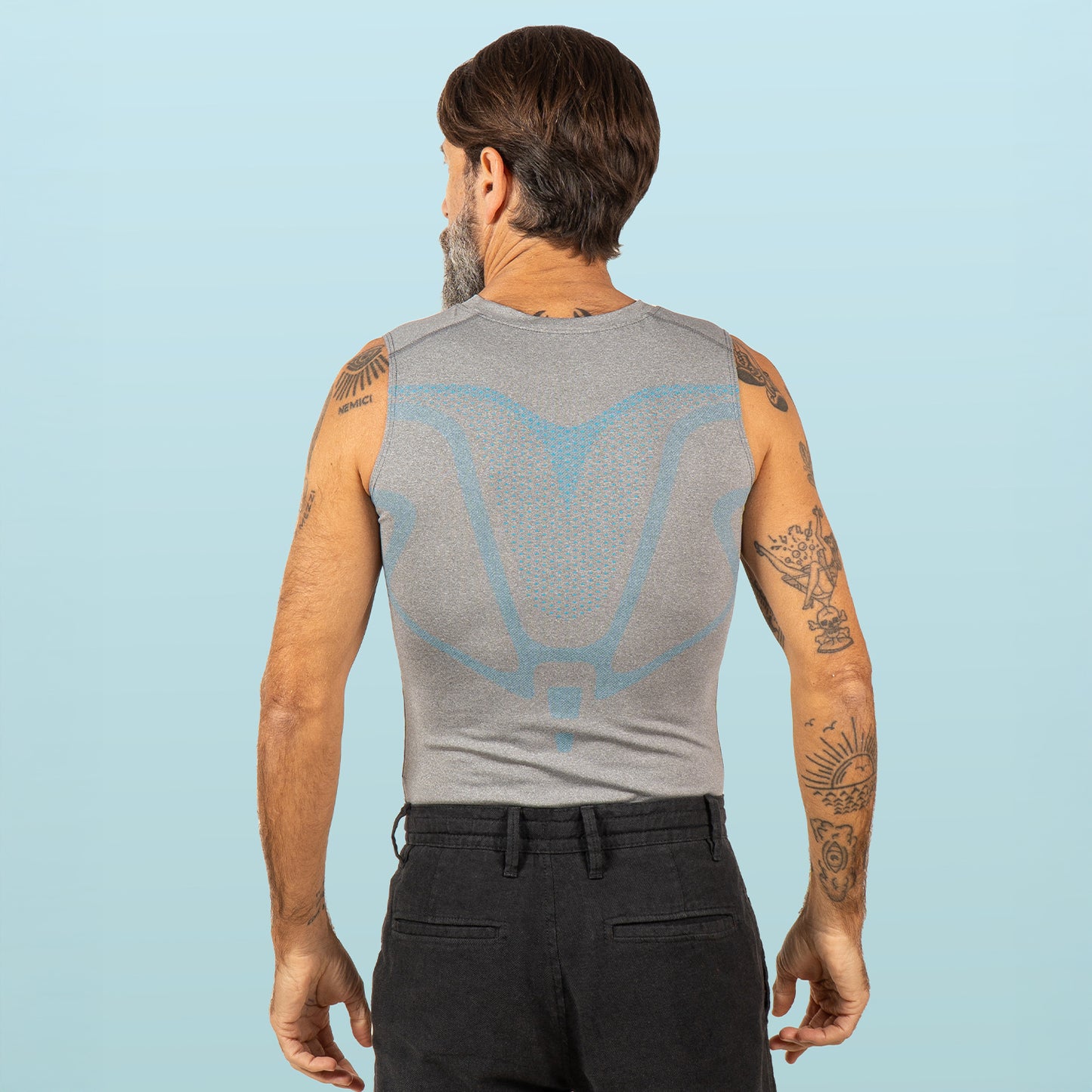
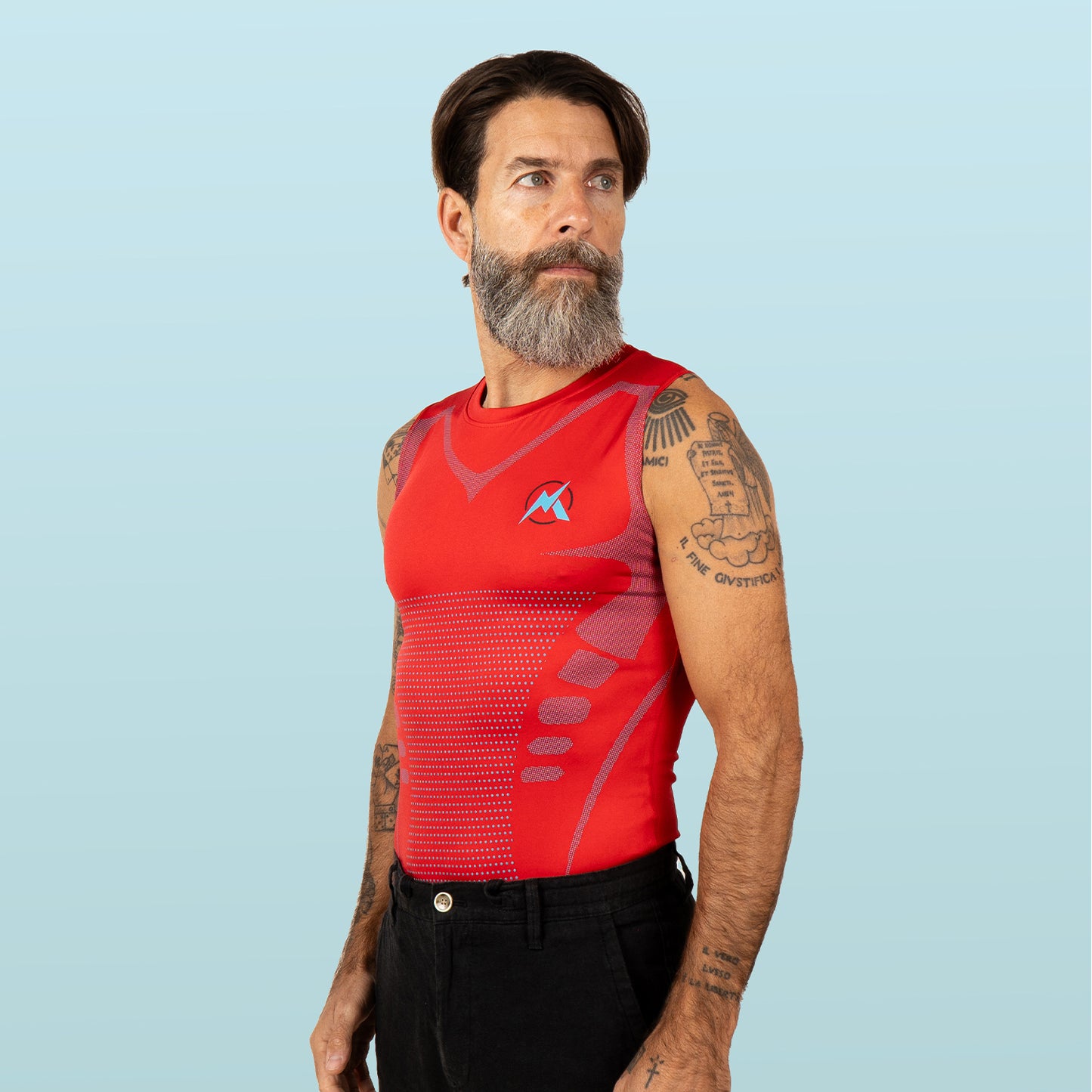
VitaBoost is a daily-wear compression shirt built for the man who's 45, has a desk job, has put on 15 pounds over the past decade, and wants to walk into a Tuesday meeting looking like the guy he used to be. Different design, different fabric weight, different cut.
Both are compression shirts. Both are black. That's where the similarity ends.
How the specs actually compare
Real specs, not marketing copy. The two products are sold side by side online — here's the honest breakdown.
| Spec | Under Armour HeatGear | VitaBoost |
|---|---|---|
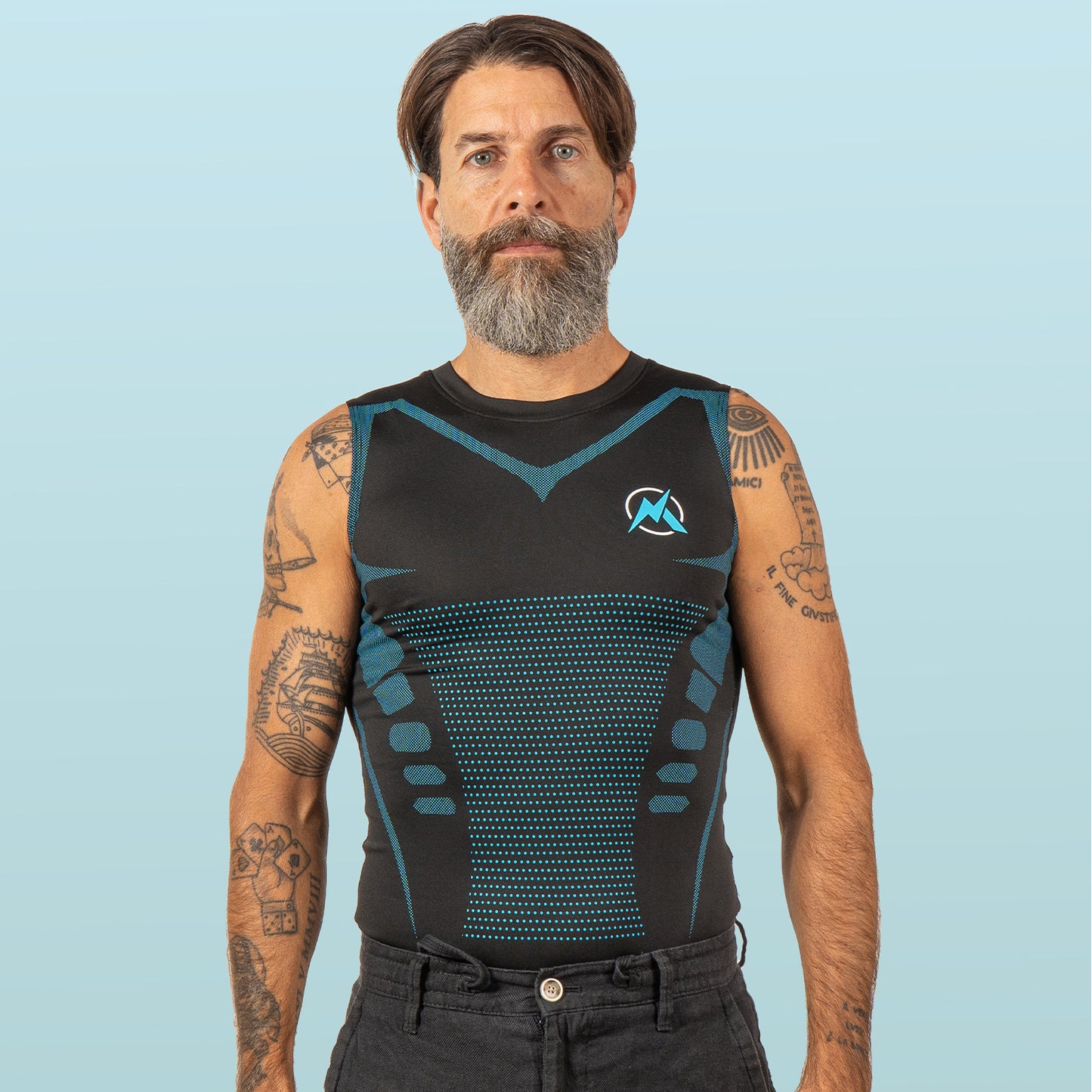
| Primary use case | Athletic training, lifting, running | Daily wear, office, dress shirt base layer |
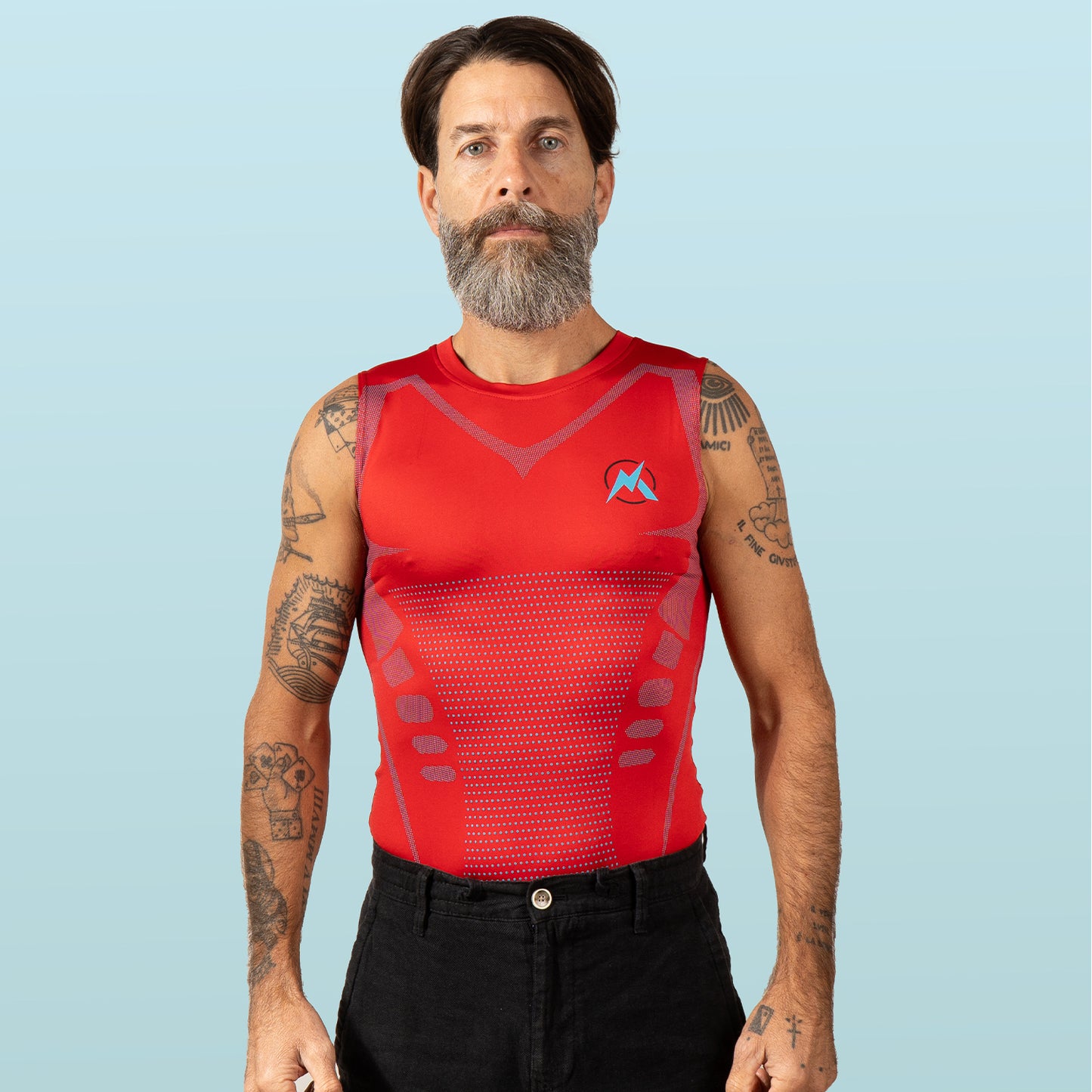
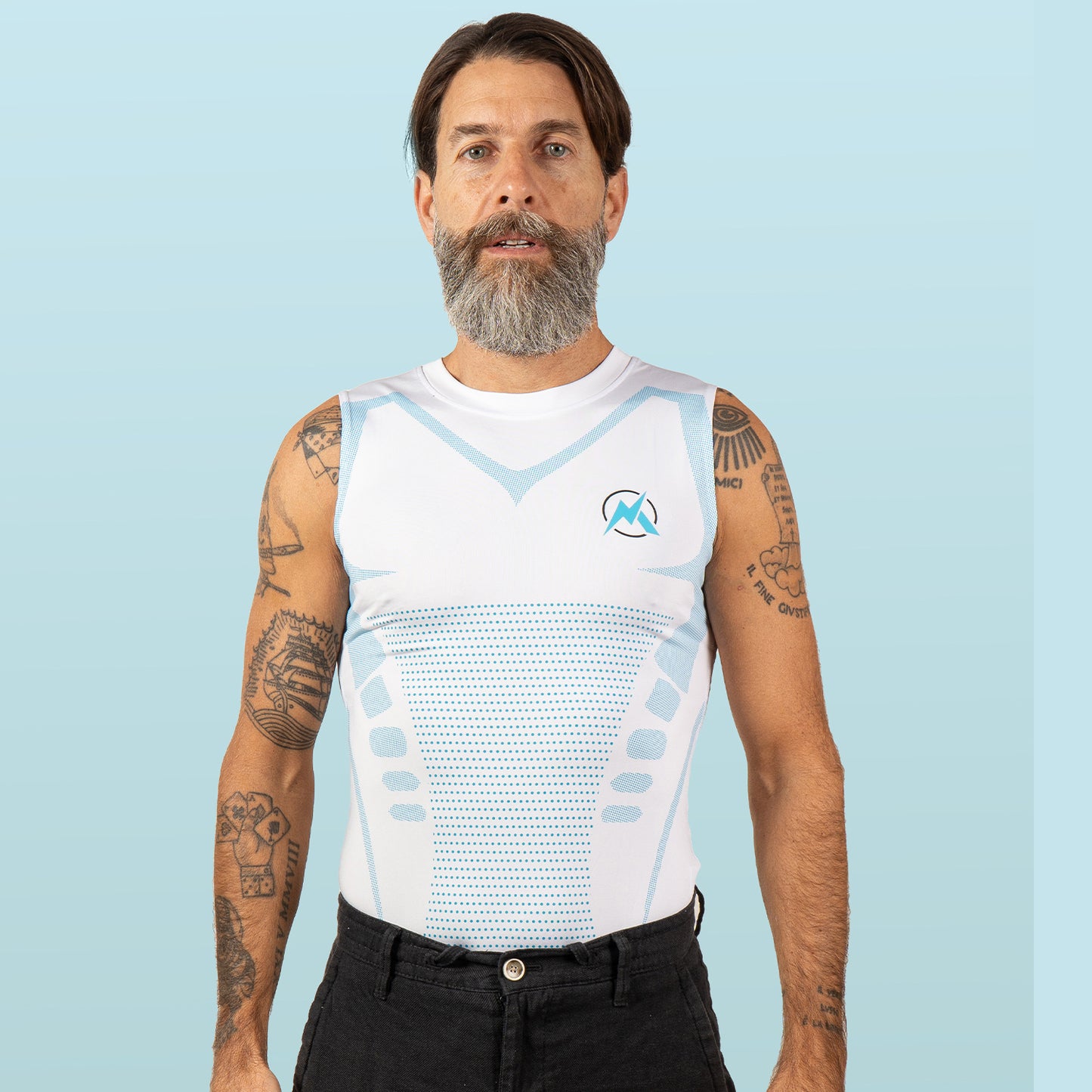
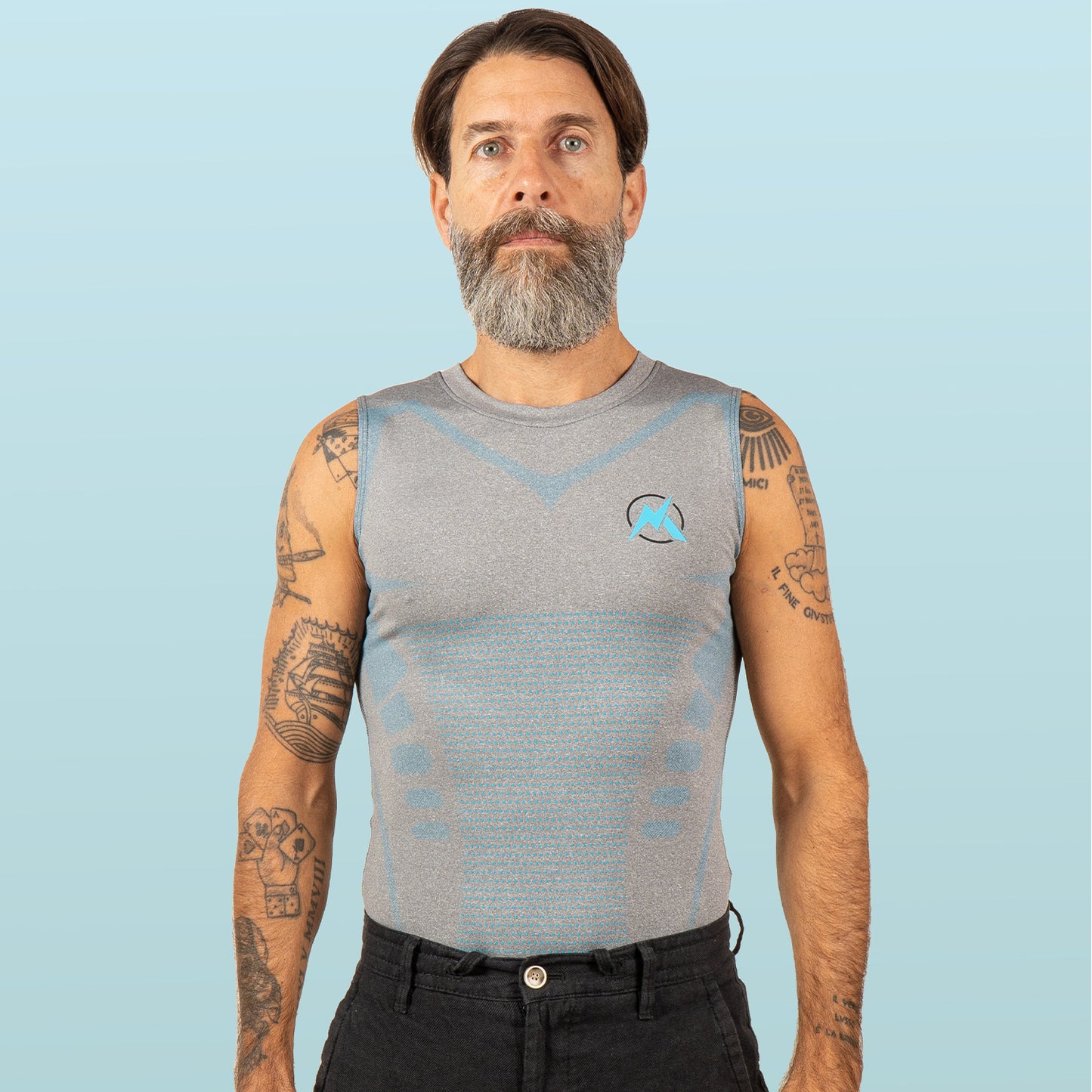
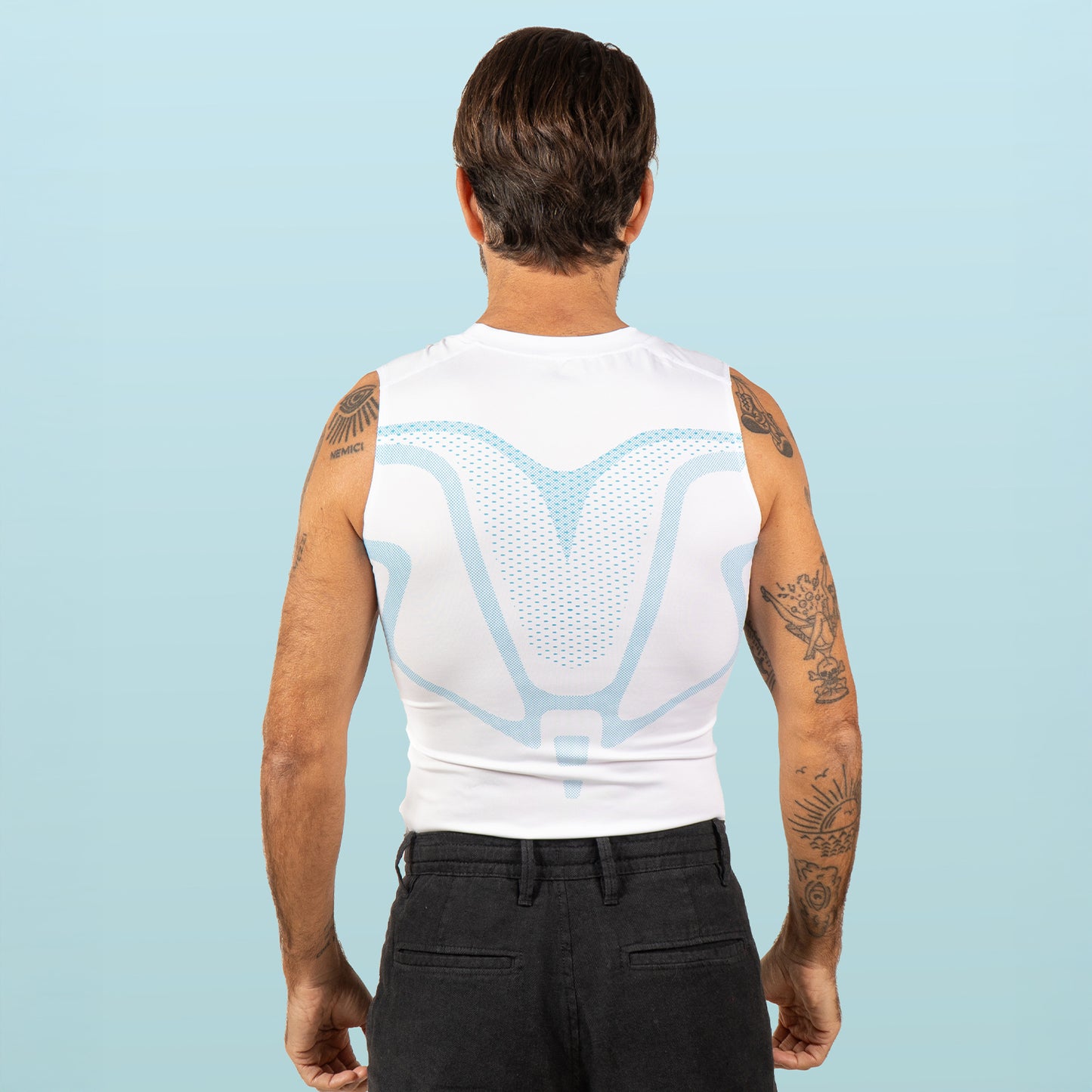
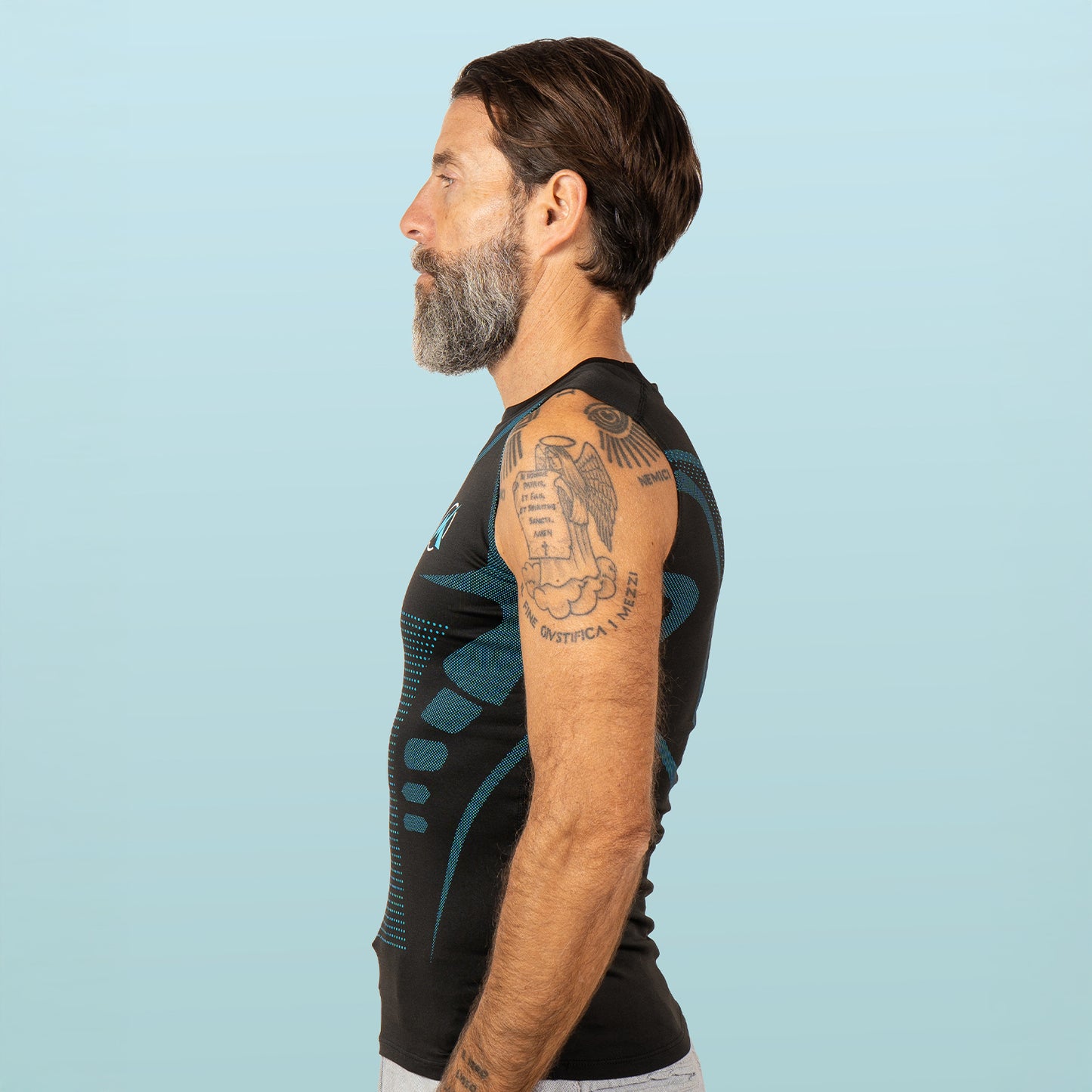
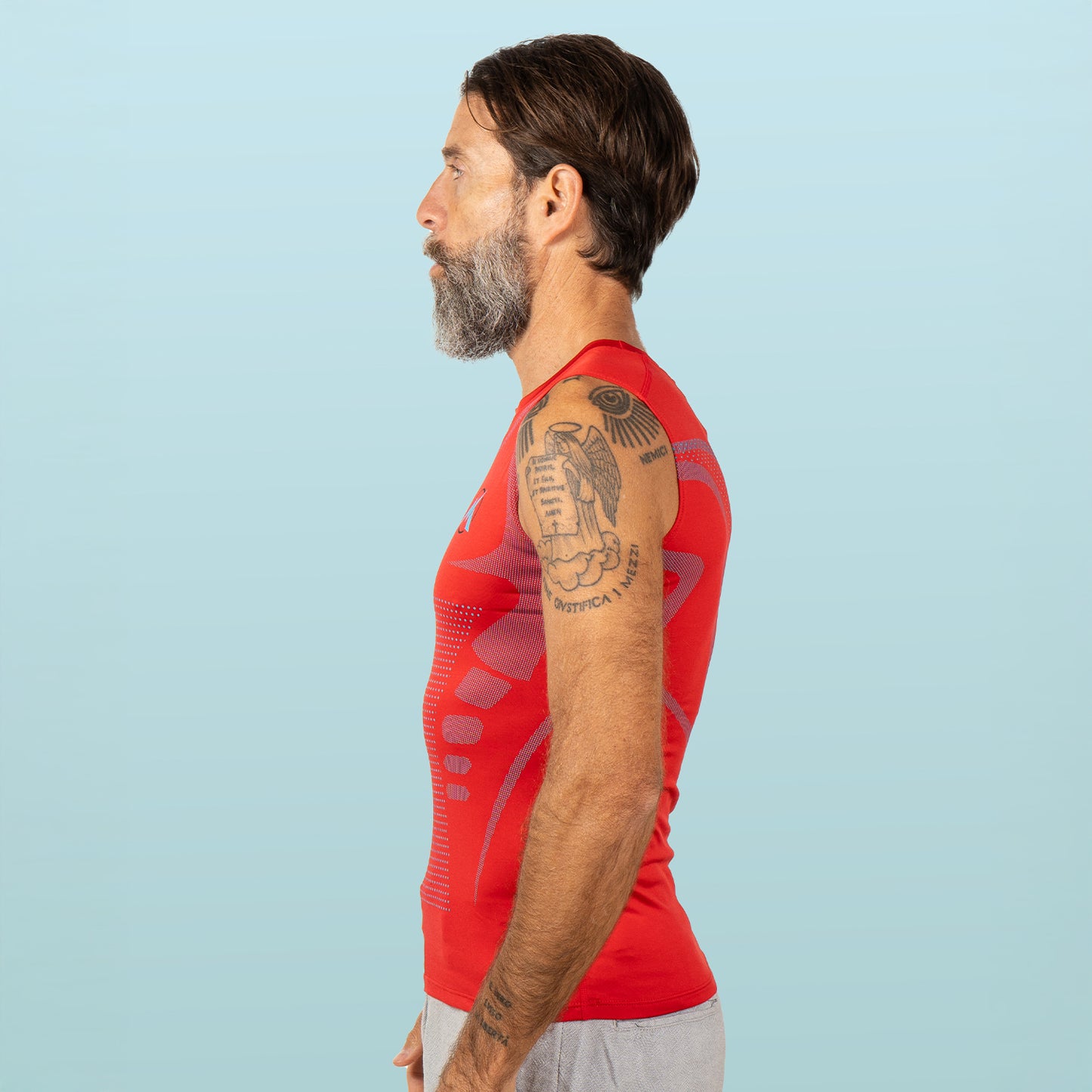
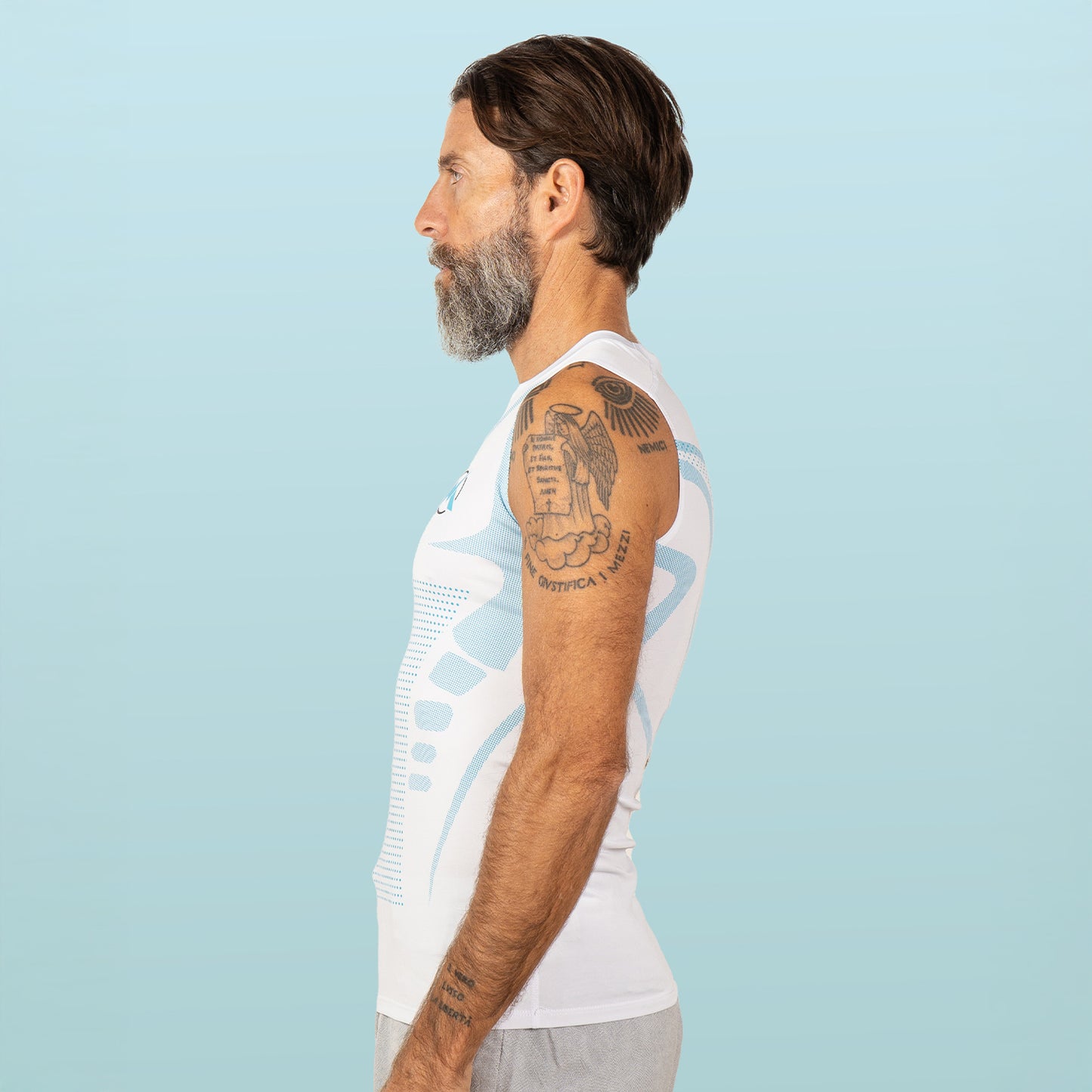
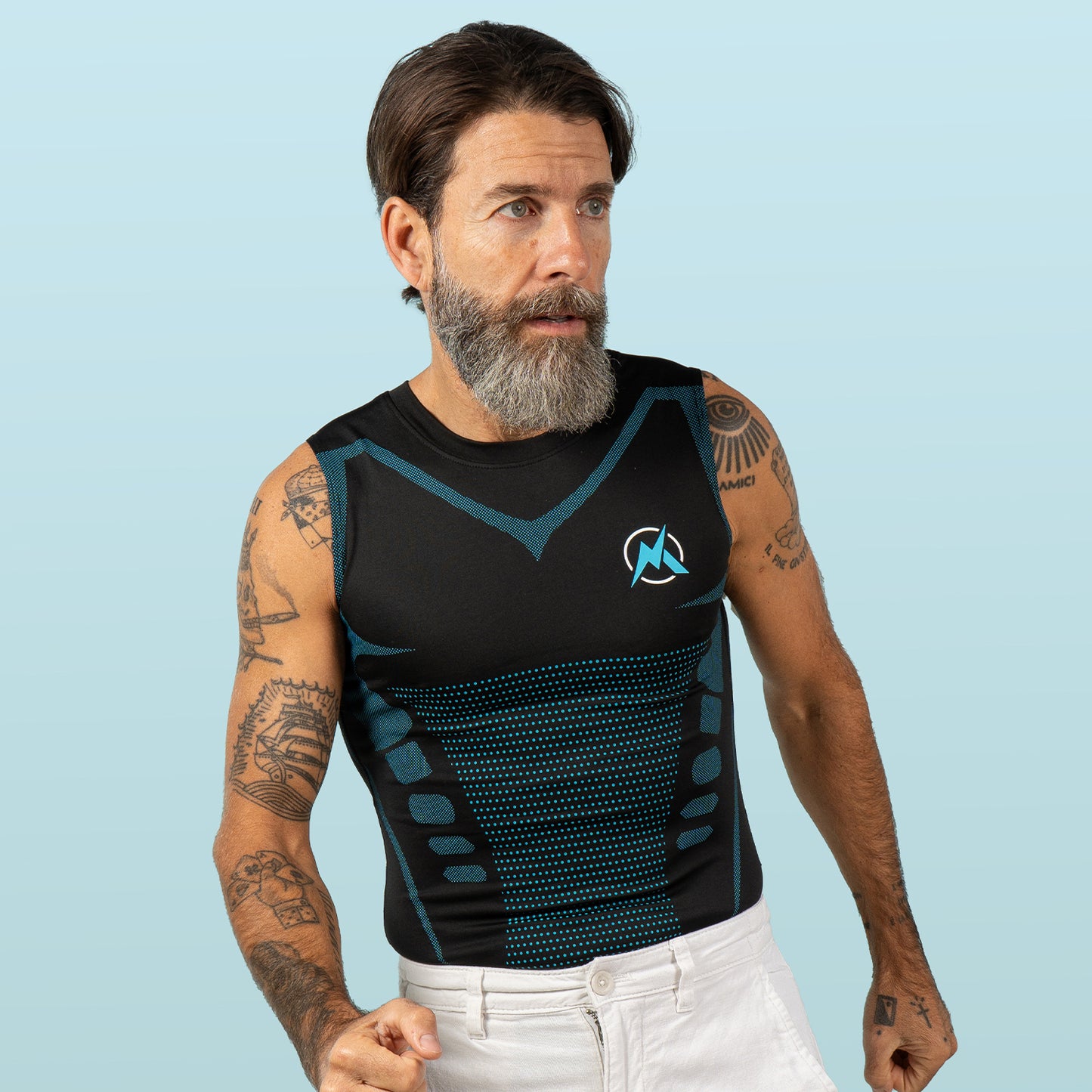
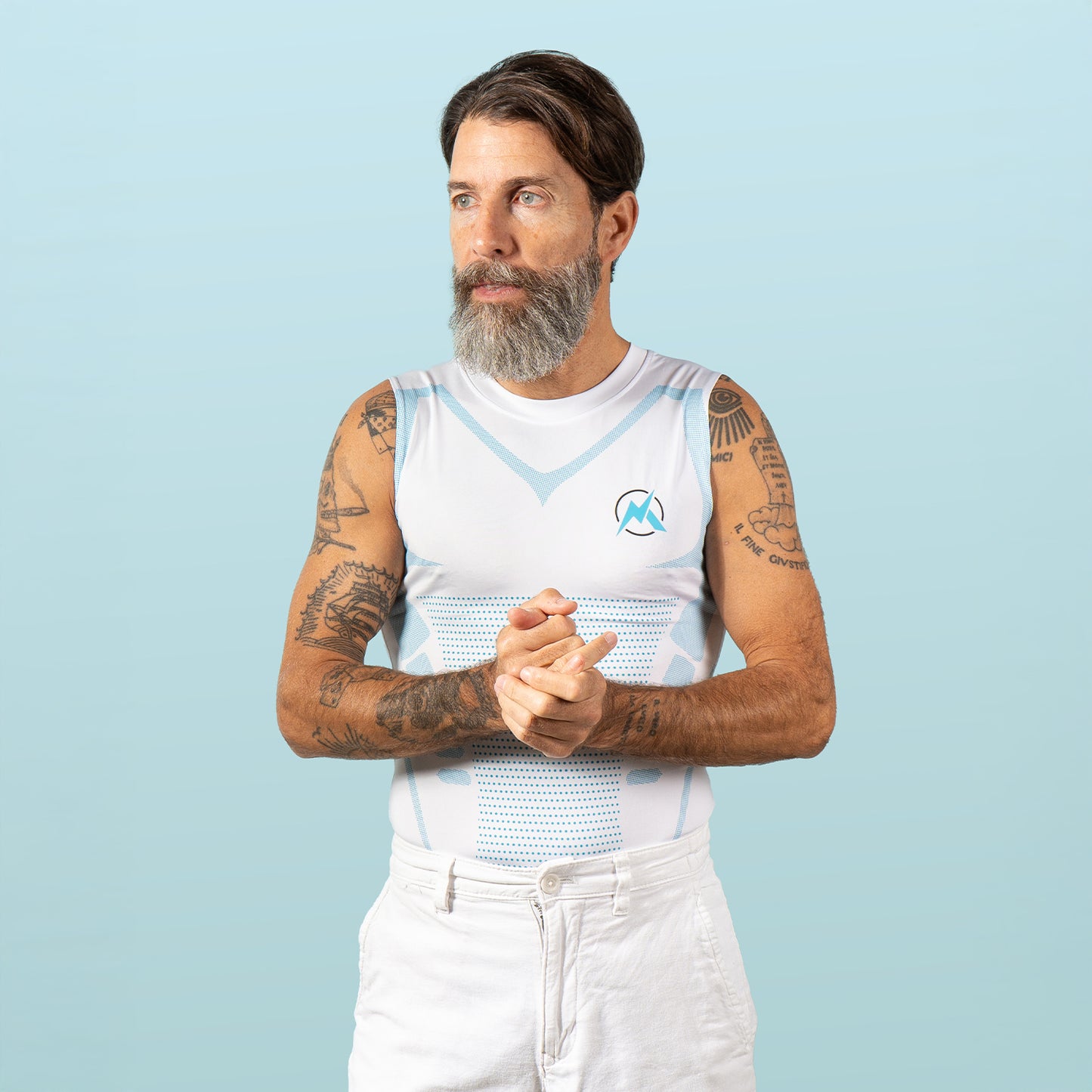
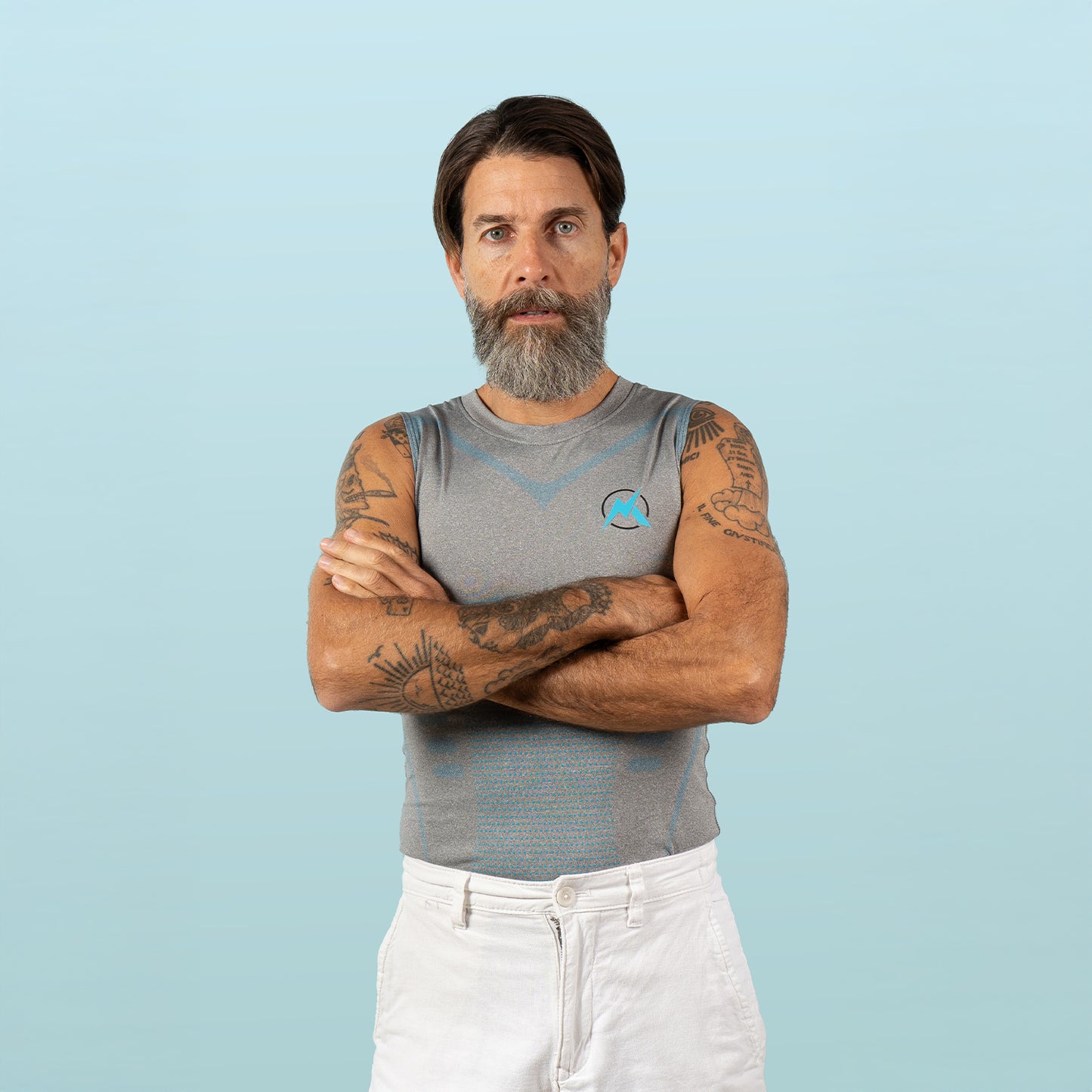
| Cut | Short sleeve, crew or V-neck | Sleeveless tank, scoop or crew |
| Compression target | Moderate-to-high, full torso + arms | Targeted: chest, abdomen, lower back |
| Fabric weight | Lightweight (140–160 GSM), engineered for cooling | Medium (180–200 GSM), engineered for shape |
| Panel placement | Uniform body-tight stretch | Reinforced front + lower-belly panel |
| Posture support | Incidental ("feel locked-in") | Engineered (designed to pull shoulders back) |
| Belly coverage | None designed-in | Designed-in core compression panel |
| Under dress shirt | Sleeves often show under shirt cuffs | None — sleeveless cut hides easily |
| Price (single) | ~$30–$40 USD | $59.99 — currently BUY 1 GET 1 FREE at $15 |
| Best for | Gym, sport, hot-weather training | Office, daily, men 40+ with belly |
Under Armour wins on athletic engineering and brand legacy. VitaBoost wins on body shaping and discreet daily wear. Neither is universally "better." The right one depends on what you're trying to fix.
Where Under Armour clearly wins
Be honest with yourself about what you're actually doing in this shirt before you buy.
1. Gym performance and heat management. Under Armour invented this category. The HeatGear line uses a lightweight knit specifically engineered to wick sweat off the skin in minutes. If you lift four days a week, sprint, play basketball, or train outdoors in summer, that fabric is doing real work for you. VitaBoost is heavier — built to hold shape, not to evaporate sweat off your back during a 90-minute lift.
2. Sleeve coverage during athletic movement. The full-sleeve cut keeps your upper arms warm during cold-weather training and provides full upper-body compression for muscle support. A peer-reviewed 2022 review in Sports Medicine confirmed compression garments reliably reduce perceived muscle soreness — but only when the garment actually covers the muscles being worked.
3. Brand availability and post-purchase support. You can walk into Dick's, REI, Foot Locker, or Hibbett and try one on. You can return it without paperwork. That ecosystem matters if you're buying your first compression shirt and don't know what fits.
4. Variety. Under Armour sells dozens of cuts, sleeves, fabrics, and silhouettes. If you need a specific niche — long-sleeve for cold weather, mock neck for football, tactical for shooting sports — they almost certainly make it.
If you're buying a compression shirt for the gym, stop reading this and just get the HeatGear. It's the right tool.
Where VitaBoost clearly wins
Now the part Under Armour doesn't talk about.

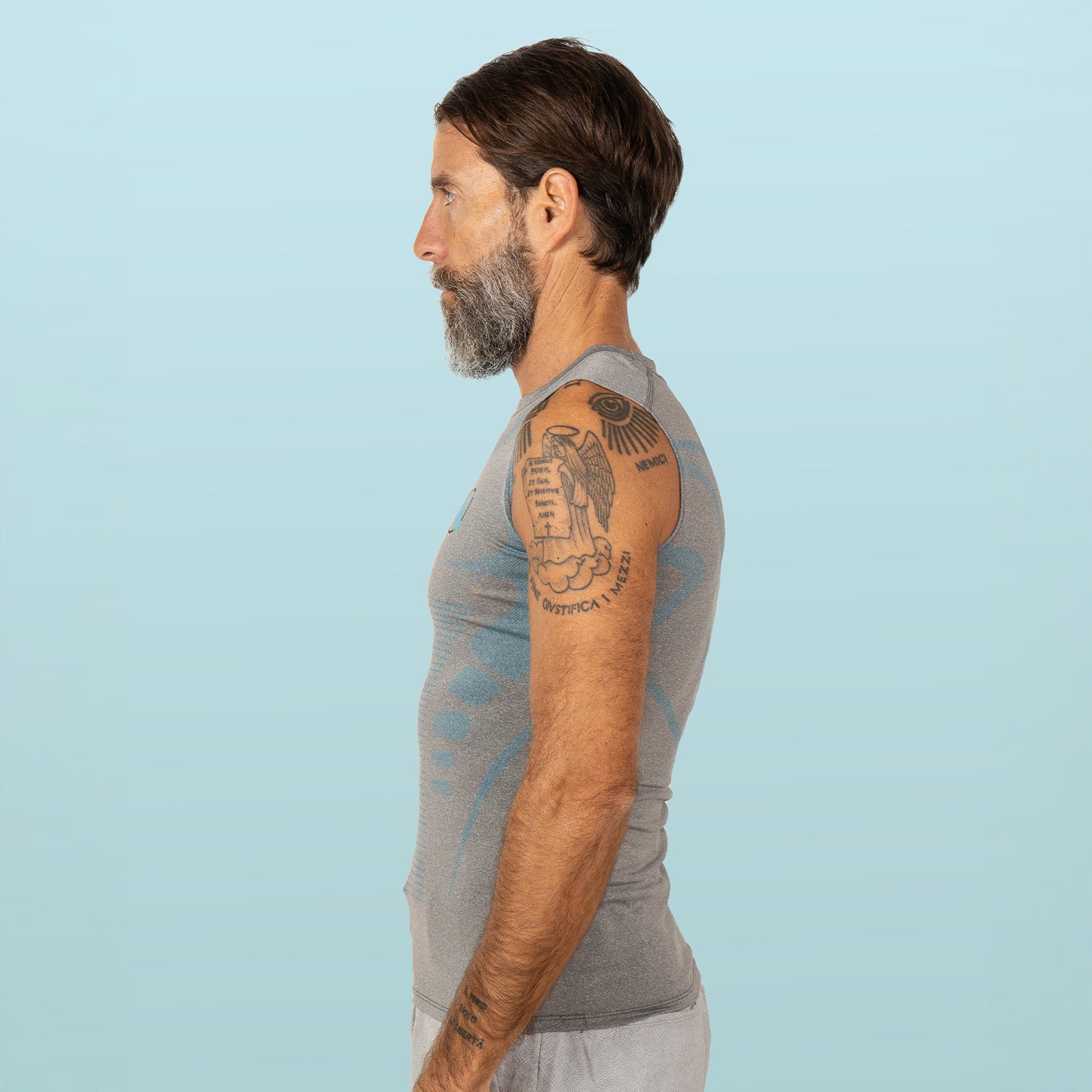
1. The "wears under a dress shirt" problem. Most men 40+ aren't buying a compression shirt to deadlift. They're buying it because a button-down doesn't sit right anymore — the gut shows, the collar gapes, the back rides up. VitaBoost was cut for that exact problem. Sleeveless means no awkward seam at the bicep showing through your sleeve. Reinforced core panel means the belly stays held in for the full workday, not just the first hour. Under Armour HeatGear's short sleeve will show under almost every dress shirt — both the seam and the color contrast give it away.
2. Posture engineering, not "posture awareness." Under Armour's own brand materials confirm their compression shirt isn't designed as a posture corrector — it offers what they call "body awareness." VitaBoost is built differently: the shoulder panel and upper-back stretch are designed to gently pull the shoulders back into a more upright position. It won't fix kyphosis (no shirt will — see the NIH age-related hyperkyphosis review), but it gives the same proprioceptive feedback Under Armour talks about, plus an actual mechanical cue toward a better stance. For an office man who slouches over a keyboard nine hours a day, that's the difference between "I think I'm standing straighter" and "people noticed."
3. The visible silhouette change in clothes. A 2015 University of Toronto study (Re & Rule) found that an apparent-weight change of roughly 8–9 pounds is the threshold at which other people consciously notice you look different. VitaBoost is engineered around that threshold — flatten the front, lift the shoulders, smooth the side bulge. Under Armour's primary engineering goal is muscle support during movement, not apparent-weight change in clothes. Two different jobs.
4. The price math at the current offer. Under Armour HeatGear runs about $30–$40 for one shirt. VitaBoost is $59.99 single — but Maynox is currently running BUY 1 GET 1 FREE at $15, which works out to roughly $7.50 per shirt. If you wear it daily, the per-wear cost difference adds up fast over a year. That doesn't make it "better" — but it makes the entry cost low enough to test against your current setup.
See the VitaBoost daily-wear cut →
What compression shirts CAN'T do (either brand)
This is the part most comparison articles skip because it kills the sale. We're skipping it anyway.
Neither brand burns belly fat. A 31-study pooled 2025 review in Life found no evidence that wearing compression produces fat loss. Anyone selling you a "compression shirt that melts belly fat" is lying. Both VitaBoost and Under Armour temporarily shape what's already there.
Neither brand permanently fixes posture. Compression provides proprioceptive feedback while you wear it. The moment you take it off, your shoulders go back to where your habits put them. Real postural change requires strengthening the upper back and breaking the slouch habit — for the full plan, see our 4-layer posture fix for men over 40.
Neither brand replaces fitness. If you're 45 with a desk job and a 38-inch waist, a compression shirt makes you look better in a Tuesday meeting. It doesn't replace lifting, walking, sleeping seven hours, or eating like an adult. The shirt is a same-day visible upgrade — the rest is the season-long upgrade.
The use-case map: who should buy which
The honest decision tree, no hedging.
Buy Under Armour HeatGear if:
- You lift 3+ times per week or play a competitive sport
- You train in hot or cold weather and need real fabric performance
- You want full-arm compression for muscle support
- You don't care about how it looks under a dress shirt
- You're under 35 and your body composition is mostly working
Buy VitaBoost if:
- You're 40+ with a desk job and want to look sharper at work
- You want it to disappear under button-downs and polos
- Your goal is appearance and posture, not athletic performance
- You've put on 10–20 pounds in the last decade and want a same-day visible upgrade while the rest of your fitness catches up
- You want a sleeveless cut so the sleeves don't telegraph through your shirt
Buy both — and use them for what each is built for — if you're an office man 40+ who also lifts. They cost about the same combined with the current BOGO offer as one Under Armour shirt at full price.
This is what most of our customers actually do. They keep their HeatGear for the gym and wear VitaBoost Monday through Friday under their work shirts. Different tools, different jobs.
How long should you actually wear either one each day?
Both brands skip this question. We won't.
The same-day shaping effect of compression is real — but wearing any compression garment more than 10–12 hours straight, every day for months, can reduce how hard your own core and upper-back muscles work. Your body adapts to whatever does the work for it. If the shirt holds your shoulders back all day, every day, eventually those muscles get lazy.
The honest protocol for both brands: wear it 6–10 hours daily during high-stakes windows (work, meetings, social events, dates), take days off, and pair it with at least one weekly session of upper-back strengthening — even 10 minutes of rows is enough.
For the full discussion, see our honest evidence review of compression shirts.
The verdict: what to buy
If you read only one sentence: Under Armour wins the gym. VitaBoost wins the rest of the week.
If you're trying to look sharper at work, hide a soft middle under a dress shirt, and feel taller in your own clothes — that's exactly what VitaBoost was built to do, and Under Armour wasn't. The price-per-shirt math during the current BUY 1 GET 1 FREE offer makes it cheap enough to test alongside whatever you wear now.
If you're an athlete first and an office guy second, the comparison ends the other way. Get the HeatGear.
Try VitaBoost — BUY 1 GET 1 FREE at $15
The bottom line: pick the tool for the job you actually have, not the one with the better commercial.
Frequently asked questions
Are Under Armour compression shirts good for everyday wear?
Yes, but with caveats. They're designed as athletic baselayers, not daily-wear undershirts. The short sleeve will often show through dress shirts and the high-performance fabric runs warmer than a daily-wear cut. They're fine for casual t-shirt-and-jeans days. For under a button-down five days a week, a sleeveless daily-wear compression like VitaBoost is the right tool.
Should you size up in Under Armour compression shirts?
Sizing up depends on your goal. For maximum compression and muscle support during training, buy your true athletic size. For all-day casual wear, going one size up reduces pressure and increases breathability — many men report this is the only way they can wear UA HeatGear for 8+ hours.
Do Under Armour compression shirts help with posture?
Indirectly. Under Armour's own materials describe the effect as "body awareness" rather than postural correction — the tight fit reminds you to engage your core and pull shoulders back. It's not engineered as a posture corrector. Compression shirts cut specifically for posture (engineered shoulder panels, upper-back stretch) provide a more consistent mechanical cue.
Do compression shirts hide a belly?
The visual effect is real but limited. Compression flattens and smooths the front and waist while you wear it — most men see a 1- to 2-inch reduction in shirt circumference. But it does not burn fat: a 31-study 2025 review found no evidence of fat loss from compression alone. Sleeveless daily-wear compression with a reinforced front panel (VitaBoost) hides a belly under a dress shirt more reliably than a short-sleeve athletic compression (Under Armour).
Is VitaBoost better than Under Armour?
For different jobs, yes. VitaBoost is engineered for daily wear, posture support, and belly coverage under a dress shirt — the typical office man 40+. Under Armour HeatGear is engineered for athletic training, sweat management, and full-arm muscle support — the gym-goer or athlete. Most men buy the wrong one for their actual use case. Match the tool to the job.
Sources
- Brown F. et al., 2022 — Compression Garments and Recovery from Exercise (Sports Medicine)
- Wei et al., 2025 — Compression garment recovery review, 31 pooled studies (Life)
- Re & Rule, 2015 — Apparent-weight visible threshold (University of Toronto / ScienceDaily)
- NIH PMC — Age-Related Hyperkyphosis: Update of Its Potential Causes and Clinical Impacts