By Owen Blot · Founder, Maynox · Last updated June 16, 2026
- Why "more cardio" stopped working after 50
- The cardio that actually burns belly fat after 50 (ranked)
- Lever 1: Zone 2 — the visceral fat killer
- Lever 2: HIIT — short, hard, twice a week
- Lever 3: Daily walking — the non-negotiable floor
- Lever 4: Strength training — the cardio that doesn't look like cardio
- Your 4-week starter protocol
- What you wear while you train matters more than you think
- What doesn't work (the time-wasters)
- Frequently asked questions
Why "more cardio" stopped working after 50
You used to be able to add three runs a week and your waist would respond. Not anymore.
After 50, three things changed under the hood. Lean muscle declines roughly 3 to 8 percent per decade after age 30, and faster after 60. That means you carry less of the tissue that burns calories around the clock. Testosterone drops about 1 percent per year after 30, dragging recovery and motivation with it. And visceral fat — the deep fat wrapped around your organs — becomes more metabolically active and inflammatory, sending out signals that mess with insulin, sleep, and appetite.
So when you do hour-long jogs and the belly stays, it's not because cardio "doesn't work." It's that cardio alone can't out-train muscle loss, poor sleep, or a 200-calorie daily surplus. Cardio is one lever. Used right, it's powerful. Used as the only lever, it stalls.
Here's the honest order of operations for a man over 50 who wants the midsection back.
The cardio that actually burns belly fat after 50 (ranked)
I'll save you the listicle: of the routines you see ranked on most "best of" pages, most overlap. The signal is in the dose, the structure, and what the cardio sits on top of. Ordered by return on time invested for a 50-year-old man:
- Zone 2 (conversational pace) — 150 to 200 minutes a week. Drives the deep visceral fat down without crushing recovery.
- HIIT — 2 sessions of 15 to 20 minutes a week. A short, hard finisher that protects time and lifts the metabolism for hours after.
- Daily walking — 8,000 to 10,000 steps. The non-negotiable floor under everything else.
- Strength training — 2 to 3 sessions a week. Not technically "cardio," but the single best long-term fat burner you'll ever own.
Notice what's missing from the top of the list. Hour-long steady jogs. Hot yoga marathons. Bootcamps five days a week. Those aren't bad. They're just the wrong tool for a tired, stiff, 52-year-old man trying to lose his belly without breaking himself.
Let's go through them.
Lever 1: Zone 2 — the visceral fat killer
Zone 2 is the pace where you can hold a conversation, but barely. Roughly 60 to 70 percent of your max heart rate. If you're talking in full sentences and breathing easy, push a little. If you're gasping every three words, back off.
Why Zone 2 sits at the top of the list:
- It pulls heavily from fat as fuel. At this intensity, your body preferentially uses fat for energy, including the visceral fat wrapped around your organs.
- It's sustainable. You can stack 60 minutes here and still sleep, lift, and show up the next day. Crushed-by-HIIT-five-days-a-week is a recipe for inflammation, joint pain, and quitting in week 3.
- It hits the federal target. The CDC and World Health Organization both recommend 150 minutes of moderate-intensity aerobic activity per week for adults. Zone 2 is exactly what they're describing.
Best modalities for a man 50+:
- Brisk walking on a slight incline. Treadmill at 3.5 mph with 4-6% grade is gold.
- Stationary or upright bike. Low joint impact, steady output, easy to hold a podcast.
- Swimming or pool walking. Almost zero joint stress. Especially good if your knees complain after running.
- Elliptical or rower at sustainable RPM. Whole-body, low impact.
Dose: Four to five sessions of 30-45 minutes. Hit 150-200 minutes weekly. If you can only do three sessions, make them 50 minutes each.
Lever 2: HIIT — short, hard, twice a week
HIIT is the multiplier. Done right, two 20-minute HIIT sessions a week add a metabolic boost that lasts hours after you stop and protect muscle better than long slow cardio.
But here's the trap: HIIT is not "hard cardio that I'm pretty sure is high-intensity." HIIT means all-out efforts of 30 seconds to 3 minutes, followed by genuine rest, repeated 4 to 8 times. You should be unable to talk during the work intervals.
A research review on overweight middle-aged men found that high-intensity interval programs and high-intensity resistance training both improved cardiometabolic risk factors meaningfully, with HIIT having a particular edge on cardiac performance (Wewege et al., 2020). The dose was about three sessions a week. For a 50-year-old man balancing strength and recovery, two sessions of 15-20 minutes is the sweet spot. Three is fine if you're well-rested. Four is asking for a setback.
Simple HIIT templates that work:
- Bike intervals — 30s hard, 90s easy, x 8-10 rounds. Total: 16-20 min.
- Hill walking intervals — 60s steep incline 4 mph, 90s flat, x 6-8 rounds.
- Rower intervals — 250m hard, 60s rest, x 6-8 rounds.
Place them on non-strength days. Tuesday lift, Wednesday Zone 2, Thursday HIIT — that kind of pattern. Don't pile HIIT on top of leg day. Your joints will file a complaint by week 3.
Lever 3: Daily walking — the non-negotiable floor
If you do nothing else on this list, walk 8,000 to 10,000 steps a day. Not a workout — a baseline.
Daily steps are how you burn the 200-400 incidental calories that close a small deficit without "training." They're how you don't sit for 11 hours, which is what most men 50+ actually do on weekdays. They're how you keep your hips, calves, and lower back honest.
Walking at a brisk 4 mph for 30 minutes burns roughly 135 to 189 calories depending on bodyweight, per Harvard's exercise tables. That's nothing to scoff at when you stack it 7 days a week.
But walking alone won't melt a beer belly. A man whose only "workout" is a 30-minute lunch walk and zero strength training will lose weight if his diet drops calories — and lose half of it as muscle. That's a recipe for the scale moving while the mirror barely changes. Walking is the floor. The other levers do the visible work.
Lever 4: Strength training — the cardio that doesn't look like cardio
I know — this is the "cardio for belly fat" article. But after 50, strength training is the single best long-term belly fat investment you can make, even though it isn't technically cardio.
Here's why it earns a spot:
- It defends against sarcopenia. That 3-8% per decade muscle loss only stops if you give the muscle a reason to stay.
- It changes your resting metabolism. A 52-year-old with 5 extra pounds of muscle burns calories all day, every day, in his sleep. No cardio session does that.
- It changes how fat sits. Even at the same weight, a man with stronger glutes, lats, and shoulders carries his midsection more compactly.
- Harvard tracked 10,500 men over 12 years and found that 20 minutes a day of strength training was associated with a smaller waistline gain than the same time spent on cardio alone (Harvard Health, strength training and waist circumference). Strength wasn't optional. It was decisive.
The minimum effective dose: two full-body sessions a week, 45-60 minutes, hitting a squat-pattern, a push-pattern, a pull-pattern, and a hinge-pattern each session. If you want a structured 3-day plan that fits with the cardio above, the 3-day workout plan for men over 50 lays it out. Pair it with strength rules in the deeper build muscle after 50 honest guide.
Your 4-week starter protocol
Here's a week designed for a real 52-year-old man with a job, a family, and an hour a day to spare. Total active time: about 5 hours. Not 12. Five.
| Day | Session | Duration |
|---|---|---|
| Monday | Strength A (full body) | 45-60 min |
| Tuesday | Zone 2 — bike or incline walk | 40-45 min |
| Wednesday | Daily walk (8-10k steps spread) | passive |
| Thursday | Strength B (full body) | 45-60 min |
| Friday | HIIT — bike or hill intervals | 20 min |
| Saturday | Zone 2 — long easy walk/swim | 50-60 min |
| Sunday | Walk + mobility | 30 min easy |
Weekly Zone 2 total: ~145-170 minutes. HIIT: 20 minutes. Strength: 90-120 minutes. Steps: 56,000-70,000. Right in the federal recommendation, with strength stacked on top.
What to expect:
- Week 1: clothes feel slightly less tight. Sleep improves. Mood lifts.
- Week 2-3: visible drop in face puffiness. Belt notch may move. Strength numbers climb fast (novice gain window).
- Week 4: waistline measurement starts to move 0.25-0.5 inch. Energy is night-and-day from baseline.
- Week 6-8: the mirror confirms what the tape says. Strangers may comment.
The protocol is conservative on purpose. Most 50-year-olds quit because they tried to do too much, not too little. Five hours a week sustained for 12 weeks beats 10 hours a week sustained for 3.
What you wear while you train matters more than you think
This is the lever almost no one talks about. Posture during training affects breath, bracing, and how strangers read your body the moment you walk out of the gym.
A 2022 research review in Sports Medicine found that compression garments provide proprioceptive feedback that helps athletes maintain trunk position and reduces perceived soreness post-exercise (Brown et al., 2022). That's not a fat-loss claim. It's a positioning claim. Your shoulders sit back. Your chest stays open. Your bracing is cleaner during a squat, a row, or a steady hour on the bike.
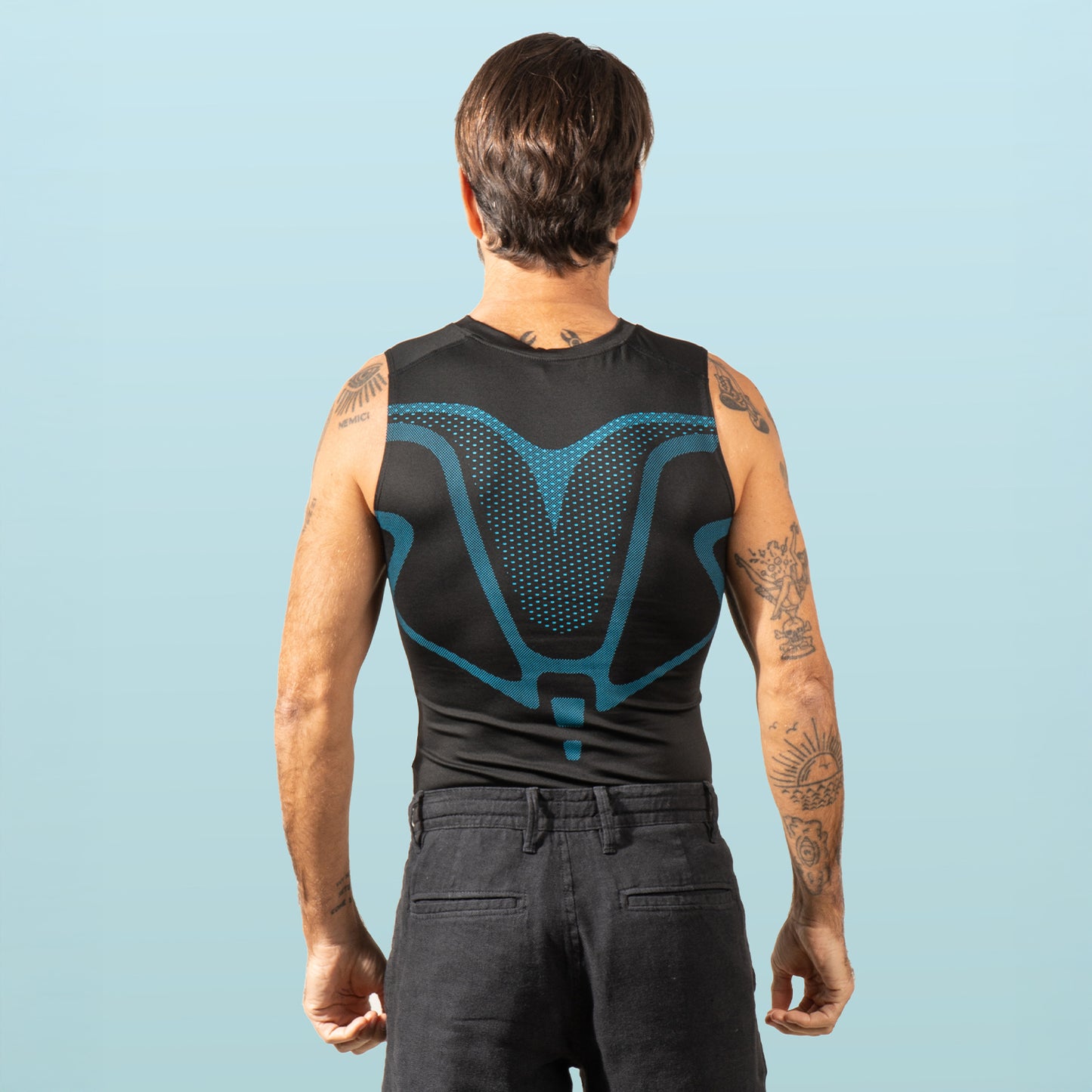
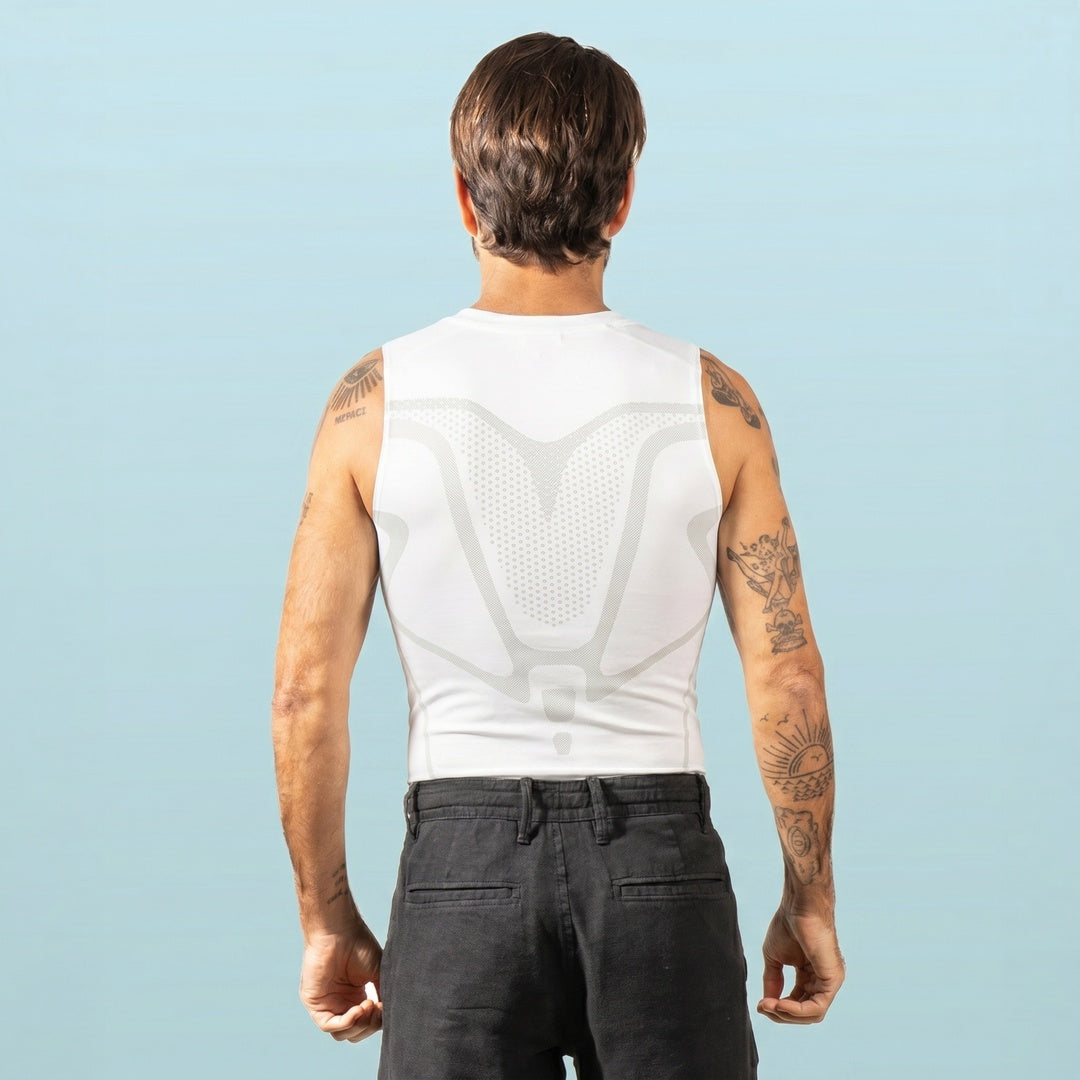
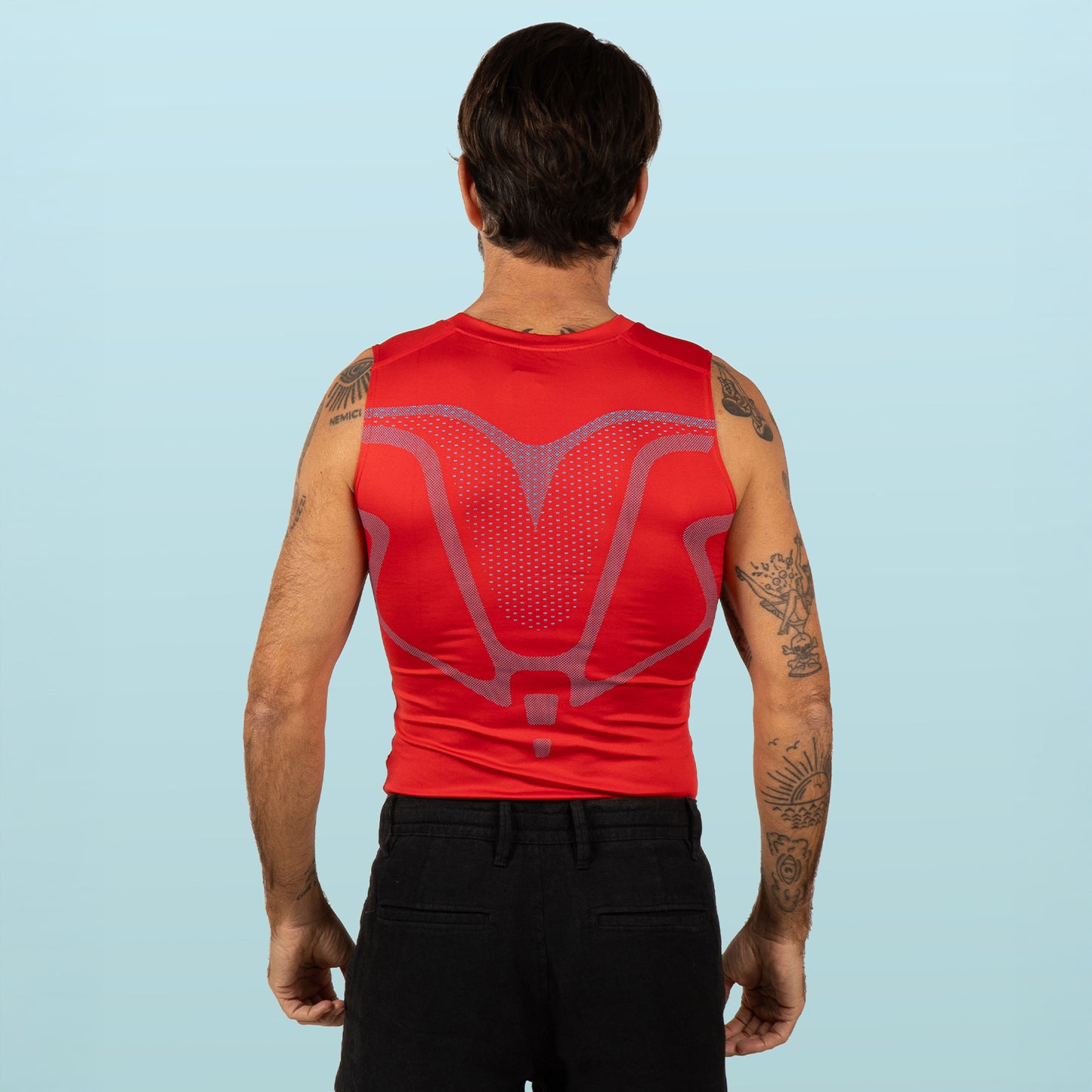
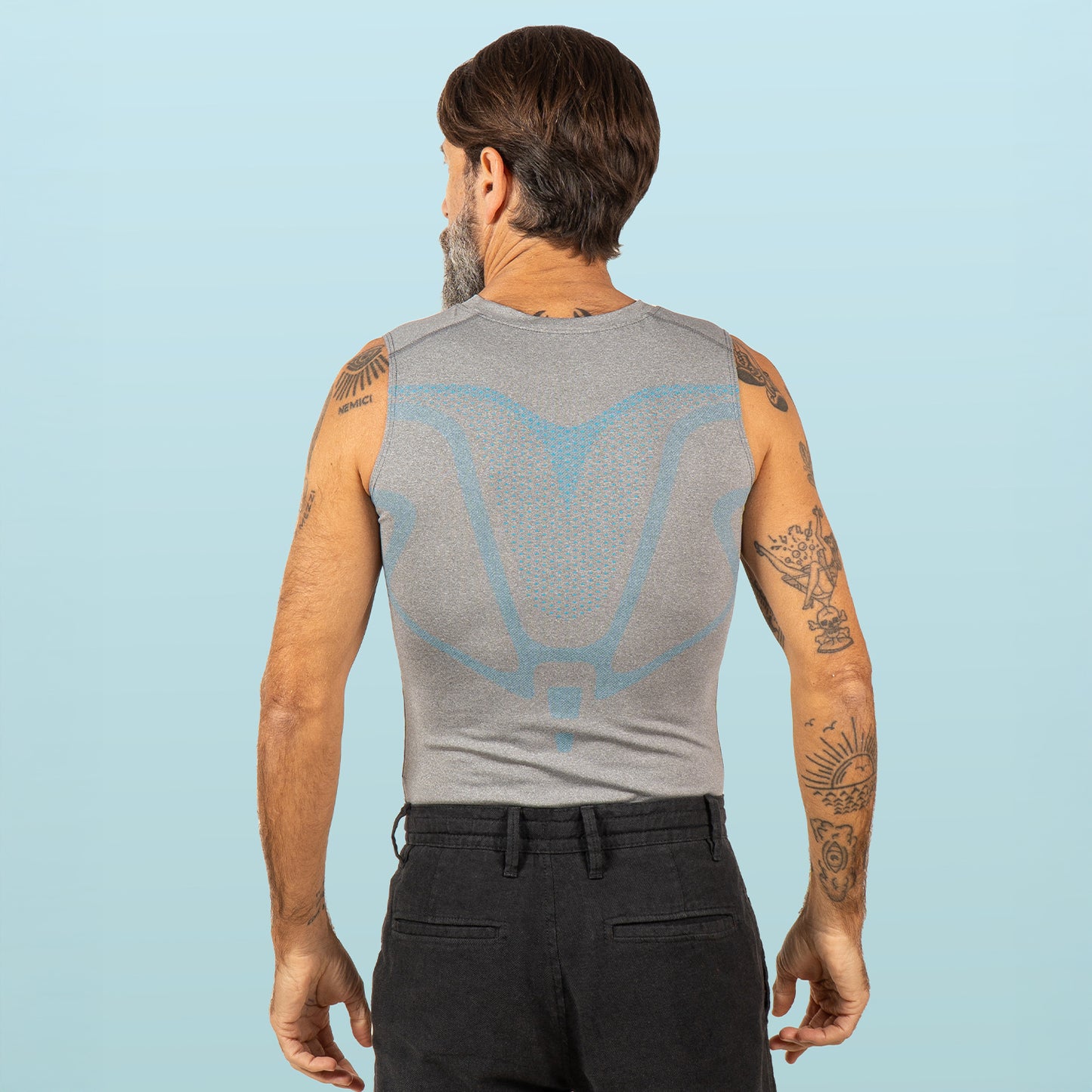
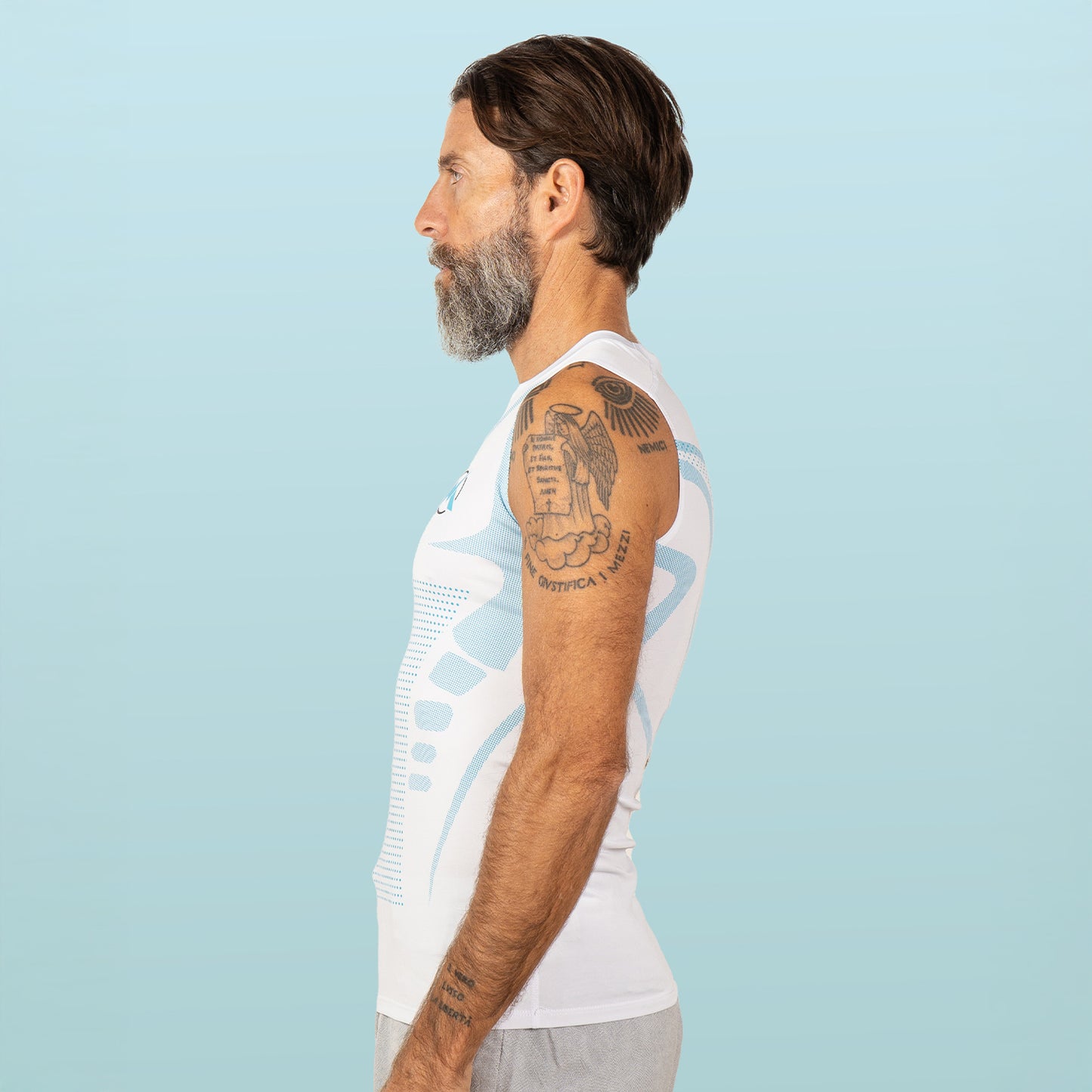
Many men 40+ wear a compression base layer under their training shirt as a one-step "uniform" upgrade. It pulls the shoulders back, smooths the soft pec line and the side fold, and gives the chest a flatter, squarer look immediately — long before the cardio results show up. That visual signal is what your mirror, your camera roll, and your coworkers actually read.
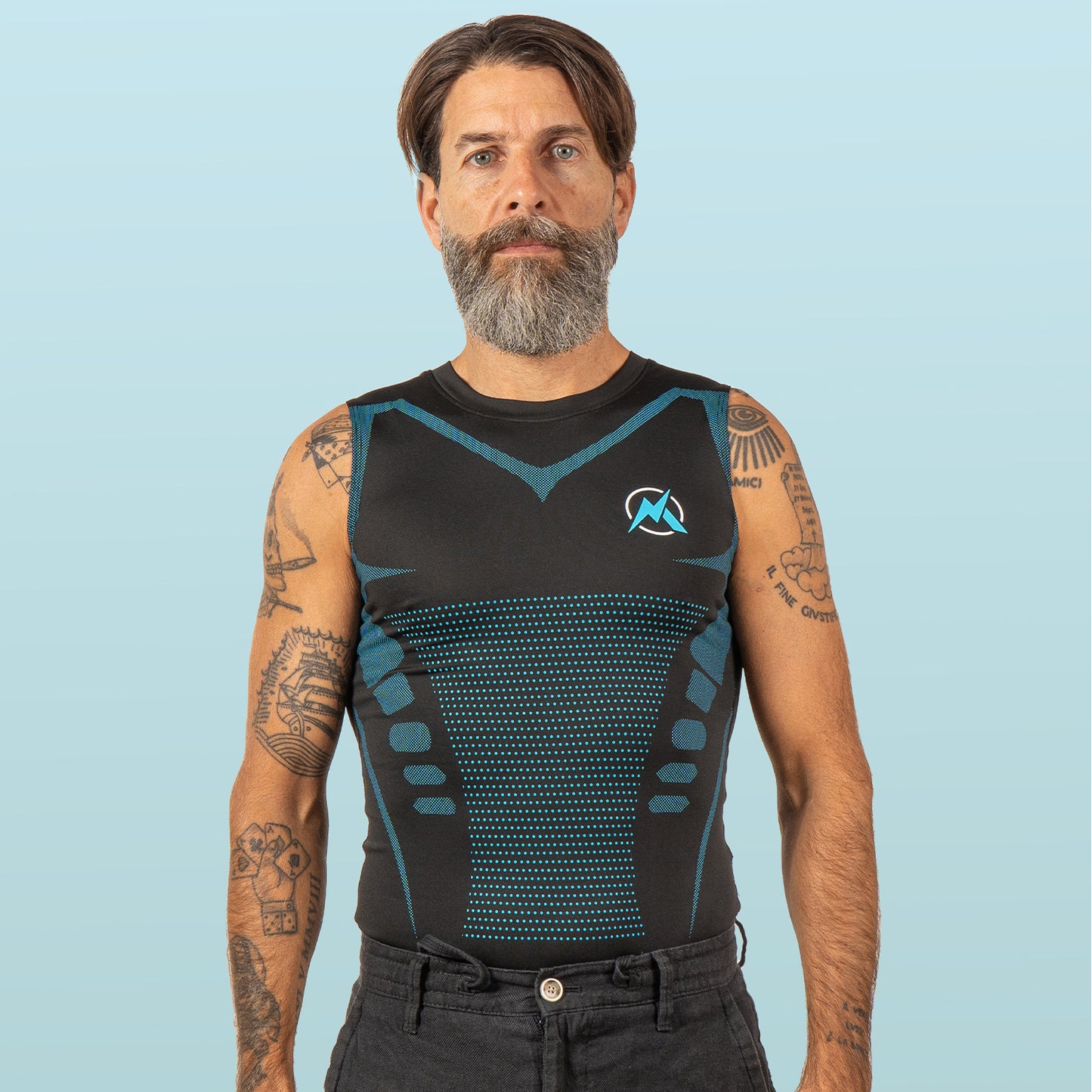
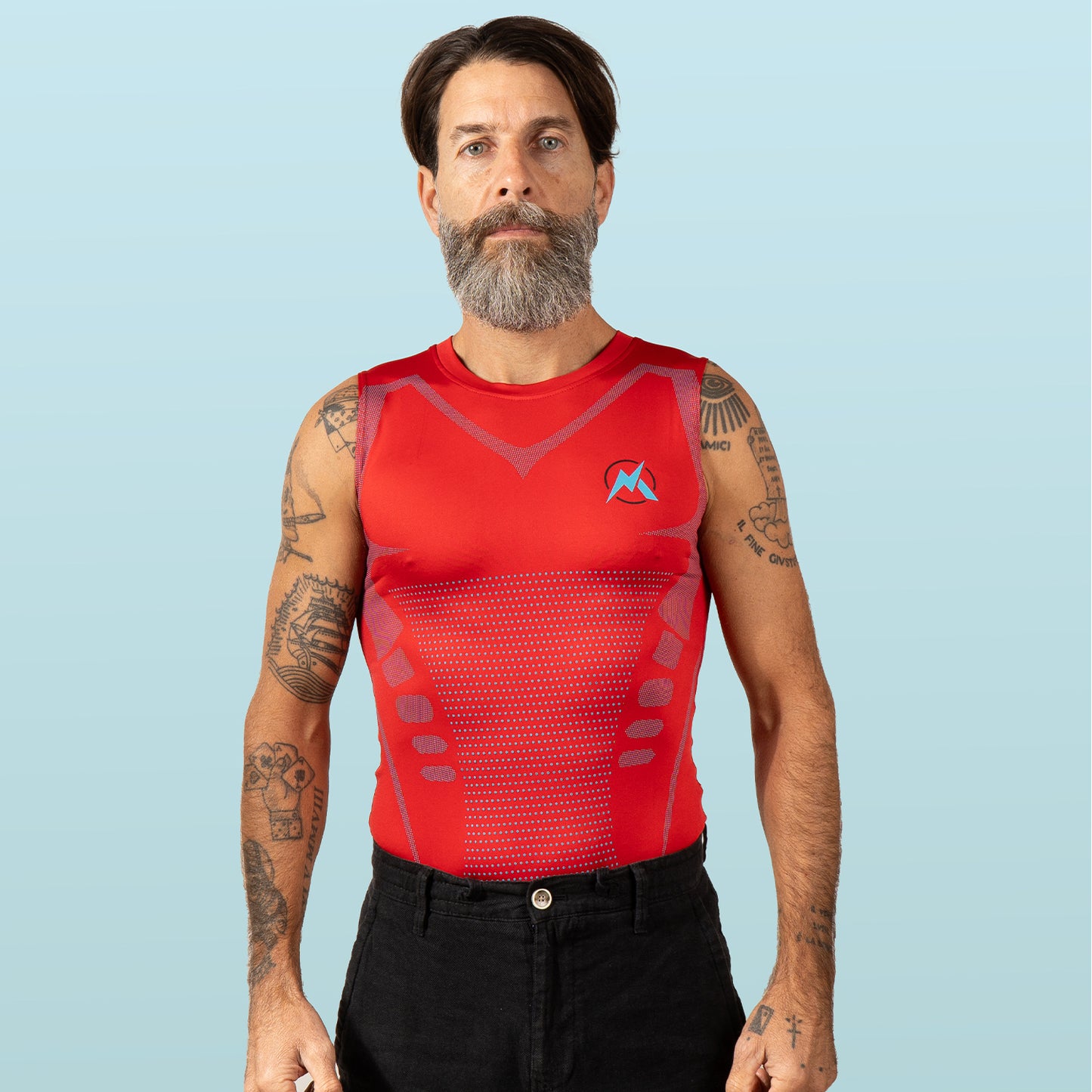
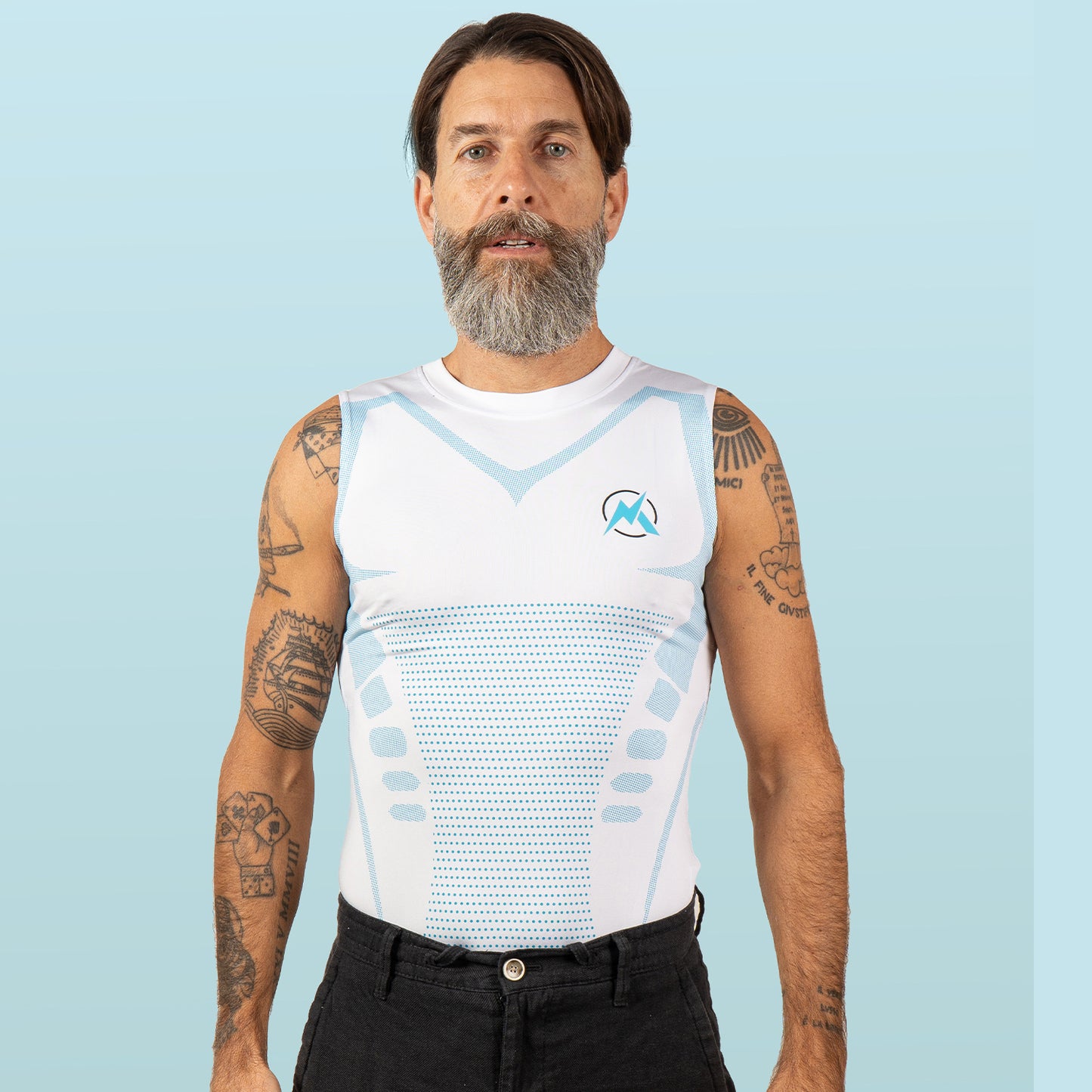
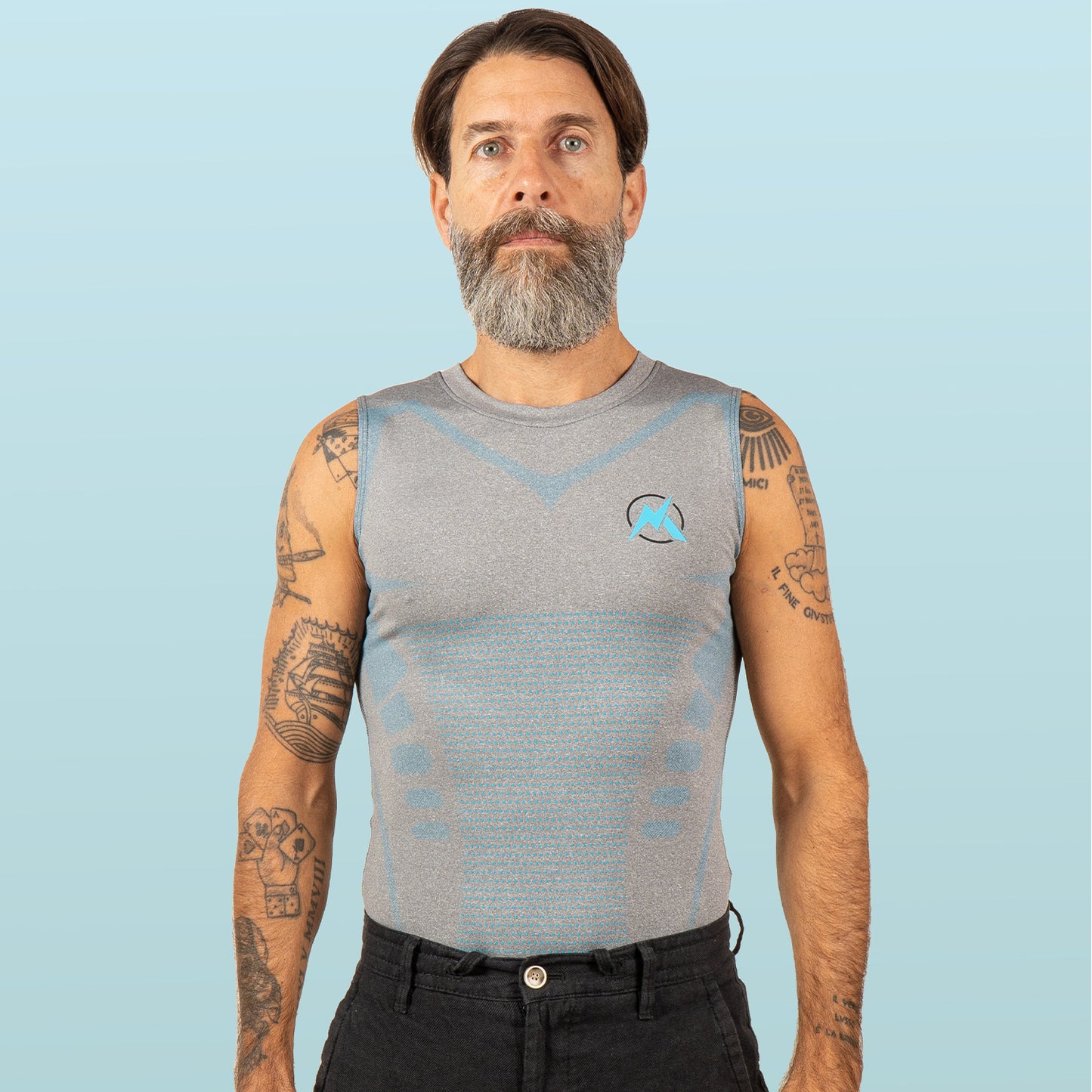
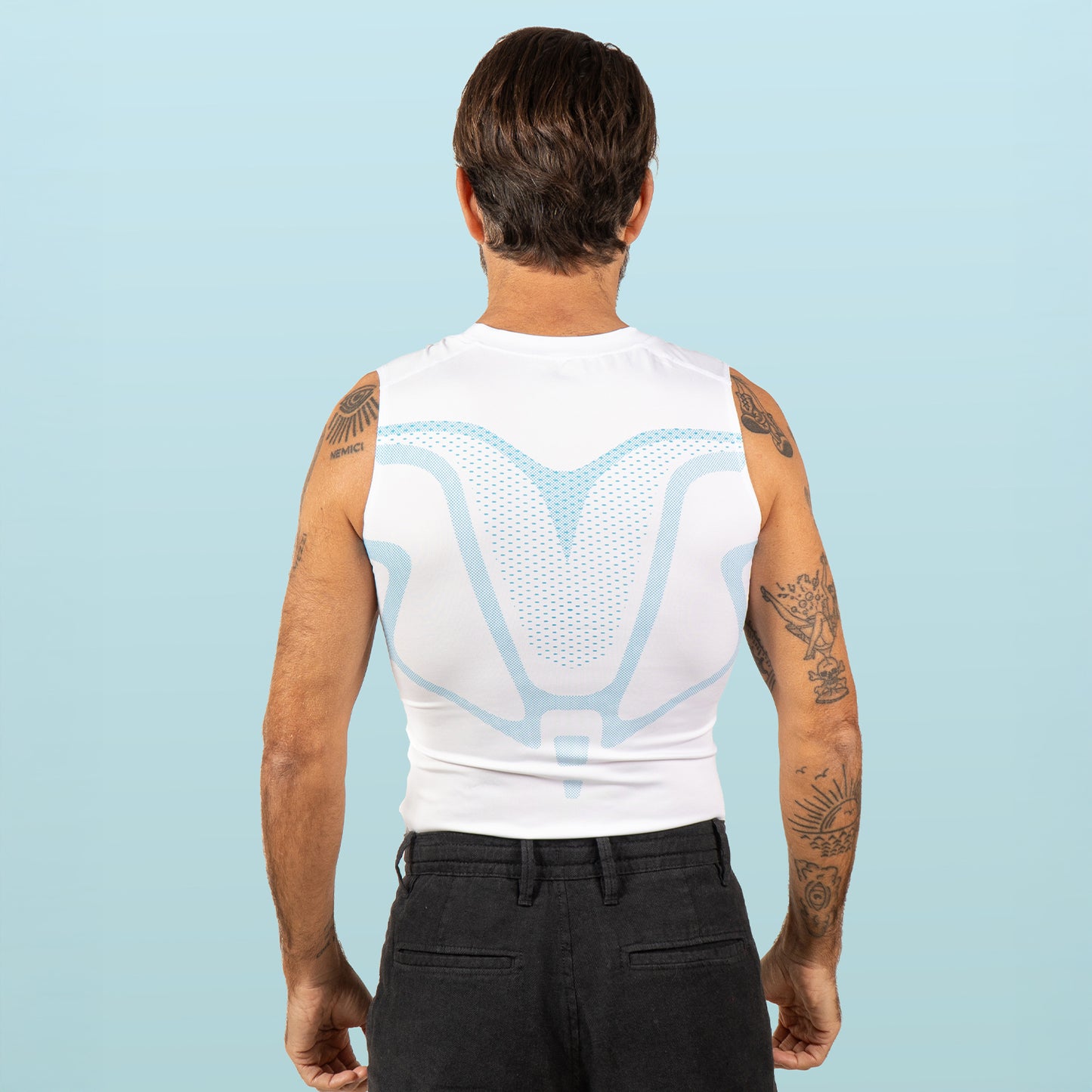
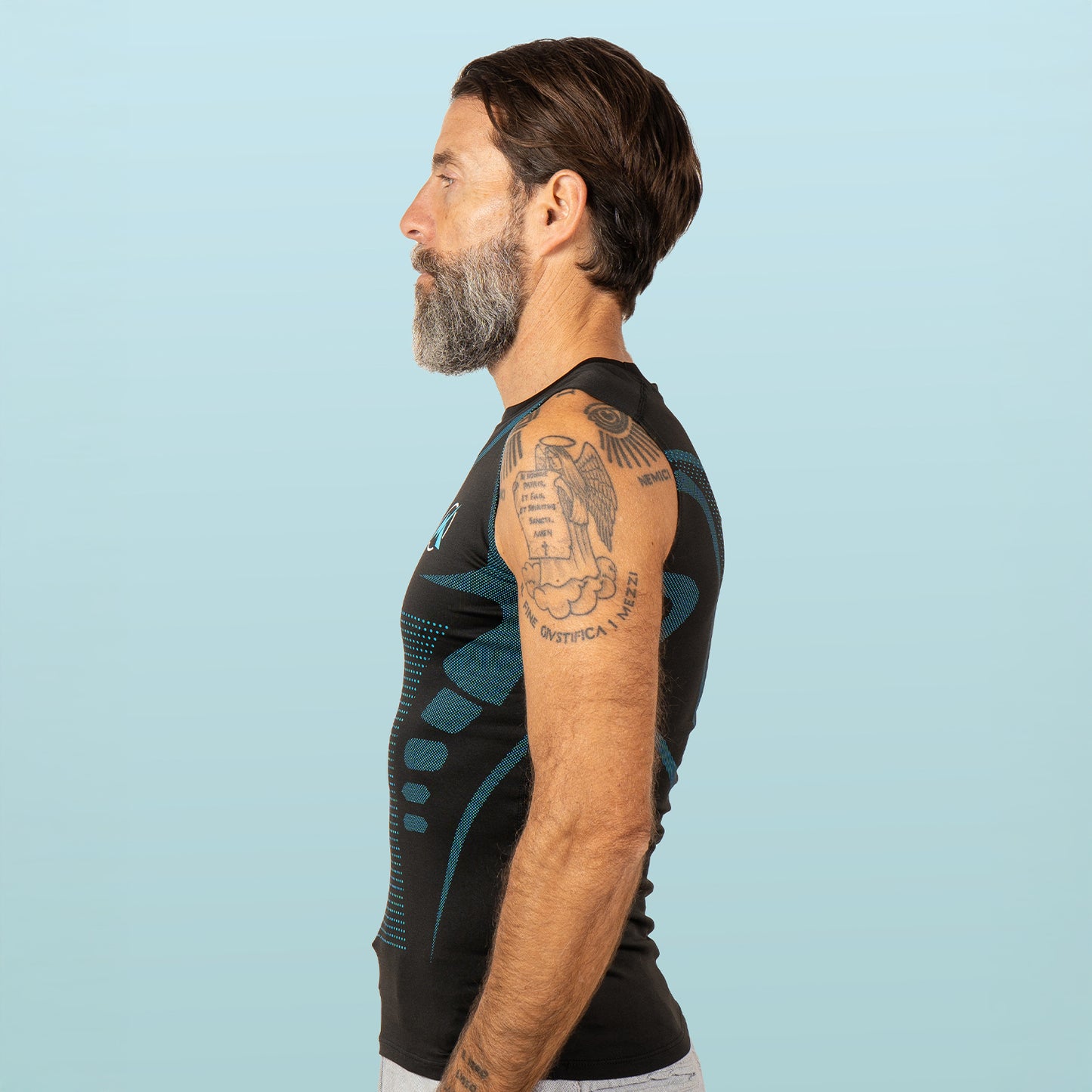
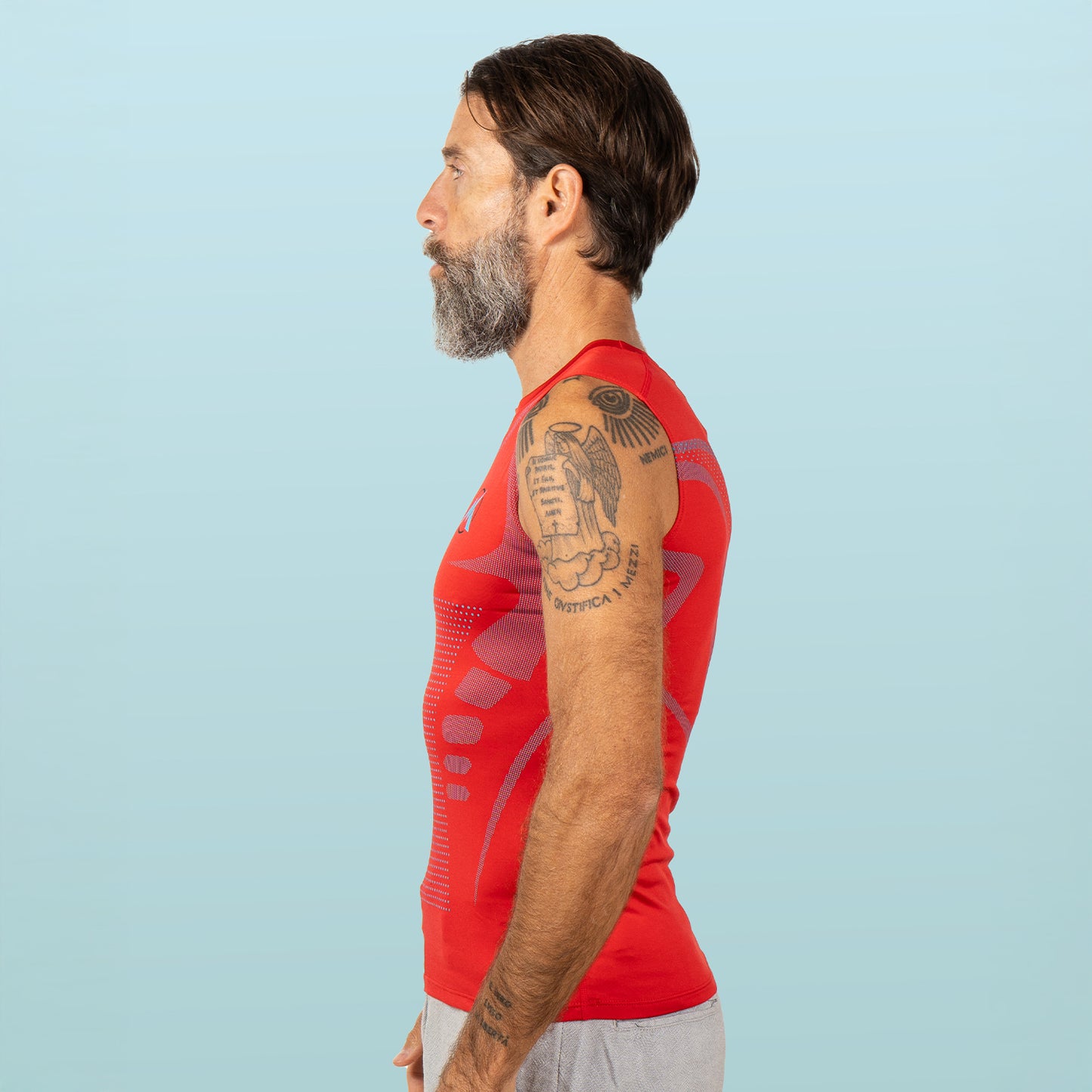
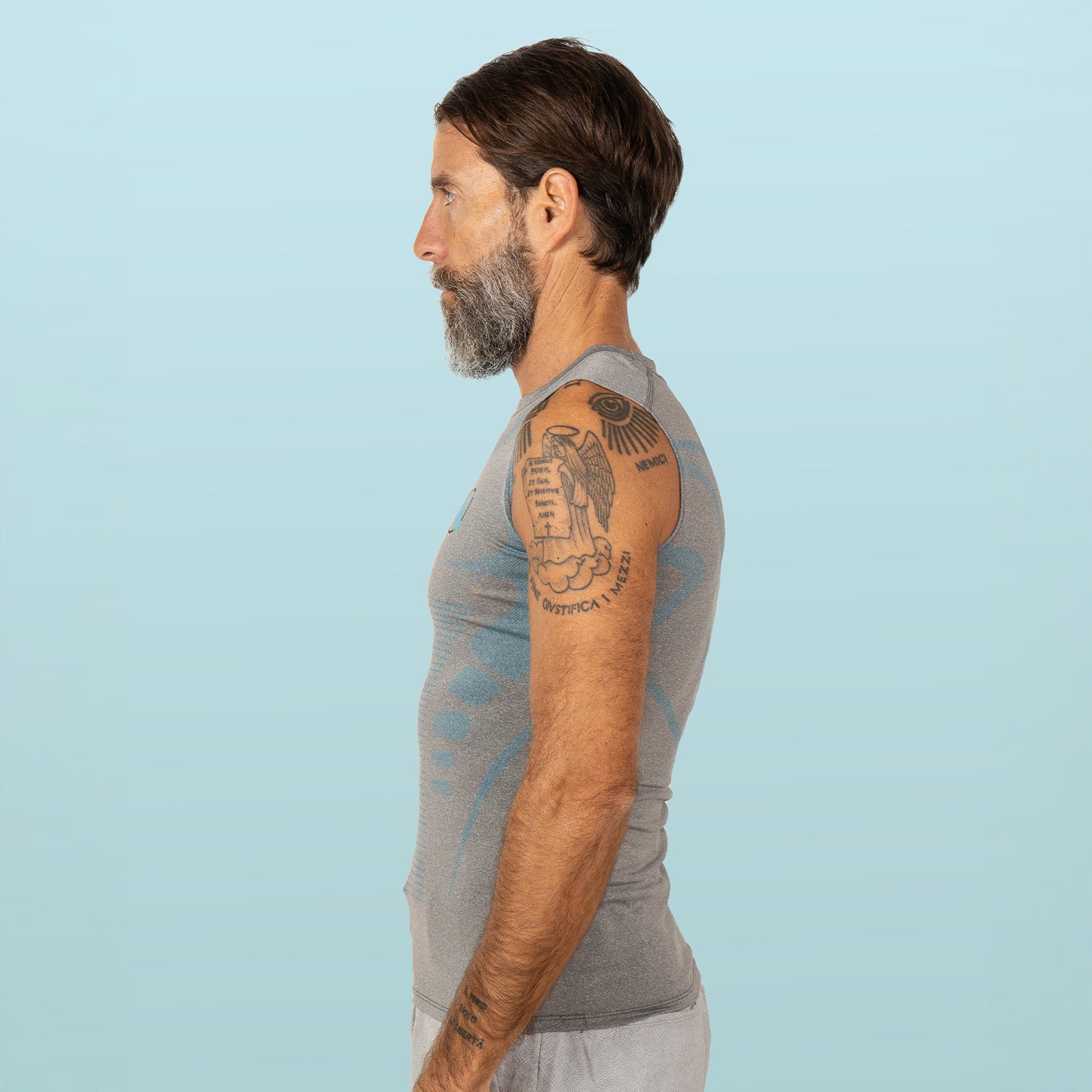
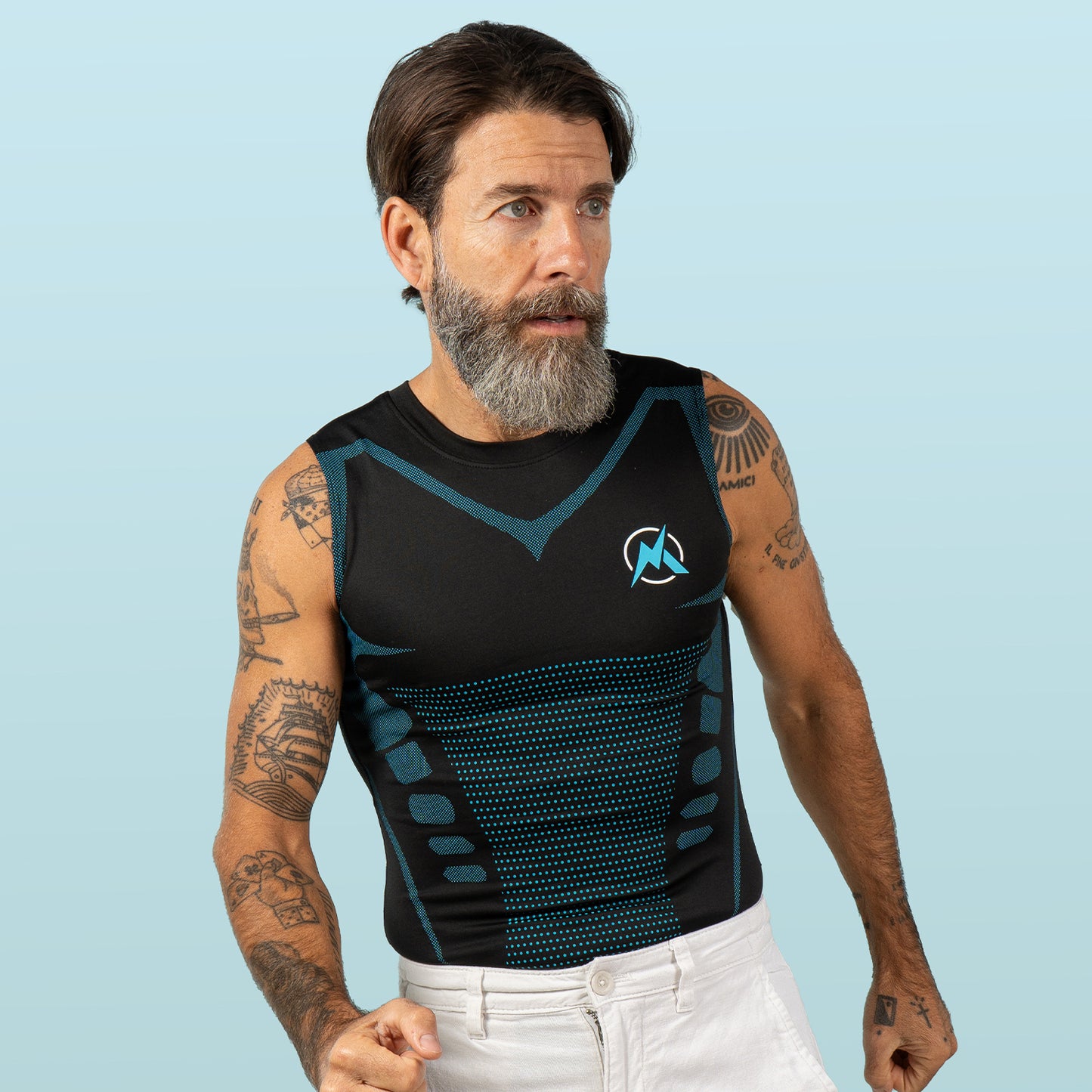
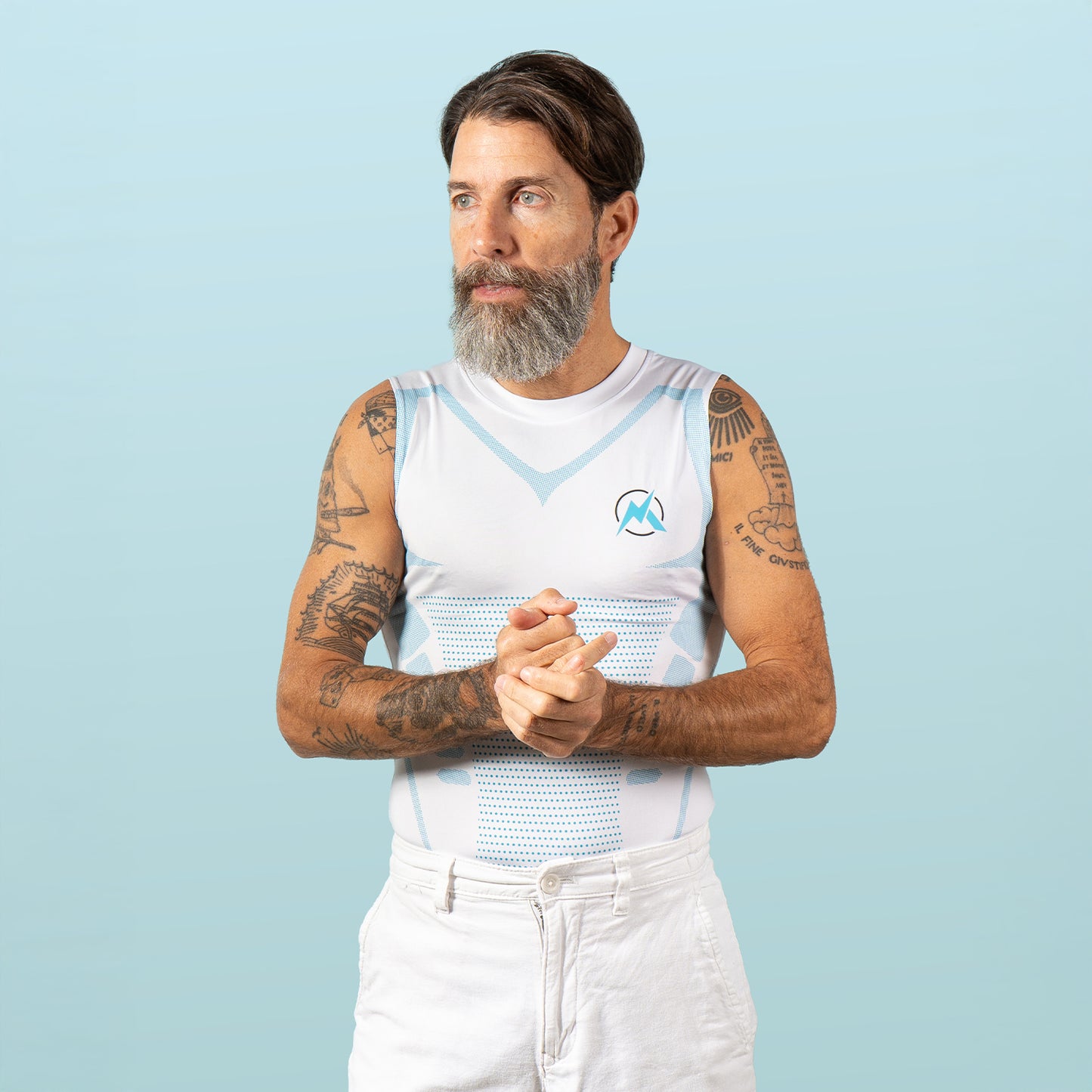
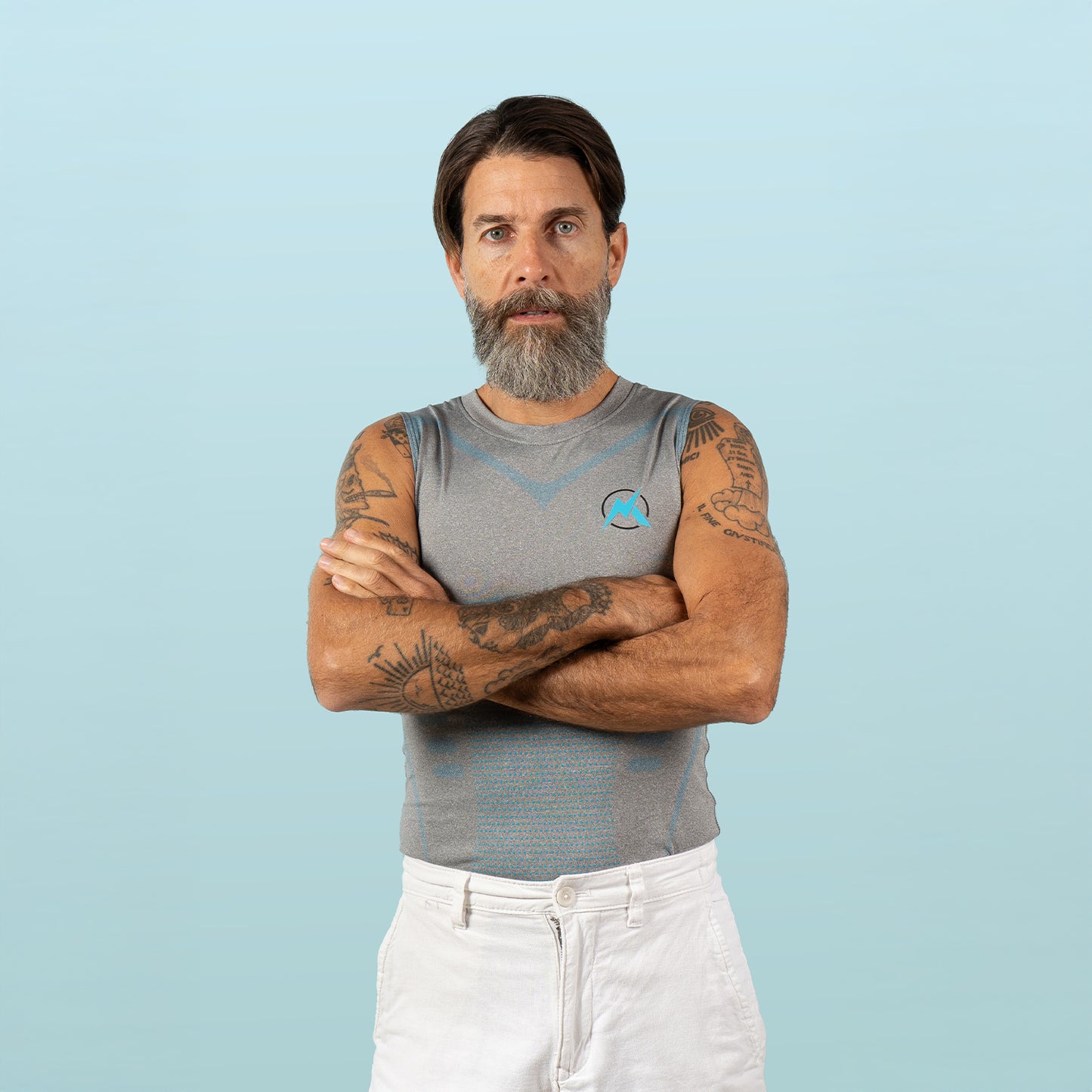
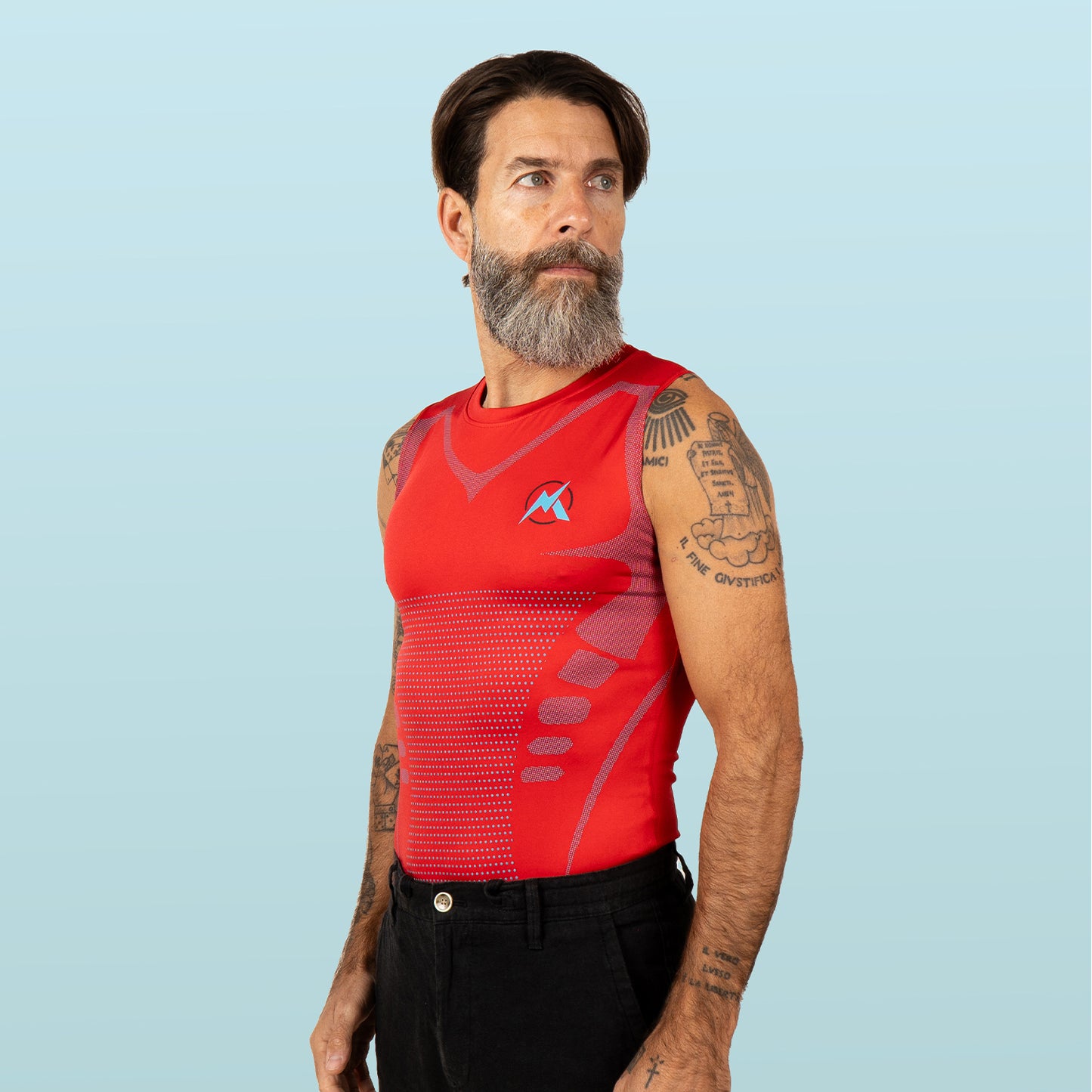
VitaBoost is the layer Maynox built specifically for this avatar — sleeveless, breathable, medium compression on chest and back, designed to disappear under any t-shirt or workout top. You don't have to wait 12 weeks of cardio to look more upright. You can wear it tomorrow.

To be clear: compression does not burn belly fat. A 31-study pooled review on athletic compression in Life (2025) found no evidence of fat loss from the garment itself (Wei et al., 2025). It's a posture lever and a confidence lever, not a fat-loss lever. But while the cardio is doing the slow underground work, the base layer is doing the fast above-ground work. They stack.
Get VitaBoost — BUY 1 GET 1 FREE
What doesn't work (the time-wasters)
A short list of what to stop wasting your weekly hours on:
- Sit-ups, crunches, and 10-minute "abs blasters." They don't burn belly fat. You can't spot-reduce fat. Strong abs under a fat layer just give you a slightly thicker waistline.
- Hour-long jogging at a punishing pace. This is the no-man's-land between Zone 2 and HIIT. Too hard to recover from. Too steady to be a metabolism multiplier.
- The "fat-burning zone" treadmill program. That preset keeps you so easy that you barely burn enough to matter. Zone 2 is faster than the fat-burning zone preset.
- Cardio alone with no strength work. This is how 50-year-old men lose 12 pounds and look like a smaller version of the same shape. Worse, not better.
- Five days a week of HIIT or hour-long bootcamps. Recovery debt at 52 looks like joint pain, bad sleep, and "I just don't have time anymore" by week 6. Two HIIT sessions weekly is the ceiling for most men.
- Test boosters, fat-loss supplements, and "metabolism" pills. None of them move the needle relative to the four levers above. Mayo Clinic is explicit that OTC test boosters lack good evidence, and most "fat burners" are caffeine plus marketing.
Most men over 50 don't have a cardio problem. They have a dose-and-structure problem dressed up as a cardio problem. Get the four levers ordered right, sleep 7+ hours, eat 150-200 fewer calories a day, and the belly moves.
The bottom line: the best cardio for burning belly fat after 50 is Zone 2 anchored, HIIT finished, walked into the ground daily, and supported by two strength sessions. That stack works on a real human schedule. Anything more aggressive, you can't sustain. Anything less, you don't move the tape.
If your energy is the bigger problem under all this, read why you feel tired all the time after 45 before you blame the cardio. Tired men quit programs. Recovered men finish them.
Frequently asked questions
What is the best cardio to lose belly fat after 50?
A combination of Zone 2 (conversational pace cardio) for 150-200 minutes a week and two short HIIT sessions of 15-20 minutes. Walking is the floor. Strength training, while not strictly cardio, doubles your long-term results.
How much cardio do I need to lose belly fat over 50?
The federal guideline is 150 minutes of moderate-intensity activity a week. For real belly fat reduction, target 150-200 minutes of Zone 2 plus 20-40 minutes of HIIT, on top of a base of 8,000-10,000 steps a day. Five hours of structured cardio total is a strong, sustainable dose.
Does cardio actually burn belly fat for men over 50?
Yes — but not alone. Cardio burns calories. It can't out-train sleep debt, a 200-calorie surplus, or zero strength training. Cardio works in combination with a small calorie deficit, 7+ hours of sleep, and two strength sessions a week.
Is walking enough to lose belly fat after 50?
Walking is the foundation, not the answer. 8,000-10,000 daily steps closes a small calorie gap and protects your hips and back, but on its own it won't visibly change your midsection. Add Zone 2 sessions, 1-2 HIIT sessions, and 2 strength sessions weekly to actually move the tape.
Should men over 50 do HIIT or steady-state cardio?
Both, in a 4-to-1 ratio. Use steady-state Zone 2 as your main weekly volume (~150 minutes) and add 1-2 short HIIT sessions (~20 minutes each) as a finisher. HIIT alone burns out 50-year-old joints. Steady-state alone leaves the metabolic multiplier on the table. Hybrid wins.
Sources
- CDC — Adult Physical Activity Basics (150 min/wk moderate aerobic guideline)
- Mayo Clinic — Belly fat in men: Why weight loss matters
- NIH / NIA — Sarcopenia and aging muscle (3-8%/decade decline)
- Wewege M. et al. — HIIT vs. HIRT in overweight middle-aged men
- Harvard Health — Strength training, 10,500 men, 12-year study
- Cleveland Clinic — Visceral fat
- Brown F. et al. 2022, Sports Medicine — Compression garment review (proprioceptive feedback)
- Wei et al. 2025, Life — 31-study pooled compression review (no fat loss)
Disclaimer: VitaBoost is a compression garment, not a medical device. If you have a heart condition, joint injury, or you've been sedentary for more than 6 months, talk to your doctor before starting a new exercise program.