By Owen Blot · Founder, Maynox · Last updated May 30, 2026
- The counterintuitive truth: fatigue at 45 isn't what you think
- The 4 fatigue debts most men over 45 carry
- The order to fix them (hierarchy by ROI)
- What to test before blaming low testosterone
- A 2-week energy reset protocol
- What doesn't work (don't waste money here)
- When to see a doctor
- Frequently asked questions
The counterintuitive truth: fatigue at 45 isn't what you think
You hit 45. You sleep your usual seven hours. You eat the same lunch you've eaten for years. And yet by 2 p.m., you're done. Coffee doesn't hit anymore. The drive home feels heavy. Saturday morning, the kids want to go to the park and you'd rather not.
So you blame age.
Here's the thing: the data doesn't actually agree with you. According to CDC National Health Interview Survey numbers, the share of men reporting "very tired or exhausted most days" is actually higher in the 18–44 bracket (around 11%) than in the 45–64 bracket (around 9.7%) — and the over-65 group reports even less (CDC MMWR, 2022). Statistically, you weren't supposed to feel more tired at 45 than at 30.
So why does it feel worse?
Because the fatigue you're feeling now isn't the same kind. At 28, you were tired but you could brute-force through it. At 47, you can't. Sleep debt compounds harder. A short night doesn't just cost you the next day — it costs you the week. Cortisol takes longer to come down. Recovery from a hard workout takes 48 hours instead of 12.
This article is the no-nonsense breakdown of why that happens and the order to fix it. Sourced. No supplement pitch. No testosterone-replacement sales angle.
The 4 fatigue debts most men over 45 carry
Fatigue at 45+ is almost never one thing. It's four debts stacking up at the same time. Most articles list ten causes and call it a day. The reason that doesn't help is that you don't have ten levers — you have four buckets, and they interact.
1. Sleep debt
You think you're getting enough. You're probably not. The CDC estimates 30.5% of U.S. adults sleep less than seven hours per night (CDC NCHS Data Brief 559). For men 45+, the bigger issue is usually quality, not quantity. Three things degrade it:
- Undiagnosed sleep apnea. It's wildly under-flagged in men over 40. You don't remember waking up — you just feel like you got eight hours of bad sleep.
- Late alcohol. Two drinks at 9 p.m. fragments deep sleep even when you don't remember waking.
- Late screens and late food. Both raise body temperature and cortisol when they should be dropping.
If you've ever woken up after a "full night" and still felt tired by lunch — that's a quality problem, not a duration problem.
2. Hormonal debt
Yes, testosterone declines with age. The peer-reviewed number cited by Mayo Clinic is roughly 1% per year after age 30 (Mayo Clinic). That's real. But it is also the most over-blamed factor in the entire conversation.
For a clinically low man, treating it can be meaningful. For most 45-year-olds with mid-range levels, fixing sleep and movement will move energy more than any T protocol — and we'll cover why in the "what to test first" section below.
Other hormones in play: thyroid (under-flagged), and cortisol rhythm (over-elevated from chronic stress and poor sleep). These two are sneaky and they look like "low T" symptoms from the outside.
3. Movement and posture debt
This is the one almost no article on this topic mentions, and it's the lever you have the most control over.
After 30, men lose roughly 3–8% of muscle mass per decade if they don't actively resist it (NIH/PMC). Less muscle means a slower metabolism, weaker circulation, and a body that uses more energy to do the same daily tasks. Then add the office posture stack: shoulders rolled forward, chest compressed, breathing shallow. Shallow breathing means less oxygen, which the brain reads as low energy. It's not subtle.
This is also why straightening up changes how a 45-year-old feels in five minutes — covered in our daily habit stack guide and the 4-layer posture plan.
4. Mood debt
Men over 40 are diagnosed with depression at lower rates than women, but they don't actually have less of it — they report it less. Persistent low energy that doesn't respond to rest is one of the most common male presentations of low-grade depression. Cleveland Clinic lists "fatigue that doesn't improve with rest" as a defining red flag worth seeing a doctor about (Cleveland Clinic).
Chronic low-grade stress, mid-career burnout, and unprocessed grief or loneliness all show up the same way: exhaustion that no nap fixes.
The order to fix them (hierarchy by ROI)
Most articles dump all ten causes on you with no priority. Here's the brutal order — fastest wins first. The top three cost nothing. The middle two are quick clinical wins. Testosterone is sixth, not first.
| Priority | Lever | Effort | Time to feel it | Cost |
|---|---|---|---|---|
| 1 | Sleep quality (no booze 3h before bed, screens off 30 min before, cool dark room) | Low | 3–5 days | $0 |
| 2 | Daily movement (walking + 2 lift sessions/week) | Medium | 7–14 days | $0 |
| 3 | Posture + breathing during the workday | Low | Same day | $0 |
| 4 | Blood work (iron, ferritin, B12, vitamin D, thyroid, HbA1c) | Low | 2–4 weeks | Insurance / ~$150 |
| 5 | Diet anchor (30g protein per meal, vegetables before starch) | Medium | 7–14 days | $0 |
| 6 | Testosterone testing (only if 1–5 don't move the needle) | Low | 4–6 weeks | Insurance / consult |
Notice testosterone isn't in the top three. There's a reason for that.
What to test before blaming low testosterone
Here's the line that doesn't appear in TRT clinic ads: fatigue is rarely just low T. Texas Health Resources puts it bluntly — there are at least six common drivers of male fatigue, and low testosterone usually isn't the first one to chase (Texas Health).
Before you spend money on a hormone consult, ask your GP for a basic panel covering:
- Ferritin and iron — iron deficiency without anemia is more common in men over 40 than most realize, especially if you donate blood, take aspirin daily, or have GI inflammation.
- Vitamin D — low D is widespread in men who work indoors and tracks closely with reported fatigue.
- B12 — particularly relevant if you're on metformin, a PPI for reflux, or eat less meat than you used to.
- TSH (thyroid) — an underactive thyroid is one of the most under-flagged drivers of "I'm just tired" in men over 45.
- HbA1c (blood sugar) — early insulin resistance shows up as afternoon crashes long before you'd be called pre-diabetic.
Run those first. If they're all clean and you're still wiped, then test testosterone. Doing it in this order saves money, time, and a TRT commitment you may not have needed.
A 2-week energy reset protocol
Most "fix your energy" articles list 30 things. You won't do 30 things. You'll do two or three. Here's a tight, no-supplement, no-fluff 14-day reset most men feel within a week.
Days 1–7 — sleep + light
- Cut alcohol fully for the week. (Yes, fully.)
- Phone out of the bedroom, charging in another room.
- 10-minute outdoor walk within 60 minutes of waking. Real daylight, no sunglasses.
- Lights low after 9 p.m.
- Bedroom 65–68°F (18–20°C).
Days 8–14 — movement + protein
- Keep everything from week one.
- Two short strength sessions (20–30 minutes). Squats, push-ups, rows, deadlifts — pick four moves, three sets each.
- Anchor every meal with 30g+ of protein. Eat protein and vegetables first, starch last.
- One 30-minute walk daily, ideally after lunch.
- 7.5–8 hours in bed, every night.
That's the protocol. It looks small. It works because it targets the two biggest debts at the same time — and most men over 45 haven't put both levers in motion at the same time in years.
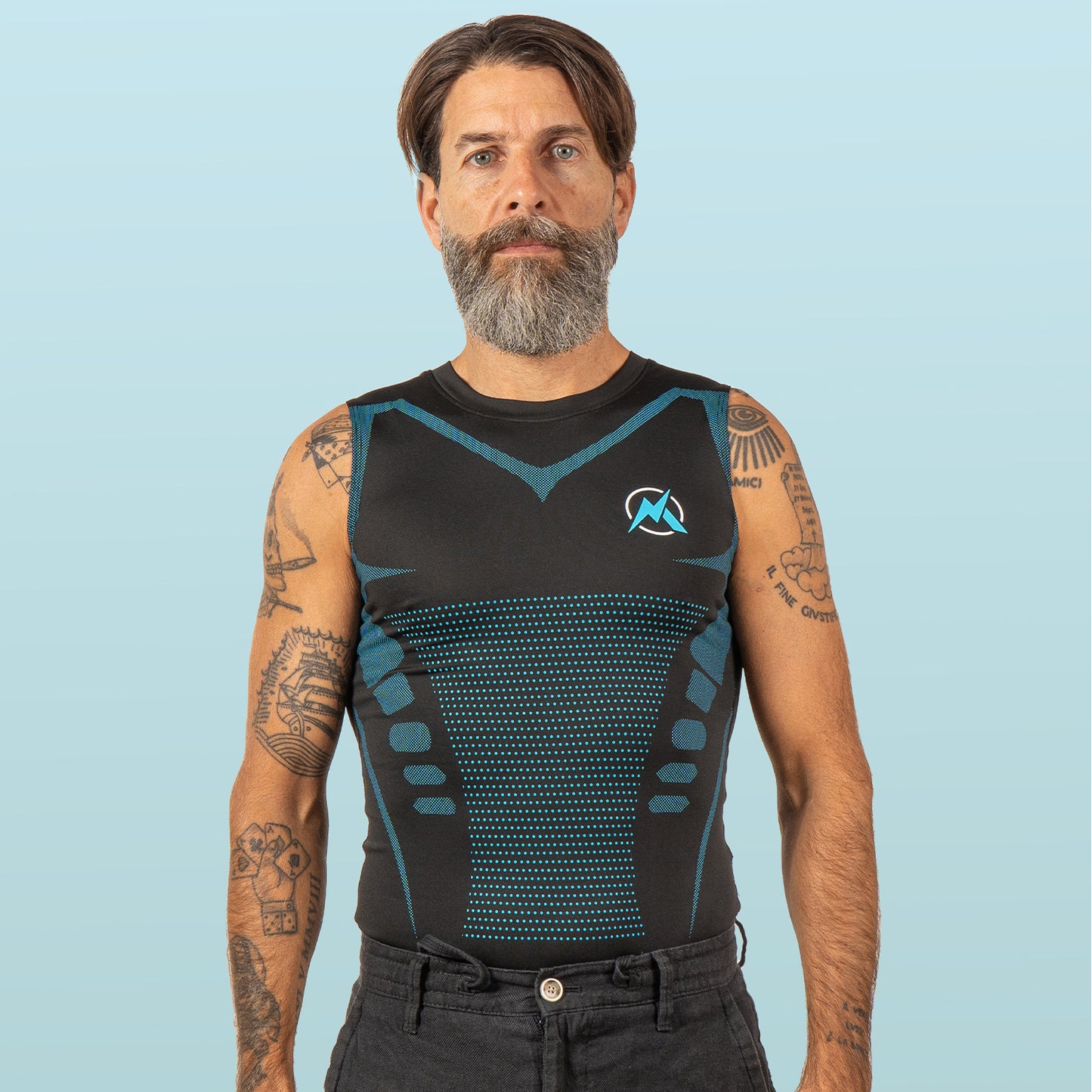
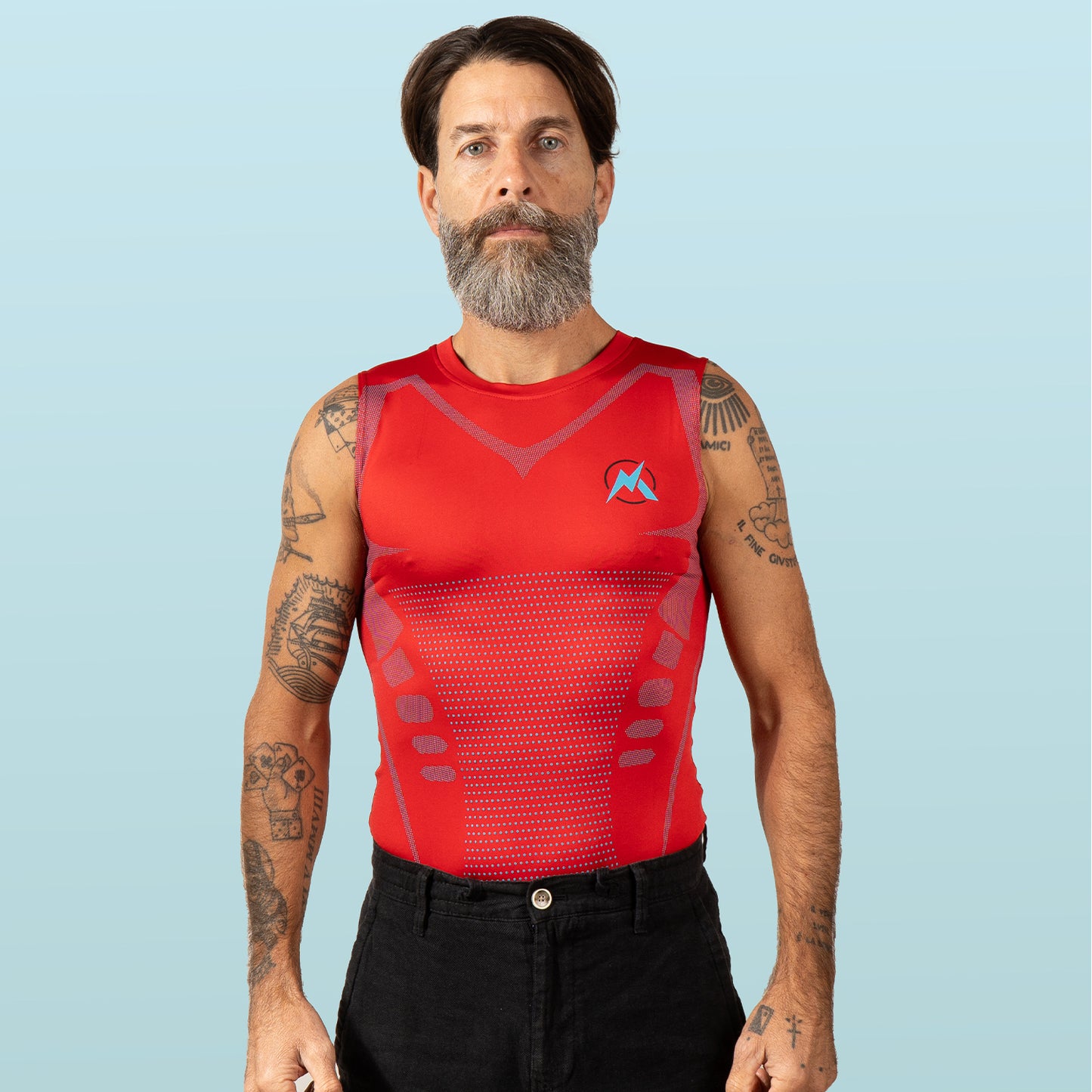
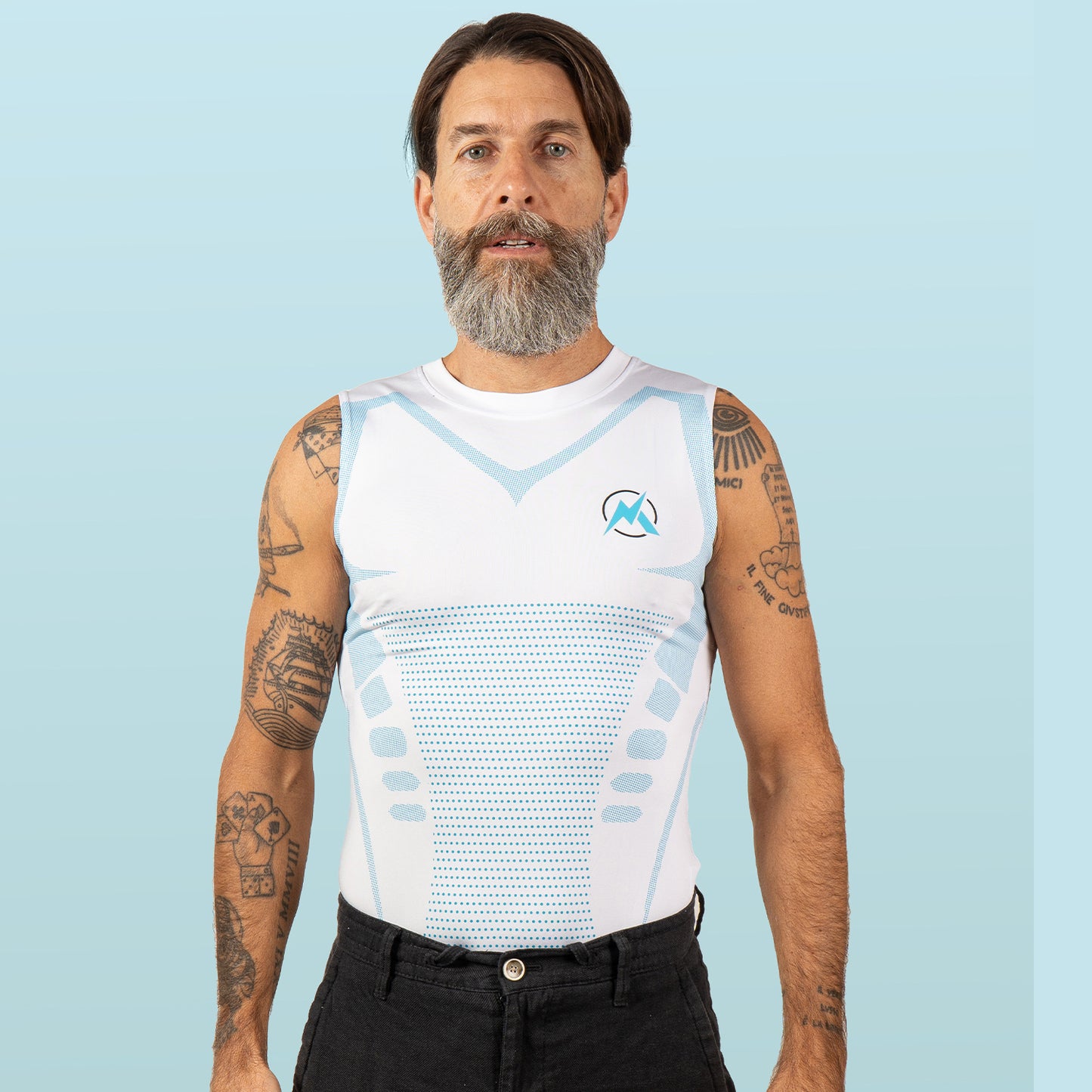
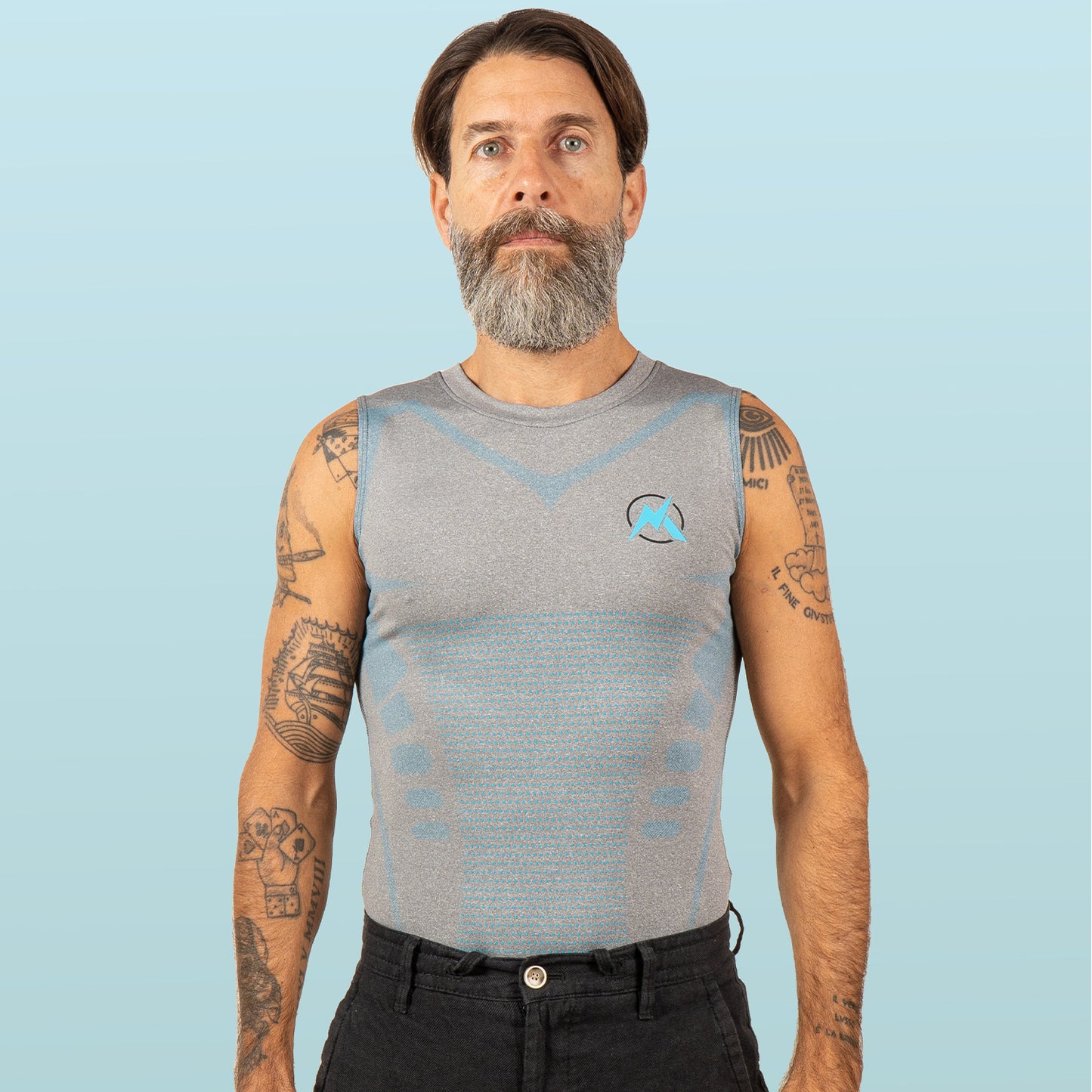
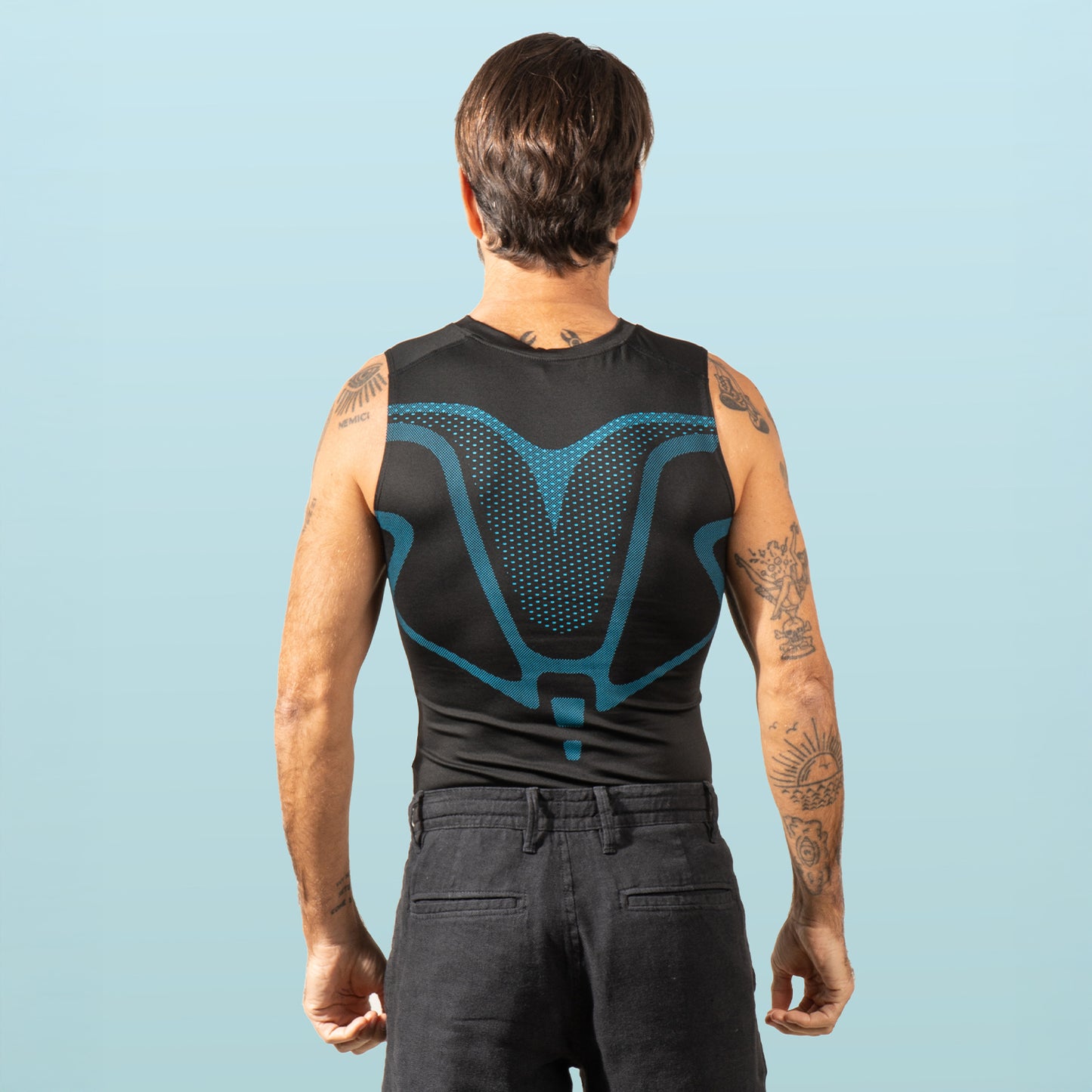
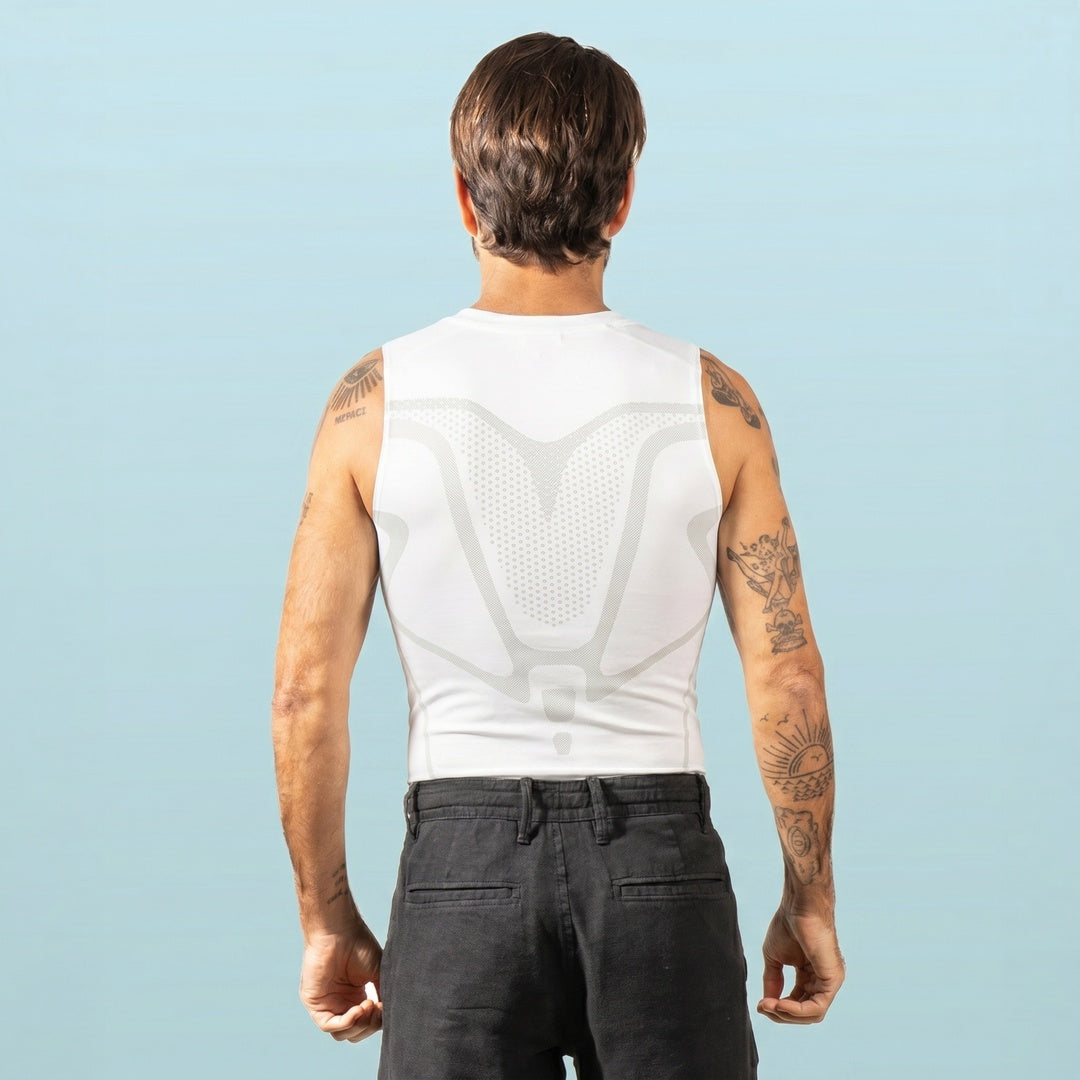
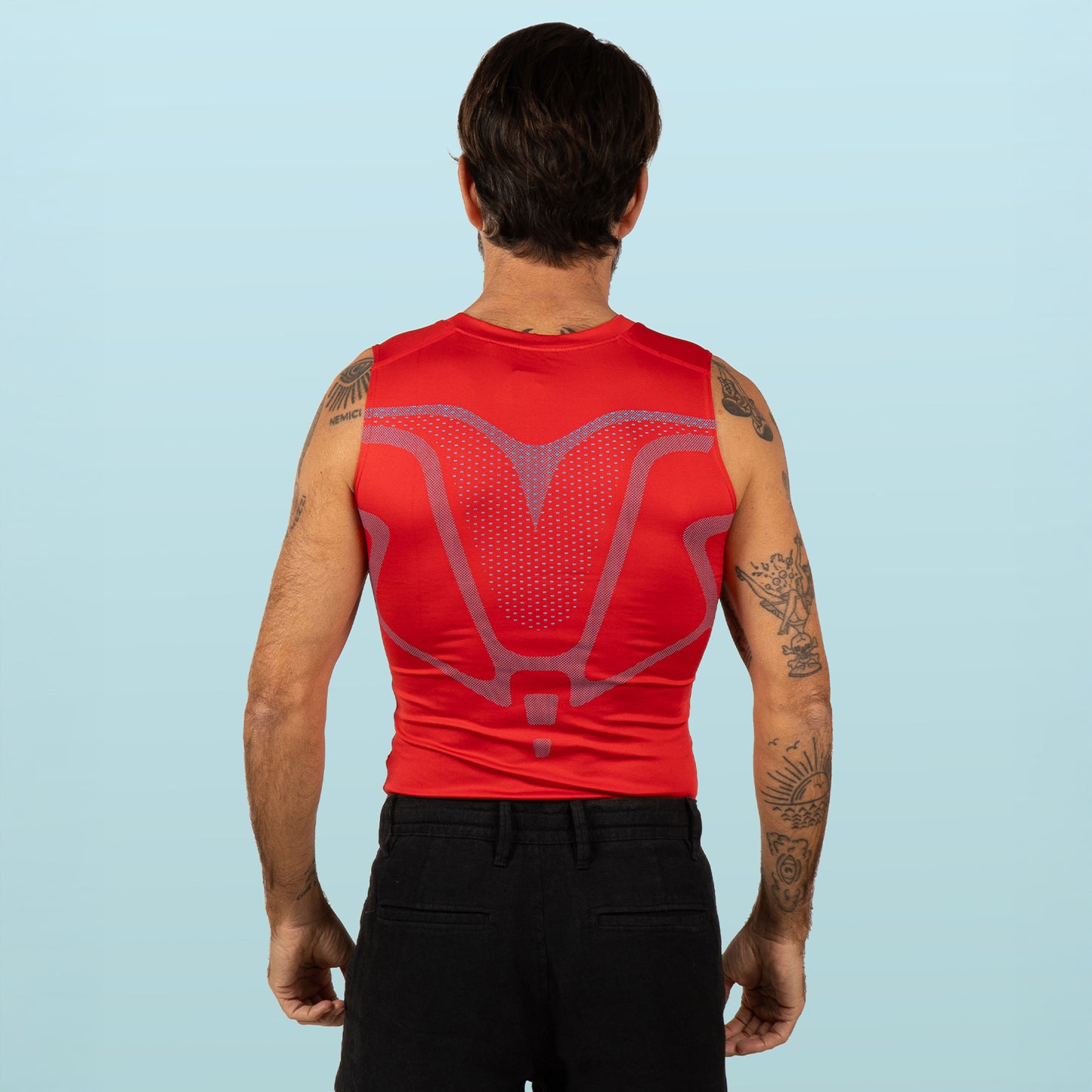
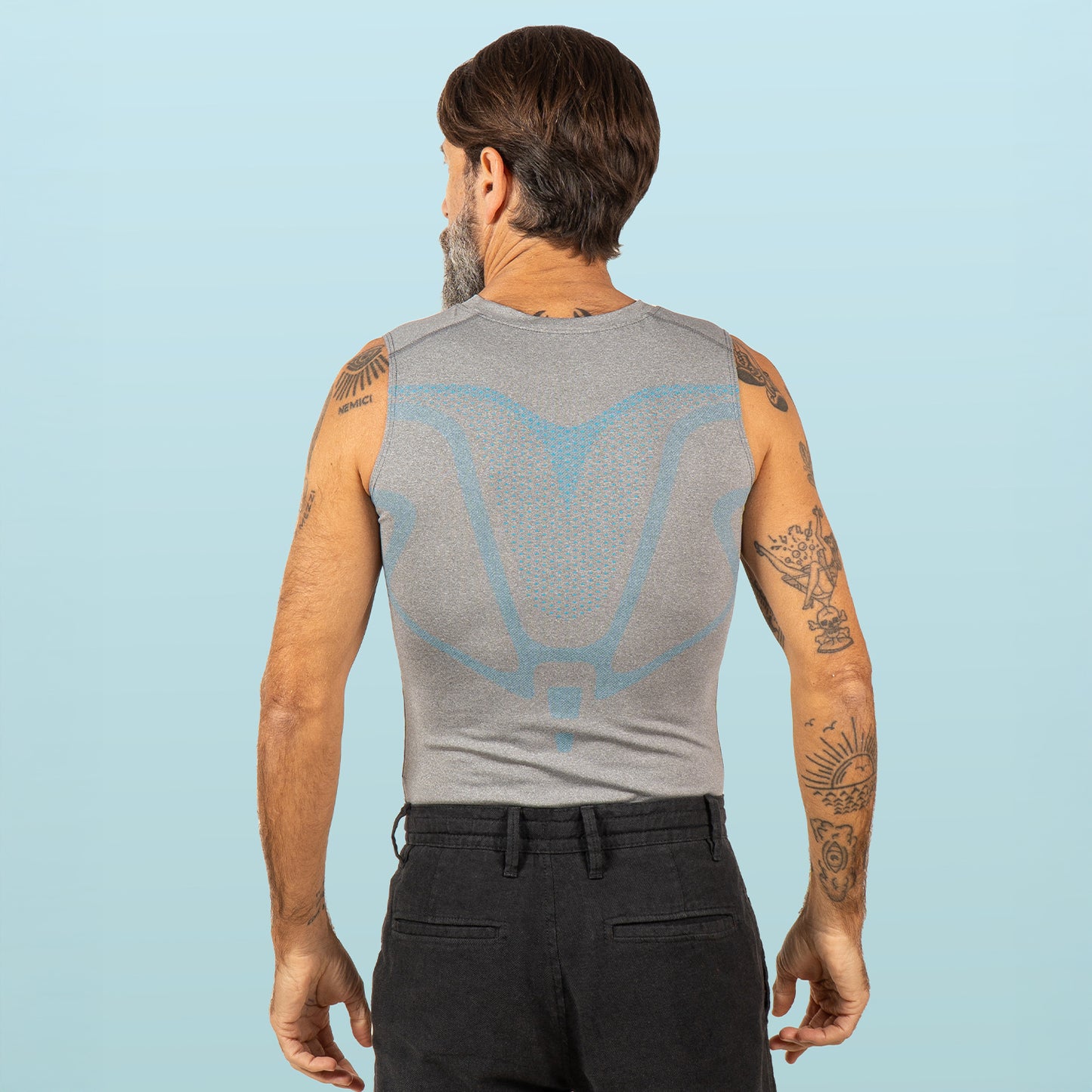
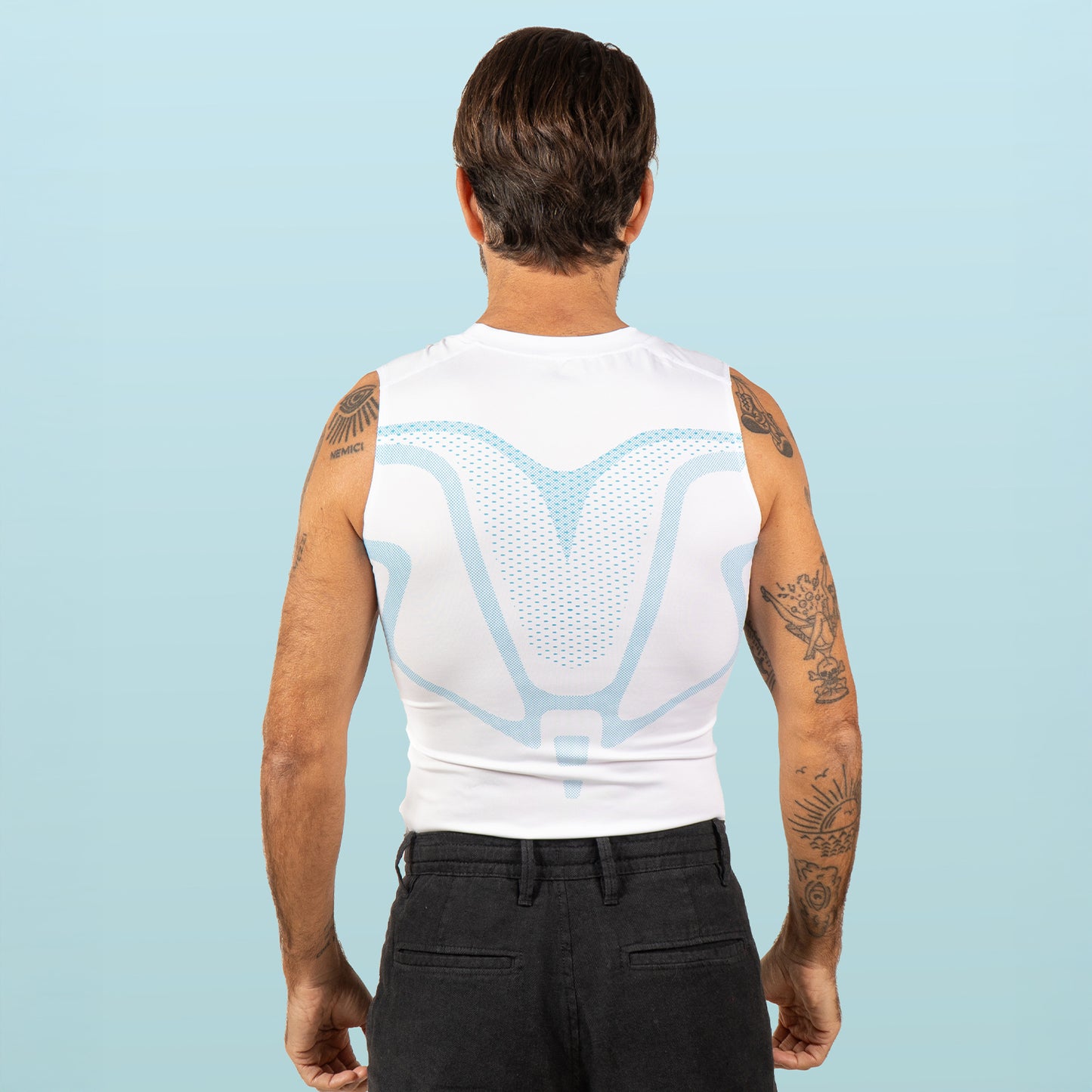
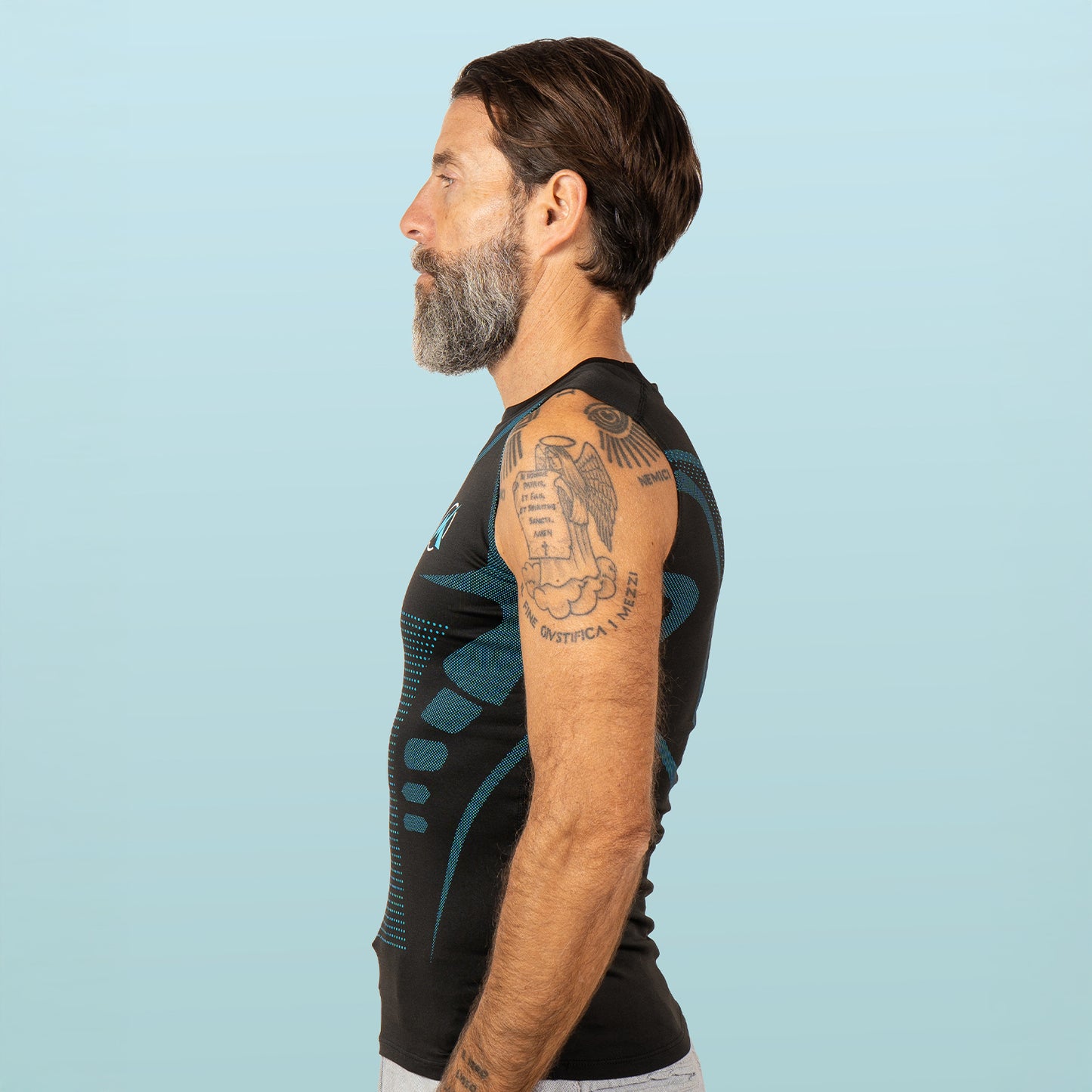
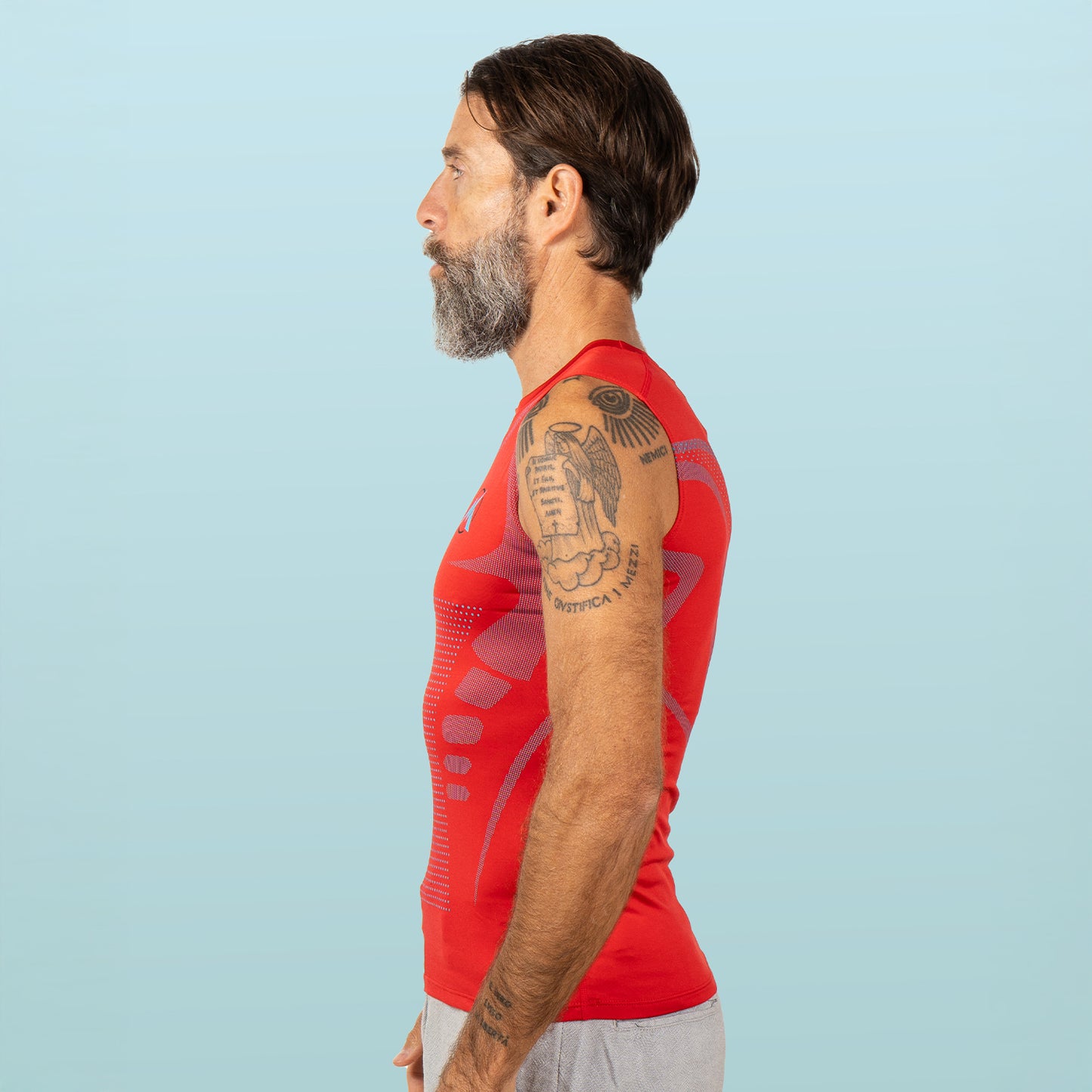
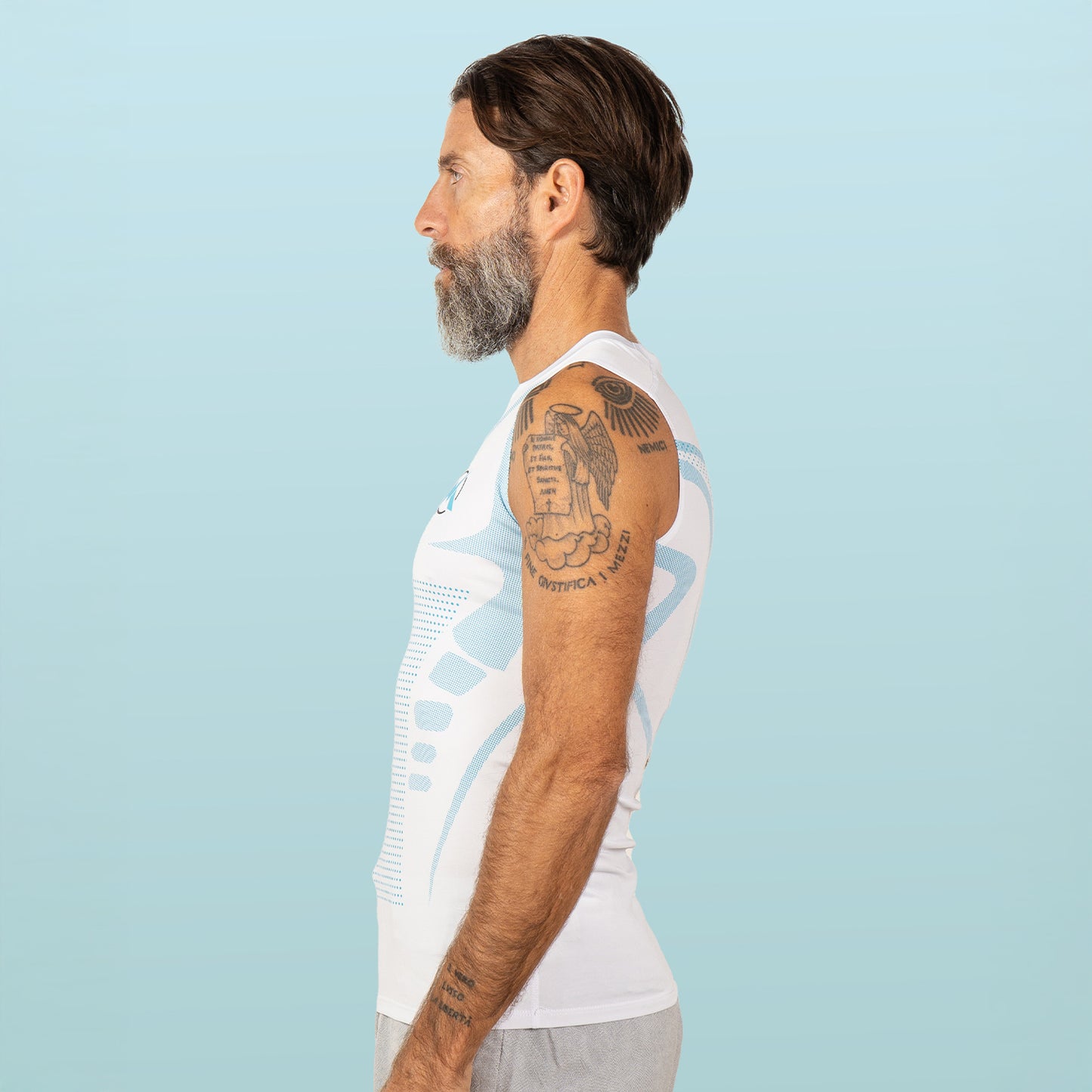
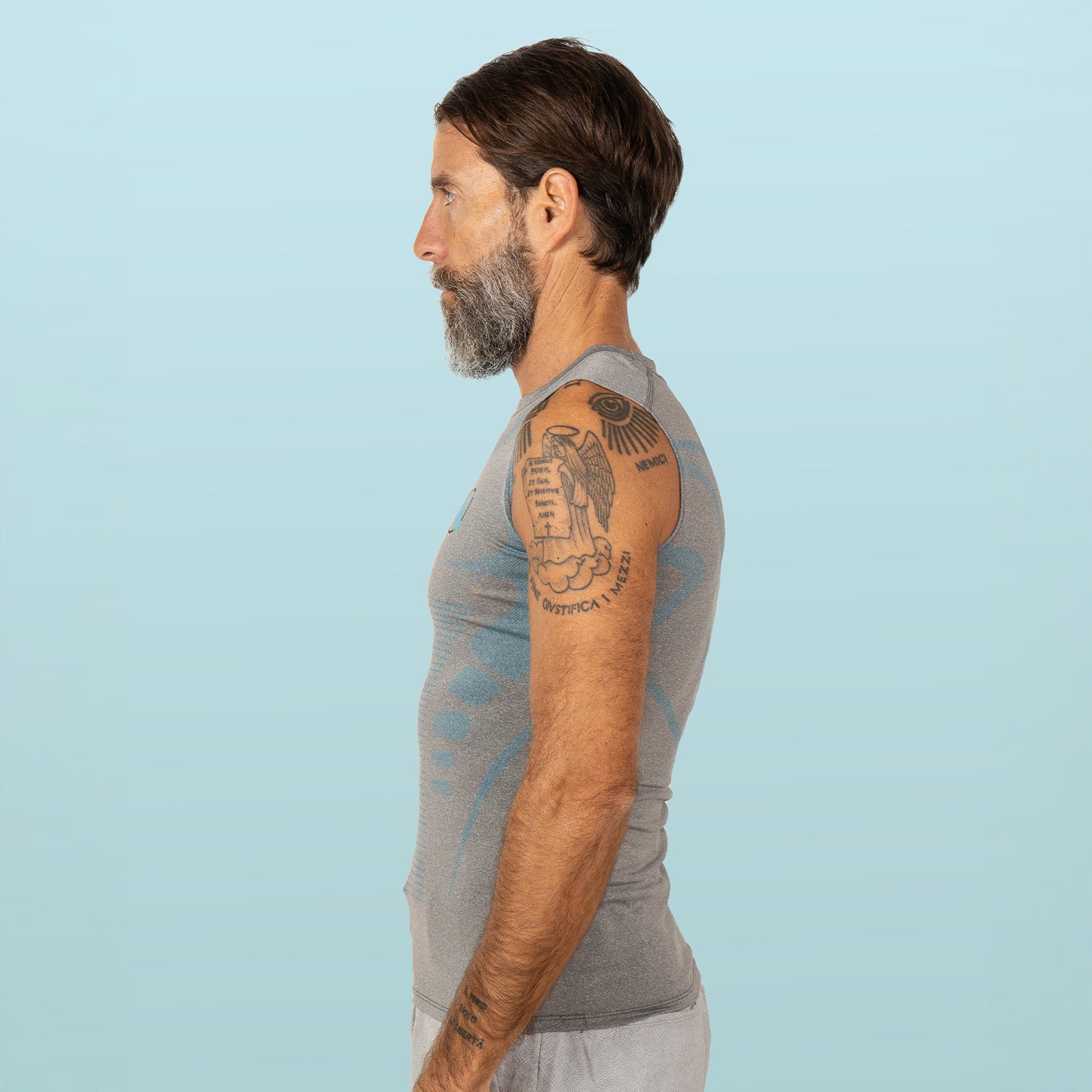
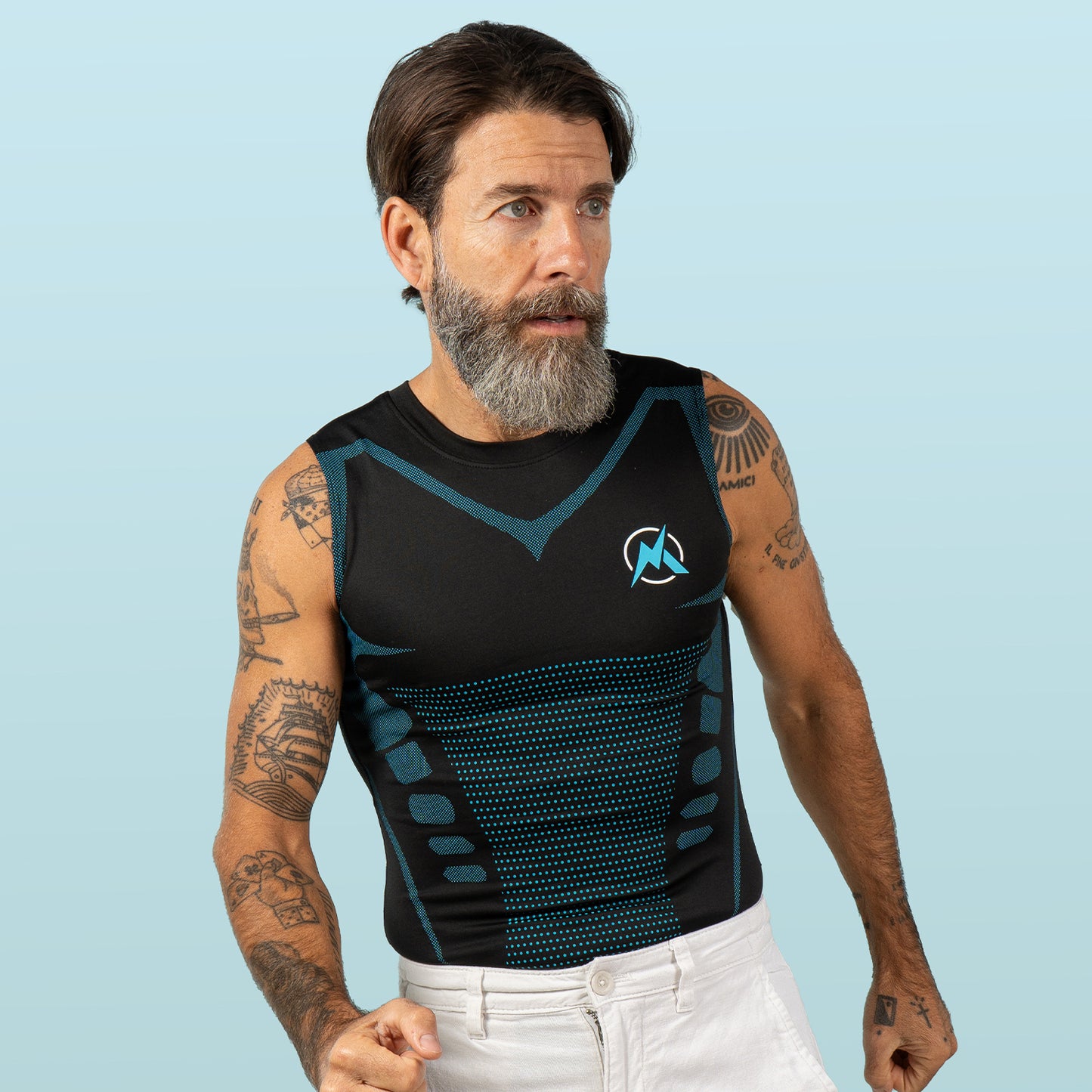
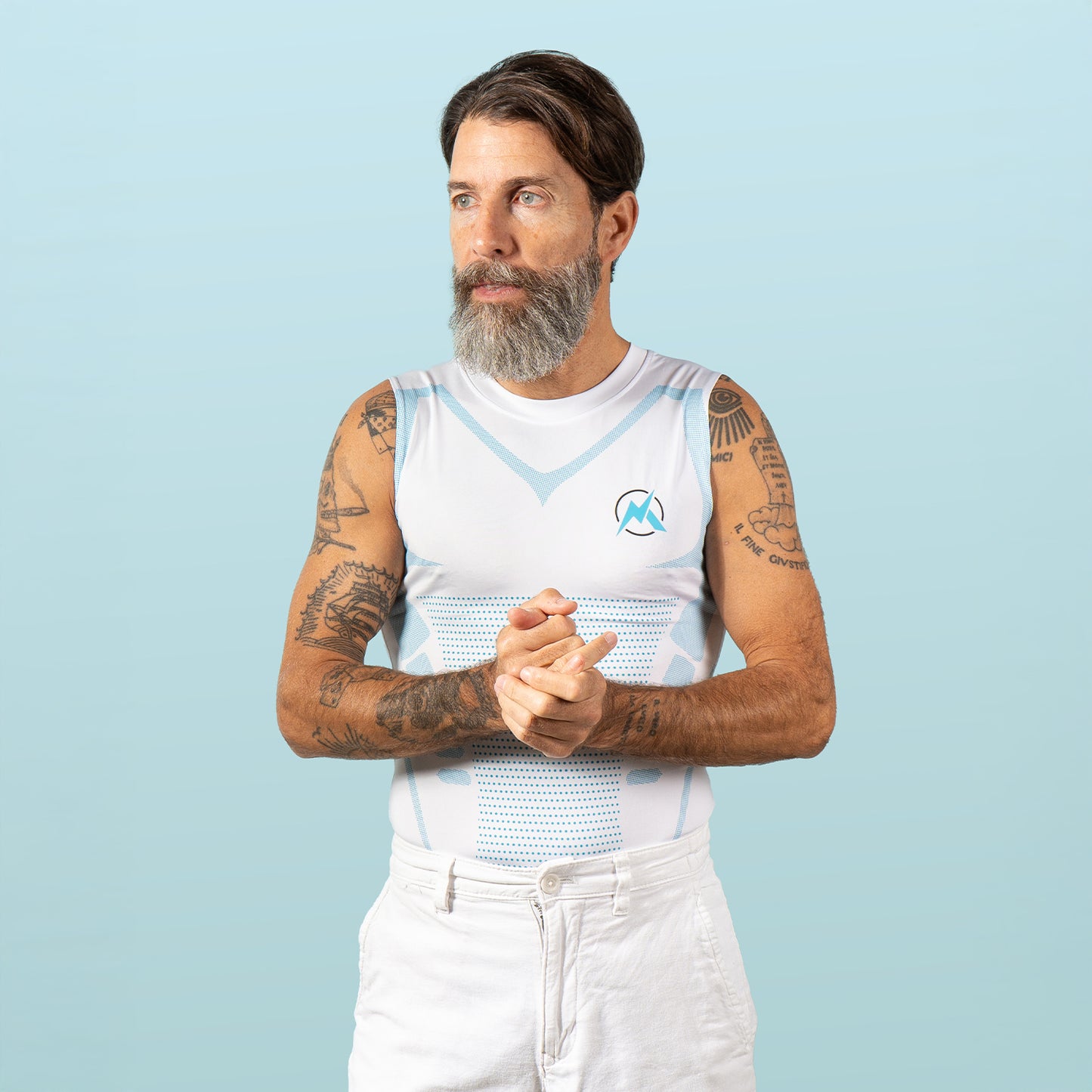
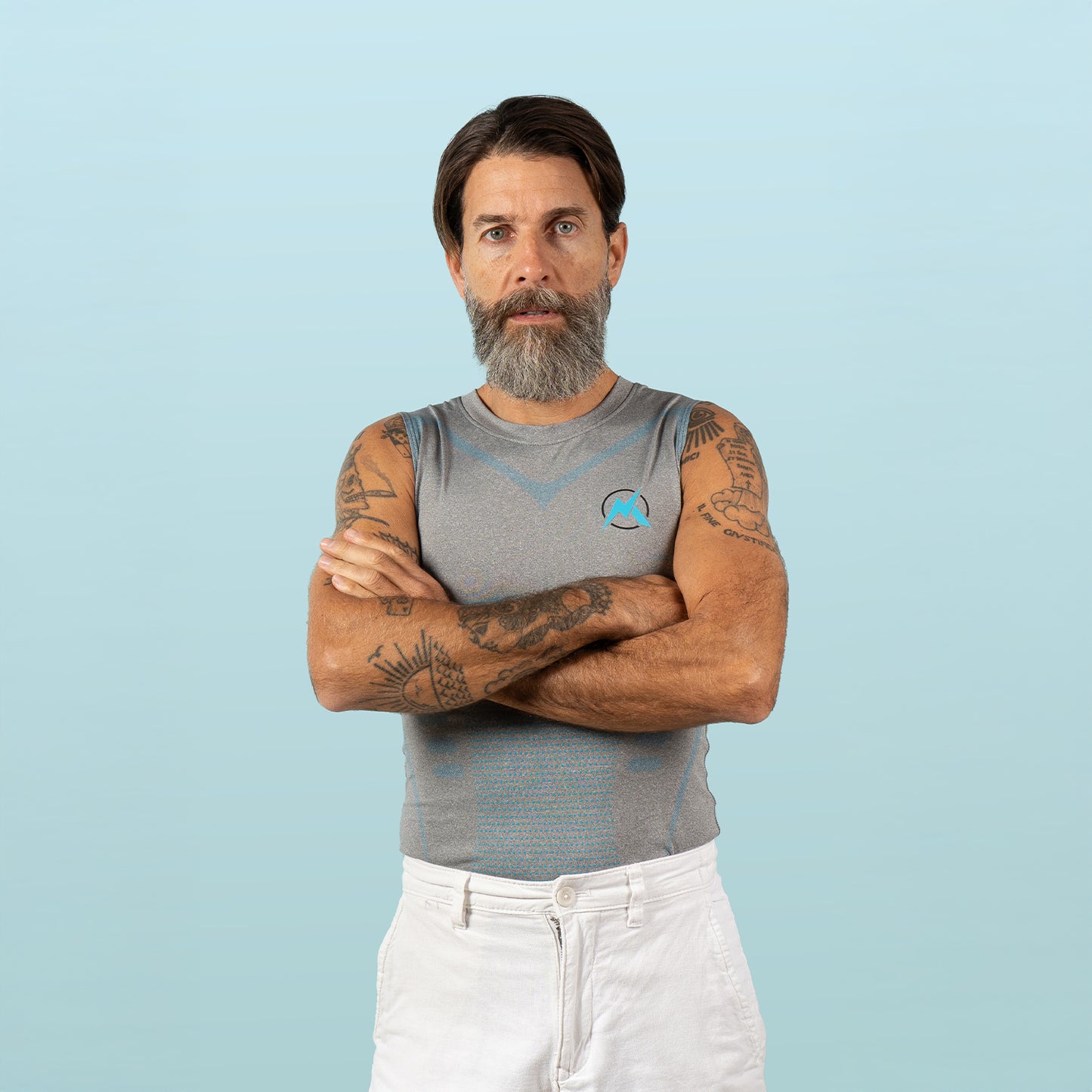
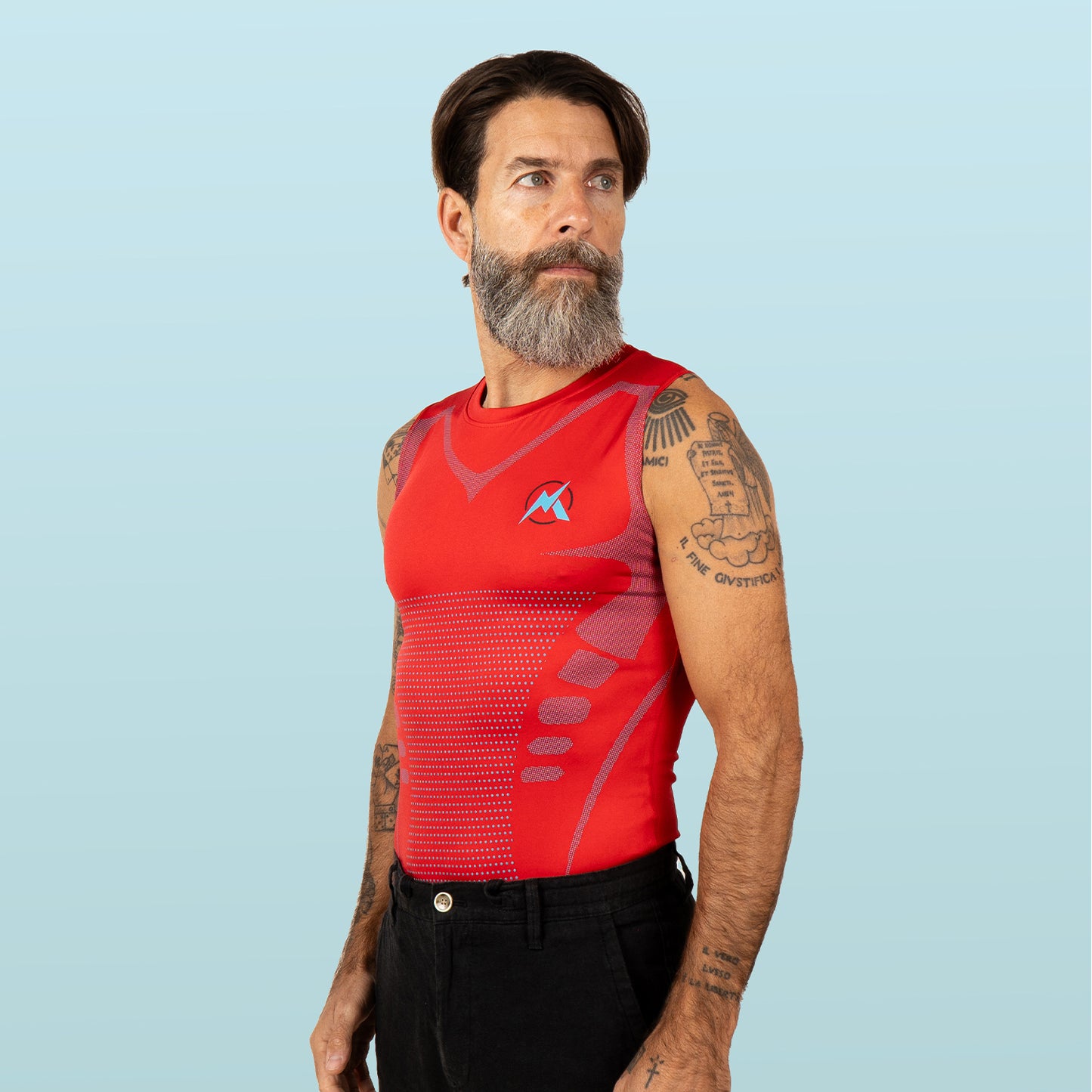
If your office hours are sedentary and you slouch by 11 a.m. (most desk-bound 45+ men do), a compression base layer like VitaBoost offers a physical cue to stay upright and helps keep your chest open enough to breathe properly through the long Zoom block. It's not a fatigue cure — nothing is. But the posture-breathing-energy chain is real, and the cue helps the habit stick during the reset window.

What doesn't work (don't waste money here)
The fatigue economy is enormous and most of it is selling you the wrong thing. Skip these:
- "Adrenal fatigue" supplement stacks. Not a recognized clinical diagnosis. The cortisol-rhythm problem is real, but the cure is sleep and stress regulation, not adaptogens at $60 a bottle.
- Over-the-counter "testosterone boosters." No reliable evidence they meaningfully move testosterone in men with normal-range labs. The Texas Health overview is honest about this (Texas Health).
- Energy drinks as a daily habit. Short spike, longer crash, sleep degradation, and they hide the real signal you should be listening to.
- Caffeine after 2 p.m. Half-life of 5–6 hours. That 3 p.m. espresso is still in your system at bedtime even if you "fall asleep fine."
- Cardio-only programs. Walking is great. Lifting is non-negotiable after 45. Without resistance work, you keep losing muscle, which keeps lowering your baseline energy.
The pattern: the things that actually work are mostly free. The things sold at you mostly aren't.
When to see a doctor
See a GP — don't tough it out — if any of these apply:
- Fatigue lasting more than three months despite better sleep
- Snoring plus daytime exhaustion (rule out sleep apnea)
- Unexplained weight loss or gain alongside the fatigue
- Persistent low mood or loss of interest in things you used to enjoy
- Shortness of breath, chest discomfort, or palpitations
None of this is medical advice. It's a checklist of "go get this looked at" signals — VitaBoost is a piece of clothing, not a treatment.
Frequently asked questions
Why am I always tired and have no energy after 45?
Usually a stack of four overlapping debts: poor sleep quality (often undiagnosed apnea), gradual hormonal decline, lost muscle and shallow workday breathing, and untreated low-grade stress or depression. Address sleep and movement first — most men feel a measurable shift within two weeks.
What age do men feel most tired?
Counterintuitively, U.S. men aged 18–44 report the highest rate of feeling "very tired most days" (~11%), with the 45–64 group slightly lower (~9.7%), per CDC MMWR 2022. But the fatigue at 45+ feels heavier because recovery from sleep debt and exertion takes longer.
How can a man over 45 get more energy naturally?
The two highest-ROI changes are: protect sleep depth (no booze three hours before bed, cool dark room, screens off early) and add resistance training twice a week. Layer in daily 30-minute walks, 30g of protein per meal, and morning daylight exposure. Most natural-energy gains come from those five things — not from supplements.
Is constant tiredness a sign of low testosterone in men?
It can be, but it's rarely the main driver. Sleep problems, iron or vitamin D deficiency, thyroid issues, and stress are more common causes of male fatigue than low T (Texas Health). Get a basic blood panel first; test testosterone only if other markers are clean and symptoms persist.
Why am I still tired even when I get enough sleep?
Two main reasons. First, sleep quantity and sleep quality are not the same thing — apnea, late alcohol, and late screens fragment deep sleep without waking you. Second, low daytime movement and shallow desk-posture breathing leave the body under-oxygenated, which feels like tiredness even after a "full" night.
The bottom line
You're not tired at 45 because you turned 45. You're tired because four debts have been compounding quietly — sleep, hormones, movement, and mood — and most of them have nothing to do with the supplement aisle. Fix sleep and movement first. Get clean blood work before chasing testosterone. Stand up straight. Two weeks in, you'll feel it.
For the broader picture of what's actually shifting in your body right now, see our breakdown of how a man's body changes after 40 and the morning playbook for men over 45.
See VitaBoost — Buy 1 Get 1 Free
Sources
- CDC MMWR — Percentage of Adults Who Felt Very Tired or Exhausted (NHIS 2022)
- PMC4586650 — Factors Associated with Fatigue among Men Aged 45 and Older
- Mayo Clinic — Testosterone Therapy: Potential Benefits and Risks as You Age
- CDC NCHS Data Brief 559 — Short Sleep Duration Among Adults
- NIH/PMC2804956 — Sarcopenia and Aging
- Cleveland Clinic — Fatigue: Causes and Treatment
- Texas Health — Low T Isn't Always the Culprit