By Owen Blot · Founder, Maynox · Last updated June 2, 2026
You're 52. The last time you lifted a barbell with intent was probably during a college gym phase. Your shoulders sit forward. Your chest reads soft. You've half-believed the line that after 50, muscle is gone for good — that the window closed somewhere around your 35th birthday and now you're just managing the decline.
That line is wrong. It's also expensive — TRT clinics, "30-day transformation" supplements, and miracle protein powders all profit from the belief.
This piece walks through what the research actually says, the four levers ordered by how fast they show up, a concrete 4-week starter protocol, and an honest list of what to skip. The plan that works at 52 is not the plan that worked at 32. But it works.
The honest answer: no, it's not too late
Here's what the research actually shows. Adults over 50 build measurable muscle within 6 to 12 weeks of consistent resistance training. A German review summarized by SilverSneakers found measurable muscle size increases in as little as six to nine weeks in adults over 60. Even frailer adults gained muscle in 8 to 10 weeks per the National Strength and Conditioning Association.
That's not a marketing claim. That's the timeline.
What "novice gains" actually means for you
Here's the part nobody tells the 52-year-old reader. If you haven't trained in years, you have a window your 30-year-old self doesn't have anymore. Untrained adults — at almost any age — respond to a basic strength program more dramatically than experienced lifters. The reason is simple: the body adapts fastest when the stimulus is new.
A man over 50 starting from scratch can realistically expect roughly 1 to 2 pounds of new muscle per month over the first 6 to 12 months of consistent resistance training, per multiple sources including Healthline's review. That tapers as you adapt. But the first year is your biggest year. Don't waste it second-guessing whether you're "too old."
Why muscle gets harder after 50 (not impossible)
Three things change after 50. They're real. They're not why you've stopped trying.
Sarcopenia. Adults lose roughly 3 to 8 percent of muscle mass per decade after age 30, accelerating after 60, according to a NIH/PMC review on age-related muscle loss. This is the biological clock, and it ticks faster when you don't lift. Resistance training is the only intervention that reliably slows or reverses it.
Anabolic resistance. Your muscles get less efficient at converting protein into new tissue. The fix isn't exotic — it's eating slightly more protein per meal (around 30 to 40 grams instead of 20) and spreading it across the day. Anabolic resistance doesn't block muscle growth. It raises the cost.
Testosterone decline. Total testosterone declines roughly 1 percent per year after age 30, according to Mayo Clinic. This is real but routinely oversold by TRT clinics. Most men with normal T levels can build muscle at 55 the same way they could at 35 — just with more recovery between sessions.
What changes most isn't your potential. It's your recovery debt. Sessions you bounced back from in 24 hours at 28 now take 48 to 72. Plan around that and you're fine.
The 4-lever stack, ranked by speed of visible result
Most "build muscle after 50" guides hand you a 12-week program and let you figure out what to do this week. Here's the same information ordered by how fast each lever shows up in the mirror.
Lever 1 (visible this week): Posture and base layer
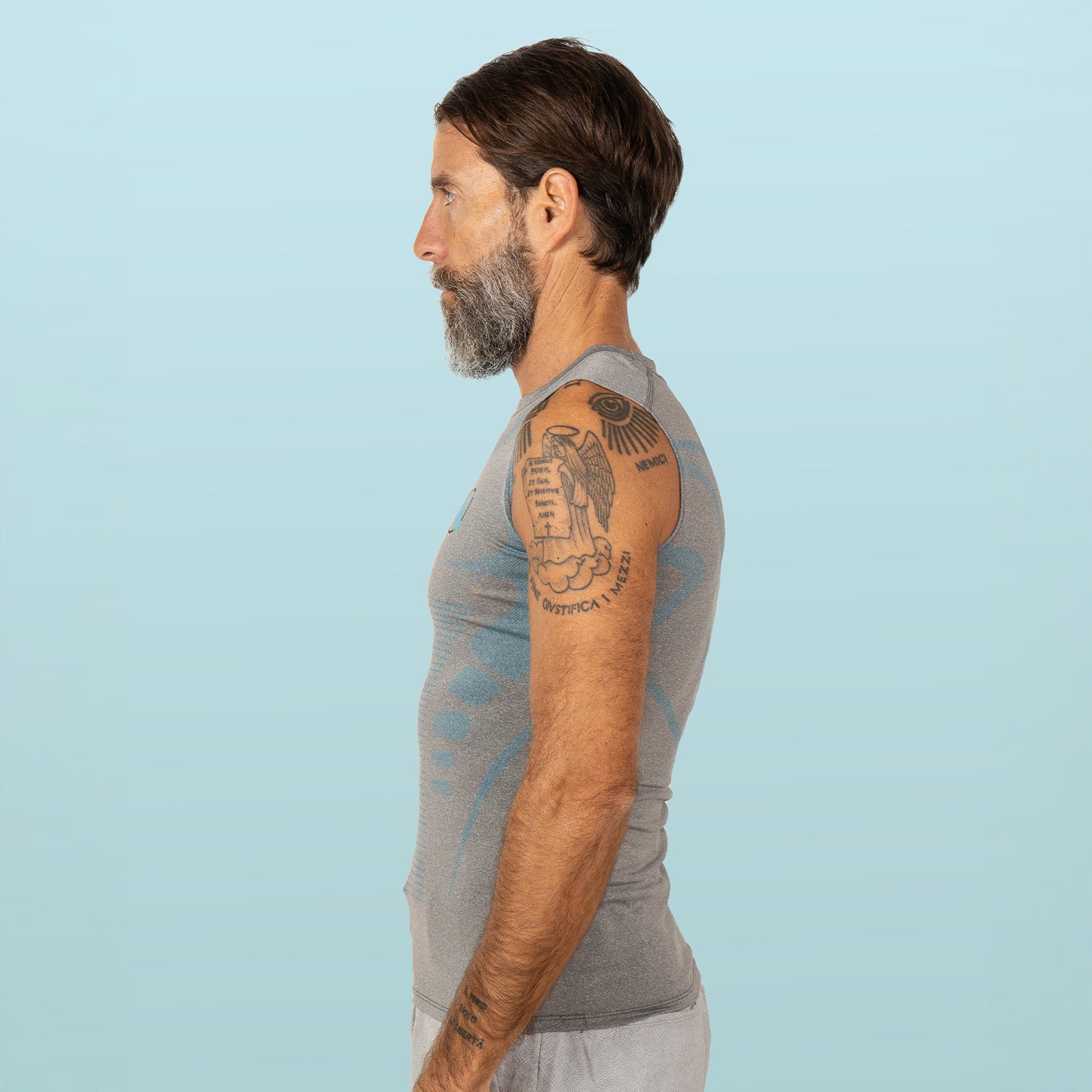
Before you add a single rep, fix what your body is already doing wrong. A slouched 52-year-old reads 10 pounds heavier and 10 years older than the same man standing tall. Posture is the only lever that gives you a visible upgrade in 7 days, before any muscle has been built.
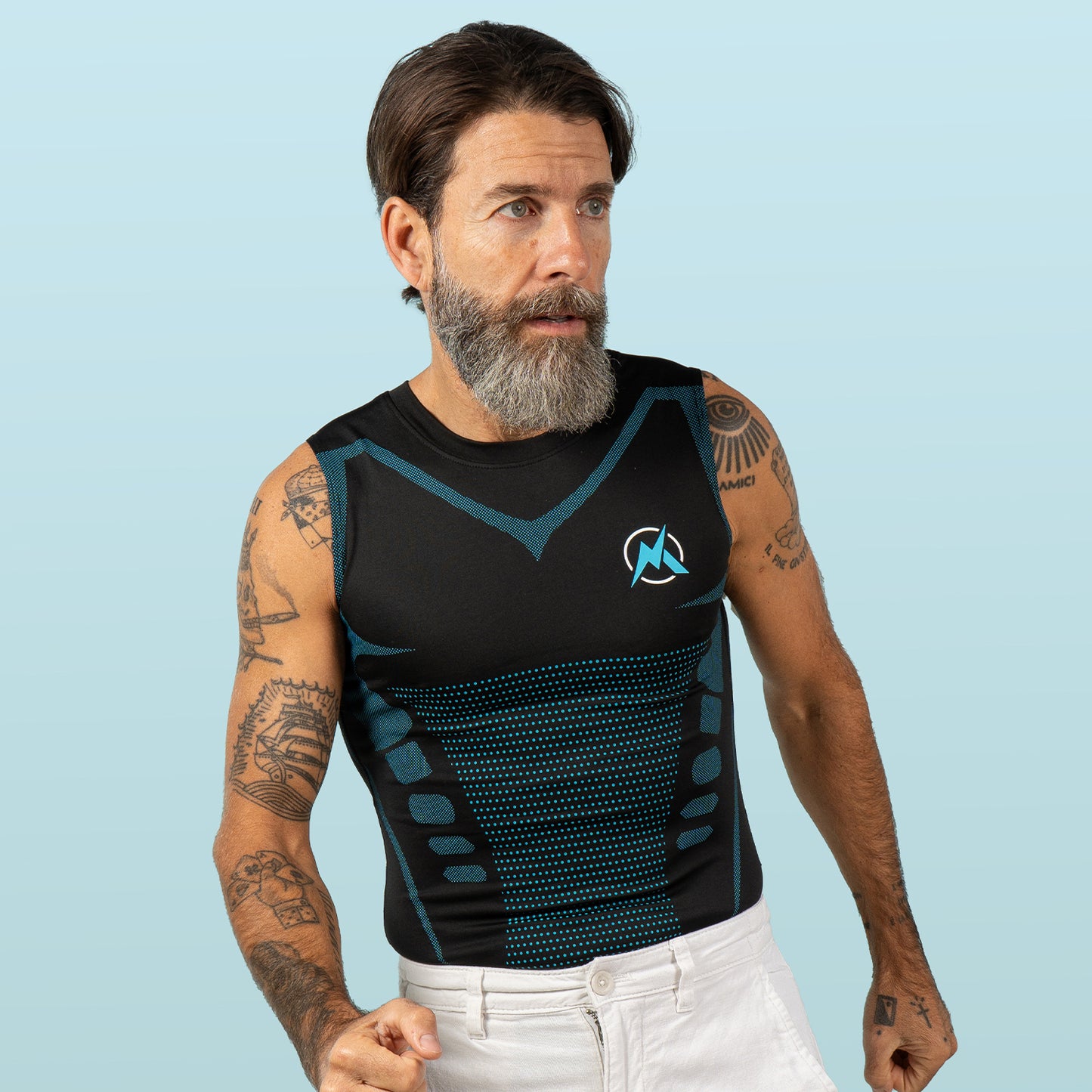
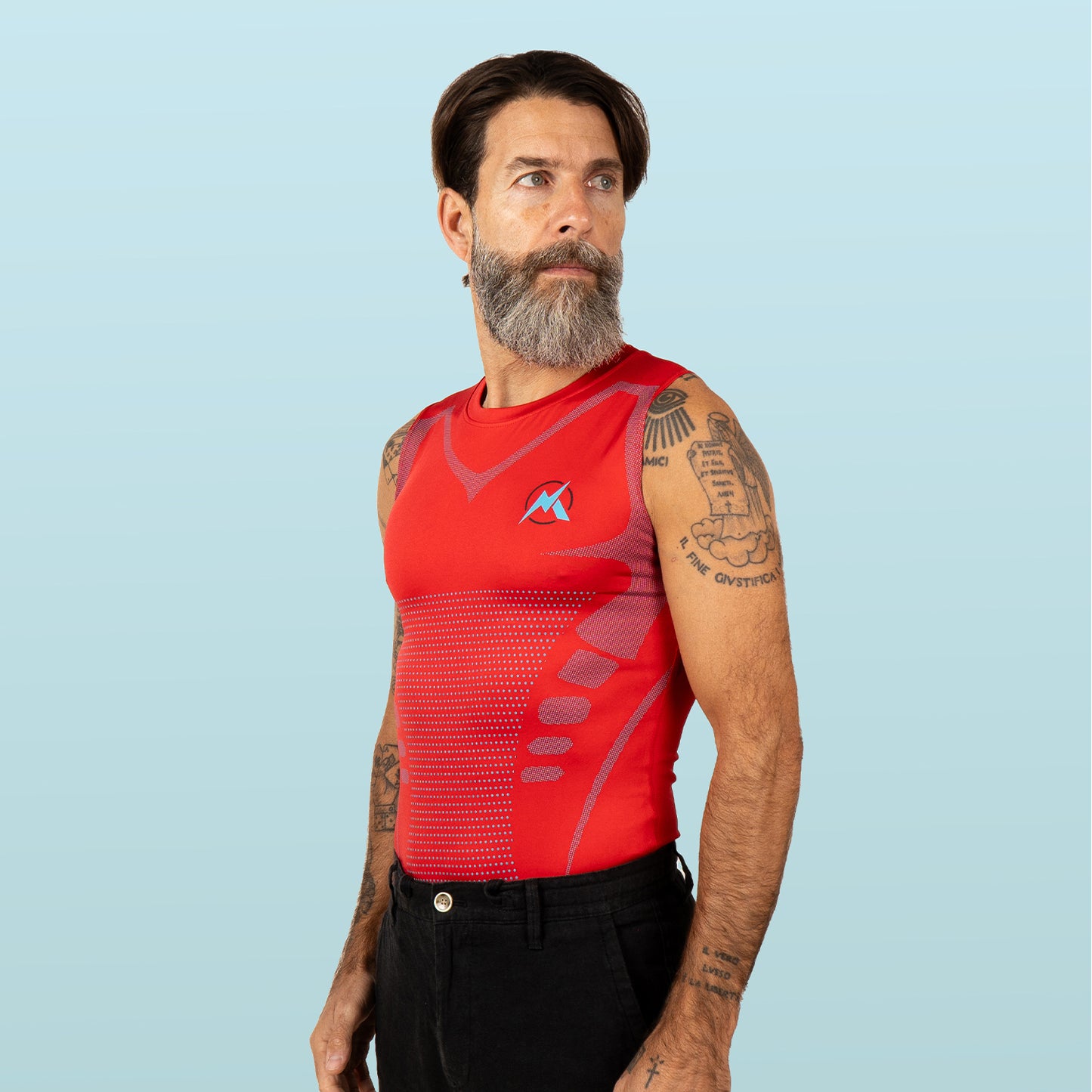
Two pieces matter: pulling your shoulders back into neutral, and wearing a structured base layer that gives your torso a clean vertical line. The compression base layer also delivers proprioceptive feedback — a 2022 Sports Medicine review by Brown et al. found compression garments reduce perceived muscle soreness and improve postural feedback, which is exactly the cue a 50-year-old who's been hunched for 15 years needs to relearn upright.

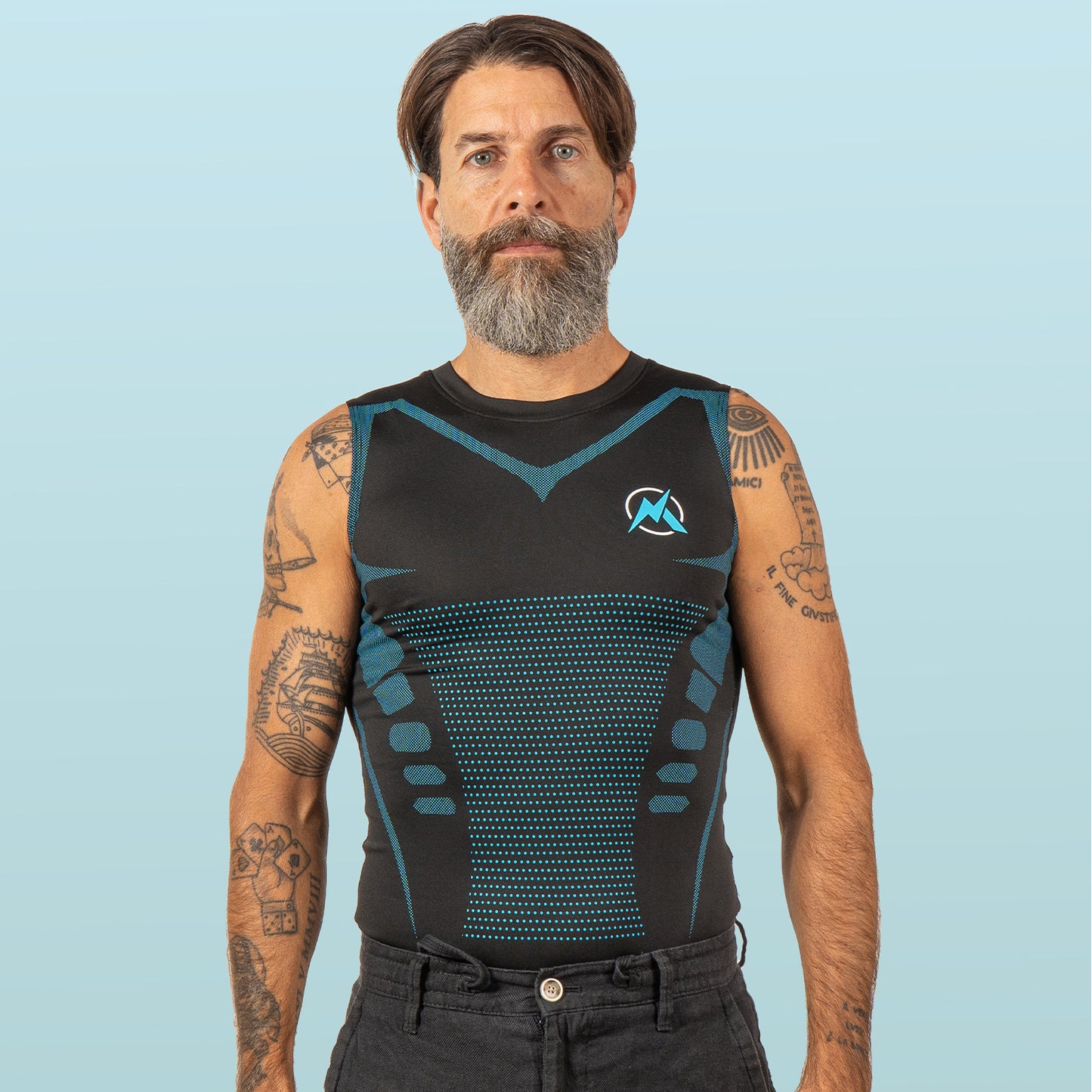
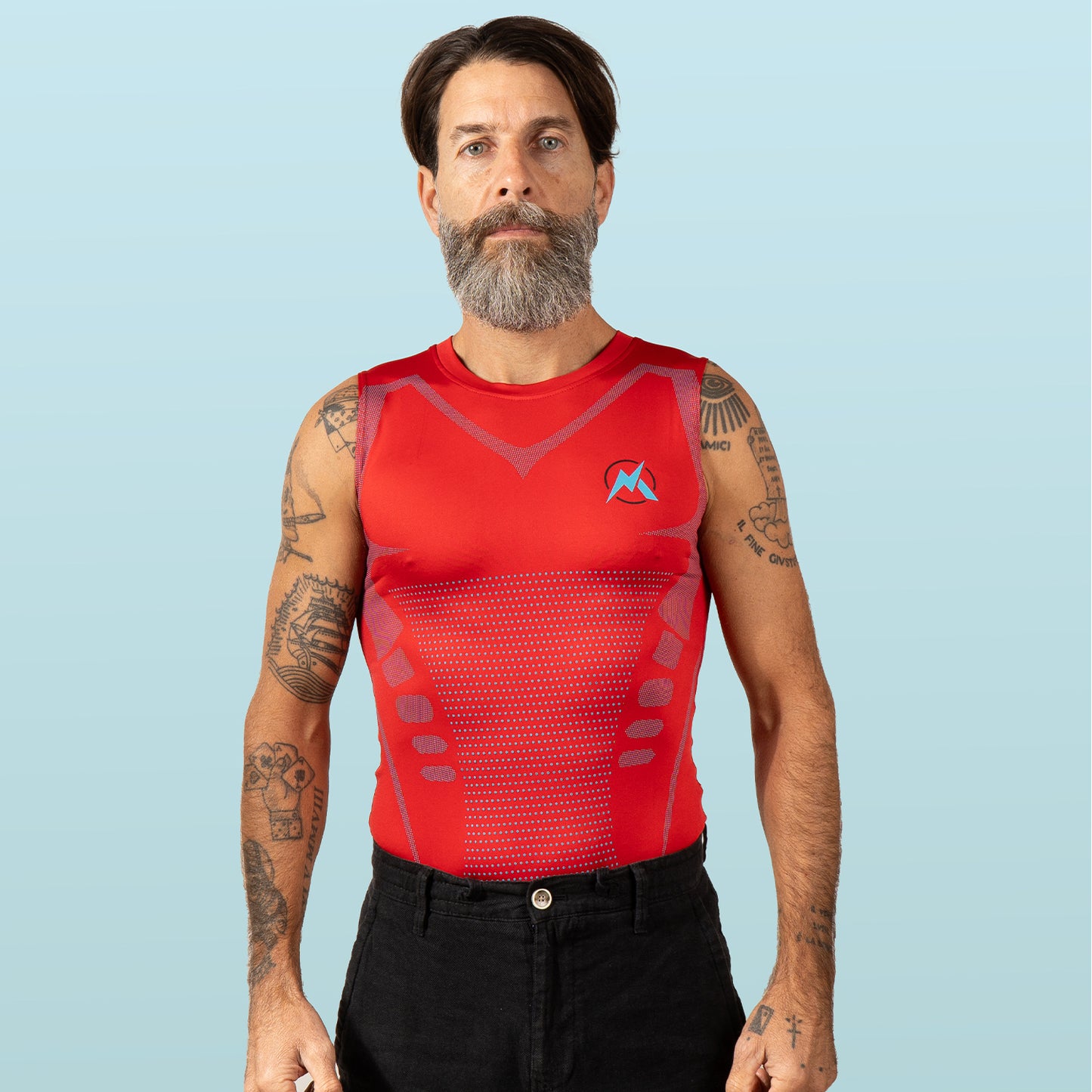
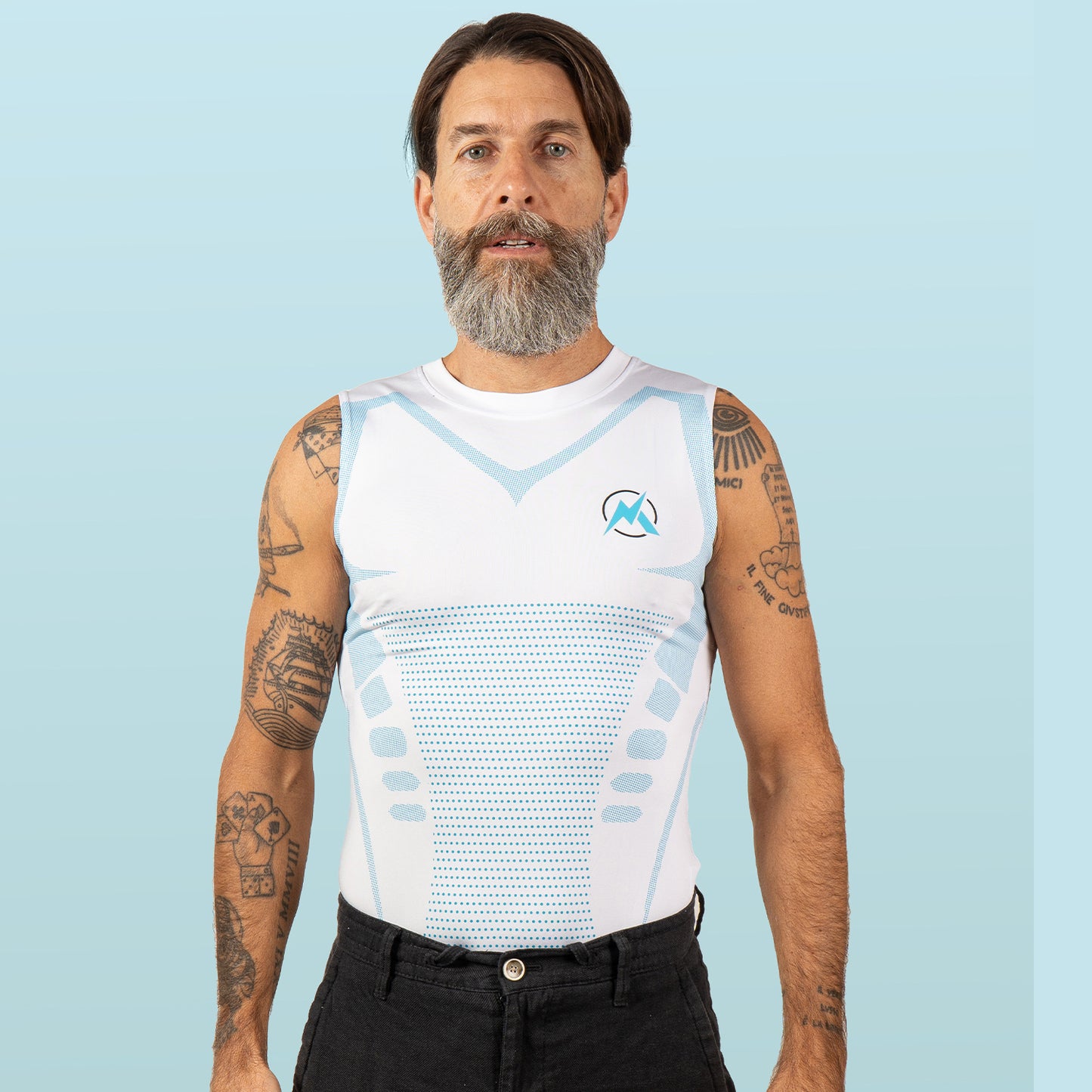
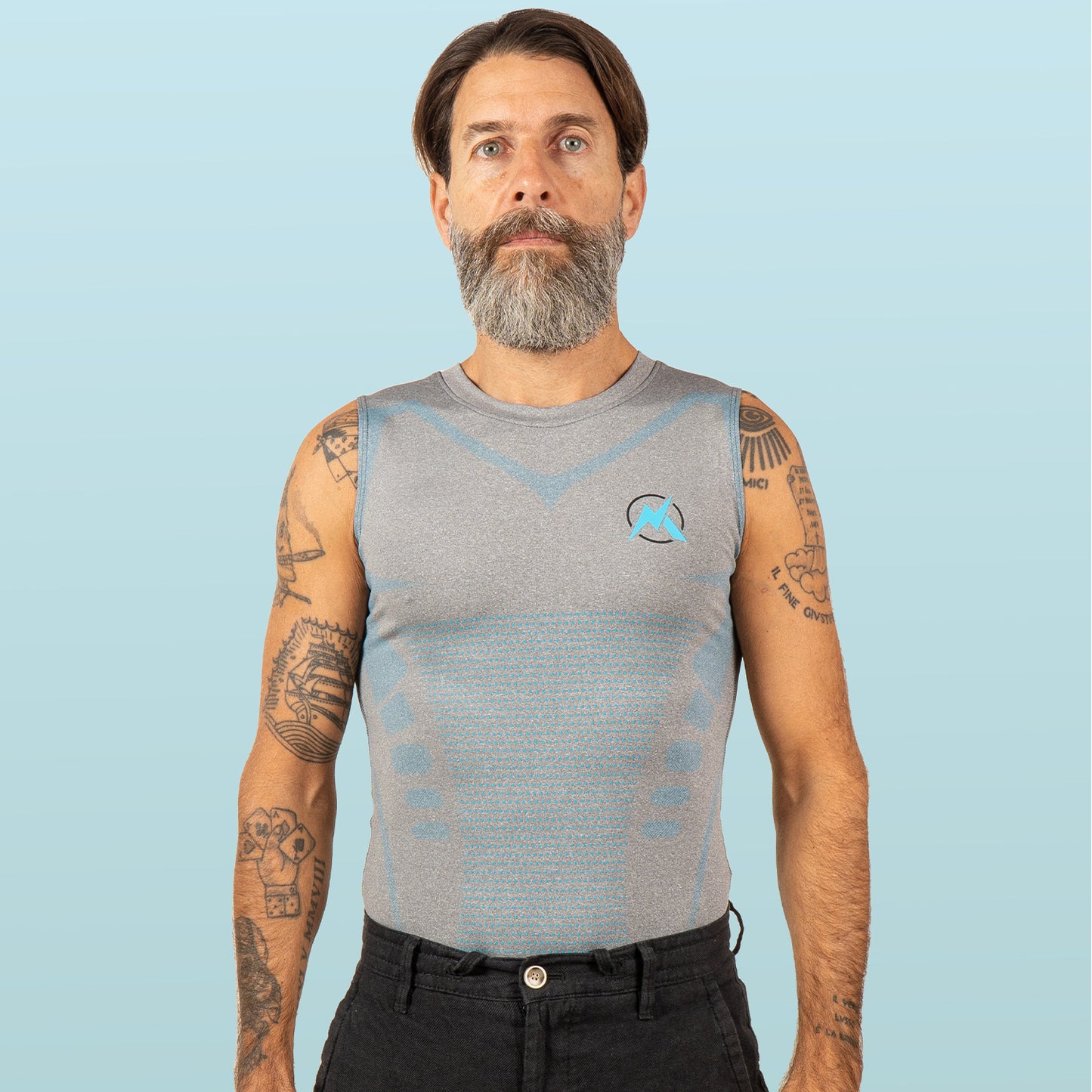
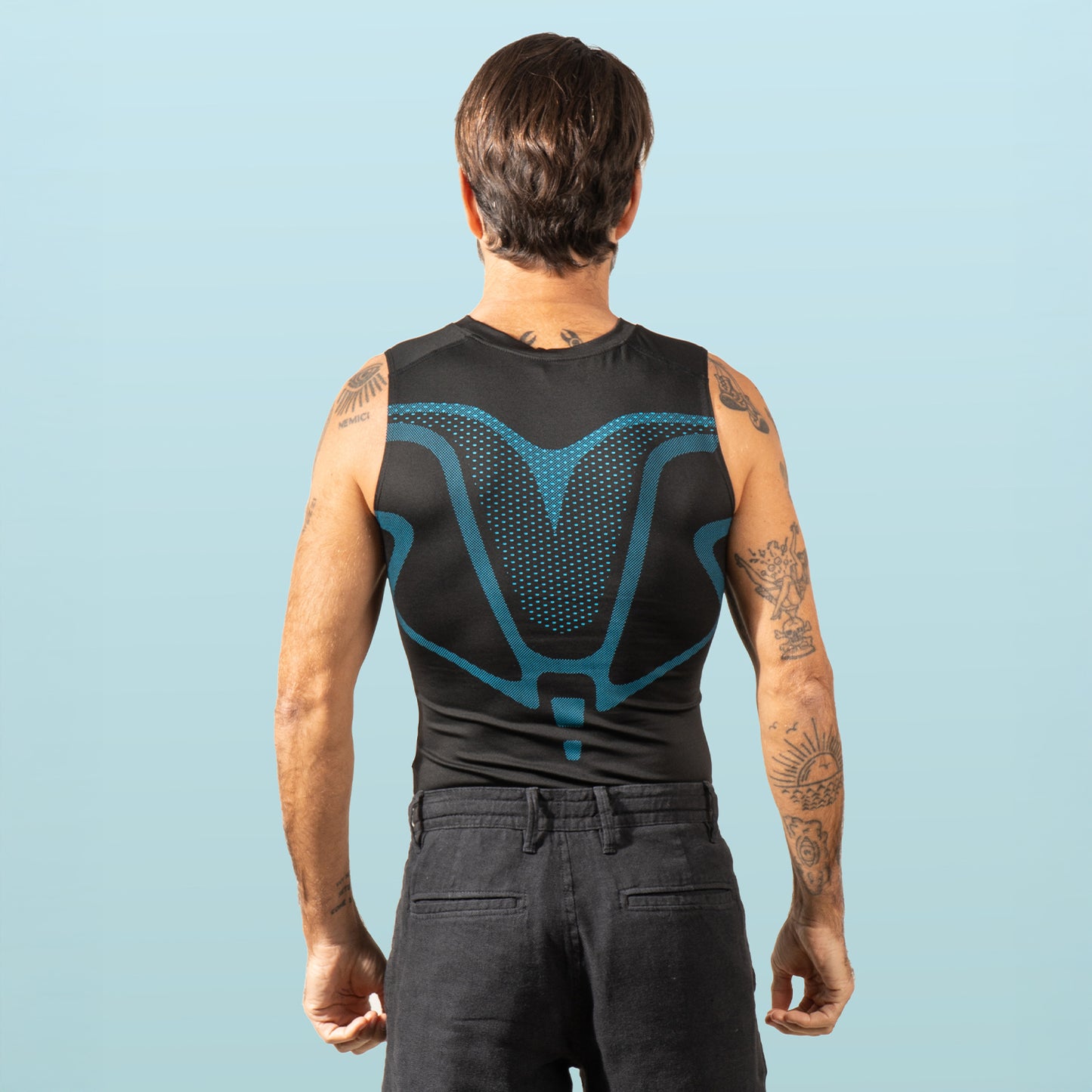
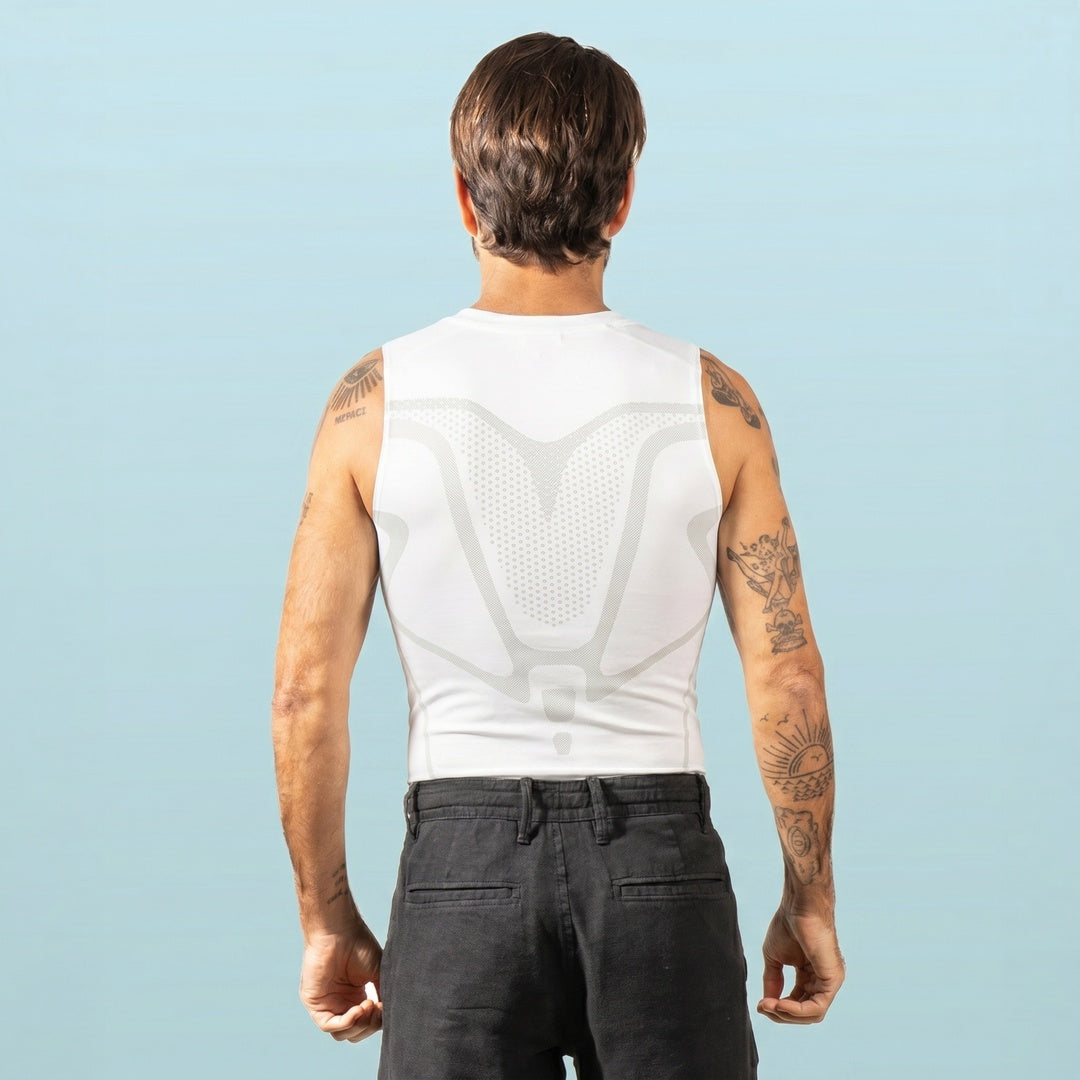
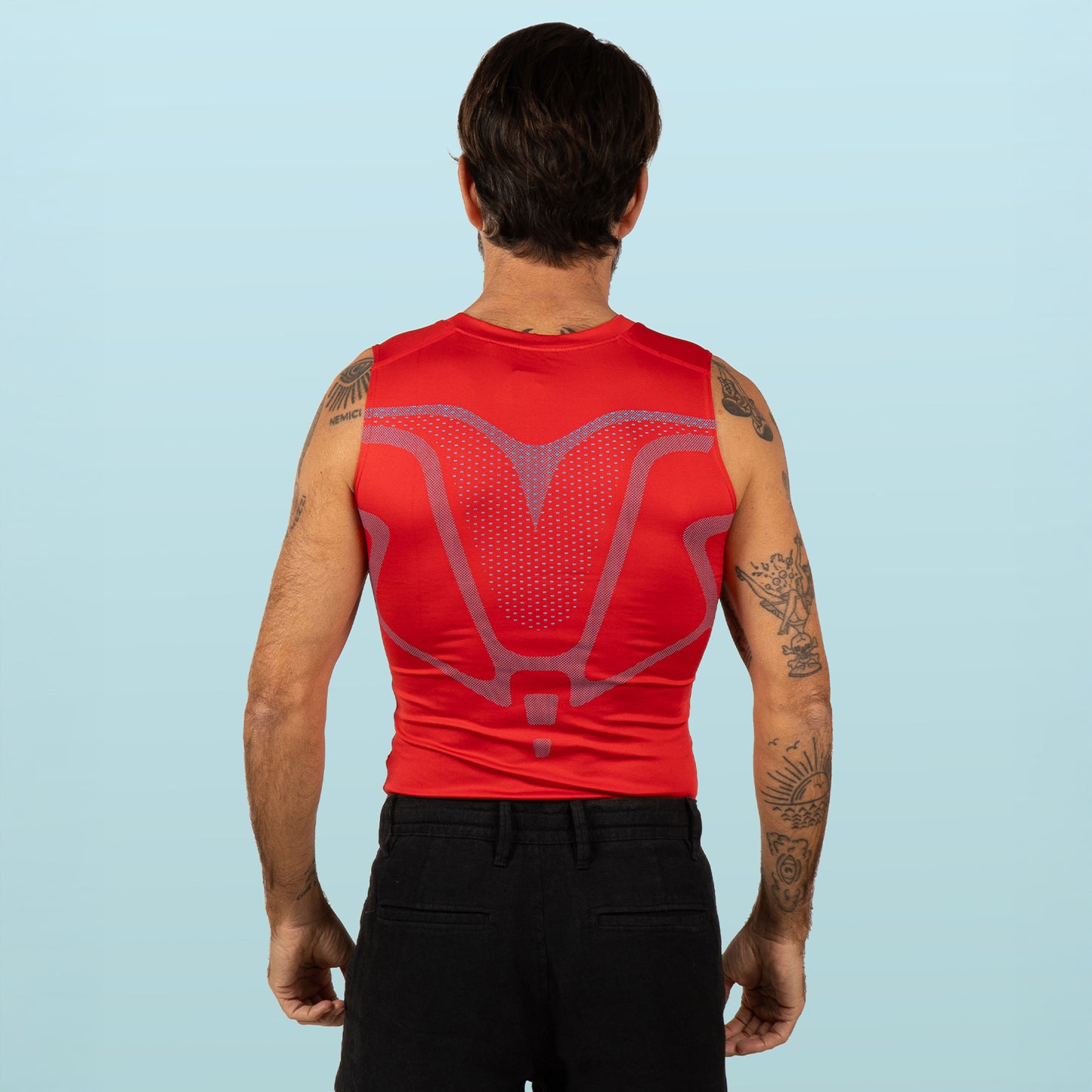
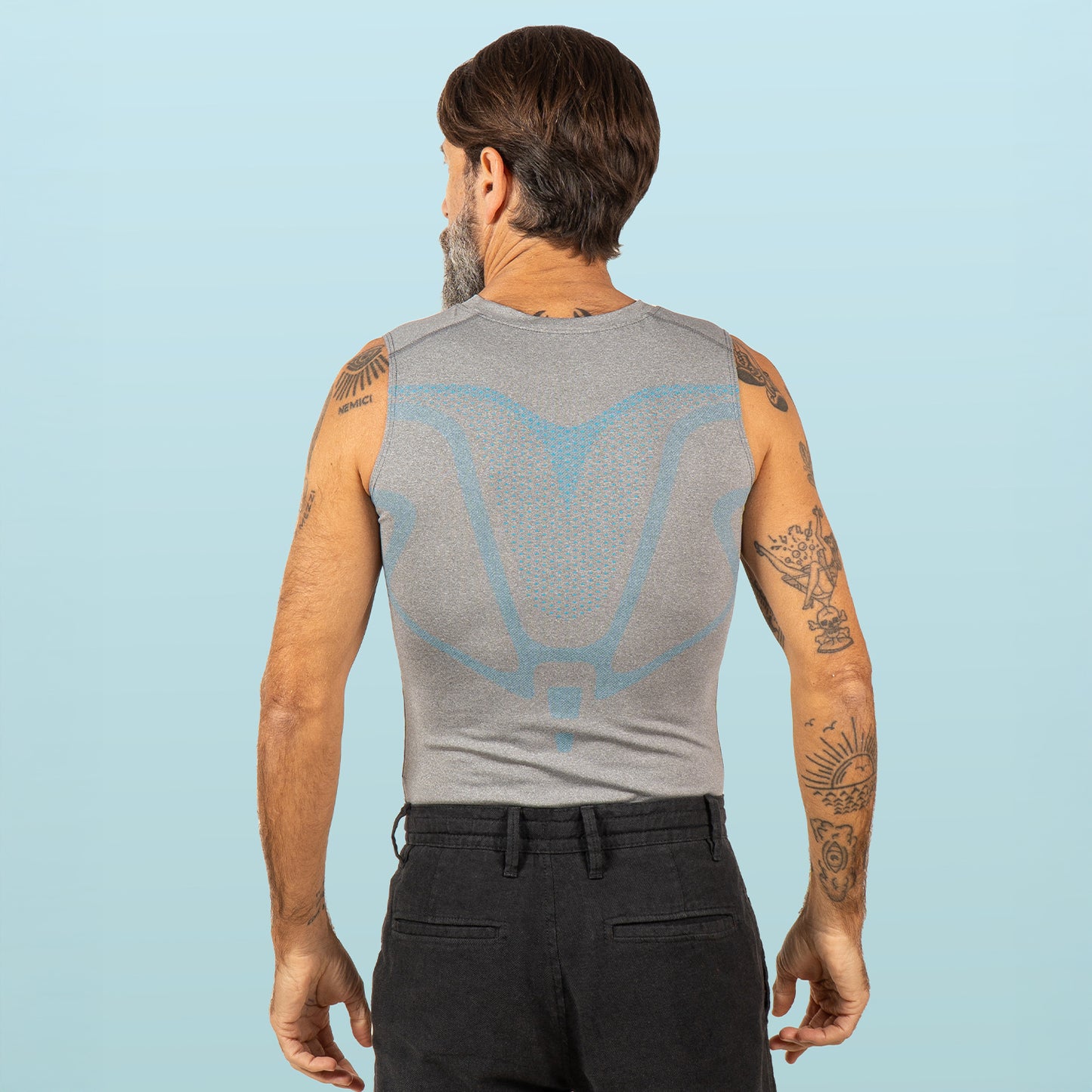
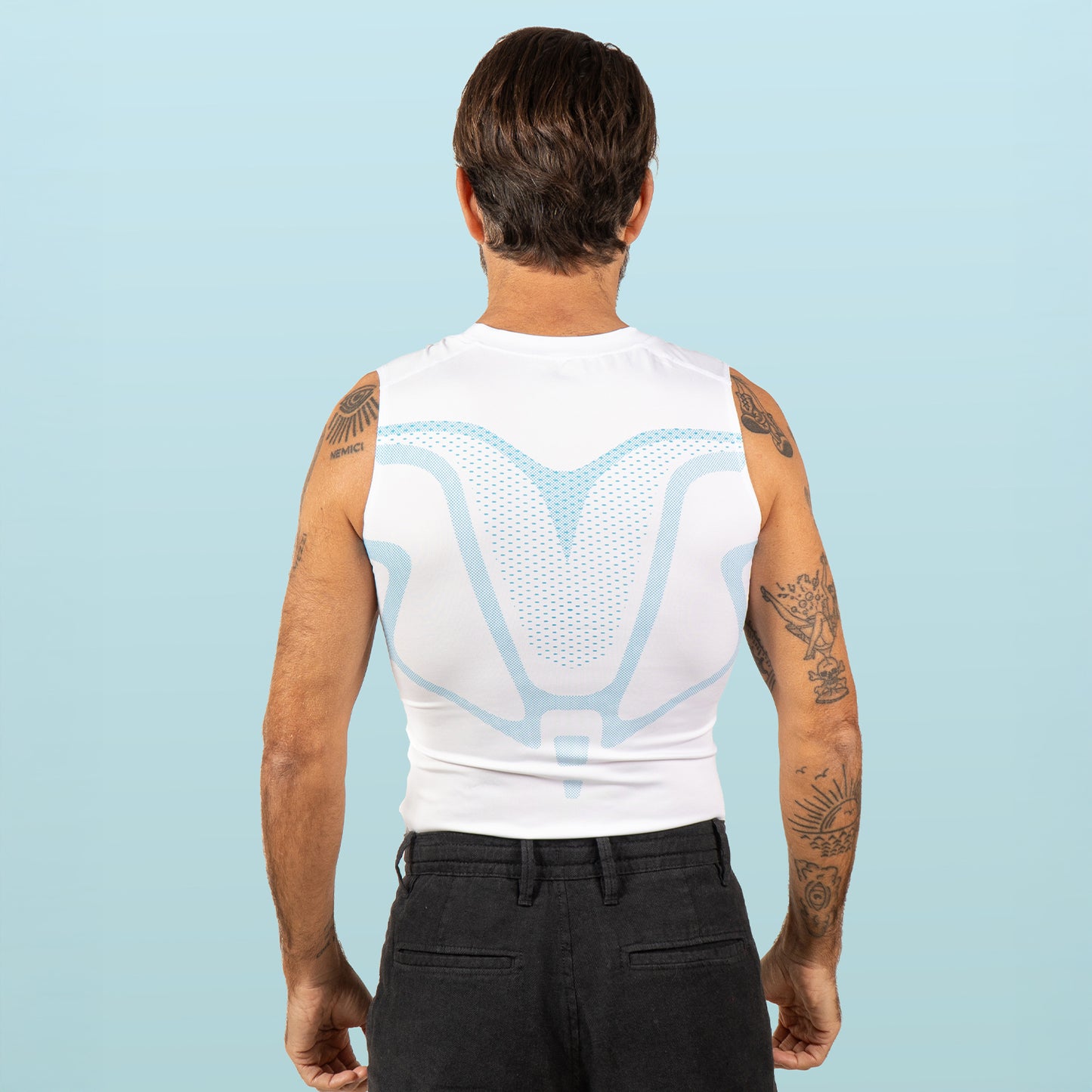
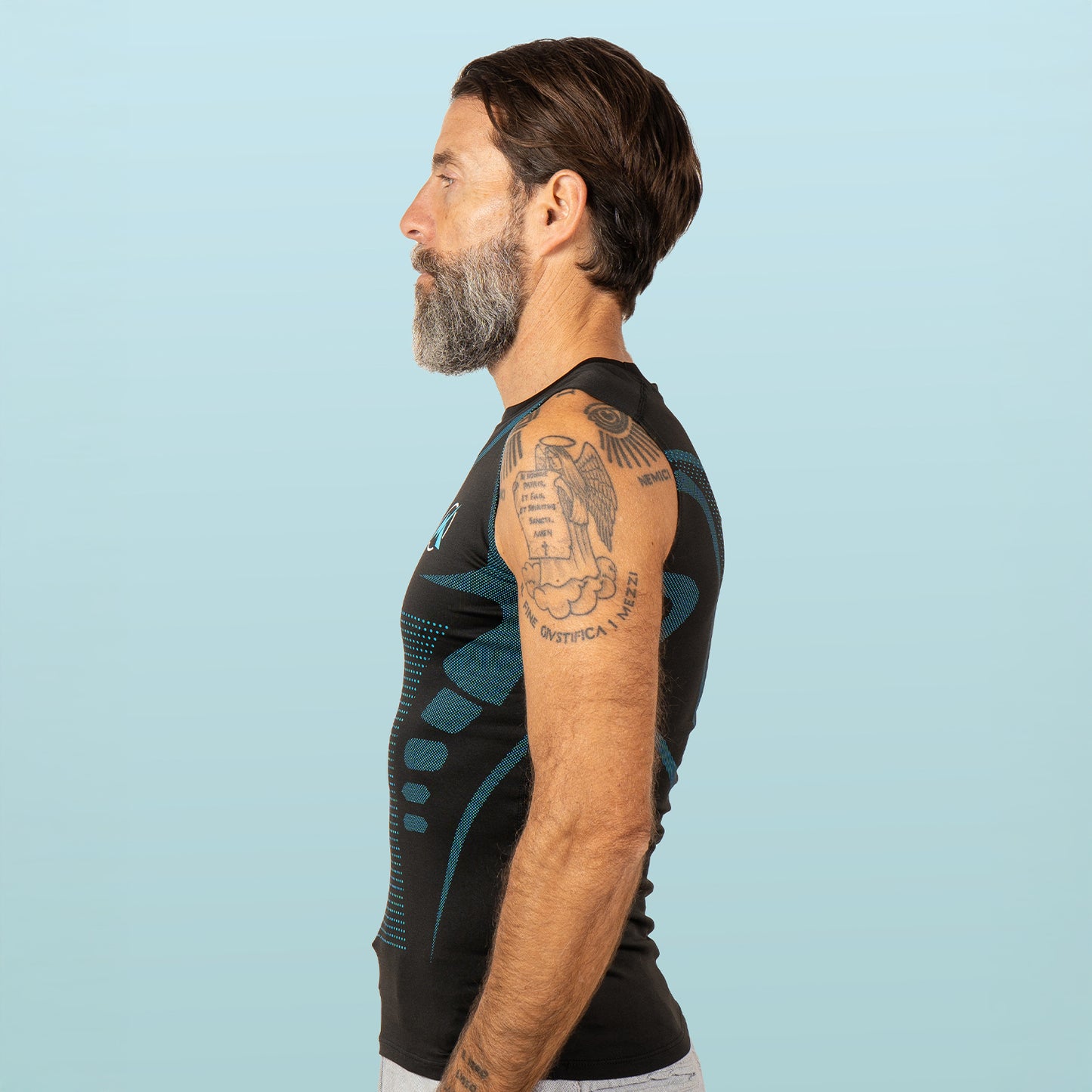
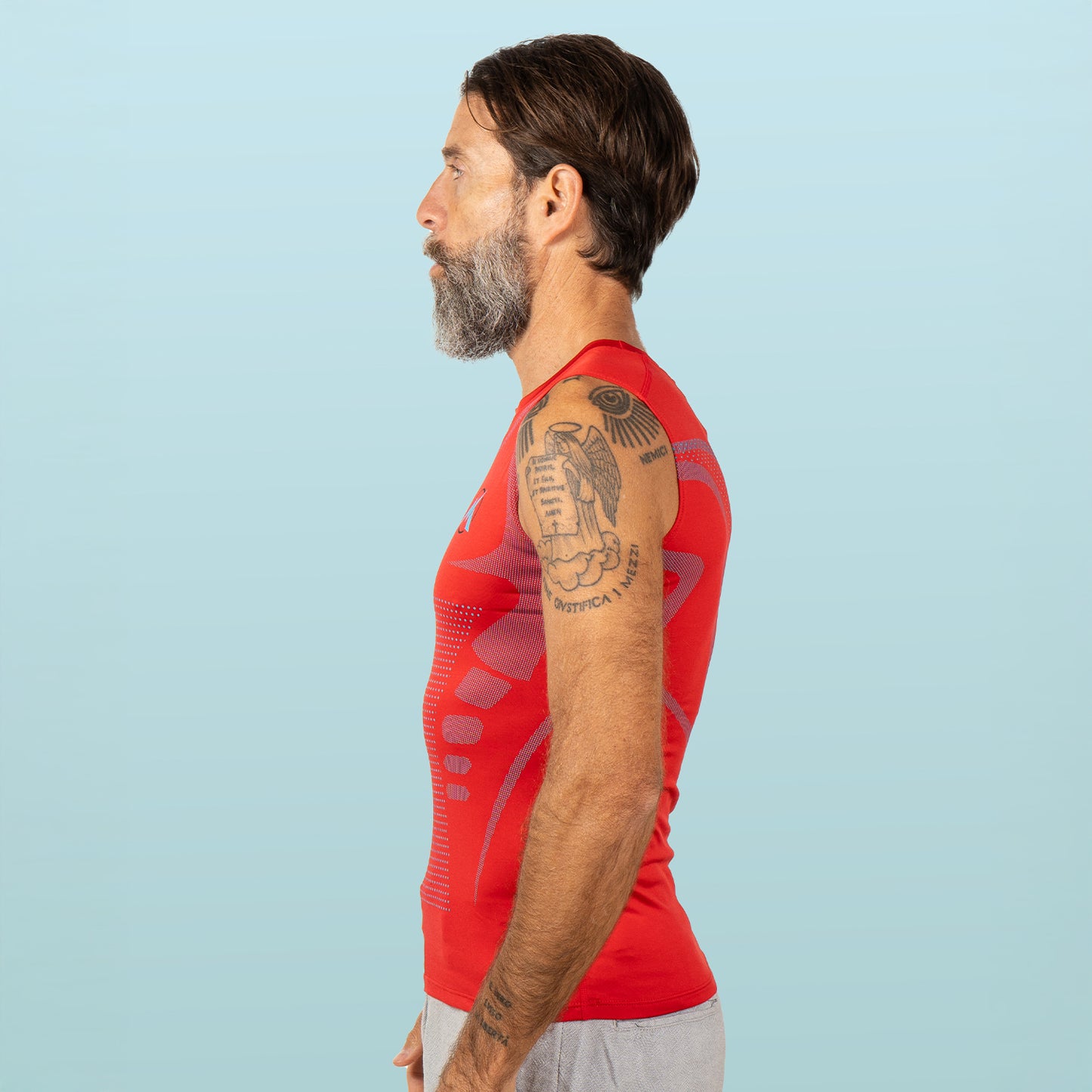
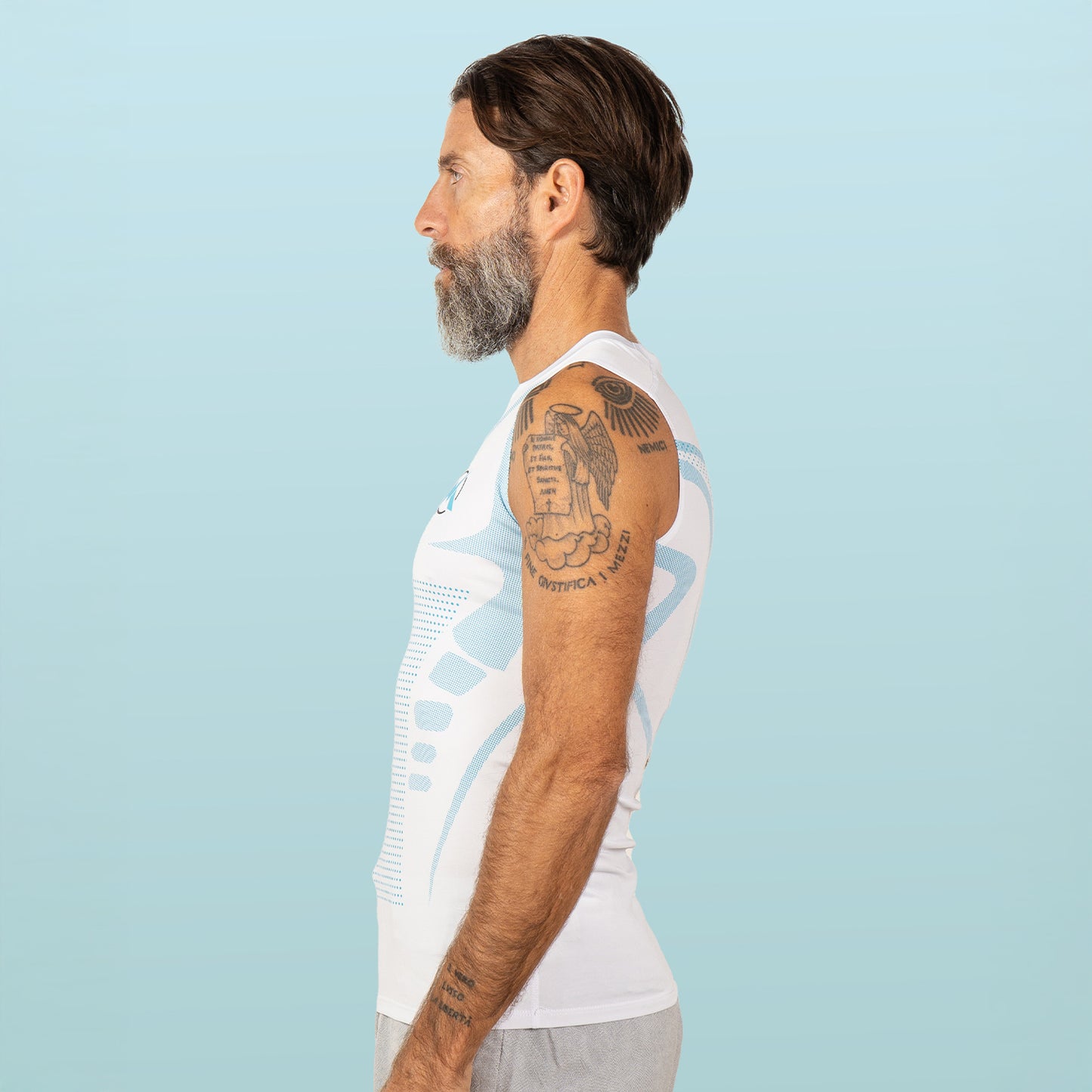
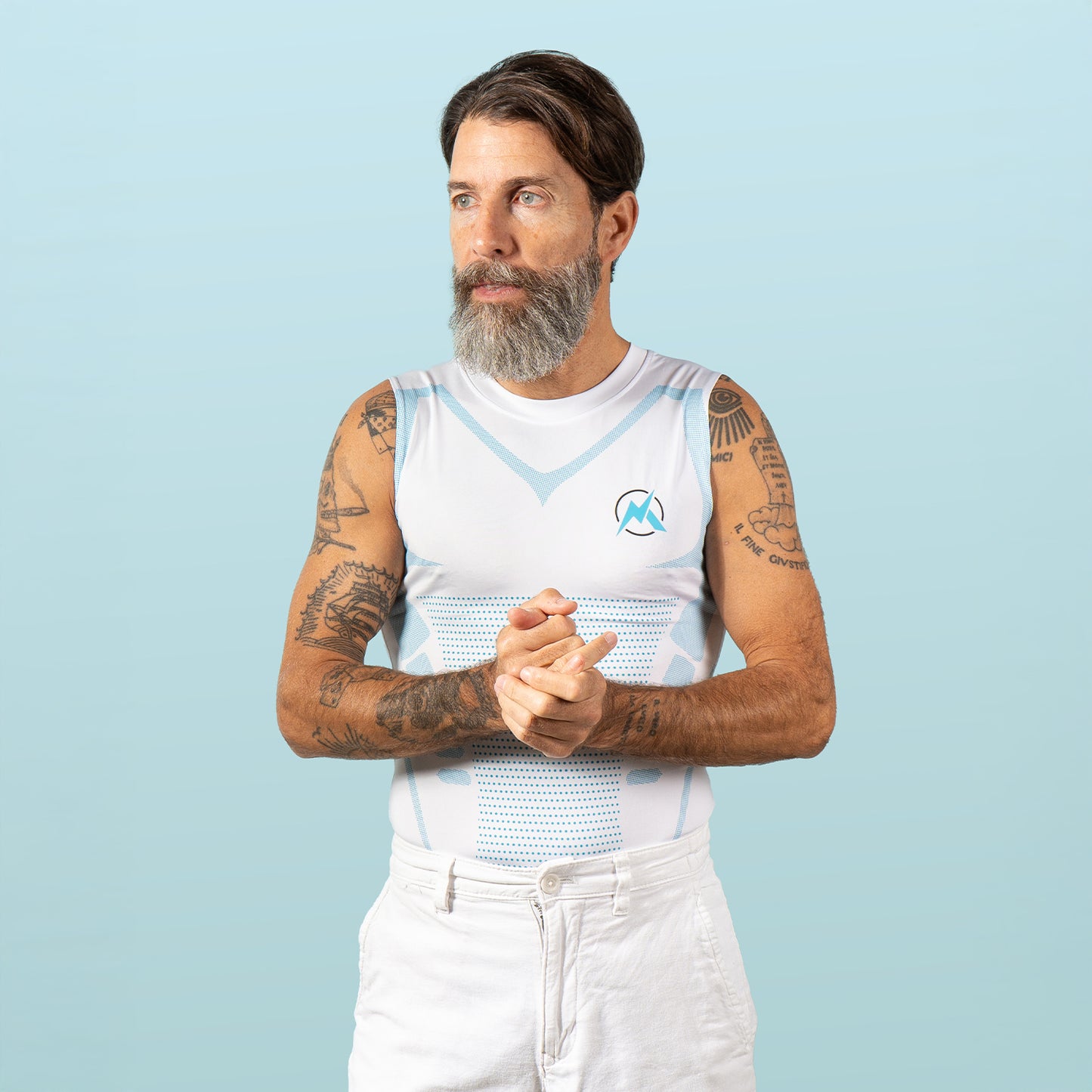
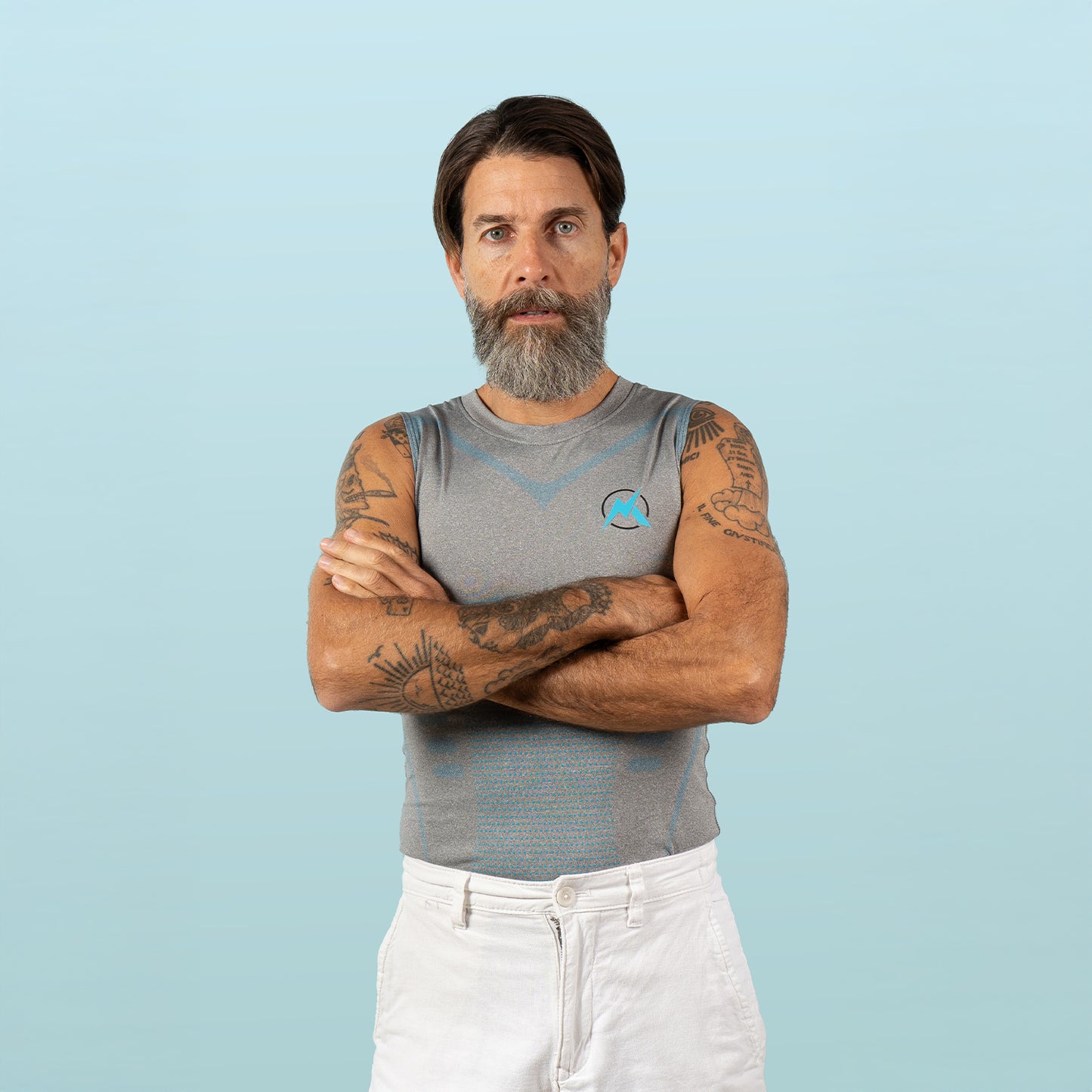
A black structured compression layer like the Maynox VitaBoost does both jobs: it pulls the shoulders into neutral and adds a clean visual line under every shirt. Wear it the first day you start training. It's the only lever that buys you a Week 1 win.
Get the VitaBoost — BUY 1 GET 1 FREE — $15
Lever 2 (visible by Week 6): Strength training, twice a week
You don't need 5 days a week. You don't need a powerlifting plan.
You need two full-body sessions per week, 45 minutes each, built around compound movements. Squats. Hip hinges (deadlifts or dumbbell Romanian deadlifts). Pushes (bench, overhead press). Pulls (rows, lat pulldowns). Loaded carries. That's the entire program.
Why two days, not five? Because at 52, your recovery window is the bottleneck — not your training capacity. Two well-recovered sessions beat five half-recovered ones every time.
Rep range: 8 to 15 reps per set, 10 total working sets per muscle group per week — the dose-response sweet spot identified in multiple training studies. Add weight when 12 reps feels easy. Don't ego-lift. Tendons take 6 months to catch up to muscle.
Lever 3 (visible by Week 8): Protein, 0.7 grams per pound
Older men need more protein per meal to overcome anabolic resistance — not necessarily more total, just better distributed. Aim for 0.7 to 0.9 grams of protein per pound of bodyweight per day, with at least 30 to 40 grams at each main meal. For a 180-pound man, that's about 126 to 162 grams a day, split across 3 to 4 meals.
Simple sources do the job: eggs, Greek yogurt, chicken, fish, beef, cottage cheese, lentils. A whey shake after training is a convenient extra, not a requirement.
Lever 4 (visible by Week 4): Sleep and walking
Strength training is the stimulus. Sleep is when you actually build muscle. CDC NCHS Data Brief 559 shows 30.5 percent of US adults sleep under 7 hours. If you're in that group, fixing it does more for recovery than any supplement on the market.
Add 7,000 to 10,000 steps a day on top of training. Walking burns visceral fat, improves insulin sensitivity, and — critically — doesn't tax your recovery budget the way a third lifting session would.
The 4-week starter protocol
Stop reading 12-week programs. Here's what to do for the next 28 days.
Week 1 — Restart
- Monday & Thursday: 30 minutes of full-body resistance. Goblet squat, dumbbell bench press, dumbbell row, dumbbell overhead press, plank. 2 sets of 10 reps each. Light weight. Focus on form.
- Daily: Wear the structured base layer under everything. Stand against a wall 2 minutes a day — heels, hips, shoulders, head touching.
- Daily: 7,000 steps. Protein at every meal.
- Nightly: In bed by 11pm. Phone off the bed.
Week 2 — Add intensity
- Same exercises Mon/Thu, 3 sets of 10. Add 5 pounds to the bench, squat, and row when possible.
- 8,000 steps daily.
- Add one mid-week 20-minute walk after dinner — bigger sleep dividend than people expect.
Week 3 — Add a second movement pattern
- Mon/Thu workouts now include 4 sets of compound + 1 finisher (loaded carry or tempo squat).
- 10,000 steps. Track protein for one day mid-week — most men under-hit it.
Week 4 — Lock the habit
- Same plan. Do not add a third session yet. The job this week is to make weeks 1-4 feel automatic.
- Take a "Week 0 vs. Week 4" photo. Side profile, no flex. You're not looking for visible muscle — you're looking for shoulders pulled back, a flatter midsection line, and a face that looks rested.
By Week 6, the mirror starts catching up with the work. By Week 12, other people notice.
What doesn't work (and what to skip)
Honest list. Most of the "muscle after 50" market is built on selling these.
- TRT as the first move. Testosterone replacement helps men with diagnosed clinical hypogonadism. For most men over 50 with normal-range T, Mayo Clinic is explicit that the benefits are unclear and the risks (cardiovascular, fertility, polycythemia) are real. Get a real blood panel before any TRT clinic sells you the "low T" diagnosis from a 5-minute consult.
- "30-day transformation" programs. Six weeks is the floor for measurable muscle change. Anything promising visible new muscle in 30 days is selling either water weight, posture changes (which we already covered for free), or photoshop.
- Cardio-only programs. Long-duration cardio doesn't build muscle. It can actively slow recovery if you're already calorie-restricted. Walking is the right cardio dose for muscle-building over 50; running marathons is not.
- Test-booster supplements. No OTC supplement reliably raises testosterone in men with normal-range T. Save the money for protein and a basic creatine monohydrate (5g daily — one of the few supplements with solid evidence for older adults).
- Lifting heavy every session. At 52, alternating 8-rep sets with 12-rep sets across the week protects your joints and tendons. Going under 5 reps every session is how men over 50 end up with shoulder pain and 6 weeks off.
How to know it's working
Forget the scale. Track these four signals instead.
- Strength. Same weight feels easier, or you add 5 pounds to a lift. This shows up first — usually Week 2 or 3.
- Energy. You stop hitting a 3pm wall. Workout days end with you sharper, not drained.
- Shape, not weight. Pants get loose at the waist. Shirts get tight in the chest and shoulders. Scale barely moves.
- Recovery. Soreness drops from 3 days to 1 day post-workout. Sleep quality climbs.
If you're hitting two of these by Week 4, the plan is working. Don't change it. Repeat the same protocol for 8 more weeks before you add complexity.
One adjacent piece that's worth reading next: most men over 50 underestimate how much sleep and energy debt is driving their stalled progress. Why you feel tired all the time after 45 covers the 4-debt fatigue framework that pairs cleanly with this muscle plan. The daily habit-stack for standing tall covers the posture cue Lever 1 leans on. And if the dad-bod side of this is what really got you reading, how to reverse a dad bod covers the broader body-composition fix.
Frequently asked questions
Is it too late to build muscle in your 50s?
No. Adults over 50 build measurable muscle and strength within 6 to 12 weeks of starting a basic resistance program, with the largest gains coming in the first 6 to 12 months. The window only closes if you don't open it.
How long does it take to build muscle after 50?
Strength improvements show up within 2 to 4 weeks. Visible muscle change starts around Weeks 6 to 9 for a complete novice. A reasonable expectation is 1 to 2 pounds of new muscle per month for the first year of consistent training.
How many days a week should a 50-year-old lift weights?
Two well-recovered sessions beat five half-recovered ones. Start with two full-body sessions a week, 45 minutes each. Add a third only after 8 weeks of consistent training, and only if recovery (sleep, soreness) supports it.
How much muscle can you realistically gain after 50?
For a true novice, 1 to 2 pounds of new muscle per month over the first 6 to 12 months — roughly 10 to 20 pounds in the first year. After that, the rate slows to a fraction of a pound per month. Past lifters returning to training can recover lost muscle faster ("muscle memory") but won't see the same dramatic first-year numbers.
Should men over 50 take testosterone to build muscle?
Only with a real diagnosis. Mayo Clinic is clear: TRT helps men with clinical hypogonadism, but the cardiovascular, fertility, and polycythemia risks are real, and the benefit for men with normal-range testosterone is unclear. Get a proper blood panel before any TRT clinic sells you "low T" from a 5-minute consult.
Sources
- NIH/PMC — Sarcopenia in older adults (3-8% per decade muscle loss after 30)
- Mayo Clinic — Testosterone therapy: potential benefits and risks
- SilverSneakers — How long does it take older adults to build muscle?
- Healthline — How much muscle can you gain in a month?
- Brown et al., Sports Medicine 2022 (PMC9023423) — Compression garments review
- CDC NCHS Data Brief 559 — Adults sleeping less than 7 hours
The bottom line: at 52, you're not chasing the body you had at 32 — you're building the body that makes the next 30 years easier. Two sessions a week. Protein at every meal. Sleep on the clock. A base layer that holds you upright while the strength catches up. The first 6 weeks decide whether you stay. After that, the body does the work.
Start with the Week 1 lever — VitaBoost — BUY 1 GET 1 FREE — $15
Disclaimer: This article is for general informational purposes only and is not medical advice. Consult a licensed physician before starting any new exercise program, changing your diet substantially, or considering testosterone replacement therapy.