By Owen Blot · Founder, Maynox · Last updated June 5, 2026
- Why "best workout for men over 50" listicles keep failing you
- The real hierarchy: what actually matters at 50+ (ROI-sequenced)
- The 3-day sustainable plan (your weekly template)
- Your first 4-week starter protocol (exact sets, reps, rest)
- Exercises to skip after 50 — and what to do instead
- What doesn't work (and why you keep quitting)
- The workout uniform that quietly does the work
- Frequently asked questions
You're 52. You used to lift in college. You've started and stopped four programs in the last three years. Each one looked great on day one — and each one quietly fell apart somewhere around week five, when your knee flared up, your wife caught the flu, or the gym shifted its hours.
The problem isn't you. The problem is that almost every "best workout for men over 50" article on Google is written for someone who isn't you. It's either a strength coach showing off a five-day bro split, a brand pushing a $297 program, or a generic "walk, swim, lift light" listicle that doesn't actually tell you what to do on Monday at 6:45 p.m. when you have 45 minutes between dinner and bedtime.
This article is different. It's a 3-day plan built around the real constraints of a 50-year-old man in 2026: tight schedule, joints that send updates, a sleep account often in the red, and a need to look better in clothes without spending two hours a day in a gym. It sequences what matters by ROI, gives you exact sets and reps for the first month, and tells you what to stop doing — because half the reason men over 50 plateau is they're still grinding moves that punish their joints without building anything visible.
Why "best workout for men over 50" listicles keep failing you
Pull up the top three articles for this search. One pushes deadlifts and functional training in a 60-minute coach-led format. One is a soft sales page for a 12-week paid program. One is a beginner-friendly listicle that recommends tennis, swimming, and "balance training" — useful in theory, useless when you need to know what to do tonight.
Here's what all three skip:
- Sequencing. They tell you to do strength, cardio, mobility, and balance like they all matter equally. They don't. At 50+, one lever moves the needle far more than the others.
- Realistic time blocks. Nobody you know has 75 minutes five times a week. You have three 45-minute windows.
- Joint reality. The exercises that built you at 30 will dismantle you at 50 if you don't swap them out.
- Avatar honesty. "Men over 50" includes 50-year-old Marines and 60-year-old desk workers with a 38-inch waist. The same plan can't serve both.
- The "uniform" effect. Nobody talks about what you wear under your shirt — the layer that quietly makes posture stick, makes your shoulders read upright, and makes the whole effort feel different from day one.
You're going to fix all five of those today.
The real hierarchy: what actually matters at 50+ (ROI-sequenced)
Most plans treat strength, cardio, flexibility, and balance as a four-legged stool — equal weight, all matter. At 50+, that framing is wrong. The levers have different return-on-time, and the time you save on the lower-ROI ones is the budget you use to actually show up consistently. Here is the real order.
Lever 1 — Strength (highest ROI)
After 30, you lose roughly 3 to 8 percent of muscle mass per decade, and the rate accelerates after 50 (NIH, sarcopenia review). Lose enough muscle and your metabolism, posture, joint stability, balance, and how you fill a shirt all degrade together. Resistance training is the single intervention that protects all of them at once. The American College of Sports Medicine recommends adults over 50 strength train at least 2 days a week, and the research is clear that two well-run sessions outperform five lazy ones.
Lever 2 — Mobility and posture (woven in, not separate)
You don't need a separate yoga session. You need 10 minutes of hip openers, thoracic spine extension, and shoulder mobility at the start of every strength workout. This is where most over-50 plans break — they make mobility optional. It's not. Sitting eight hours a day means your hips and upper back have learned to be short, and your shoulders sit forward. No squat or row will move correctly until you unlock those first. Harvard Health notes that consistent posture work shows measurable change inside 8 to 12 weeks.
Lever 3 — Conditioning (one short interval session)
The CDC recommends 150 minutes of moderate aerobic activity per week, but at 50+, intensity beats duration for cardiovascular and metabolic gains. One 25-minute interval session per week — done right — covers the conditioning base. Add daily walking (8,000 to 10,000 steps) and you're done. You do not need an hour on a treadmill three times a week. You need your heart rate to go up, then down, then up again — twice. That's it.
Lever 4 — Recovery (sleep, protein, days off)
This isn't a workout, but it's the lever that decides whether the first three actually work. Hit 7+ hours of sleep, 0.7 to 1.0 grams of protein per pound of bodyweight, and one full rest day between strength sessions. Skip recovery and you'll get the soreness without the adaptation. CDC data shows 30.5% of U.S. adults sleep less than 7 hours — and that group is the one quietly canceling all their gym progress.
The hierarchy: strength is the engine, mobility is the lubricant, conditioning is the polish, recovery is the fuel. Build the plan in that order — not alphabetically.
The 3-day sustainable plan (your weekly template)
You're going to train three days a week. That's it. Not five, not four. Three. Two full-body strength sessions and one short interval block. Here is the weekly template:
- Monday — Strength A (45 minutes): 10 min mobility + 35 min lifting
- Tuesday — walk (zone 2, 30-45 min)
- Wednesday — rest or walk
- Thursday — Strength B (45 minutes): 10 min mobility + 35 min lifting
- Friday — walk (zone 2, 30-45 min)
- Saturday — Conditioning (25 minutes intervals)
- Sunday — full rest
Three structured sessions. Two recovery walks. One full rest day. Total active time: about 2 hours 30 minutes per week. That's the entire commitment. If your current plan asks for more and you've been quitting at week six, the math is telling you something.
Why two strength sessions, not three? Because at 50+, recovery between sessions is the limiter, not workout volume. Two well-executed full-body workouts with 72 hours between them produces more strength and muscle than three sloppy ones with 48 hours between them. Less is genuinely more here.
If you're already a regular lifter and feel under-trained on this, you can add a third strength day. But start here. Earn the right to add volume by doing 12 consistent weeks first.
Your first 4-week starter protocol (exact sets, reps, rest)
This is the part the generic listicles skip. You don't need theory. You need to know what to do on Monday.
STRENGTH DAY A — Monday
- Mobility warm-up (10 min): cat-cow ×10, world's greatest stretch ×6/side, hip 90/90 ×8/side, scapular pull-aparts with band ×15, glute bridge ×12
- Goblet squat — 3 sets × 8 reps, 90 sec rest. Hold a dumbbell at chest, sit back, knees track over toes.
- Dumbbell Romanian deadlift — 3 sets × 8 reps, 90 sec rest. Hinge from hips, soft knees, weights slide down thighs.
- Push-up (incline if needed) — 3 sets × 8-12 reps, 60 sec rest
- One-arm dumbbell row — 3 sets × 10 reps/side, 60 sec rest
- Plank — 3 sets × 30 sec, 30 sec rest
STRENGTH DAY B — Thursday
- Mobility warm-up (same 10 min)
- Reverse lunge — 3 sets × 6 reps/side, 90 sec rest. Step back, drop straight down.
- Dumbbell bench press (or floor press) — 3 sets × 8 reps, 90 sec rest
- Single-leg glute bridge — 3 sets × 10 reps/side, 60 sec rest
- Lat pulldown (or band pulldown) — 3 sets × 10 reps, 60 sec rest
- Dead bug — 3 sets × 8 reps/side, 30 sec rest
CONDITIONING — Saturday (25 minutes total)
- 5 min easy warm-up (walk, bike, row)
- 5 rounds: 1 minute hard effort + 2 minutes easy recovery (Norwegian-style 4×4 lite)
- 5 min cool-down walk
Pick weights so the last two reps of each set feel hard but you keep clean form. Add 2.5 to 5 pounds per week when you complete all sets cleanly. That progressive overload — not the variety of exercises — is what builds you.

Stack this for 4 weeks before changing anything. The boring repetition is the point. Strength gains over 50 come from the same lifts loaded slightly heavier each week — not new gimmicks every Monday. If you want to see the underlying lever this plan rests on, our piece on whether you can still build muscle in your 50s walks through the realistic gain windows.
Exercises to skip after 50 — and what to do instead
Most "avoid these" lists tell you what to drop and then leave you stranded. That's useless. Here's the swap table.
| Skip this | Why | Do this instead |
|---|---|---|
| Behind-the-neck pulldown | Punishes the rotator cuff | Front lat pulldown to chest |
| Heavy barbell back squat (low bar, max load) | Loads spine and shoulders simultaneously | Goblet squat or safety-bar squat |
| Crunches and sit-ups | Repeated spinal flexion | Plank, dead bug, side plank |
| Box jumps and burpees | Impact + tendon load | Step-ups, jump rope skips, sled push |
| Leg extension machine | Shear force on knee | Reverse lunge, split squat |
| Standing overhead press with max load | Forward-head posture + cuff stress | Half-kneeling landmine press |
The pattern: skip moves that combine peak spinal compression, impact, or end-range shoulder loading with heavy weight. Replace them with variations that train the same pattern with less wear. You don't lose any strength gains. You just stop accumulating injury debt.
What doesn't work (and why you keep quitting)
If you've started a workout plan three or four times and bailed, it's almost never about willpower. It's about the plan being wrong for your reality. Here's what the data and ten years of watching guys quit make clear.
5-day bro splits don't work for you. Chest day, back day, leg day, etc. — that programming is built for 22-year-olds with 90 minutes a day and full recovery. For a 50-year-old with kids and a sleep debt, the math doesn't close. You miss two sessions, the cycle breaks, and you stop.
An hour of cardio doesn't work either. Long steady-state cardio raises cortisol, burns very few calories per minute, and crowds out the time you should have spent lifting. The 10,500-man Harvard study on strength training showed that just 20 minutes of weight work a day was linked to less age-related abdominal fat than equivalent cardio (Harvard Health). Lift first, walk second.
Test boosters and "30-day transformation" plans don't work. Mayo Clinic is direct: most over-the-counter testosterone boosters lack scientific support, and the natural decline of about 1 percent per year doesn't justify the marketing intensity around them. Real strength change at 50 takes 8 to 12 weeks, not 30 days.
Machine-only training doesn't work the way you need it to. Machines build muscle but skip the stabilizer and core work that protects your back when you bend over to lift a grandchild or a bag of mulch. Use machines as accessories, not the main course.
The workout uniform that quietly does the work
Here's the lever almost nobody writes about. Your shirt matters.
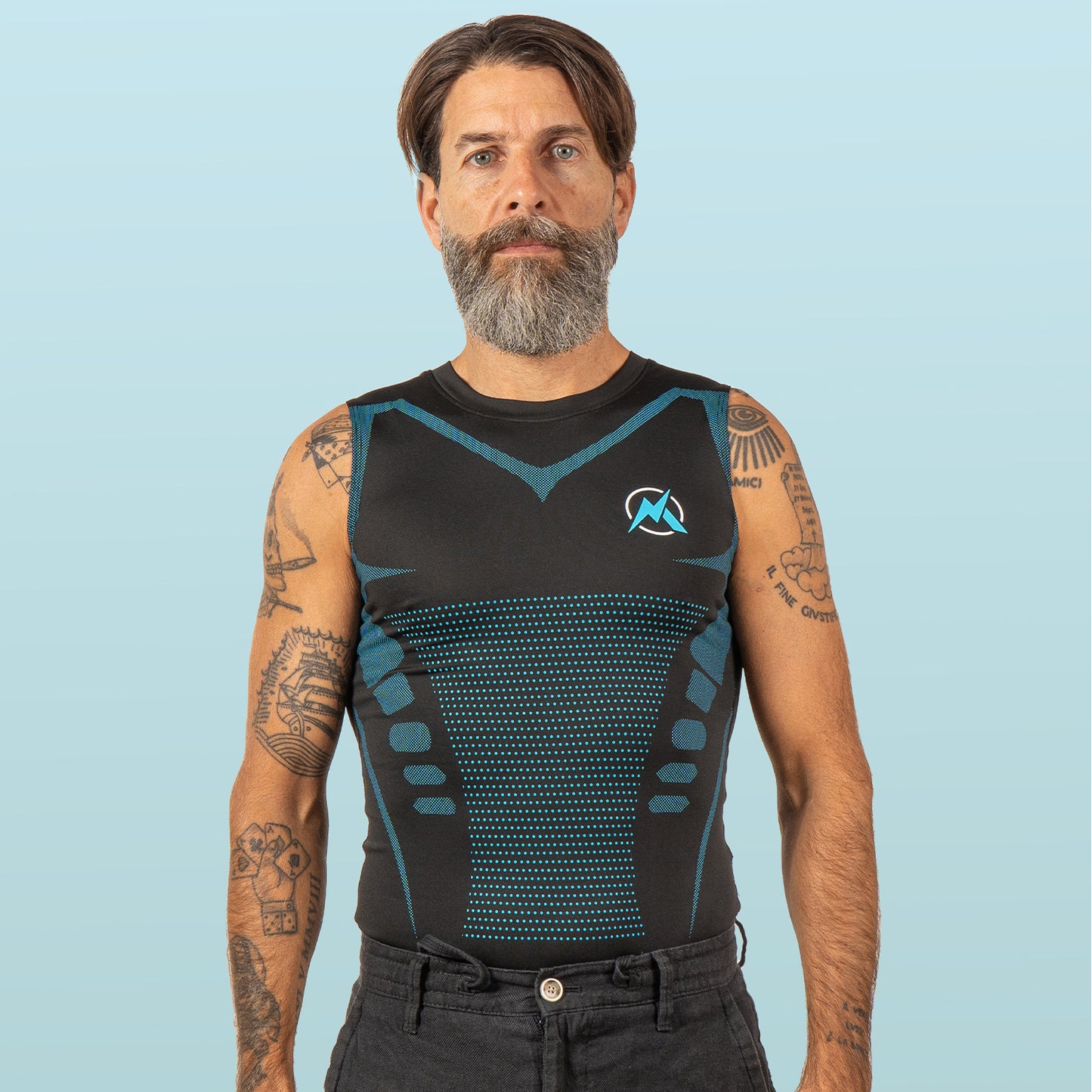
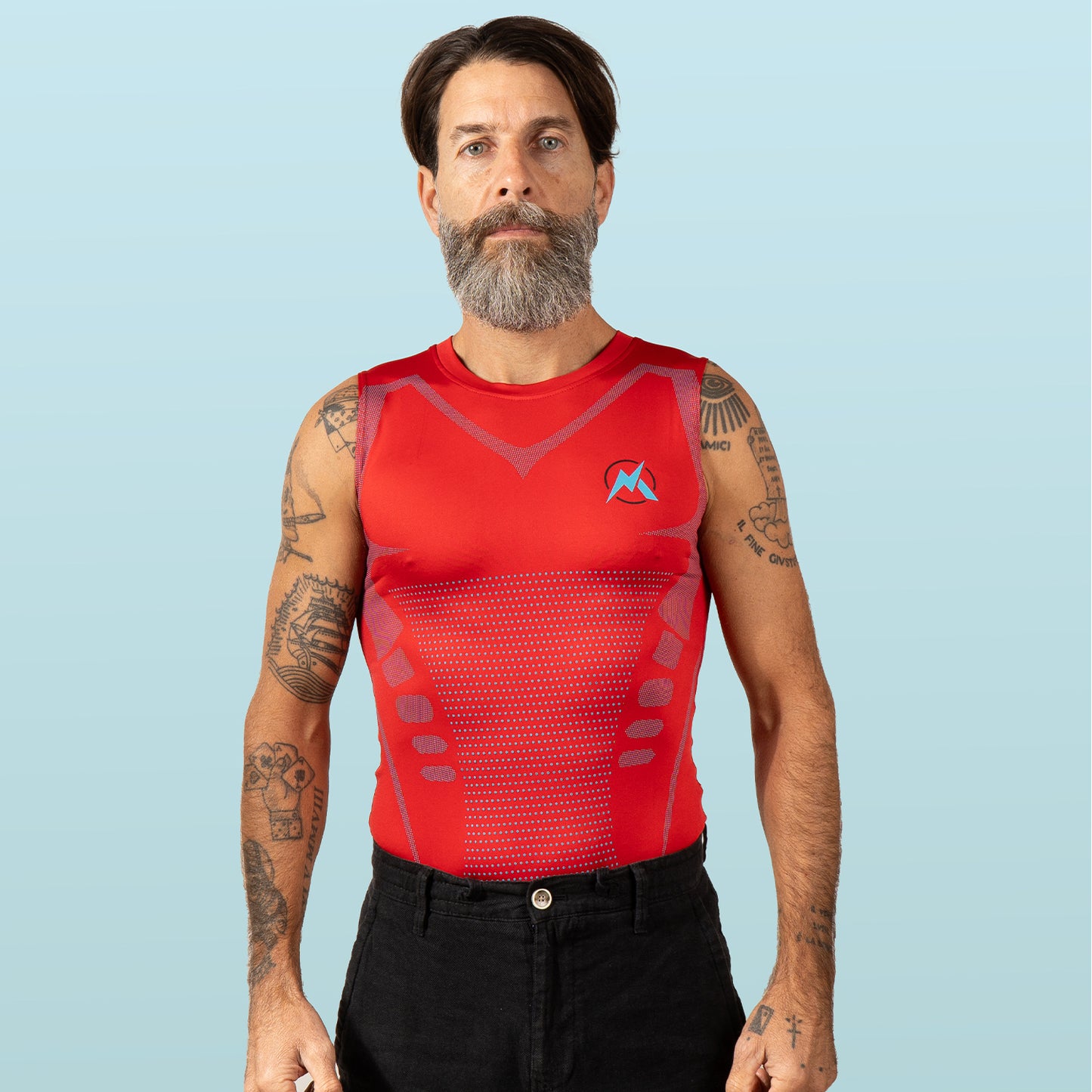
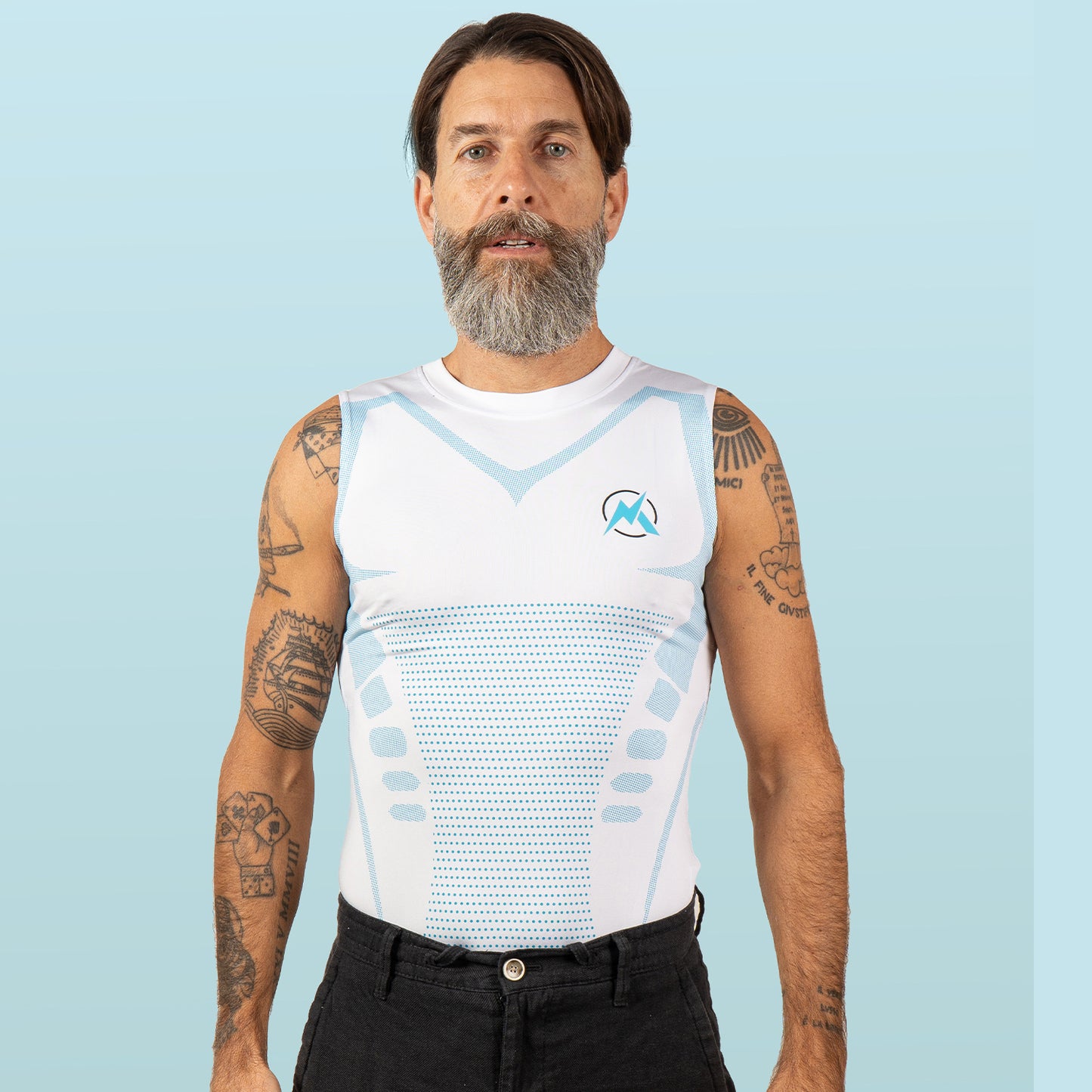
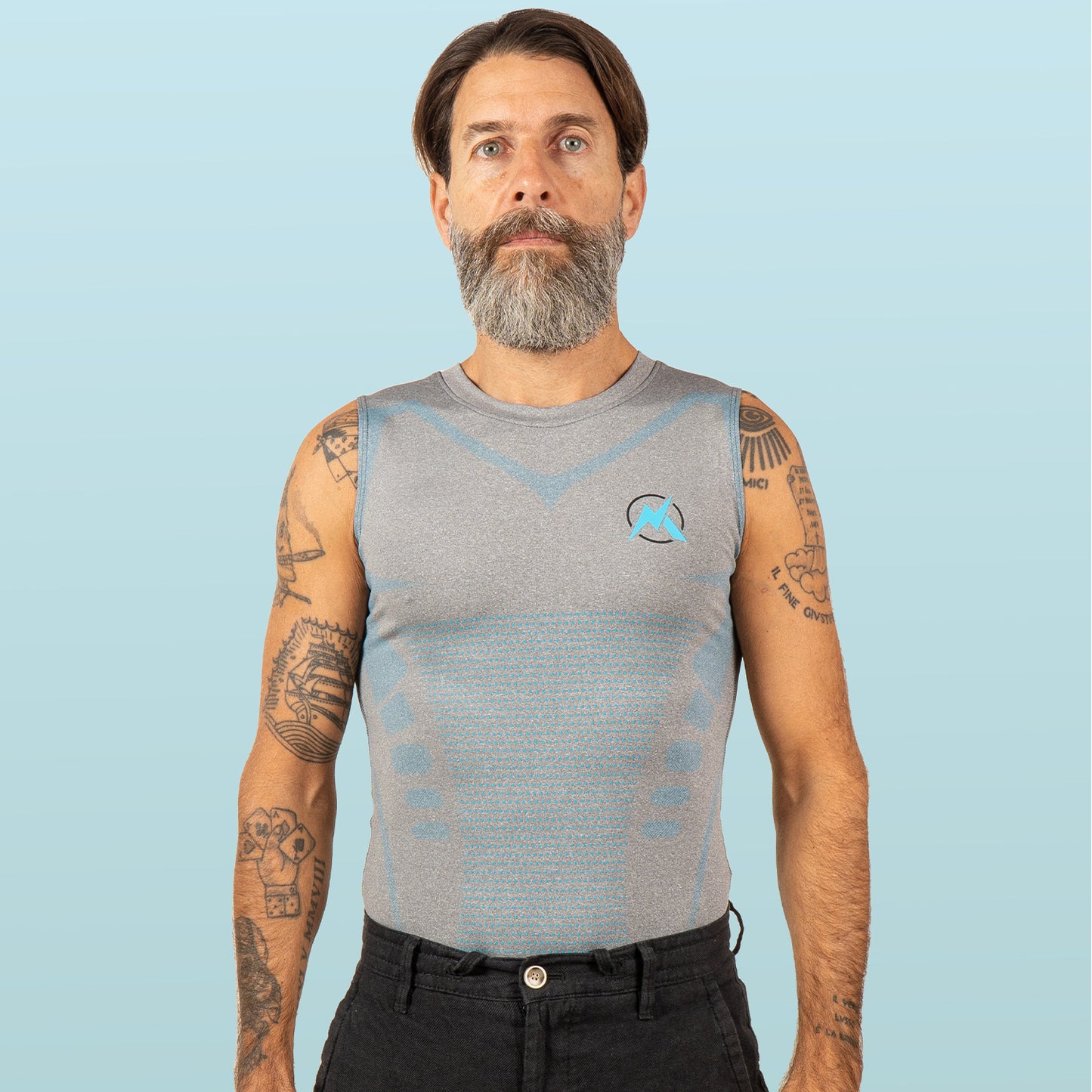
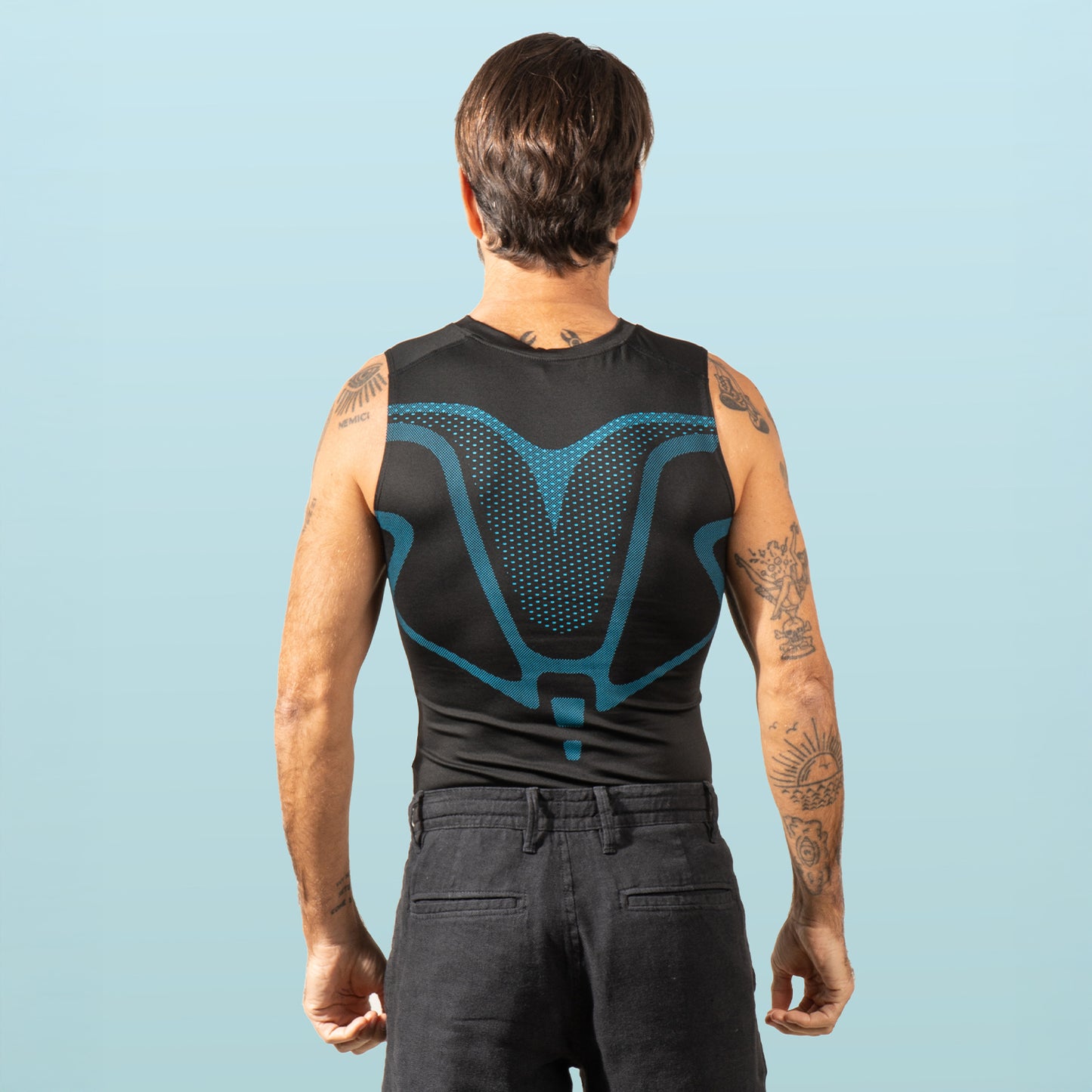
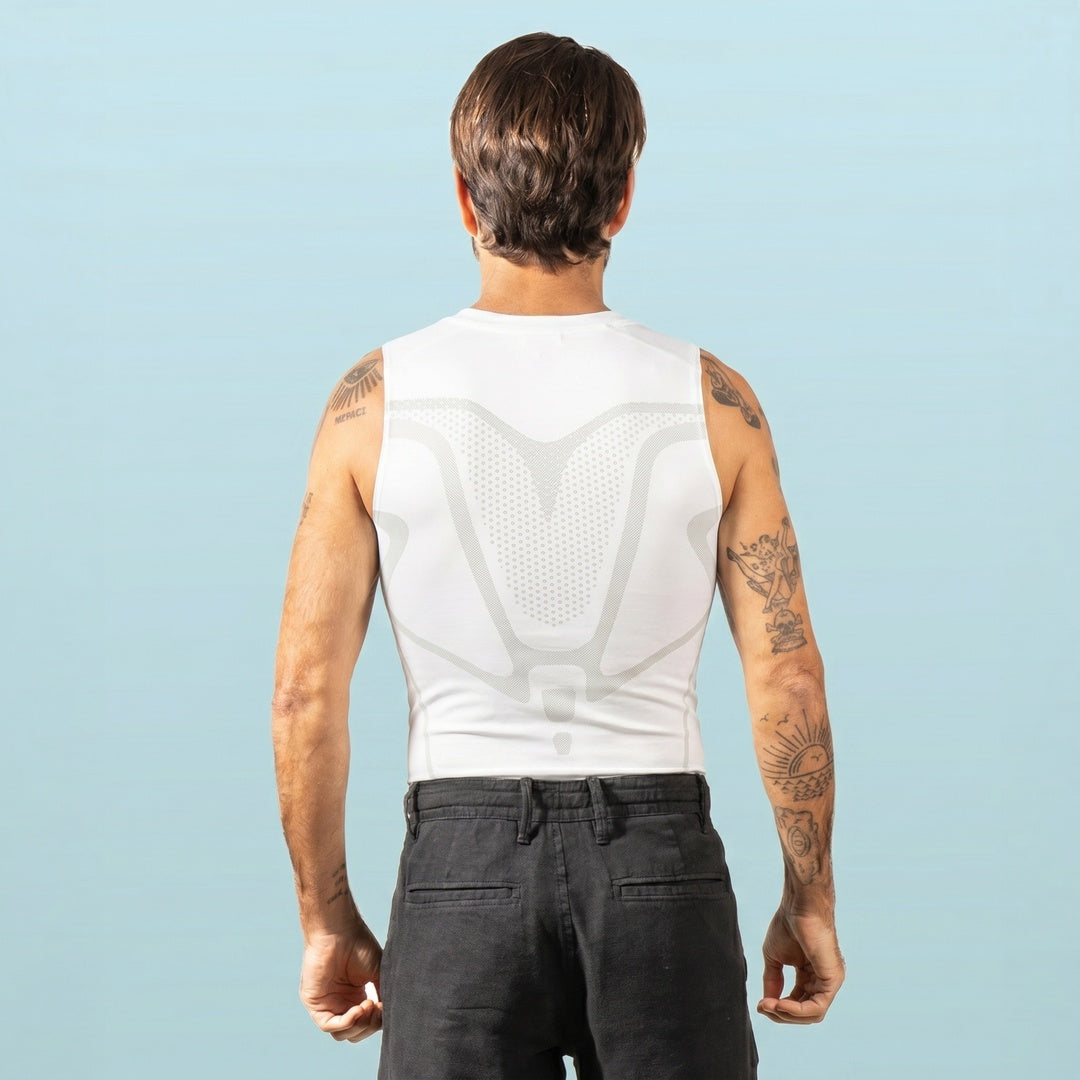
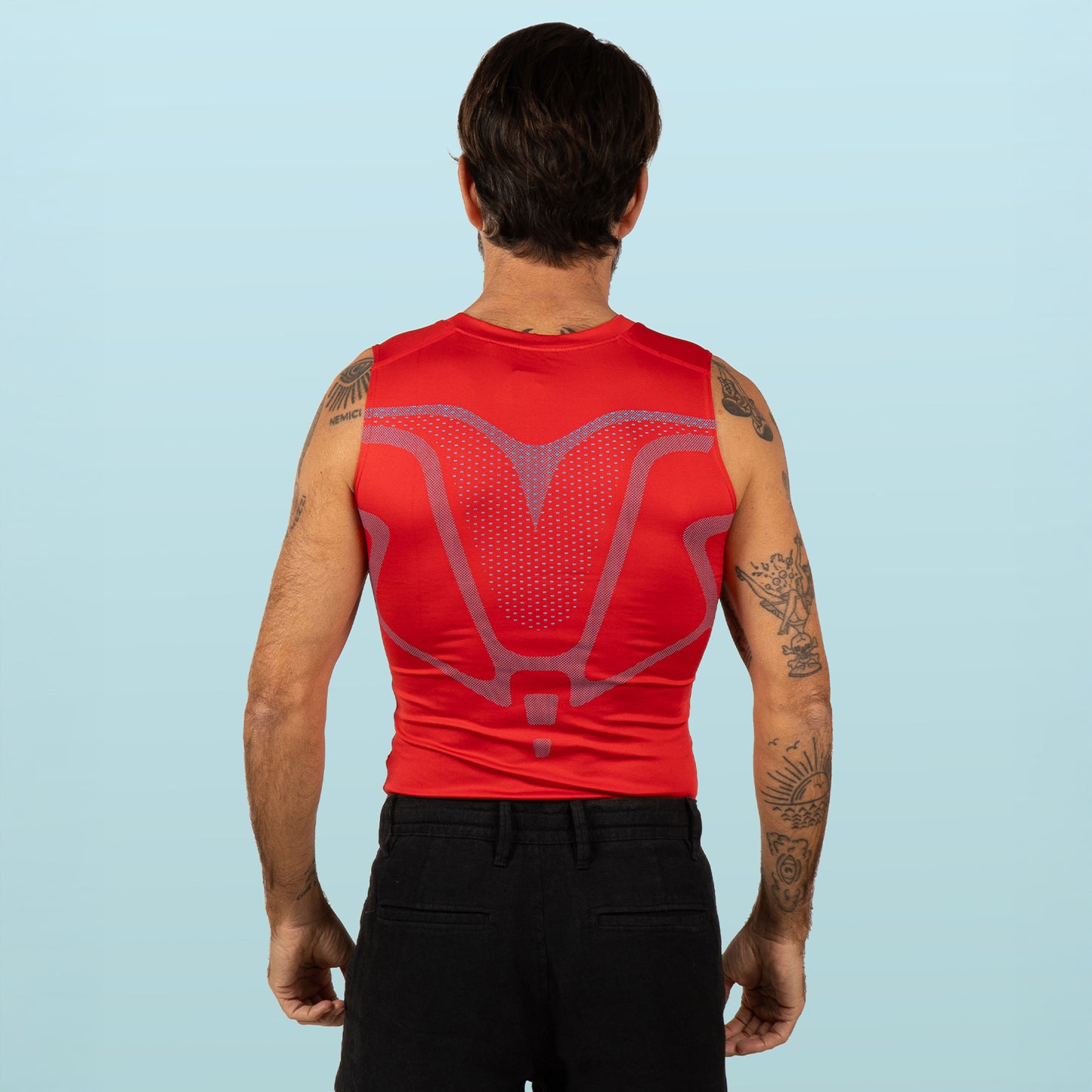
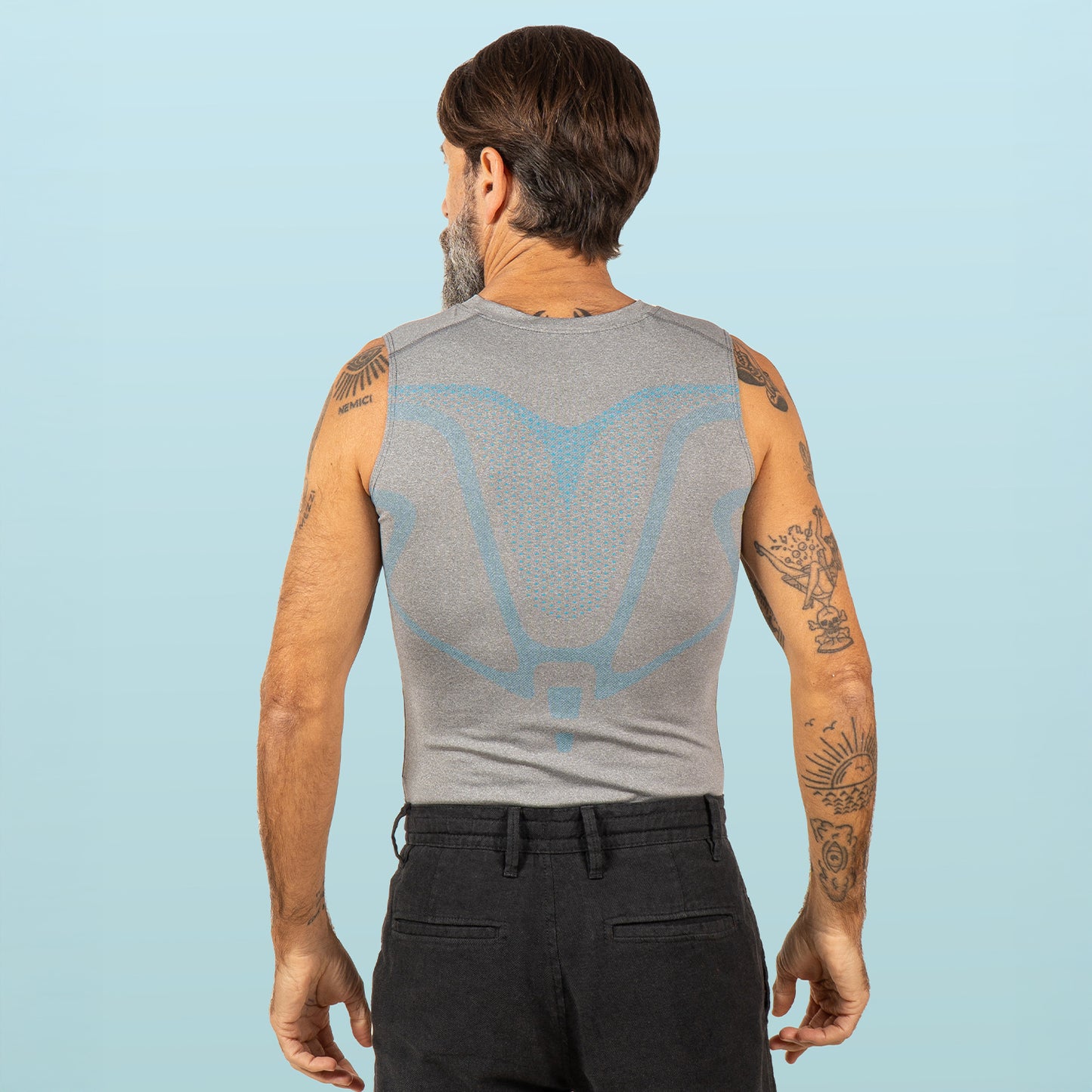
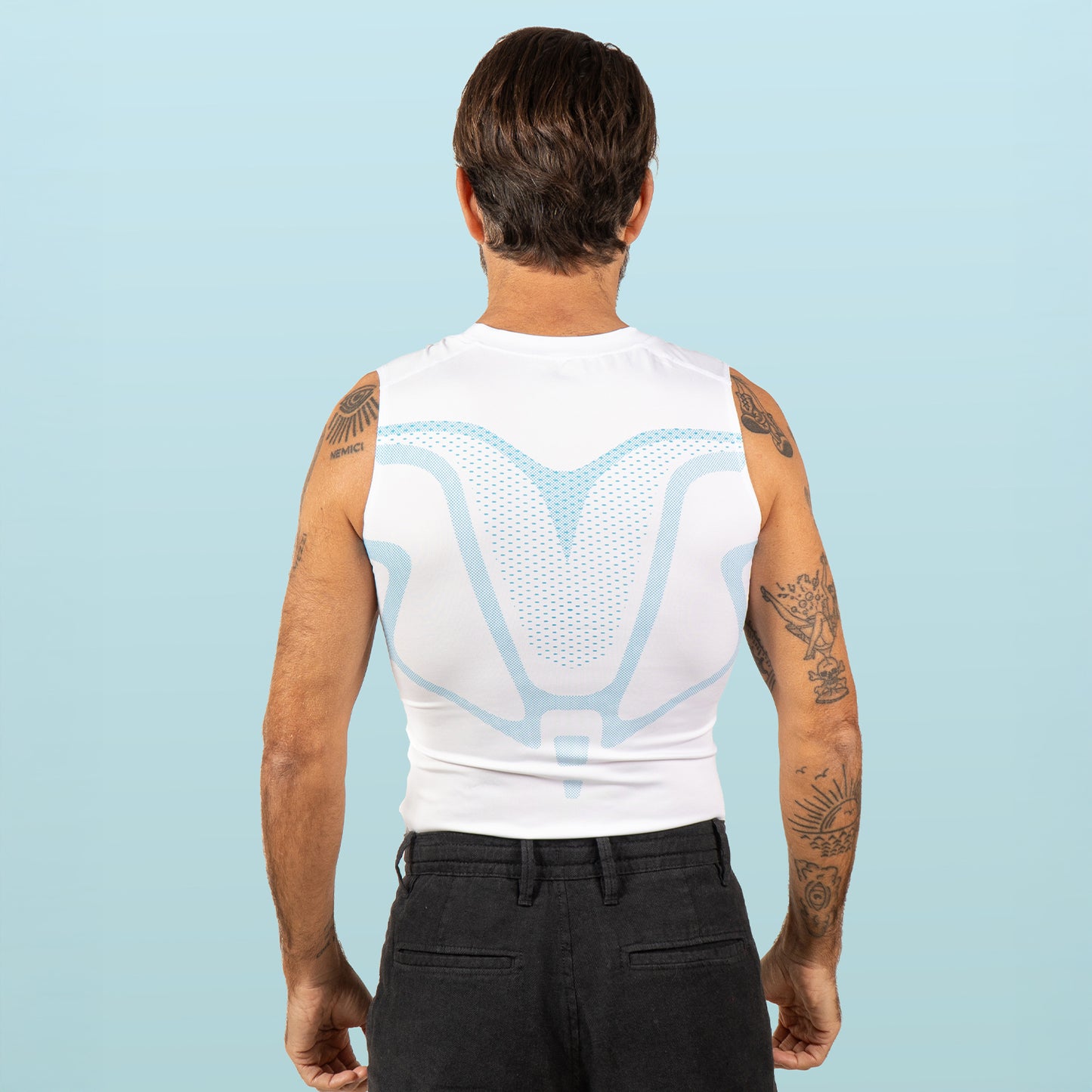
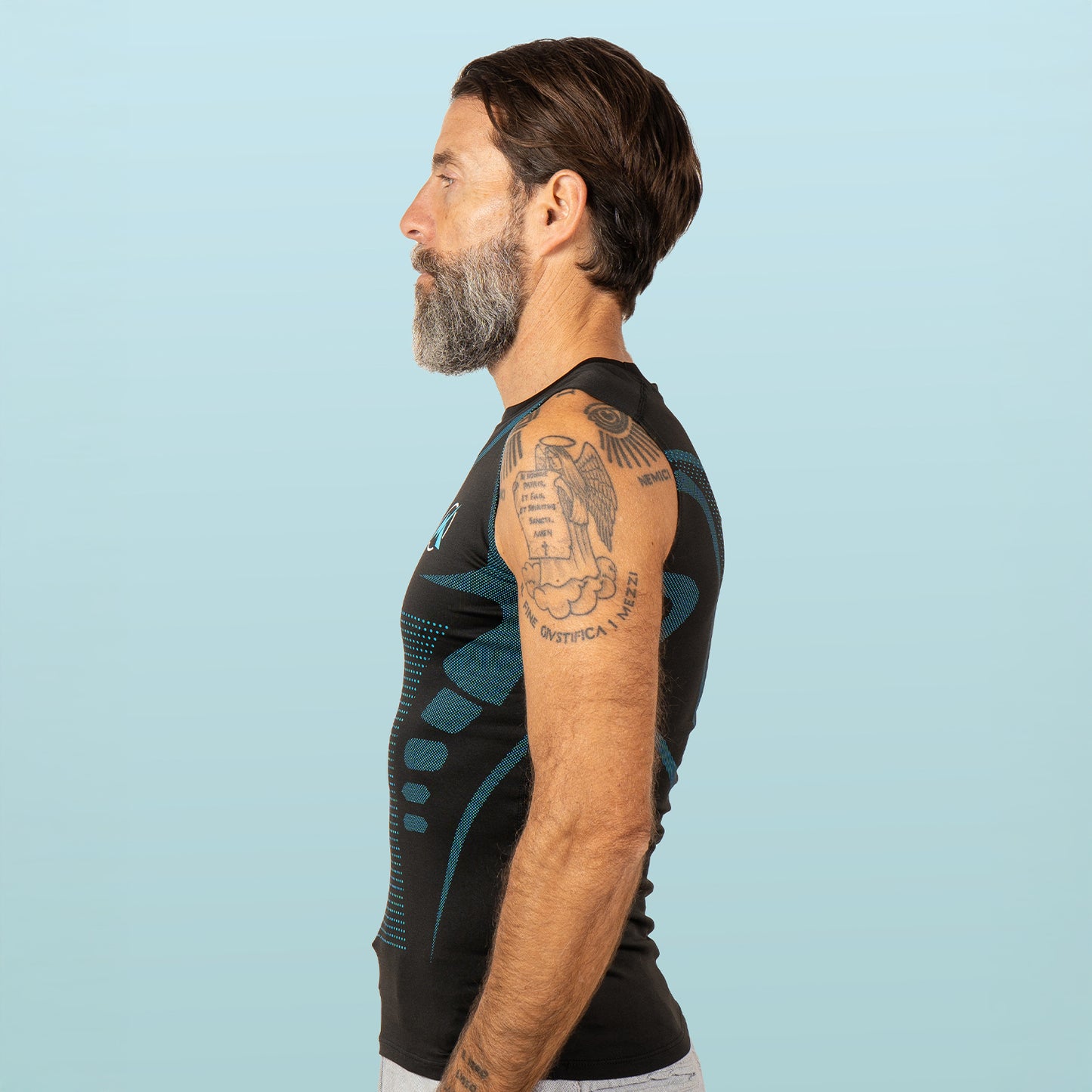
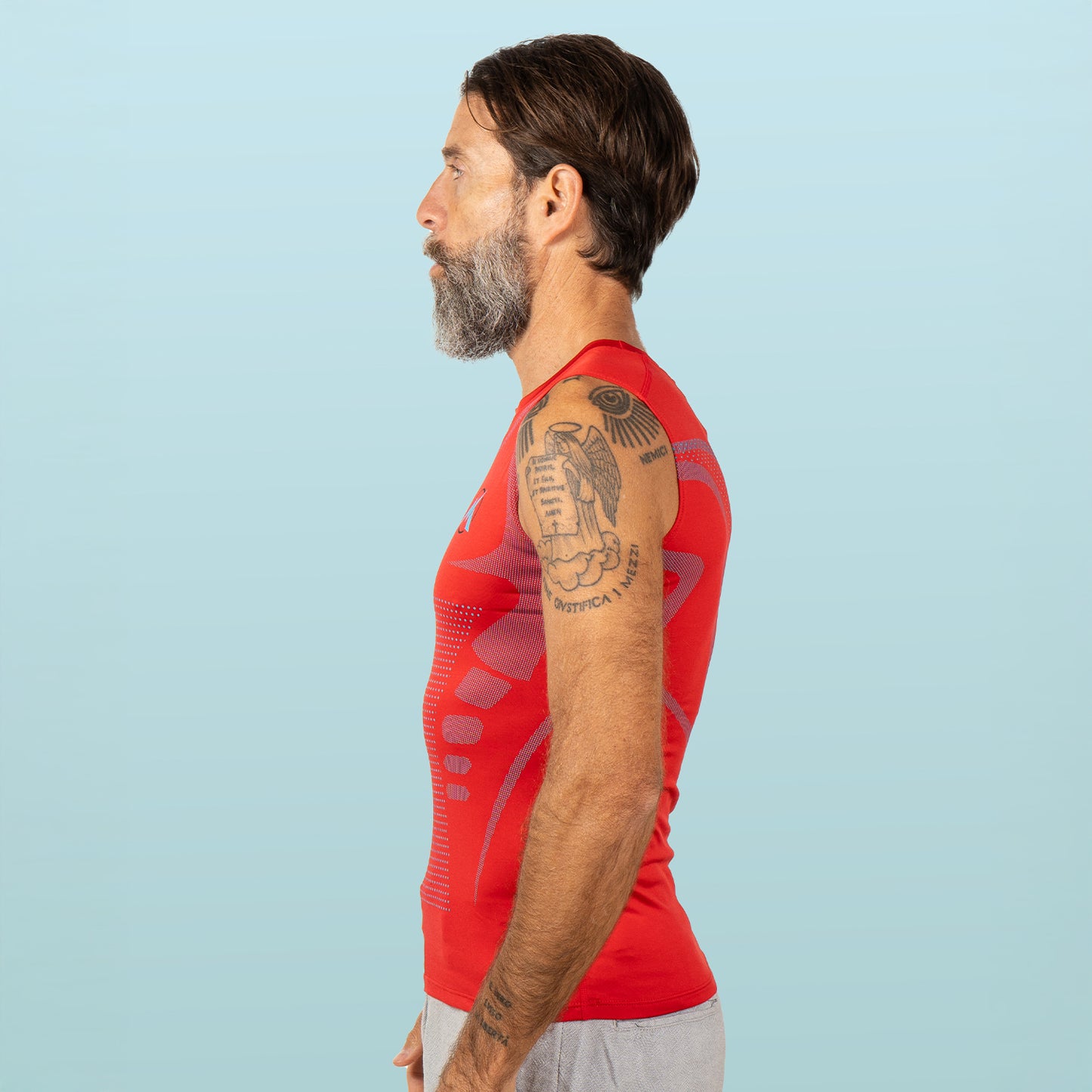
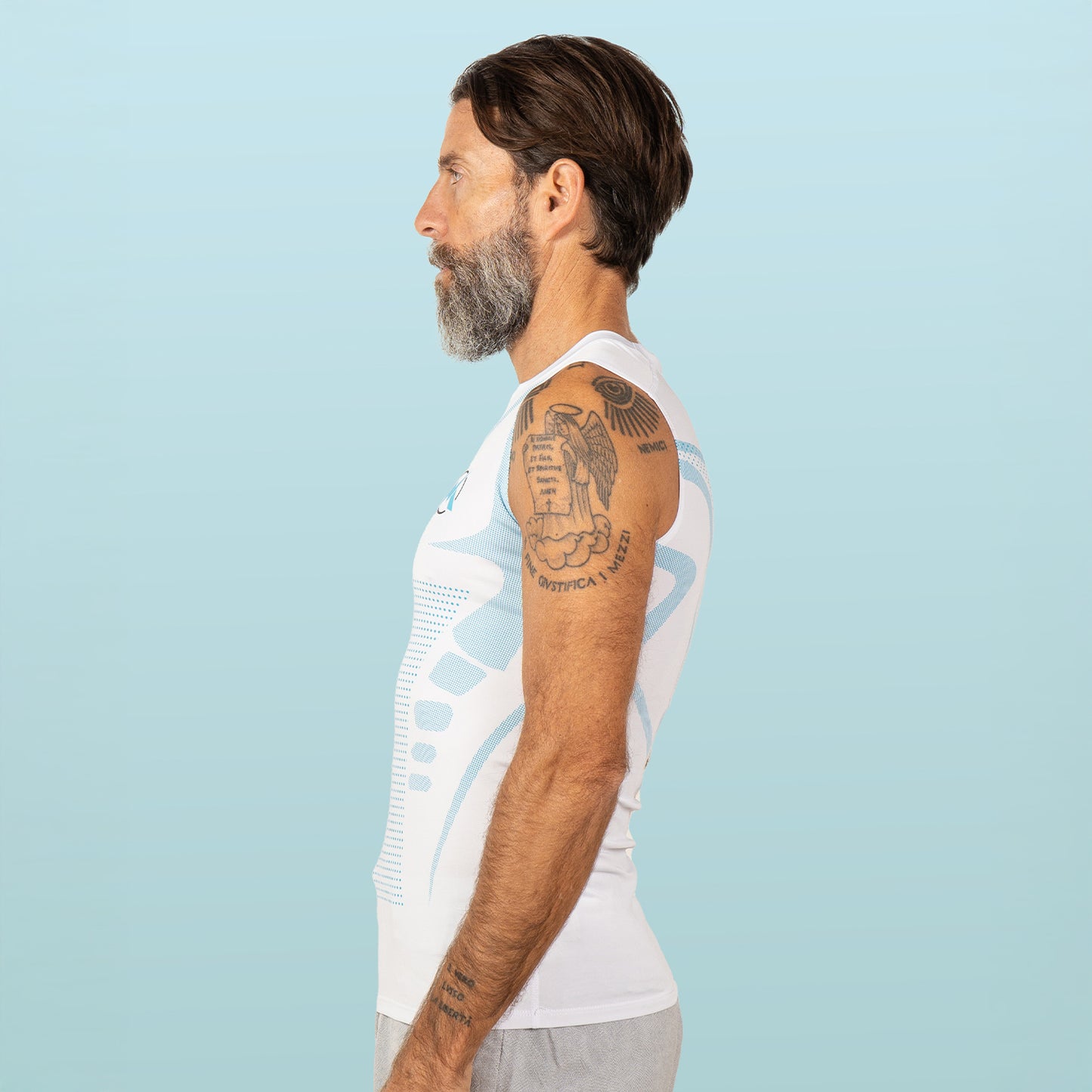
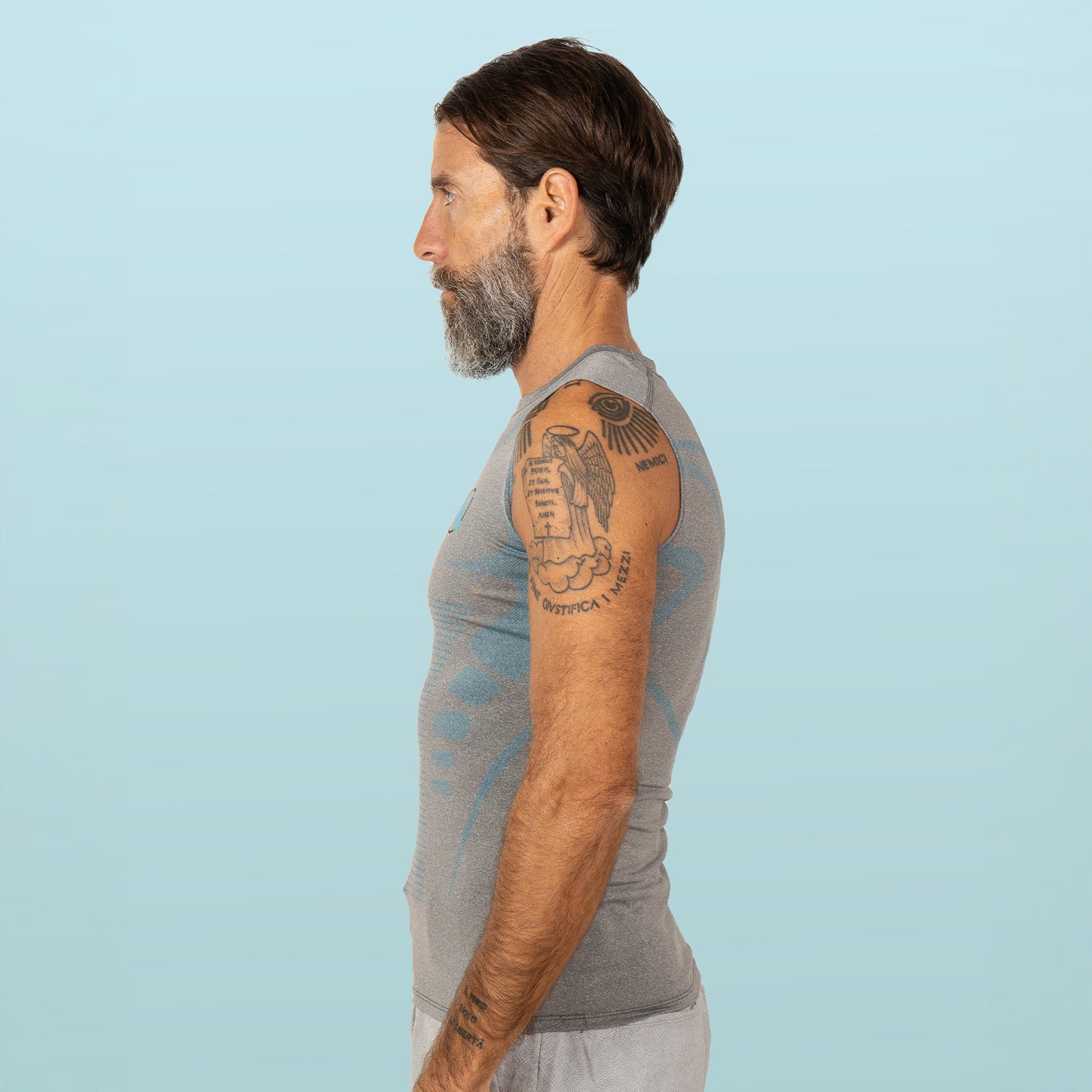
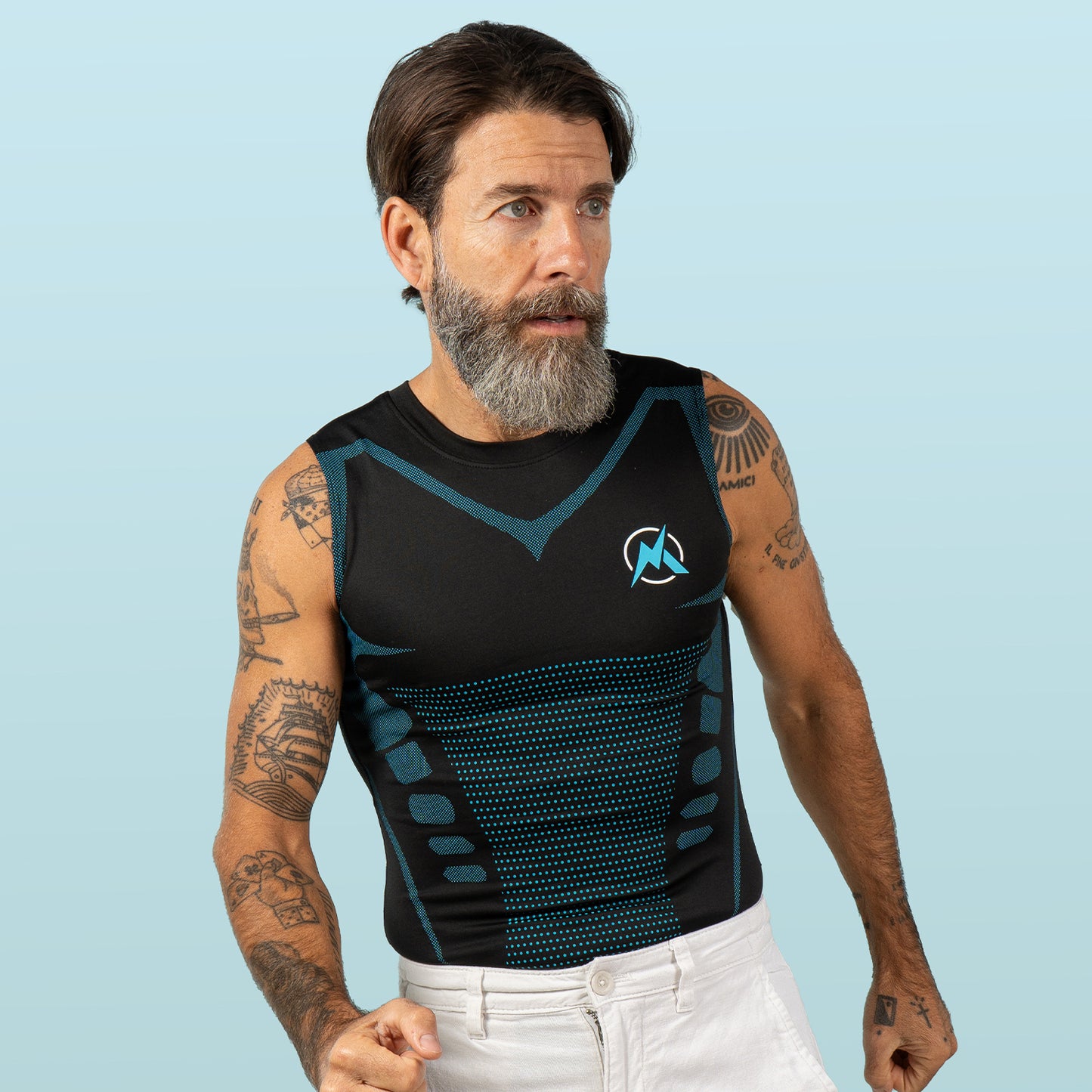
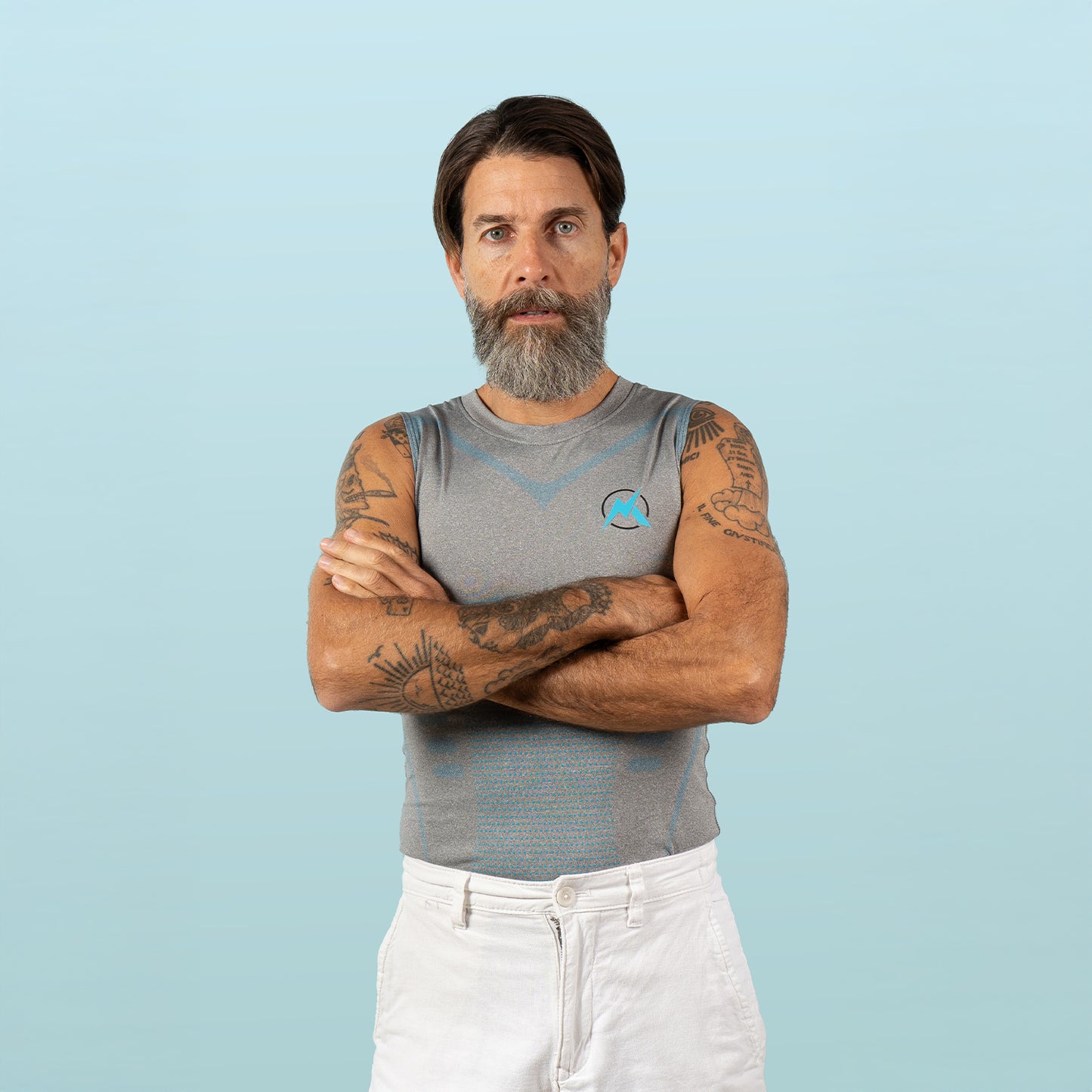
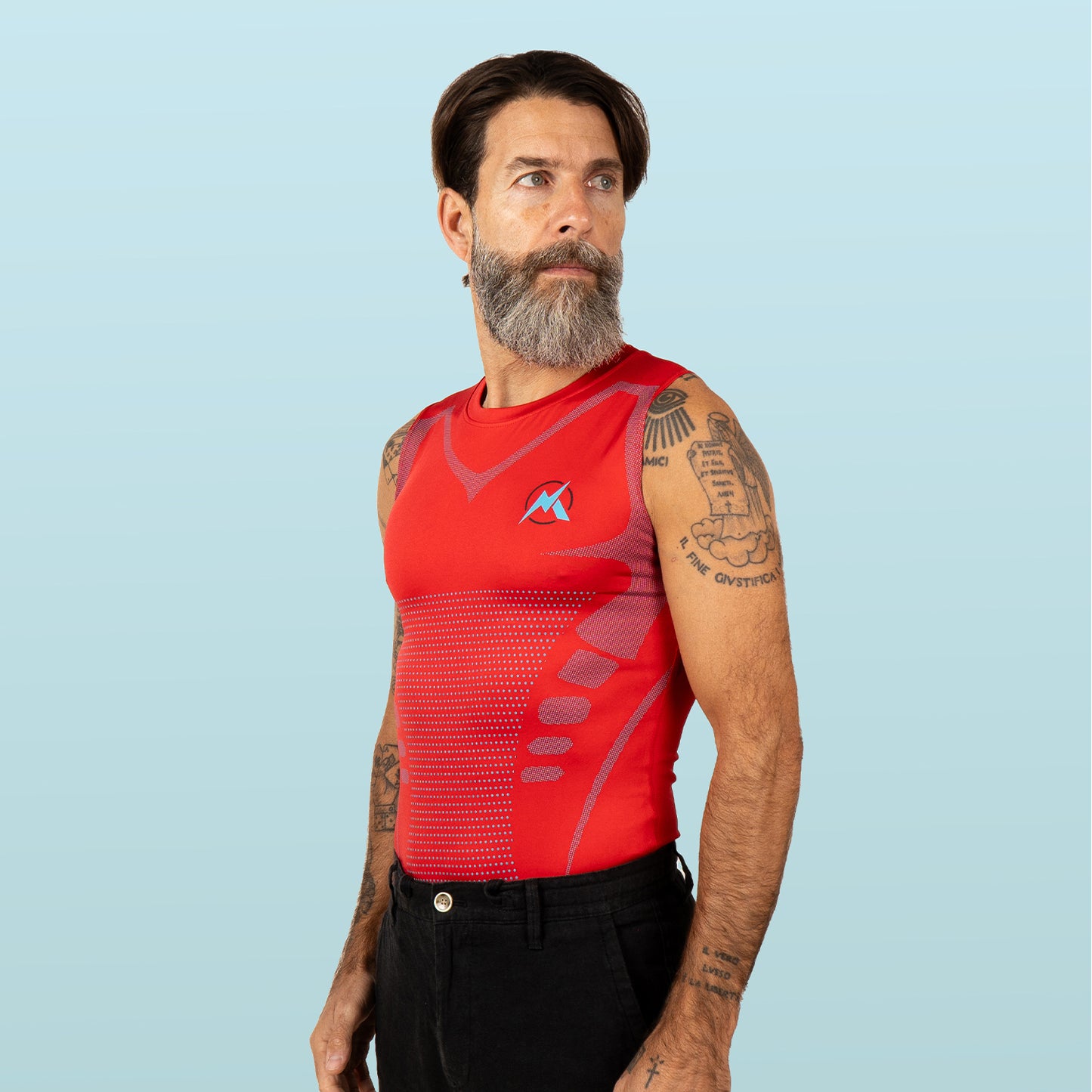
A well-fitted compression base layer does two things during and after your workout. First, it provides proprioceptive feedback — your shoulders get a subtle, constant cue to pull back and your upper back to extend. Compression garment reviews in Sports Medicine (Brown et al., 2022) document this proprioceptive effect, along with reduced perceived soreness post-exercise. Second, it makes you look the part on day one, which is psychologically not nothing. The man who looks like he trains is the man who keeps training.
That's the role of VitaBoost in this plan. It's not a magic shirt — no shirt is. It's the uniform that makes the posture work stick and the visual change start before the strength changes do. You wear it under your workout shirt, under your office shirt, under your weekend tee. It costs $15 with the BUY 1 GET 1 FREE offer, which means you get the workout pair and the office pair in one box. Honest framing: it doesn't burn fat, doesn't add muscle, doesn't replace any lift in this article. It just makes everything else read better — and read sooner.
If you want the full "why posture is the fastest-acting visual lever for men over 50," our piece on how to stand up straight (the habit stack) covers it. If you want to understand how compression actually plays into strength work, do compression shirts work for men has the evidence breakdown. And for energy issues that might be sabotaging this plan in the background, see why you feel tired all the time after 45.
The bottom line: The best workout for a man over 50 is not the most ambitious one. It's the one you can run for 52 weeks straight. Two full-body strength sessions, ten minutes of mobility woven in, one interval session, two recovery walks, one rest day. Train the patterns that matter, swap the moves that don't, and let the uniform you train in do the quiet work in the background. Start Monday. Add weight every week. Don't change anything for a month.
This article is for general information. Talk to your doctor before starting a new exercise program, especially if you have heart, joint, or metabolic conditions.
Frequently asked questions
What is the best workout for a 50 year old man?
A 3-day full-body strength plan: two 45-minute sessions built around squat, hinge, push, and pull patterns, plus one 25-minute interval session for conditioning. Add daily walking. Skip 5-day splits, long cardio, and high-impact jumping. The plan you'll actually finish beats the plan that looks impressive.
How often should a 50 year old man workout?
Three structured sessions per week. Two full-body strength workouts with at least 48 hours between them, and one short interval session. Add two recovery walks of 30 to 45 minutes. The American College of Sports Medicine recommends a minimum of 2 strength days per week for adults over 50, and research shows twice-weekly training drives most of the gains.
Should men over 50 do more cardio or strength training?
Strength first, cardio second. Strength protects muscle mass, posture, bone density, and metabolism — all of which decline faster after 50. Cardio supports your heart and conditioning. The Harvard 10,500-man strength training study showed 20 minutes of resistance work daily reduced abdominal fat better than equivalent cardio for older men.
What exercises should men over 50 avoid?
Behind-the-neck pulldowns, heavy back squats with max load, crunches and sit-ups, box jumps and burpees, leg extensions, and standing overhead press with heavy weight. Each can be swapped for a lower-wear variation that trains the same pattern. The goal is to stop accumulating joint debt without losing strength gains.
Is it OK to lift heavy weights at 50?
Yes — heavy for you, with controlled form. You don't need to max out, but loading muscle hard enough that the last two reps feel demanding is what drives strength and bone density. Build up over weeks, never sacrifice form for weight, and warm up your mobility for ten minutes first. Heavy is relative; what matters is progressive overload, not a number.
Sources
- NIH / PMC — Sarcopenia: an undiagnosed condition in older adults (3-8%/decade muscle loss after 30)
- Harvard Health — Strength training and abdominal fat (10,500 men study, 20 min/day)
- Mayo Clinic — Testosterone therapy and the 1%/year natural decline after 30
- CDC NCHS Data Brief 559 — 30.5% of U.S. adults sleep less than 7 hours
- Harvard Health — 8-12 weeks rehabilitation timeline for posture work
- Brown F. et al., 2022, Sports Medicine — Compression garment proprioceptive feedback review