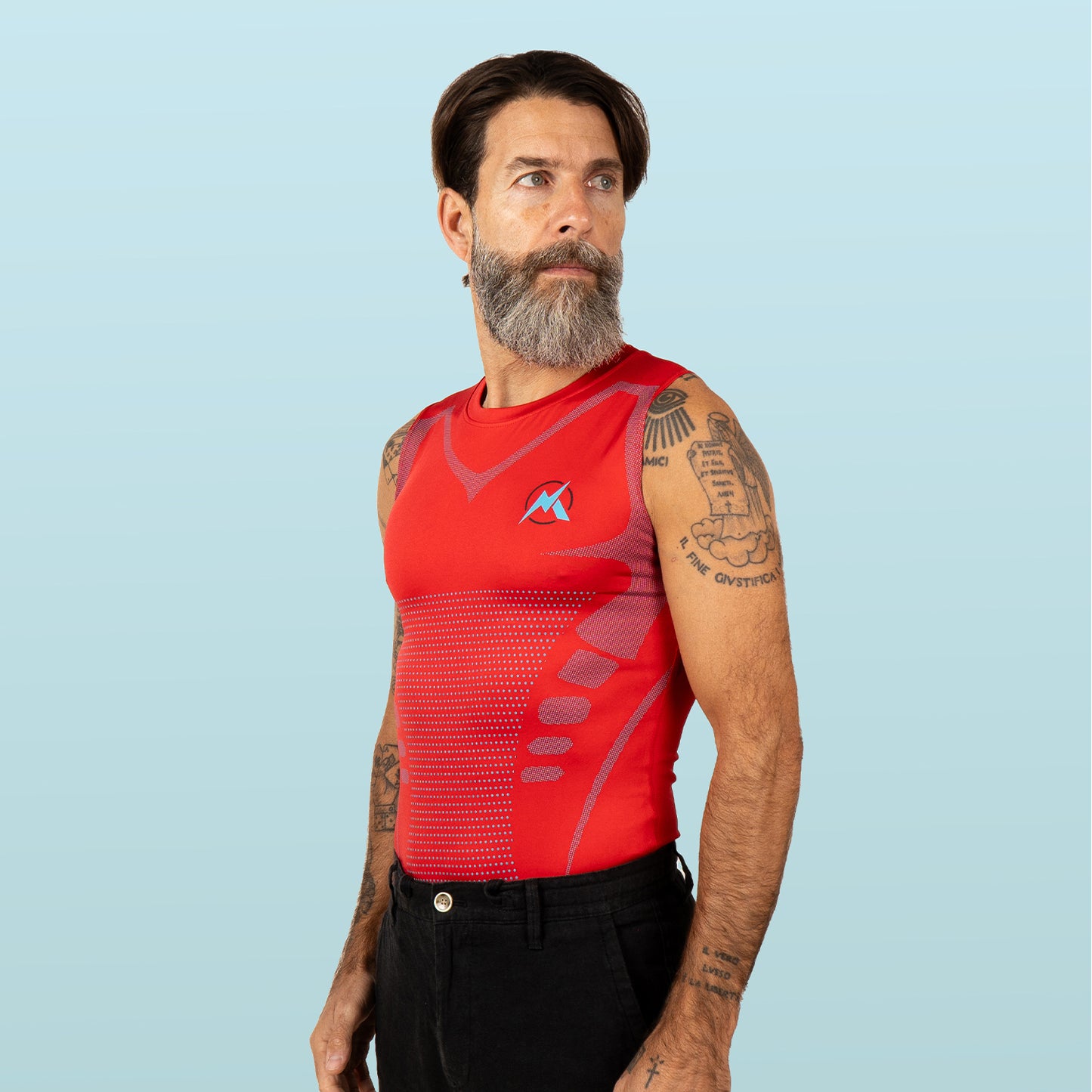
By Owen Blot · Founder, Maynox · Last updated May 28, 2026
- The 3 categories of compression shirts (and which one you actually need)
- What the evidence really says about posture shirts
- The 4 things to look for before you buy
- The best compression shirts for posture in 2026: 5 picks
- The "12 hours a day" trap (and how long to actually wear yours)
- How to match a compression shirt to your day
- What a compression shirt CAN'T fix
- Frequently asked questions
You sit down. Two minutes later, your shoulders have rolled forward, your head is jutting out over your keyboard, and your lower back is doing that thing again. You already know your posture is the reason you look tired in photos, the reason your dress shirt strains across the chest in a weird place, the reason you feel five years older than you actually are.
So you Google "best compression shirts for posture." And you get hit with twenty listicles that all recommend the same five shirts, half of which are pink, half of which are for bodybuilders, and none of which tell you which one is actually right for a 47-year-old guy who needs something he can wear under a button-up at the office without looking like he's training for the Olympics.
This guide fixes that.
The 3 categories of compression shirts (and which one you actually need)
Here is the single biggest reason most buyers end up with the wrong shirt: the "compression shirt" category is actually three different products with three different jobs. The listicles lump them together. They shouldn't.
Category 1 — Athletic compression shirts. Under Armour HeatGear, Nike Pro, 2XU base layers. These are designed for one job: support muscle groups during exercise, reduce vibration, wick sweat. They use stretchy, lightweight fabric across the whole torso. They are not designed to correct posture. They give you a uniform squeeze that does nothing to pull your shoulders back. If you wear one to your desk hoping it will fix your slouch, it won't — and the listicles that recommend them for posture are wrong.
Category 2 — Posture-specific shirts. AlignMed, IntelliSkin, Forme. These are the most "medical" of the three. They use patterned tension bands sewn into specific zones — across the shoulder blades, along the upper back, around the deltoids — that physically cue your muscles to retract your shoulders and lift your chest. The pressure is targeted, not uniform. The trade-off: they often look obvious under a thin dress shirt, they're expensive ($90–$160), and most are designed for clinical or athletic use rather than all-day office wear.
Category 3 — Hybrid daily-wear compression shirts. Tommie Copper Pro-Grade, Maynox VitaBoost. These are the newest category, and they're built for the avatar most buyers actually are: a man over 40 who wants postural cueing, a smoother silhouette under a dress shirt, and something he can wear from breakfast to dinner without thinking about it. They use moderate, even compression across the core and back with reinforced panels at the shoulders. They're not as aggressive as a posture-specific shirt and not as performance-oriented as an athletic one. They're built for life, not for a workout.
If you sit at a desk, want to look sharper in your clothes, and care more about looking less hunched than about clinical posture rehab — you want a Category 3 shirt. Most buyers do. Most listicles never tell you this exists as its own category.
What the evidence really says about posture shirts
Marketing pages will tell you a compression shirt "fixes" your posture. The peer-reviewed evidence is more honest than the marketing.
The strongest finding across studies is proprioceptive feedback. When compression fabric presses against your skin, it sharpens your body's awareness of where your shoulders, chest, and spine are in space. You feel yourself slouching faster. You correct faster. A 2022 review of compression garment research published in Sports Medicine found consistent reductions in perceived muscle soreness and improved proprioceptive feedback across multiple study designs.
What the evidence does not support: the idea that wearing a compression shirt passively retrains your posture. A 2025 pooled review of 31 compression garment studies confirmed the recovery and feedback benefits but found no evidence that compression alone produces durable postural change without active strengthening work.
Translation: a compression shirt is a feedback tool, not a fix. It nudges you. It makes good posture easier to maintain in real time. But the actual rebuild — the upper back, the deep core, the hip flexors — that's strength work. The shirt buys you the awareness; you have to buy the change.
The good news: that awareness alone is worth a lot. The Cleveland Clinic estimates that holding your head forward at a 15-degree angle puts roughly 27 pounds of effective load on your neck and upper back muscles, compared to 10–12 pounds in neutral. Every hour you catch yourself sooner is an hour your upper back isn't being slowly crushed.
The 4 things to look for before you buy
Forget brand. Look at the spec.
1. Compression range (15–25 mmHg). Compression is measured in millimeters of mercury (mmHg). Below 15 mmHg, the shirt is basically a snug undershirt — no real feedback. Above 25 mmHg, you'll feel restricted, your breathing will shorten, and you'll take it off by lunch. The sweet spot for all-day posture wear is 15–25 mmHg, what the industry calls "moderate compression." This is the same range used in medical recovery garments and the range most peer-reviewed studies on perceived comfort settle into.
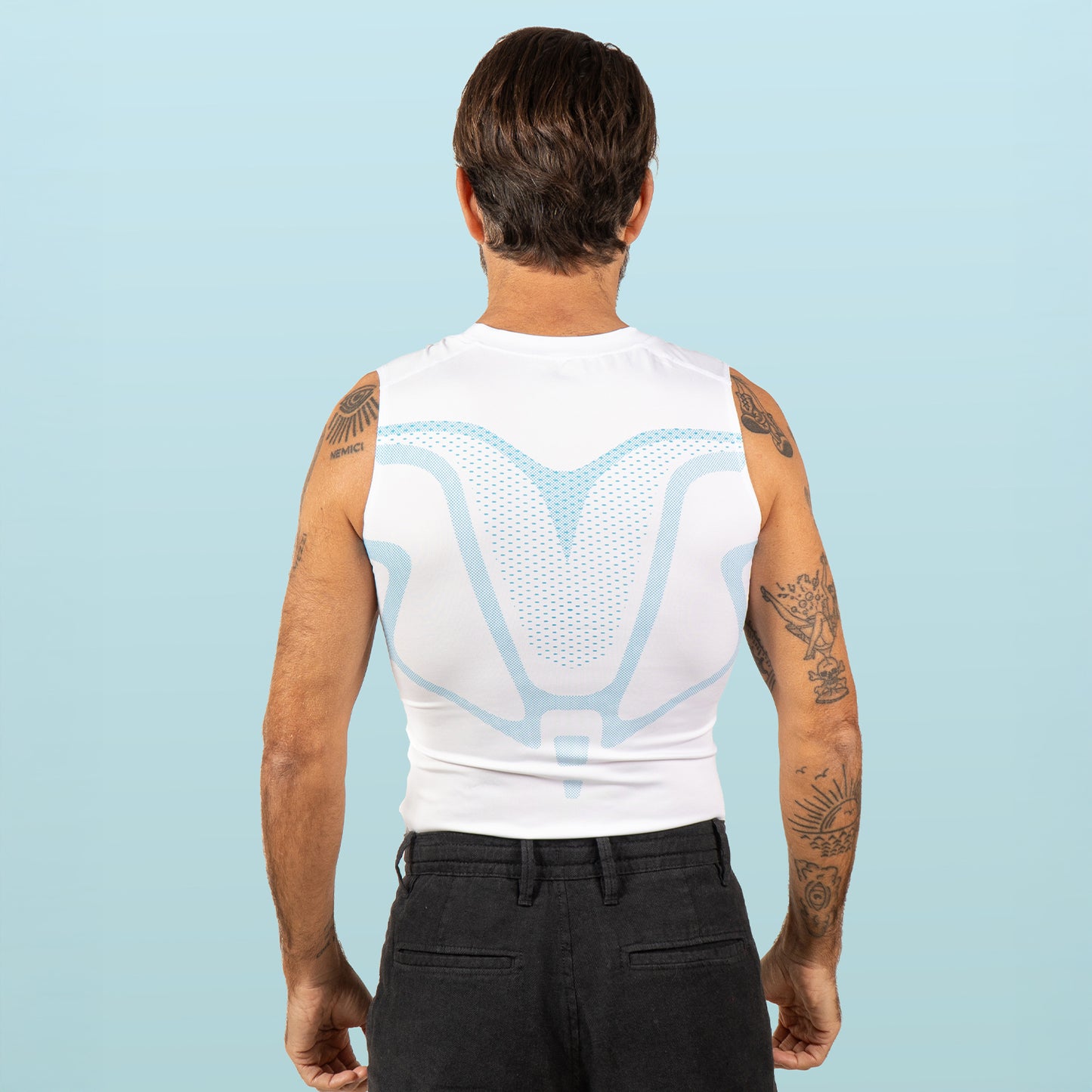
2. Panel placement (shoulders + upper back + lower back). The single most important spec for posture. Generic athletic shirts compress uniformly. Posture-engineered shirts have reinforced panels exactly where you need feedback — along the rhomboids (upper back between shoulder blades), across the deltoids (top of the shoulders), and along the lumbar spine. Run your hand over the shirt before buying. If you can feel denser panels in those zones, it's built for posture. If it feels uniform, it's not.
3. Fabric blend (nylon-spandex or polyester-spandex, 80/20 to 85/15). Avoid pure cotton compression shirts — they stretch out within weeks and lose their structural integrity. The combinations that hold compression over hundreds of washes are nylon-spandex or polyester-spandex in the 80/20 to 85/15 range. Anything with less than 10% spandex won't hold its shape. Anything with more than 20% is usually too tight for daily wear.
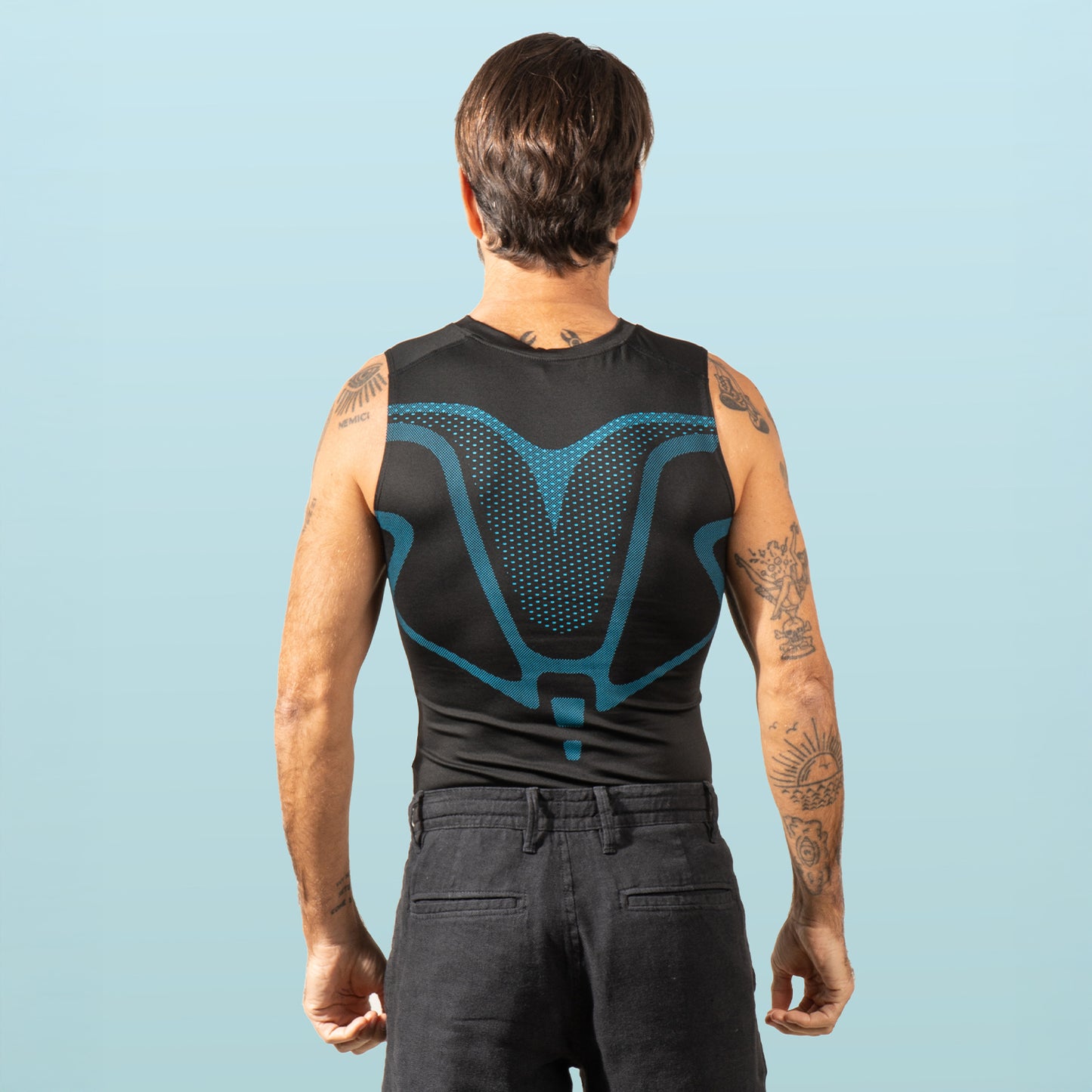
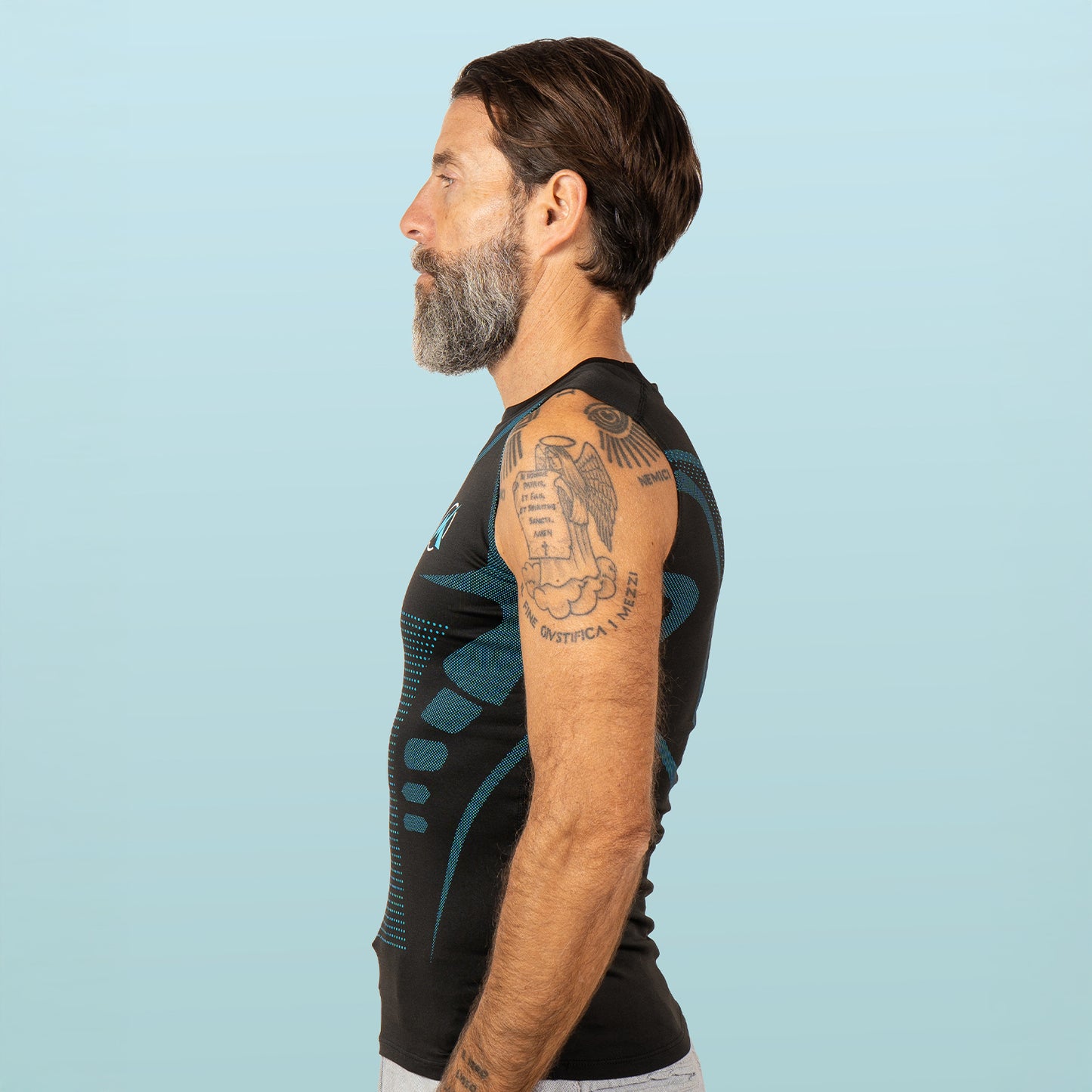
4. Cut (tank or short-sleeve for office, long-sleeve for cold/active). A tank gives you maximum range of motion in the arms and stays invisible under most dress shirts. A short-sleeve adds smoothing across the upper arms and works under polos. A long-sleeve is built for cold-weather wear or active use. For office men 40+ in temperate climates, a black tank is the most versatile starting point — it disappears under everything from a white oxford to a t-shirt.
The best compression shirts for posture in 2026: 5 picks
These five are ranked by fit for a man 40+ who wants posture support in real life — at the desk, at dinner, and occasionally at the gym. Not by who paid for the listicle.
1. Maynox VitaBoost — Best for daily office wear
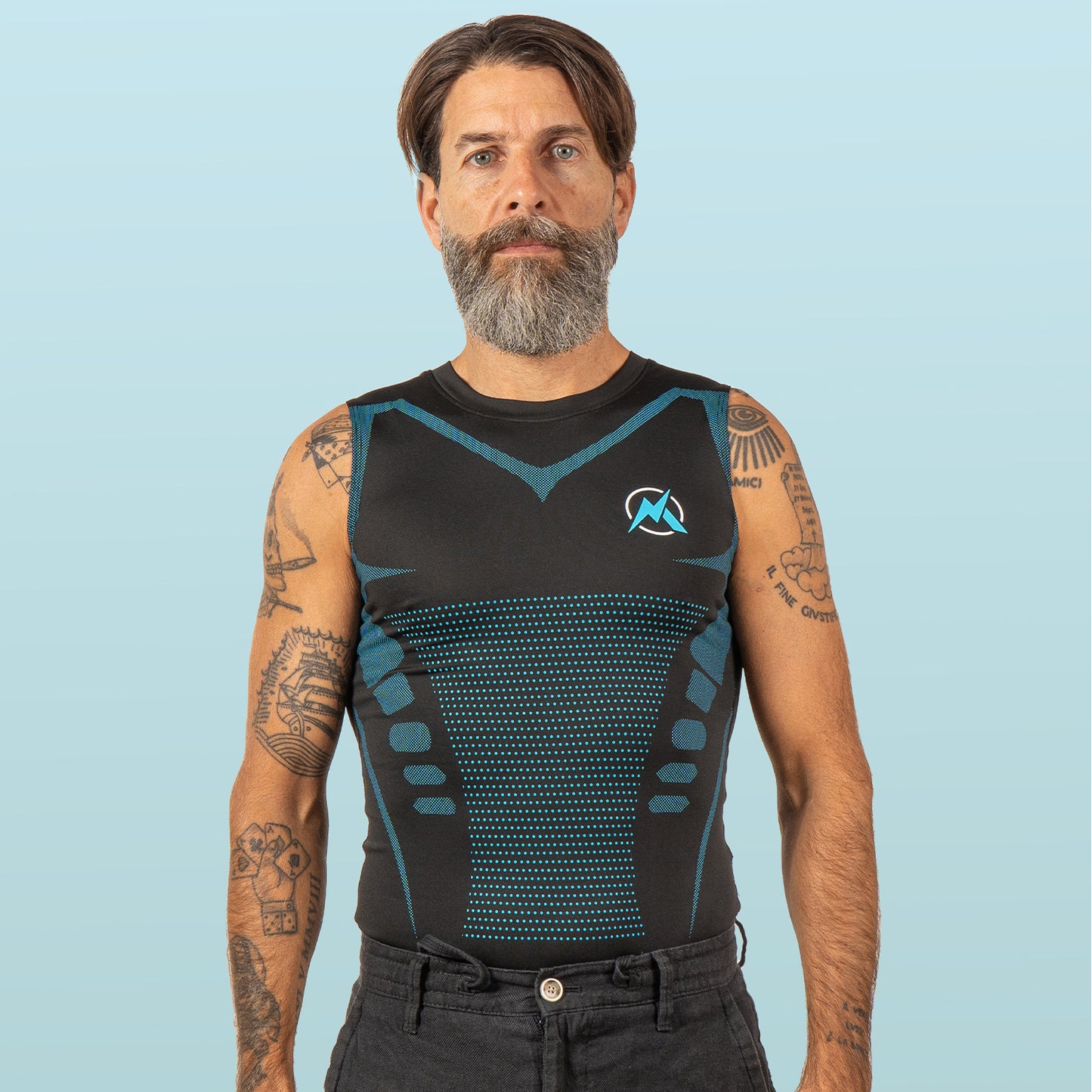
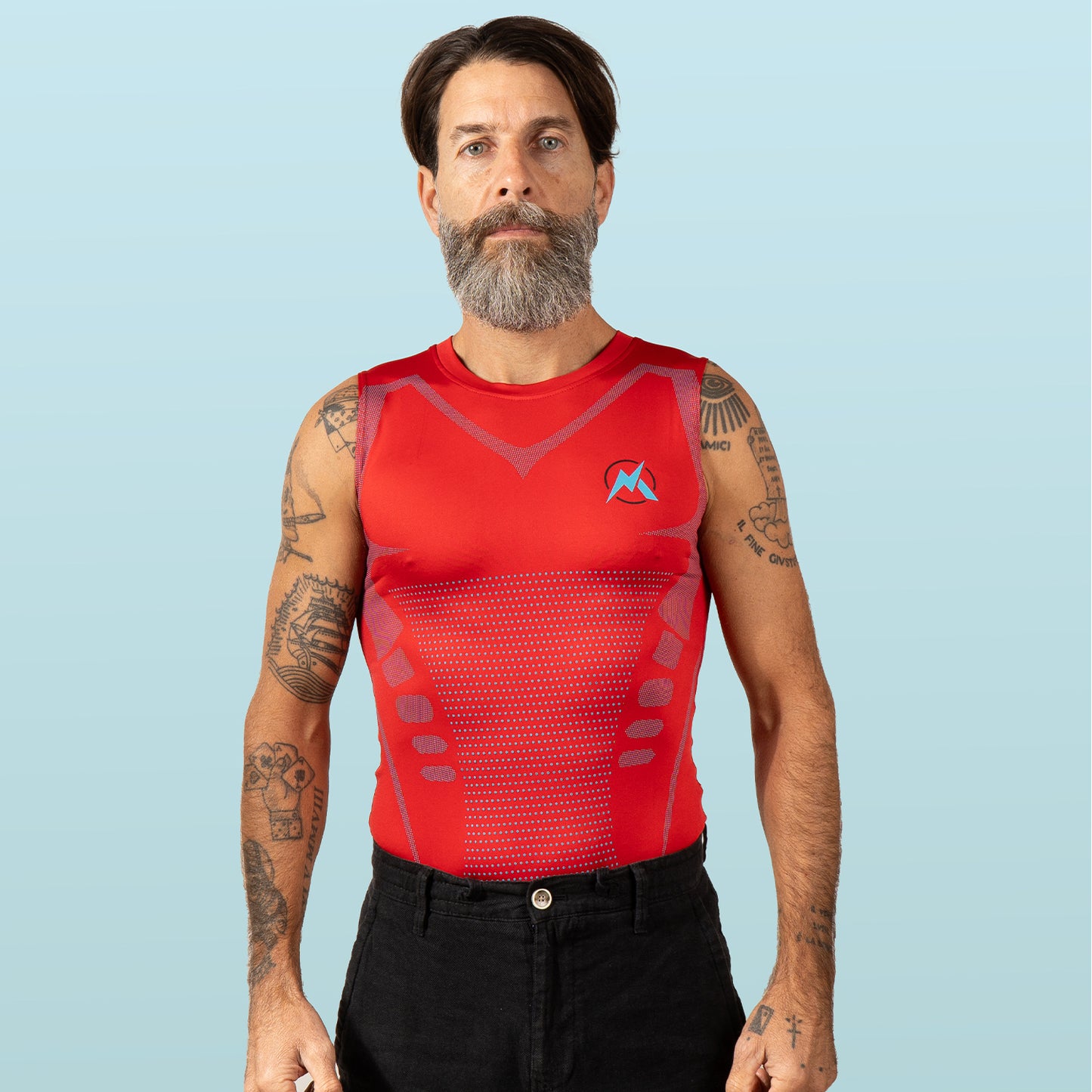
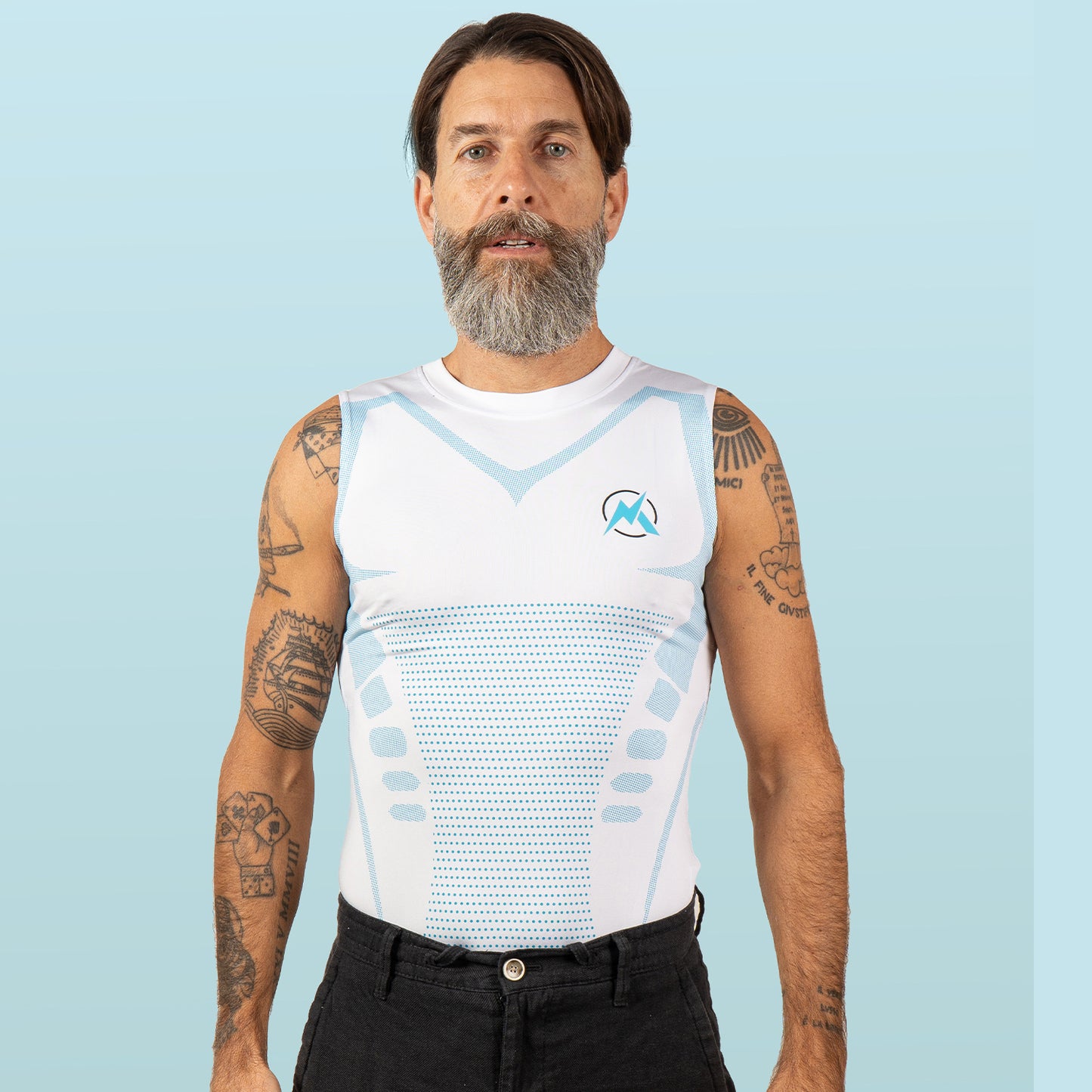
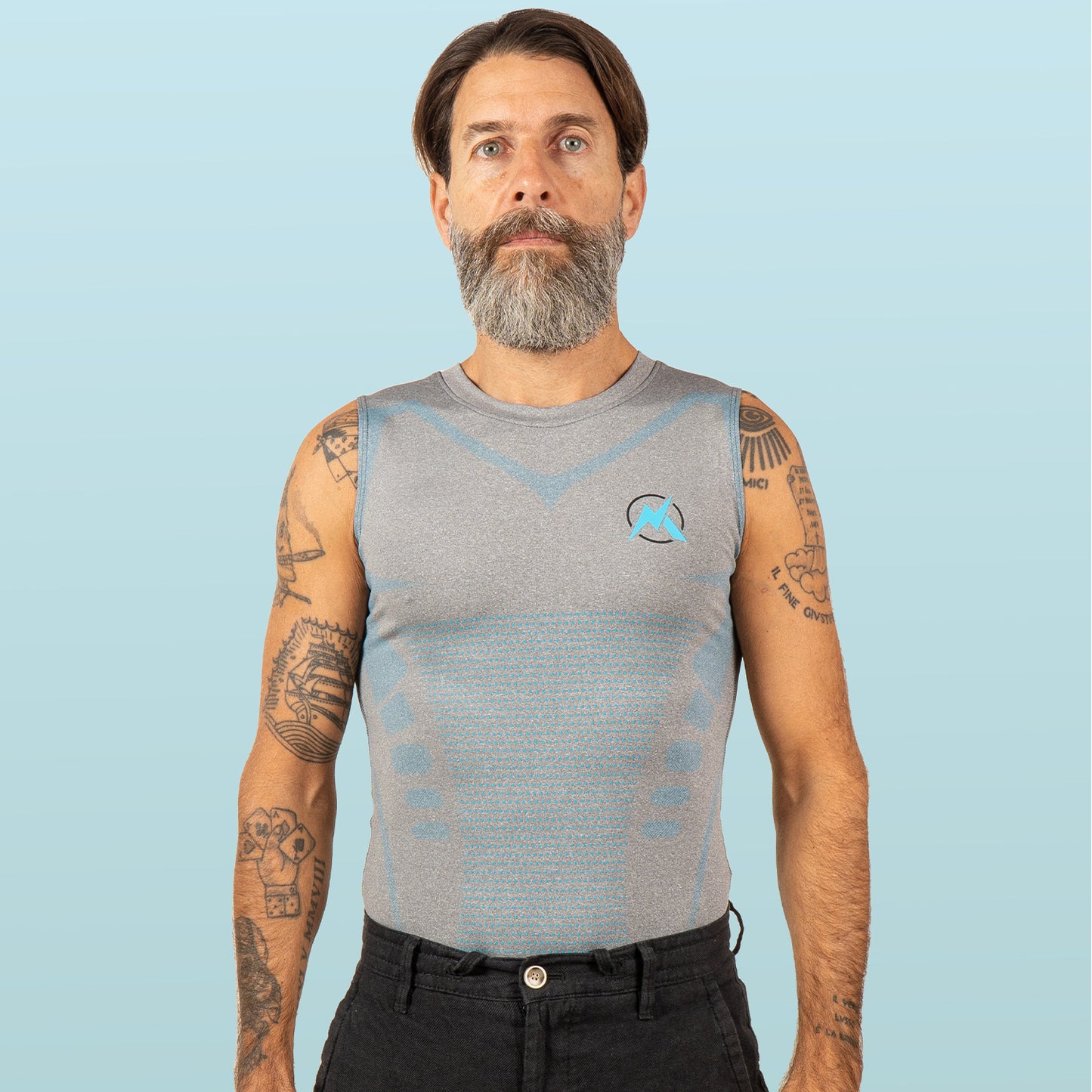
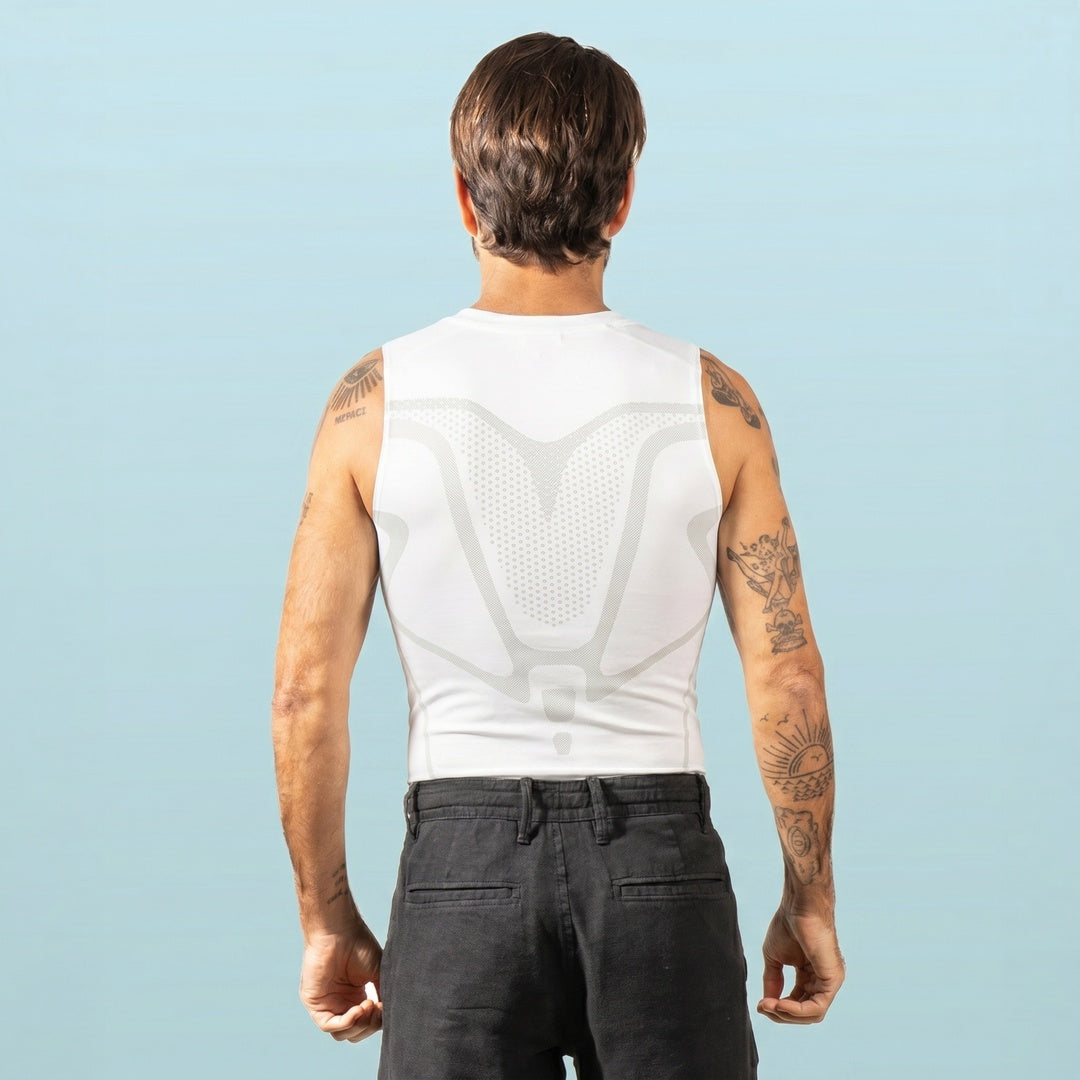
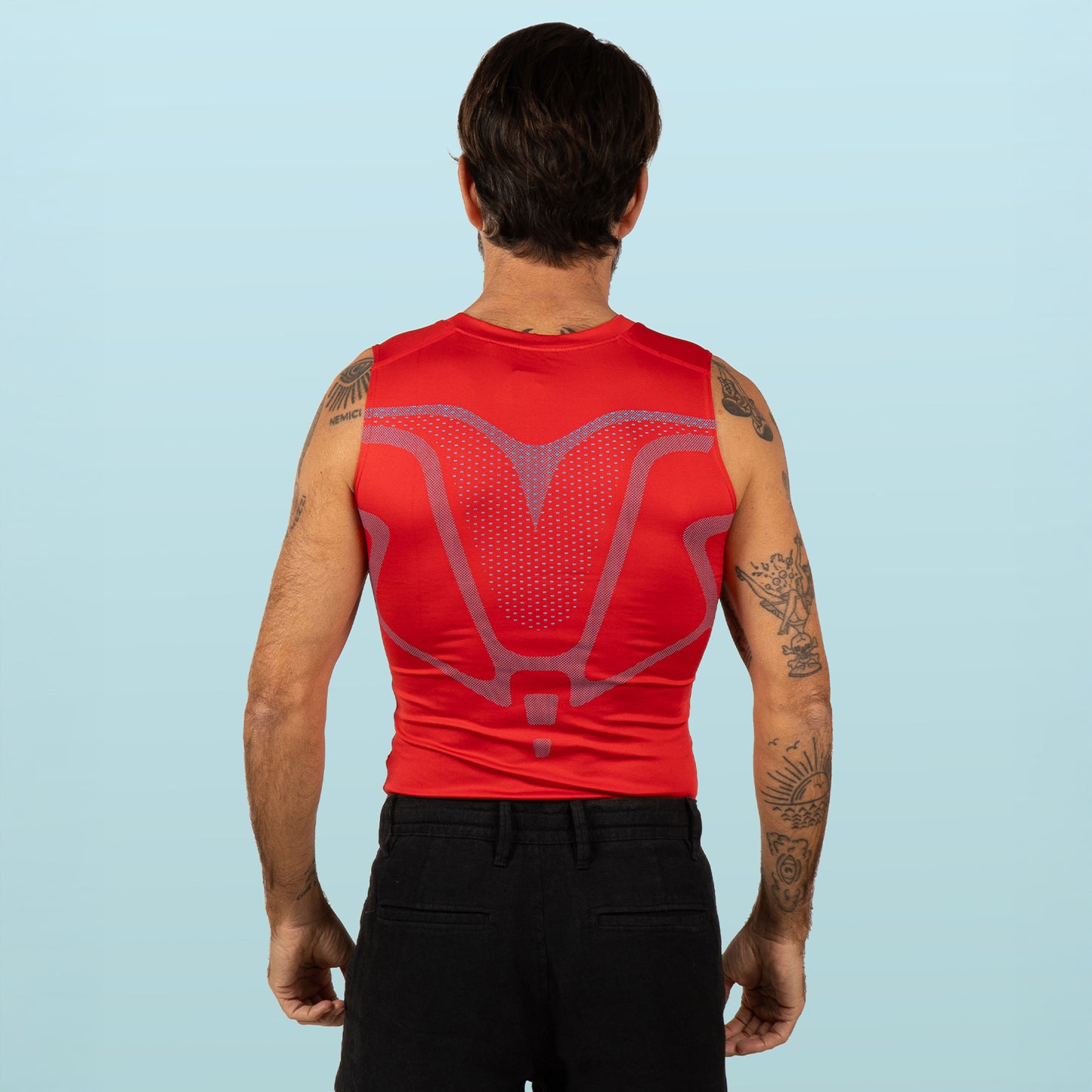
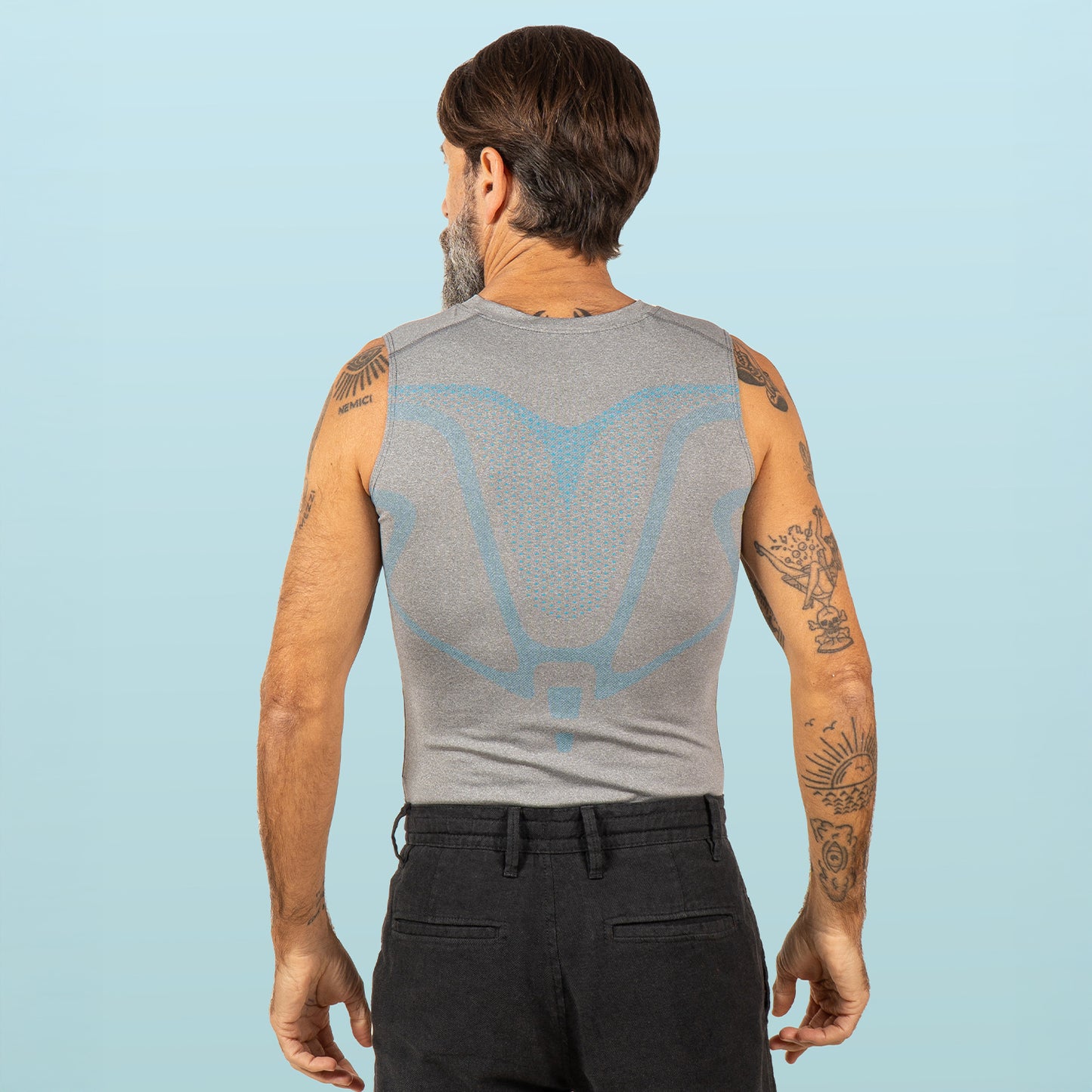
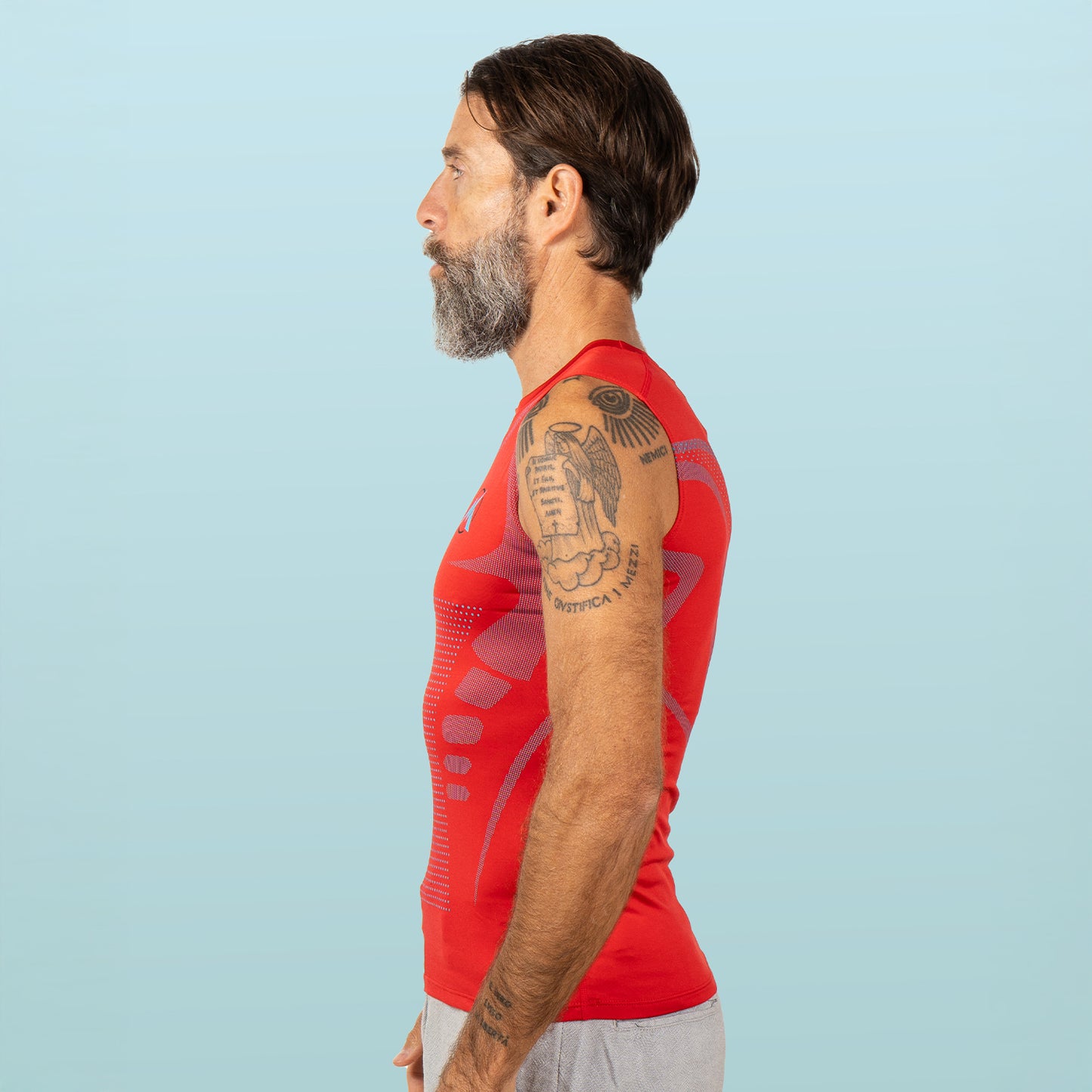
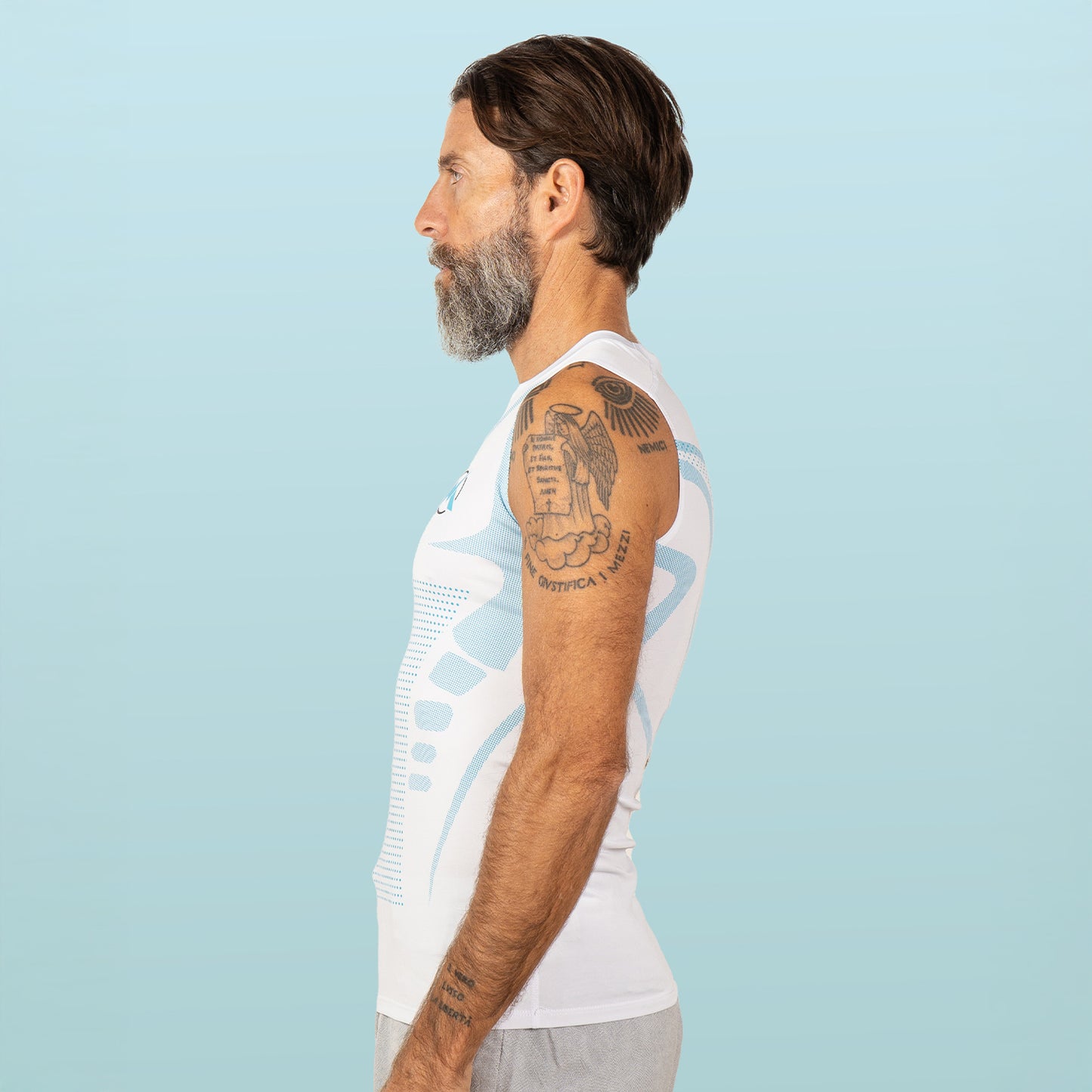
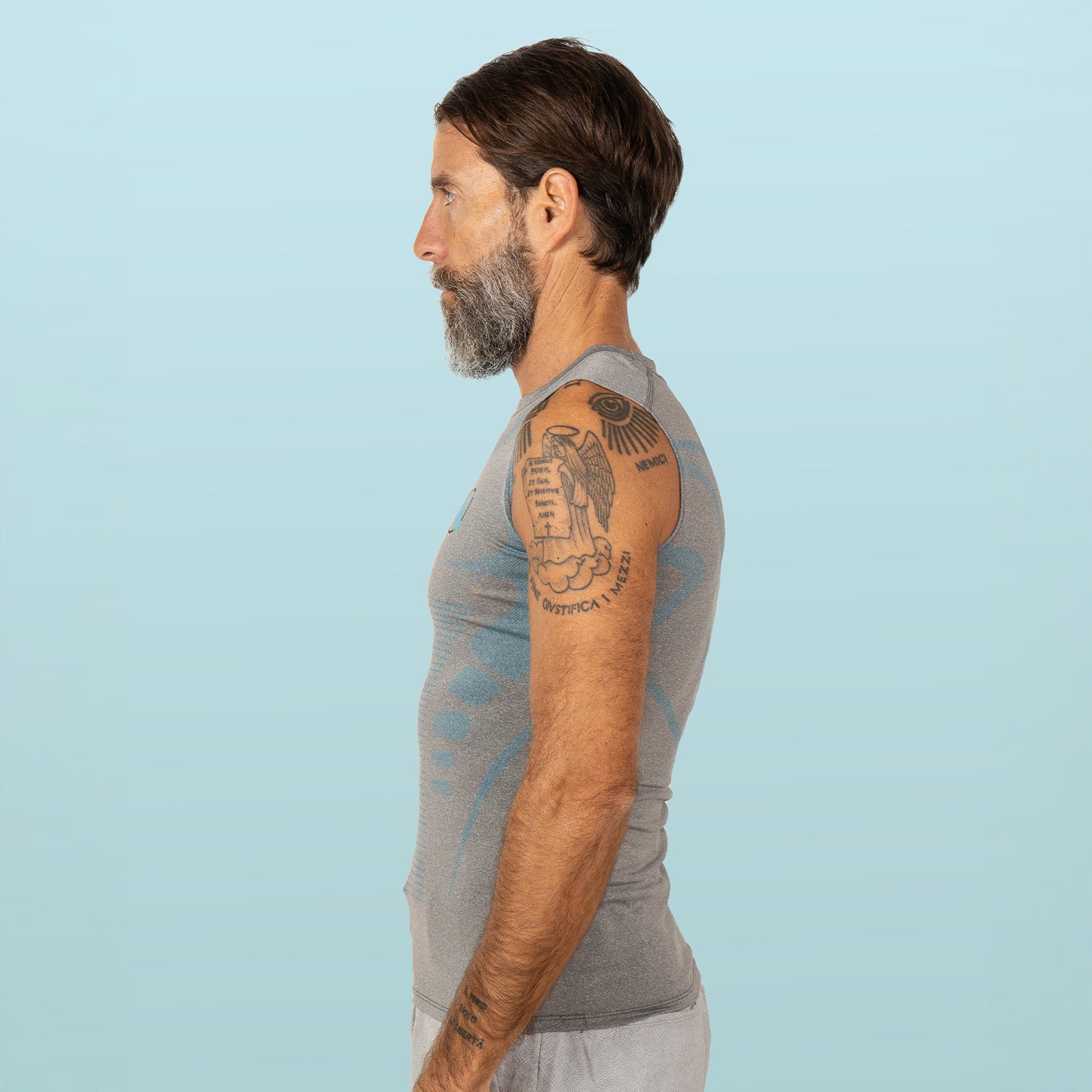
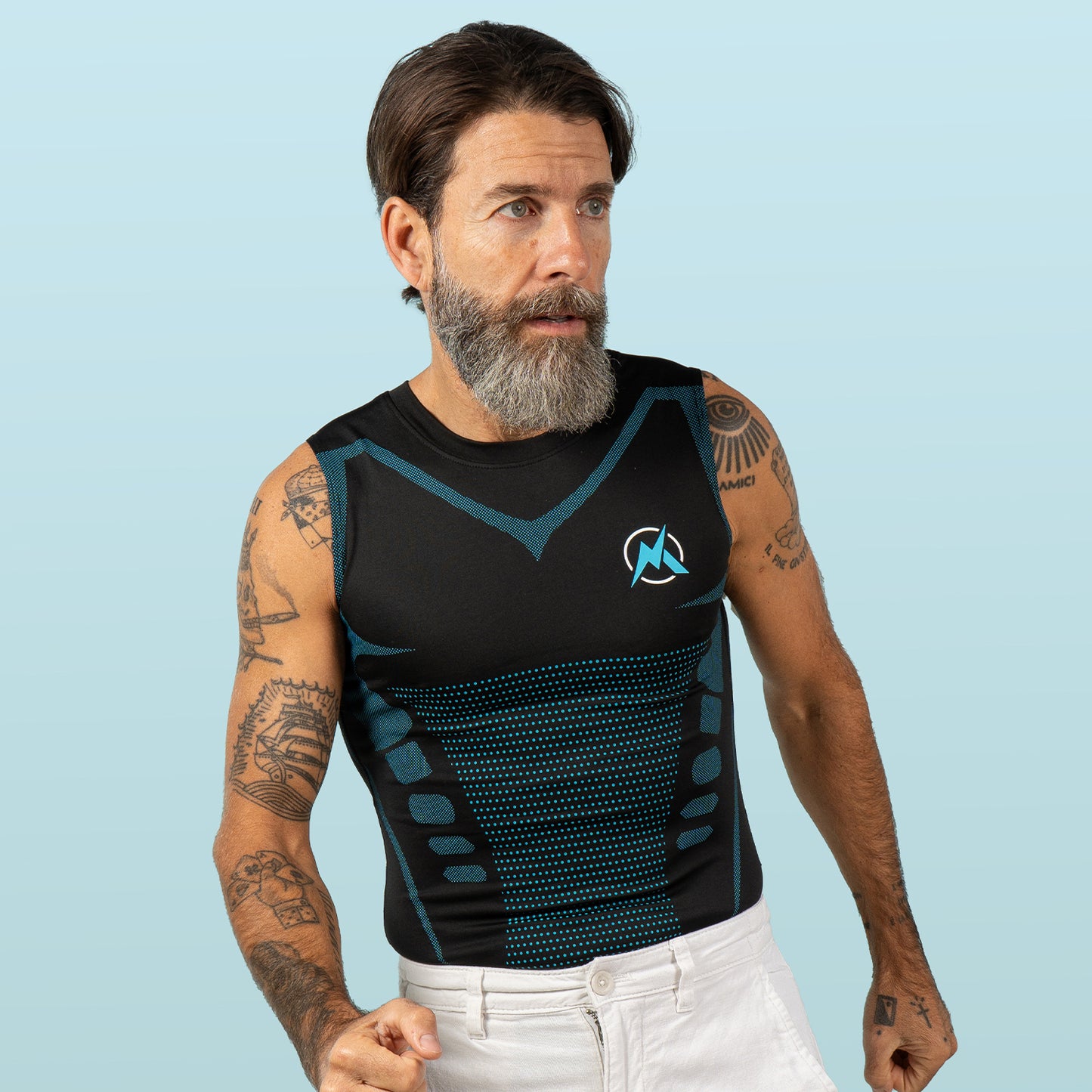
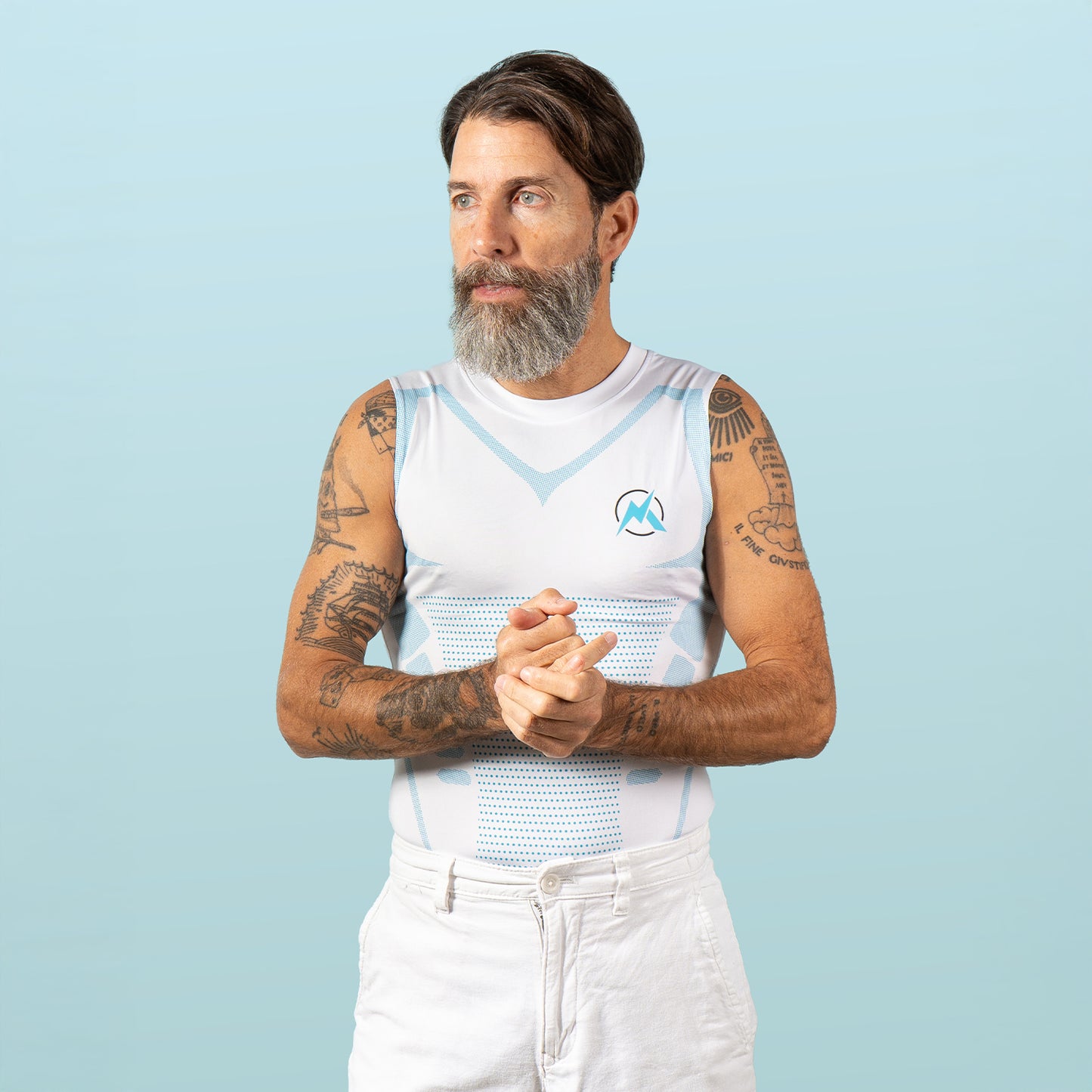
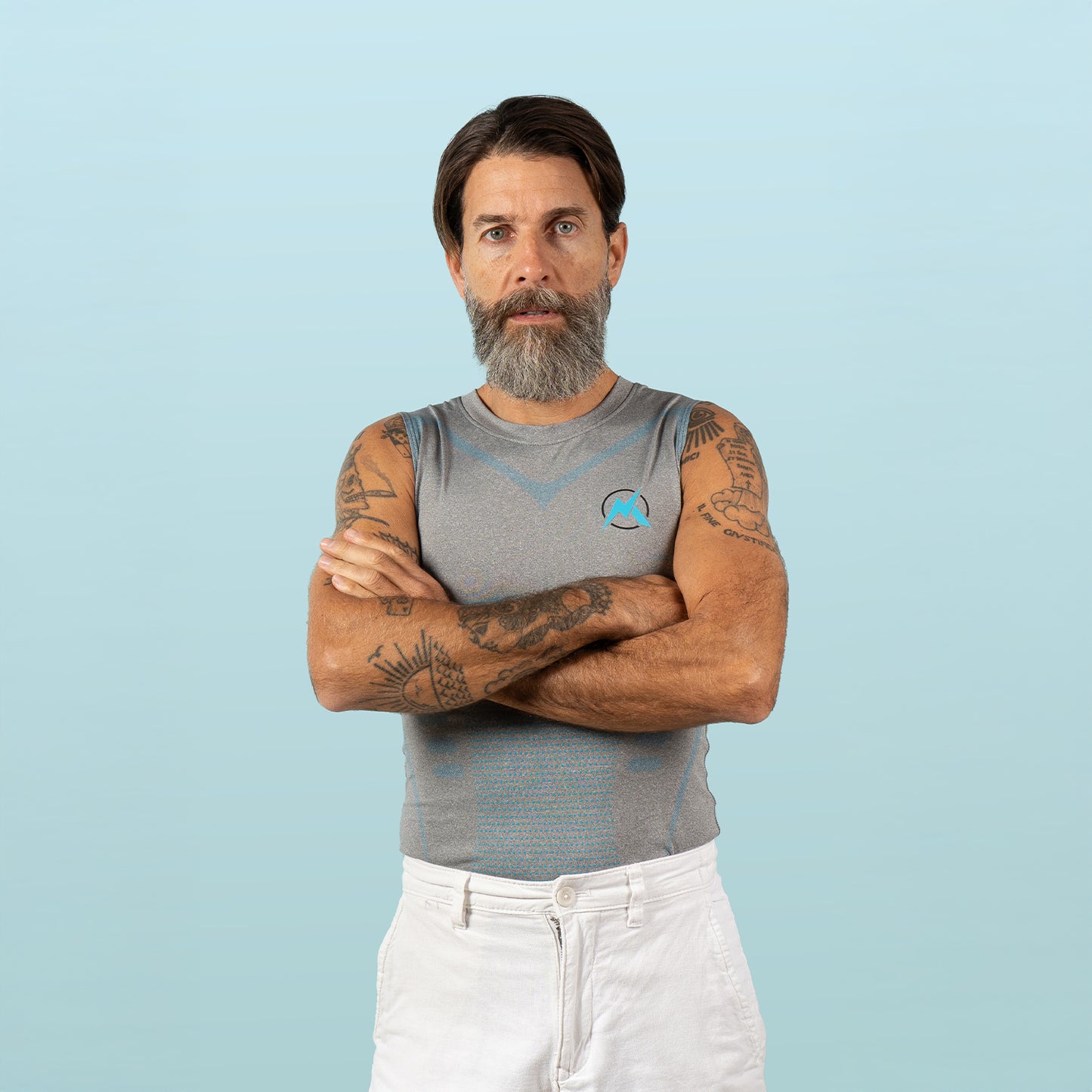
VitaBoost is built squarely for the hybrid daily-wear category. Moderate compression in the 15–22 mmHg range, reinforced shoulder and upper-back panels for postural cueing, sleeveless tank cut that disappears under a dress shirt, and a smoothing core panel that flattens the front silhouette. Nylon-spandex blend rated for 100+ washes. Black with a subtle cyan signature.
The avatar fit is the point: this is the shirt for the 47-year-old who wants to stand taller in his polo at his daughter's recital, hide the dad-bod outline under his Friday button-up, and stop catching himself slouched in every Zoom thumbnail. It will not turn you into a powerlifter. It will absolutely make you look five pounds lighter and three inches taller before you leave the house.
Current offer: Buy 1 Get 1 Free — $59.99 → effectively $15 each.

2. Tommie Copper Pro-Grade Shoulder Support Shirt
The most established hybrid option on the market. Tommie Copper's Pro-Grade uses a 4D stretch nylon-spandex fabric with ergonomic shoulder panels engineered to cue scapular retraction. Short-sleeve cut, UPF 50, copper-infused fabric for odor control. The main drawback for daily office use: the short sleeves and color options can show outlines under thin dress shirts. Best for active casual wear — weekends, running errands, gym, light hikes. Around $70 retail.
3. AlignMed Posture Shirt 2.0
The most clinically-engineered option in this list. AlignMed uses patented NeuroBand tension panels placed along specific muscle groups in the upper back and shoulders. It is the closest thing to "wearable physical therapy" on the market. The trade-off: it's the most visible under regular clothing, the most expensive at $120–$160, and the most aggressive in feel. Best for men actively rehabbing kyphosis or significant slouching under PT supervision — overkill for general office use.
4. IntelliSkin Foundation Long Sleeve
Originally developed in collaboration with sports medicine and chiropractic professionals, IntelliSkin's Foundation uses 4-way stretch Lycra with "Posturecue" zones intended to cue spinal and trunk alignment. Long-sleeve cut makes it better for cold-weather or layering use. Around $90–$110. Best for athletic men 40+ who want a posture cue during workouts and outdoor activity rather than for all-day office wear.
5. Under Armour HeatGear Compression — Not actually a posture shirt
Included here specifically to address the most common listicle mistake. Under Armour HeatGear and Nike Pro are athletic compression shirts. They are not engineered for posture. They use uniform low-grade compression designed for muscle support during exercise, with no targeted panel placement at the shoulders or upper back. They will not give you postural feedback. If you bought one expecting posture support and didn't feel anything — that's why. Wear it to the gym. For posture, look at one of the four above.
The "12 hours a day" trap (and how long to actually wear yours)
Here is the part most marketing pages will never tell you.
Wearing a compression shirt for too many hours per day, for too many months in a row, can actually weaken the postural muscles you're trying to strengthen. Multiple rehabilitation specialists have documented cases of patients who wore posture shirts 10–12 hours daily for several months and ended up with less active mid-back musculature than when they started. The shirt did the work. The muscles offloaded. The muscles atrophied.
The honest dose: 3–6 hours a day, 4–5 days a week, paired with active strength work. Wear it when you need it — long meeting days, long drives, public events, weddings, the days you'll be photographed. Skip it on workout days and on weekends when you can move freely. Treat the shirt like training wheels, not like a wheelchair.
This is also why the "wear it 24/7 and your posture will fix itself" claims you see in some product copy are the wrong way to think about it. The shirt makes the right thing easier. It cannot do the work for you.
How to match a compression shirt to your day
Here's the practical framework. Pick what matches your week.
- Office desk work, 9–5, dress shirt or polo: Hybrid daily-wear tank (Category 3). Low visibility under work clothing. Maynox VitaBoost or Tommie Copper Pro-Grade. 3–5 hours of wear during your hardest sitting block (usually morning to mid-afternoon).
- Long-haul travel day, plane or car for 4+ hours: Same — hybrid daily-wear tank. The proprioceptive feedback is most valuable when you're stuck in a posture you can't escape. Take it off when you arrive.
- Active casual day, errands and walking: Short-sleeve hybrid (Tommie Copper). Slightly more compression across the upper arms; works fine under a polo or henley.
- Workout day, weights or cardio: Athletic compression shirt (Under Armour, Nike Pro) — but understand it's for muscle support, not posture. Or skip compression entirely and let your posture muscles work.
- Active rehab for diagnosed kyphosis or significant slouching: Posture-specific shirt (AlignMed, IntelliSkin) under physical therapist guidance. Not the right starting point for general use.
What a compression shirt CAN'T fix
Honest framing matters here, because the wrong expectation guarantees disappointment.
A compression shirt cannot fix structural spinal conditions. Kyphosis, scoliosis, herniated discs, severe hyperkyphosis — these need medical evaluation, physical therapy, and in some cases medication or surgery. The NIH estimates 20–40% of the aging population develops some degree of age-related hyperkyphosis. If your slouch is severe, fixed, or accompanied by pain — see a doctor first, then talk about shirts.
A compression shirt cannot rebuild your upper back strength on its own. As covered above, the evidence is clear: compression provides feedback, not strength. You need rowing, face-pulls, deadlifts, and stretches that open the chest and hip flexors. Harvard Health estimates 8–12 weeks of consistent work for measurable, durable postural change. The shirt makes that 8–12 weeks easier. It does not replace it.
A compression shirt will not make you "instantly look 20 pounds lighter." That's a marketing line, not reality. What it will do is smooth the silhouette enough that most observers see a sharper, more put-together version of you — research from the University of Toronto on apparent body shape suggests the perception threshold for a visible body composition change is in the range of 8–9 pounds. A well-fitted compression shirt can shave 1–2 inches off your visible waistline. That's real. "20 pounds in 2 seconds" isn't.
For more on closing the posture gap that drives most of this dad-bod visual, see our 4-layer plan to fix bad posture for men over 40 and our daily habit stack for standing tall. And for the underlying evidence on compression itself, see our honest review of whether compression shirts actually work.
Frequently asked questions
Do compression shirts actually improve posture?
Compression shirts improve posture awareness and short-term alignment — they sharpen your body's sense of where your shoulders and spine are, so you correct slouching faster in real time. They do not passively retrain or fix posture on their own. The current evidence supports compression as a feedback tool, paired with active strength work for durable change.
How long should you wear a posture compression shirt each day?
For daily wear, 3 to 6 hours per day, 4 to 5 days a week is the practical dose most rehabilitation specialists recommend. Wearing one for 10–12 hours a day for months has been linked in case reports to weakened mid-back musculature. Treat the shirt like training wheels, not a permanent crutch.
What's the best compression shirt for posture support for men?
For most men over 40 who want all-day office wear, a hybrid daily-wear compression tank (Maynox VitaBoost, Tommie Copper Pro-Grade) gives the best balance of postural cueing, smoothing, and discretion under dress shirts. Posture-specific shirts (AlignMed, IntelliSkin) are stronger for clinical rehab. Athletic compression shirts (Under Armour, Nike Pro) are not designed for posture and should not be your pick if posture is the goal.
Can a compression shirt fix bad posture permanently?
No. A compression shirt cannot permanently fix posture without paired strength work, ergonomic changes, and consistent practice. It can make good posture easier to maintain in real time, which compounds into a habit, but the underlying upper-back, core, and hip-flexor work has to happen too. Expect 8 to 12 weeks of combined effort for measurable, durable change.
Are posture compression shirts better than posture braces?
For most general users, compression shirts are more practical than posture braces. Braces apply more aggressive correction but are often visible under clothing, uncomfortable for extended wear, and can lead to over-reliance and muscle weakening even faster than shirts do. Compression shirts apply lighter, smarter feedback that fits into a normal day. For diagnosed structural conditions, ask a physical therapist which approach is right.
Sources
- Sports Medicine — Putting the Squeeze on Compression Garments (Brown et al., 2022, PMC9023423)
- Life — Effect of compression garments on recovery (Wei et al., 2025, PMC11944185)
- Cleveland Clinic — Tech Neck and Head-Forward Posture Load
- NIH/PMC — Age-Related Hyperkyphosis (PMC2907357)
- Harvard Health — Is It Too Late to Save Your Posture?
The bottom line: don't buy a compression shirt the way the listicles tell you to. Pick the category that matches your real day, look at the four specs (compression range, panel placement, fabric blend, cut), wear it 3–6 hours a day, and pair it with the strength work that actually rebuilds your upper back. The shirt is a tool. The habit is the fix.
Try VitaBoost risk-free — Buy 1 Get 1 Free, $59.99 → $15 each.
Get VitaBoost — Buy 1 Get 1 Free
This article is general information for healthy adults and is not medical advice. If you have diagnosed back, neck, or spinal conditions, consult your physician or physical therapist before using compression apparel.