By Owen Blot · Founder, Maynox · Last updated May 27, 2026
- Why "Just Stand Up Straight" Never Works for Most Men
- What Standing Up Straight Actually Looks Like (The 4-Point Check)
- The Daily Habit Stack: 7 Anchored Cues
- The 5 Micro-Drills That Rebuild Your Default
- The Layer That Removes the Decision Entirely
- How Long Until It Sticks (And What Resets Look Like)
- 3 Mistakes That Quietly Undo the Work
- Frequently Asked Questions
You've been told to stand up straight your whole life. Your mother said it. Your gym teacher said it. Your doctor probably said it again last year. And every time, you straighten up for about 14 seconds, then drift right back into the slouch.
That's not a willpower problem. It's a habit-design problem.
Here's the part nobody tells you: men who actually stand tall in their 40s and 50s didn't get there by trying harder. They got there by stacking small posture cues onto things they already do every day — getting out of the car, walking through a doorway, picking up the phone — until standing straight became automatic. That's the whole trick.
Below is the exact daily habit stack, the 4-point check that tells you you're doing it right, the 5 micro-drills that rebuild your default, and the layer most men skip that quietly removes the decision entirely.
Why "Just Stand Up Straight" Never Works for Most Men
If telling yourself to stand up straight worked, you'd have fixed this in 1998. The reason it doesn't stick is structural, not personal.
The willpower trap
Conscious posture correction relies on you remembering. You'll remember 200 to 300 times today. You sit down, you stand up, you walk into rooms, you grab a coffee — and you're going to remember to engage your spine for about five of those moments. That's a 98% miss rate, and willpower can't close that gap. Behavior-design research has known this for over a decade: humans don't reliably do things they have to consciously choose to do. They reliably do things that are triggered by something else they were already doing.
Why your body defaults to a slouch
The second problem is mechanical. After 20-plus years of desk work, phone-tilting, and driving, certain muscles have gotten short and tight (chest, hip flexors, neck flexors) while others have gotten long and weak (mid-back, glutes, deep neck flexors). According to the National Institutes of Health, the majority of American adults will deal with posture-related issues at some point, largely driven by these adaptive imbalances. Your slouch isn't laziness — it's the path of least resistance for your specific muscle map.
And the load is heavier than you think. Cleveland Clinic notes that the average adult head weighs 10 to 12 pounds in neutral position, but at a 15-degree forward tilt — the typical phone-checking angle — that effective weight on your neck climbs to roughly 27 pounds. Drop your chin to your chest for 30 minutes? You're loading 60 pounds onto the same structures, every time.
This is why "remember to stand up straight" doesn't fix anything. You're fighting biomechanics with reminders. You need a different strategy.
What Standing Up Straight Actually Looks Like (The 4-Point Check)
Before you can train the habit, you need a clear target. There are exactly four points to line up, and one micro-detail most men get wrong.
The 4-point line
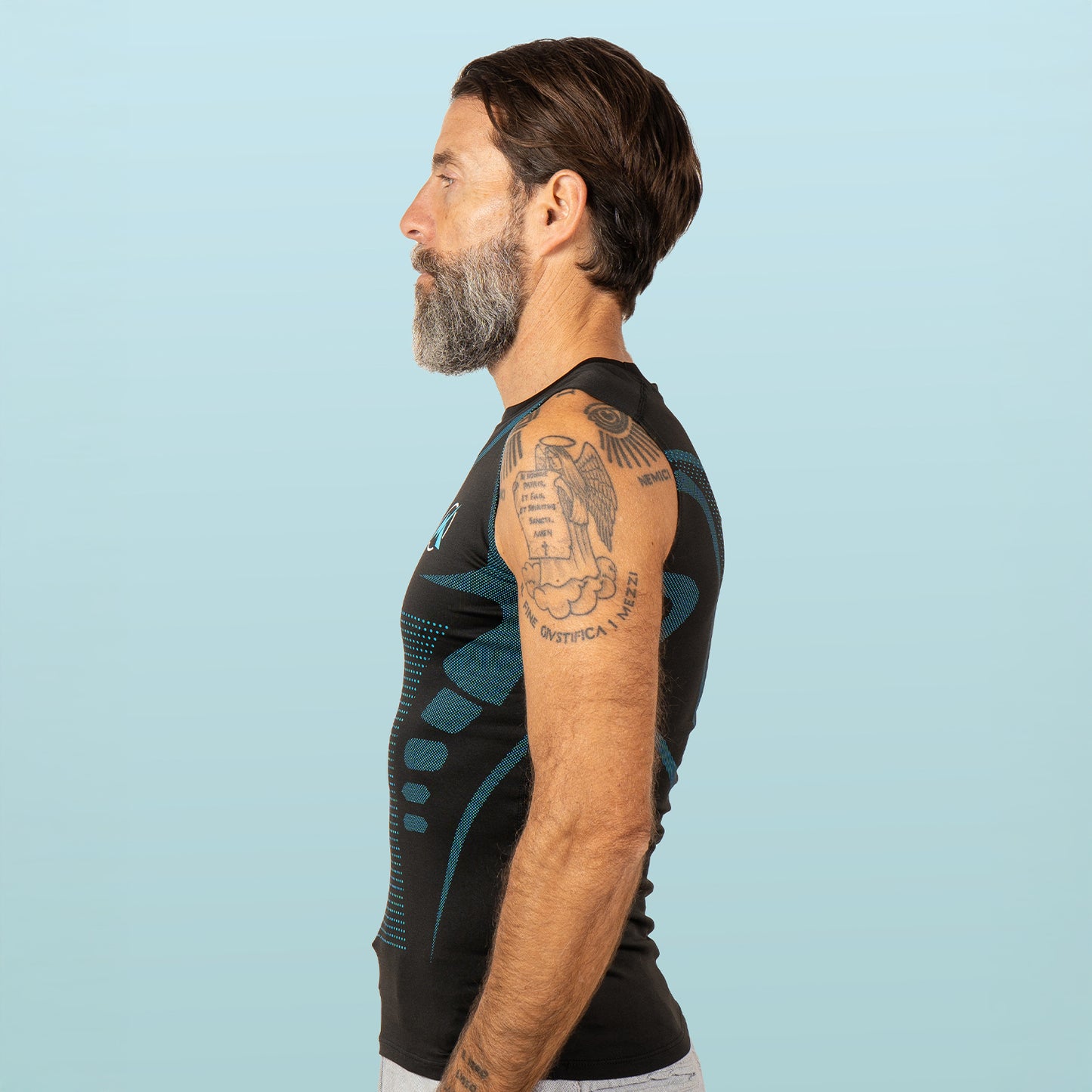
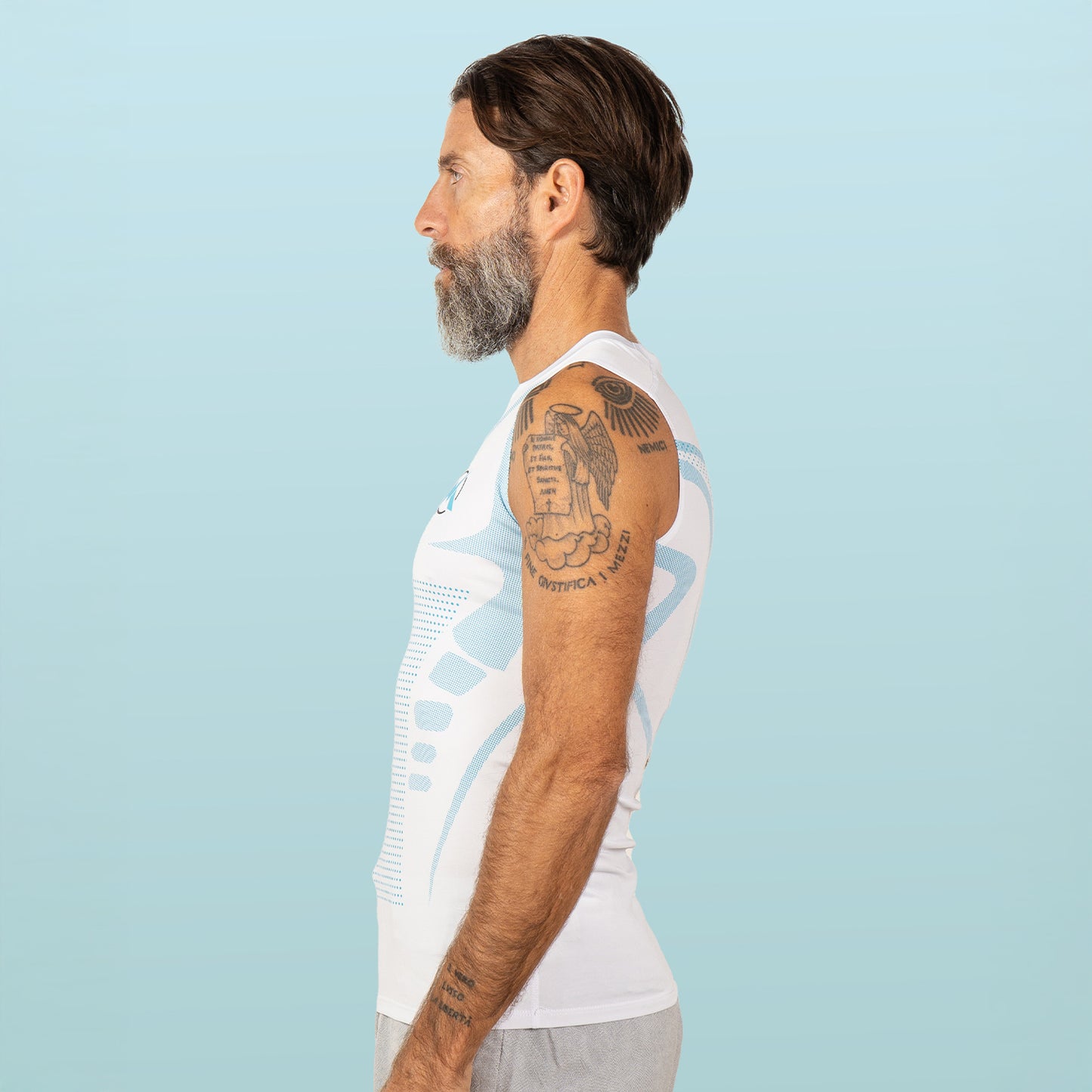
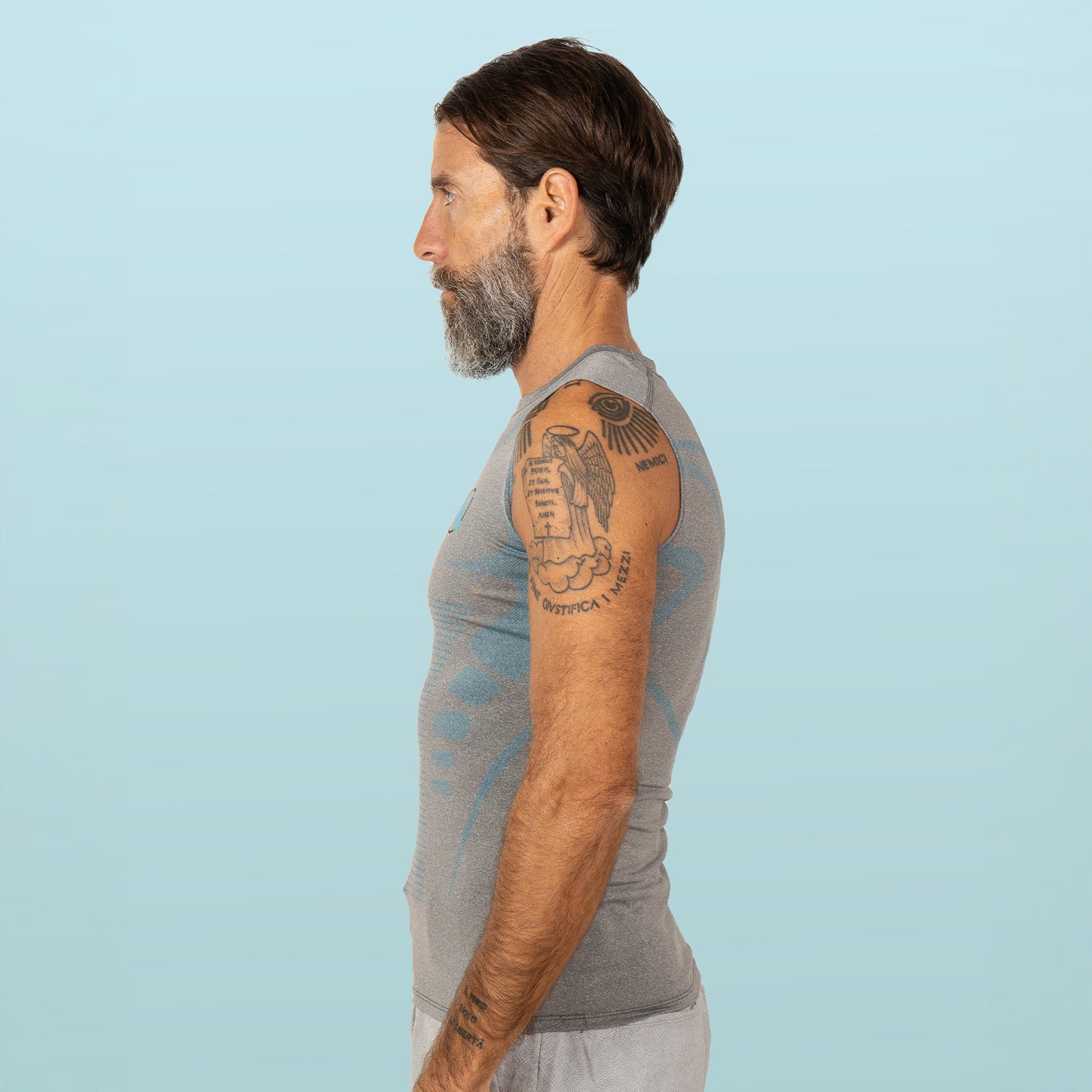
Stand sideways in front of a full-length mirror. Imagine a vertical line that drops straight from the ceiling to the floor. If your posture is right, that line passes through:
- The middle of your ear (not in front of your shoulder)
- The middle of your shoulder (acromion, the bony tip)
- The middle of your hip (greater trochanter, the bony bump on the side)
- Just in front of your ankle bone
That's it. MedlinePlus sums up the standing version: stand tall, shoulders back, stomach pulled in lightly, weight mostly on the balls of the feet, head level, arms hanging naturally, feet about shoulder-width apart.
The micro-detail that flips everything
Most men, when told to stand up straight, do two things wrong: they pull their shoulders back so hard their chest puffs out, and they tilt their head up. Both feel like "good posture." Both are wrong.
The cue that fixes it instantly is this: imagine a thin string attached to the crown of your head, gently pulling you toward the ceiling. Your chest doesn't puff. Your shoulders don't pinch. Your head stays level — chin parallel to the floor, not lifted. The lengthening comes from the top, not the front. You feel taller, not stiffer.
The 30-second wall test
Stand with your heels six inches from a wall. Press your butt, upper back, and the back of your head against the wall at the same time. Your lower back should have a small natural gap (about the size of a flat hand). Your neck should also have a small gap. That's neutral. If your head won't touch the wall without you tilting it up, that's your forward-head measurement — and it's the single most common posture fault in men over 40.
Do this test once a week. It takes 30 seconds, and it tells you whether the habits are working.
The Daily Habit Stack: 7 Anchored Cues
Here's the actual mechanism. You're not going to "remember to stand up straight." You're going to attach the posture cue to seven things you already do every single day, so the cue triggers automatically. This is the entire game.
The format for each anchor is the same: existing action → posture cue → 2 seconds of execution. That's it. Two seconds, seven times a day, every day.
- Feet hit the floor in the morning. Before you stand up, sit on the edge of the bed for two seconds. Crown of the head lifts. Shoulders drop and roll back once. Stand up out of that position. This sets the tone for the first 30 minutes of your day.
- You walk through a doorway. Every doorway is a cue. Crown lifts as you cross the threshold. You'll do this 40+ times a day without noticing — that's the point.
- You sit down. Before you let your weight drop, hinge from the hips, butt back, then lower. Sit all the way back. Feet flat on the floor. This single rule prevents the slumped-into-the-chair default.
- You stand up from sitting. Same cue, reversed. Feet under hips, push the floor away, crown lifts as you reach standing. Don't unfold like a question mark.
- You pick up your phone. Bring the phone up to your face — not the other way around. This is the single biggest tech-neck preventer. You'll fail at it for a week, then it becomes automatic.
- You get out of the car. Cars destroy posture in two ways: the recline pushes your head forward, and the act of climbing out usually involves a hunched lurch. New rule: feet on the ground, stand up before you walk away. Crown lifts as you reach full standing. Two seconds.
- You finish a meal. Before you push back from the table, take one slow breath sitting tall. This anchors the cue to something pleasant (you just ate) — which behavioral research shows makes the habit stick faster.
That's the whole stack. Don't add more. Seven anchors is enough to flood your day with cues without making any single one feel like a chore. If you do five out of seven for a month, your default body position will measurably shift. We have a deeper breakdown of the 4-layer posture plan if you want the structural work that pairs with this stack.
The 5 Micro-Drills That Rebuild Your Default
The habit stack rewires the cue. The drills rewire the muscle map underneath, so the cue has somewhere to land. Harvard Health reports that consistent posture-focused work can produce measurable improvement in 8 to 12 weeks — but only if you actually do the work. Five drills, three to five minutes total, daily:
- Chin tucks (10 reps). Sit or stand tall. Without tilting your head, slide your head straight back like you're trying to make a double chin. Hold 2 seconds. Release. This trains the deep neck flexors that hold your head over your shoulders instead of in front of them.
- Wall slides (10 reps). Stand with your back against a wall, arms in a goalpost position (elbows at 90°, backs of hands against the wall if you can). Slide your arms up and down without letting your back or wrists leave the wall. This wakes up the mid-back muscles that have been asleep since 2011.
- Doorway pec stretch (30 seconds per side). Forearm against a doorway, elbow at shoulder height, step forward. You should feel the stretch across the front of your chest, not in your shoulder joint. Tight pecs are why your shoulders won't stay back.
- Hip flexor stretch (45 seconds per side). Half-kneel — one knee on a pillow, the other foot in front. Tuck your pelvis under and press your hips forward. You're stretching the front of the back hip. Sitting all day makes this muscle short, which pulls your pelvis forward and arches your back into a slumped shape.
- Glute bridges (15 reps). Lie on your back, knees bent, feet flat. Squeeze your butt and lift your hips until your body forms a straight line from shoulders to knees. The weak link in most men's posture is glutes that have forgotten how to fire. This wakes them up.
You don't need to do these in a gym. You don't need equipment. Do them once a day, any time, and most men feel a difference within two weeks. If you want the longer story on why your spine starts losing its line in your 40s, we covered that in the post on why men slouch with age.
The Layer That Removes the Decision Entirely
Here's the truth most posture content won't say out loud: even with the habit stack and the drills, there's a gap between "I want to stand up straight" and "my body is actually doing it." That gap is biggest in the first 4 to 8 weeks, before the new muscle patterns set in. And the easiest way to bridge it isn't more discipline.
It's a layer that gives your body a constant, gentle reminder — without you having to think about it.
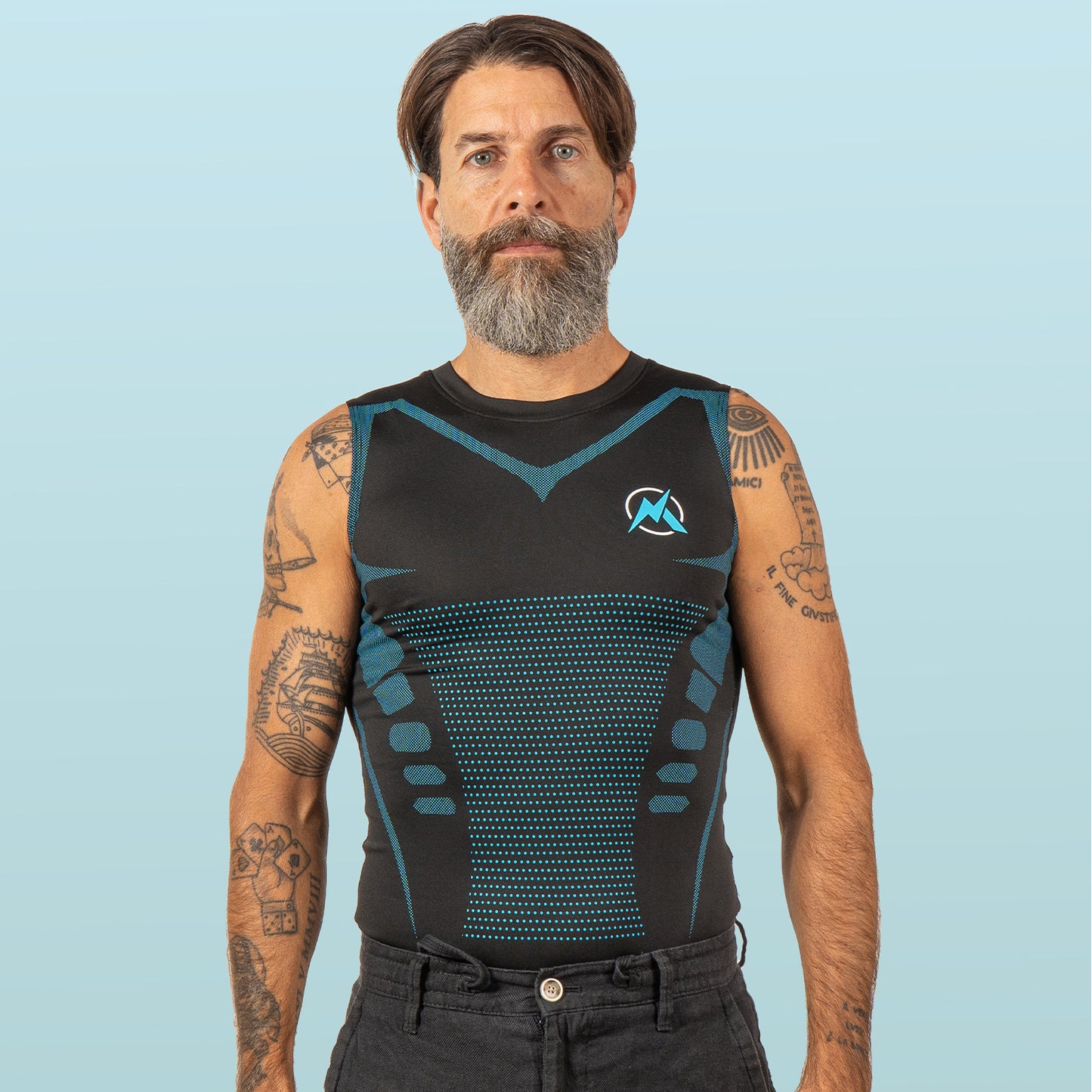
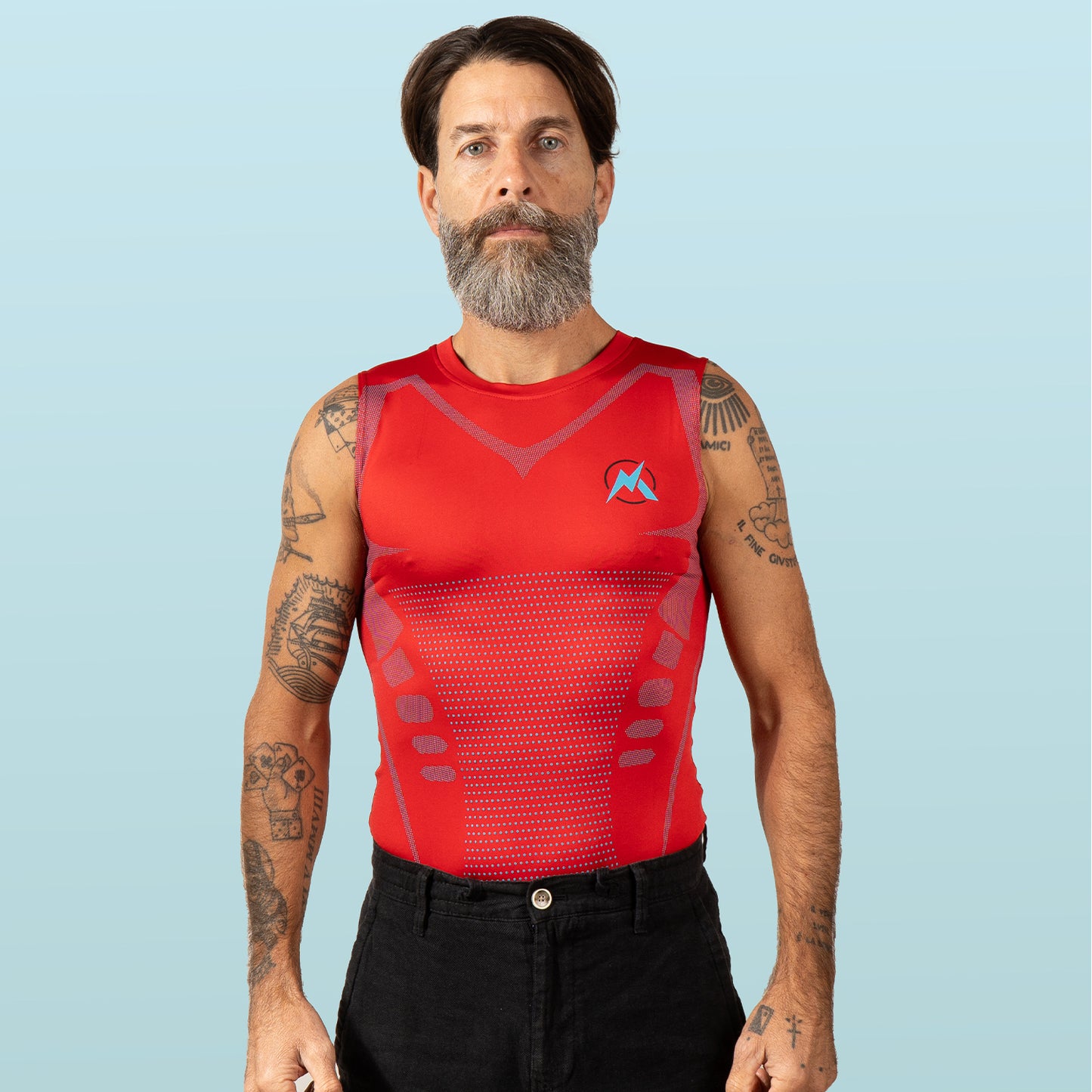
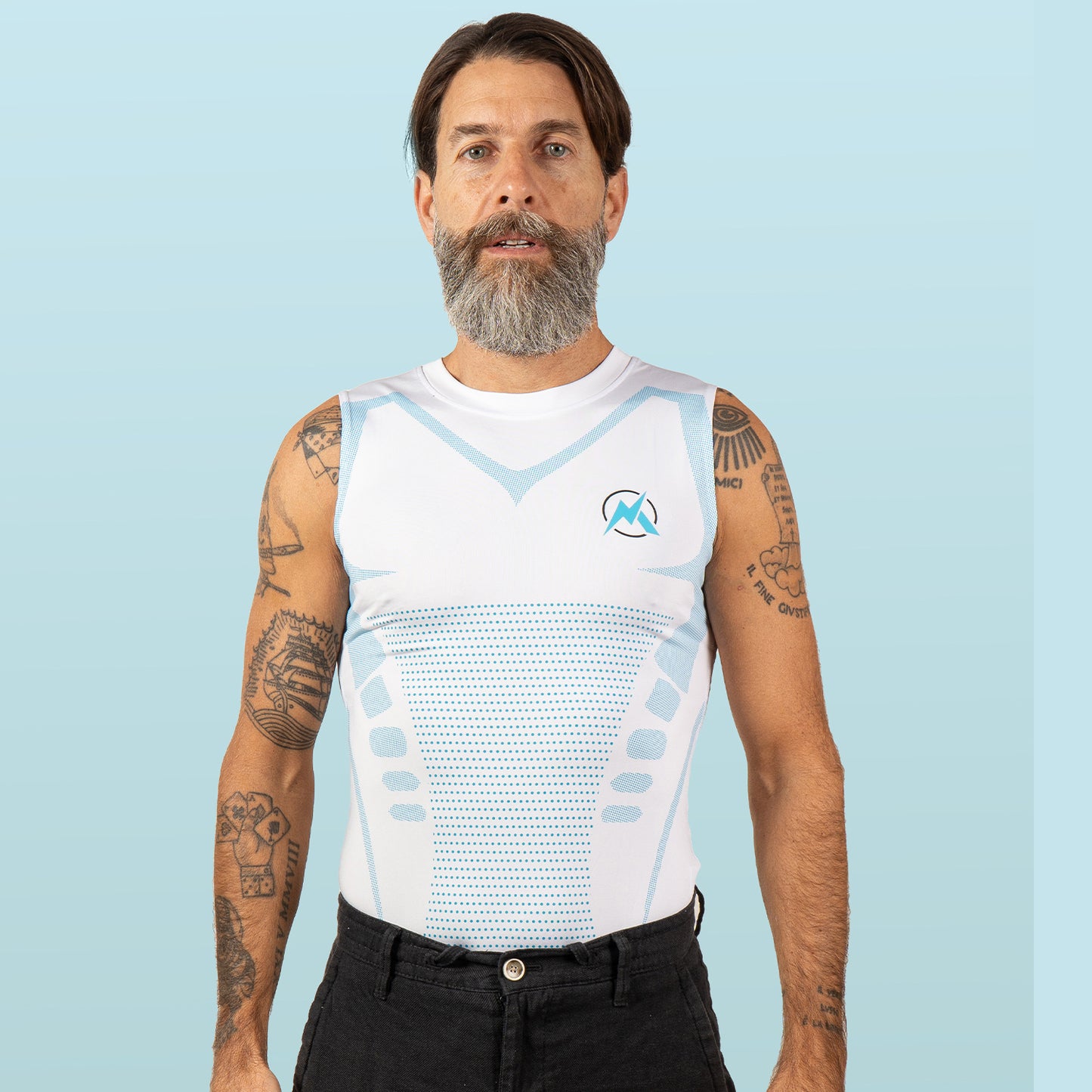
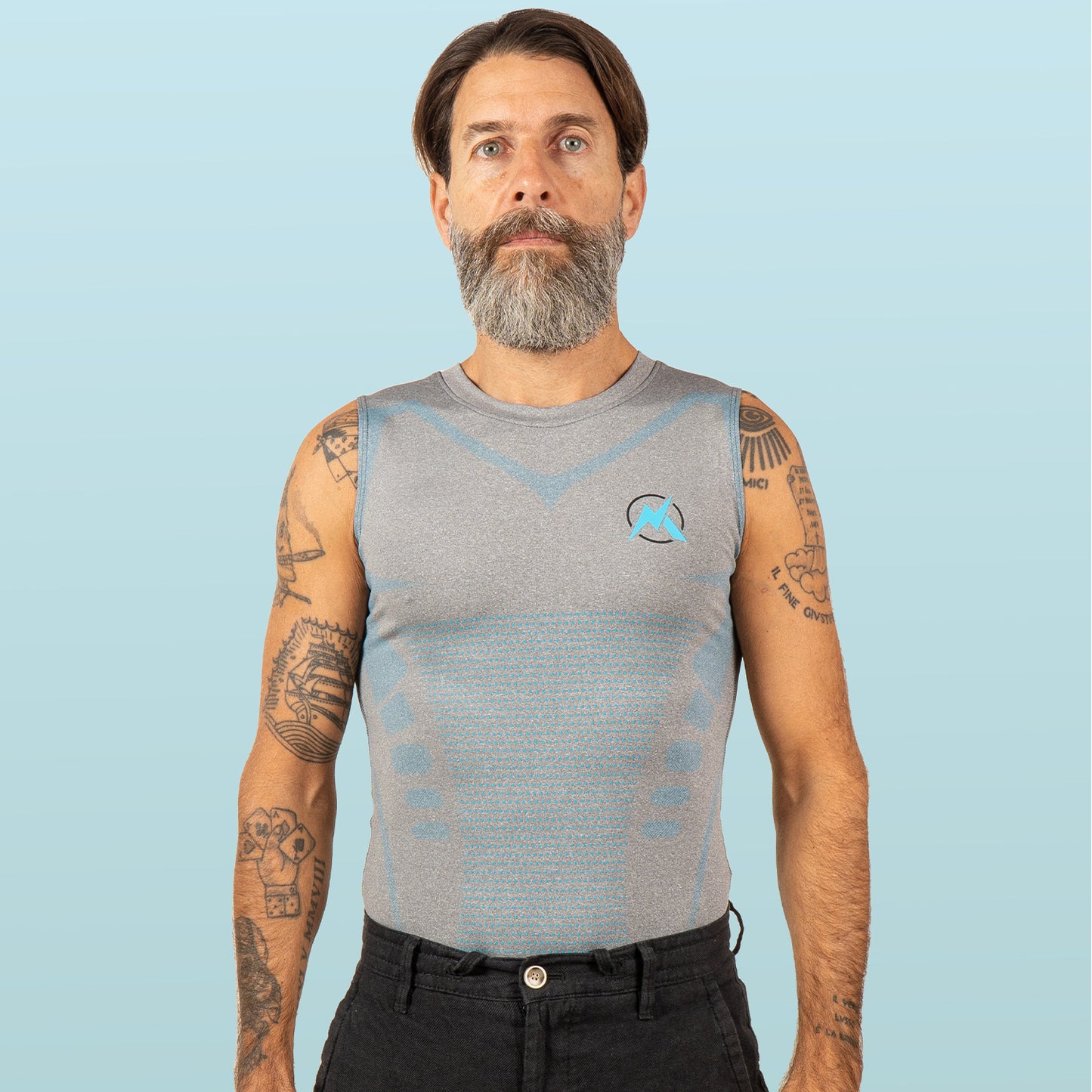
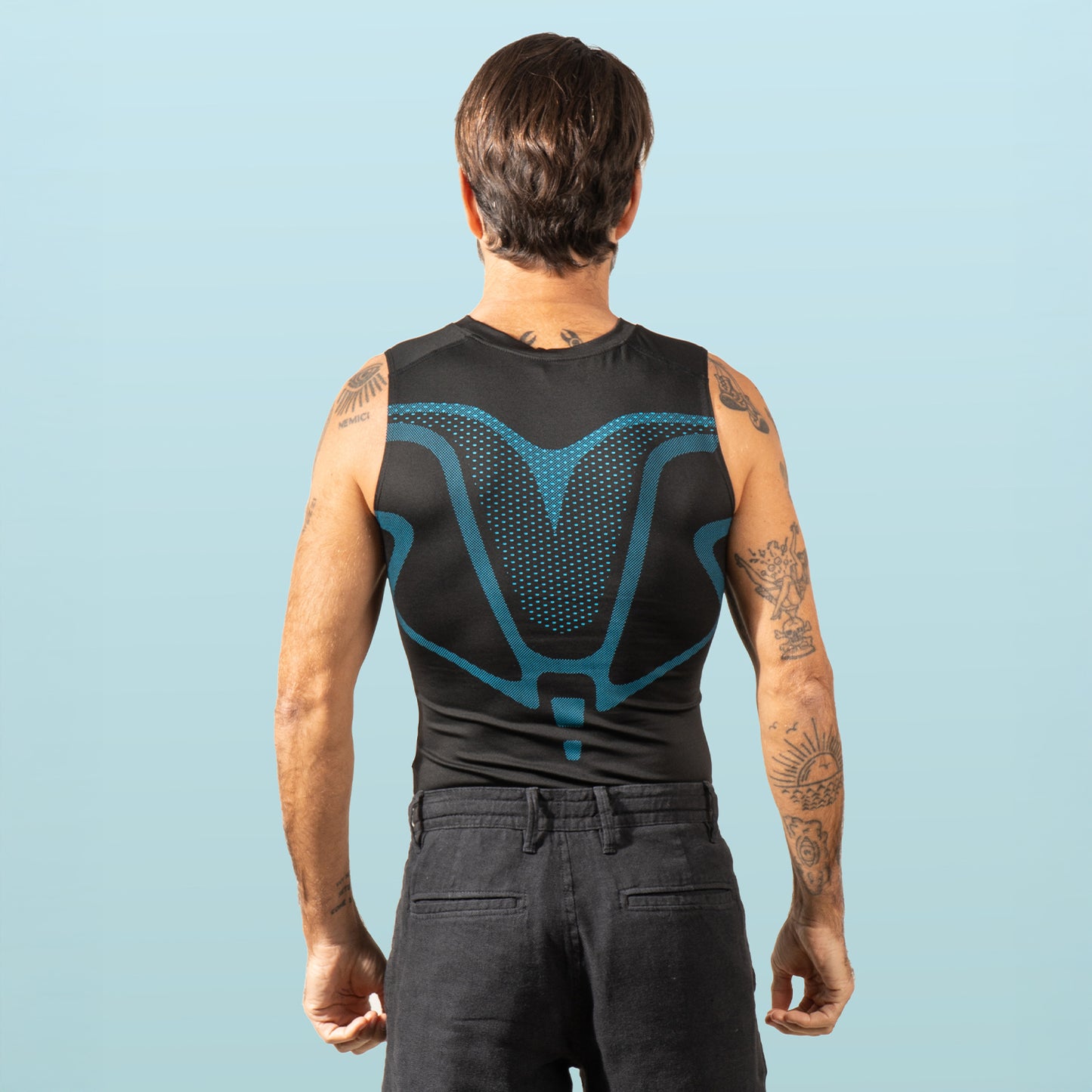
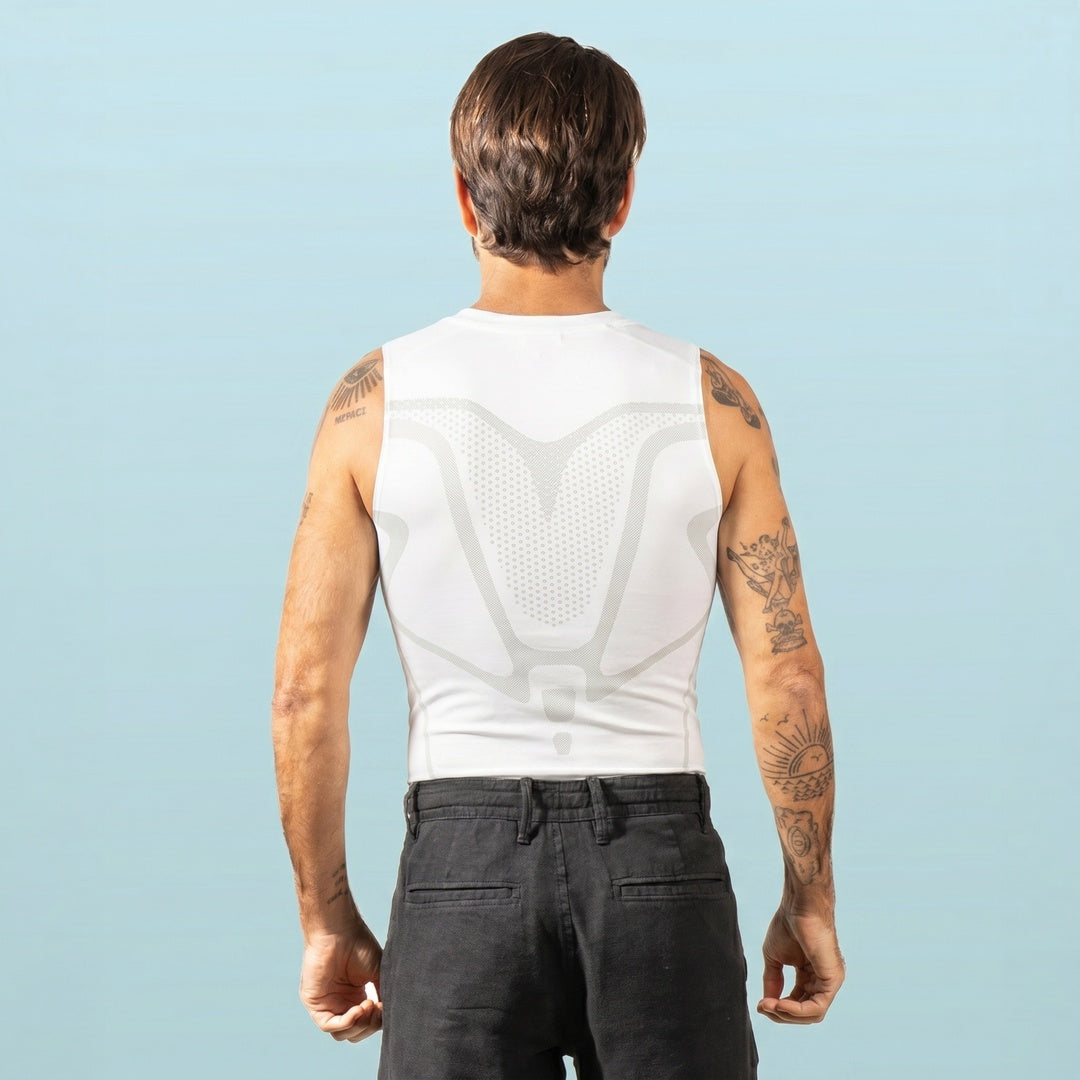
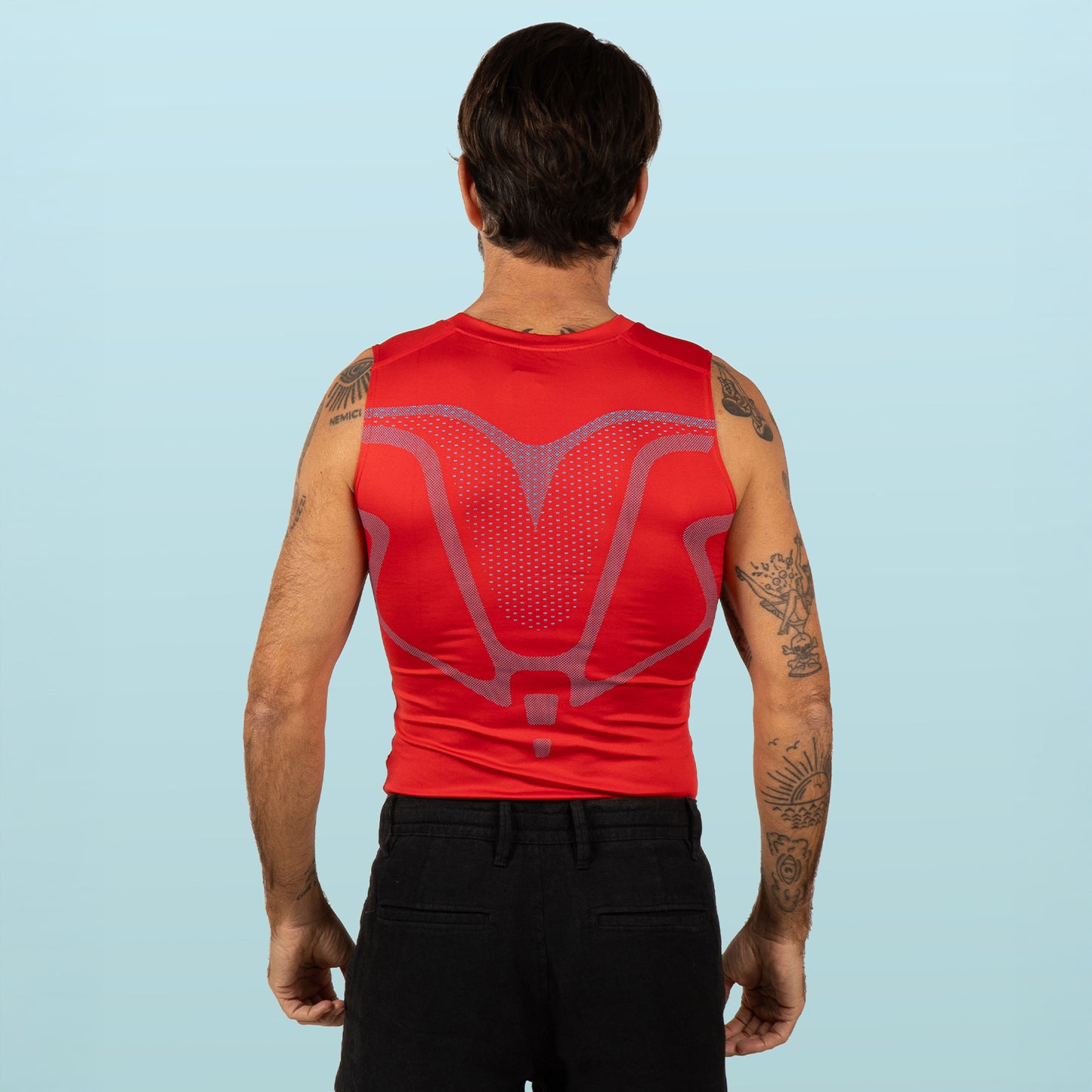
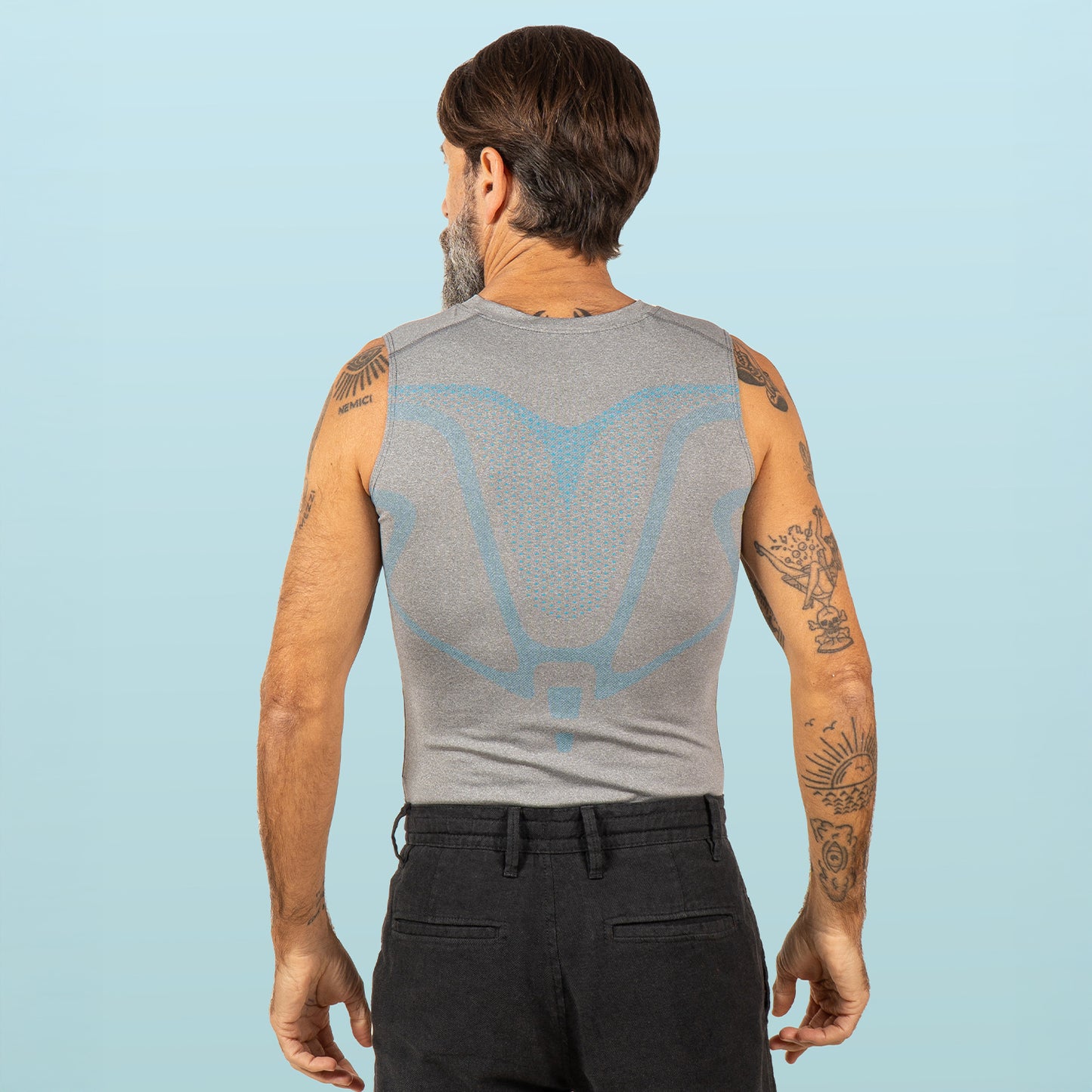
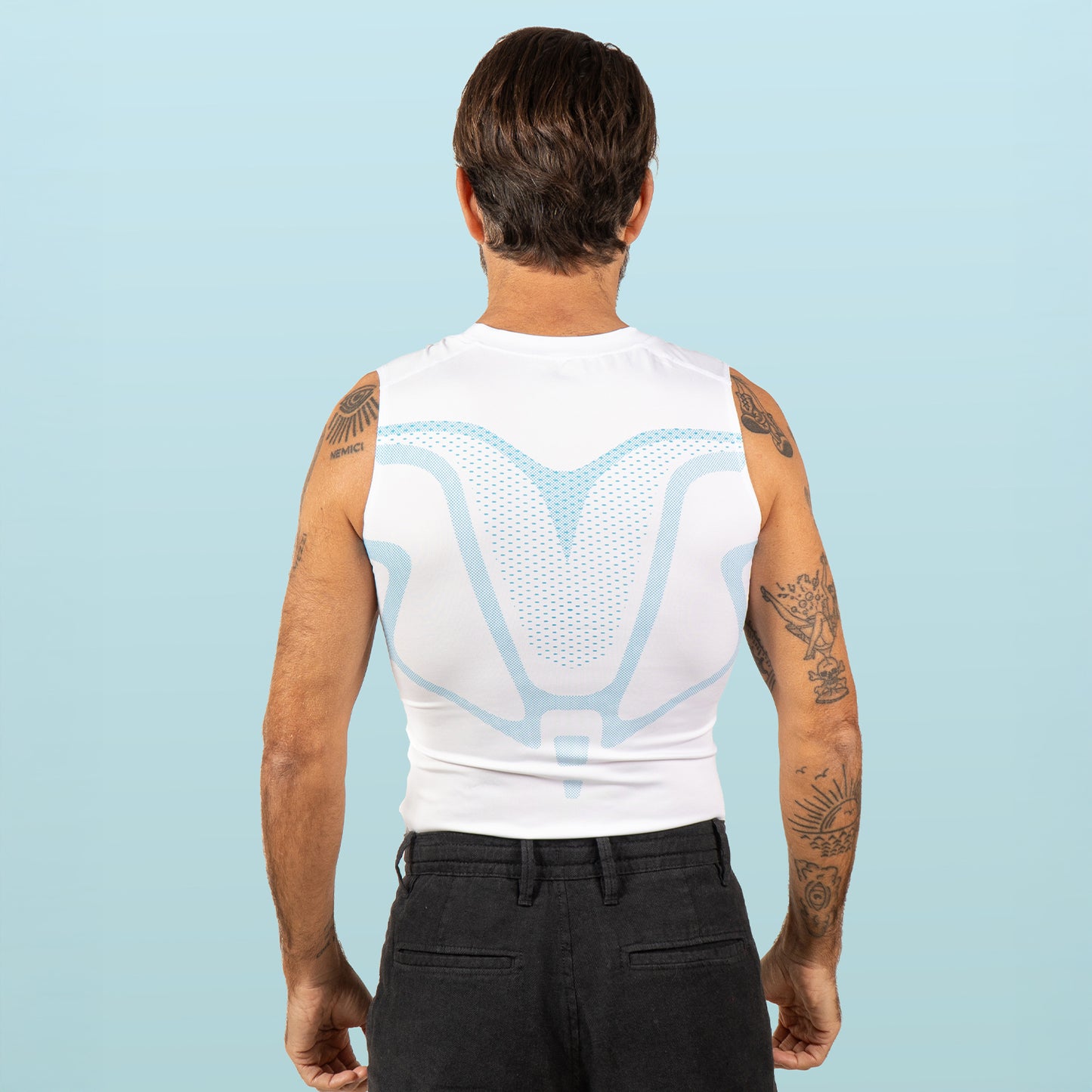
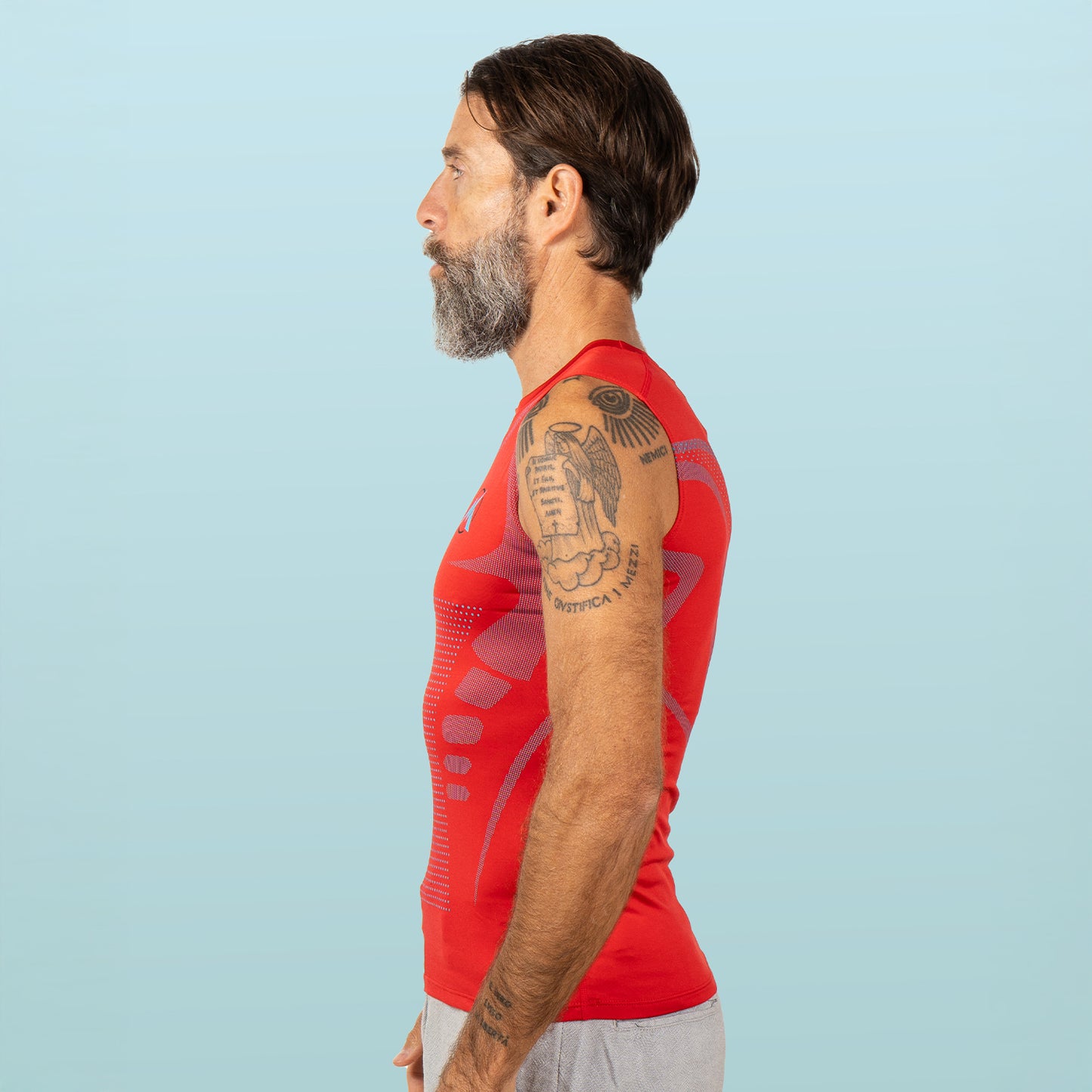
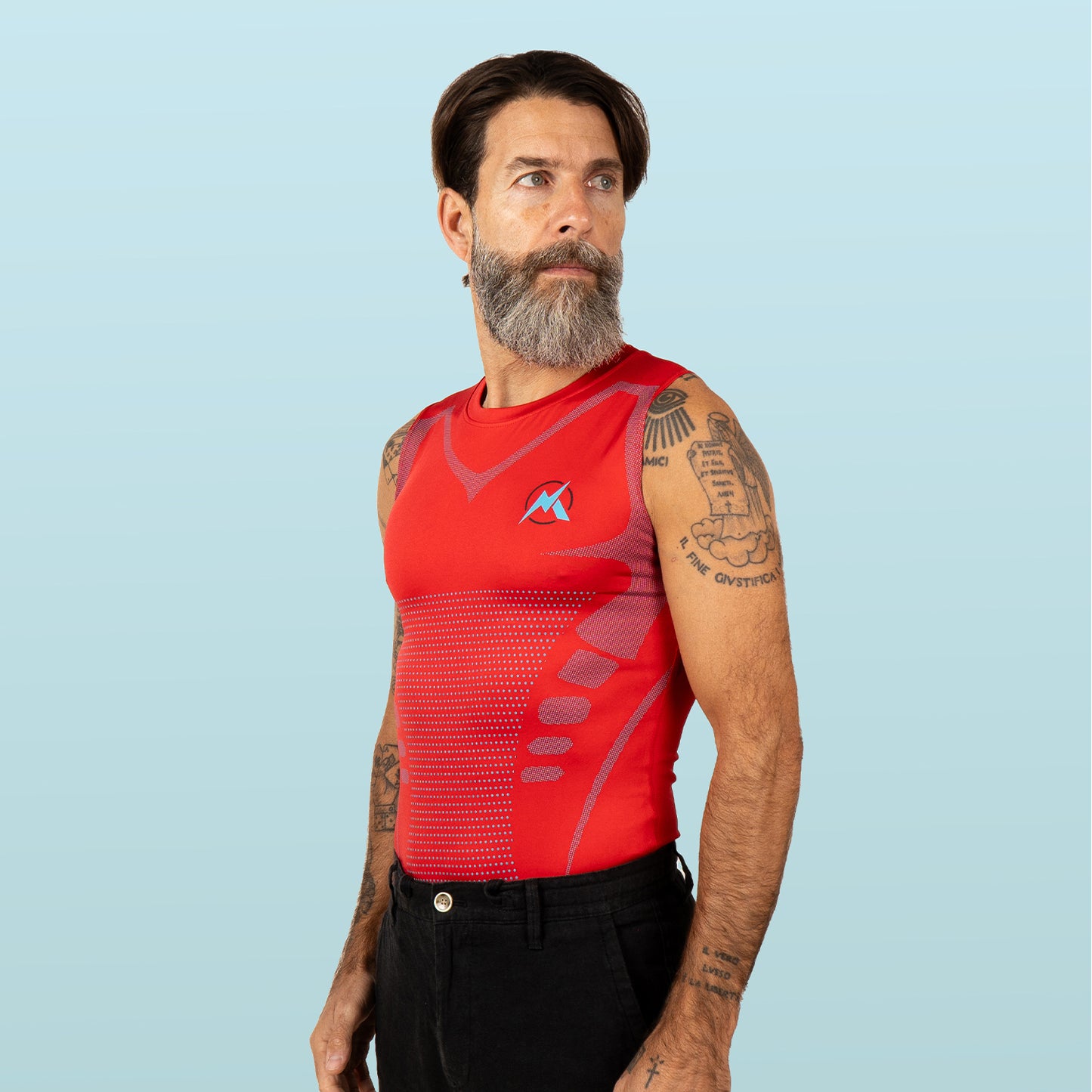
A well-designed compression base layer does three things at once: it provides light, even compression across the chest and upper back that physically encourages shoulders to sit back, it gives you a subtle proprioceptive cue (your body becomes aware of its position because it can feel the fabric), and it flattens the silhouette so you actually see the posture improvement in the mirror, which reinforces the habit through visible reward.

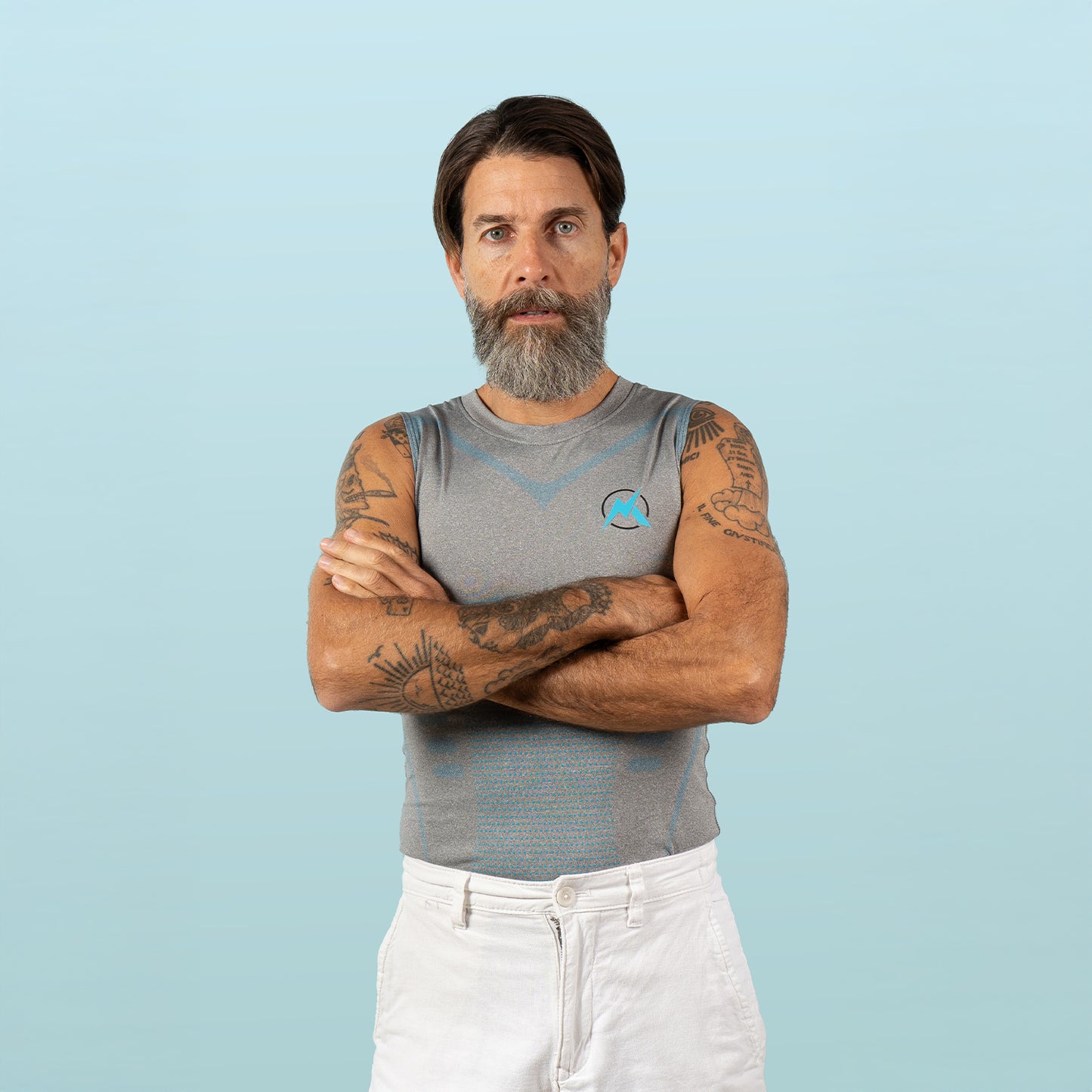
This is exactly what VitaBoost is built to do. It's not a posture brace — those are stiff, uncomfortable, and your muscles atrophy under them. VitaBoost works as a passive cue layer: light compression across the shoulders and chest, designed to remind your body where "tall" is, all day, without you having to remember. You put it on under your shirt in the morning, and you forget about it. That's the point. The compression does the remembering for you while the habits are setting in.
Men who pair the habit stack with a daily compression layer typically report visible posture change in 3 to 4 weeks instead of 8 to 12. The mechanism isn't magic — it's just removing the willpower tax from the equation while the underlying muscle work catches up.
How Long Until It Sticks (And What Resets Look Like)
Realistic timeline, based on Harvard Health's posture rehabilitation guidance and what most men actually experience:
- Week 1-2: You'll forget the habit stack constantly. You'll catch yourself slouching and feel frustrated. This is normal. Your job is just to come back to the cues, no shame. Drills feel awkward but easy.
- Week 3-4: Two or three of the anchors (usually the doorway cue and the phone cue) become automatic. You stop having to think about them. Drills start to feel like part of the day.
- Week 5-8: Posture noticeably better in photos. People might say you look thinner — they're actually seeing 1.5 inches of extra height that was hiding in your slouch. Chin tucks no longer feel weird.
- Week 9-12: The wall test gap shrinks. Your default standing position is now closer to neutral than to your old slouch. Most days, you don't have to think about posture at all — until you're tired or stressed.
That last part matters. Stress and fatigue collapse posture before anything else. A bad day, a red-eye flight, a hard week — you'll slip. Don't treat it as failure. Just re-anchor on the doorway cue the next morning and you'll be back inside a few days. The habit doesn't have to be perfect to be permanent.
If you want the broader confidence layer that posture unlocks — and why men in their 50s often peak in presence and self-assurance — we wrote about that in the confidence playbook for men over 50.
3 Mistakes That Quietly Undo the Work
Most men who try to fix their posture stall not because the work was wrong, but because one of these three habits keeps resetting them back to zero.
- Mistake #1: Forcing the shoulders back instead of lengthening the crown. Pinching your shoulder blades together feels active and disciplined. It also makes you stiff, sore in the upper back, and worse at staying tall for more than 60 seconds. The cue is up, not back. Lift through the crown of the head. Shoulders settle on their own.
- Mistake #2: Doing the drills, skipping the cues. The drills build the muscle. The cues build the habit. If you only do the drills, you'll be a slouched man with stronger glutes. Both are required, and the cues are non-negotiable.
- Mistake #3: Treating the phone as a free pass. Most men accept tech-neck as inevitable. It isn't. The single move that beats it is bringing the phone up to your face, not your face down to the phone. Skip that one cue and the other six aren't enough.
That's the entire system. Habit stack rewires the cue. Drills rewire the body. The compression layer removes the gap between intention and execution. Most men see meaningful change within a month, real change within a quarter.
The version of you that stands tall, looks 10 pounds lighter without losing a pound, and walks into a room a beat more confident — that's not a different man. It's the same man, with a habit stack that finally took.
Start the habit stack with VitaBoost — Buy 1 Get 1 Free
Frequently Asked Questions
How can I train myself to stand up straight?
You don't train yourself with reminders — you train yourself with anchored cues. Attach the posture cue (crown of the head lifting toward the ceiling) to things you already do every day: walking through doorways, picking up your phone, getting out of the car, sitting down, standing up. Combined with five daily micro-drills (chin tucks, wall slides, pec stretch, hip flexor stretch, glute bridges) and a passive compression layer, most men see real change in 4 to 8 weeks.
What is the correct way to stand up straight?
Line up four points vertically: middle of the ear, middle of the shoulder, middle of the hip, just in front of the ankle bone. Crown of the head lifts toward the ceiling. Chin stays parallel to the floor — don't tilt up. Shoulders relax back and down, not pinched. Weight mostly on the balls of your feet, feet about shoulder-width apart. Stomach lightly engaged. That's the target position per MedlinePlus and standard physical therapy guidance.
Does standing up straight make you taller?
Yes, measurably. Most men who fix a forward-head, rounded-shoulder slouch gain back 1 to 1.5 inches of apparent height because they were losing it in the curve. You're not growing — you're recovering the height your slouch was eating. People who haven't seen you in months will say you look taller, leaner, and younger. That's the posture, not your imagination.
Why is it hard for me to stand up straight?
Two reasons. First, after years of desk work, driving, and phone use, certain muscles got tight (chest, hip flexors) and others got weak (mid-back, glutes), so your body's default rest position is now a slouch. Second, you've been trying to fix it with reminders, which fails because conscious correction relies on memory and willpower — neither of which scale across hundreds of daily transitions. You need habit anchors and muscle work, not more discipline.
How long does it take to fix bad posture?
Harvard Health and standard physical therapy timelines put consistent posture improvement at 8 to 12 weeks for visible structural change in adults. Most men feel a difference in 2 to 3 weeks, see it in photos by week 5, and have it largely automatic by week 12 — assuming they're doing both the habit cues and the daily drills. Adding a passive compression layer typically compresses that timeline to 3 to 4 weeks for visible change because it removes the willpower tax.
Sources
- National Institutes of Health (News in Health) — Getting It Straight: Improve Your Posture for Better Health
- Cleveland Clinic — How 'Tech Neck' Affects Your Spine
- Harvard Health Publishing — Is It Too Late to Save Your Posture?
- MedlinePlus (U.S. National Library of Medicine) — Guide to Good Posture
The bottom line: nobody slouches on purpose, and nobody fixes their posture by trying harder. They fix it by changing the cues and changing the muscle map. Seven anchors, five drills, one layer that does the remembering for you while it all sets in. That's the entire playbook.