By Owen Blot · Founder, Maynox · Last updated May 16, 2026
- The science: how much weight loss actually shows
- Hack #1 — Stand tall (the free 10 pounds)
- Hack #2 — Wear one tone from neck to shoe
- Hack #3 — Tailor the fit, then sweat the inches
- Hack #4 — Smooth the middle with a compression base layer
- Hack #5 — Vertical lines, beard, and the rest
- Your 30-minute checklist
- Frequently asked questions
- Sources
You don't have a 30-pound problem. You have an 8-pound problem.
That's the number researchers at the University of Toronto put on it: men of average height need to lose about 8–9 pounds before anyone notices it in their face. The thing nobody tells you is that the reverse works too. You can look 8–9 pounds lighter without losing an ounce — if you stop fighting your body with the wrong tricks and start using the cheap, boring ones that work.
This isn't a "wear slimming colors" listicle. This is the playbook for a 45–55-year-old guy who has put on a little weight, doesn't want to spend the next six months on a treadmill before his daughter's wedding, and wants to look noticeably leaner in the photo he sends his college reunion next month.
Eight hacks. None of them require a diet. One of them is free. Three of them you can do tonight. Knowing how to look thinner as a man is less about new clothes and more about how you use what's already in your closet.
The science: how much weight loss actually shows
The 2015 University of Toronto study by Daniel Re and Nicholas Rule (published in Social Psychological and Personality Science) asked participants to compare digitally altered faces and identify which one was heavier. The threshold for a "noticeable" change was about 1.33 BMI points. For a man of average US height (5'9"), that's roughly 8–9 pounds in the face alone.
The kicker: to look more attractive — not just thinner — men needed to lose closer to 18 pounds.
That's the bad news. The good news is that everything below works on the same perception system. You don't have to change the body. You have to change what other people's eyes do when they look at you.
If part of what you're fighting is real visceral fat around the midsection, we wrote the long-form playbook on why men get a belly after 40 and what actually works. Read it after this one — these style hacks buy you time while the fat-loss work is doing the slower, deeper job.
Hack #1 — Stand tall (the free 10 pounds)
This is the only hack that costs you zero dollars and works in 30 seconds.
When you slouch, you compress vertical space and spread horizontally. Your gut rolls forward. Your shoulders cave in. The same body mass takes up less height, so it has to go somewhere — and "somewhere" is your waistline. Fix your posture and the same body suddenly reads taller and leaner.
Harvard Health Publishing flags posture as a foundational driver of how your body is perceived, not just how it functions. Cleveland Clinic notes that proper alignment — chin tucked, shoulders back, core lightly engaged — reduces visible abdominal protrusion almost immediately because the abs are doing what they were built to do.
Here's the move:
- Stand against a wall, heels touching it
- Push the back of your head into the wall
- Roll your shoulders back, then down
- Lightly draw your belly button toward your spine — don't suck in, just engage
Hold for ten seconds. That's the position. Walk around in it for the rest of the day.
This is the same posture problem we broke down in our 4-layer posture plan for men over 40 — if you want the long version with the daily resets, start there.
Hack #2 — Wear one tone from neck to shoe
The fastest closet trick: kill the horizontal break at your waist.
Most men wear a light shirt and dark pants. That creates a hard horizontal line right at the widest point of the torso. Your eye sees it and instinctively measures width at that line. You look bigger there. You look shorter overall.
Now do the opposite. Same color family, top to bottom. Charcoal shirt, charcoal trousers. Navy henley, navy chinos. Black tee, black jeans. The eye runs unbroken from your collar to your shoes, your body reads as one continuous vertical column, and you look both taller and narrower.
This is what stylists mean by "monochrome" or "tonal" dressing. It doesn't have to be perfectly identical — close shades work fine. The rules are simple:
- Stay in the dark family: navy, charcoal, black, deep olive, espresso brown
- Match shoes to pants (a brown shoe on black trousers re-creates the horizontal break)
- No contrast belt — match the belt to the pants, or skip it
- A subtle texture difference (knit shirt + smooth chinos) keeps it from looking like a uniform
This is the most underrated hack on this list. It costs nothing — you already own these clothes. You just have to stop separating them.
Hack #3 — Tailor the fit, then sweat the inches
Fit beats everything else combined. A $40 tailored shirt looks better than a $400 shirt that's a size too big. Most men do not know what good fit looks like on themselves, so they buy up — and a shirt that's even half a size too large balloons around the waist and makes them look 10 pounds heavier than they are.
Where men size up wrong
- Shirts: Too much fabric in the side panels. If you can grab more than 1 inch of cloth at your love handles, the shirt is too big. The shirt should graze your body, not cling and not balloon.
- Pants: Worn at the hips, not the natural waist. A pant worn low cuts the torso off and exposes the belly above the waistband. Worn at the natural waist (the narrowest point of your trunk), the pant elongates the torso and hides the gut.
- Jackets: Buying outerwear a size up to fit "comfortably" over a sweater. The extra material adds visible volume to your shoulders, chest, and stomach all at once.
Two cheap alterations under $30
If you do nothing else from this article, do these two things this week:
- Take in the side seams of three shirts. A tailor charges $15–$25 per shirt. The result is dramatic. The shirt sits clean against your body without pulling at the buttons.
- Hem your pants to break right. The "break" is where the pant meets the shoe. A clean one-inch break (slight wrinkle, no pooling) makes your legs look longer. A pant that puddles at the ankle makes them look shorter and your body wider.
Run these two alterations on the five pieces you wear most. Cost: under $200. Effect: more than three months at the gym.
Hack #4 — Smooth the middle with a compression base layer
Here's the unglamorous truth nobody in style media wants to say out loud: women have been wearing shapewear under their clothes for a hundred years. Men only started doing it in the last five.
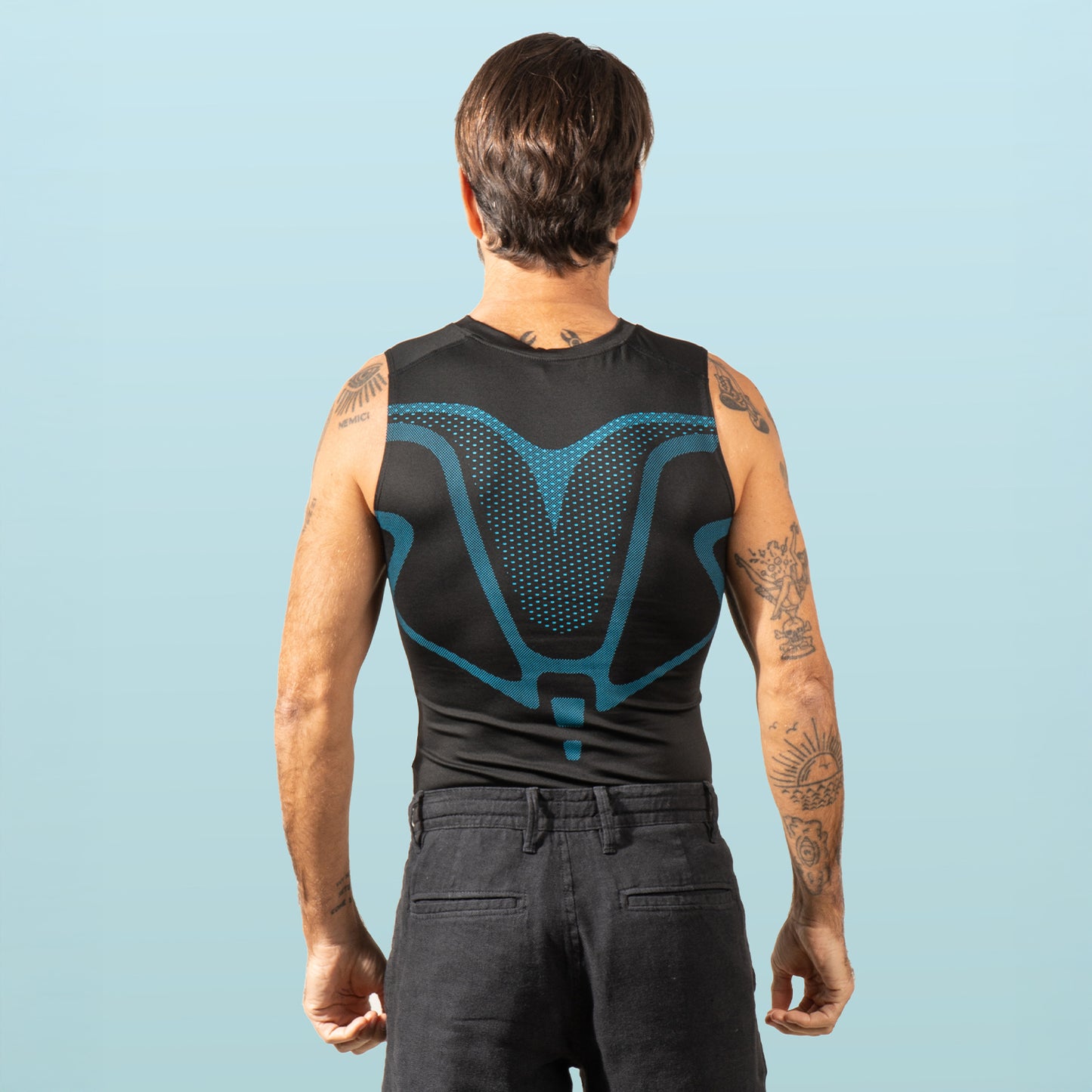
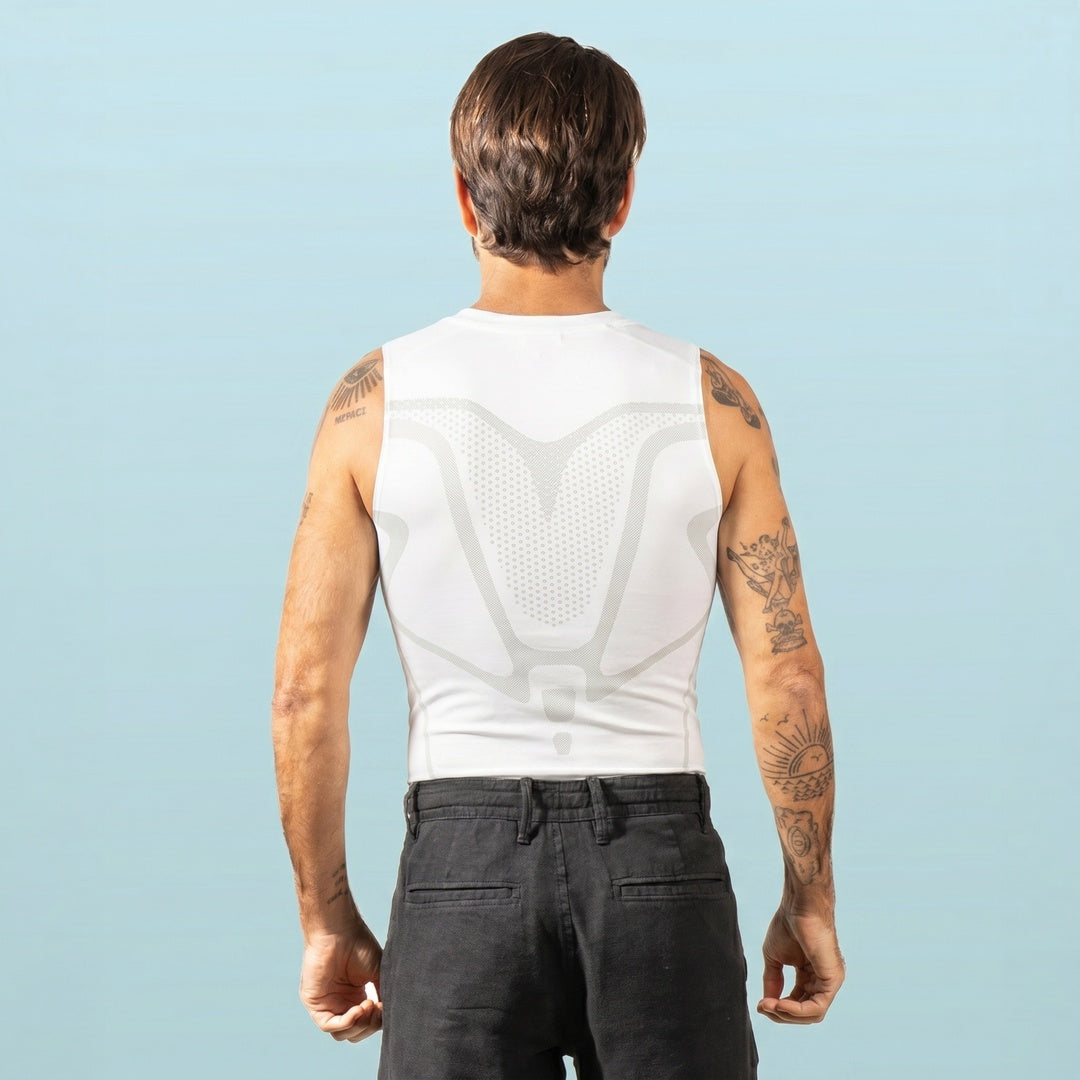
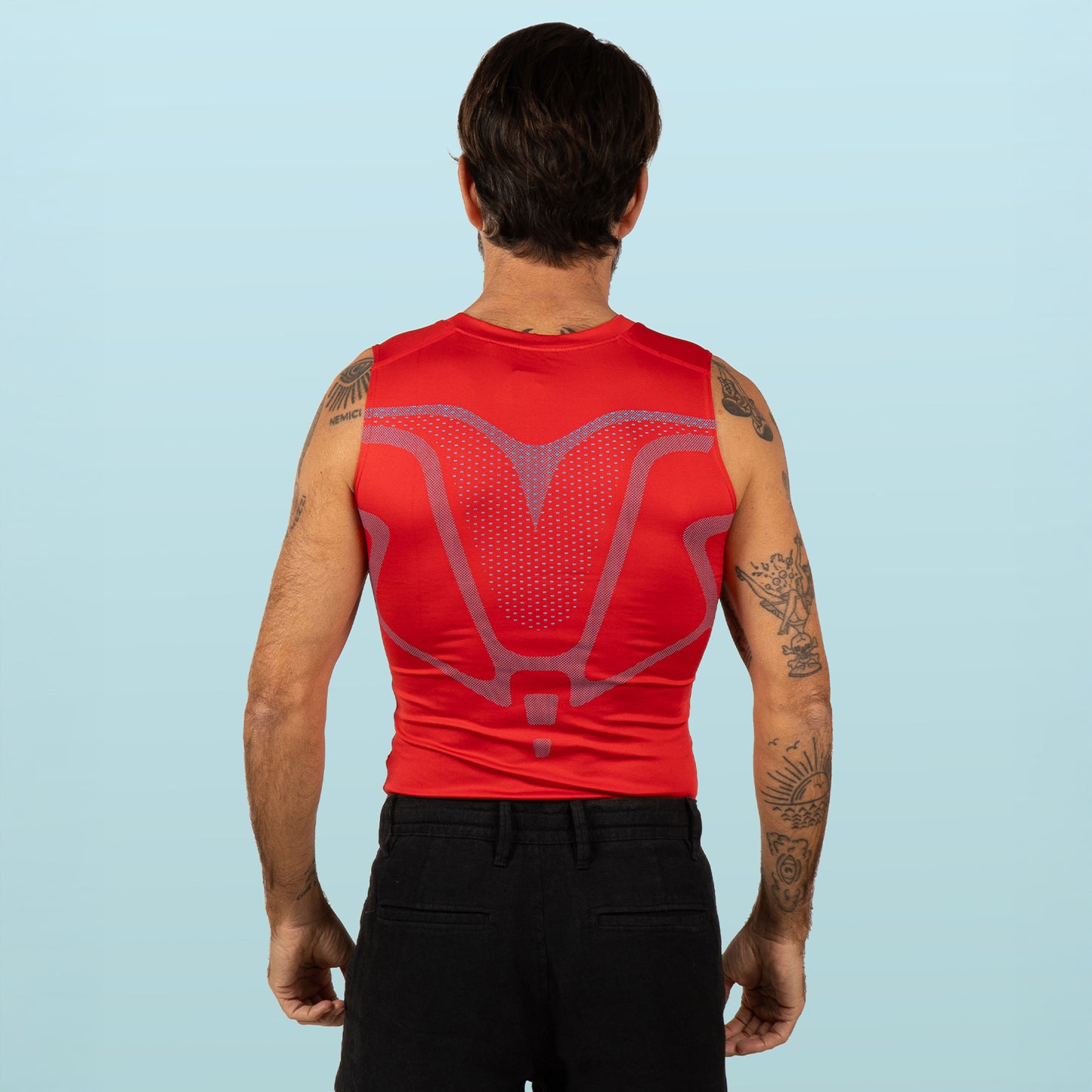
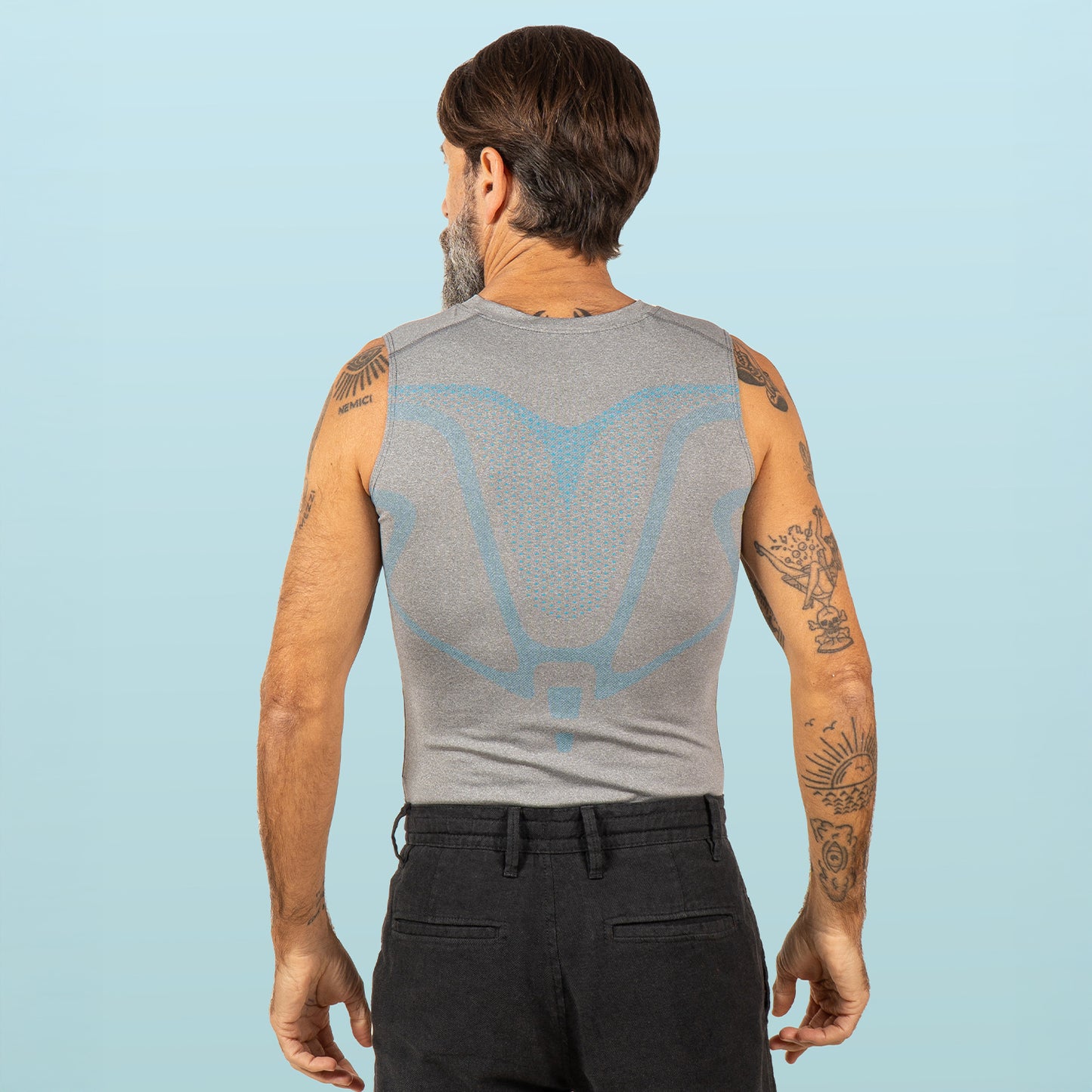
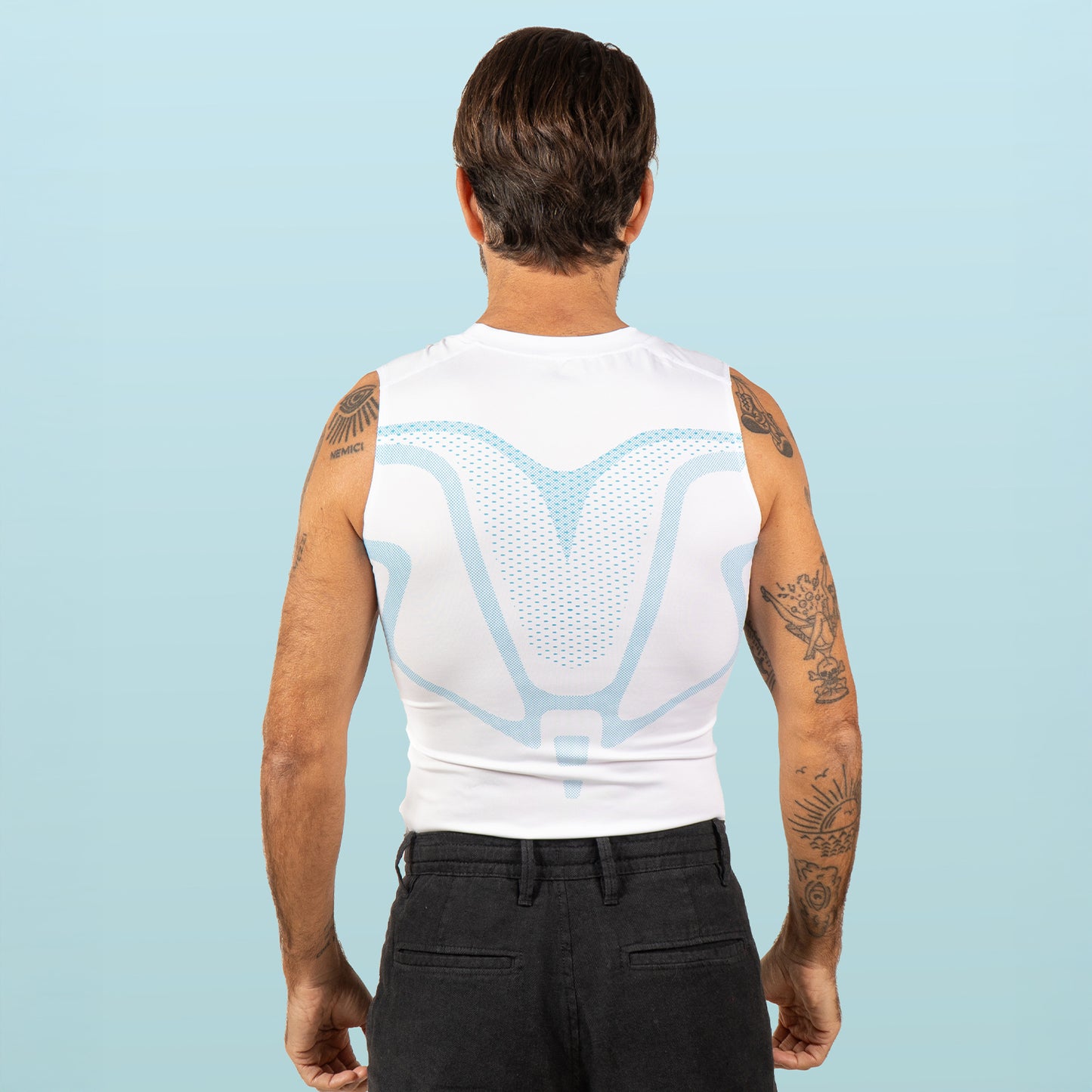
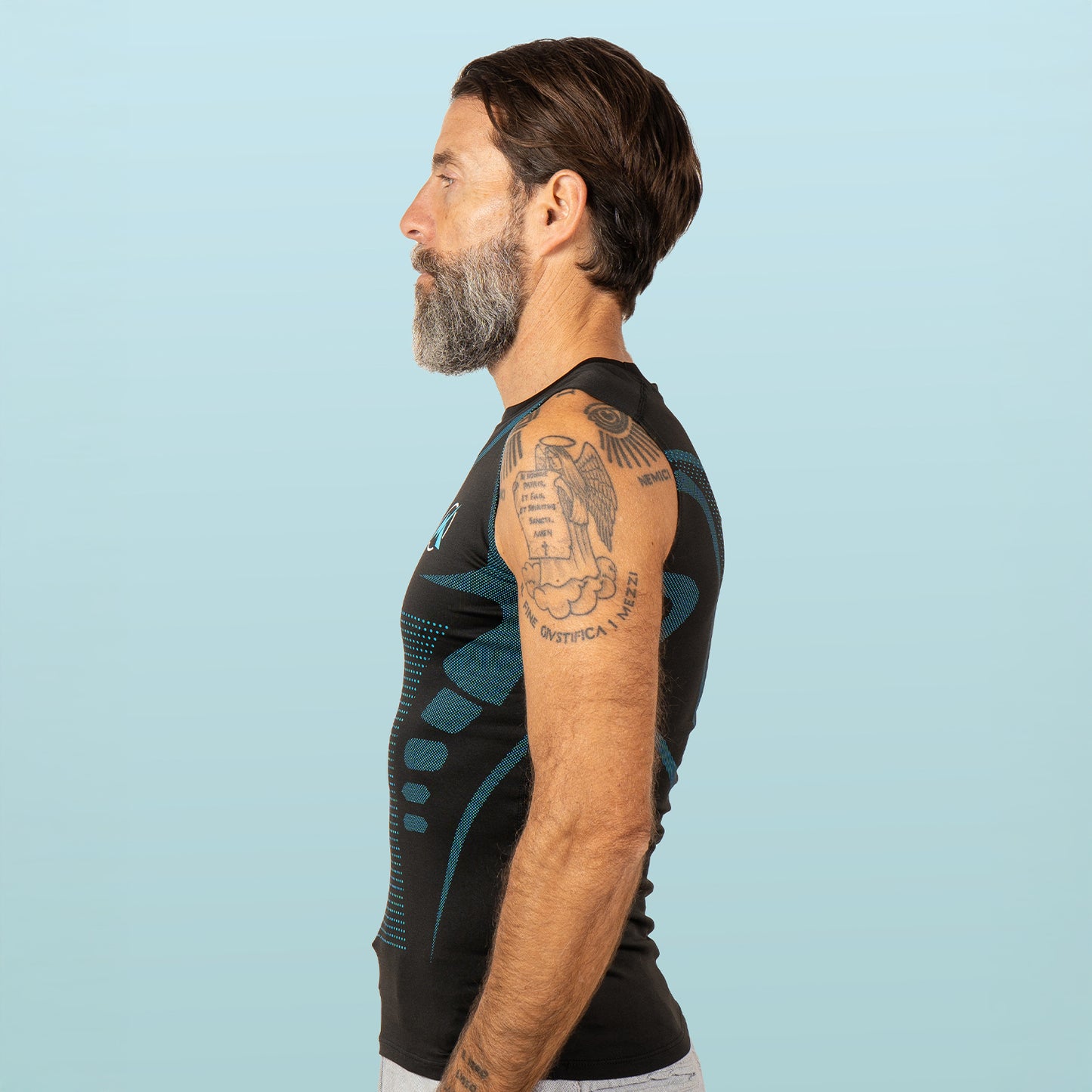
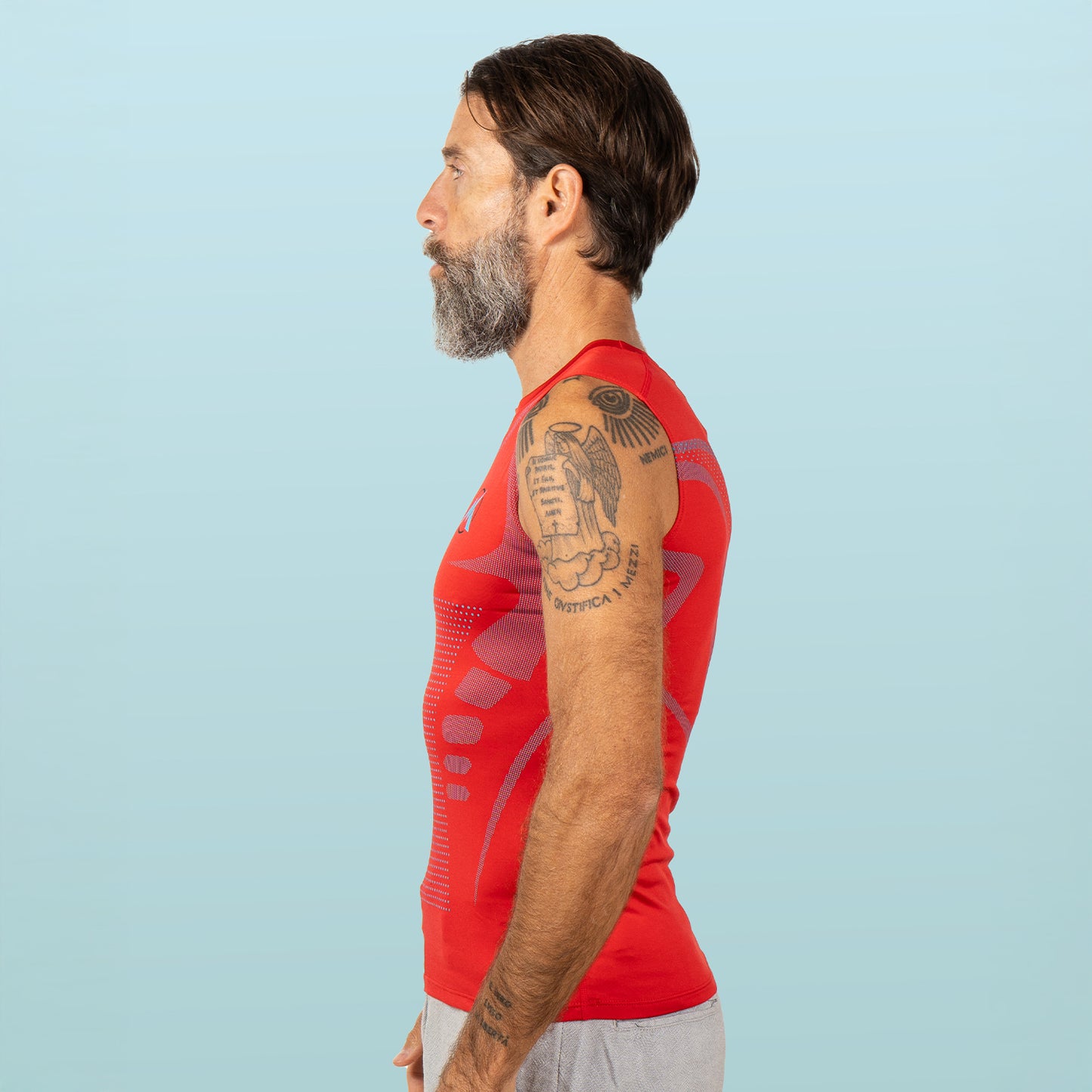
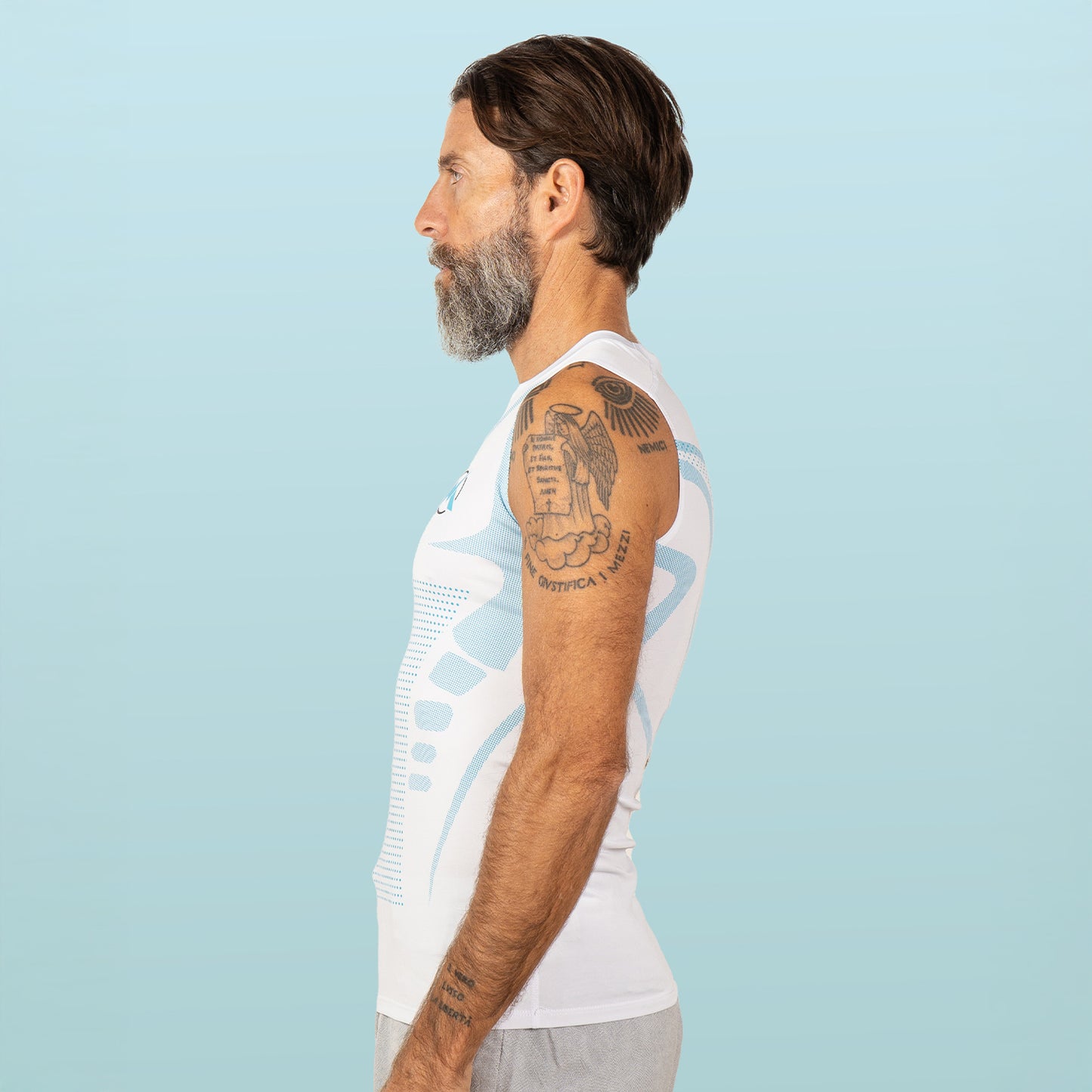
A compression undershirt is a base layer designed to do one job: hold the midsection firm so the shirt you wear over it doesn't telegraph every roll, bulge, and ridge underneath. Done right, it does three things at once:
- Flattens the silhouette in the area where most men look heaviest (the lower belly, love handles, lower back)
- Pulls the shoulders back lightly, which forces the posture from Hack #1
- Acts as a thin second skin so the outer shirt drapes cleanly instead of catching on the body

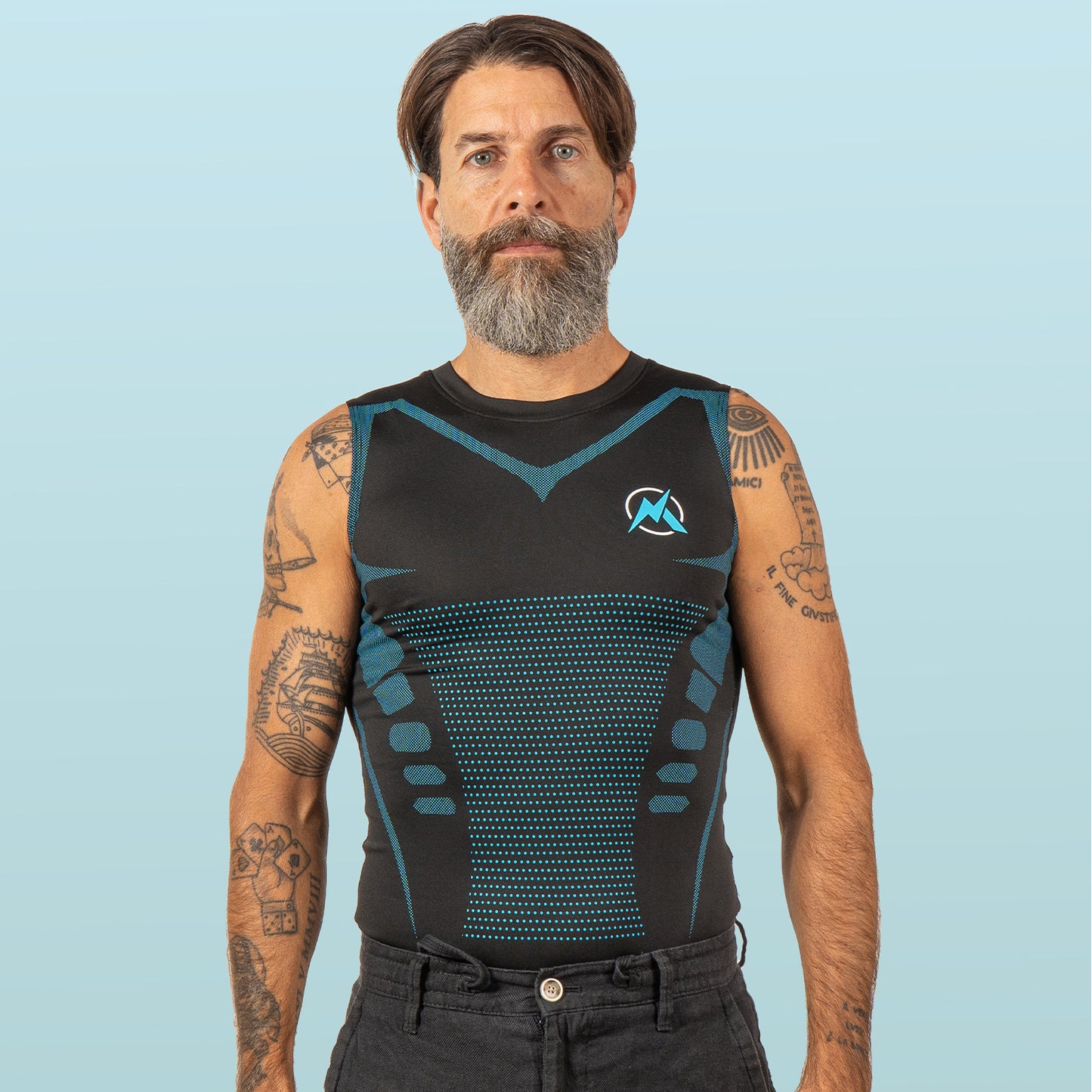
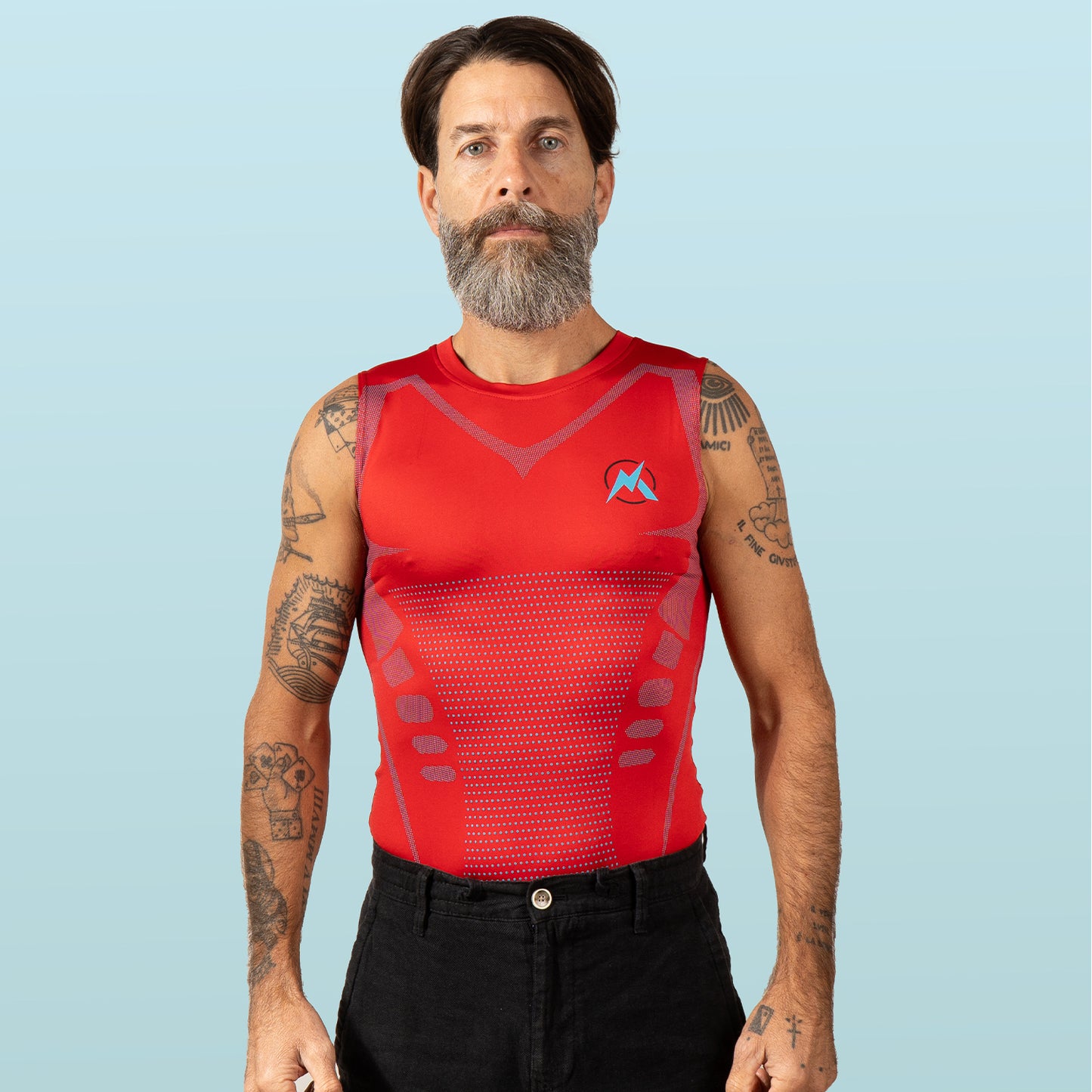
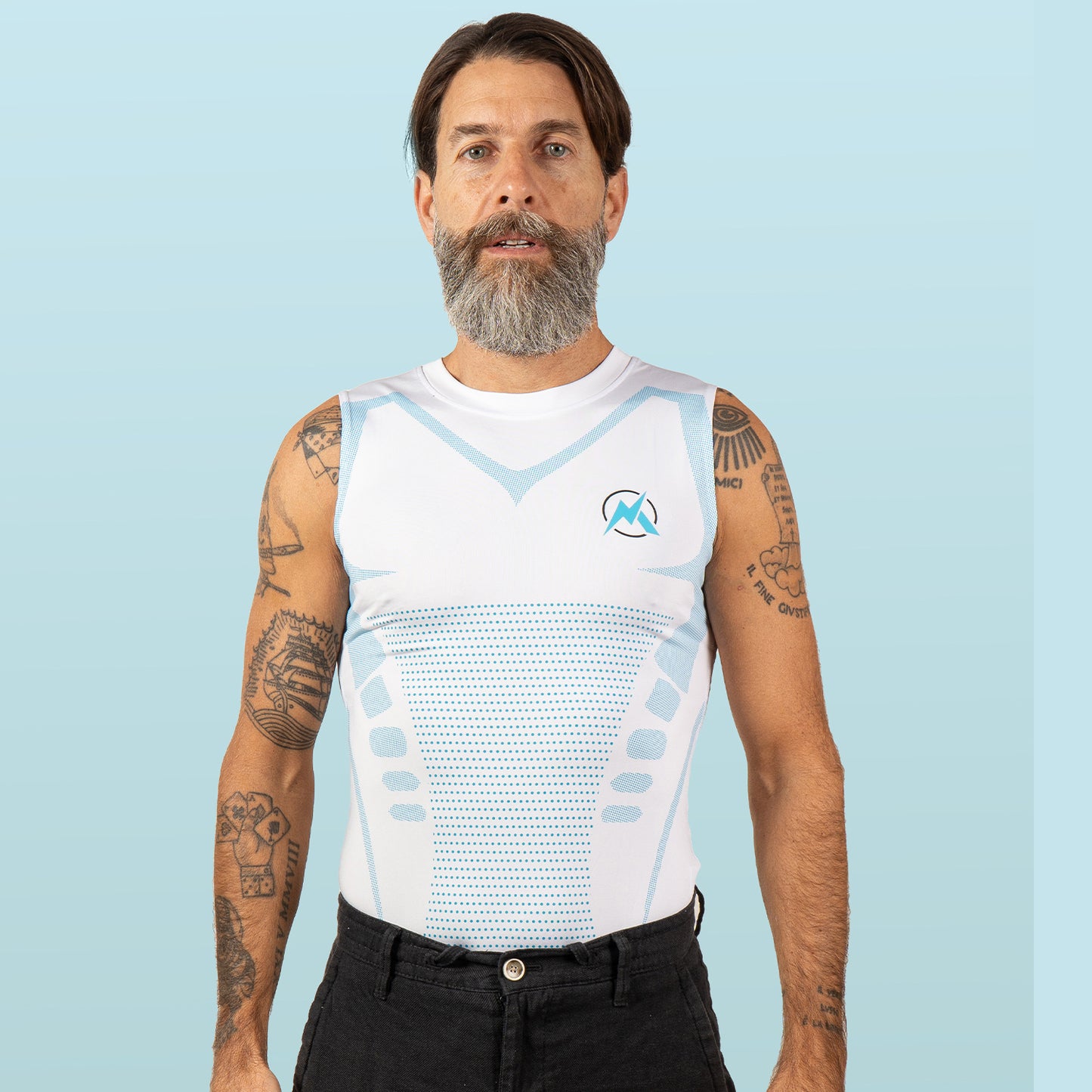
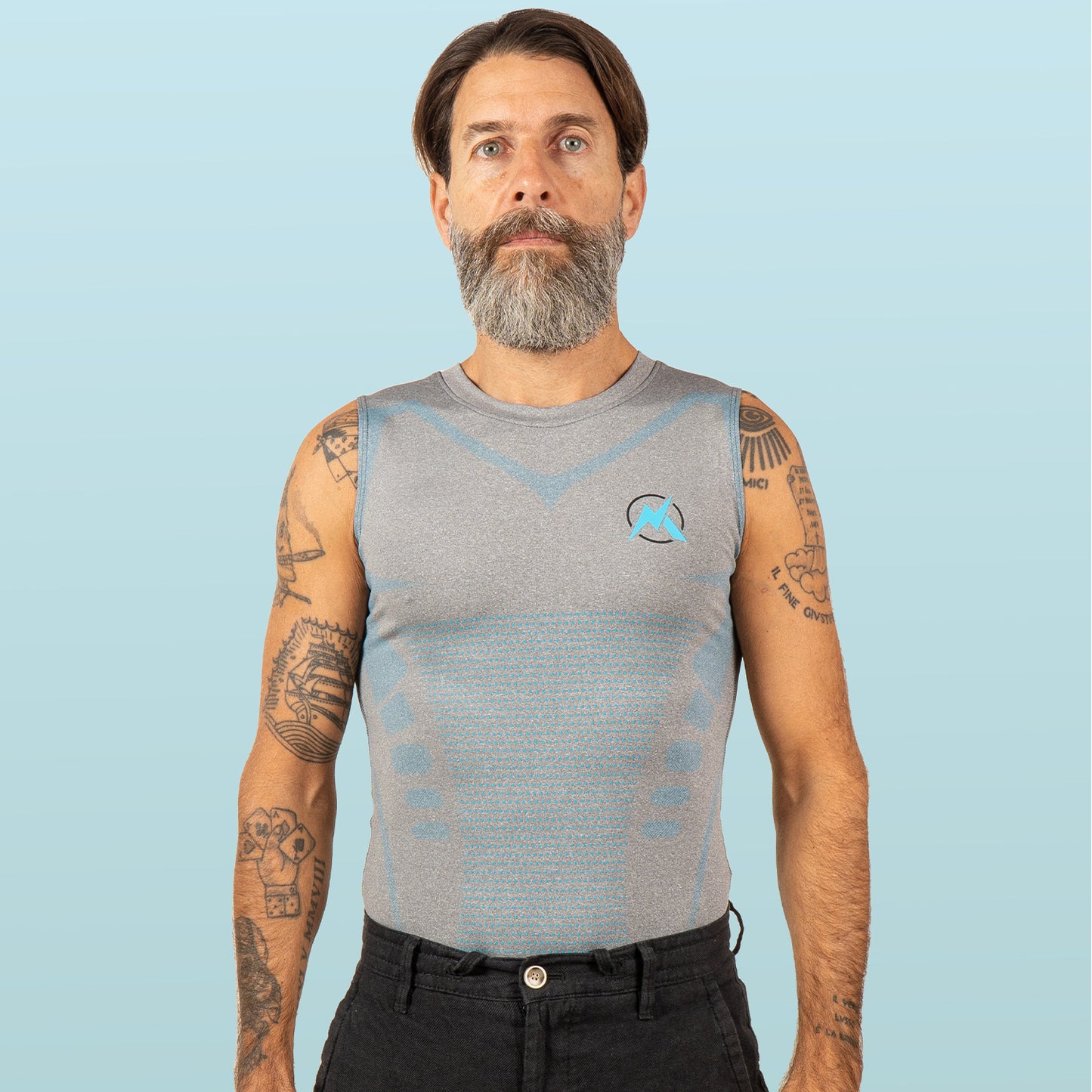
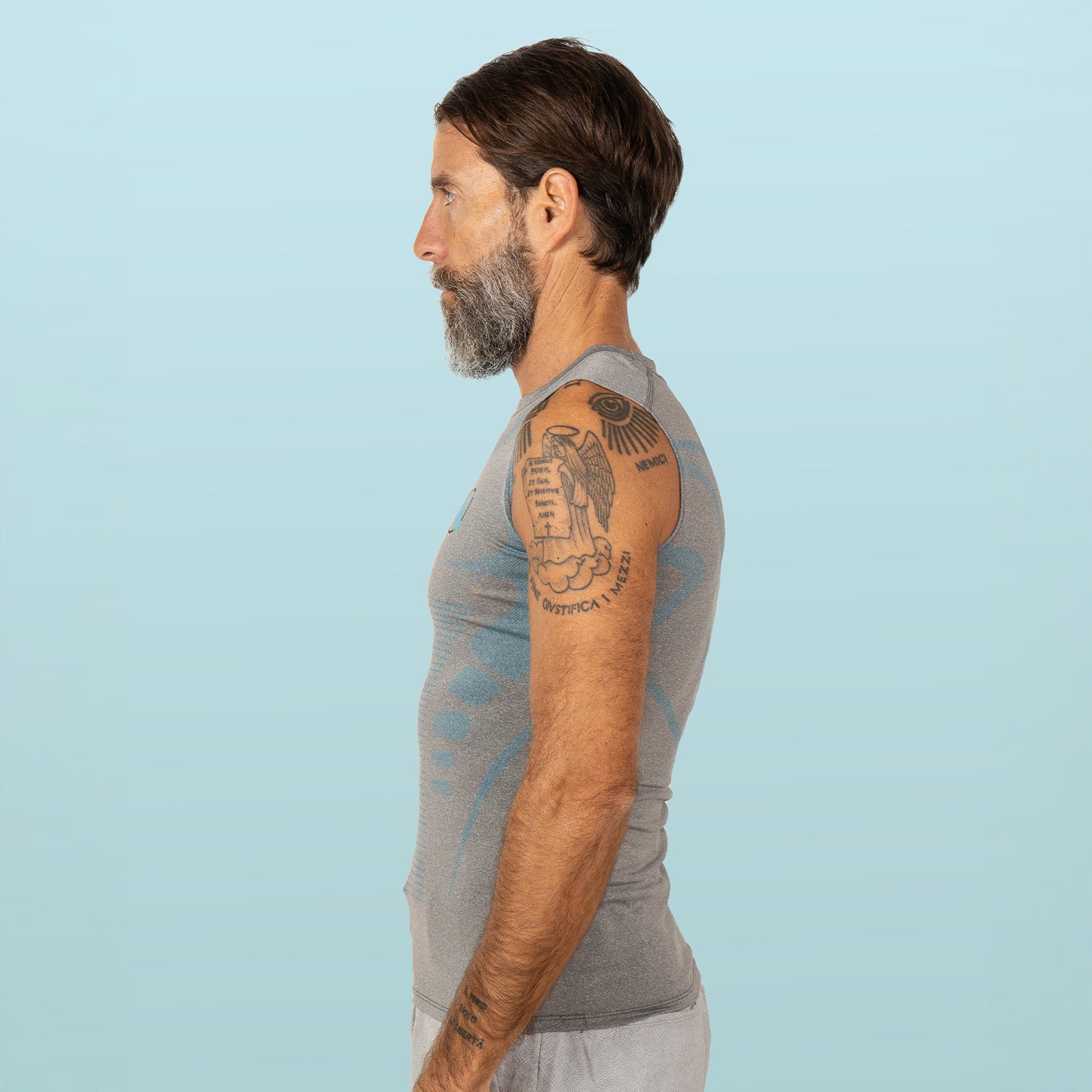
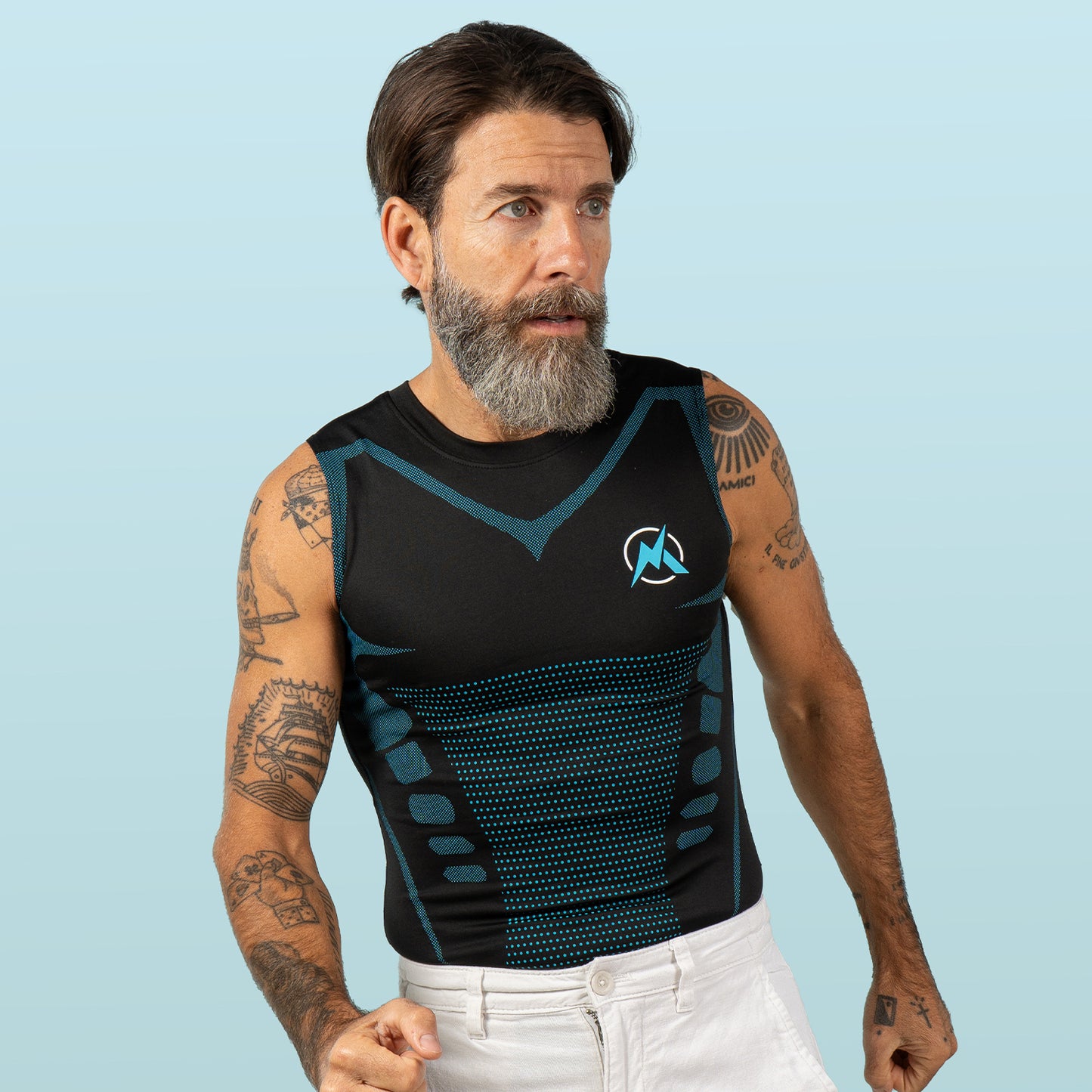
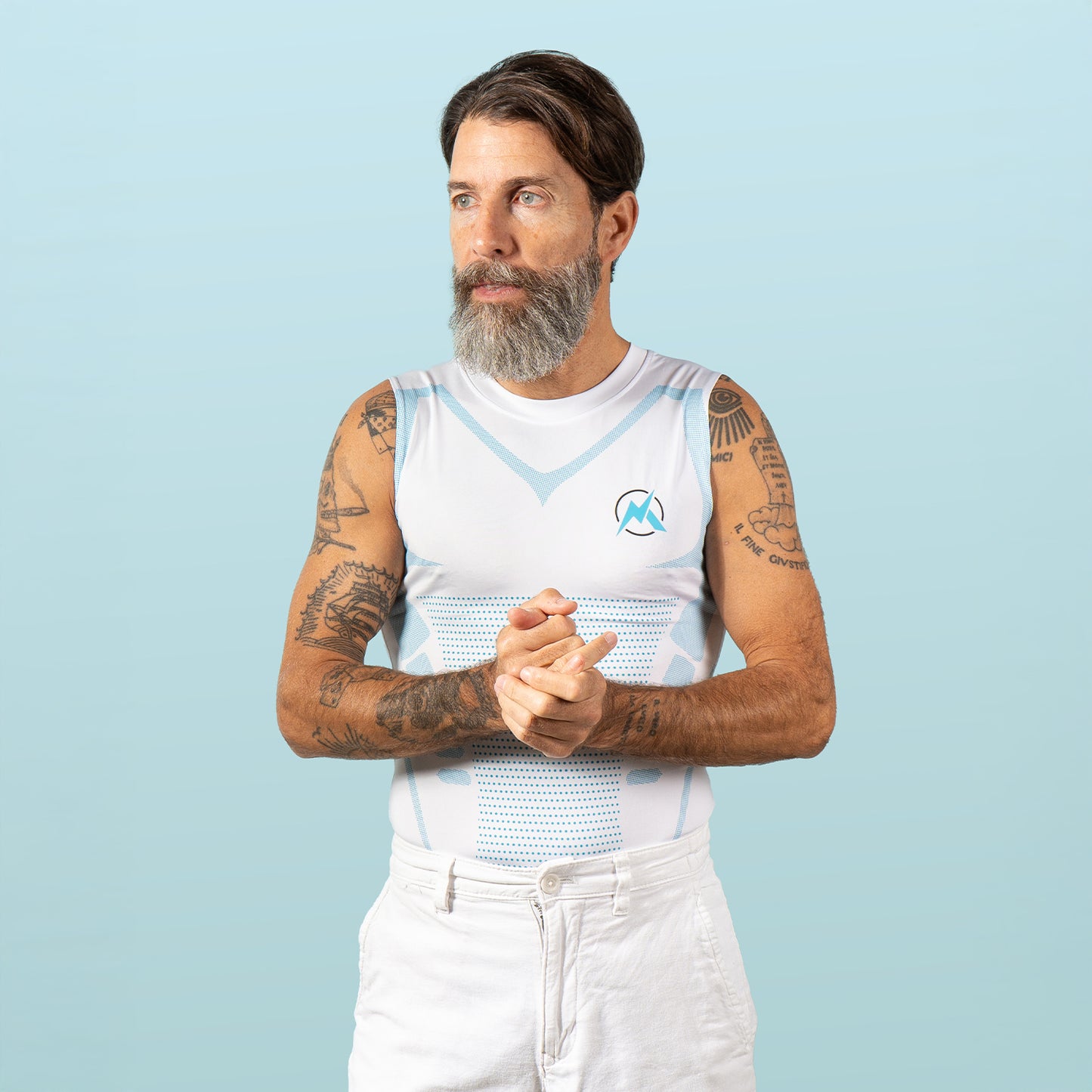
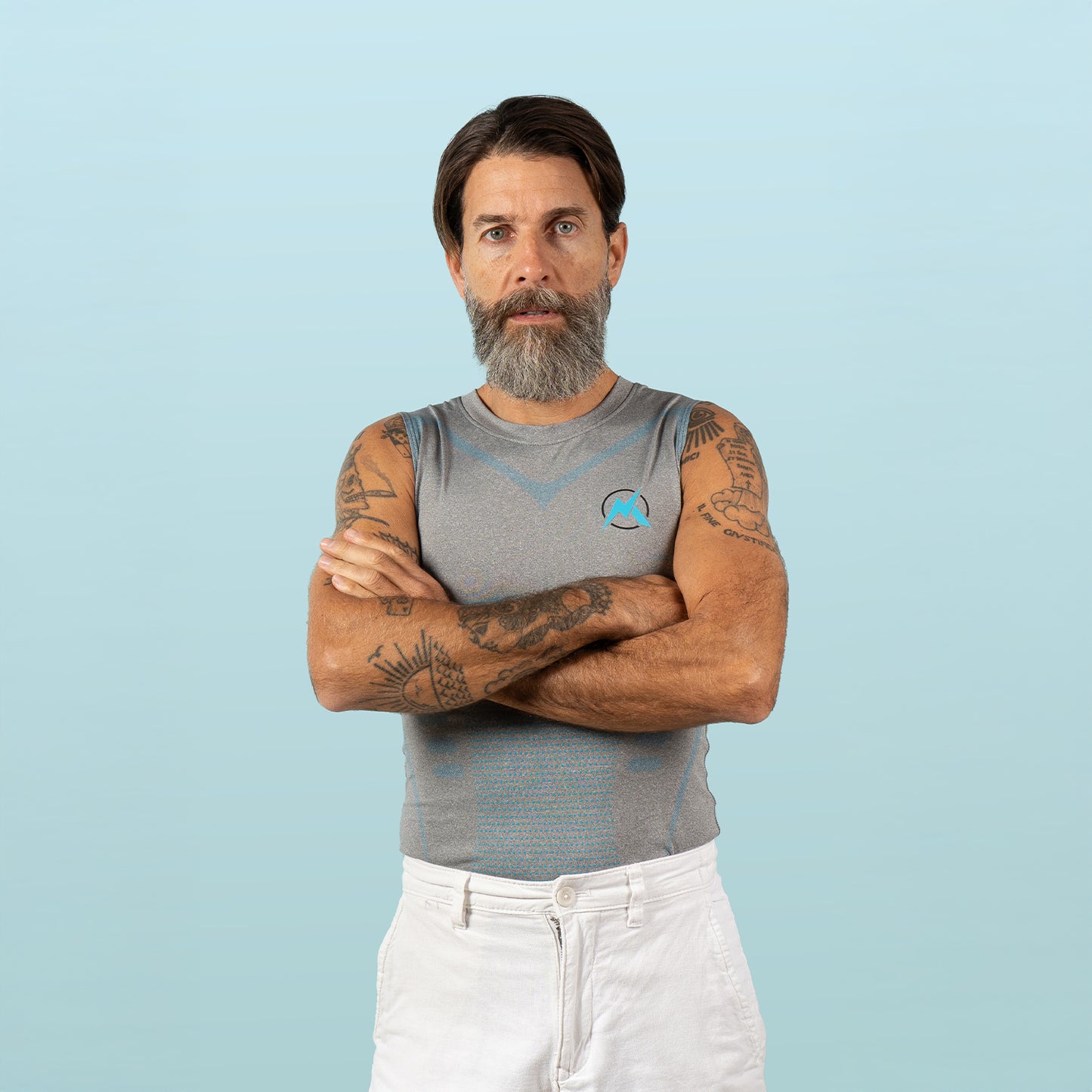
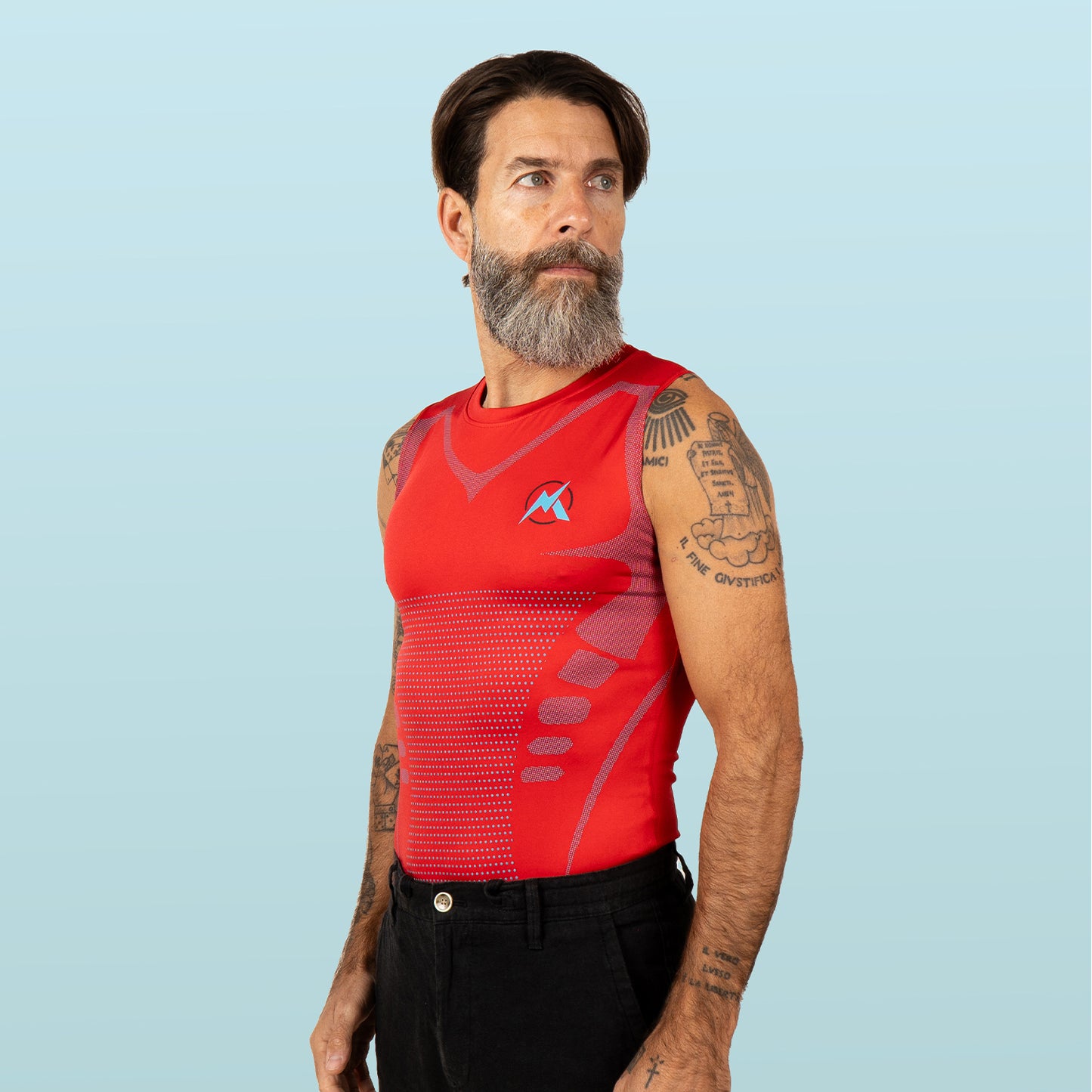
This is why the VitaBoost compression tank became the layer guys throw on under their dress shirts before a meeting, under a polo before a wedding, and under a tee on a date. It's black, sleeveless, sits under everything, and does the visual work of about 8 pounds without you doing anything.
Pair it with Hack #1 and Hack #2 and you've stacked three multipliers on top of each other before you even open the closet.
Hack #5 — Vertical lines, beard, and the rest
The remaining hacks compound on top of the first four. None is a silver bullet alone — but together they finish the look.
Vertical lines that work (and the ones that don't)
Real vertical lines: a long open cardigan, a center-front pant crease, a long necklace or chain pendant, a thin tie that doesn't end above the waistband. These elongate.
Fake vertical lines: pinstripes spaced too far apart (they read as panels), bold-color zip pulls on a hoodie (eye-catch in the wrong spot). Use the real ones, ignore the rest.
The "head" rules — hair, beard, frame
Faces read fuller than they are when they get wider than they are tall. Three quick fixes:
- Shorter on the sides, slightly more on top at the next haircut. It stretches the face vertically.
- Trim the beard tighter under the jaw, leave it slightly longer at the chin. This sharpens the jawline and reduces the "double chin" silhouette even when nothing has changed under it.
- Pick glasses frames that are wider than your face, not narrower. Narrower frames make the face look bigger in comparison. Wider frames balance it.
Walking, sitting, standing like a thinner guy
How you move is half of how you read. Standing with your weight evenly on both feet, walking with your head over your shoulders (not jutting forward), sitting back in the chair instead of slumping forward — all of it stacks. People notice posture and movement before they notice waistline.
This is the same energy and presence we built around in the morning playbook for men over 45. The way you carry yourself in the first hour of the day sets the tone for how you'll be read all day.
Your 30-minute checklist
Run this tonight. No shopping required.
- Stand against a wall for two minutes. Lock in the posture from Hack #1.
- Pull three shirts and three pants out of the closet. Find the tonal combinations.
- Mark three shirts that are too loose in the side panels — these go to the tailor this week.
- Hem any pant that puddles at the ankle.
- Order a black compression base layer. Wear it under your next dress shirt and look in the mirror.
- Book a haircut for next week. Shorter on the sides.
- Take a full-length photo in your "old" outfit and your "new" stack. Compare them side by side.
You're not chasing 20 pounds. You're chasing the 8–9 pounds of perception you can rebuild before the weekend.
Frequently asked questions
What colors make a man look slimmer?
Dark colors absorb light and visually compress the silhouette. The most slimming on a man are navy, charcoal, black, deep olive, and espresso brown. Bright white shirts and pale pastels do the opposite — they reflect light and reveal every line and bulge. The single biggest gain comes from matching tones top to bottom rather than mixing a light shirt with dark pants.
How can a man look thinner instantly?
Three moves that work in under a minute: fix your posture (chin tucked, shoulders back, core lightly engaged), put on a darker shirt that matches your pants, and tuck the shirt in at the natural waist. If you also throw on a compression base layer underneath, you'll read 5–10 pounds lighter the second you walk out the door.
Should overweight men tuck their shirts in?
Yes — into a pant that sits at the natural waist, not the hips. The misconception is that an untucked shirt "hides" the belly. It actually adds visual width by introducing a horizontal hem line right across the widest point of the torso. A clean tuck (or a half-tuck for casual wear) at the natural waist creates the vertical line that elongates the body. The exception is a shirt cut as a casual overshirt that's designed to be worn out.
Does standing up straight make you look thinner?
Yes — measurably. When you slouch, your torso compresses vertically and spreads horizontally, which thrusts the belly forward. Standing tall pulls the abdomen back in, lengthens the spine, and projects what researchers call "vertical confidence." Most style experts estimate good posture removes the equivalent of 5–10 pounds in perceived weight, and it's the only style hack that costs nothing.
What kind of pants make a man look slimmer?
A flat-front, mid-rise to high-rise trouser worn at the natural waist, in a dark color, with a clean one-inch break at the shoe. Avoid cargo pockets, contrast stitching, light washes, and pants that puddle at the ankle. Slim cut beats both baggy and skinny — you want the leg line to read straight, not painted on and not draped.
Sources
- ScienceDaily — Psychologists pinpoint change in weight required to look healthier, more attractive (Re & Rule, University of Toronto)
- University of Toronto — Losing weight can make you more attractive, experts say – but there's a catch
- Harvard Health Publishing — Posture and back health
- Cleveland Clinic — Posture for a healthy back
The bottom line
You don't need a six-month transformation. You need eight pounds of perception, and you can stack them in a single evening. Fix your posture, match your tones, tailor your fit, layer your middle. That's the whole game.
The guys who look noticeably better at 50 than they did at 40 didn't lose weight. They learned to dress the body they have.