By Owen Blot · Founder, Maynox · Last updated June 1, 2026
- The 3 mistakes 80% of guys make
- Why "just size up" makes your belly look bigger
- The dress shirt anatomy that controls belly projection
- The tuck question: full, French, or untucked
- Color, pattern, and fabric — what actually matters
- The compression base layer — your 5-minute fix
- Three real-world scenarios
- What dress shirts alone can't do
- Frequently asked questions
The 3 mistakes 80% of guys make
You bought a bigger shirt to "give the belly room." It billows at the placket, pools at the waist, and now your gut looks even bigger.
Sound familiar? You're not alone, and it's not your fault — every generic styling article tells you the same wrong things about how to hide a belly under a dress shirt.
This guide is for men 40+ who need to look sharp at a board meeting, a wedding, or dinner with the in-laws. Not lose 20 lbs. Not transform overnight. Just look 10 lbs lighter in a dress shirt before you walk out the door.
We're skipping the vibes and giving you mechanics: how dress shirts actually drape, where the belly catches fabric, and the single 5-minute fix that does more than every styling rule combined.
Why "just size up" makes your belly look bigger
The most common advice — "buy a size up if you have a belly" — is backwards.
A dress shirt that's too big creates excess fabric at the shoulder seam, which then has to go somewhere. That somewhere is your midsection, where it pools and billows around the placket (the strip of buttons down the front). The result: a tent shape that screams "I'm hiding something."
The fit rule that actually works: the shirt must fit your shoulders perfectly — the seam should sit exactly at the edge of your shoulder bone, not past it — and the body should drape with no more than 2-3 inches of pinch on either side of your waist. If you grab the side fabric and there's a hand-full of extra material, the shirt is too big. If there's no give at all, it's too small and pulling will create horizontal "smiles" at every button.
Get the shoulders right. Everything else fits around them.
The dress shirt anatomy that controls belly projection
Most articles list "patterns, colors, layering" and skip the actual garment. Here's what controls how a dress shirt reads on your frame:
- The placket. This is the front strip where the buttons live. A reinforced (or "French") placket is structured — it holds its line and doesn't billow. A plain or no-placket shirt drapes softer and follows your belly contour. For belly-hiding: always reinforced placket.
- Side seams and back darts. Some shirts have darting (curved seams at the back) that pull the fabric in at the waist. For men with a belly, darts are the enemy — they create an hourglass cut that ironically emphasizes a round midsection. Look for straight-cut or "classic fit" shirts without back darts.
- The collar. A spread collar widens the visual top of your frame, which makes the midsection look proportionally smaller. A narrow point collar does the opposite — it visually drops weight toward your stomach. For belly-hiding: medium-spread or cutaway collar.
- The hem length. A shirt cut for tucking is longer in the front and back (curved hem). A shirt cut to wear untucked is shorter and straighter. You want the curved hem even if you sometimes wear it untucked, because the longer front gives you tuck flexibility.
These four spec choices matter more than any pattern or color trick. Most guys never look at any of them.
The tuck question: full, French, or untucked
Generic advice says "tuck for dress, untuck for casual." For belly-hiding, the rule is more specific:
- Full tuck + mid-rise pant at the natural waist = the cleanest silhouette. The pant waistband cuts the visual at the narrowest point of your torso (most men over 40 are narrower at the actual navel than at the lower belly), so the belly doesn't read as a separate landmark. This is what most photos of well-dressed dad-bods look like.
- French tuck (2-3 inches in front, rest out) = good for casual button-downs and chinos, but skip it for formal dress shirts. It creates an asymmetric break that draws the eye exactly where you don't want it.
- Fully untucked = only with a shirt cut for it (straight hem, hits at the hip bone, never past the seat). Untucked dress shirts that hang past your zipper read as "sloppy guy hiding something." It's a visual confession.
The mid-rise + full-tuck rule is the most underrated belly-hiding move in menswear. Low-rise pants are the issue — they cut at the widest part of your gut and create the "muffin top" effect even in a dress shirt. Buy pants with a 10-12" front rise and never go below.
Color, pattern, and fabric — what actually matters
Some of the standard rules hold. Some don't. Let's separate them.
What actually works:
- Darker solids — navy, charcoal, deep burgundy, forest green. Black dress shirts are tricky (very formal, very evening), so navy is the everyday workhorse.
- Fine vertical stripes — pin stripes or bengal stripes (under 1/4 inch apart). The vertical line elongates the torso. Avoid wider stripes — they read as casual and don't slim.
- Tonal patterns — micro-checks or subtle herringbone in a darker base. Visual texture breaks up the eye's scan of your midsection.
- Heavier fabrics — oxford cloth, cotton twill, broadcloth in the 140 g/m² and up range. These hold structure and don't cling. Lightweight poplins and luxury cottons drape over your belly like a sheet.
What doesn't matter (or actively hurts):
- Horizontal stripes — obvious widener. Skip.
- Bright whites and light pastels — they reflect light off your belly's roundest part and make it pop forward visually.
- Stretch shirts — sold as a "comfort" feature for big guys. In practice, stretch fabric conforms to every curve including the belly. You don't want comfort here, you want structure.
- Patterned dress shirts under a suit — under a closed jacket, pattern doesn't matter at all. The jacket vertical does 90% of the slimming work. Don't waste money on "slimming patterns" for shirts you'll wear under a jacket.
The compression base layer — your 5-minute pre-meeting fix
If you do one thing on this list, do this.
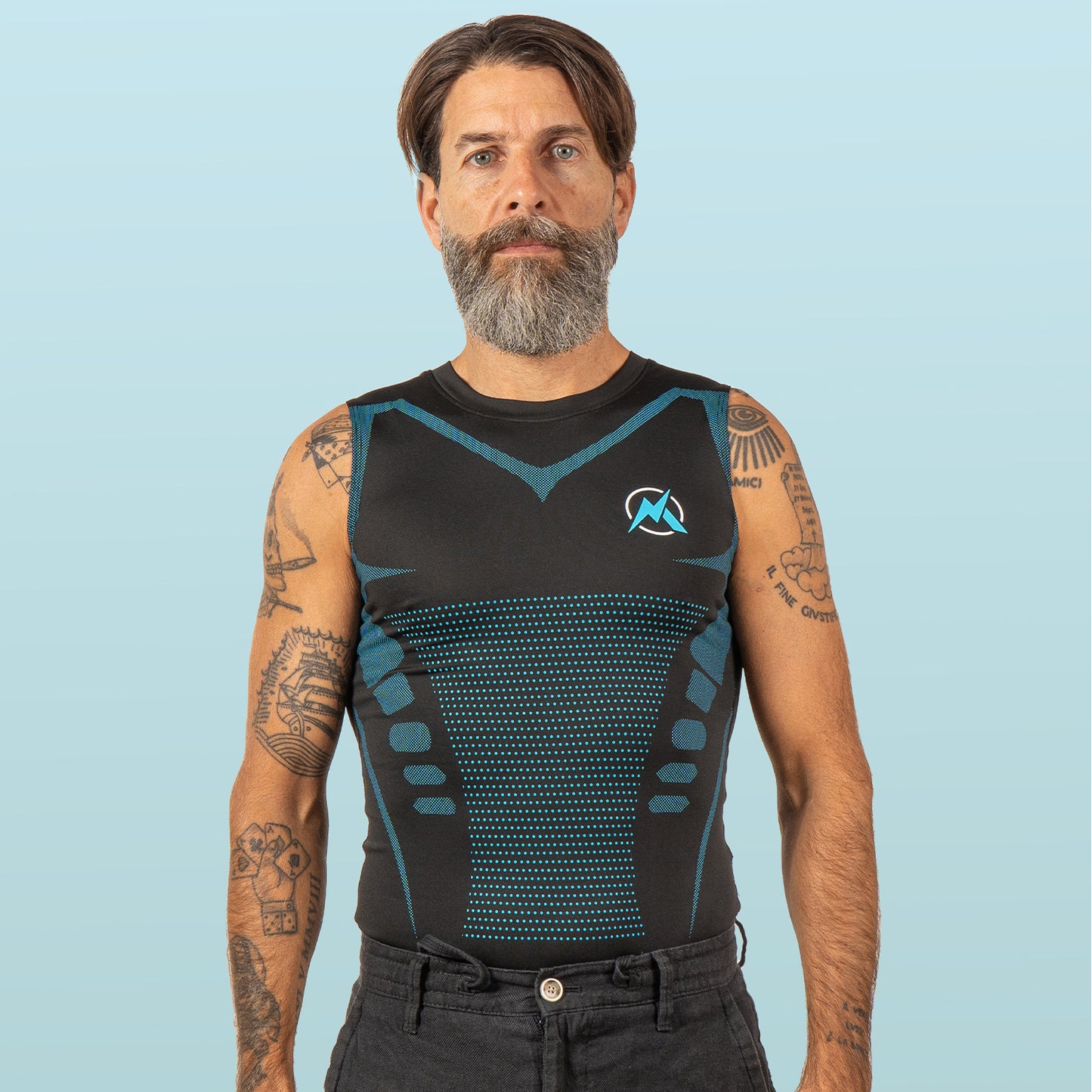
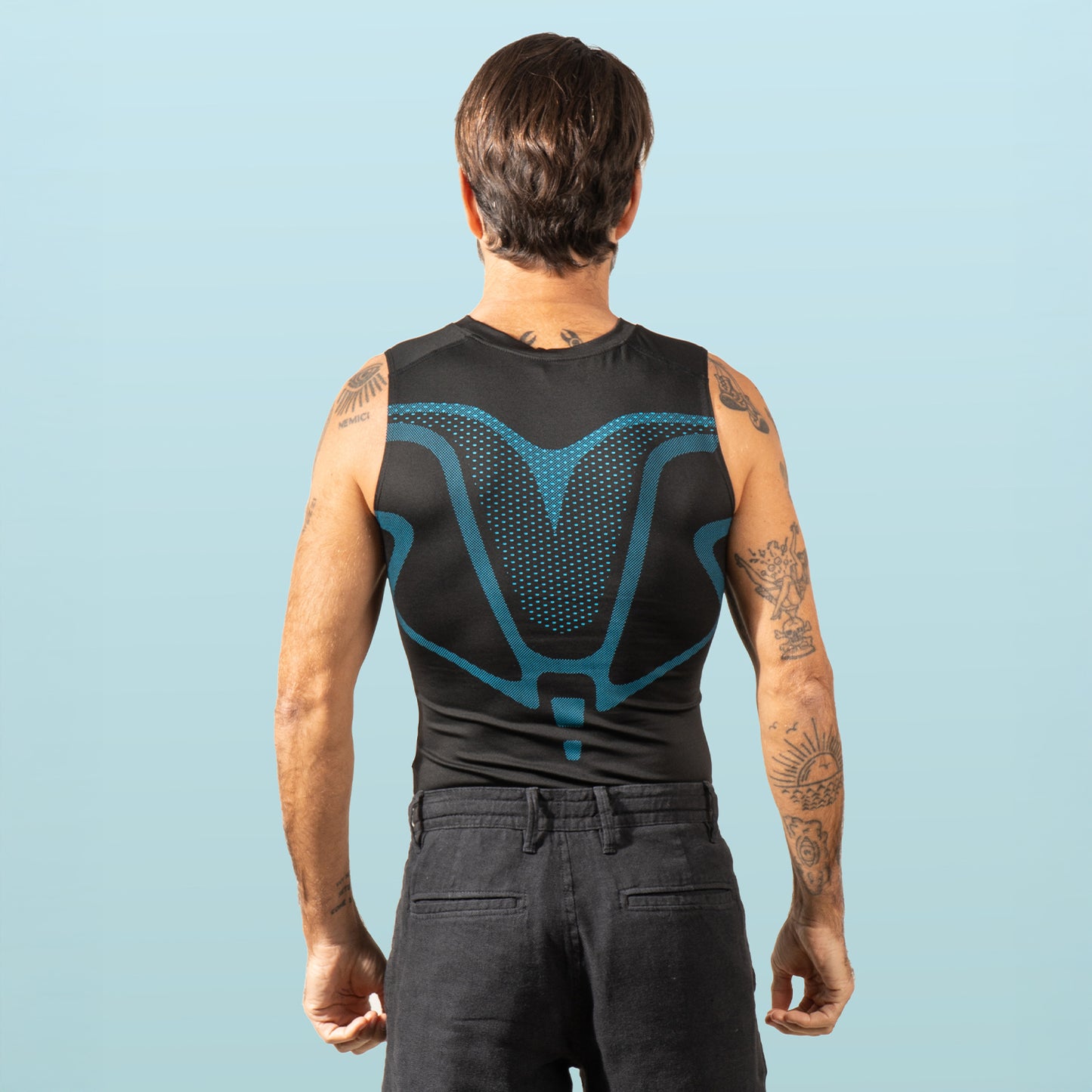
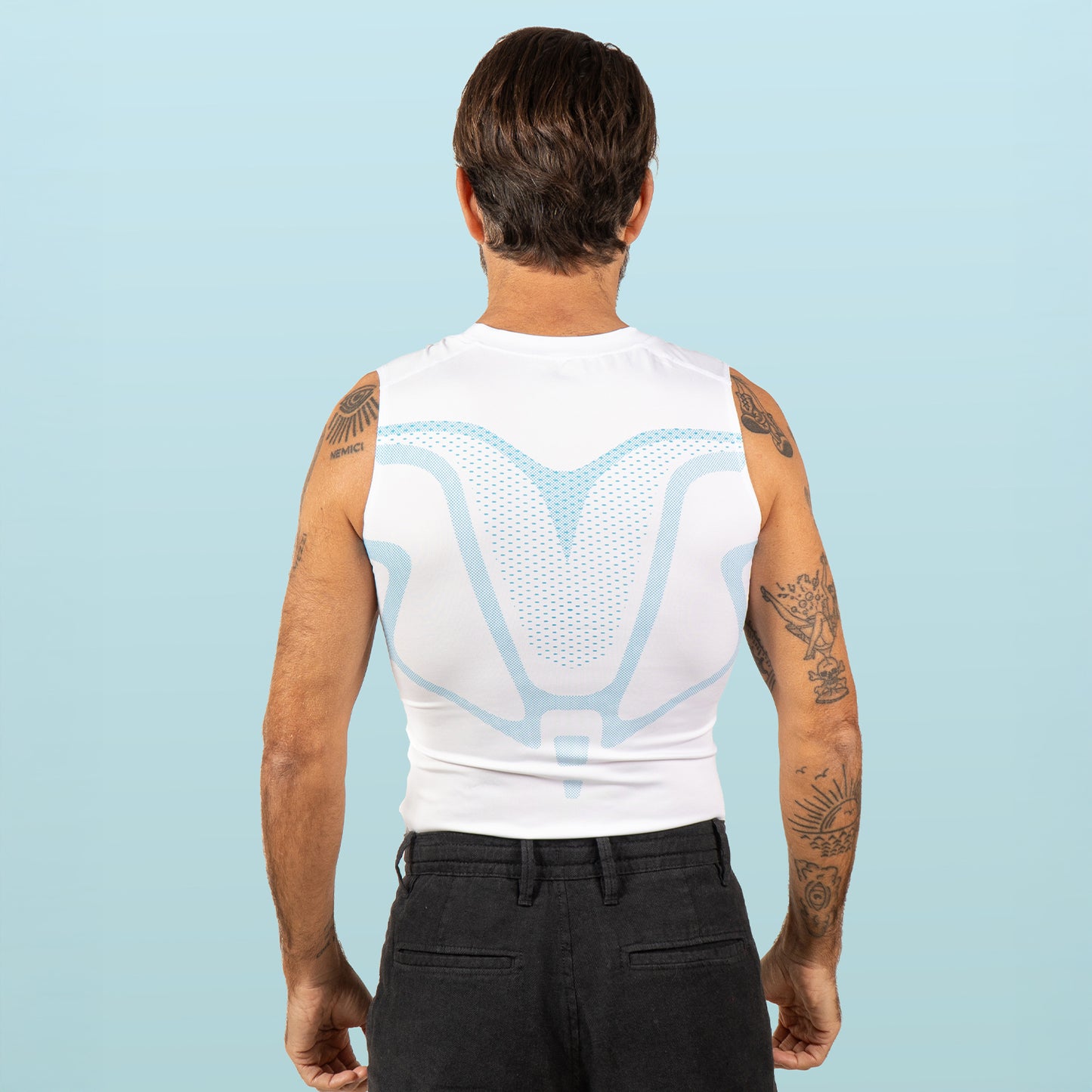
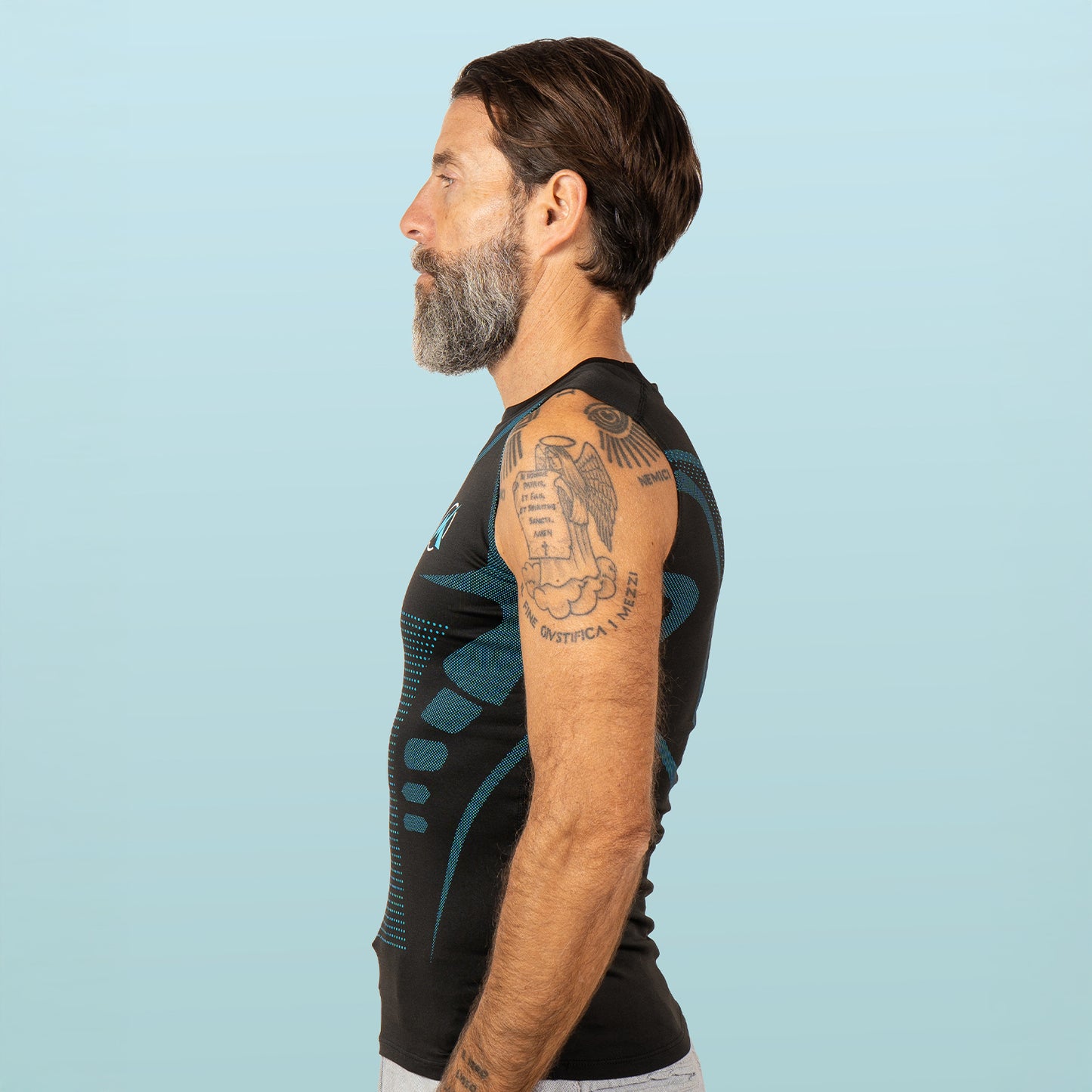
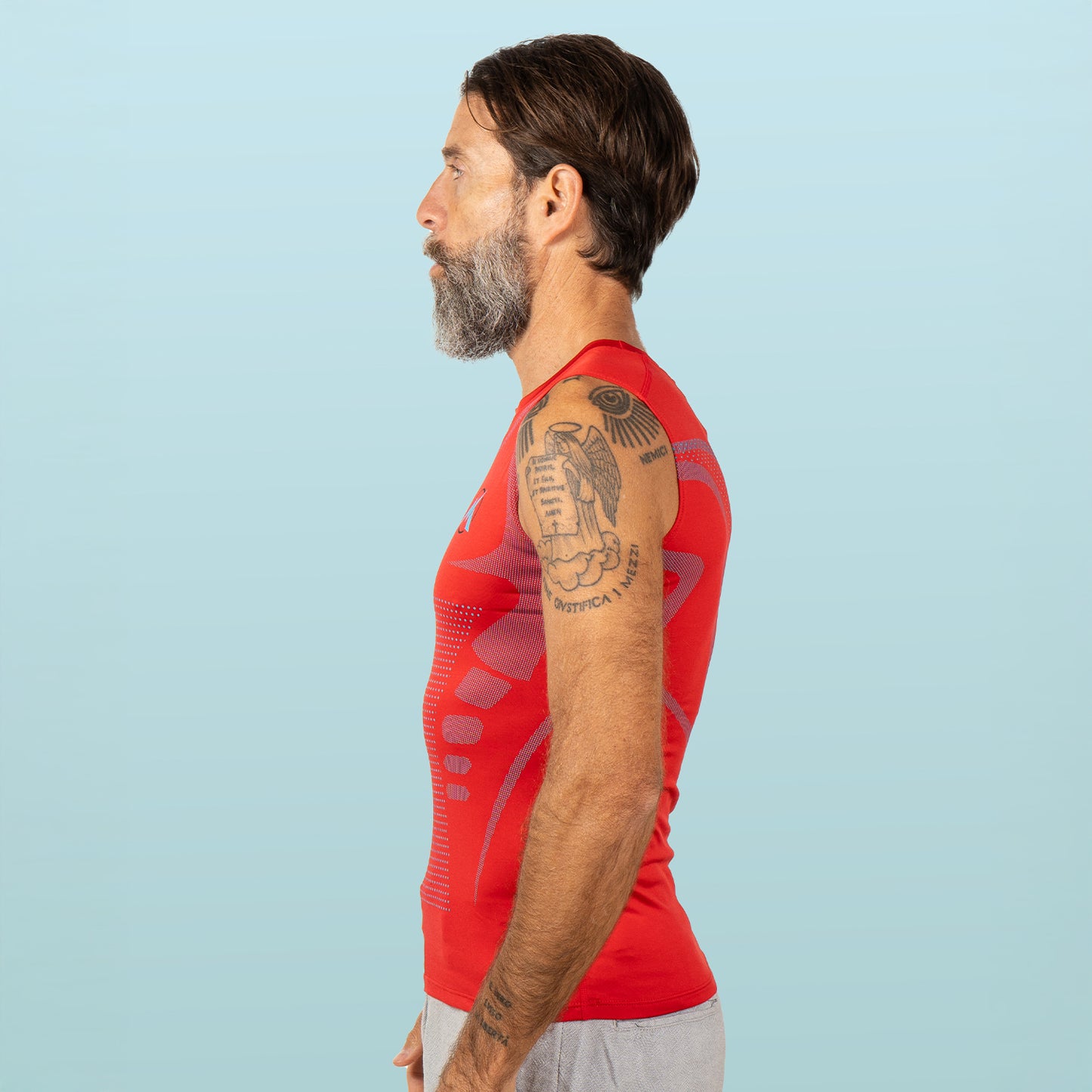
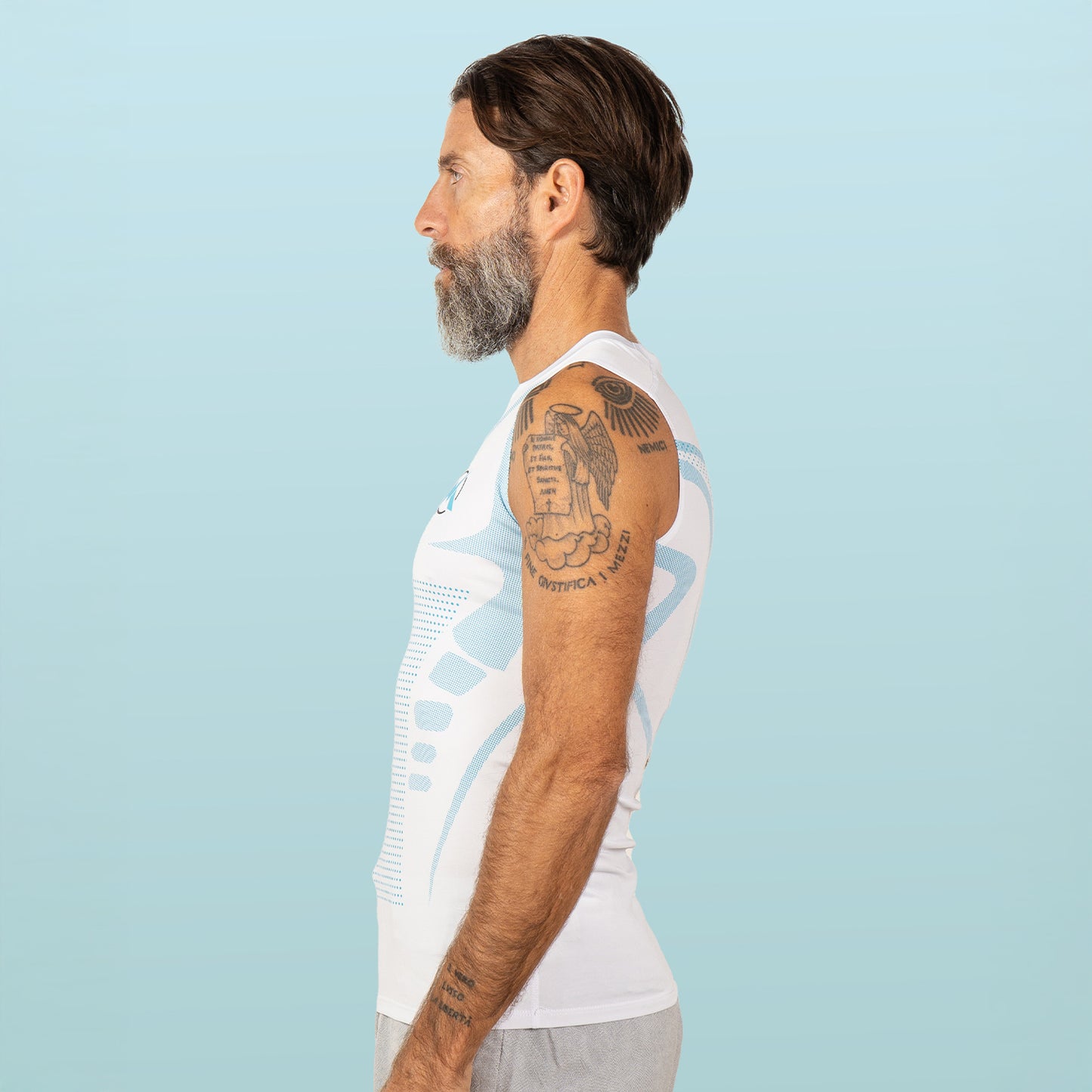
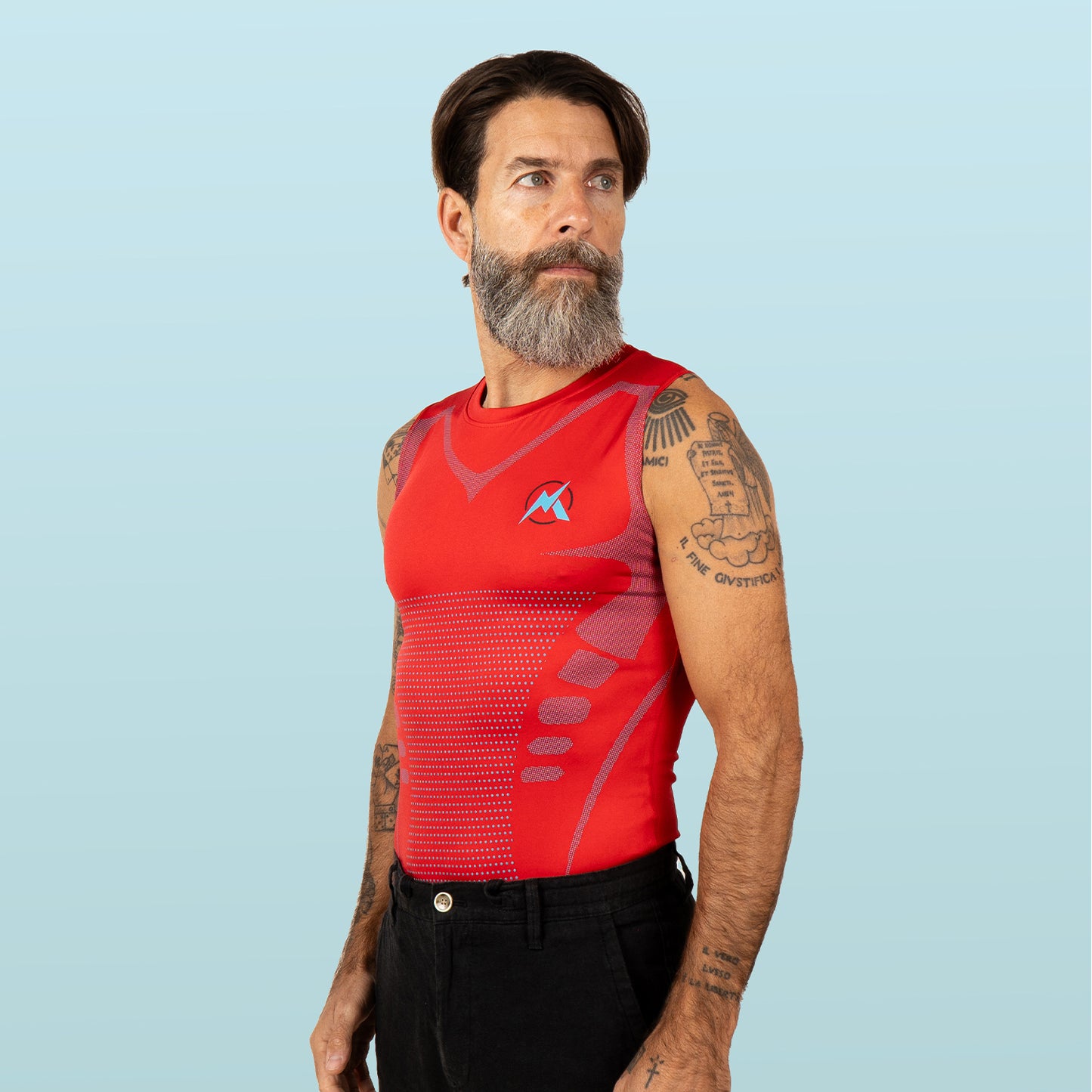
A medium-compression sleeveless tank under your dress shirt is the single highest-ROI move in the entire belly-hiding playbook. It does three things at once:
- Physically flattens the midsection by 1-2 inches of visible projection (depending on body type and garment quality).
- Smooths the silhouette so your shirt drapes over a uniform surface instead of catching on belly curves.
- Improves your posture through proprioceptive feedback — your shoulders pull back slightly because the garment cues your nervous system to engage your core, which adds an estimated 1-2 inches of perceived height. A 2022 review in Sports Medicine found compression garments produce measurable proprioceptive effects, including improved postural feedback (Brown et al., 2022, PMC9023423).
What the base layer can't do: it can't make you 20 lbs lighter (despite what some compression brands claim). A 2025 meta-analysis pooling 31 studies found no evidence that compression garments reduce body fat or produce durable body composition changes (Wei et al., 2025, PMC11944185). It's an instant visual fix, not a weight-loss tool.
What to look for in a belly-hiding base layer:
- Sleeveless tank cut — sleeves bunch under a dress shirt sleeve and create visible bumps at the shoulder.
- Medium compression — light compression doesn't do enough; high compression creates "edge bulge" where the garment ends. Medium hits the sweet spot.
- Crew neck — V-necks ride down under a buttoned collar and become visible at the top button.
- Color match to skin tone or dark — under white dress shirts, a flesh-tone or charcoal-grey tank stays invisible. Pure white tanks show through and create a double-layer look.

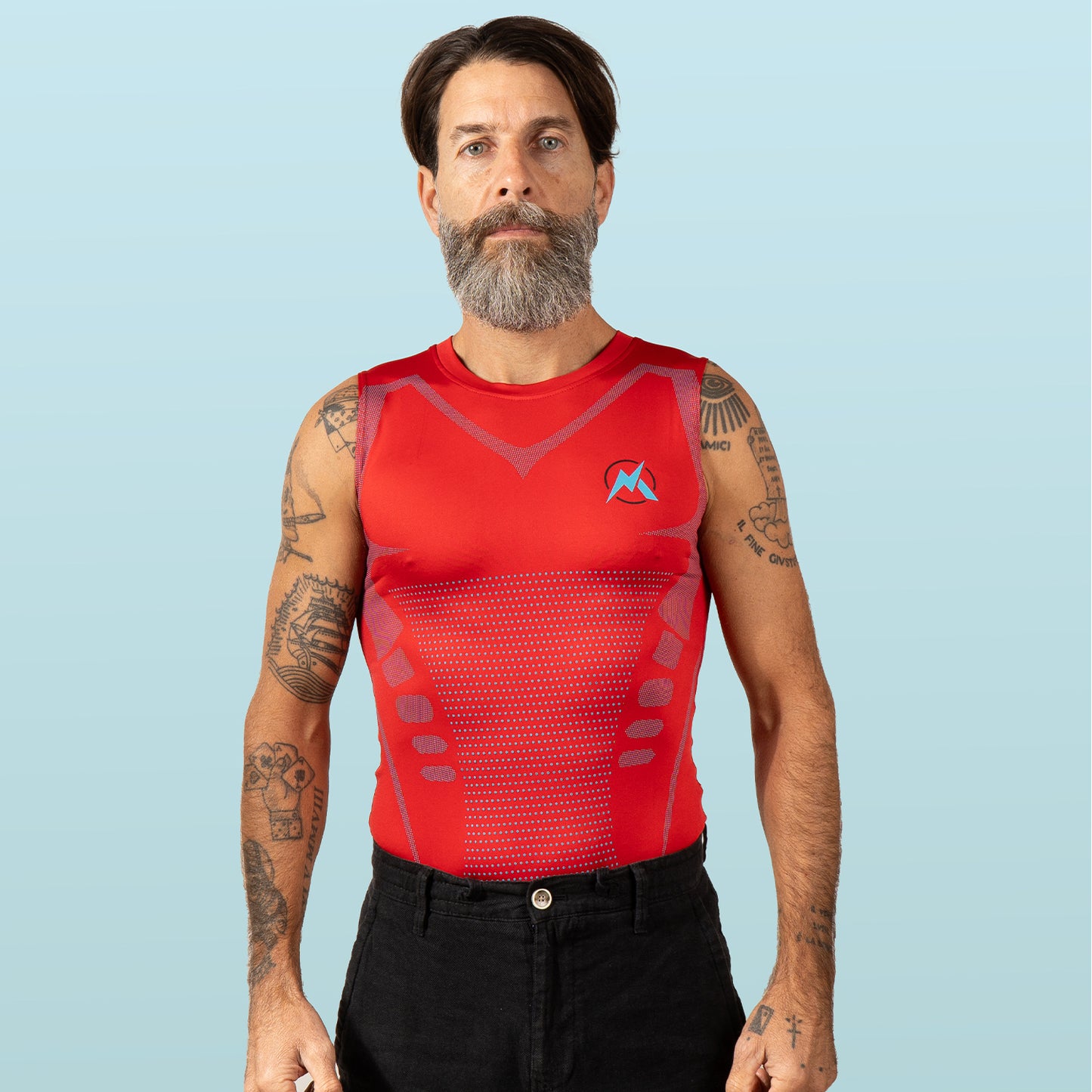
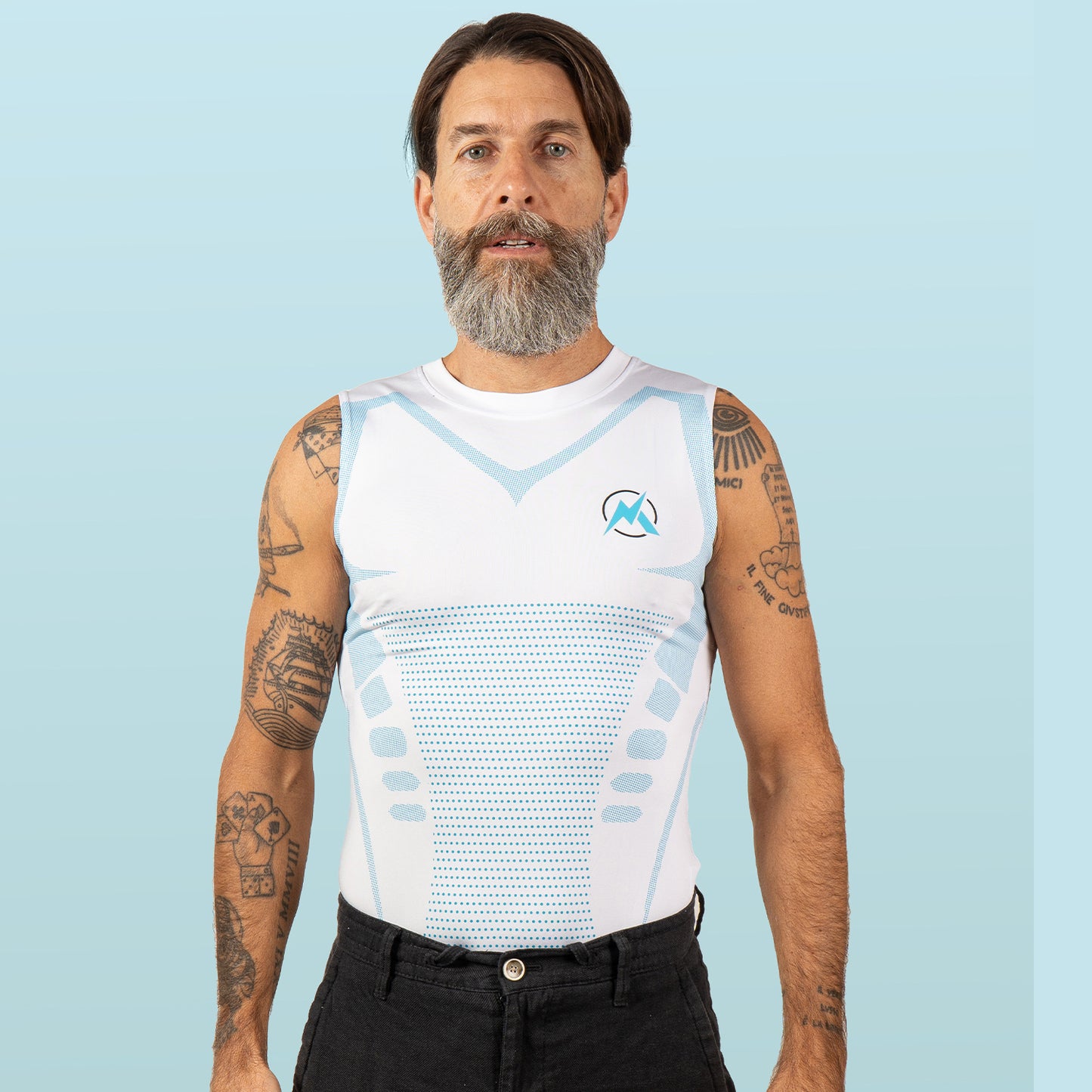
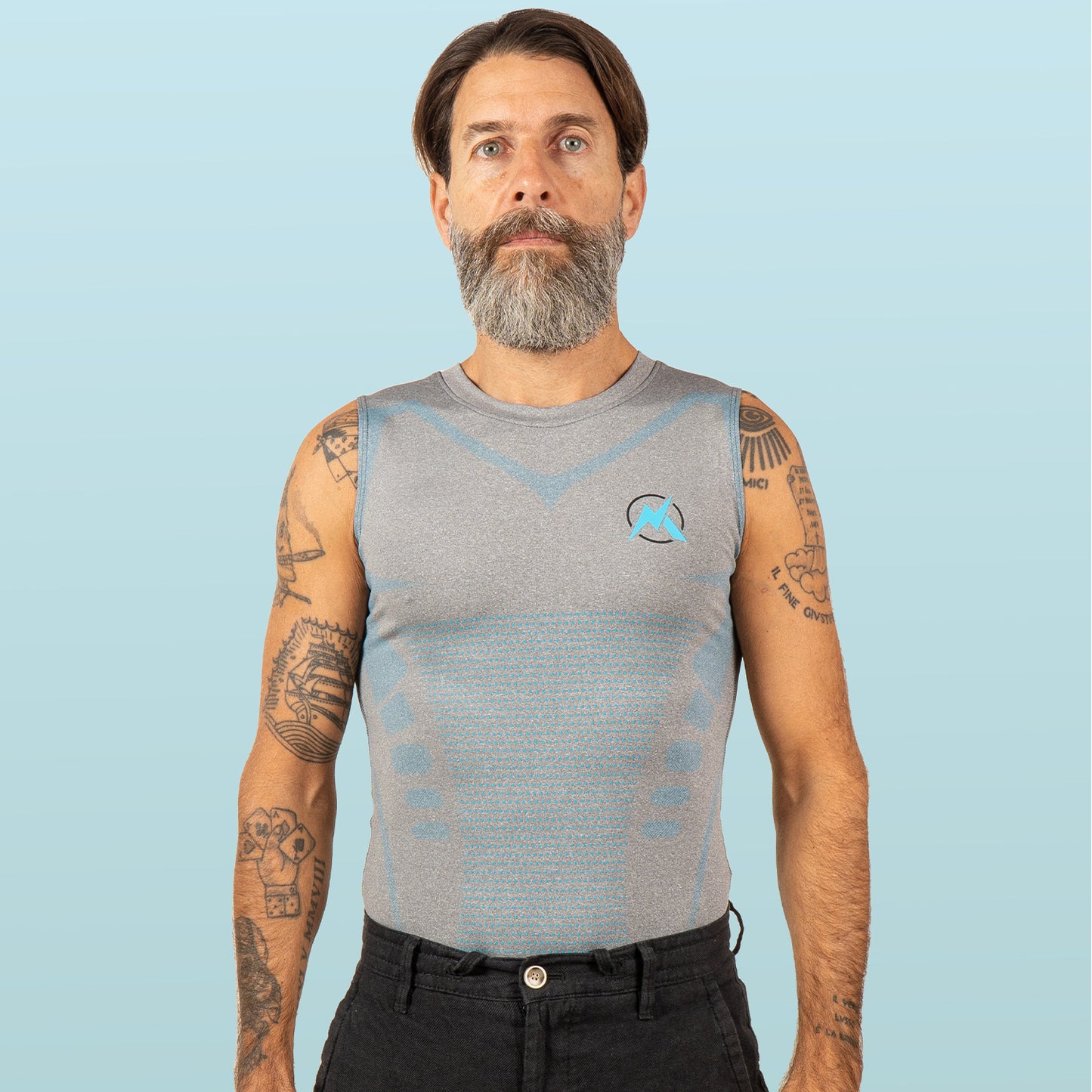
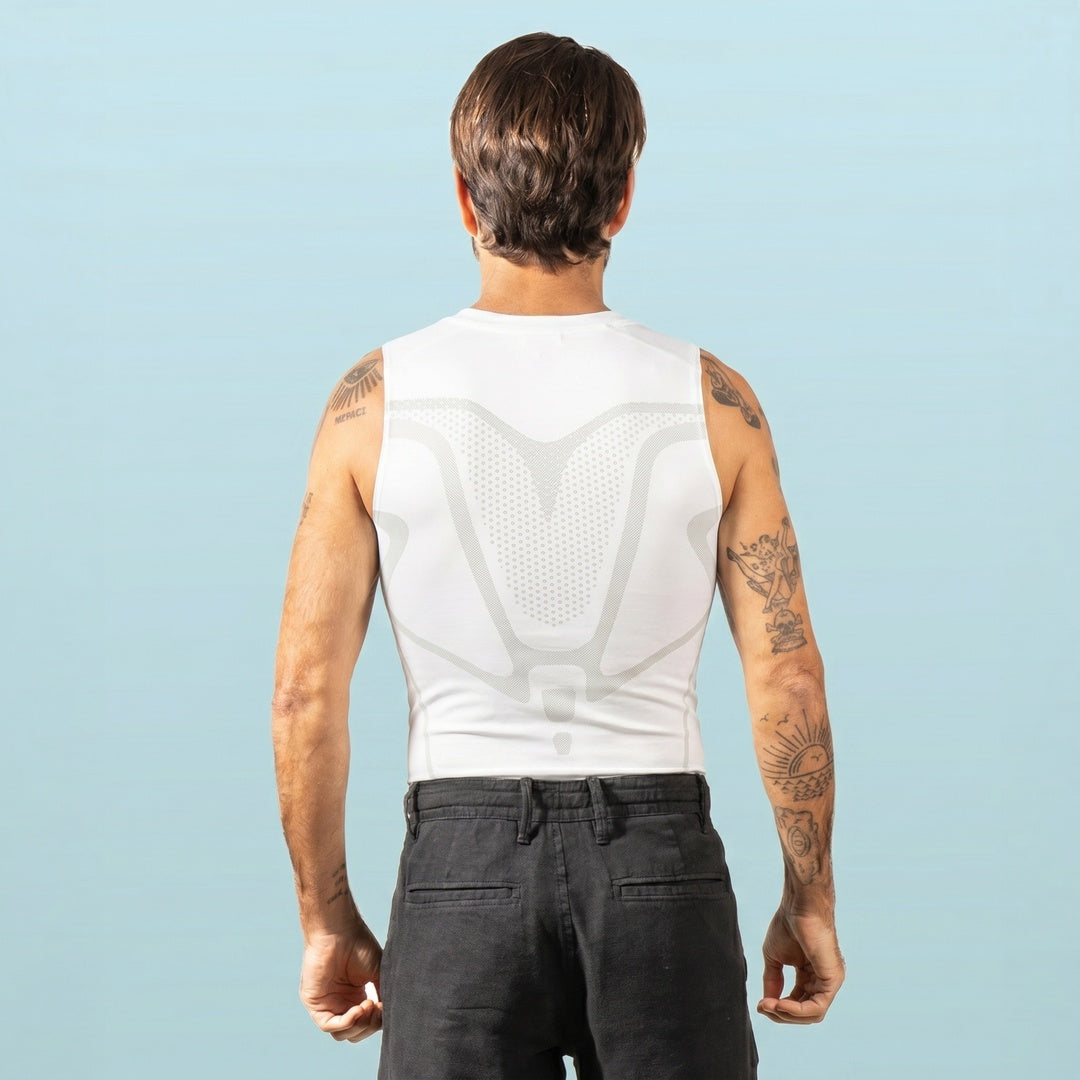
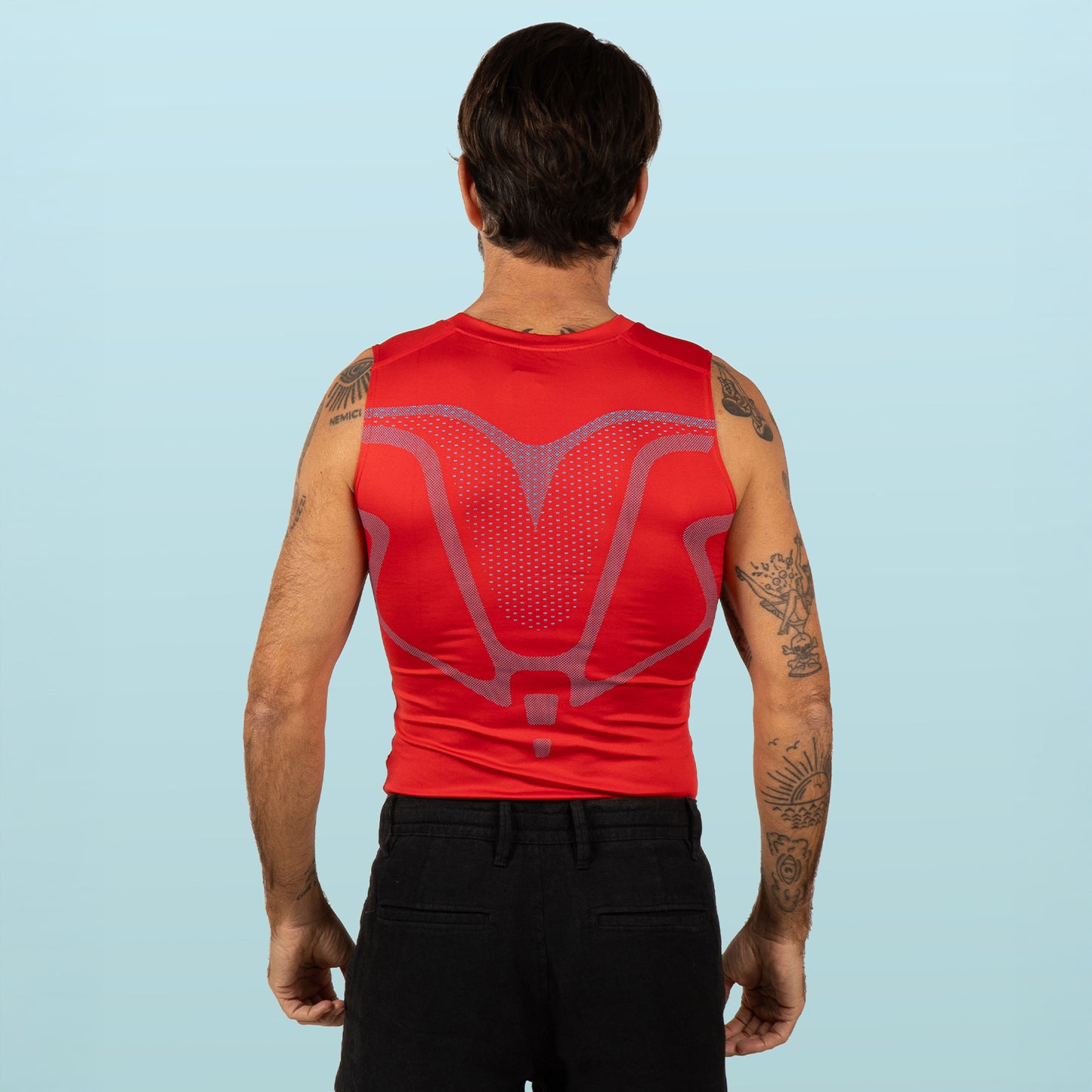
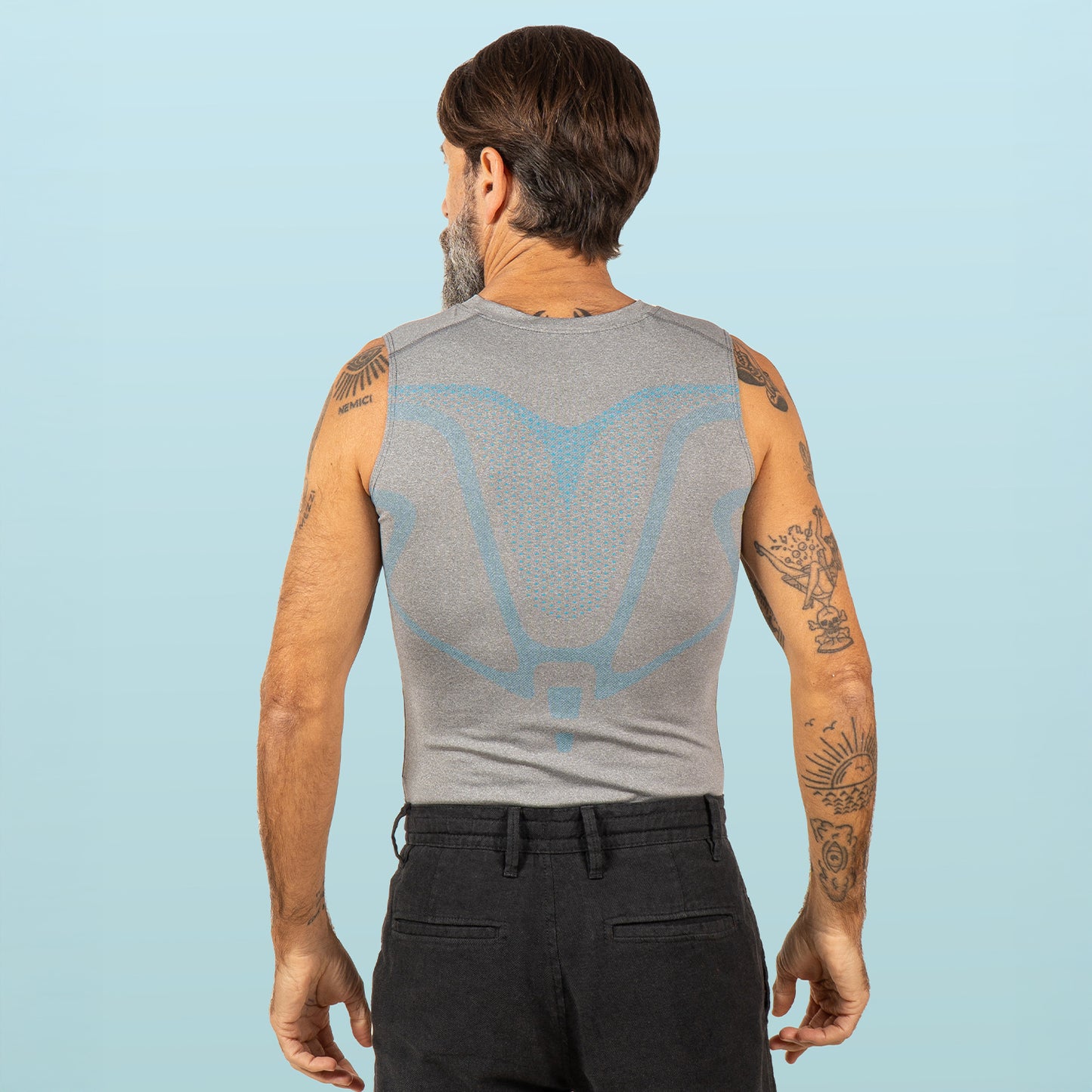
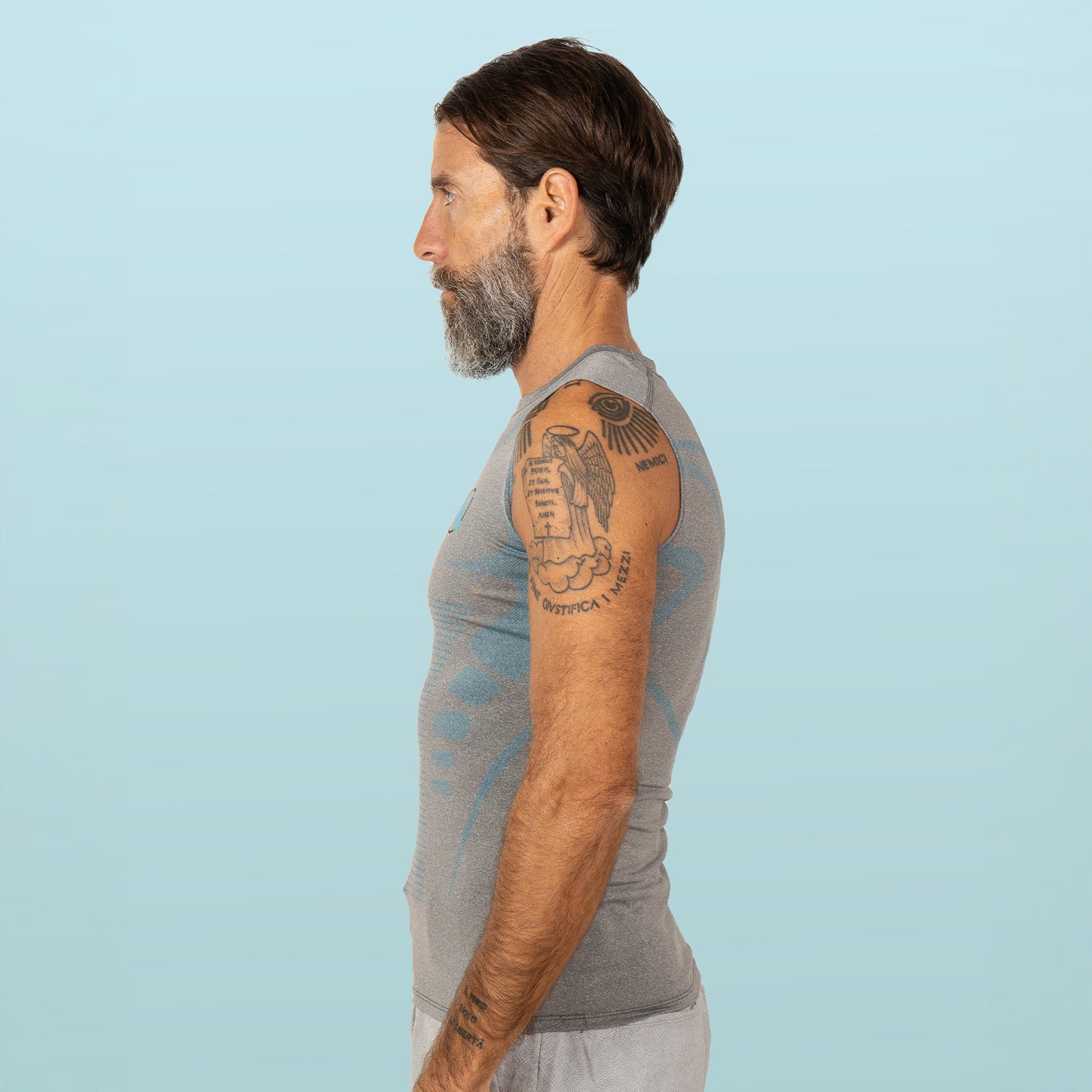
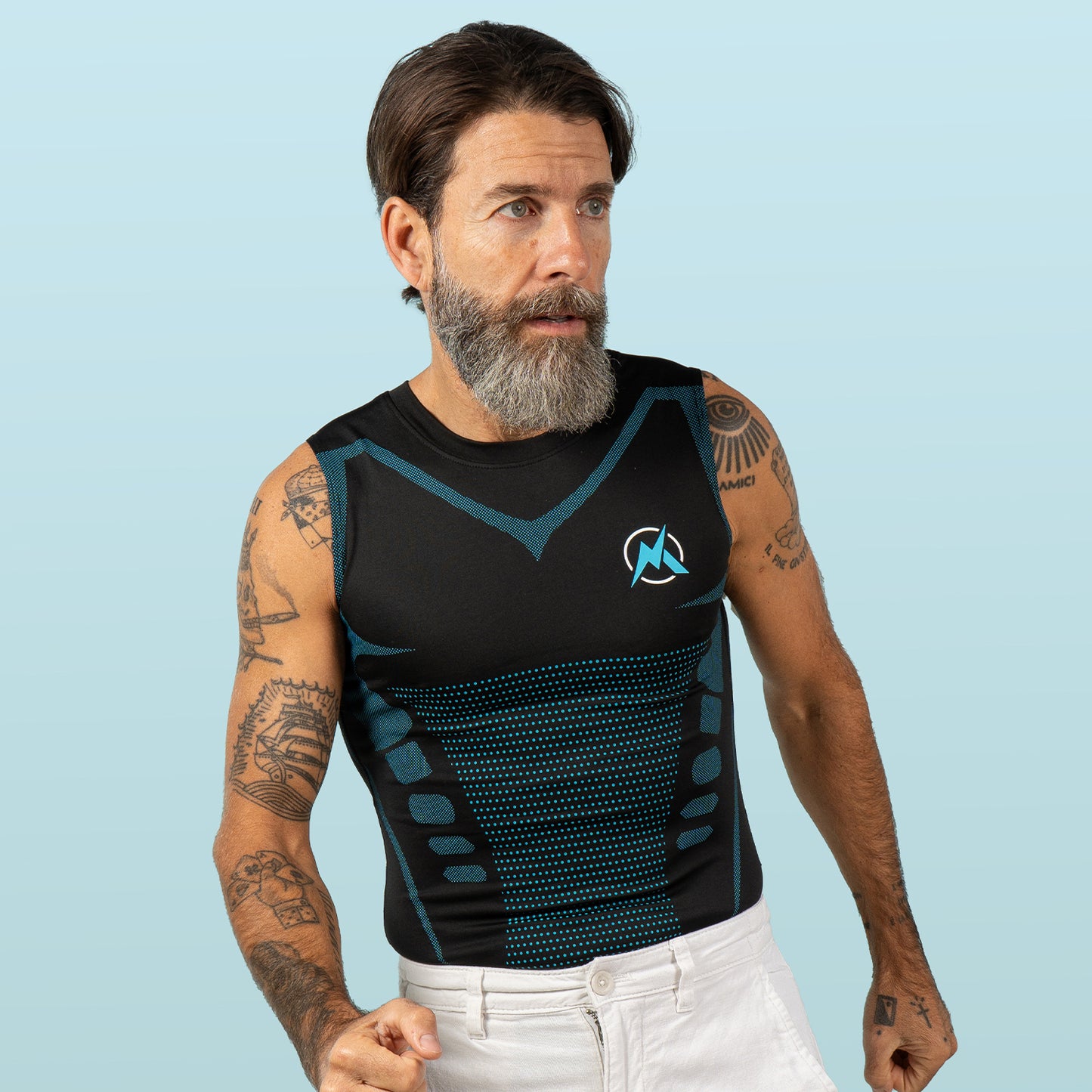
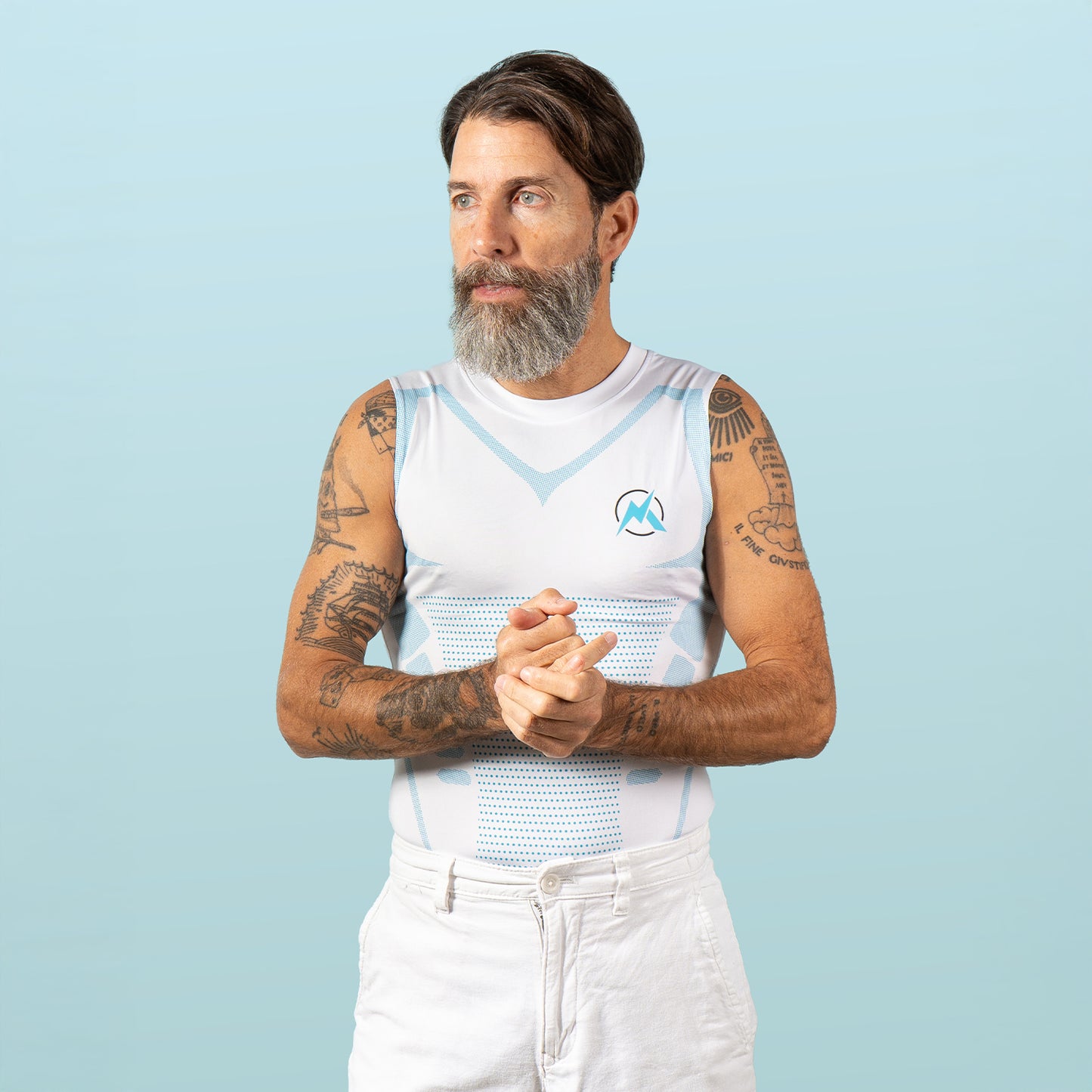
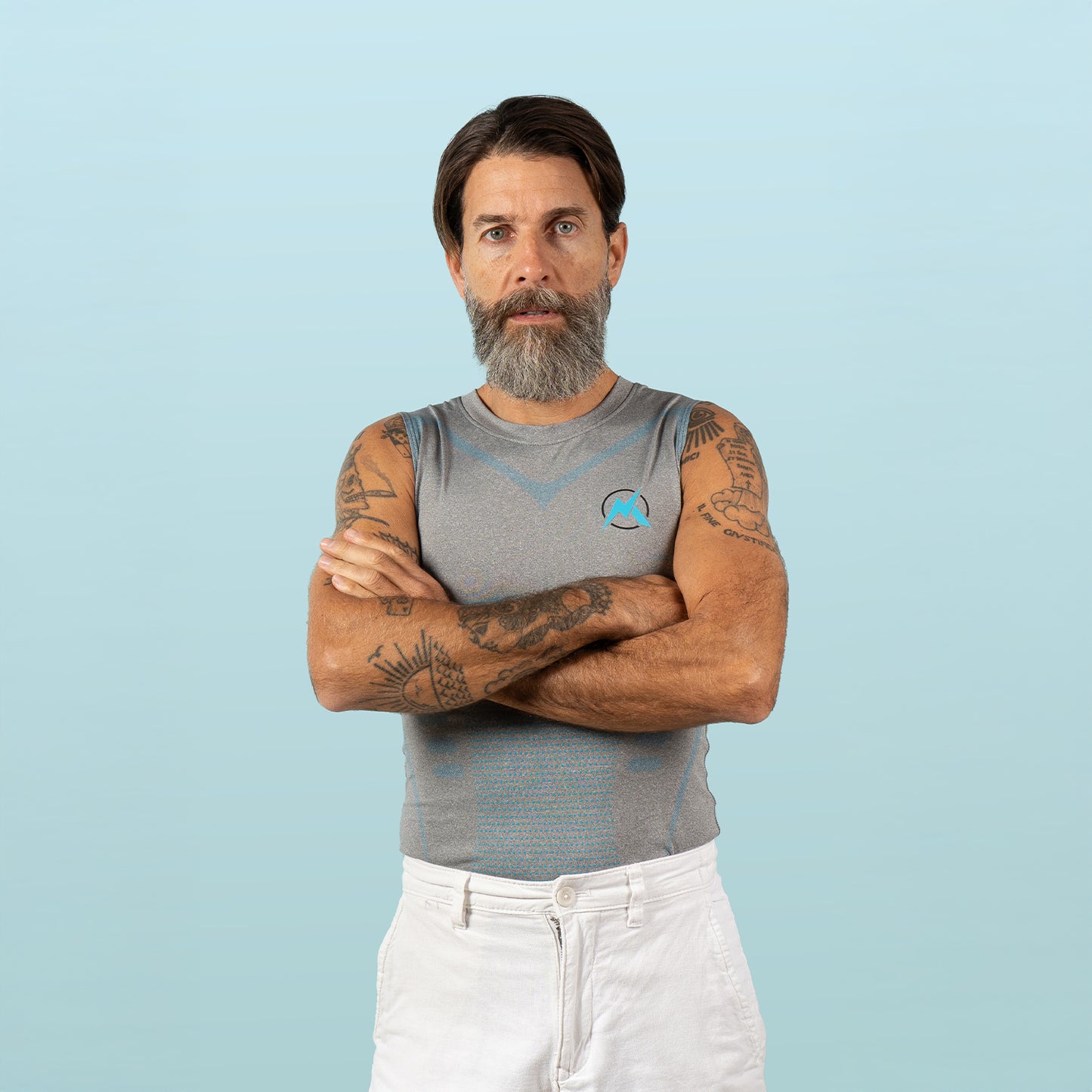
The Maynox VitaBoost is engineered for this exact use case — medium compression, sleeveless tank cut, crew neck, in solid black for under any darker dress shirt and any colored shirt where opacity matters. For the dressing mechanics of how compression base layers interact with regular shirts in general, our companion guide on why compression shirts work for men goes deeper into the science.
See VitaBoost — Buy 1 Get 1 Free →
Three real-world scenarios
Here's the assembly stack for the three situations you most likely needed this article for:
Scenario 1 — Tuesday morning office
- Medium-compression black sleeveless tank (base)
- Navy oxford button-down (reinforced placket, no back darts, medium spread collar)
- Charcoal flat-front chino, mid-rise, full tuck
- Dark leather belt, no flashy buckle
- Result: clean vertical silhouette, belly reads as "solid build" not "round"
Scenario 2 — Wedding or formal event
- Medium-compression black sleeveless tank (base)
- White dress shirt (heavier fabric like a 140g+ broadcloth, NOT lightweight poplin) with reinforced placket
- Navy or charcoal suit (single-breasted, two-button, ventless or center vent)
- Trouser at natural waist, full tuck, dress belt
- Crucial: keep the jacket buttoned (top button only for two-button) when standing. The buttoned jacket does 80% of the slimming work — the white shirt only shows in the gap.
Scenario 3 — Client first-meeting or important date
- Medium-compression black sleeveless tank (base)
- Dark navy or deep burgundy shirt (the unusual color reads as "this guy has style" instead of generic banker)
- Charcoal wool trouser, full tuck
- Optional: unstructured navy blazer for the vertical line
- Result: the eye reads color and shoulder cut first; belly disappears from the frame
In all three, the base layer is the same. Build your closet around it, not around the next sale.
What dress shirts alone can't do
Let's be honest. A dress shirt and the right tuck can subtract about 8-9 lbs of visual weight — the threshold researchers Re and Rule (University of Toronto, 2015) identified as the minimum weight change humans reliably perceive in another person (ScienceDaily, 2015).
That's real. That's enough to flip "carrying weight" to "in shape, just solid." But:
- It won't change your underlying body composition. Visceral fat (the deep belly fat that pushes your midsection forward) doesn't respond to clothing. It responds to sleep, strength training, and lower-glycemic eating. If you want to fix the underlying issue, our how to reverse a dad bod guide walks through it.
- It won't fix posture that's collapsing forward. Slouching shoulders push the belly out and make any shirt look worse. Our how to stand up straight breakdown is the fastest free fix.
- It won't hide weight that's bigger than 25 lbs over your sharp weight. Past that threshold, you need the dress shirt rules and real body work. No fabric does it alone.
The bottom line: a dress shirt and a base layer are your fastest visual lever — a 5-minute fix you can use tomorrow morning. Use them as the front-line tactic while the deeper work runs in the background.
Frequently asked questions
How do you hide a belly under a dress shirt?
Fit the shoulders perfectly, choose a heavier fabric (cotton twill, oxford, or broadcloth ~140g+), pick a darker solid or fine vertical stripe, and do a full tuck with a flat-front mid-rise trouser at your natural waist. Add a medium-compression sleeveless tank as a base layer for an instant 1-2 inch flattening effect.
What is the best dress shirt for a man with a belly?
A straight-cut (no back darts) dress shirt in a heavier fabric like oxford or twill, with a reinforced placket and medium-spread collar. Solid navy or charcoal is the most versatile. Avoid stretch fabrics and lightweight poplins — they conform to belly curves instead of holding shape.
Should men with bellies tuck in their dress shirts?
Yes — a full tuck with a mid-rise pant at the natural waist is the cleanest silhouette for men with a belly. Untucked dress shirts that hang past the zipper read as "sloppy" and visually confirm what you're trying to hide. The exception: shirts with a straight hem cut specifically for untucked wear, kept at hip-bone length.
What color dress shirt makes a man look thinner?
Dark solids — navy, charcoal, deep burgundy, forest green — are the most slimming for men with a belly. Black is dressy but reads formal. Pure white reflects light off the belly's roundest point and can make it pop forward; if you wear white, choose a heavier fabric. Avoid bright pastels and horizontal stripes entirely.
Does a compression undershirt actually hide a belly?
Yes, a medium-compression sleeveless tank can reduce visible belly projection by 1-2 inches and smooth the silhouette so dress shirts drape better. Research confirms compression garments improve proprioceptive feedback and posture, but no studies show they reduce actual body fat. It's an instant visual fix, not a weight-loss tool.
Sources
- Brown, F. et al. (2022). Compression Garments and Recovery from Exercise — Sports Medicine, PMC9023423
- Wei, J. et al. (2025). Effect of Compression Garments — Life, PMC11944185
- Re, D. & Rule, N. (2015). Perceptions of Weight Change from Facial Cues — University of Toronto / ScienceDaily
The 5-minute fix you can use tomorrow morning.