By Owen Blot · Founder, Maynox · Last updated May 29, 2026
- Why dressing at 50 is different (the body math nobody tells you)
- Build the silhouette from the inside out
- The fit rules that actually subtract pounds
- The color and contrast rules
- The five wardrobe pieces that quietly do the heavy lifting
- Three scenarios, three outfits
- The five mistakes that age you ten years
- Frequently asked questions
You're 50. You walked into your closet this morning and stood there for two minutes. The slim-fit shirt from 2018 pulls across the chest now. The jeans from your 40s sit too low. The polo your wife liked makes you look heavier than you actually are. You closed the door and put on the same gray crewneck you wore yesterday.
This isn't a style problem. It's a math problem. How to dress at 50 as a man is mostly about understanding what changed in your body and adjusting the silhouette accordingly — not chasing trends, not dressing younger, and definitely not giving up. The rules below are the ones that actually move the needle. They make you look slimmer, sharper, and like a man who knows what he's doing — without spending a fortune or hiring a stylist.
Why dressing at 50 is different (the body math nobody tells you)
Three things changed between 35 and 50, whether you trained or not:
Your torso thickened. Visceral fat behaves differently from subcutaneous fat — it's metabolically active and accumulates around the abdomen as testosterone declines and the metabolism resets. Cleveland Clinic notes that visceral fat doesn't just sit there; it actively releases compounds that affect how the rest of the body looks and behaves. Translation: even if the scale hasn't moved much, your waist-to-shoulder ratio shifted.
Your posture compressed. The NIH reports that more than 80% of Americans experience posture-related issues. After 30, sarcopenia — age-related muscle loss — sets in at 3-8% per decade, which weakens the postural chain. By 50, the average man stands a little shorter and a little more forward-rolled than he did at 35. That changes how every shirt sits on him.
Your skin shows fabric quality. Cheap cotton, thin polos, and shiny synthetic blends read worse against mature skin than they did at 30. The same shirt that looked "fine" a decade ago now signals "trying too hard" or "not trying at all."
That's the body math. The goal isn't to hide it — it's to dress to the body you actually have. Every rule below flows from these three facts.
If you want the deeper "what changed in your body and what to fix first" breakdown, we wrote that as a separate piece: how a man's body changes after 40 (and what you can actually fix first).
Build the silhouette from the inside out
Almost every "how to dress at 50" article on the internet skips the most useful step: the layer most men never think about is the one that does the most visible work.
Here's the principle. The shape your shirt takes is the shape of whatever is under it. If what's under it is a soft, untrimmed torso, the shirt will read soft and untrimmed too — no matter how expensive the shirt is. If what's under it is a smoothed, slightly compressed torso, the shirt drapes cleanly. That's it. That's the trick the magazines won't tell you because they want you to buy a $200 polo instead of a $15 base layer.
A well-fitted compression undershirt does three things at once:
- Smooths visible bulges at the waist and lower back so the outer shirt doesn't catch on them
- Provides mild postural feedback — the fabric tension reminds the shoulders to roll back, which a 2022 review in Sports Medicine (Brown et al.) attributes to proprioceptive cues from compression fabric
- Creates a cleaner line from chest to waist, which is the single biggest variable in whether a man reads as "in shape" or "out of shape" at first glance
This isn't shapewear. It isn't medical. It isn't going to make you lose weight. The 2025 pooled review in Life (Wei et al.) covering 31 studies confirms compression garments don't cause fat loss. What they do is change how the outer layer sits — and that's worth more than most $100 shirts.

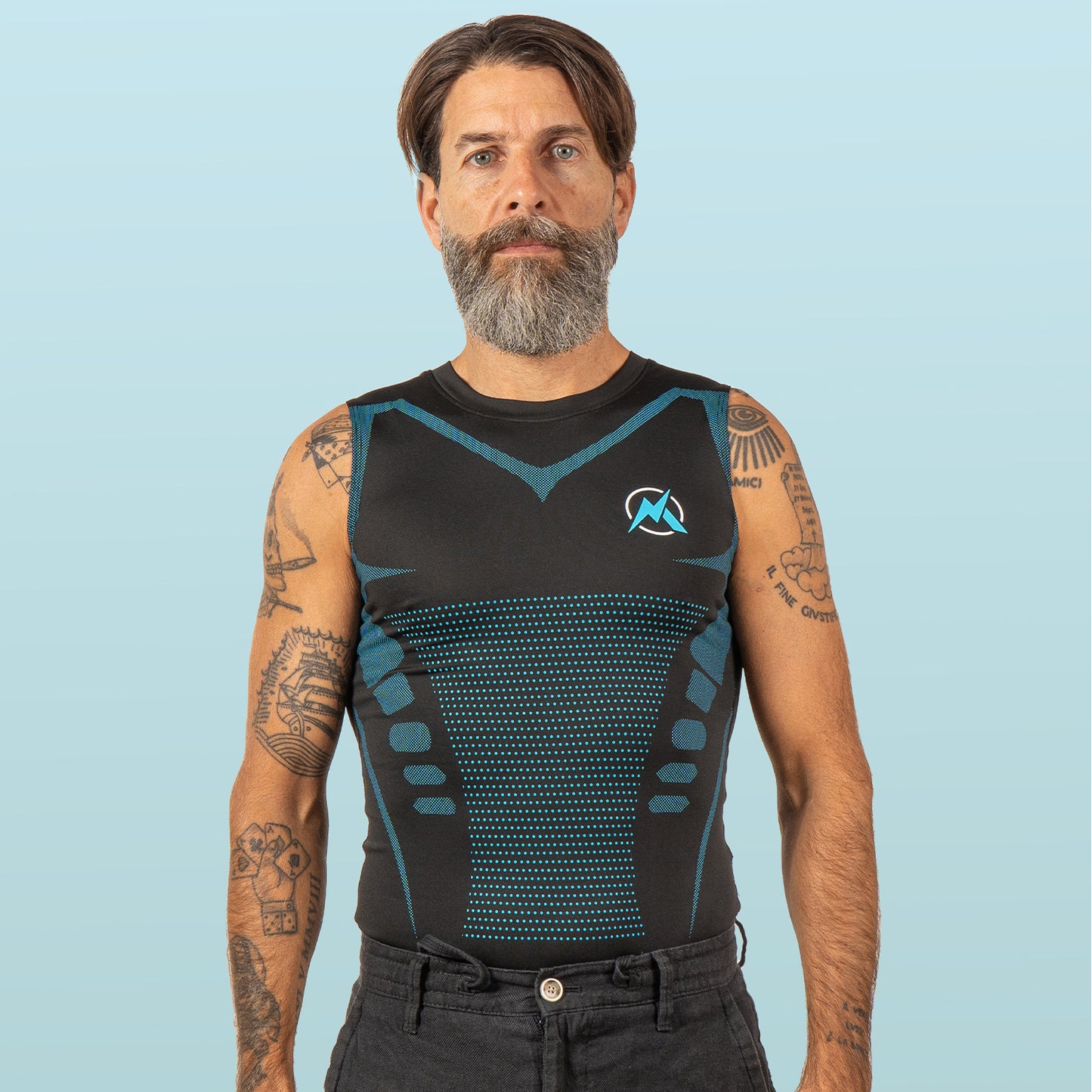
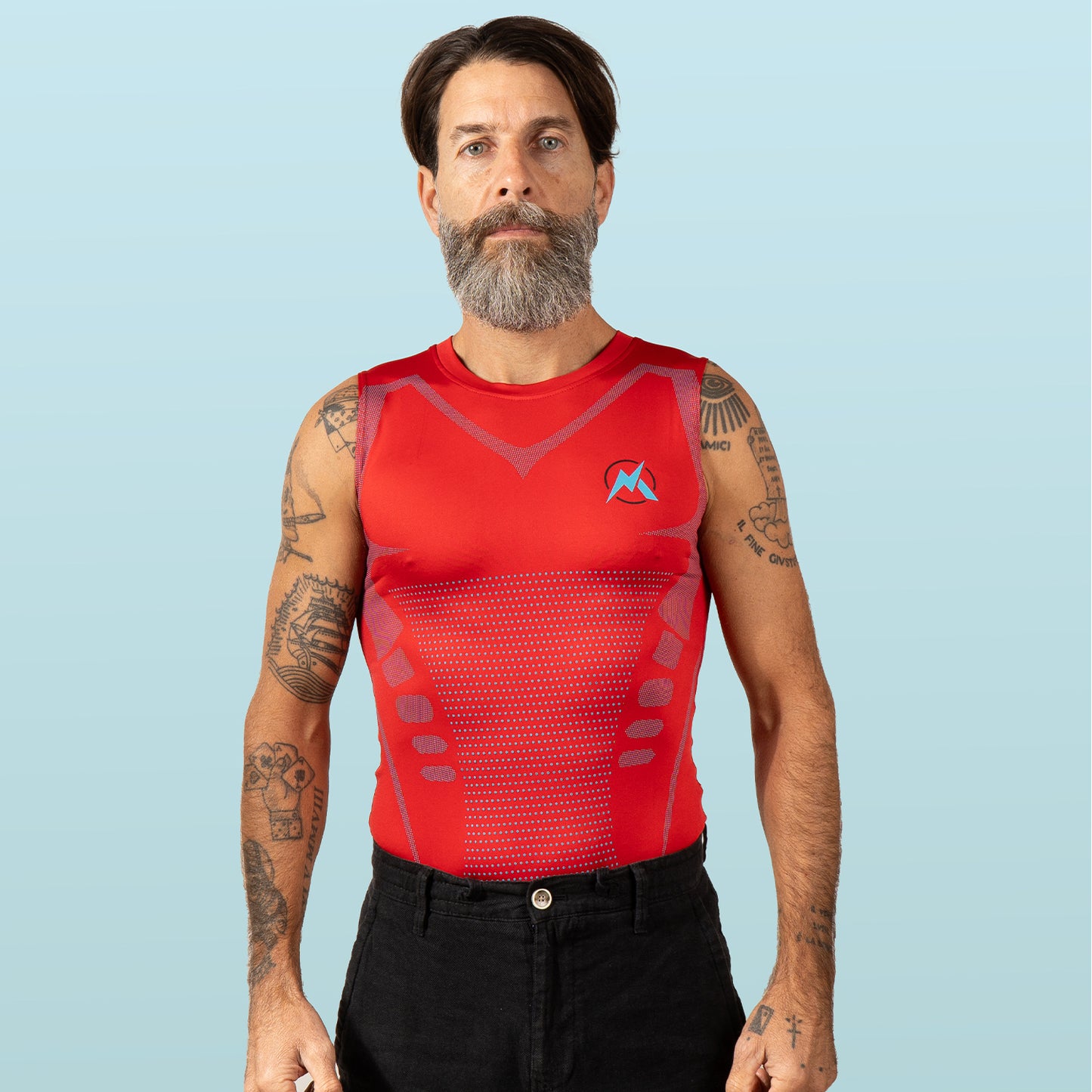
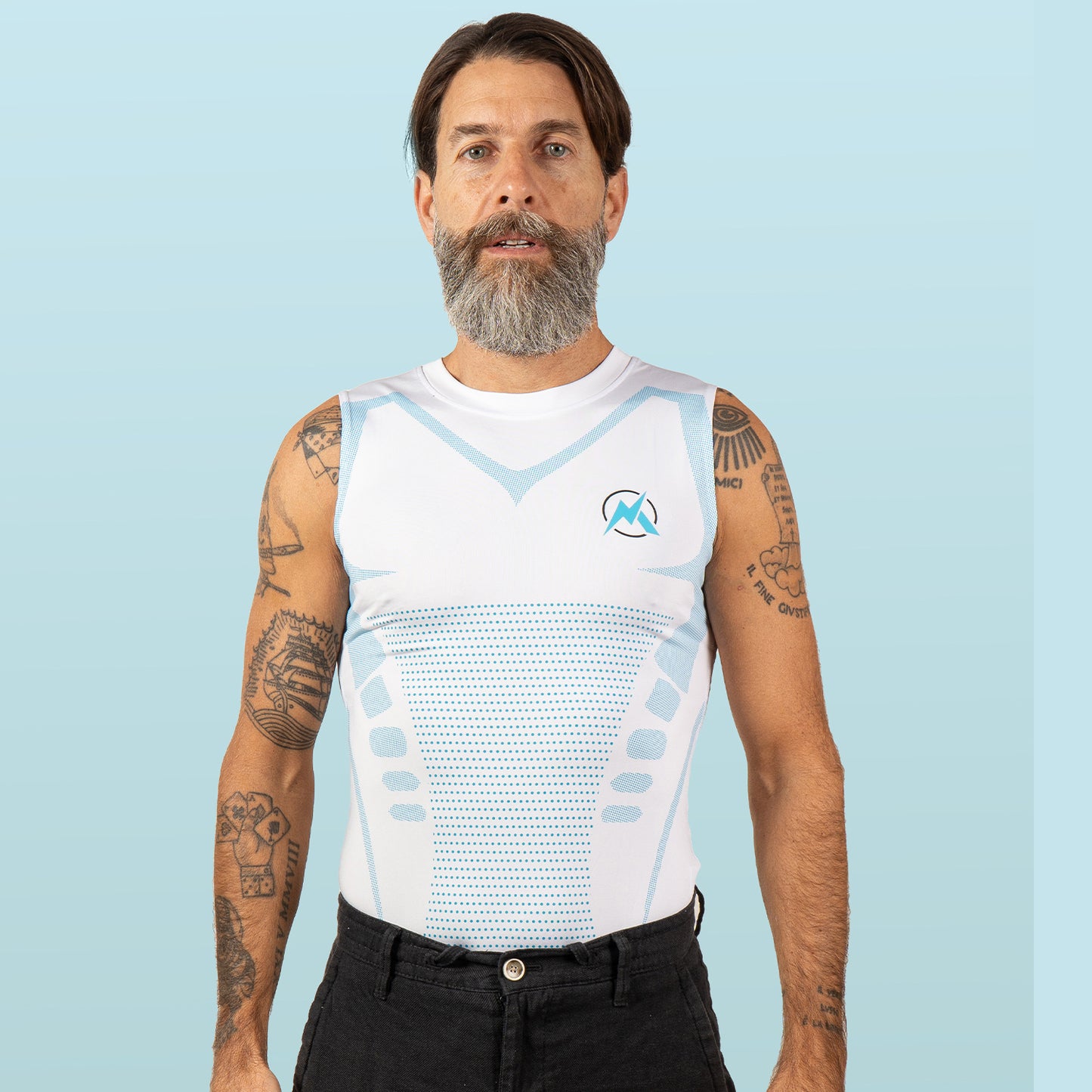
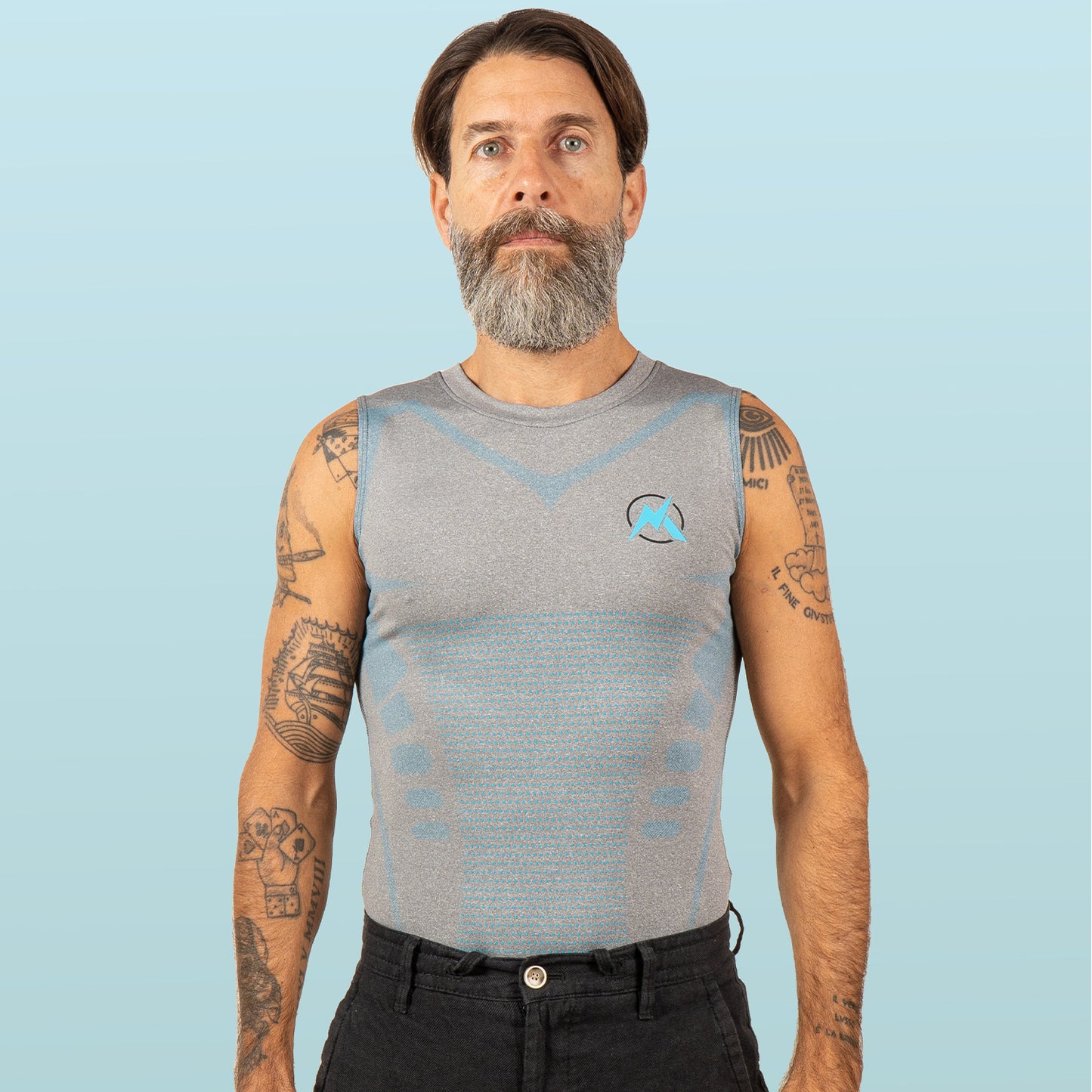
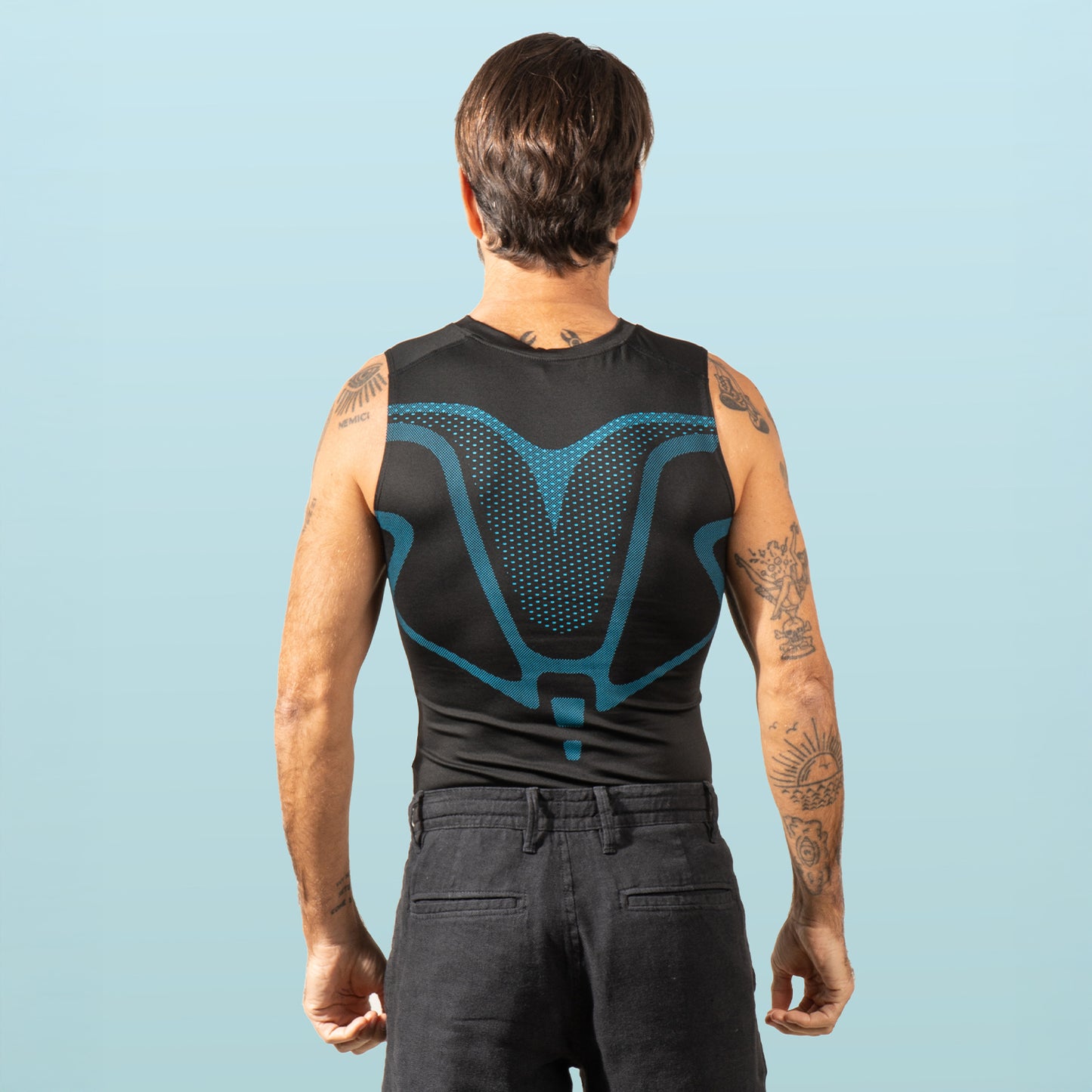
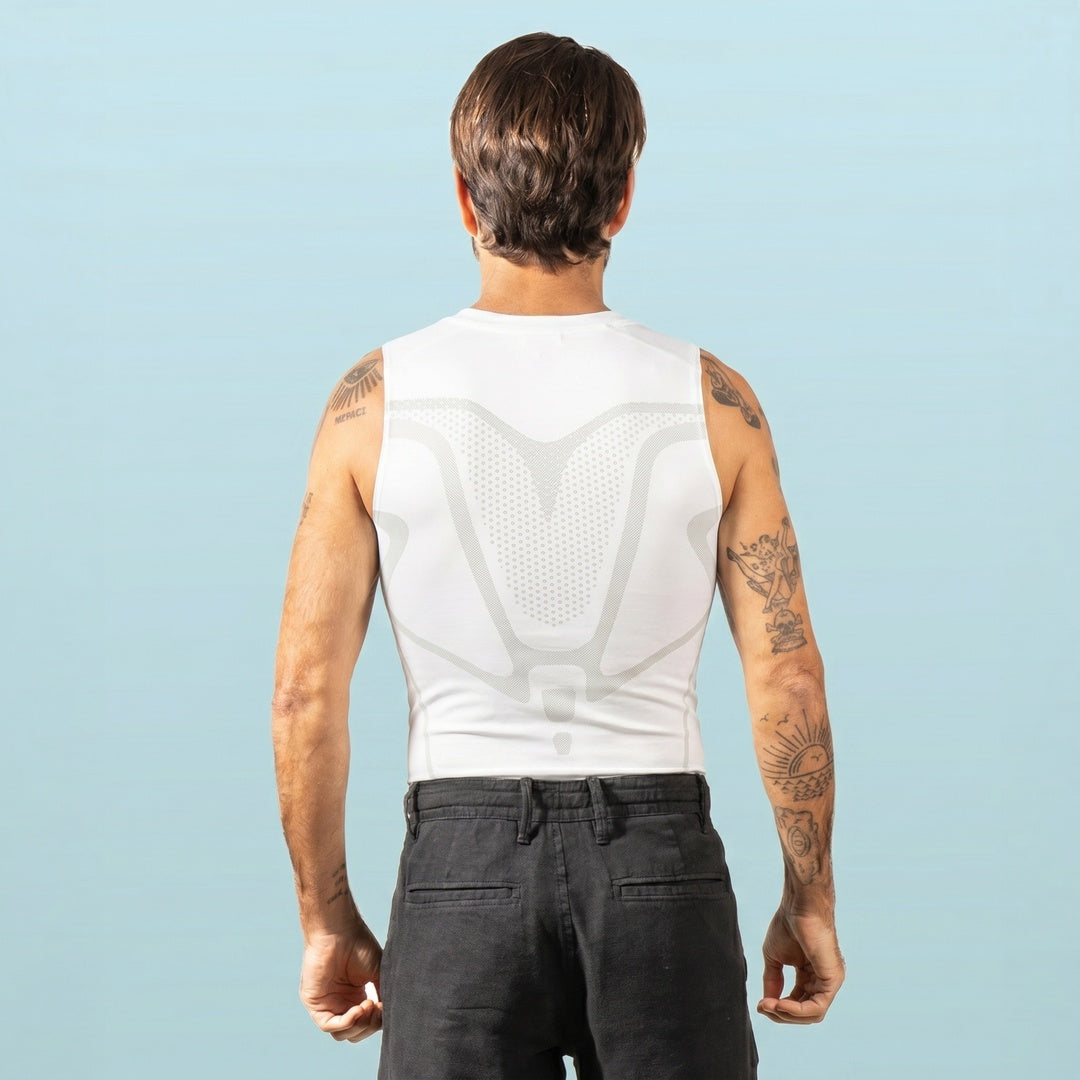
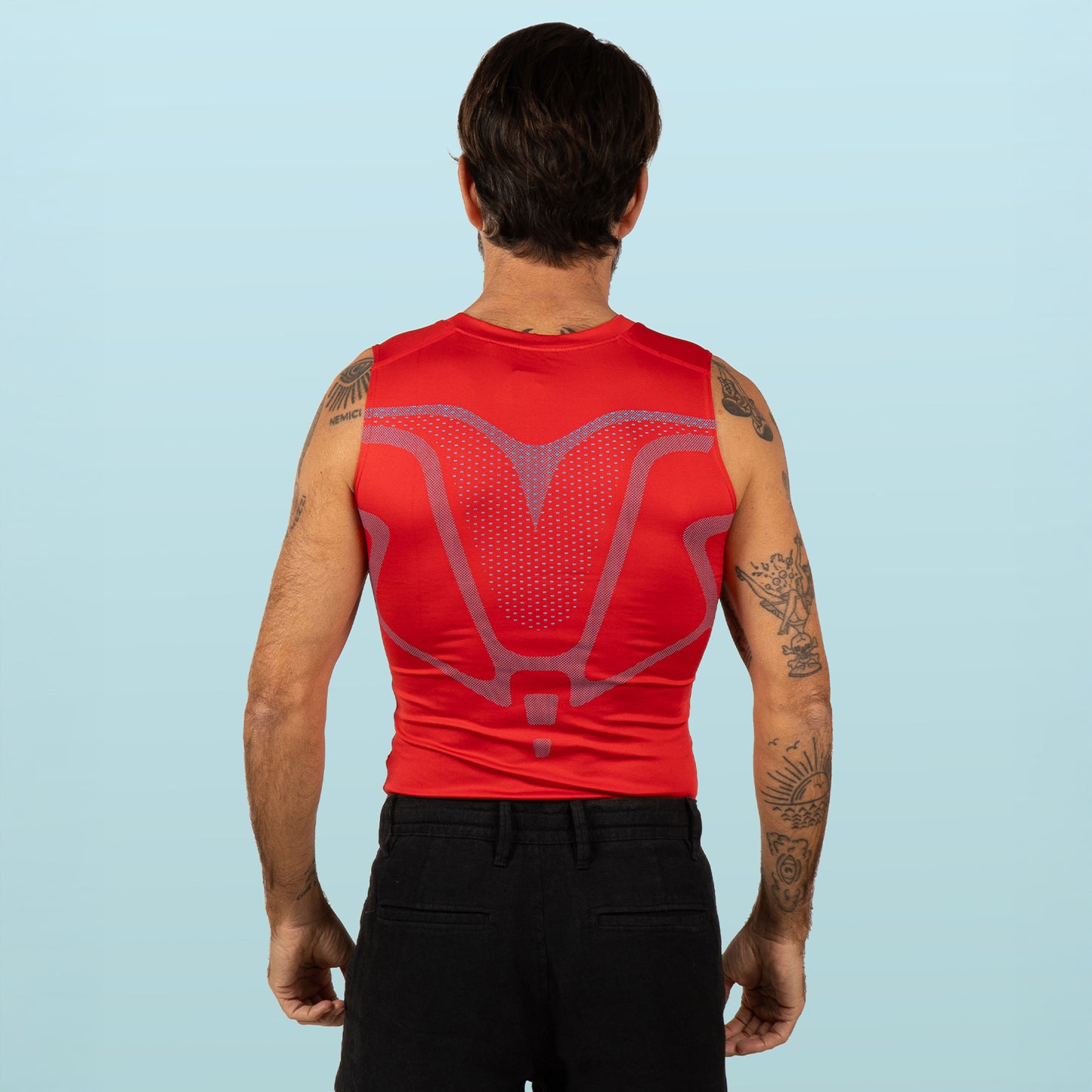
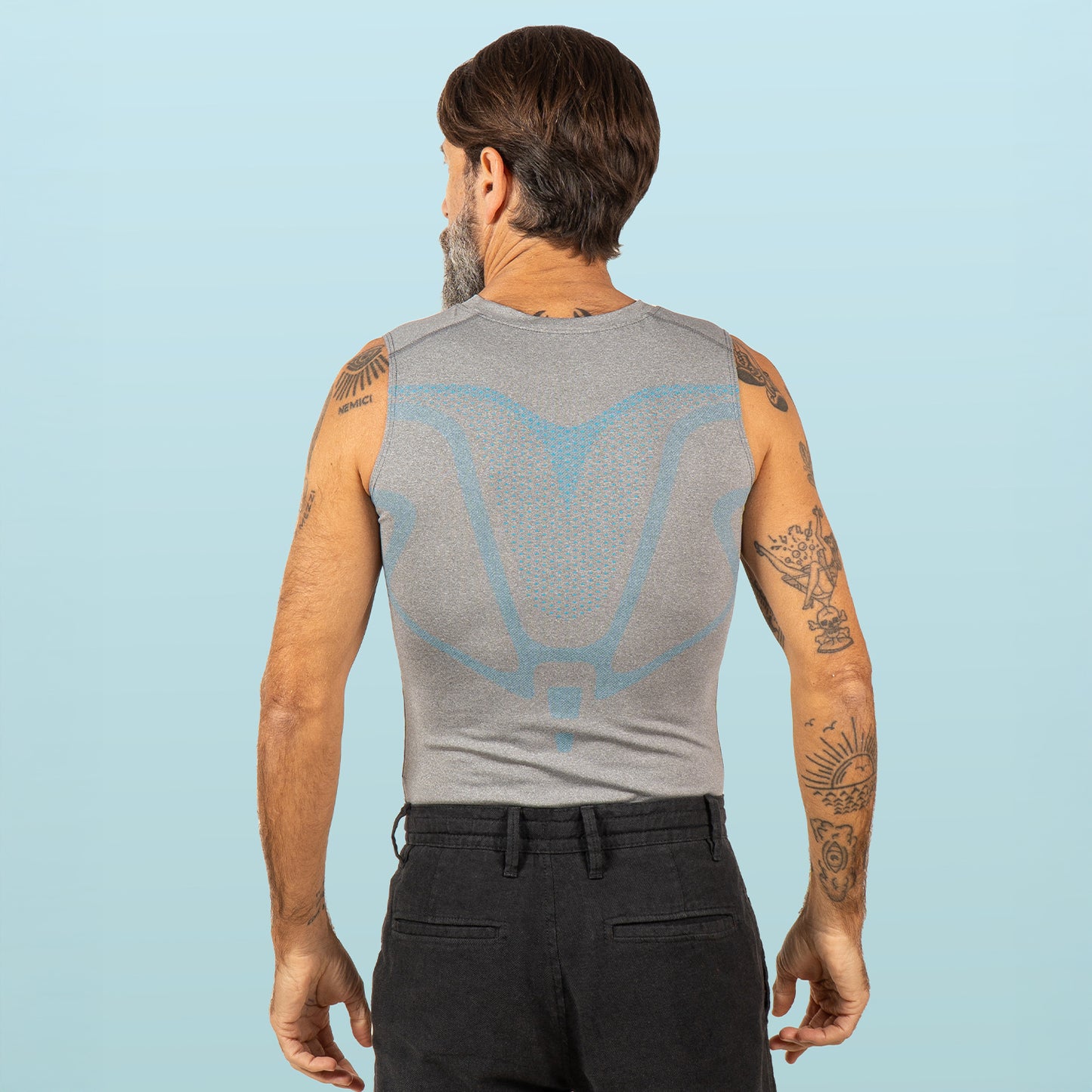
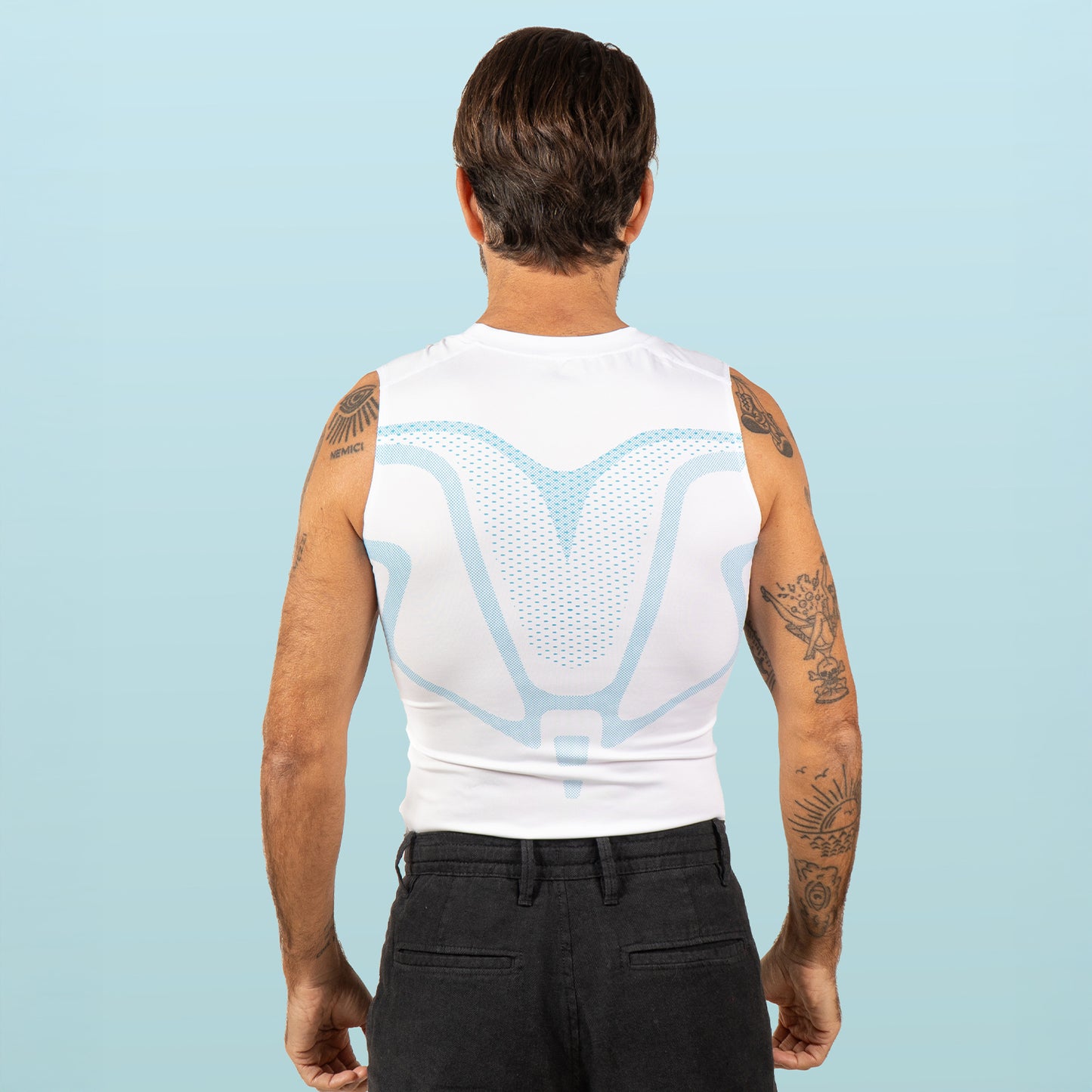
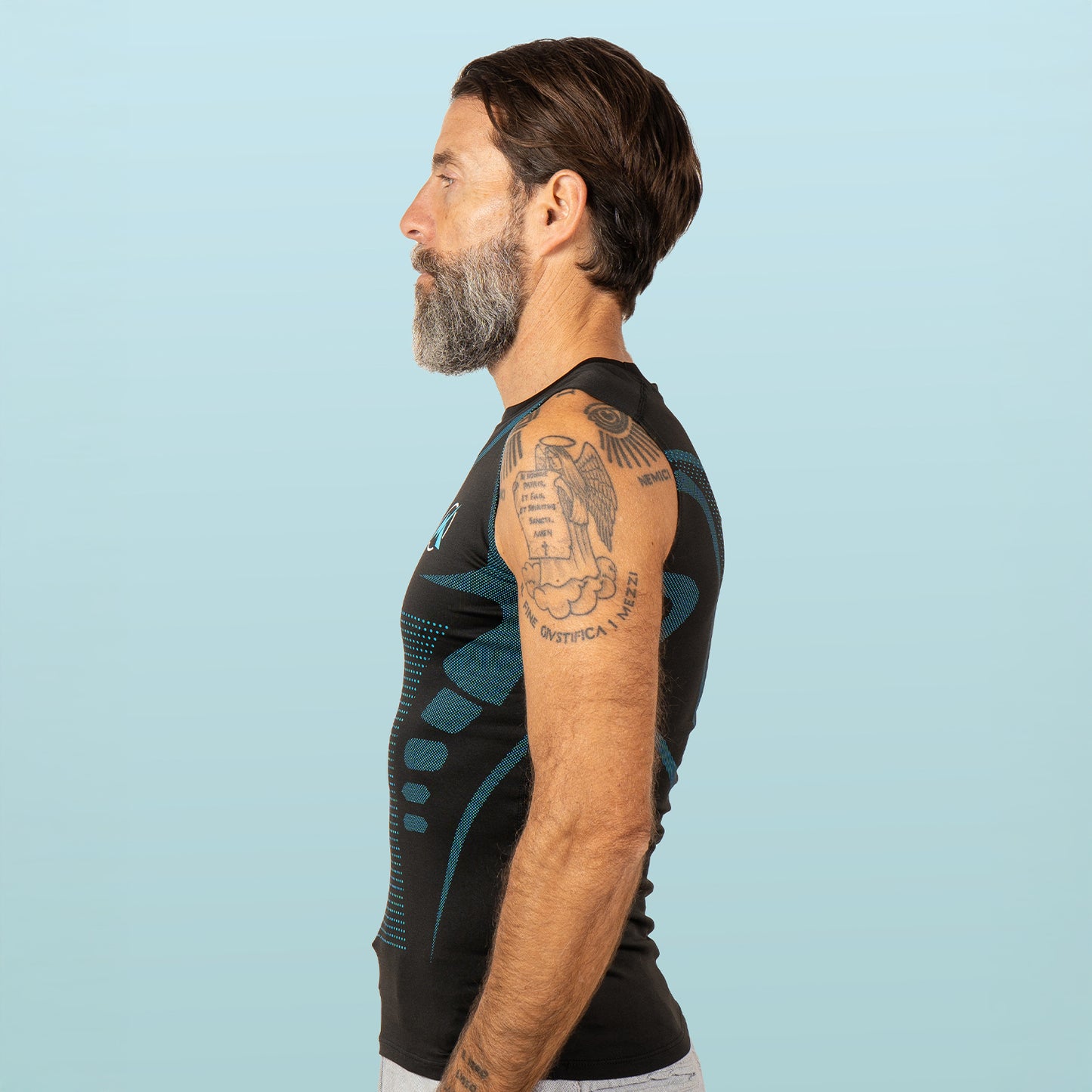
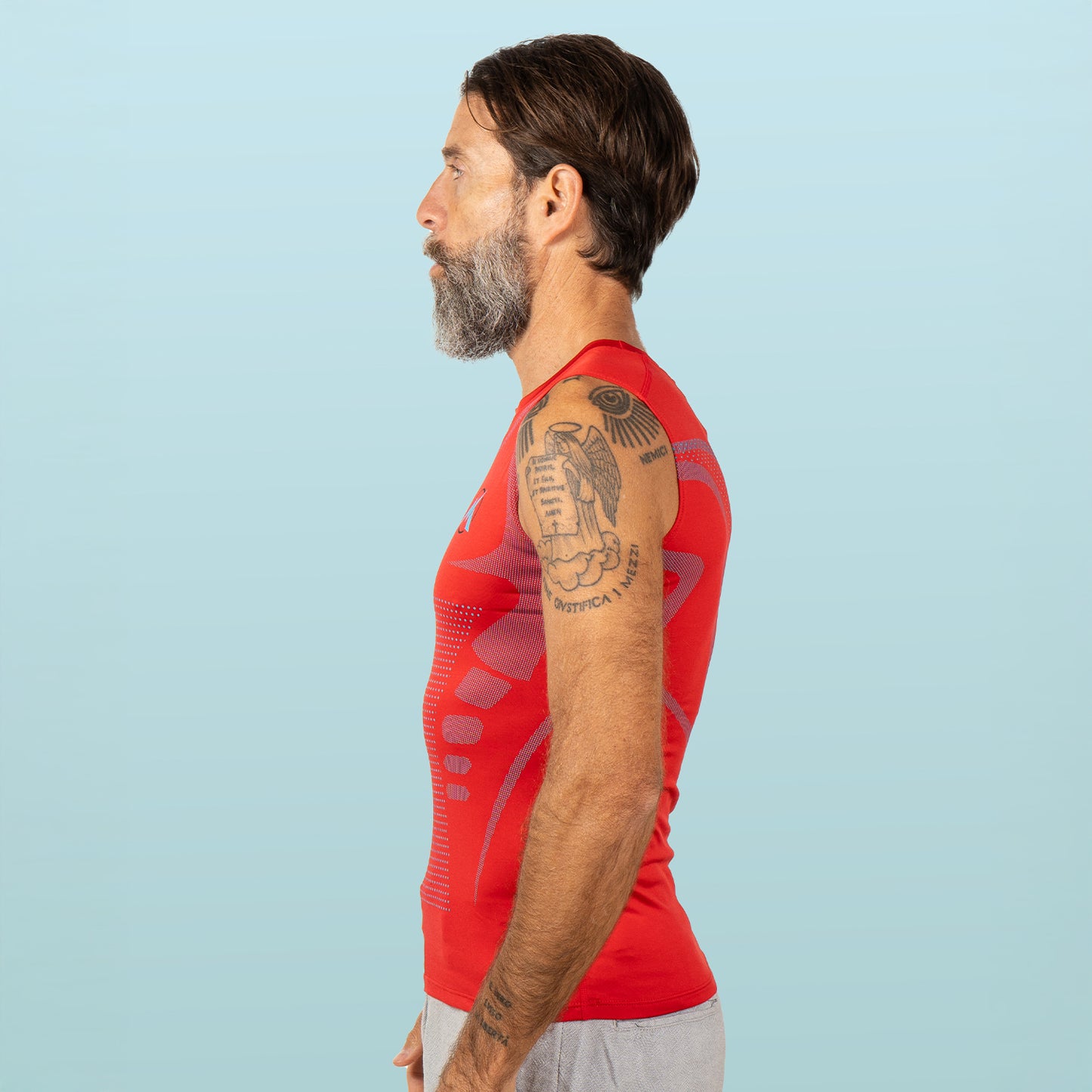
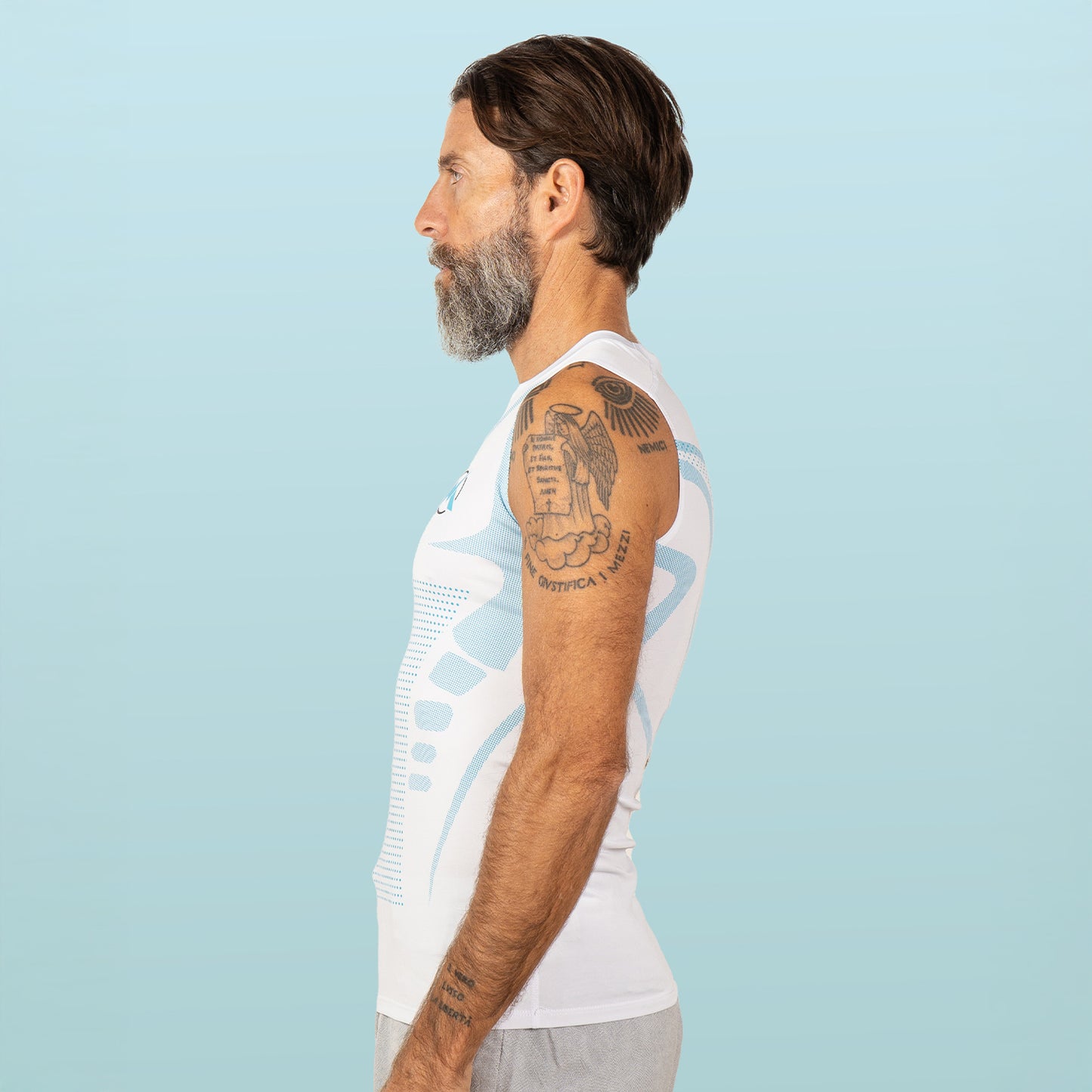
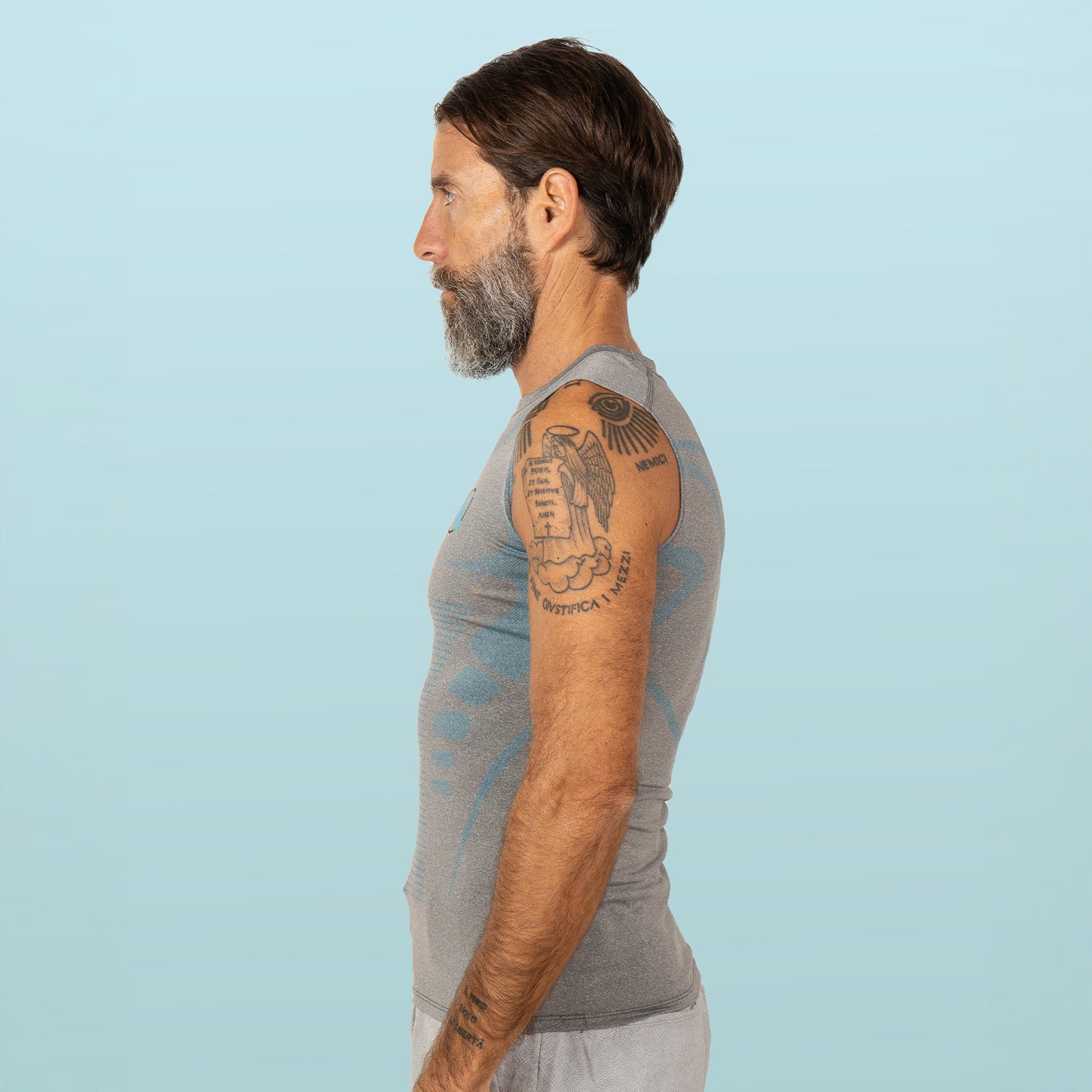
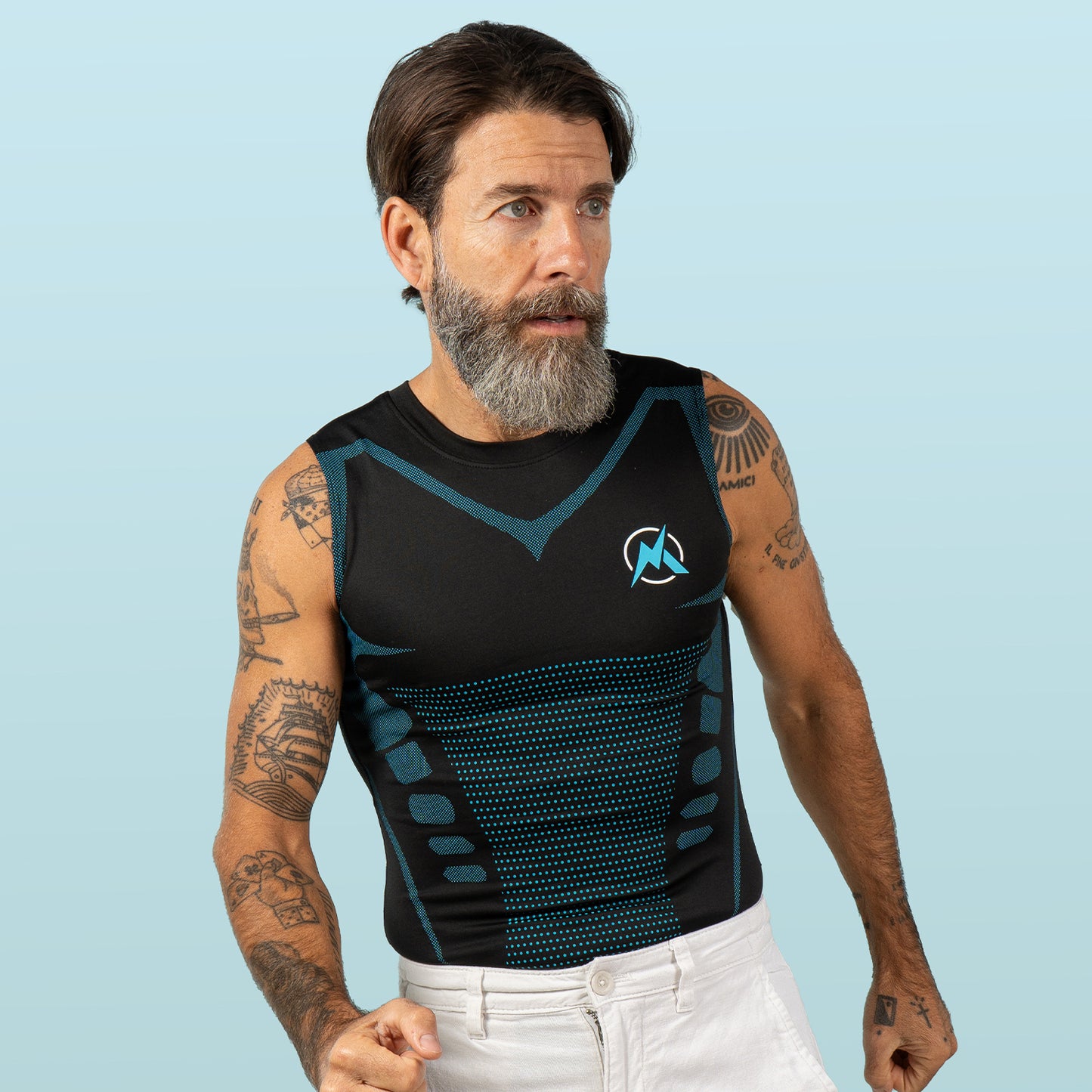
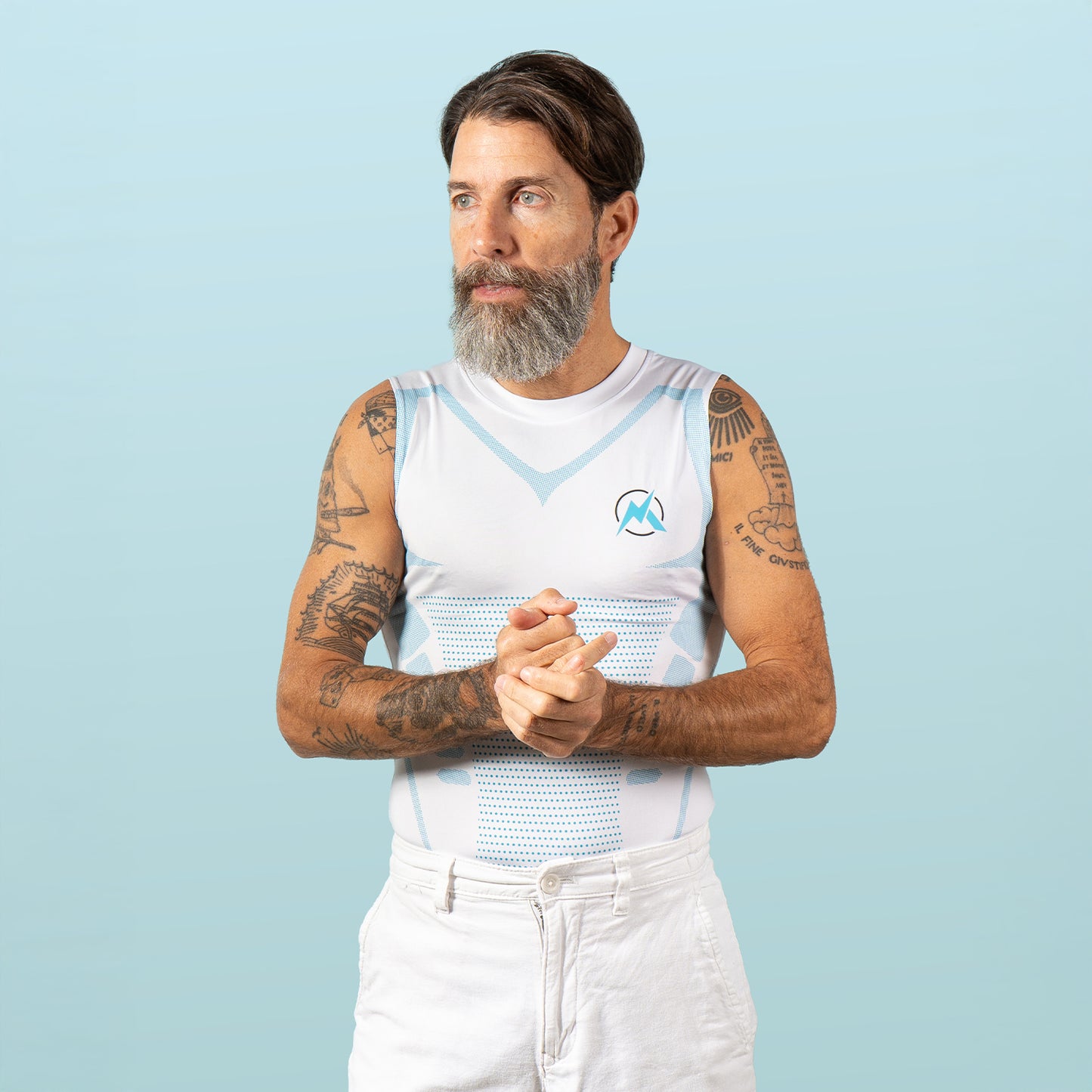
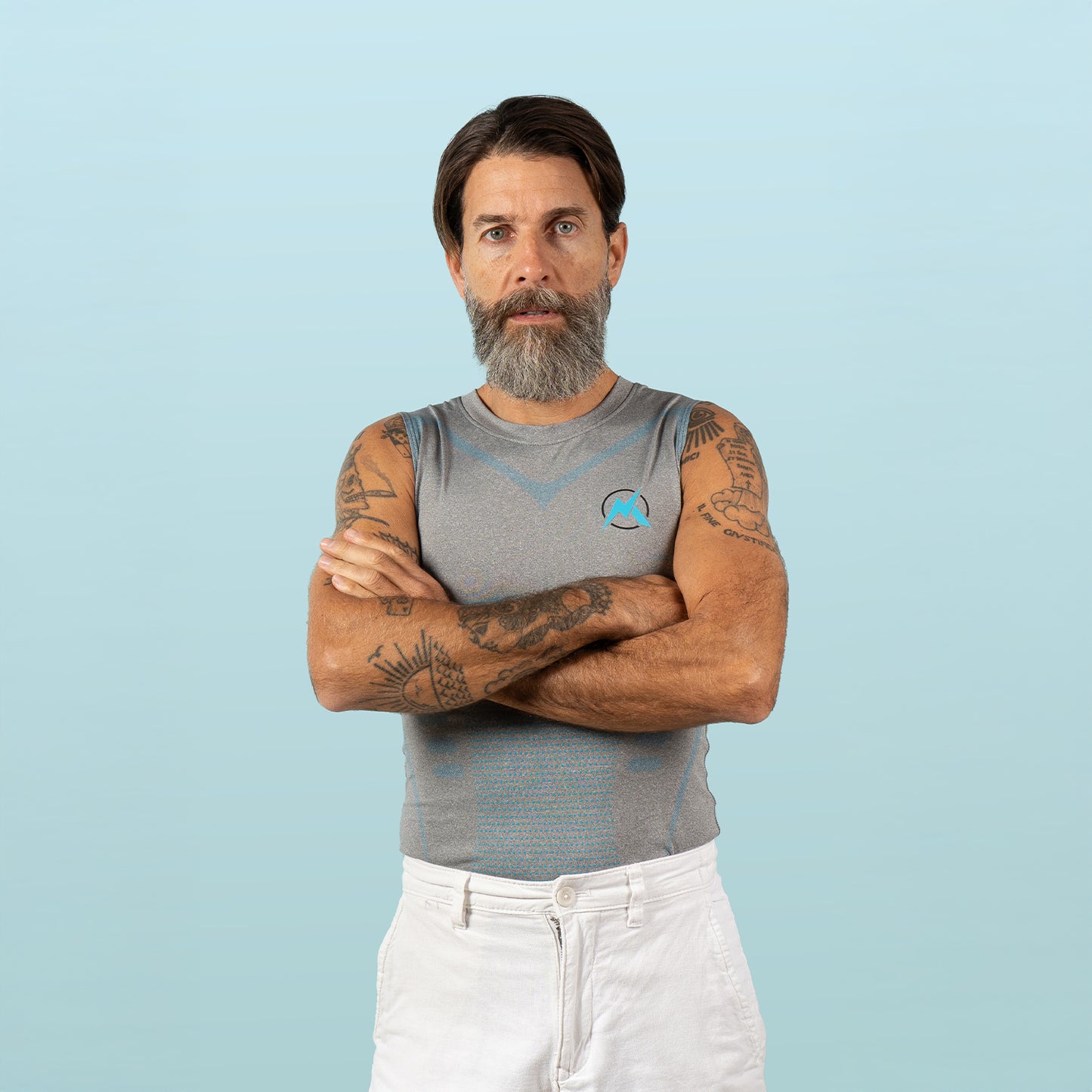
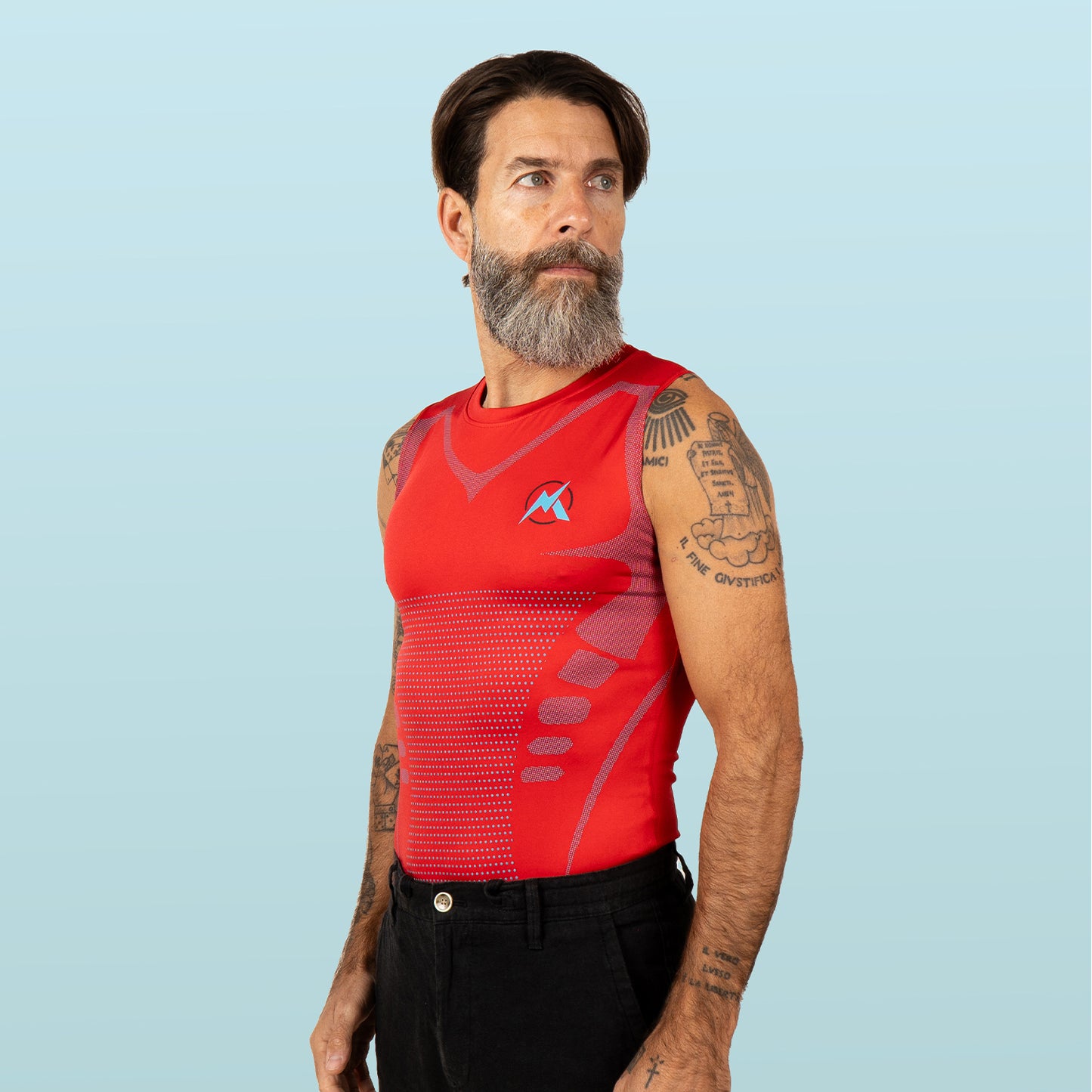
This is the foundation. Get it right and everything you put over it works harder. We built VitaBoost for exactly this purpose — a black compression base that disappears under shirts and quietly does the silhouette work.
The fit rules that actually subtract pounds
You will not look slimmer by buying a smaller size. You will look slimmer by buying the right shape. Five rules:
Mid-rise, not low-rise
Low-rise pants sit on the hips. When the torso has thickened, that creates a visible roll above the waistband — the dreaded overhang. Mid-rise pants sit at the natural waist, just above the belly button, which hides the soft layer and creates a longer leg line. University of Toronto research from Re & Rule (2015) found that perceptible weight differences kick in around an 8-9 lb apparent-weight change. Silhouette shifts of this magnitude — the kind a properly-rising pant creates — sit right in that visible range.
Straight or slim-straight, never slim-skinny
Slim-skinny pants taper hard at the calf and ankle. On a 50-year-old body, that tapering exaggerates whatever is happening at the thigh and waist. Straight or slim-straight pants keep a consistent line from hip to ankle, which reads cleaner and longer. If you can pinch more than an inch of fabric at the thigh, the pants are too baggy. If you can't pinch any, they're too tight.
The break: clean, not crumpled
Pant break is where the hem meets the shoe. A "full break" — pants crumpling on the shoe — shortens the leg and adds visual weight. Go for a "slight break" or "no break." The hem just kisses the top of the shoe. Every tailor knows this; almost no man asks for it. It costs $15 and adds an inch to your visible height.
Shirts that skim, not cling and not tent
The shirt should follow the line of the torso without pulling at the buttons or pooling at the waist. A shirt that pulls between buttons is too small. A shirt that you could fit a fist of fabric inside at the waist is too big. The sweet spot: stand in front of a mirror, drop your arms, and check that the side seam falls in a straight vertical line.
Sleeves and shoulders are the tells
Tailors will tell you the same thing every time: shoulders and sleeves are the most expensive parts of a garment to fix, so get them right at purchase. The shoulder seam should land on the edge of your actual shoulder, not halfway down the arm. Sleeves should hit at the wrist bone — no further. Sleeves that fall past the wrist on a man over 50 read as "borrowed dad jacket."
The color and contrast rules
Color does as much work as fit. Three principles:
Monochromatic elongates. Wearing the same color (or close shades of it) from shoulder to shoe creates an unbroken vertical line. That single move can make a man look 5-10 pounds lighter in photos. Navy on navy. Charcoal on charcoal. Olive on olive. The eye reads it as one tall, sleek block.
High waist-to-shoe contrast widens you. White polo, black pants? You just drew a horizontal line at your waist and split your body in two. The wider the contrast, the more the eye stops at the dividing line. Low contrast is your friend at 50. Even small color shifts — a slate-blue shirt with charcoal pants, or a warm gray sweater with stone trousers — read slimmer than the polished "white and black" combo your kid would wear.
Dark colors recede, light colors advance. If you carry weight in the midsection, the darker your torso layer, the more it recedes visually. Save lighter colors for the parts of your body you're happy with. Black, navy, charcoal, and deep olive will quietly do more for your figure than any individual diet day.
Avoid the loud-color trap. Bright orange, vivid yellow, and saturated red are tougher to wear well in your 50s — they pull eye toward themselves and away from your face. Stick to the navy/charcoal/camel/forest-green palette. Add one accent (a pocket square, a leather strap, a sock) if you want personality.
None of this is about being boring. It's about letting your face — not your shirt — be the loudest thing in the room. That's what "sharp" looks like at 50.
The five wardrobe pieces that quietly do the heavy lifting
If you replaced every piece in your closet with just these five, you'd be better dressed than 80% of men your age. Build the wardrobe around them:
- A black compression base layer. The foundation. Worn under everything that isn't a t-shirt, including button-downs and polos. This is the cheapest, highest-impact piece on the list.
- A navy or charcoal blazer. Unstructured, single-breasted, no padding. Elevates a t-shirt into "going to dinner" without trying. Get it tailored at the shoulder; ignore everything else.
- Two pairs of mid-rise straight-leg pants. One dark wash denim, one charcoal or navy chino. With the right base layer and tailoring, these go from coffee shop to client meeting.
- Three high-quality plain t-shirts. Two black, one white. Heavyweight cotton (180-220 gsm). Crew neck, no logos, no V-neck. The price of a single quality tee is the price of three cheap ones — buy the one.
- A pair of clean leather sneakers and one pair of brown loafers. The sneakers replace every athletic shoe in your closet that doesn't go to the gym. The loafers replace every situation where you used to wear "dressy sneakers" — a category that doesn't exist.
That's it. Five categories. Twelve to fifteen pieces total. You can build the silhouette of a much sharper man from those — and add personality later. Look-slimmer principles overlap heavily with general confidence work; if you want the broader framing of why this matters more than you think at 50, we wrote about it in how to feel confident in your 50s.
Three scenarios, three outfits
Rules are easier to follow when you can see them on a person. Three real situations, three outfits that apply everything above:
The Tuesday-at-the-office outfit
Compression base under a navy long-sleeve henley (top button undone). Charcoal mid-rise straight chinos, no break. Brown leather loafers. Silver watch with a brown leather strap. Total visual effect: trim, considered, doesn't look like you tried. The henley layers cleanly because the base layer beneath smooths the torso line. The matching tones on the lower half elongate the leg.
The Friday-night-dinner outfit
Compression base under a charcoal merino crewneck. Dark indigo straight-leg jeans, slight break. Black leather sneakers (low profile, no flashy logo). If it's a date or you want one notch up: add an unstructured navy blazer. The merino skims because the base smooths; the dark wash denim and crewneck pull as one column. You look pulled together without looking dressed-up.
The Saturday-with-the-family outfit
Heavyweight black t-shirt (the good one). Stone or olive straight-leg chinos. White leather sneakers. A linen overshirt or chore jacket draped or worn open for the small-temperature-shift moments. This is the upgrade most men miss: they default to a hoodie and athletic shorts. The above takes the same five minutes and reads ten years sharper.
Notice what's consistent: low contrast, mid rise, no logos, and the base layer always doing quiet work underneath.
The five mistakes that age you ten years
These are the five errors that cost you the most. Stop doing all of them and you'll look noticeably sharper in a week.
1. Wearing graphic t-shirts. Logos, slogans, band shirts, and oversized prints. They read "trying to recapture 1998." Plain heavyweight tees do the same job and read like you have your life together.
2. Tucking out a shirt that wasn't designed to be untucked. A standard dress shirt is cut long because it's meant to be tucked. Untucked, it falls past your hip and adds visible weight. Either tuck it in, or buy shirts cut specifically as "untucked length" (they hit at mid-fly). Camp collars and Hawaiian shirts are the only true exceptions.
3. Wearing distressed denim. Rips, paint splatters, and heavy fading say "I am still 28." Dark, clean indigo says "I am secure in who I am." This isn't about being conservative; it's about reading correct.
4. Cargo pants and cargo shorts. The visible side pockets add visual width to the hips exactly where you don't want it. Even the "modern" cargo styles do it. Replace with straight-leg chinos.
5. Skipping the foundation layer. The fastest thing aging your outfit is letting the soft torso shape the outer shirt. Five seconds of choosing a base layer is worth thirty minutes of trying to find the "right" polo.
If you also want to bring posture in line — because it's the other free upgrade most men over 50 ignore — we covered that in how to stand up straight: the daily habit stack that actually sticks.
Frequently asked questions
What should a 50 year old man wear?
A 50-year-old man should build his wardrobe around well-fitted basics: a black compression base layer, mid-rise straight-leg pants in dark wash denim and charcoal chino, plain heavyweight t-shirts, a navy or charcoal unstructured blazer, and clean leather sneakers plus brown loafers. Tailor everything to actual measurements. Avoid logos, distressed denim, and low-rise pants. The goal is sharp, not young.
What colors should men over 50 avoid?
Avoid neon shades, bright orange, saturated red, and high-contrast loud prints. These pull the eye toward the shirt rather than the face and tend to age the wearer. Stick to navy, charcoal, camel, deep olive, and forest green. Monochromatic combinations — same color or close shades head-to-toe — make the body look longer and slimmer than high-contrast pairings.
Should men over 50 tuck their shirts in?
Yes, in most cases. Standard dress shirts and button-downs are cut long to be tucked; untucking them adds visible weight and reads sloppy. The only true exceptions are camp collar shirts, Hawaiian-style shirts, and shirts explicitly cut as "untucked length" (they hit at mid-fly, not below the hip). When in doubt, tuck it — and add a belt that matches the shoe color.
What pants should a man over 50 wear?
Mid-rise pants with a straight or slim-straight leg are the safest bet. They sit at the natural waist, hide a softened midsection, and create a longer leg line. Dark colors — navy, charcoal, deep olive — read slimmer than light. Avoid low-rise jeans, skinny cuts, distressed denim, and cargo pants. Get the hem tailored to a clean "no break" or "slight break" rather than letting the fabric pool on the shoe.
How can a man over 50 look slimmer in clothes?
Three moves stack: wear a compression base layer to smooth the torso line, choose mid-rise straight-leg pants in dark single-tone colors, and build monochromatic outfits (same color or close shades from shoulder to shoe). University of Toronto research suggests a meaningful weight-perception threshold sits around 8-9 lbs of apparent-weight change — silhouette shifts of this kind sit right in that visible range without losing a single pound.
Sources
- Cleveland Clinic — Visceral Fat: What It Is, Health Risks, How to Get Rid of It
- NIH News in Health — Getting It Straight: Improving Your Posture
- NIH/PMC — Sarcopenia: Etiology, Clinical Consequences, Intervention
- Brown et al., Sports Medicine 2022 — Compression Garments and Recovery
- Wei et al., Life 2025 — 31-Study Pooled Review on Compression Garments
- University of Toronto / Re & Rule 2015 — Weight Change and Facial Perception
The bottom line: dressing well at 50 isn't a vibe — it's a system. Build the silhouette from the inside out with a foundation layer, lock in mid-rise straight-leg pants, run monochromatic color, and tailor the shoulders. Do that consistently and you'll look like a man who has it figured out, because you do.