By Owen Blot · Founder, Maynox · Last updated May 22, 2026
You catch yourself in a store window and don't recognize the guy looking back. Shoulders rounded. Shirt pulling in the wrong places. A little less spring in the step than there used to be. You're 53, the kids are grown or growing, work is fine but not thrilling, and somewhere in the last decade the easy confidence you used to have just quietly left the building.
Here's what nobody tells you: confidence for a man over 50 isn't something you lost — it's something that got buried. And digging it back out is more practical than the motivational crowd makes it sound. This isn't about affirmations in the mirror. It's about a handful of things you can change starting today.
The truth about confidence after 50
Let's start with a fact that will probably surprise you. Your 50s are supposed to be one of your most confident decades — not your least.
According to a large 2010 study of people aged 25 to 104, published in the Journal of Personality and Social Psychology and summarized by Harvard Health, self-confidence follows a bell curve. It rises through your late teens and twenties, peaks in middle age, and only starts declining after about 60. A separate meta-analysis of 191 studies covering nearly 165,000 people found the same shape: self-esteem keeps climbing into your sixties.
Read that again. The research says a man in his 50s should be sitting near the top of his confidence curve. So if you feel like you've slipped, the problem usually isn't your age — it's a gap between where you actually are and how you're carrying yourself. Close that gap and the confidence is already there waiting.
Why your confidence took a hit (and why most of it isn't age)
If you're near your statistical peak, why does it so often feel like the opposite? A few real reasons — and almost none of them are "you're just old now."
Your body changed, and you didn't update the picture in your head
Testosterone declines roughly 1% per year after age 30, according to the Mayo Clinic. Add a slower metabolism, a few extra pounds around the middle, and posture that's quietly collapsed from years at a desk. None of that makes you less of a man. But if the picture in your head is still the 35-year-old version, every glance in the mirror reads as a loss.
You lost roles, not worth
Harvard's experts point out that the confidence dip later in life is largely driven by losing the roles that used to broadcast your value — being the provider, the boss, the guy everyone called when something broke. Empty nest, career plateau, a quieter social calendar. The worth didn't go anywhere. The stage it stood on got smaller.
Ageism gets into your head
This one is sneaky. Research cited by Harvard found that simply exposing older adults to negative age stereotypes lowered their self-reported confidence — even when they performed just as well on the actual task. In other words, the story "men my age can't pull this off" can drag you down regardless of whether it's true. It usually isn't.
Here's the upshot: most of what's eroding your confidence is fixable, and a lot of it is physical and external. That's good news, because external things are the easiest to change fast.
Start with how you carry yourself
If you only do one thing from this article, do this one. The way you hold your body is the single fastest confidence lever you have — and it works in both directions.
Slouch, round the shoulders, drop the chin, and you don't just look less confident — you start to feel it. Stand tall, pull the shoulders back, lift the chest, and the opposite happens. Other people read you as more assured, you read yourself as more assured, and the loop reinforces itself. It's the cheapest upgrade available to any man, and it costs nothing but attention.
The catch is that after decades of desk work and phone-staring, "stand up straight" is easier said than done. The muscles that hold you upright have gone quiet. If that's you, it's worth understanding why men slouch with age and following a real plan to fix bad posture after 40 rather than just willing yourself upright for ten seconds at a time.
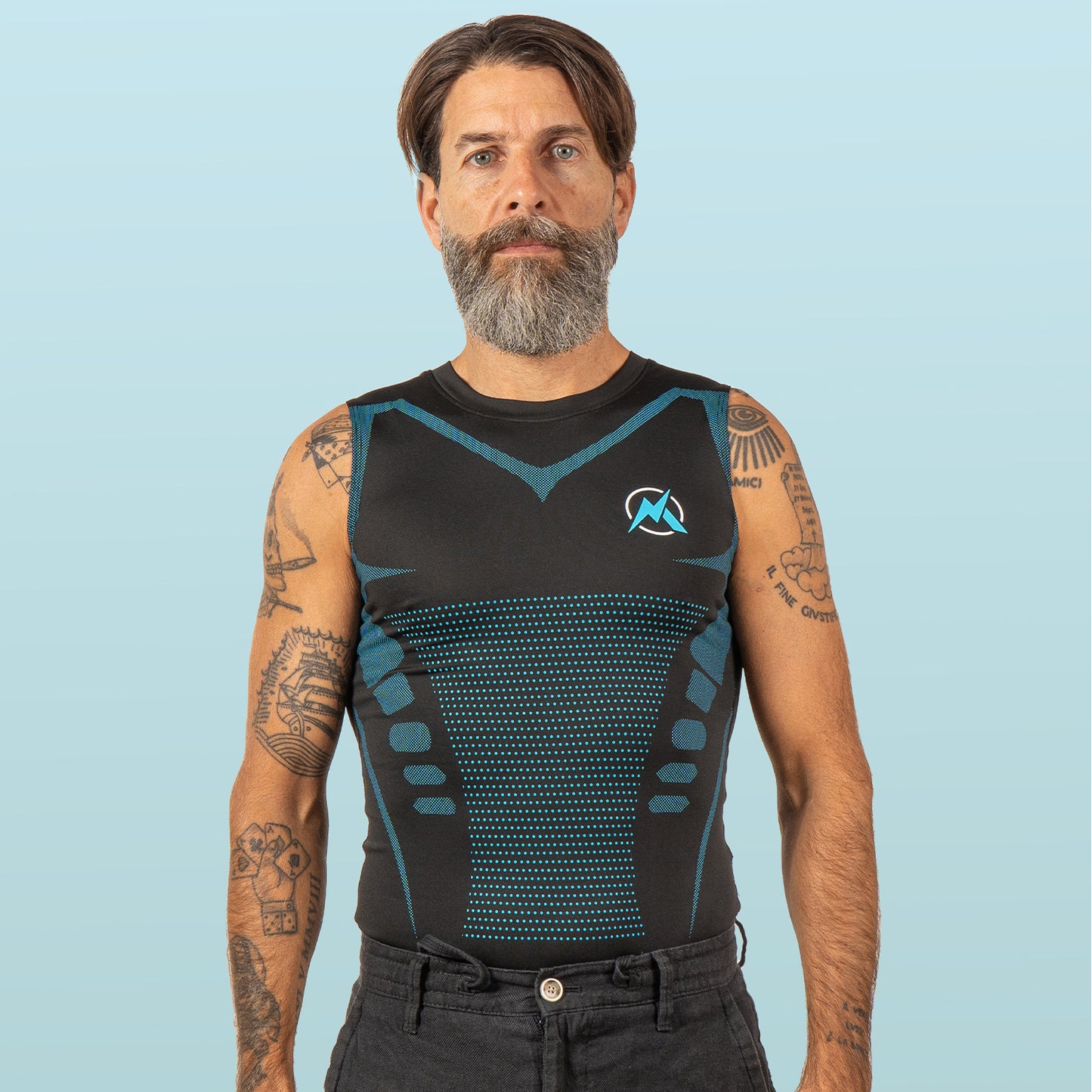
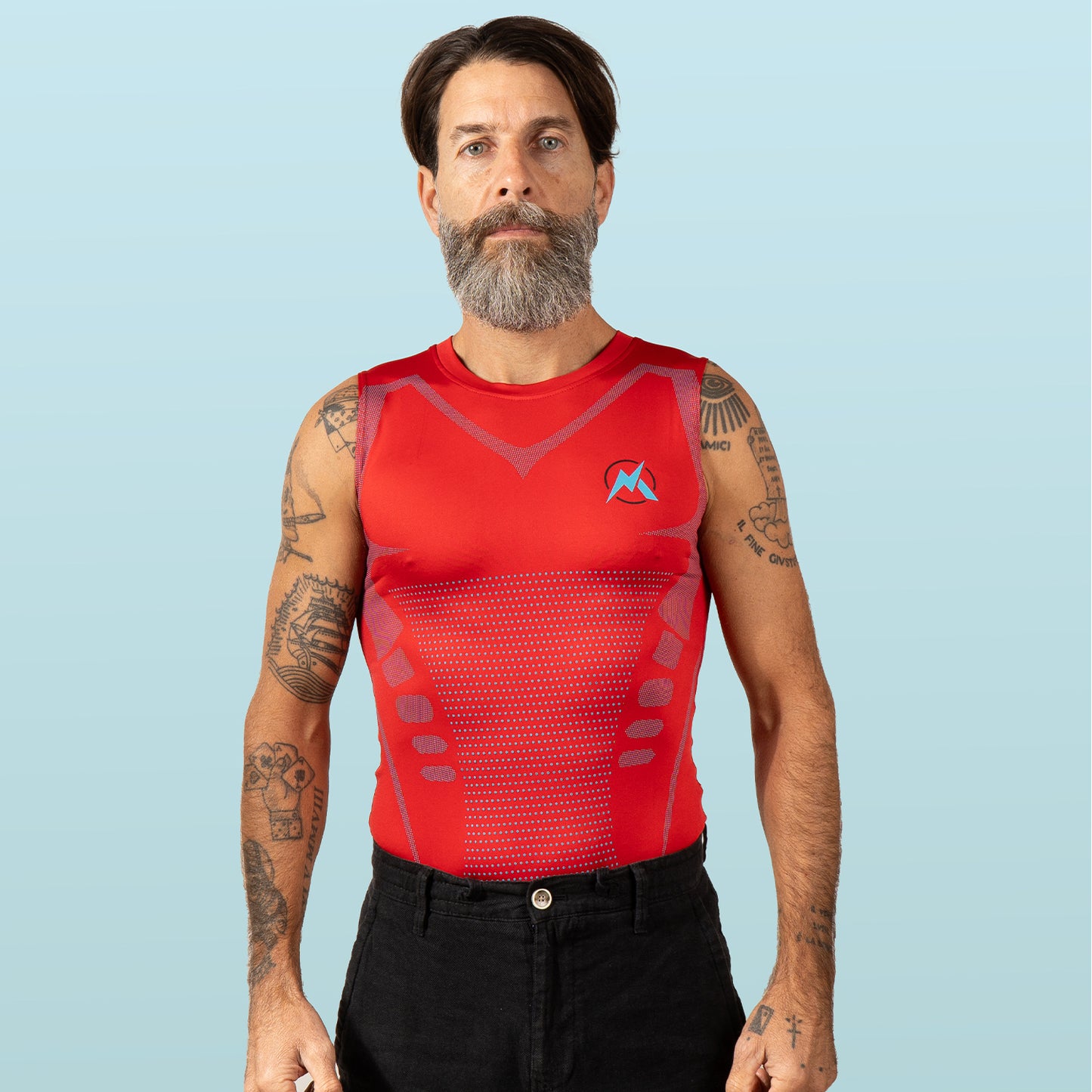
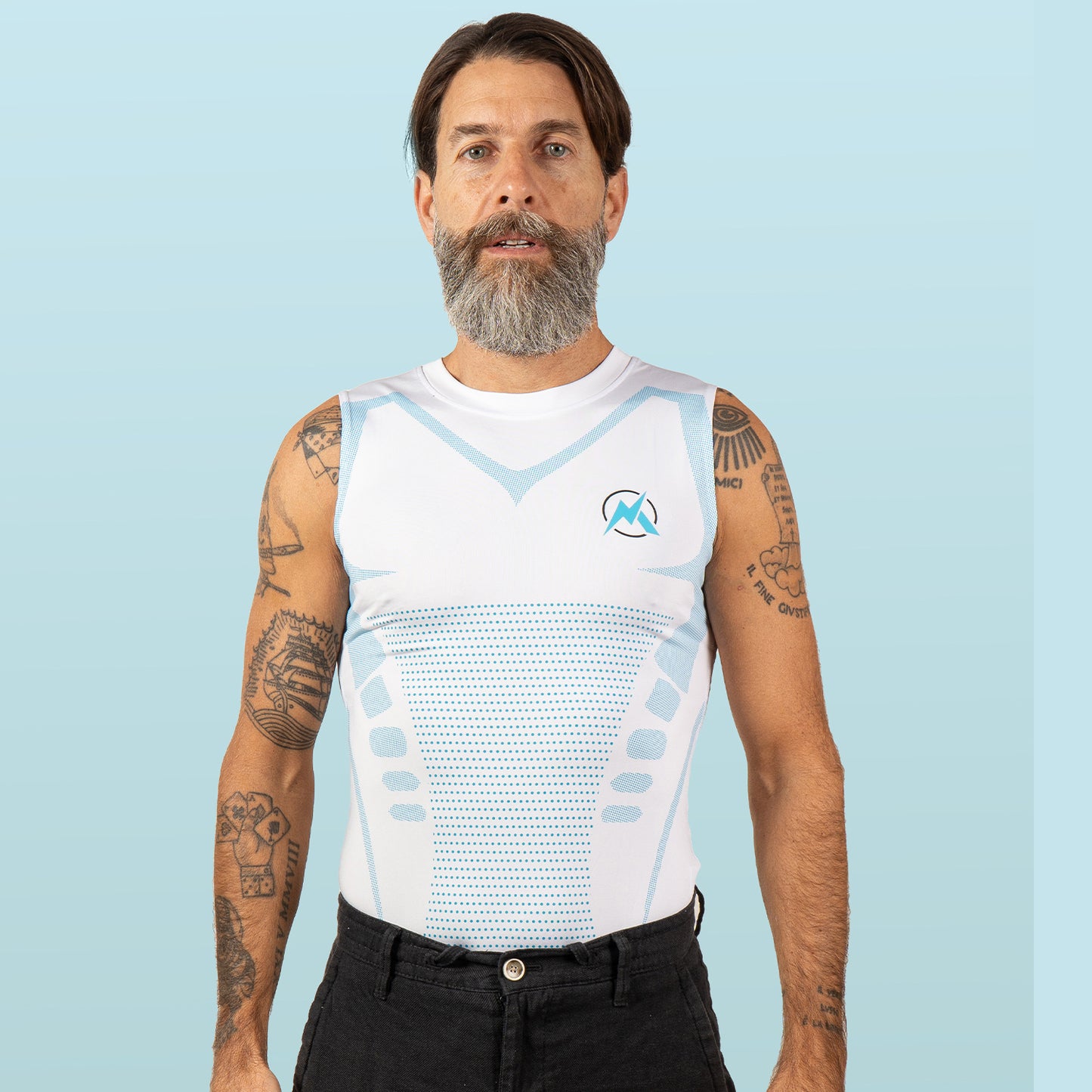
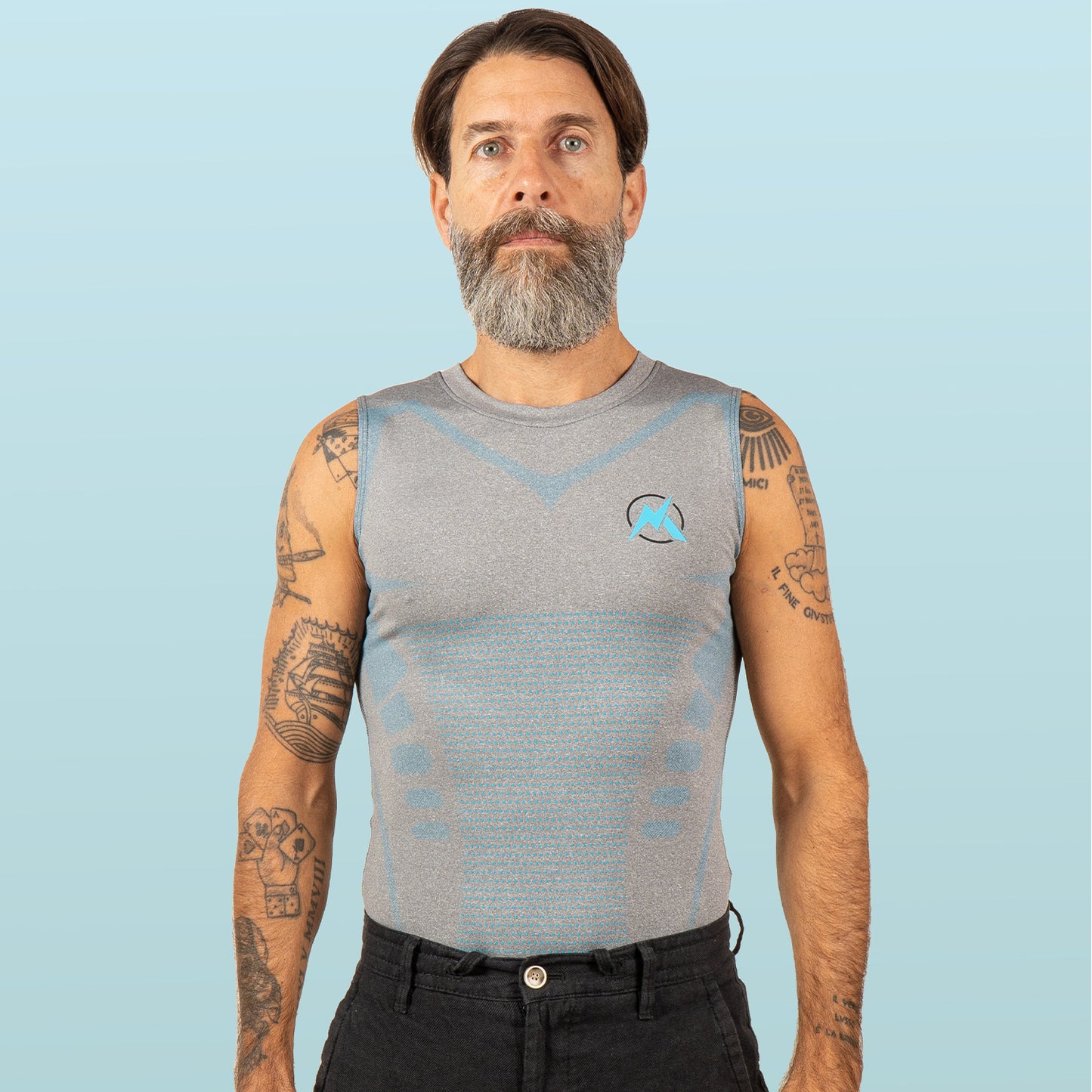
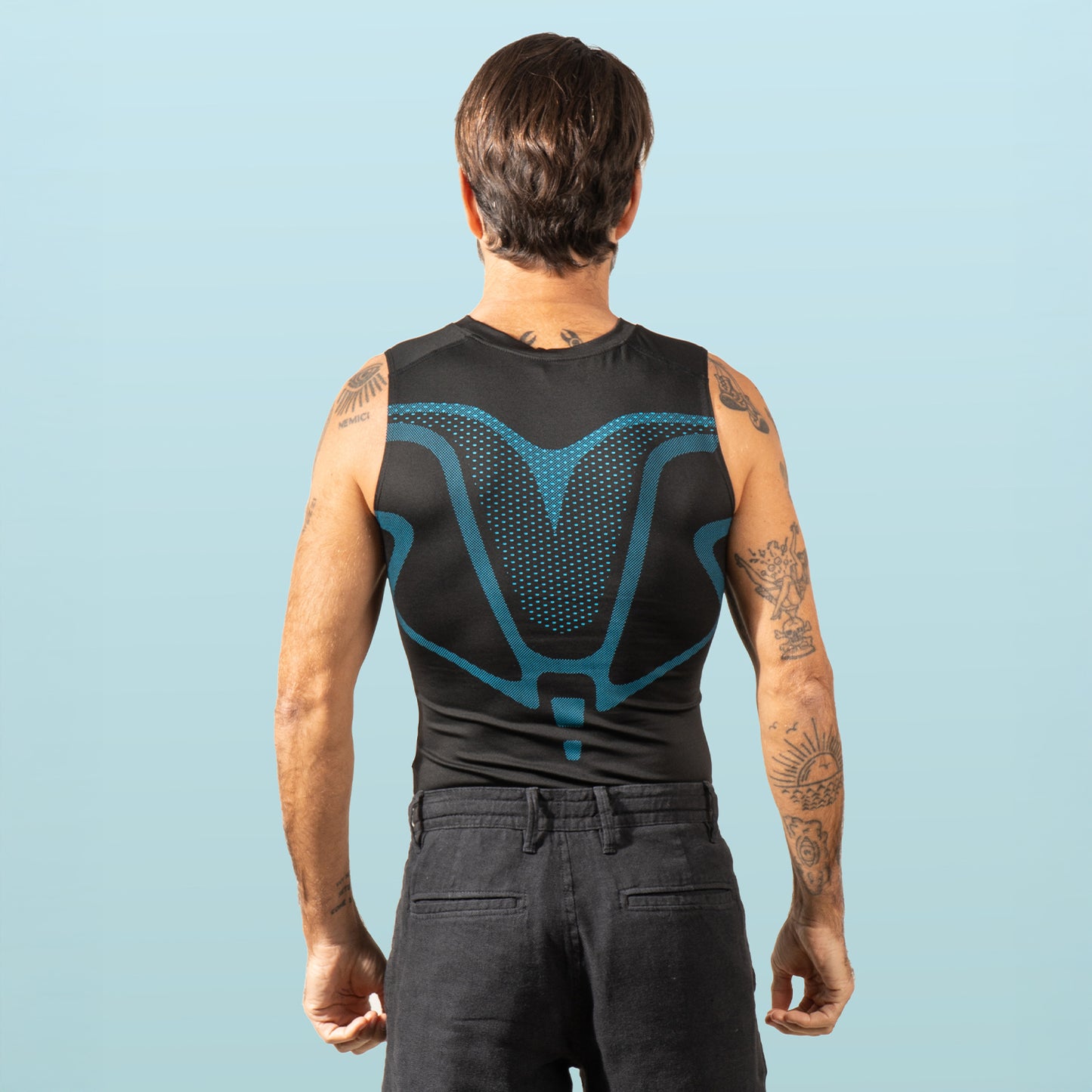
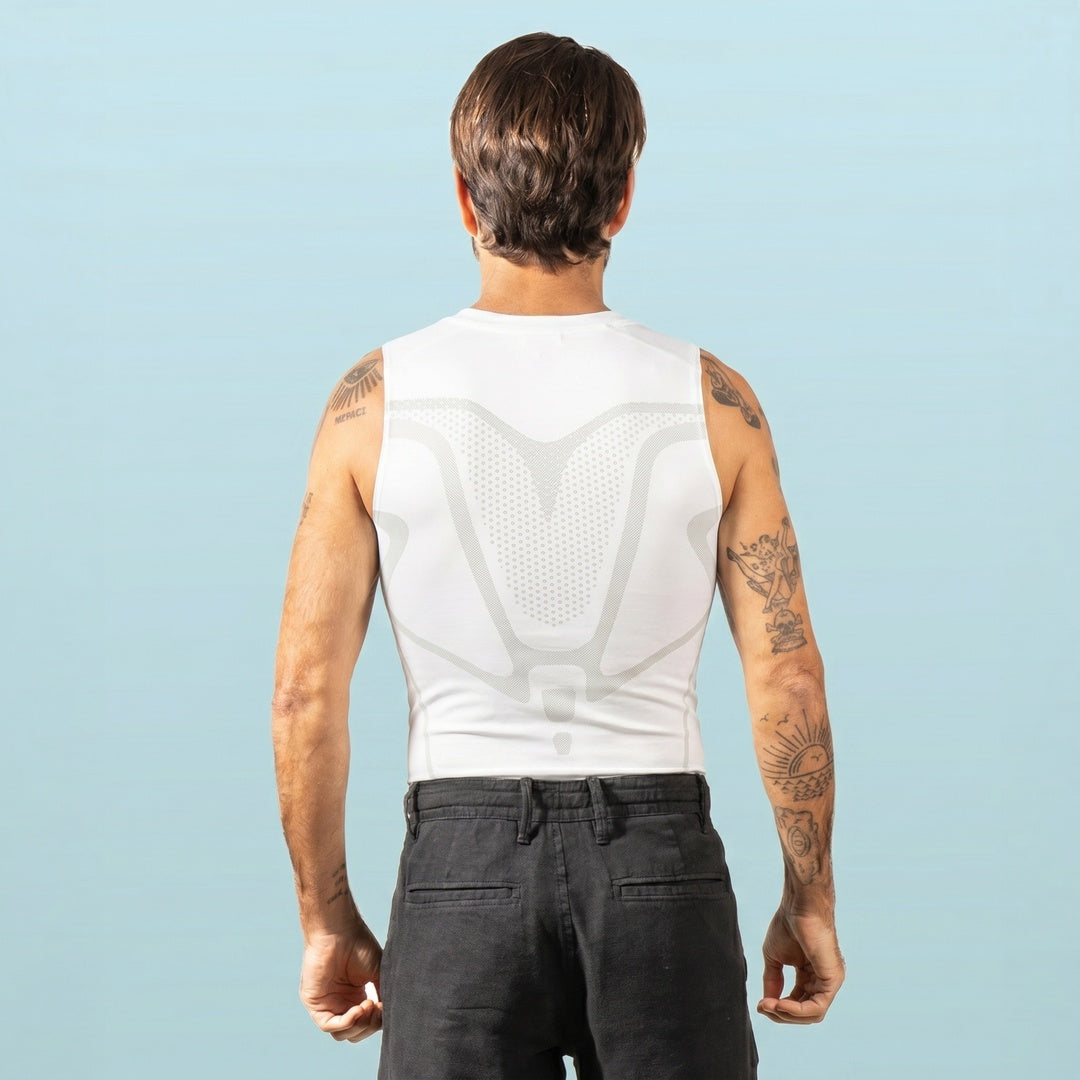
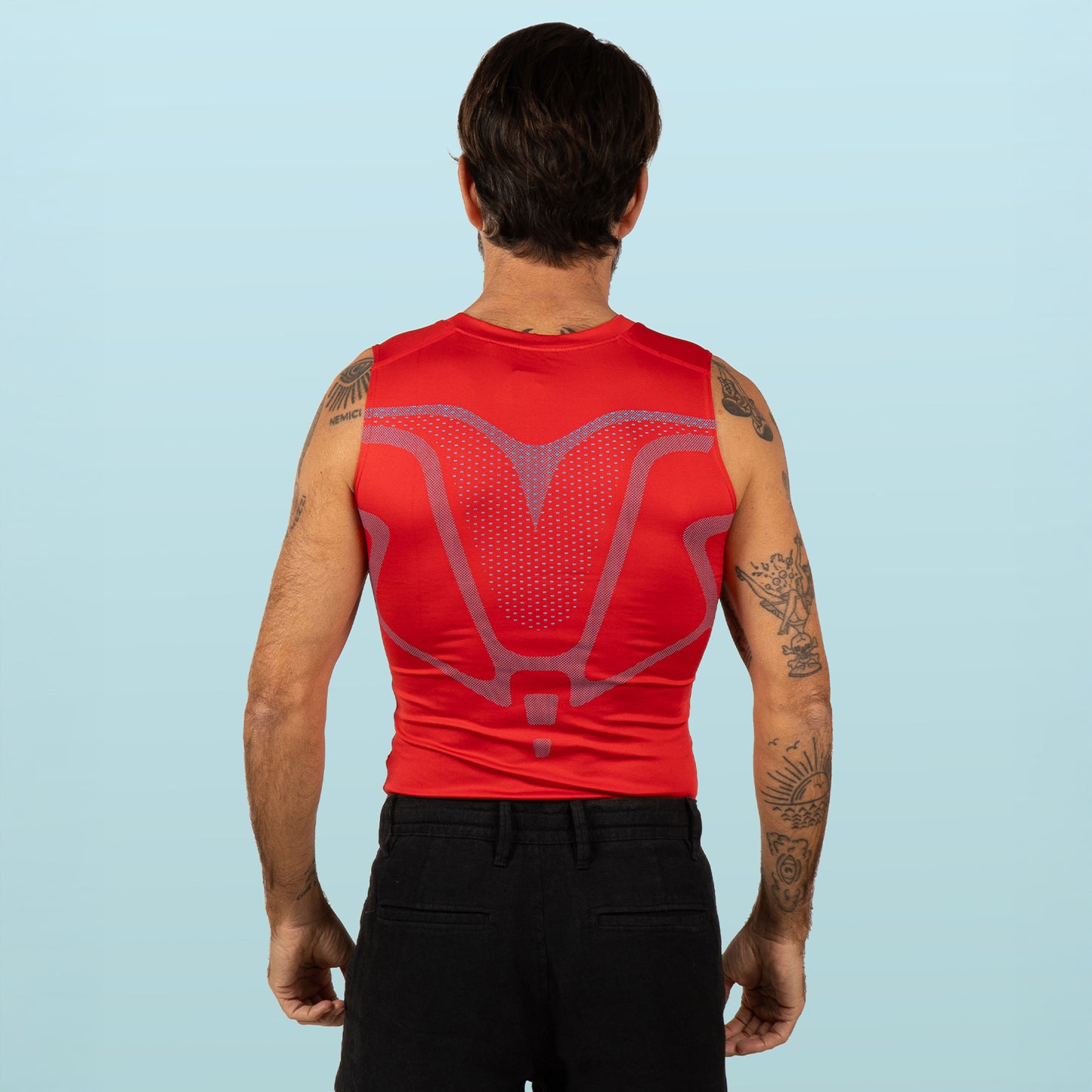
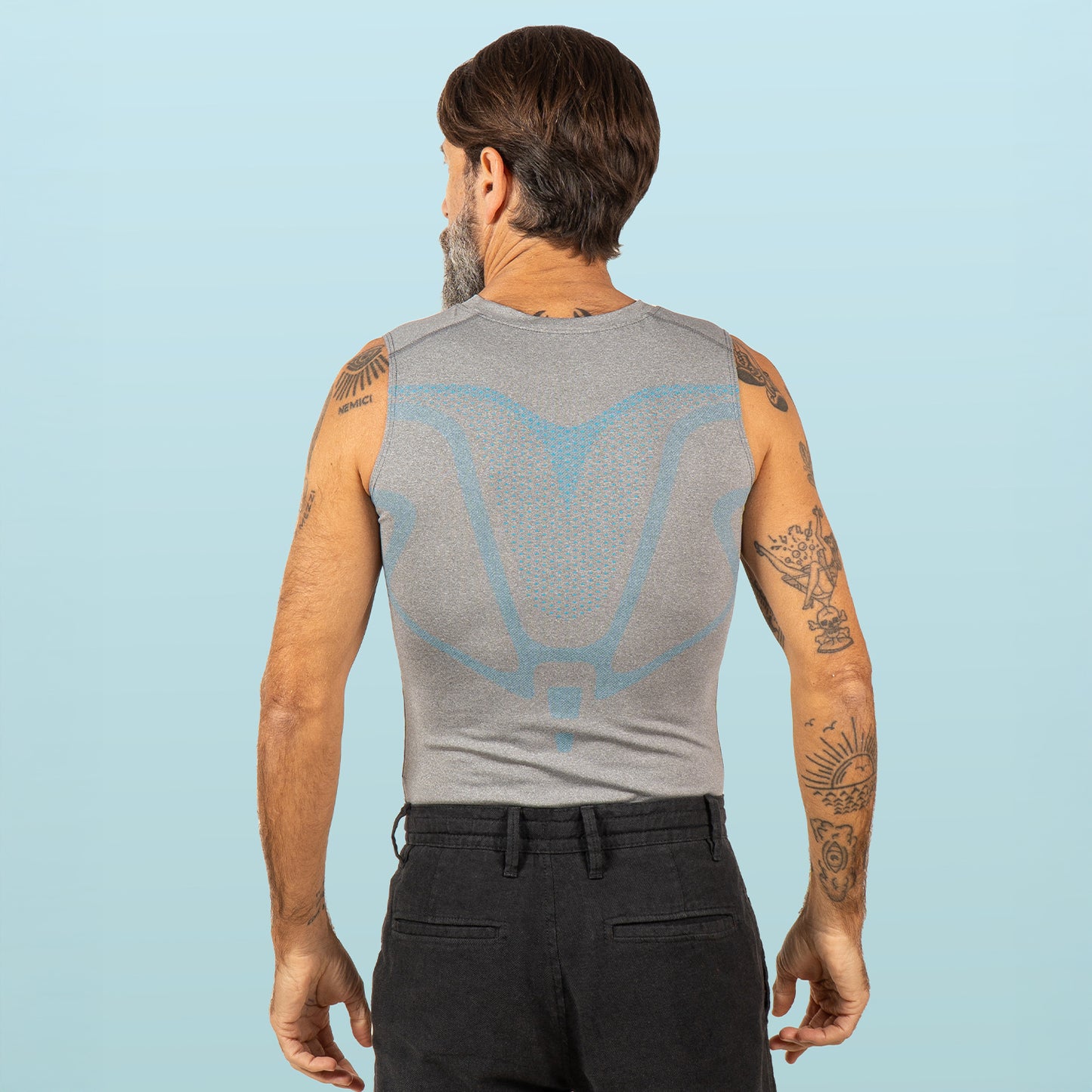
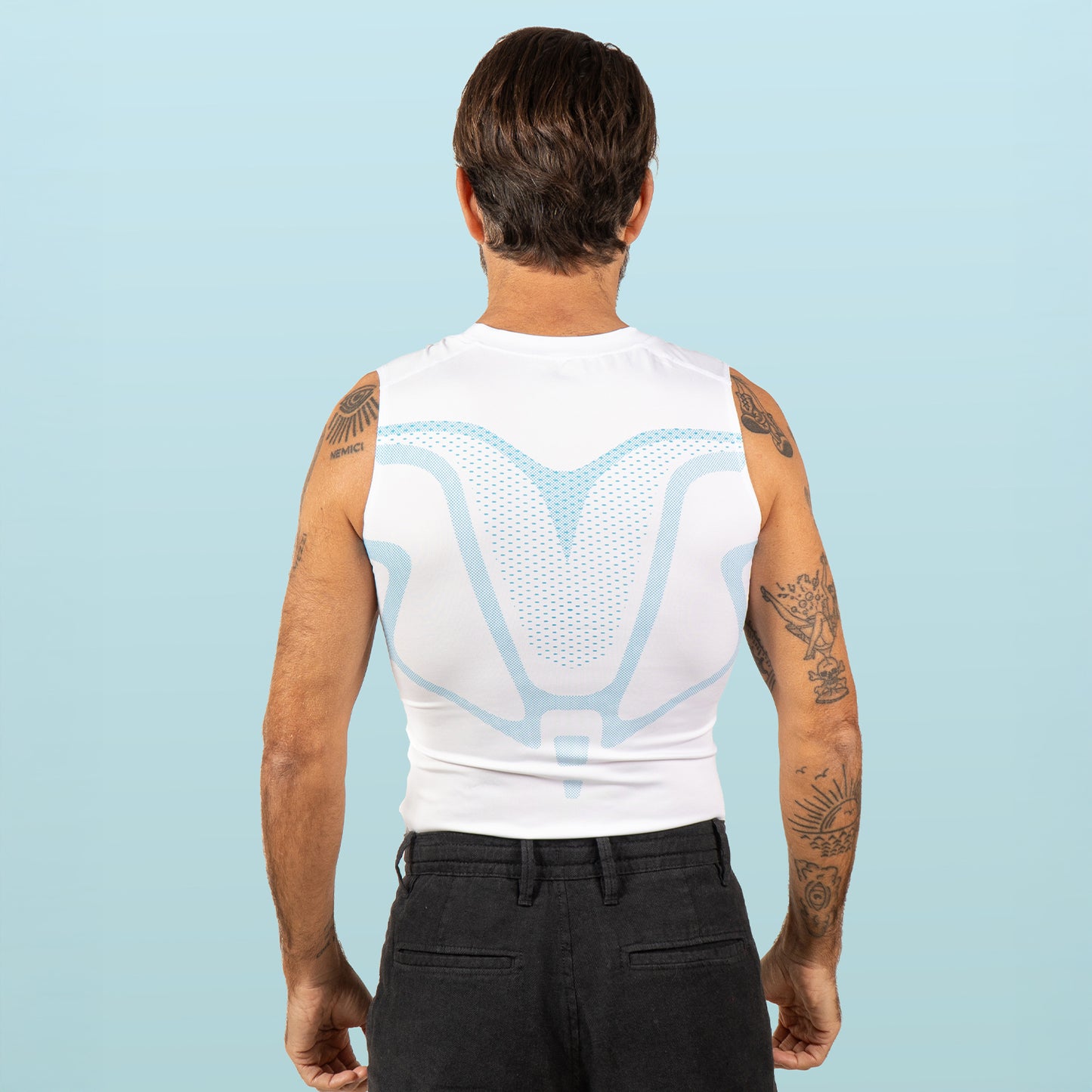
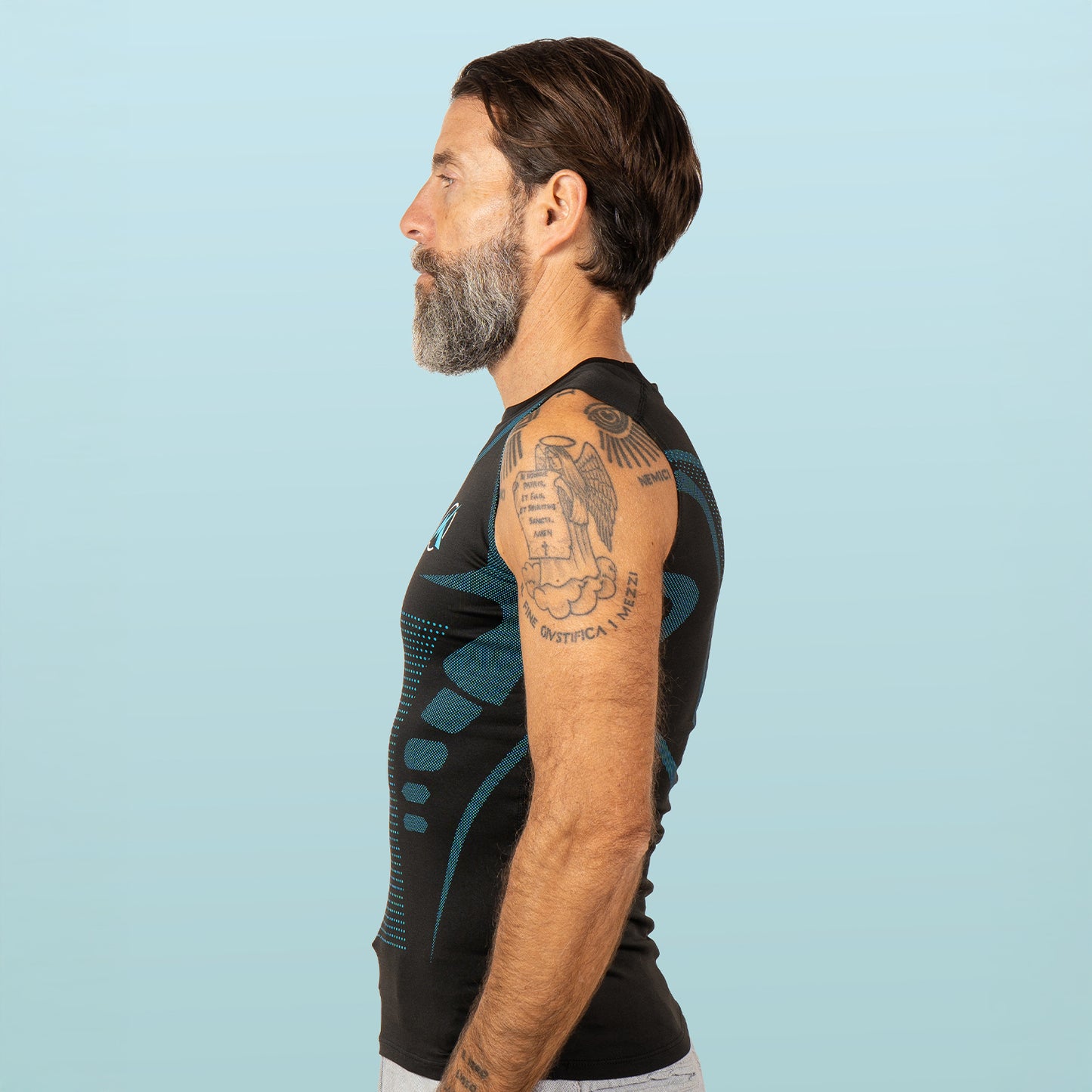
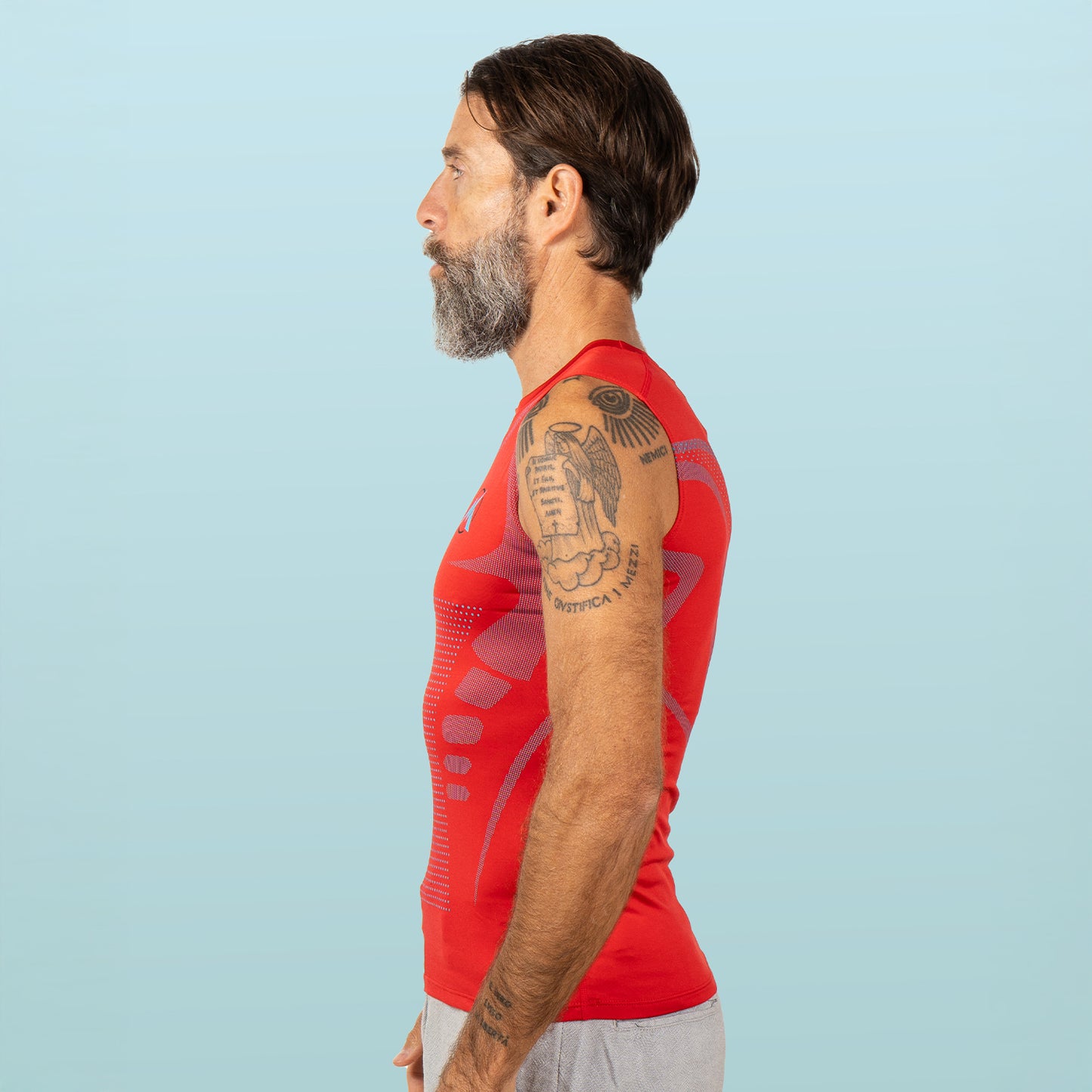
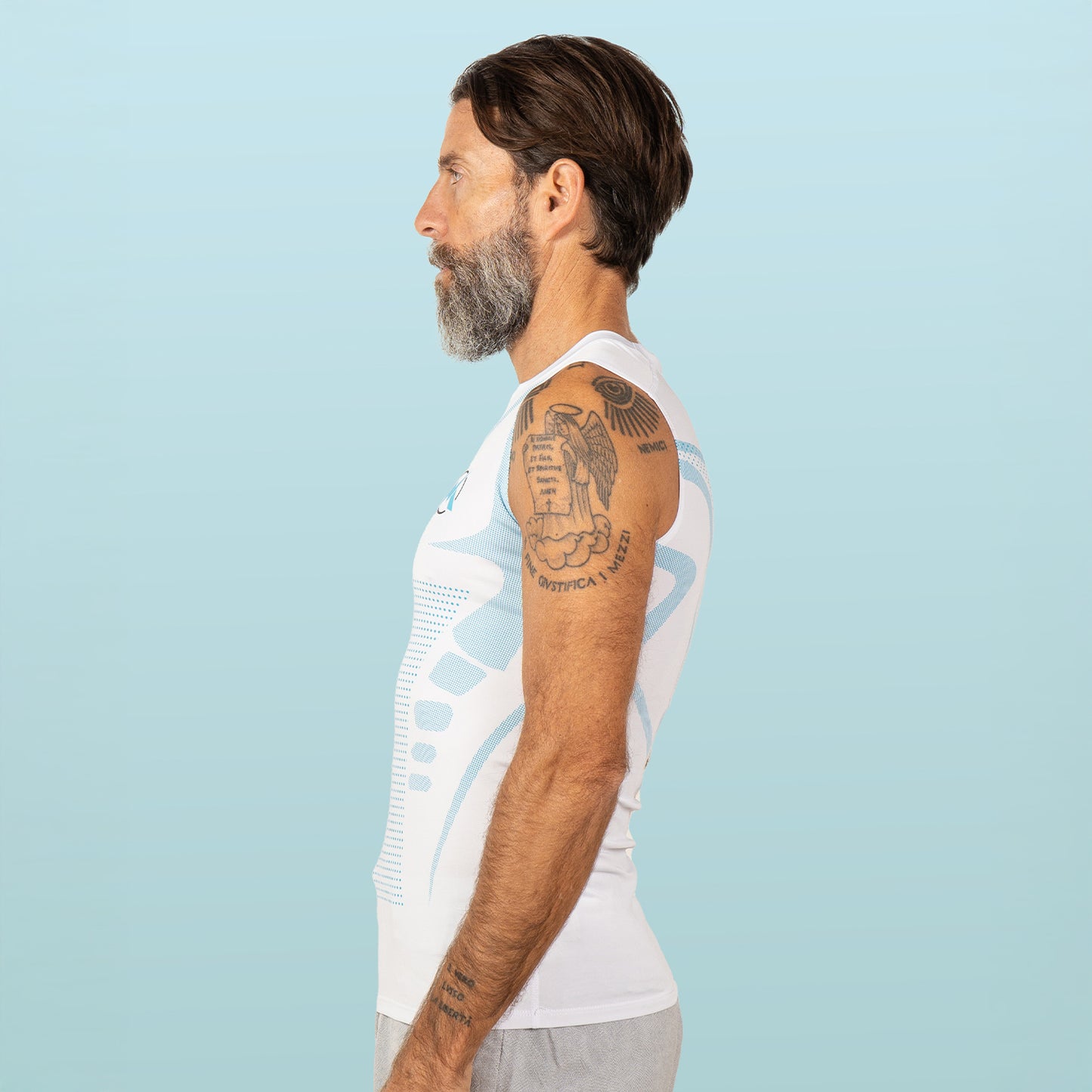
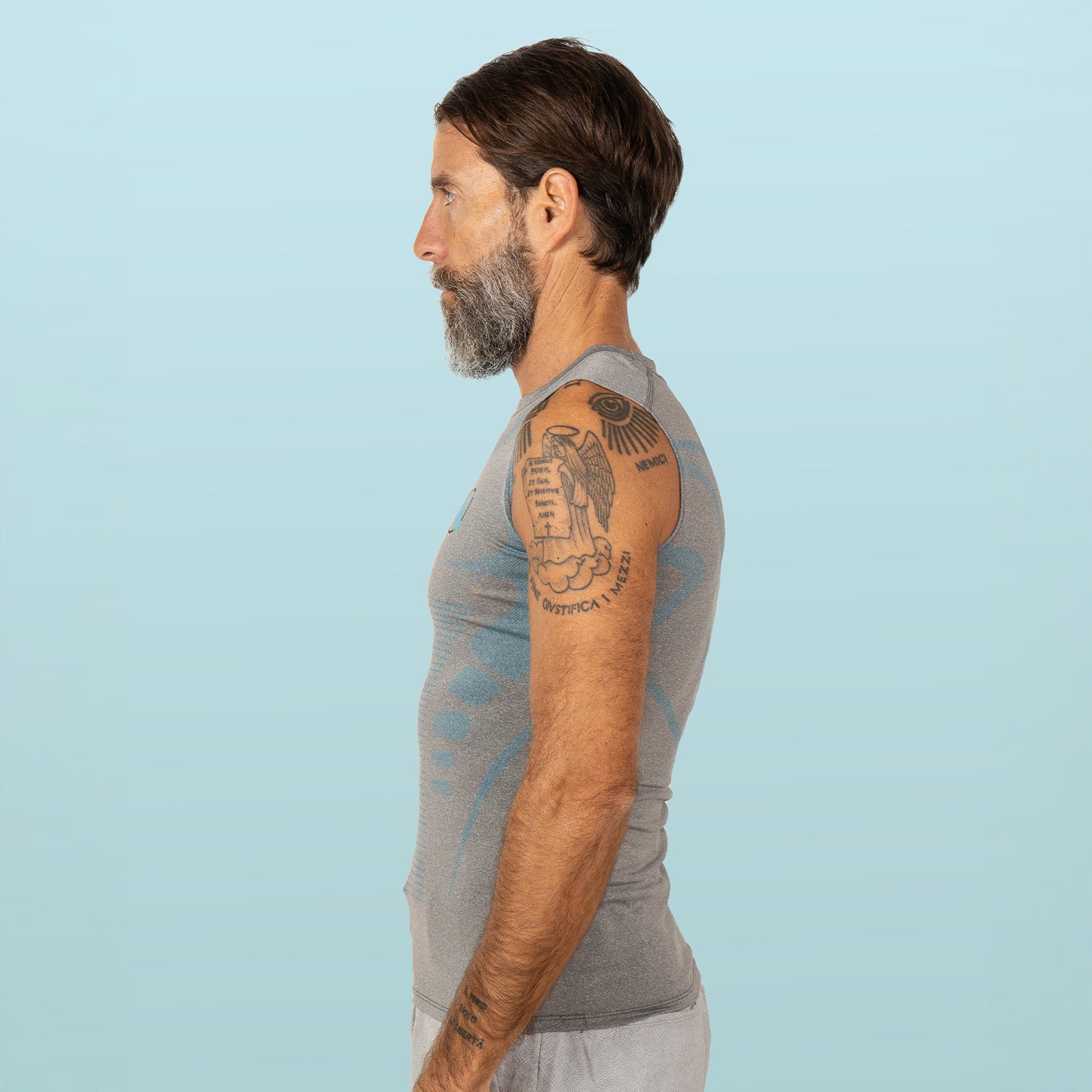
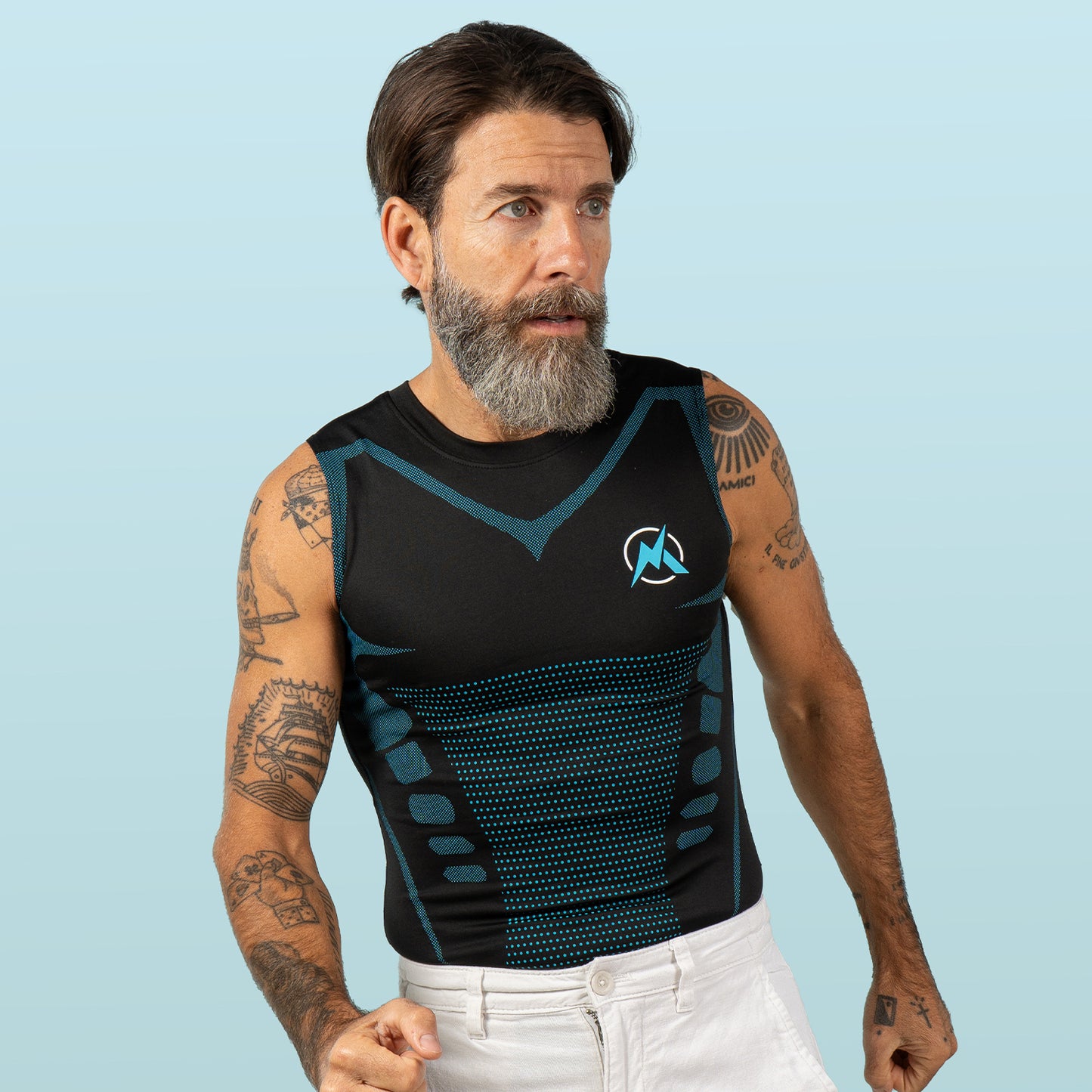
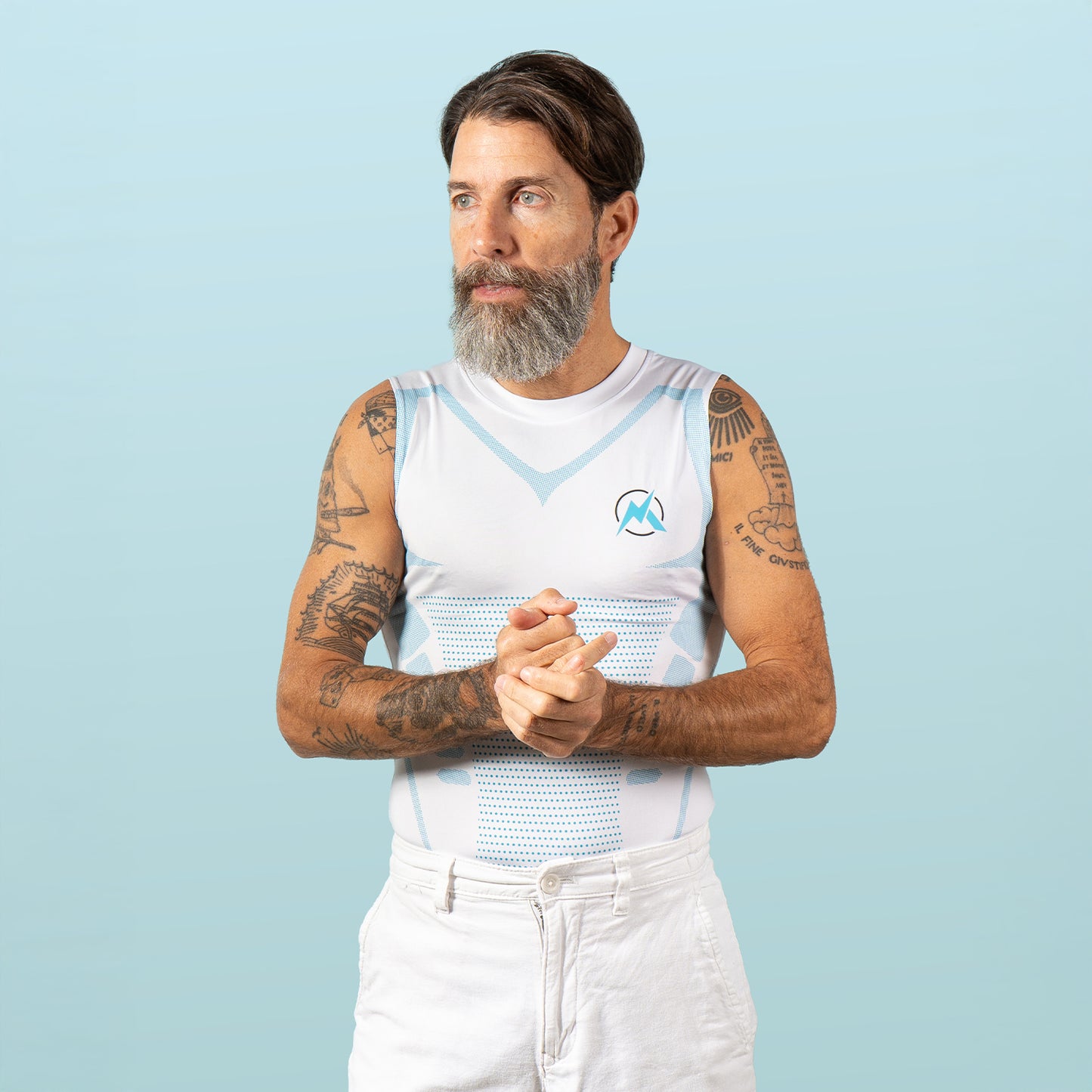
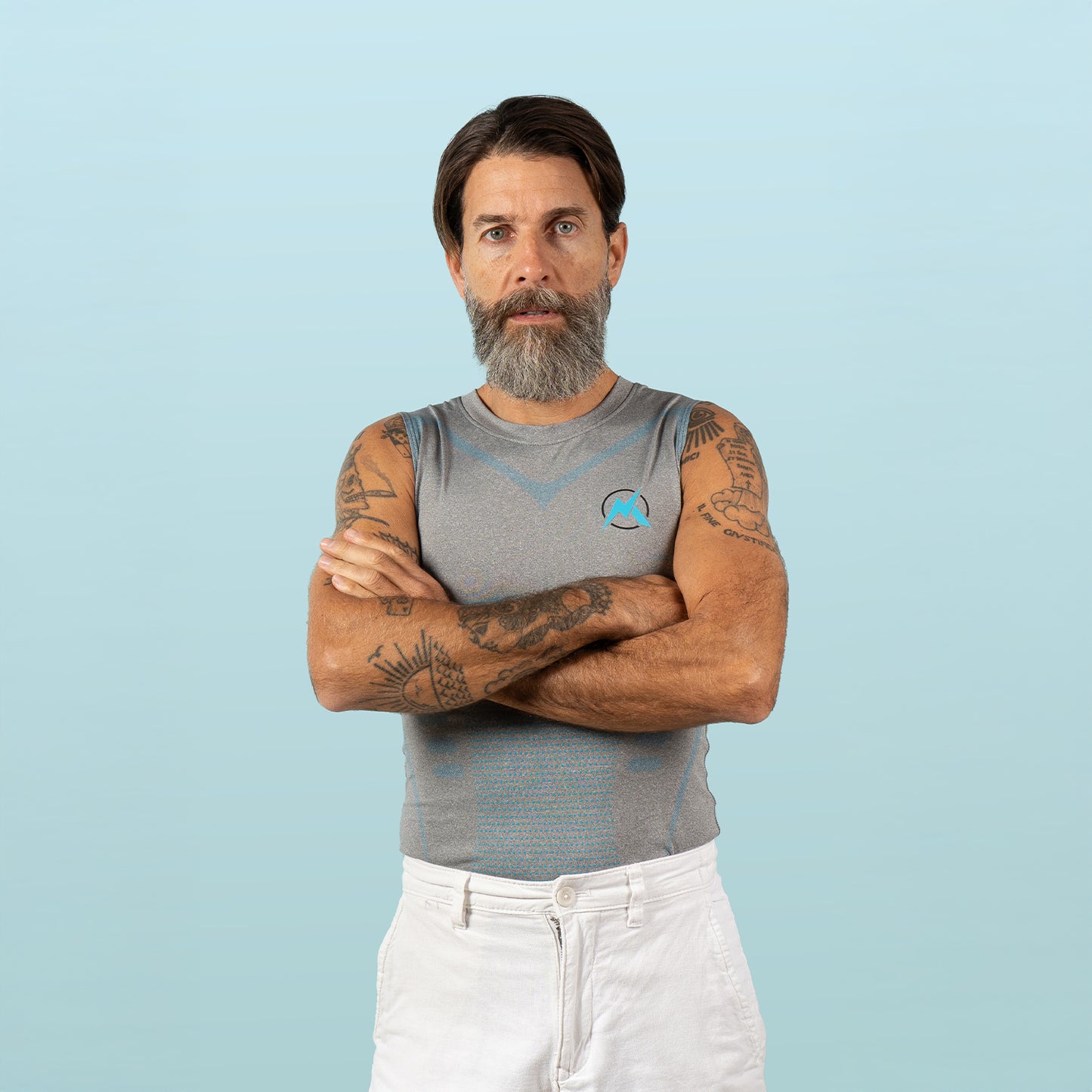
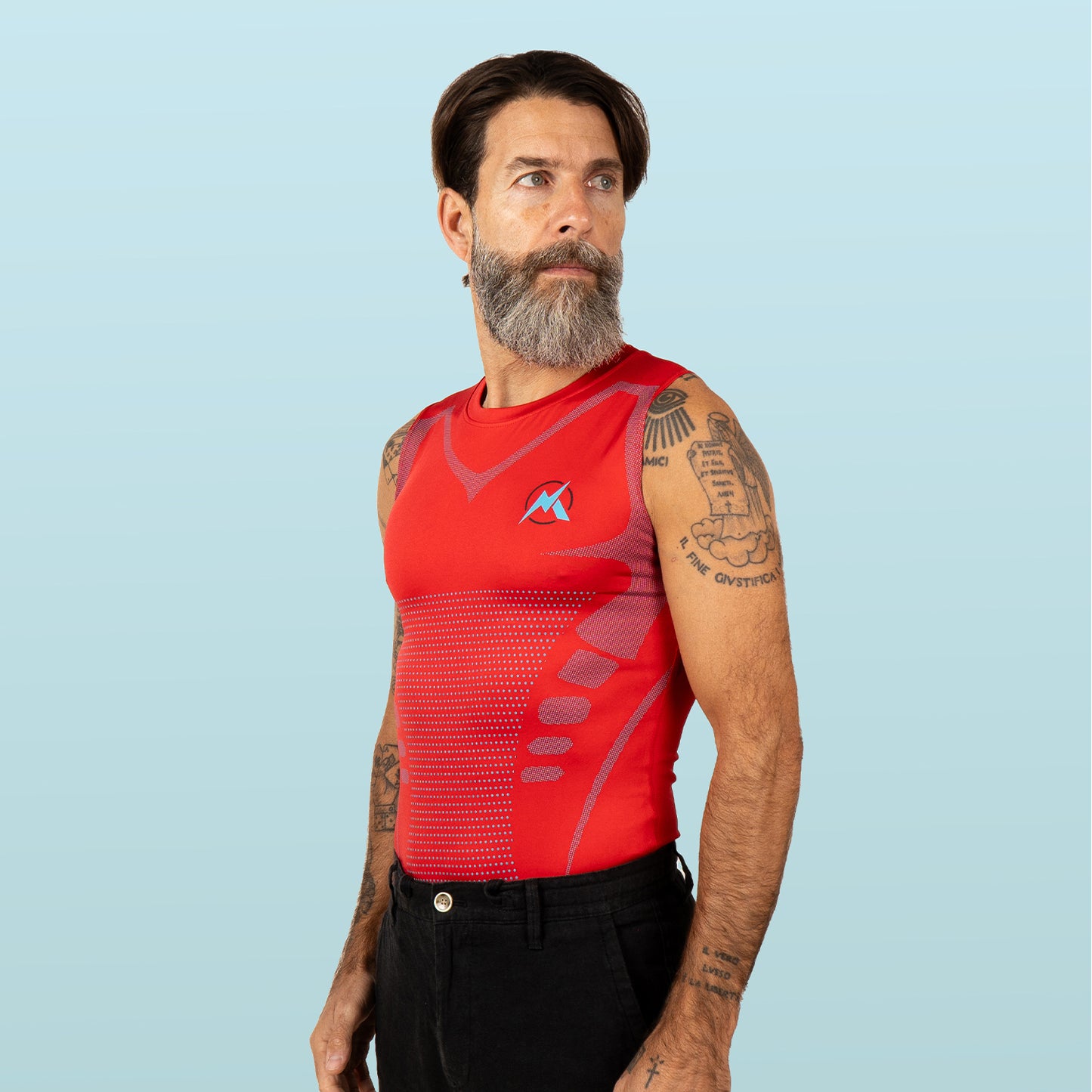
This is also where a piece of gear quietly earns its keep. A fitted compression base layer like VitaBoost is designed to provide consistent, gentle support across the torso, which gives you a steady physical reminder to keep the shoulders back and the core engaged through the day. Many men report feeling more upright and pulled-together wearing one — not because it does the work for you, but because it nudges you toward the posture you're trying to build. It's a small assist, not a magic fix, and that's exactly the point.
Dress for the man you are now
Both Harvard's counselors and nearly every confidence guide agree on something that sounds shallow but isn't: when you look good, you feel good. Personal appearance is one of the five core strategies Harvard lists for regaining confidence with age — and the fix is mostly about fit, not money.
The most common mistake men make in their 50s is dressing for a body they no longer have. Shirts a size too small that pull across the middle. Or, overcorrecting, tents that hide everything and add fifteen visual pounds. Clothes that actually fit your current frame do more for your silhouette than any diet you'll start on Monday.
A few moves that pay off immediately:
- Get the shoulders right first. A jacket or shirt that fits the shoulders can be tailored everywhere else. One that doesn't never looks right.
- Buy your real size. Sizing down to "motivate yourself" just creates bulges and discomfort. Honest fit reads as confidence; strained fit reads as denial.
- Mind the base layer. A smooth, supportive undershirt cleans up your line under everything else and stops fabric from clinging to the spots you'd rather it didn't.
- Tailor what you own. A $15 hem or taper turns a sloppy garment into one that looks made for you.
If you want the full playbook on this, we wrote a whole guide on how to look 10 pounds thinner without losing a single pound — most of it comes down to fit and posture.
Rebuild the engine underneath
Looking the part buys you confidence today. Building the body underneath makes it stick. Harvard's list includes "challenge yourself physically" for a reason: setting and hitting a physical goal hands you proof that you're still capable — and proof beats pep talks every time.
You don't need to train like you're 25. You need consistency and something that pushes back:
- Strength training twice a week. Resistance work is the single best defense against the muscle loss that quietly accelerates after 50. It also rebuilds the posture muscles from step three.
- Daily movement you'll actually repeat. A 20-minute walk you take every day beats a brutal workout you abandon in three weeks.
- One concrete goal. A 5K, a number on the bar, a month of walking a mile a day. Pick something you can finish, then finish it.
The point isn't the six-pack. It's the feeling of being capable in your own body again, which is the foundation everything else stands on.
Win the mental game
You can stand tall and dress sharp and still get talked out of it by the voice in your head. That voice tends to get loud after 50, and it lies.
The most useful mental shift is the one the research already handed you: stop treating your age as a verdict. When you catch yourself thinking "I'm too old to start that," remember the ageism studies — those thoughts measurably hurt your performance and your confidence without changing your actual ability one bit. Replace "men my age don't do that" with "I've got the experience to do this thoughtfully," and you've taken back the narrative.
Two more things that genuinely move the needle: focus only on what you can control — your training, your sleep, your appearance, how you show up — and let the rest go. And learn something new on purpose. Harvard's counselors note that being a beginner again, whether it's an instrument or a language, proves to yourself that you can still grow. Confidence is built from evidence, and new skills are evidence.
Don't do it alone
Here's the one men are worst at. As we age, friendships thin out — guys move, retire, get busy — and a lot of men quietly lean their entire emotional life on their spouse. That isolation is one of the biggest hidden drains on confidence there is.
The fix is unglamorous but reliable: rebuild a small circle of people who actually know you. Reconnect with one old friend this month. Join something with a recurring schedule so showing up isn't a daily decision. Volunteer or mentor — Harvard specifically recommends it, because using your experience to help someone reminds you exactly how much you still have to offer. And if the confidence dip has tipped into something heavier, talking to a counselor isn't weakness; it's maintenance.
The bottom line: the confident man you're trying to get back to isn't behind you. The research says he's right where you are now — you just need to stand up straight, dress like you mean it, keep the body moving, and stop letting a number tell you what you can't do.

Frequently asked questions
How can a man be more confident in his 50s?
Start with the things you directly control. Stand tall and fix your posture, wear clothes that fit your current body, and train consistently. Then work the mental side: focus on what you can control, learn a new skill, and stay socially connected. Small, repeatable wins rebuild confidence faster than motivation.
Why do men lose confidence as they age?
Usually it's a mix of physical change (lower testosterone, weight gain, collapsed posture) and lost roles — being the provider, the boss, the busy social one. Harvard's experts note the dip after 60 is driven largely by losing those status-giving roles, not by any real drop in your worth or ability.
At what age are men most confident?
Research suggests confidence and self-esteem peak in middle age. A large study of people aged 25 to 104 found self-confidence rises through adulthood, peaks around midlife, and only starts declining after about 60. In other words, your 50s should be one of your most confident decades.
Is it normal to lose confidence as you get older?
Some dip is common, especially after major life changes like retirement, health issues, or an empty nest. But it's not inevitable, and it's largely reversible. Much of what erodes confidence in your 50s is physical and external — posture, fitness, appearance — which means it responds quickly to effort.
What makes a man more attractive in his 50s?
Presence, mostly. Good posture, clothes that fit, visible self-care, and the calm self-assurance that comes from experience read as attractive at any age. It's less about chasing a younger look and more about carrying yourself like a man who's comfortable in his own skin.
Sources
- Harvard Health Publishing — Regain your confidence
- Mayo Clinic — Testosterone therapy: Age-related decline in testosterone
- American Psychological Association — Self-esteem peaks in middle age (Orth, Trzesniewski & Robins, 2010)
Your 50s are built for confidence — the gear should help, not get in the way. VitaBoost gives you steady, all-day support that keeps you standing tall and sharp under whatever you're wearing. Buy one, get one free.