By Owen Blot · Founder, Maynox · Last updated May 26, 2026
- Why your 40s feel different (it's not what you think)
- The 6 real shifts happening inside your body
- The biggest myth: your metabolism didn't crash
- What you can fix this week (the visible levers)
- What takes a season to fix
- What doesn't work (skip these)
- The honest sequence: where to start
- Frequently asked questions
You woke up this morning and something didn't fit right. Maybe the dress shirt pulled at the buttons. Maybe your lower back was talking to you again. Maybe a photo from five years ago popped up on your phone and you did a double-take.
If you're a man in your 40s, this isn't your imagination. Real things are happening to your body — six of them, specifically — and the reason it feels like everything shifted at once is that most men ignore the early signals in their 30s, then hit a wall in their 40s when several systems start drifting in the same direction.
Here's the part nobody tells you: most of what changes is reversible, and the levers that move fastest aren't the ones the supplement industry sells you. This is the honest map of how a man's body changes after 40 — and the order to attack it in if you want your reflection to start arguing back.
Why your 40s feel different (it's not what you think)
Most men in their 40s describe the same thing in different words. The body didn't "fail" — it just stopped responding the way it used to. Skip a workout for two weeks and you can feel it. Eat the way you ate at 28 and the belt notch moves. Sleep six hours and the next day costs you double what it used to.
That feeling is real. But the explanation is more boring — and more fixable — than "your metabolism crashed." Several body systems are drifting in the same direction at the same time, and once you see the map, the fix gets simple.
The next section breaks down each shift individually. Then we'll separate what you can fix this week from what takes a season — because conflating the two is why most men give up.
The 6 real shifts happening inside your body
1. Testosterone starts a slow leak
After age 30, testosterone levels typically decline by about 1% per year in men, according to the Mayo Clinic. By 45, you're roughly 15% below your peak. By 55, around 25%.
It's not a cliff. It's a slow drip. And on its own, that 1% a year doesn't ruin anything. What it does is make every other lever — sleep, training, food — a little less forgiving than it used to be.
2. Muscle mass starts melting (sarcopenia)
Your body loses muscle with age whether you train or not. The NIH puts the rate at 3 to 8 percent per decade after age 30, and the rate accelerates after 60. By 40, most men have lost some lean tissue without noticing it, because fat slid in to cover the gap.
The number on the scale stays similar. The shape in the mirror does not. This is the single most important shift to understand, because almost every other change downstream — slower metabolism, soft midsection, weaker back — traces back to it.
3. Fat redistributes to your midsection
This is the change other people see first. After 40, fat moves. It comes off your face, your arms, your legs — and lands in your midsection as visceral fat, the deep belly fat that wraps around your organs.
The Cleveland Clinic notes that visceral fat is more metabolically active and more dangerous than the soft fat just under your skin. It drives insulin resistance, raises cardiovascular risk, and is exactly the fat that makes a 175-pound man at 30 look completely different than a 175-pound man at 45. Same weight, different body.
4. Posture rounds forward
Spend 10 years sitting at a desk and looking down at a phone, and your body adapts. Chest muscles shorten. Upper-back muscles weaken. Head drifts forward. By 45, the average man stands measurably shorter than he did at 35 — not because his bones shrunk, but because his posture collapsed forward. We unpacked exactly why this happens, decade by decade, in why men slouch with age.
The Cleveland Clinic reports that holding the head at a 15° forward tilt puts about 27 pounds of effective load on the neck, versus 10–12 pounds in neutral. Multiply that by every hour you spend on a screen.
5. Recovery slows down
You can still train as hard. You just can't train as often. Soreness lingers an extra day. Sleep gets choppier. A late night costs you more than it did a decade ago.
This isn't weakness — it's a real shift in how fast your body clears inflammation and repairs tissue. Most men in their 40s adapt by training smarter, not less. The number of weekly hard sessions stays the same; the spacing between them widens.
6. The way you carry yourself reads "older"
This is the change men don't measure but everyone notices. Slumped shoulders, forward neck, soft posture, hesitation in your stride — these signal age long before any wrinkle does.
It's also the fastest lever you can pull. More on that in section 4.
The biggest myth: your metabolism didn't crash
You've heard it a thousand times: "metabolism slows after 30." Personal trainers say it. Diet books say it. Your buddy at the office says it.
It's not true — or at least not in the way most people think.
A landmark 2021 study published in Science by Pontzer and colleagues analyzed energy expenditure across 6,400+ people from infants to age 95. The finding: daily energy expenditure stays remarkably stable from age 20 to age 60. It only starts dropping by roughly 0.7% per year after 60.
So why does it feel like your metabolism tanked at 40?
Two reasons. First, you lost some muscle (sarcopenia, point #2 above), and muscle burns more calories at rest than fat. Second, you got busier — kids, career, less play — and your daily movement quietly dropped without you noticing.
Your "slow metabolism" is mostly a slow week. That distinction matters, because the fix isn't a fat burner — it's getting muscle back and putting movement back in your day. We unpacked the full story of what actually drives middle-age weight gain in our honest playbook on middle-age weight gain.
What you can fix this week (the visible levers)
Here's where most articles bury you in a 12-month plan. We're going to do the opposite. These three changes pay off in days, not seasons, and they fix what other people actually see.
Stand taller (the 60-second posture reset)
Your body changes after 40, but the change that ages you visually the most isn't fat — it's posture. Standing tall doesn't take training. It takes a cue.
Try this right now: pull your shoulder blades down and slightly back. Tuck your chin a quarter-inch. Tighten your midsection by 20%. Lift the top of your head toward the ceiling.
That's how you stood at 25. Your body forgot. Reminding it three times a day rebuilds the muscle memory in about two weeks. For the fuller plan, our 4-layer posture fix covers what to do at the desk, in the car, and during sleep.

Layer smarter (compression undershirt, not a diet)
You can spend six months losing 12 pounds, or you can put on a compression undershirt tomorrow morning and look 8 pounds lighter under your dress shirt by lunch. Both work — they just operate on different timelines.
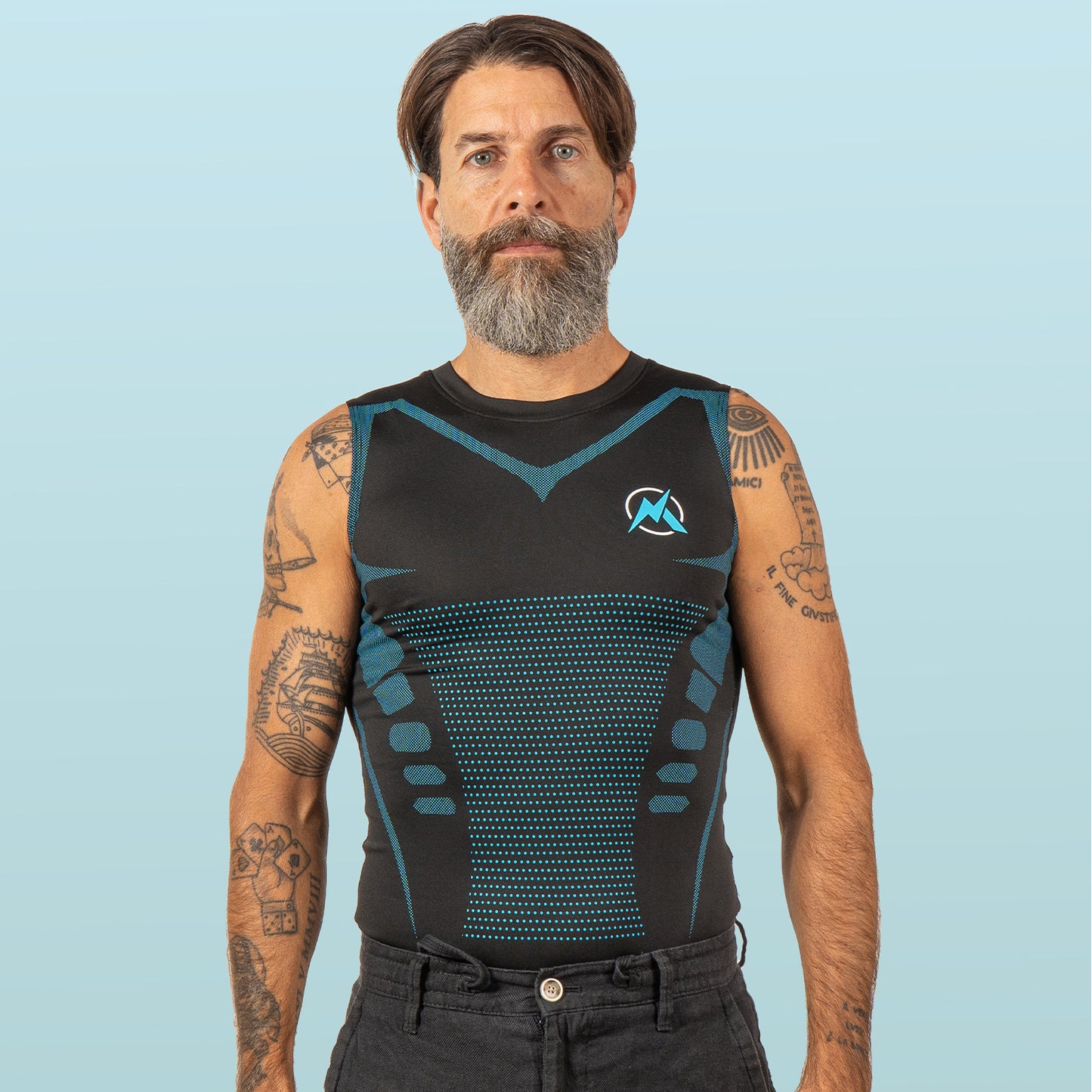
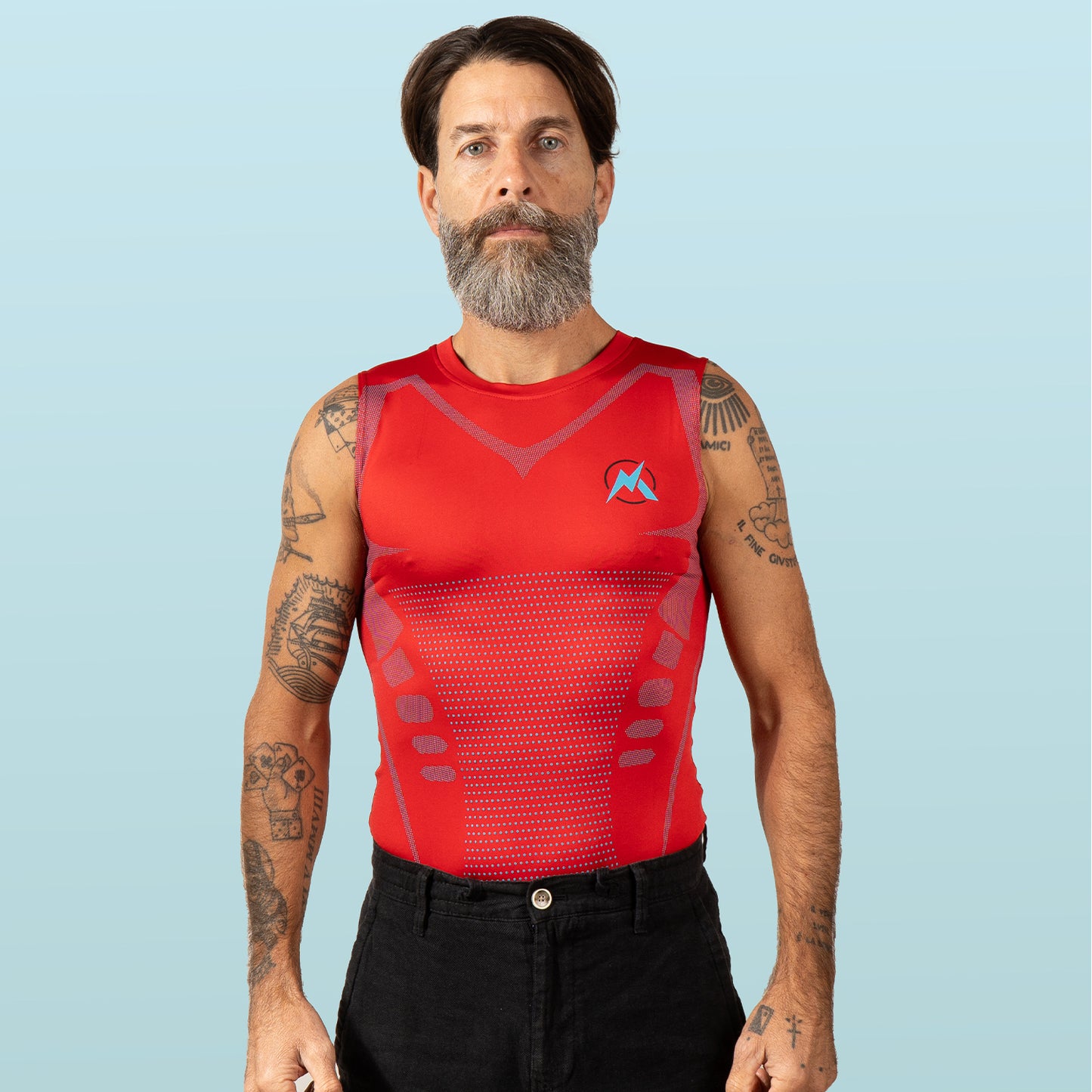
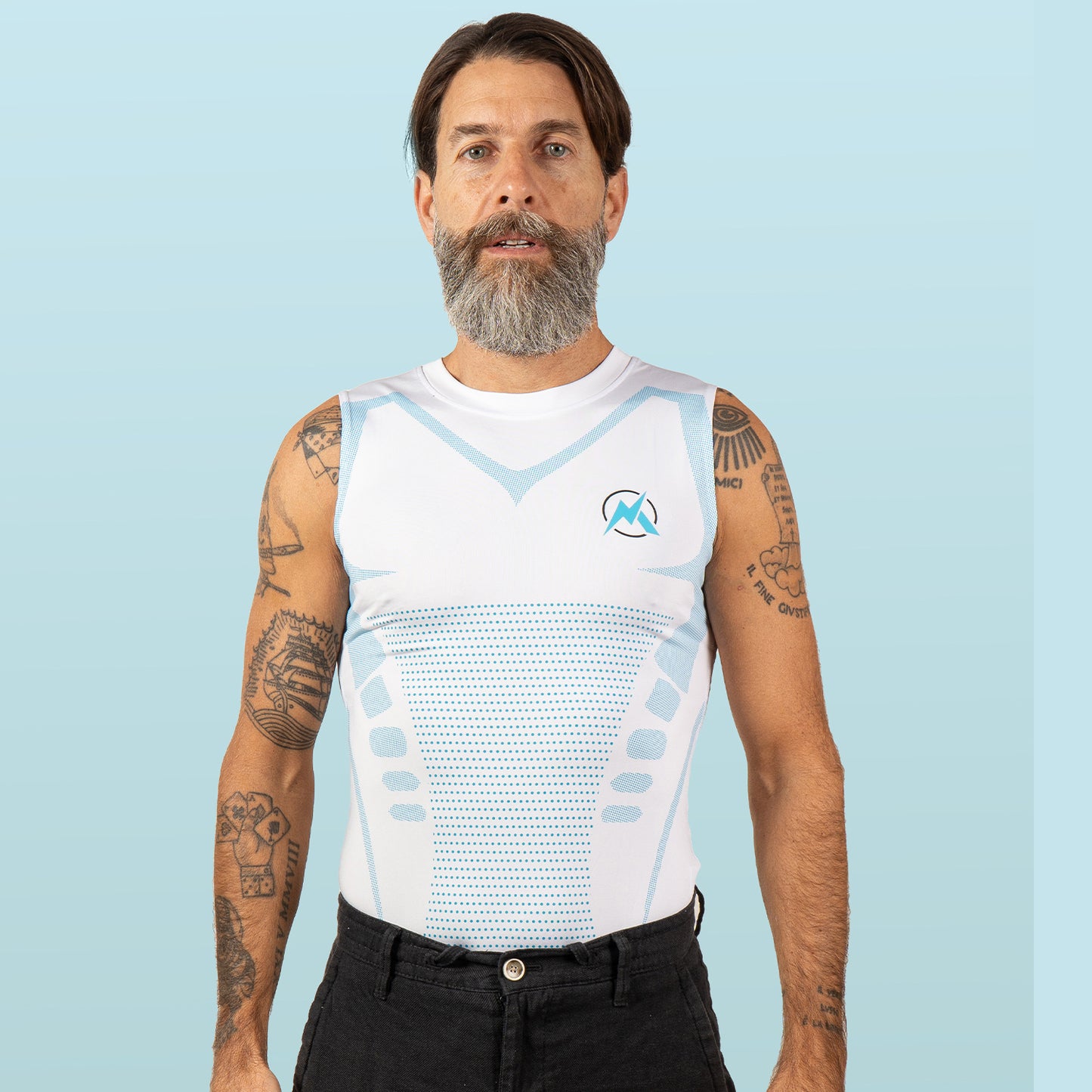
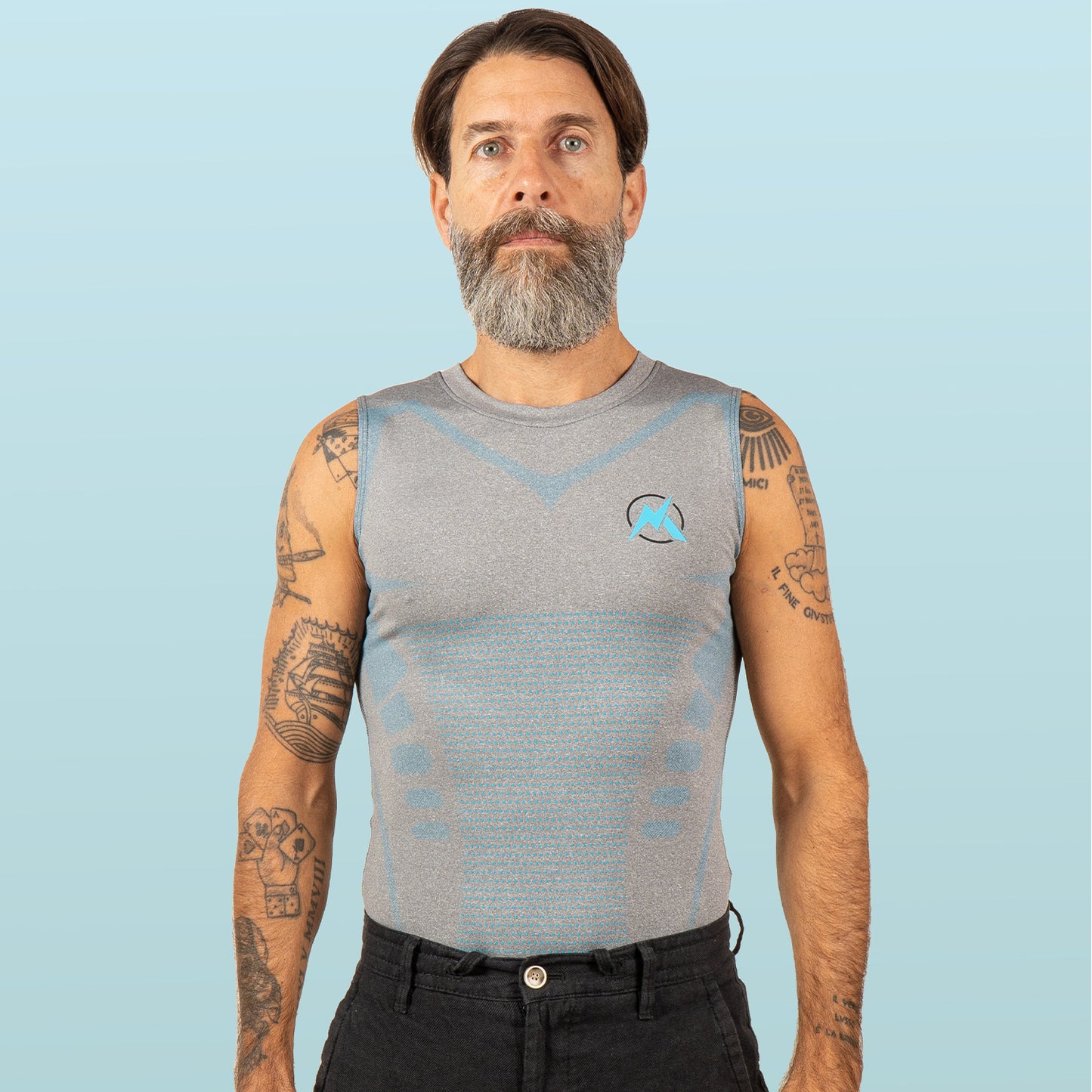
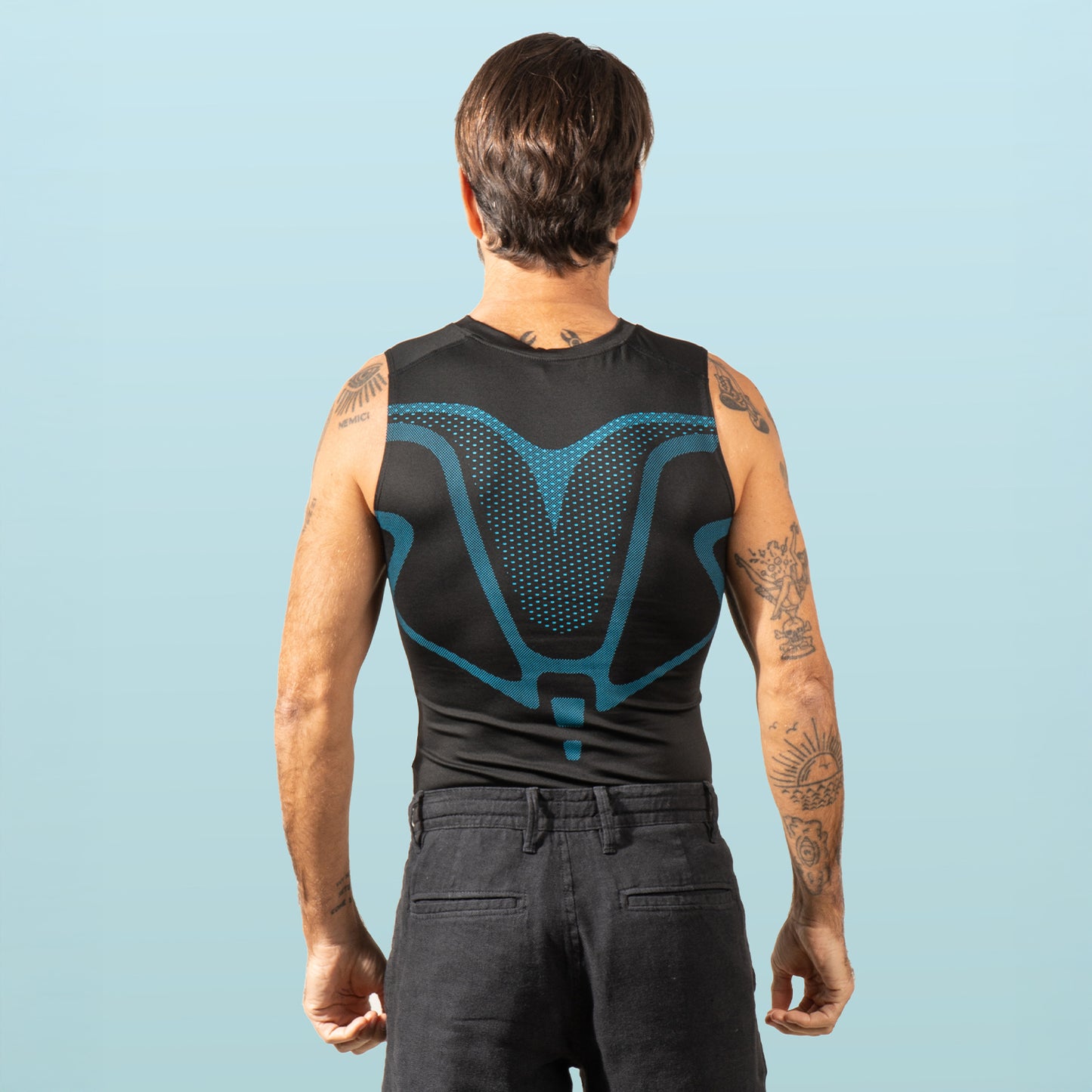
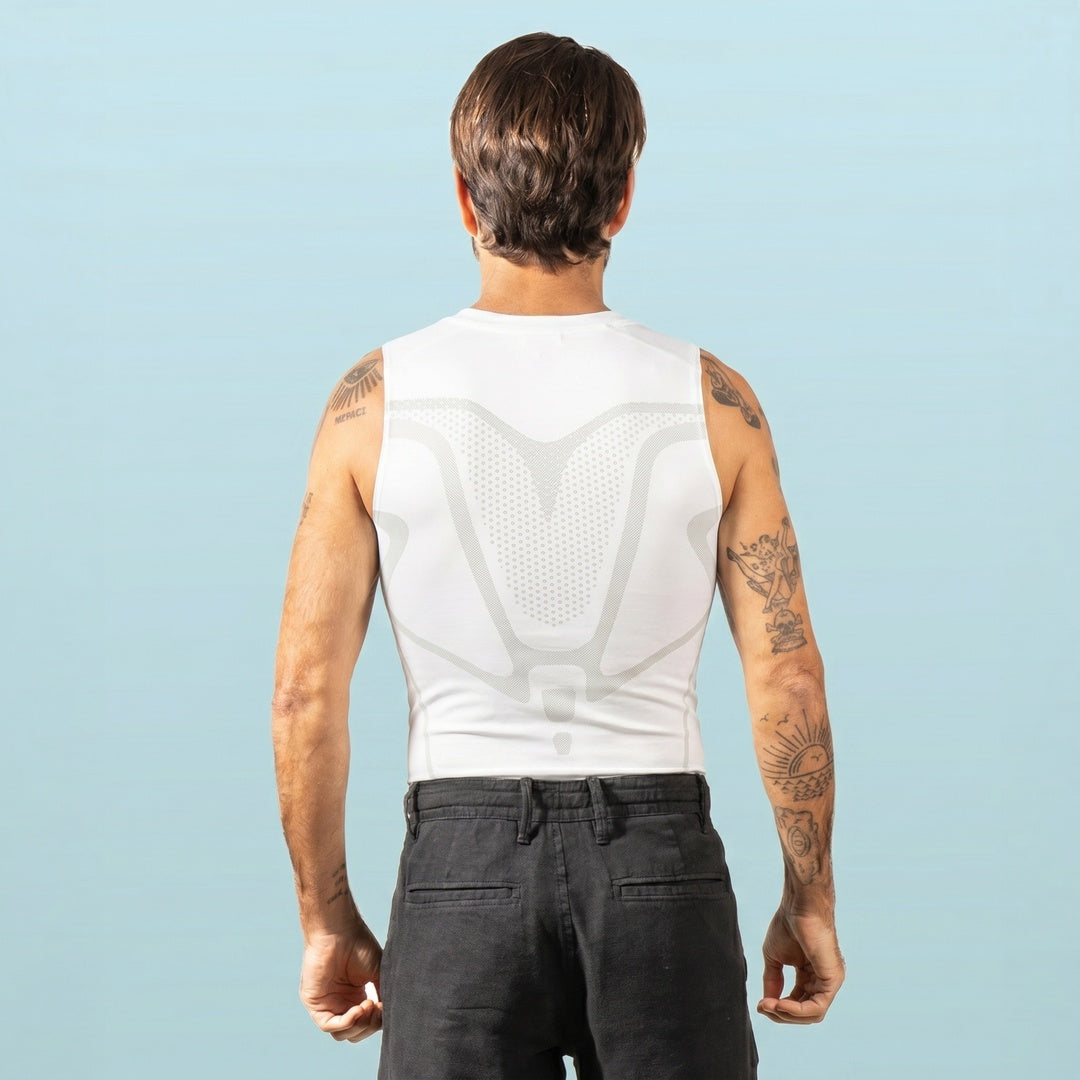
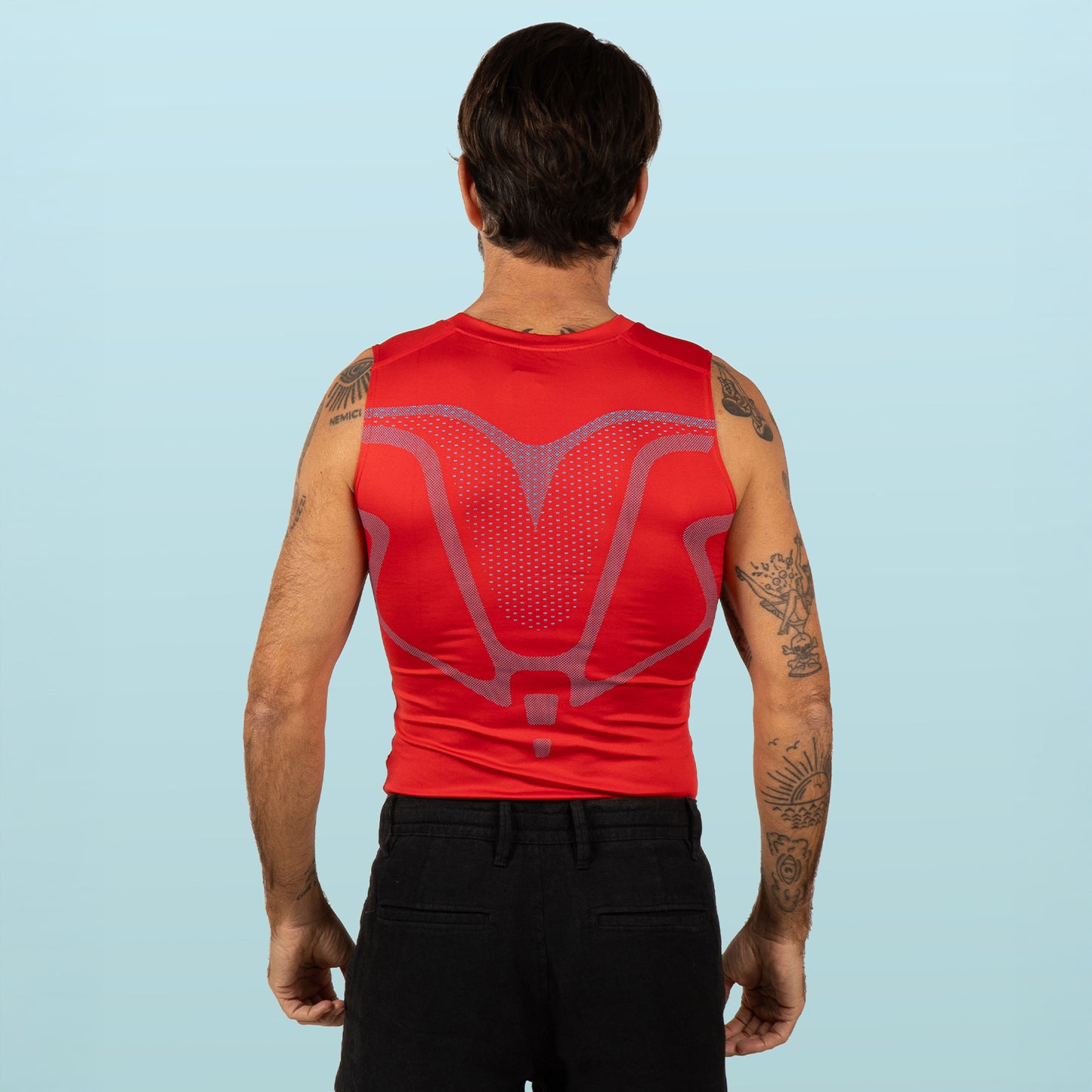
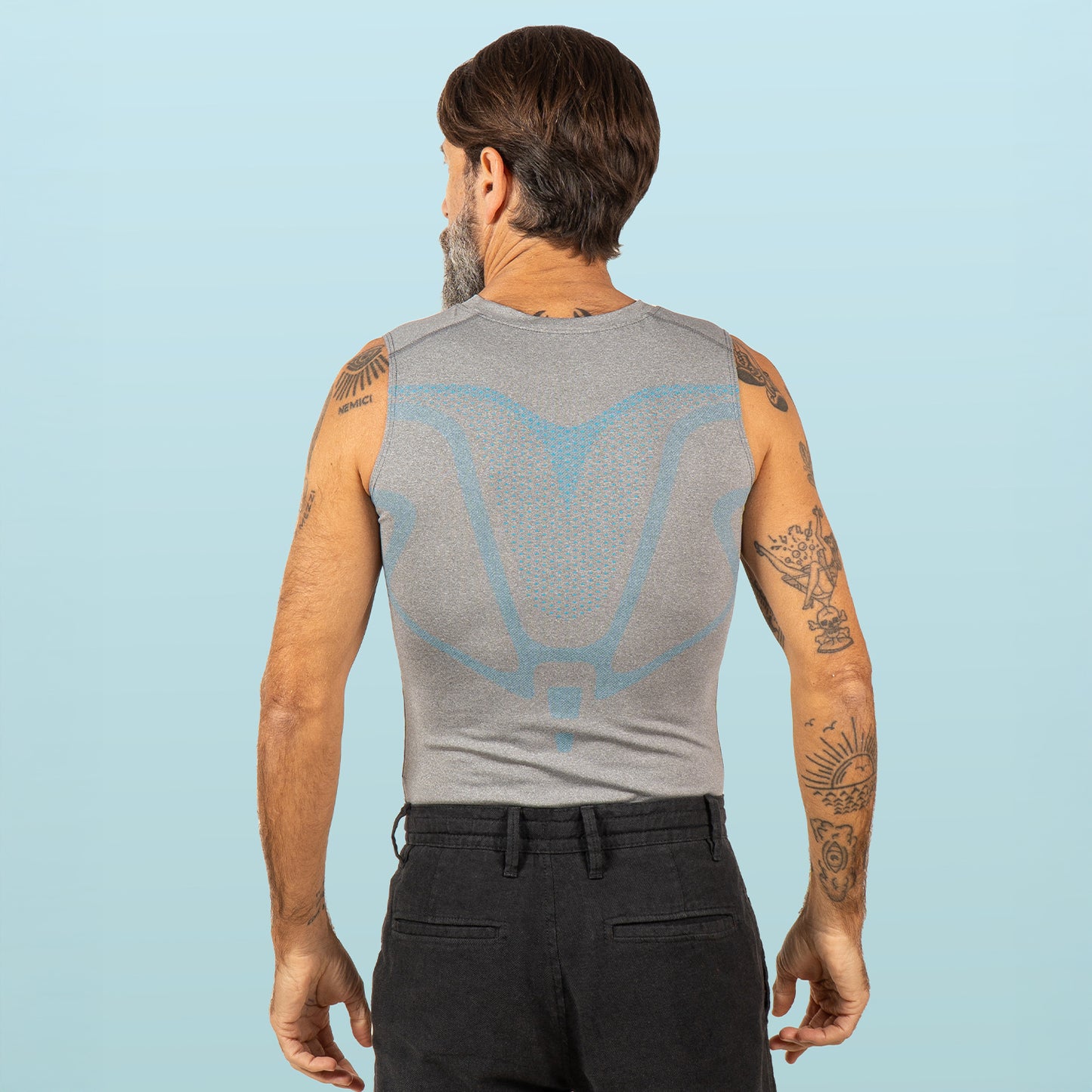
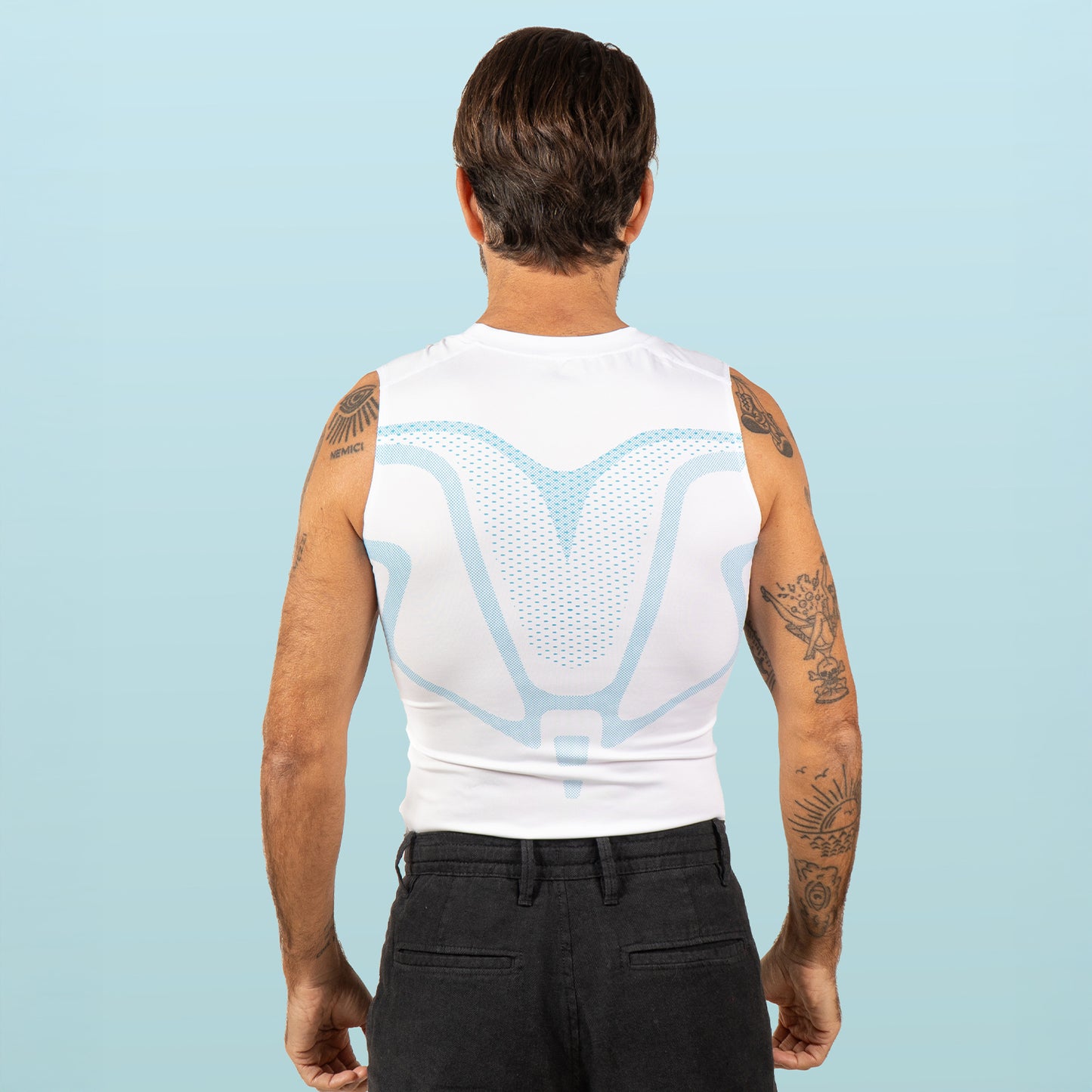
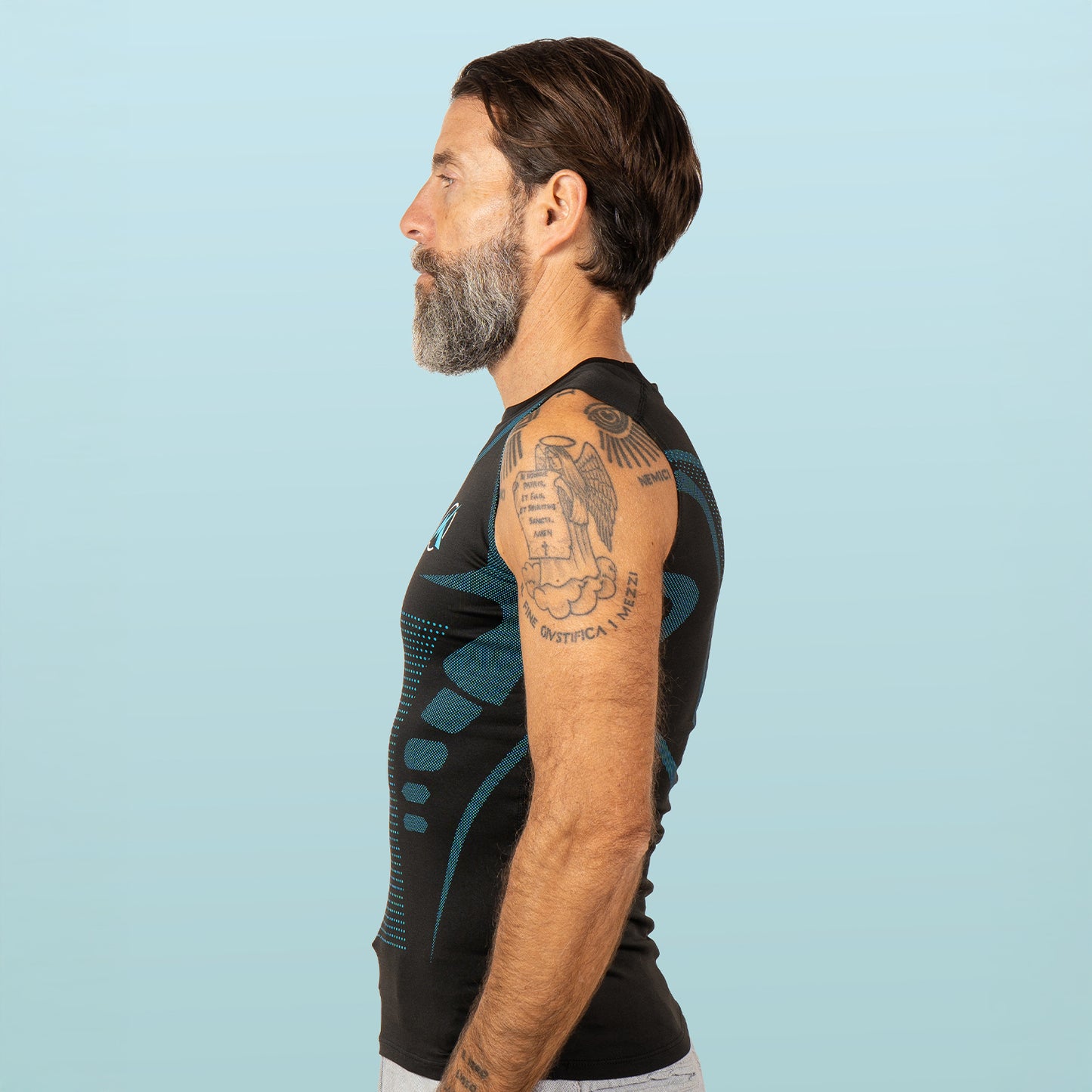
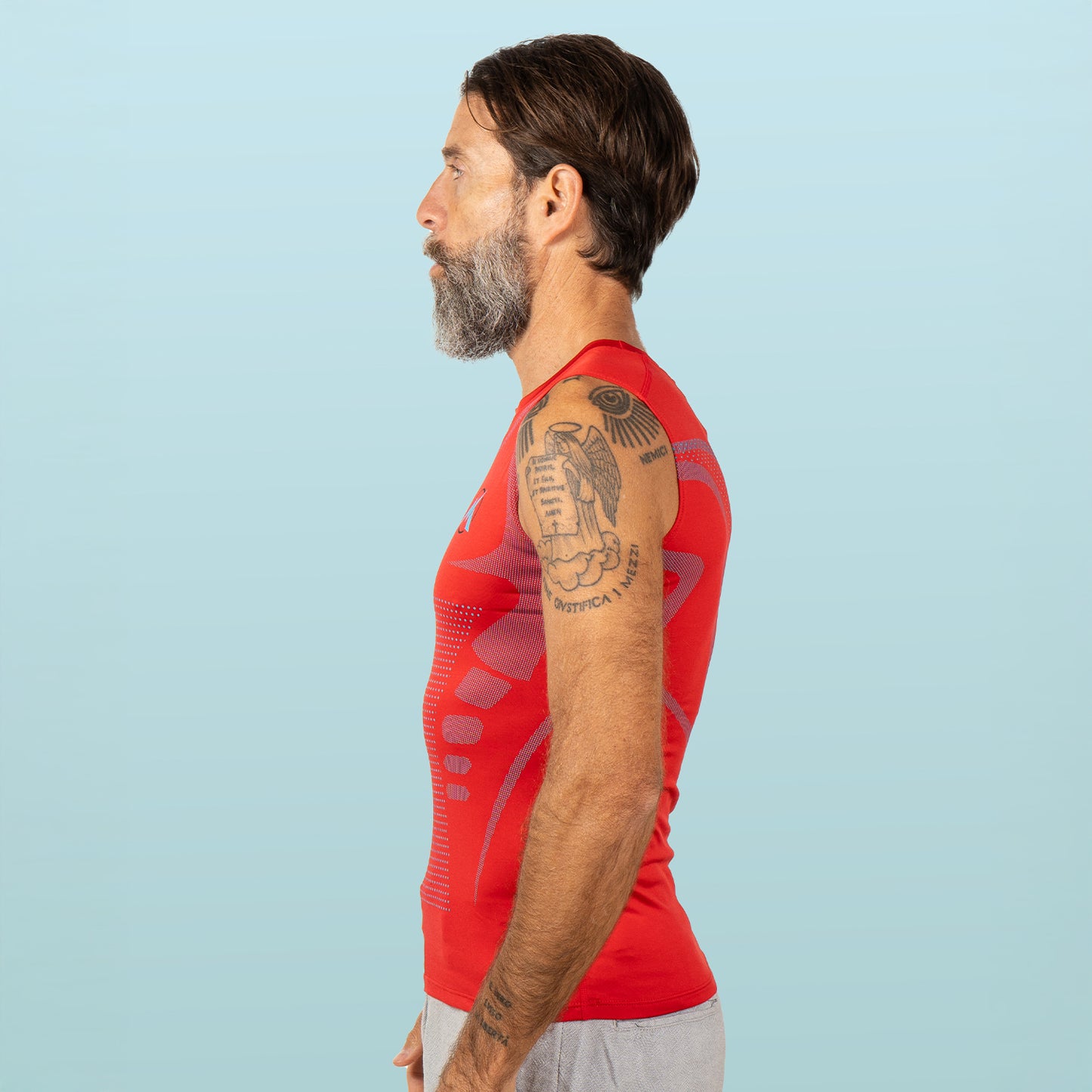
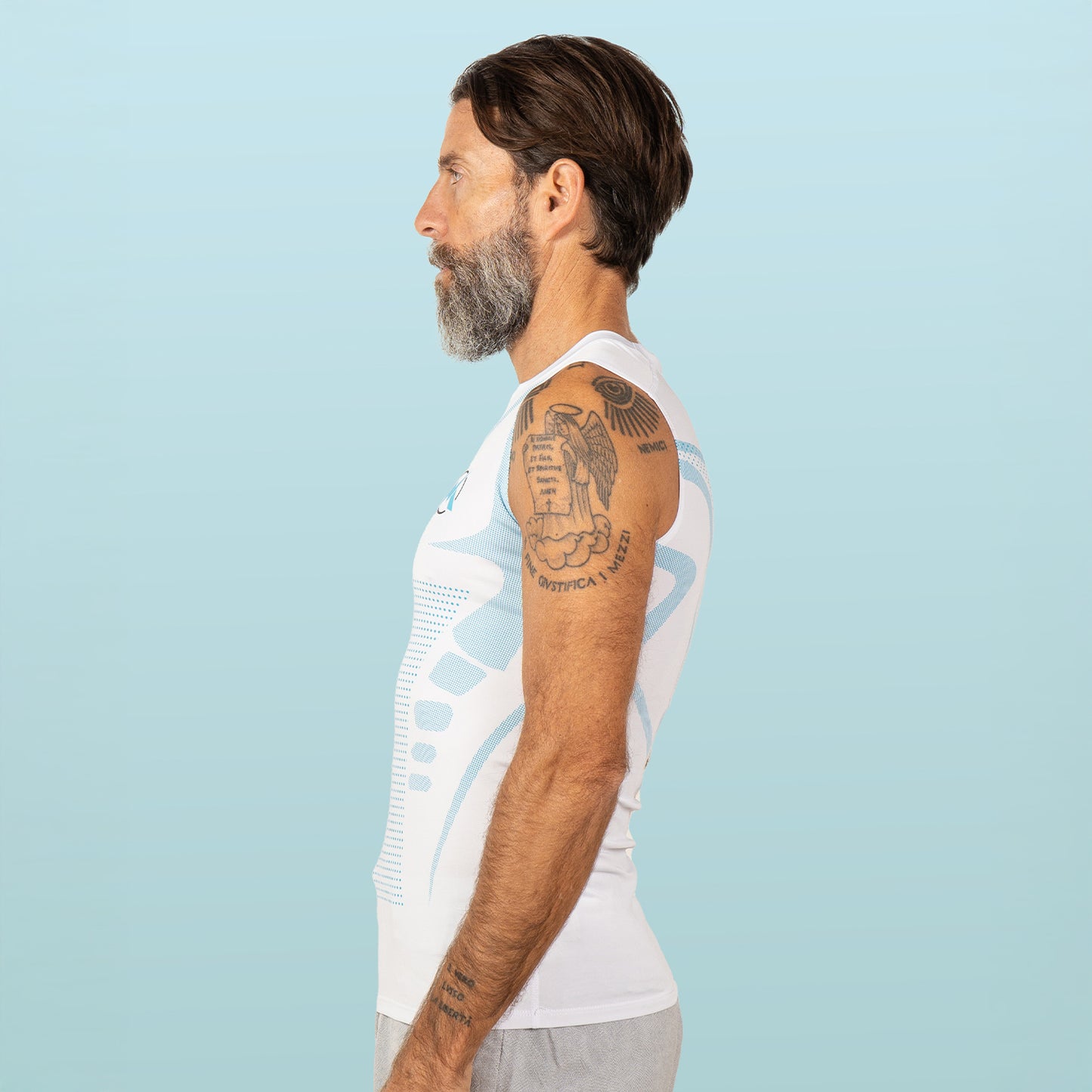
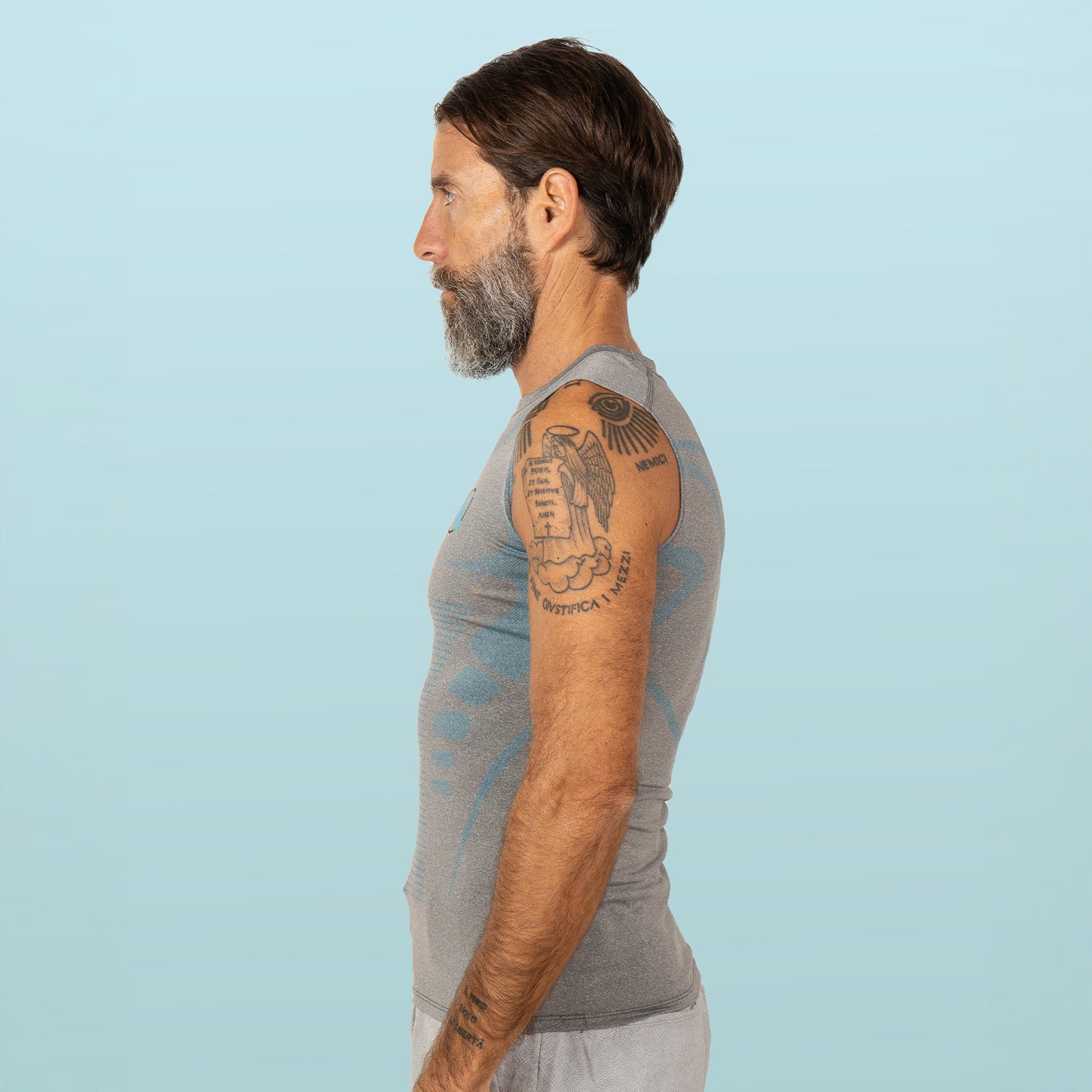
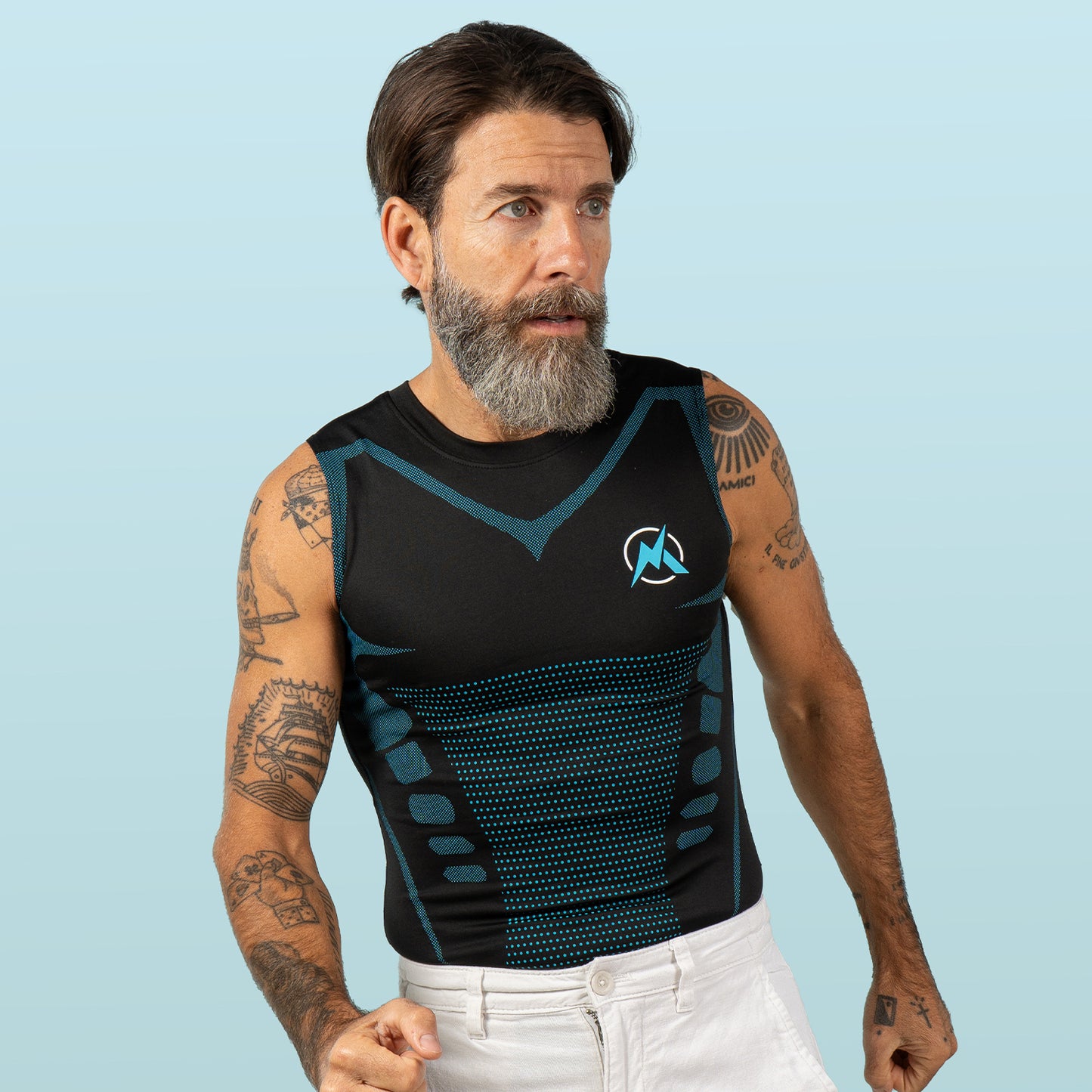
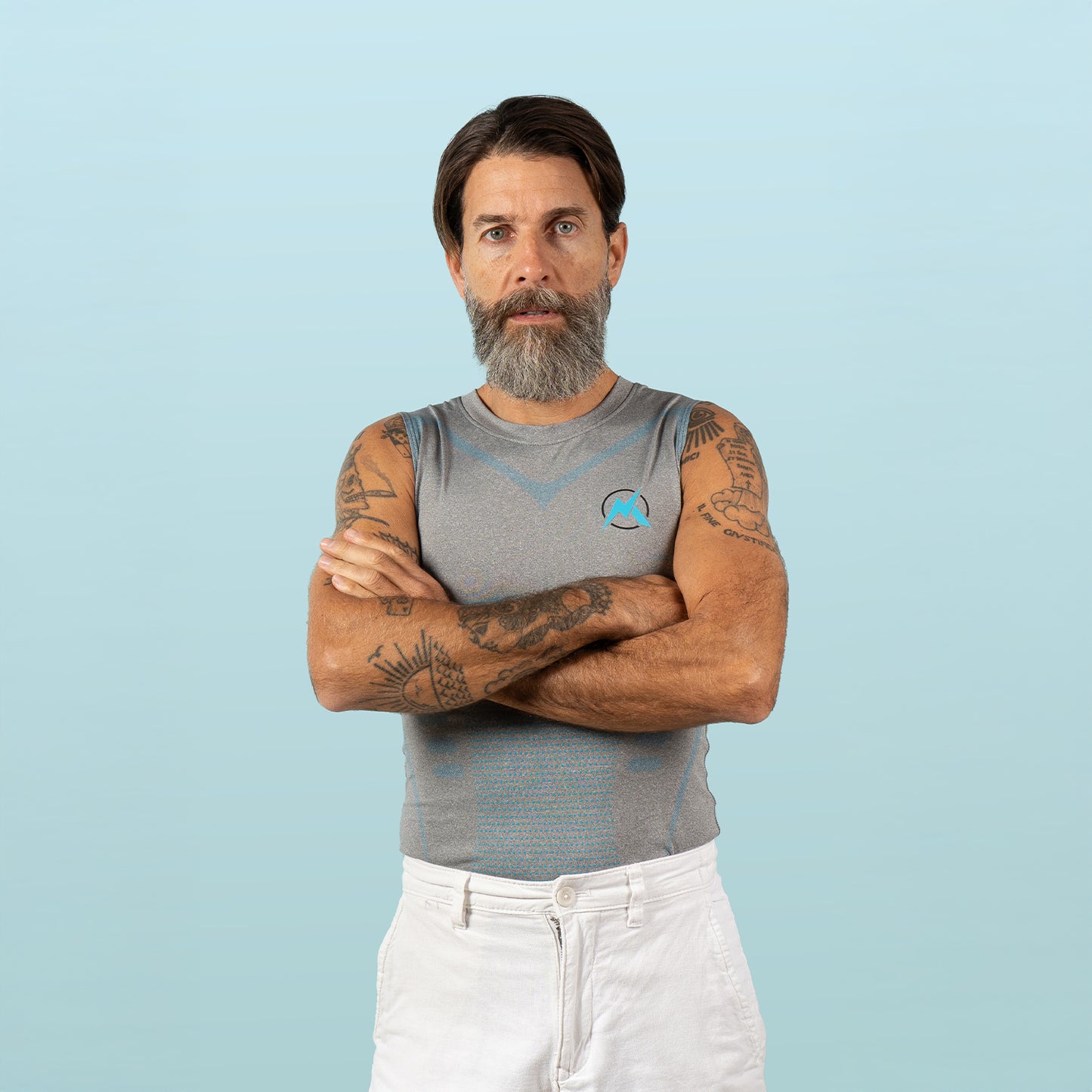
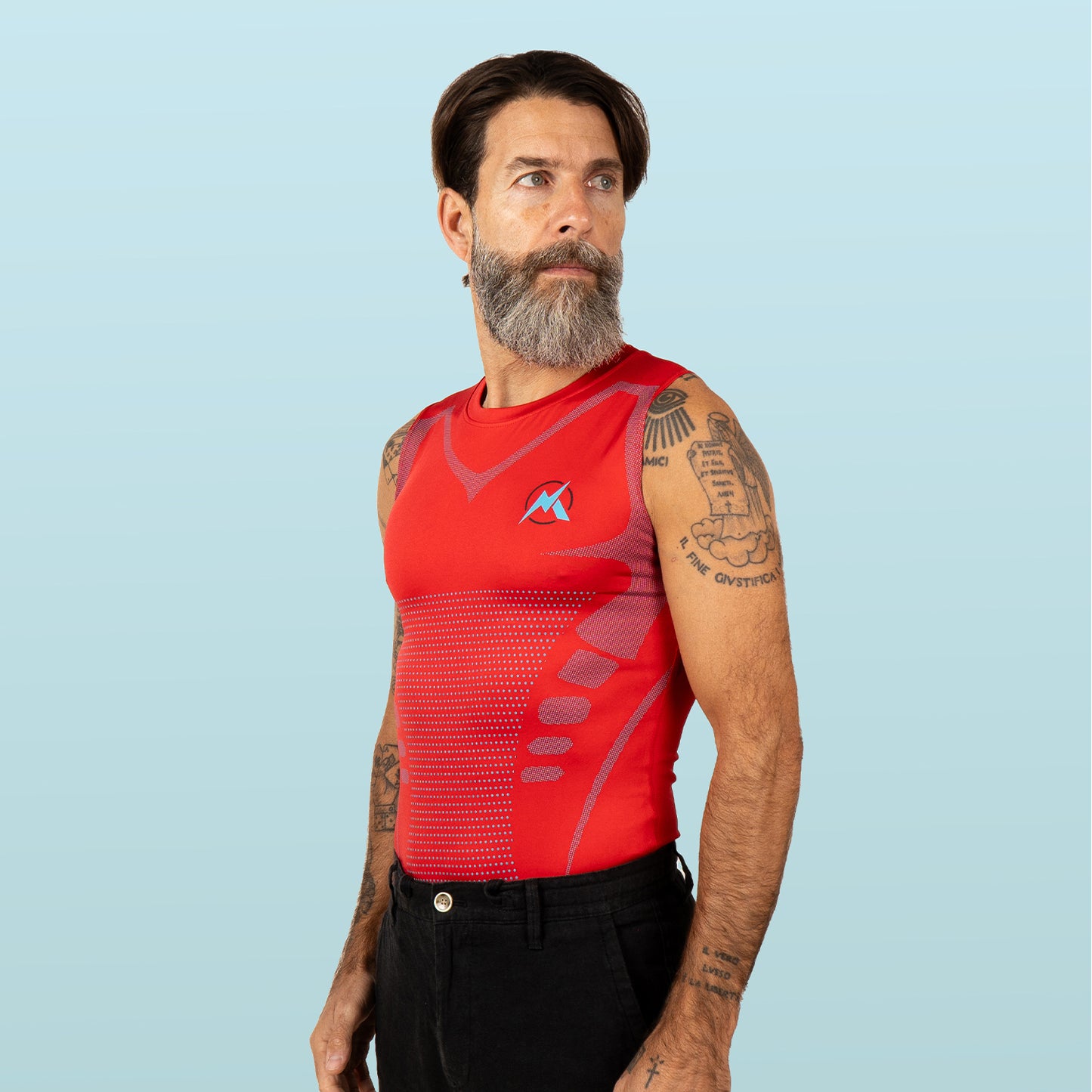
This is exactly the gap VitaBoost was built for. The seamless compression flattens the midsection, smooths the silhouette under any shirt, and corrects shoulder posture passively while you wear it. It's not a substitute for muscle and a leaner body — but while you're rebuilding those, it gives you back the version of yourself that fits your clothes again. (For the deeper case on what compression actually does and doesn't do for men, see our honest look at the evidence — and if your specific scenario is hiding a midsection under dress shirts, the best undershirt for men with a belly goes deeper.)
See the VitaBoost compression tank →
Sleep 7+ hours (the metabolic reset)
The single biggest lever for testosterone, recovery, and visceral-fat regulation is sleep — and most men in their 40s are running on six hours and caffeine.
The CDC reports roughly 30.5% of US adults sleep less than 7 hours per night. Fix that one number and the rest of your levers — training, food, mood — start working again.
What takes a season to fix
The fast levers above hold the line. The deep work below moves the needle for the next decade.
Build muscle back (resistance training 2–3× per week)
This is the most important habit for any man over 40. Period. Resistance training slows sarcopenia, protects bone density, boosts testosterone, and improves insulin sensitivity — every single one of the deep problems we just listed.
You don't need a fancy program. Three full-body sessions per week, with compound lifts (squat, hinge, push, pull, carry), for 30–45 minutes each. Progressive — slowly heavier or harder over weeks. That's it.
Cut visceral fat (the deep belly stuff)
Visceral fat doesn't respond to crunches. It responds to a caloric deficit combined with strength training and sleep. Cardio helps but isn't enough on its own.
Practical version: 300–500 calories below maintenance, 1.0–1.2 g protein per kg bodyweight, lift 3× per week, sleep 7+ hours. That's the boring formula that actually moves visceral fat in 12–16 weeks.
Reset your hormonal foundations
You don't need testosterone replacement therapy unless your numbers are clinically low and you're symptomatic. What you need is the foundation that lets your body run testosterone properly: enough sleep, enough protein, enough strength training, less stress, less alcohol.
If you've fixed all those for 6 months and still feel symptomatic, talk to your doctor and get bloodwork.
What doesn't work (skip these)
The supplement industry loves men over 40. Most of what they sell you is theater. Three to skip:
- Testosterone boosters (Tribulus, fenugreek, "natural T support" stacks): the evidence base is weak to nonexistent for symptom-free men. You're paying for a feeling.
- Crash diets under 1500 calories: lose 8 pounds in 3 weeks, lose mostly muscle, end up worse off when you regain. Slower deficits keep the muscle.
- Cardio-only programs: 45 minutes on the elliptical 5 days a week won't move visceral fat or rebuild muscle. You'll feel virtuous and look unchanged.
What works costs less and is duller: lift weights, eat enough protein, sleep, walk every day. Boring beats clever every time at this age.
The honest sequence: where to start
If you do nothing else, do this — in this order:
- Today: stand taller. Reset your posture every time you stand up from a chair.
- This week: get to 7+ hours of sleep, four nights out of seven.
- This week: get a compression undershirt for under your dress shirts so you look like yourself again while you rebuild. (We'd suggest VitaBoost, of course.)
- Within 14 days: book three 30-minute resistance training sessions per week and protect them like meetings.
- Within 30 days: set a protein target (≥1 g per pound of target bodyweight) and a sleep target.
- Months 1–6: track waist circumference, not scale weight. Bodyweight lies. The tape doesn't.
The bottom line: a man's body after 40 isn't broken. It's just less forgiving than it was at 25. Treat it like a system that needs maintenance, not a project that needs rescuing, and the next decade looks very different from the one you're afraid of.
Frequently asked questions
What happens to a man's body at 40?
After 40, testosterone declines about 1% per year, muscle mass drops 3–8% per decade, fat redistributes from the limbs to the midsection (especially visceral fat around the organs), posture rounds forward, recovery slows, and overall body composition shifts even when bodyweight stays similar. Most of these changes are reversible with resistance training, protein, and sleep.
At what age does a man's body start to decline?
Muscle mass and strength peak between ages 20 and 30, then begin a slow decline of roughly 3 to 8 percent per decade. Testosterone starts dropping around age 30 at about 1 percent per year. Visible decline — posture, body composition, recovery speed — becomes noticeable for most men in their 40s, accelerates in the 50s, and steepens further after 60.
What age does a man's metabolism slow down?
According to a 2021 Science study by Pontzer and colleagues, total daily energy expenditure stays remarkably stable from ages 20 to 60, then declines by about 0.7% per year after 60. The "metabolism slowdown" most men feel in their 40s is actually muscle loss plus reduced daily movement — not a true drop in metabolic rate.
Can a 40-year-old man rebuild his body?
Yes. Men in their 40s can rebuild muscle, lose visceral fat, restore posture, and recover hormonal balance. The Mayo Clinic and NIH both note that resistance training combined with adequate protein, sleep, and a moderate caloric deficit reverses much of age-related muscle loss and body-composition drift. The timeline is roughly 8–16 weeks for visible posture changes and 6–12 months for full body recomposition.
What are the signs of aging in a man over 40?
Common physical signs include reduced muscle definition, increased abdominal fat, forward-rounded shoulders, slower recovery from workouts, lower energy in the afternoon, mild sleep disruption, presbyopia (trouble focusing on close objects), and gradual hair thinning. Hormonal signs may include lower libido and mood changes. Most of these are normal aging — but persistent severe fatigue, unexplained weight changes, or sexual dysfunction warrant a doctor visit.
Sources
- Mayo Clinic — Testosterone therapy: Potential benefits and risks as you age
- NIH/PMC — Muscle tissue changes with aging (sarcopenia 3–8%/decade)
- Pontzer et al. — Daily energy expenditure through the human life course (Science, 2021)
- Cleveland Clinic — Visceral fat
- Cleveland Clinic Health Essentials — Tech neck
- CDC NCHS Data Brief 559 — Sleep duration in US adults
The fastest visible shift you can make this week — without losing a single pound — is putting on a compression undershirt that flattens the midsection and pulls your shoulders back. That's what VitaBoost was built for.
Try VitaBoost — Buy 1 Get 1 Free →This article is for general wellness information and does not substitute for medical advice. If you have persistent symptoms or are considering hormone therapy, speak with a qualified physician.