By Owen Blot · Founder, Maynox · Last updated May 18, 2026
- The slouch starts earlier than you think
- The five real reasons men slouch with age
- The 60-second wall test (find out where you stand right now)
- A realistic weekly plan to stand tall again
- How long until you actually see results
- The confidence loop — why standing tall changes how you feel
- When to see a doctor (red flags you shouldn't ignore)
- How compression layering fits into the plan
- Frequently asked questions
You catch your reflection in a storefront window. Shoulders pulled forward. Head jutted out. Upper back rounded into a soft "C." You don't look like the guy you remember being at 30. And nobody warned you this would happen so quietly.
This is the slouch. It doesn't arrive on a single bad day — it builds up over years of small habits and small losses you barely notice. By the time you spot it, it already feels permanent. It isn't.
In the next 10 minutes, you'll see exactly why men slouch with age, what's actually changing inside your body, and the honest plan that brings you back upright. No magic. No miracle device. Just the mechanics, and the work that fits a normal week.
The slouch starts earlier than you think
Most men picture slouching as something that happens at 70. It doesn't. The biological setup begins in your 40s.
Muscle mass starts dropping around age 40, and the back, shoulders, and deep core are some of the first muscle groups to weaken if you don't actively load them. Research published through the National Institutes of Health shows muscle mass declines approximately 3 to 8 percent per decade after age 30, with the rate accelerating after 60 (NIH/NIA review).
That doesn't mean you wake up at 45 hunched over. It means the support structure for upright posture is quietly thinning while your daily habits — sitting, scrolling, driving, leaning over a laptop — are quietly thickening. The visible slouch is the moment those two lines cross.
By the time you're in your late 40s or early 50s, the change is obvious. Family photos show it. Your wife mentions it. You feel it when you stand up after a long meeting. Slouching isn't a senior problem. It's a mid-life problem that finishes in old age.
The five real reasons men slouch with age
Slouching is rarely caused by one thing. It's the accumulation of five separate shifts, working together. Most articles cover two of them. Here's the full picture.
1. Muscle loss in the upper back and core (the real driver)
The rhomboids, mid-traps, deep neck flexors, and transverse abdominis are the muscles that hold you upright. They are also the ones men neglect most — they don't show in a mirror, they don't get worked by bench press, and they wither first when you stop moving against resistance.
Once these muscles weaken, the front-side muscles (chest, anterior delts, hip flexors) pull harder. Shoulders round forward. Head drifts ahead of the spine. The "C" shape sets in.
2. A decade of desk and phone hours
This is the one most people underestimate. Your head weighs 10 to 12 pounds in a neutral position, but tilt it forward 15 degrees and the load on your neck doubles to around 27 pounds, according to Cleveland Clinic. Look down at your phone in your lap and that load can climb to nearly 60 pounds. Repeat that for 4–6 hours a day for 10 years and the result is a permanent forward head carriage (Cleveland Clinic, "Tech Neck").
This is not just teenagers. The average 50-year-old now spends more screen hours than the average 20-year-old did in 2010. Tech neck is now a mid-life condition.
3. Disc and bone changes (the part you can't fully fix)
Some of the slouch is structural. Spinal discs gradually lose water and thin out. Bone density drops, particularly after 50. Small vertebral compression fractures can create a forward tilt that doesn't fully reverse with exercise alone.
Age-related hyperkyphosis — the medical term for the exaggerated forward curve — affects roughly 20 to 40 percent of the aging population, becoming most pronounced after age 70 (NIH/PMC review on age-related hyperkyphosis).
The honest read: postural slouching (habit-driven) is highly reversible. Structural kyphosis (bone-driven) is reducible, not erasable. Most men under 60 sit firmly in the first category.
4. Postural awareness fading
You can't fix what you don't notice. Most men in their 40s and 50s have completely stopped scanning their own body position during the day. Walking, driving, sitting at dinner — the brain has settled into a default slumped pose, and the muscles have agreed.
This is also why glasses changes, hearing changes, and even mild vision blur quietly worsen posture. You lean in to read. You crane forward to hear. The body learns to live there.
5. The confidence drop pulls the shoulders inward
The least-discussed driver — but the most powerful in mid-life. When men feel less confident, they physically shrink. Weight gain, career stress, looking older in photos, divorce, kids leaving — any of these can pull the chest down and the shoulders forward, before any muscle has truly weakened.
Postural psychology research has been pointing at this for decades. The body folds toward what the mind feels. A slouch is sometimes the first visible sign of a man losing a little of himself, long before the muscles have actually given out.
(For the action-plan companion piece, see How to Fix Bad Posture for Men Over 40: The 4-Layer Plan.)
The 60-second wall test (find out where you stand right now)
Before you fix anything, find your baseline. This takes one minute and tells you exactly where you are on the slouch spectrum.
Stand with your back against a flat wall. Heels about 2–3 inches from the baseboard. Now check four contact points:
- Back of the head — does it touch the wall without tilting your chin up?
- Shoulder blades — do they make contact flat, or are they rounded forward?
- Buttocks — are they touching the wall?
- Back of the calves or heels — close to the wall?
If your head doesn't reach the wall without you forcing it back, you have measurable forward head posture. If your shoulder blades don't sit flat, you have rounded shoulders. If there's a hand-sized gap behind your lower back, your core and pelvic position need work too.
Do this test once a week for the next 8 weeks. You're going to watch the gap close.
A realistic weekly plan to stand tall again
This plan is designed for a man with a job, a family, and limited time. Total commitment: about 30 minutes a day, plus two short strength sessions per week. That's it. Anything more elaborate won't survive a real schedule.
The 10-minute morning posture reset (daily)
Right after coffee, run this circuit. Three rounds, no rest needed.
- Wall slides — back flat against wall, arms in a "W," slide up to a "Y" and back down. 10 reps.
- Chin tucks — pull head straight back (double-chin look), hold 3 seconds. 10 reps.
- Doorway chest stretch — forearm on the doorframe, step through. 30 seconds per side.
- Glute bridges — lie on back, lift hips, squeeze glutes hard. 15 reps.
Ten minutes. Every morning. This is the single highest-ROI habit you can build in your 40s and 50s.
Twice-a-week strength block
Two short sessions, 30 minutes each. The lifts that matter most:
- Face pulls (cable or band) — 3 sets of 15. The single best exercise against rounded shoulders.
- Rows (dumbbell, cable, or band) — 3 sets of 12.
- Romanian deadlifts — 3 sets of 8. Posterior chain anchor.
- Plank — 3 holds of 45 seconds. Deep core.
- Reverse flys — 3 sets of 12. Mid-back hits that bench press misses.
You don't need a gym. A pair of resistance bands and one set of adjustable dumbbells covers all of this in a garage corner.
Desk and phone setup rules
If your screen time is the problem, your fix starts with geometry, not willpower.
- Monitor at eye level. Top third of the screen should sit at your eyebrow line. Use books or a stand. Cost: $0.
- Phone held up, not down. Bring the phone to your face, not your face to the phone. Every degree of tilt matters.
- Stand or walk every 30 minutes. Set a timer. Movement breaks beat sitting "correctly" all day.
- Sleep position check. Side sleeping with a pillow between the knees, or back sleeping with a small lumbar support, beats stomach sleeping for posture every time.

How long until you actually see results
Here's the part most blogs skip. You will not be fixed in a week. You probably won't be fully fixed in a month. But the curve bends faster than you think.
A reasonable, evidence-aligned timeline:
| Timeframe | What changes |
|---|---|
| Week 1–2 | You'll notice you're catching yourself slouching. Awareness comes back. Mid-back soreness shows up (a good sign). |
| Week 3–4 | Wall test improves. Head reaches the wall more easily. Less neck stiffness at the end of the workday. |
| Week 6–8 | Visible posture improvement in mirrors and photos. Family or coworkers may mention it. |
| Week 8–12 | Habituated. Standing tall starts to feel natural again, not forced. |
Harvard Health has documented similar timelines for postural correction in older adults, noting meaningful improvement typically appears within 8 to 12 weeks of consistent corrective work (Harvard Health, "Is it too late to save your posture?").
For deeper structural cases, the University of California San Francisco found that targeted physical therapy can measurably reduce the curve even in older patients with established hyperkyphosis — so even men in their 60s and 70s have real ground to gain (UCSF Newsroom).
Patience beats intensity here. A man who does the 10-minute morning reset for 90 days will beat a man who does an hour-long routine for 5 days and quits.
The confidence loop — why standing tall changes how you feel
There's a feedback effect that almost no posture article talks about, but every man who's done the work notices.
When you start standing taller, you feel different before you look different. Walking into a room with your chest open and your shoulders set sends a signal to your own nervous system. Stress drops a notch. Voice gets a little fuller. Eye contact gets easier.
It's not magic. It's biomechanics meeting psychology. Open posture relieves pressure on the diaphragm and ribcage, which lets you breathe more deeply, which calms the system, which makes you carry yourself more like a man who's actually present in the room. And then the room responds to that — which reinforces the upright posture again.
Many men describe this as getting back a version of themselves they thought was just gone. It's not about looking 10 years younger (you won't). It's about looking and feeling like yourself again.
For the wider playbook on this — including how dressing differently amplifies the effect — see How to Look 10 Pounds Thinner (Without Losing a Single Pound).
When to see a doctor (red flags you shouldn't ignore)
A normal mid-life slouch responds to consistent training. But some posture changes signal something else. See a doctor if you notice any of the following:
- A noticeable forward curve that appeared quickly (weeks, not years).
- Pain when standing upright, not just stiffness.
- Loss of height of more than half an inch in a single year.
- Back pain that wakes you at night.
- Numbness, tingling, or weakness in the arms or legs.
- A family history of osteoporosis combined with a sudden posture change.
These can point to vertebral fractures, advanced osteoporosis, or structural conditions that need a clinician, not a band routine.
This article is general guidance, not medical advice. Talk to a physical therapist or your primary care provider before starting any new exercise program if you have existing back, neck, or shoulder pain.
How compression layering fits into the plan
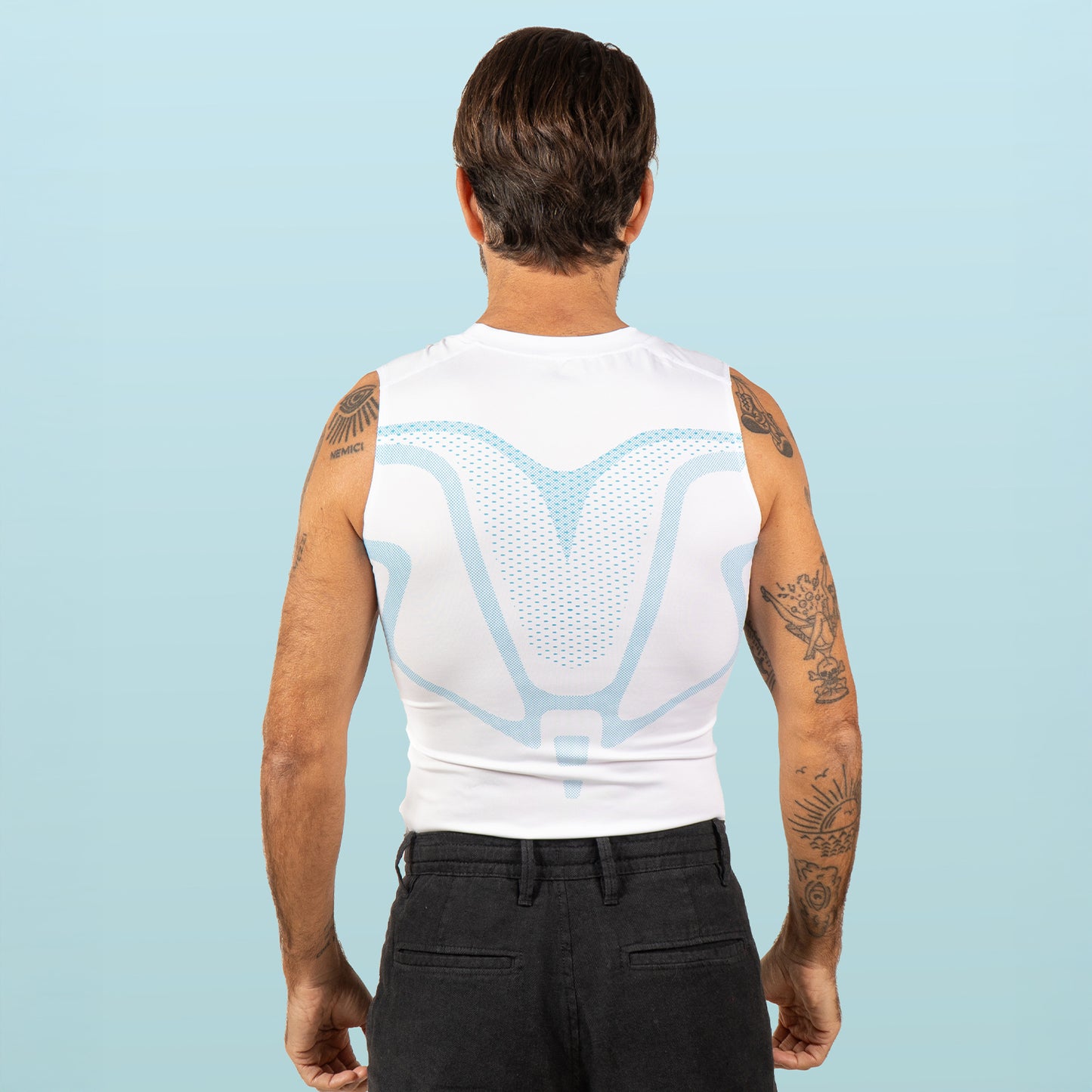
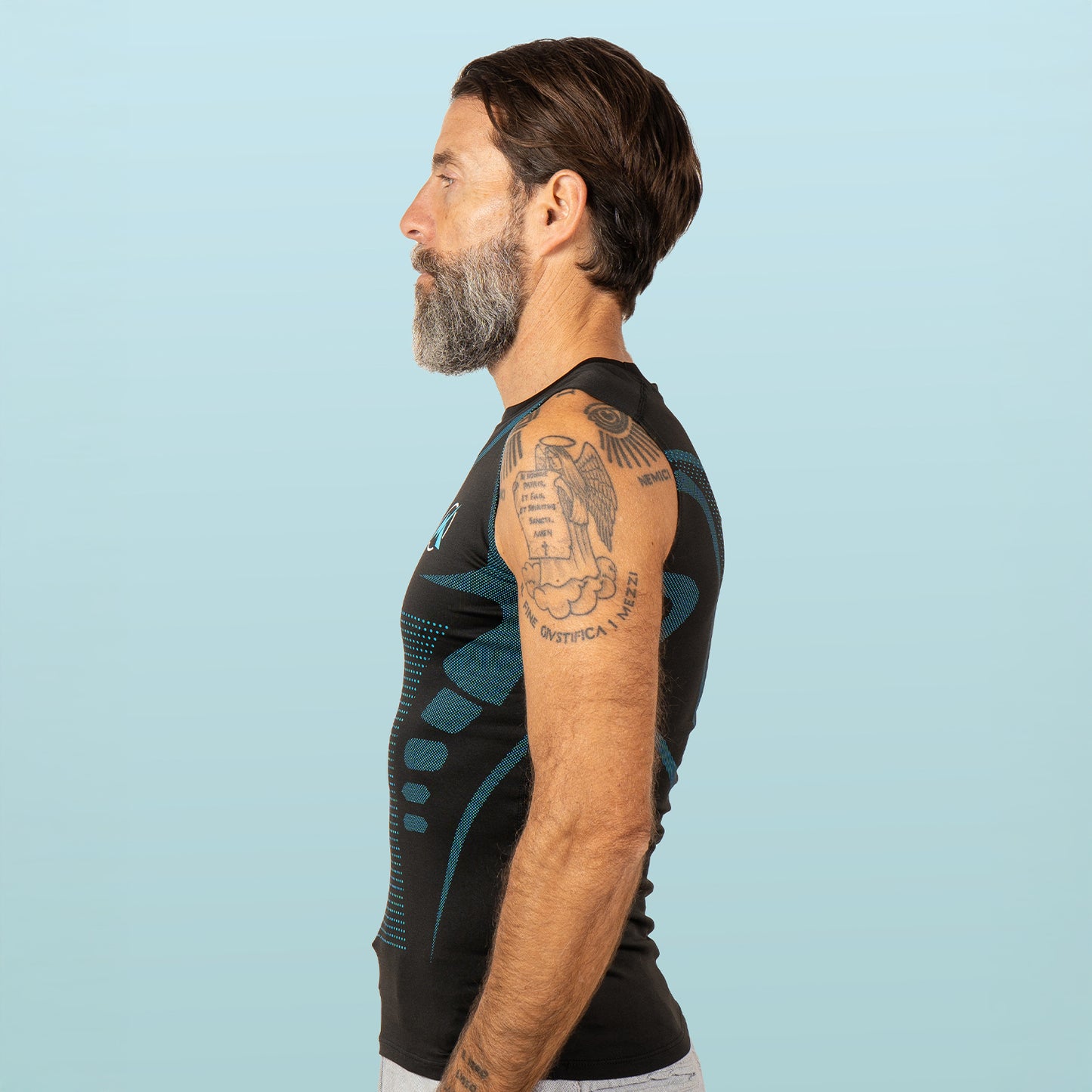
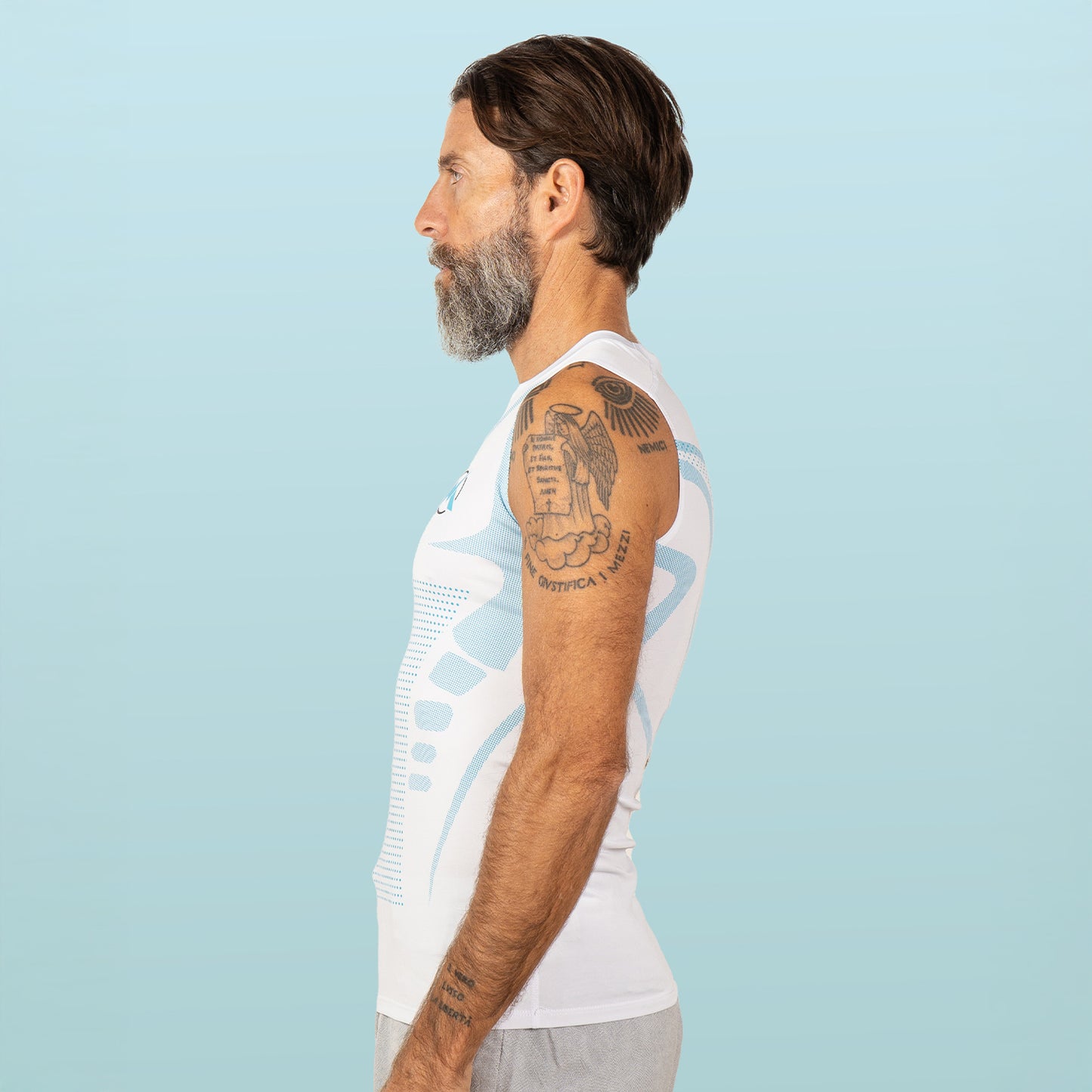
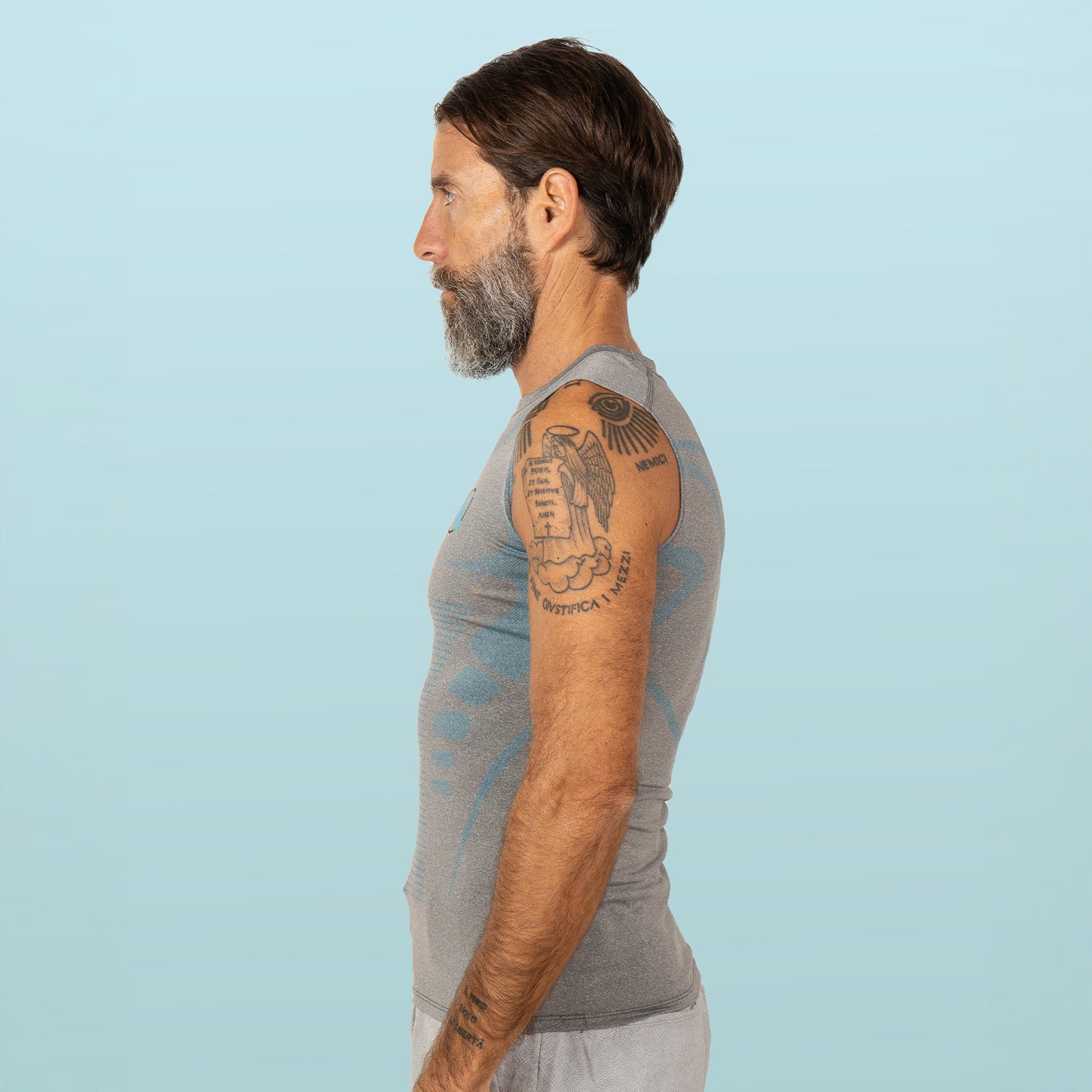
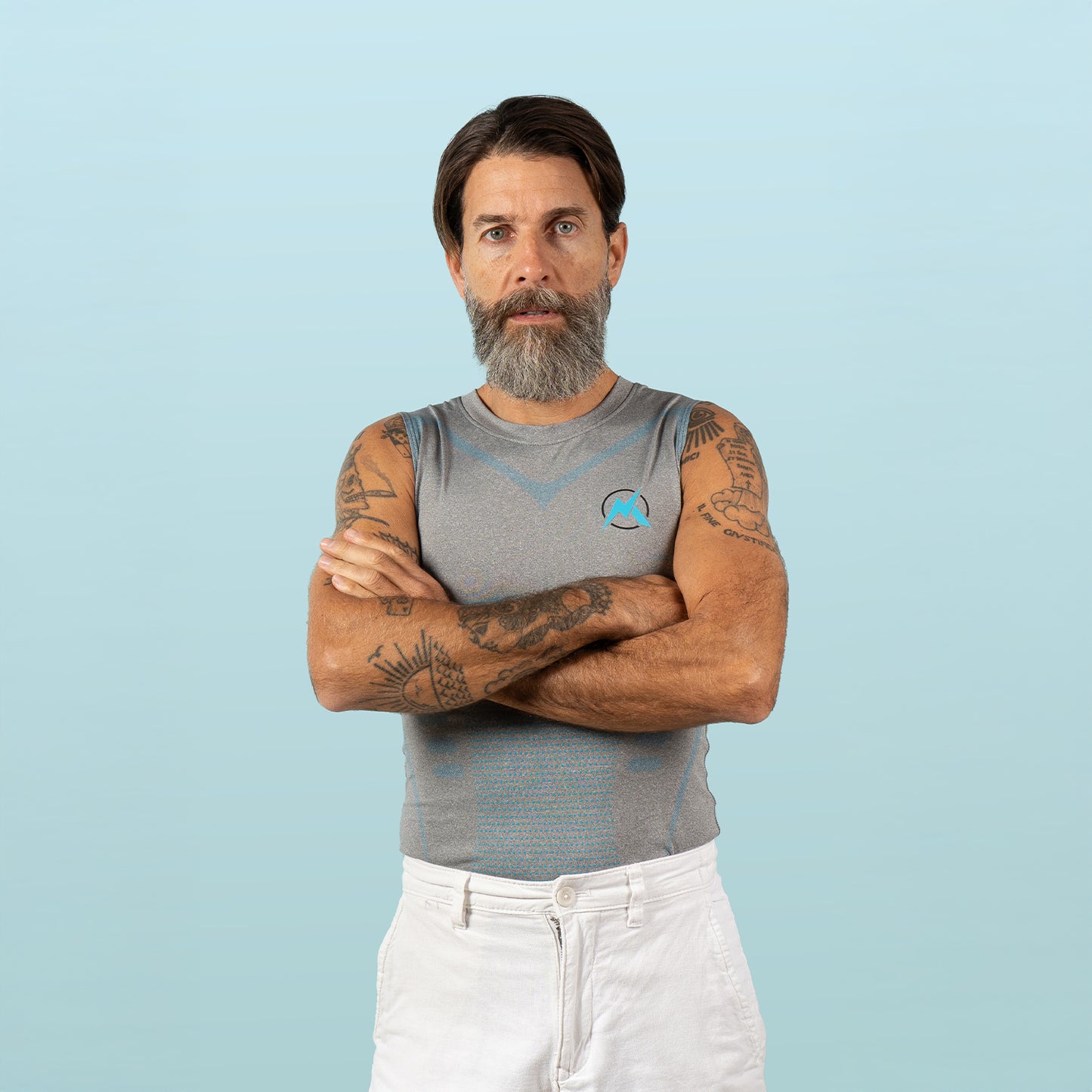
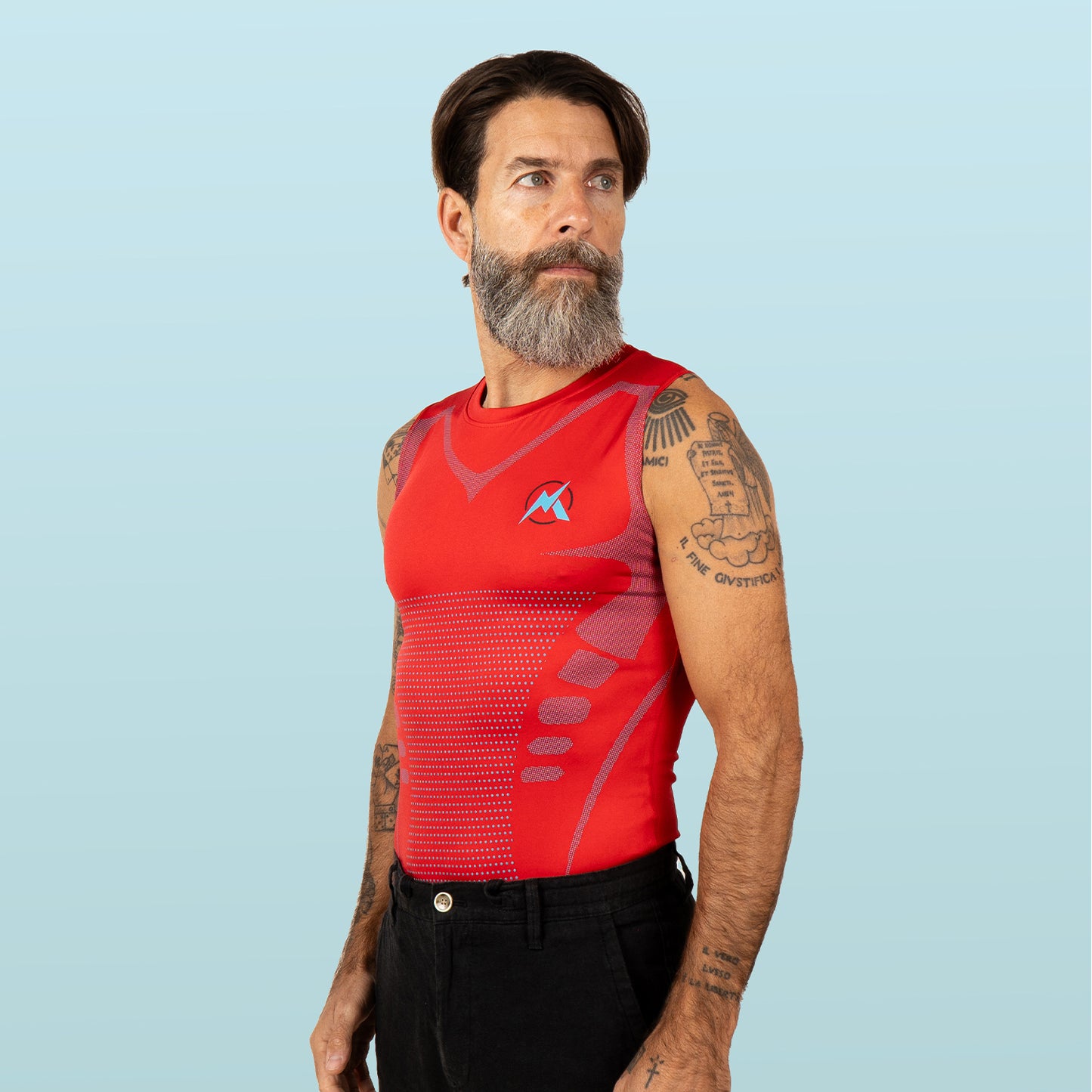
Strength work and posture awareness are the foundation — but mid-day reinforcement matters too. A compressive base layer keeps the chest open and the shoulders pulled back during the hours you're not training.
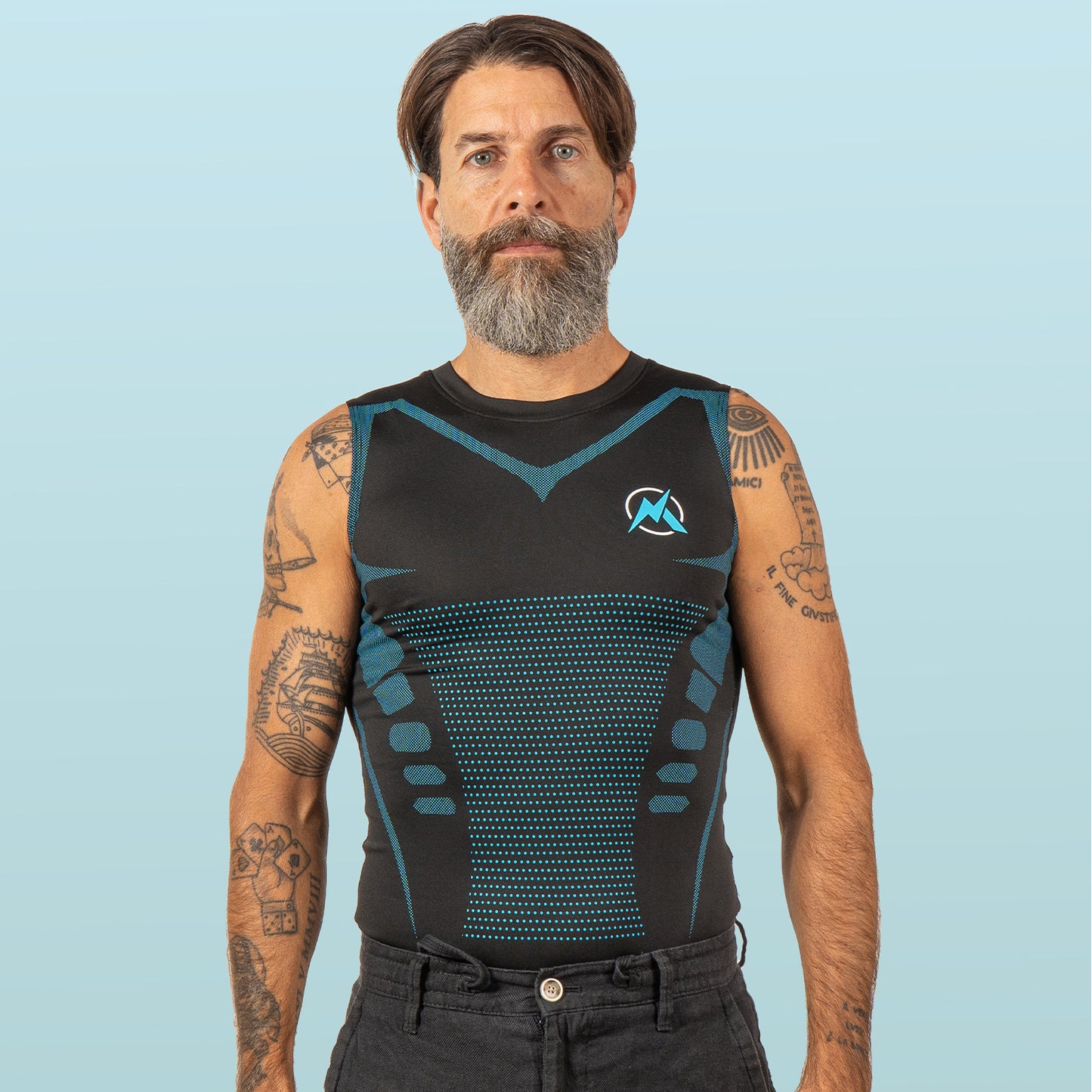
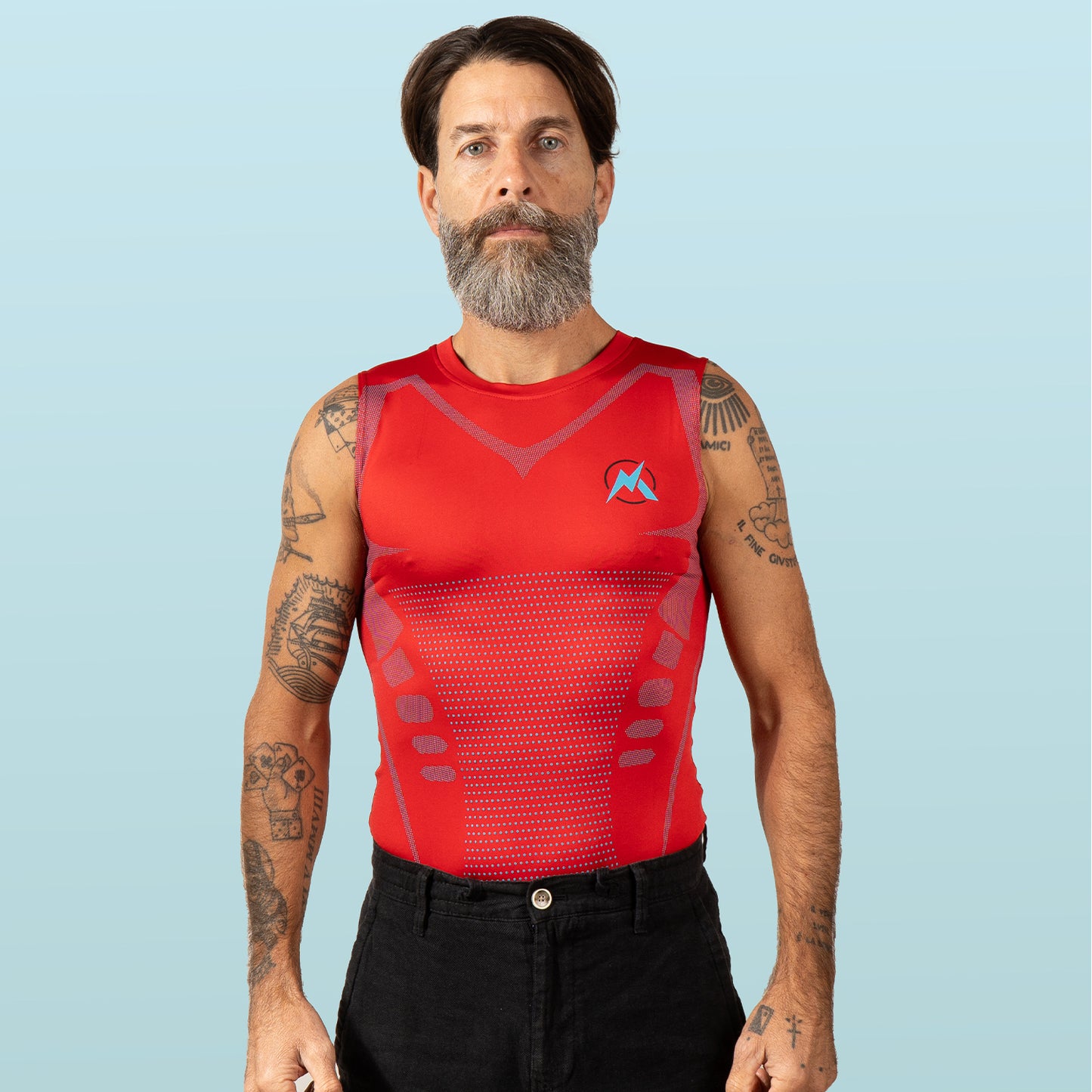
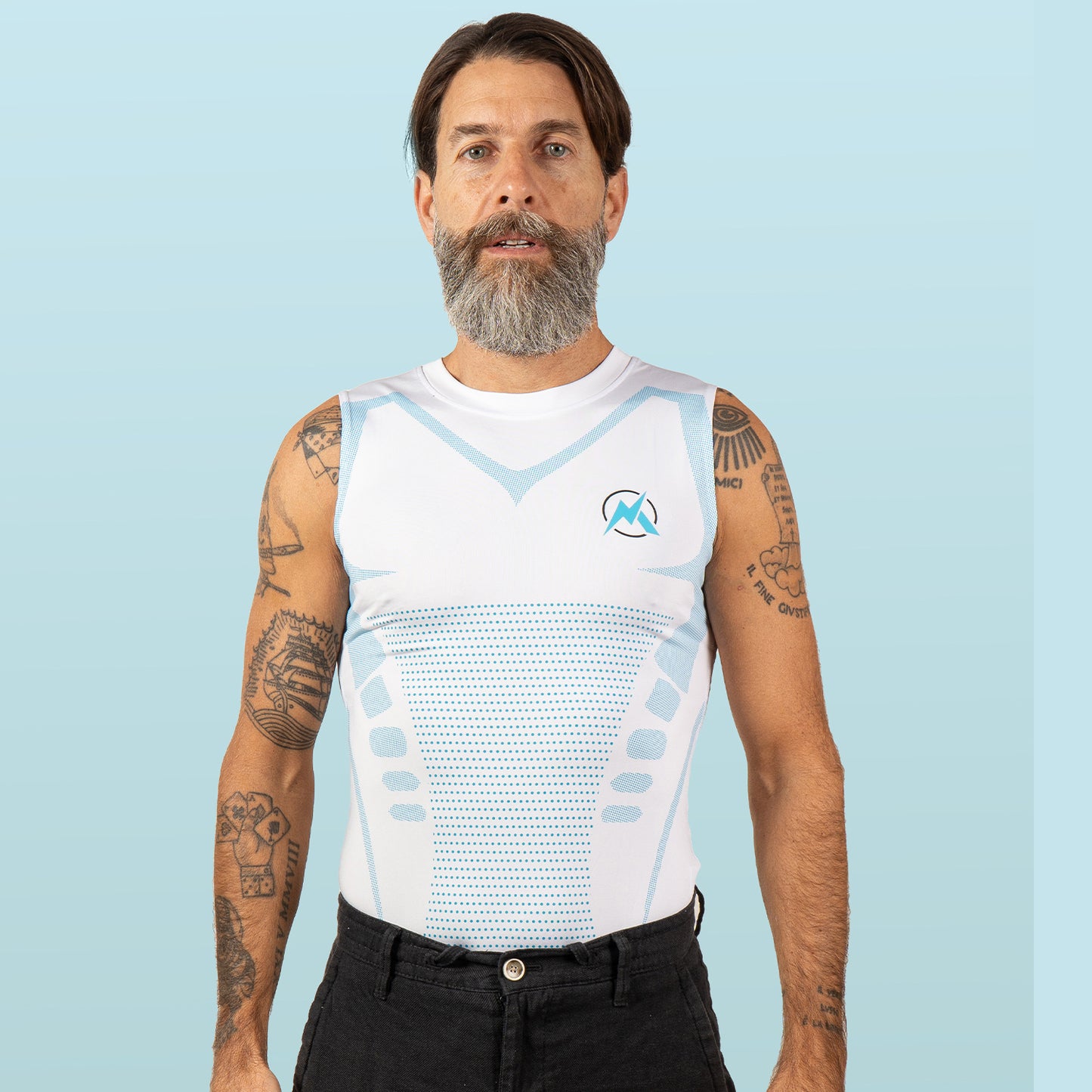
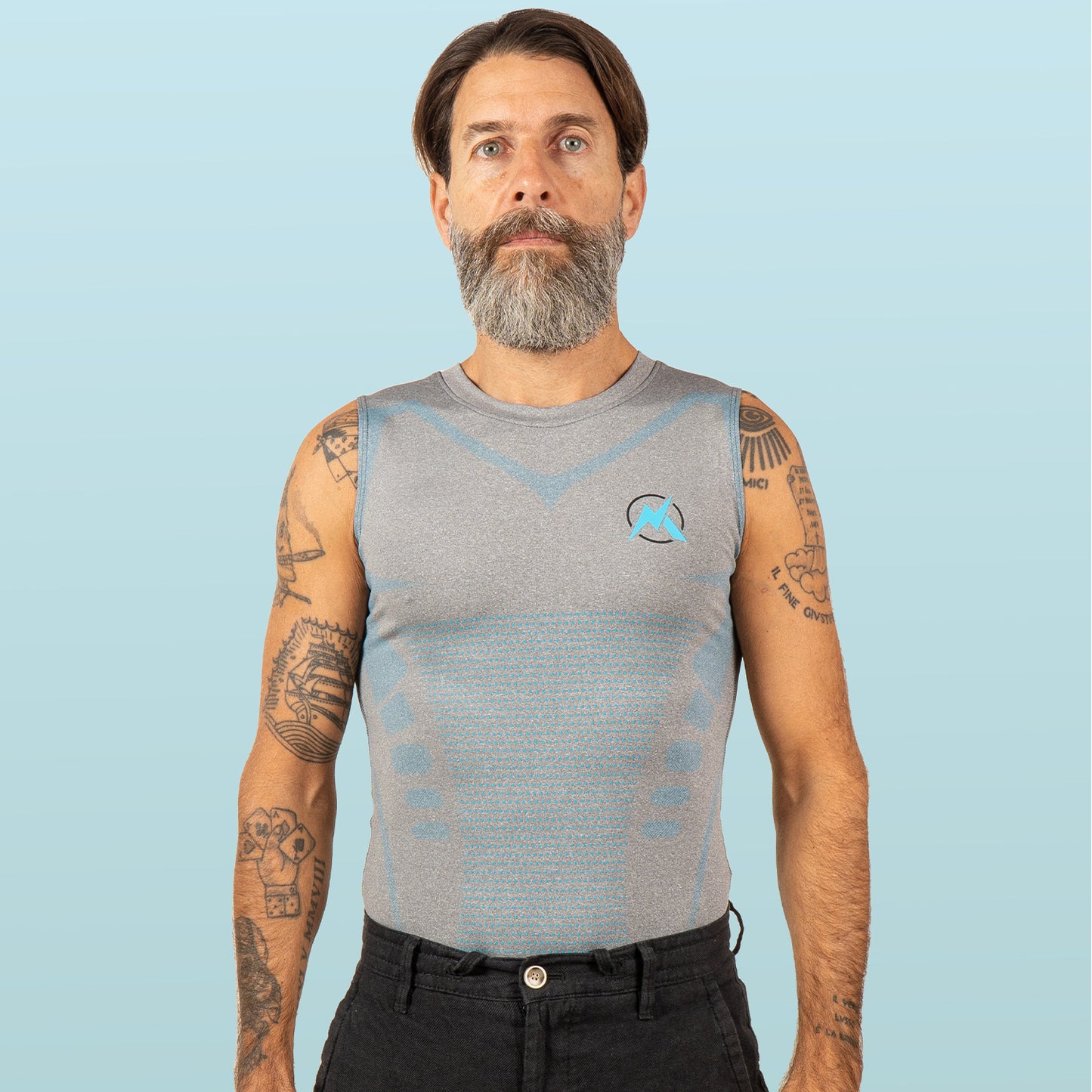
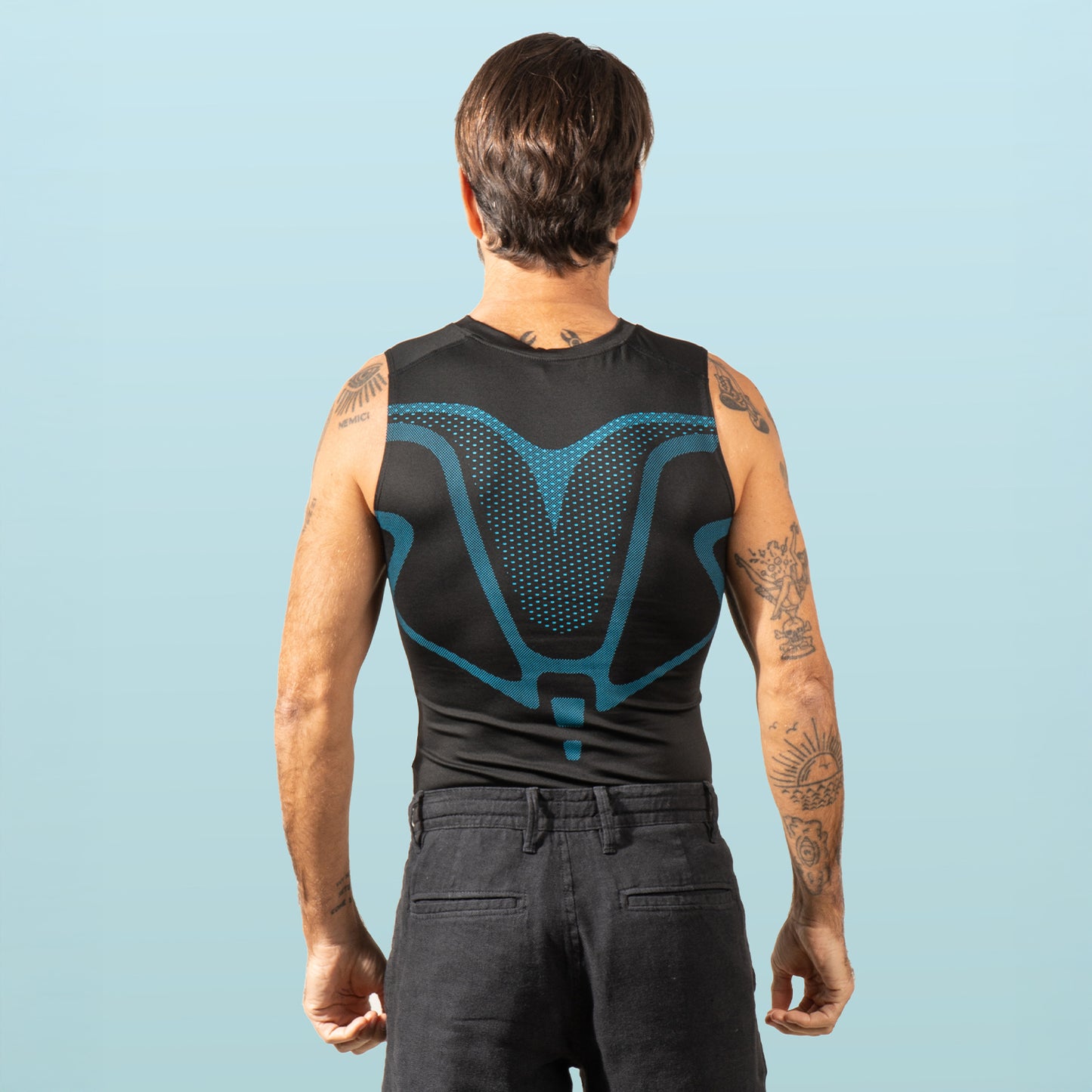
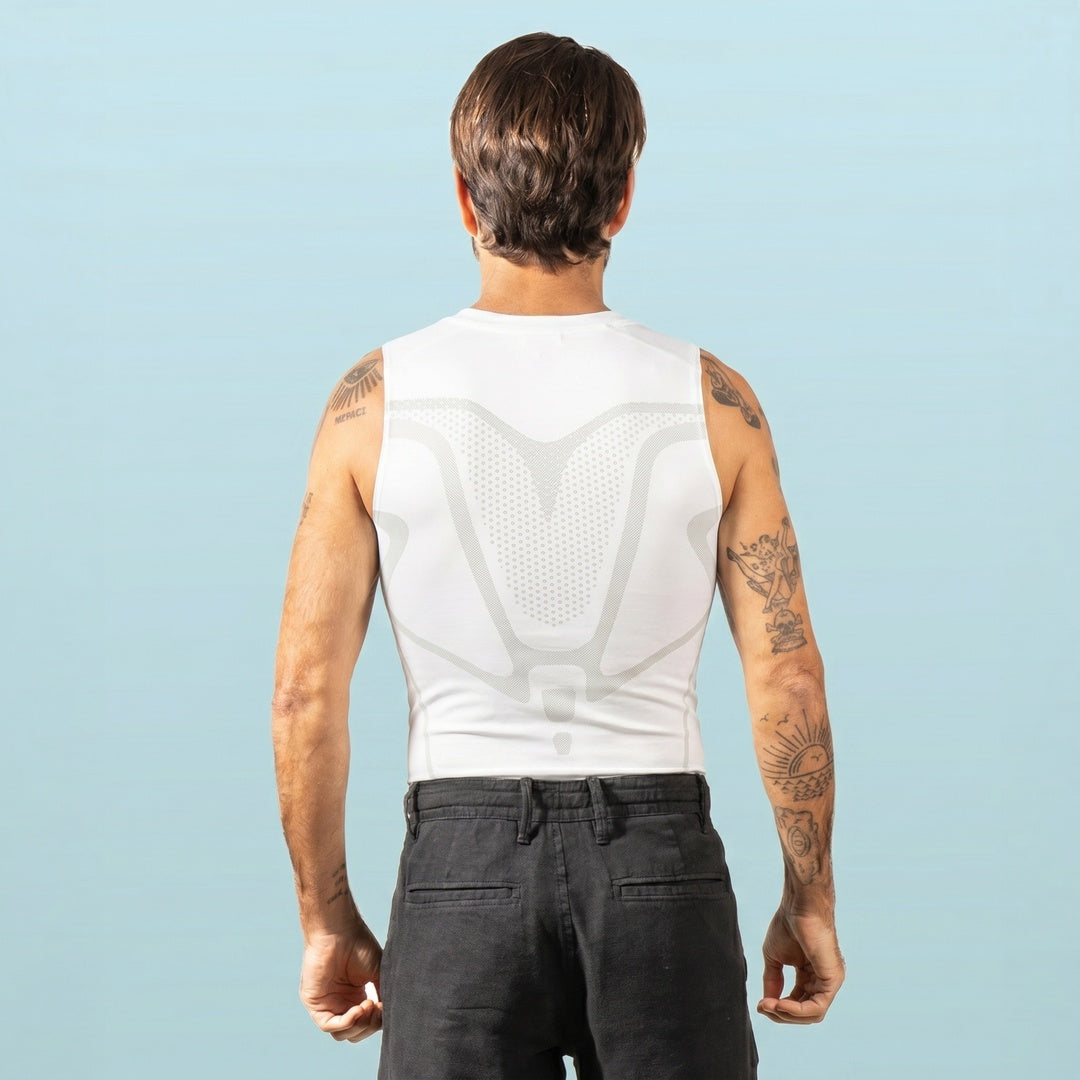
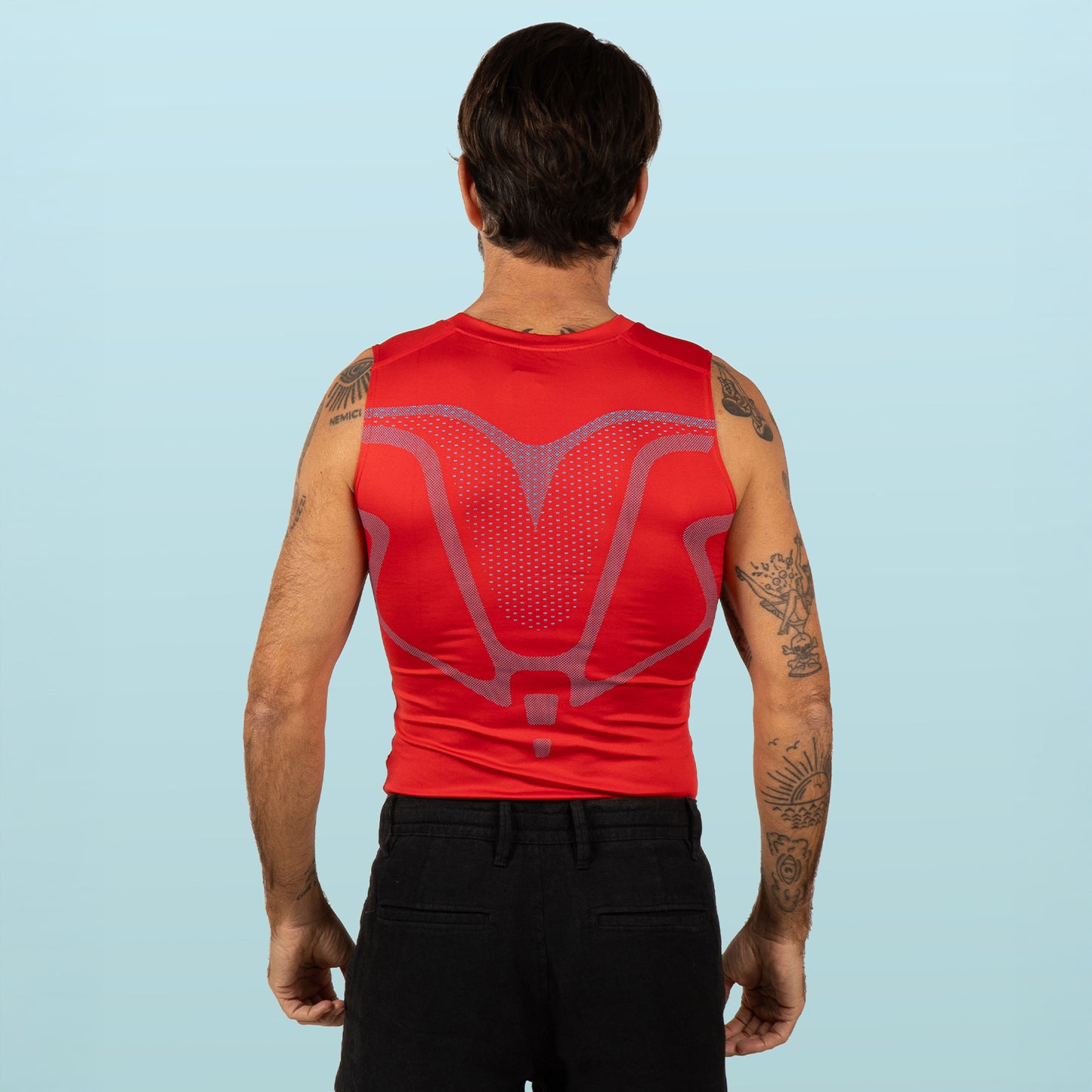
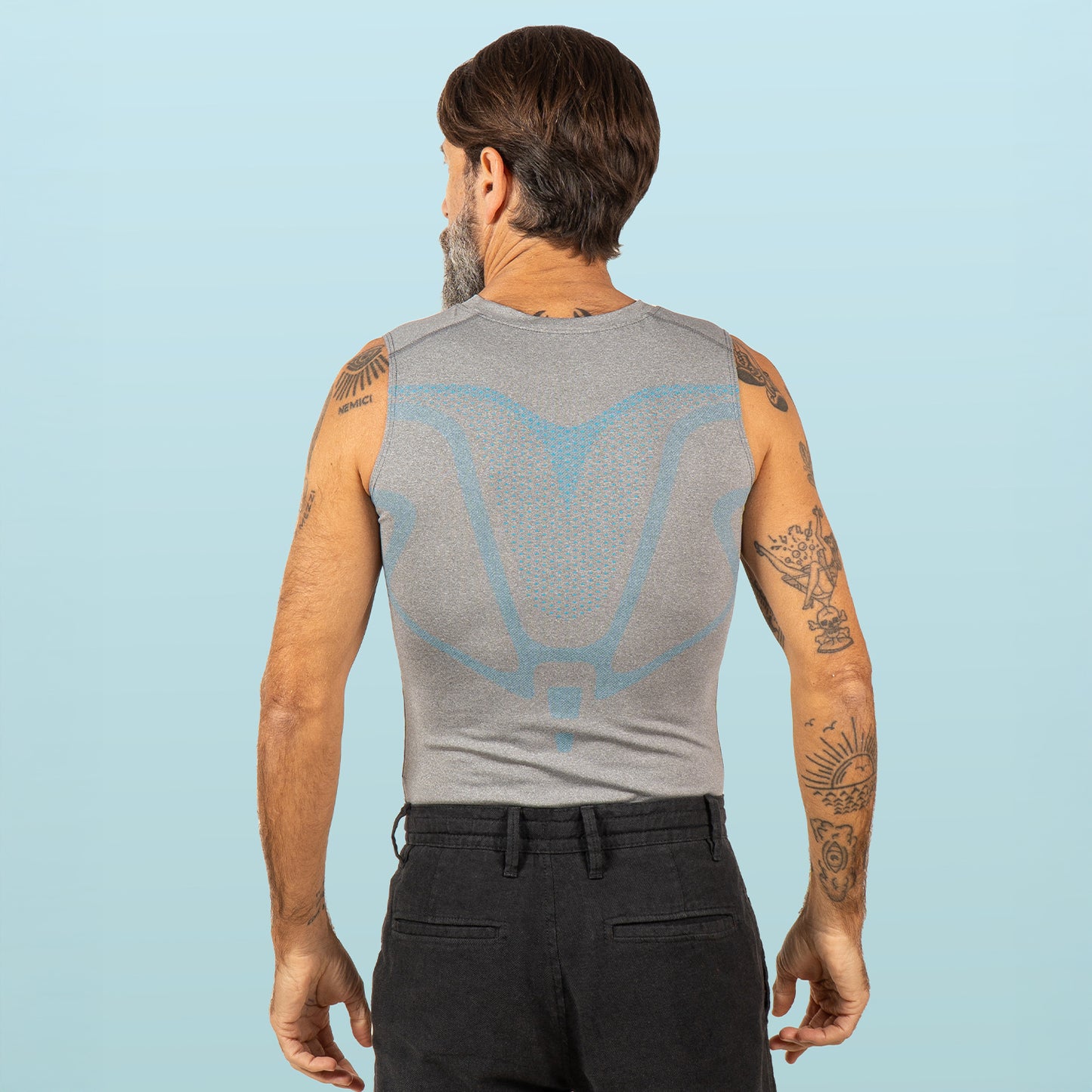
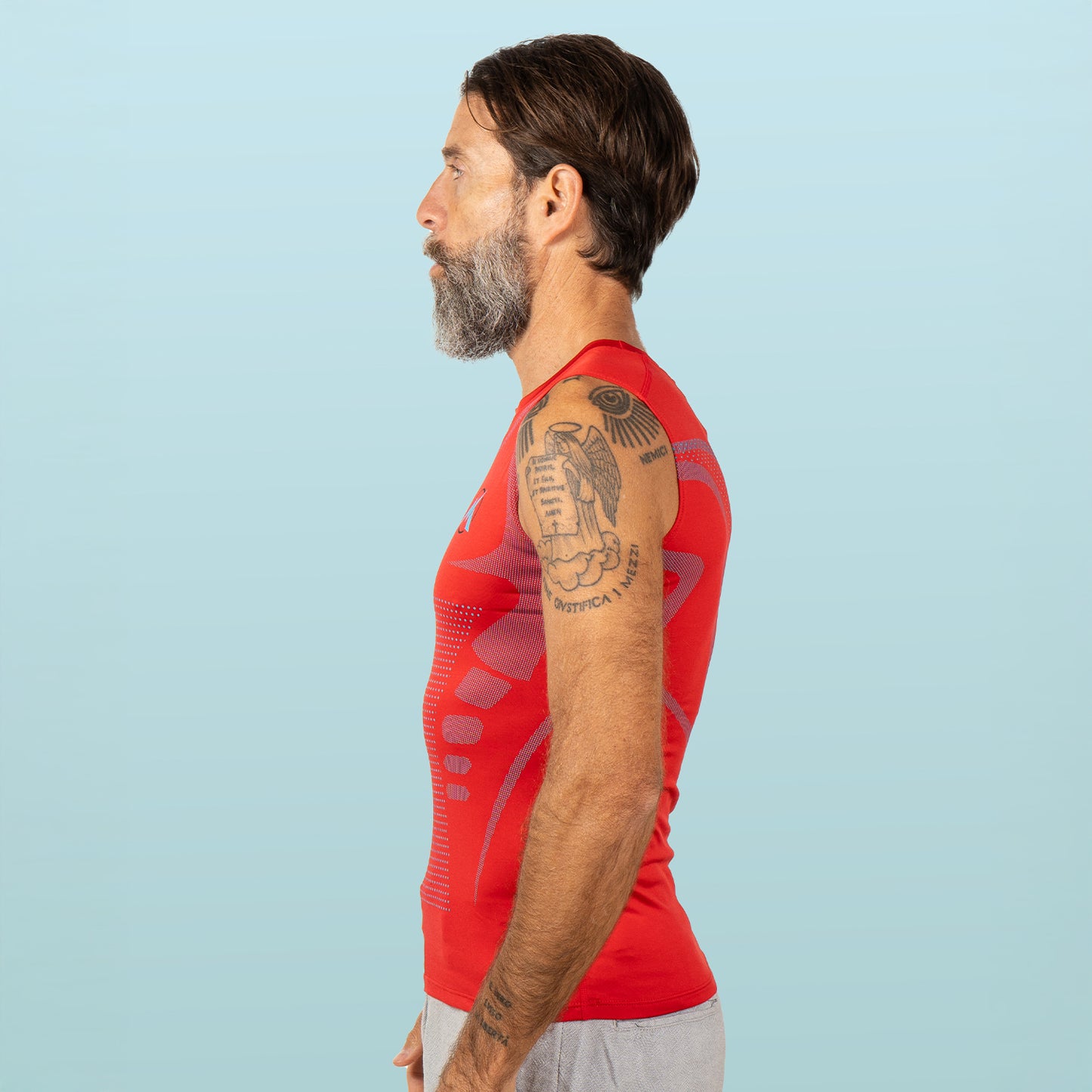
This is exactly why so many men in their 40s and 50s have started layering with VitaBoost, the Maynox compression undershirt designed for men with a softer midsection and rounded shoulders. It doesn't replace the work — it makes the upright position the default while your back muscles are still catching up. You stand taller under your dress shirt, your shoulders sit back more naturally, and your gut isn't pulling your frame forward all day.
Think of it as scaffolding while the real structure rebuilds. Most guys who add VitaBoost to their posture plan say the wall test stops being a "test" within 6–8 weeks. (For the deeper analysis on whether compression actually works, see Do Compression Shirts Work for Men? An Honest Look at the Evidence.)
The current Maynox offer is Buy 1 Get 1 Free — $59.99 → $15 per shirt when you grab the pair.
Get VitaBoost — Buy 1 Get 1 Free
Frequently asked questions
What causes slouching as you get older?
Slouching with age comes from a combination of muscle loss in the upper back and core, years of forward-leaning desk and phone use, gradual disc and bone changes, fading postural awareness, and lower confidence levels that physically pull the chest down. The biggest single driver before age 60 is muscle weakness and habits — not bone change — which means most mid-life slouching is reversible.
At what age does posture start to decline?
Posture-supporting muscles begin weakening around age 40, while spinal disc thinning and bone-density loss accelerate after 50. Visible slouching usually appears in the late 40s to early 50s, even though the underlying setup started a decade earlier. Catching it early — in your 40s — is dramatically easier than reversing it at 65.
Can slouching be reversed in older men?
Yes — postural slouching driven by habits and muscle weakness is highly reversible at any age with consistent strength work and posture training. Structural kyphosis caused by bone changes and vertebral fractures is reducible but not fully erasable. Even men in their 60s and 70s can measurably improve their curve with targeted physical therapy.
How can a man stop slouching?
The fastest-working plan: a 10-minute morning posture reset (wall slides, chin tucks, doorway stretch, glute bridges), two 30-minute strength sessions per week focused on rows, face pulls, and core, plus a corrected desk and phone setup. Most men see visible improvement in 6–8 weeks of consistent work.
Is slouching the same as kyphosis?
No. Slouching is the everyday postural habit of rounding the upper back and pushing the head forward. Kyphosis is the clinical, structural curve of the upper spine, often driven by bone changes. Most men with bad posture have slouching, not kyphosis. If your forward curve has appeared rapidly or comes with pain, see a doctor to rule out kyphosis or vertebral fractures.
Sources
- National Institutes of Health (PMC) — Muscle tissue changes with aging
- Cleveland Clinic — Are Your Screens a Pain in the 'Tech Neck'?
- NIH/PMC — Age-Related Hyperkyphosis: Causes, Consequences, and Management
- Harvard Health — Is it too late to save your posture?
- UCSF Newsroom — Physical Therapy Can Help Straighten a Hunched Back for Older People
The bottom line: men slouch with age because the support muscles thin out, the daily habits pull the body forward, and the confidence drop quietly finishes the job. None of that is permanent at 45, 55, or even 65 — but it's only reversed by the man who actually does the work. Ten minutes a morning, two short strength sessions a week, eyes up off the phone, and a base layer that holds the line while your back catches up. Stand the way you used to. It comes back.