By Owen Blot · Founder, Maynox · Last updated May 13, 2026
- The mirror-camera gap: why your photo never matches what you see
- The selfie problem nobody warned you about
- The half-second the camera catches and the mirror doesn't
- The frozen "photo smile" and how to lose it
- Light, shadow, and the angle that ages you 10 years
- The 90-second pre-photo reset
- Frequently asked questions
You scroll through the photos from your nephew's wedding. Twenty of them. You hate eighteen. Not because the lighting was bad. Not because you weren't smiling. You look nothing like the guy you see when you brush your teeth every morning — older, heavier, more tired, more off. And you can't say exactly why.
That mismatch isn't your face getting worse. It's a measurable, repeatable phenomenon. Once you understand what's actually happening between the mirror and the camera, you can fix most of it without thinking.
The mirror-camera gap: why your photo never matches what you see
Start with the cleanest fact: the face you see in the mirror is not the face other people see. It's flipped. Left-right reversed. And because you have looked at that mirrored version of yourself thousands of times a week for fifty years, your brain has decided that is what you look like.
A 1977 study by Mita, Dermer, and Knight, published in the Journal of Personality and Social Psychology, gave participants two photos of themselves: one normal, one mirror-flipped. Participants overwhelmingly preferred the mirror-flipped version. Their close friends, given the same two photos, overwhelmingly preferred the normal one. The conclusion: we don't dislike how we look in photos because we look bad. We dislike it because it's unfamiliar.
This is called the mere exposure effect, and it's one of the most consistent findings in social psychology. The more you see a face, the more you like it. Your mirror-self has had a fifty-year head start on your camera-self. The camera version will always feel slightly wrong, even when it's objectively how you look.
That doesn't mean every photo is fine. It means before you blame your face, account for the bias. Then look at what's actually fixable.
The selfie problem nobody warned you about
The second reason your photos look wrong: the camera's lens.
Phone selfies are taken at arm's length — roughly 18 to 24 inches from your face. At that distance, almost every phone front camera behaves like a wide-angle lens. Wide-angle lenses don't just capture more — they distort. Features closer to the lens look bigger; features farther away look smaller. Your nose, the closest point on your face, looks about 30% larger than it actually is. Your forehead and ears look smaller. Your face looks wider, rounder, less defined.
Photographers have known this forever. The reason professional headshots use an 85mm or 100mm lens from 4-6 feet away is precisely to avoid this distortion. The "ugly version" of your face in selfies isn't your face. It's a lens artifact.
The fix:
- Don't take selfies at arm's length. Use the back camera and hand your phone to someone, or use the timer with the phone propped at distance.
- If you must take a selfie, hold the phone as far as your arm allows, then zoom in 2x. The zoom isn't the camera "getting closer" — it's the distance staying the same, the lens widening less. The face you see is the face you actually have.
- For social or LinkedIn photos, ask whoever is shooting to stand 6 feet away and zoom in instead of stepping closer. Same trick.
Try this once with a friend. Take one selfie at arm's length, and one photo with them standing six feet back. Same shirt, same light, same face. The two photos look like different people. The second one is the one strangers actually see.
The half-second the camera catches and the mirror doesn't
The mirror catches posed you. The camera catches real you.
When you stand in front of a bathroom mirror, your brain knows it's a mirror. Within a fraction of a second, you straighten up, lift your chin slightly, suck in your stomach, and pull your shoulders back. You've been doing this since you were 12. You don't even notice.
The camera shutter is faster than that reflex. By the time you've registered "photo!" the shutter has already fired — and what it captured was your default standing position: shoulders rolled forward, head an inch in front of your spine, lower back arched, gut pushed out by the postural chain. That's the position you live in 16 hours a day.
If you've been hunching for thirty years (and most men over 45 have), this is what aging actually looks like. We unpack the full mechanism in how to look 10 years younger without changing your face — same logic, different angle. Fix the resting posture and you fix every candid photo for the rest of your life.
Three things help, immediately:
- Build a new resting posture, not a posed one. The five-minute daily routine in posture exercises for men over 50 (wall angels, doorway stretch, dead bug) retrains the default, so the camera catches the corrected version.
- Stack just before the photo. When you see someone raise a camera, take half a second: heels down, shoulders back and slightly down, chin a quarter-inch tucked, crown of the head pushed toward the ceiling. Not a pose. A stack.
- Don't suck in. Sucking in pushes your ribs up and your gut forward — it makes the photo worse, not better. We covered exactly why in why sucking in your stomach doesn't work.
The frozen "photo smile" and how to lose it
This is the one men over 45 do that ruins more photos than anything else.
You see the camera. Your face does the same thing it's been doing since age 30 — a tight-mouthed, slightly forced smile, eyes wide open, held perfectly still for a beat too long. You think it looks polite. It looks like a hostage photo.
The problem is the freeze. A genuine smile is dynamic — it builds, peaks, fades, all inside a second. The photo smile holds at the awkward in-between point. The camera, which shoots in a fraction of a second, catches you at the worst possible moment: your face fully tensed, your eyes locked, your jaw clenched.
The fix is counterintuitive. Don't smile on cue. Instead:
- Look away right before the shutter. Then look back as it fires. The face is unfrozen and slightly more alive.
- Think of something specific — a memory, a joke, the person behind the camera doing something dumb. Real smiles need a real prompt. "Cheese" produces a hostage face.
- Close your eyes for a beat, then open them. Photographers use this constantly. It resets the face and softens the eyes for the next half-second.
- Wet your lips. Dry, tight lips on a 50-year-old man read as tense and tired. Two seconds of lip-licking before a shot makes a measurable difference.
Practice this on burst mode. Take 10 photos in two seconds — one of them will have a real smile. Throw out the other nine.
Light, shadow, and the angle that ages you 10 years
You can fix everything above and still look 10 years older if the light is wrong.
Three rules:
Avoid overhead light. Restaurant overheads, kitchen ceiling fixtures, and harsh midday sun all cast a downward shadow that drops under your brow line and into the hollows of your cheeks. The result: deep eye bags, visible cheek sag, and an exaggerated jowl line. The same face, lit from a window at chest height, looks ten years younger. If you have any choice, move toward a window or under an awning.
The Cleveland Clinic notes that visible skin features like photoaged texture become dramatically more obvious in raking, top-down light. The same skin under soft, even, front-facing light looks years younger — the texture is still there, but the shadows don't paint it.
Don't shoot from below. The phone camera held at chest height shooting up at you adds 15-20 pounds to your jawline, exposes the underside of your nose, and gives you the world's most unflattering double chin. The camera should be at your eye level or slightly above. If someone hands you a phone, ask them to raise it a few inches.
Three-quarter angle, not full frontal. Turn your shoulders 15-20 degrees off-axis from the camera. Keep your face turned more toward the camera than your body. This narrows your silhouette in the frame and gives your face shape and depth. A straight-on, square-shouldered photo looks two sizes wider than you actually are.

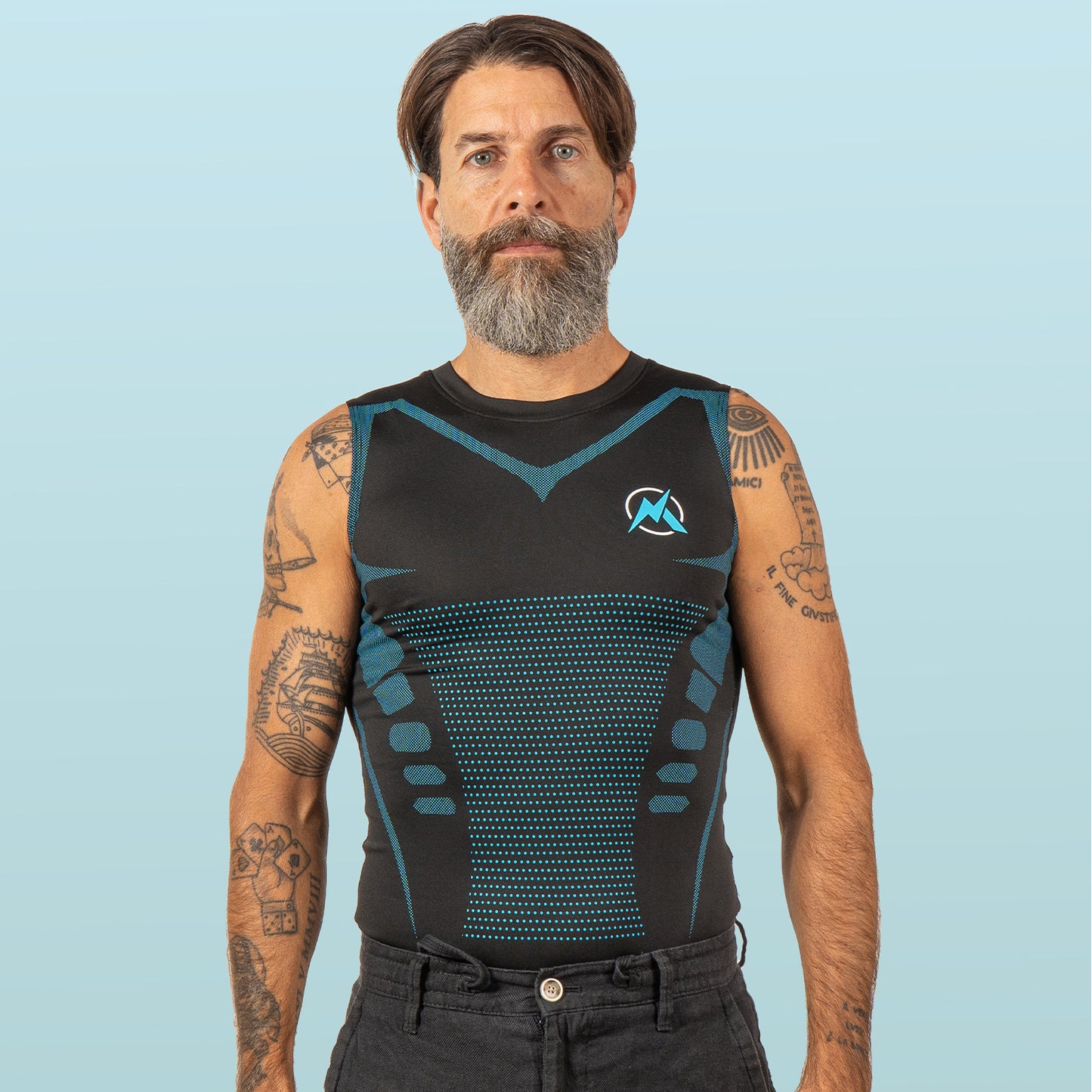
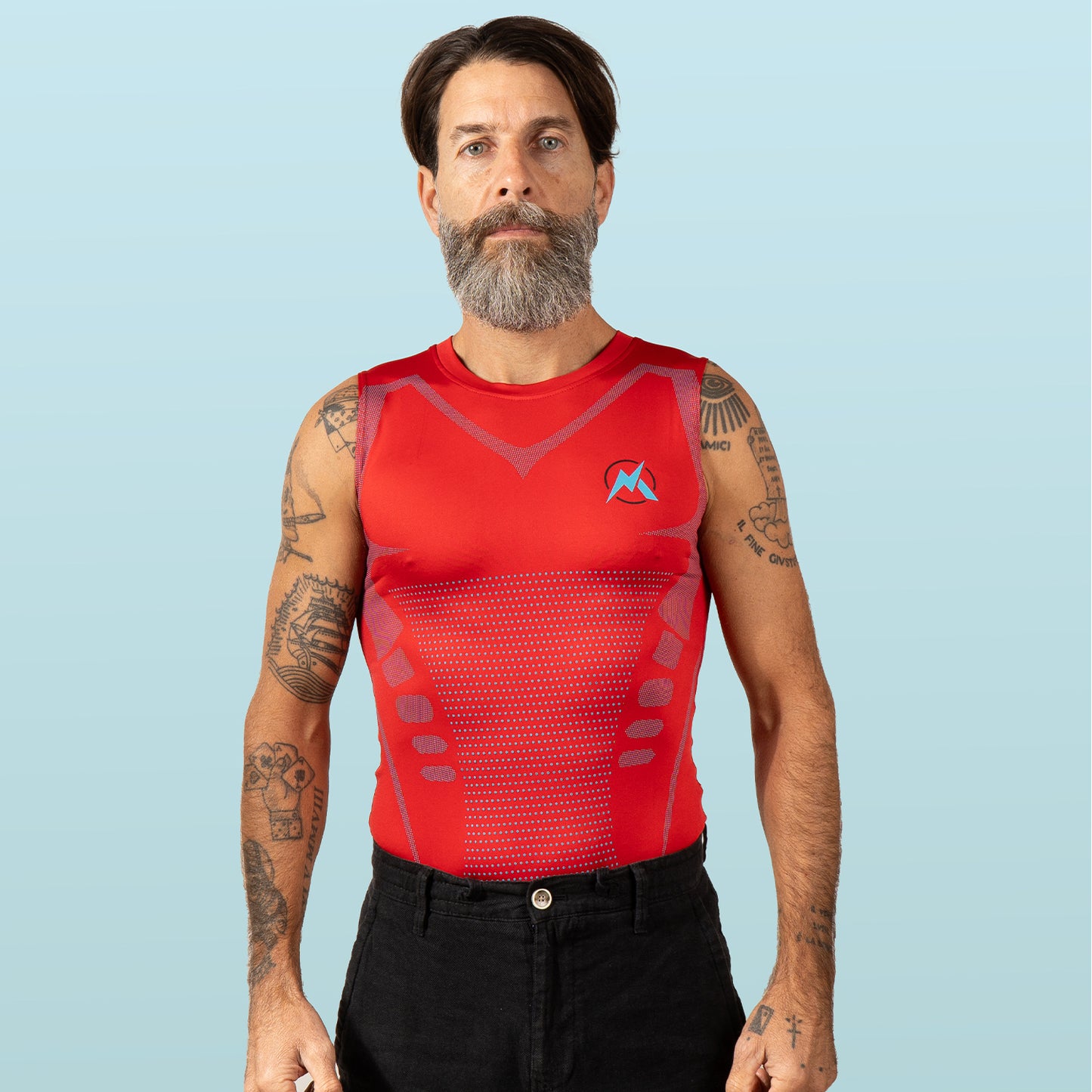
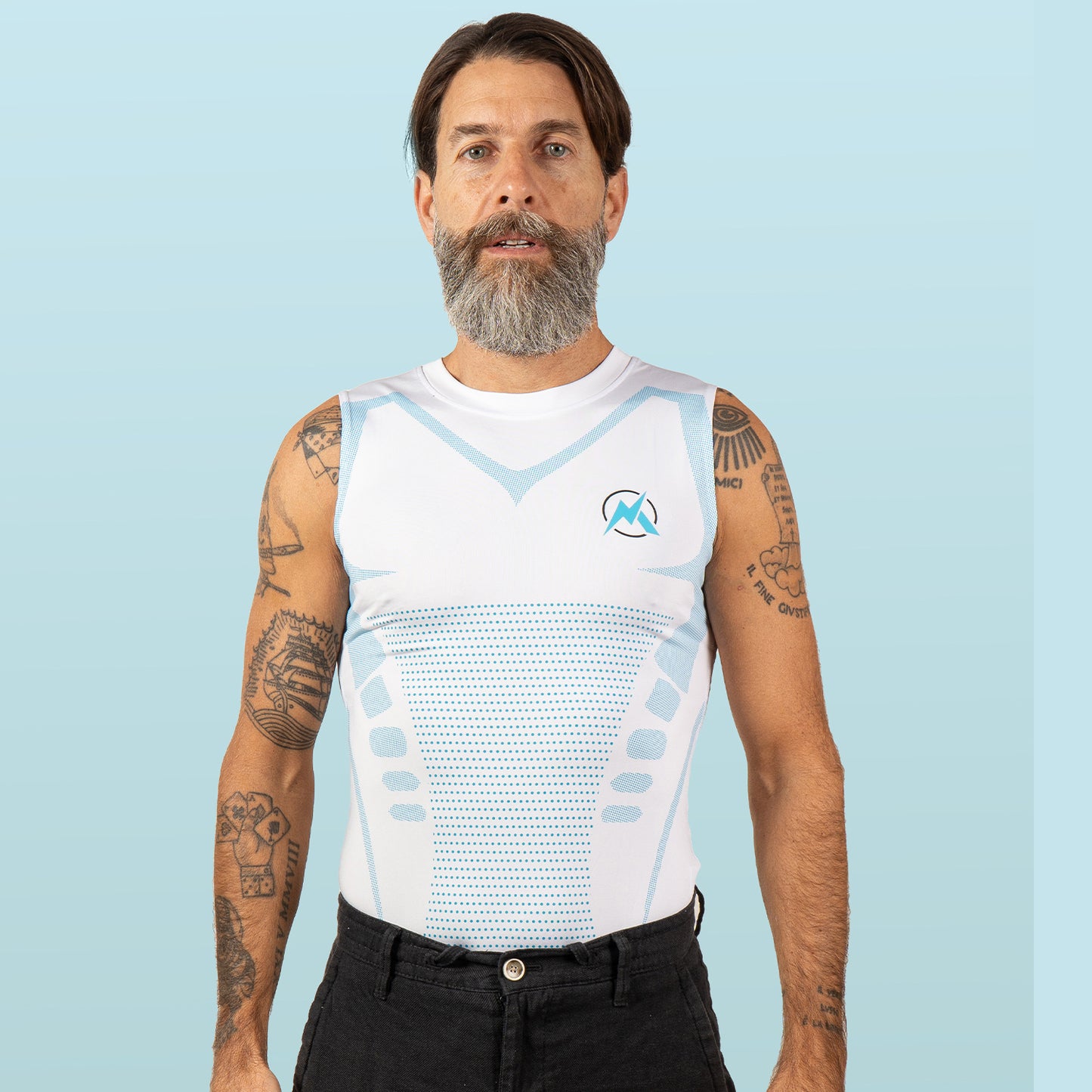
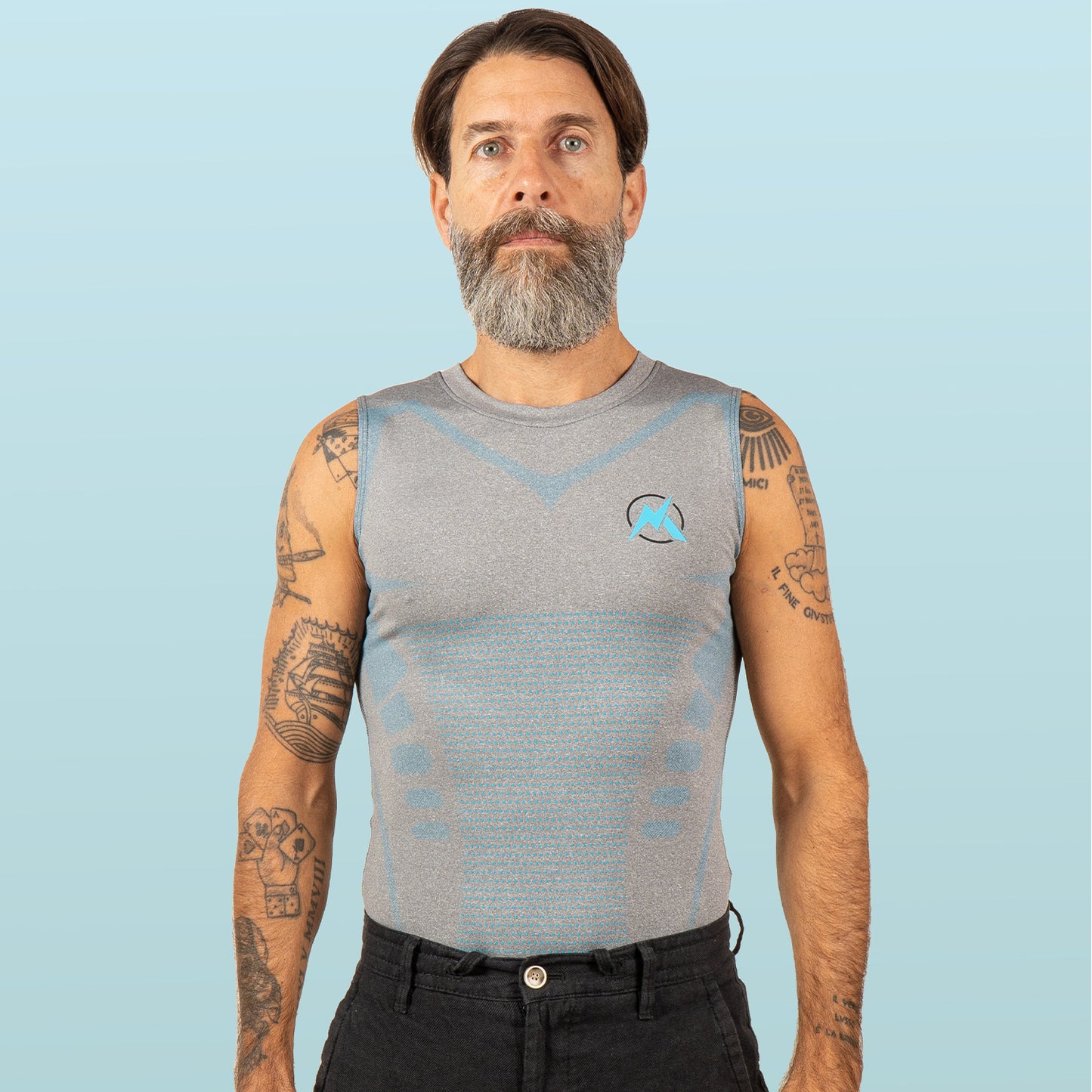
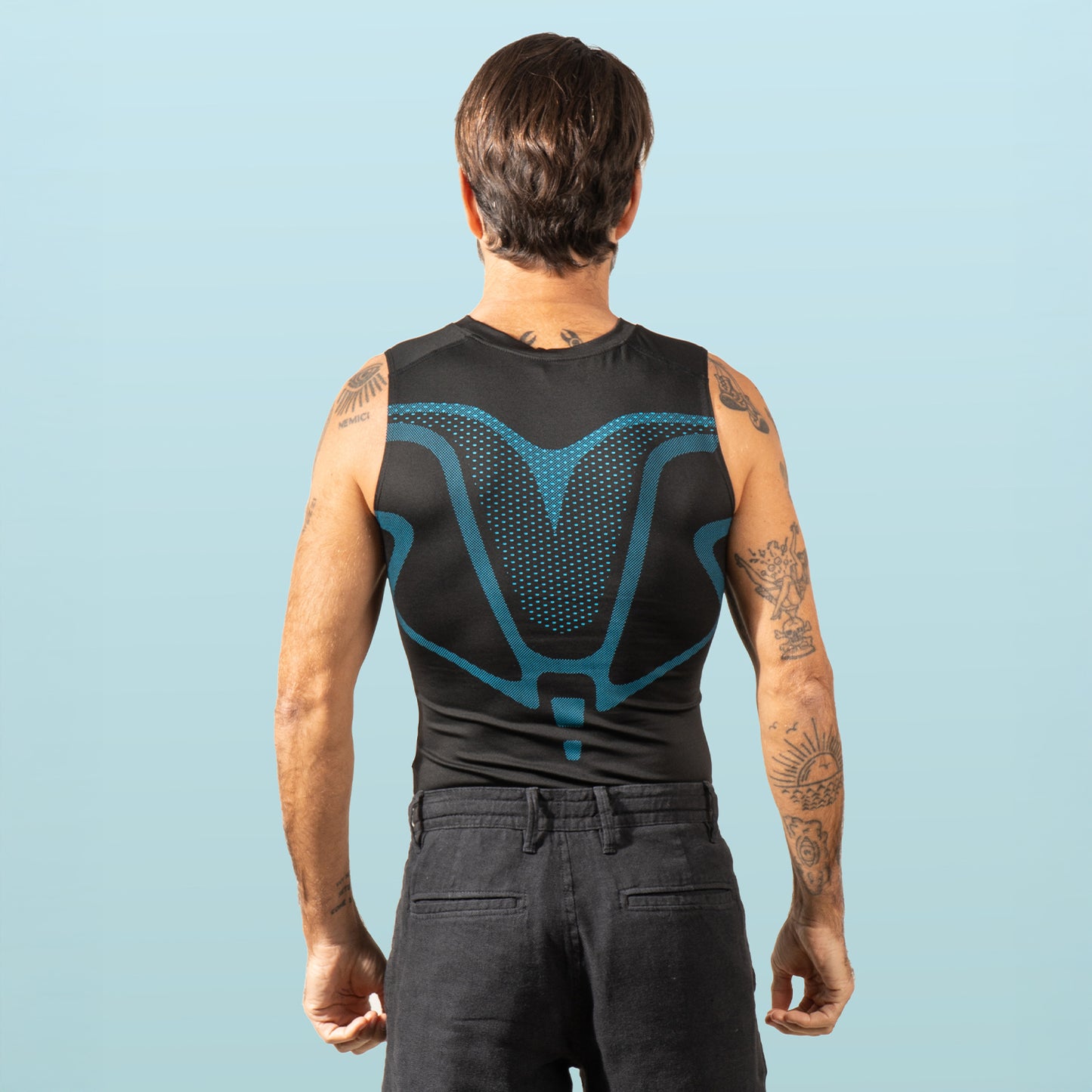
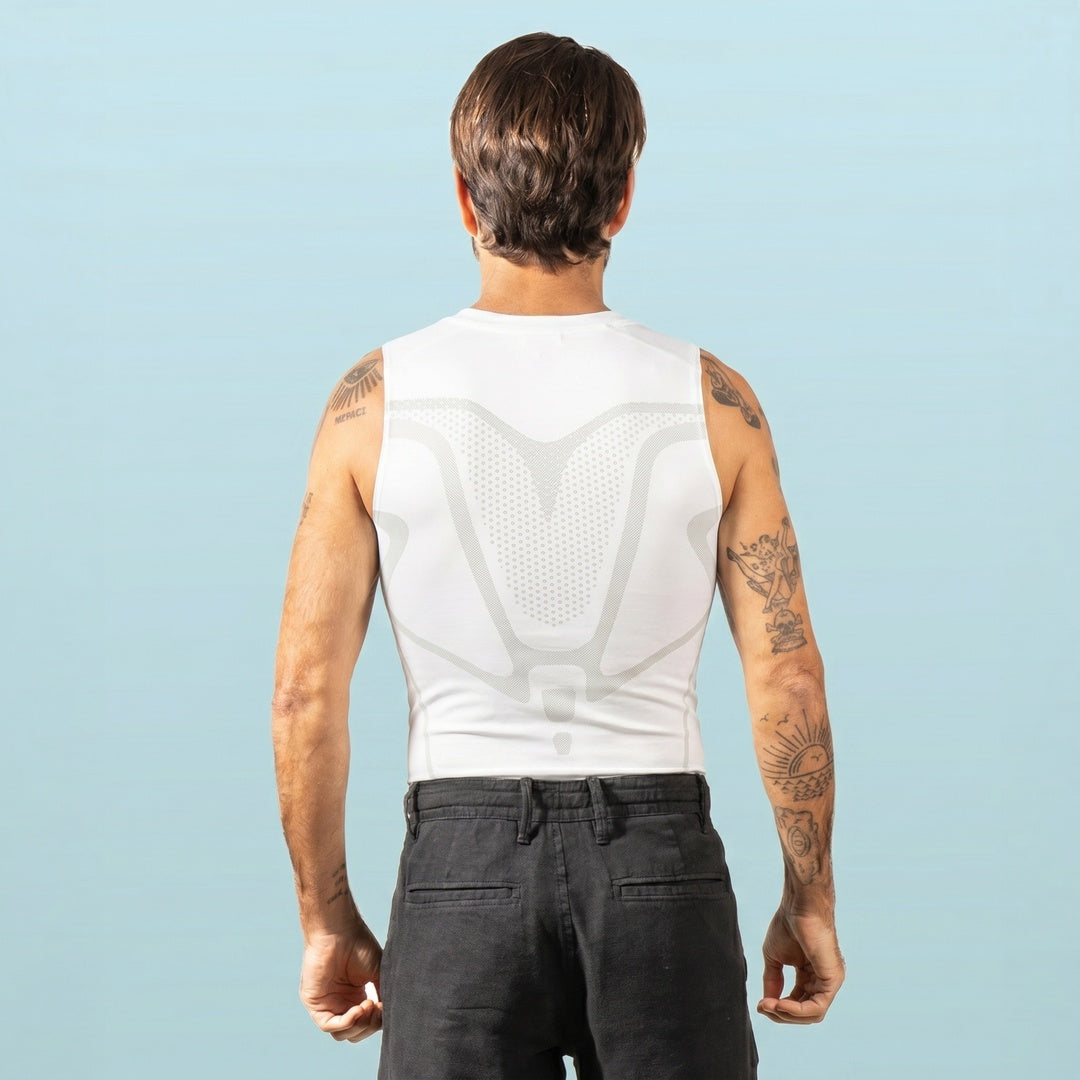
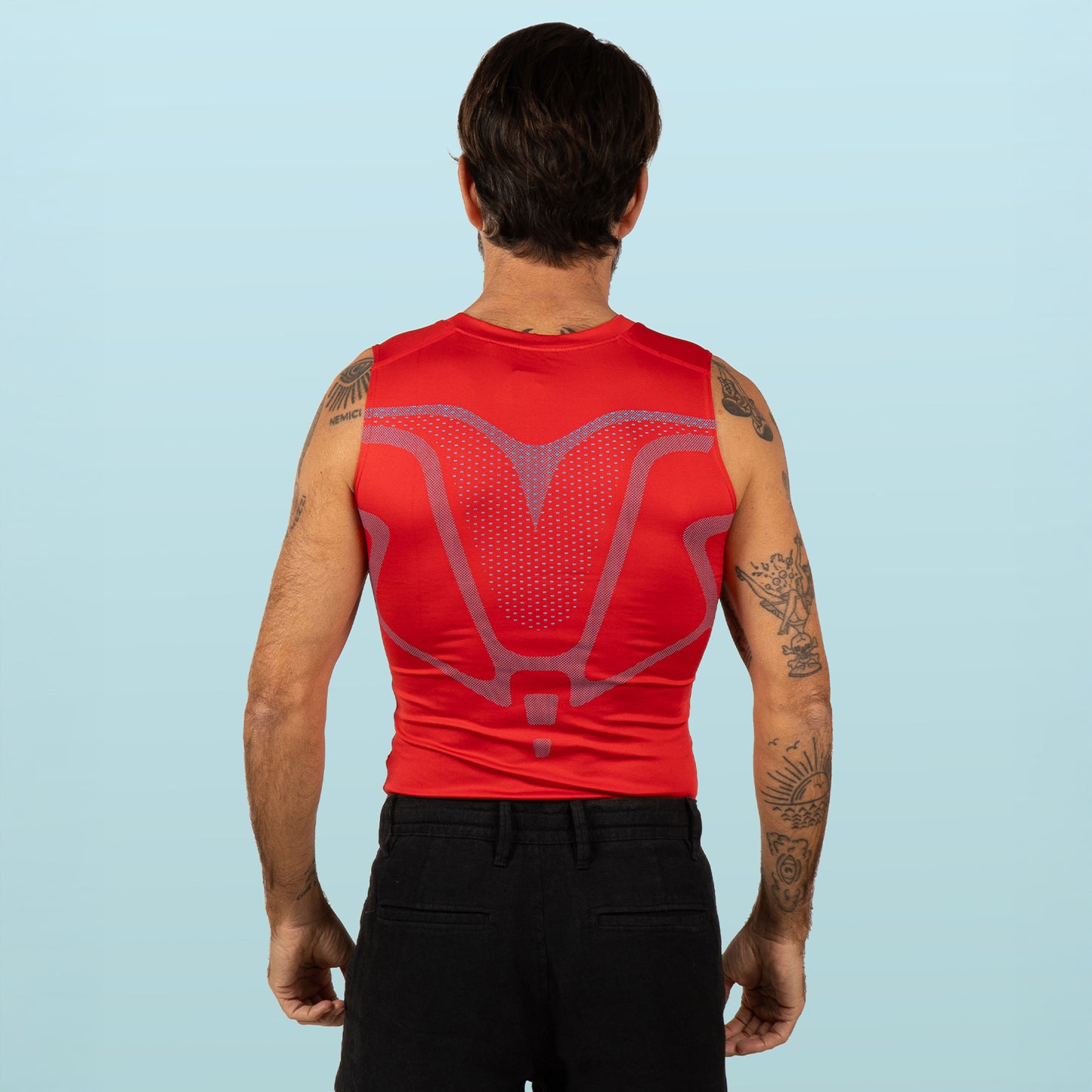
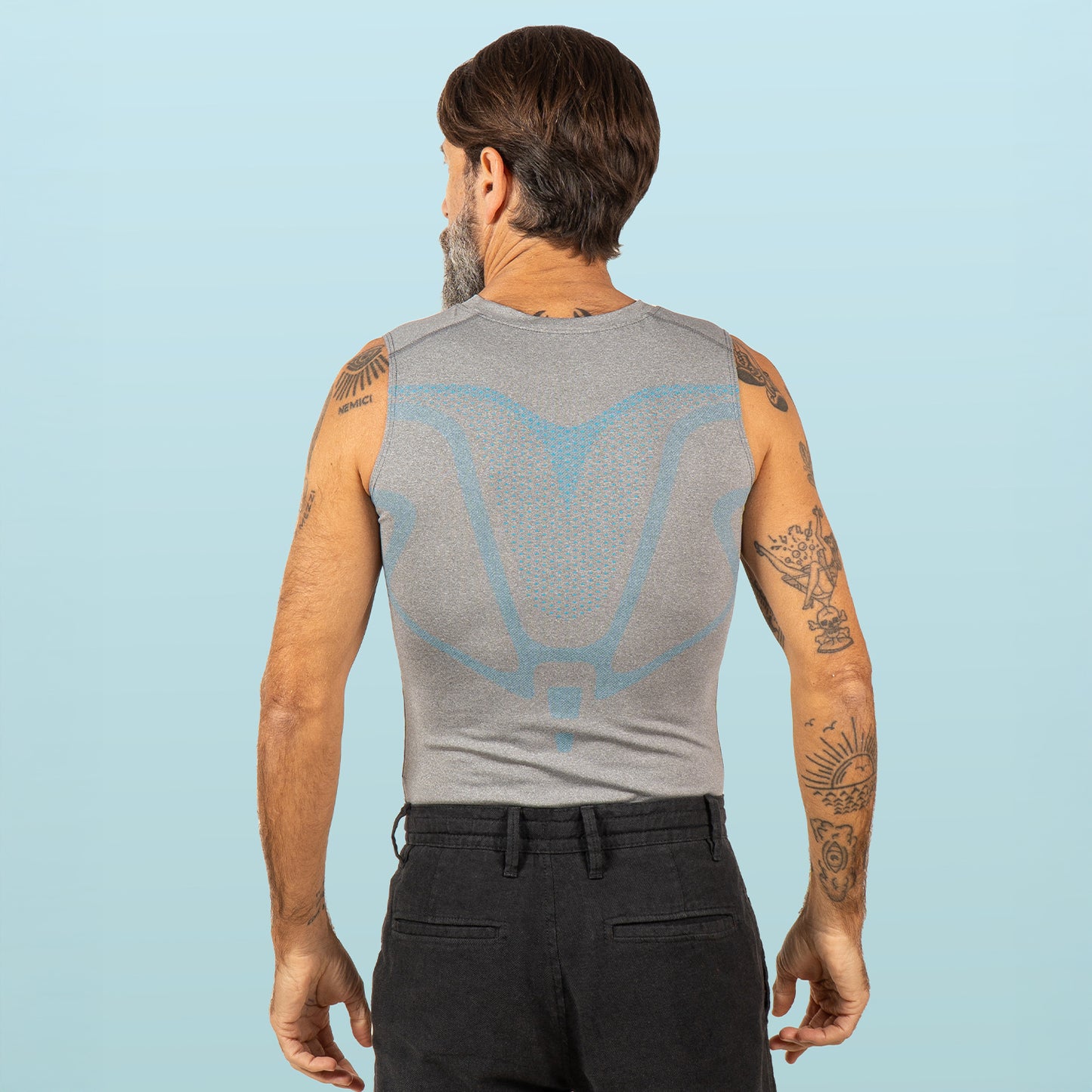
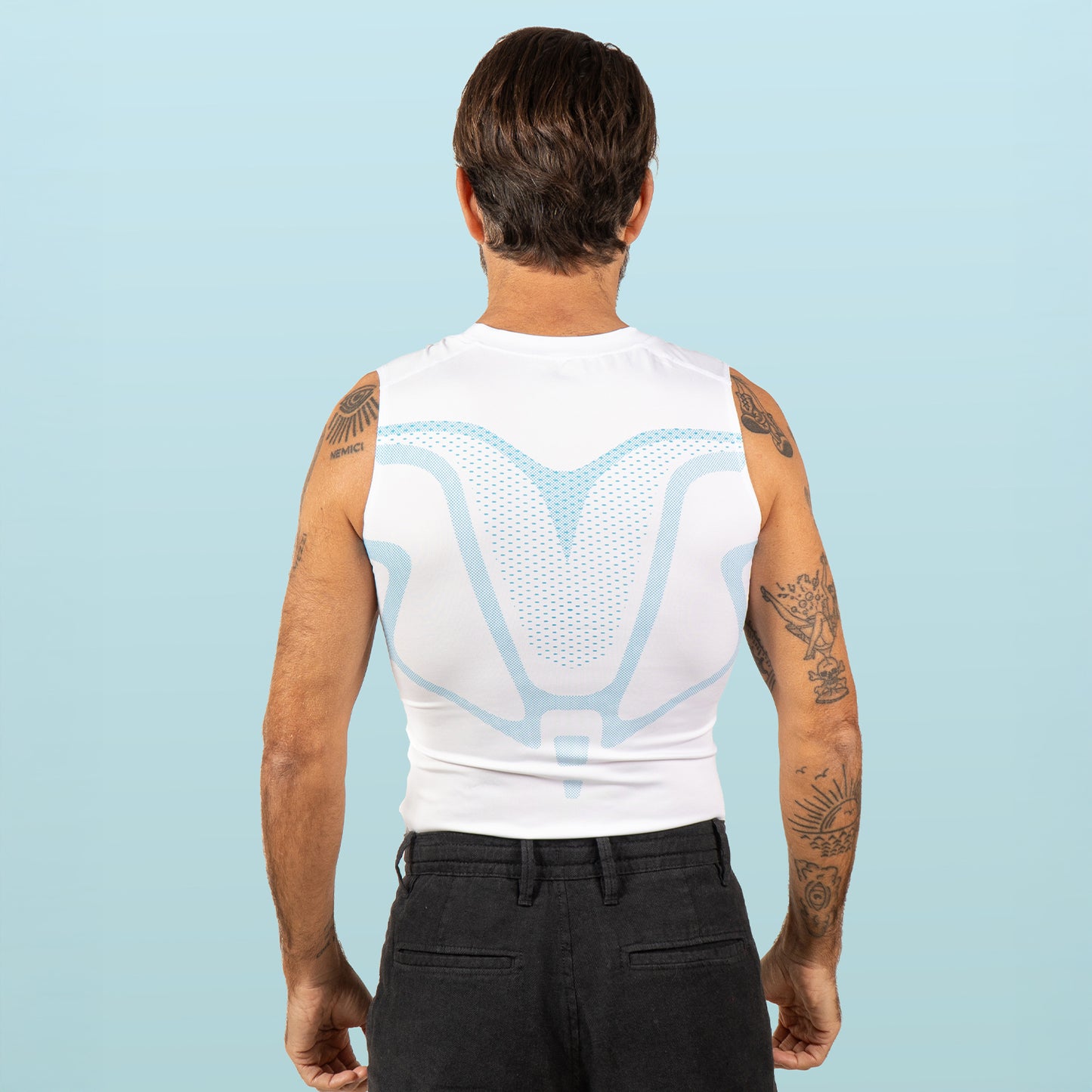
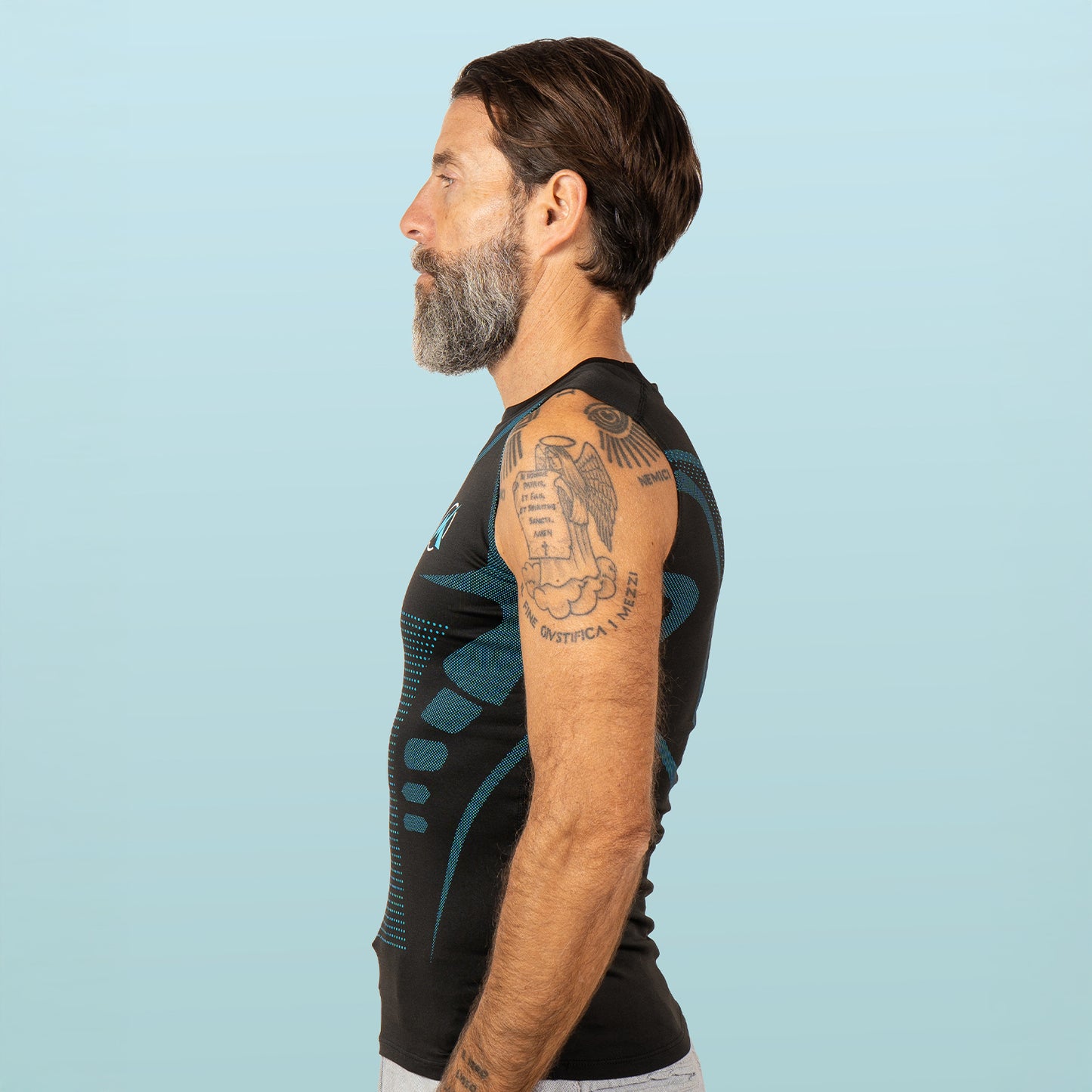
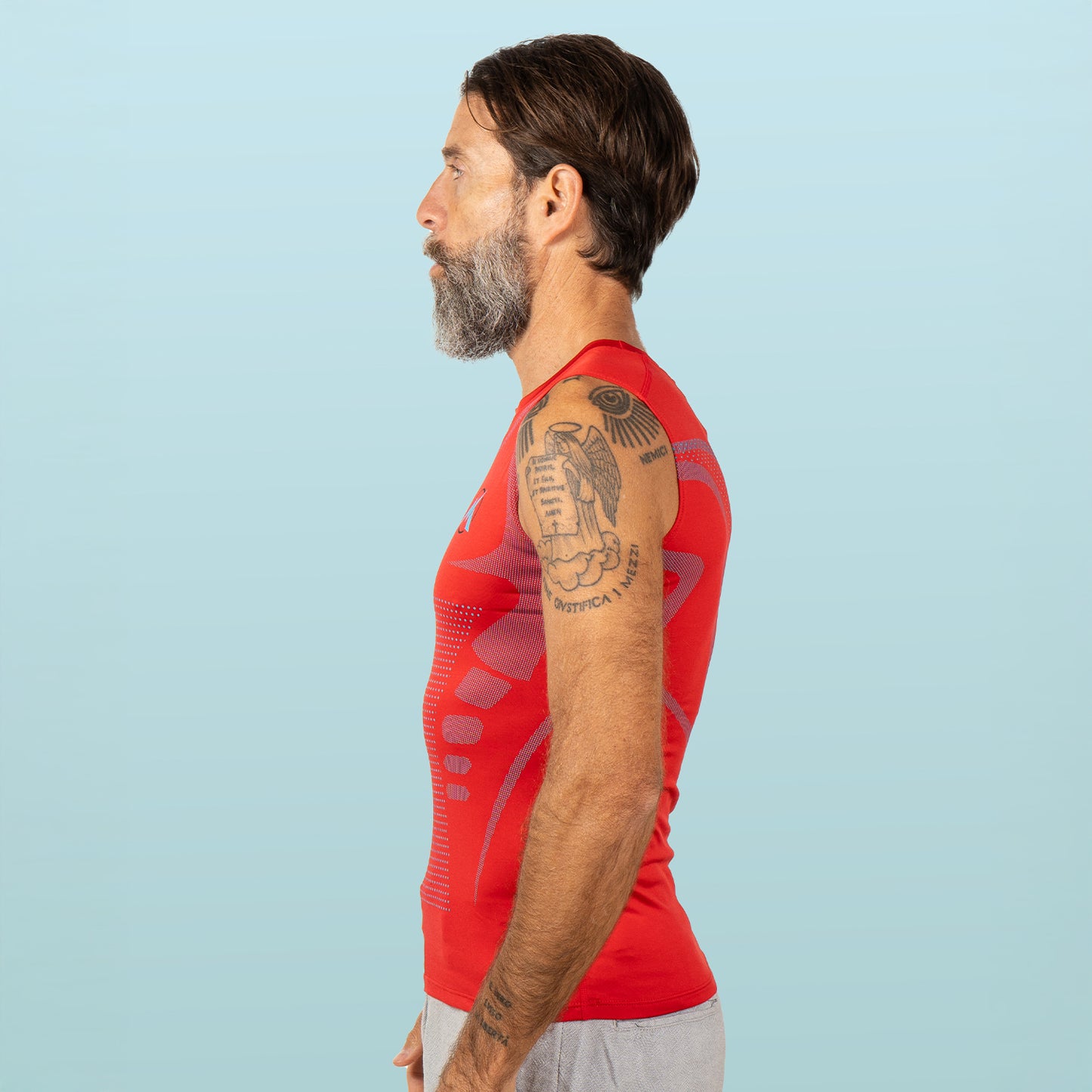
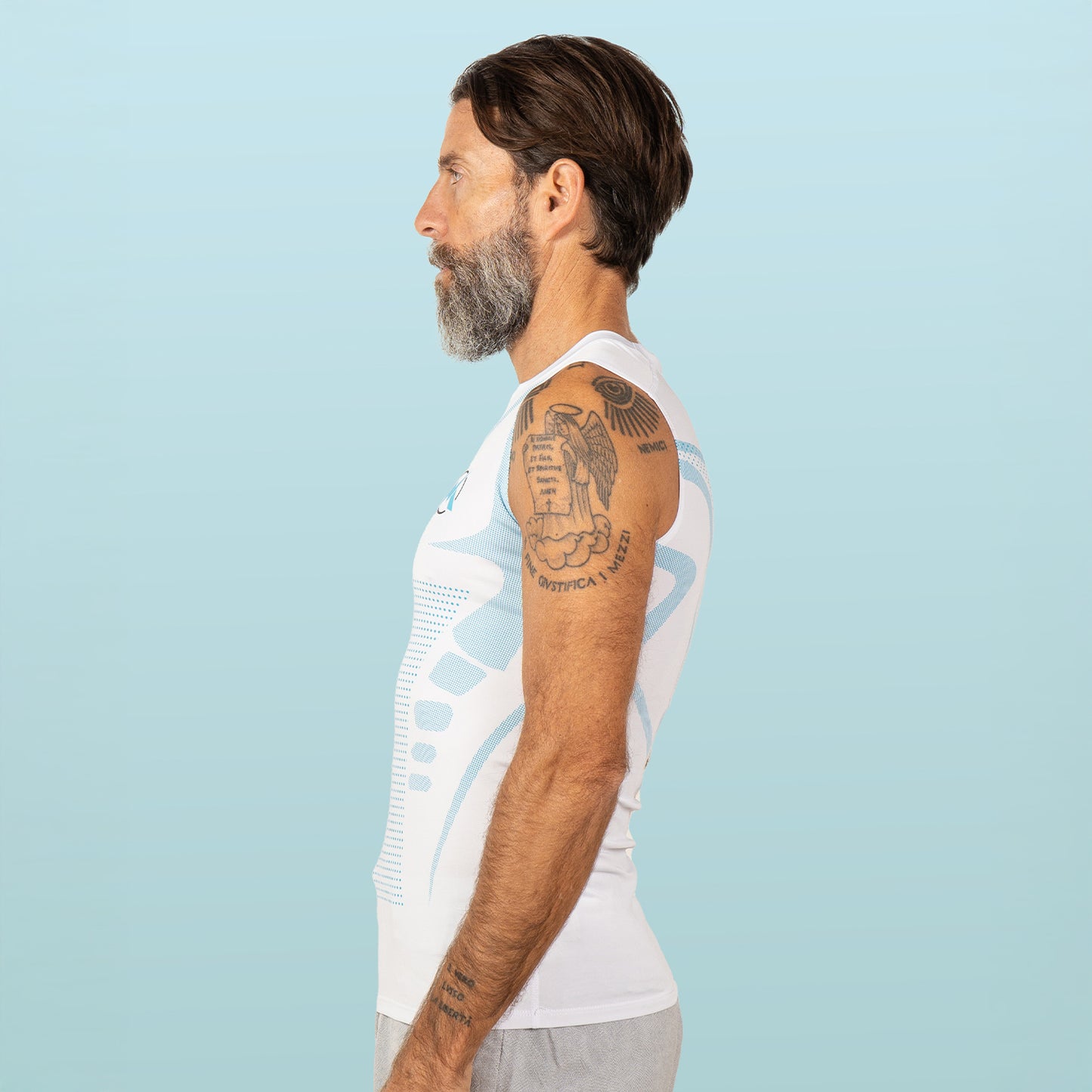
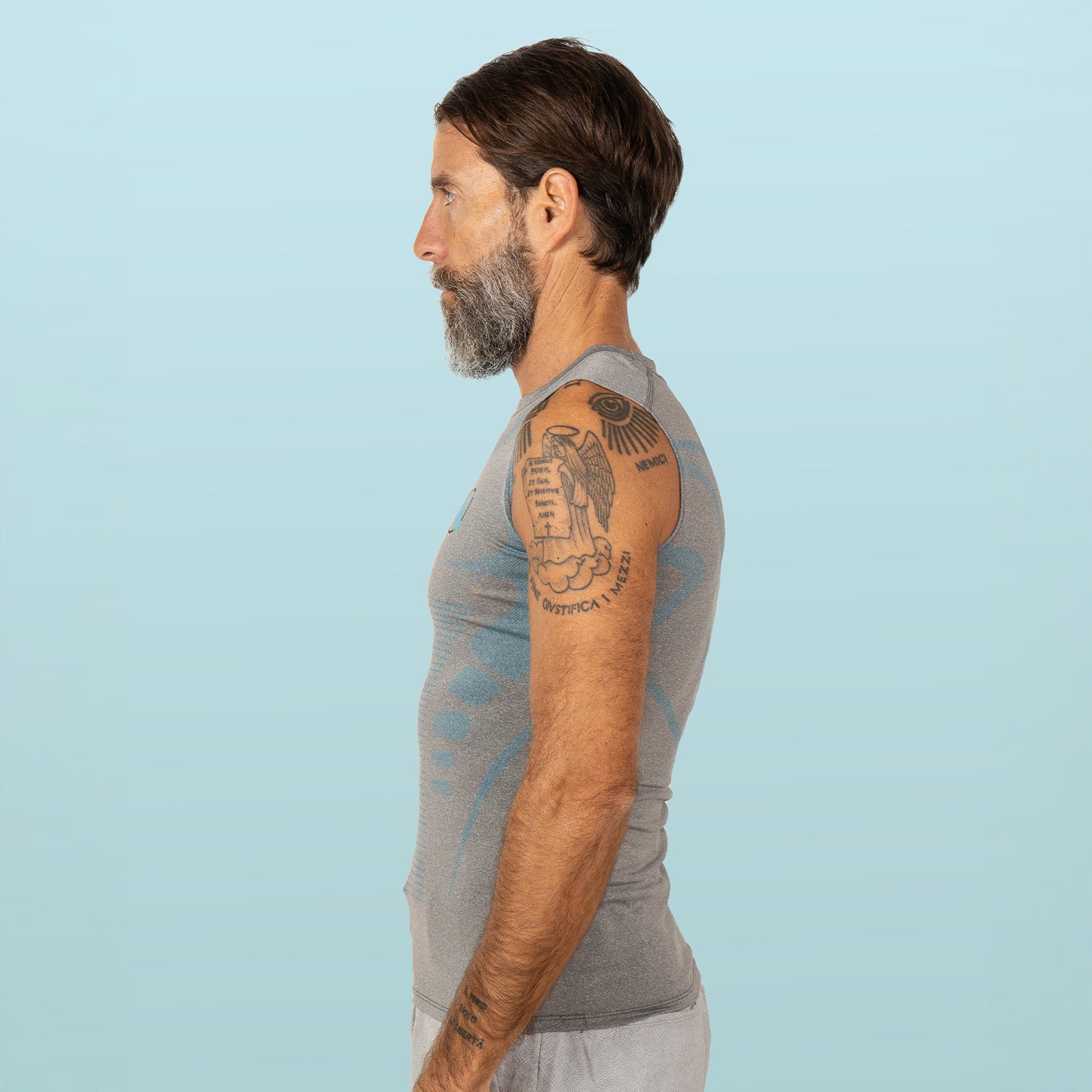
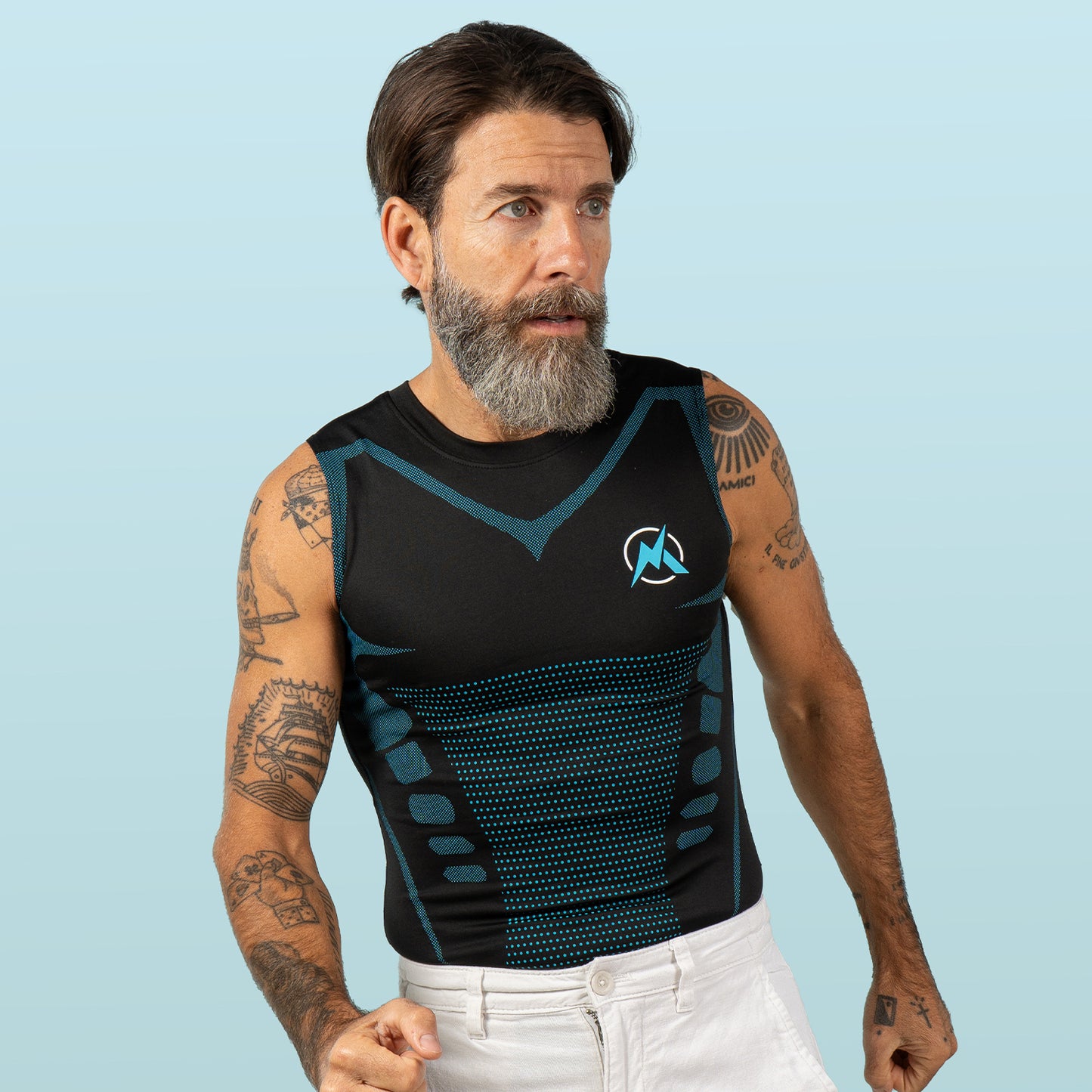
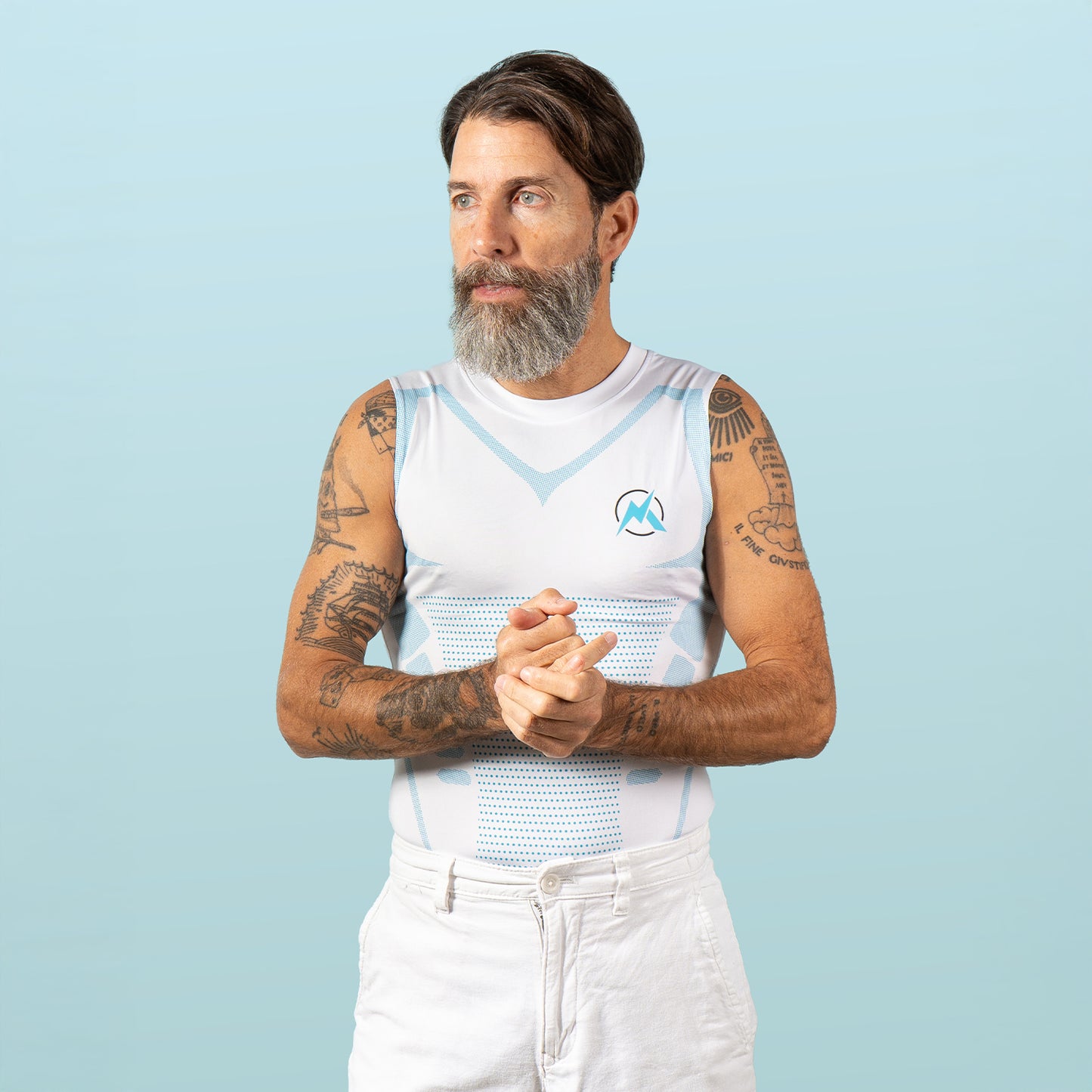
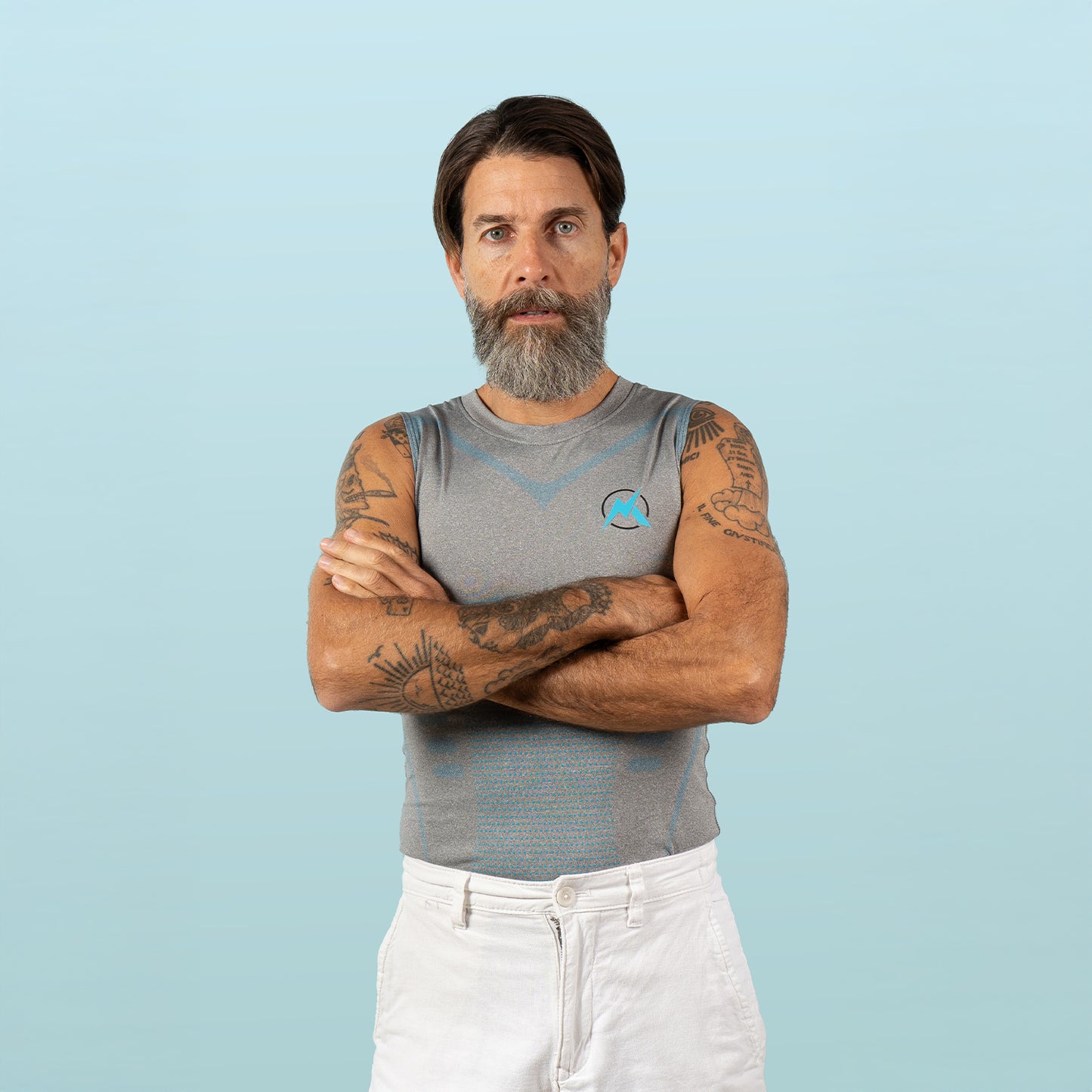
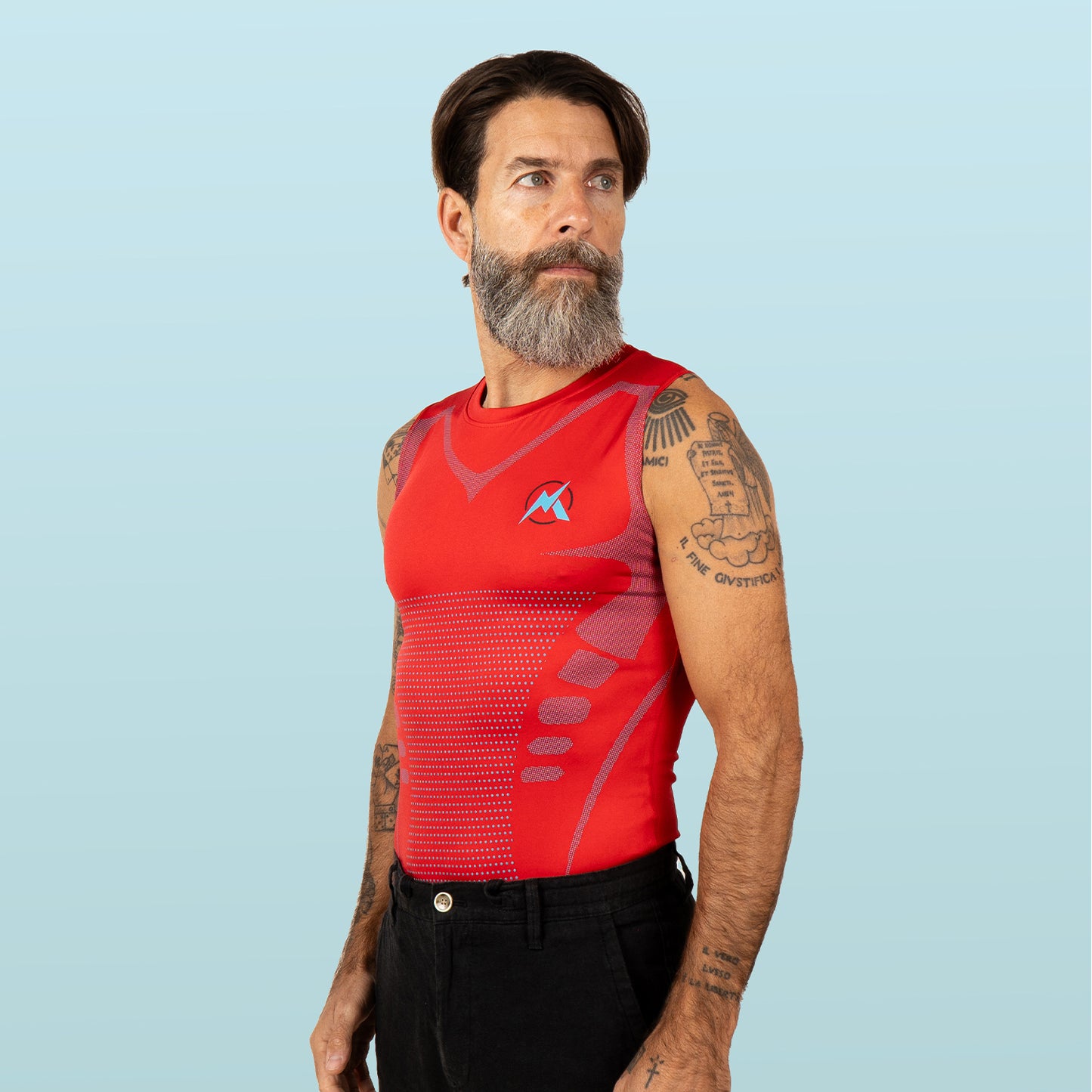
One more layer worth mentioning: what you wear under your shirt matters more in photos than out of them. Cameras compress depth. A soft middle, an unsupported chest, and a shirt that drapes loose all read as "older" in two-dimensional images in a way they don't in person. A thin, compressive base layer like VitaBoost pulls the torso into a single clean line under whatever you're wearing on top — exactly the line the lens is going to flatten anyway. Same body, sharper photo.
The 90-second pre-photo reset
When you see a camera come out — at the wedding, the office party, the restaurant, the family Christmas — give yourself 90 seconds before the shutter fires. In order:
- Step toward the light. Toward the window, away from the overhead fixture. (10 seconds.)
- Stack your posture. Heels, butt, shoulders, head — vertical line. Shoulders back and down, not raised. (5 seconds.)
- Smooth your shirt. Pull the front of your shirt down once. Check the collar isn't gapping. (5 seconds.)
- Turn 15 degrees. Off-axis from the camera. Don't square up. (3 seconds.)
- Drop your shoulders an inch and breathe out. Not in. Out. The tension shows in the photo. (3 seconds.)
- Lift the camera if it's below eye level. Polite ask: "Can you raise it a touch?" Photographers know exactly what you mean. (10 seconds.)
- Wet your lips, look away, look back. Don't say "cheese." Think of one specific thing that makes you laugh. (5 seconds.)
- Let them take three shots, not one. The third one will always be the best. The first one is always tense. (45 seconds.)
That's it. Ninety seconds of micro-adjustments. Across a year of family events, the cumulative effect is hundreds of better photos. Not because your face changed. Because you stopped giving the camera the wrong version of it.
The bottom line
The man in the bathroom mirror and the man in the wedding photo are the same man. What changes is the lens, the light, the posture, the freeze, and the fifty years of mere-exposure bias making you think the mirror version is the real one. None of that is your face. All of it is fixable in the minute before the shutter clicks.
The next time you hate a photo of yourself, ask three questions in order: How close was the lens? Where was the light coming from? What was my posture doing when the shutter fired? The answer is almost never "my face."
See the VitaBoost compression tank →
Frequently asked questions
Why do I look so bad in photos but ok in the mirror?
Because you have seen the mirror version of yourself thousands of times more than the camera version. A 1977 study by Mita, Dermer, and Knight found that people overwhelmingly prefer the mirror-flipped version of their own face, while their friends prefer the unflipped photo version. The phenomenon is called the mere exposure effect — familiarity drives preference. Your photo doesn't look worse. It looks unfamiliar.
Why do I look different in pictures than in real life?
Two reasons. First, lens distortion: phone selfies at arm's length act like wide-angle lenses and exaggerate features closer to the camera, like your nose. Second, the camera captures your default posture and face, not the posed version you see in the mirror. Both effects compound. Standing farther from the camera and stacking your posture for the half-second before the shutter fires fixes most of it.
What is the best angle for men in photos?
Three-quarter, not full frontal. Turn your shoulders 15-20 degrees off-axis from the camera, then keep your face turned more toward the lens than your body. The camera should be at eye level or slightly above. This narrows your silhouette, defines your jawline, and avoids the wide, flat look of a straight-on shot. The classic head-and-shoulders portrait is shot from 5-6 feet away with a slightly elevated camera.
How can I look more photogenic naturally?
Build the default, don't try to pose. Daily posture work so the camera catches a stacked spine when it fires. Avoid sucking in or stiffening. Wet your lips. Look away then back. Take photos in burst mode and discard the tense ones. The most "photogenic" men aren't trying harder in front of the camera — they've quietly built a better resting position.
Why do I look older in photos?
Three reasons stack on top of each other. One: overhead light deepens every shadow on a 50-year-old face. Two: forward head posture and rounded shoulders read as ten extra years on camera. Three: a frozen "photo smile" tenses the face into its most aging expression. Fix the light, fix the stack, lose the freeze — the same face looks years younger in the same photo session.
Sources
- Mita, Dermer & Knight (1977) — Reversed Facial Images and the Mere-Exposure Hypothesis, Journal of Personality and Social Psychology
- Photography Life — Does Focal Length Distort Subjects (lens distance and facial perception)
- Cleveland Clinic — Sun-Damaged Skin: Photoaging, Signs, Causes & Treatment
Maynox produces apparel, not medical devices. The information in this article is general lifestyle and style guidance. It is not a substitute for advice from a healthcare professional, especially for posture-related pain or persistent body-image concerns.