You've been doing it for thirty years.
You walk past a window. You catch your reflection. You suck in. You stand a little taller for the next ninety seconds. Then you forget, and your shoulders drop, and your gut comes back, and the whole little game resets until the next mirror.
Most men over 45 are still convinced this is a strategy. It isn't. Sucking in your stomach is a tax you pay every day for a result that lasts seconds. It also actively makes the underlying problem worse the longer you do it.
This isn't a guilt trip. It's a recalibration. Here's what's actually happening when you suck in, why it stops working somewhere around your mid-forties, and the four fixes that genuinely change how you look — without you having to hold your breath through every social event for the rest of your life.
What "sucking in your stomach" actually does to your body
When you suck in, you're doing one specific thing: contracting your transverse abdominis (the deep core muscle) while simultaneously holding your breath in your upper chest. You're not engaging your core in a useful way. You're hiding it.
Three things happen at once.
First, your diaphragm flattens out and stops moving properly. You stop belly-breathing and start chest-breathing — short, shallow, high in the ribcage. The Cleveland Clinic notes that chest breathing increases muscle tension in the neck and shoulders and is associated with elevated stress responses. You're literally putting your body in a low-grade fight-or-flight state every time you do it.
Second, your pelvic floor and lower back compensate for the missing diaphragm work. Over years, this can create the exact pattern of lower back tightness so many men over 45 complain about and assume is just "getting older."
Third — and this is the cruel one — the muscles you're trying to recruit get weaker, not stronger. Sucking in is an isometric hold without load. It teaches your core to brace passively rather than support your spine actively. After enough years, your default posture sags more, not less, because your core has been trained to switch on only when you're watching.
You've been training the wrong reflex.
Why it stops working in your 40s
In your 20s and 30s, sucking in mostly worked because two things covered for it: you had less abdominal fat to hide, and your skin and connective tissue had enough elasticity to bounce back when you let go.
Both of those change after 45.
Visceral fat — the fat that sits behind your abdominal wall, around your organs — increases with age even when your weight on the scale doesn't move. It's denser. It pushes outward from inside. No amount of sucking in pulls it backward, because it's not on the surface.
Skin and fascia also lose collagen density year over year. The "snap back" you got at 30 turns into a slower, softer return at 50. The contrast between your sucked-in profile and your relaxed profile becomes more visible, not less. Other people start to notice the gap, even if they can't articulate it.
And the physical cost goes up. Holding your breath shallowly through a two-hour dinner now leaves you genuinely tired in a way it didn't at 32. You're spending real energy to look 8% better for a moment.
The honest mirror test
Before you fix anything, run this 30-second test in front of a full-length mirror.
Stand sideways. Breathe normally. Take a phone photo.
Now suck in. Take a second photo.
Look at both. The difference is smaller than you remember it being. What you feel is a 30% improvement. What the camera sees is closer to 8%. The reason your gut shows up worse in photos than in the mirror — even when you're trying — is that the camera doesn't care about the muscular hold you're performing. It captures the silhouette your clothes actually drape over.
This is the gap most men over 45 don't realize until they start checking. We've written more about that effect in The Confidence Reset: How Standing Tall Changes How People See You — the short version: the mirror lies in your favor, the camera doesn't.
So if sucking in barely moves the needle, what does?
What actually works: 4 fixes that change the silhouette
These are the four things that genuinely change how your midsection reads — to other people, in photos, in the moment, and over time. None of them require holding your breath.
Fix 1 — Lengthen, don't contract
The single biggest visual upgrade you can make in three seconds isn't to suck in. It's to lengthen.
Imagine a string pulling the crown of your head straight up toward the ceiling. Let your ribs follow the string. Don't tuck your chin, don't puff your chest. Just get taller.
What happens: your spine de-compresses, your ribcage lifts off your stomach, and the soft tissue around your waist redistributes vertically instead of folding horizontally over your belt. You instantly look 5–8 lbs lighter and 1–2 inches taller, and you can hold it for hours because you're not fighting your own breath.
This is the move every well-dressed man over 50 has internalized. It's not about your stomach at all. It's about your spine. If your shoulders are already rolling forward, lengthening alone won't be enough — see Why Your Shoulders Round Forward After 45 (And the Quick Fix) for the upstream fix.
Fix 2 — Breathe into your belly, not your chest
This sounds backwards. If the problem is the belly, why would I let it move?
Because diaphragmatic breathing — letting your stomach expand on the inhale, contract on the exhale — is what trains your deep core to engage automatically without you thinking about it. After two or three weeks of practicing belly breathing for five minutes a day, your transverse abdominis starts firing as a postural muscle. Your gut is held in by the muscle that's supposed to hold it in, not by your willpower.
Try it now. Lie on your back, hand on your stomach. Inhale through your nose for four counts and feel your hand rise. Exhale through your mouth for six counts and feel your hand fall and your lower abs gently draw inward at the very end.
That last quarter-second on the exhale is the move you want to make automatic.
Fix 3 — Add a real layer underneath
Here's the part most posture articles skip. Even with perfect lengthening and perfect breathing, soft tissue is soft tissue. A close-fitting dress shirt or polo over a bare torso will still drape over every fold.
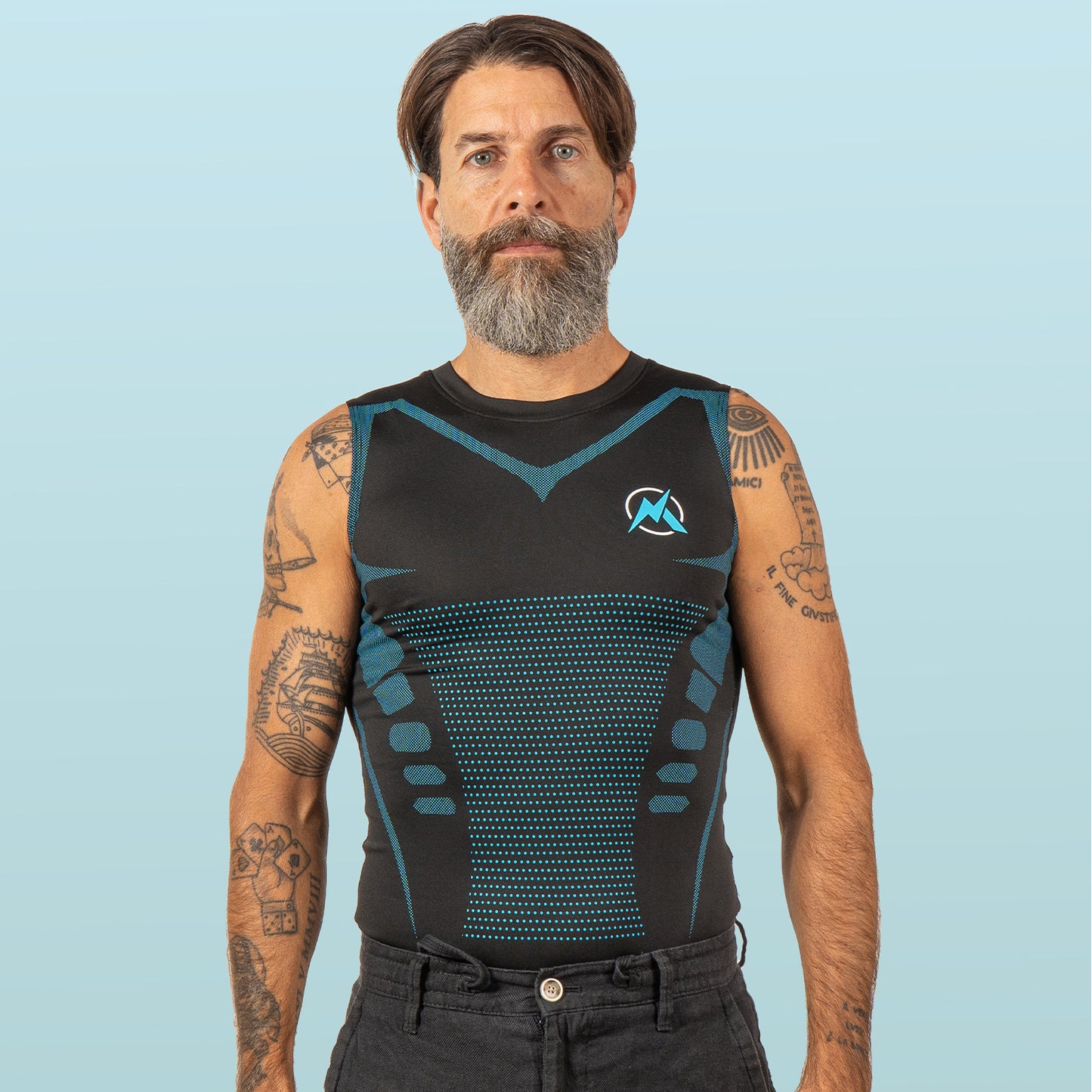
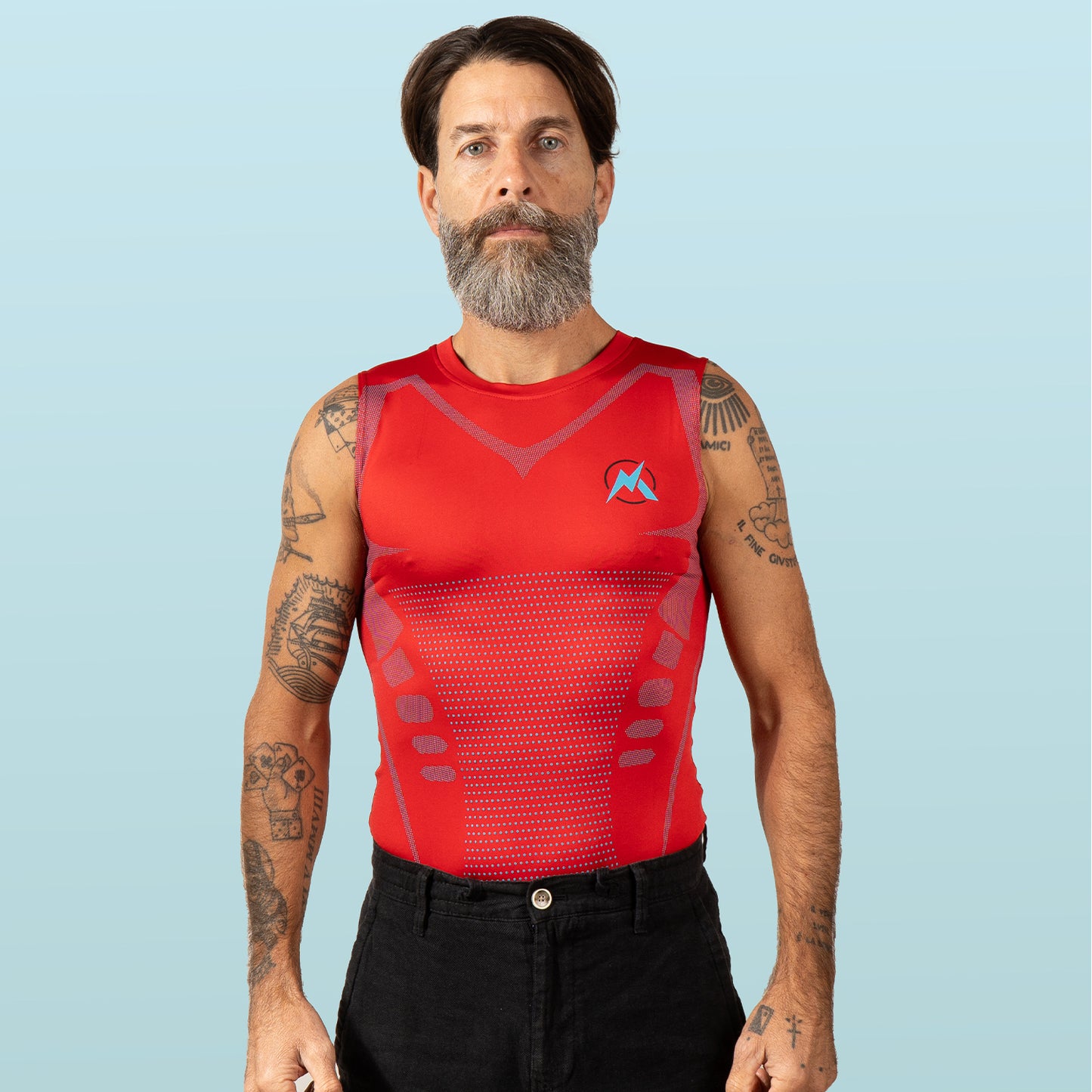
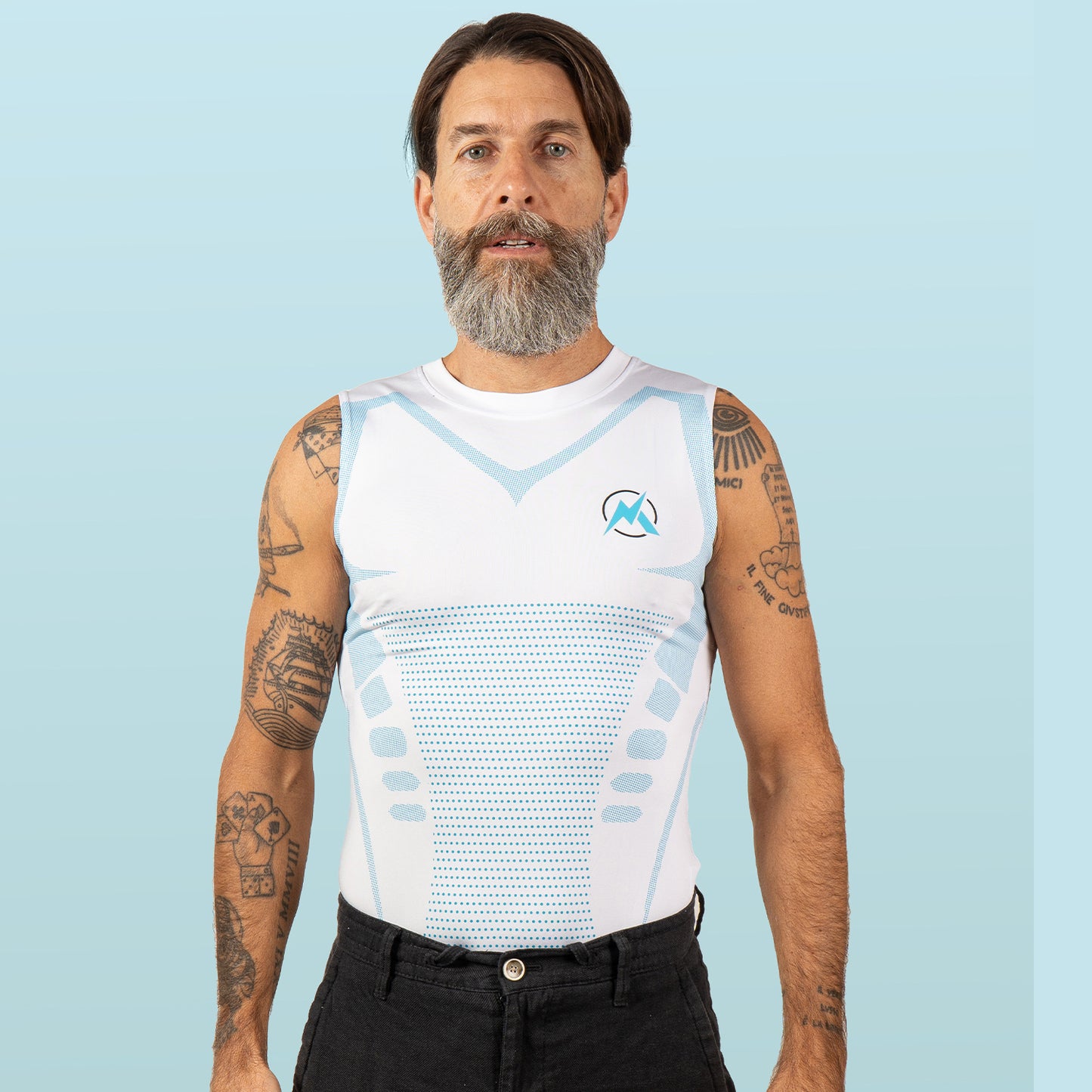
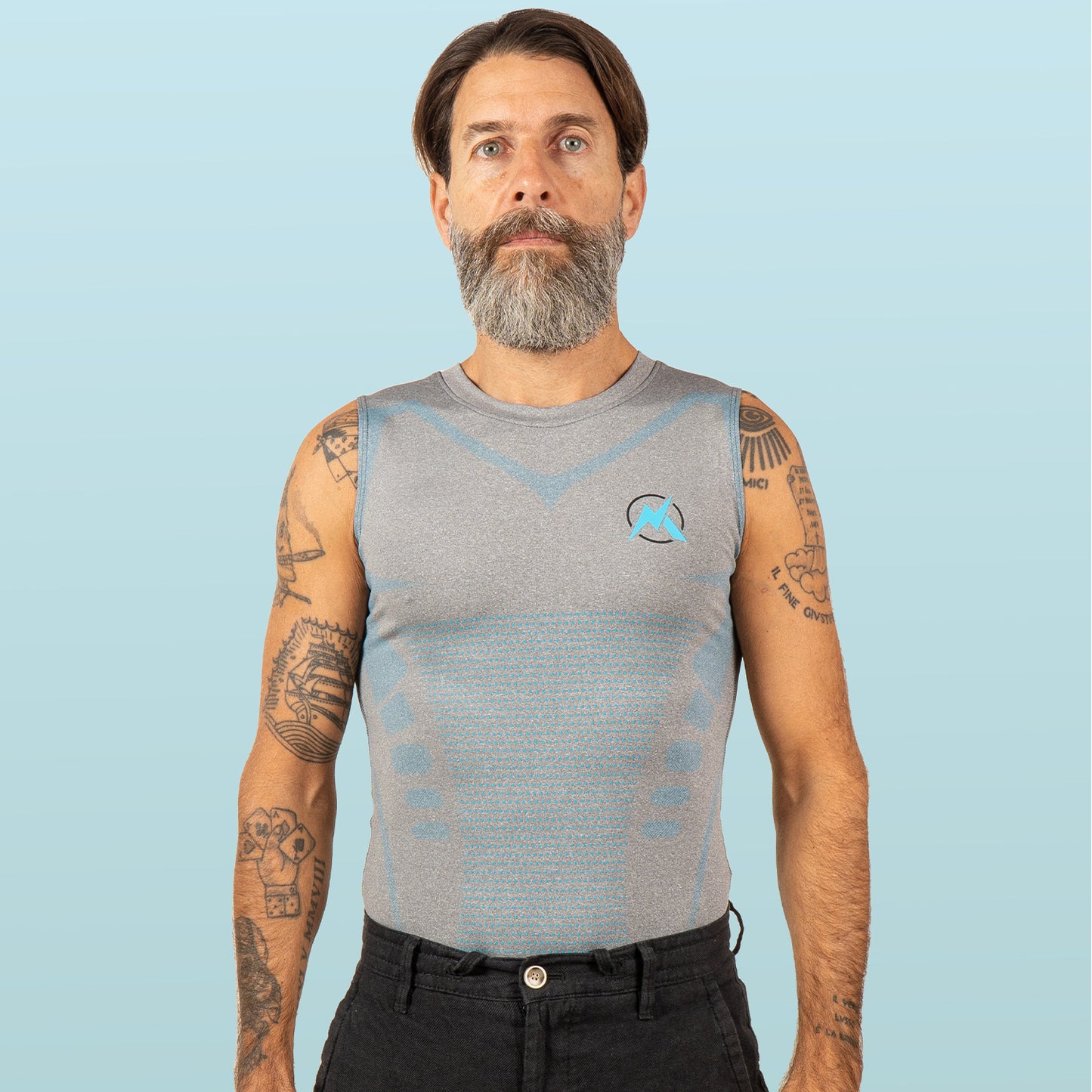
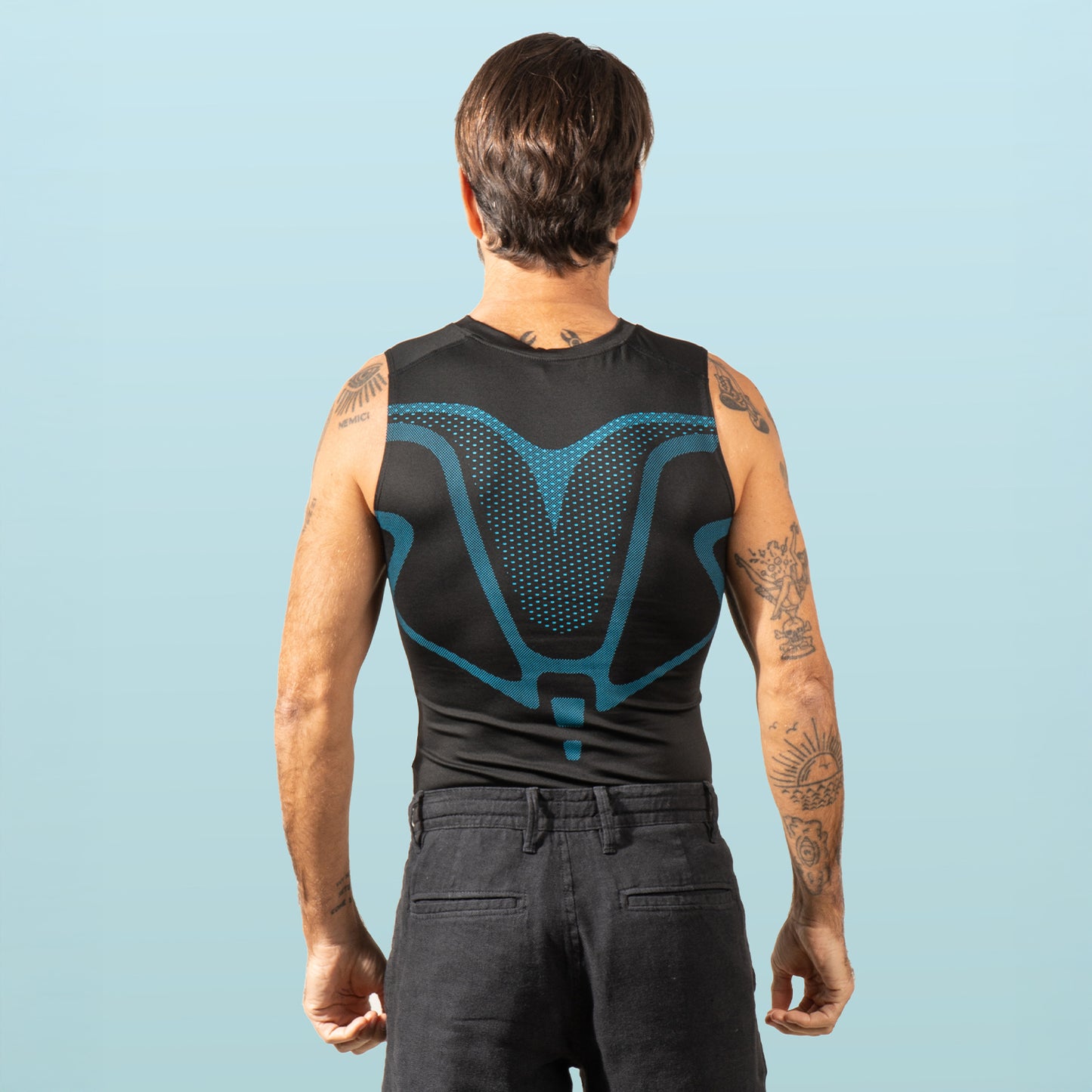
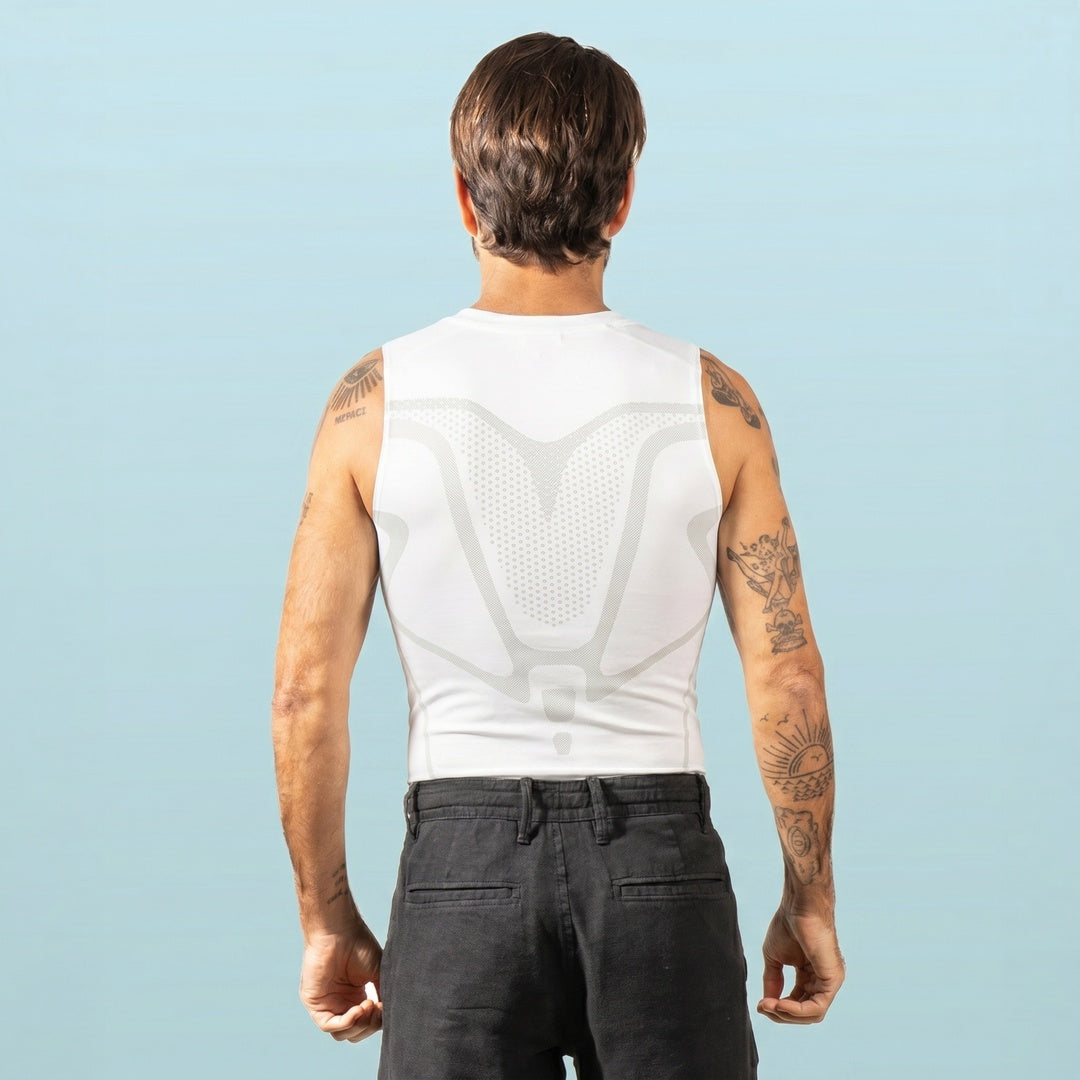
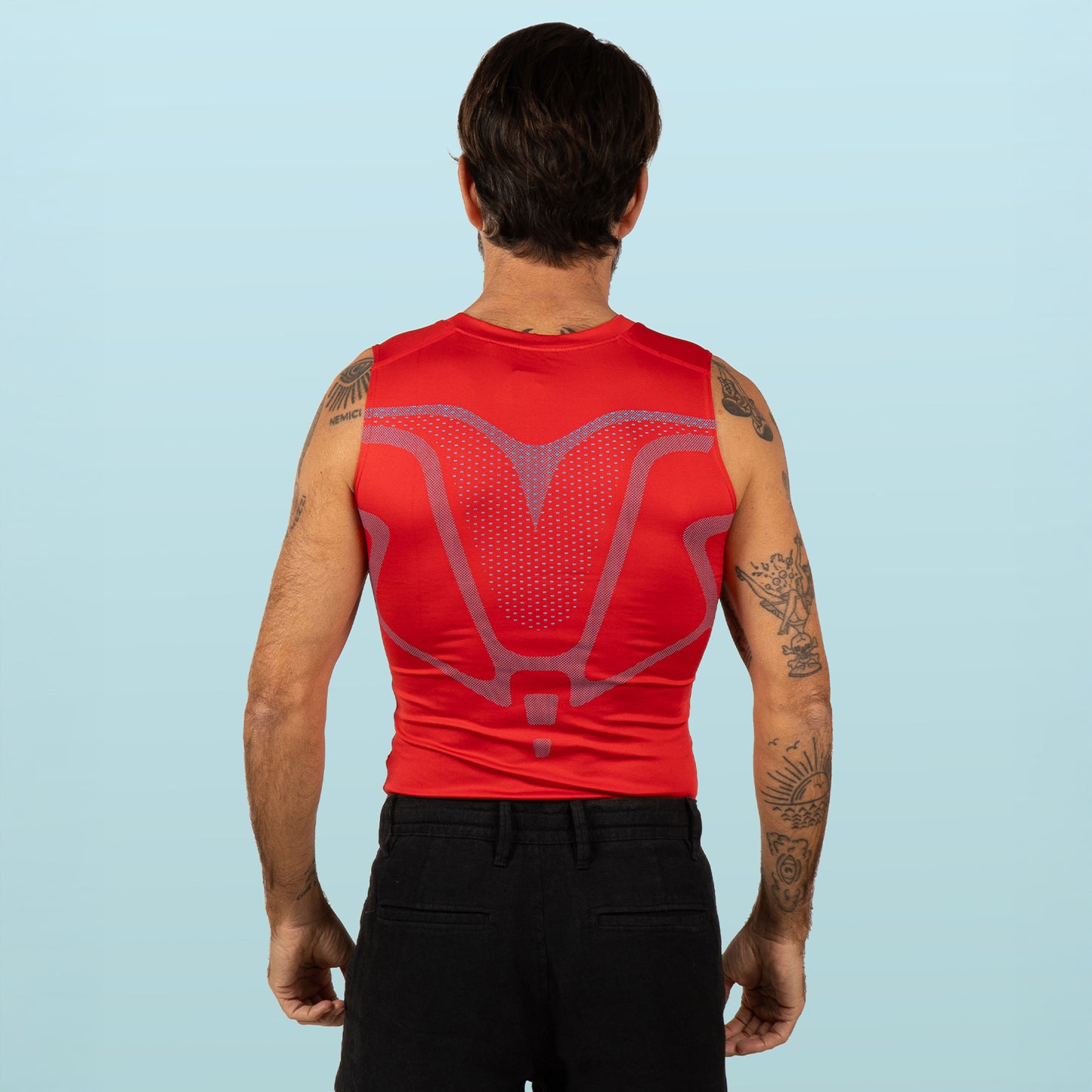
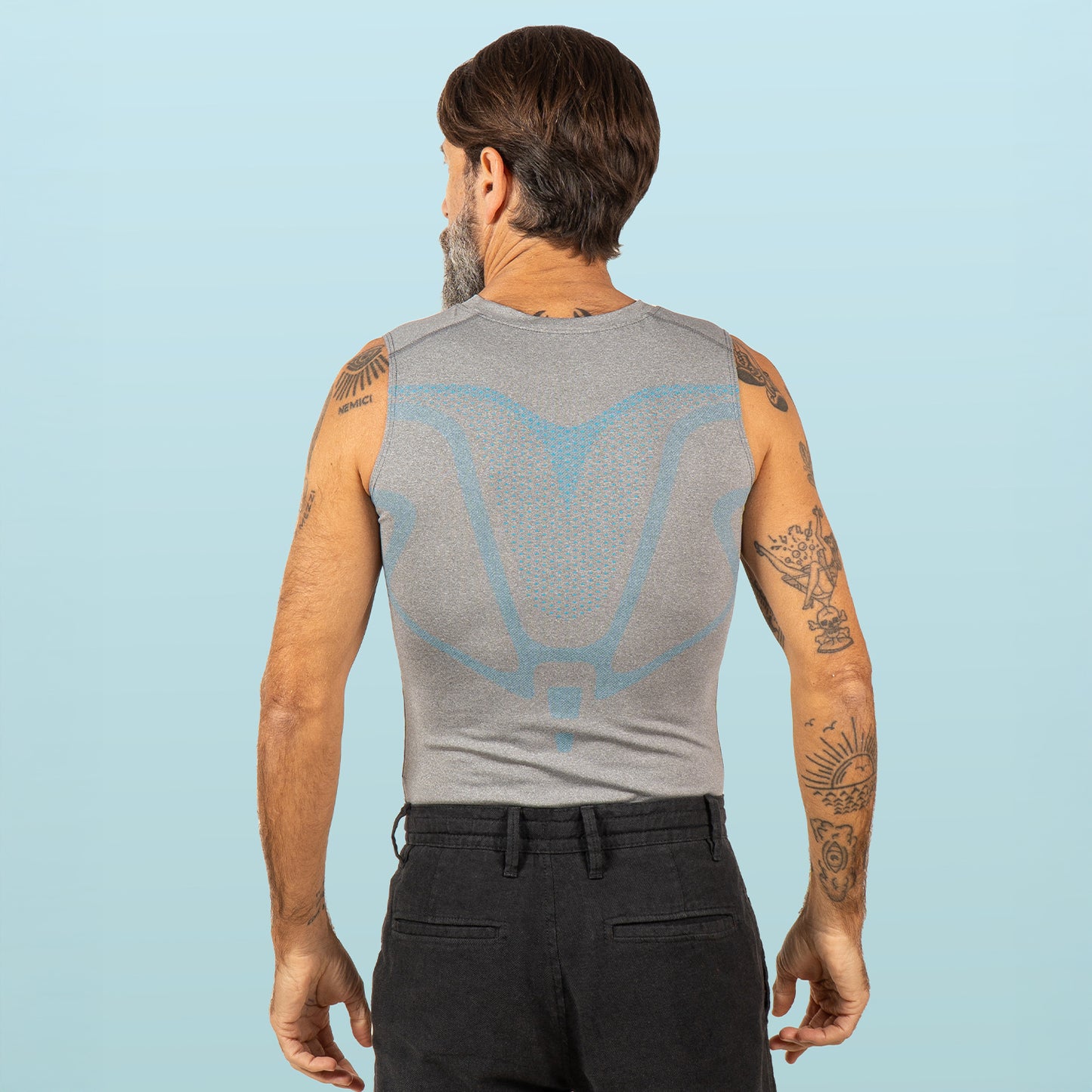
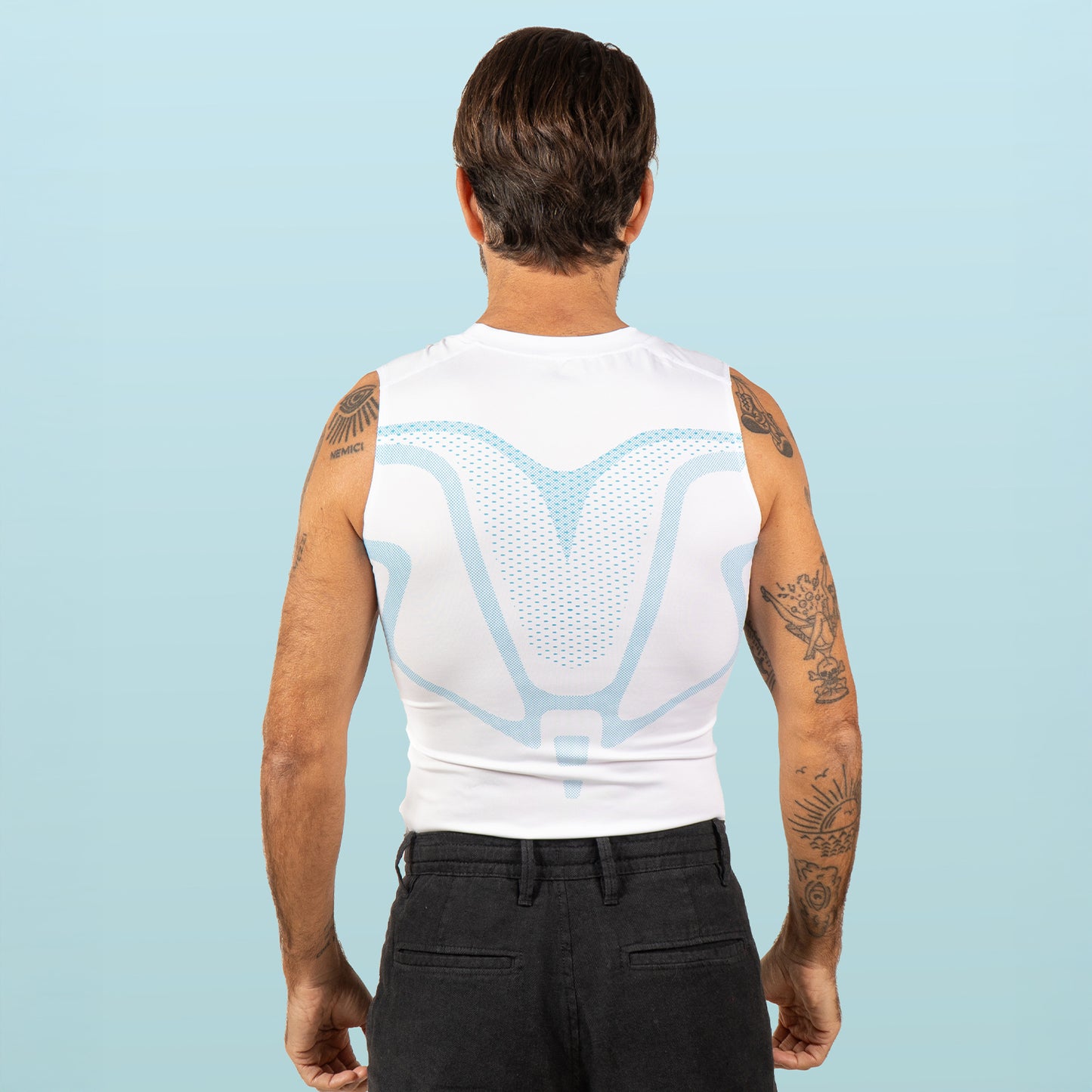
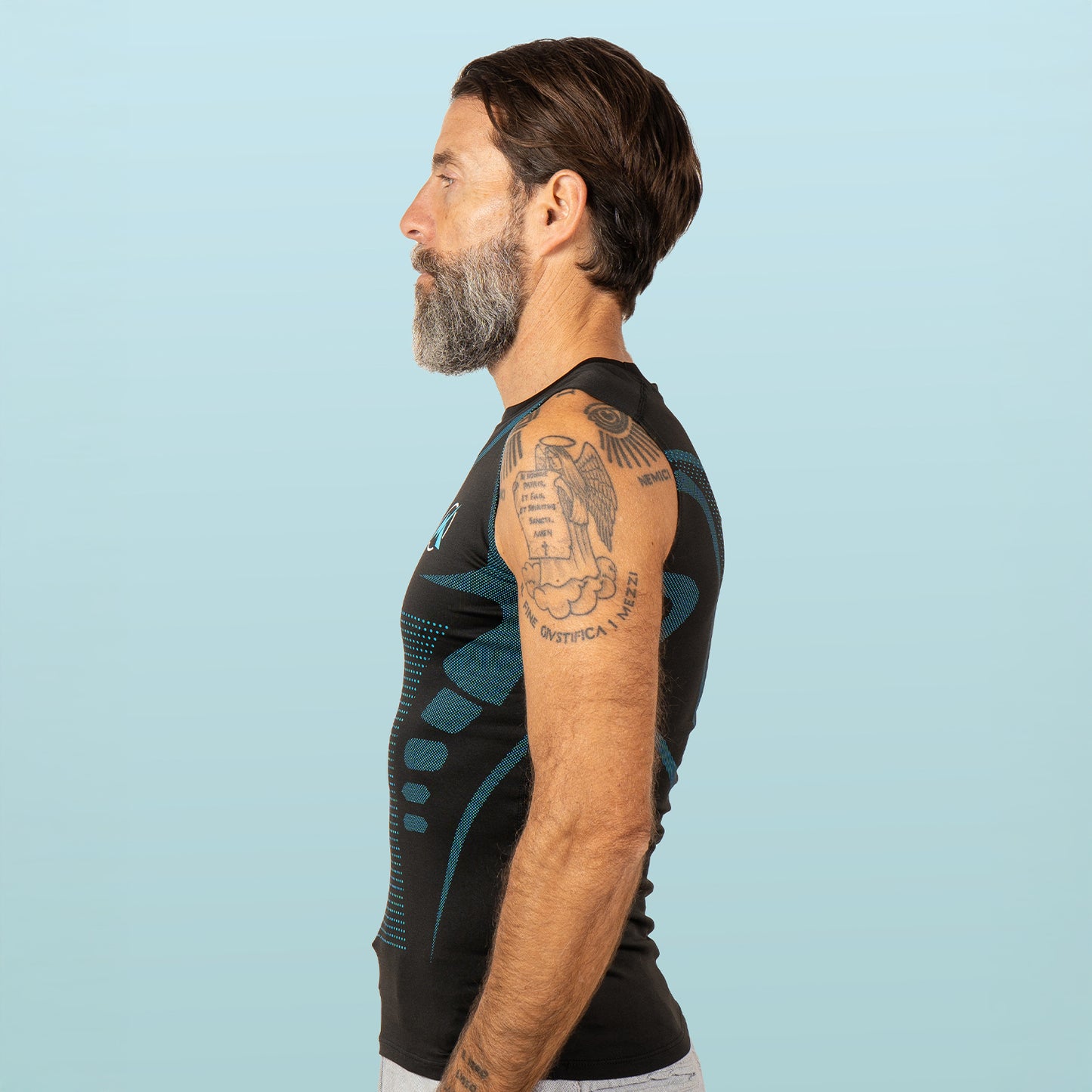
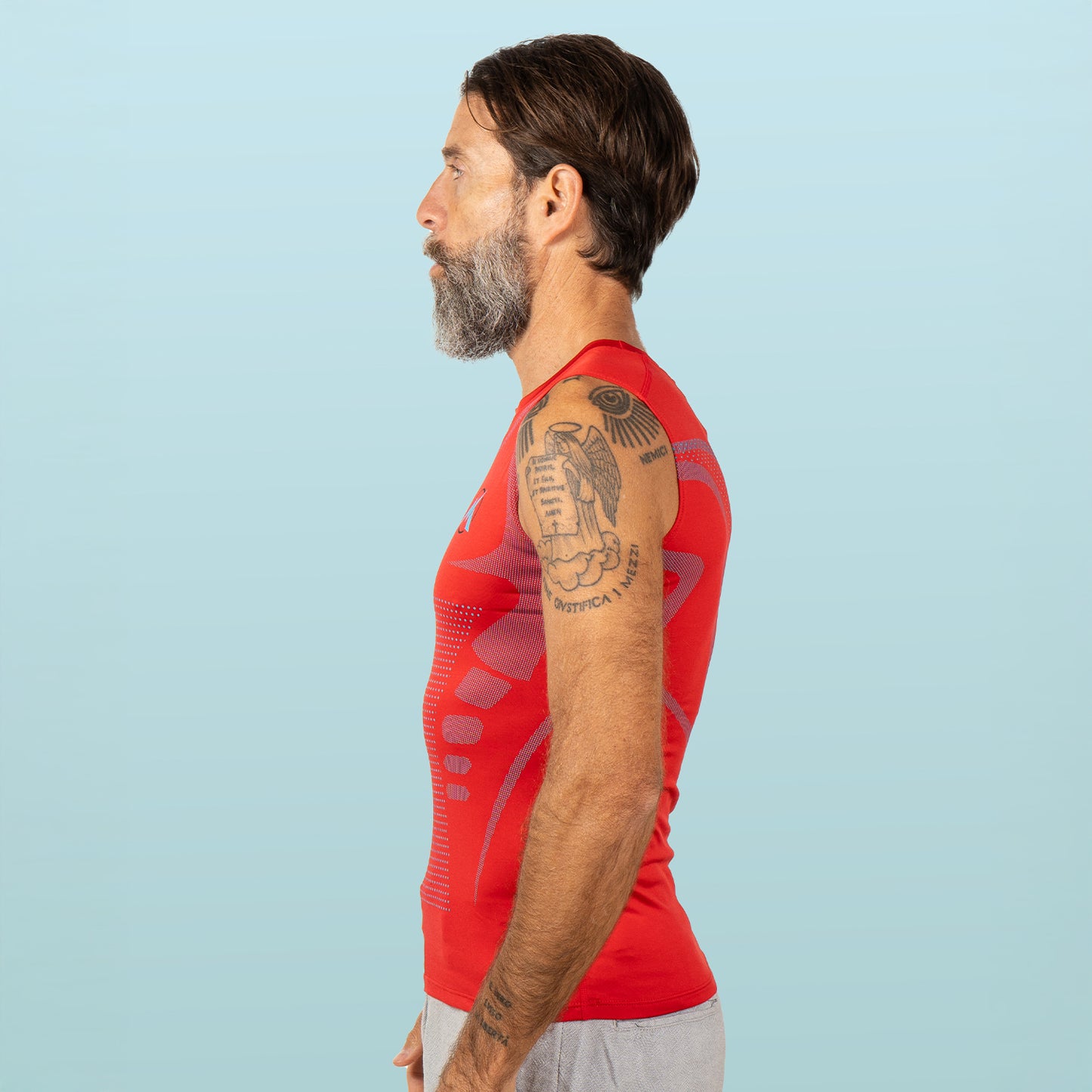
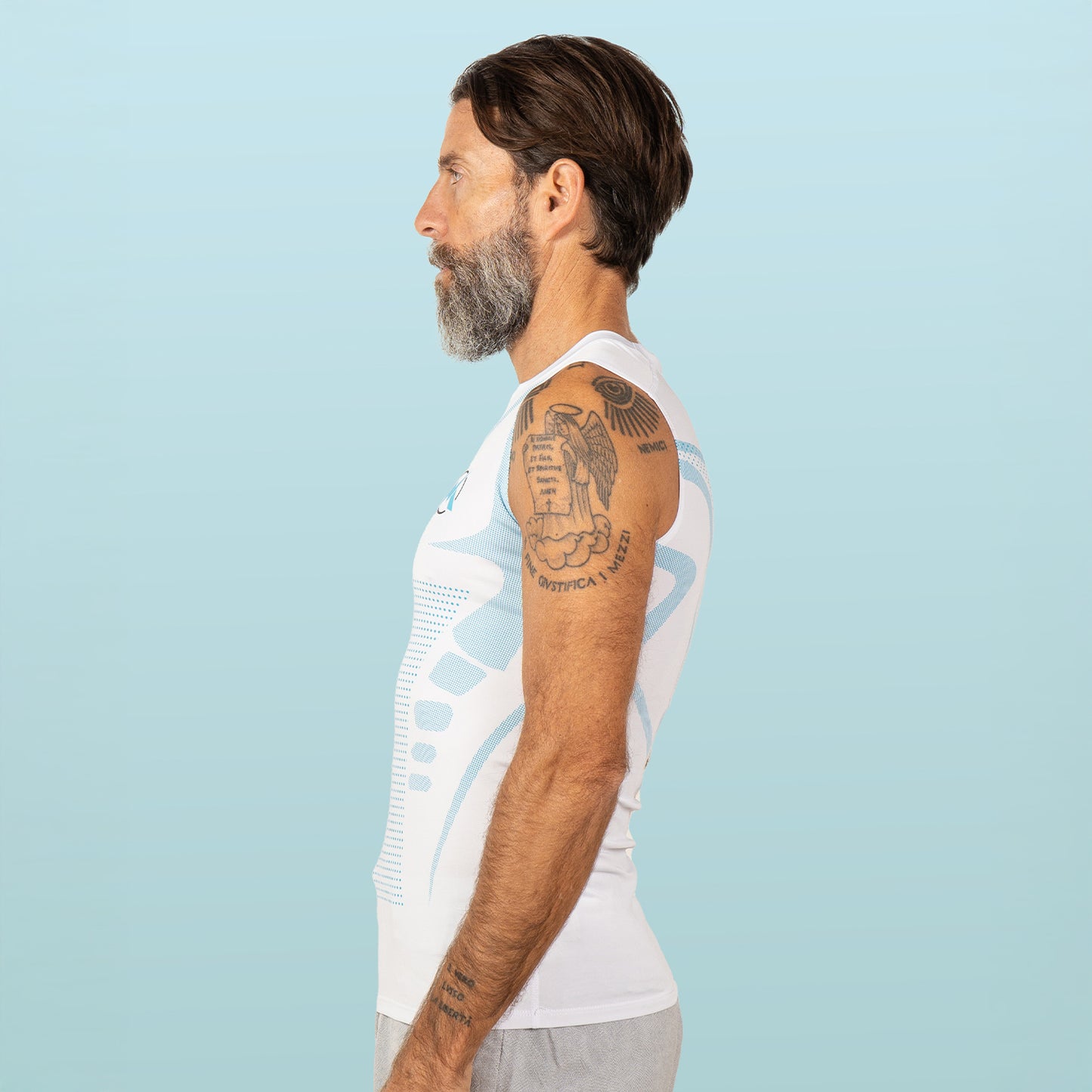
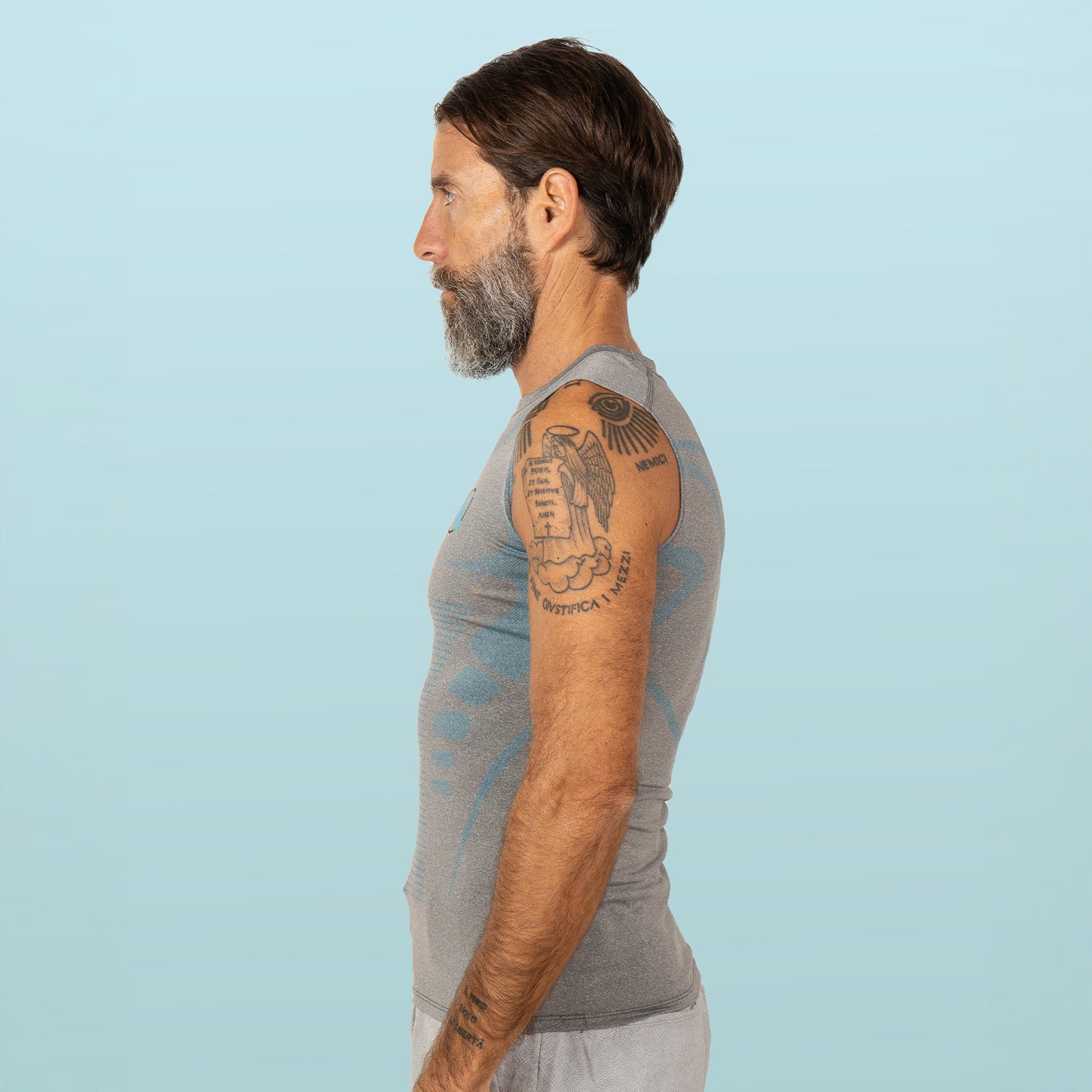
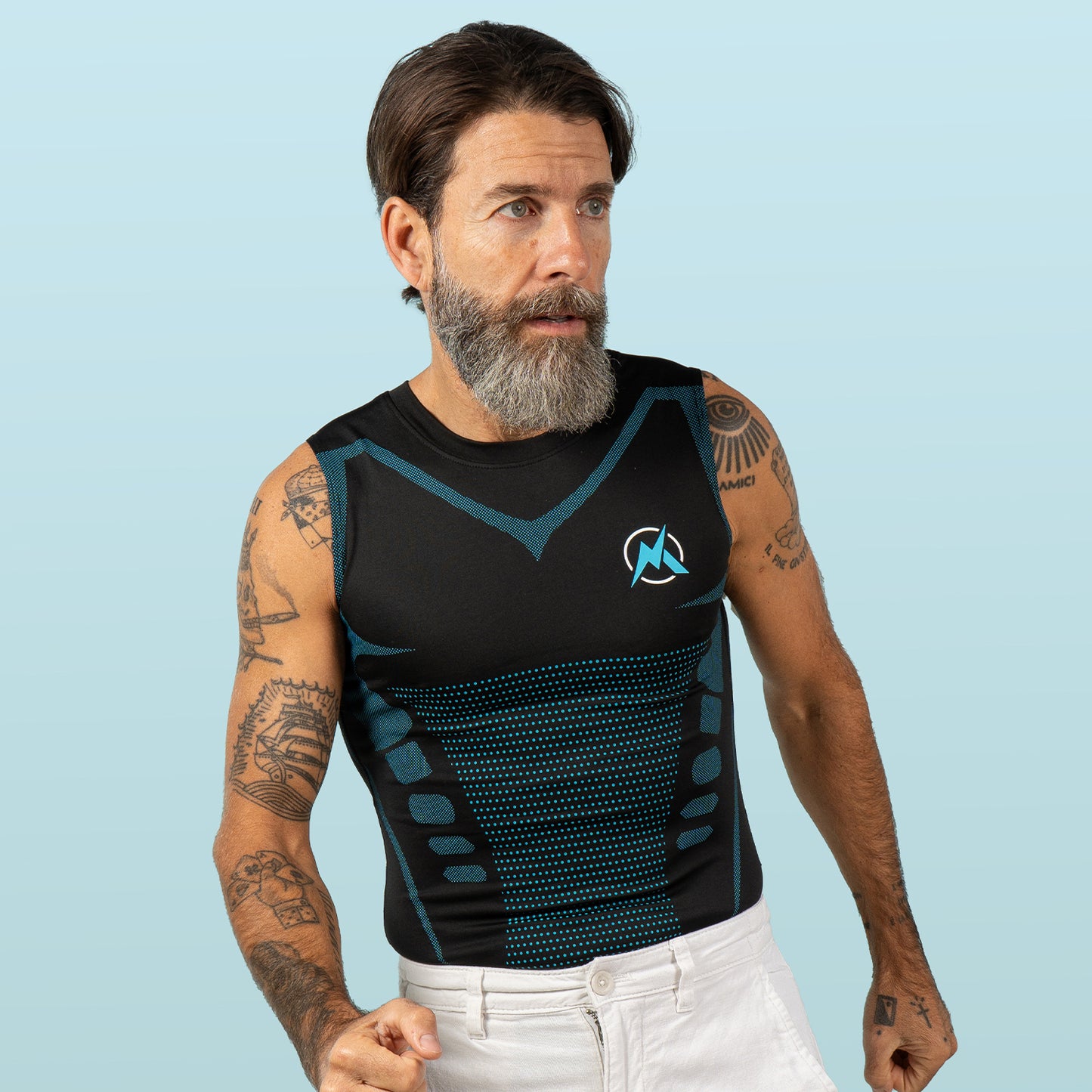
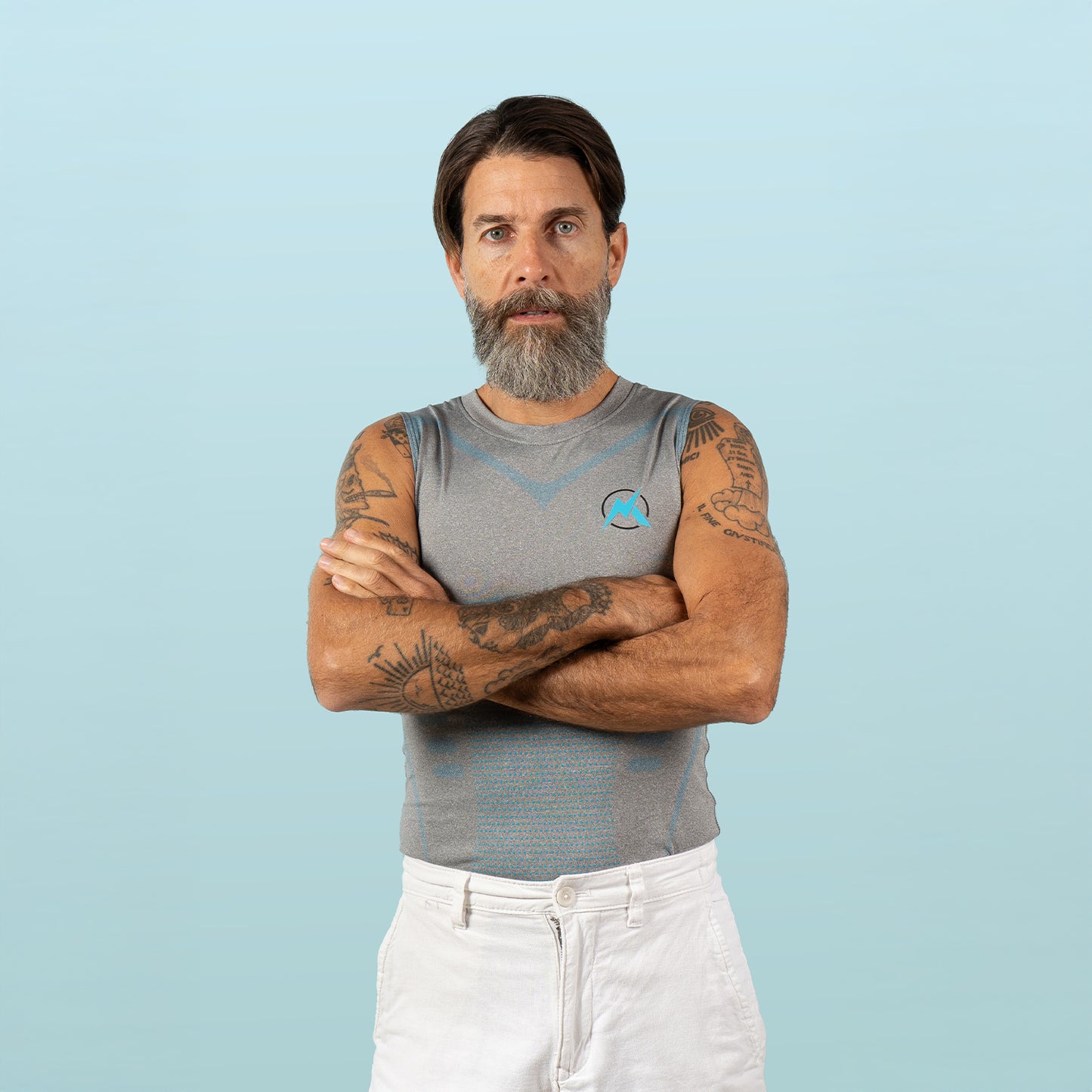
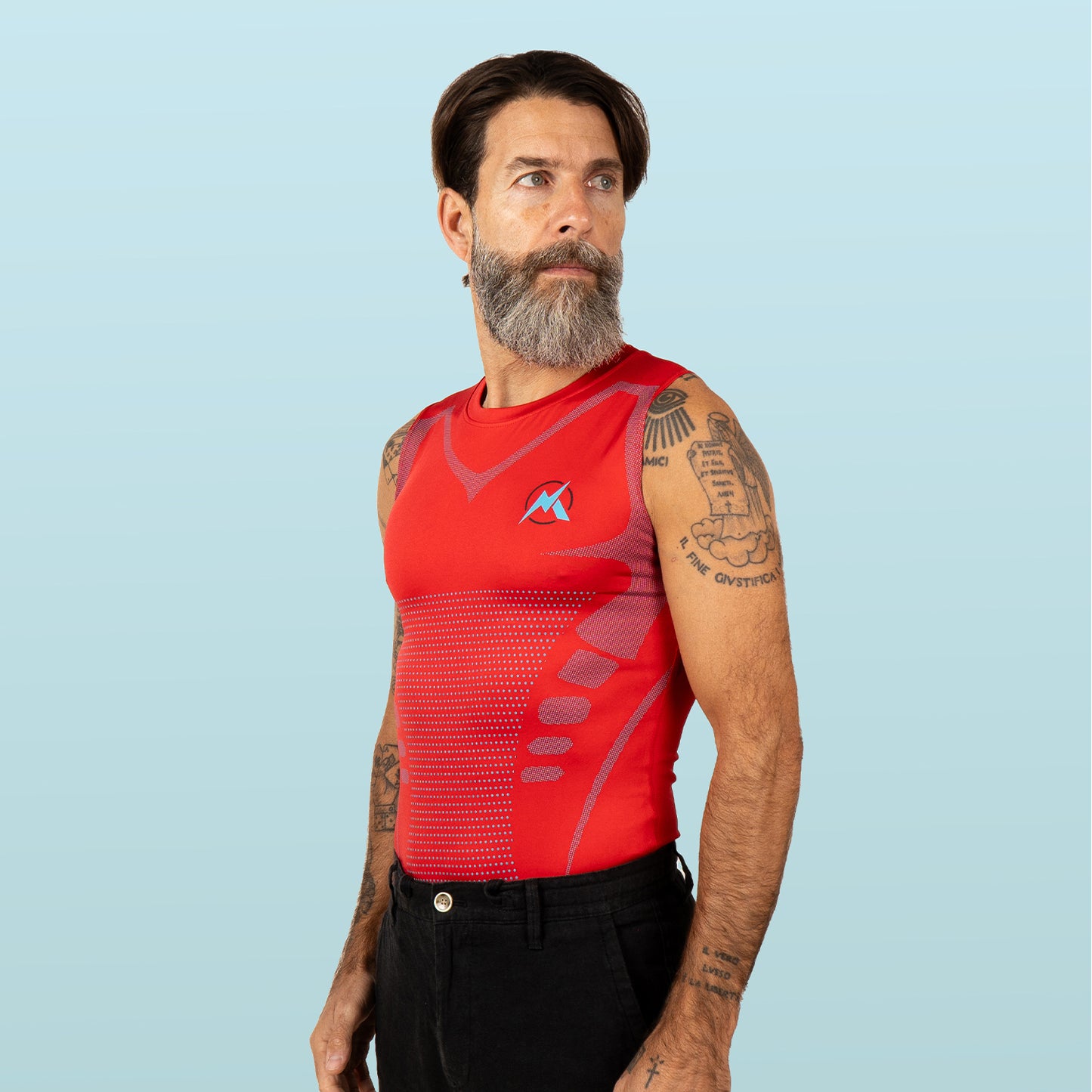
A well-fitted compression layer underneath solves the visual problem the way clothing tactics never quite can. It smooths the contour your shirt drapes over. It also gives your body a gentle proprioceptive cue — the light pressure around your midsection reminds your nervous system to stay long and engaged instead of collapsing forward.
This is the category we built Maynox VitaBoost around. It's a sleeveless men's compression tank designed to be invisible under a dress shirt, polo, or henley. Many men report that the simple fact of wearing a supportive base layer all day is the gentle reminder that finally retrains them out of the suck-in reflex — because the support is already there, so the brain stops trying to provide it through breath-holding.

For more on the broader tactic of dressing the silhouette you actually have, see How to Hide Your Belly Under a Shirt (Without Losing a Pound).
Fix 4 — Five minutes of real core work, three times a week
Not crunches. Not sit-ups. Anti-extension and anti-rotation work.
Your deep core's actual job is to resist your spine bending and twisting under load. Train it for that job and it starts doing it automatically the rest of the day.
Three exercises, three sets each, three times a week:
- Dead bug — Lie on your back, arms up, knees bent at 90°. Slowly extend the opposite arm and leg without letting your lower back arch off the floor. 8 reps per side.
- Bird dog — On hands and knees, extend opposite arm and leg, hold for 3 seconds, return. Keep your hips level. 8 reps per side.
- Plank — Forearms down, body straight, breathe normally (not held). 30 seconds, building to 60.
That's it. No equipment, fifteen minutes total, three times a week. Within a month, your default standing posture changes — not because you're trying, but because the muscle that's supposed to hold you up is finally strong enough to do its job.
We covered the broader posture routine in Best Posture Exercises for Men Over 50 (5 Minutes a Day). The dead bug, bird dog, and plank are the three that translate most directly out of suck-in dependence. Harvard Health has a useful primer on why core conditioning matters for daily function and back health.
What to stop doing today
The fixes above only stick if you also remove the habit they're replacing. For the next 30 days, try this:
- When you walk past a mirror, lengthen — don't suck in. Crown of the head up, ribs follow. Two seconds. Move on.
- When you take a photo, exhale fully and lengthen on the way back up. Don't hold your breath for the camera. The exhale-then-lift sequence reads as relaxed; the breath-hold reads as posed.
- When you eat dinner with people, let your stomach be where it is. The energy you save will show up in your face — softer jaw, more present eyes — and that change reads to other people as more confidence, not less.
This is the trade. You stop performing a muscular trick for the audience. You start owning the silhouette you actually have, with quiet structural support underneath. The result looks better and lasts longer than the trick ever did. We unpacked that bigger shift in 7 Style Mistakes Men Over 45 Keep Making (And How to Fix Them) — the suck-in reflex sits underneath several of them.
Frequently asked questions
Does sucking in your stomach actually weaken your core?
Yes, over time. Sucking in is an isometric hold without load that teaches your transverse abdominis to brace passively rather than support your spine actively throughout the day. Real core training — dead bugs, bird dogs, planks — builds the strength to hold your midsection in automatically, without you thinking about it.
Can sucking in your stomach cause back pain?
It can contribute. When you suck in, you typically also hold your breath in your upper chest, which flattens the diaphragm and shifts compensation work to your lower back and pelvic floor. Years of this pattern is associated with the chronic low-back tightness many men over 45 assume is just aging. Diaphragmatic breathing reverses the pattern.
Why do I look fatter in photos than in the mirror, even when I'm sucking in?
The mirror flatters because you're seeing yourself live and adjusting in real time. The camera captures one frozen moment of how your clothes actually drape. The visible improvement from sucking in is roughly 8% on camera versus the 30% you feel — and any breath-hold tension shows up as facial stiffness that reads as worse, not better.
What's the fastest visual fix for a soft midsection?
Lengthening your spine — crown of the head up, ribs lifting off the stomach — moves the silhouette more in two seconds than sucking in does in two minutes. Pair it with a fitted compression tank underneath your shirt and the visual change is immediate, holds all day, and doesn't cost you breath.
How long until belly breathing actually changes my posture?
Most men feel the shift within two to three weeks of practicing five minutes a day. Your transverse abdominis starts firing as a postural muscle automatically, which means your default standing posture begins to lengthen on its own. Combine it with three short core sessions a week and the change is visible to others by week six.
The bottom line
Sucking in is a thirty-year habit that gives you an 8% improvement for ninety seconds and trains your core to be lazy the rest of the day. Lengthening your spine, breathing into your belly, adding a real base layer, and doing fifteen minutes of anti-extension work a week gives you the same visual improvement permanently — and stops costing you energy you don't have to spare.
Pick one of the four fixes today. Drop the suck-in. The mirror will catch up to the change in about a month.
Try the Maynox VitaBoost — Buy 1 Get 1 Free
This article is for general informational purposes and is not medical advice. If you have chronic back pain, breathing issues, or postural problems that affect daily function, consult a qualified healthcare provider.