By Owen Blot · Founder, Maynox · Last updated June 8, 2026
- Why most "posture exercise" routines fail (and what works)
- What's actually broken in a 45-year-old desk guy's posture
- The 10-minute home routine (no equipment)
- Week-by-week progression: what to expect in 4 weeks
- How to stack this with the rest of your day
- Mistakes that will quietly kill your progress
- Frequently asked questions
You sit down on a Wednesday night, scroll a posture article, and find 27 exercises with names like "thread the needle." You read it. You don't do it. You sit back down.
That's the real problem. Bad posture doesn't survive because the right exercises are unknown. It survives because the routines you find online are too long, sequenced wrong, or designed for a 25-year-old yoga student.
This piece is built for you: a desk-bound man 40+, soft in the middle, shoulders rolling forward, neck creeping into the screen. You've got 10 minutes and a small patch of floor. That's enough.
Below is exactly what to do, in what order, for how long. And what to skip, because half the "must-do" posture moves online are filler.
Why most "posture exercise" routines fail (and what works)
Most online posture routines fail for three reasons.
They're too long. A 30-minute morning flow looks great on Instagram. You'll do it twice. Then you'll feel guilty for not doing it. Then you'll stop reading anything about posture for six months. Routines you don't repeat aren't routines — they're content.
They're sequenced wrong. Most listicles dump exercises in random order: a plank, then a wall angel, then a cobra, then a chin tuck. The order matters more than the exercises themselves. If your chest and hip flexors are locked up — and after 15 years at a desk, they are — strengthening your upper back first is like trying to close a door someone is holding open. You'll work, but the door doesn't shut.
They ignore the avatar. A 25-year-old with mild slouching from study sessions needs different inputs than a 47-year-old with 15 years of computer work, a tight chest, weak lats, and a pelvis that's tilted forward from sitting. Your body has a specific failure pattern. The routine should match it.
The fix is short, ordered, and repeatable. Mobility first to undo what sitting did. Activation second to switch on the muscles that stopped firing. Strengthening third so the new alignment holds. 10 minutes. Five days a week. Four weeks before you judge it.
That's it. The hard part isn't the work. It's the consistency.
What's actually broken in a 45-year-old desk guy's posture
Before you do a single rep, you need to know what you're fixing. The slouch you see in the mirror is the output of three things working against you at once.
Tight chest and front shoulders. Eight hours a day with your arms forward — keyboard, steering wheel, phone — shortens the pectoralis muscles and the anterior delts. They pull the shoulders forward and the upper back rounds to compensate. This is the rounded-shoulder look.
Weak upper back and lats. The muscles that should pull your shoulders back (mid-trap, rhomboids, lats, rear delts) get switched off from disuse. According to NIH News in Health, more than 80% of Americans have some posture issue — and the most common pattern is exactly this front/back imbalance.
Forward head + tight hip flexors. Your head weighs 10–12 pounds in neutral. Tilt it 15° forward to read a screen and, according to the Cleveland Clinic's tech neck breakdown, the effective load on your neck climbs to about 27 pounds. Look at your lap and it's near 60 pounds. Meanwhile, sitting all day shortens the hip flexors, which tilts the pelvis forward and pushes the lower belly out — making the whole stack lean wrong.
There's an aging tax on top. The NIH review on sarcopenia (PMC2804956) reports adults lose roughly 3–8% of muscle per decade after 30. The postural muscles — small, deep, slow-twitch — atrophy faster than your biceps because nothing in modern life challenges them.
So the real problem is not "you slouch." It's: chest locked, upper back asleep, head forward, hips tight, slow-twitch postural muscles fading. A good 10-minute routine attacks all five in the right order.
The 10-minute home routine (no equipment)
Set a timer. Do the moves in this order. No skipping ahead.
Block 1 — Mobility (3 minutes): open what's locked
1. Doorway pec stretch — 60 sec (30 sec per side). Stand in a doorway. Forearm against the frame at shoulder height, elbow bent 90°. Step forward into the doorway until you feel a stretch across the chest and front shoulder. Don't crank it. Should feel like a stretched rubber band, not a pull. Switch sides.
2. Cat-cow on the floor — 60 sec. Hands and knees, hands under shoulders, knees under hips. Inhale: drop belly, lift chest and tailbone (cow). Exhale: round the back, tuck chin to chest (cat). Slow. One rep should take 4–5 seconds. This is the move that re-teaches your spine it can still move segment by segment.
3. Half-kneeling hip flexor stretch — 60 sec (30 sec per side). Right knee on the floor, left foot forward in a lunge. Squeeze the right glute, tuck the pelvis under, push hips slightly forward. Feel it in the front of the right hip. Switch sides. Sitting all day shortened these — this lets the pelvis sit neutral again.
Block 2 — Activation (3 minutes): wake the sleeping muscles
4. Wall angels — 60 sec. Back flat against a wall, feet 6 inches out. Arms in a "W" shape, backs of hands and elbows touching the wall. Slowly slide arms up to a "Y," then back down. If you can't keep your hands on the wall, that's exactly the problem you're trying to fix. Do what you can. 8–10 reps, slow.
5. Chin tucks — 60 sec. Stand or sit tall. Gently pull your chin straight back, like making a double chin. Don't tilt the head down. Hold 5 seconds, release. 8–10 reps. This is the single best counter to tech neck — it activates the deep neck flexors that get turned off by screens.
6. Glute bridges — 60 sec. On your back, knees bent, feet flat. Drive through the heels, squeeze the glutes, lift the hips until your body forms a straight line from shoulders to knees. Hold 2 seconds at the top. Lower slow. 10–12 reps. The glutes are part of the postural chain. Asleep glutes = anterior pelvic tilt = belly forward, low back curved.
Block 3 — Strengthening (4 minutes): build what holds the alignment
7. Prone Y-T-W's — 90 sec. Face down on the floor, forehead resting on a towel. Arms out in a "Y" overhead, thumbs up, lift the arms 2–3 inches off the floor — hold 2 seconds — lower. 8 reps. Then arms in a "T" out to the sides, same lift. 8 reps. Then "W" with elbows bent like wall angels. 8 reps. This trio hits the entire upper back posterior chain — the muscles that pull your shoulders back when you're not thinking about it.
8. Bird-dog — 90 sec. Hands and knees. Slowly extend the right arm forward and left leg back. Keep the hips square. Hold 3 seconds. Return. Switch sides. 8 reps per side. This trains the deep core and lower-back stabilizers — the slow-twitch ones aging takes first.
9. Plank (knees down version OK) — 60 sec. Forearms on the floor, body in a straight line from shoulders to heels (or knees if needed). Don't sag. Don't pike. Hold for one continuous 60 seconds if you can — or 3 × 20 seconds if not. Breathe.
Total time: 10 minutes. That's the whole routine.

Week-by-week progression: what to expect in 4 weeks
Most online routines never tell you what "working" should feel like. Here's the honest timeline.
Week 1: Awareness. You'll catch yourself slouching 20 times a day. That's progress — you couldn't see it before. The wall angel feels awful. Your chin tuck range is tiny. Don't escalate the difficulty. Just complete all 5 sessions this week. The win is showing up.
Week 2: Mobility opens up. The doorway pec stretch starts feeling like a real stretch instead of a wall. The hip flexor lets you tuck the pelvis without losing balance. Wall angels — you'll get one or two more inches of upward travel. You may notice less stiffness when you stand up after a long meeting.
Week 3: Activation kicks in. The Y-T-W lifts that felt impossible week 1 feel achievable. You're standing taller without thinking about it during conversations. Mid-day neck ache shows up less often. This is when the consistency starts paying.
Week 4: Visible change. Side-by-side photos (front and side, same lighting) show a measurably taller, more squared line. Friends or your partner may comment that you look different — they won't always say "your posture's better," they'll often say "did you lose weight?" or "you look sharper."
This timeline is conservative. Harvard Health's review on saving posture reports that most posture rehab programs show measurable improvement in 8–12 weeks of consistent work — and the visual signal often shows up faster than the deep structural change.
If you're not seeing anything by week 4 with five sessions per week, the most common cause isn't your body — it's that you're skipping the mobility block and rushing to the strengthening. That order is the work.
How to stack this with the rest of your day
Ten minutes a day is the floor, not the ceiling. What you do in the other 23 hours and 50 minutes will either reinforce the work or quietly undo it. Here's how to make the routine compound instead of fight your day.
Anchor it to an existing cue. The behavior-design rule: don't add a new slot, hijack an old one. If you make coffee every morning at 6:45, do the routine between starting the coffee and pouring it. The trigger is already there — you don't have to remember anything new. (More on this in our habit-stack approach to standing up straight.)
Fix the chair you sit in 8 hours a day. Screen at eye level. Feet flat. Lower back supported. If you spend the whole day in forward-head, no 10-minute routine wins that fight.
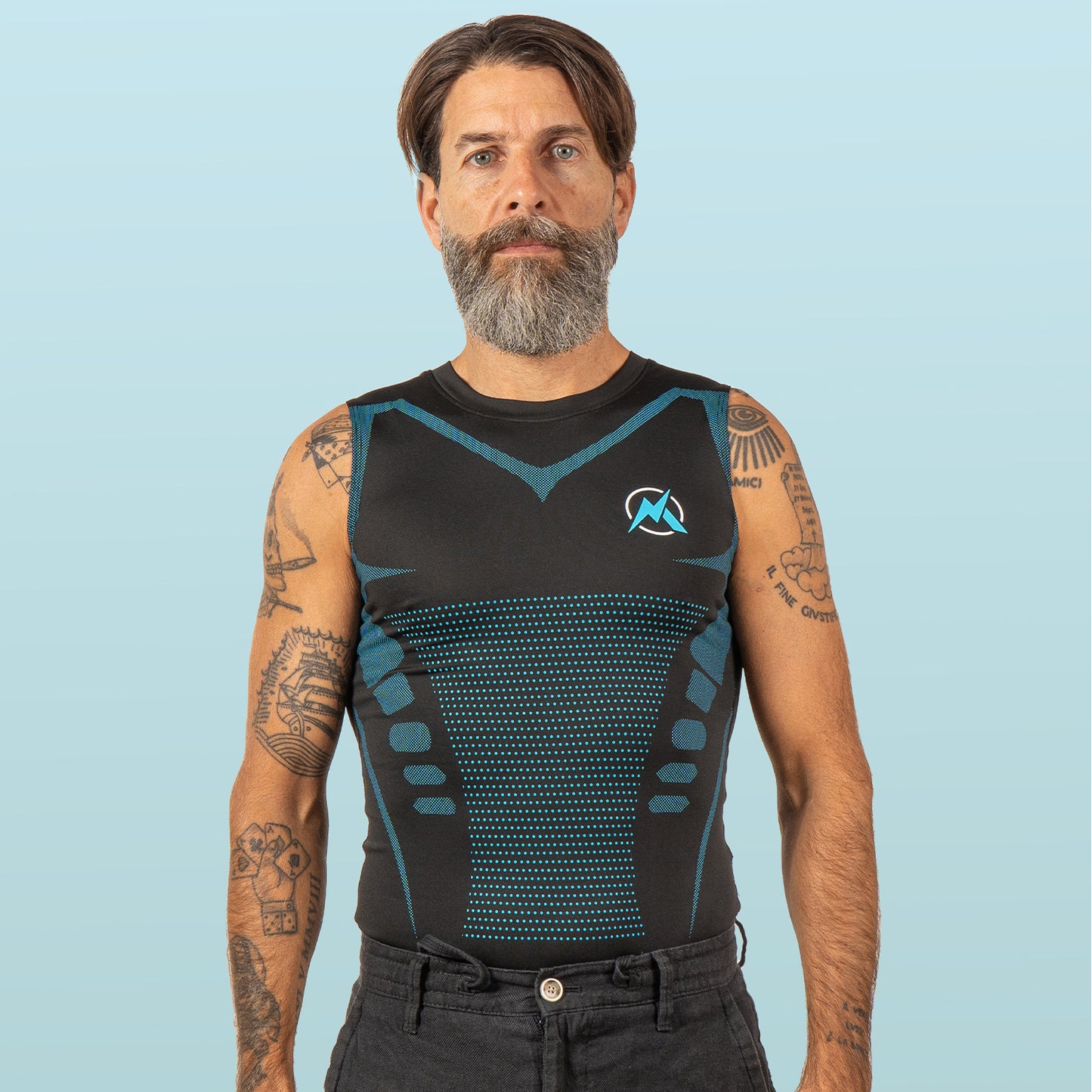
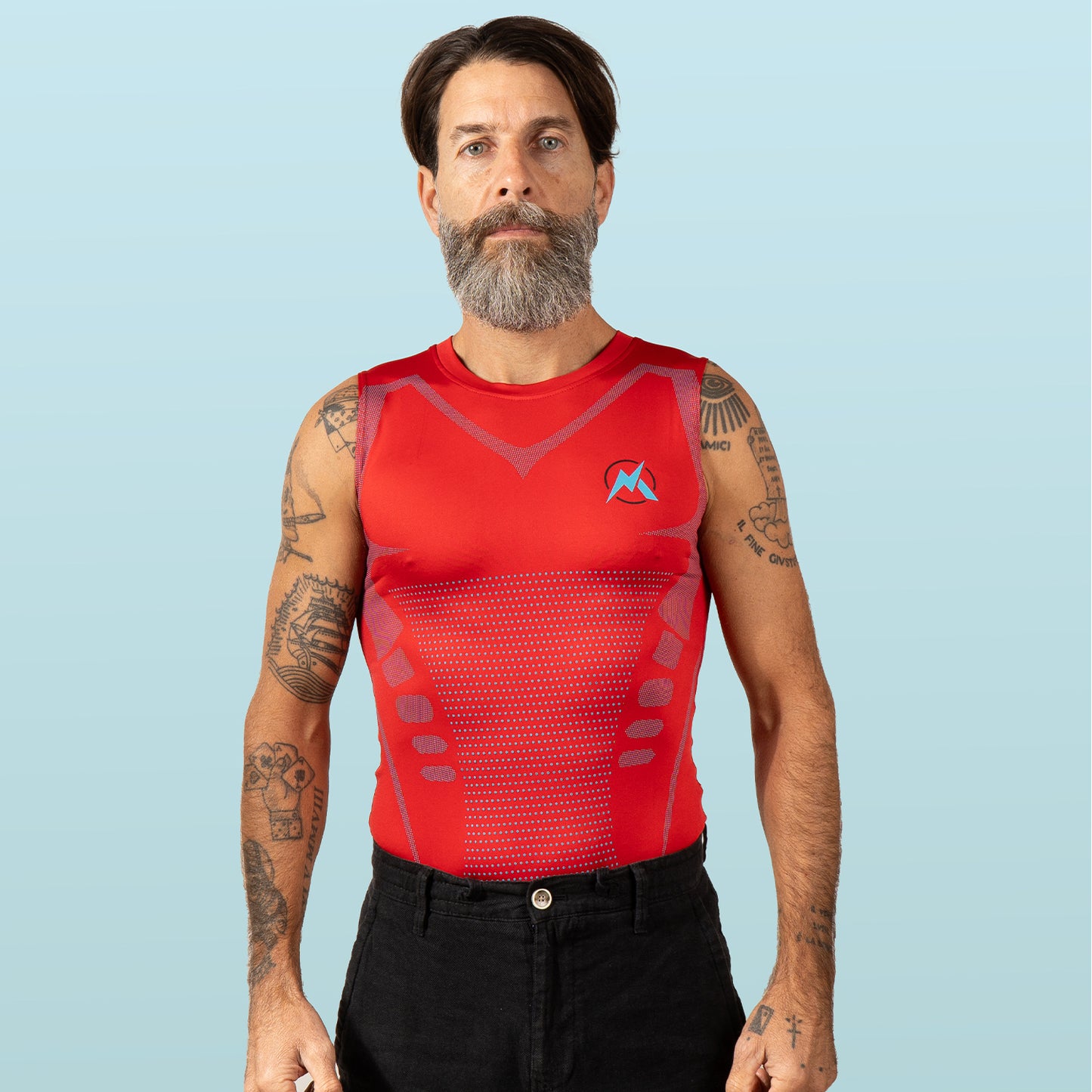
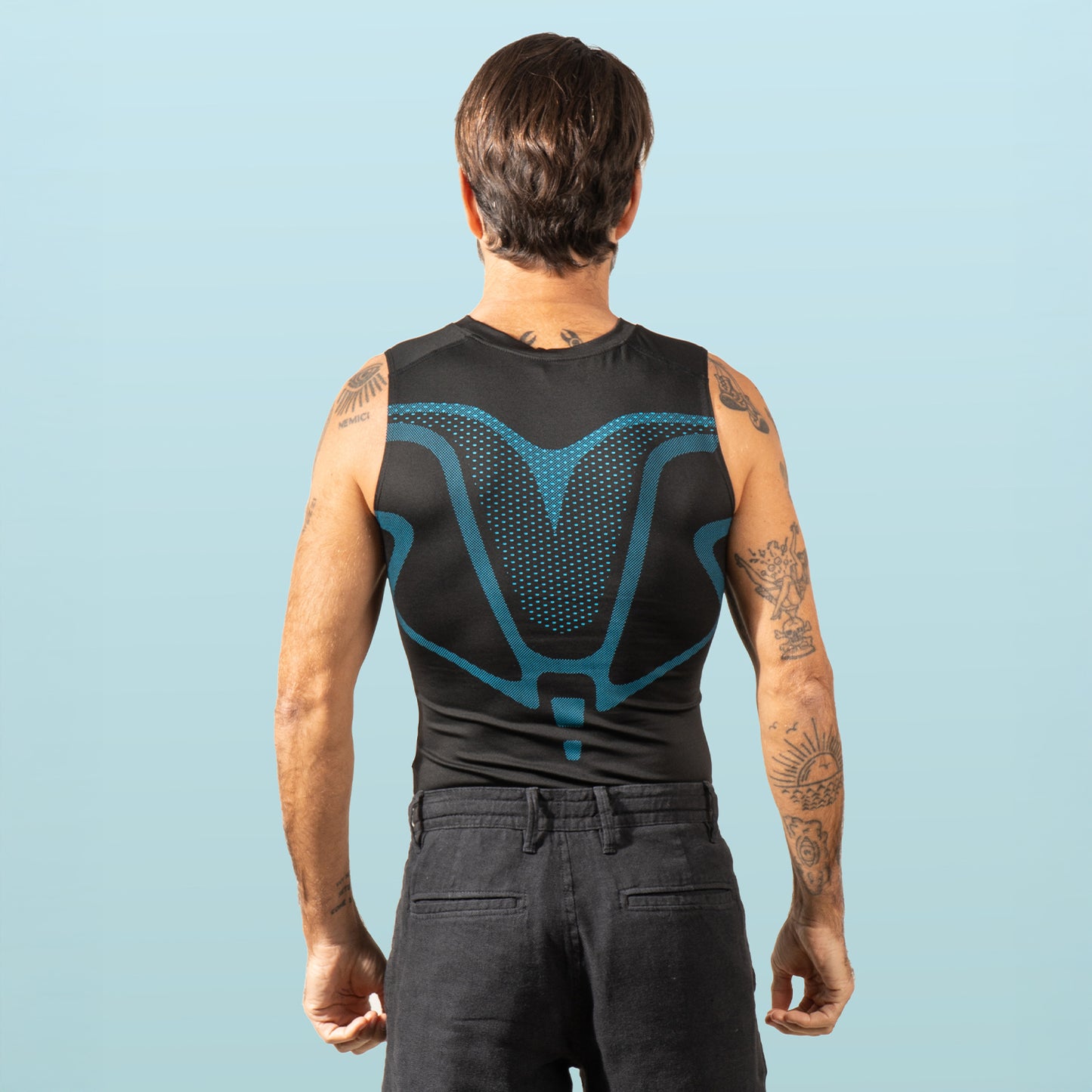
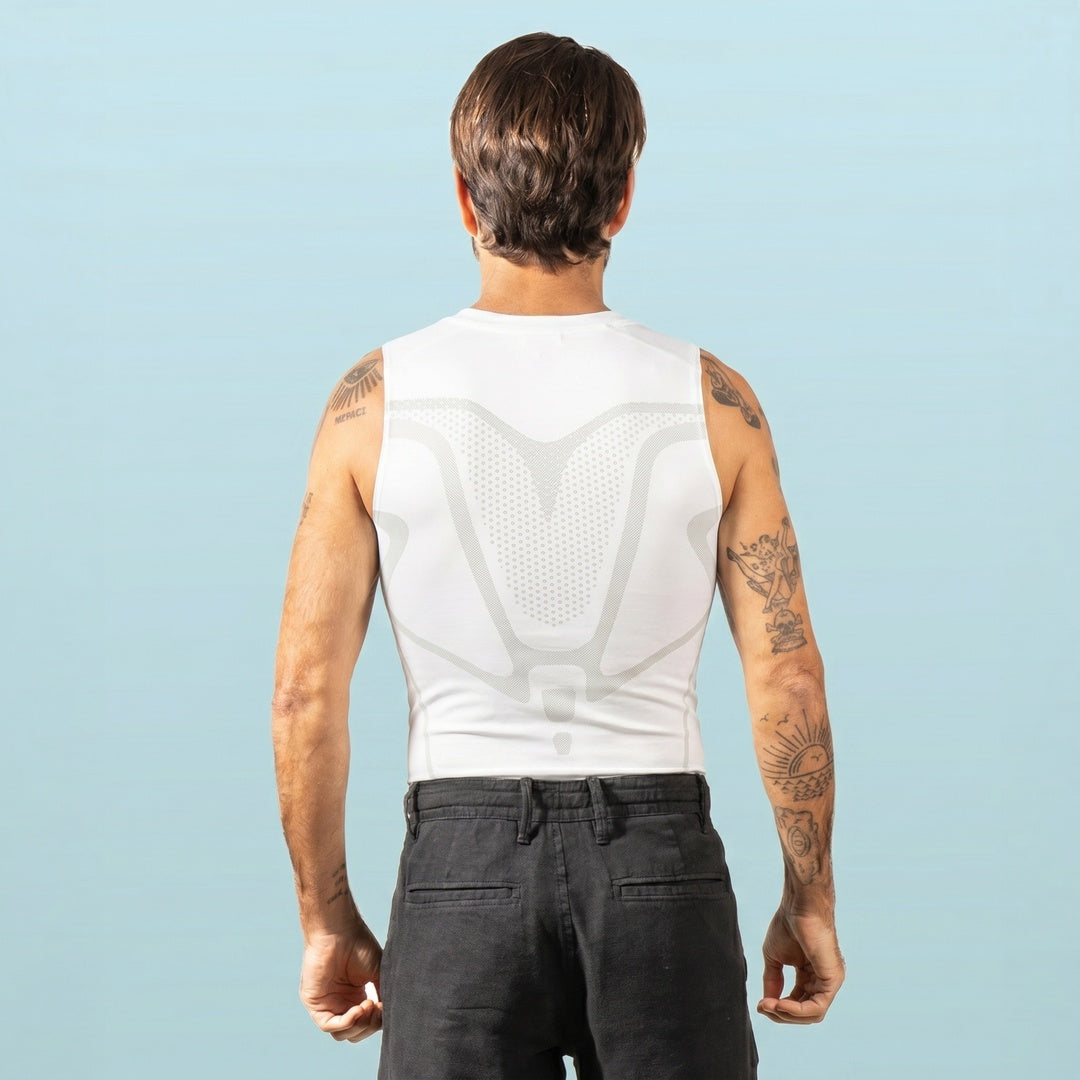
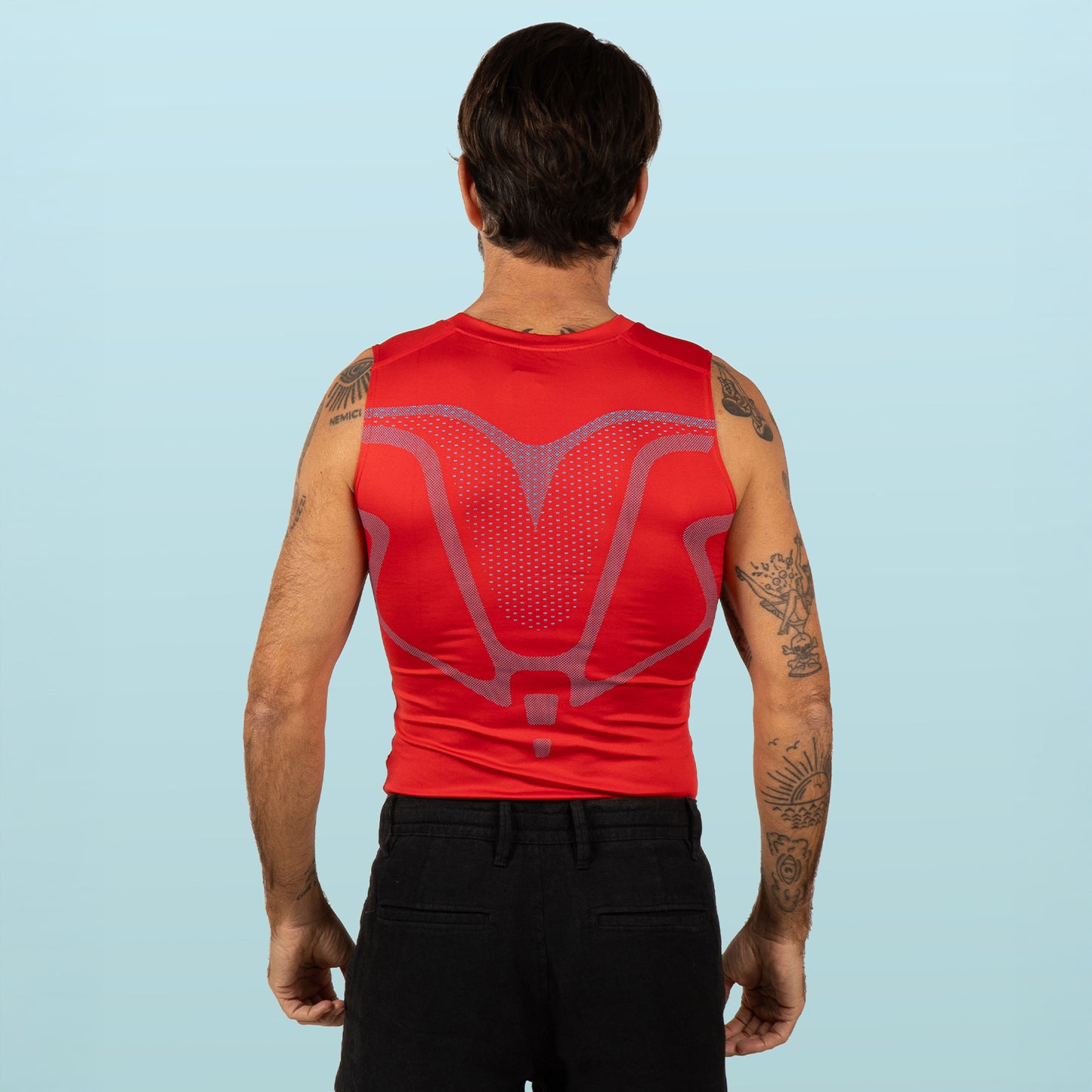
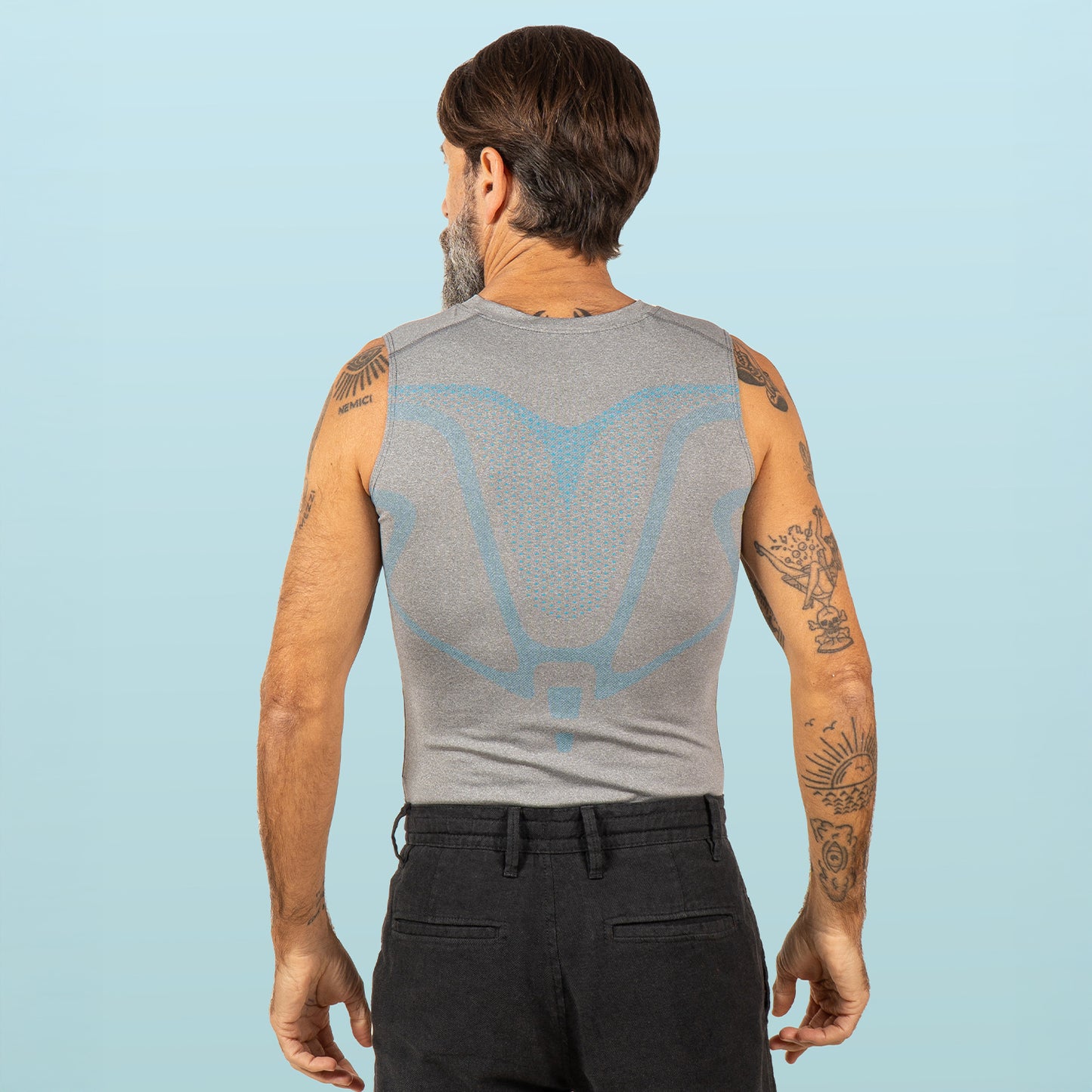
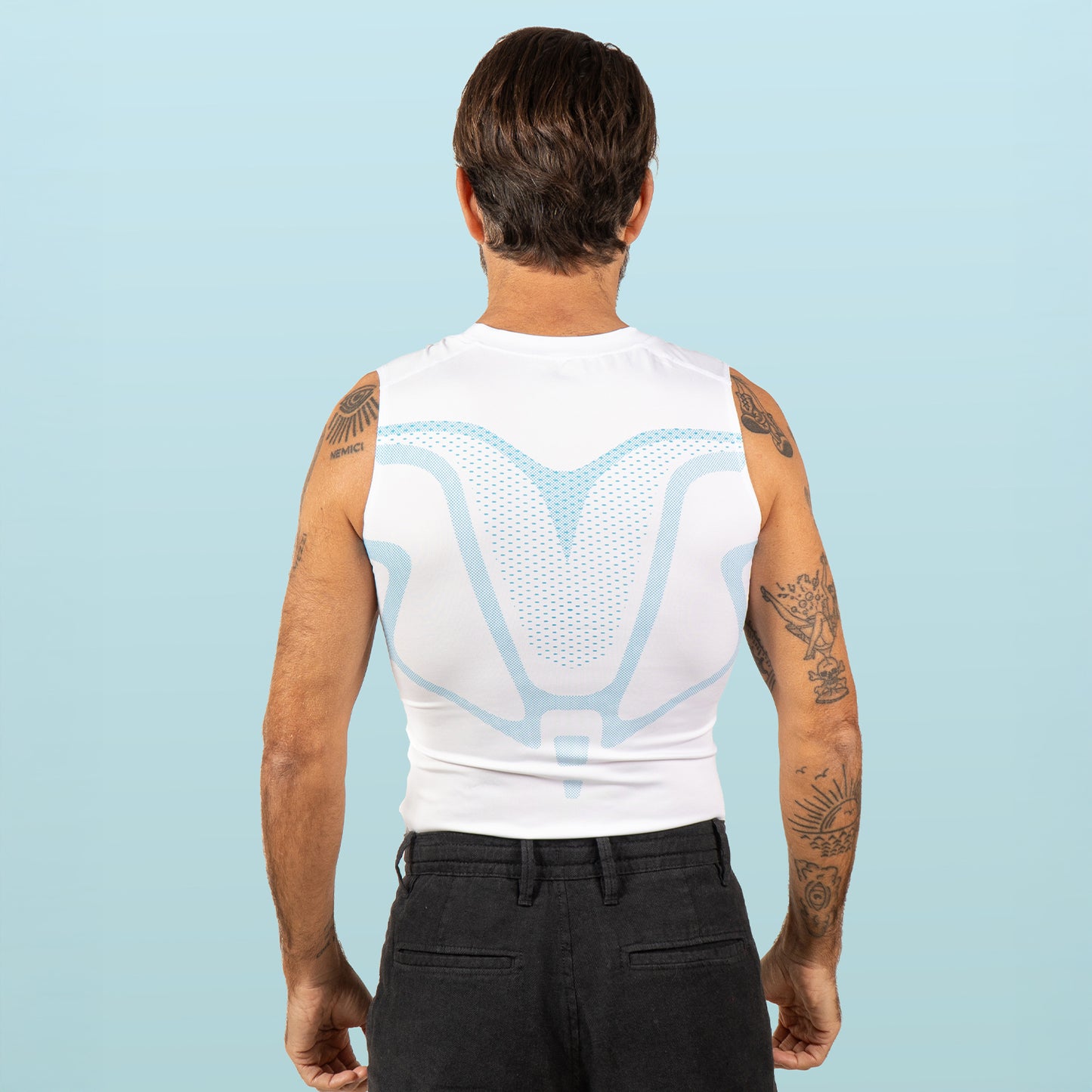
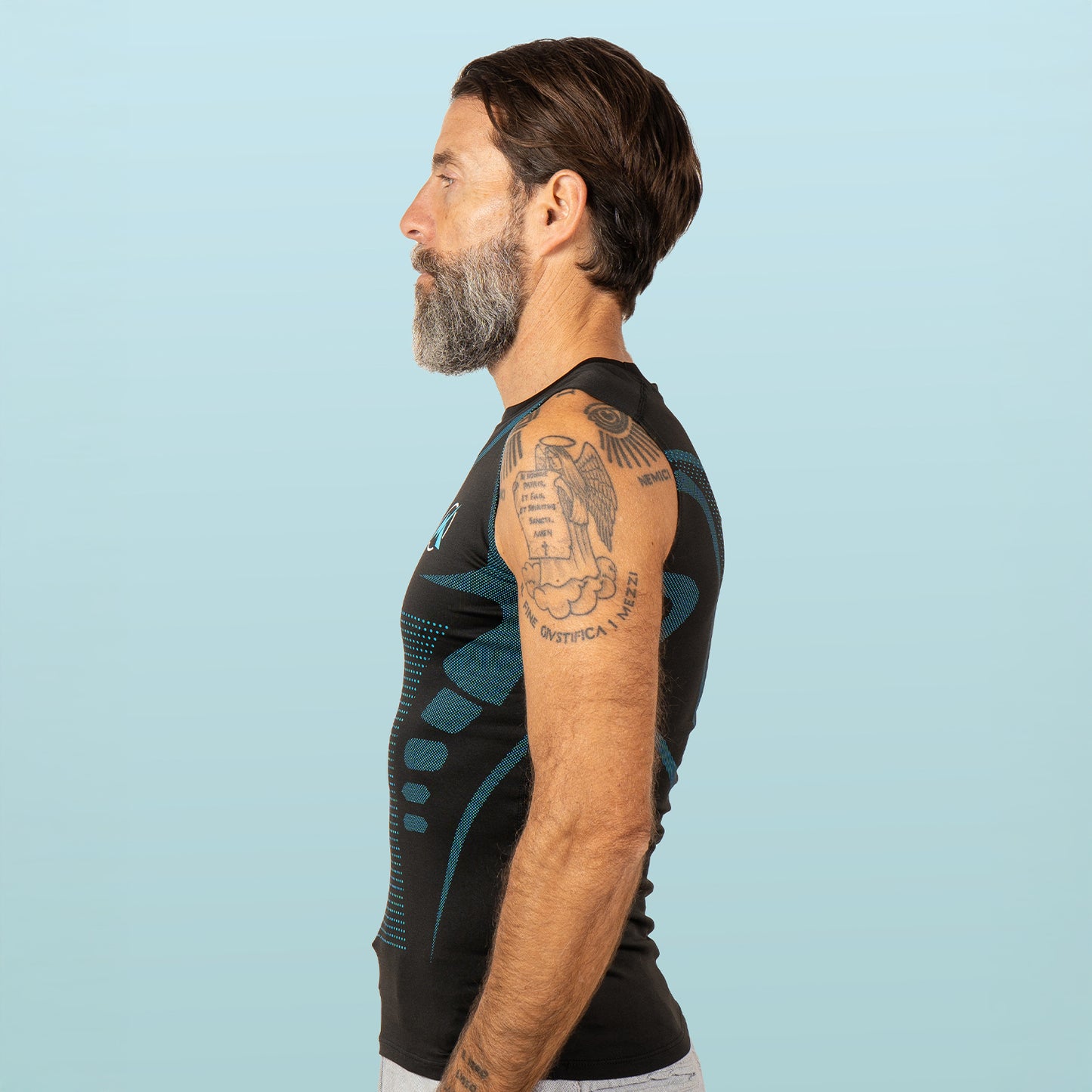
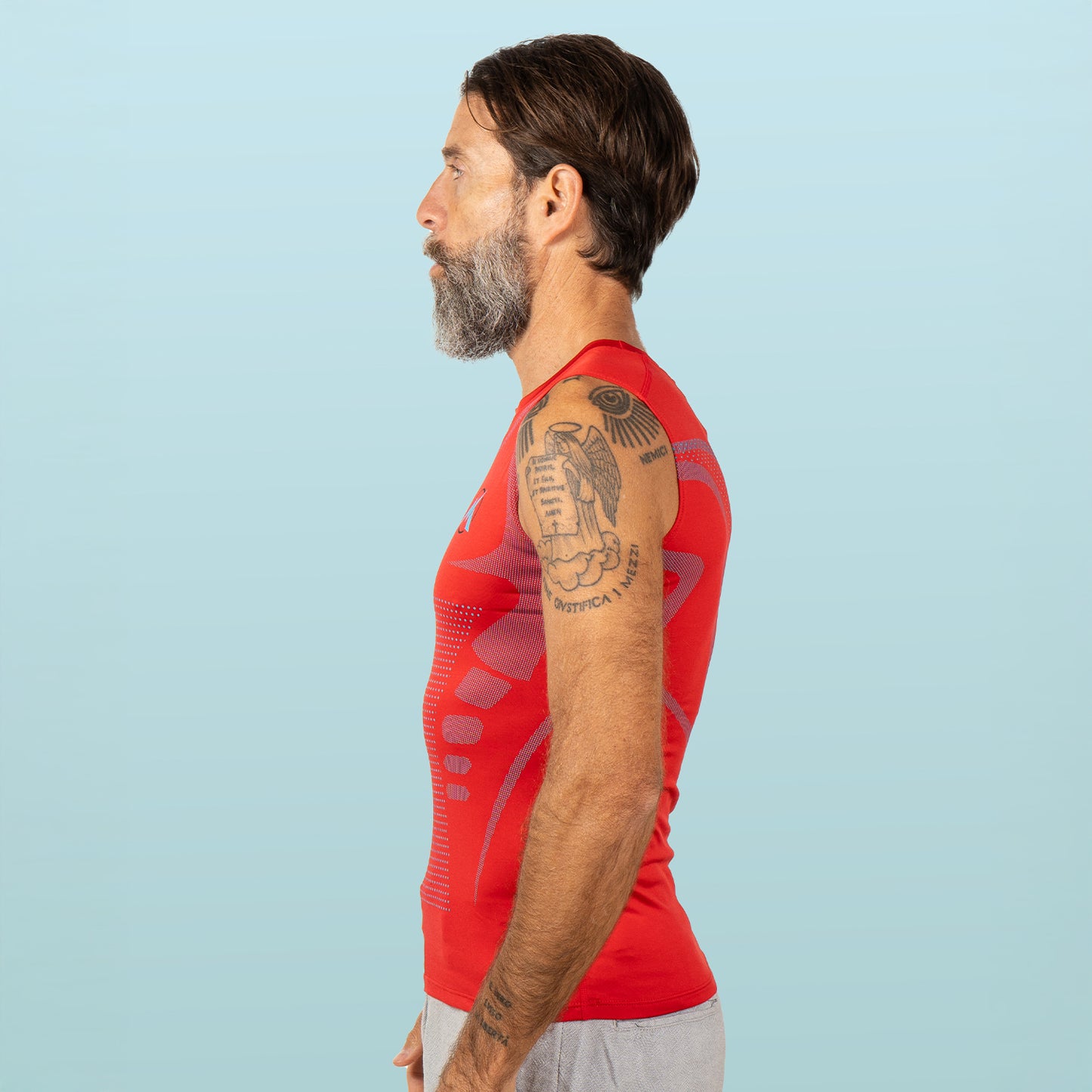
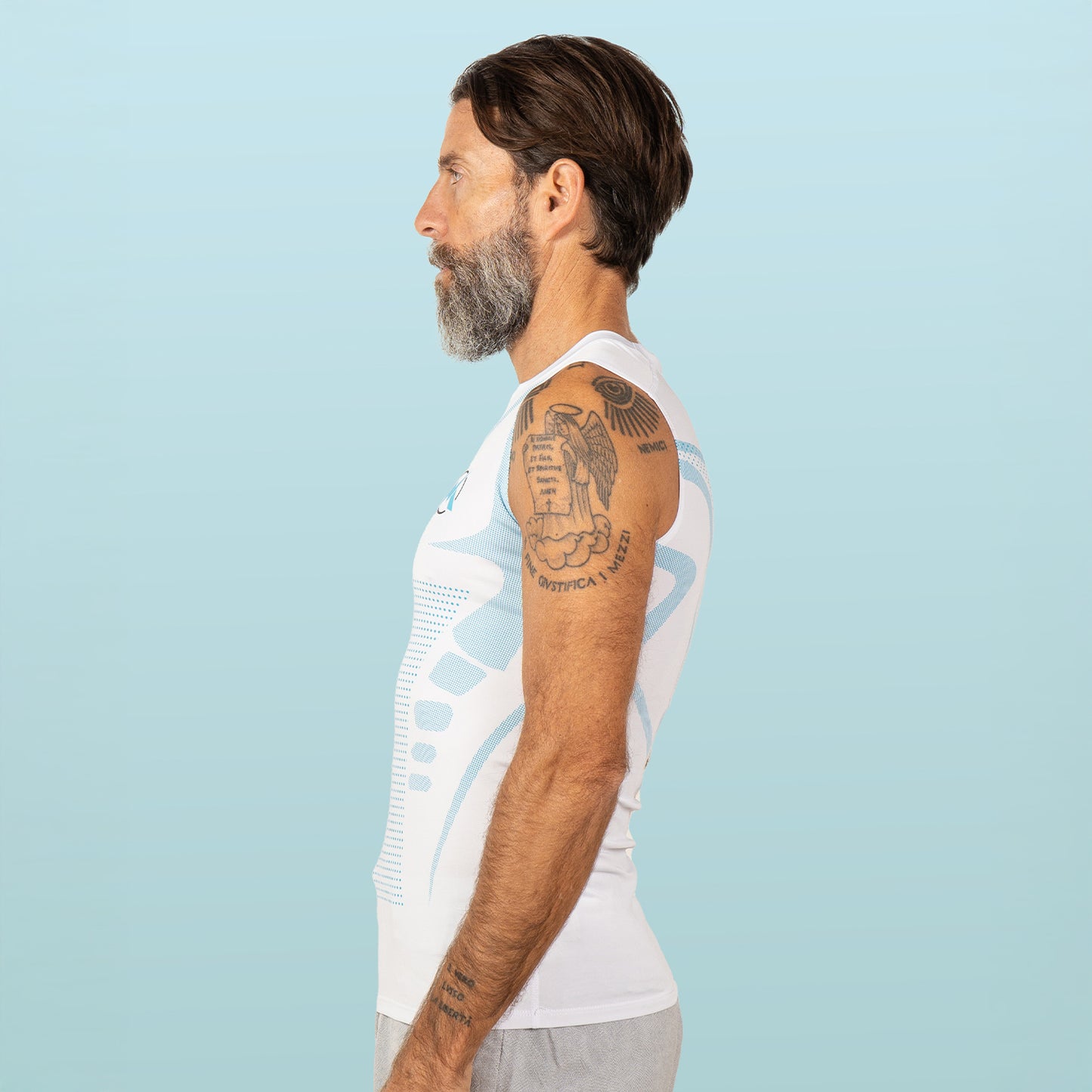
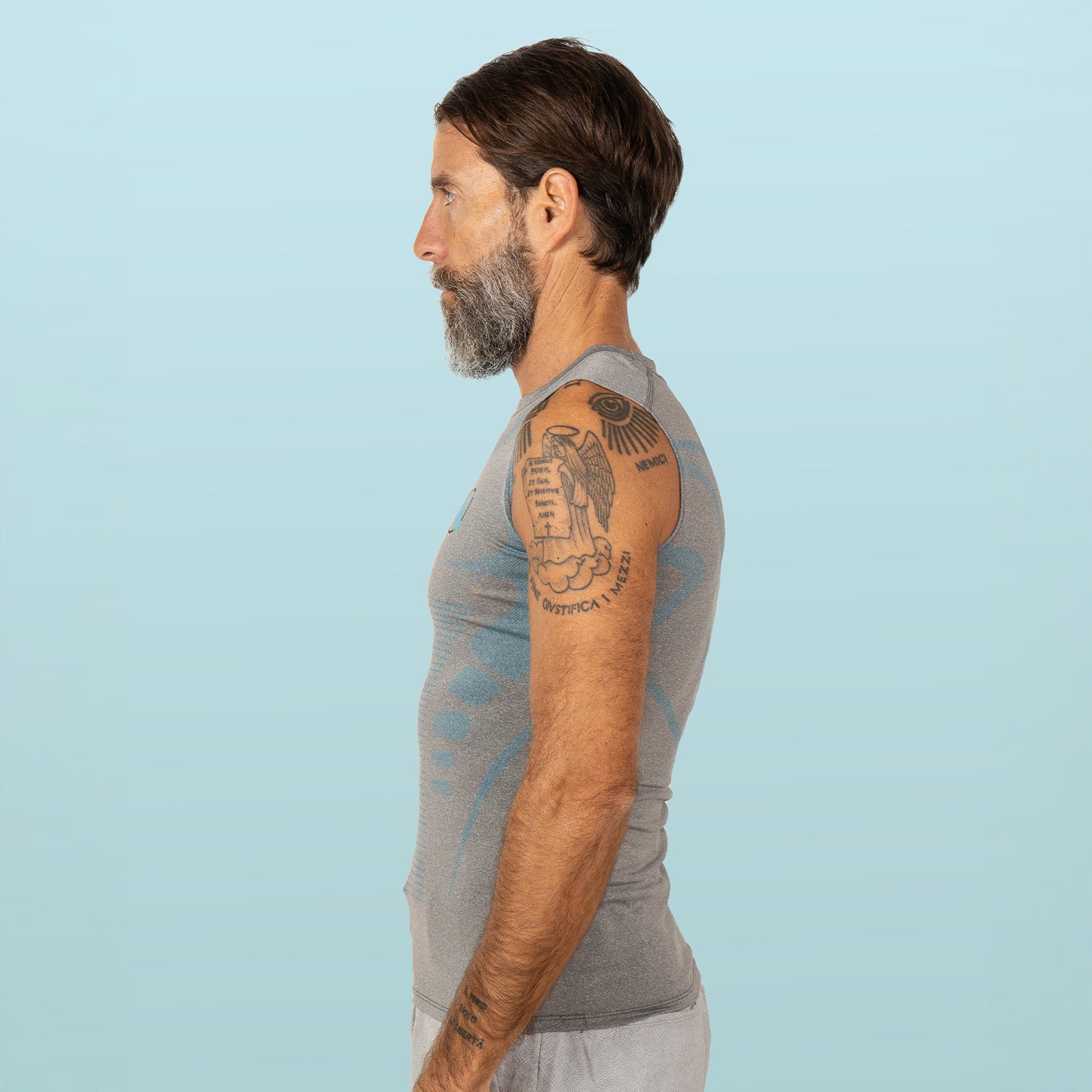
Layer a compression base layer. A snug, sleeveless compression tank gives a constant, gentle proprioceptive cue to the upper back and shoulders during the day. According to Brown et al.'s 2022 Sports Medicine review (PMC9023423), compression garments improve proprioceptive feedback — the subconscious sense of where your body is in space. They won't fix posture. But they remind you of where neutral is, all day, without thinking. That's the lever the 10-minute routine can't pull on its own.
Pair with one weekly strength session. Bodyweight rows, lat pulldowns, dumbbell rows — any pull-pattern move once a week multiplies the upper-back gains. If you're starting from scratch, see our 3-day sustainable workout plan for men over 50.
Address sleep. Less than 7 hours doesn't kill your posture work — but it makes the muscles less responsive, the connective tissue less elastic, and the cortisol higher. If you're chronically short, see the protocol on why you feel tired all the time after 45.
Mistakes that will quietly kill your progress
Skipping the mobility block. This is the #1 reason home posture routines stop working at week 2. The strengthening moves aren't dangerous — they just don't work if the chest and hips are still locked up. Three minutes of mobility is non-negotiable.
Going too hard on day one. You don't need 30 reps of wall angels. You need 8 reps for 30 days. Volume is the wrong lever — frequency is the right one.
Doing it once and waiting to feel different. The first session won't change anything. Neither will the third. Posture is a slow-twitch, low-frequency-firing problem. It takes daily, low-volume reinforcement over weeks. Not bursts.
Adding load too early. Bands, weights, push-ups before 3 weeks of bodyweight base — you'll just reinforce the dysfunction with more weight on it. Earn the upgrade.
Chasing the perfect routine. This one is fine. The next viral routine is also fine. Switching every two weeks because you read a new article is the move that guarantees nothing changes. Pick one. Run it 4 weeks. Then judge.
Stopping at week 4. Most men stop right when the work starts showing. The first month builds awareness. Months 2–3 build the actual structural change. The Harvard timeline of 8–12 weeks isn't a marketing line — it's the real timeline. Keep going.
Frequently asked questions
Can poor posture be corrected with exercises alone?
For most desk-bound men 40+ with functional rounded-shoulder posture, yes — consistent home exercises hit the main drivers (tight chest, weak upper back, forward head). If your slouch comes from a structural issue — scoliosis, fixed hyperkyphosis, a vertebral fracture — exercises help but won't fully reverse it. See a physical therapist if pain or numbness is involved.
How long does it take to fix posture with exercises?
Most men see early signal in 2–4 weeks of 5-day-a-week sessions, real visible change in 8–12 weeks, and durable structural change in 3–6 months. Harvard Health's review puts the rehab window at 8–12 weeks, which matches what physical therapists report clinically. Skipping sessions doubles the timeline.
What exercises improve posture at home?
The most effective home moves target the four broken links: doorway pec stretch (tight chest), wall angels and prone Y-T-Ws (weak upper back), chin tucks (forward head), and glute bridges plus hip flexor stretches (anterior pelvic tilt). Sequence matters — mobility first, then activation, then strengthening.
How many days a week should you do posture exercises?
Five days a week is the sweet spot. Three is the minimum for any real change. Daily is fine — the volume is low enough that recovery isn't an issue. Quality of one daily 10-minute session beats one 60-minute weekend session every time.
Is a 10-minute posture routine really enough?
Yes, if it's the right 10 minutes, sequenced correctly, and done consistently. Most men fail not because their routine is too short but because their routine is too long to actually repeat. Ten minutes done 25 times a month beats 45 minutes done 4 times a month.
The bottom line: the slouch in the mirror isn't a mystery. It's tight chest plus weak upper back plus forward head plus tight hips plus aging postural muscles. The 10-minute routine above attacks all five in the right order. Run it five days a week for four weeks before you judge it. Stack a compression base layer for the other 23 hours. You'll see the change in the mirror before anyone tells you about it.
Stack VitaBoost with the routine →
This article is for general educational information and is not medical advice. If you have pain, numbness, or a diagnosed spine condition, work with a physical therapist or physician before starting a new posture routine. Compression apparel like VitaBoost is clothing, not a medical device.
Sources
- NIH News in Health — Getting It Straight (posture issues prevalence)
- Cleveland Clinic — Tech Neck: What Is It & How To Fix It
- Harvard Health — Is it too late to save your posture?
- NIH/PMC2804956 — Sarcopenia: a review of body composition changes with aging
- Brown F. et al. 2022 Sports Medicine PMC9023423 — Compression garments review (proprioceptive feedback)