By Owen Blot · Founder, Maynox · Last updated June 22, 2026
- What sitting at a desk actually does to your posture after 40
- The 5-minute reset stack: what to do, in order
- When to run the stack (the 90-minute anchor protocol)
- The 5 mistakes that quietly kill your desk-stretch progress
- What stretching alone won't fix (be honest)
- The all-day "tactile anchor" between breaks
- Frequently asked questions
You sit down at 8:47 a.m. and stand up at 12:30 p.m. for lunch. By 3 p.m. your right shoulder feels like it's wearing a backpack you can't take off. By 5 p.m. your lower back is talking.
You didn't injure yourself. You just sat.
If you're a man over 40 at a desk job, posture stretches done at your workstation aren't a wellness nice-to-have — they're the minimum dose between you and a compounding problem. The five-move reset stack below takes 5 minutes, lives entirely at your desk, and is built on the way your body actually breaks down after 40 — not a generic gender-neutral listicle.
What sitting at a desk actually does to your posture after 40
A 2025 Nature Scientific Reports study found that 80.81% of office workers report work-related musculoskeletal disorders — most often in the neck (58.6%), lower back (52.5%), and shoulders (37.4%). That's not a vague wellness stat. That's four out of five guys at a desk.
Here's what 4-6 hours of uninterrupted desk time is doing to your body, especially after 40:
- Your chest locks closed. Your arms reach forward toward the keyboard all day. Your pec minor shortens. After enough years, it stays short — even when you stand up.
- Your hip flexors shorten. Sitting puts your hips in 90° of flexion. Your psoas adapts. When you stand up, it pulls your pelvis forward and your lower back into a hard arch.
- Your mid-back goes to sleep. Your thoracic spine rounds into the chair back. The deep stabilizers stop firing. The forward-head posture takes over.
- Your glutes turn off. You're literally sitting on them. They don't fire. They forget how to fire.
- Your head migrates forward. The Cleveland Clinic puts it bluntly: at neutral, your head weighs 10-12 pounds. Tilted forward 15°, it pulls like 27 pounds. At 60°, 60 pounds.
After 40, this all compounds faster. You lose 3-8% of muscle mass per decade after 30 (NIH/PMC2804956). Connective tissue gets stiffer. The chest that locked closed at 35 is harder to open at 50.
The five-minute reset stack below isn't a feel-good listicle. It's the minimum effective dose to keep the damage from compounding while you're stuck behind that screen. (For the deeper question of why this hits men harder after 40, see our breakdown of how to stop hunching over your computer at 45+.)
The 5-minute reset stack: what to do, in order
Order matters. You open the locked links first (chest, hip flexors), then re-activate the sleeping ones (thoracic, glutes), then release the overworked one (neck). Skip the order and you're just stretching random body parts.
1. Doorway chest opener (60 seconds)
What it fixes: the locked-closed chest from typing all day.
Stand in any doorway near your desk. Place your right forearm flat against the doorframe at shoulder height — elbow bent at 90°. Step your right foot forward through the doorway. Let your chest rotate left until you feel the stretch across the right side of your chest and front of the shoulder.
Hold 30 seconds. Switch sides.
The cue: keep your shoulder pulled down and back. Don't shrug into the stretch.
2. Standing hip flexor stretch (60 seconds, each side)
What it fixes: the shortened psoas pulling your pelvis forward.
Stand next to your chair. Step your right foot forward into a long lunge stance — left leg behind, heel up. Squeeze your left glute hard. Tuck your tailbone slightly under (don't arch). Press your hips forward a few inches.
You should feel the stretch deep in the front of your left hip — not in your low back.
Hold 30 seconds. Switch sides.
The cue: the glute squeeze is what makes this stretch work. Without it, you're just lunging.
3. Seated thoracic extension over chair (60 seconds)
What it fixes: the sleeping mid-back you've been rounding all morning.
Sit on the front edge of your chair, feet flat. Interlace your fingers behind your head — elbows wide. Inhale, then extend backward over the chair back, opening your chest and arching your upper back over the chair's top edge.
Don't crank your low back. The bend lives between your shoulder blades.
Hold 30 seconds. Come back to neutral. Repeat once.
The cue: look slightly up. Keep your ribs lifted. Your low back stays quiet.
4. Neck release: side-bend + chin tuck (60 seconds, both sides)
What it fixes: the forward-head posture and tight upper traps from the morning.
Sit tall. Drop your right ear toward your right shoulder. Place your right hand gently on the left side of your head — don't pull, just add weight. Hold 20 seconds. Switch sides.
Then: bring your head back to center. Glide your chin straight back as if making a double chin. Hold 5 seconds. Release. Repeat 4 times.
The cue: the chin tuck is a glide back, not a tuck down. You should feel the base of your skull lengthen, not your throat compress.
5. Glute activation: standing squeezes (60 seconds)
What it fixes: the glutes that fell asleep around 9:30 a.m.
Stand behind your chair. Feet hip-width. Squeeze your glutes — hard — for 5 seconds. Release. Repeat 10 times.
Then: stand on your right leg, lift your left knee to hip height, hold 5 seconds. Switch. 5 reps each side.
You're not stretching here. You're waking muscles up so they support your spine the next 90 minutes you sit.
The cue: the squeeze should be 100% effort, not a polite contraction. Wake them up.
That's the stack. Five moves, five minutes, in that order.
When to run the stack (the 90-minute anchor protocol)
The single biggest mistake men make with desk stretching is doing it once a day and expecting it to fix anything.
The National Institutes of Health recommends office workers stretch 1-2 minutes for every 20-30 minutes of work. That's the science target. In real life, with meetings and deep work, here's what's actually realistic for a man 40+ on a normal workday:
- 9:00 a.m. — when you first sit down (full stack, 5 minutes)
- 10:30 a.m. — between blocks (chest opener + thoracic extension, 2 minutes)
- 12:00 p.m. — before lunch (full stack, 5 minutes)
- 2:30 p.m. — afternoon dip (hip flexor + glute activation, 3 minutes)
- 4:00 p.m. — end-of-day reset (full stack, 5 minutes)
Three full stacks (5 min each) + two micro-doses (2-3 min each) = 20 minutes of movement spread across an 8-hour day. That's the dose-response threshold where most men feel the difference. Less than that, you're maintaining the damage at best. (For the morning floor work that pairs with this desk stack, our 10-minute home posture routine is the complement.)
Anchor it to triggers, not clocks. Setting a timer for every 90 minutes fails. Anchoring the stack to existing events sticks:
- Stand up after every meeting that ends
- After every coffee refill, run the 2-minute micro-dose
- Before every lunch, full stack
- End of last meeting before 5 p.m., full stack
If you have to remember the time, you'll forget. If you anchor it to things you already do, it runs itself.
The 5 mistakes that quietly kill your desk-stretch progress
1. Doing them once a week instead of daily. A weekly hour-long routine does almost nothing for desk damage. Daily 5-minute doses do everything. Frequency beats volume.
2. Stretching what already feels stretched. Most guys stretch their hamstrings (because they feel tight) and ignore their hip flexors (which are the actual problem). The tight muscle is rarely the broken one. Stretch by anatomical priority, not by what feels worst.
3. Cranking the neck. The neck side-bend should be gentle gravity, not a forearm-load. Most desk neck pain comes from the upper traps overcompensating for sleeping mid-back muscles. Fix the mid-back, the neck calms down. Pulling harder on the neck just irritates it.
4. Holding stretches for 5 seconds. Connective tissue needs 20-30 seconds to actually lengthen. A 5-second bounce is a warm-up, not a stretch. Set a clock if you have to.
5. Stretching only — never strengthening. Stretching opens. Strengthening holds it open. If you only stretch, you're a balloon that re-deflates after every break. The glute activation step is the strengthening half — don't skip it because it's not technically a stretch.
For a fuller breakdown of why these mistakes happen (and the longer floor routine that fixes the strength side), see our posture exercises for men at home.
What stretching alone won't fix (be honest)
The supplement industry sells "posture fixes." The truth is more honest:
Stretching won't fix a desk that's the wrong height. If your monitor is below eye level or your keyboard is too far from your body, you'll stretch every 90 minutes and undo nothing. Raise the screen. Pull the keyboard closer. The ergonomics has to be right or the stretches are bailing water.
Stretching won't replace strength. Tight muscles often feel tight because the opposite muscle is weak. Tight hip flexors signal weak glutes. Tight chest signals weak mid-back. Stretching alone is half the equation.
Stretching won't undo 4 hours of slouching in 5 minutes. A 90-minute compounded posture isn't reset by one round of stretches. Stretching is maintenance, not magic.
Posture braces won't do it either. Most rigid posture correctors create dependency — your muscles get lazy because the brace is doing the work. We broke this down in our honest review of men's posture correctors — they're not the shortcut they look like.
A compression base layer can do something a brace can't. Brown F. et al. (2022, Sports Medicine) found compression garments improve proprioceptive feedback — your brain's awareness of where your body is in space. That awareness is what keeps you from sliding back into a slump between stretch breaks. It's not magic. It's a tactile reminder you're upright, working with the muscles instead of replacing them.
The all-day "tactile anchor" between breaks
Here's the gap in every desk-stretch guide: the 88 minutes between stretches when you're back to typing, slumping, and forgetting.
That's where a compression undershirt does the quiet work. Not as a brace. As an anchor.
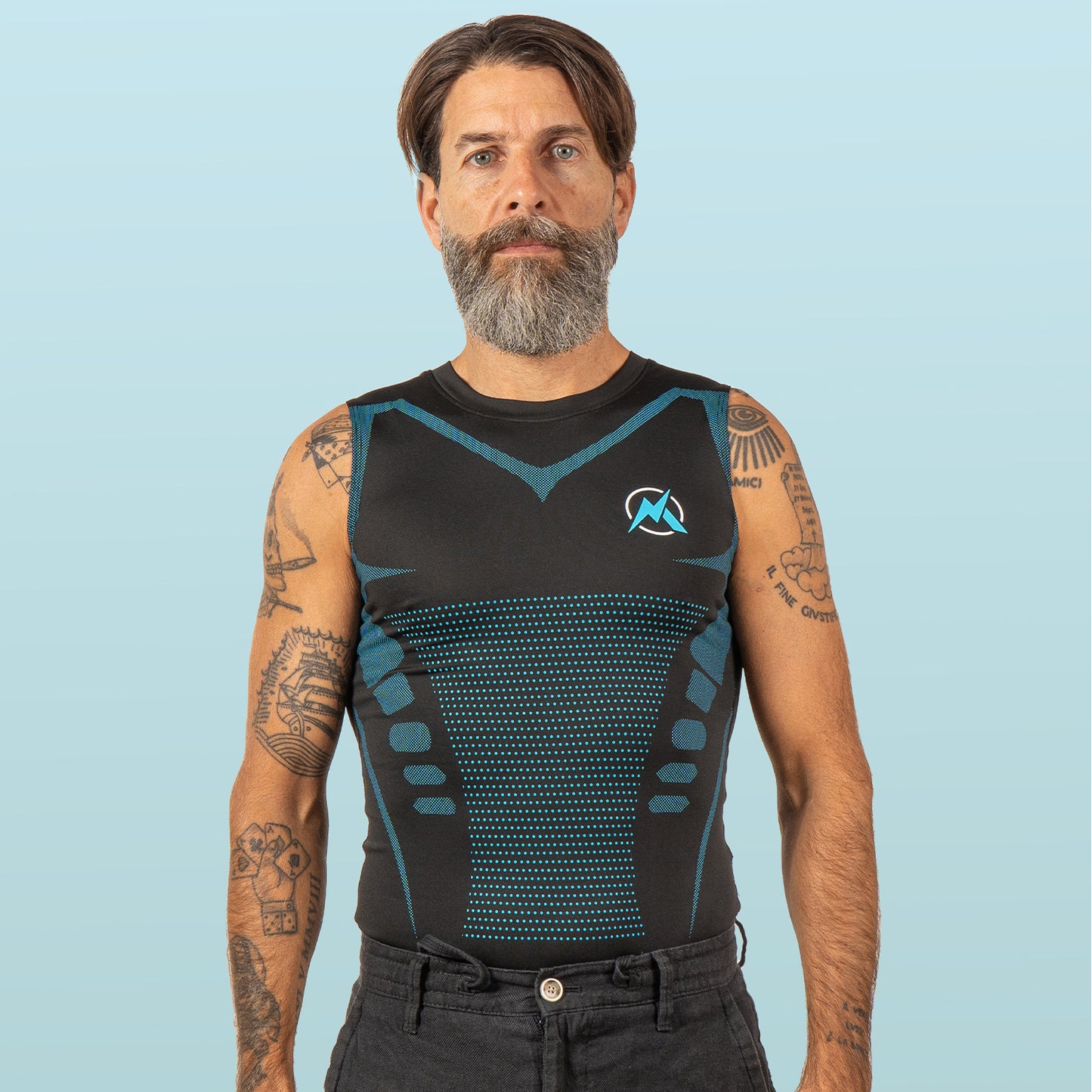
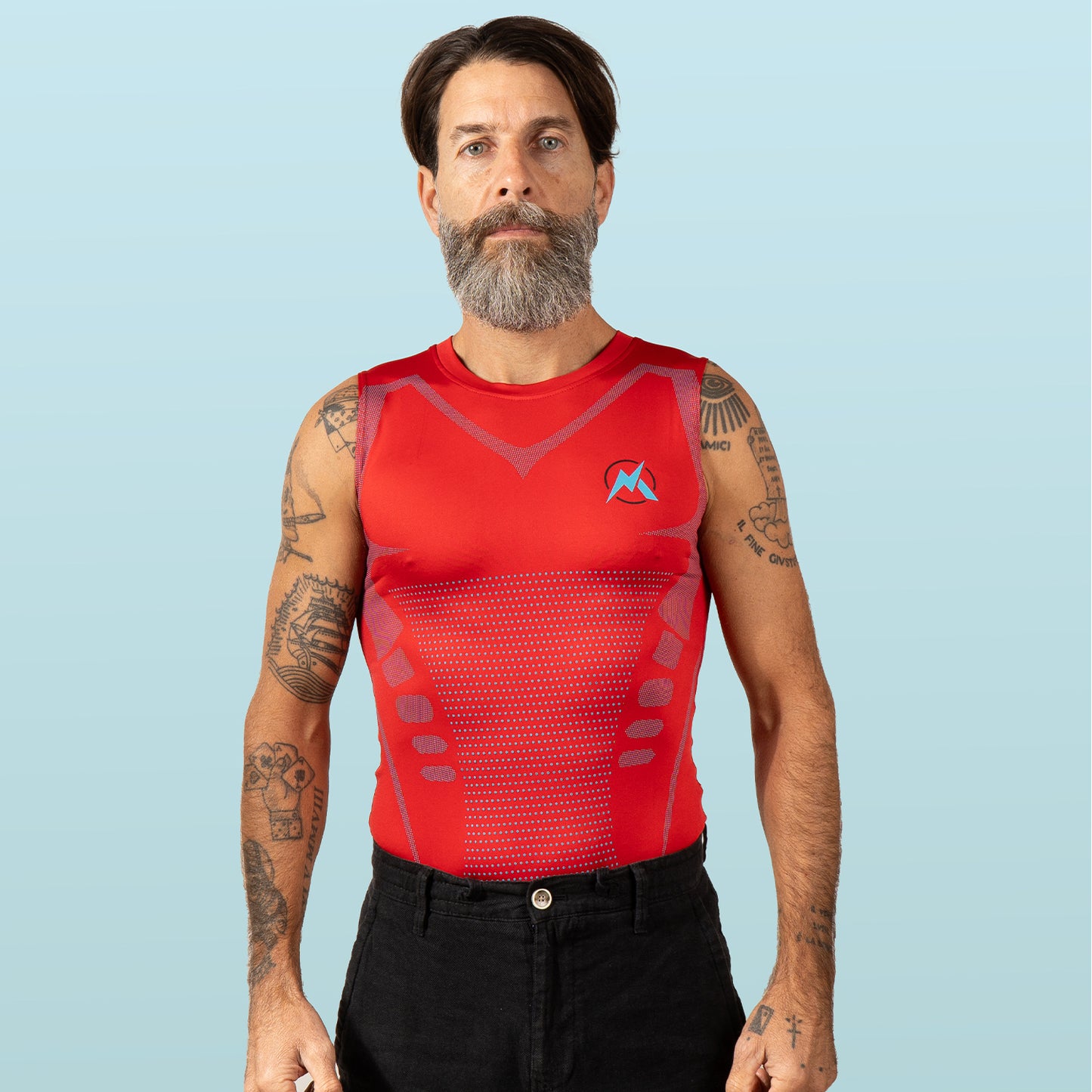
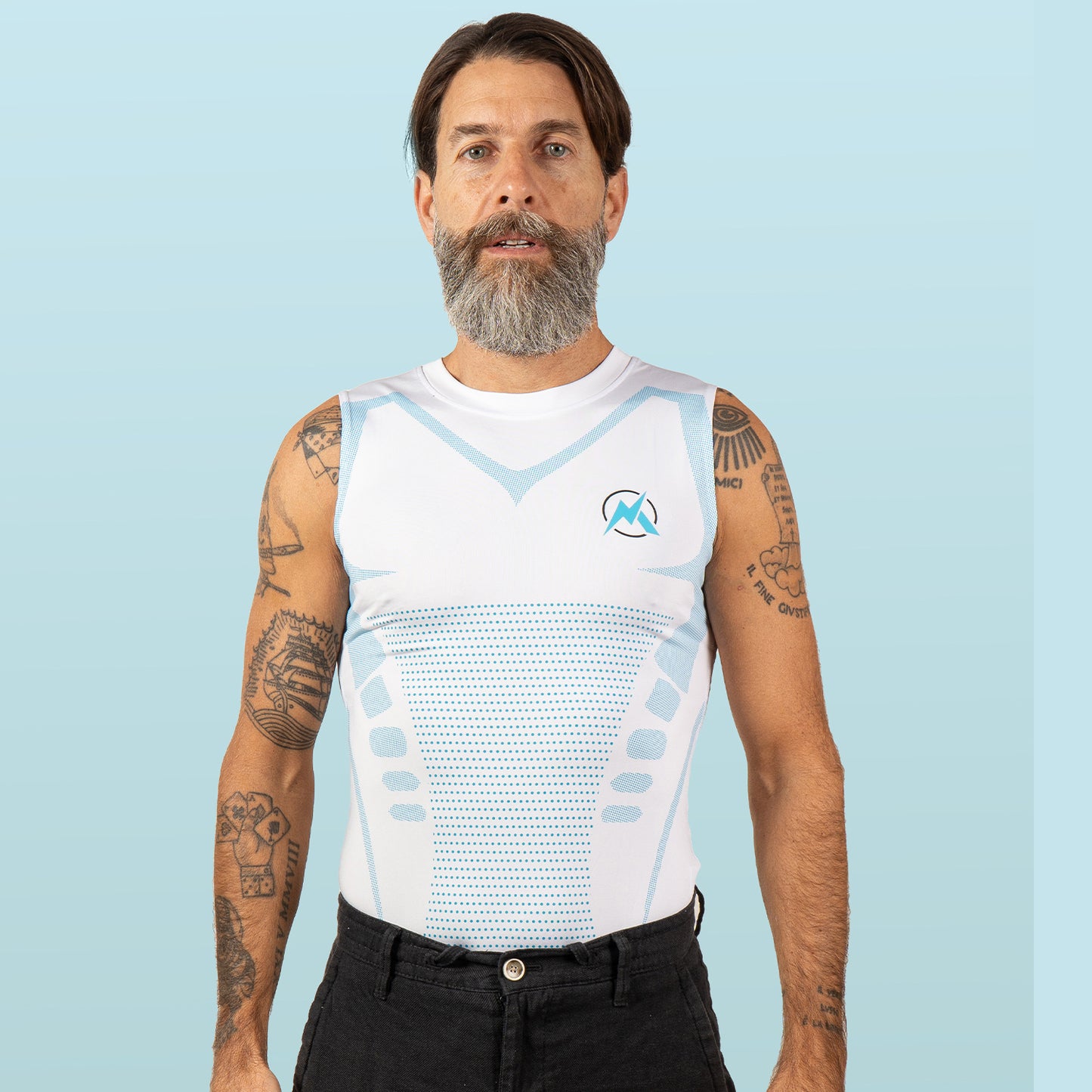
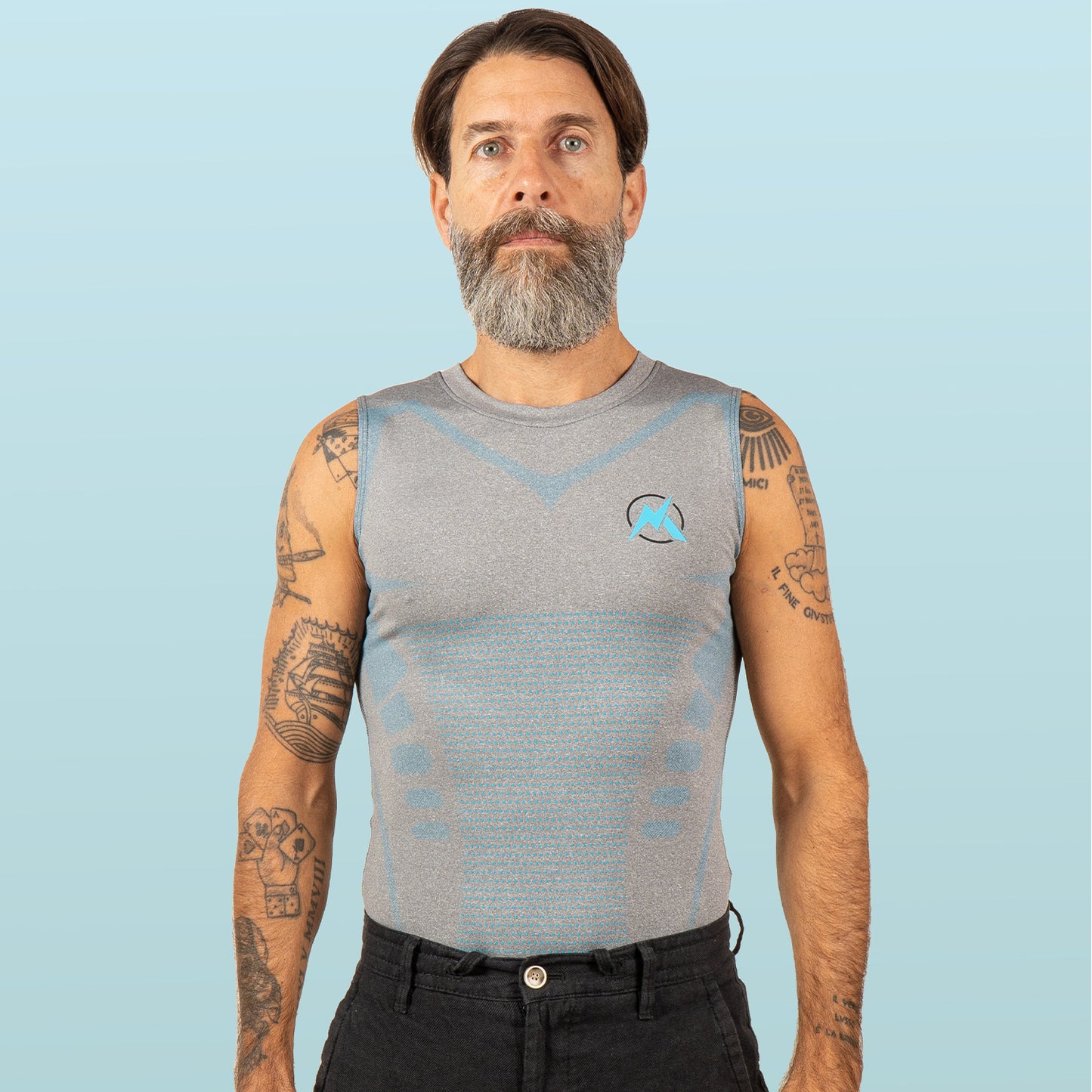
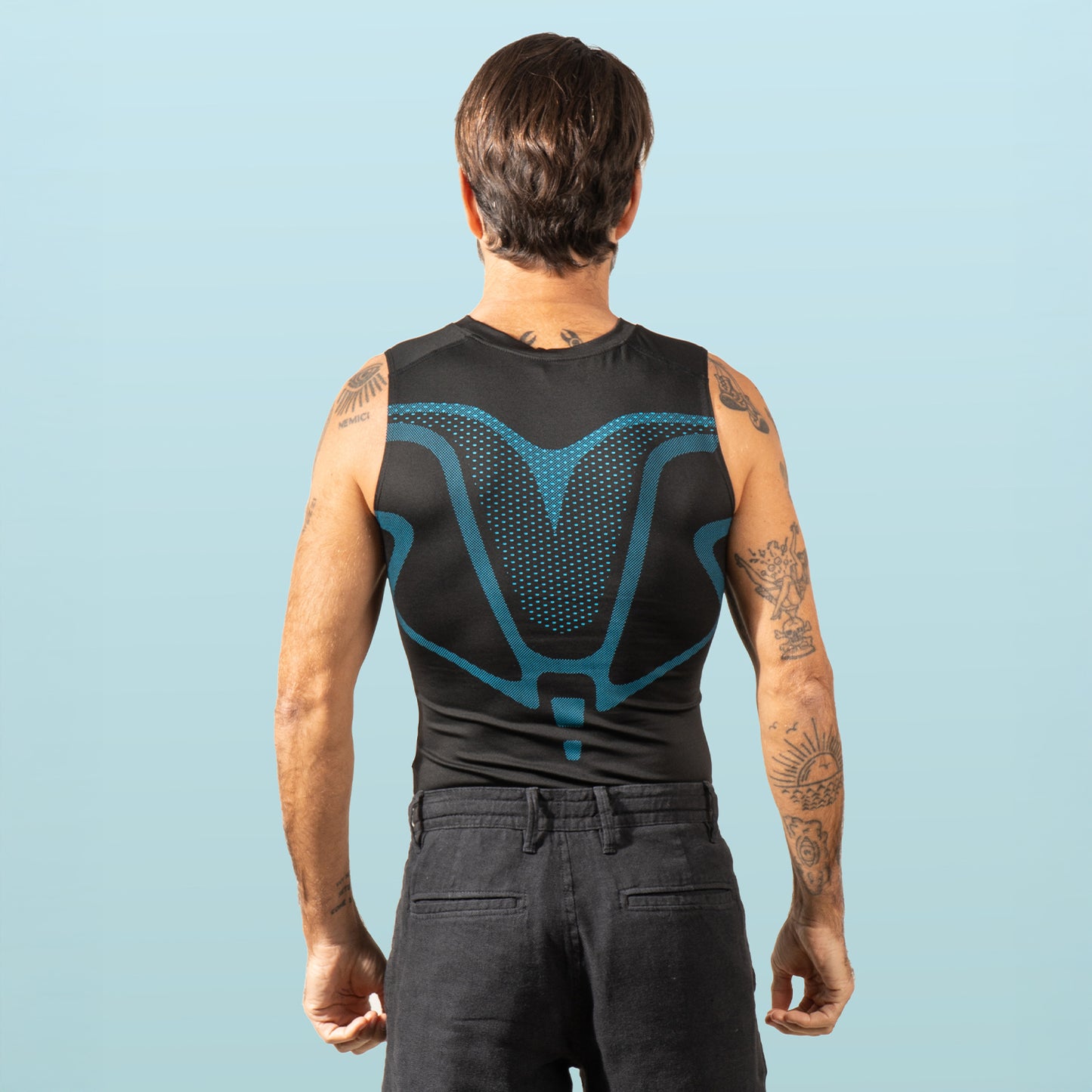
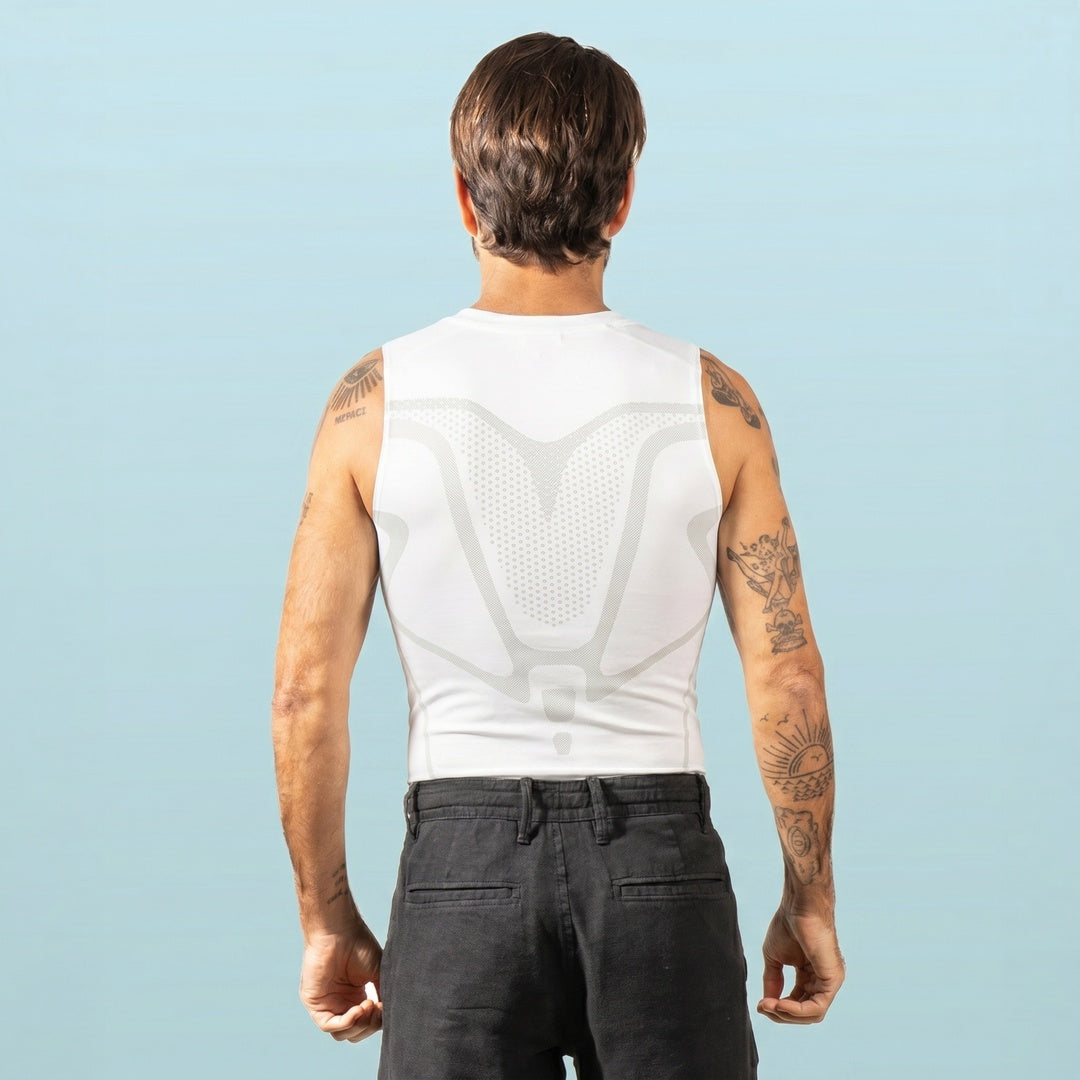
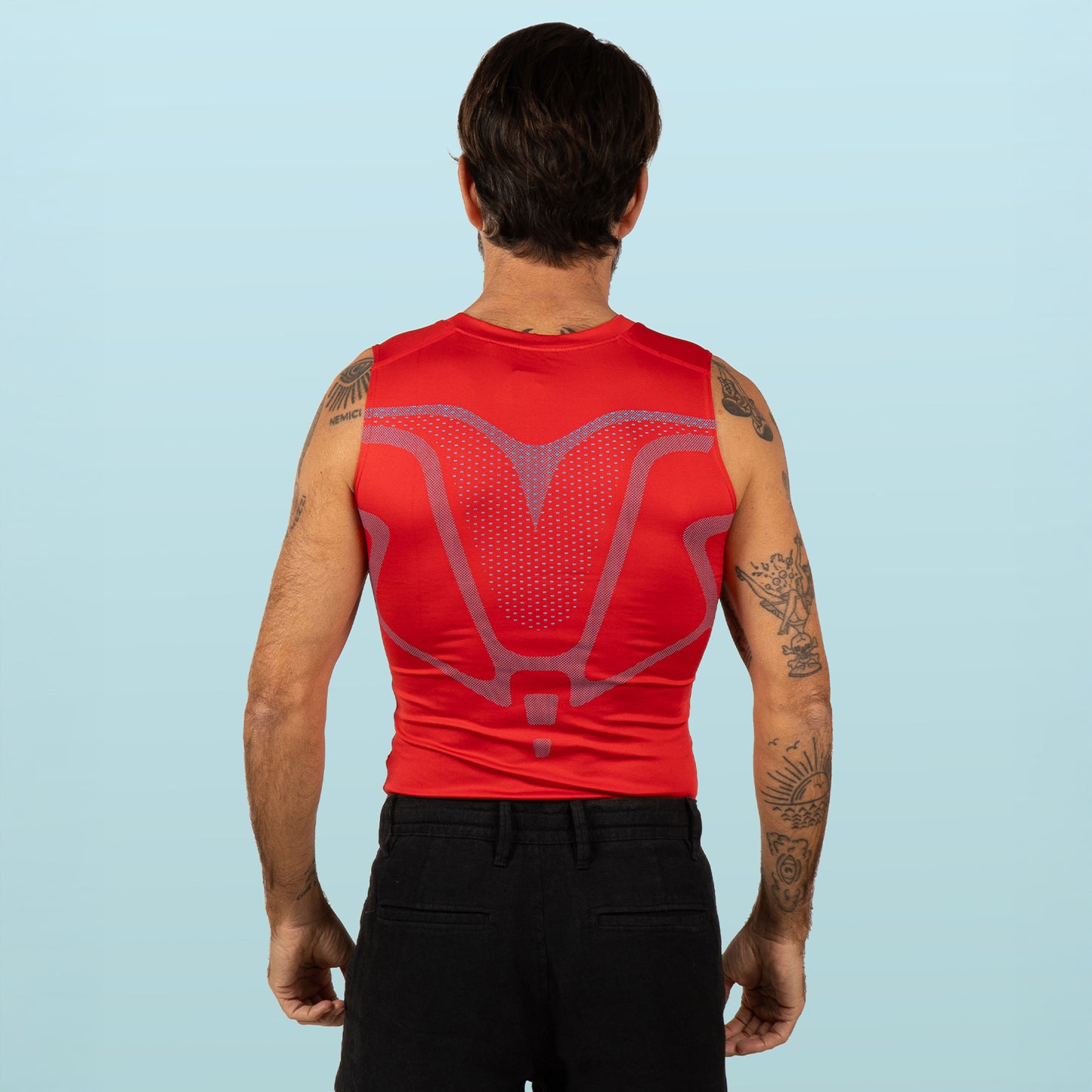
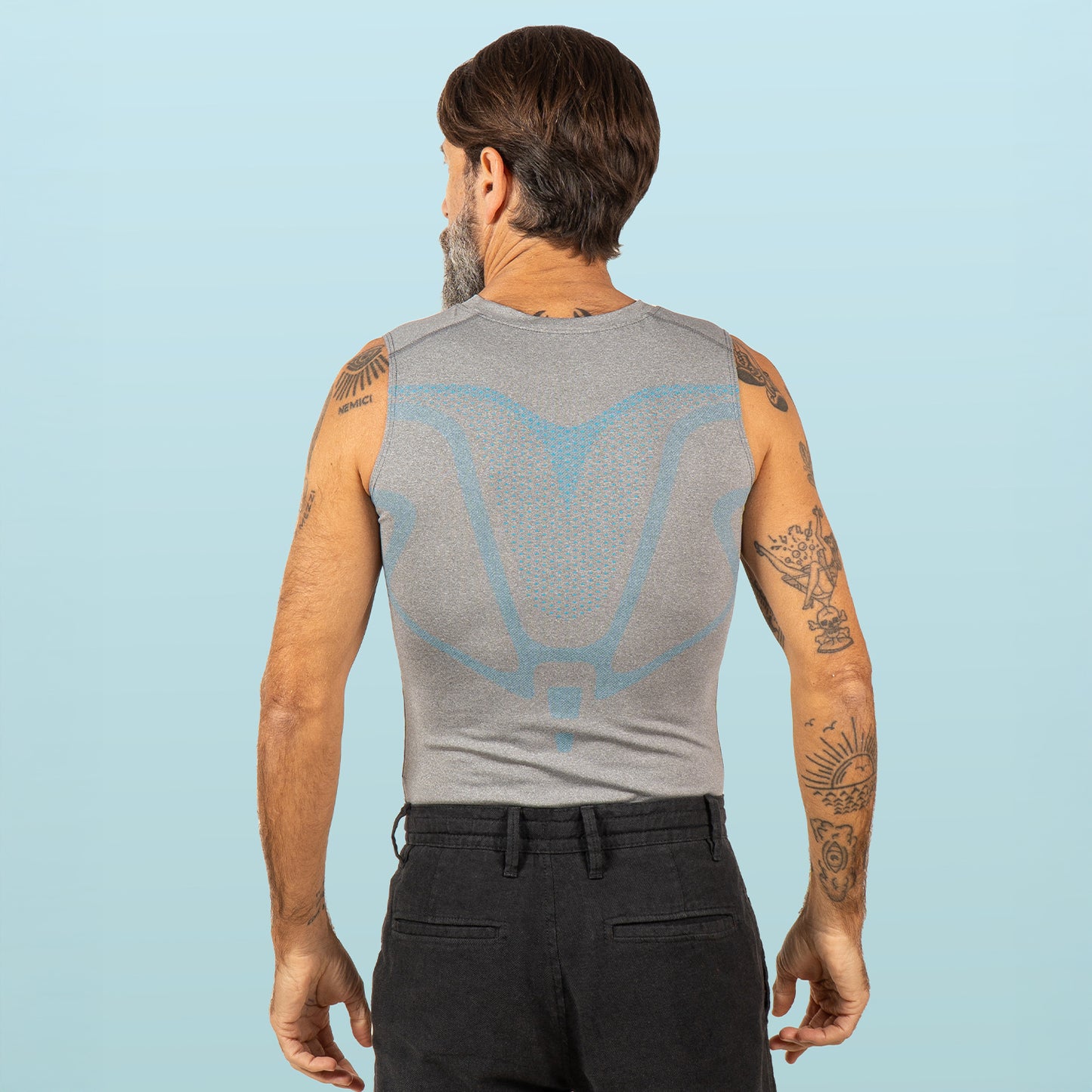
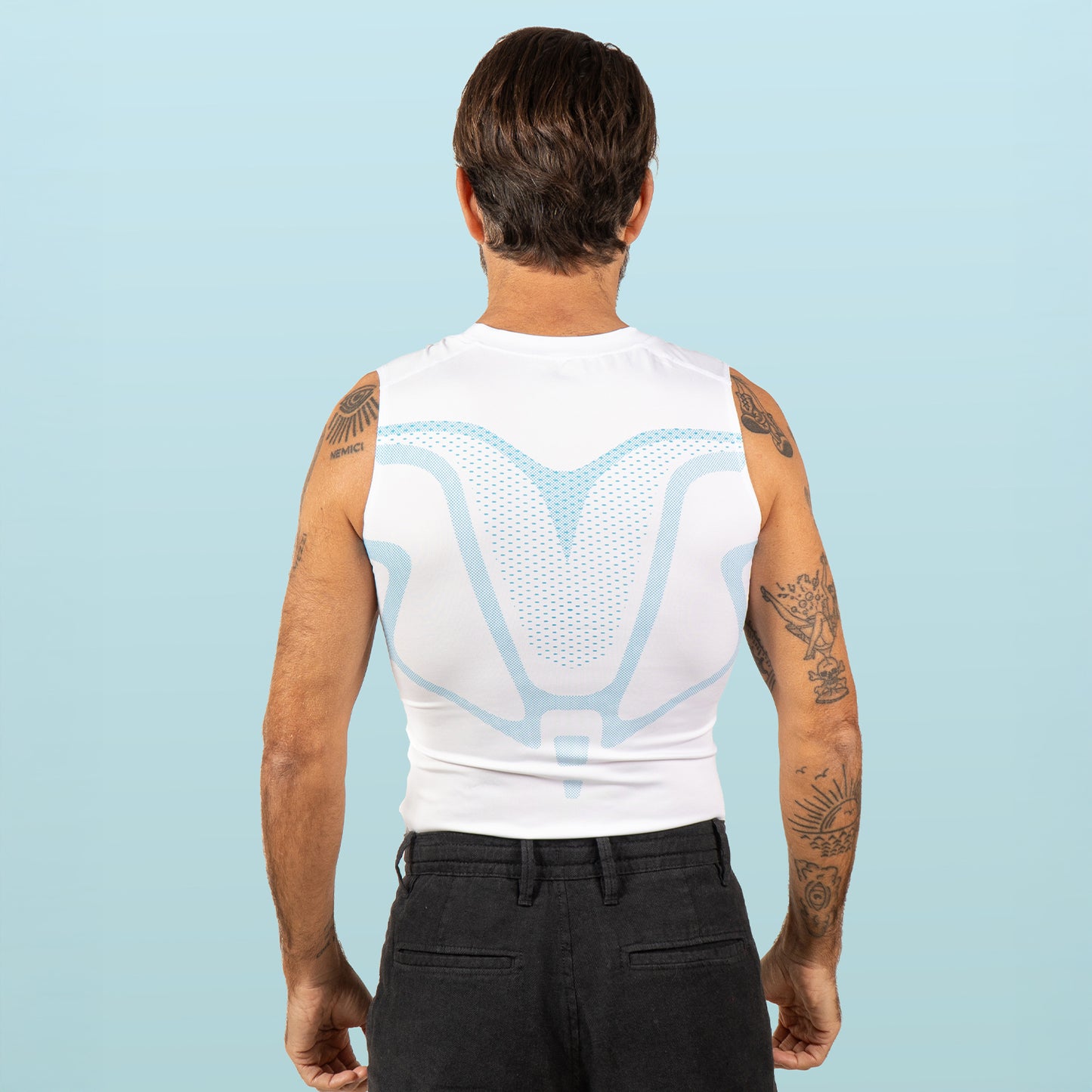
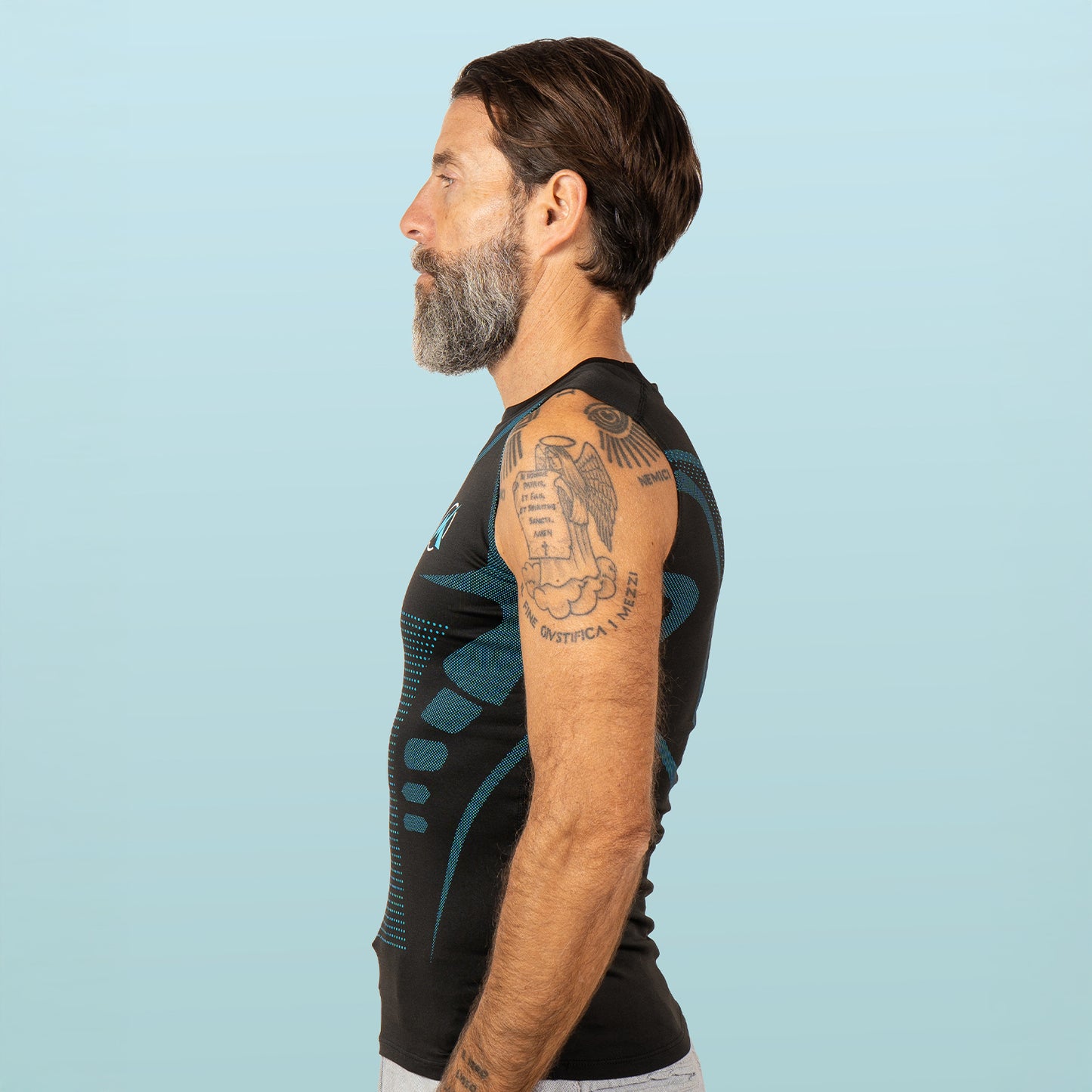
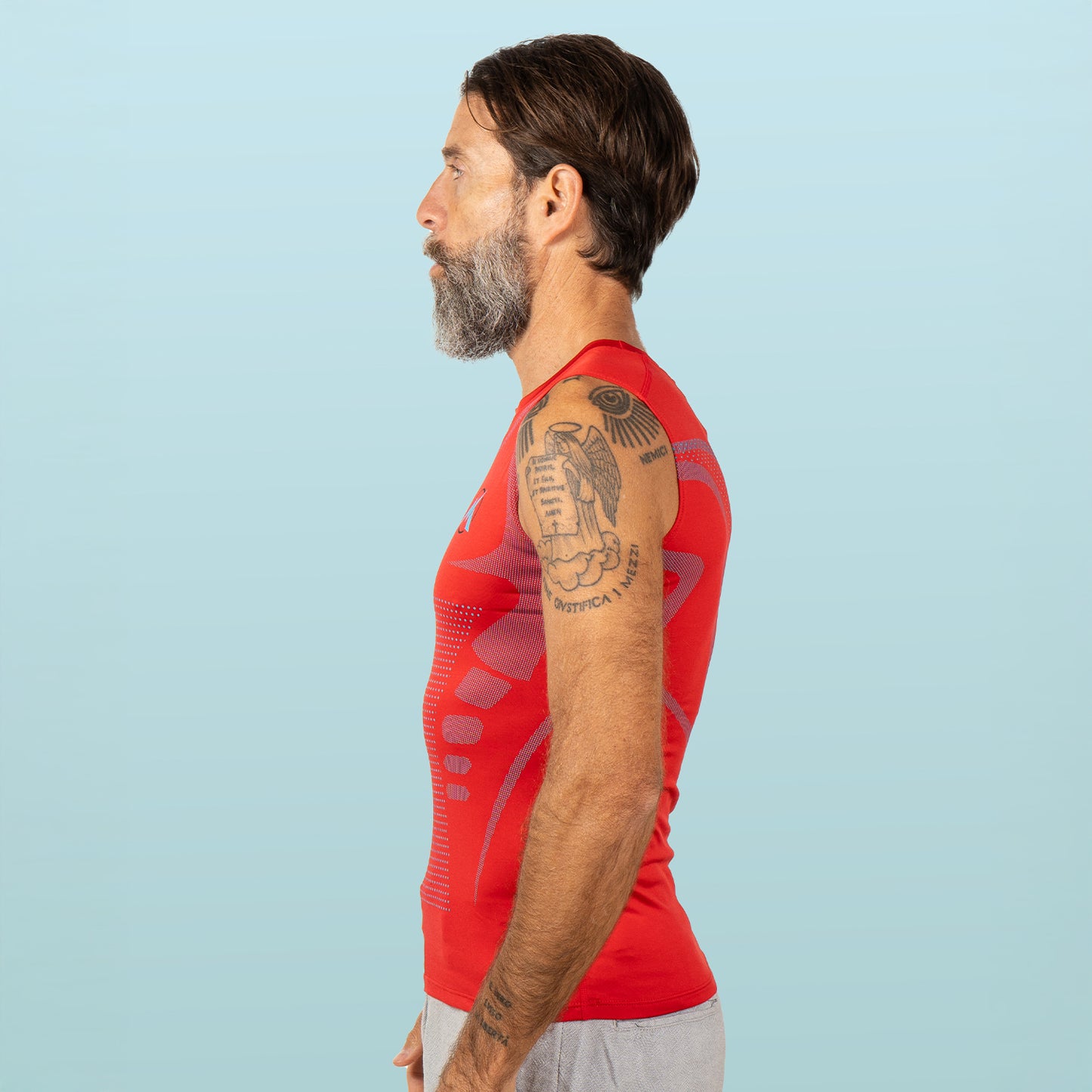
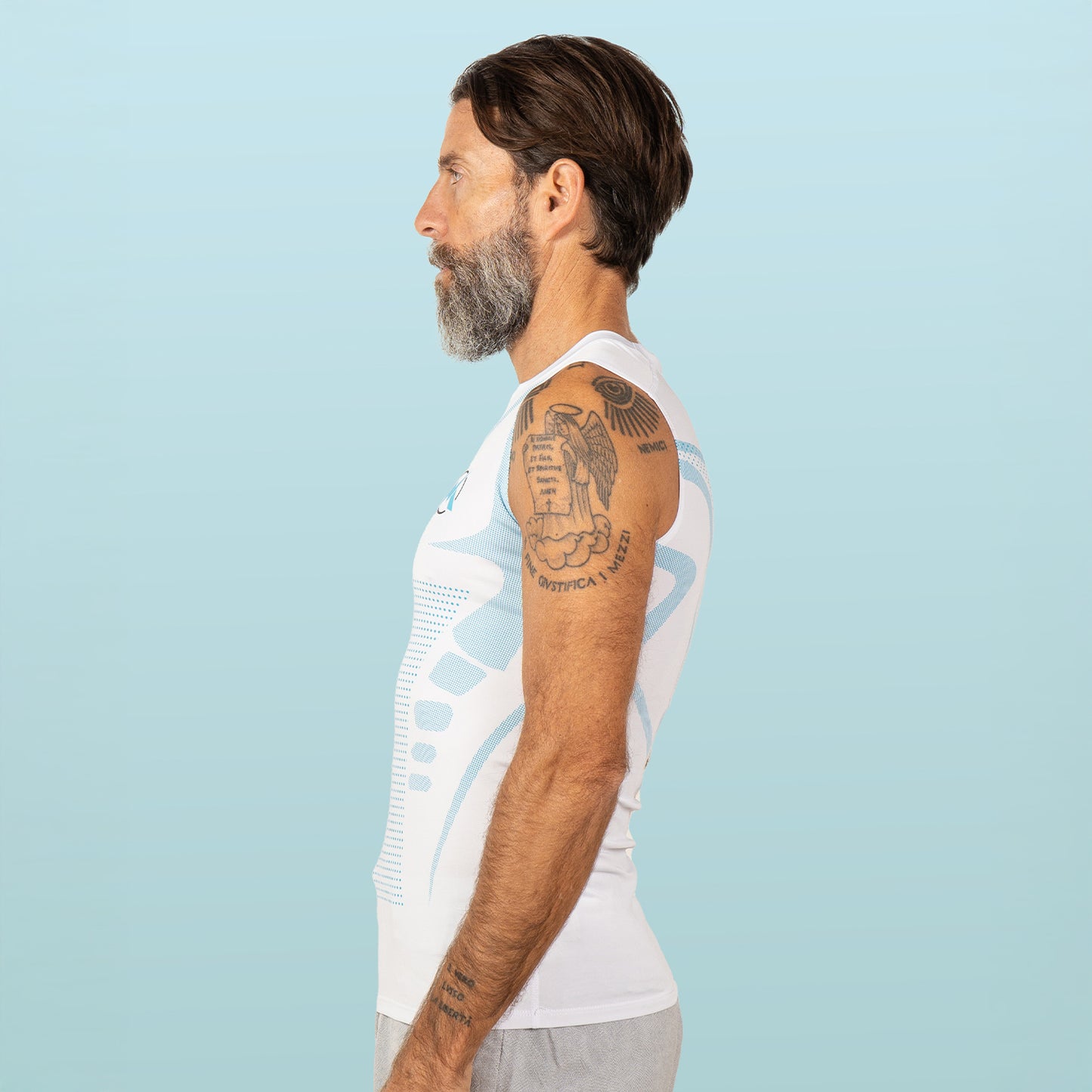
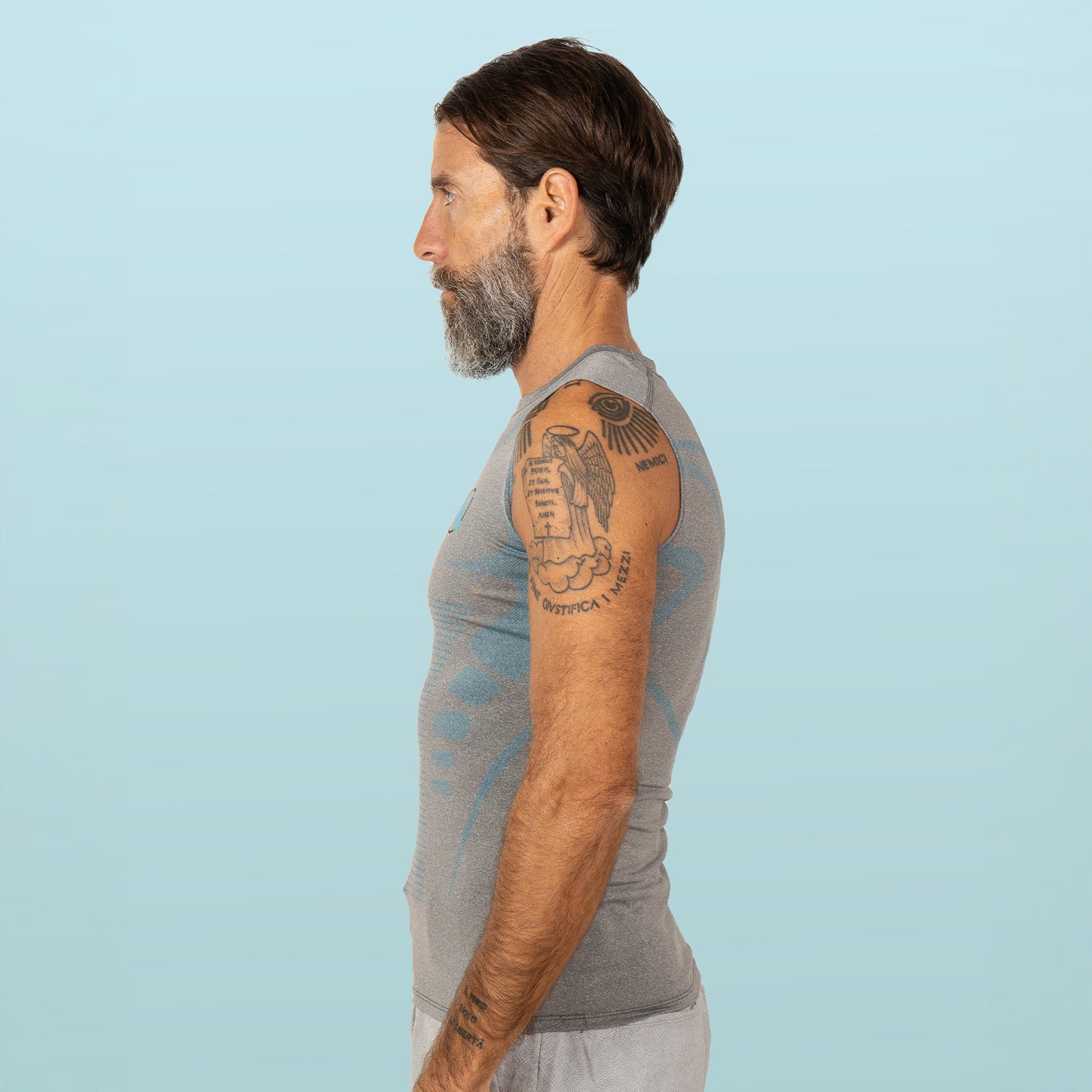
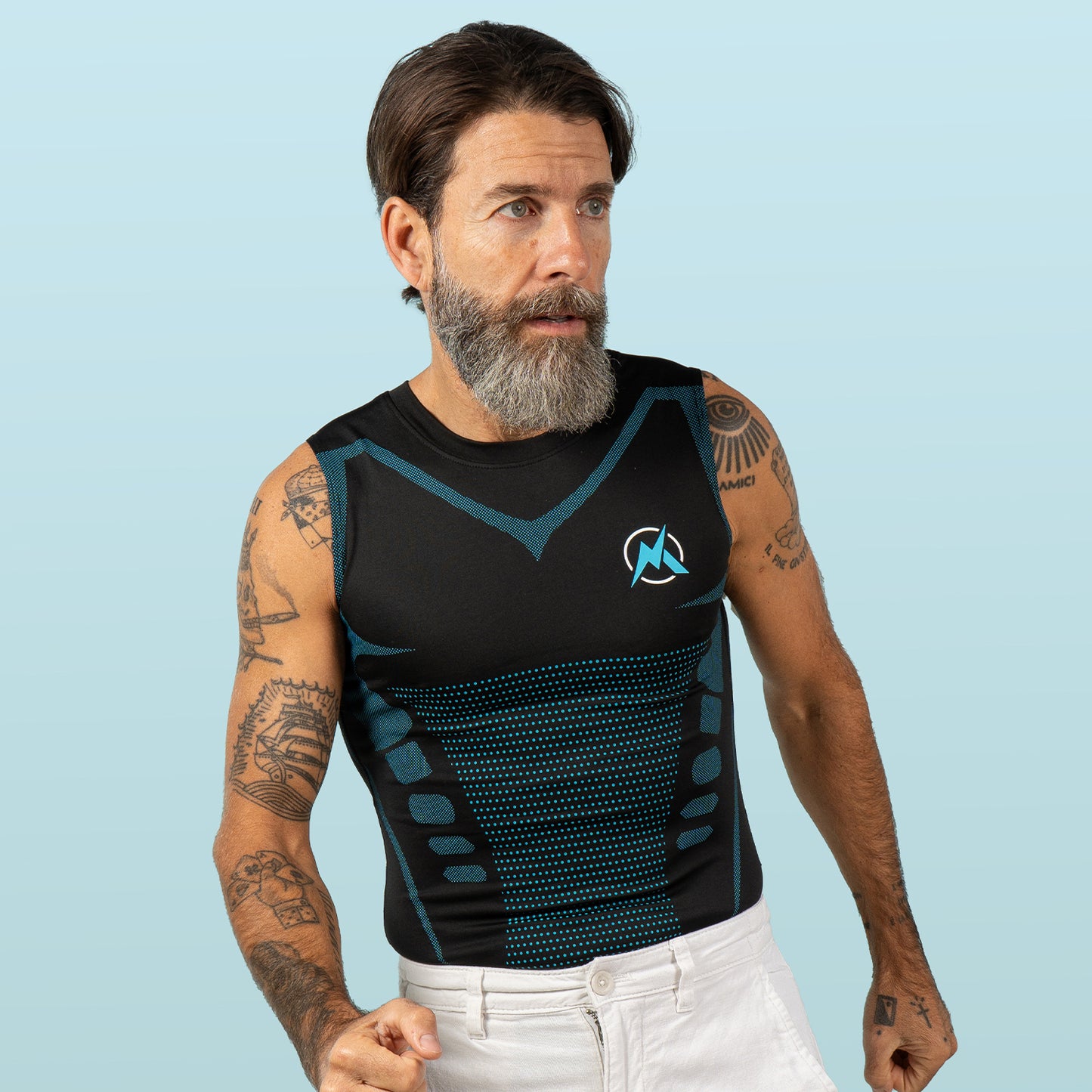
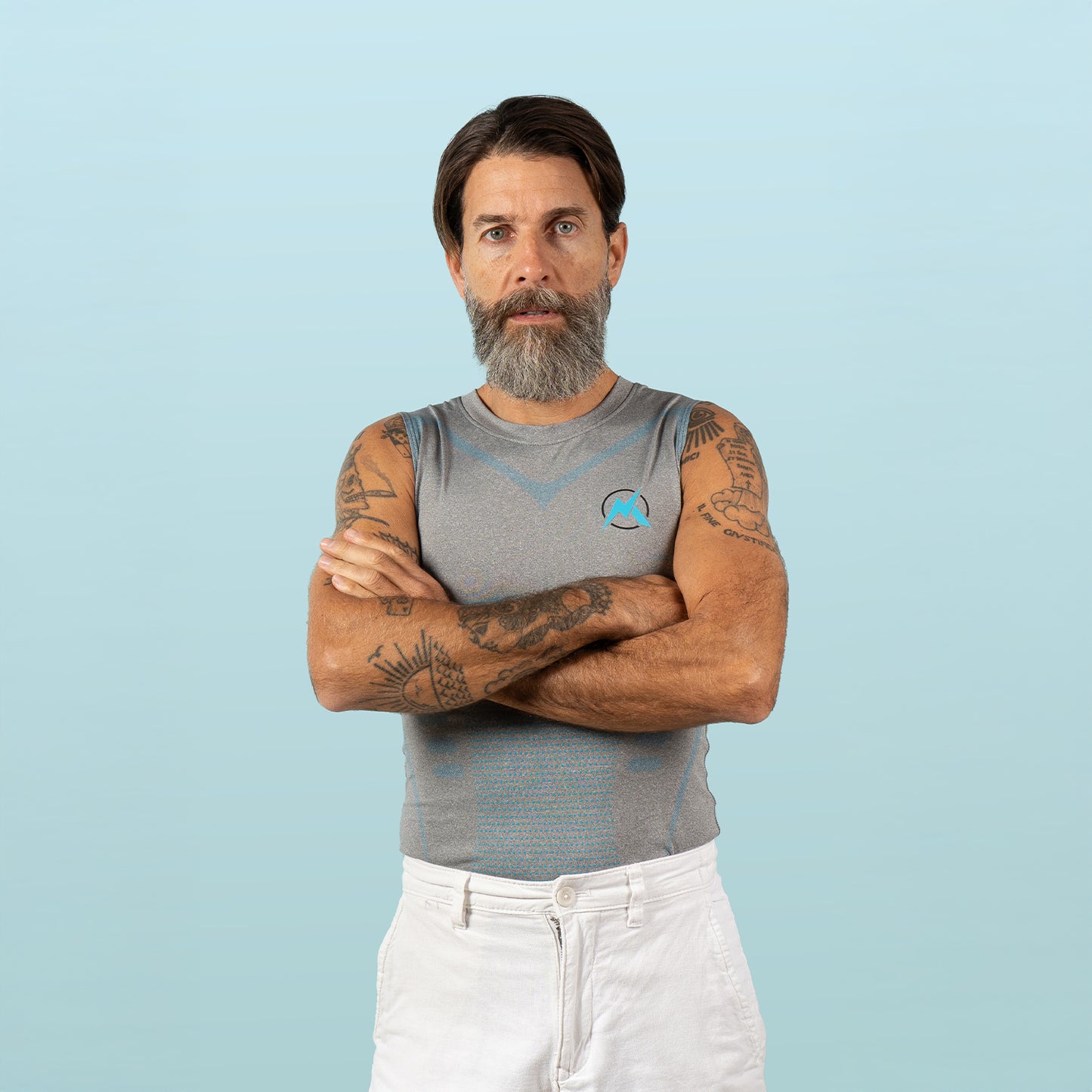
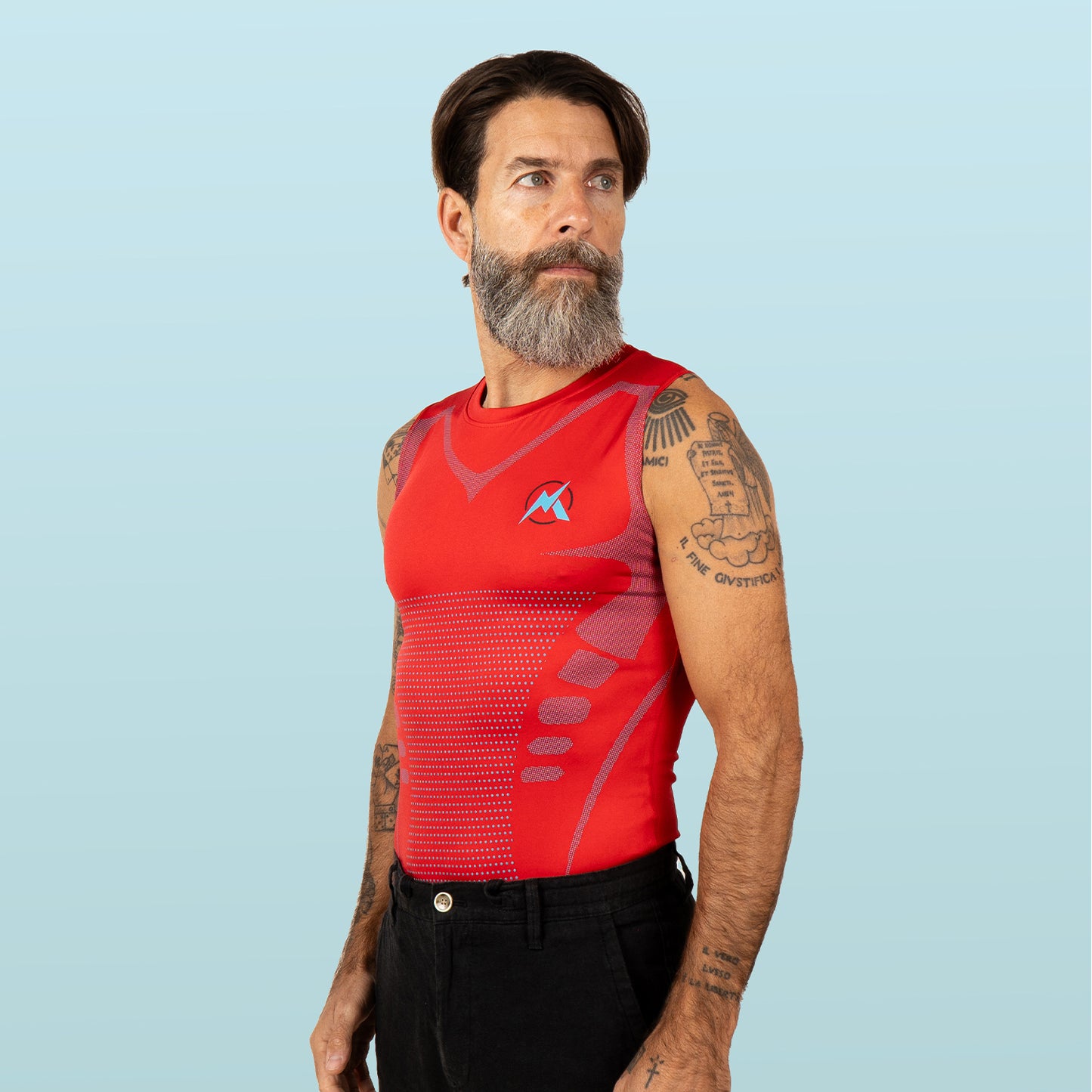
VitaBoost is a smooth, breathable compression tank designed to wear under a polo, button-down, or T-shirt all day. The compression isn't medical-grade. It's the right pressure to give you constant feedback: shoulders back, chest open. When the cue is on your skin, you adjust without thinking about it.
Most guys who wear it report two things: they catch themselves slouching earlier, and they feel less wrecked at 5 p.m.
It's the tactile half of the stretching protocol. The 5-minute reset opens your body. The compression layer reminds you to stay there.

Try VitaBoost — Buy 1 Get 1 Free →
Frequently asked questions
How often should you stretch at your desk?
Run the full 5-minute stack at three anchor points (start of day, before lunch, end of day) and add a 2-minute micro-dose around 10:30 a.m. and 2:30 p.m. That's the minimum effective frequency to keep desk damage from compounding. Less than 3 stacks per day and you'll feel no real change.
How long should you hold a desk stretch?
Hold each static stretch for 20-30 seconds. Connective tissue doesn't lengthen meaningfully below 20 seconds — under that, you're just warming up. For neck and chest stretches, lean toward the 30-second end. For activation moves (glute squeezes, chin tucks), reps matter more than holds.
Can desk stretches fix bad posture on their own?
No. Stretches are necessary but not sufficient. They open locked-closed muscles, but you also need strengthening (the glute activation step), better workstation ergonomics, and a tactile cue between breaks. Stretching alone is one-third of the fix. Without strength work and ergonomic correction, you'll re-tighten within hours.
Are desk stretches effective for lower back pain?
Yes, indirectly. Most desk-related lower back pain comes from tight hip flexors pulling the pelvis forward and weak glutes failing to support the spine. The hip flexor stretch and glute activation step in this stack target the root cause directly. Lower back stretching alone usually doesn't help because the back isn't the problem — the hips are.
Can I do these stretches in work clothes?
Yes. Every move in the 5-minute stack is designed to be done in dress pants, a button-down, and leather shoes — no yoga pants, no shoes off, no floor. The doorway chest opener, the standing hip flexor lunge, the seated thoracic extension, the neck release, and the standing glute squeezes are all upright, non-sweaty, and discreet enough to do in an open office without anyone clocking you.
Sources
- Nature Scientific Reports 2025 — Musculoskeletal disorders among office workers: prevalence (80.81%), ergonomic risk factors, and their interrelationships
- Cleveland Clinic — Tech Neck and head-weight load at forward angles (10-12 / 27 / 60 lbs)
- Mayo Clinic News Network — The importance of stretching throughout your workday
- NIH/PMC2804956 — Sarcopenia: 3-8% muscle loss per decade after 30
- NIH/PMC6122014 — Short-term musculoskeletal effects of prolonged computer work (2-hour clinically meaningful low back/hip discomfort)
- Brown F. et al. (2022, Sports Medicine) PMC9023423 — Compression garments and proprioceptive feedback
The bottom line: 5 minutes of structured stretching, anchored to triggers, every 90 minutes — plus a tactile cue between breaks — is the smallest dose that actually undoes desk damage in men over 40. It's not glamorous. It works.
Get VitaBoost — Buy 1 Get 1 Free →
Maynox content is informational, not medical advice. If you have chronic back, neck, or hip pain — especially with numbness, tingling, weakness, or pain radiating into a limb — see a qualified physical therapist or physician before starting a new stretch routine.