By Owen Blot · Founder, Maynox · Last updated June 3, 2026
- Do posture correctors actually work for men?
- The 4 types of posture correctors (most articles skip this)
- The 5-spec buyer framework
- My honest picks by category (top 5 for men 40+)
- How long should you wear a posture corrector each day?
- What posture correctors CAN'T do
- The 4-week posture-fix stack
- Frequently asked questions
You're reading this because you caught your reflection in a store window and didn't recognize the shoulders. Or your wife mentioned the slouch. Or your back hurts by 3 PM at your desk and you'd try almost anything that doesn't involve more therapy appointments.
That's the avatar this article is written for: men in their 40s and 50s, office job, kids, social life, who want a real answer about whether a $25 strap on Amazon will do anything.
Here's the short version up front, because most articles bury the lede: posture correctors are tools, not cures. The good ones train your body. The bad ones do the work for you and leave you weaker than you started. The best posture corrector for men over 40 is the one that fits into your day, gives you a real cue without making your muscles lazy, and pairs with the small posture-strengthening moves you can actually stick to.
This guide gives you the 4 categories that exist, the 5 specs that matter when you're comparing, the picks worth your money, the honest disclosure on what they can't do, and the 4-week stack that actually moves the needle.
Do posture correctors actually work for men?
The answer is yes, with a big asterisk. The medical literature is consistent: posture correctors can give short-term relief and meaningful awareness, but they're not a permanent fix on their own.
The proprioceptive feedback mechanism is the real benefit. A 2022 review in Sports Medicine (Brown et al., PMC9023423) found that compression garments and supportive wearables can enhance proprioceptive feedback — basically, your brain becomes more aware of where your body is in space. That awareness, repeated thousands of times per day, slowly retrains the postural muscles.
But the over-reliance trap is real. Hospital for Special Surgery and multiple physical therapists warn that wearing a rigid brace for 8+ hours a day can let your postural muscles atrophy, leaving you more dependent on the brace and weaker over time. Their recommendation: short, intentional wear paired with strengthening work.
There's also the "you can't fix bad posture with a strap alone" reality. Cleveland Clinic data on Tech Neck shows that the human head weighs 10-12 lbs in neutral alignment but creates 27 lbs of effective load at 15° forward and 60 lbs at 60° forward. No strap counters that load math if you're still hunched over a phone six hours a day. The strap is the reminder, not the solution.
So do posture correctors work? Yes — as one of four levers, not as the whole fix. The other three levers are awareness, strengthening, and reducing the hours of bad posture input. Skip those and the brace becomes a $25 placebo.
The 4 types of posture correctors for men (most articles skip this)
Every roundup you'll read lumps every product into one bucket and ranks them. That's lazy. There are four distinct categories, and what's "best" depends entirely on which one matches your life.
Type 1 — Rigid medical brace
Think BraceAbility, ComfyBrace, the heavy-duty Velcro-and-plastic-stay devices. These deliver the most aggressive correction. Designed for serious postural issues — kyphosis, post-surgical recovery, scoliosis adjuncts. They physically lock your shoulders back.
- Best for: men with diagnosed structural issues who are working with a doctor or PT.
- Worst for: the daily office worker who just slouches. You'll overcorrect, feel sore for two days, then stop wearing it. And if you do wear it 6+ hours daily, you'll weaken the rhomboids and lower traps you're trying to train.
Type 2 — Soft pull / figure-8 corrector
Schiara, Fit Geno, Copper Compression, sansila — the elastic figure-8 strap that crosses behind your back and pulls your shoulders gently back. The middle of the market and the highest-volume seller on Amazon.
- Best for: beginners who want a $20-$30 starter device and a reminder cue for 1-2 hours at a time.
- Worst for: anyone who plans to wear it under a fitted dress shirt all day. They bunch. They show through. They itch by hour three. And the cheap ones lose their tension after a few washes.
Type 3 — Digital sensor / wearable
The Upright Go 2 is the category leader. Small adhesive sensor on your upper back, vibrates when you slouch, syncs to an app that tracks your "posture score" over the day.
- Best for: men who already use a fitness tracker and respond well to digital reminders. The vibration is the cue; you do the correction yourself. No mechanical pull means no muscle atrophy risk.
- Worst for: anyone who'll ignore a buzzing app notification (you know who you are). Also, the adhesive can irritate skin after a few weeks, and the necklace version is more conspicuous than the brand admits.
Type 4 — Compression base layer (the under-discussed option)
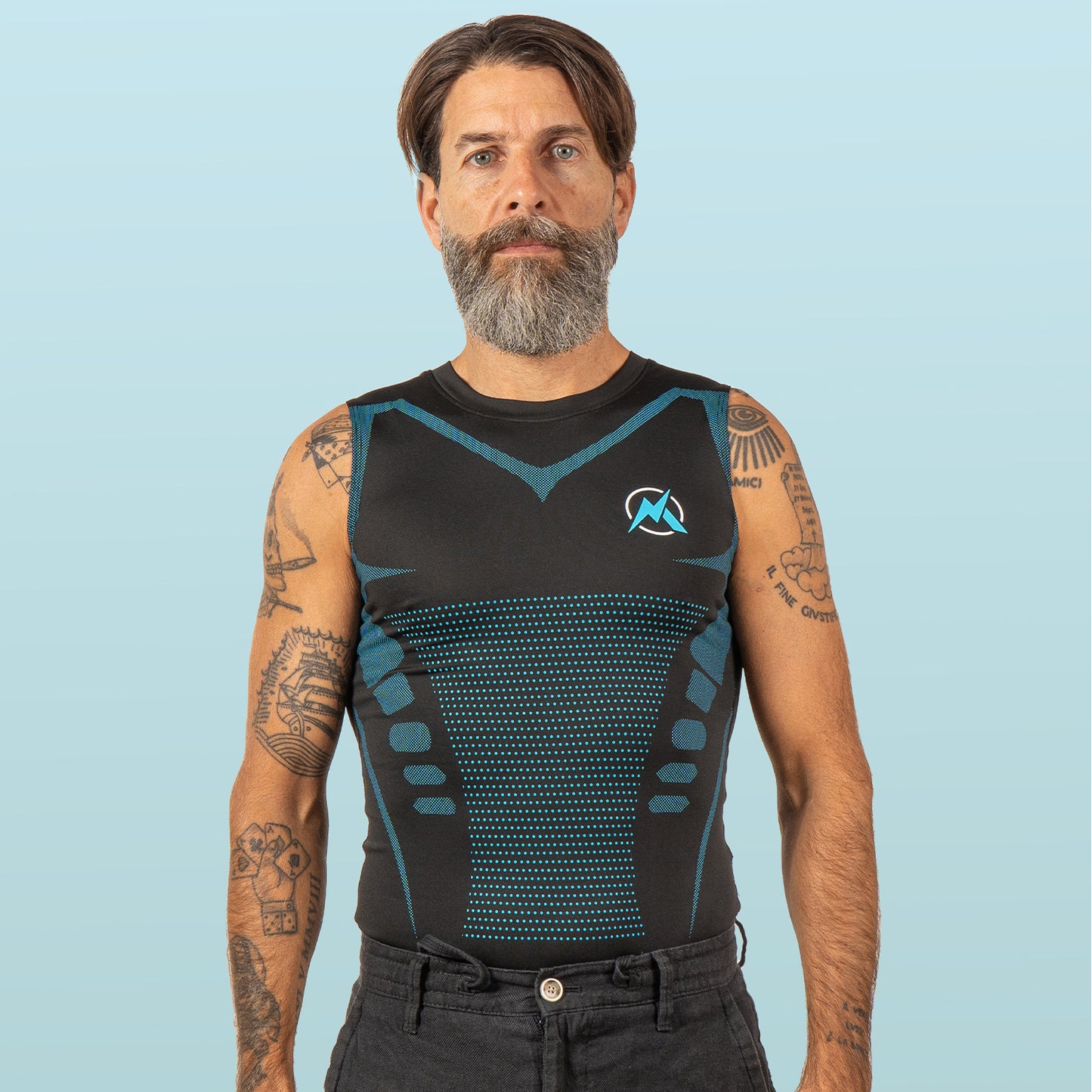
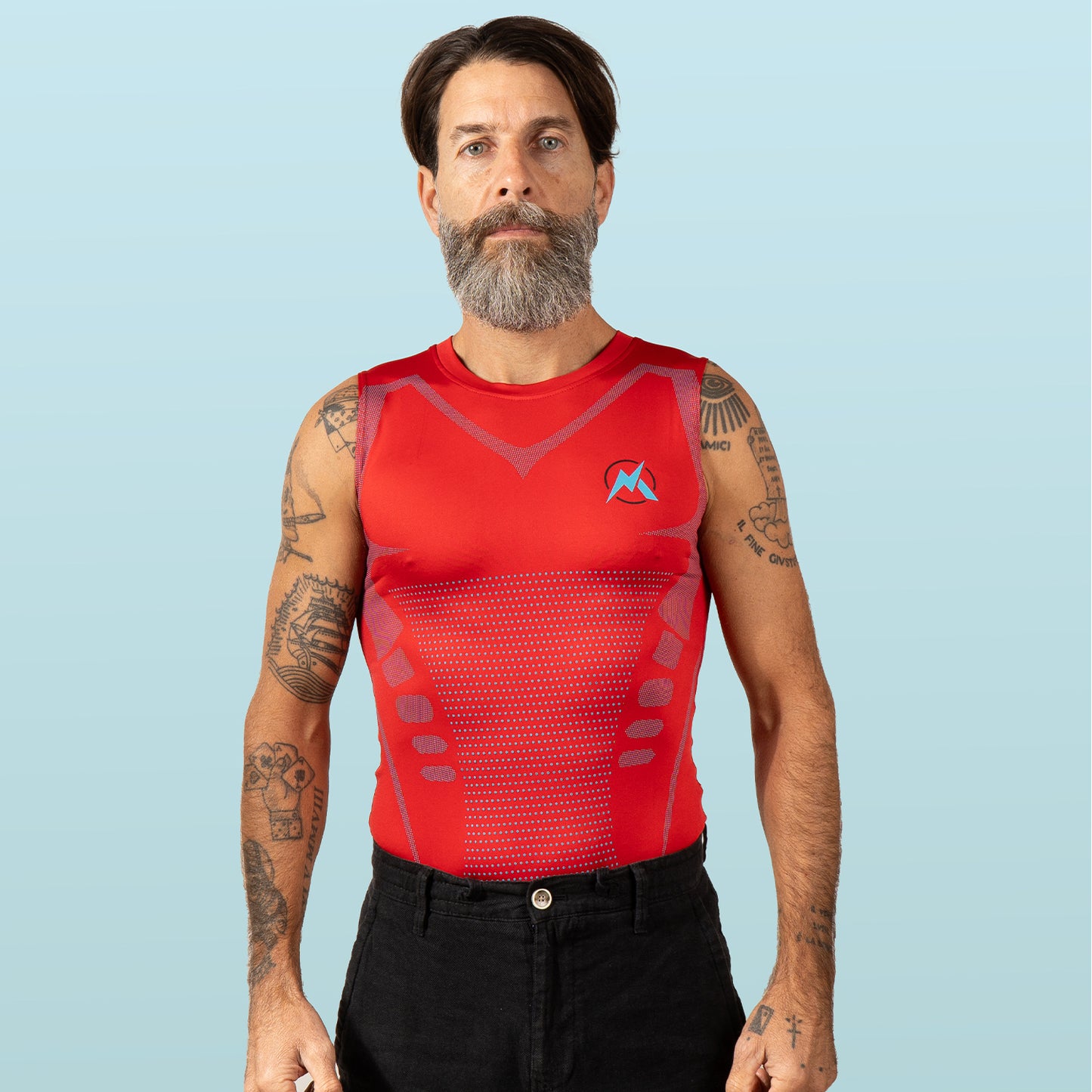
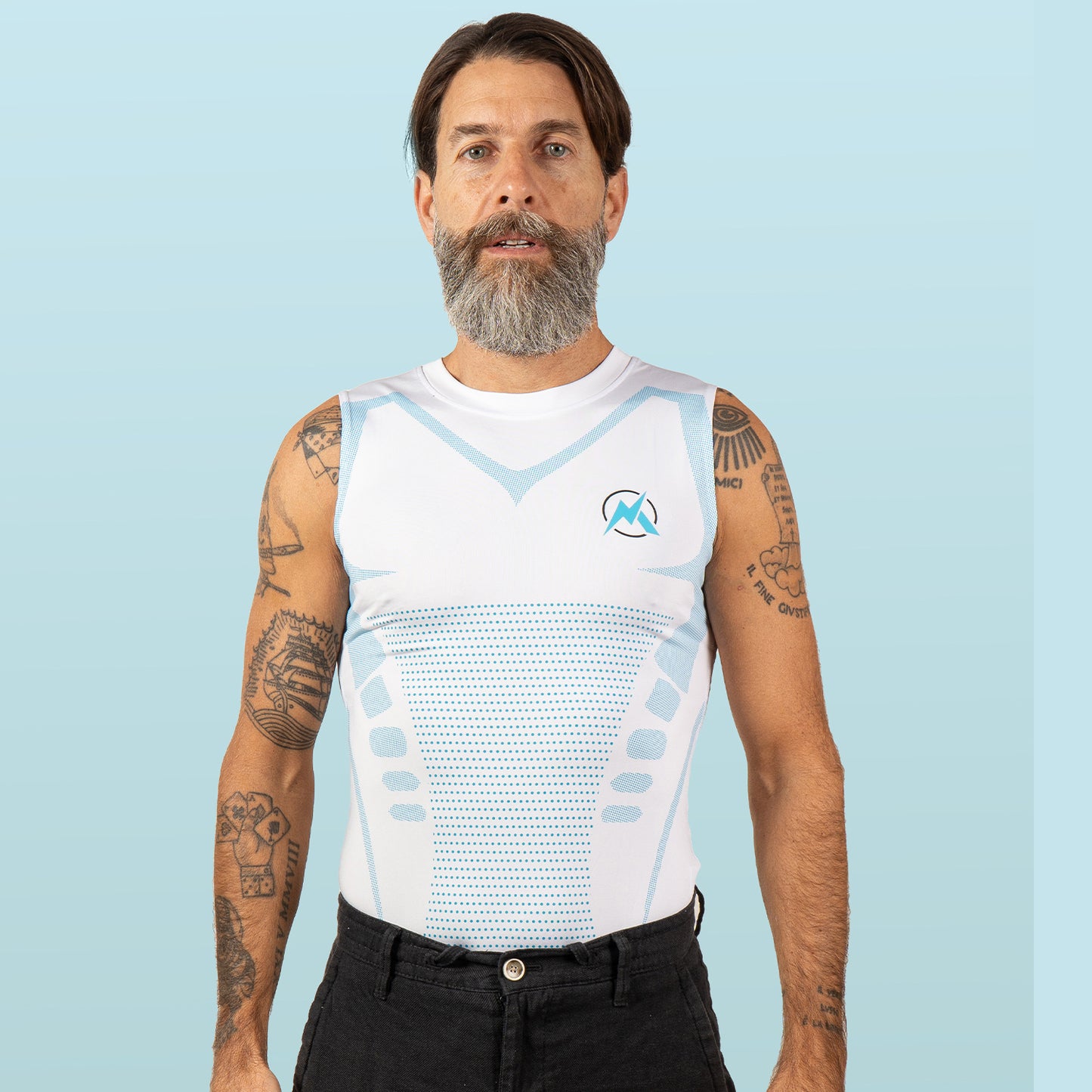
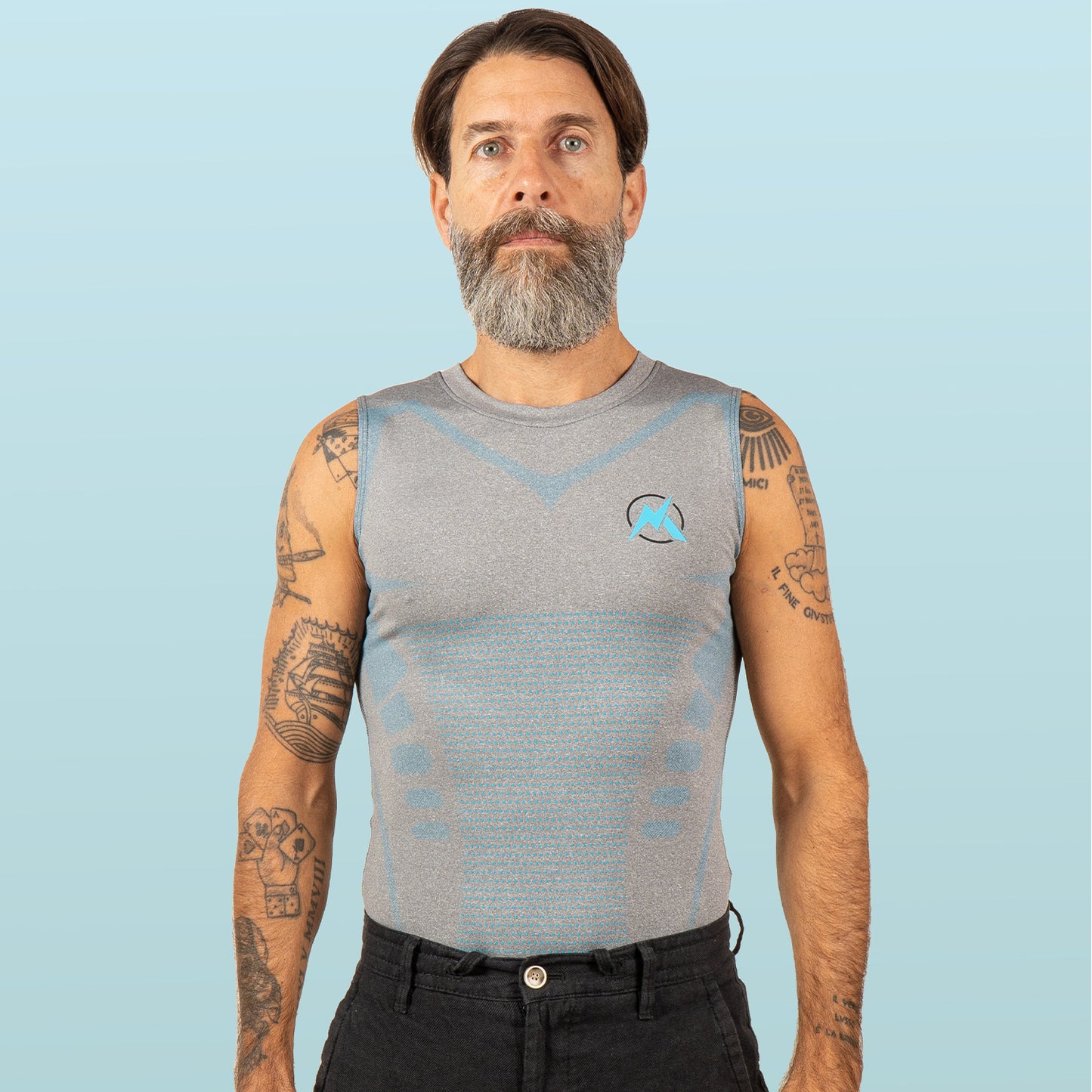
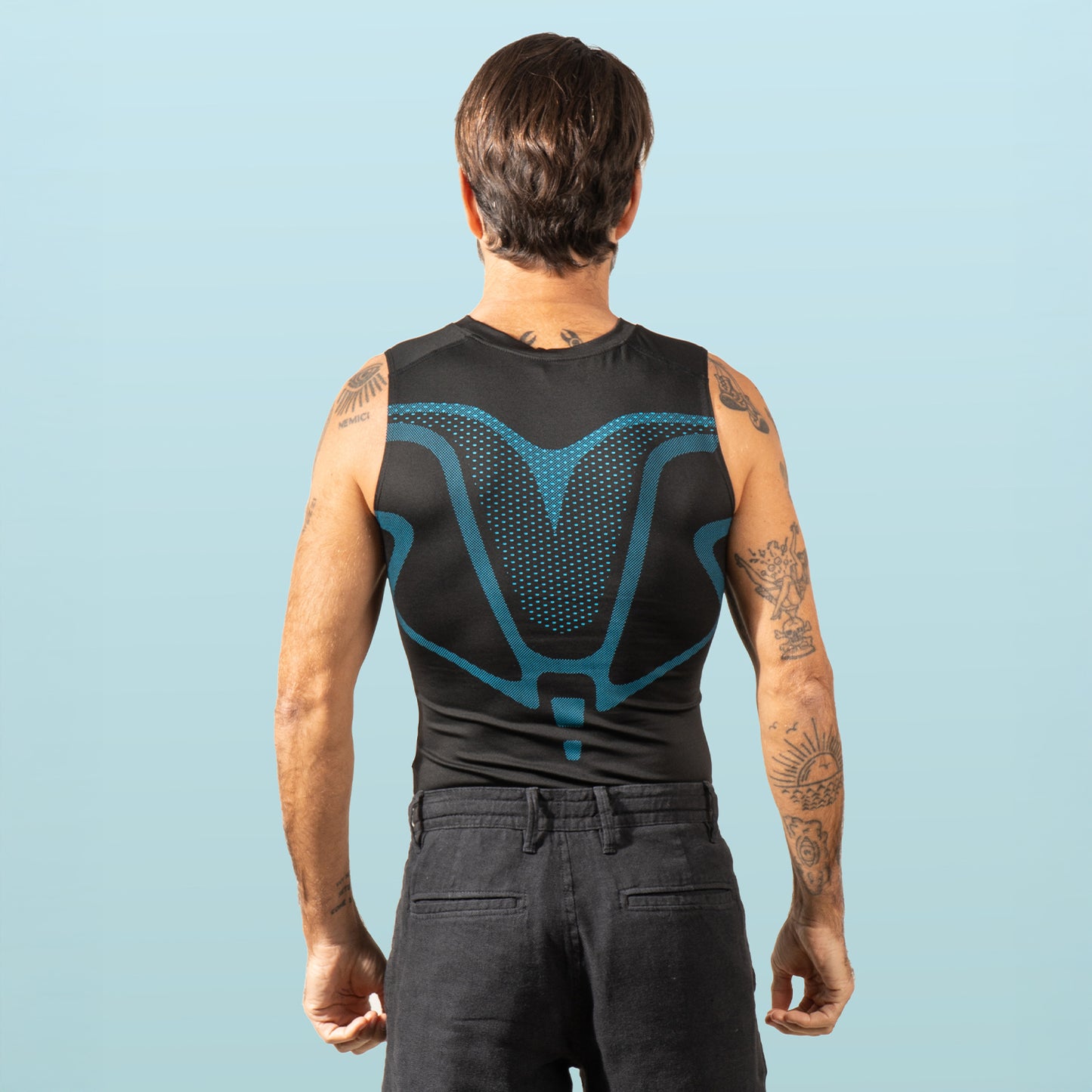
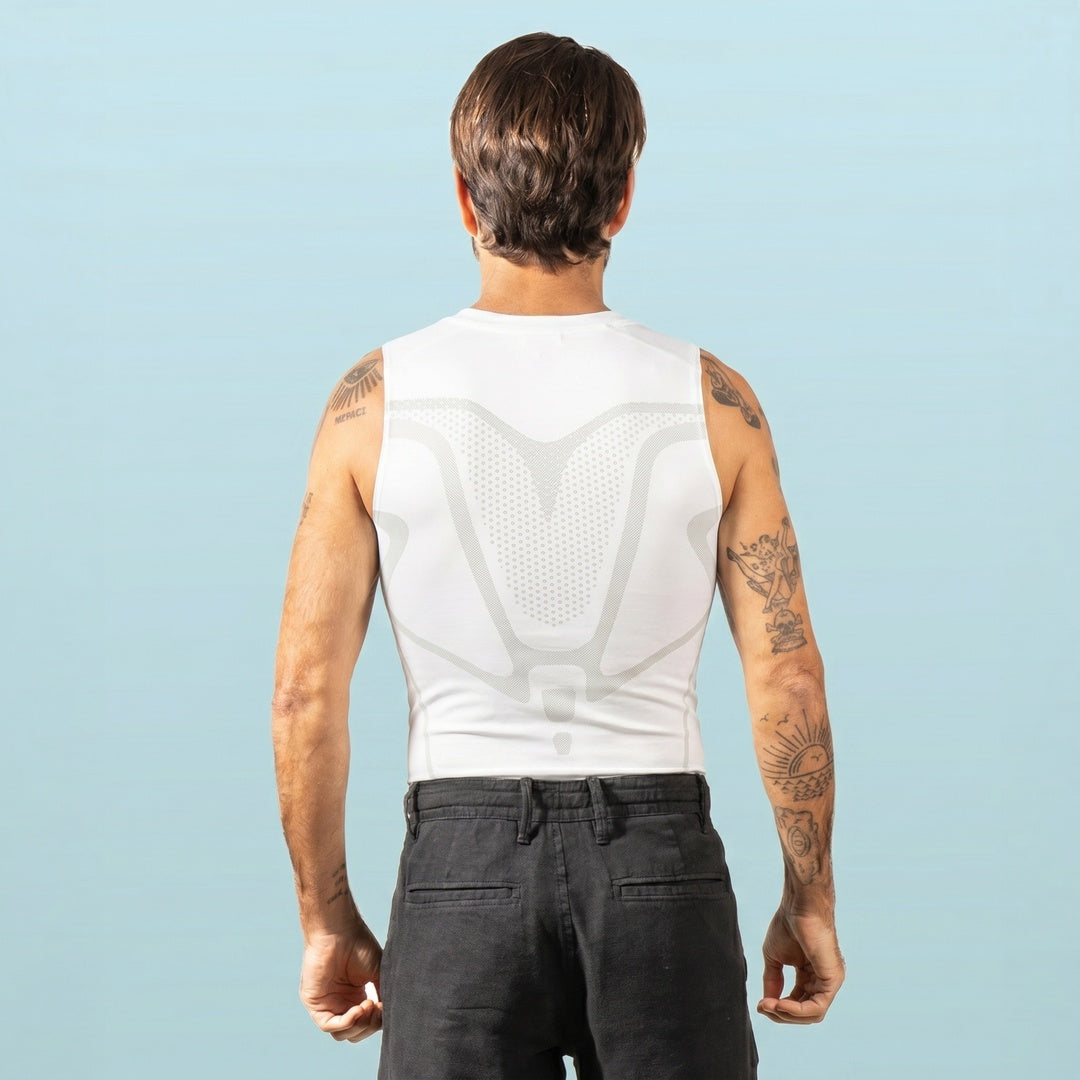
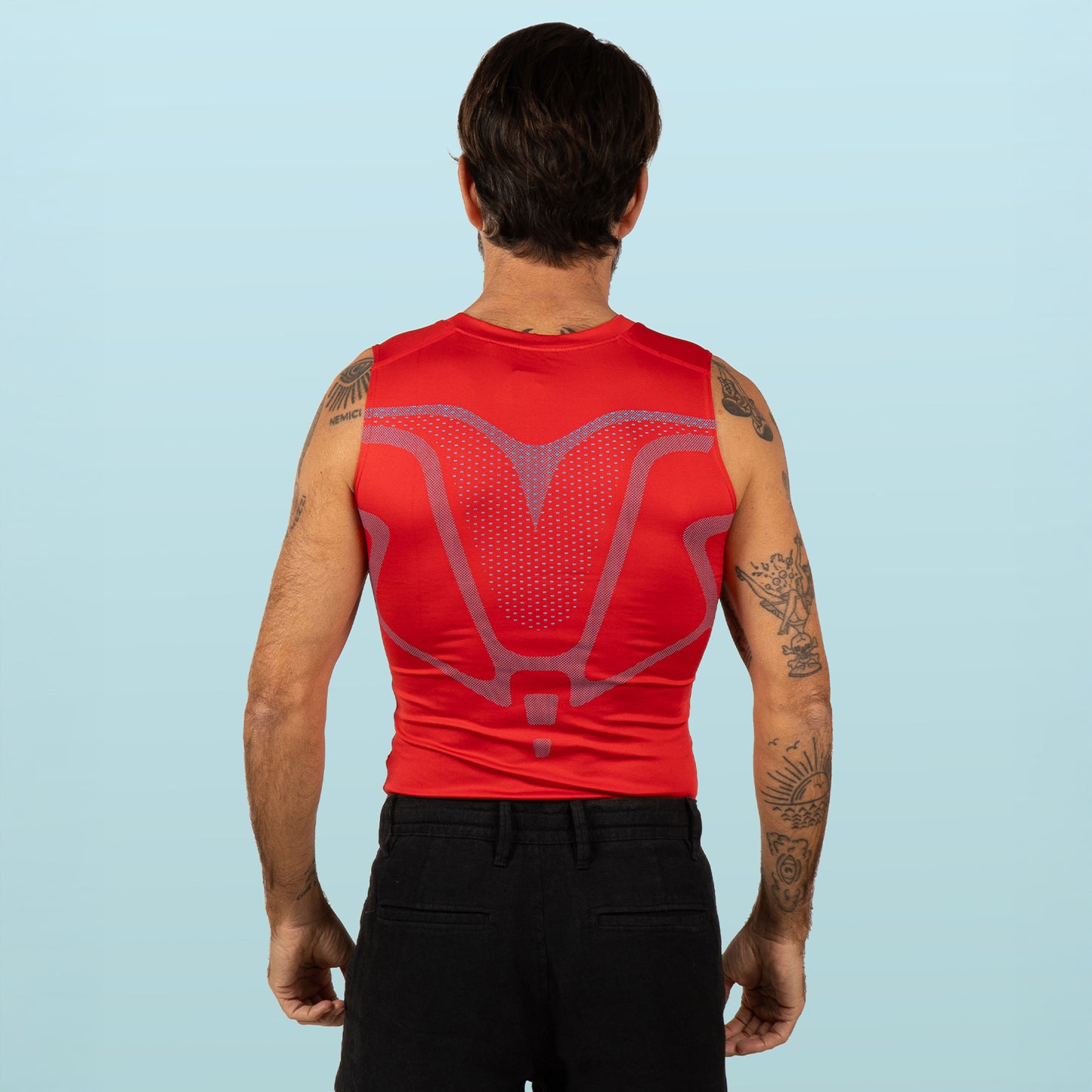
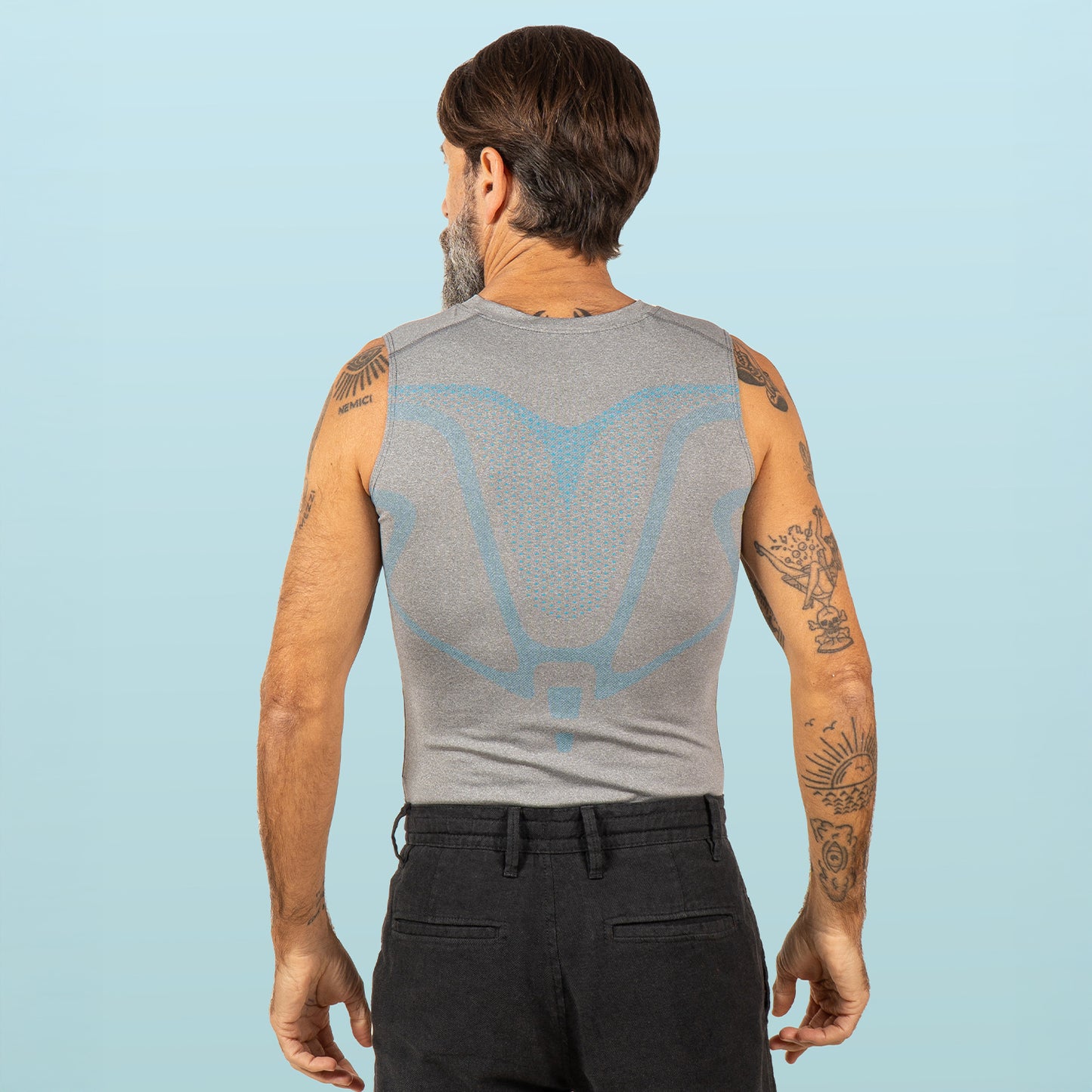
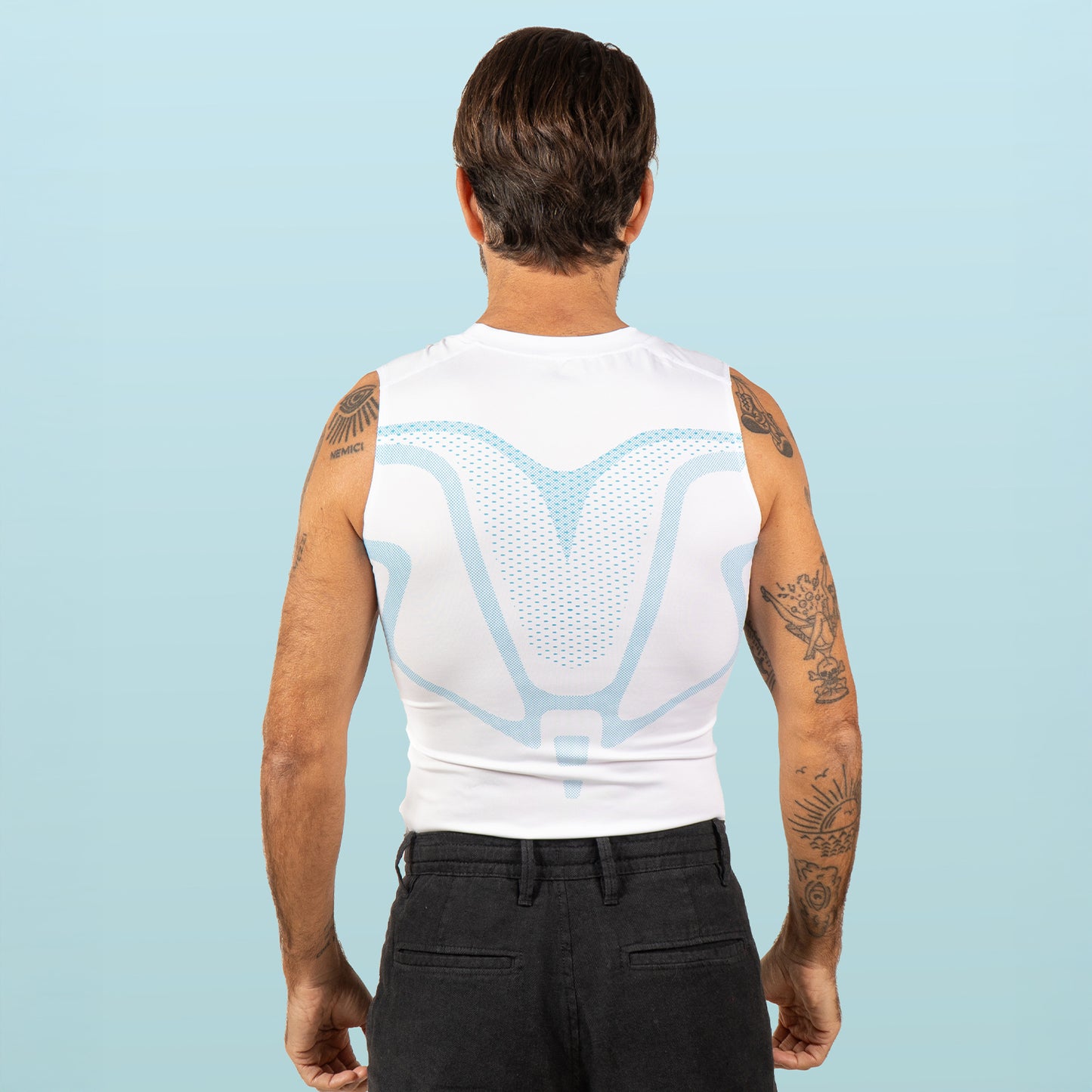
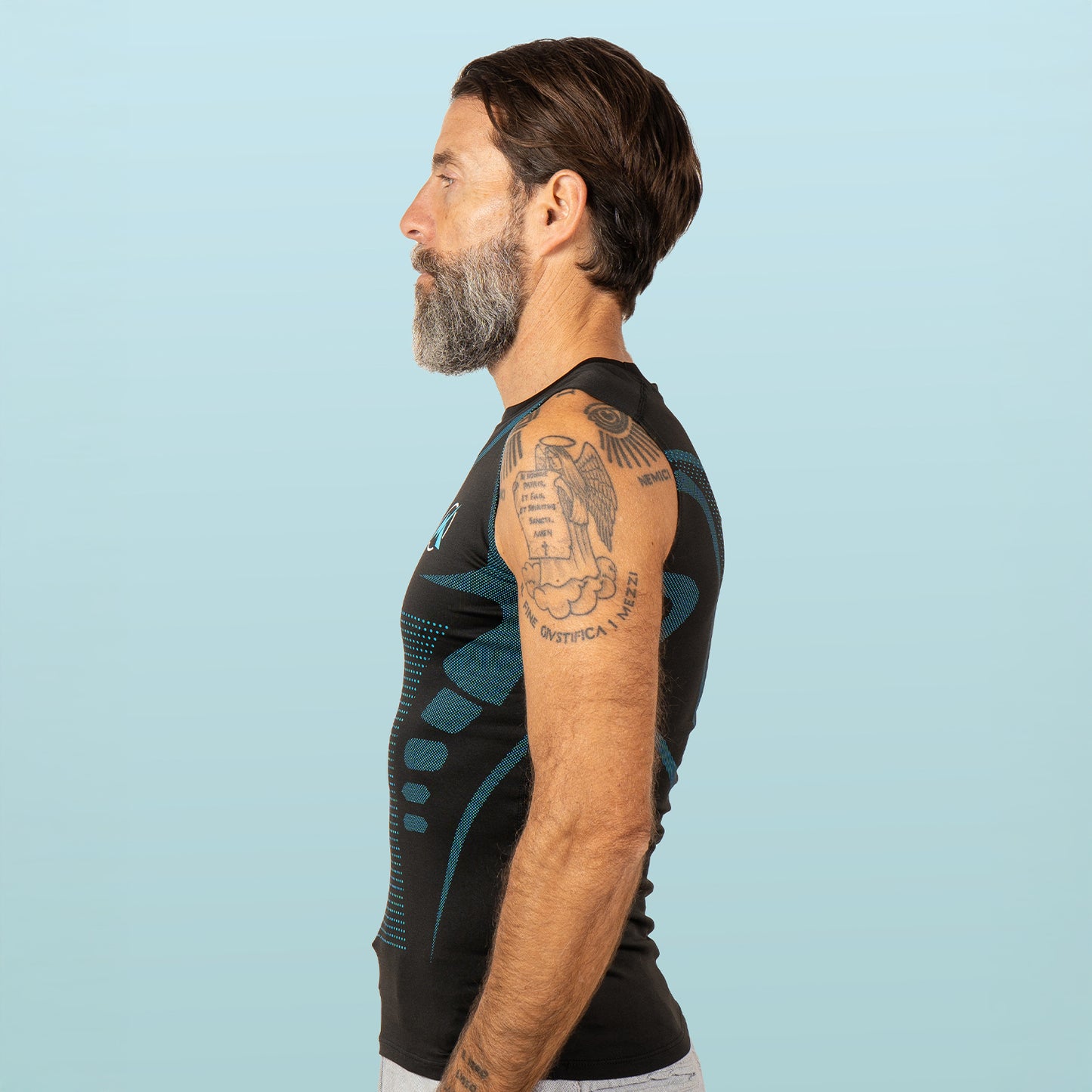
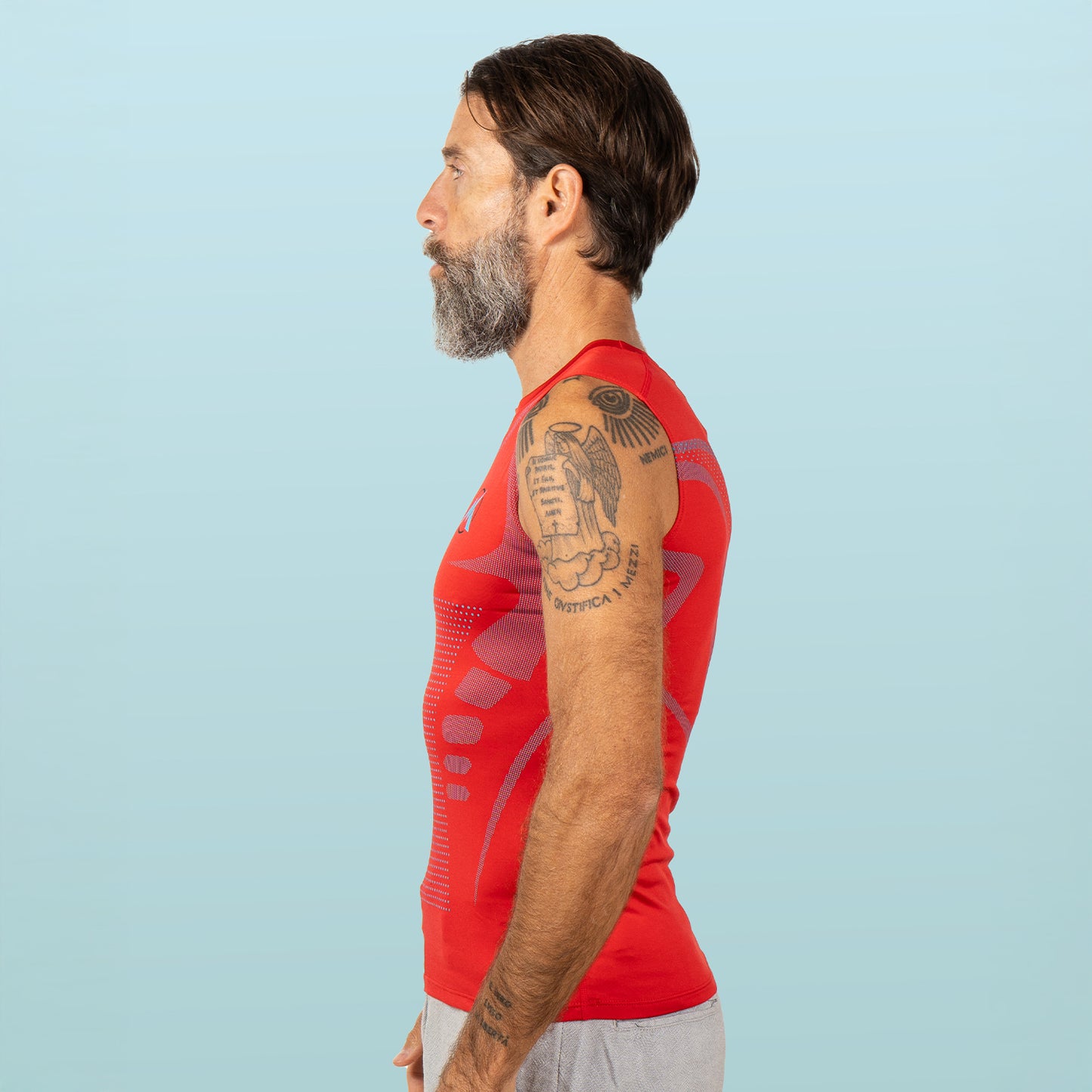
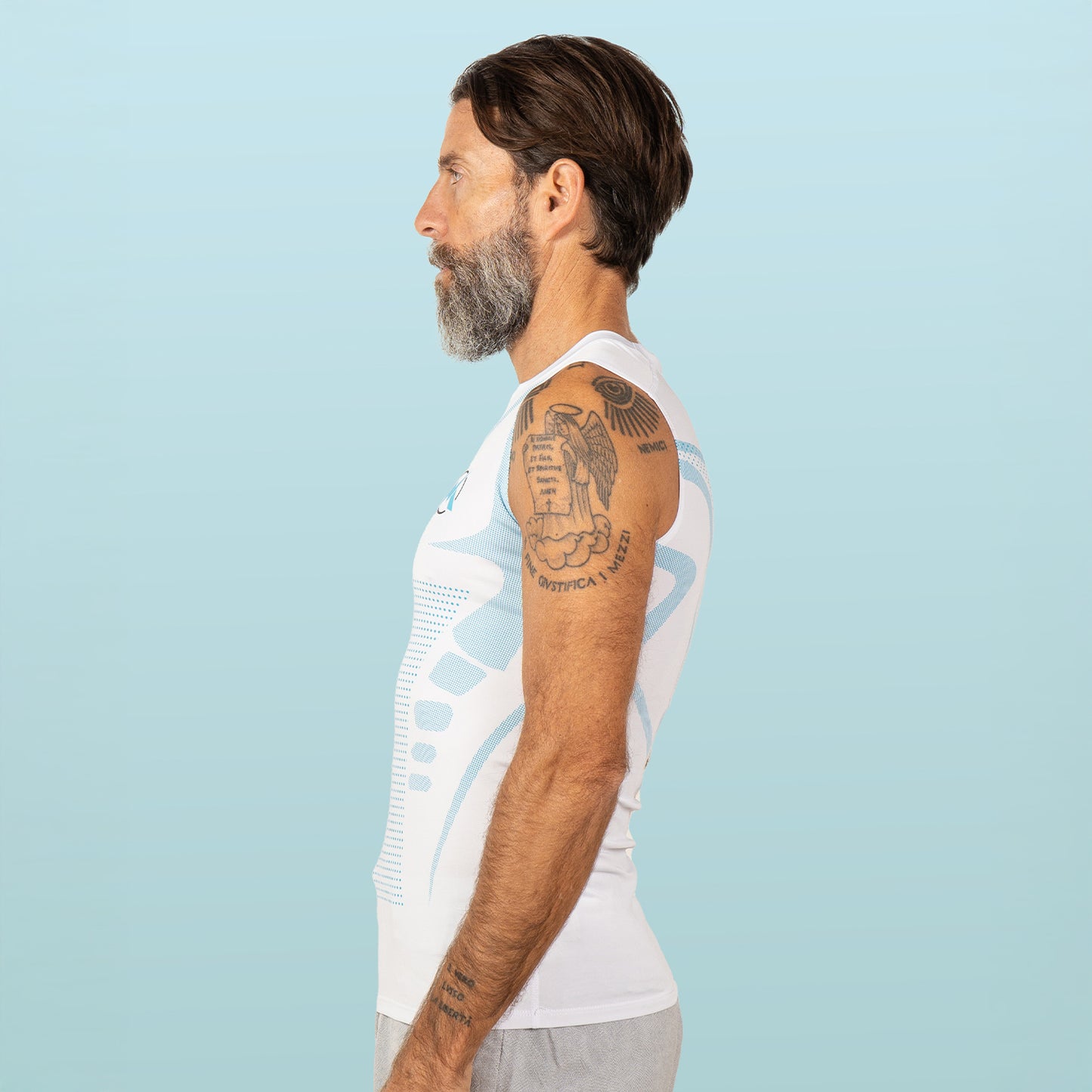
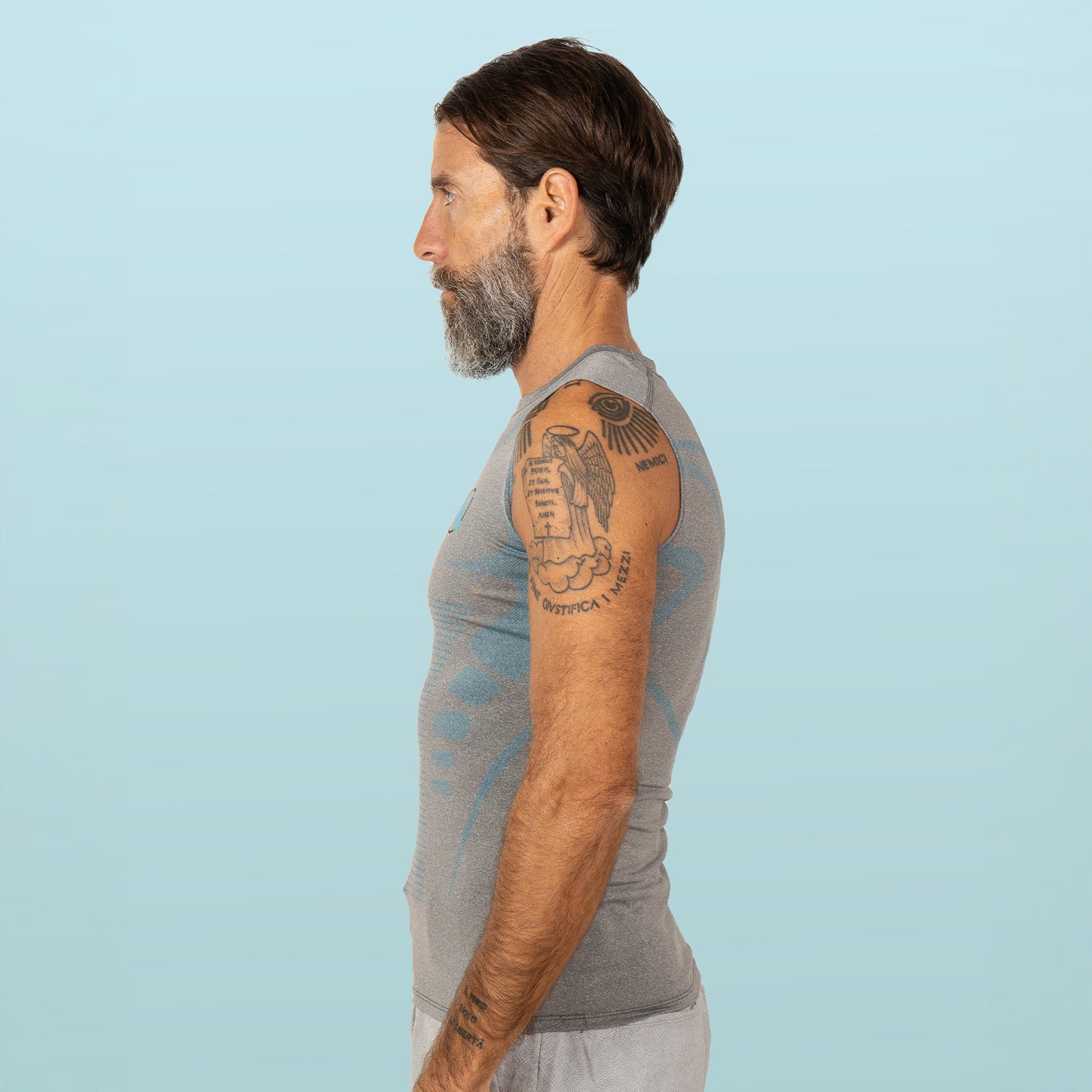
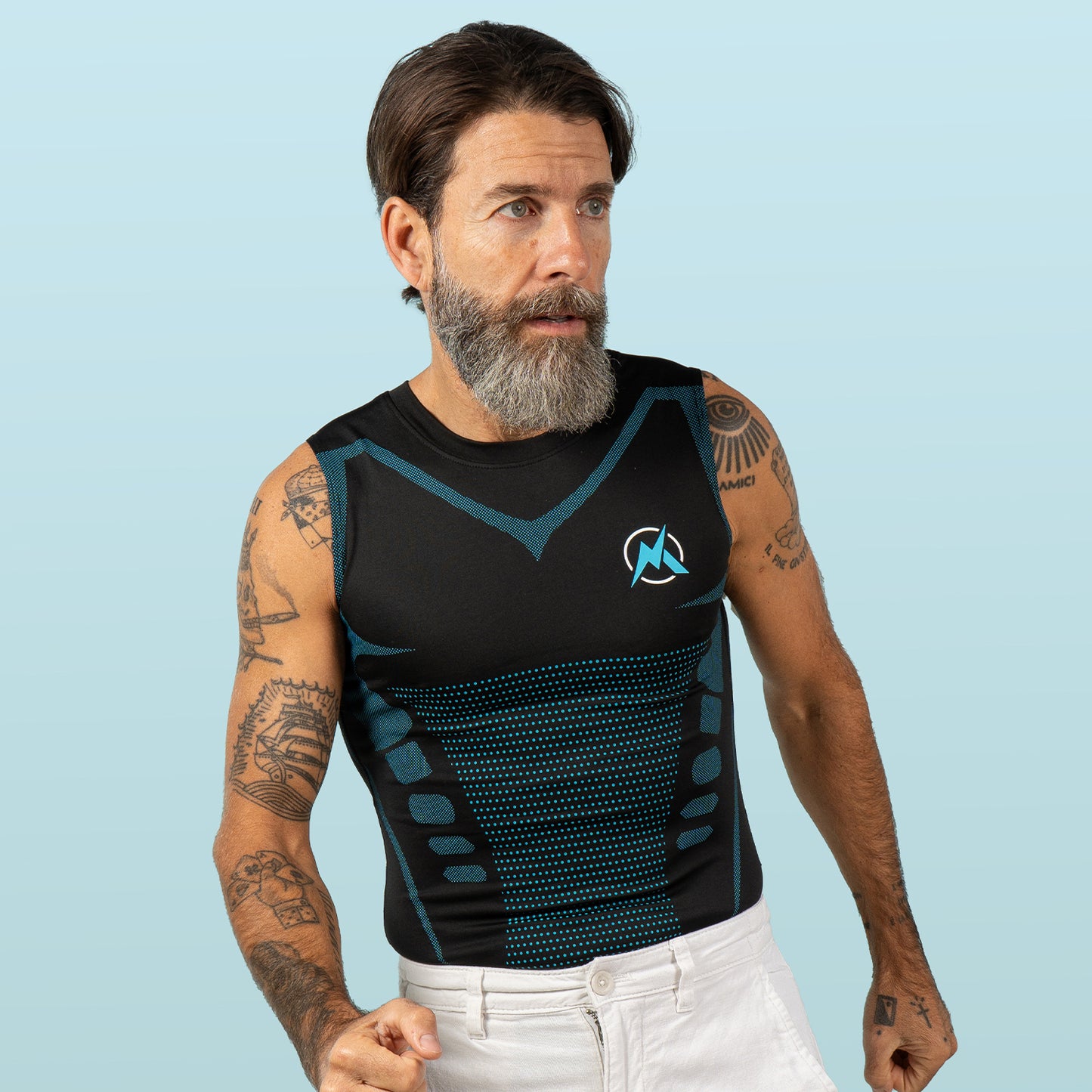
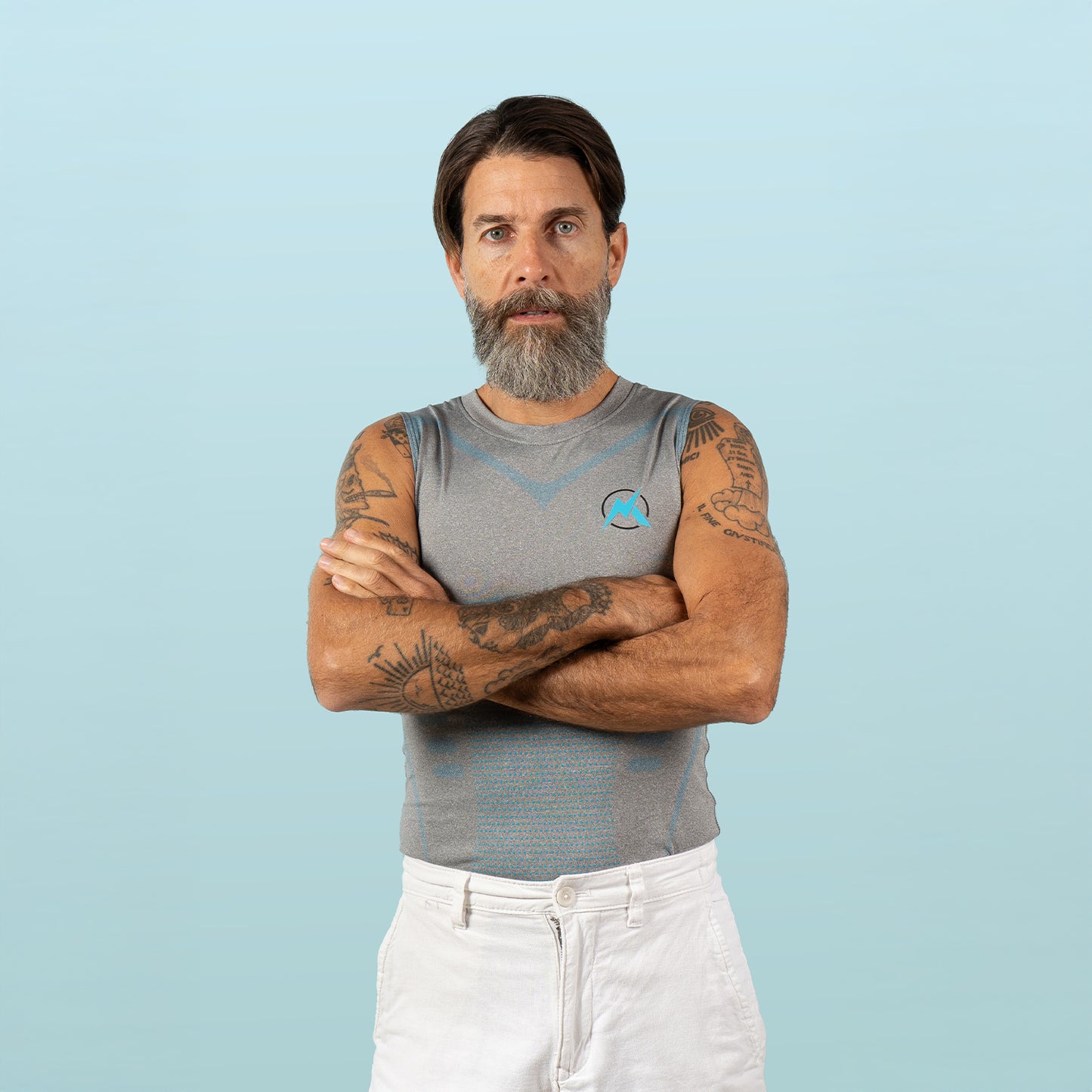
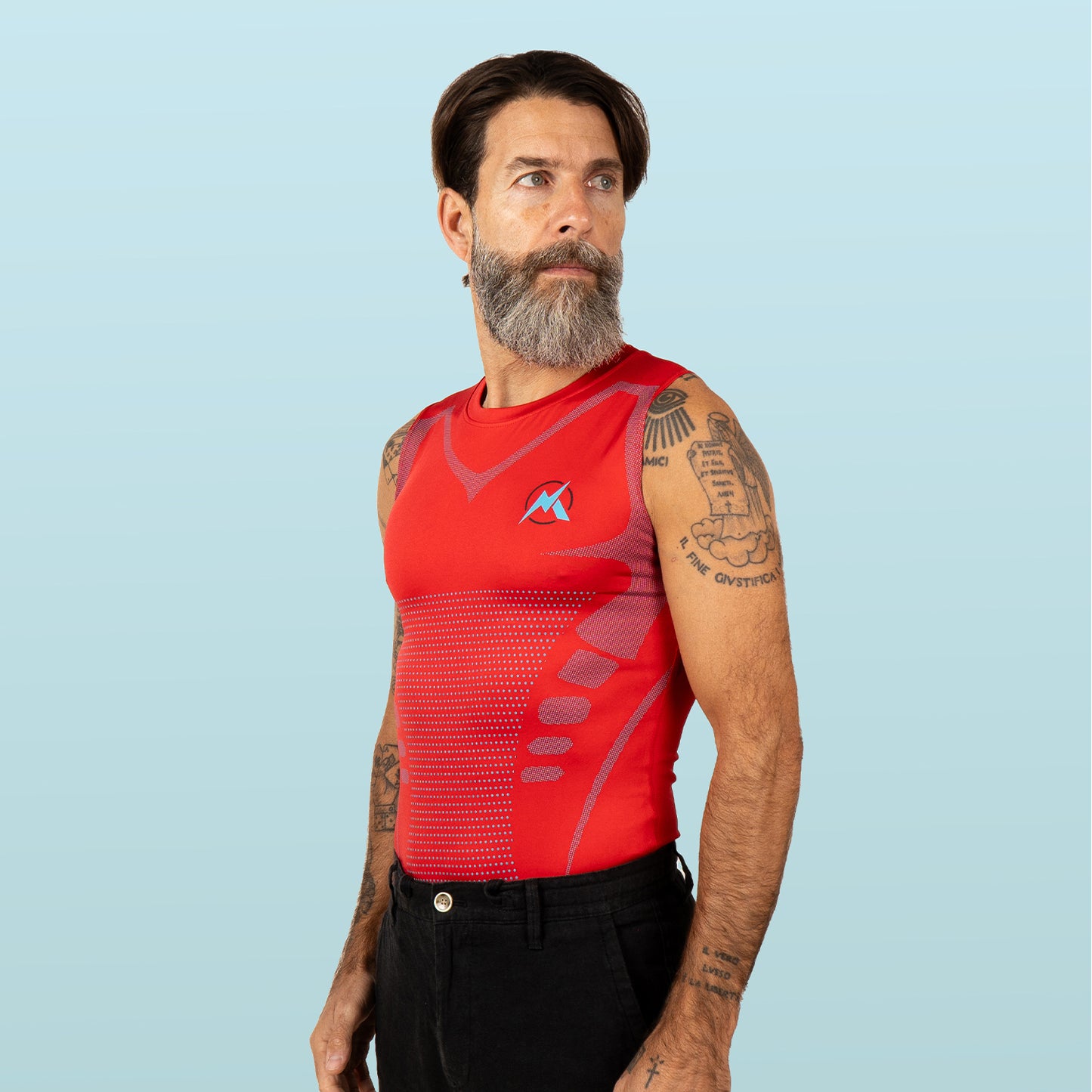
This category is almost completely absent from the top-ranking roundups, and it's the most useful for the 40+ office-worker avatar this article is written for. A medium-compression sleeveless or short-sleeve base layer worn under your dress shirt or polo for 8-12 hours straight.
How it works: instead of a mechanical pull on your shoulders, the fabric gives uniform proprioceptive pressure across the torso. Your brain registers "this is where my body is" thousands of times an hour. You self-correct. No muscle atrophy because the fabric isn't doing the holding work for you.
- Best for: men who sit at a desk all day, want something invisible under clothes, and don't want to think about it. You put it on with your morning routine and forget it.
- Worst for: anyone looking for a brace that physically pulls. This category does nothing aggressive. It's a constant low-level cue, not a forced correction.
Maynox VitaBoost sits in this category. Full disclosure: I'm the founder. I built it because none of the figure-8 straps or rigid braces survived my actual workday — they bunched, they itched, they came off by lunch. A compression base layer worn the whole day is what stuck, so that's what we make.
The 5-spec buyer framework
Before you click "Buy Now" on whatever Amazon shows you, run the product through these 5 specs.
- Type match. Pick the category (above) that fits your actual day. If you're at a desk 8 hours, type 4 wins. If you have a diagnosed structural issue, type 1. If you respond to apps, type 3. Don't buy across categories.
- Pull mechanism. For figure-8 and rigid braces, check whether the pull tension is adjustable. Non-adjustable braces are the #1 reason men quit wearing them — they're either too loose to do anything or so tight they're unbearable by hour two.
- Wear duration cap. The brand should tell you the maximum recommended daily wear. If the answer is "wear it all day," that's a red flag. A 2022 Sports Medicine review and PT consensus put the cap at 2-4 hours for rigid/figure-8 devices. Compression base layers can be worn longer because they don't apply mechanical traction.
- Under-clothes visibility. Take the product, put it on, look in the mirror under your favorite work shirt. Bumps? Buckles showing? Straps poking out at the collar? If yes, you'll stop wearing it. The Upright Go 2 nailed this with the small sensor format; figure-8 straps consistently fail this test.
- Material breathability. Neoprene-heavy braces overheat after an hour. Look for breathable mesh or moisture-wicking compression fabric. If you sweat in the first 30 minutes, you'll quit by week two.

My honest picks by category (top 5 for men 40+)
These are the ones that survive the 5-spec framework for the avatar this article is for. No affiliate commissions are skewing this list — I'd rather lose you to a competitor than recommend something that won't stick.
Best for beginners — Schiara Posture Corrector (~$19)
A simple figure-8 strap. Adjustable straps in front, easy to put on alone, wear it under or over clothes. The brand explicitly caps daily wear at 2 hours, which is the right call. Get this if you've never worn anything before and want to test whether the reminder cue helps before investing more.
Best digital sensor — Upright Go 2 (~$70-$80)
If you're the kind of guy who tracks steps on a Garmin and actually checks the data, this is your category winner. 12-day battery, app tracks daily "posture score," vibrates gently when you hunch. The science is honest: it doesn't fix your posture, but it dramatically increases your awareness, which over weeks compounds.
Best rigid brace for structural issues — BraceAbility / ComfyBrace (~$35-$45)
Only buy in this category if a physical therapist or your doctor has specifically pointed you toward a rigid corrector for diagnosed kyphosis, post-injury rehab, or severe rounded shoulders. Otherwise, skip this category entirely. Daily-wear is not what these are designed for, and over-use causes the atrophy problem we discussed.
Best soft daily reminder — ComfyBrace Adjustable (~$25-$30)
A step up from the cheap figure-8 in adjustability and fabric quality. Reinforced shoulder straps, breathable mesh, decent under-shirt profile for casual wear (less so for a fitted dress shirt). Cap usage at 2-3 hours.
Best compression base layer for daily wear — Maynox VitaBoost (~$15 with BUY 1 GET 1 FREE, normally $59.99)
Full disclosure again: I built this. Sleeveless, jet black, full cyan signature, medium-compression fabric designed to be worn 8-12 hours under your dress shirt or polo. Targets the 40+ office worker specifically. No mechanical pull, so no muscle atrophy risk. The proprioceptive feedback runs all day. It's also doing belly-smoothing work as a side benefit, which is partly why our customer base skews 45-55.
If you want a posture tool that disappears into your day, this is the category. If you want a brace that physically forces your shoulders back, get the Schiara or Upright Go 2 instead.
See Maynox VitaBoost — BUY 1 GET 1 FREE
How long should you wear a posture corrector each day?
The honest answer depends on the category:
- Rigid braces and figure-8 correctors: Start at 15-30 minutes. Work up to a maximum of 2-4 hours per day, broken into chunks (e.g., one hour at your desk in the morning, one in the afternoon). Cleveland Clinic, Hospital for Special Surgery, and the Healthline expert consensus all converge here. Wearing these all day causes the muscle-atrophy problem and the device becomes a crutch.
- Digital sensors (Upright Go 2): Can be worn 6-8 hours because there's no mechanical force on the body. The vibration is the cue, your muscles do the work. Recommended duration: through your work day, off in the evening.
- Compression base layers: Worn all day — 8 to 12 hours is normal — because they don't apply directional traction. Same way you wear an undershirt. No atrophy risk because the fabric doesn't take over the postural work.
Don't sleep in any of them. Universal rule. Your body needs to be in its natural alignment for sleep recovery, and tight straps can cut off circulation overnight.
What posture correctors CAN'T do (the honest section)
The top-ranking articles overpromise. Here's the part they leave out.
They don't fix structural kyphosis on their own. NIH research on age-related hyperkyphosis found that 20-40% of the aging population develops measurable structural changes. Once vertebrae have wedged or remodeled, no strap reverses that. PT, targeted exercise, and sometimes intervention are required.
They don't melt belly fat. A 2025 Life journal pooled review (Wei et al., 31 studies) found no evidence that compression garments produce durable fat loss. Anyone selling you "wear this and lose 2 inches off your waist" is lying. Compression apparel smooths the silhouette while you wear it. Take it off and the belly is exactly the same size.
They don't substitute for strengthening. The Harvard Health posture rehabilitation timeline is clear: meaningful postural change takes 8-12 weeks of combined work. The brace gives you the awareness. Rows, planks, dead bugs, and chin tucks build the muscle. Without the strengthening, you're renting upright posture by the hour.
They don't replace ergonomic fixes. If your monitor sits 6 inches below your eye line and your chair has zero lumbar support, no corrector wins against that math. Raise the monitor, get the chair right, then add the corrector.
The 4-week posture-fix stack (combining the tool with the work)
A posture corrector alone delivers maybe 15% of the result. Combine it with three other levers and you compound the gains. For the full breakdown of the underlying habit-stack mechanics, see our guide on how to stand up straight and the more comprehensive 4-layer posture fix plan for men over 40.
Week 1 — Awareness + setup. Pick your category (rigid / soft / digital / compression). Order one product, not three. Set up your desk: monitor at eye level, feet flat, lumbar support. Start wearing the corrector 30 minutes at your desk in the morning. Take a baseline phone-camera side-photo against a blank wall — you'll want this for comparison in week 4.
Week 2 — Add 3 daily moves. Three minutes, three times a day: 10 wall slides, 10 chin tucks, 10 scapular squeezes. That's it. Pair them with existing anchors (after morning coffee / after lunch / before dinner). The combination of brace-driven awareness + targeted activation is where the change starts.
Week 3 — Increase corrector wear, add rowing. Bump your corrector to 1-2 hours daily (or wear your compression base layer through the workday). Add one set of band rows (or dumbbell rows) twice a week. Rows are the single best posterior-chain move for reversing the rounded-shoulder look.
Week 4 — Compare + sustain. Retake the side-photo against the same wall. Most men see a visible difference at this point — head sits further back, shoulders less rounded, chest more open. That's 4 weeks. The Harvard 8-12 week timeline kicks in next. Keep the daily moves and the corrector wear; the strengthening work is what makes the change permanent.
If you want to go deeper on why the compression base layer category does what it does, our piece on whether compression shirts actually work for men walks through the peer-reviewed evidence. And if you're shopping specifically for posture-focused compression (not generic athletic), the best compression shirts for posture buyer's guide compares the panel placement, mmHg ratings, and cuts that actually help.
Frequently asked questions
Do posture correctors actually work for men?
Yes, but only as one of four levers — awareness, strengthening, reduced bad-posture input, and the corrector itself. Used alone, the corrector gives short-term cuing and not much else. Combined with daily strengthening moves, it accelerates measurable change over 4-12 weeks.
How long should you wear a posture corrector each day?
Rigid and figure-8 correctors: 2-4 hours maximum, broken into chunks. Digital sensors like the Upright Go 2: through your workday (6-8 hours). Compression base layers: 8-12 hours, the way you'd wear an undershirt. Never sleep in any of them.
Can a posture corrector fix bad posture permanently?
Not on its own. It can create awareness and short-term improvement, but permanent change requires posterior-chain strengthening, mobility work, and ergonomic fixes to your desk and phone use. Plan for 8-12 weeks of combined work for lasting results.
What's the most effective posture corrector for men over 40?
It depends on the type of issue. For diagnosed structural problems, a rigid brace under PT guidance. For office-worker slouch, the most effective is whatever you'll actually wear daily — and that usually means a digital sensor or a compression base layer worn invisibly under clothes, because mechanical braces get abandoned by week two.
Are posture correctors better than compression shirts?
They're different tools for different problems. Braces apply mechanical pull (good for acute correction, bad for long-term muscle health). Compression base layers apply uniform proprioceptive pressure (good for daily passive cuing, bad for forced correction). For the 40+ office worker who wants something invisible and sustainable, the compression base layer usually wins on adherence. For acute structural issues, the brace wins on force.
The bottom line
The best posture corrector for men over 40 is the one that fits into your day and doesn't make your muscles weaker. Cheap figure-8 straps are fine for short-term reminders, the Upright Go 2 wins on digital tracking, rigid braces have a narrow medical use case, and a compression base layer is the most sustainable daily option for the office-worker avatar most of this article was written for.
Whichever category you pick, pair it with the 4-week stack: setup, three daily moves, rows, and side-photo comparison. The combination is what moves the needle. The strap alone is just a $25 reminder.
If you want the compression base layer route, the Maynox VitaBoost is currently BUY 1 GET 1 FREE at $59.99 — that's two for $15, which makes it cheaper than most of the figure-8 straps on Amazon while doing belly-smoothing work as the side benefit.
Shop VitaBoost — BUY 1 GET 1 FREE
Sources
- Brown F. et al. (2022) Sports Medicine — Compression garments and proprioceptive feedback (PMC9023423)
- Wei et al. (2025) Life journal — 31-study pooled review of compression apparel (PMC11944185)
- Hospital for Special Surgery — Do Posture Correctors Work?
- Cleveland Clinic — Tech Neck and head-load mechanics
- NIH/PMC — Age-Related Hyperkyphosis (PMC2907357)
- Harvard Health — Is it too late to save your posture?
This article is informational and not medical advice. If you have diagnosed structural spinal issues, work with a licensed physical therapist or orthopedist before choosing a posture device.