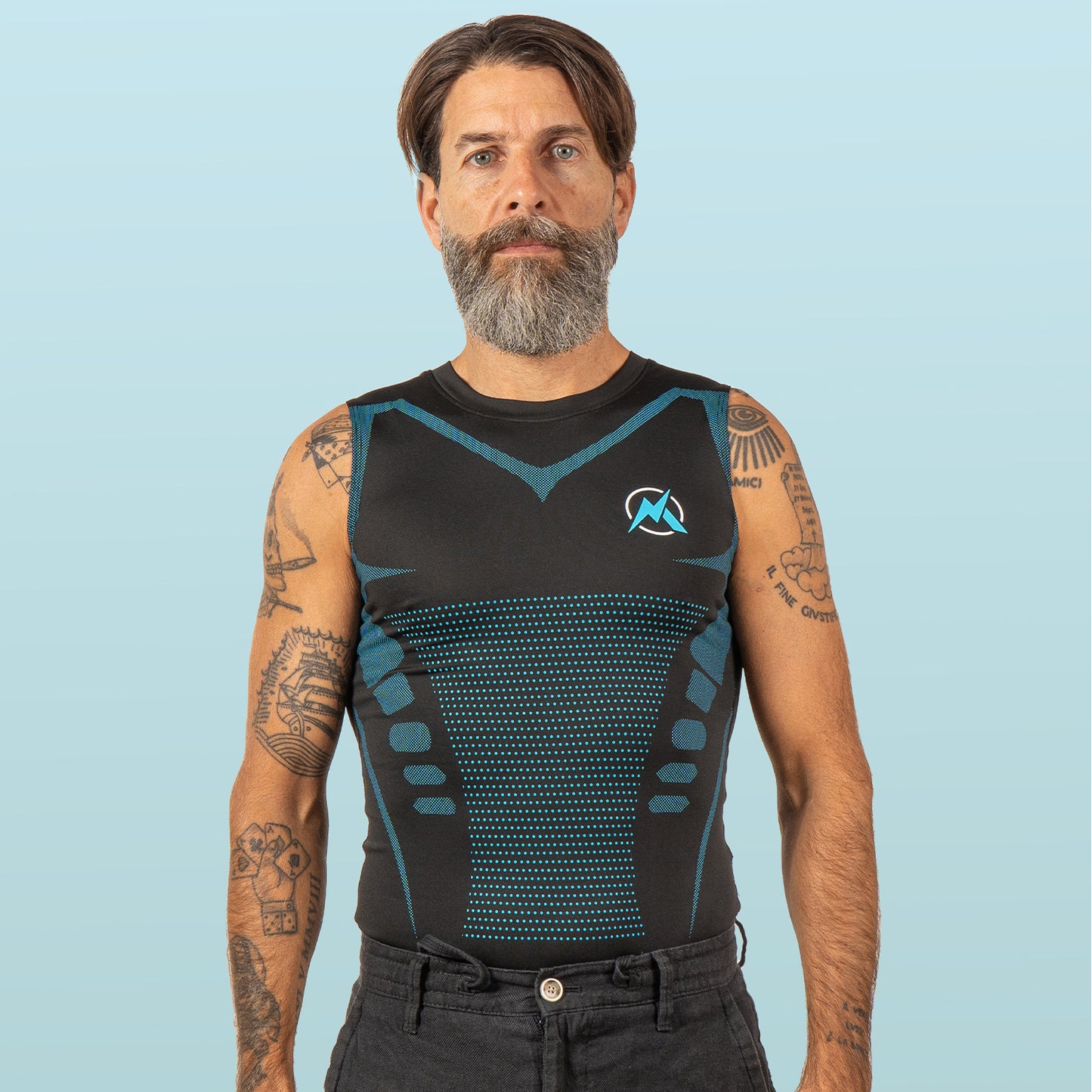
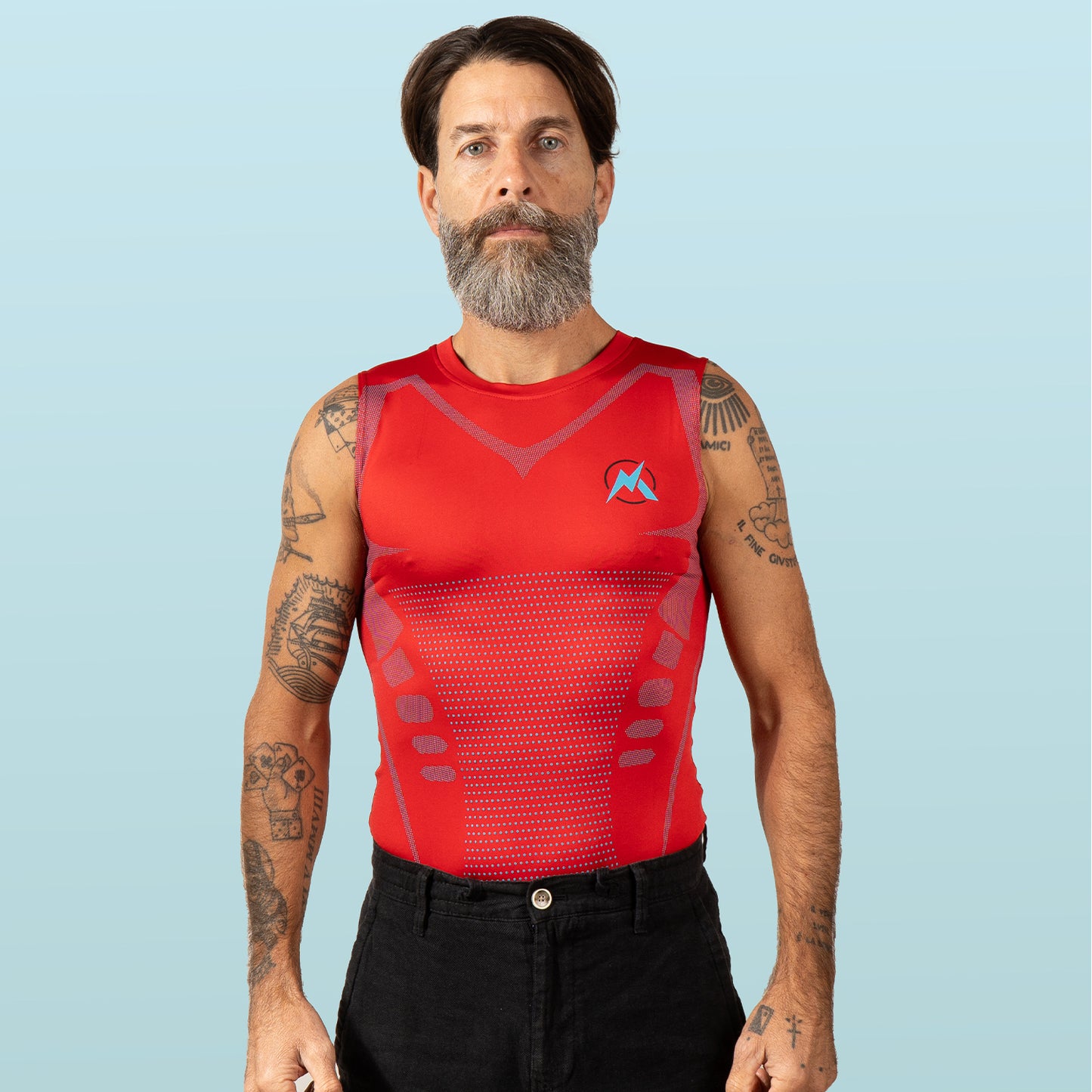
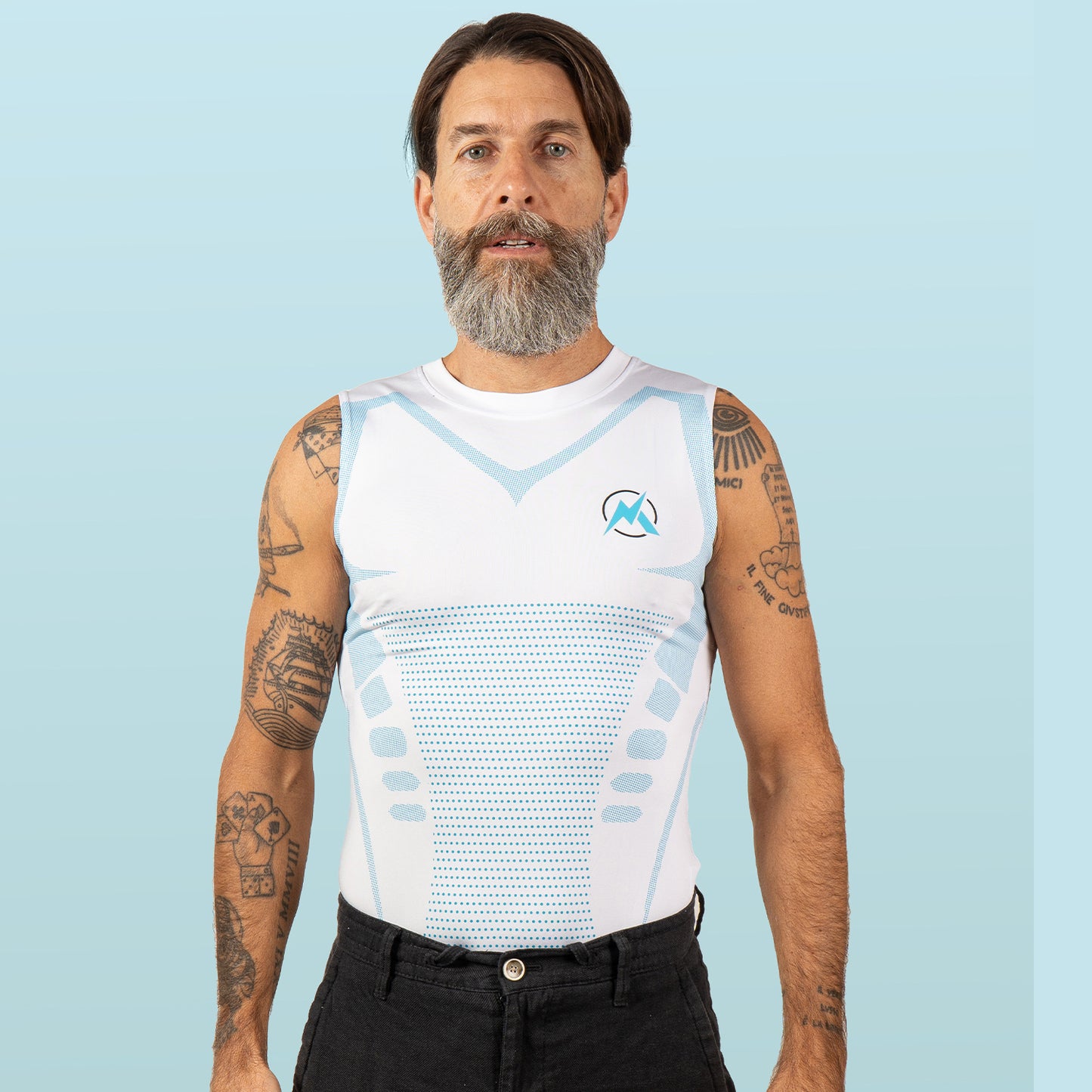
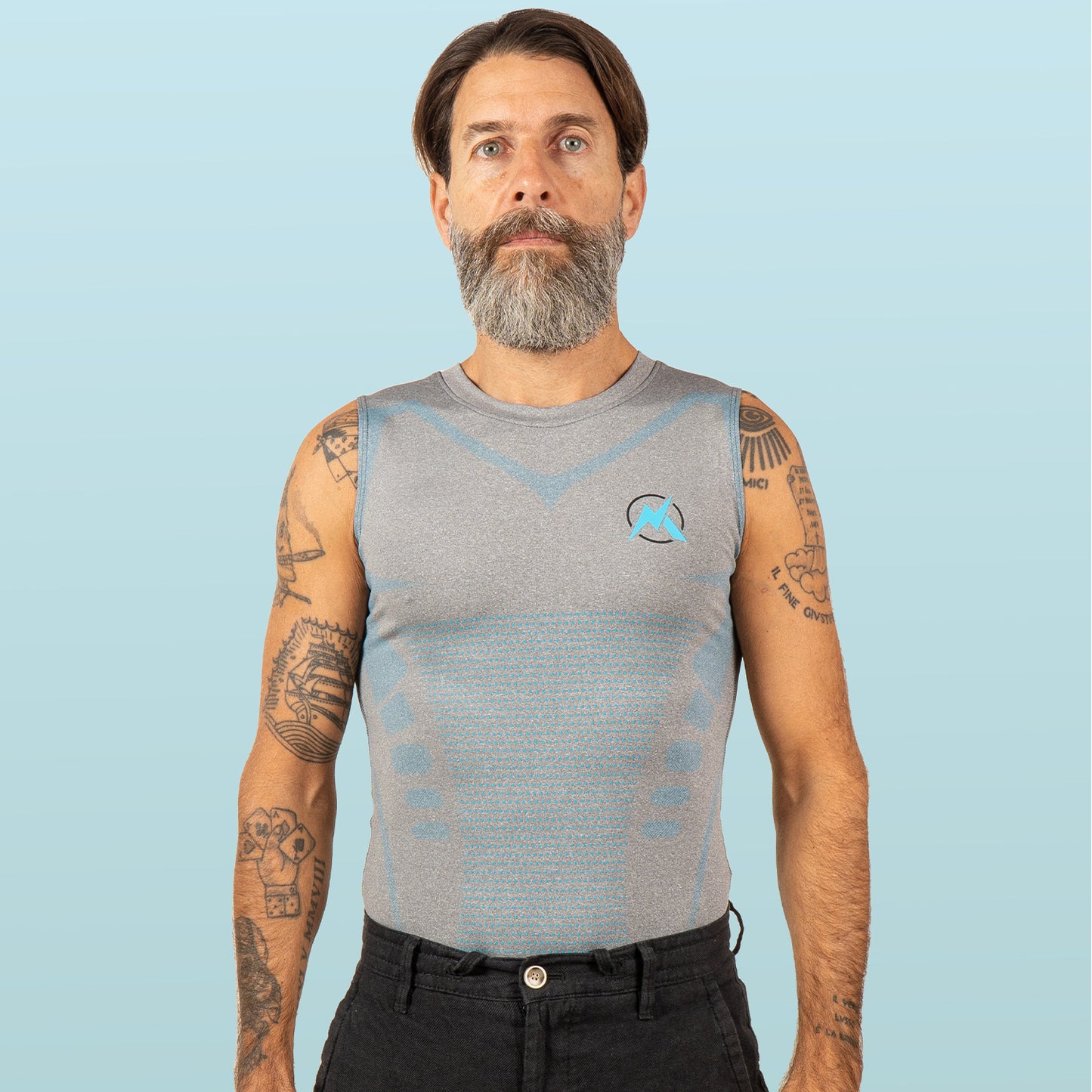
If you've ever caught yourself in a storefront window and wondered who the slumped guy is — that's the one. Rounded shoulders are one of the first things that change in men past 45, and most don't notice until a photo lands in the family group chat. They make you look heavier than you are, older than you feel, and tired even when you slept fine.
The good news: rounded shoulders in men over 45 aren't a deformity. They're a posture pattern your body learned, slowly, from how you spend your day. And what your body learned, your body can unlearn — usually faster than you'd think.
Here's exactly why it happens, what it costs you, and the quick fix that actually works.
The mirror test: how to know your shoulders have rolled forward
Stand in front of a mirror, side-on. Let your arms hang naturally — don't pose, don't suck in, don't pull your shoulders back. Look at where your hands fall.
If your palms face backwards (toward the mirror behind you), your shoulders are rolled forward. If they face inward toward your thighs, your shoulders sit where they're supposed to.
Second test: look straight on. Are your knuckles visible from the front? If yes, your shoulders have rotated forward, dragging the entire arm with them.
Most men over 45 fail one or both tests. That's not a problem — it's a starting point.
Why your shoulders round forward after 45 (the real reason)
It isn't aging itself. It's accumulation. Three forces compound after 45 to roll your shoulders inward, and almost every man past midlife is dealing with at least two of them.
Decades at a desk
If you've spent twenty-plus years in front of a screen, your body now treats "leaning slightly forward over a keyboard" as the default position. Your chest muscles — pecs and the small muscles under them — get short and tight. Your upper back muscles — the ones that should pull your shoulder blades together — get long, weak, and lazy.
The shoulder is just a ball-and-socket sitting between those two opposing forces. When the front gets tight and the back gets weak, the shoulder rolls forward. Period.
The phone tax
Every time you tilt your head down to read a text, you're loading the neck and upper back with extra weight. Harvard Health has covered the cumulative cost of "text neck" in detail — and the cascade doesn't stop at the neck. A forward head pulls the upper spine into a curve, which pulls the shoulders forward to compensate.
Add up your daily phone time and you're not far from a part-time job in bad posture.
A tight chest, a soft middle back
After 40, men tend to keep training what they can see — chest, biceps, abs — and skip what they can't — mid-back, rear delts, deep posture muscles. The result is predictable: a chest that pulls your shoulders forward and a back that has nothing to pull them back.
This is the hidden reason that "more push-ups" or "more chest day" actively makes the problem worse for men in this age bracket.
A few extra pounds, in the wrong place
Weight gain after 45 doesn't sit evenly. Most men carry it in the chest, around the lower belly, and at the lower back. That weight pulls the torso forward, which pulls the shoulders forward, which makes the chest look softer — which a lot of men respond to by hunching, which makes the whole picture worse.
It compounds in a feedback loop, and the loop is what most fixes miss.
What rounded shoulders actually do to your look
You probably already feel some of this. Naming it helps:
- You look 10-15 pounds heavier than you are. Forward shoulders shorten your torso, push your chest down into your stomach, and make your shirt drape badly across the front.
- Your neck looks shorter and your jawline softer. The forward-head posture that follows rolled shoulders compresses the angle under your jaw — the line photographers used to call "the executive line."
- You look older than your face. Faces age slowly. Posture ages fast. Two men of the same age, same face, same haircut — the one with rolled shoulders reads a decade older in three seconds.
- Your clothes stop fitting right. Polo shirts cling to a curved upper back. Dress shirts pull at the upper buttons and gap at the collar. Suit jackets pucker between the shoulder blades.
If you've quietly stopped wearing certain shirts, this is probably why. Related read: how to look thinner in a dress shirt — most of the seven fixes there start with shoulder position.
The posture tax: how it costs you beyond the mirror
Rounded shoulders aren't just a visual issue. They're a tax on energy, breathing, and how the world reads you.
A rounded upper back compresses your ribcage by a few inches of vertical space. That's a few inches of lung capacity you lose every breath. Many men report feeling tired by 3pm, and the assumption is age — but a chunk of it is shallow breathing from a collapsed posture.
Then there's the social signal. Walk into a room with rolled shoulders and most people read it, unconsciously, as low energy or low status. Walk into the same room with shoulders pulled back and the same people read confidence — same face, same suit, different posture. The Mayo Clinic has documented the back-pain side of this story — but the read by other people is what most men over 45 actually care about, even if they don't say it.
The quick fix: 4 daily habits that pull shoulders back
You don't need a chiropractor, a gym membership, or a posture brace. You need four small habits, done daily, in the right order. The order matters because tight tissue has to be released before weak tissue can be activated — try to skip step one and the rest is wasted.
1. Open your chest for 90 seconds
Find a doorway. Forearm against the frame, elbow at 90 degrees, take a small step forward. You'll feel a stretch across the front of your shoulder and chest. Hold 30 seconds, switch sides, repeat once.
This is the single highest-leverage move on the list. Years of desk work shortened these tissues; you can't pull your shoulders back until you give them permission to move.
2. Wake up your mid-back
Stand against a wall — heels, butt, upper back, head all touching. Arms at your sides. Slide your arms up the wall, like you're making a snow angel, keeping the backs of your hands in contact with the wall as long as you can. Six to eight slow reps.
If your hands lift off the wall halfway up — that's normal at first. Go to where you can stay in contact. The point isn't range; it's reminding your shoulder blades how to glide.
3. Pull, don't push
For the next month, every push exercise (push-ups, bench, dumbbell press) gets matched by two pull exercises (rows, face pulls, band pull-aparts). Most men over 45 are 4:1 push-to-pull. You need to flip it, hard, until your back catches up to your chest.
You don't need a gym. A $15 resistance band looped around a doorknob does the entire job.
4. The "phone reset"
Every time you pick up your phone, do a one-second posture reset before you start scrolling: chin back over shoulders, shoulders down and back, ribs over hips. Sounds trivial. Done 50 times a day for two weeks, it rewires your default posture more than any single workout.
If you want a structured five-minute version of all of this, the routine in our daily posture routine for men over 50 hits the same four problem areas with one move each.
The tools that help (and the one that doesn't)
Here's the honest hierarchy:
What works:
- The four habits above, done daily.
- A standing desk or laptop riser to bring your screen to eye level.
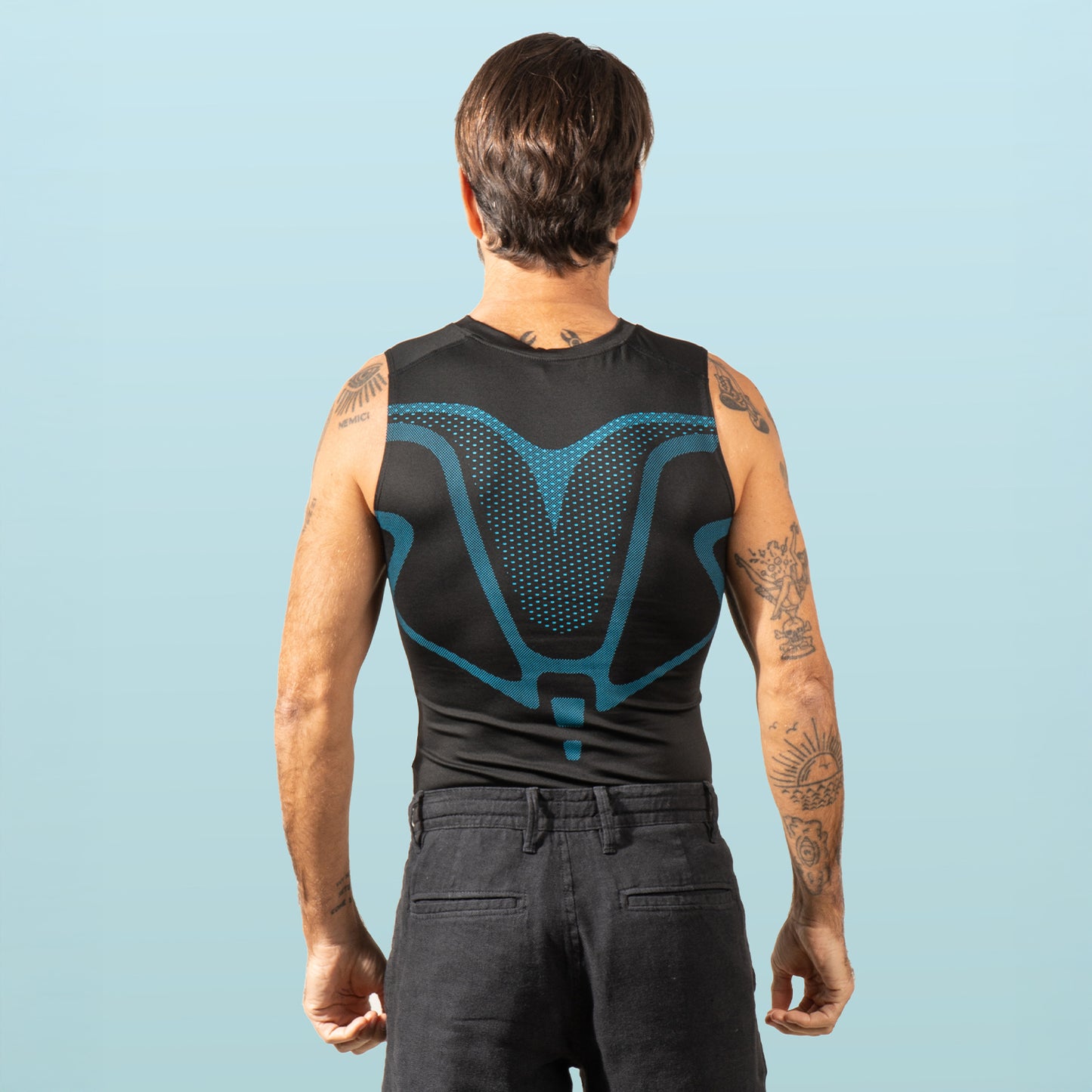
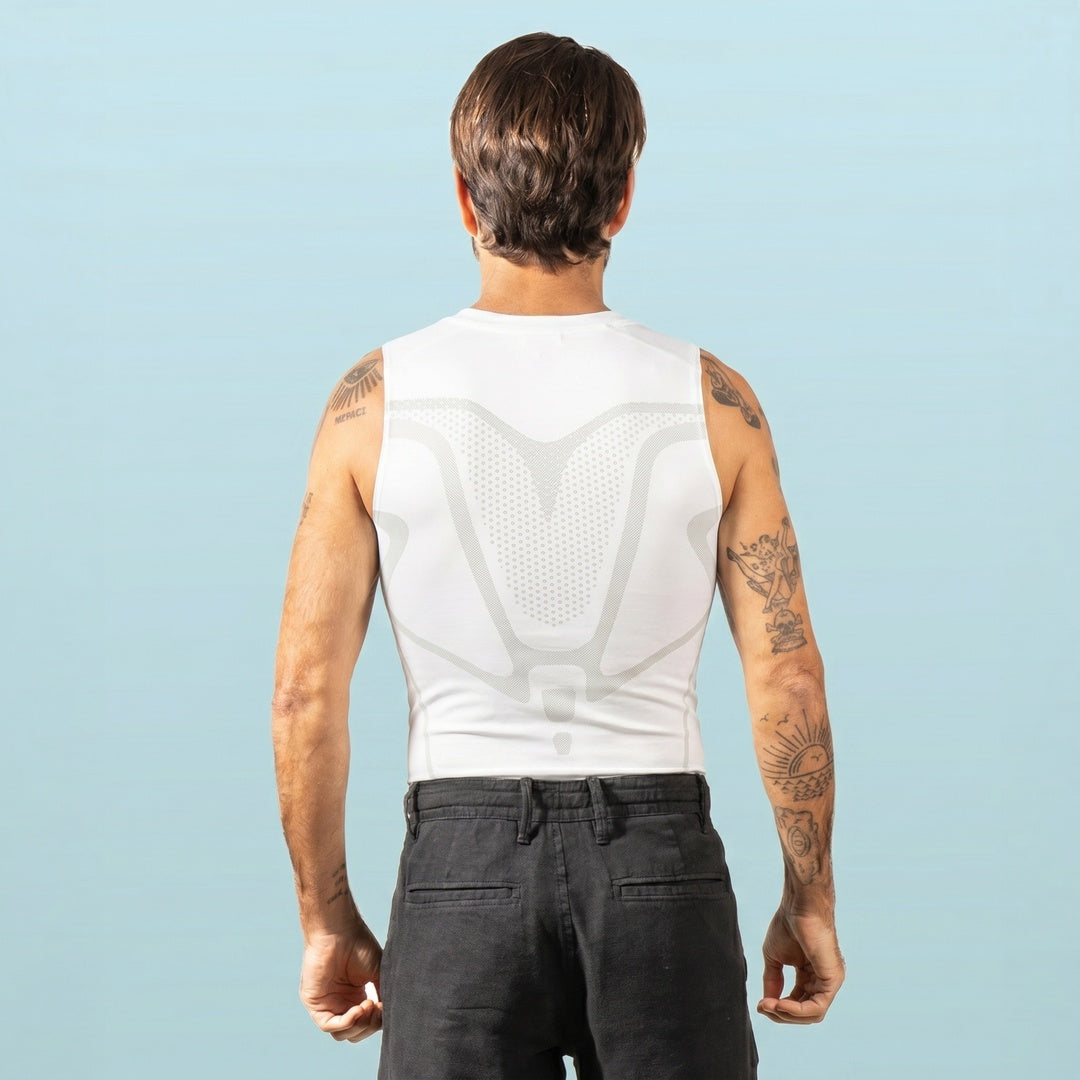
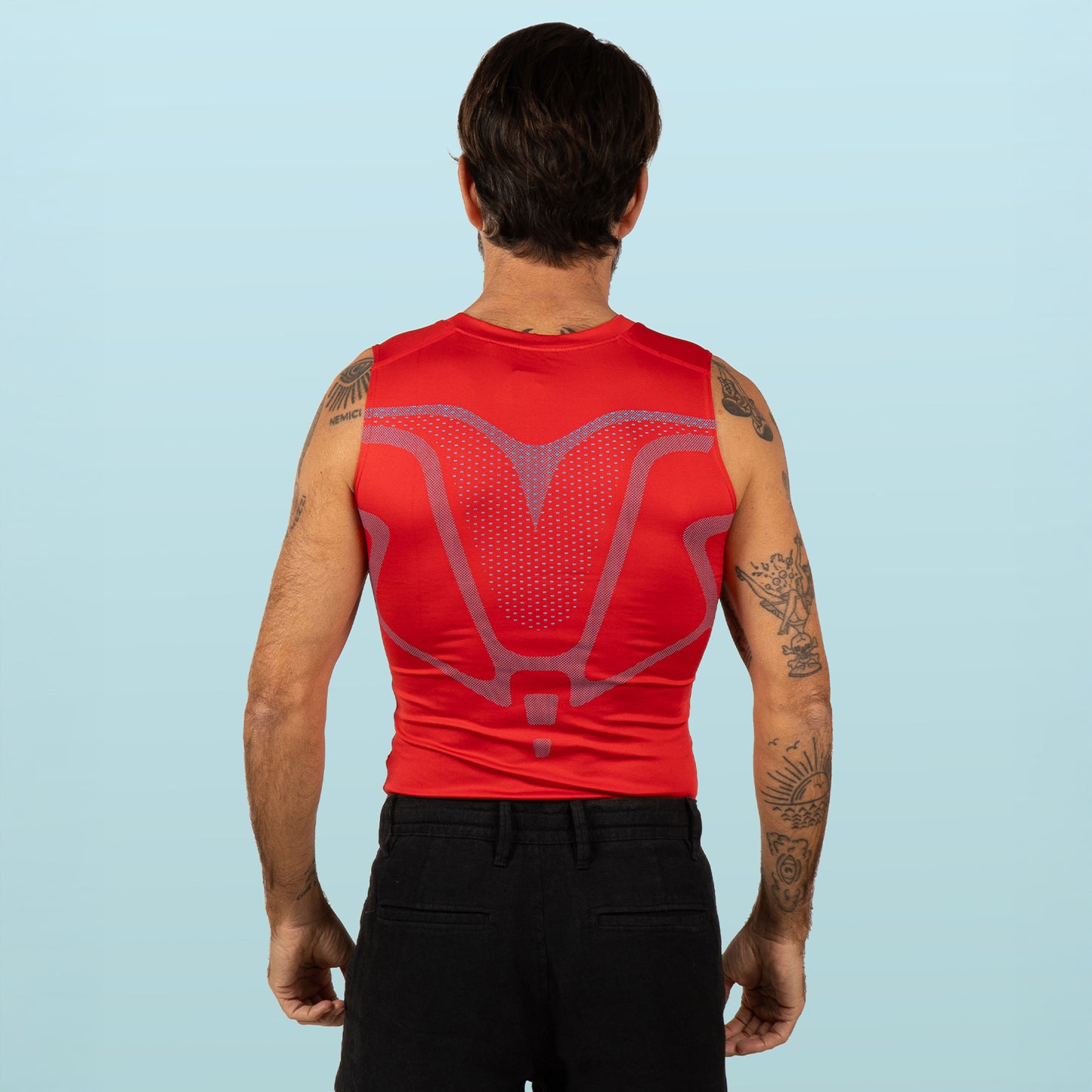
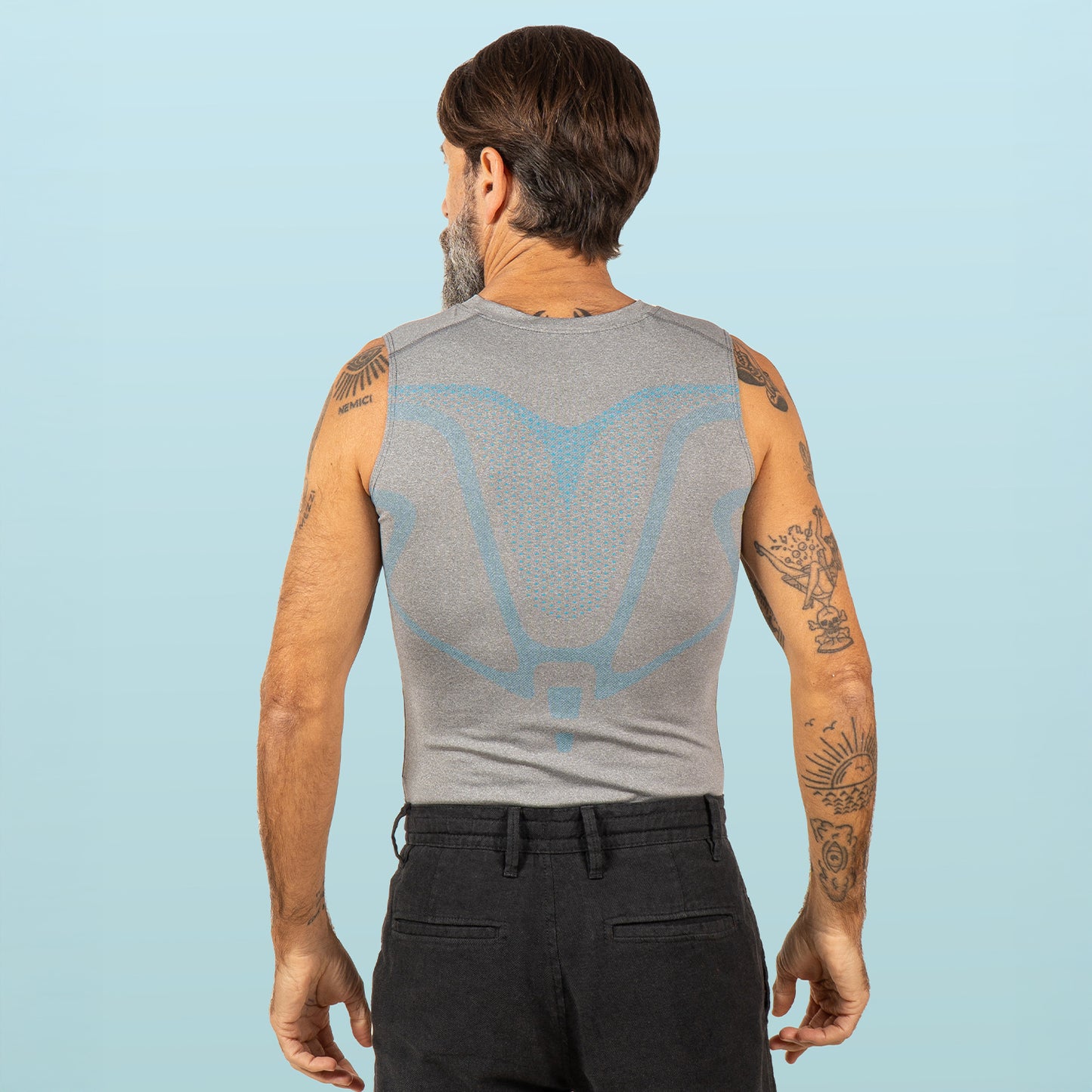
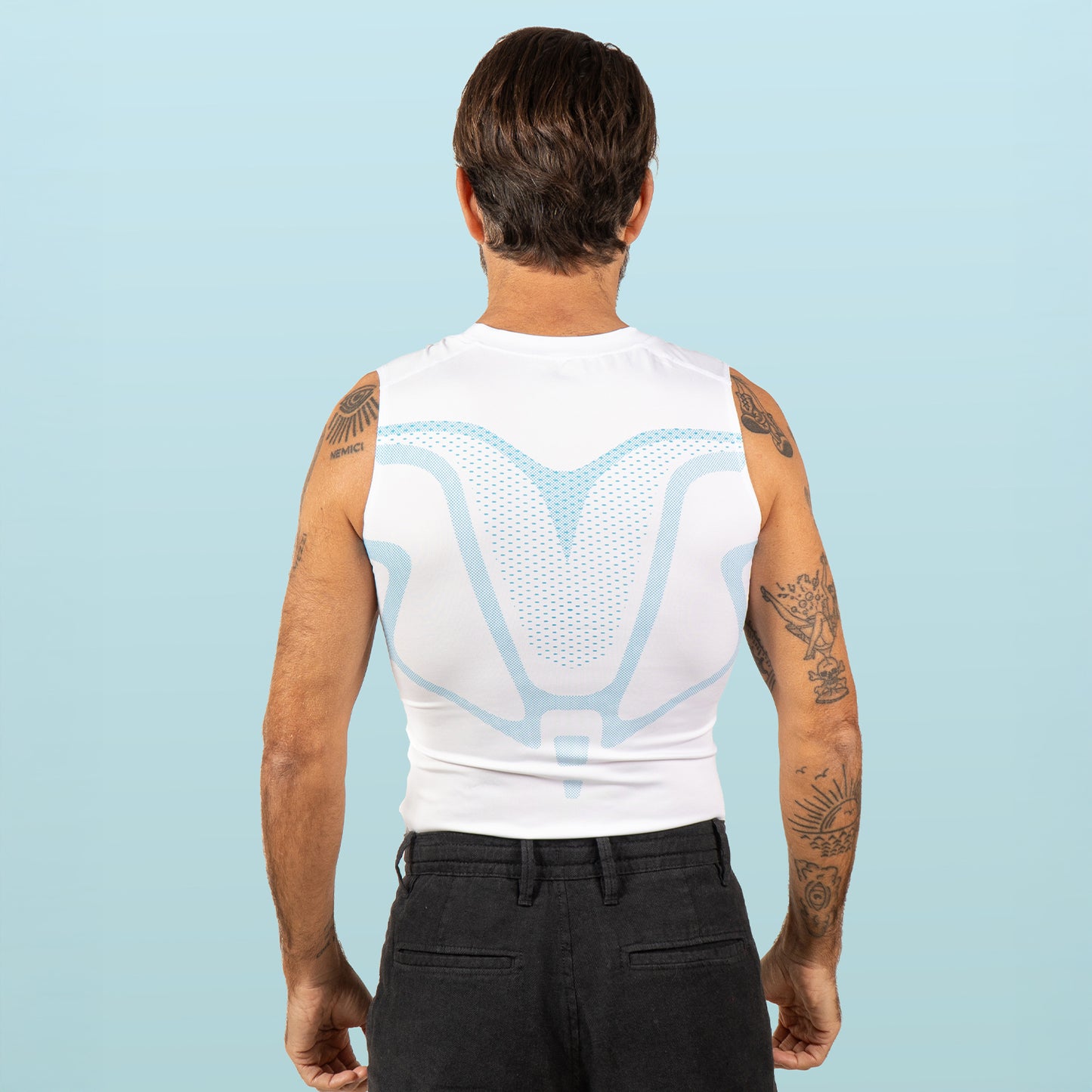
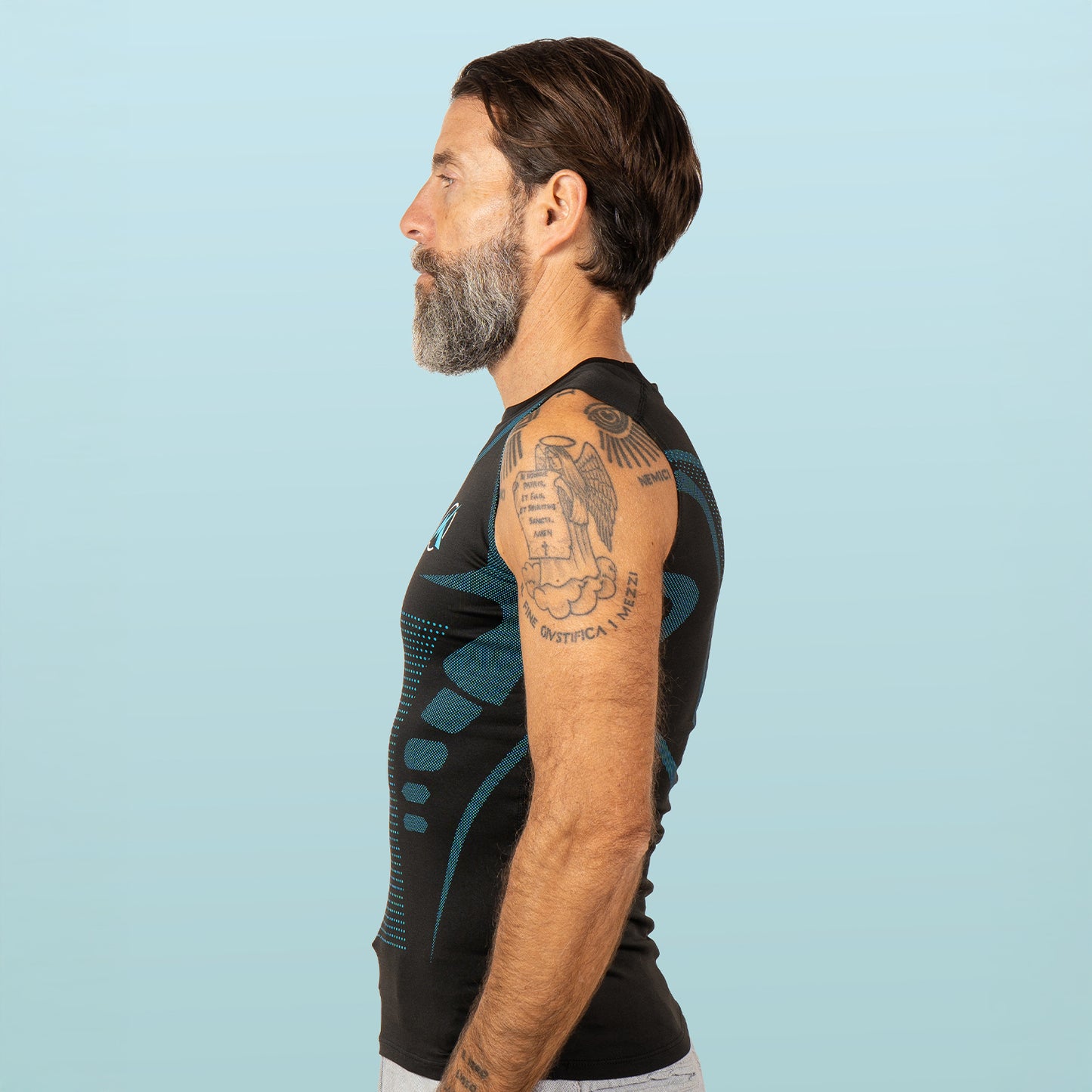
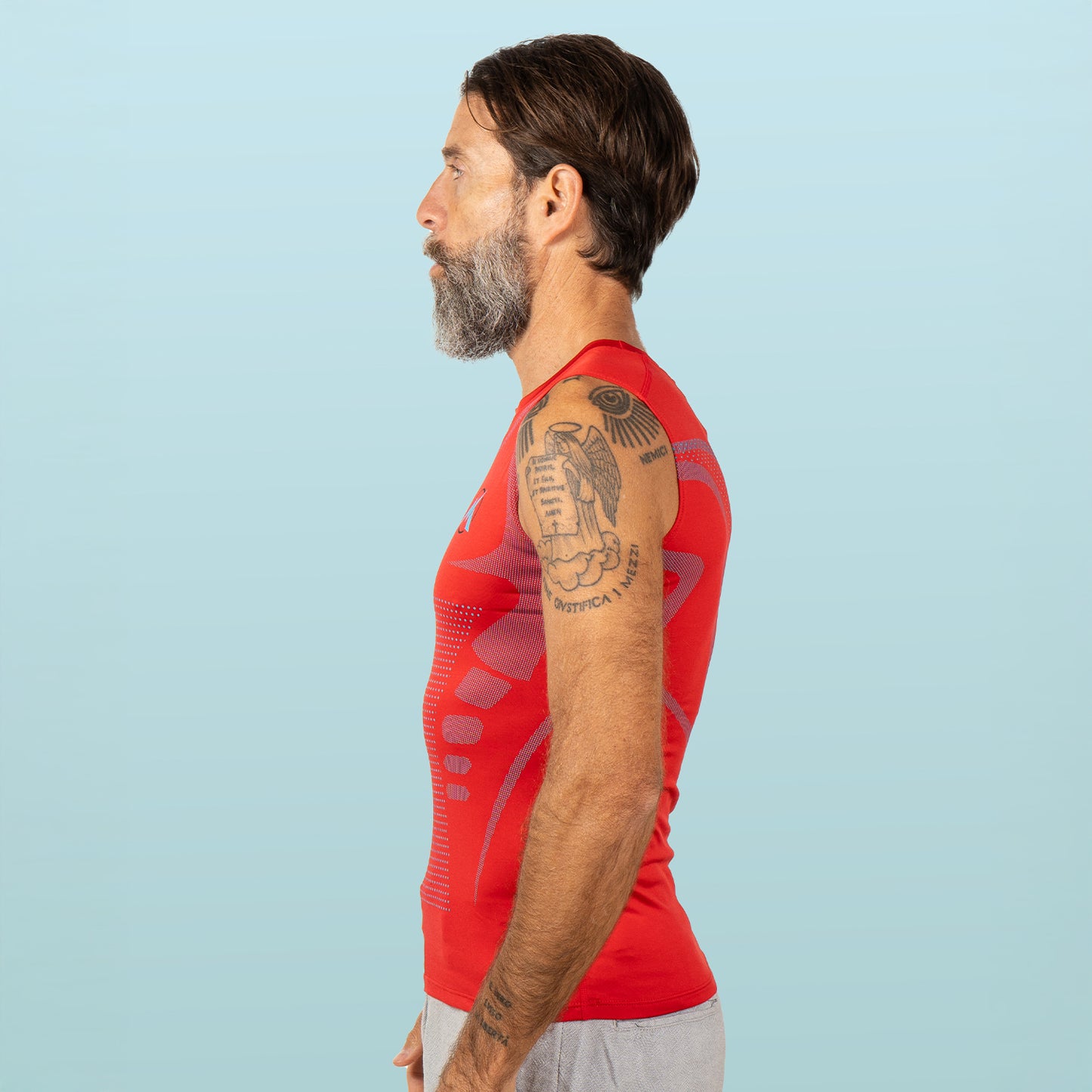
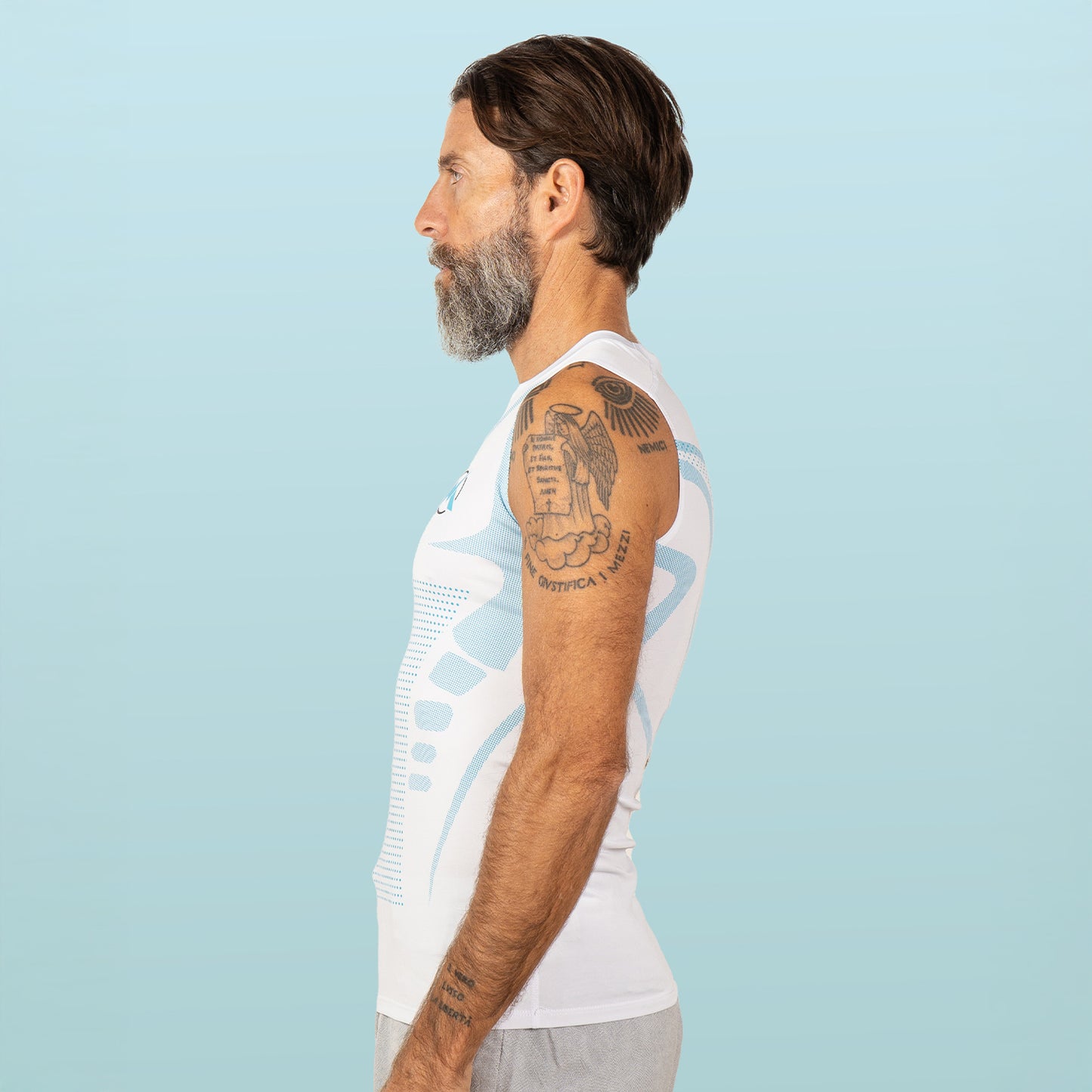
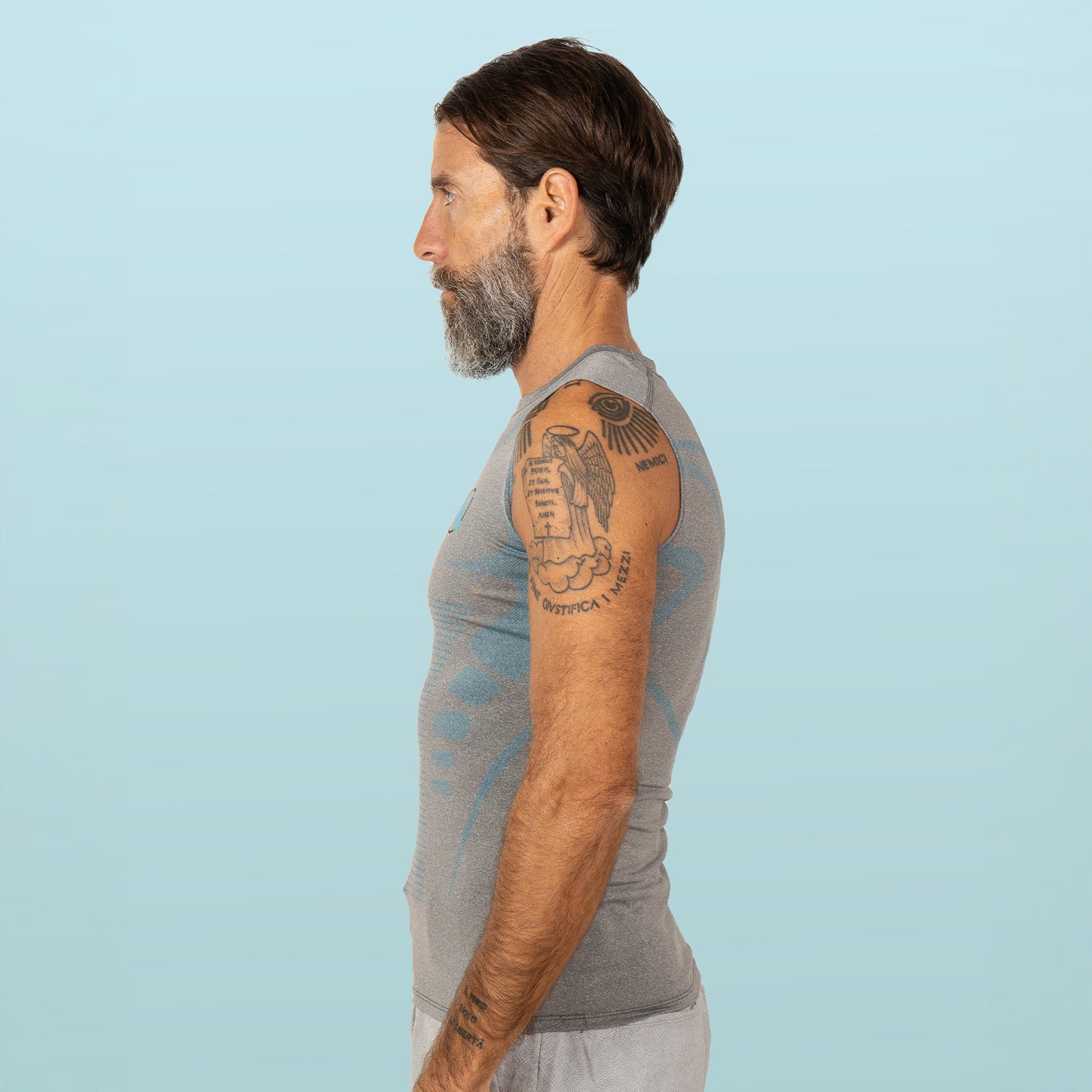
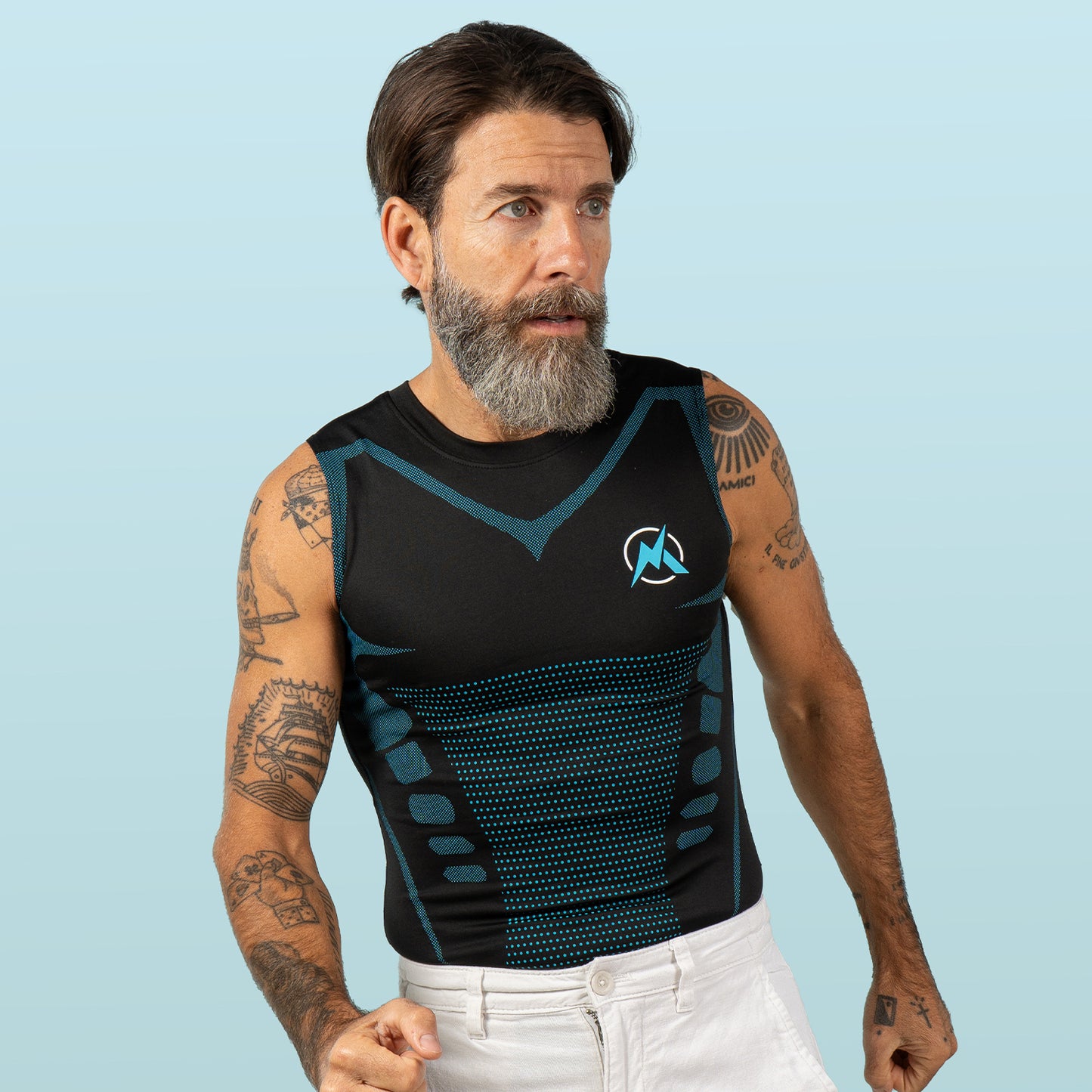
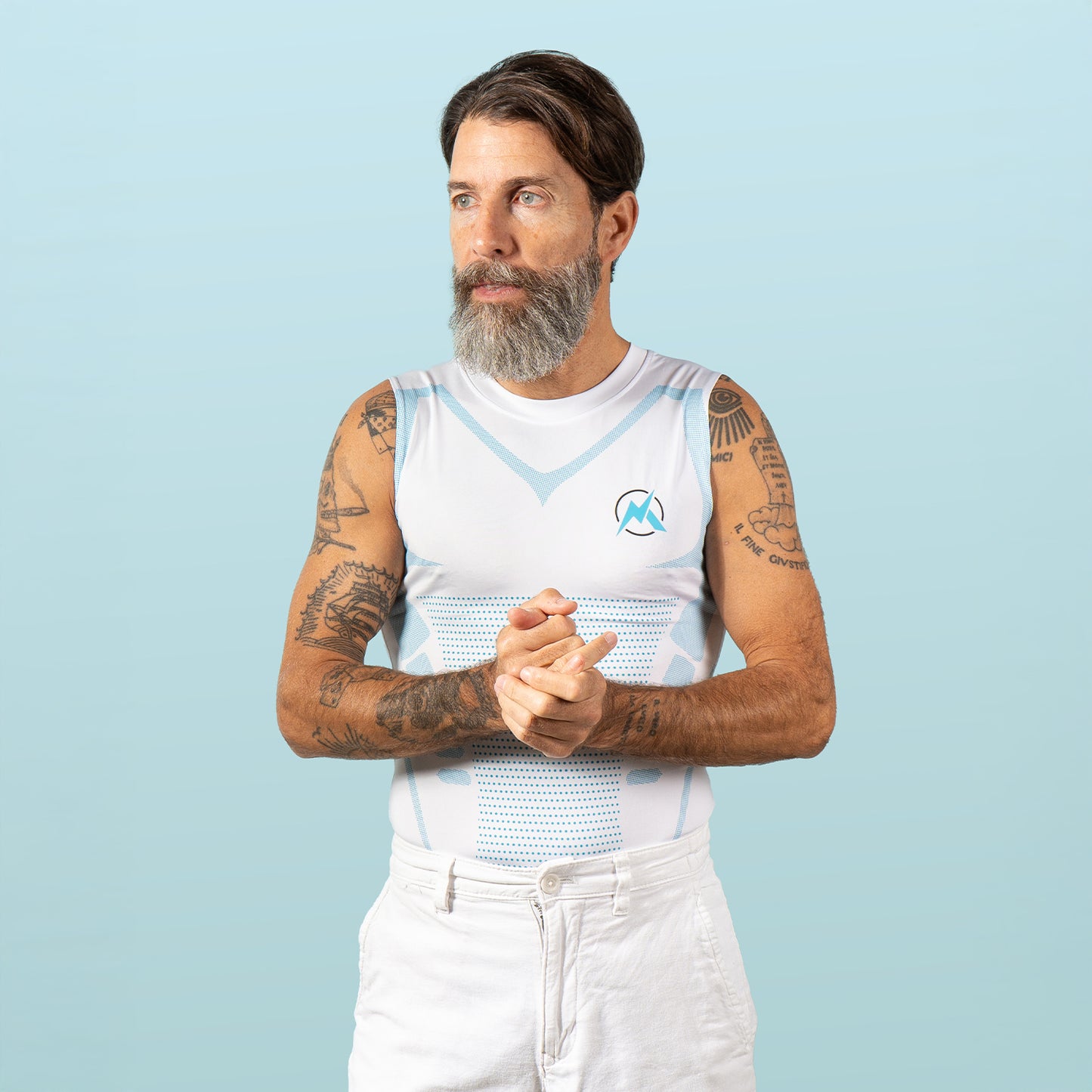
- A compression tank under your dress shirt or polo. It doesn't fix posture on its own, but it's a cue — a soft, constant reminder that pulls your chest forward and your shoulders back. Many men report standing taller through their first month of compression wear simply because the tank itself feels like a hand on the upper back.
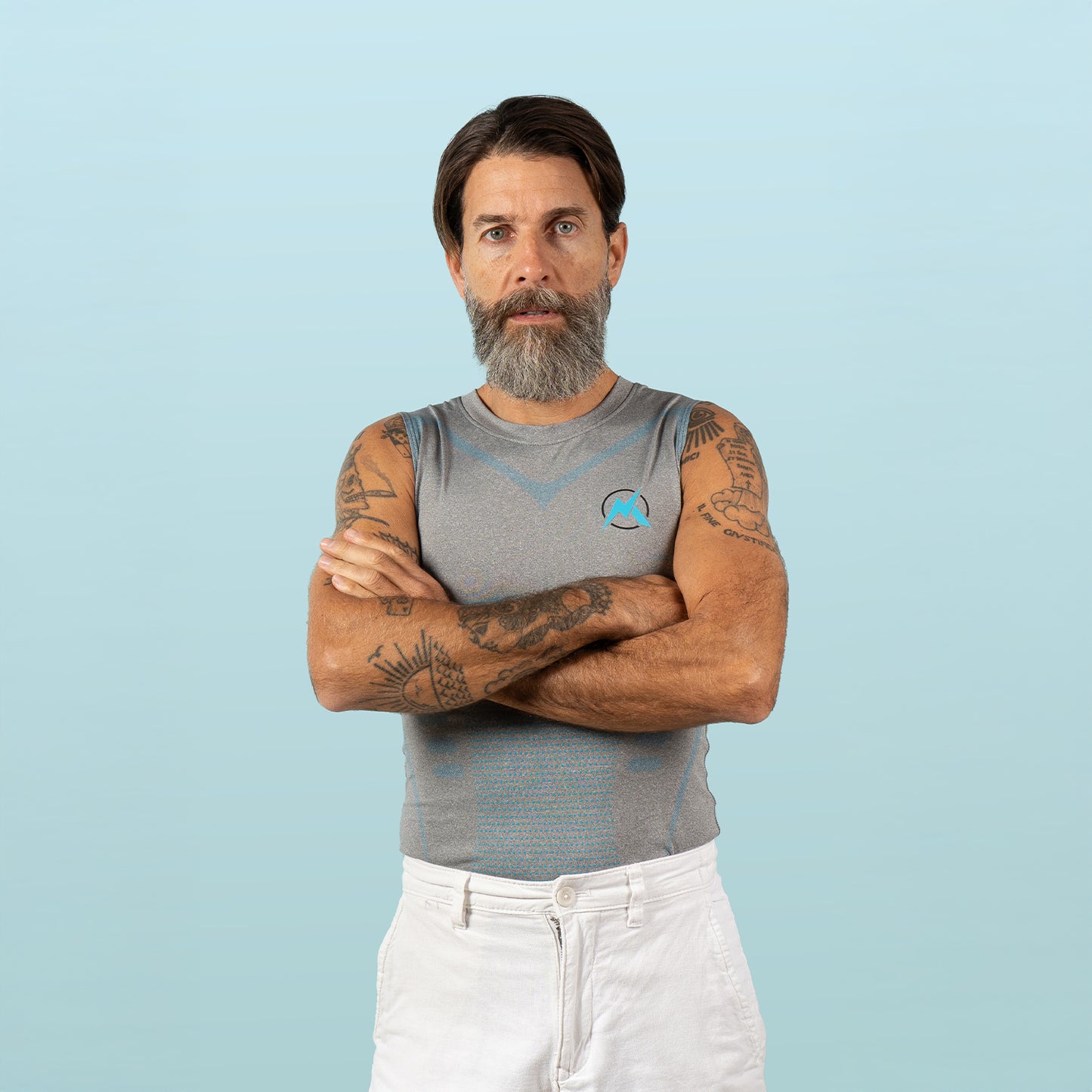
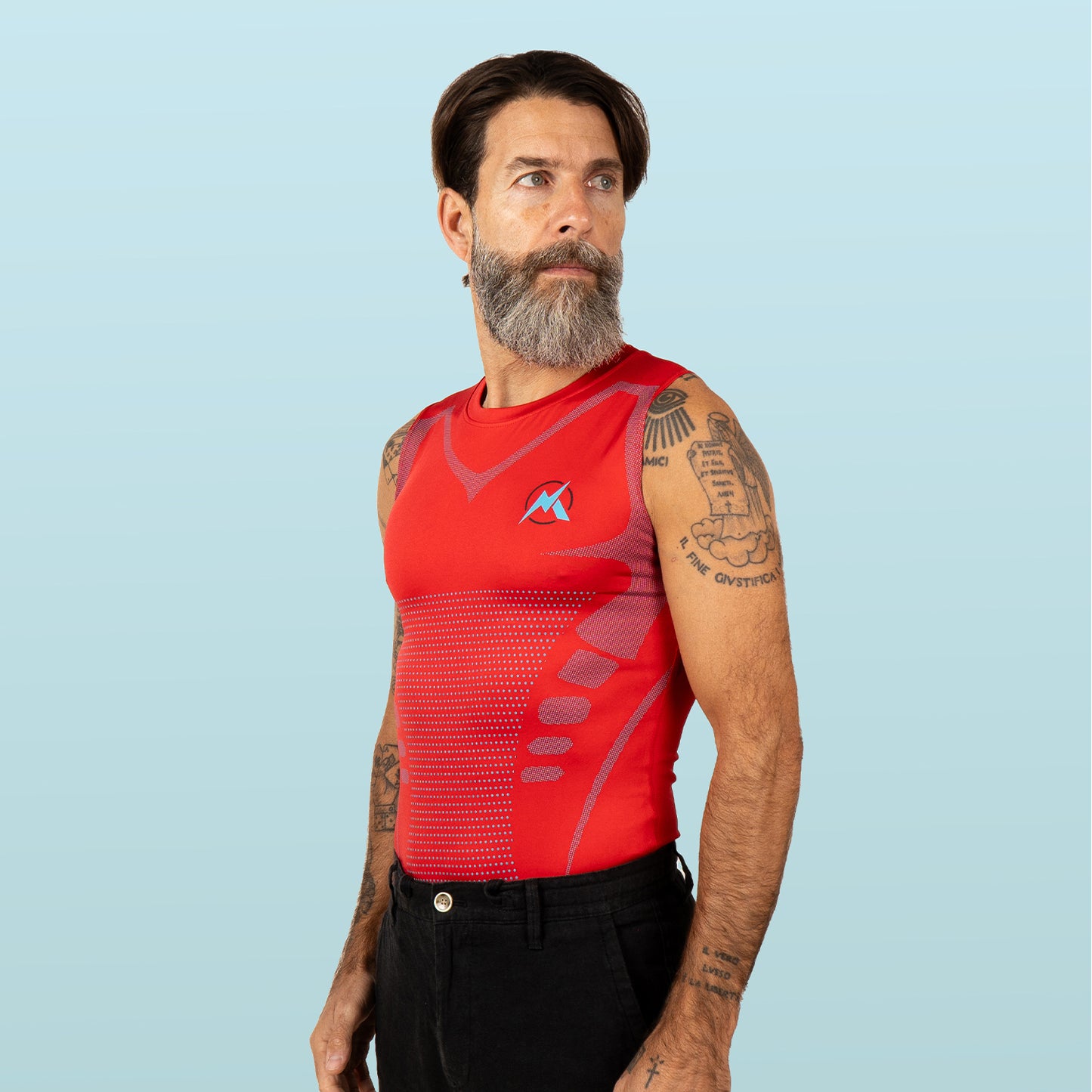
That last one is exactly what we built the Maynox VitaBoost for. It's a sleeveless compression tank designed for men over 45, made to wear under your dress shirt or polo. The fit lifts the chest, smooths the front silhouette, and gives your shoulder blades a constant low-grade nudge in the right direction. It's not a brace, it's not a corset — it's a base layer that quietly pulls you upright while you go about your day.

It's currently BUY 1 GET 1 FREE — two tanks for $15 (was $59.99). One for the office, one in the laundry. See the VitaBoost
What doesn't work:
- Posture braces. They feel like they're working because they hold you up — and that's the problem. They do the job your back muscles should be doing, so your back gets weaker the longer you wear one. Two months in, you're worse off than when you started.
What to avoid: 3 things to stop doing today
- Stop "pulling your shoulders back" by squeezing them. Pinching your shoulder blades together flares your ribs and arches your low back. The right cue is "shoulders down and back," with the down doing most of the work.
- Stop sleeping on your stomach. Stomach sleeping forces the head to one side for hours, locks up the neck, and reinforces the forward-head pattern you're trying to undo. Side or back, with a pillow that supports the natural curve of the neck.
- Stop more chest training until your back catches up. This is the hardest one for most men, because chest day feels productive. For the next 60 days, every set of presses gets two sets of rows. If you only do one thing on this list, do this one.
How long before you see a difference
Realistic timeline:
- Days 1-7: You'll notice the doorway stretch is uncomfortable. Good. That's the chest waking up.
- Weeks 2-3: Shirts start fitting differently. Less pull at the upper button. Less collar gap.
- Weeks 4-6: Photos read different. Wife, kids, or coworkers will say you "look taller" without being able to name what changed. (See: how to hide your belly under a shirt — half of that effect is shoulder position too.)
- 3 months: The new posture is your default. You don't have to remember it — your body holds it on its own.
The fix is not glamorous. It's four small habits, done daily, while you stop doing the three things that undo them. Most men over 45 see a noticeable change in the mirror inside three weeks if they stay honest with the routine.
Bottom line
Rounded shoulders after 45 are not a sentence. They're a habit your body picked up from a desk, a phone, and a chest-heavy gym routine — and habits change. Open the front, wake up the back, flip your push-pull ratio, reset every time you grab the phone. Wear something under your shirt that nudges the right shape until the muscles can hold it on their own.
The mirror catches up faster than you'd expect.
Try the Maynox VitaBoost — BUY 1 GET 1 FREE
This article is general information about posture and clothing — not medical advice. If you have ongoing pain, numbness, or a known shoulder injury, see a physical therapist or your doctor before starting any new routine.
Frequently asked questions
Can rounded shoulders be fixed after 50?
Yes — and usually faster than men expect. The tissue that drives rolled shoulders (tight chest, weak mid-back) responds to short daily work at any age. Most men over 50 see a clear difference in three to six weeks of consistent stretching and pulling work. The keys are doing it daily, in small doses, and not skipping the chest-opening step.
How long does it take to fix rounded shoulders?
A noticeable change in the mirror typically shows up in two to three weeks. The new posture becomes your resting default — meaning your body holds it without you thinking — at around the 8-12 week mark. Three months of daily five-minute work is a realistic timeline for a lasting reset.
Will a posture corrector fix my shoulders?
A posture brace can give you a short-term reminder of where your shoulders should sit, but worn long-term it weakens the same muscles you're trying to wake up. Most men are better off using a compression base layer for a soft cue and putting the actual work into stretches and pulling exercises that build the back.
Do compression tanks help with rounded shoulders?
A compression tank doesn't "fix" posture on its own, but it provides constant feedback against the chest and upper back that nudges you to stand up taller. Worn under a dress shirt or polo, it also smooths the front silhouette so the rolled-shoulder look is less visible while you're doing the work that actually changes it.
Why do my shoulders look worse in photos than in the mirror?
The mirror is a 2D reflection at one angle, in lighting you've optimized over years. A camera shows a different angle, in light that doesn't favor you, often when you're not posed. The forward-shoulder, forward-head pattern that's barely visible in the bathroom mirror reads loud in a vacation candid. The fix is the same — the photo just gives you a more honest readout of your default posture.