By Owen Blot · Founder, Maynox · Last updated June 10, 2026
- Why your walk reads "low confidence" after 40
- Lever 1 — Posture: The frame everything else hangs on
- Lever 2 — Cadence: The 110-120 steps-per-minute rule
- Lever 3 — Gaze: Where your eyes go before your feet do
- Lever 4 — Hands: The pocket trap and the swing rule
- Lever 5 — The base layer that locks the frame in
- The 4-week practice protocol that makes it stick
- What doesn't work (and why "fake it till you make it" fails after 40)
- Frequently asked questions
Why your walk reads "low confidence" after 40 (and it's rarely your personality)
Here's the part nobody says out loud. After 40, most men aren't insecure — they're loaded. Loaded with a desk job, a kid in middle school, a slightly heavier midsection than five years ago, and a phone that pulls the head forward 8 hours a day.
The walk that used to feel natural at 28 doesn't feel natural anymore. It's not your confidence that broke. It's your hardware.
The shoulders rolled forward. The chin crept ahead of the chest. The stride shortened by a few inches because the hips don't open the way they used to. And the brain interprets all of that — the slumped shoulders, the dropped gaze, the shuffle — as low-status walking. So do strangers in the lobby, on the sidewalk, at the conference.
The fix isn't a personality rebuild. It's five levers. Pull them in order, hold them for four weeks, and the walk re-installs itself.
Lever 1 — Posture: The frame everything else hangs on
If you only fix one thing, fix this. Every other lever sits on top of it.
The numbers are uncomfortable. According to NIH News in Health, more than 80% of Americans will deal with posture-related issues at some point, and the desk-and-phone life accelerates the curve. Cleveland Clinic's analysis of "tech neck" puts hard math on it: your head weighs 10-12 pounds in a neutral position, 27 pounds at 15 degrees of forward tilt, and 60 pounds at 60 degrees — which is roughly where you're reading this sentence.
A head tilted forward and shoulders rolled in don't just look weak. They are the exact physical signature your brain — and everyone else's brain — reads as low confidence.
The walking posture cue is simple:
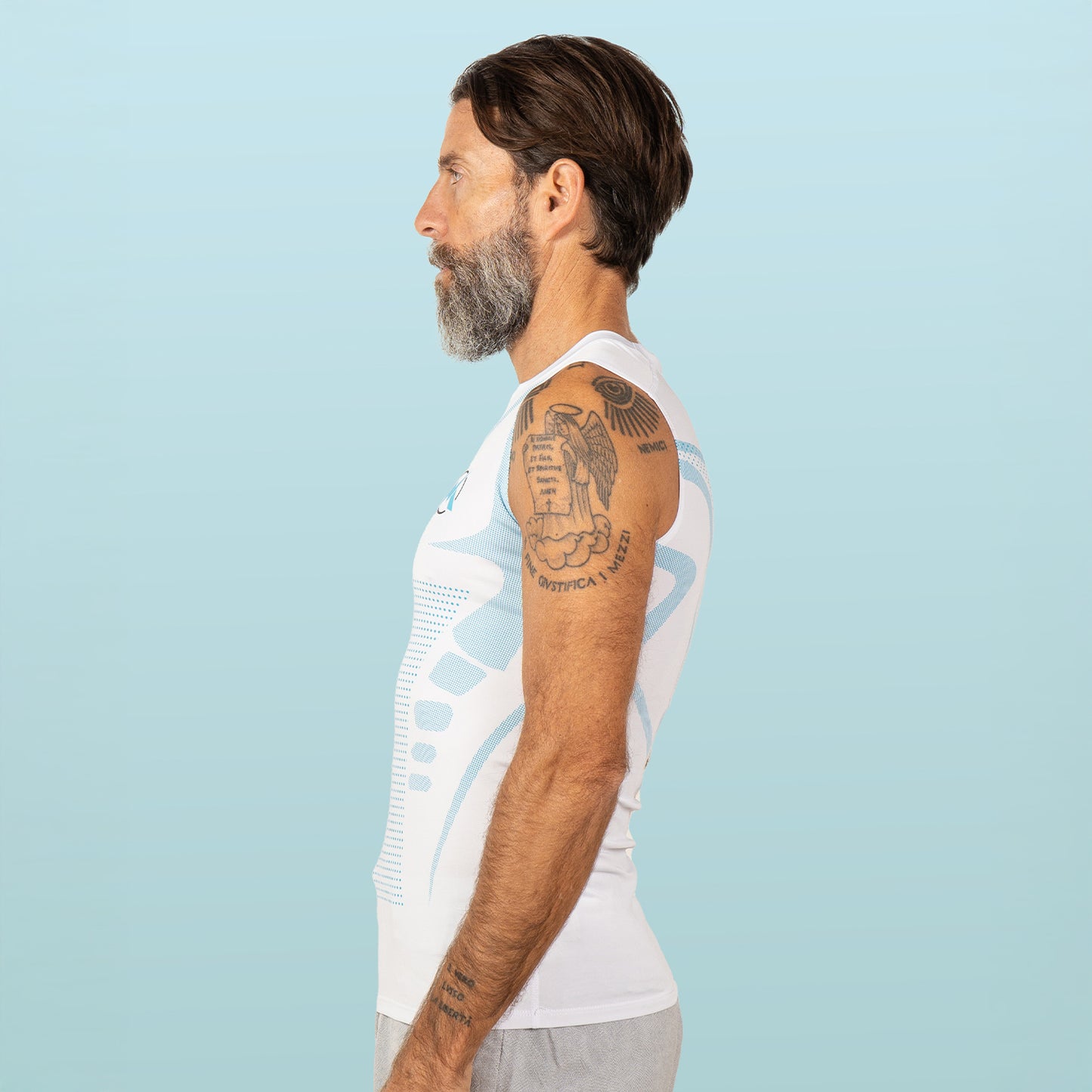
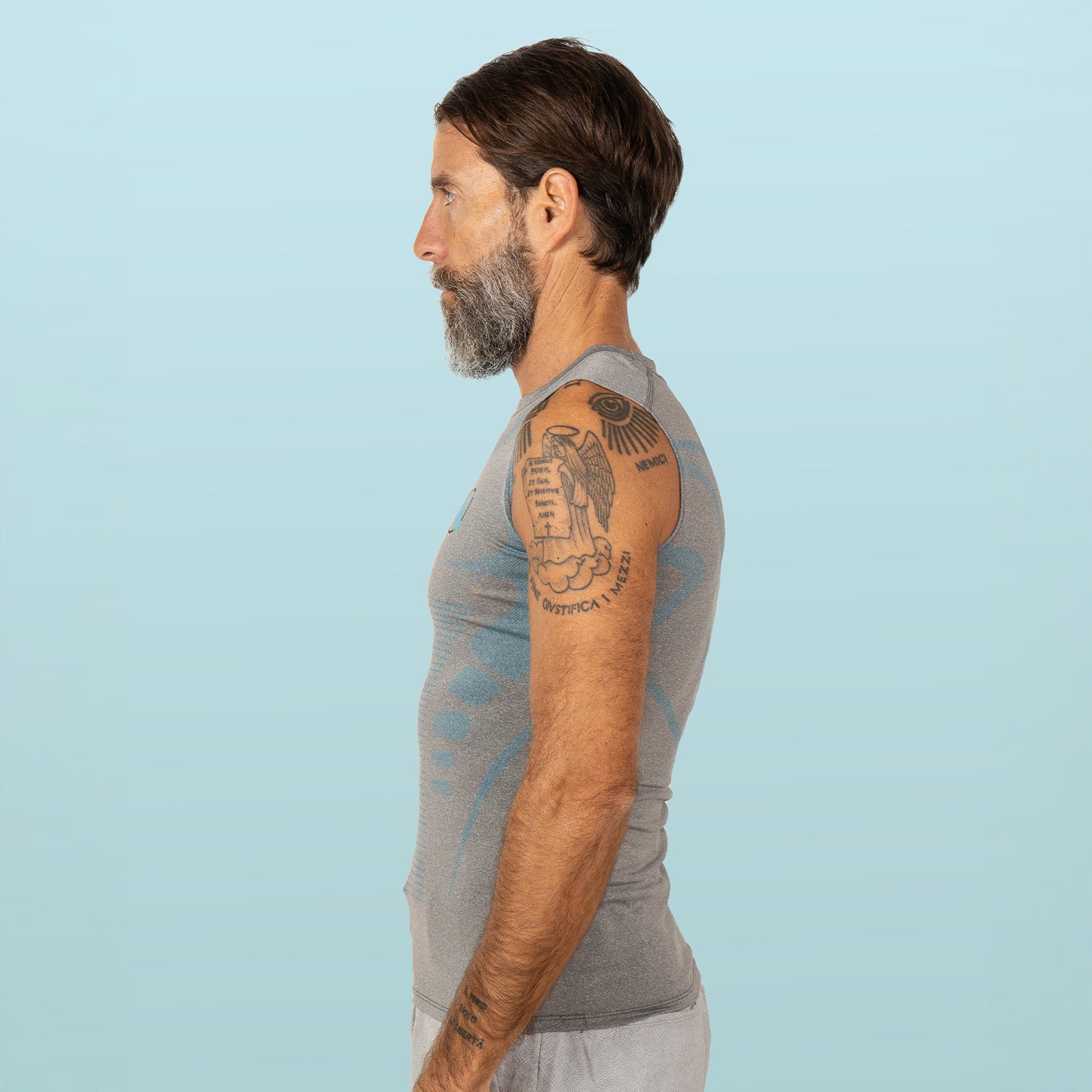
- Stack the ears over the shoulders, the shoulders over the hips.
- Chest open, not puffed.
- Chin parallel to the ground, not jutting forward.
- Imagine a string at the crown of your head pulling straight up.
The "string" cue isn't woo. It's the most efficient way to recruit the deep stabilizers without you having to think about ten muscles at once. Hold the string cue for the first 30 seconds of every walk until it becomes the default.
If you want the science-backed timeline: Harvard Health reports that a focused posture-correction program can produce measurable change in 8 to 12 weeks. That's three months from the slumped version of you to the upright one.
Lever 2 — Cadence: The 110-120 steps-per-minute rule
This is the lever almost no one talks about, and it's the one that separates a "trying to look confident" walk from a real one.
The CADENCE-Adults research program looked at exactly how walking speed maps to intensity across age groups. For men aged 41-60, cadences of 100 / 110 / 120 / 130 steps per minute correspond to 3, 4, 5, and 6 METs — light to vigorous activity. The sweet spot for a "purposeful walk" — fast enough to read as confident, slow enough to look composed — sits at 110 to 120 steps per minute.
That's roughly two steps every second. Not a sprint. Not a stroll.
How do you find it? Two ways:
- Count for 15 seconds. 28 steps in 15 seconds = 112 steps per minute. That's your target.
- Use the rhythm of a song. Many pop tracks sit at 110-130 BPM. One step per beat puts you in the pocket.
Most men over 40 walk at 90-100 spm by default — fine for groceries, too slow to read as commanding. Push the cadence up by 10-15 steps. Don't push the speed by lengthening the stride violently — that produces the "I'm late for the bus" rush, which reads as anxious, not confident.
Cadence first. Stride length follows naturally once the legs and hips warm up.
Lever 3 — Gaze: Where your eyes go before your feet do
The gaze is the lever that costs zero effort and changes everything.
When you walk looking down at the pavement, three things happen at once. Your chin drops. Your chest closes. Your shoulders round forward to compensate. The whole posture chain you just rebuilt collapses inside three seconds.
Look up. Specifically: fix your gaze on a point on the horizon, roughly 15-20 feet ahead at eye level.
Not at the ceiling. Not at strangers' faces (that reads as a stare-down). At the horizon — the end of the hallway, the storefront across the street, the doorframe at the back of the lobby.
When the gaze is locked at horizon-level:
- The chin holds parallel to the ground automatically.
- The chest stays open.
- You walk into the room you're entering before your feet do, which is the entire physical signature of a confident arrival.
- Your peripheral vision picks up the people around you without you having to swivel your head.
One adjustment, three benefits. This is the highest-ROI cue in the stack.
Lever 4 — Hands: The pocket trap and the swing rule
Hands are the lever men over 40 get wrong the most. Mostly because the modern uniform — chinos and a coat with deep pockets — invites the worst habit: hands buried, shoulders hiked, elbows locked.
The rule is simple. Keep the hands visible. People — your brain and theirs — read visible hands as honest, capable, and present. Hidden hands trigger a subtle "what's he holding back" question, even if no one consciously notices.
So:
- Hands out of the pockets when you walk into a meeting, a venue, a date, anywhere you want to land.
- Let them swing naturally, in opposition to the legs — right arm forward as left leg steps. That's the human default. You don't have to think about it; you just have to not block it.
- Don't lock the elbows. Slight bend, relaxed wrist.
- One hand holding a coffee or a phone is fine. Both hands buried is not.
If you can't break the pocket habit, here's the workaround: carry something low-stakes — a folded jacket, keys, a notebook — in one hand. The other one swings. Your brain registers "I'm doing something with my hands," and the burying urge goes away.
Lever 5 — The base layer that locks the frame in
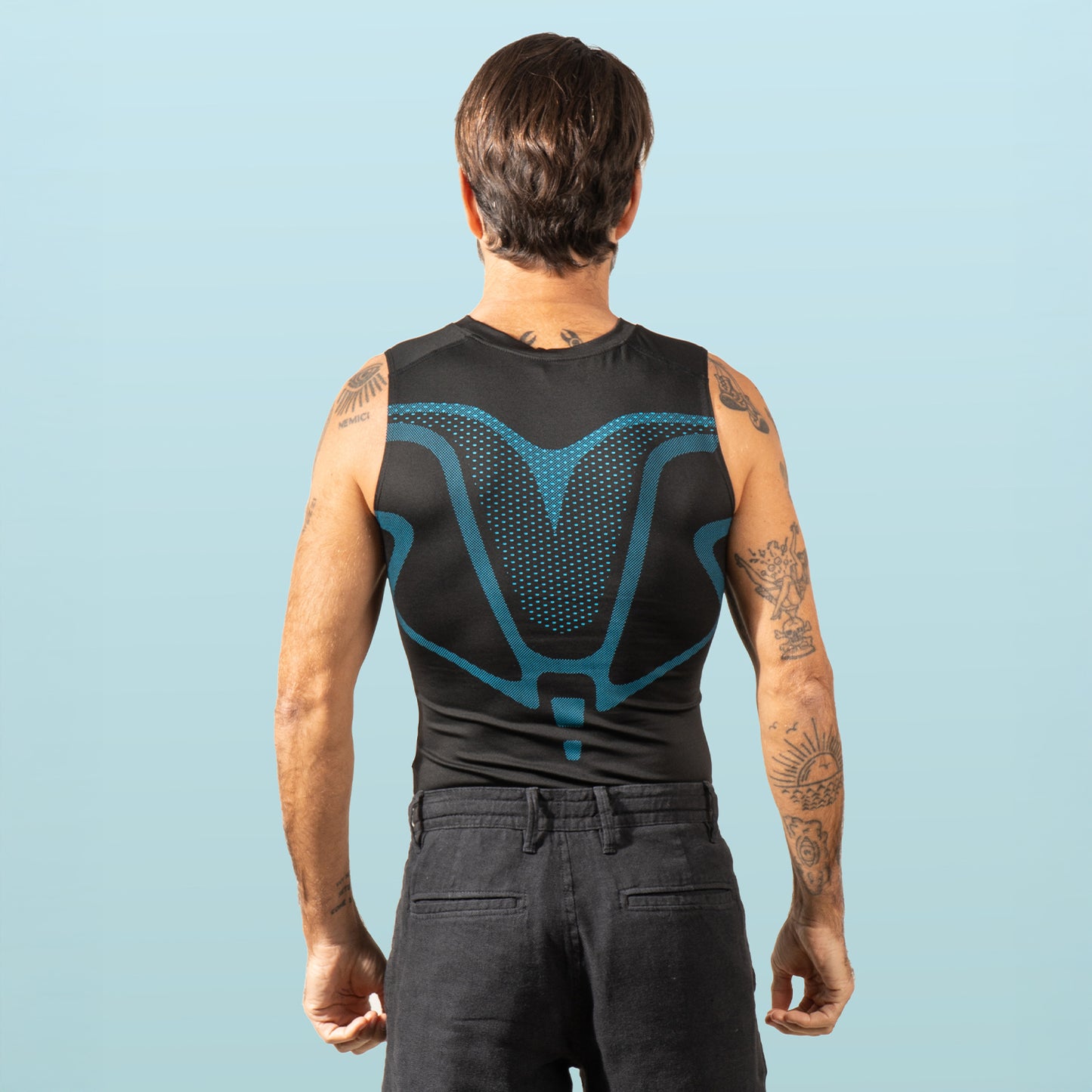
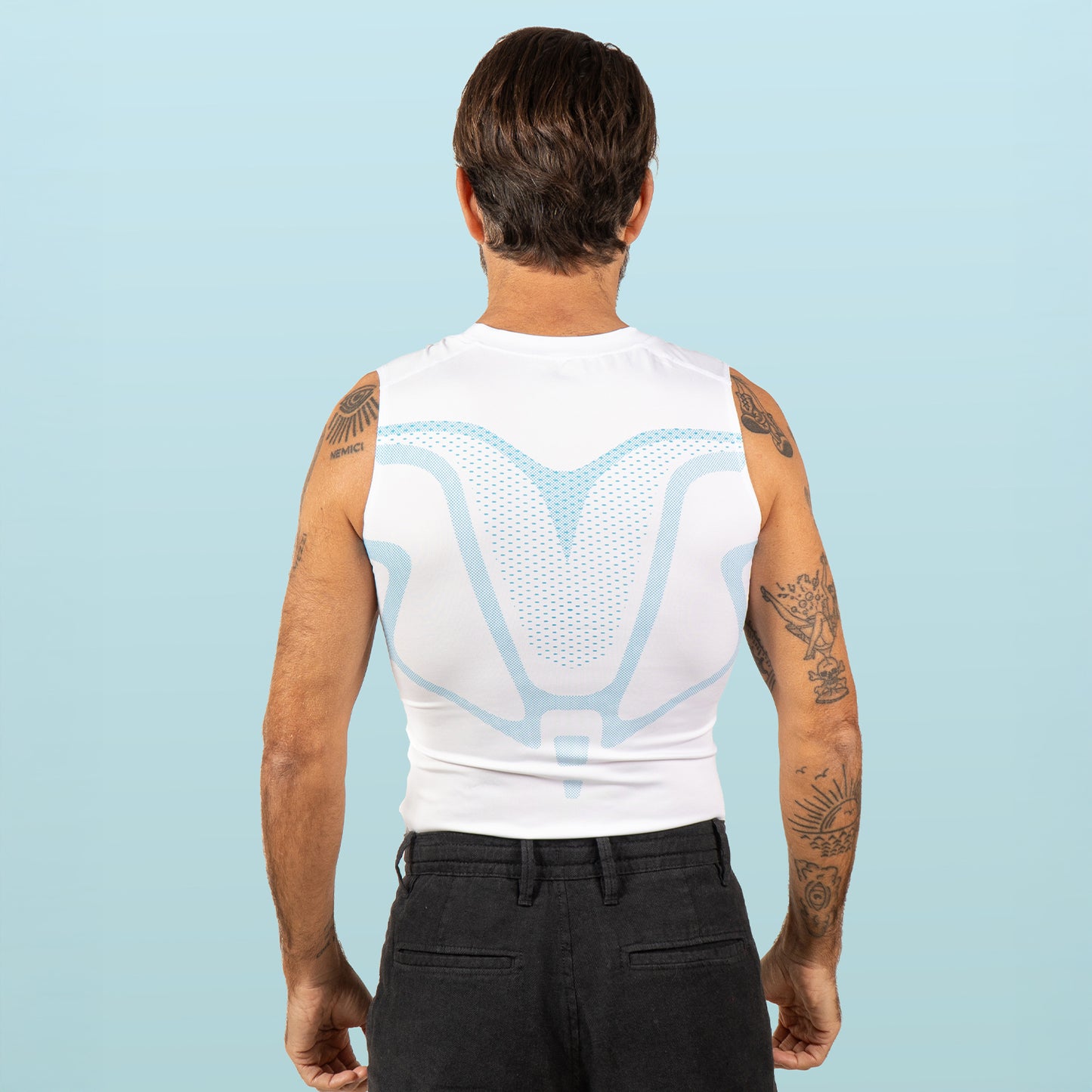
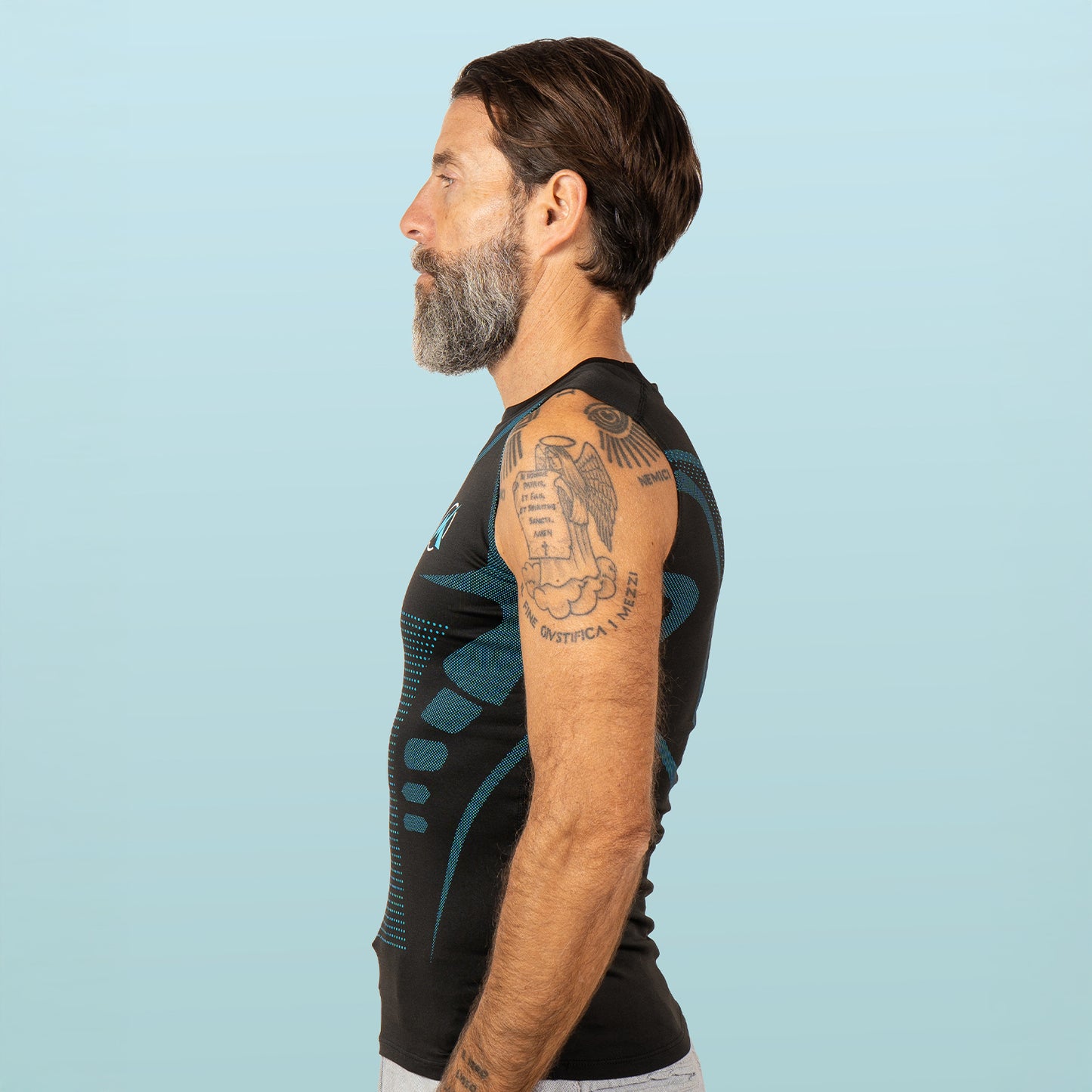
This is where Maynox lives in the stack. The first four levers are skills. The fifth is environmental design — making the upright frame the path of least resistance instead of the path you have to choose every time.
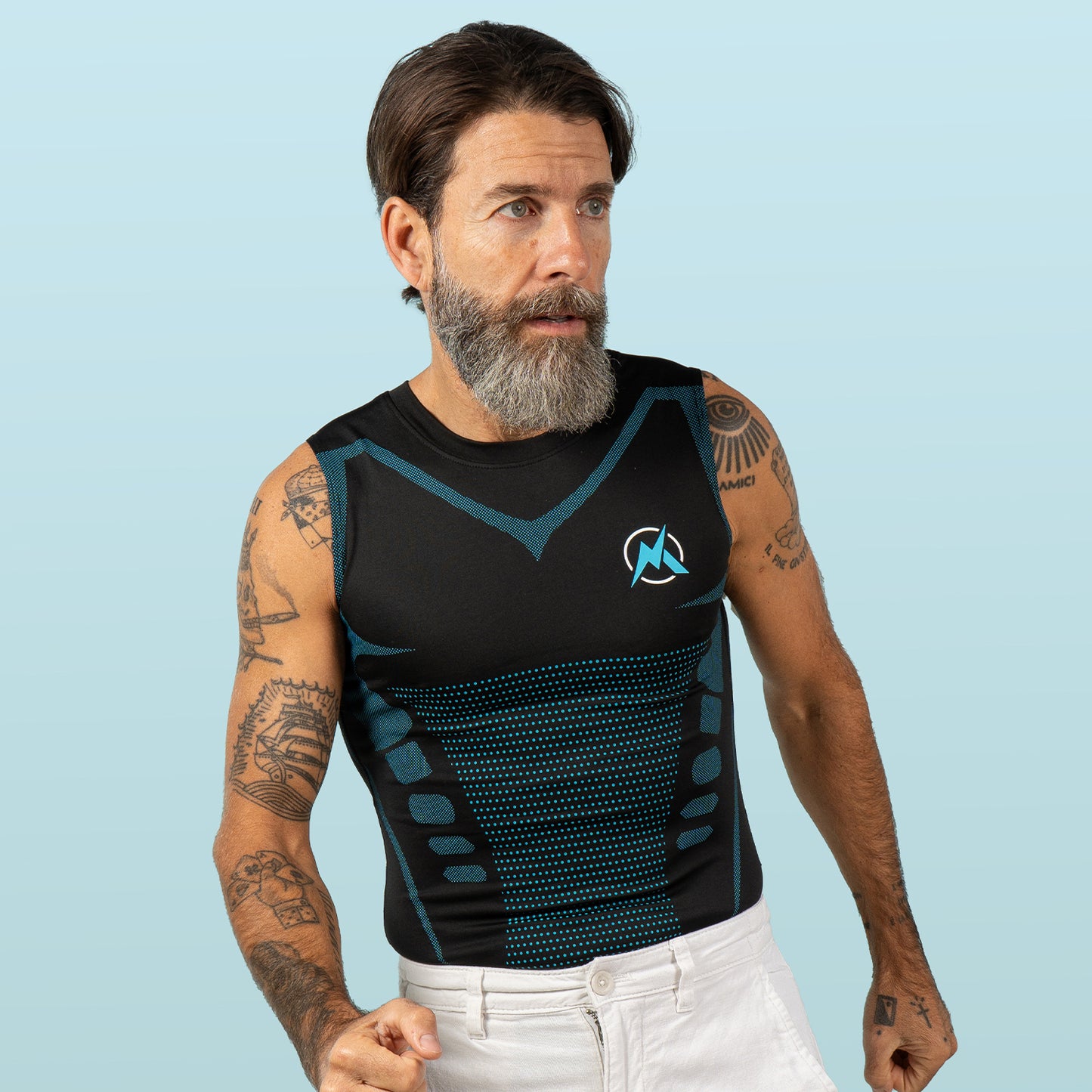
A compressive base layer pulls the shoulders back and the torso in. It's not magic, and it's not a posture cure — but the peer-reviewed evidence on compression garments is clear on what they do well.
Brown et al., in their 2022 Sports Medicine review, summarized the literature: well-fitted compression garments increase proprioceptive feedback — the body's awareness of where it is in space. That feedback is exactly what a slumping shoulder is missing. The garment doesn't force you upright. It reminds you you're slumping the moment you start to slump, and the correction happens before you fall back into the old pattern.
A 31-study pooled review by Wei et al. (2025) reached similar conclusions on compression as a recovery and support tool. Both reviews are honest about what compression doesn't do: it doesn't melt fat, it doesn't permanently cure kyphosis, and it doesn't replace the strengthening work.
What it does — and this is the only thing that matters for the walk — is hold the frame steady for the 90 minutes after you put it on, which is exactly the window where the posture-cadence-gaze-hands cues need to become reflexes.
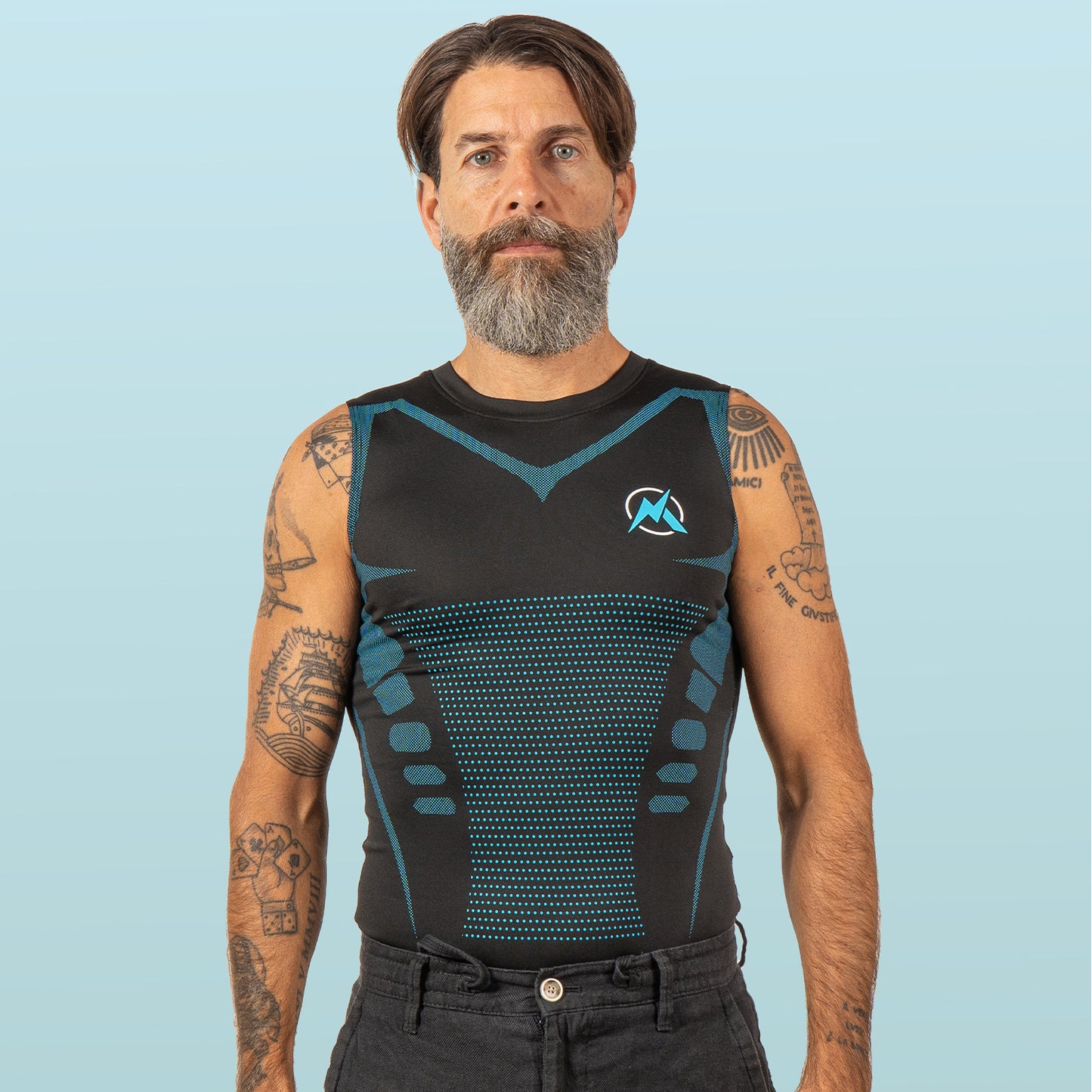
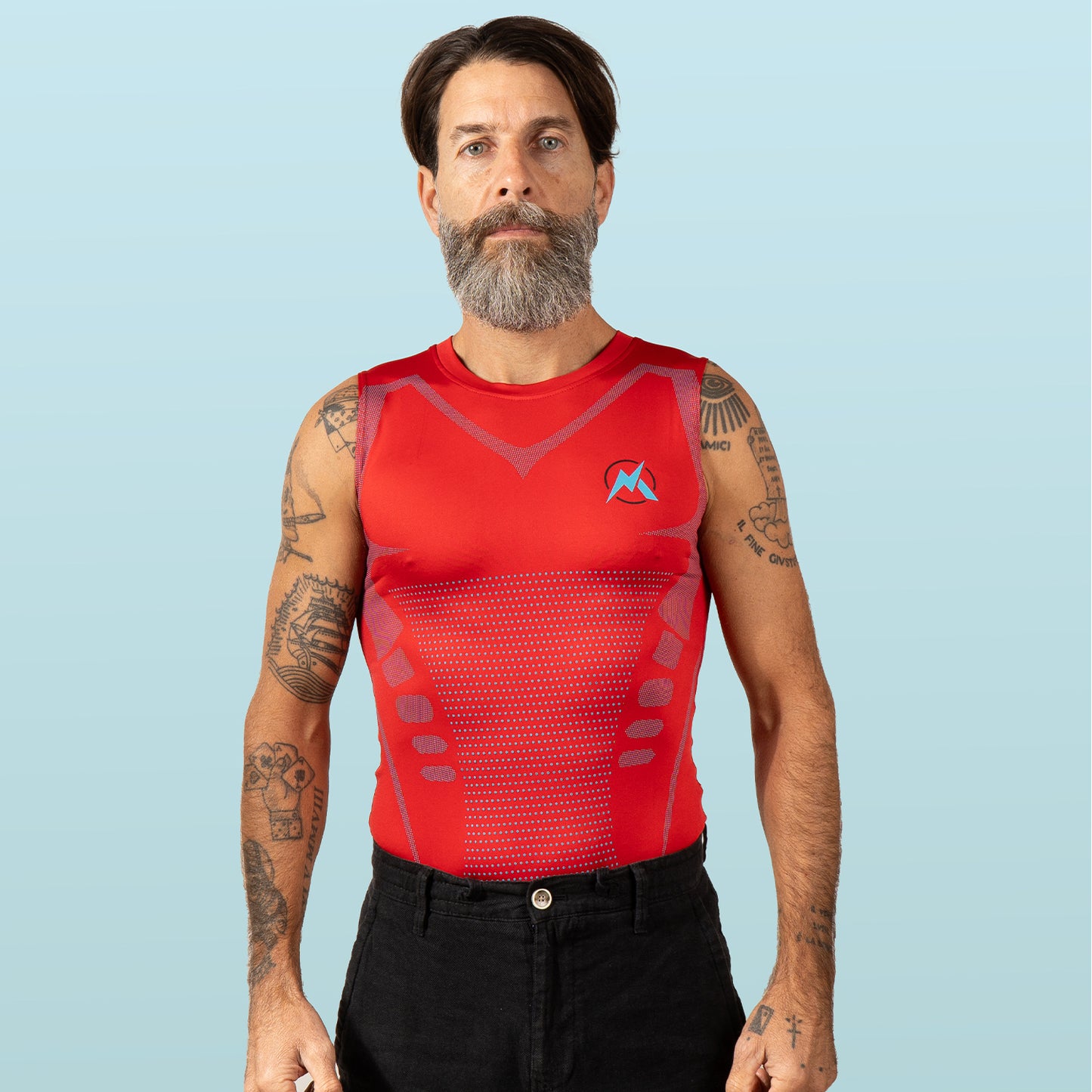
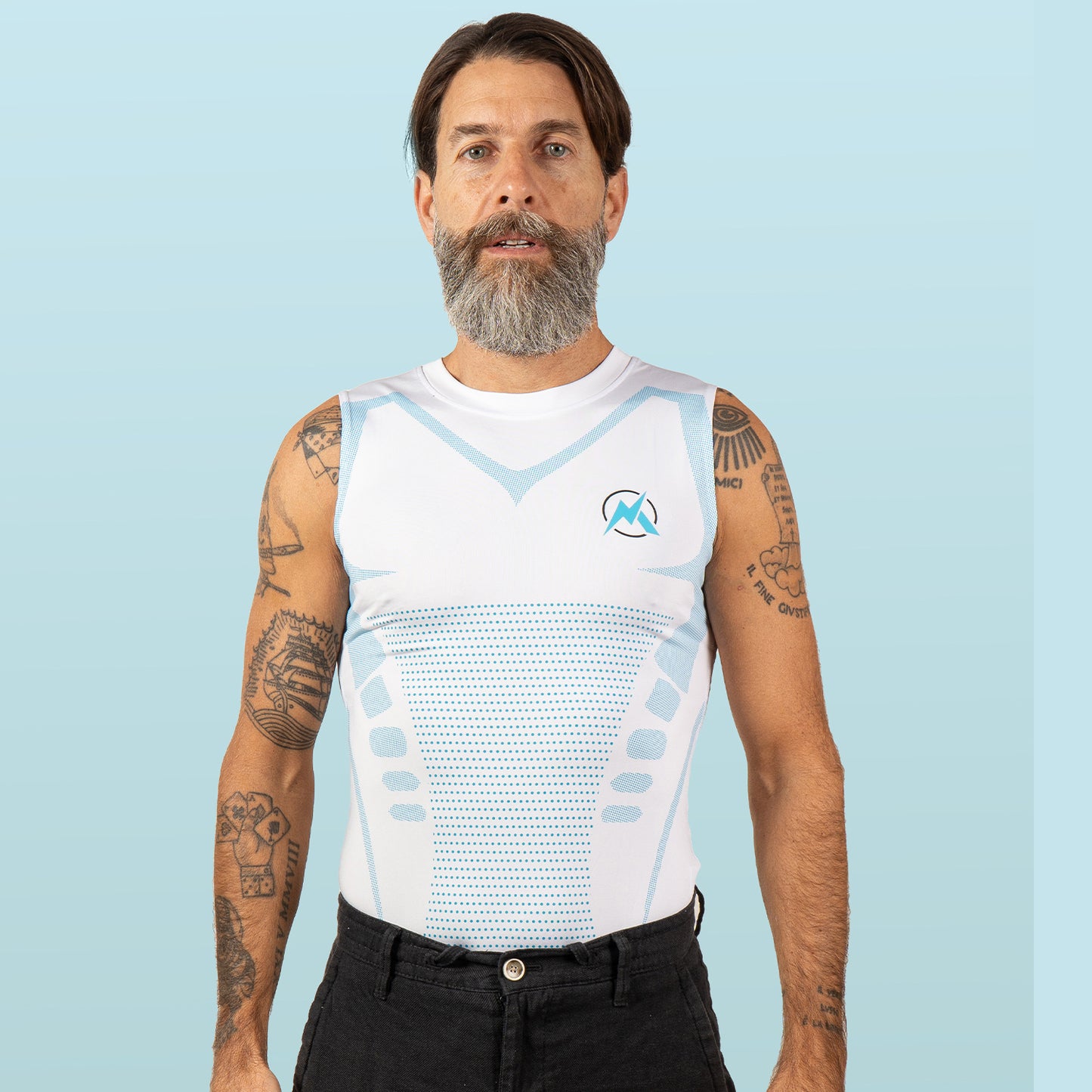
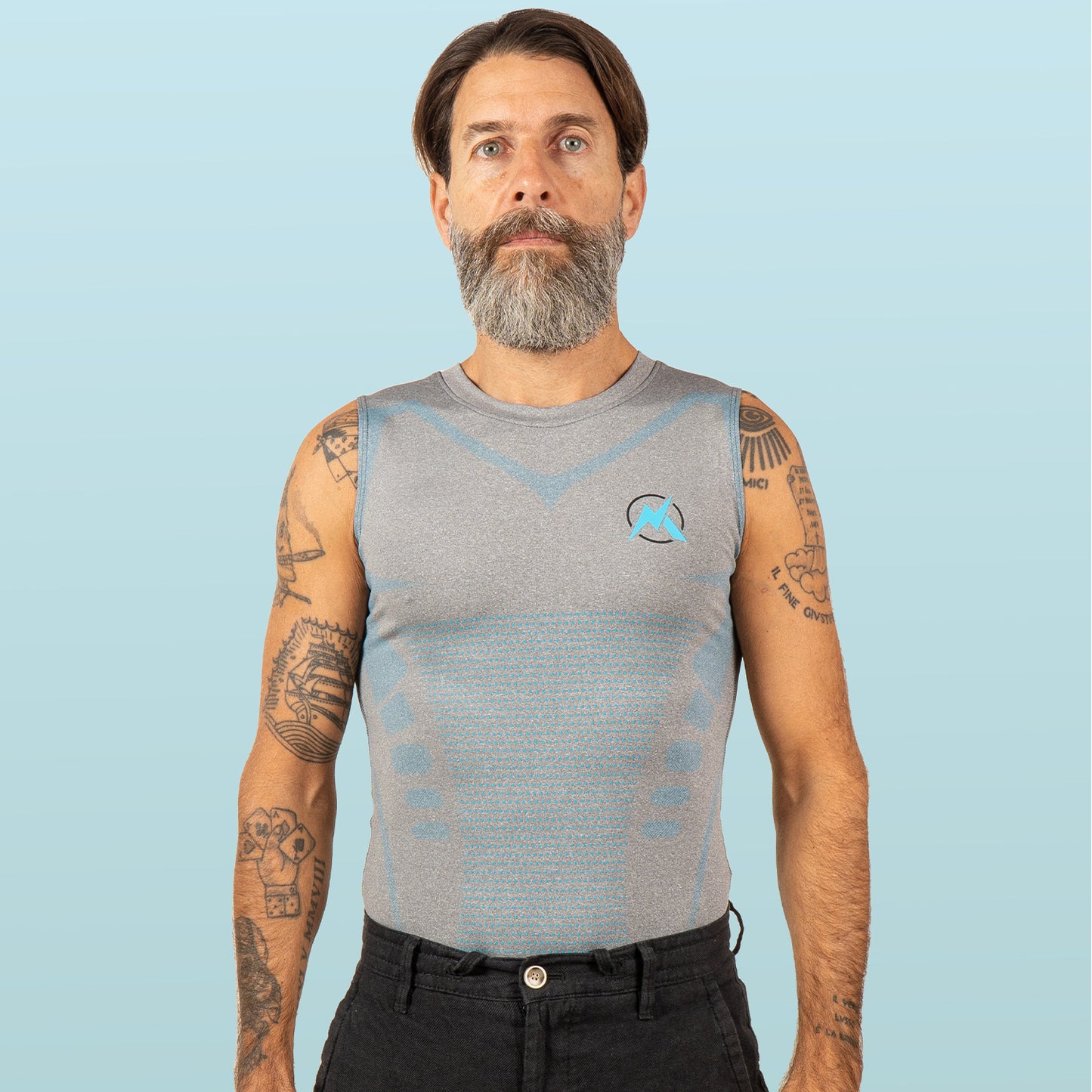
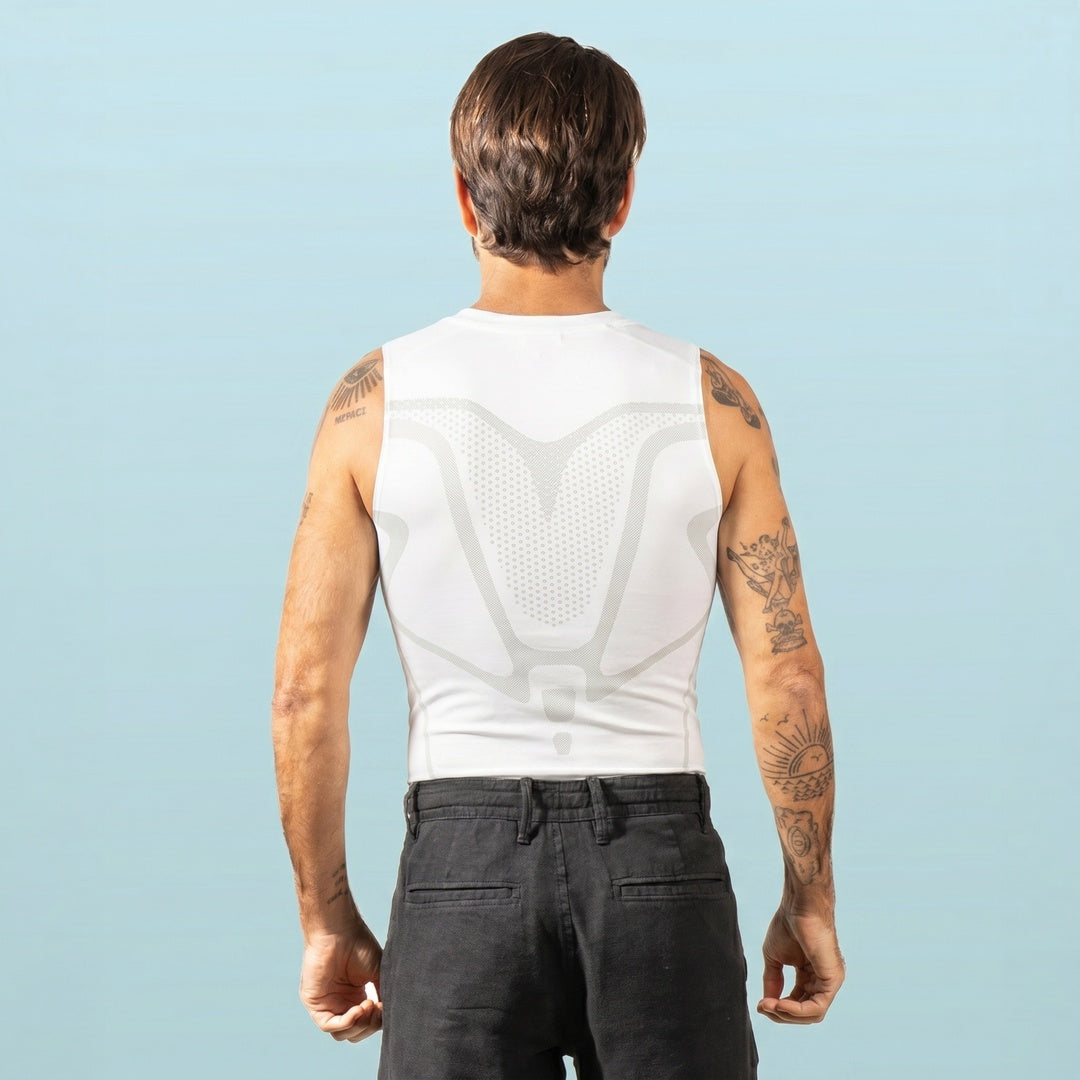
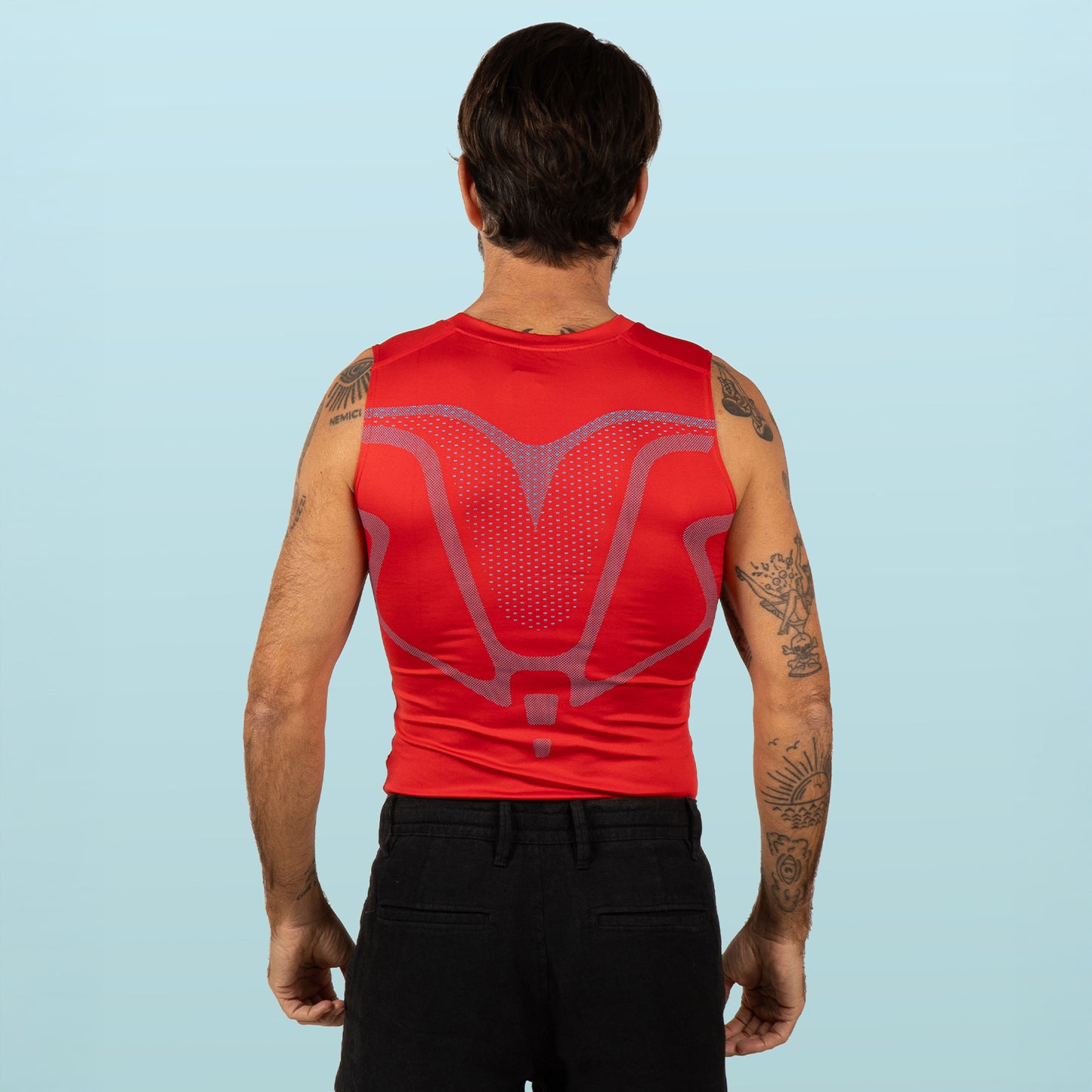
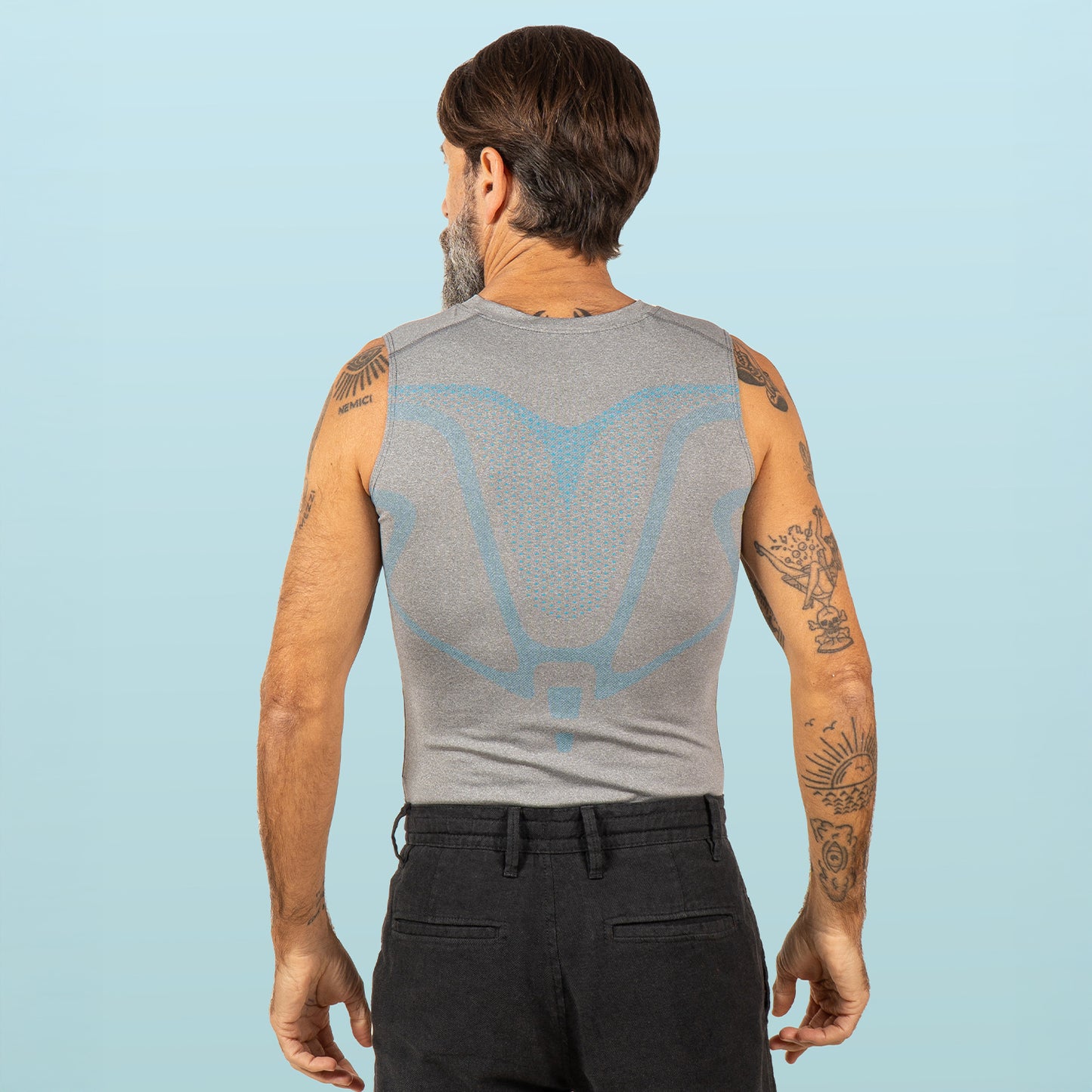
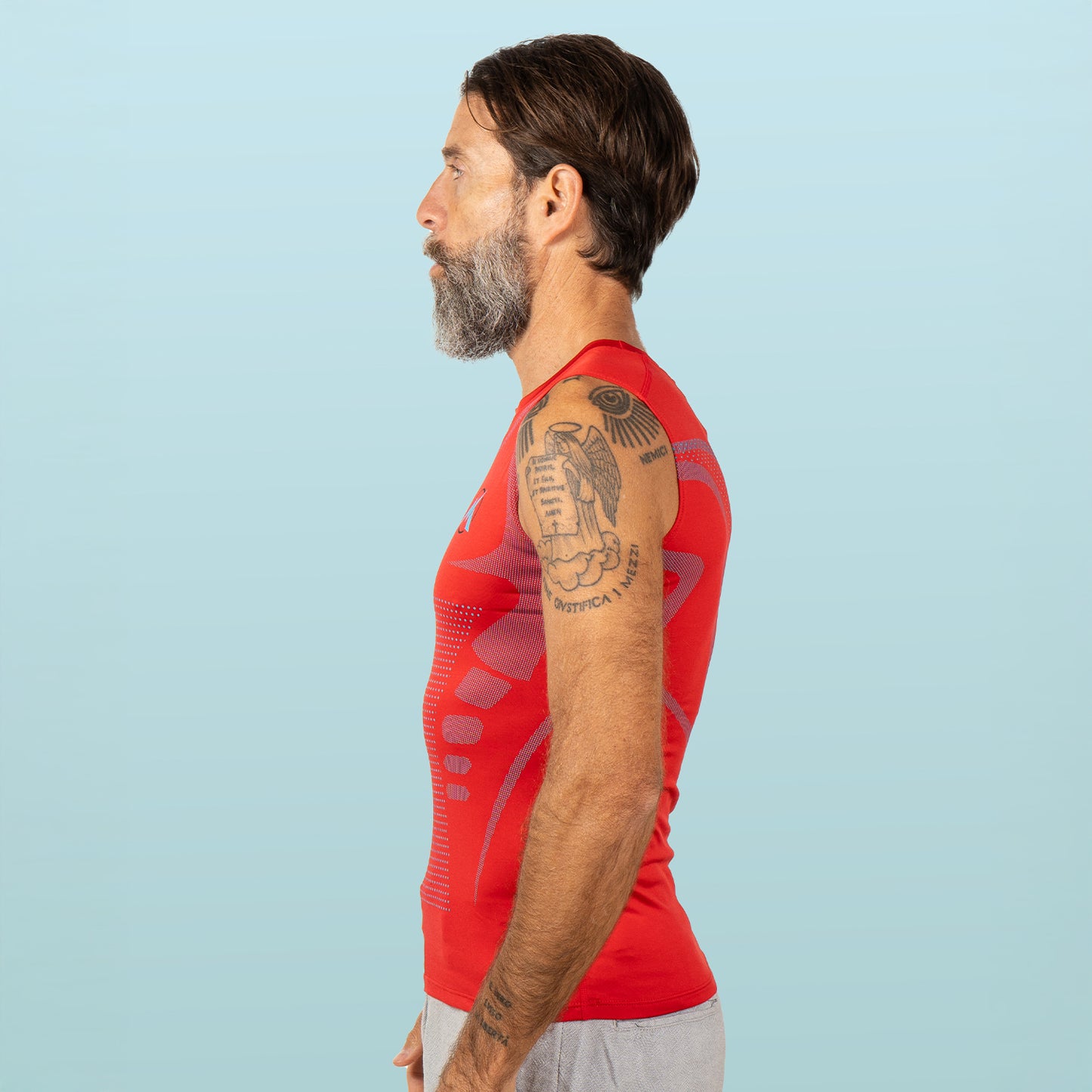
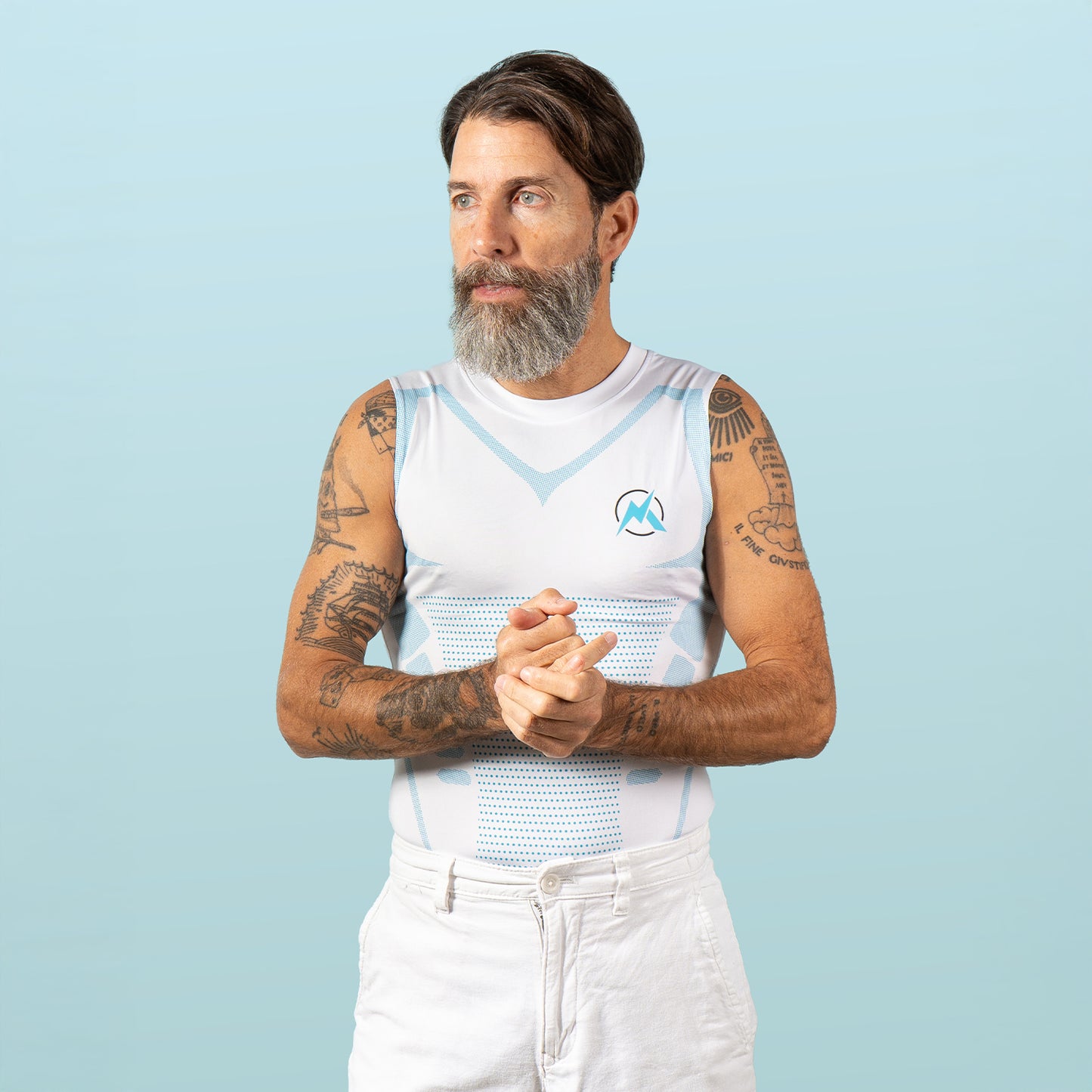
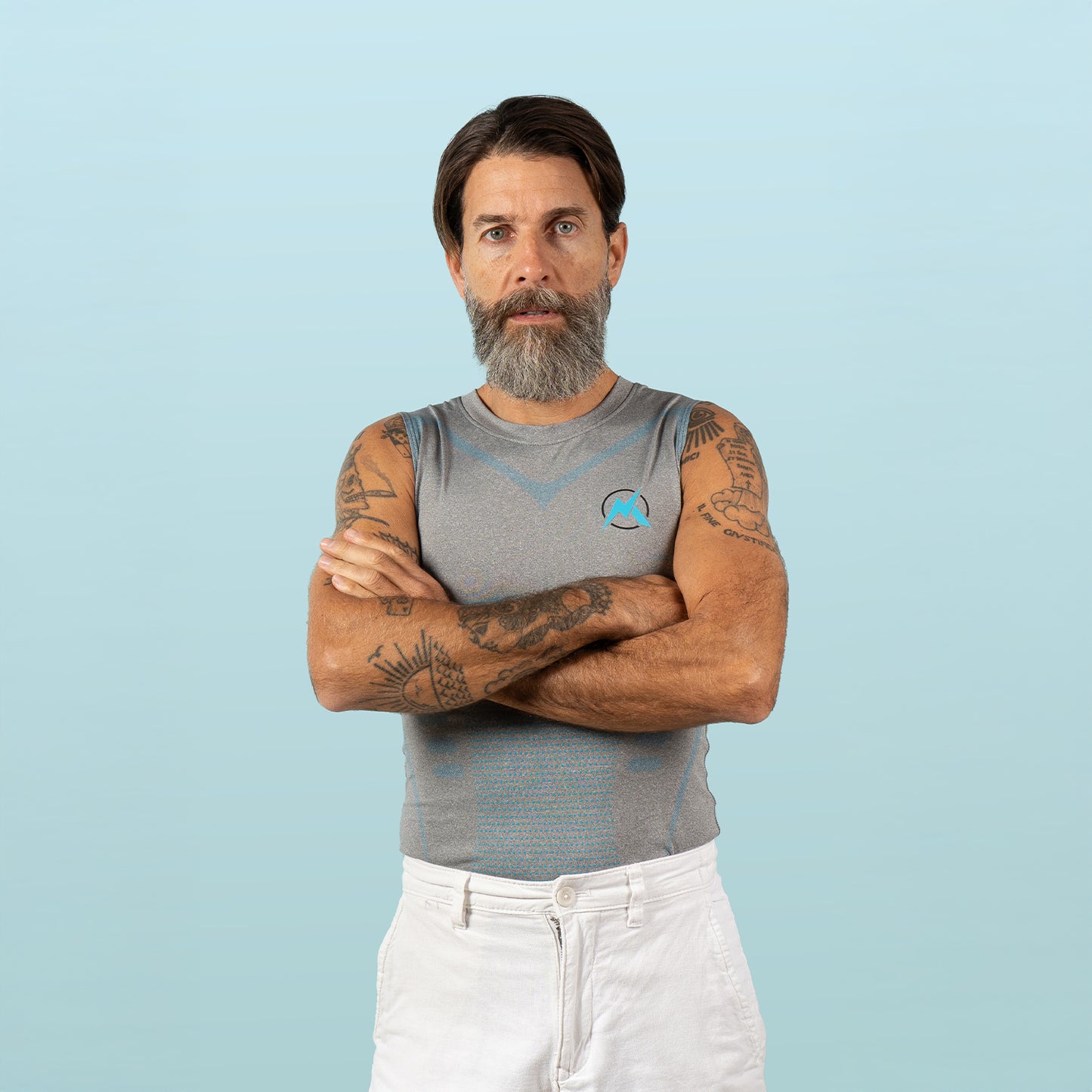
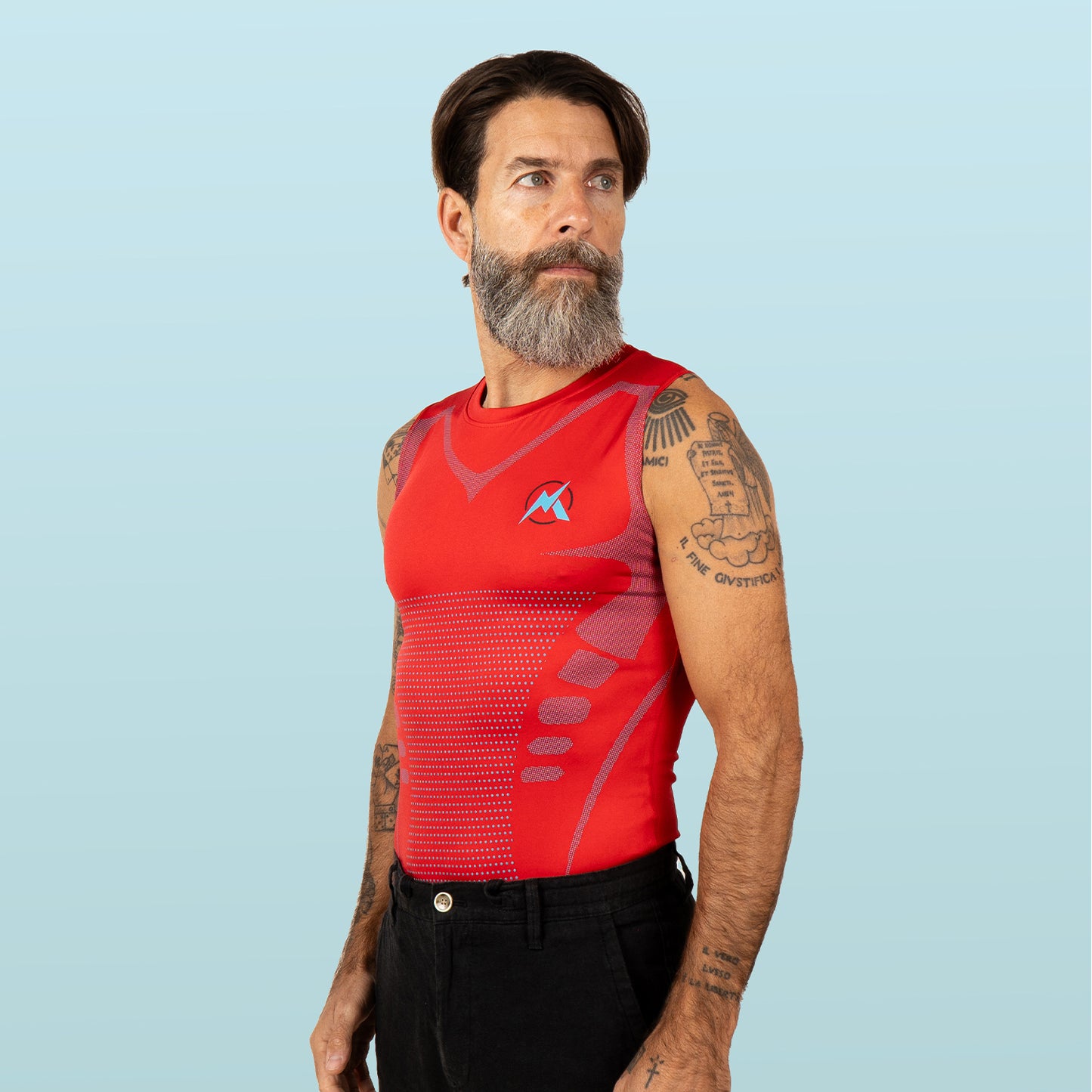
That's why VitaBoost is built the way it is — jet-black, sleeveless, medium-compression, designed to disappear under a polo or a button-down. Put it on at 7 a.m., and the upright cue runs in the background through your 9 a.m. all-hands, your 12:30 lunch walk, and your 4 p.m. school-pickup.

Get the base layer — Buy 1 Get 1 Free at $15
The 4-week practice protocol that makes it stick
Knowing the five levers and walking with them are two different problems. The reason "just stand up straight" never sticks is the same reason "just be confident" never sticks: it's a willpower ask, not a habit design.
Here's the protocol that converts the cues into reflexes without you thinking about it.
Week 1 — Posture + gaze only.
Two times a day, pick a 5-minute "anchor walk." Walking from the parking lot to the office in the morning. Walking the dog at lunch. Run the string-cue + horizon-gaze, nothing else. Don't worry about cadence, hands, or anything fancy. Two cues, twice a day, for seven days.
Week 2 — Add cadence.
Same anchor walks. Same posture and gaze cues. Now add 110-120 steps per minute. Count for 15 seconds at the start of each walk to calibrate. Use a song if it helps. Notice that hitting cadence feels effortful for the first 30 seconds and natural by minute 2.
Week 3 — Add hands.
Same anchor walks. Add the hands-visible, natural-swing rule. For the first time, you're stacking four levers at once. Expect it to feel mechanical on day 1 and reflexive by day 5.
Week 4 — Add the base layer and apply outside the anchor walks.
Wear the base layer all day. Run the full stack — posture, cadence, gaze, hands, frame — on every walk you take in public: into a restaurant, into a meeting, across a parking lot. By the end of week 4, the upright walk is the default and the slumped walk feels weird.
Total active practice time: under 75 minutes across the month. That's the entire investment.
What doesn't work (and why "fake it till you make it" fails after 40)
A few honest words on the approaches you can skip:
- The puffed-chest "alpha walk." Reads as performance, not presence. The avatar your audience has seen a thousand times. Skip.
- The "head up so high your nose points at the ceiling" cue. It hyperextends the neck, blocks peripheral vision, and looks defensive. Look at the horizon, not the sky.
- The exaggerated shoulder swag. A small natural shoulder rotation in time with the gait is fine. A choreographed swagger from a music video looks like you're trying. The walks that read most confident are subtle, not theatrical.
- "Fake it till you make it" without fixing the hardware. This is why it fails after 40. If your shoulders are physically rolled forward and your hip flexors are physically tight from sitting, no amount of mental reframing produces an upright walk. You need the hardware fix. That's the entire premise of the 5-lever stack.
If you're carrying a stubborn slump that won't unwind even with the practice, check the broader 4-layer posture plan — it covers the deeper mobility and strength work that supports everything in this article. For the daily habit side, the stand-up-straight habit stack is the companion piece, and if you want the wider context on confidence in your 40s and 50s, the confidence playbook for men over 50 goes deeper on the mental side.
The bottom line
Walking with confidence after 40 isn't a vibe. It's a stack: posture, cadence, gaze, hands, frame. Pull the levers in order, give them four weeks of light practice, and the walk re-installs as a default — not a performance.
You won't feel like a different person. You'll feel like the version of yourself that's been buried under a desk job, a phone, and ten years of slow rounding. That version was always there. The 5-lever stack just gives him the room to walk back into.
Lock in the frame — VitaBoost, Buy 1 Get 1 Free at $15
Frequently asked questions
How do you walk with confidence as a man?
Stack five levers: upright posture (ears over shoulders), cadence of 110-120 steps per minute, gaze fixed at the horizon, hands visible with a natural swing, and a base layer holding the frame steady. Skip any one and the walk reads off.
What does a confident walk look like?
A slightly elongated, unhurried stride at roughly two steps per second. Shoulders back and down without being puffed. Chin parallel to the ground. Eyes at the horizon, not the pavement. Hands visible, lightly swinging in opposition to the legs.
Why does my walk look weak?
Usually it's three things together: forward head posture from desk-and-phone life, rolled shoulders from chronic sitting, and a cadence under 100 steps per minute that reads as shuffling. Fix the head and shoulder position first. The cadence follows.
Does walking with confidence make you more attractive?
The research on body language and perceived status is consistent: upright posture, open chest, steady gait, and forward gaze read as higher status and higher confidence — and those signals correlate with perceived attractiveness across most cross-cultural studies. It's signal, not magic.
How long does it take to fix the way you walk?
Most men feel the difference inside one week of focused practice. Measurable posture change — the kind your spouse or coworker notices — typically takes 8 to 12 weeks per Harvard Health's posture-rehabilitation guidance. The 4-week protocol above gets the walk itself reflexive; the deep musculoskeletal change keeps stacking after that.
Sources
- NIH News in Health — Getting It Straight (posture facts and prevalence)
- Cleveland Clinic Health Essentials — Tech Neck (head weight at forward tilt)
- Tudor-Locke et al., CADENCE-Adults 41-60 — Walking cadence and intensity
- Harvard Health Publishing — Is it too late to save your posture?
- Brown F. et al., Sports Medicine 2022 — Compression garment review (proprioceptive feedback)
- Wei et al., Life 2025 — Compression garment 31-study pooled review
Disclaimer: This article is for general information. VitaBoost is a compression apparel garment, not a medical device, and is not intended to diagnose, treat, cure, or prevent any condition. If you have a back or musculoskeletal condition, consult a qualified physiotherapist or physician before starting a posture-correction program.