By Owen Blot · Founder, Maynox · Last updated June 18, 2026
- Reason 1: Your body composition is quietly shifting
- Reason 2: New fat cells are forming inside you (Science 2025)
- Reason 3: Your skeleton is changing shape
- The lever nobody mentions: posture and pelvic tilt
- The honest ROI-by-speed fix stack
- Should you buy bigger pants or hold the line?
- What doesn't work (skip these)
- Frequently asked questions
You step into the same chinos you wore to your daughter's graduation two summers ago. The waistband presses your skin. The button needs a small suck-in to close. The scale says you're three pounds heavier than that day, max. So why does the math feel like fifteen?
You're not imagining it. Pants don't fit after 45 because three biological things shift at once, and only one of them is "you ate more cake." Most blogs cover that one and stop. The other two are why your wardrobe is quietly betraying you.
This piece walks through all three — what's actually happening inside your body — and then gives you the honest ROI-by-speed fix stack. We're not promising you'll fit your old jeans by Friday. We're promising you'll know what to actually work on, in what order, and what to skip.
Reason 1: Your body composition is quietly shifting
This is the one everyone names but few explain properly.
Between roughly age 30 and age 60, men lose 3–8% of their muscle mass per decade due to a process called sarcopenia, according to research published by the NIH. Muscle is dense. Fat is fluffy. A pound of muscle takes up about 18% less space than a pound of fat.
Translate that to your waistline. If you weighed 195 pounds at 38 with reasonable muscle, and you weigh 195 pounds at 48 with five pounds less muscle and five pounds more fat — your scale didn't move, but your waist did. By an inch, sometimes more. That inch is what your pants are reporting.
Add to that the slow drift of testosterone — Mayo Clinic puts the decline at about 1% per year after 30. Lower testosterone tilts the body toward storing fat in the belly rather than the limbs.
So even at the same weight, you are not the same shape. Your chinos are honest. The scale is the one lying by omission.
Reason 2: New fat cells are forming inside you (Science 2025)
Here's the one almost no listicle mentions, and it's the most interesting biology of the lot.
A 2025 study published in Science identified a previously unknown fat cell precursor — researchers named it CP-A (committed preadipocyte, age-enriched) — that emerges specifically during middle age. These cells have a remarkable ability to multiply and mature into new fat cells, specifically in the deep belly region.
Translation: the dominant view used to be that adults have a fixed number of fat cells, and they just inflate or deflate. The 2025 finding adds a wrinkle. From your 40s onward, your body starts producing brand-new fat cells in your gut. Not just expanding existing ones. Generating more.
That matters because most of these new cells live in your visceral fat — the deeper layer that sits behind your abdominal wall, around your organs. According to Cleveland Clinic, visceral fat is metabolically active and pushes the abdominal wall outward from the inside. You can't pinch it. You can't crunch it. You can only outwait it with lifestyle work.
A waist that measures 40 inches or more in a man indicates excess visceral fat, per Cleveland Clinic. The 2025 research now explains why that number creeps up even when the rest of you doesn't.
Reason 3: Your skeleton is changing shape
This one sounds like it can't possibly be true. It is.
A study tracking pelvic measurements across a 1,200-person cohort found that the pelvis continues to widen well into our 70s, long after the rest of the skeleton stops growing — ABC News reported on the University of Massachusetts findings: the average pelvis is almost an inch wider in 80-year-olds than in 20-year-olds. That alone translates to about three inches of added waist circumference by the end of a lifetime, regardless of body fat.
It doesn't stop at the pelvis.
The intervertebral discs in your spine slowly lose water content and compress with age. The vertical space in your trunk shrinks. The horizontal space has to go somewhere — and it pushes outward. Same belly volume in a shorter torso reads as a bigger gut.
Add the steady loss of skin elasticity (collagen and elastin), and the abdominal wall holds less firmly. The packaging just doesn't stay as taut.
None of this is "your fault." It's anatomy. But it does mean that even a perfectly disciplined man, eating well and lifting weights, will need slightly different sizing at 55 than he wore at 35. Knowing this stops you from interpreting the size on the tag as a moral grade.
The lever nobody mentions: posture and pelvic tilt
Most belly-fit articles end at "lose weight." Here's the lever they miss.
When you slouch — and over 80% of adults develop postural issues over time, per NIH News in Health — your pelvis tilts forward. Your lower back overarches. Your belly gets pushed visually forward and downward. Your pants now have to clear a larger ellipse than they were cut for.
Stand a slouched 50-year-old in front of a mirror. Ask him to pull his ribs down, tuck his pelvis, and roll his shoulders back. Watch his belly visibly retract about an inch — sometimes two. Same fat, same skeleton, less apparent volume in the waistband.
This is the fastest visual lever you have. It's free. It works the same minute you do it.
The catch is that posture cues don't stick on their own. The mind drifts and the slouch creeps back ten minutes after you correct it. That's why so many men know they should "stand up straight" and never do. (Our guide to building a posture habit that actually sticks covers the behavior-design side of this in depth.)
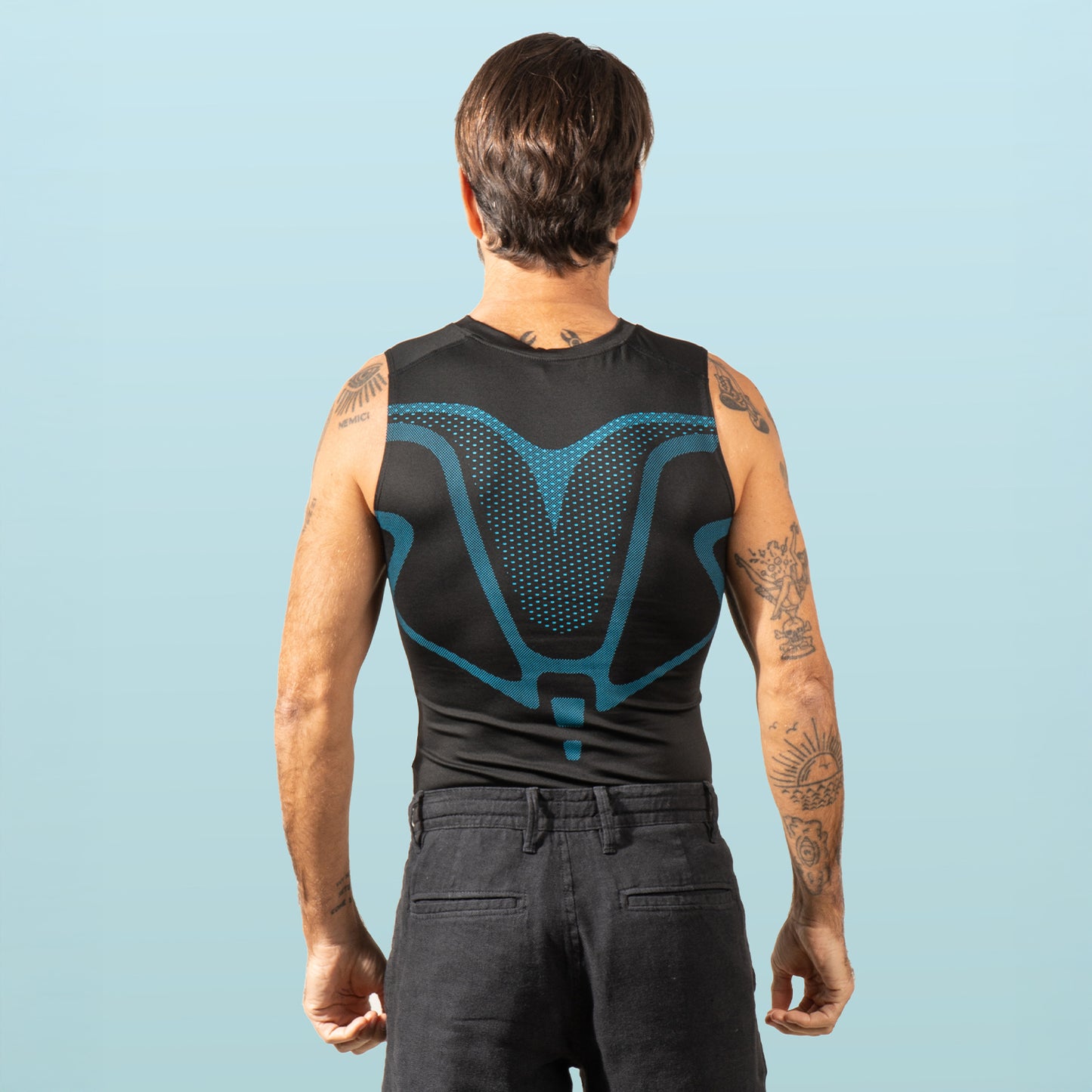
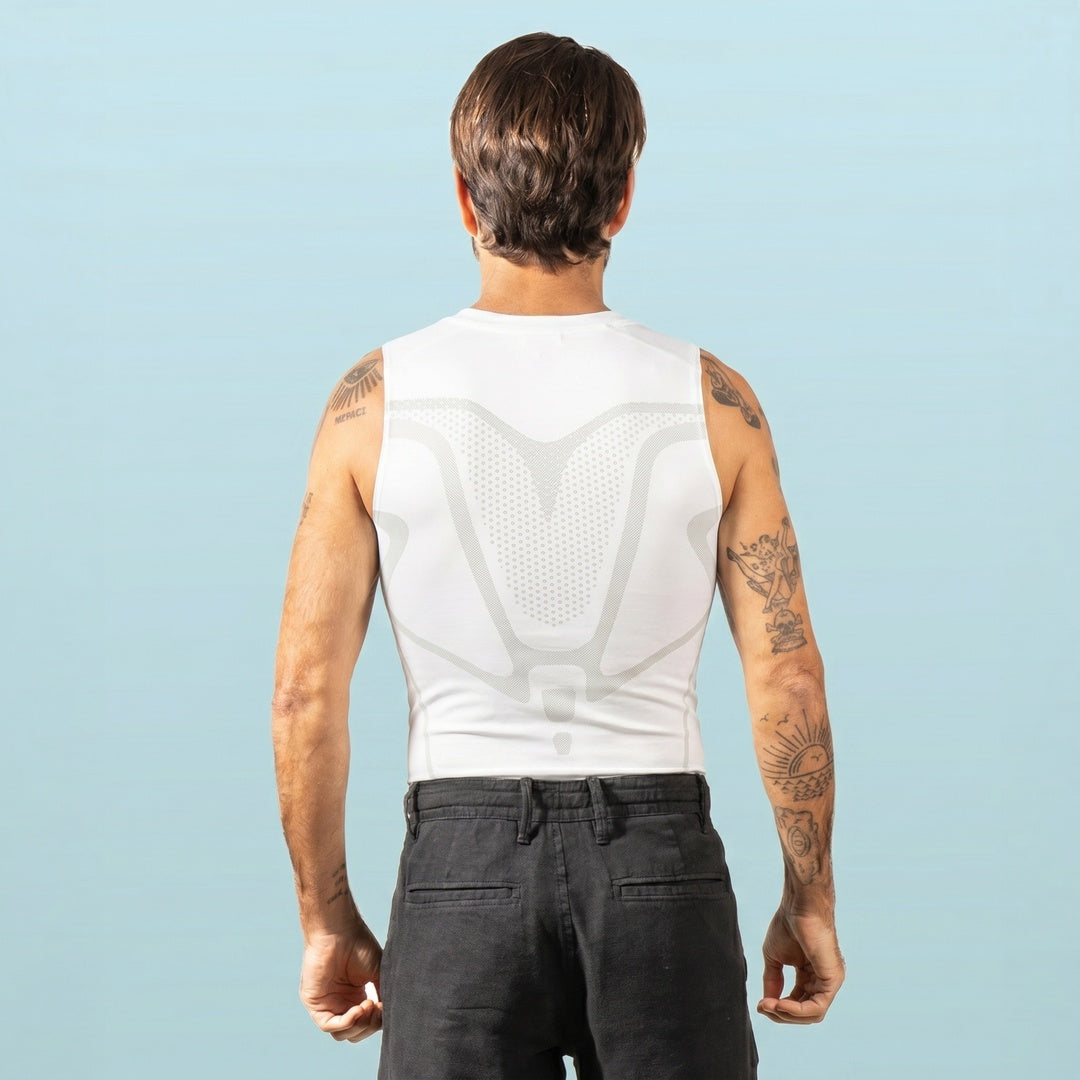
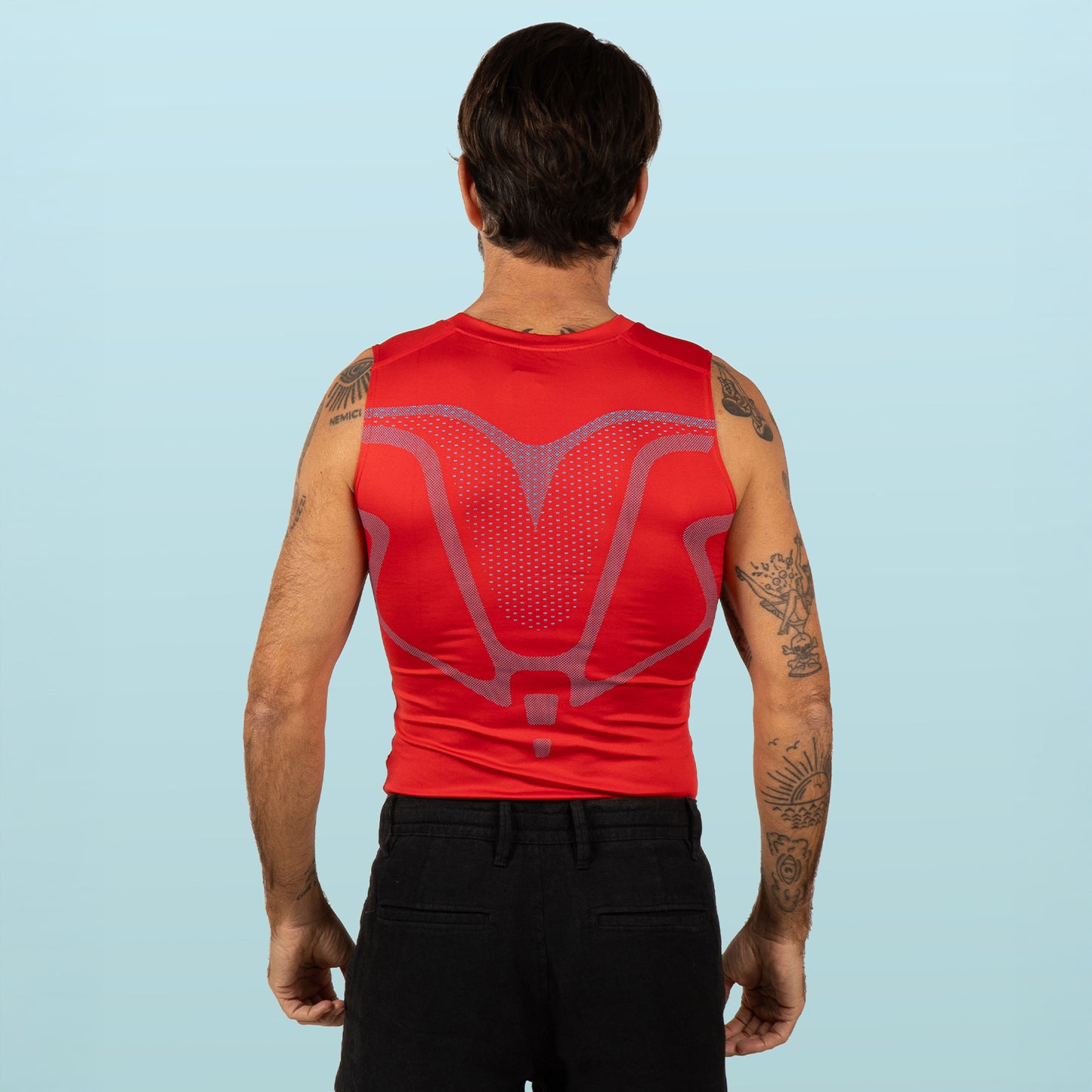
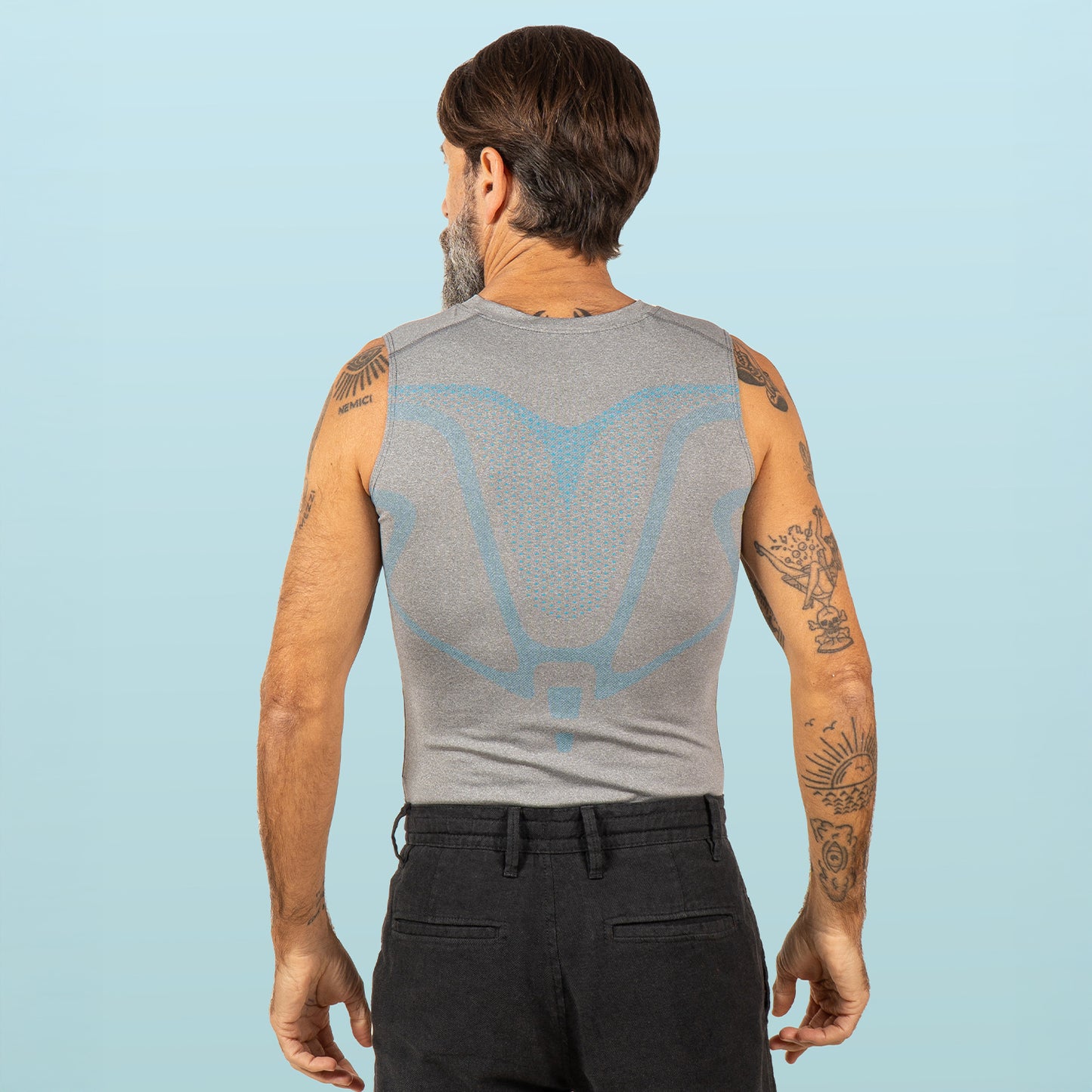
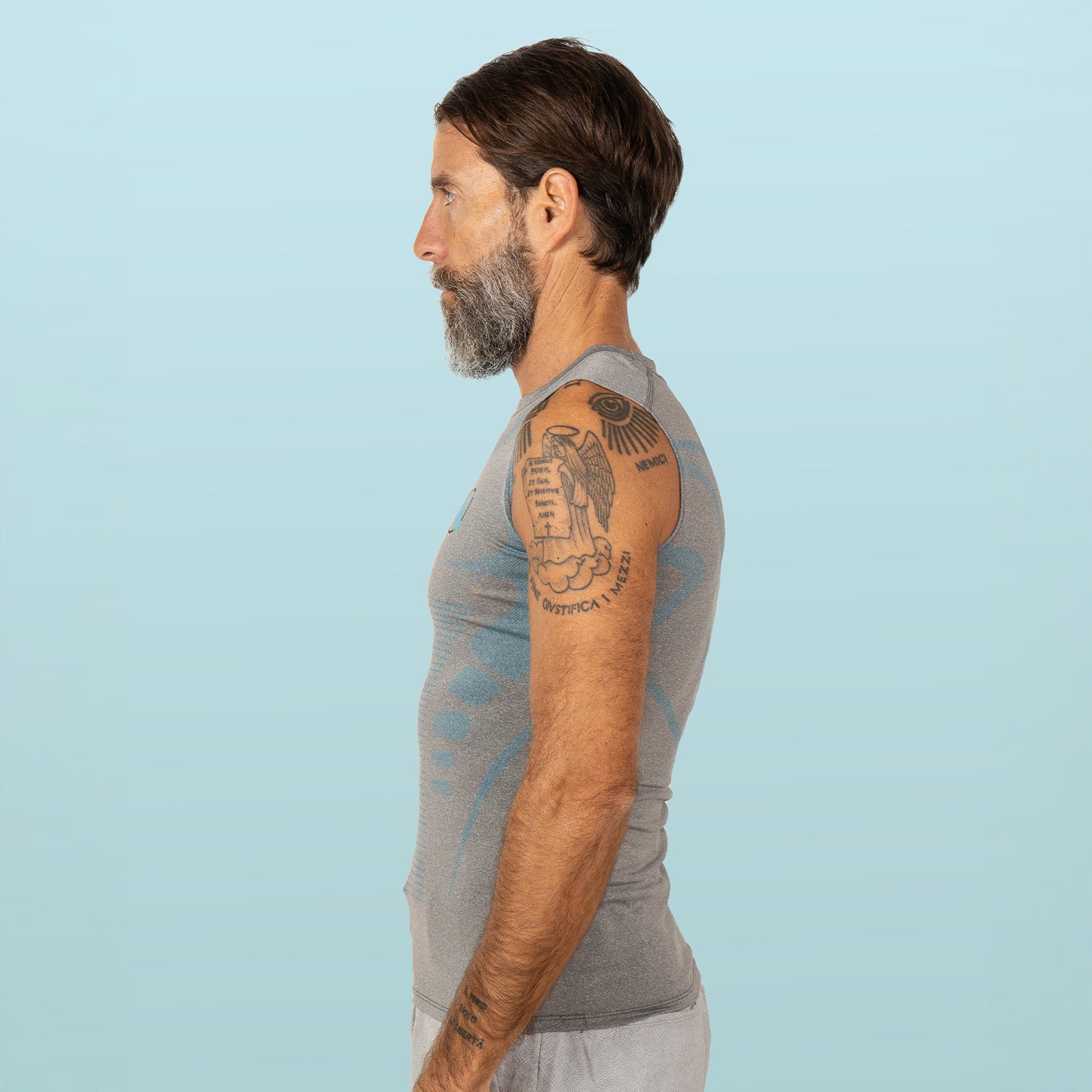
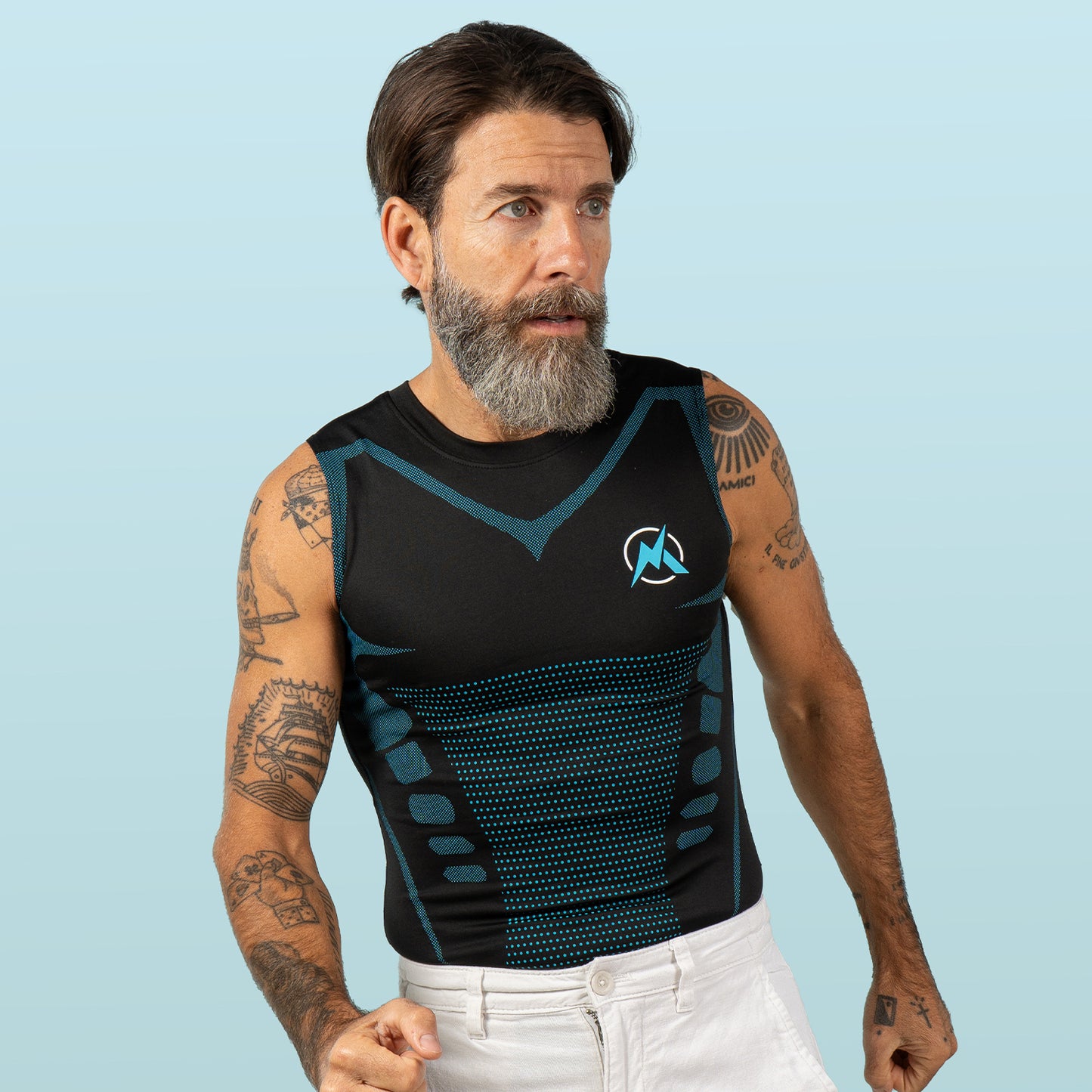
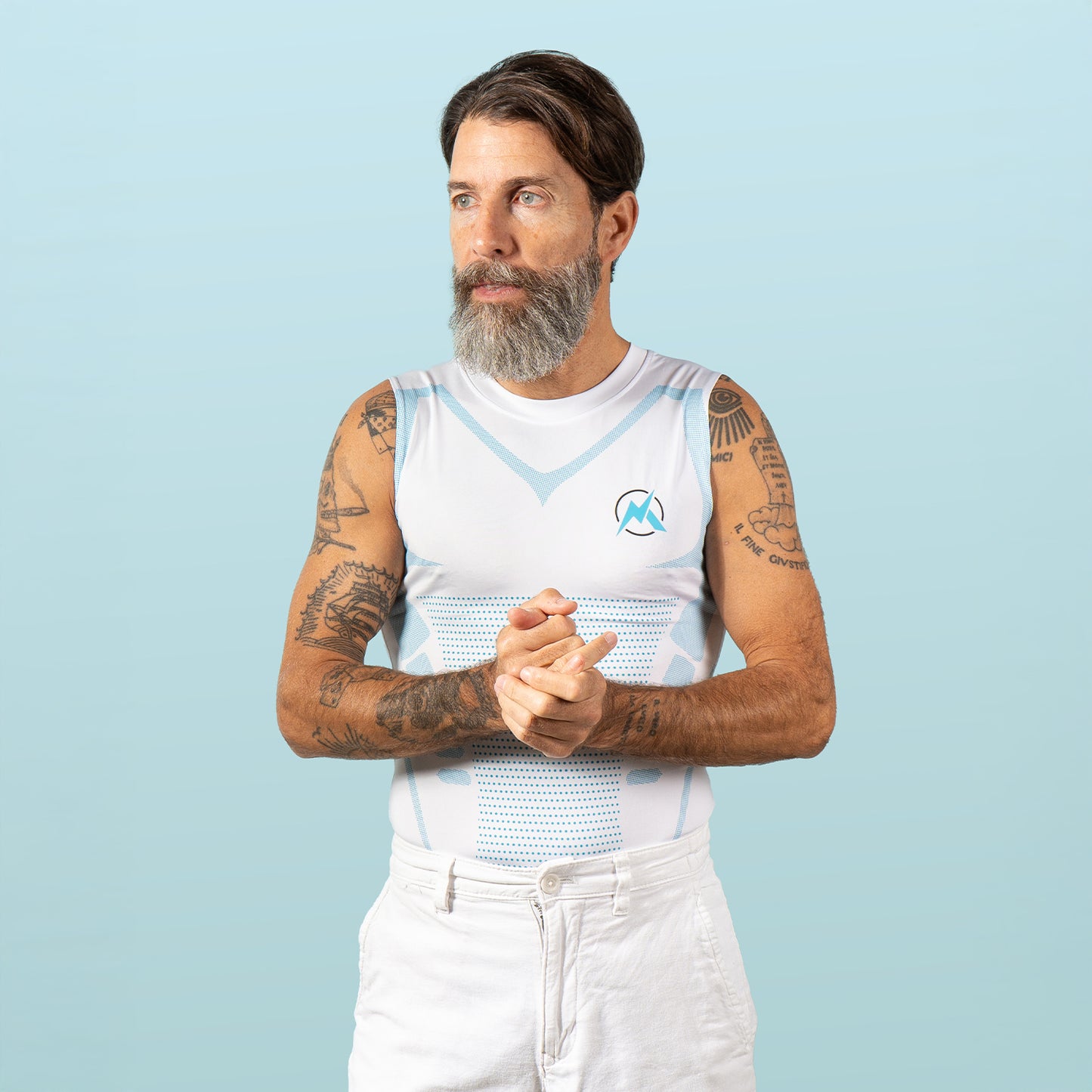
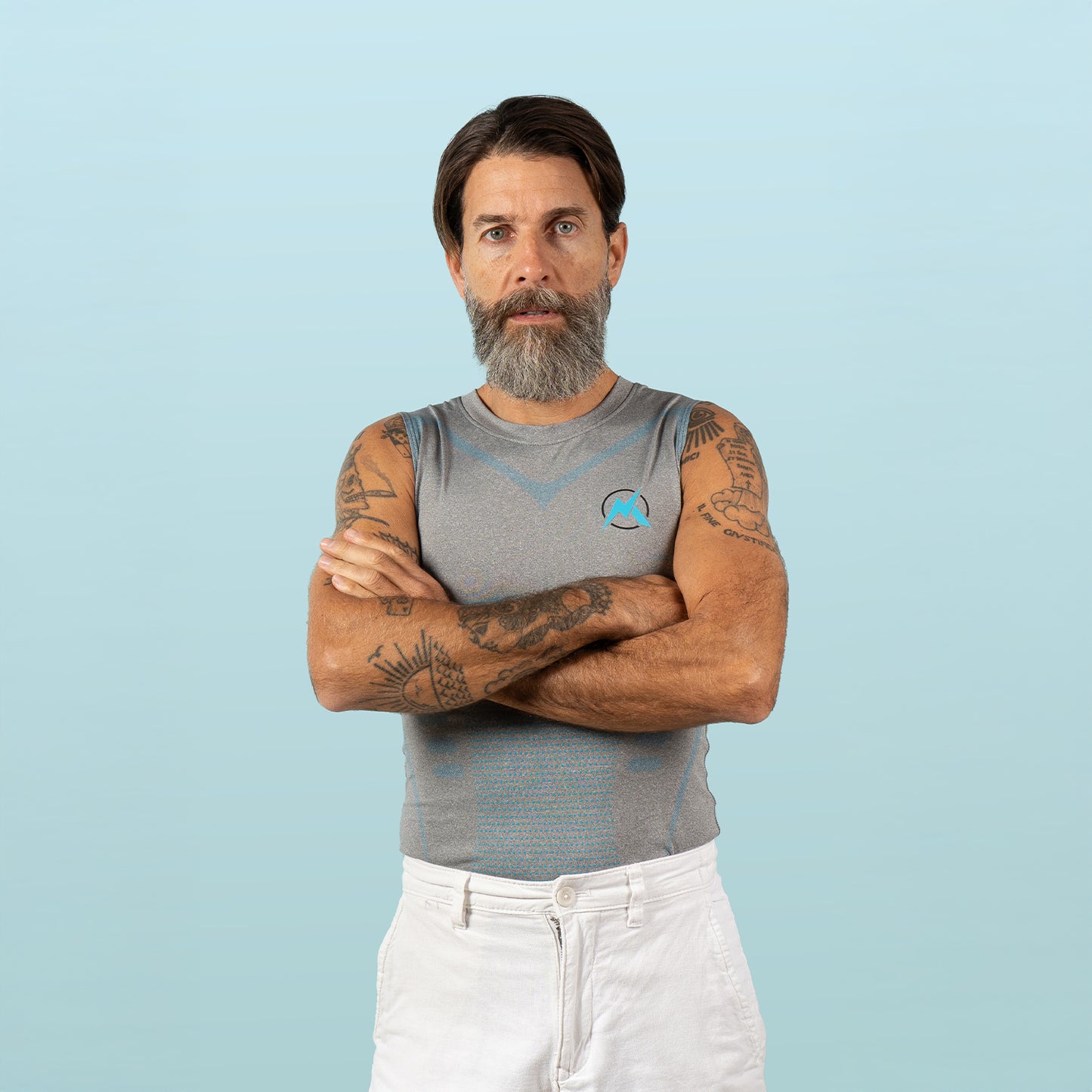
A snug compression base layer under your shirt is a useful all-day cue. A 2022 Sports Medicine review documented proprioceptive feedback — your skin telling your brain where your body is in space — as one of the consistent observed effects of compression garments. It's not magic. It's a tactile reminder you don't have to think about. When the fabric pulls a little against your shoulders, your shoulders find their spot.
The honest ROI-by-speed fix stack
Here's the stack, ordered by how quickly it shows up in the mirror and in the way your pants sit. Not by what sounds impressive. By return on time.
Lever 1 — Today (zero waiting): Fix what your eyes can see right now
- Buy the size that fits today, not the size that fit five years ago. A pair of pants that pinches reads as a bigger gut than a pair that drapes. Most men over 45 are wearing pants one size too small out of denial.
- Mid-rise pants. Always. Low-rise pants under a belly create a roll. Sit them at your natural waistline and the belly's silhouette flattens by an honest inch.
- Tuck. Don't half-tuck. A full tuck plus a base layer underneath gives you a clean vertical line. Our deep-dive on hiding a belly under a dress shirt walks through the mechanics.
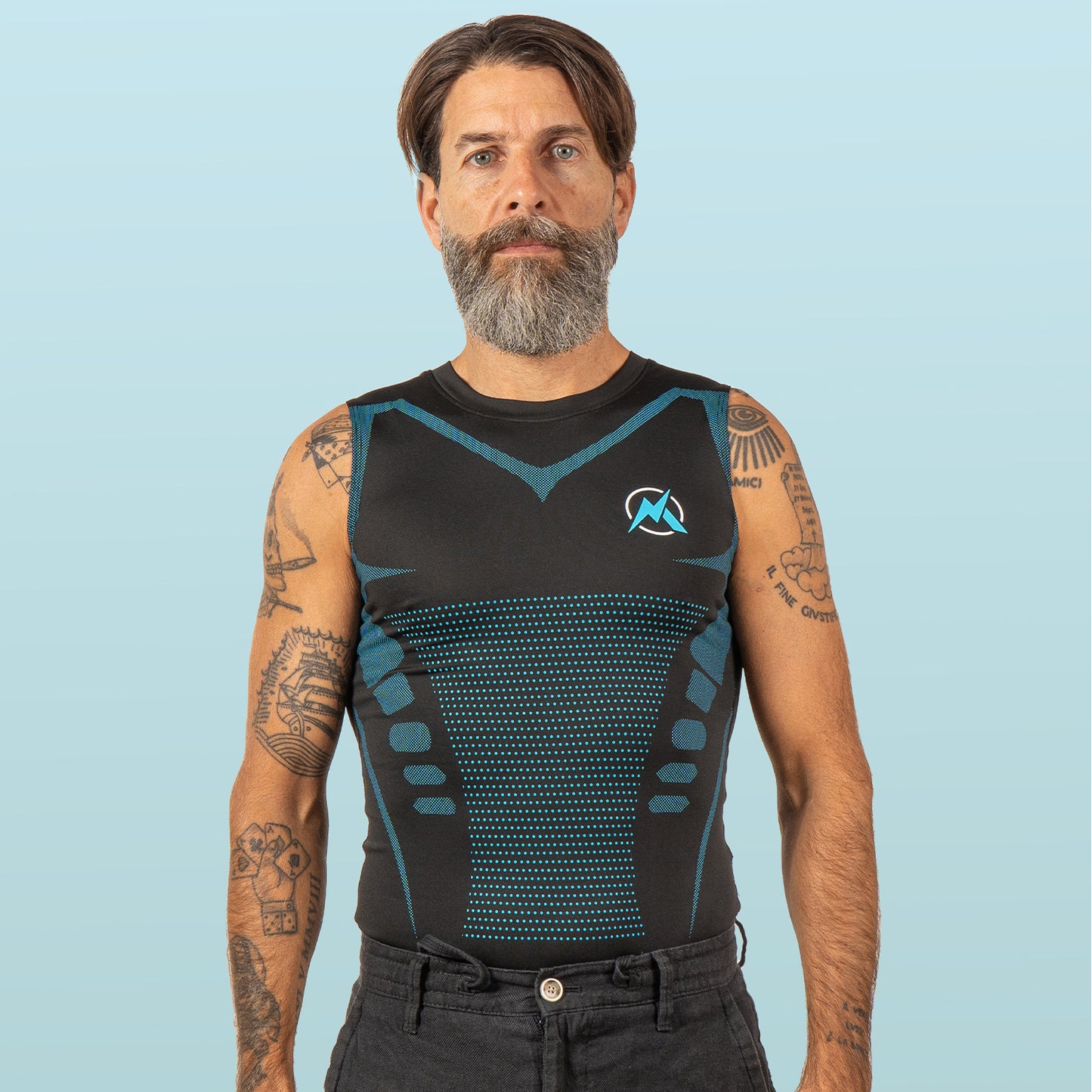
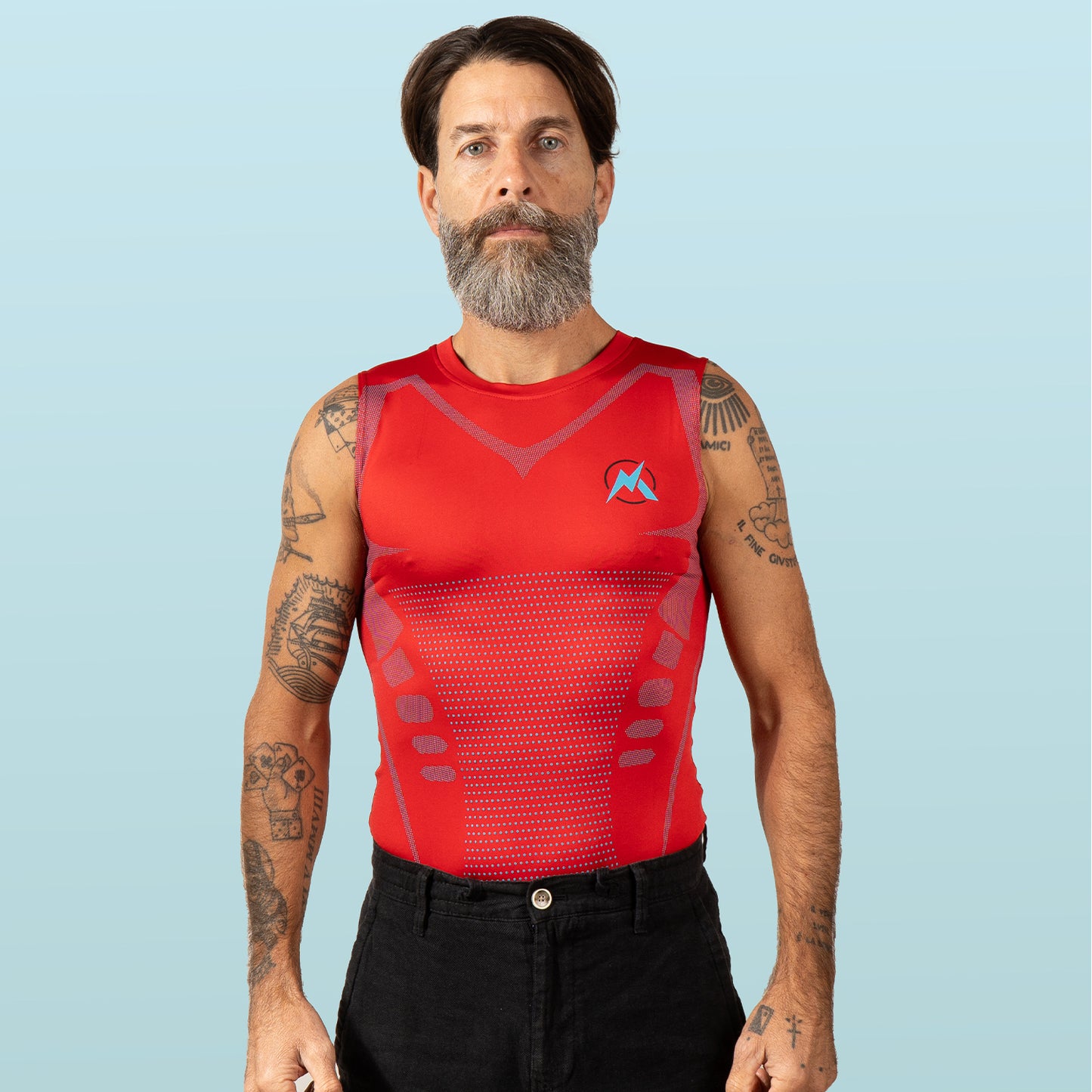
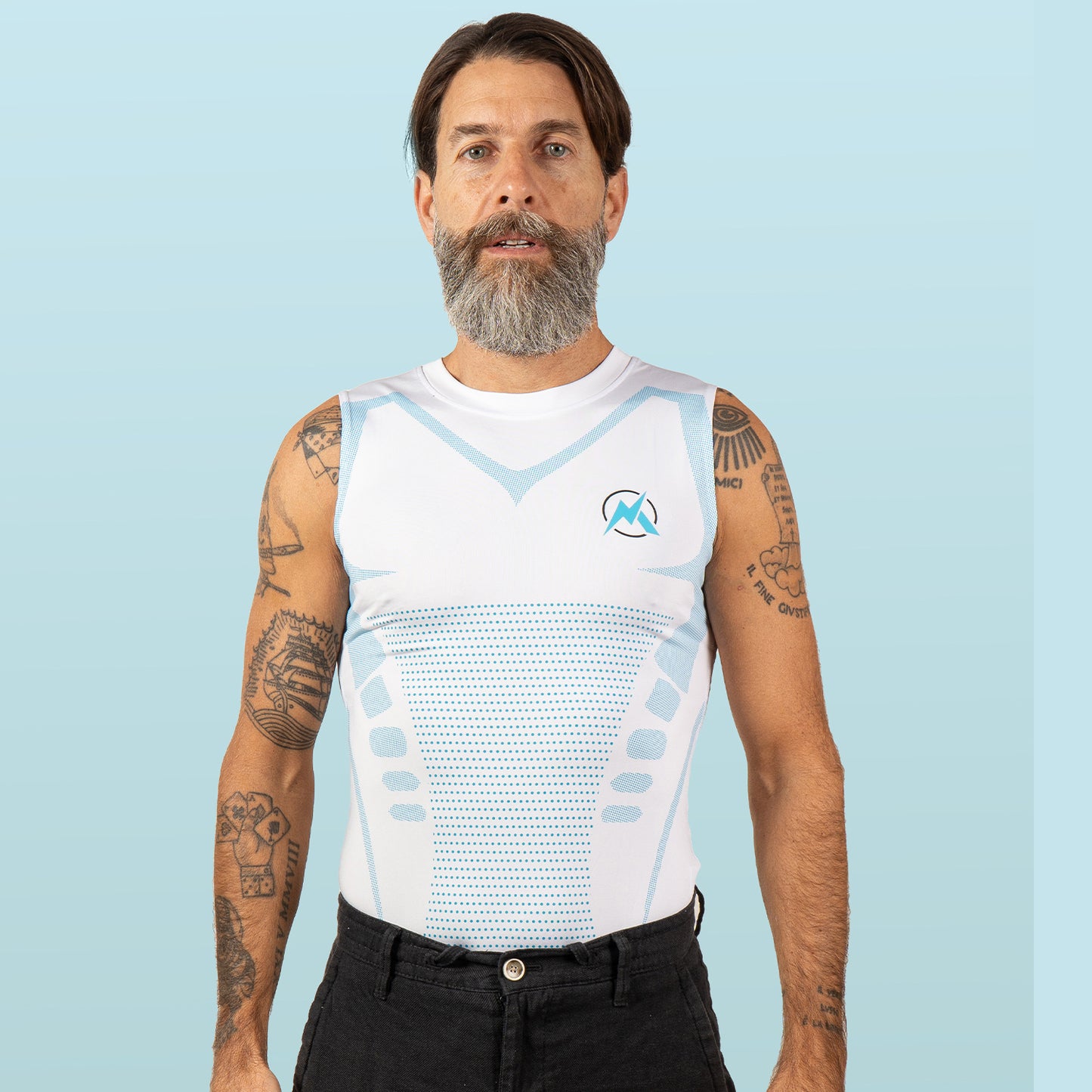
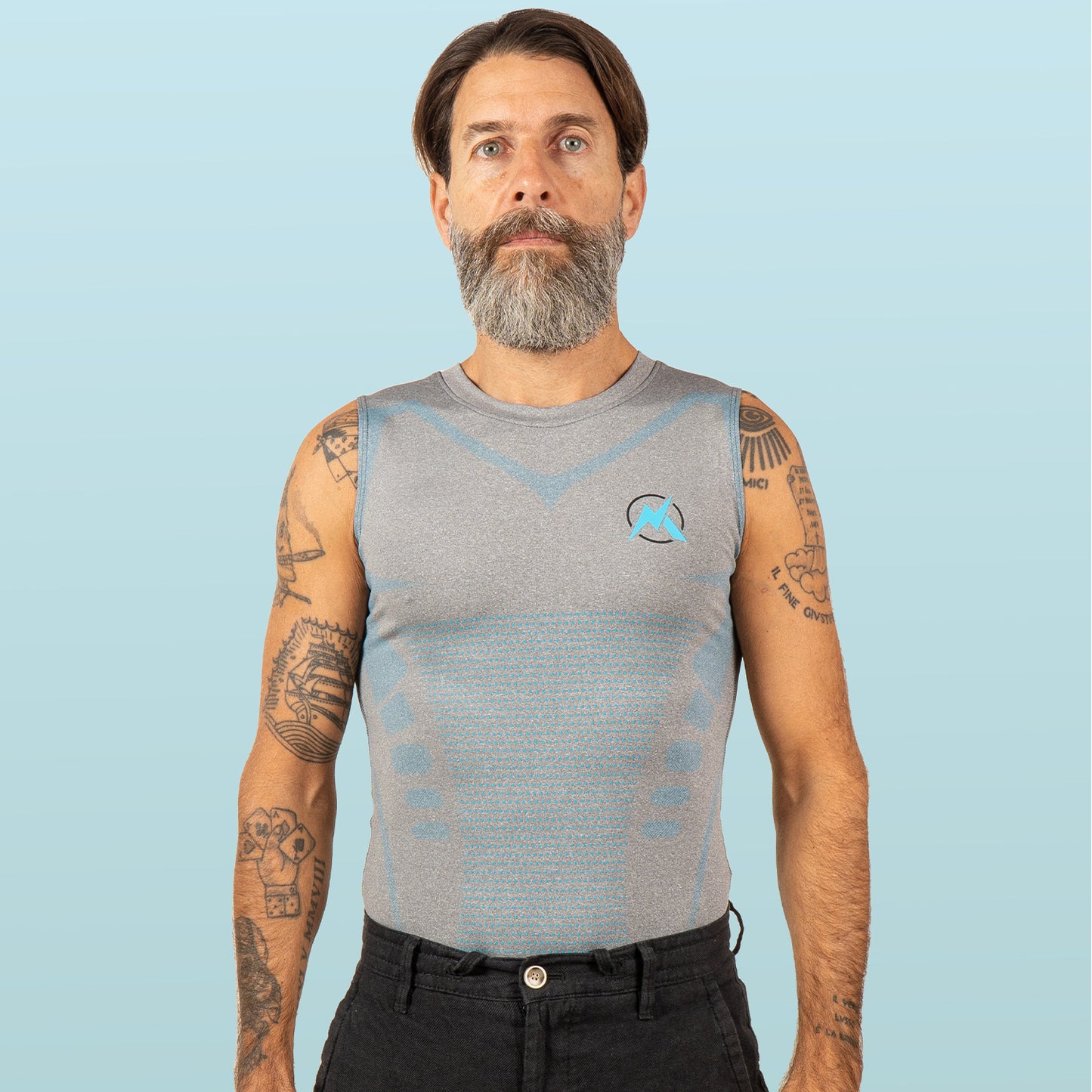
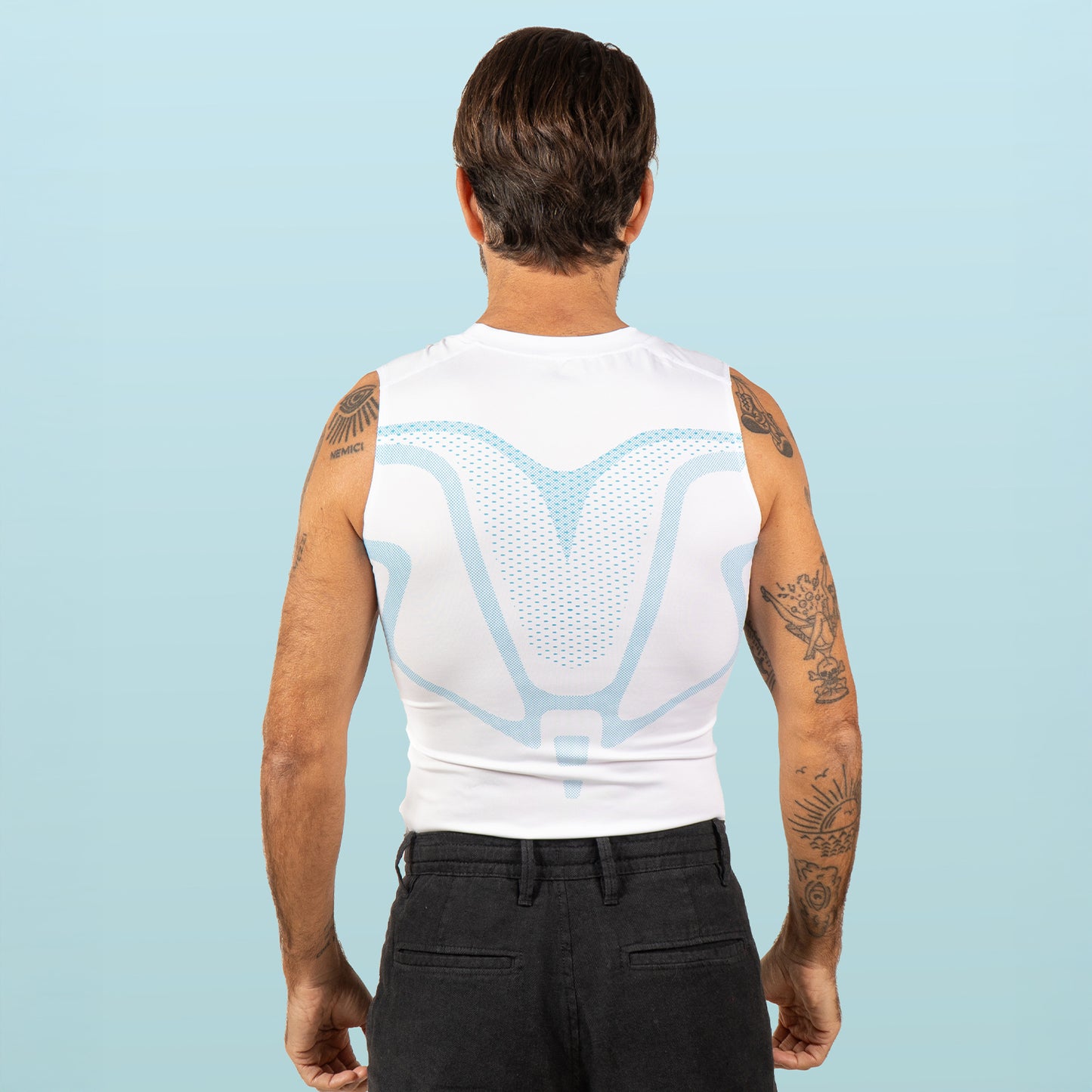
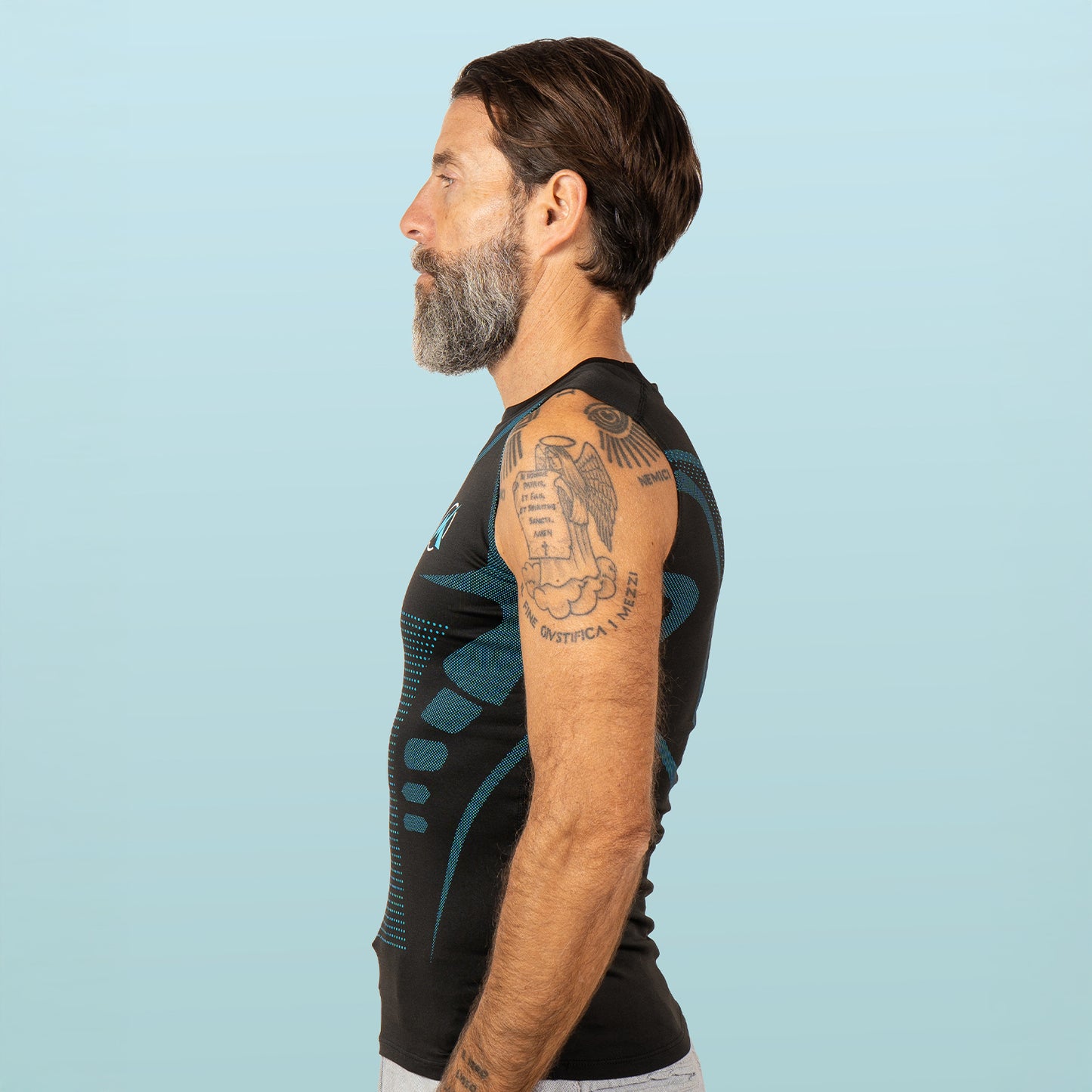
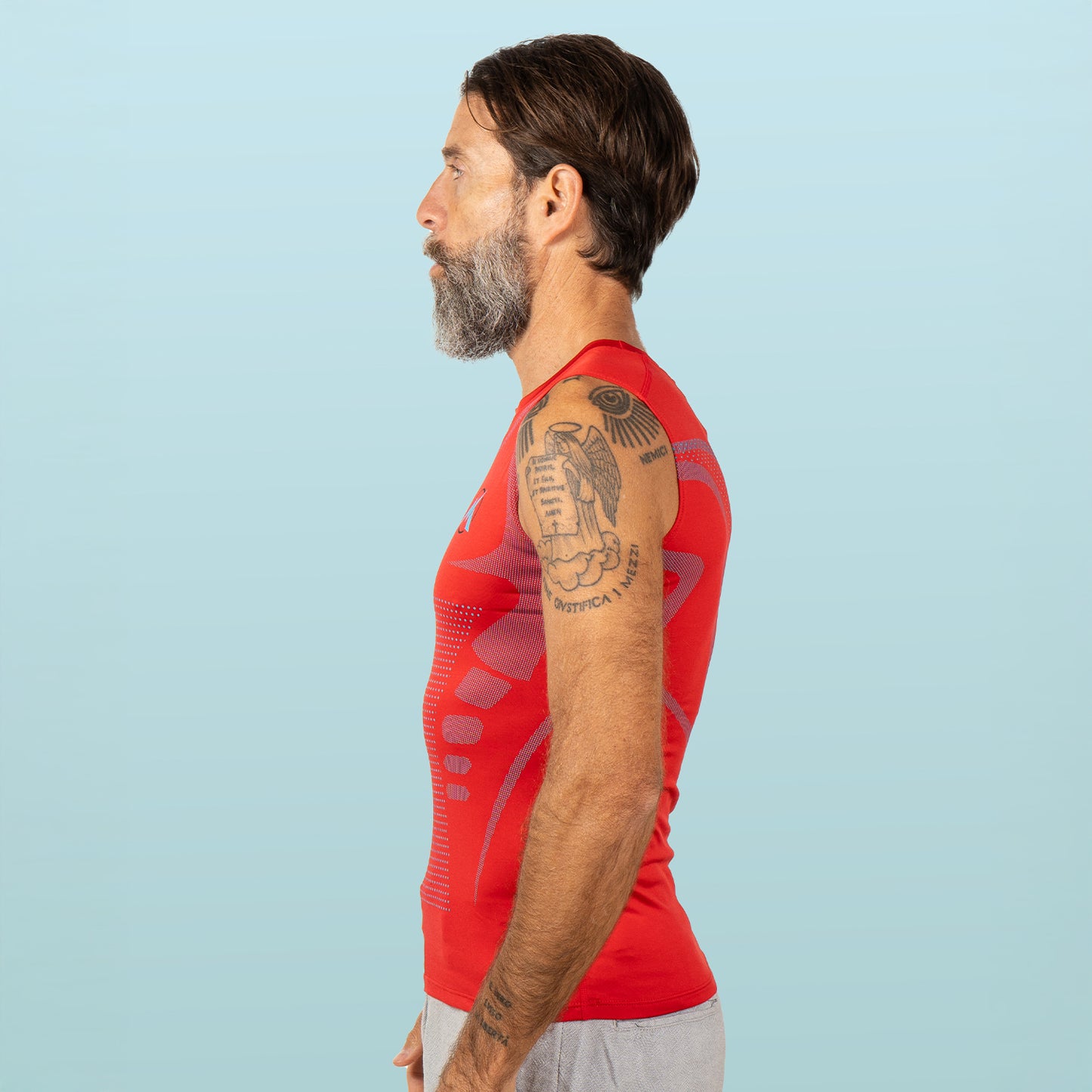
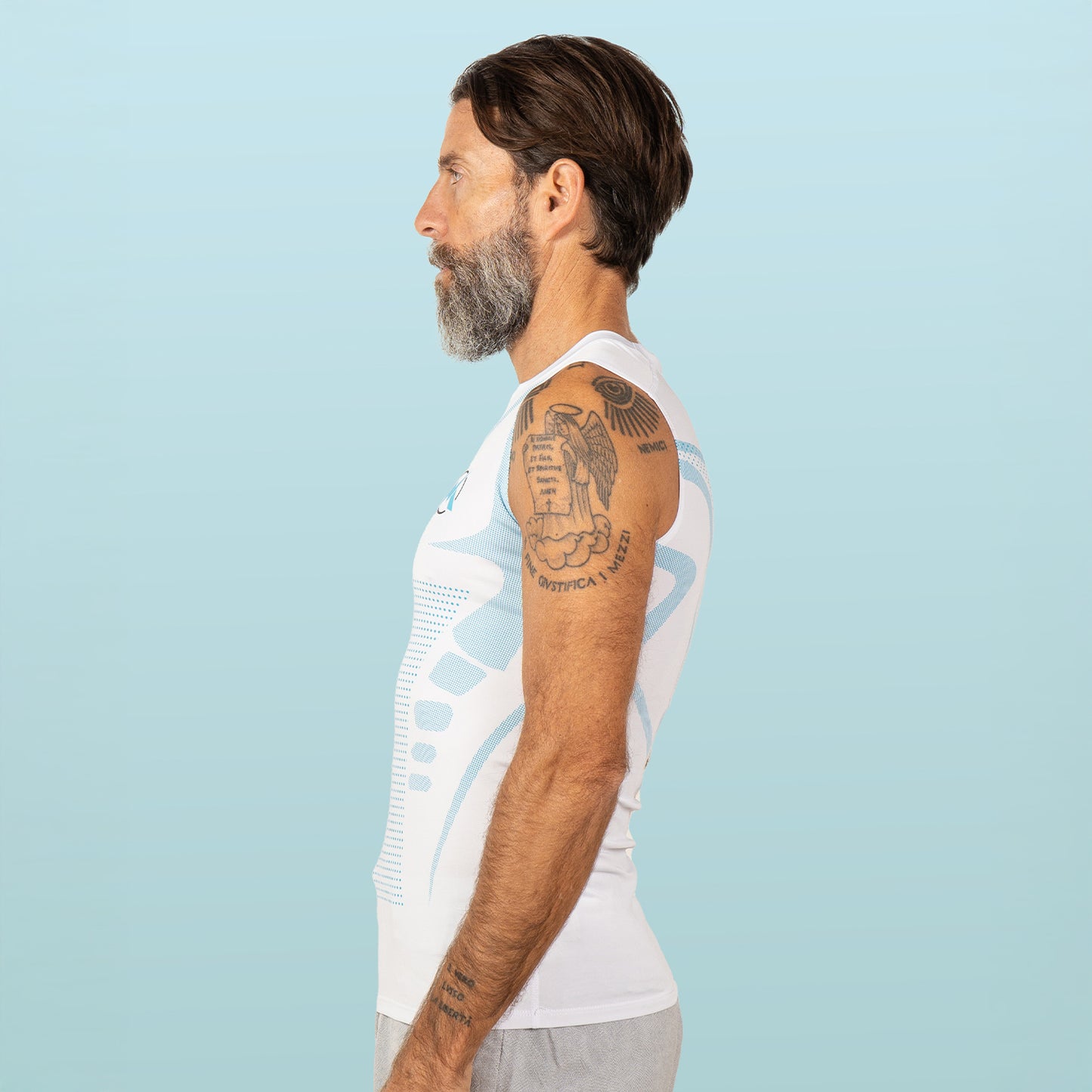
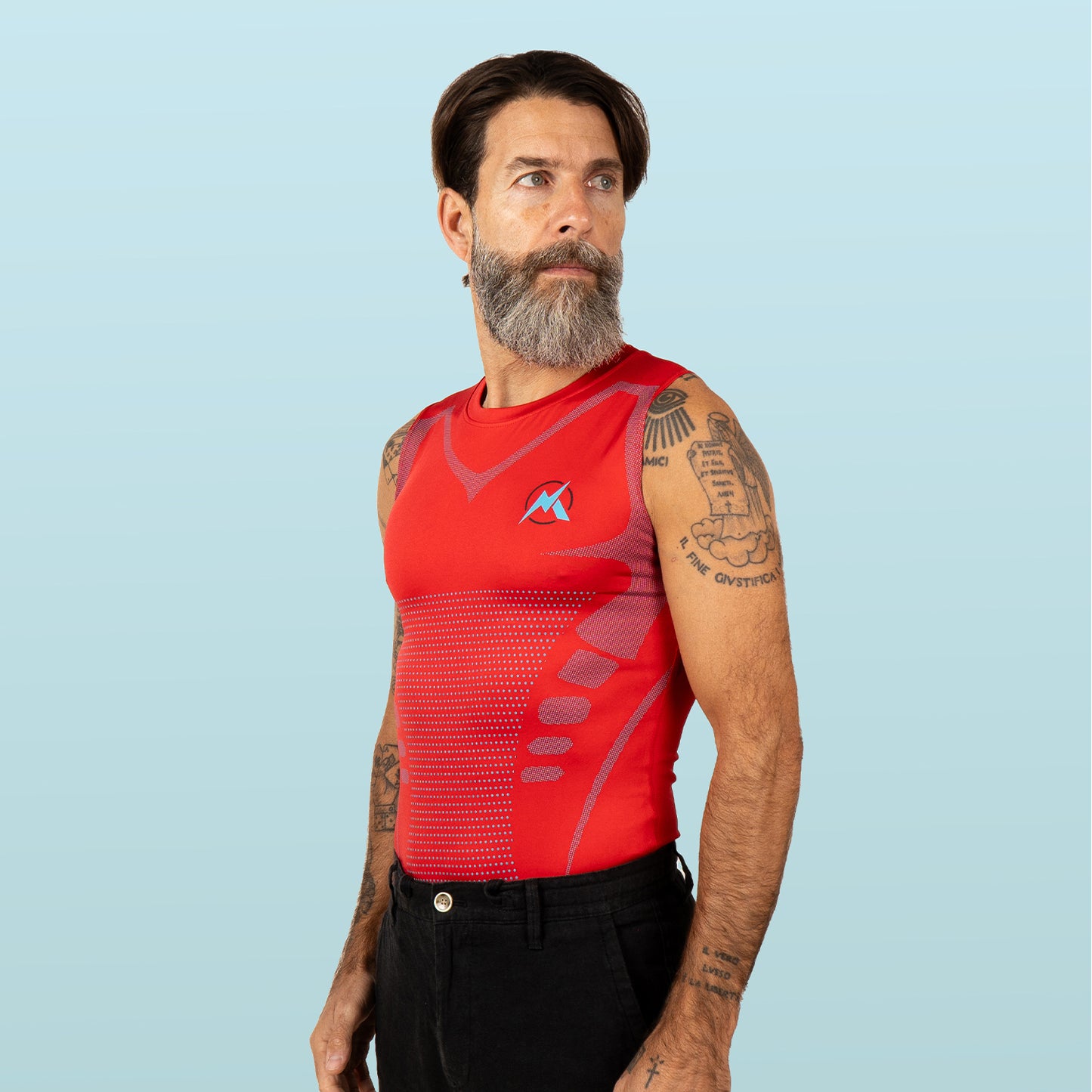
- Wear a compression base layer. A sleeveless tank under your shirt does two things — flattens the soft midsection and gives your shoulders the proprioceptive cue from Lever 4 below. Same minute, both jobs.

Try VitaBoost — Buy 1 Get 1 Free →
Lever 2 — Week 1 to 4: Posture habit stack
Two minutes of wall stand-to-correct at the start of your workday plus a compression base layer all day. Over four weeks you'll notice you no longer have to consciously fix your posture every twenty minutes — your default has shifted. Pants sit cleaner because your pelvis isn't tipping forward.
Lever 3 — Week 4 to 12: Sleep and protein
CDC NCHS data shows 30.5% of US adults sleep under 7 hours. Sleep debt cranks cortisol, which preferentially parks fat on your belly. Locking down 7 hours and front-loading 35–40g of protein at breakfast preserves muscle while body fat slowly drifts down. You're not losing dozens of pounds. You're keeping the muscle that already keeps your waist honest.
Lever 4 — Month 3 to month 6: Strength and visceral fat
Two strength sessions per week. Compound lifts. Cleveland Clinic notes visceral fat responds to consistent activity and modest caloric reduction within 2 to 3 months of regular work. This is the slow lever. It is the one that actually moves the tape measure.
Should you buy bigger pants or hold the line?
This is the question every man wrestles with privately and pretends not to.
Honest answer: do both. Buy one or two pairs of pants in your current size that fit cleanly today. You will look sharper at 50 in a properly fitting 36 than in a struggling 34. The fabric stops pulling. The break of the leg falls correctly. People read you as "well-put-together" instead of "trying to look 35."
Then, in parallel, work the four-lever stack above. If you trim an inch of waist over six months — realistic for a sedentary 48-year-old who actually executes the protocol — you'll fit back into the smaller pants properly, not aspirationally.
The shame loop of squeezing into pants that don't fit and feeling defeated in the morning is the silent productivity tax most men pay. Bigger pants now buy you the headspace to actually do the work.
What doesn't work (skip these)
- Crash diets. Drop 15 pounds in a month, lose 4 of it as muscle, see your waist creep back as soon as you eat normally again. The biology is unforgiving for men over 45.
- Cardio-only programs. An hour on the treadmill 5x/week without strength training accelerates muscle loss. Your scale weight goes down. Your pants size doesn't. (Confused? Our cardio article ranks what actually moves belly fat by ROI.)
- Over-the-counter "T-boosters." No credible evidence they meaningfully raise testosterone in men with normal-range levels. Mayo Clinic is explicit about this.
- "Detox" and "shred" supplements. No supplement reverses the CP-A fat cell mechanism, the pelvic widening, or the sarcopenia curve. These are biological processes, not toxin problems.
- Pretending the smaller size still fits. It doesn't. Your friends can tell. Your wife can tell. Stop performing.
Frequently asked questions
Why are my pants getting tighter even though I haven't gained weight?
Because the composition of your weight has shifted. Between 30 and 60, men lose roughly 3–8% of their muscle mass per decade. Muscle is denser than fat — so you can swap a pound of muscle for a pound of fat at the same scale weight and gain a measurable inch at the waist. The scale is missing the story.
Does your waist size really increase with age?
Yes, even controlling for body fat. Skeletal research shows the pelvis continues to widen up to about age 80, adding up to roughly three inches of waist circumference across a lifetime. Disc compression in the spine also redistributes abdominal volume outward. A man who wore a 32 at 25 will sometimes need a 33 or 34 by his late 60s even at the same body fat percentage.
What is the average waist size for a man over 45?
US data places the average adult male waist circumference around 40 inches. Important caveat: that number reflects the average state of US adult men, not the healthy target. Cleveland Clinic flags 40 inches and above as the threshold suggesting excess visceral fat. The goal isn't to match average — it's to stay under the visceral threshold.
How do I stop my belly from growing in my 40s?
Three things, in order of ROI: lock down 7 hours of sleep nightly, preserve muscle with two strength sessions per week and 35–40g protein at breakfast, and address posture so your pelvis isn't tipping forward. Skip OTC T-boosters and aggressive cardio-only plans. Belly growth in your 40s is mostly visceral fat plus sarcopenia — both respond to consistent moderate work, not extreme protocols.
Should I buy bigger pants or push to lose the weight first?
Both. Buy one or two pairs that fit today so you stop spending energy on a wardrobe that's working against you. Then run a 90-day stack — sleep, strength, protein, posture — and re-evaluate. The goal is to look sharp now and stack quiet biological wins in parallel, not to wait six months in pants that pinch.
The bottom line
Pants stop fitting after 45 because muscle quietly leaves, new fat cells form in your gut, and your skeleton subtly reshapes — three things at once. Buy the size that fits today, fix your posture this week, and run the slow body-comp work in the background. The mirror catches up with the mathematics.
Get VitaBoost — Buy 1 Get 1 Free →
Sources
- ScienceDaily — Why our waistlines expand in middle age: Stem cells (April 2025 summary of Science journal research on CP-A fat cell precursors)
- Cleveland Clinic — Visceral Fat: What It Is & How It Affects You
- Mayo Clinic — Testosterone therapy: Potential benefits and risks as you age
- NIH/PMC — Sarcopenia: aetiology, clinical consequences and treatment
- ABC News — Pelvis continues to widen into the 70s (University of Massachusetts pelvic measurement cohort)
- NIH News in Health — Getting it straight (posture statistics)
- Brown et al., Sports Medicine 2022 — Compression garment proprioceptive feedback review
- CDC NCHS Data Brief 559 — Adult sleep duration in the US