By Owen Blot · Founder, Maynox · Last updated June 9, 2026
- The short answer (and why most guys ask the wrong question)
- The 4 types of compression shirts — only 2 belong in daily wear
- What daily wear actually does (the sourced version)
- What daily wear can't do (the honest debunk)
- How long is safe to wear one every day?
- The Tuesday office protocol
- 5 specs to check before buying for daily wear
- When daily compression is the wrong move
- Frequently asked questions
You're standing in front of the mirror at 7:12 a.m. The dress shirt is fine. The pants are fine. The guy looking back at you isn't. Shoulders are forward. Belly's pushing the placket. You've heard a base layer might help — but you don't know if you can actually wear the thing every day without your skin staging a revolt by Thursday.
So you typed it in: are compression shirts good for daily wear. And the internet gave you 47 different answers, half of them from MMA brands trying to sell you a rash guard.
Here's the version nobody hands you.
The answer is yes, but only for a specific kind of compression shirt — and absolutely not the kind most guys end up buying. The Under Armour HeatGear hanging in your gym bag is built for 90 minutes of basketball, not 9 hours of sitting at a desk. The medical-grade brace your back doctor mentioned isn't for daily wear either. There's a narrow middle category that's actually designed to live under your clothes from breakfast to dinner, and if you pick from that lane you'll be fine. If you pick from the wrong lane you'll spend Friday afternoon yanking fabric out of your armpits in a Walgreens parking lot.
This guide breaks down the 4 categories, what daily compression actually does (peer-reviewed), what it definitely can't do, the wear-duration cap nobody talks about, and a real-world office day so you can see if it fits how you live.
The short answer: yes, but not the kind you're probably thinking of
Three quick framings before we get into the categories.
First framing. "Daily wear" doesn't mean "round-the-clock." It means worn through your active waking hours under regular clothes — roughly 8 to 12 hours, then off when you sleep. That's the use case the research actually supports.
Second framing. Compression shirts split into 4 categories built for completely different jobs. Treating them as one product is why most reviews on the internet feel useless. Daily wear is a base-layer category, not an athletic category.
Third framing. What you're really buying with daily compression is two things — a proprioceptive cue that keeps your shoulders and core engaged when willpower runs out around 2 p.m., and a smoothing effect under your shirt that takes about 8 to 9 pounds of apparent weight off your visual line (more on that source in section 3).
That's the honest pitch. No "10 lbs lighter instantly," no "burn belly fat while you work" nonsense.
The 4 types of compression shirts (and only 2 belong in daily wear)
This is the part top SERP results skip. They lump every compression shirt into one bucket and then tell you "yes, you can wear it every day" — which is half true and half malpractice.
Here's the actual breakdown.
Type 1 — Athletic compression (made for the gym, not the office)
Examples: Under Armour HeatGear, Nike Pro, 2XU MCS. Built for: 60–120 minutes of intense exercise. Pressure: Often 20–30 mmHg, tight fit optimized for muscle vibration reduction during sprinting/lifting.
Why it fails for daily wear: The fabric is built to dump heat fast during exertion, which means it traps it during sedentary work. The seams sit where a workout shirt's seams sit, not where a base layer's would (under your armpit instead of below it), so by hour 4 of desk work you've got hot spots. The compression target is muscle, not posture or silhouette. Save these for the gym.
Type 2 — Base-layer compression (built for under regular clothes)
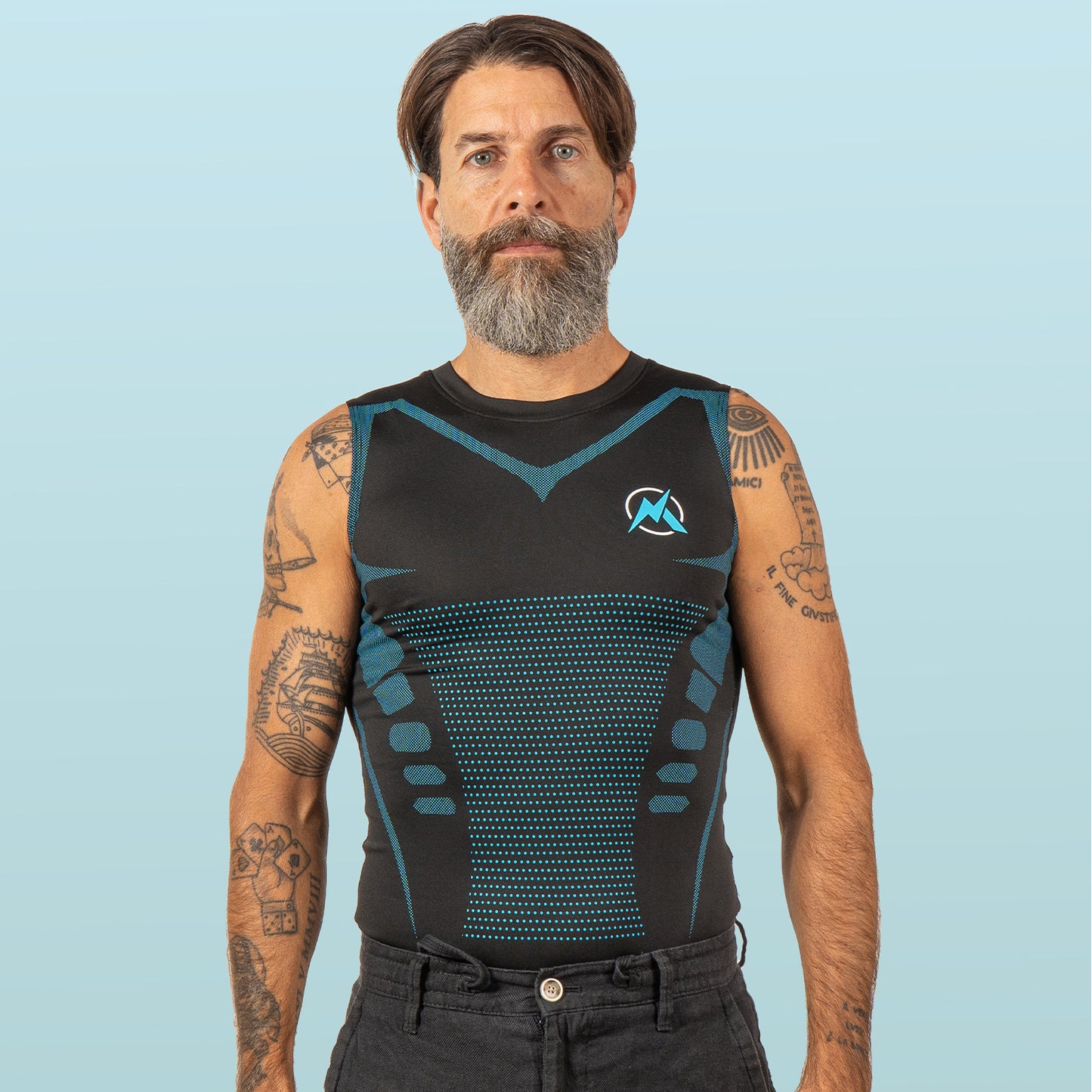
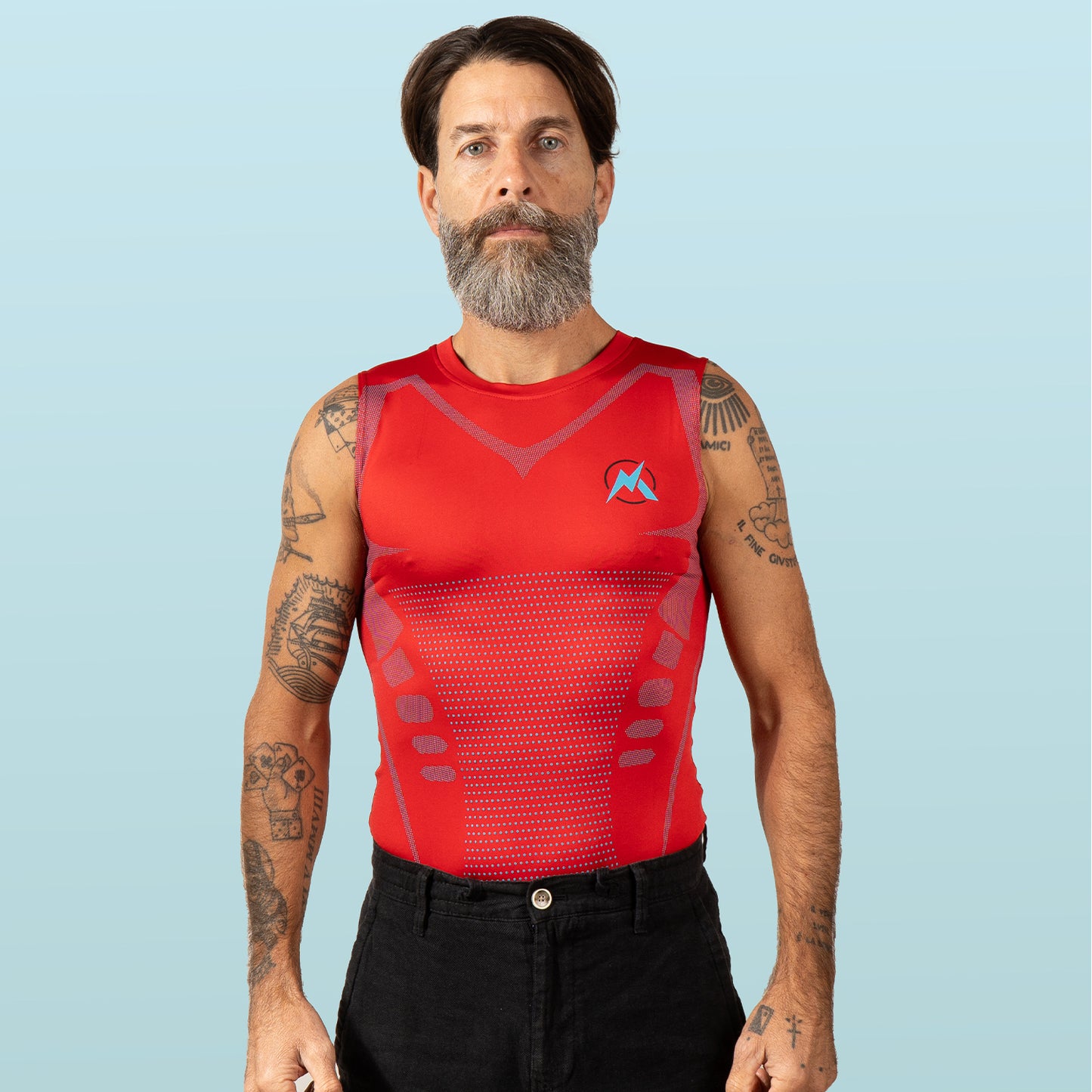
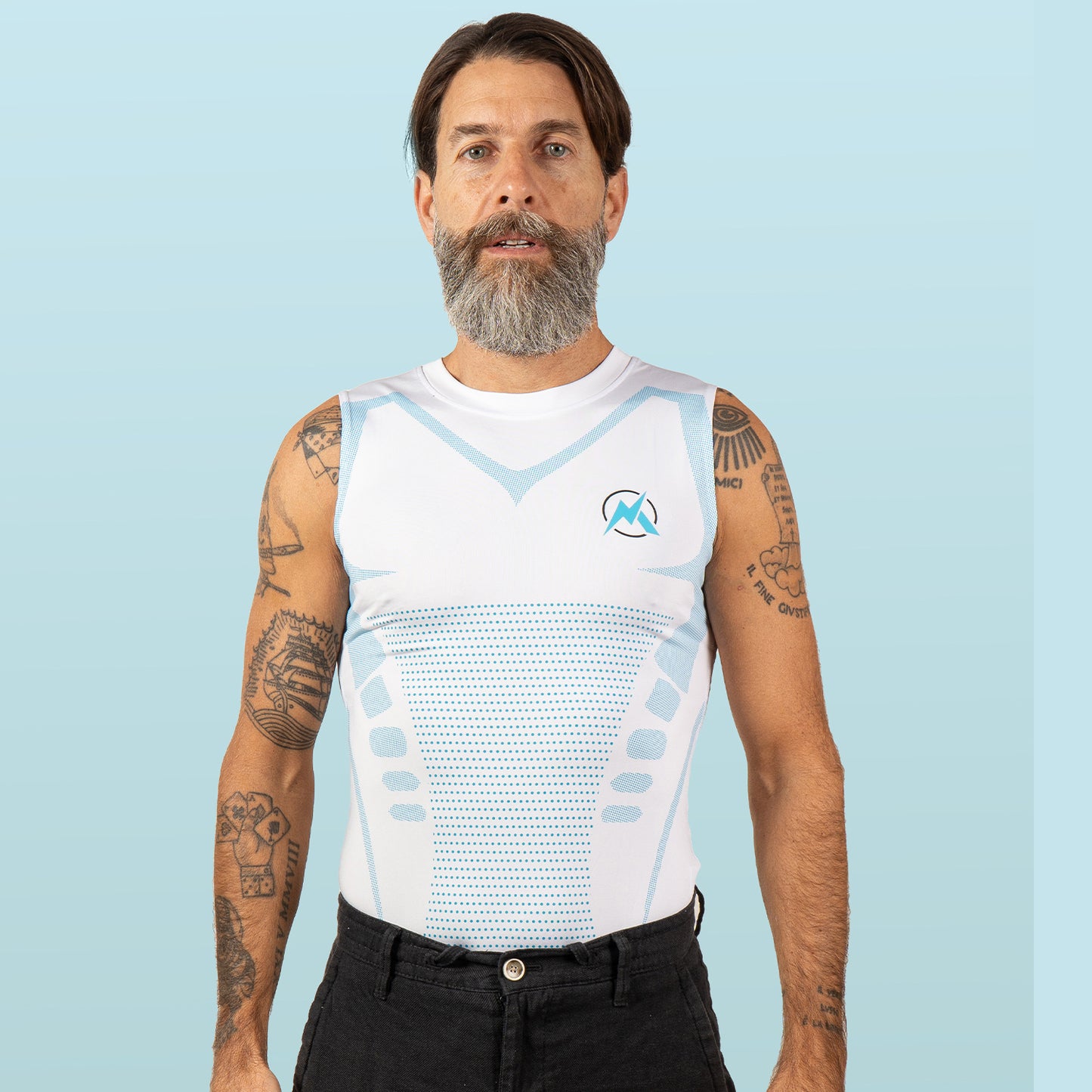
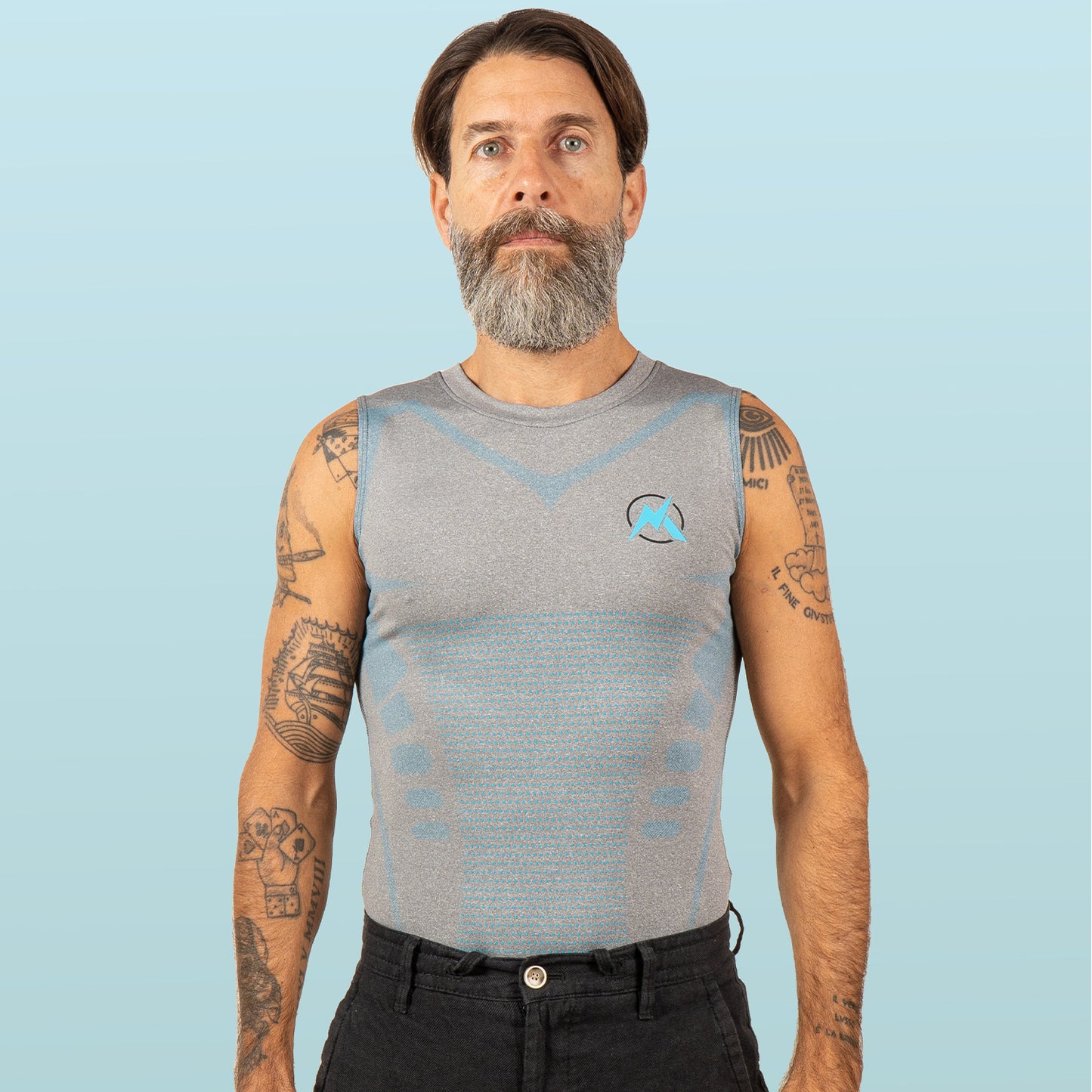
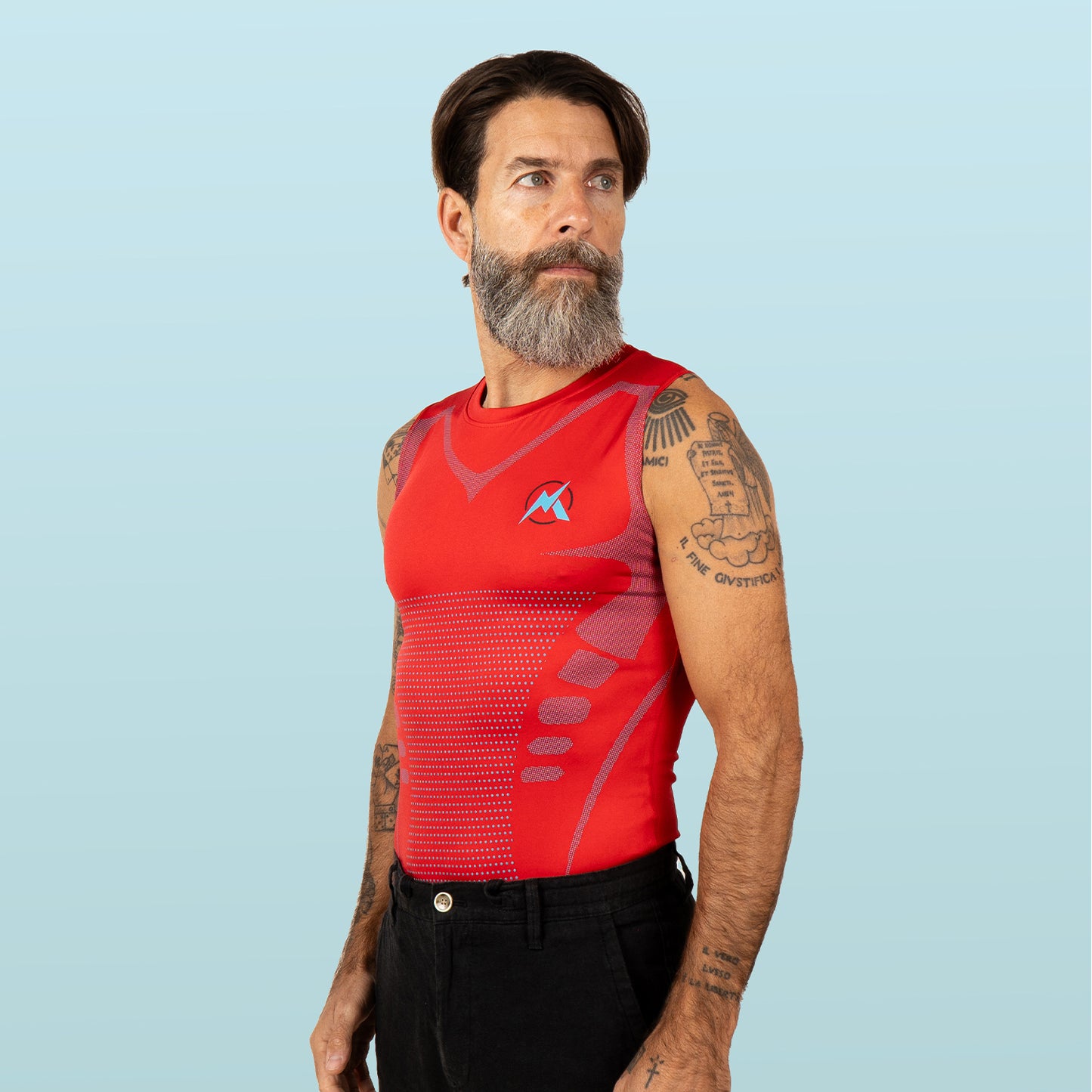
Examples: A flat-seamed sleeveless or short-sleeved compression undershirt with light-to-medium pressure (15–25 mmHg range). Built for: 8–12 hours under a dress shirt, polo, or tee. Pressure: Light to medium, prioritizing comfort and breathability over muscle squeeze.
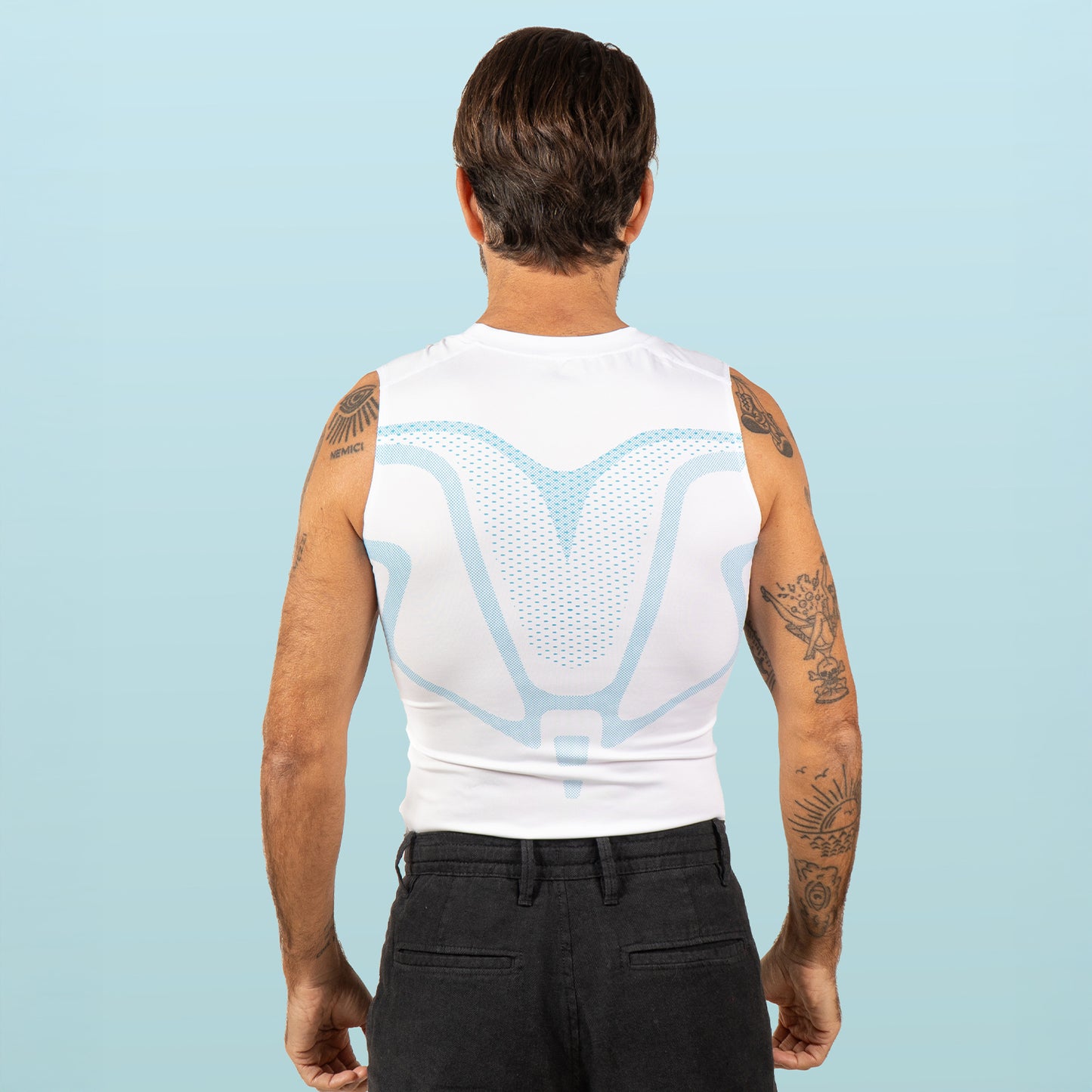
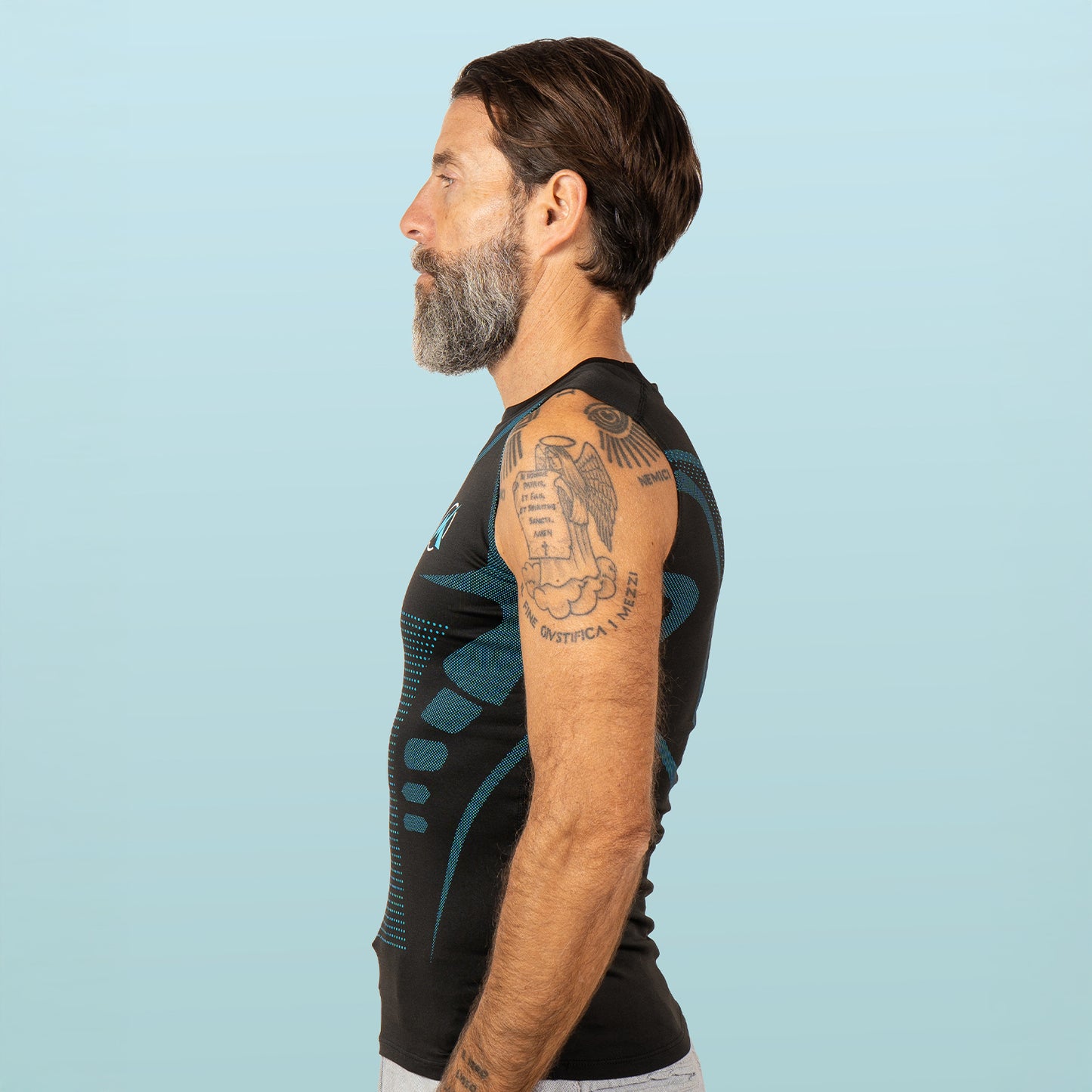
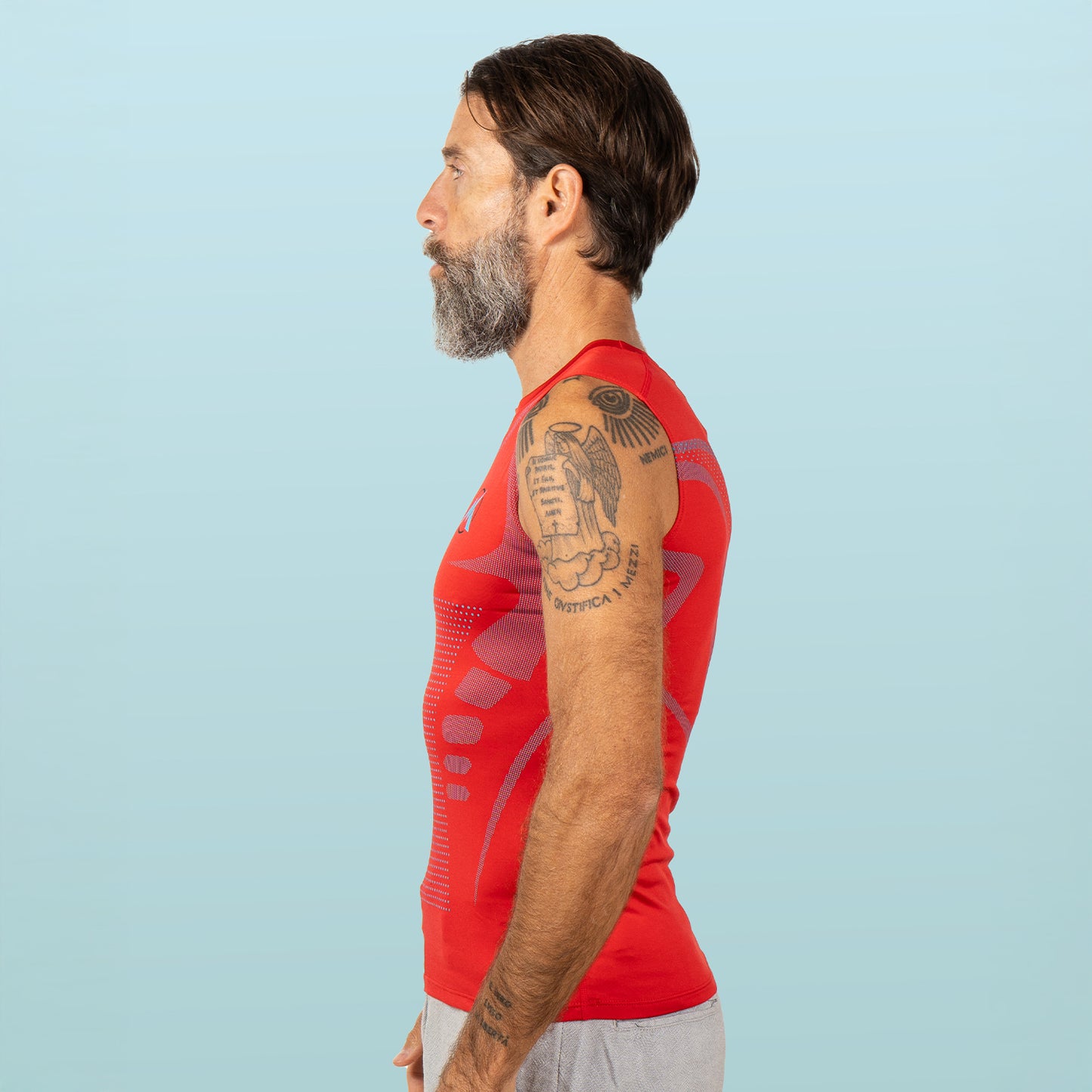
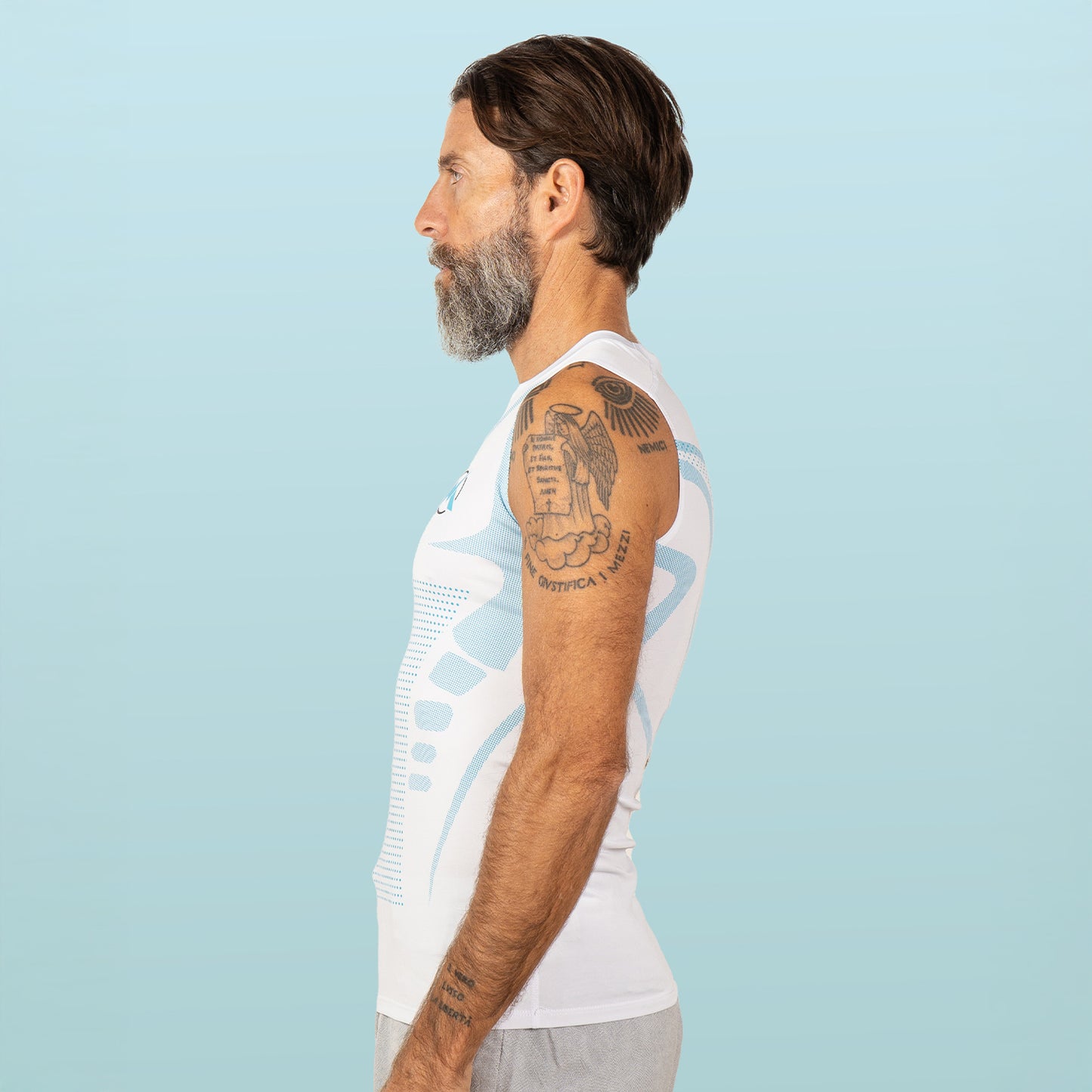
Why it works for daily wear: Construction is engineered around three constraints that matter for office life — moisture wicking that handles low-grade sweat over 10 hours (not torrential sweat over 90 minutes), flat seams that don't telegraph through a shirt, and a cut that smooths the silhouette under a button-down without restricting your breathing. This is what the keyword "daily wear" actually refers to.
Type 3 — Posture-targeted compression (the structured panel kind)
Examples: Compression shirts with reinforced back panels, shoulder straps that pull the scapula back, or built-in posture cues. Built for: Postural support during work or training. Pressure: Mostly light overall with targeted reinforcement at the upper back.
Why it works for daily wear (with a caveat): Same construction logic as Type 2, plus an extra layer of postural cue. The caveat is the wear-duration cap is shorter — the reinforcement actively engages your postural muscles, and wearing it 12+ hours daily can let the garment do work your back is supposed to relearn doing. Best worn 6–10 hours, then off.
Type 4 — Medical-grade compression (prescription territory)
Examples: Garments rated 30+ mmHg for lymphedema, post-surgical edema, or vascular conditions. Built for: Specific medical needs under physician oversight. Pressure: 30 mmHg and up.
Why it's not your answer: These aren't sold off-the-shelf because they shouldn't be. If a doctor told you to wear one, follow their wear protocol, not a blog post. Do not self-prescribe medical-grade compression for daily aesthetic or posture use.
So the honest map: Type 2 (base-layer compression) is the answer to the daily-wear question for most men 40+, with Type 3 as a viable option if posture is your specific priority. Type 1 stays in your gym bag. Type 4 stays with your doctor.
What daily wear actually does (the sourced version)
The benefits of daily compression are real — but they're smaller and more specific than most marketing implies. Here's what holds up under peer review.
Proprioceptive cue all day
The 2022 Sports Medicine review by Brown et al. — a synthesis of compression garment research across athletic and clinical populations — found that compression garments provide consistent proprioceptive feedback (your body's sense of where it is in space) that nudges users toward upright posture and engaged core over the course of wear. (PMC9023423)
In plain English: the gentle, continuous skin pressure makes it harder to slouch without noticing. You're not forced upright, you're cued upright. Over 8 hours that adds up to a measurable difference in how you carry yourself by 6 p.m.
Subtle posture correction
According to the NIH, more than 80% of Americans deal with posture-related issues at some point. For men past 40, that number is conservatively higher because desk-bound work, screen time, and the 3–8% per decade muscle loss documented in NIH/PMC sarcopenia research after age 30 compound into a steady forward drift of the shoulders.
Daily compression doesn't fix the underlying weakness — strength work does that, and we covered the 10-minute home posture routine for that part. What daily compression does is give you all-day mechanical support while the strengthening work is still doing its slow job in the background. That's a meaningful upgrade for the in-between months.
Smoother silhouette under shirts
Apparent weight matters. A 2015 study by Re and Rule at the University of Toronto found that an apparent-weight change of about 8–9 pounds was the threshold for being visibly "noticeable" to another person looking at a man's face and body. (ScienceDaily)
A base-layer compression shirt smooths out the soft-tissue contours that read as "weight" under a dress shirt — the chest, the love handles, the lower belly soft roll. Honest framing: it can move you into that 8–9 lb apparent-weight window where strangers notice the difference, without actually changing your scale weight. That's what people mean when they say compression "makes you look thinner." It's real, it's small, and it works. (We broke down the full playbook for that effect in how to look 10 pounds thinner without losing a single pound.)

What daily wear CAN'T do (the honest debunk)
If anyone tells you a compression shirt does any of the following, they're selling you fiction.
- It does not burn fat. The 31-study pooled review by Wei et al. in Life (2025) — one of the largest meta-analyses of compression garment outcomes — found no evidence that compression wear produces meaningful fat loss. (PMC11944185) The "compression melts belly fat" marketing claim is unsupported. (We unpacked the full evidence in do compression shirts actually work for men.)
- It does not permanently fix bad posture. It cues better posture while you wear it. Take it off and your posture drifts back to whatever your muscles are conditioned to do. The fix is the strength work, not the garment.
- It does not replace exercise. The garment does no work for you. It supports the work you do.
- It does not make you 20 pounds lighter. The realistic visible improvement, even with a great base-layer shirt, sits in the 8–9 lb apparent-weight zone. Anyone advertising more is overselling.
- It does not treat lymphedema, vein disease, or any medical condition unless a doctor specifically prescribed it for that purpose.
The category has been oversold for a decade. The honest pitch is small, real, and worth it — but it's not magic.
How long is safe to wear one every day?
The mmHg threshold
Compression is measured in mmHg (millimeters of mercury). For daily wear, the practical safety zone is 15–25 mmHg — light to medium. That's the range cited by health and apparel sources for all-day use. Above 25 mmHg you're moving toward athletic-recovery and medical territory, where wear duration drops and wear breaks become important.
If you're not sure what your shirt's rated at, a useful field test: you should feel a continuous gentle squeeze, not a band of pressure. If a specific edge digs in (under the armpit, around the waist, at the neckline), the shirt is too tight or the wrong cut for your torso. Size up before you assume the category doesn't work for you.
The wear duration cap
For Type 2 (base-layer) compression at 15–25 mmHg, 8–12 hours of continuous daily wear is the standard safe window for healthy adults. For Type 3 (posture-targeted) compression, drop to 6–10 hours to avoid the muscle-atrophy concern flagged by physical therapists when structured postural support is worn continuously.
Three rules that come up across the apparel and physiotherapy literature:
- Take it off to sleep. Your circulation patterns shift at rest. Continuous overnight compression isn't recommended unless a physician prescribed it.
- Take it off if you feel numbness, tingling, breathing restriction, or persistent itch. Those are signals the fit is wrong or the duration is too long.
- Don't double up. Wearing two compression layers stacked turns "light compression" into "medical compression" by accident. One layer.
Skin tolerance varies. If you have eczema, sensitive skin, recent surgery, or any vascular condition, talk to your doctor before adopting daily compression as a habit.
The Tuesday office protocol (a real day with a base layer)
Most guides describe daily compression in the abstract. Here's what it actually looks like on a Tuesday for a 49-year-old who sits in meetings, drives 35 minutes each way, and does a 30-minute walk after dinner.
- 6:50 a.m. Out of the shower, dry skin. Pull the compression base layer on first — straight against the skin. Dress shirt over it. The collar of the compression shirt sits just below your shirt collar so nothing telegraphs.
- 7:30 a.m. – 12:30 p.m. Drive + desk + meetings. The shirt does its job invisibly. Around 11 a.m. you notice you're sitting up straighter without thinking about it — that's the proprioceptive cue working. Soft sweat on your back stays managed because the fabric wicks (Type 2 base layer construction).
- 12:30 p.m. lunch. No need to take it off. Eat normally. If you feel any compression on your stomach after a meal, the shirt is too tight or too long — size up next time.
- 1:00 p.m. – 6:00 p.m. Afternoon block. This is where the cue earns its money. Most guys slouch hardest 2–4 p.m. when energy dips. The shirt keeps your shoulders honest.
- 6:30 p.m. Home. Either leave it on for the evening walk and dinner (totally fine — you'll hit ~12 hours), or swap into a t-shirt if you're done for the day.
- 10:30 p.m. bed. Off. Sleep in cotton or nothing. Wash the compression shirt every 1–2 wears in cold water, hang dry.
One shirt, one normal day, ~10 hours of wear. That's daily compression. Not a science experiment, not a medical regimen — a base layer doing quiet work.
5 specs to check before buying for daily wear
If you're shopping a compression shirt for daily wear and you only check the first three product photos, you'll end up with athletic Type 1 by accident. Here's the spec checklist.
| Spec | What to look for (daily wear) | Red flag |
|---|---|---|
| Compression level | Light to medium (15–25 mmHg equivalent) | "Maximum compression," "extreme squeeze" |
| Cut | Sleeveless or short-sleeve, crew neck, hits at hip bone | Long sleeve athletic cut, V-neck deep enough to show |
| Seams | Flat-locked, no visible ridges on the surface | Overlocked seams that telegraph through a dress shirt |
| Fabric | Nylon-spandex blend with moisture wicking; matte finish | Shiny athletic poly, visible through thin shirts |
| Color | Match skin tone or wear black under black/dark shirts | White under light blue dress shirt (telegraphs every time) |
The single most common mistake men over 40 make: buying a Type 1 athletic compression shirt and trying to wear it under a button-down. The pressure is wrong, the cut is wrong, the seams telegraph, and by Thursday you're back to undershirts. Match the type to the use case and the experience is completely different.
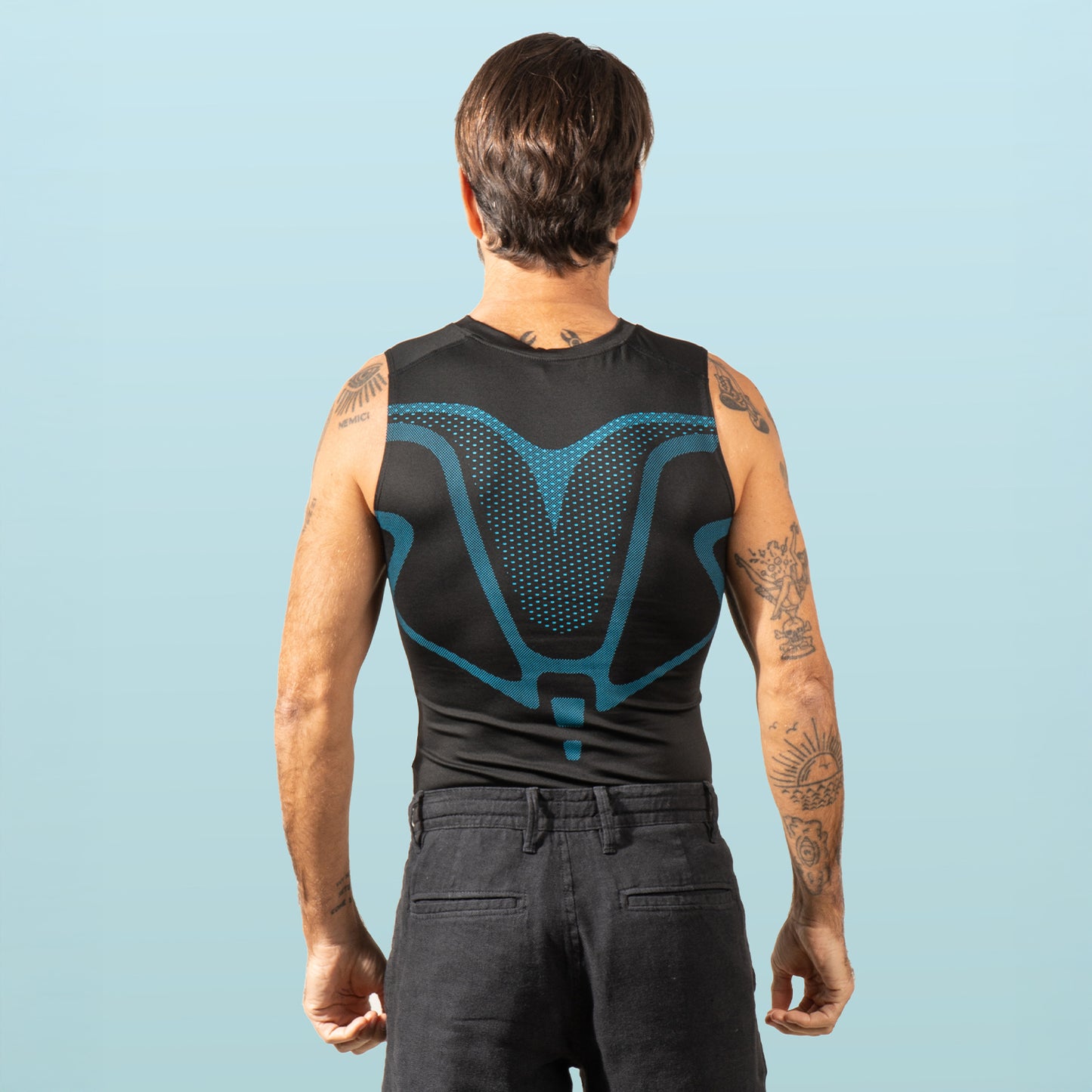
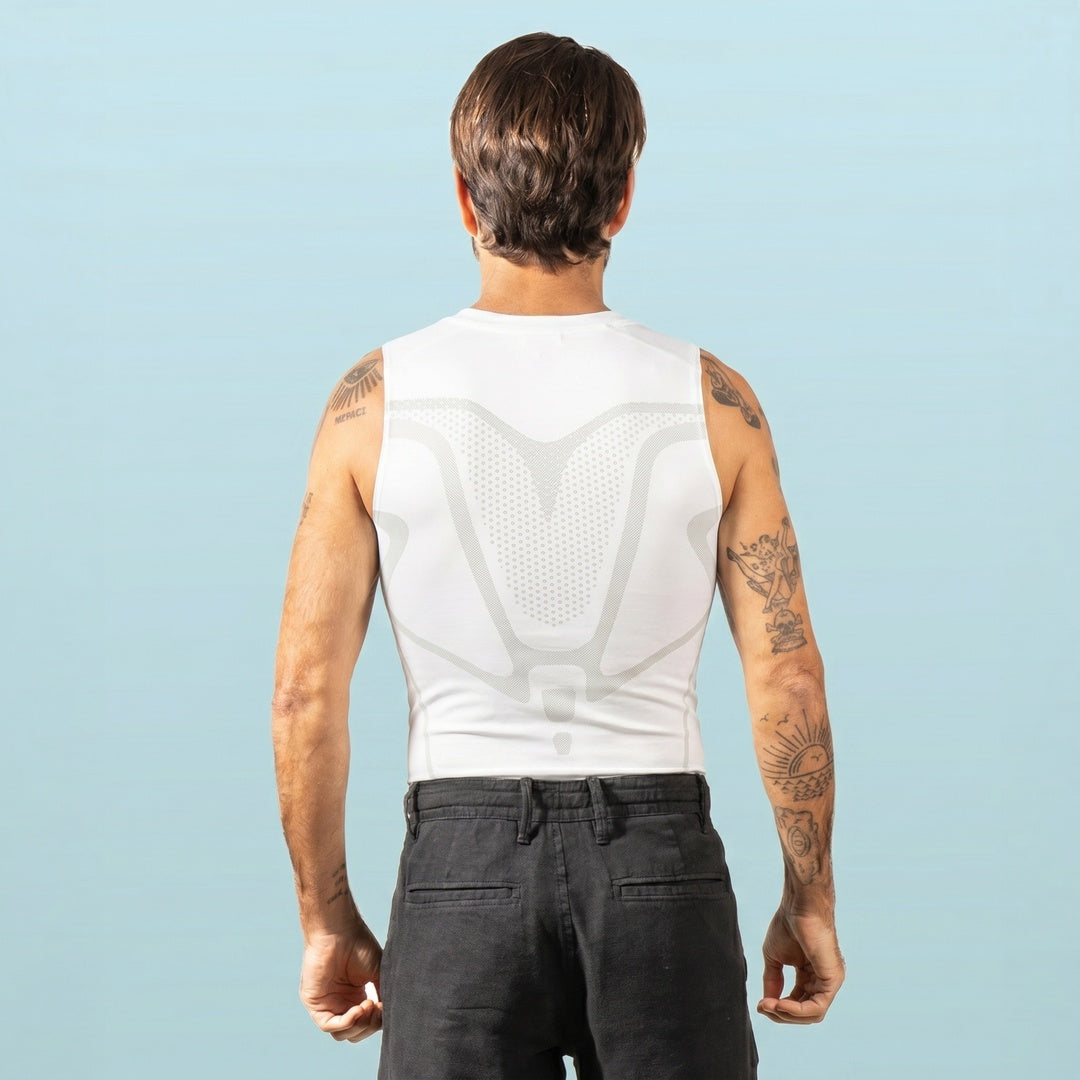
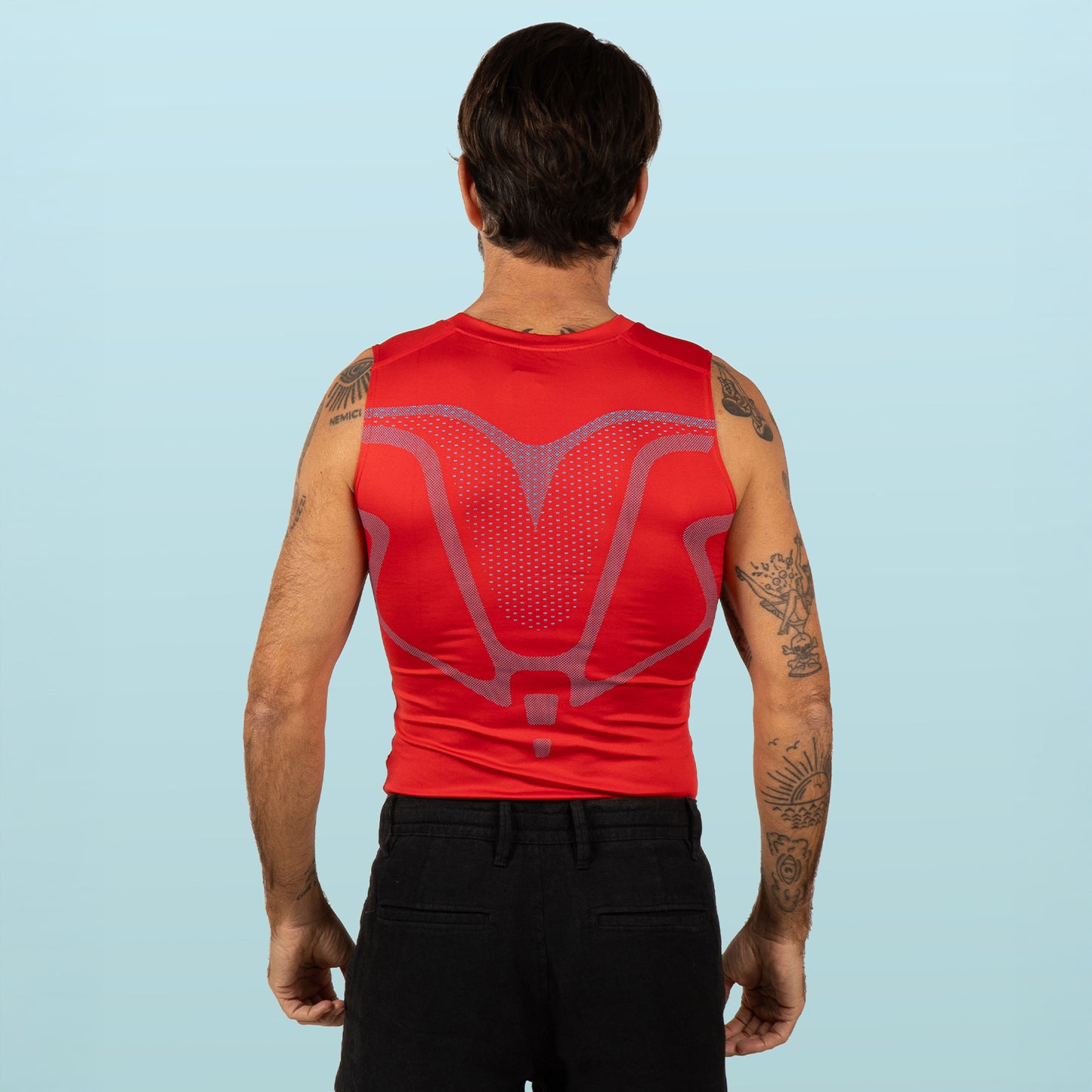
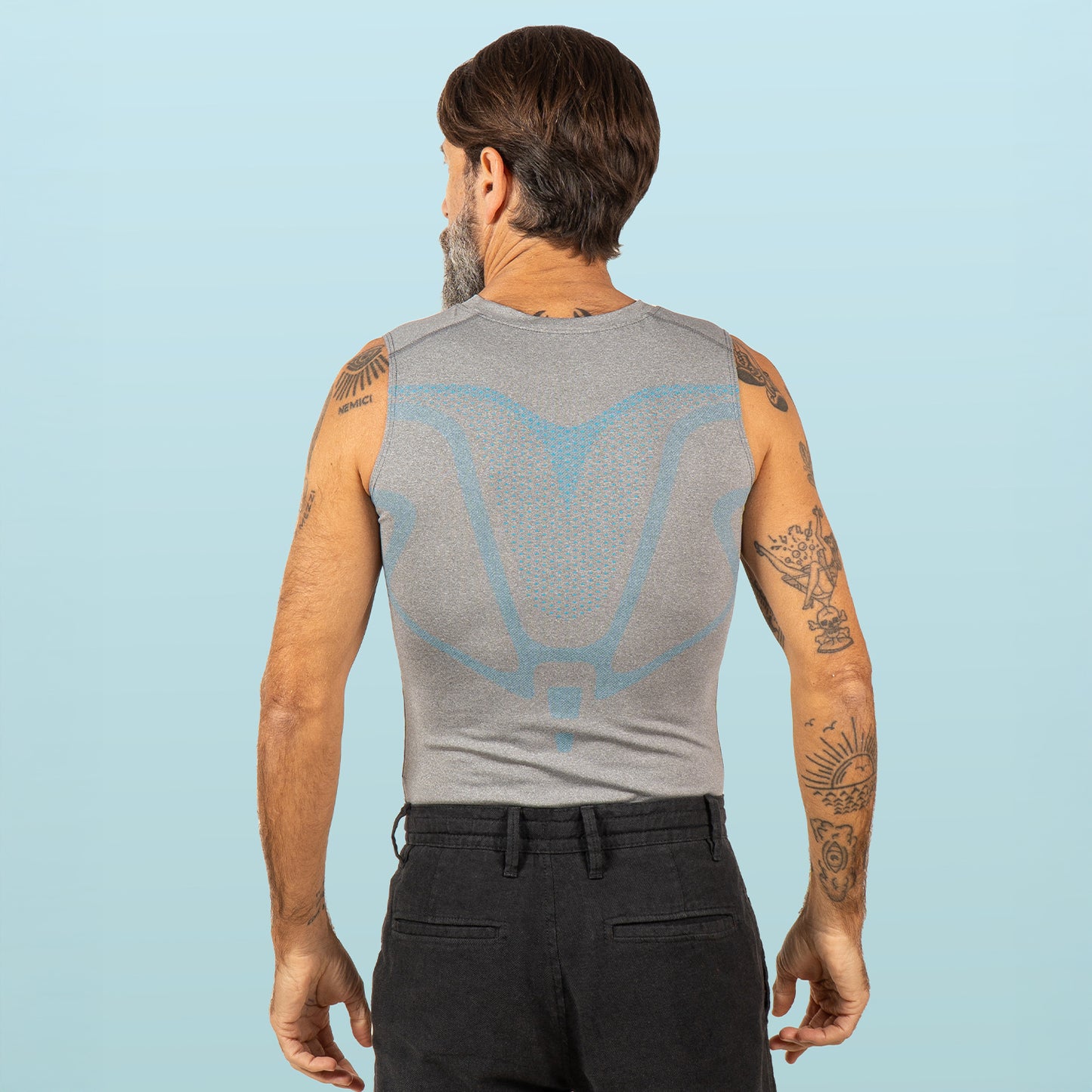
See VitaBoost — Built for Daily Wear Under Your Shirt
When daily compression is the WRONG move
Honesty section.
- Vascular conditions. Peripheral artery disease, severe varicose veins, deep vein thrombosis history. Talk to a vascular specialist first — they may want you in a specific medical-grade compression, not an off-the-shelf base layer, or in nothing at all.
- Active skin issues. Open wounds, eczema flare, fungal infection, untreated dermatitis. Compression traps heat and moisture against the skin and can worsen all of these.
- Recent chest, shoulder, or abdominal surgery. Don't add compression unless your surgeon clears it.
- Severe heat environments. If your daily life is outdoor labor in 95°F humidity, compression is going to amplify the heat load. Look at lighter ventilated athletic mesh instead, or skip it during the hot months.
- You're sleeping in it. Stop doing that. Take it off at night. The recovery and posture benefits don't require overnight wear, and the risks (skin breakdown, circulation interruption) start adding up.
For everyone else — and that's most men 40+ working a desk job and trying to look and feel a step sharper — base-layer compression on Type 2 spec is a low-risk, real-return habit. (For posture-specific picks, see our 2026 buyer's guide to the best compression shirts for posture.)
Try VitaBoost — 30-Day Honest Trial
Frequently asked questions
Can you wear a compression shirt every day?
Yes, if it's a base-layer or posture-cut compression shirt in the 15–25 mmHg range, worn 8–12 hours and removed for sleep. Skip the athletic gym-cut version for daily use — it's built for short bursts of exercise, not desk hours, and the fabric, seams, and cut will make all-day wear uncomfortable by week two.
How long should you wear a compression shirt each day?
For healthy adults, 8–12 hours of continuous daily wear is the standard safe window for light-to-medium compression base layers. For posture-targeted compression with structured back panels, drop to 6–10 hours to avoid over-relying on the garment for postural support. Always remove it for sleep. If you feel numbness, tingling, breathing restriction, or persistent skin irritation, take it off sooner.
What are the side effects of wearing compression shirts daily?
The most common side effects are minor — skin irritation or chafing at seam edges, mild heat buildup in hot environments, and occasional itch from trapped moisture. More serious issues like restricted circulation, numbness, or breathing difficulty almost always trace back to the wrong size (too tight) or the wrong type (medical-grade for daily use). Choose 15–25 mmHg light-to-medium pressure, size for snug not constricting, and remove for sleep.
Do compression shirts help with posture if worn every day?
They help while you wear them, by providing a continuous proprioceptive cue (skin-level feedback that nudges shoulders back and core engaged). Compression alone does not produce a permanent posture fix — the underlying muscle work has to come from strengthening exercises. Treat daily compression as the visible all-day support layer while strength training does the slower invisible work in the background.
Should you sleep in a compression shirt?
No. Take it off to sleep. Circulation patterns shift at rest, and continuous overnight compression isn't recommended unless a physician specifically prescribed it for a medical condition. The posture, recovery, and silhouette benefits of daily compression do not require overnight wear — and the downsides (potential skin irritation, circulation interference) add up at night.
The bottom line
Daily compression works — for a specific kind of compression shirt, worn the right way, by guys who picked the right category. Base-layer Type 2 at 15–25 mmHg, 8–12 hours under regular clothes, off for sleep. That's it. You'll get the proprioceptive posture cue all day, the smoother silhouette under your shirts, and a small but real upgrade in how you carry yourself by 6 p.m. — without burning fat, replacing the gym, or any of the other oversold claims floating around the category.
Pick the right type. Wear it the right way. Skip the medical-grade and the gym-cut. Take it off at night. That's the honest answer.
Sources
- Brown F. et al., Sports Medicine 2022 (PMC9023423) — Compression garment review, proprioceptive feedback and reduced muscle soreness
- Wei et al., Life 2025 (PMC11944185) — 31-study pooled meta-analysis of compression garment outcomes (no evidence of fat loss)
- NIH News in Health — "Getting It Straight" (80%+ of Americans deal with posture-related issues)
- NIH/PMC2804956 — Sarcopenia: muscle loss of 3–8% per decade after age 30
- Re & Rule, University of Toronto / ScienceDaily 2015 — 8–9 lb apparent-weight noticeability threshold
Shop VitaBoost — Daily Wear Compression for Men 40+
Disclaimer: This article is general information for healthy adults. VitaBoost is apparel, not a medical device. If you have a vascular, cardiac, skin, or post-surgical condition, talk to a physician before adopting daily compression as a habit.