By Owen Blot · Founder, Maynox · Last updated May 19, 2026
- Why You Suddenly Look Different in the Mirror
- What's Actually Happening Inside Your Body
- The Metabolism Myth (And What Science Really Shows)
- The No-BS Hierarchy: What Actually Reverses It
- What Doesn't Work (Even Though It's Everywhere)
- The Visual Lever Most Men Skip
- A Realistic 90-Day Reset
- Frequently Asked Questions
Why You Suddenly Look Different in the Mirror
You didn't change anything. Same job. Same dinner. Same beer on a Friday. Then one morning, you caught yourself sideways in the bathroom mirror and thought: where did that come from?
If you're a man somewhere between 40 and 55, that quiet shift in the mirror is one of the most common — and most lied-to-about — experiences in adulthood. You'll hear it's your metabolism. You'll hear it's hormones. You'll hear it's "just middle age." Most of those answers are partly true and totally useless, because they end with a shrug.
Here's the truth: middle-age weight gain in men is real, it's mostly explainable, and it's not inevitable — but reversing it requires accepting which levers actually matter and which ones are noise. Let's get into both.
What's Actually Happening Inside Your Body
The slow muscle leak
The single biggest physical change in a middle-aged man's body isn't fat gain. It's muscle loss. The process is called sarcopenia, and according to research published by the National Institutes of Health, adults lose roughly 3 to 8 percent of their muscle mass per decade after age 30, with the rate accelerating after 60 (source). If you don't actively resist it, you lose pounds of lean tissue between 30 and 50 — and that tissue gets replaced, gram for gram, by fat that stores quietly around your midsection.
Same scale weight. Different body.
Testosterone, slowly tapering
Testosterone peaks in your early 20s and starts declining around age 30. According to the Mayo Clinic, total testosterone drops by roughly 1 to 2 percent each year after age 30 (source). Lower testosterone makes it harder to build muscle, easier to store fat — especially visceral fat — and quietly drains your motivation to train.
The drop is real. The drop is also smaller than the influencers selling you a "T-boosting" subscription would have you believe.
The quiet decline in daily movement
You don't notice it. You used to walk to lunch. Now you grab Uber Eats. You used to mow the lawn. Now your son does it for ten bucks. The accumulated steps you used to take without thinking — what researchers call NEAT (non-exercise activity thermogenesis) — can quietly drop by hundreds of calories a day across your 30s and 40s without you ever logging a change in "exercise."
This is the lever almost nobody discusses, and it's huge.
The Metabolism Myth (And What Science Really Shows)
You've heard it a thousand times: "My metabolism slowed down in my 40s." Here's the inconvenient truth — that's largely a myth.
In 2021, a landmark study published in Science by Herman Pontzer and a global team of researchers measured daily energy expenditure across more than 6,400 people from age 8 days to 95 years. Their finding: resting metabolism stays remarkably stable from age 20 to 60, then declines by less than 1 percent per year after that (source). The "metabolic slowdown" most men blame for their middle-age spread isn't really happening — at least not the way you've been told.
So if your metabolism isn't crashing, what is? You're moving less, building less muscle, and probably eating more than you think. The mirror doesn't lie, but the metabolism story does.
This matters because it changes the prescription. If the problem isn't your metabolism, then "boosting metabolism" supplements, fat-burner pills, and 800-calorie crash diets are all aimed at the wrong target. The real levers are different. We'll get to them next.
The No-BS Hierarchy: What Actually Reverses It
If you're going to spend energy on one thing first, spend it here. The order matters.
Tier 1: Strength training, two to three times a week
This is the lever. Nothing else comes close. Strength training is the only intervention that directly counters sarcopenia, raises resting metabolic rate, restores insulin sensitivity, and changes the shape of your body in the way you actually want.
A long-term Harvard study following 10,500 men found that just 20 minutes of daily strength training was associated with significantly less abdominal fat gain than cardio alone over the same period (source). Cardio burns calories during the workout. Strength training changes the engine.
If you've never lifted, start with two 30-minute full-body sessions per week. Squats, hinges, presses, pulls. That's it. The exercise selection isn't where you fail. Showing up is.
Tier 2: Protein, every meal
Most middle-aged men under-eat protein. Aim for 0.7 to 1 gram per pound of goal body weight, spread across the day. If you want to weigh 180, that's 130 to 180 grams of protein daily. Eggs at breakfast, real meat or fish at lunch and dinner, Greek yogurt or a shake to plug the gaps. Protein preserves muscle when you cut calories. It also keeps you full longer, which makes everything else easier.
Tier 3: Sleep, before anything else
According to the CDC's National Center for Health Statistics, 30.5% of U.S. adults sleep less than 7 hours a night (source). If you're one of them, fixing your sleep will outperform every supplement you've ever tried. Short sleep elevates cortisol, drives hunger hormones up, and makes you crave high-calorie food the next day. Seven hours is the floor. Eight is the goal.
Tier 4: Daily steps (the NEAT lever)
Forget the 10,000-step thing for a second. Just track what you do now and add 2,000. If you currently sit through 5,000 steps a day, get to 7,000. If you're at 7,000, push for 9,000. Most men can add this with one 20-minute walk after dinner. Compounded over a year, this is the second-largest fat-loss lever after strength training — and it requires zero willpower around food.
Tier 5: What you eat, not just how much
Skip the calorie-counting app for the first 60 days. Instead, do this: build every plate around a palm-sized protein, two fists of vegetables, a fist of slow carbs (rice, potato, beans), and a thumb of healthy fat. Drink water with meals. Eat slowly. You don't need to track. The plate template will pull your calories into a sane range automatically.
What Doesn't Work (Even Though It's Everywhere)
Time to torch some sacred cows. These are popular, marketed hard, and mostly waste your time:
- "Metabolism-boosting" supplements. Your metabolism isn't broken (see Tier 3 above). Stimulants nudge it 3-5% for a few hours. You're not paying for a fat-loss tool — you're paying for caffeine and water retention.
- Cardio alone. Running 5K three times a week without lifting will reduce your weight on the scale — by burning muscle along with fat. You'll get smaller and softer at the same time. Use cardio as a supplement, not a strategy.
- Eight-hundred-calorie crash diets. They work for three weeks. They wreck your testosterone, your muscle, and your hunger signaling for the next six months. You always regain the weight, but you don't regain the muscle.
- Fasting as the centerpiece. Intermittent fasting works for some men because it cuts late-night calories. It is not magic. If you can't hit your protein target inside a fasting window, it's actively hurting you.
- "One weird trick" testosterone hacks. Tongkat ali, fadogia, cold plunges first thing — the marginal-gains crowd loves these. They're rounding errors compared to lifting, eating protein, and sleeping. Do them if you enjoy them. Don't expect a transformation.
The Visual Lever Most Men Skip
Here's the part nobody talks about. The hierarchy above takes months. Six to twelve, honestly. So what do you do in the meantime, when you have a presentation, a wedding, a date, or just want to look in the mirror and not flinch?
You use the two visual levers that work in the time it takes to put on a shirt: posture and compression.
Posture comes first. Standing up straight changes your apparent shape more than 8-10 pounds of weight loss, according to research on body perception (Harvard Health). Roll your shoulders back, lengthen through the crown of your head, tuck your chin. You will look immediately taller, leaner, and more confident — same body, different read. (For the full posture reset, we wrote a complete plan here: how to fix bad posture for men over 40.)
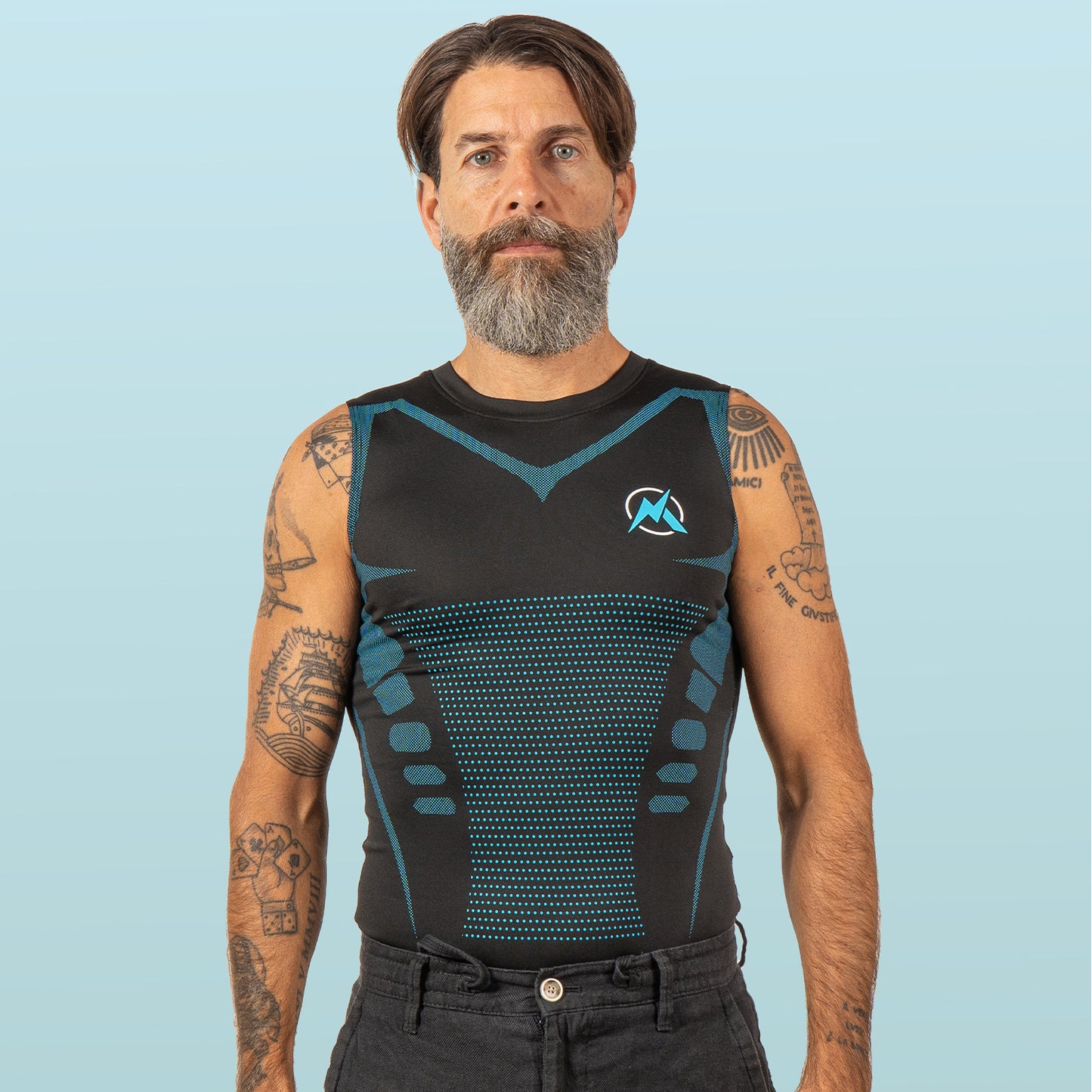
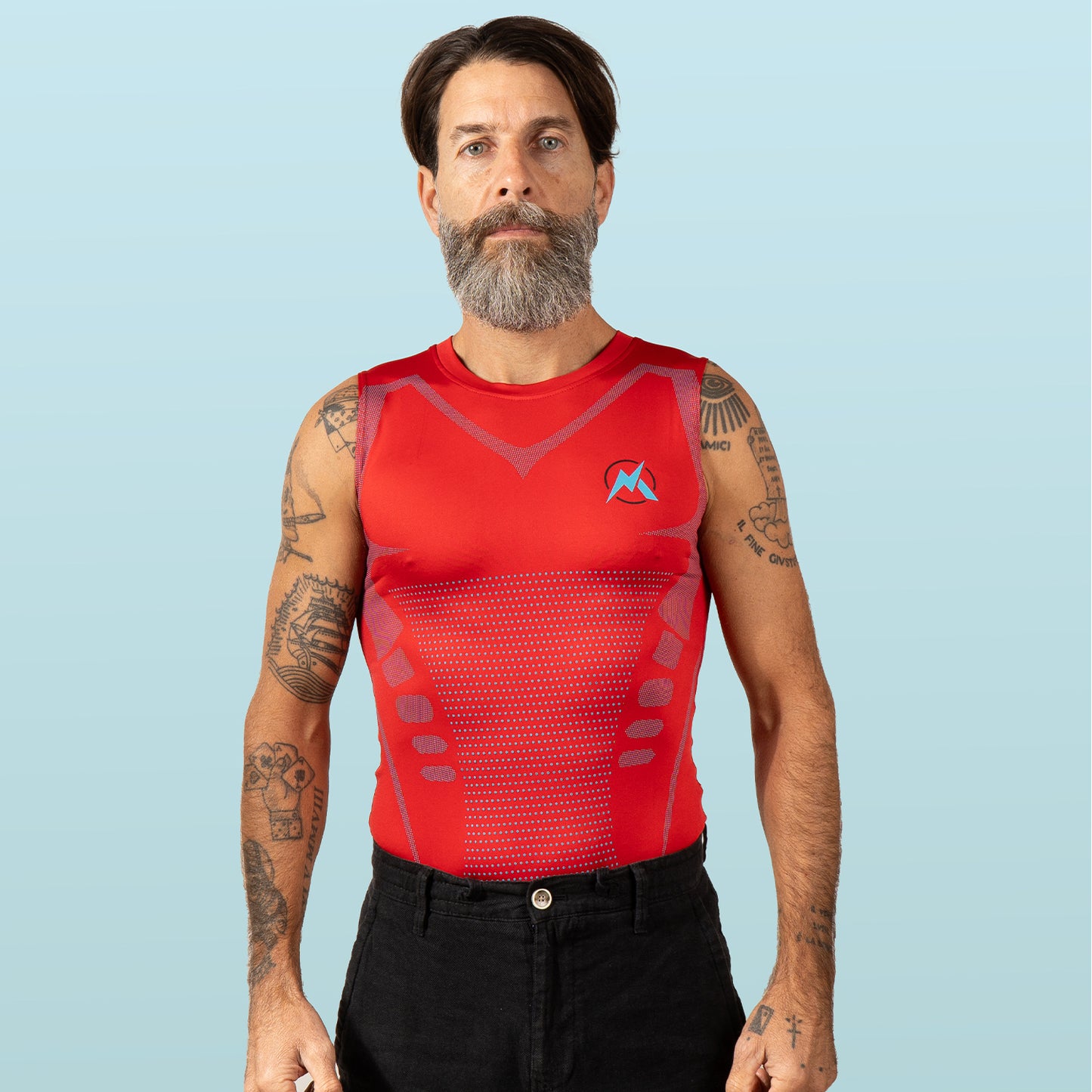
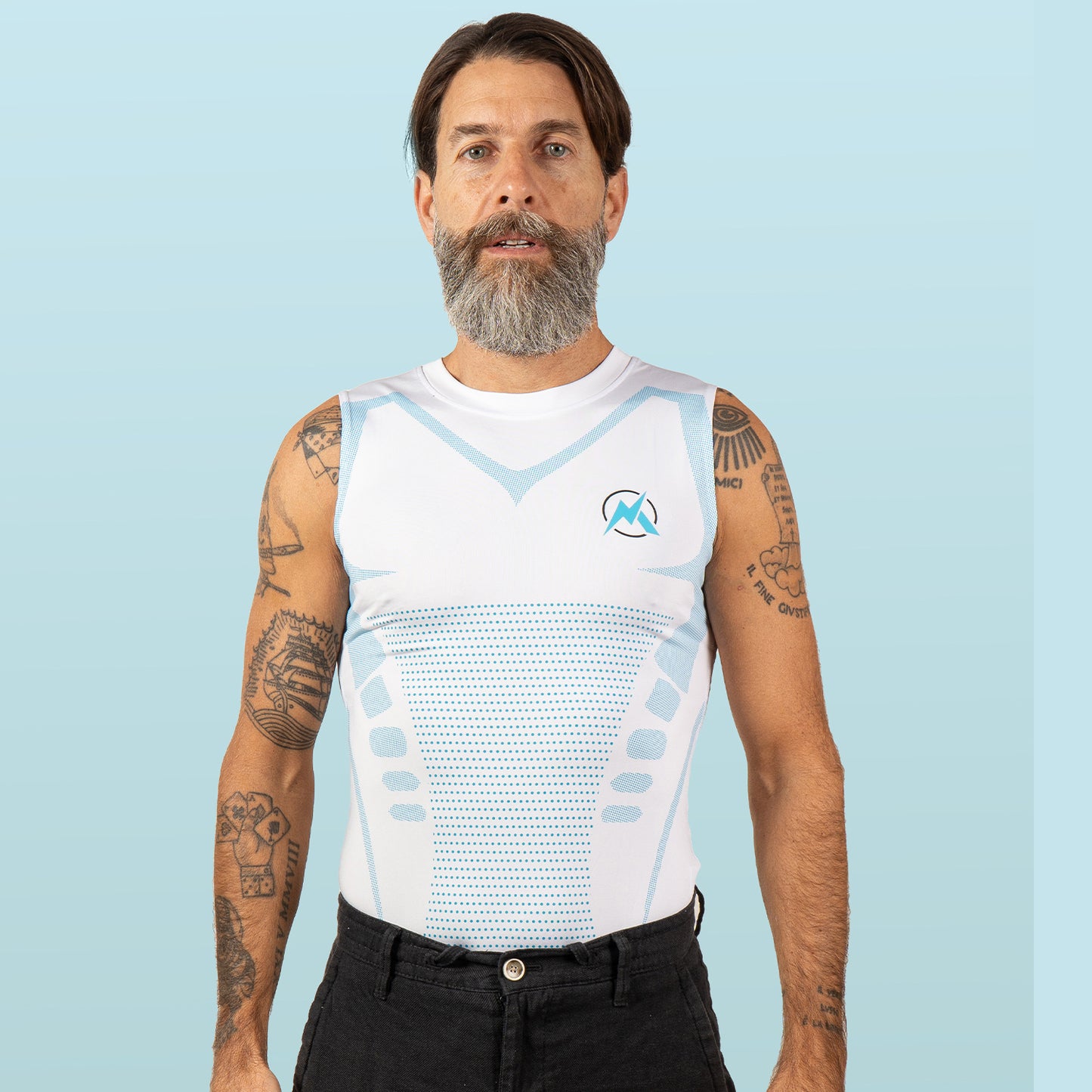
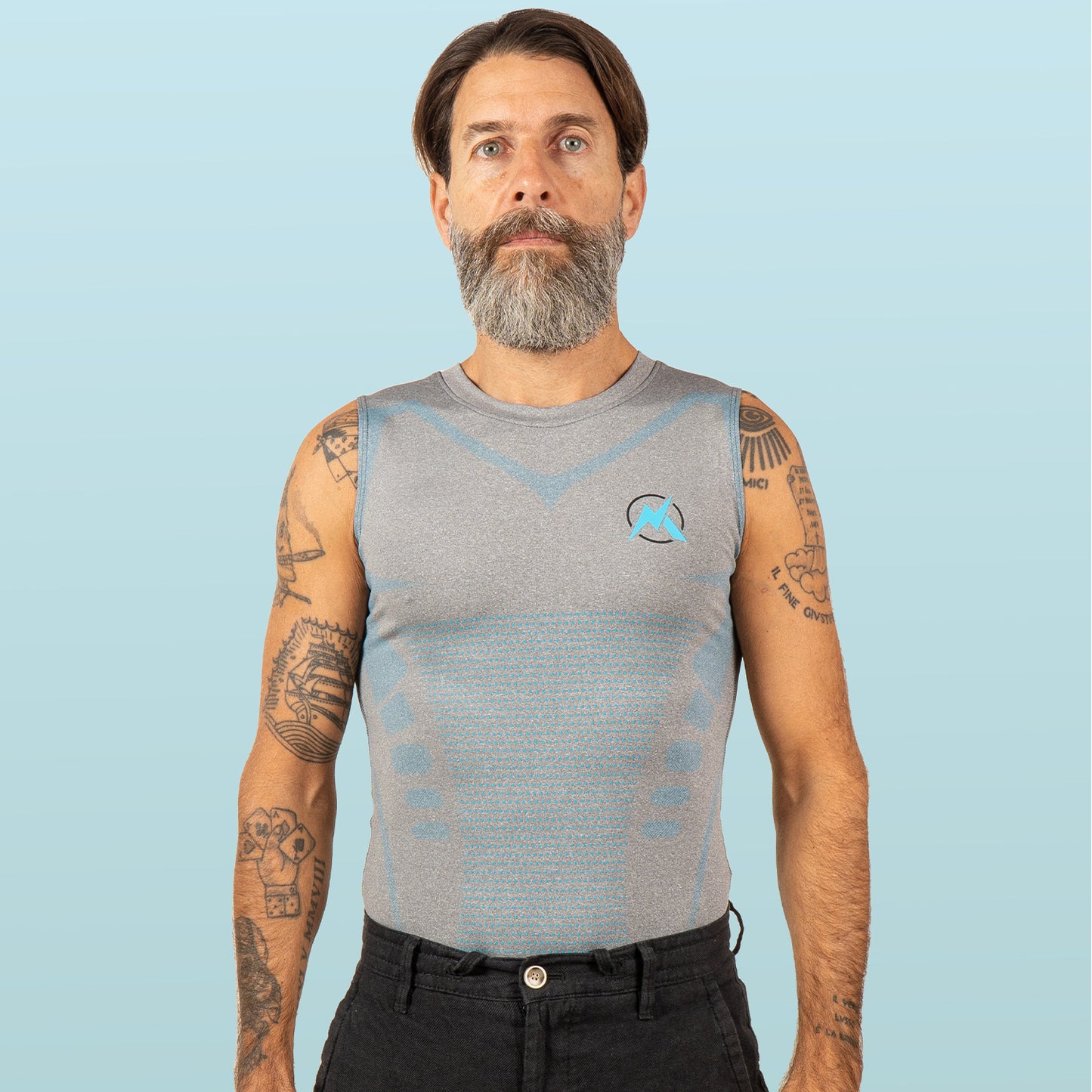
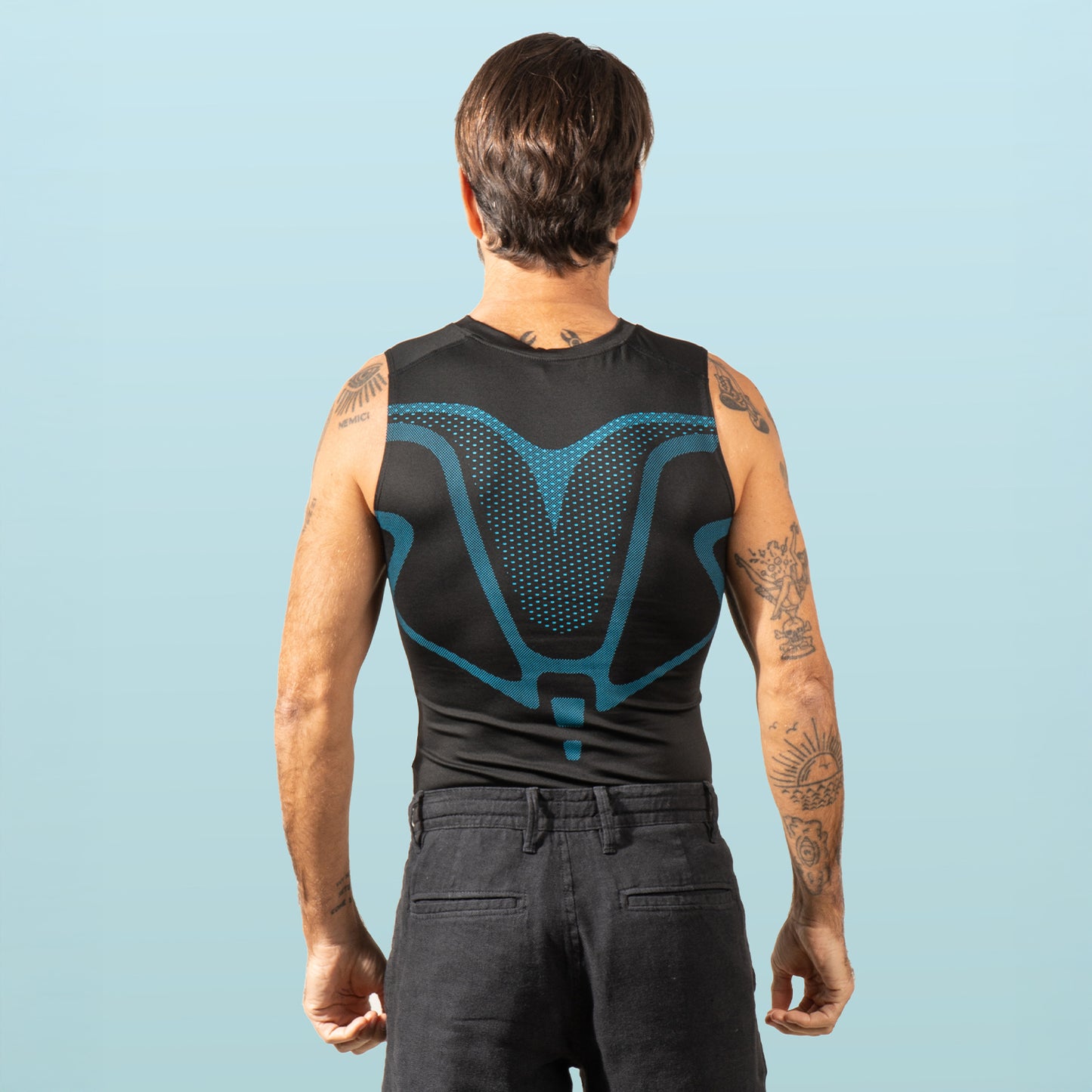
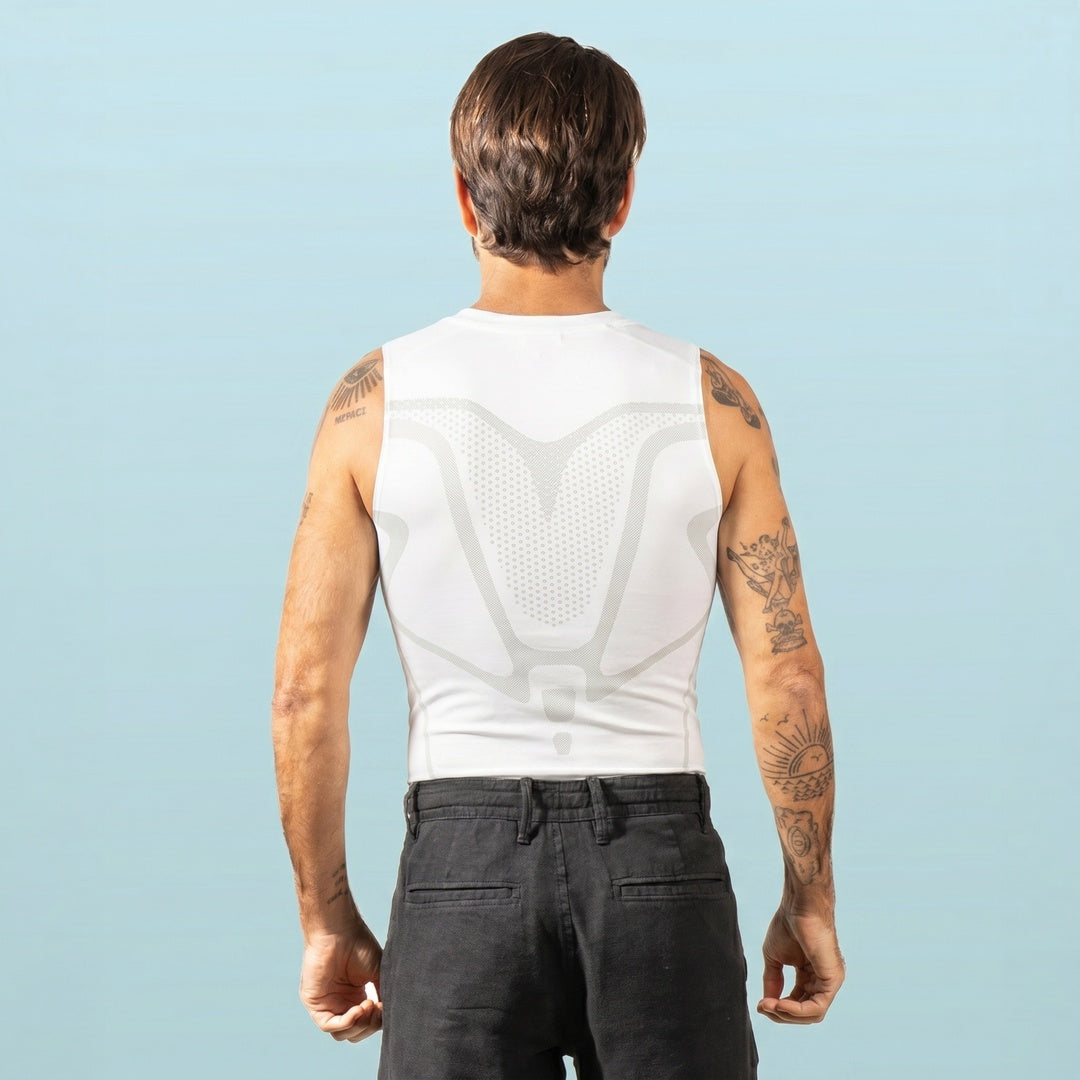
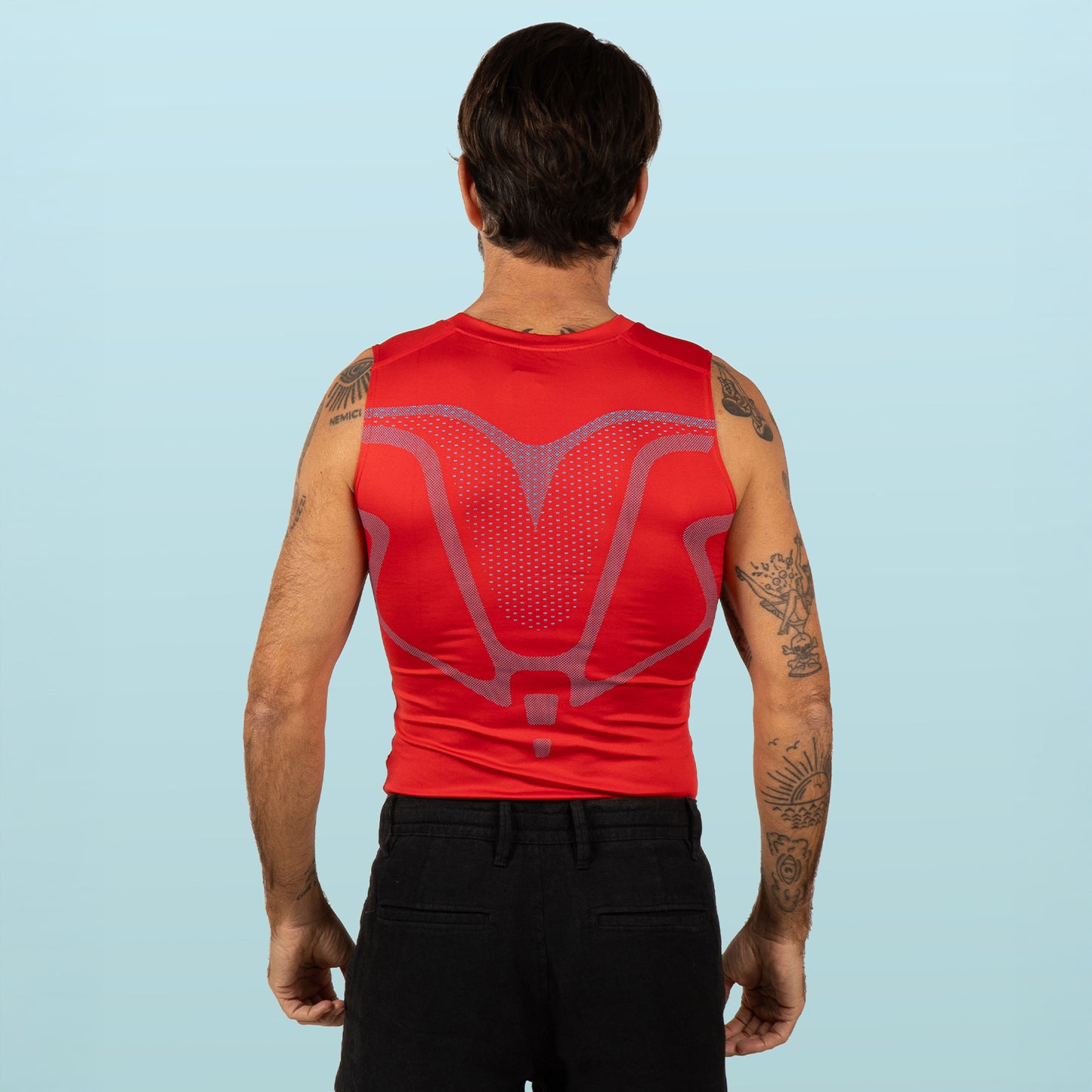
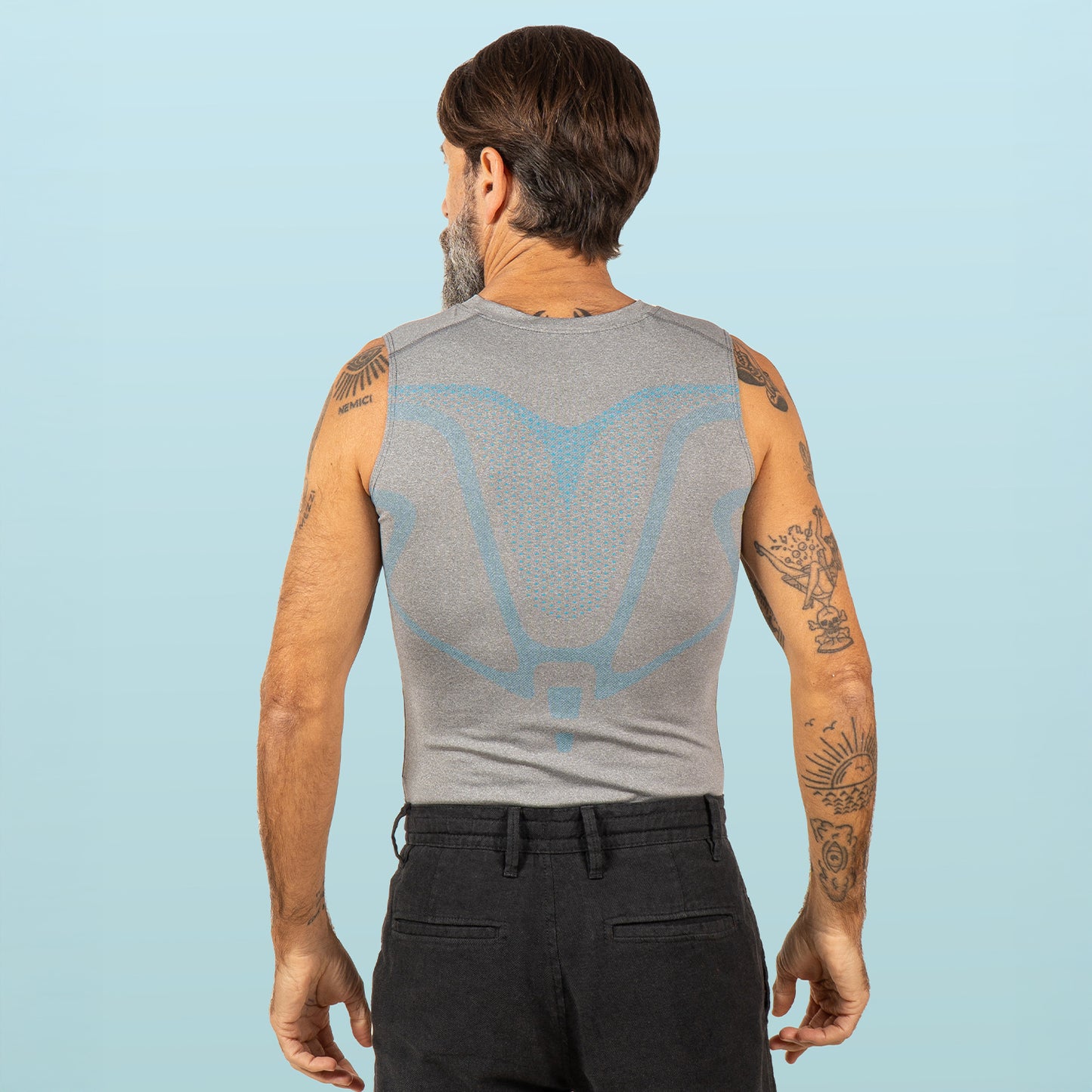
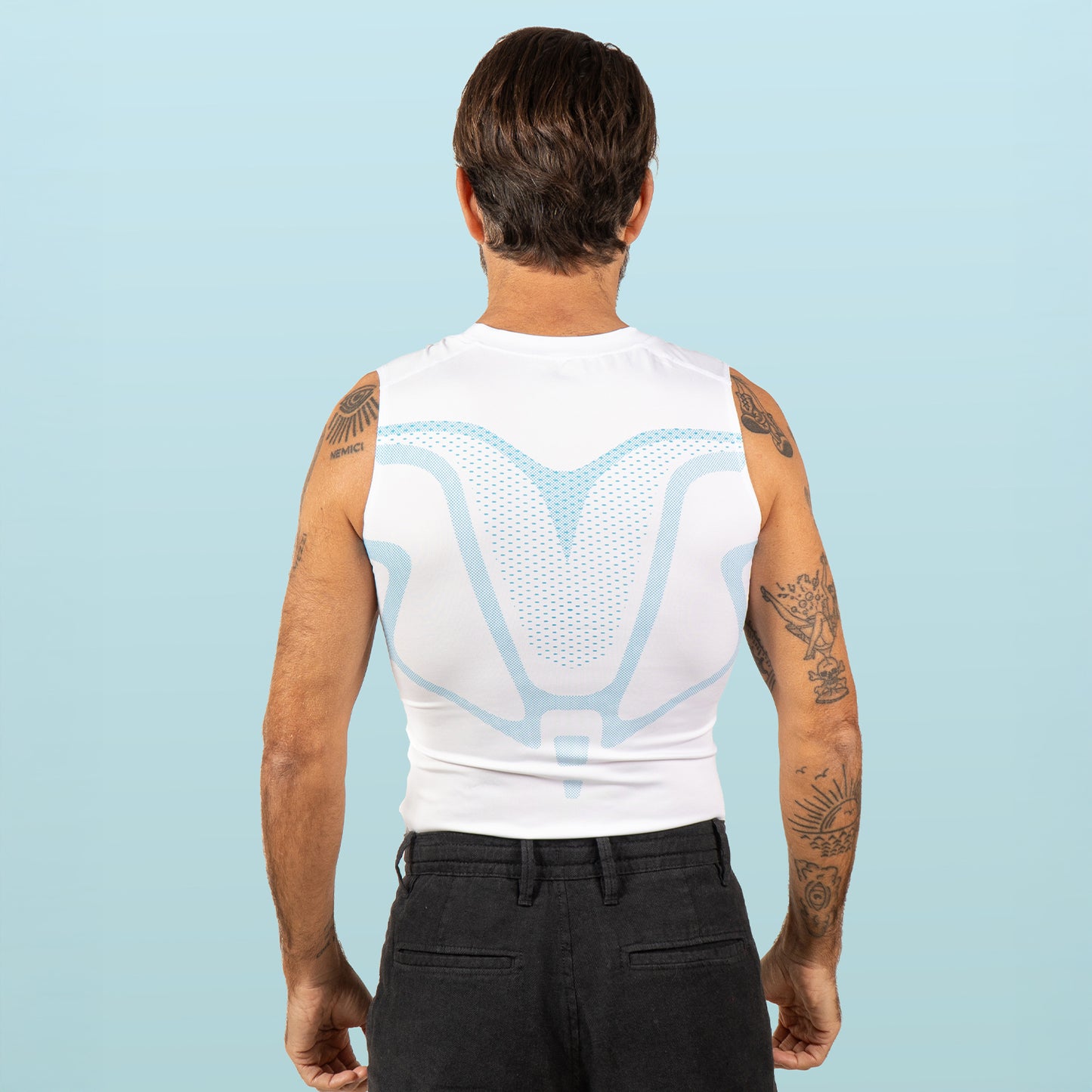
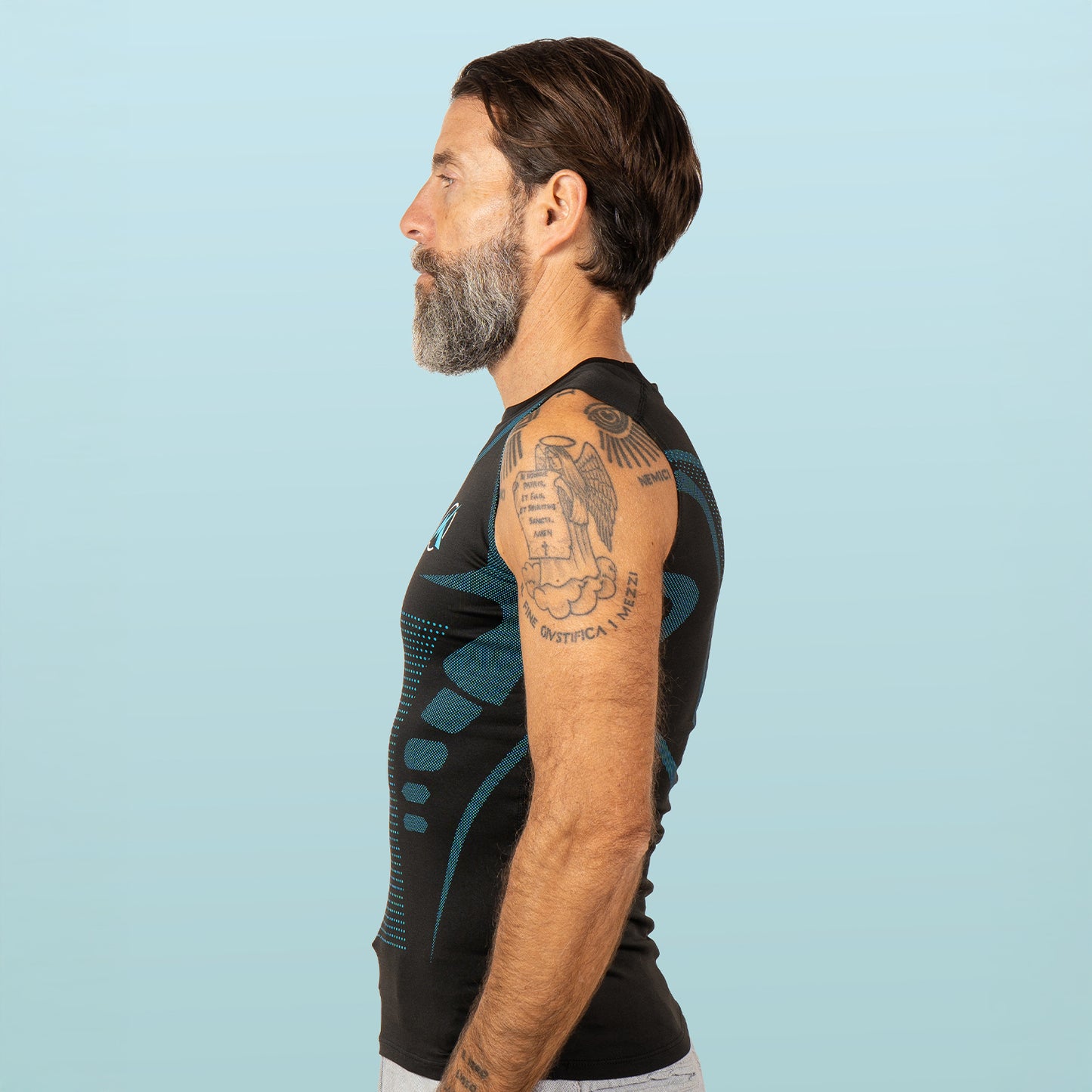
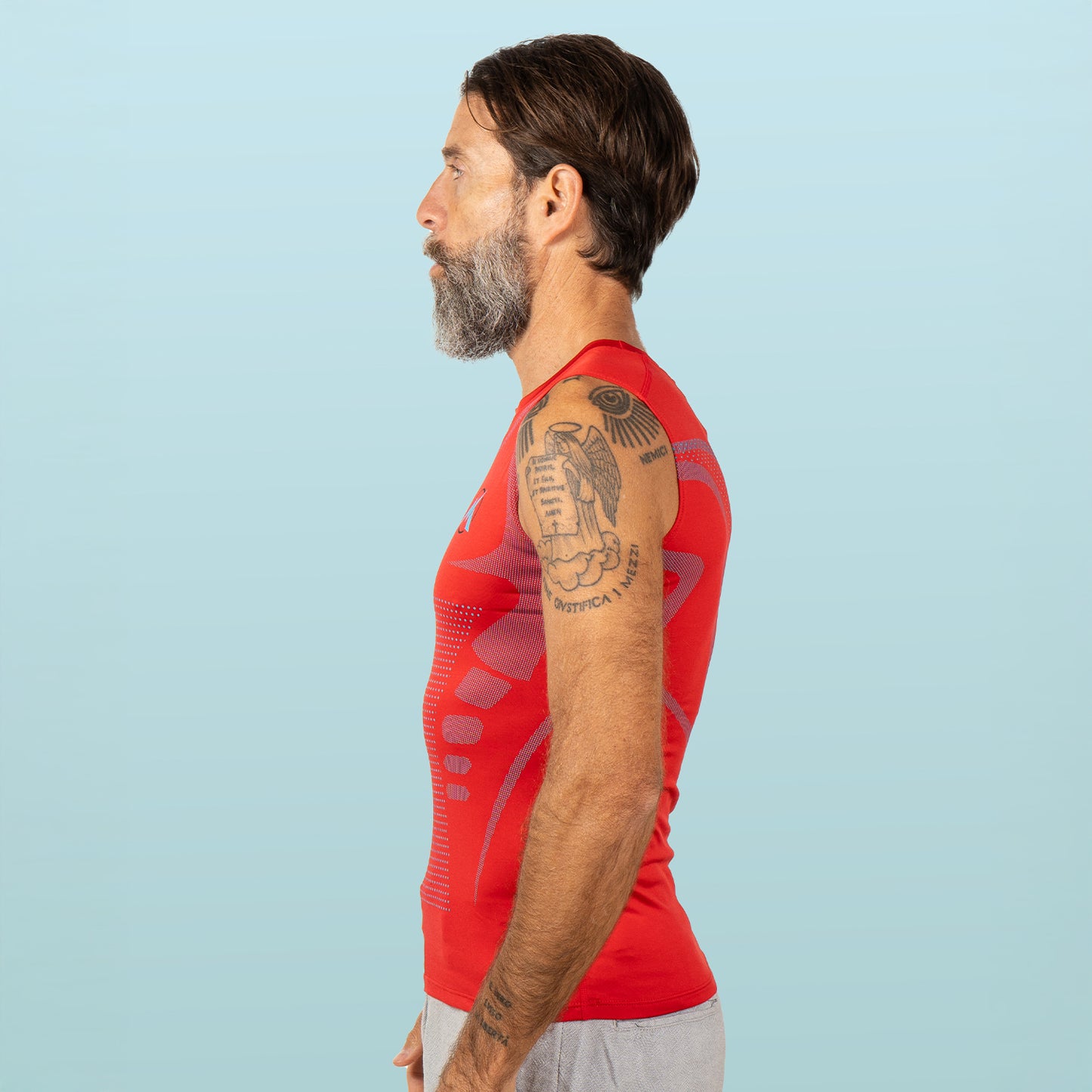
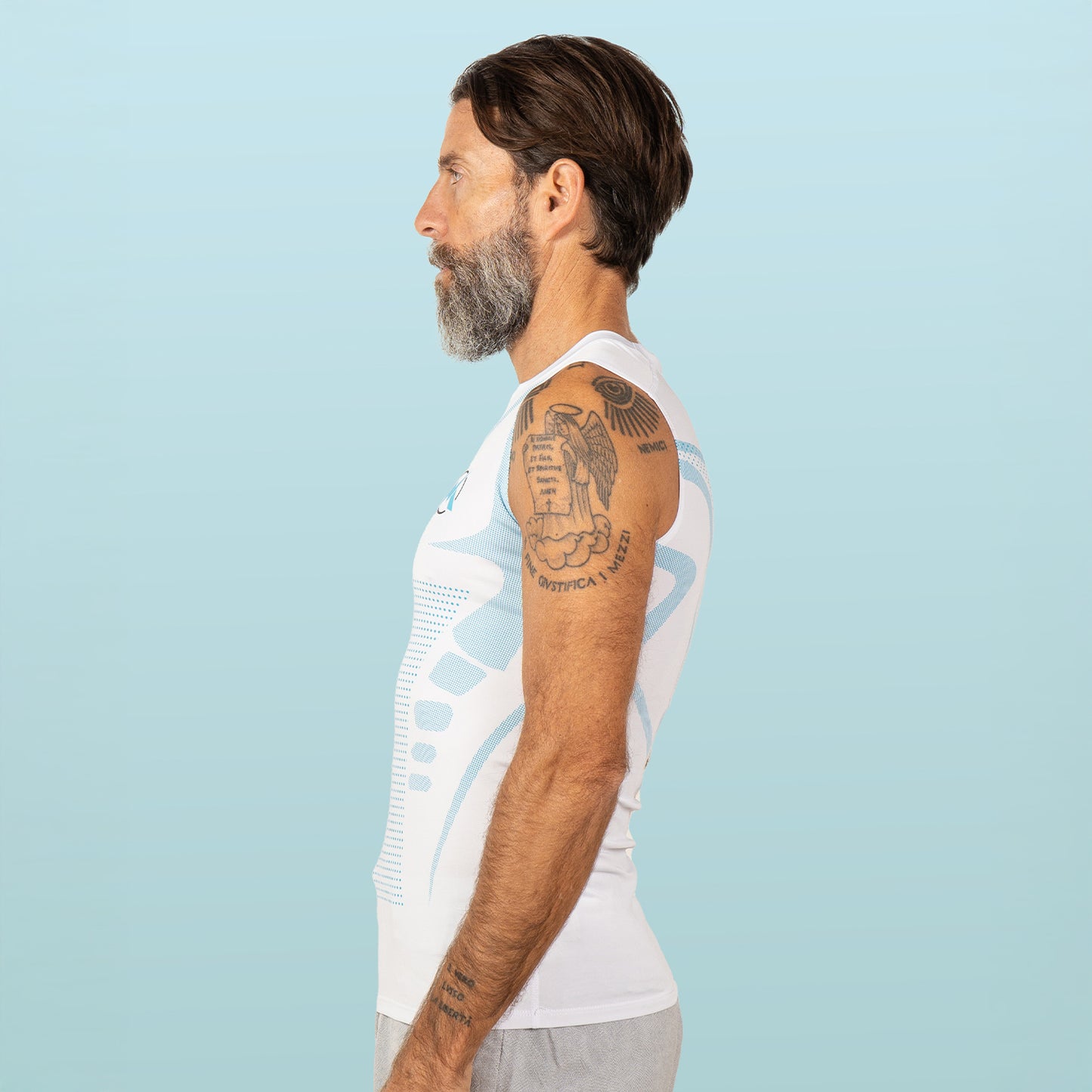
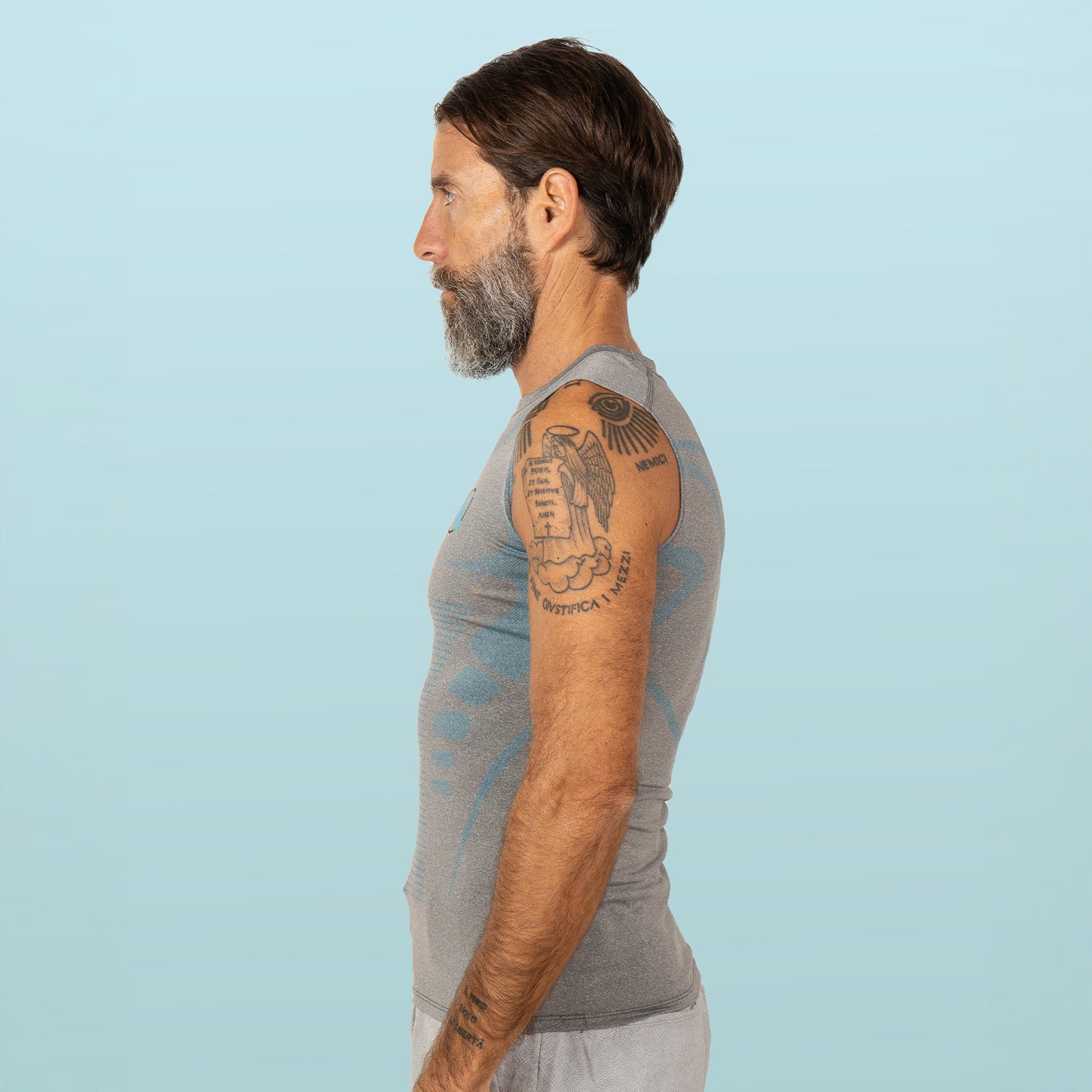
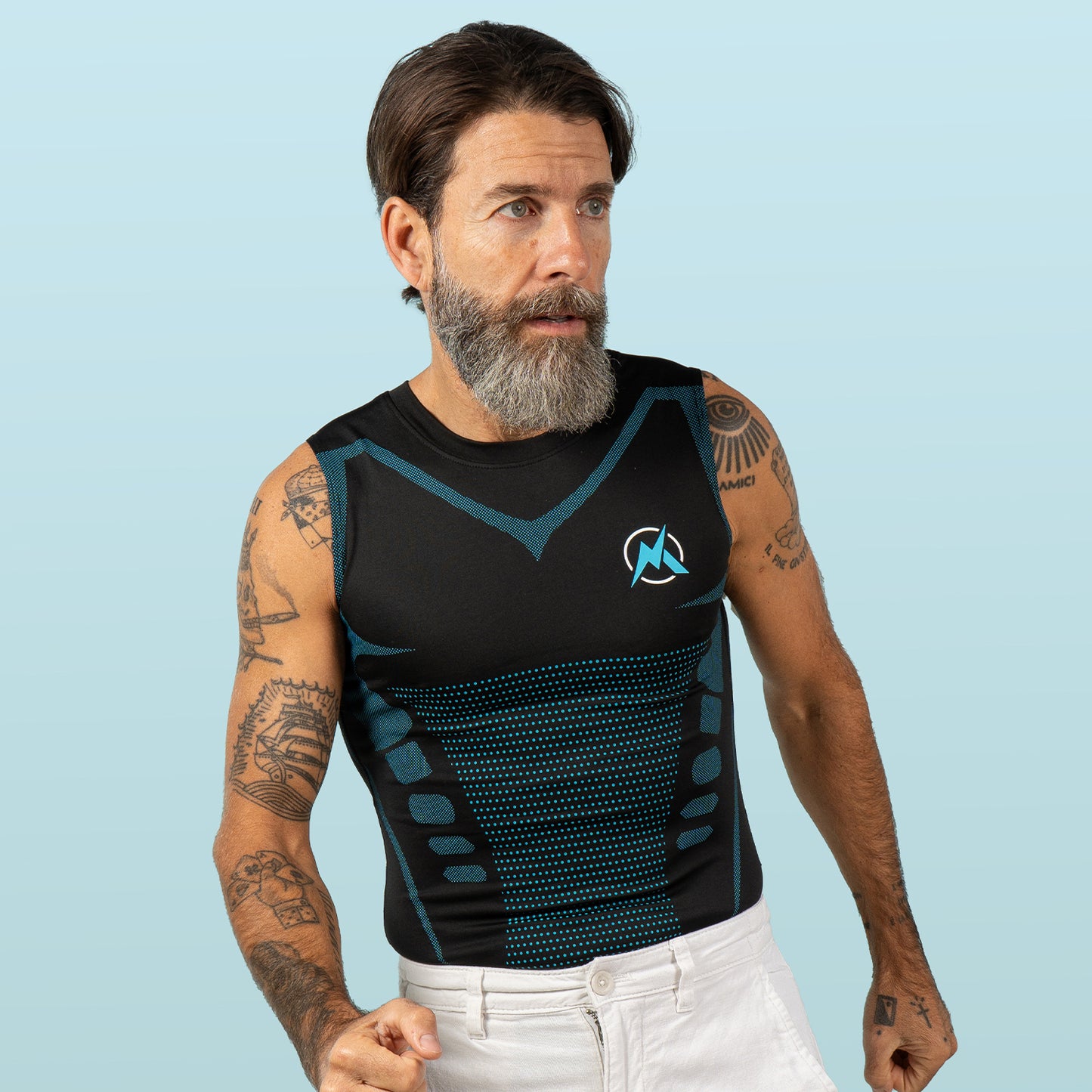
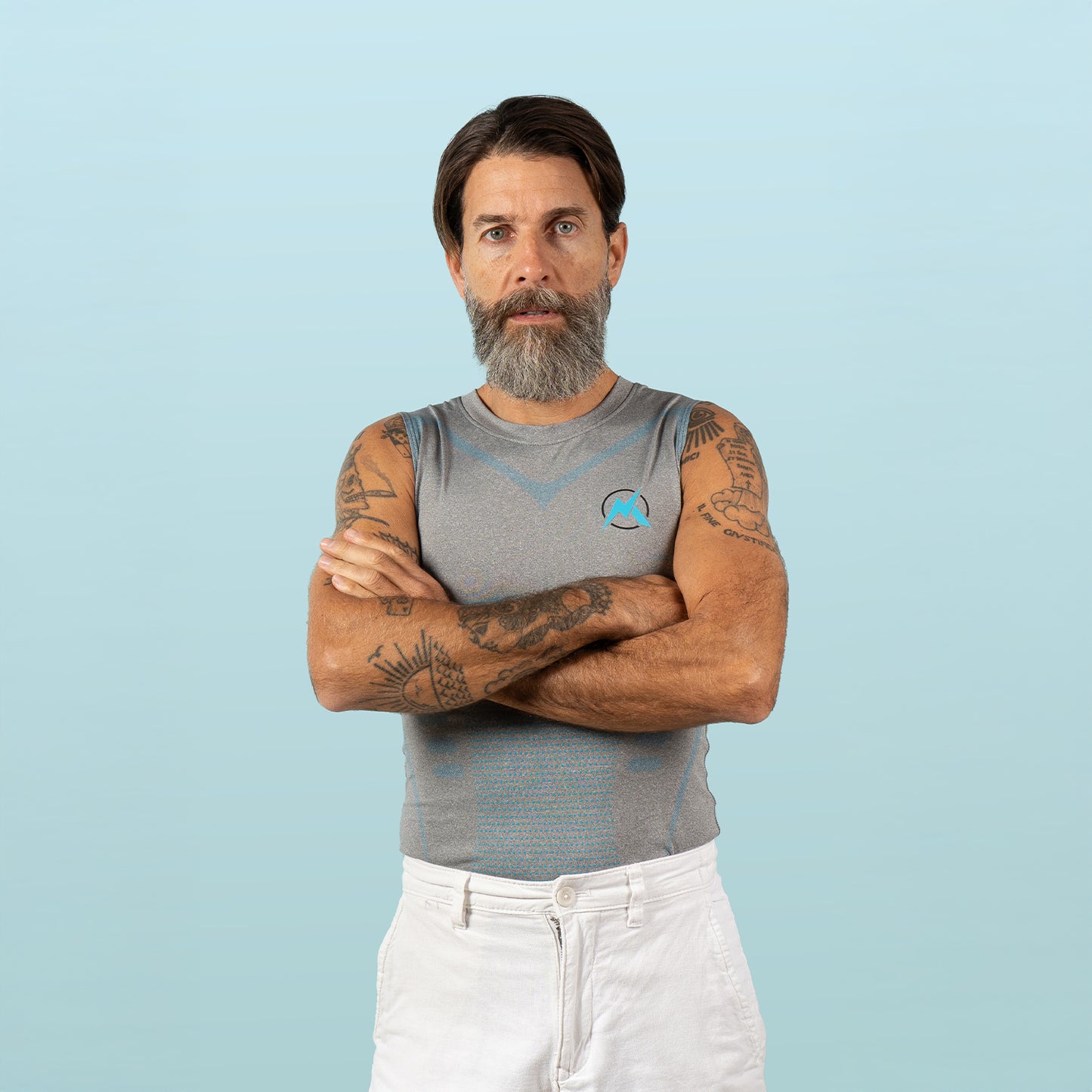
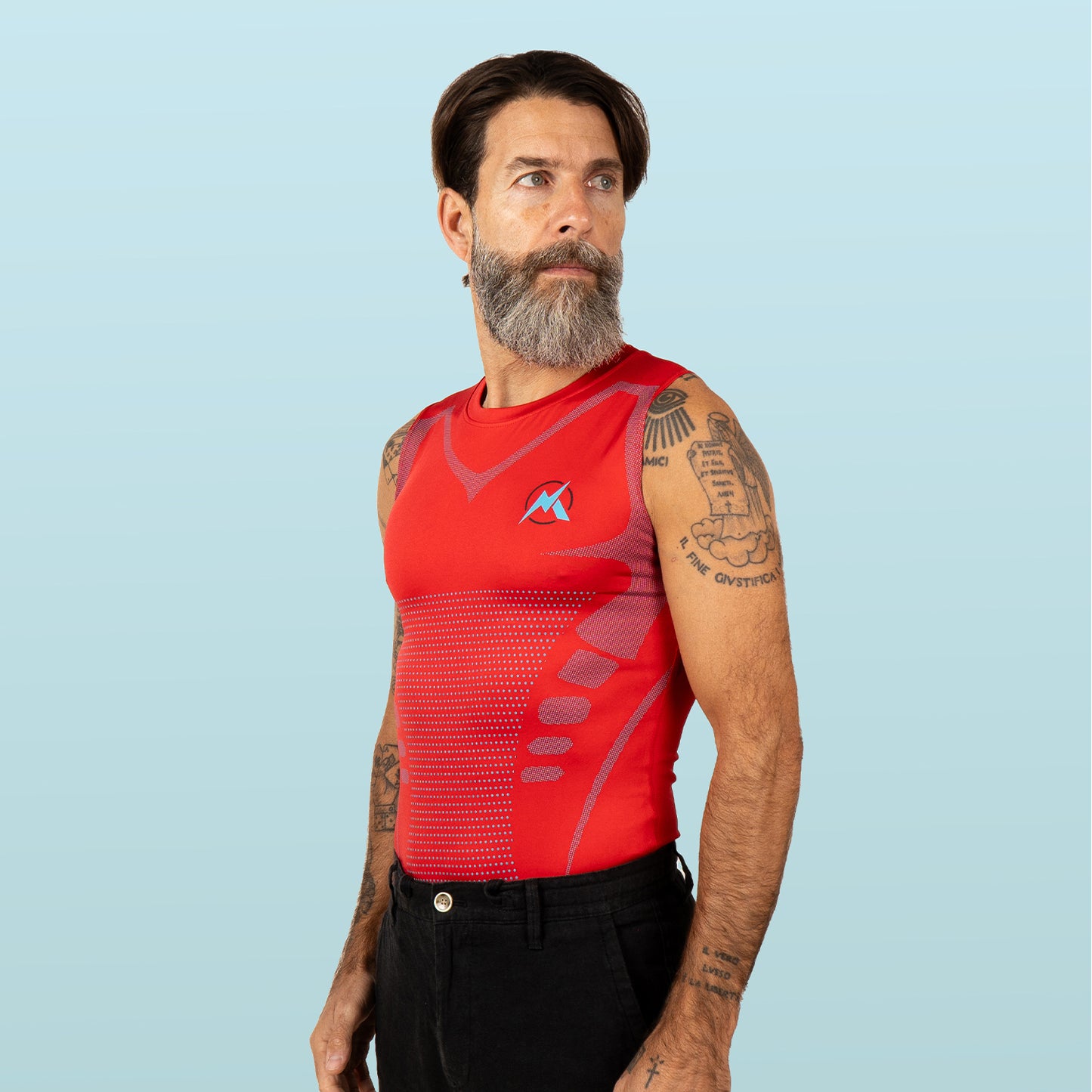
Compression is the second lever. A well-fitted compression undershirt smooths the soft-tissue spread that accumulates in the midsection during middle age and supports the postural muscles that have weakened from years of desk work. It buys you the look you're working toward while you actually do the work. Maynox makes VitaBoost exactly for this scenario — engineered for men who want to look sharper today while they put in the months of training, eating, and sleeping that change the underlying body. It's a tool, not a substitute. (We've covered the science of compression wear in depth: do compression shirts work for men.)

The point: you don't have to choose between fixing the cause and managing the symptom. Smart men do both at the same time.
A Realistic 90-Day Reset
If you want a concrete starting point, here it is. Three months, simple, repeatable.
| Phase | Focus | Action |
|---|---|---|
| Days 1-30 | Build the floor | 2 strength sessions/week. 7+ hours sleep. Protein every meal. Add 2,000 daily steps. Drop liquid calories. |
| Days 31-60 | Tighten the plate | Continue Phase 1. Apply the plate template at every meal. Add a 3rd lift day if Phase 1 felt easy. |
| Days 61-90 | Add load | Increase weights in the gym. Cap alcohol at 2 drinks/week. Add one weekly cardio session you actually enjoy. |
At the end of 90 days you won't be 25 again. You will, however, feel and look distinctly different — and you'll have the system that keeps working into your 60s. (If you want a deeper look at the belly-specific physiology that often hides behind "middle-age spread," we broke it down in detail in why men get a belly after 40. And the case for visual levers while you do the slow work is in how to look thinner without losing weight.)
The bottom line: middle-age weight gain in men is common, mostly explainable, and never as inevitable as you've been told. The body you have at 45 is the result of the last decade of choices. The body you'll have at 55 is the result of what you decide this week.
Try VitaBoost — Buy 1 Get 1 Free
Frequently asked questions
What causes middle-age weight gain in men?
Middle-age weight gain in men is driven by three things working together: loss of muscle mass (3-8% per decade after 30), a slow testosterone decline (1-2% per year after 30), and a quiet drop in daily activity (NEAT). Contrary to popular belief, resting metabolism stays stable from 20 to 60 — so a "slowing metabolism" is mostly a myth.
At what age do men start gaining weight?
For most men, weight starts creeping up between ages 30 and 40, with the most noticeable changes typically showing up in the early-to-mid 40s. Sarcopenia (muscle loss) begins around 30, testosterone starts declining around the same age, and daily movement tends to drop as careers and family obligations get heavier.
Is middle-age weight gain inevitable?
No — common, but not inevitable. A 2022 Anglia Ruskin University study found that middle-aged men often perceive weight gain as unavoidable, but the biological changes behind it (muscle loss, hormones, NEAT) all respond strongly to strength training, adequate protein, and sleep. The men who don't gain weight in middle age generally aren't lucky — they're maintaining muscle.
How can a middle-aged man lose weight fast?
"Fast" is the wrong frame. The most effective approach is a boring 90-day reset: two to three strength sessions per week, 0.7-1g of protein per pound of goal body weight, 7+ hours of sleep, and an extra 2,000 daily steps. Crash diets work for three weeks and wreck your testosterone and muscle for six months. Slow and consistent wins.
Why am I gaining weight in my 40s when nothing has changed?
Because something has changed — you just haven't noticed it. You're carrying less muscle than you did at 30, you're moving less in daily life than you used to, and your sleep is probably shorter than you realize. Same calories in, but fewer calories burned at rest and during the day. The result is a slow, invisible drift upward.
Sources
- Pontzer et al. — Daily energy expenditure through the human life course (Science, 2021)
- NIH/PMC — Sarcopenia and aging muscle changes
- Mayo Clinic — Testosterone decline with age
- CDC NCHS Data Brief 559 — Sleep duration among U.S. adults
- Harvard Health — Strength training and abdominal fat in men
This article is for general information. It is not medical advice. If you have a chronic condition, talk to your doctor before making major changes to your training or eating.