By Owen Blot · Founder, Maynox · Last updated June 19, 2026
You see the group photo coming.
Your wife pulls you into the frame at your nephew's wedding. Your shoulder rounds in without you noticing. Your chin drifts forward. Your hands disappear into pockets. The shutter clicks.
A week later, you see the photo on someone's Instagram. You look smaller than you are. Softer. Older. Tired. Not the guy who just bench-pressed his bodyweight last Tuesday.
This is the gap most men over 40 don't talk about — the version of you that lives in photos is not the version of you that walks around. And it's not vanity to want to fix it. Photos are how your kids will remember you. How your colleagues see you on LinkedIn. How your wife shows you off.
The good news: looking stronger in photos isn't about flexing, filters, or losing twenty pounds first. It's about a five-second stack of micro-decisions you make before the shutter clicks. This guide walks through them in the order they matter.
What "Weak in Photos" Actually Reads As
Before we fix it, name it. When a photo of you reads "weak," it's usually five things compounding — not one big problem.
1. Slumped shoulders. Years of desk work pulled your shoulder blades forward. In a relaxed standing photo, your shoulders sit ahead of your ears. The frame reads "deflated chest." According to NIH's News in Health, more than 80% of adults experience posture problems at some point — and most don't realize it shows up in photos before it shows up in pain.
2. Soft pec. Without active engagement, the chest collapses inward. The shirt drapes flat instead of filling. Your upper body reads as a rectangle, not a V.
3. Head forward. This is the one nobody warns you about. Cleveland Clinic notes the head weighs 10 to 12 pounds in a neutral position, but tips forward to 27 pounds at a 15-degree tilt and 60 pounds at 60 degrees — and a camera catches that forward drift instantly. You look like you're peering at the photographer instead of standing tall in front of them.
4. Hidden hands. Hands jammed in pockets, hands behind your back, hands clasped in front of your crotch — all read "small." The body language science there is brutal: a body without visible hands shrinks.
5. Doughy midsection. The shirt is bunched. The belt cuts a horizontal line that breaks the silhouette. Nothing is holding the frame together.
These five together — not one of them alone — are what "weak" looks like in a photo. Fix three of the five and you read 50% stronger immediately. Fix all five and people genuinely think you've been training.
Why Most Photo Advice Fails Men Over 40
Search "how to look better in photos" and you get listicles aimed at twenty-somethings. Eight tips. Twelve poses. "Bring your shoulders back." Vague.
Two reasons that advice doesn't translate at 45:
One — it ignores time. A wedding photographer gives you two seconds. Your wife snapping a candid gives you half a second. You don't have time to rotate your body 15 degrees, find your light, and remember tip #7. You need a checklist short enough to run in one breath.
Two — it ignores how the 40+ body actually behaves on camera. Your chest isn't 22 years old. Your shoulders carry tension from a desk job. Your midsection isn't flat. Telling you to "look confident" doesn't help when the underlying mechanics aren't there. You need physical levers — not vibes.
If you're still figuring out why your posture collapsed in the first place, our guide to fixing bad posture for men over 40 covers the underlying mechanics in detail.
What follows is the system that respects both constraints. Five levers. In order. Each one takes under a second.
The 5-Lever Stack
This is the whole game. Memorize the order. Run it every time someone raises a phone.
Lever 1 — Stance (feet, weight, toes)
Feet shoulder-width apart, toes pointed slightly outward — never inward. Toes pointed inward read passive and small. Toes out, even slightly, ground you.
Weight shifted to your front leg. Not 100% — about 60/40. This subtly tilts your torso forward, which makes your chest read bigger and your hips read smaller. It's the single biggest visual upgrade in this entire guide.
If you have a wall, lean back lightly against it. If you have a chair, hook one foot on the rung. Standing dead-center on both legs is the most flattering pose for nobody.
Lever 2 — Shoulders (back, down, wide)
Pull your shoulder blades down and back, like you're tucking them into your back pockets. Not up toward your ears. Not just back. Down and back.
This does three things at once: opens the chest, drops the trap line so your neck reads longer, and lifts the visual width of your upper body. One movement, three benefits.
Now stick your elbows out maybe an inch from your torso — just enough that there's daylight between your arms and your ribs. This adds visual mass to your shoulders and arms without you doing anything weird.
Lever 3 — Chin (out and slightly down)
The reflex when a camera points at you is to lift your chin or push it forward. Both are wrong.
What works: push your chin out away from your neck (creating space between jaw and collarbone), then tilt it down a few degrees. The combination defines your jawline, hides any softness under the chin, and stops the head-forward slouch dead.
If you only fix one thing in this entire article, fix the chin. It's the difference between looking like you slept well and looking like you didn't.
Lever 4 — Hands (anywhere but hidden)
Show your hands. Always.
Good places: holding a glass, holding your jacket lapel, one hand in a front pocket with the thumb out, a casual gesture mid-sentence, hand on someone's shoulder if it's a group shot.
Bad places: both hands in pockets (looks defensive), hands clasped in front of crotch (looks vulnerable), arms straight at sides like a soldier (looks stiff), behind your back (looks shrunk).
The visible hand sends a signal of openness and ease. Both hidden hands send the opposite. Pick one — visible, relaxed, with intention.
Lever 5 — Breath (exhale, then click)
The last lever, and the one nobody talks about.
Inhale slowly. Hold for one second. Exhale halfway. Hold there. Click.
Why half-exhale instead of full inhale? Full inhale gives you a puffed-out chest that looks staged and tight in the face. Full exhale collapses the chest. Half-exhale holds the chest open while keeping your face and shoulders relaxed.
You can practice this in the mirror. The difference between a held inhale and a half-exhale is the difference between "trying too hard" and "casually confident."
Camera Tricks That Actually Work
The five levers handle your body. Now the camera. Three small adjustments — they're not in your control at a wedding, but they are at family photos, headshots, or when you ask a friend to take the shot.
1. Camera height: chest, not eyes. A camera held at the photographer's eye level (so above your chest if they're standing) shrinks you. A camera held at your chest height shooting slightly upward does the opposite. According to perspective fundamentals, a low camera angle makes the subject appear larger and more dominant — that's not opinion, it's geometry. Politely ask the person taking the shot to "hold the phone a bit lower."
2. Lens / distance: step back. Phone wide-angle lenses (most default phone cameras) distort whatever's closest to them. If you're three feet from a phone, your nose looks bigger, your shoulders look narrower, and your belly — if it's the closest part of you to the lens — gets exaggerated. Wide-angle lenses make closer objects appear disproportionately larger, per basic optics. Step back six to eight feet if the person can frame you there. Or have them switch to the 2x or 3x lens (telephoto). You'll instantly look more proportional.
3. Angle yourself 15 degrees off-square. Facing the camera head-on flattens you. Turning your torso 15 to 20 degrees off-axis (so one shoulder is slightly closer to the camera) creates depth. Your shoulders read wider. Your waist reads narrower. Same body, more dimension.
The 1-Second Wardrobe Fix
If your shirt doesn't hold your frame, the five levers fight harder than they need to.
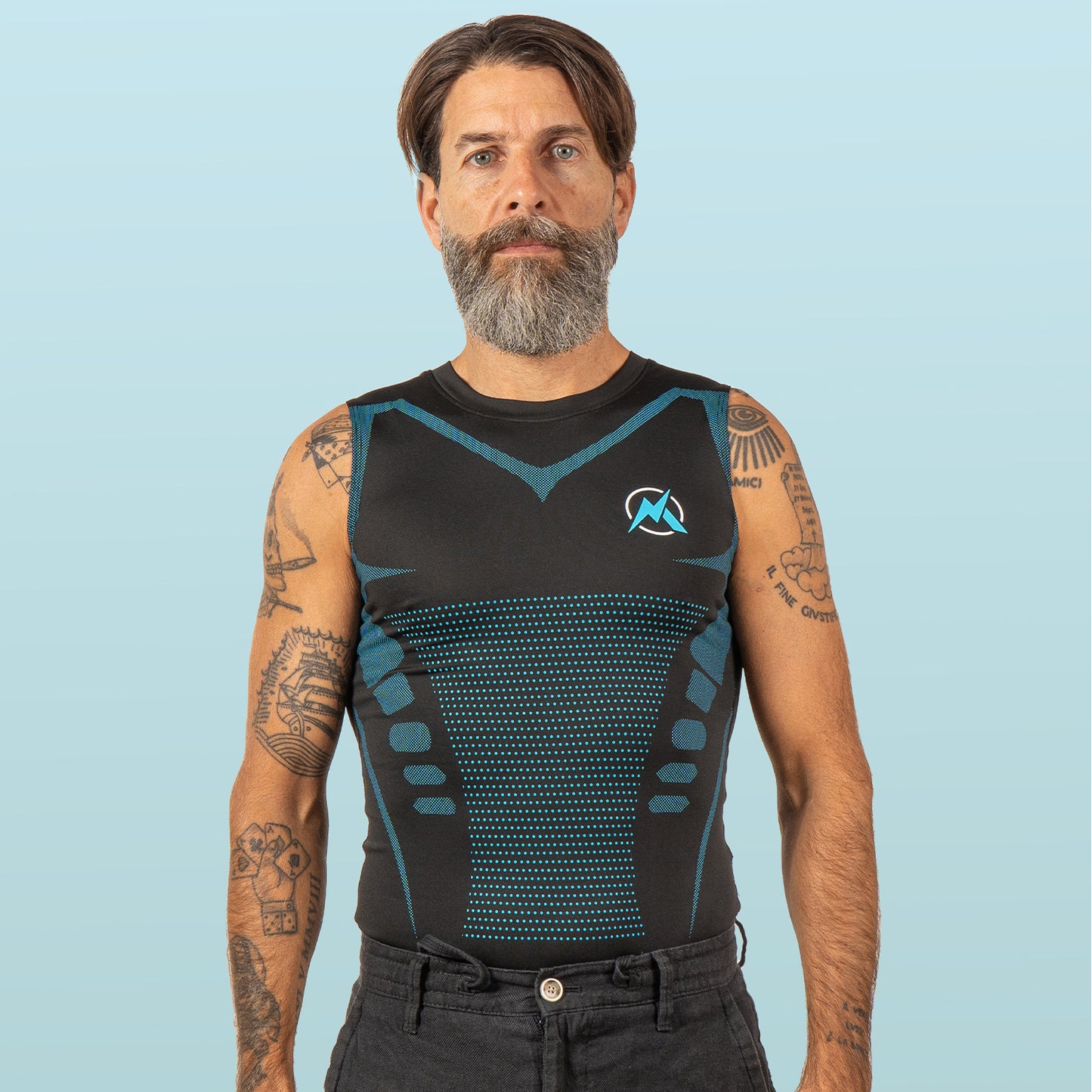
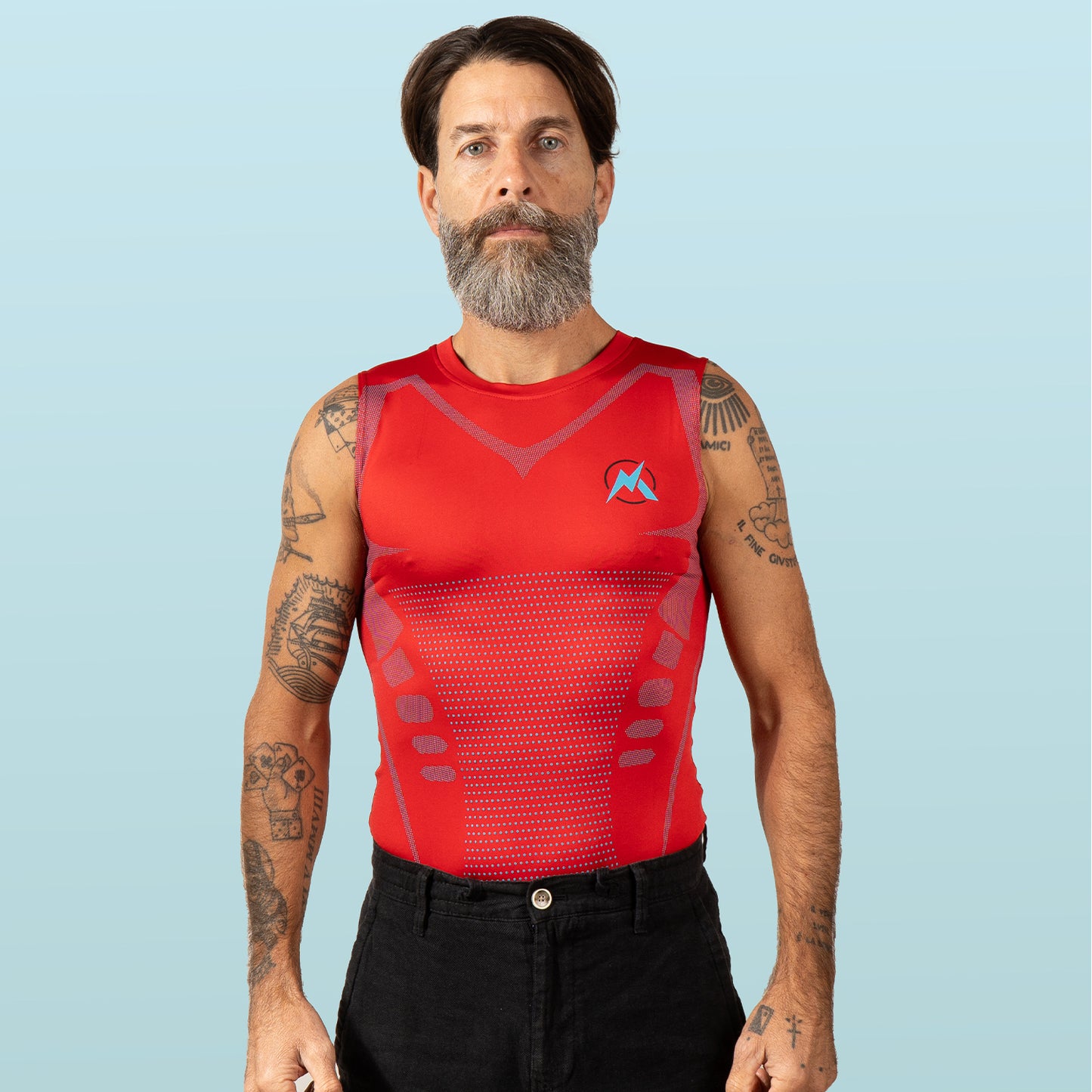
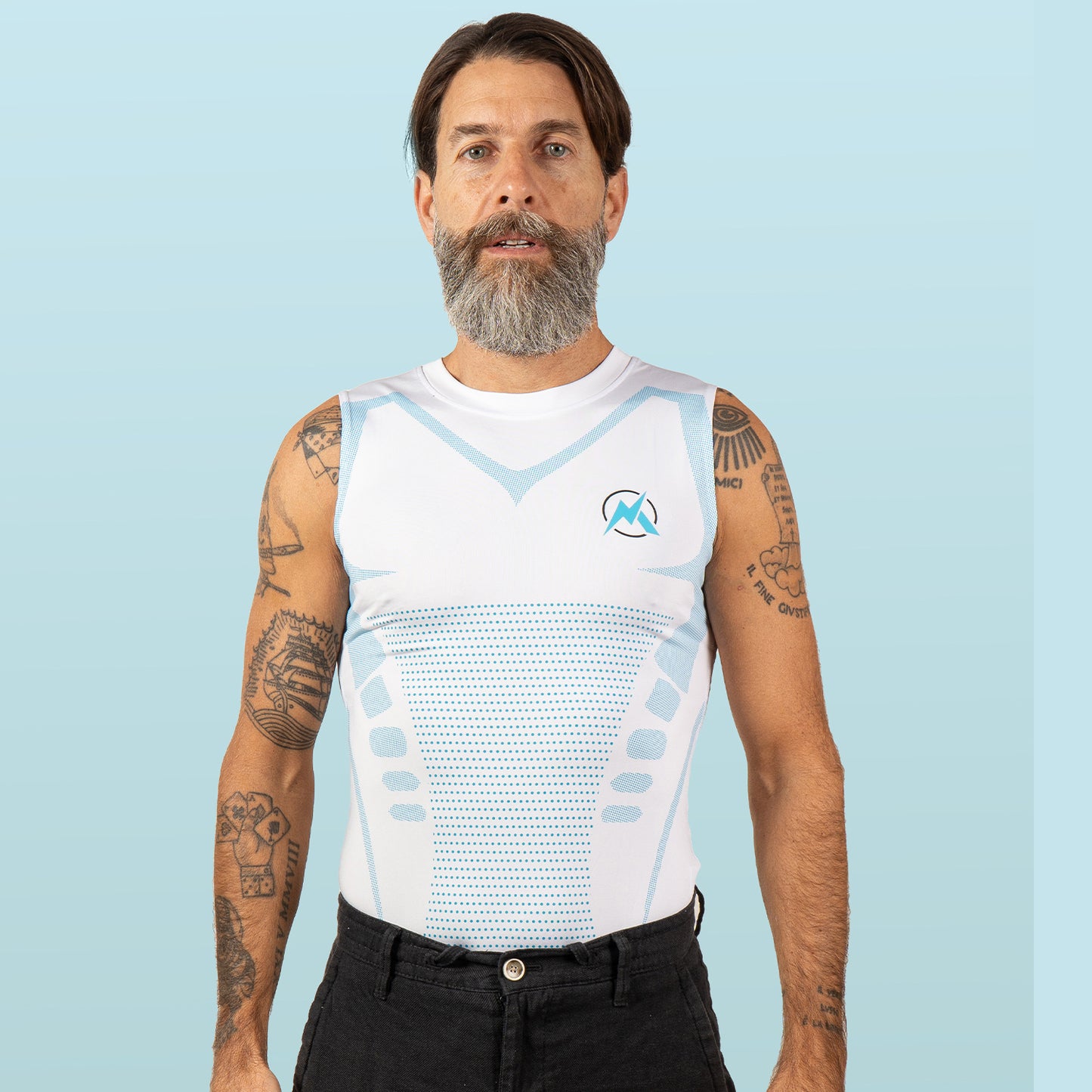
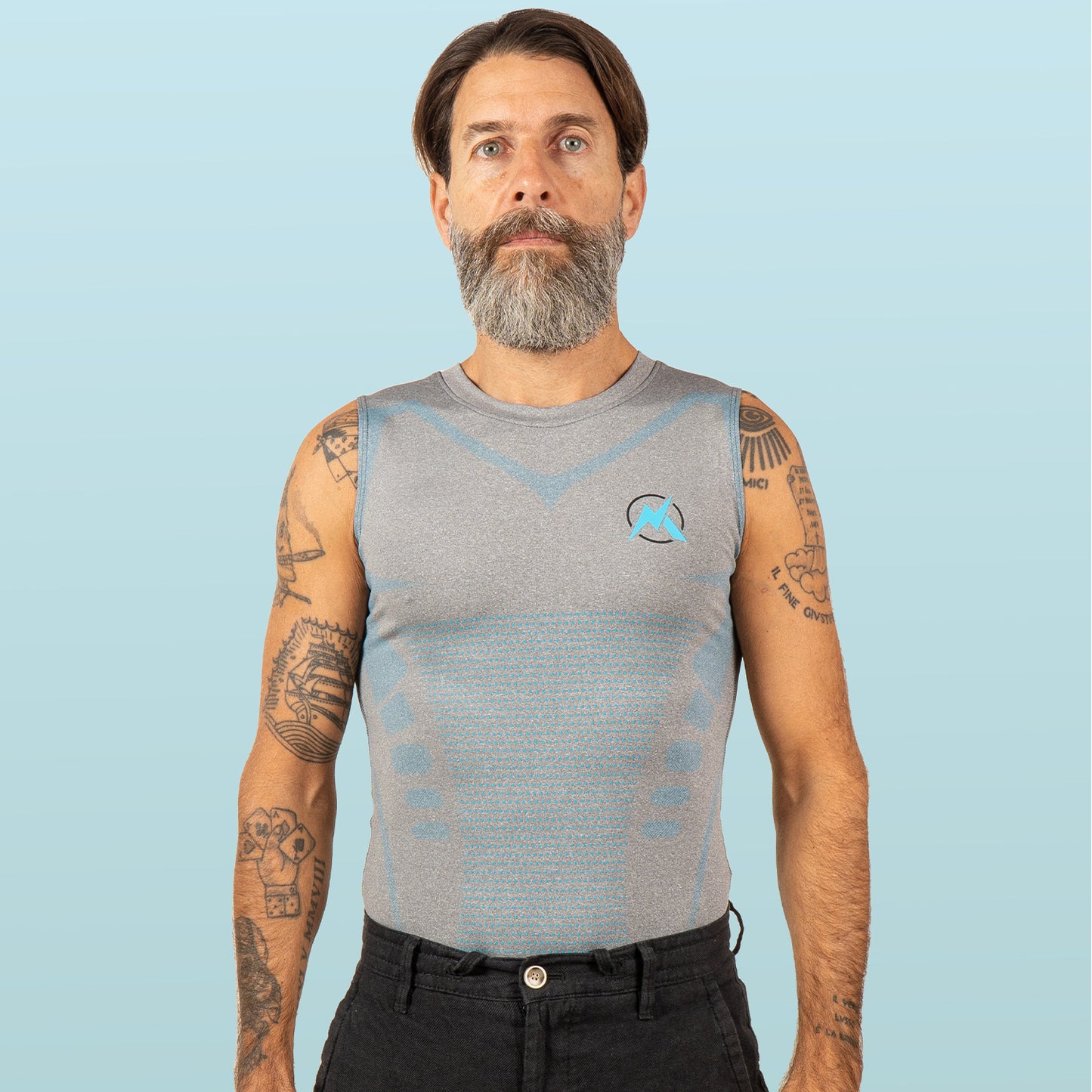
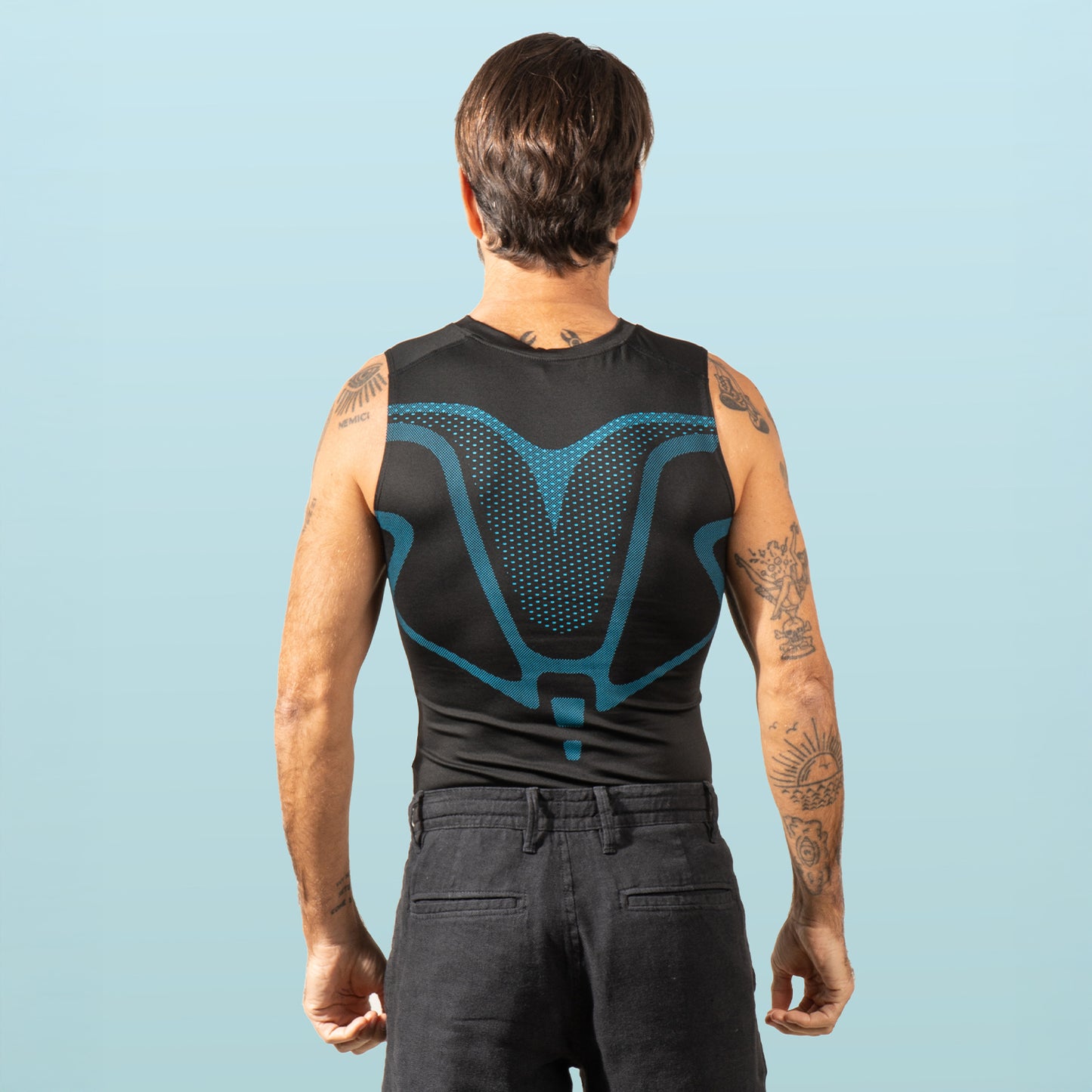
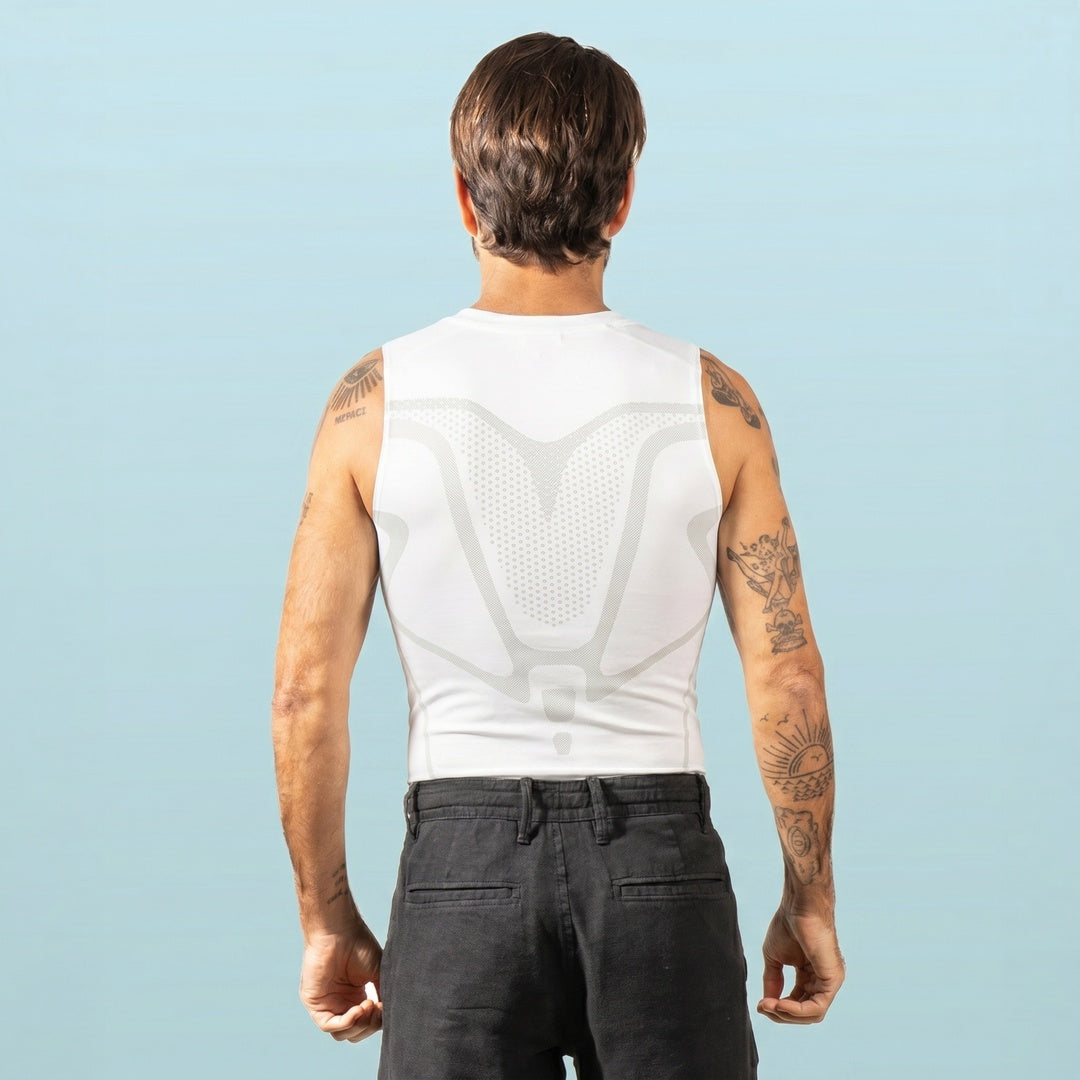
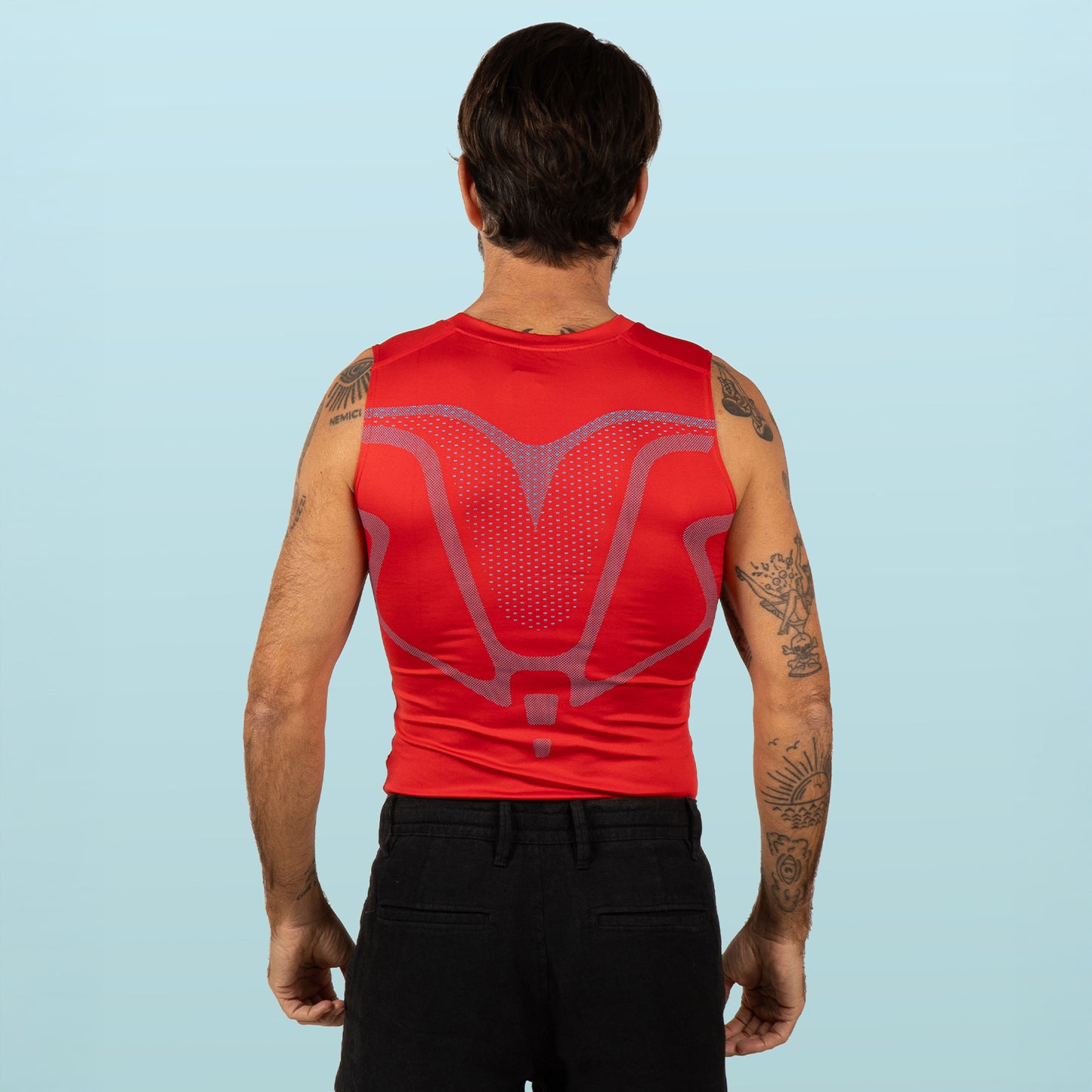
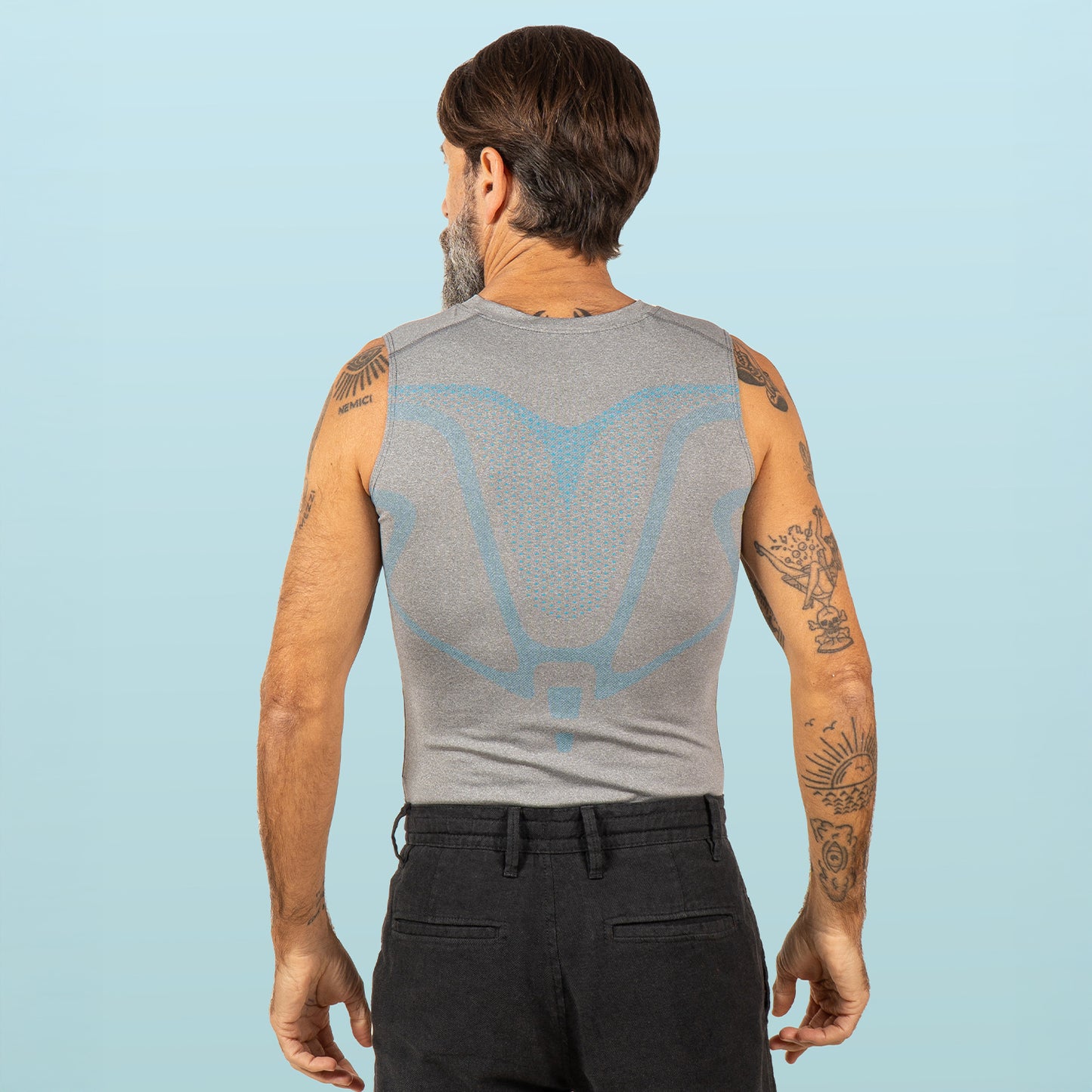
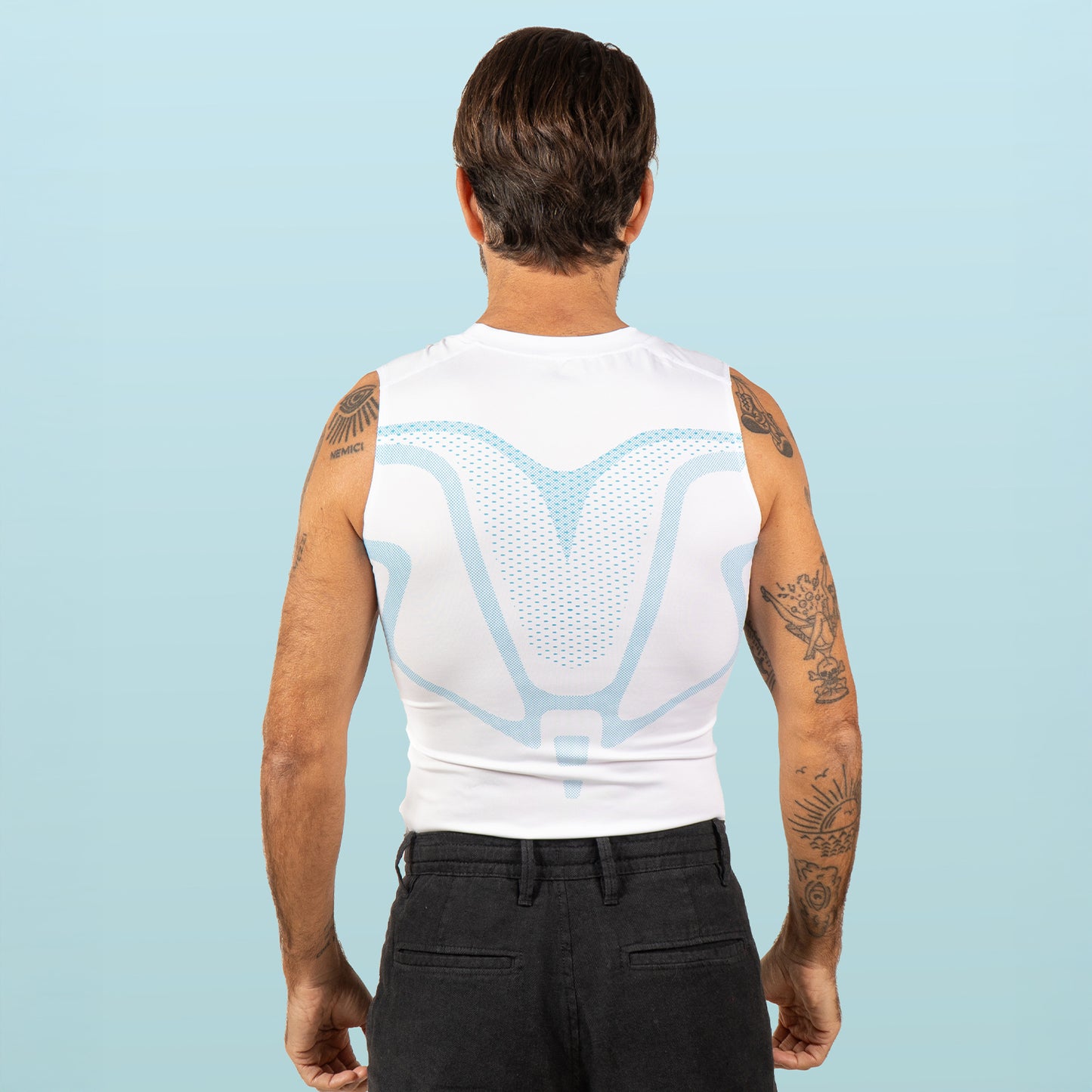
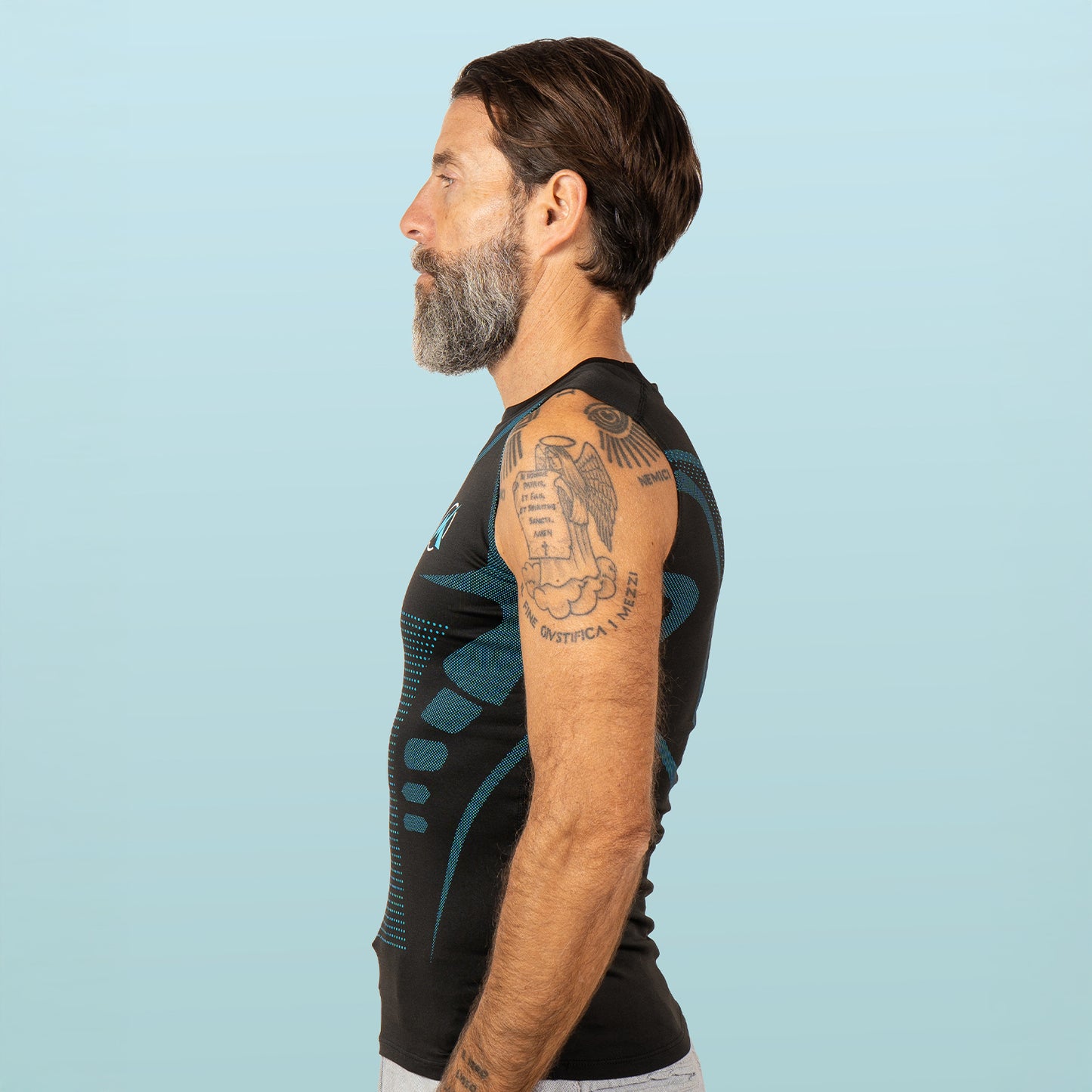
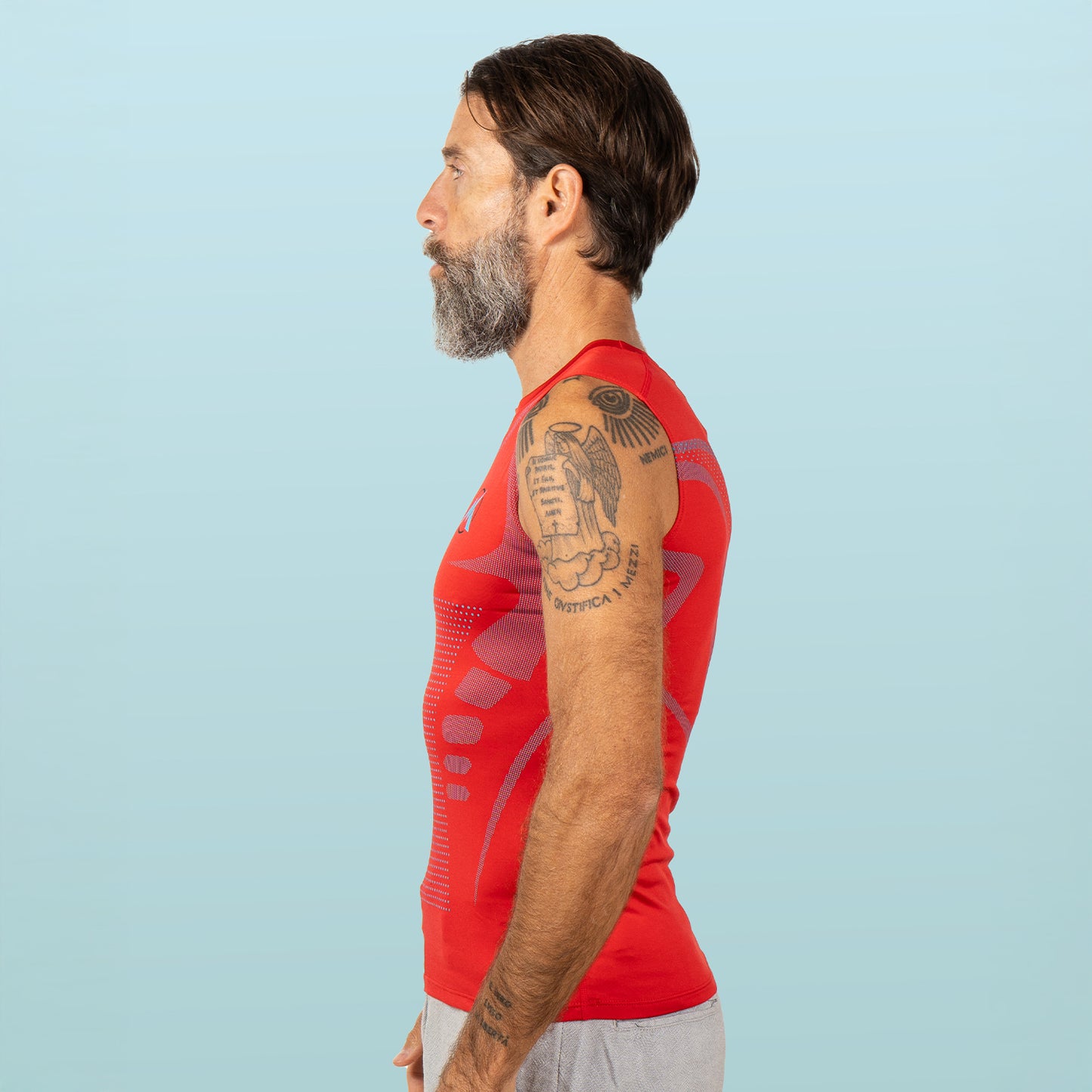
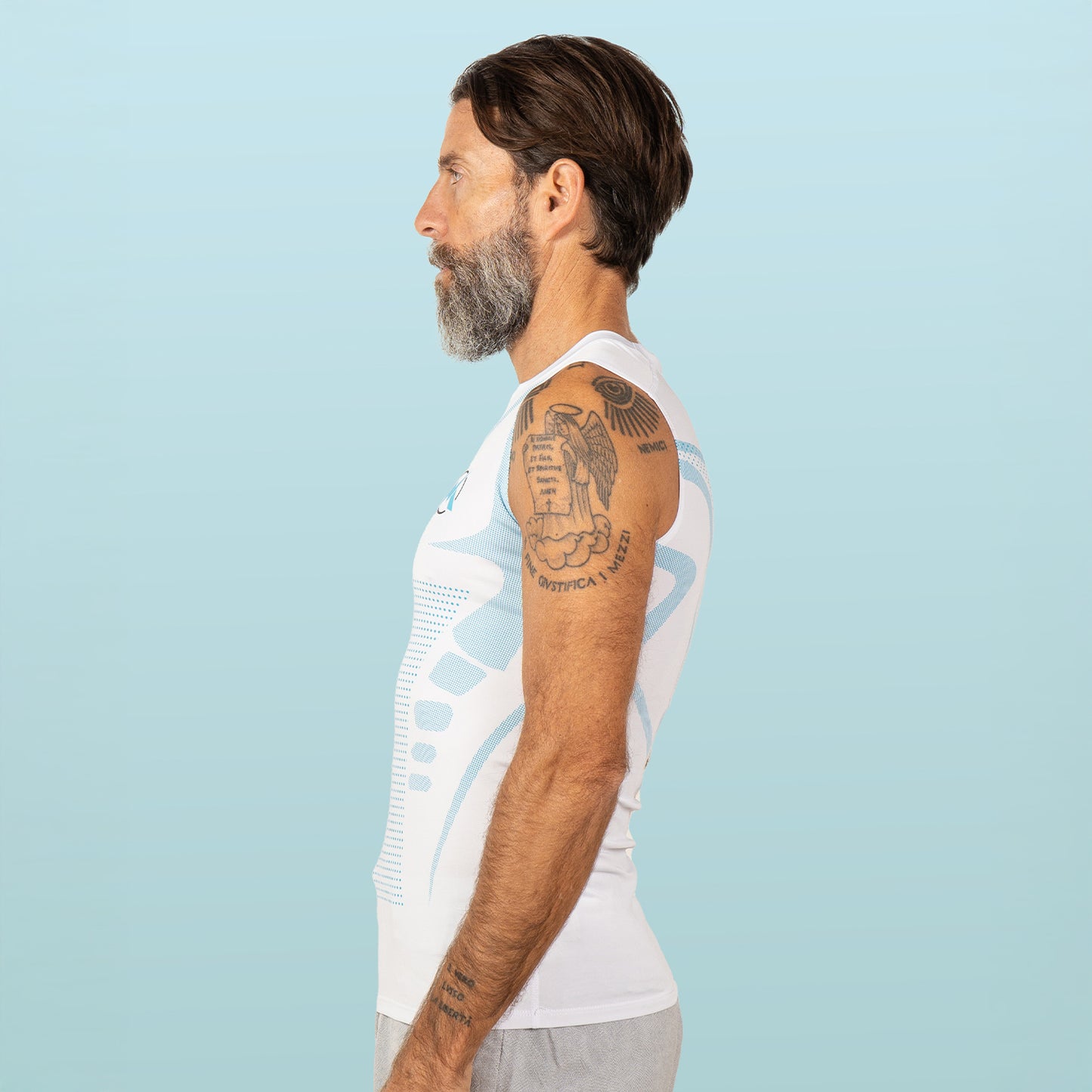
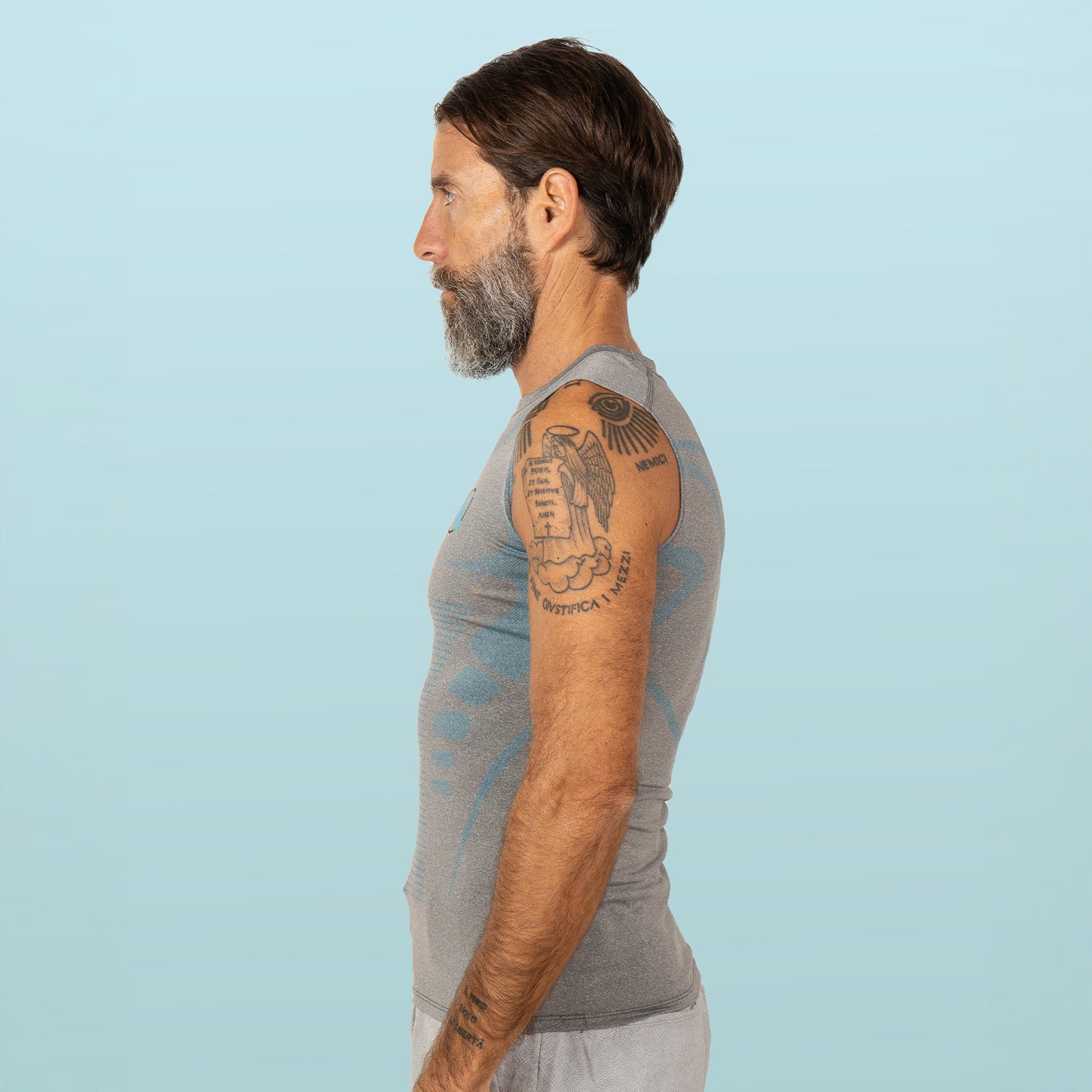
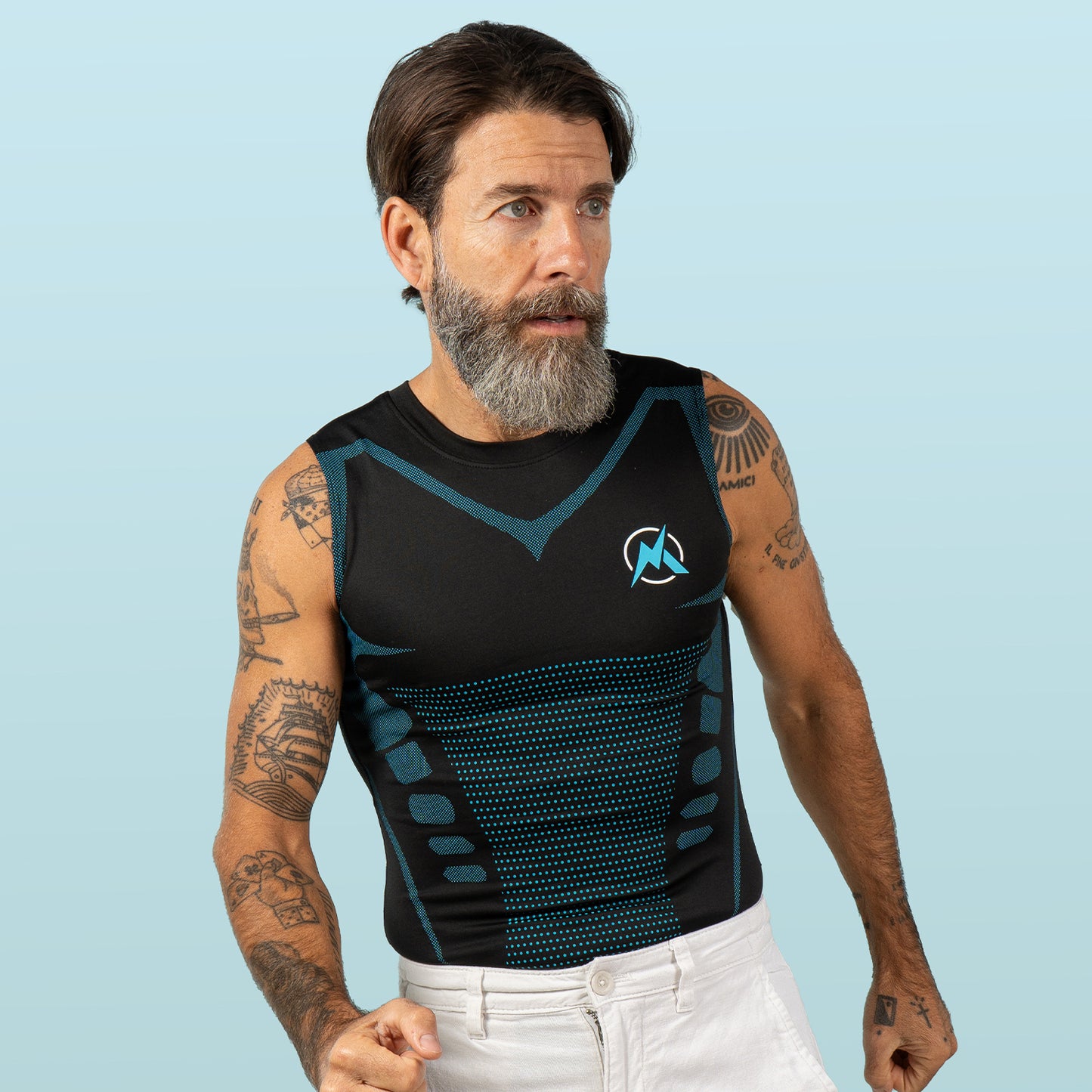
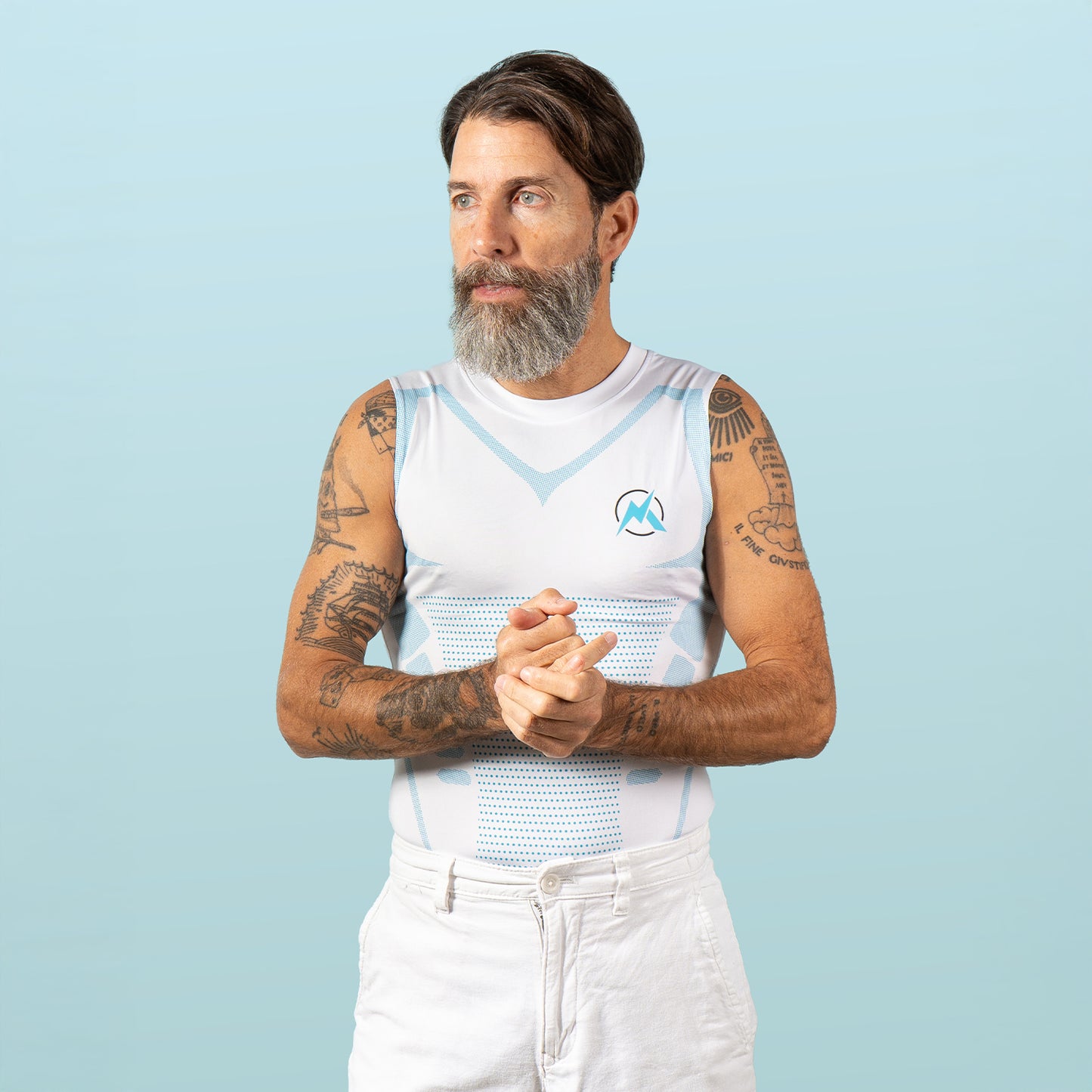
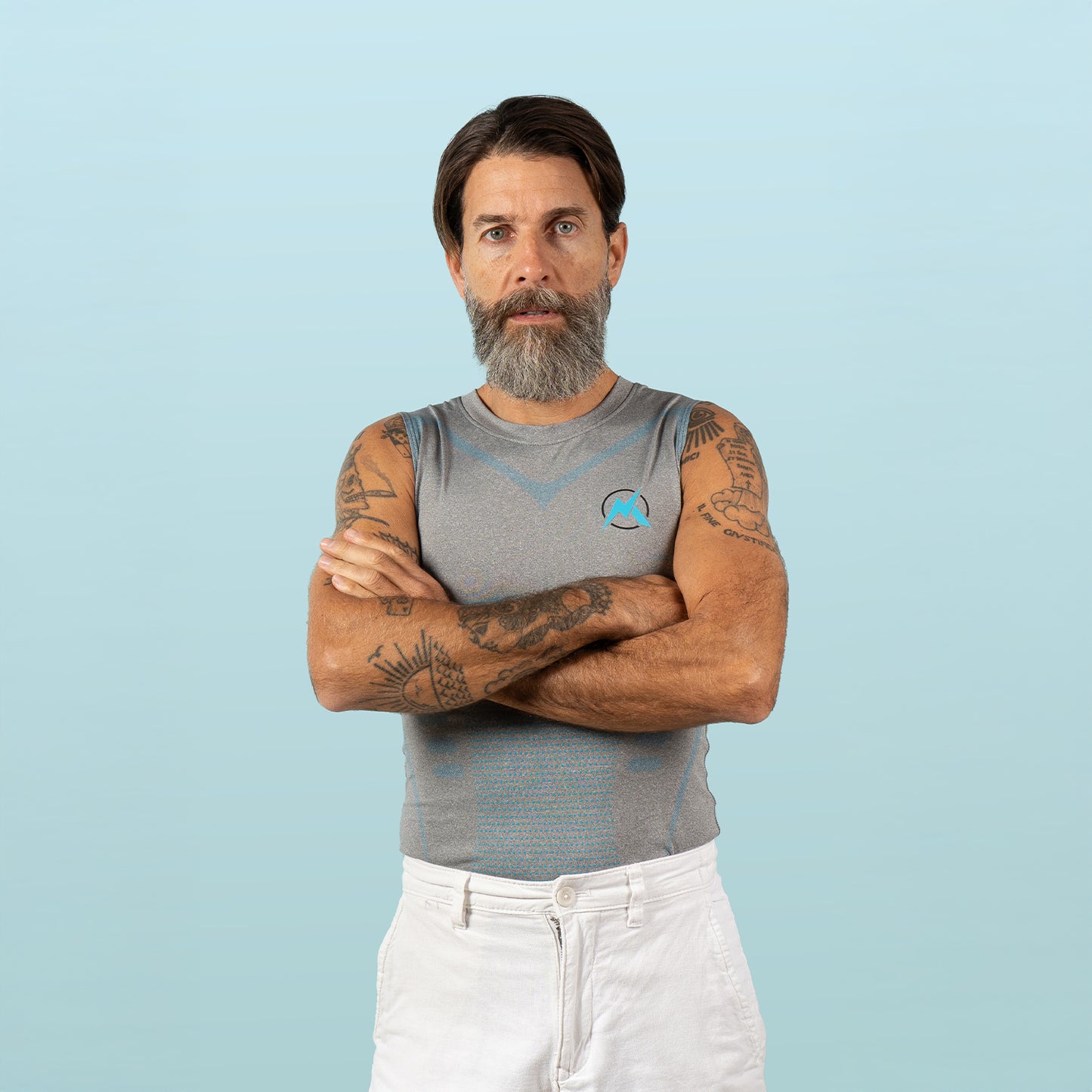
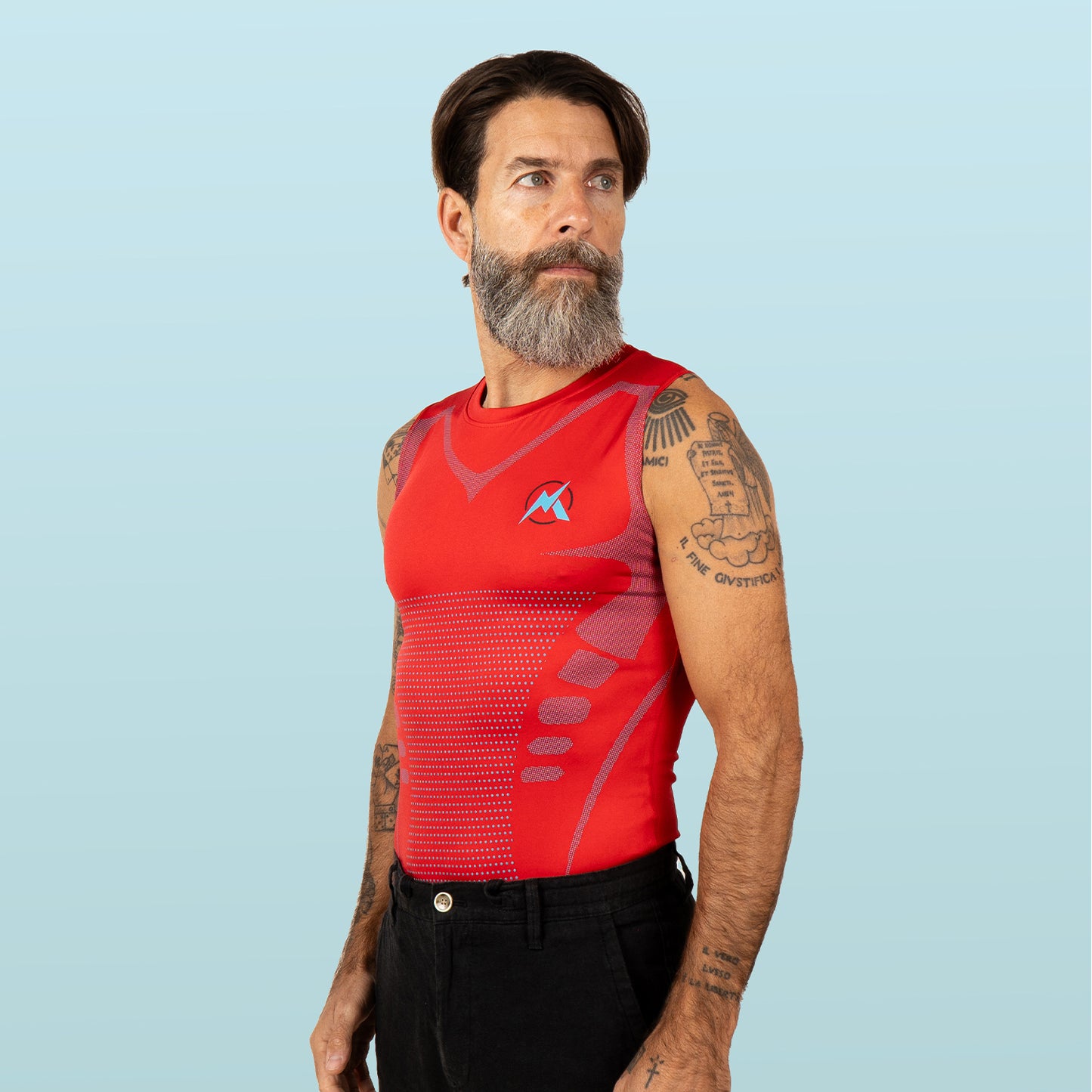
A relaxed cotton shirt absorbs every soft spot and amplifies it. A well-fitted compression base layer underneath does two things photos love: it keeps your shoulders structured and it gives the outer shirt a smoother, more sculpted drape.
There's also a neurological piece — and it's real. A 2022 systematic review in Sports Medicine by Brown et al. found that compression garments provide measurable proprioceptive feedback — meaning your body actually maintains better postural alignment when wearing them. You stand straighter without having to think about it. Which means when the camera comes out and you forget Lever 2, your shoulders are already where they need to be.

VitaBoost is the compression tank we built around this exact use case. The difference between "wedding-ready" and "wedding-photo-disappointment" is often this one layer.
Get VitaBoost — Buy 1 Get 1 Free
The 5-Second Pre-Shutter Checklist
When you see the phone come out, run this in your head. Five seconds, five words.
- Feet — shoulder-width, weight forward
- Shoulders — back and down
- Chin — out and slightly down
- Hands — visible, with purpose
- Breath — half-exhale, then click
That's the entire system. You don't need to remember anything else.
Practice it three times in front of a bathroom mirror tonight and it will be muscle memory by next weekend. Your future photos will look like a different man took them.
If you want to extend this into how you carry yourself off-camera as well, our piece on how to walk with confidence as a man over 40 covers the same posture-and-presence stack in motion.
What Doesn't Work
Honest section. Skip these — they backfire.
- Sucking in your stomach. It tightens your face, holds your breath, and makes your shoulders rise. Photos catch the strain instantly. The half-exhale approach is better — it lets your stomach settle without making it the focal point.
- Phone filters that warp your body. Apps that "slim" your waist or "enlarge" shoulders work by warping pixels. Anyone who knows what you look like in person will see it. They make you look insecure, not stronger.
- Muscle suits or padded shirts. They read as fake — and they read as fake to your wife, your friends, and your colleagues. Don't.
- Photo-editing apps that build muscle. Same problem. The body proportions get cartoonish and the lighting never matches.
- Hiding behind people in group shots. Tempting. Counterproductive. You read as the guy who didn't want to be in the photo, which photographs as "shrunken." Take the front row, stack the levers, own the frame.
- Sucking in your cheeks for a sharper jaw. It tightens your whole face and reads as posing. The chin-out-and-down move handles jawline definition without the strain.
For a broader pass at silhouette fixes that don't rely on losing weight, our guide on how to look 10 pounds lighter without losing weight covers the proportions and color rules that work in tandem with the levers above.
The Wedding / Event Recovery Protocol
You have one second. The camera is already up. Here's what to do.
Second 1 (before shutter):
- Quick shoulder roll back. One micro-motion.
- Push chin out and down.
- Half-exhale.
That's it. If you nail just those three, the photo will be 70% better than your default.
Bonus if you have two seconds: shift weight to your front foot. Bonus if you have three: take one hand out of your pocket.
If the photo is being taken at an event with multiple shots — wedding ceremony, family gathering, work conference — recover between frames. Reset shoulders, reset chin, reset breath. Every shot is a fresh chance, not a continuation of the bad one.
If you're prepping for a wedding or formal event specifically, our how-to-dress-at-50 guide covers the outfit rules that pair with these posing levers — because the right shirt cut amplifies every lever in this stack.
The bottom line
Looking stronger in photos isn't about being a different man. It's about giving the camera the version of you that already exists when you're at your best.
The 5-Lever Stack — stance, shoulders, chin, hands, breath — gives you back 70% of how strong you actually look in real life. The camera tricks add the last 20%. The compression base layer covers what posture forgets.
Stack them in five seconds. Then forget the photo and enjoy the moment.
Try VitaBoost — Buy 1 Get 1 Free ($15)
Frequently asked questions
How can a man look stronger in photos?
Run the 5-lever stack in this order — feet shoulder-width apart with weight slightly forward, shoulders rolled back and down, chin pushed out and tilted slightly down, hands visible with intention, and a half-exhale right before the shutter. Combine that with a camera held at your chest height (not your eye level) and you'll read noticeably stronger in every frame.
What is the best pose for men in photos?
The strongest universal pose is a 15-degree off-square stance with weight on the front foot, one hand visible (holding a drink or thumb hooked in a front pocket), shoulders back and down, and chin out-and-down. Avoid facing the camera dead-on with both hands hidden — it flattens you and shrinks your frame.
How do I look more muscular in photos?
The biggest lever is camera angle and distance, not flexing. Step back six to eight feet from a phone camera, ask the photographer to hold the lens at your chest height shooting slightly upward, and angle your torso 15 to 20 degrees off-axis. Add a fitted base layer under your shirt to hold your upper-body lines clean. You'll read more muscular without any flexing.
Why do I look fat in photos but not in the mirror?
Two reasons. Phone wide-angle lenses distort whatever is closest to the camera — so if your midsection is the closest point, it gets exaggerated. And a relaxed standing posture (shoulders forward, head forward, hands hidden) collapses your silhouette in ways a mirror you actively pose in front of doesn't. Step back from the lens, run the 5-lever stack, and the photo will match the mirror.
What angle makes you look more muscular?
A low camera angle — phone or camera held at chest height shooting slightly upward — increases perceived size and presence. Combine that with your torso turned 15 to 20 degrees off-axis (one shoulder closer to the camera) for depth, and shoulders pulled back and down to widen the frame. That trio reads more muscular than any flex.
Sources
- News in Health, National Institutes of Health — "Getting It Straight" (posture and 80% adult prevalence)
- Cleveland Clinic — "Text Neck: The Damage Done" (head weight at progressive forward tilt)
- Brown F. et al., Sports Medicine 2022 (PMC9023423) — Compression garments and proprioceptive feedback systematic review
- Wikipedia — Wide-angle lens (perspective distortion fundamentals)
- Lensviewing — Camera angle and perceived size (low-angle geometry)
This article shares photo-posing and styling guidance. It is not medical advice. VitaBoost is a compression apparel garment, not a medical device.