There's a moment most men over 45 have lived through more than once. You walk into a room — a meeting, a dinner, your kid's college tour — and you notice yourself feeling smaller than you actually are. Not in pounds. In presence. You knew the room had read you, and you didn't love what it read.
The fix isn't a new haircut, a sharper jacket, or another month of cardio. It's posture and confidence — two things most men treat as separate. They're not. Standing tall is the single fastest way to change how strangers, colleagues, and your own family read you in the first three seconds, and it's almost free.
Here's exactly what changes when you stand tall, why your posture quietly collapsed after 45, and the 3-week reset that gives you the read you actually want.
The two-second test
Before you read another word, do this. Stand up. Walk to the nearest reflective surface — a window, a mirror, a turned-off TV. Don't pose. Don't pull your shoulders back. Just stand the way you stand when nobody's looking.
Now ask yourself a single question: would you trust the man you see to lead a meeting?
That's the read other people have on you, every day, before you say a word. It's not fair, it's not deep, and it isn't going to change. The 0.5 seconds it takes a stranger to size you up are mostly posture. Your face barely gets a vote.
The good news: posture is the most movable part of how you're perceived. You can change it faster than your weight, your hairline, or your tax bracket.
Why posture beats your outfit, every time
Most men over 45 try to fix the wrong layer first. They buy a new shirt, a new jacket, a new suit. The clothes look fine on the hanger and tired on the body — because the body underneath is folded forward.
Posture is the structure your clothes hang on. Get it right and a $40 shirt reads sharp. Get it wrong and a $400 jacket looks borrowed. Order matters: posture first, clothes second.
What people read in half a second
Researchers have studied "thin slices" — split-second judgments strangers make from minimal information — for decades. The pattern is consistent: posture, eye contact, and the steadiness of your stance carry more weight than what you're wearing. Harvard Health has covered the link between upright posture, mood, and how others perceive your energy in plain terms.
What other people read, almost unconsciously, is a stack of small signals: chin level, chest open, weight distributed evenly. They read it as confidence. Get those three right and the shirt — whatever it is — does its job.
The body talks before you do
Body language and confidence in men is mostly downstream of structure. A collapsed chest makes your voice come out thinner. A forward head pulls your jawline soft. A rolled shoulder line cuts a few inches off your apparent height.
Stand tall and the opposite happens. Voice deeper, jawline cleaner, height back. Same man, different read. That's not a trick — it's mechanics.
Why your posture quietly broke after 45
Almost every man past 45 is dealing with at least two of these three forces. None of them are dramatic on a given day. They compound.
Thirty thousand hours at a desk
Two decades of office life have taught your body that "leaning slightly forward over a keyboard" is the default position. Chest tissue gets short and tight. Mid-back muscles get long and lazy. The shoulder, sitting between those two opposing forces, rolls forward where the tight side wins.
If your work is a desk, this is your single biggest input. It isn't bad luck. It's volume.
The phone tax
Every glance at your phone tilts your head forward and loads the spine with a few extra pounds of effective weight. Add up your daily phone time and you're looking at hours per week of forward-head training. The neck pulls forward, the upper back curves, the shoulders follow.
This is one of the only forces on the list that actively gets worse the more time you spend on it.
A few extra pounds, in the wrong place
Most men past 45 carry weight where it pulls the body forward — chest, lower belly, lower back. That weight tugs the torso down and the shoulders along with it. Then the chest looks softer, so the body responds by hunching slightly to hide the soft part — and the loop tightens.
If you've been quietly avoiding photos at family events, this loop is usually why. (We covered the visual side in detail in our guide to how to hide your belly under a shirt — half of that effect is posture, not weight.)
The confidence loop — and how to break it
Here's the part nobody tells you. Posture and confidence run on a feedback loop, in both directions.
When you stand tall, your body floods you with subtle signals that tell your brain you're safe and capable: deeper breathing, steadier balance, a less compressed ribcage. You feel a notch more confident — not because you talked yourself into it, but because your body just gave you better data.
When you collapse forward, the opposite happens. Shallow breathing, compressed ribs, slightly tighter neck. Your brain reads it as "low energy" and adjusts your mood to match. By 3pm you feel tired, slightly dim, and you assume it's age.
Most men try to fix the loop at the mood end — coffee, a pep talk, telling themselves to be more confident. It works for about ninety seconds. The structural fix — change the body, the mood follows — works for the rest of the day.
The 3-week confidence reset
This is the routine. Five minutes a day, in this order. The order matters because tight tissue has to release before weak tissue can wake up.
1. Open your chest for 90 seconds
Doorway stretch. Forearm against the frame, elbow at 90 degrees, take a small step forward. Hold 30 seconds, switch sides, repeat once. You'll feel a stretch across the front of the shoulder and chest.
Years of desk life shortened this tissue. You can't pull your shoulders back until you give the front room to move.
2. Wake up your mid-back
Stand against a wall — heels, butt, upper back, head touching. Slide your arms up the wall like you're making a snow angel, keeping the backs of your hands in contact as long as possible. Six slow reps.
This reminds your shoulder blades how to glide. If they've been frozen forward for years, the first week feels strange. That's the point.
3. The phone reset
Every time you pick up your phone, do a one-second reset before you start scrolling: chin back over shoulders, shoulders down and back, ribs over hips. Done 50 times a day for two weeks, this rewires your default posture more than any single workout.
It's the highest-volume cue you have. Use it.
4. A base layer that nudges you upright
You can't stand tall for 16 hours by remembering to. Memory fades by mid-morning. What works is a constant, low-grade physical cue against the chest and upper back — something your body can't ignore without thinking.
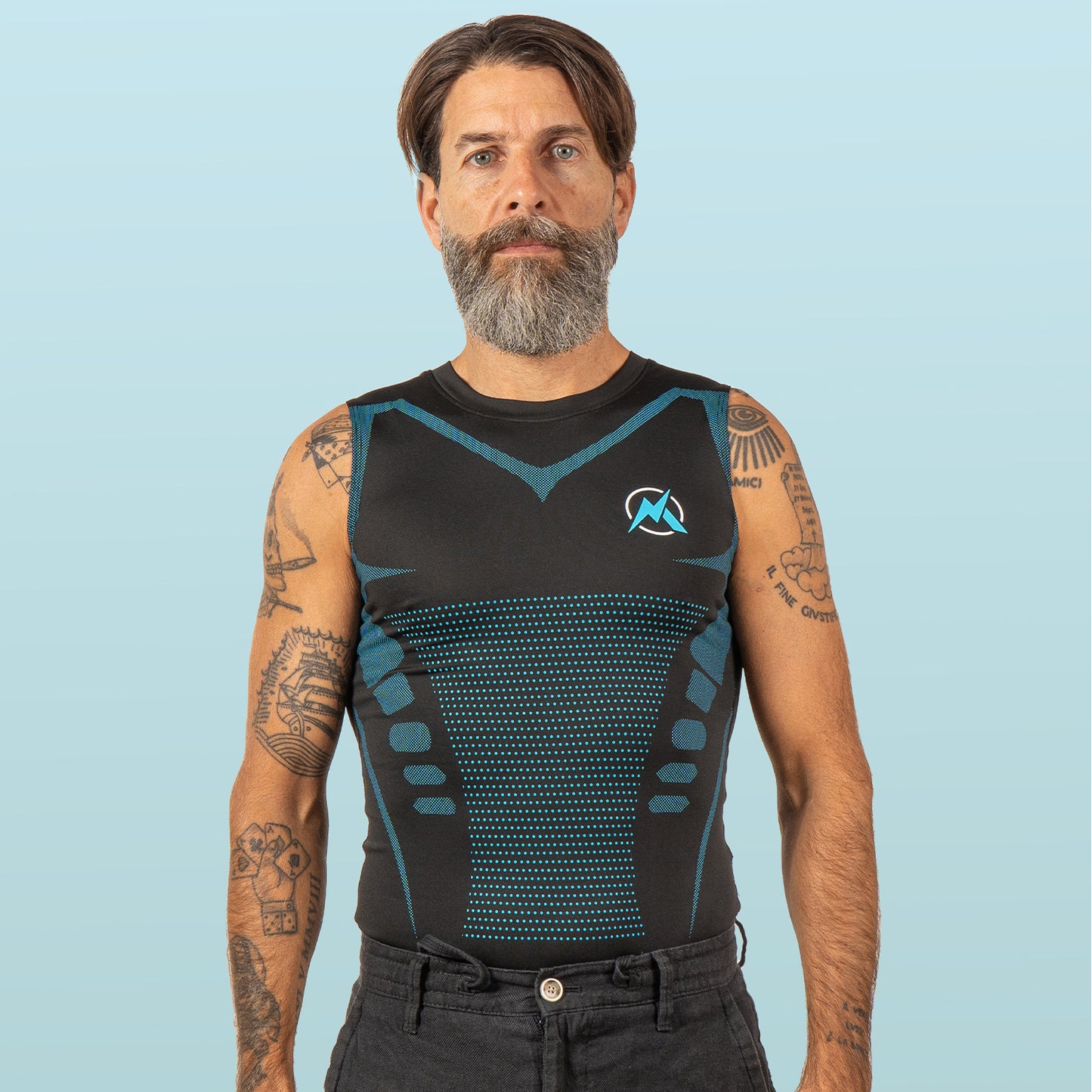
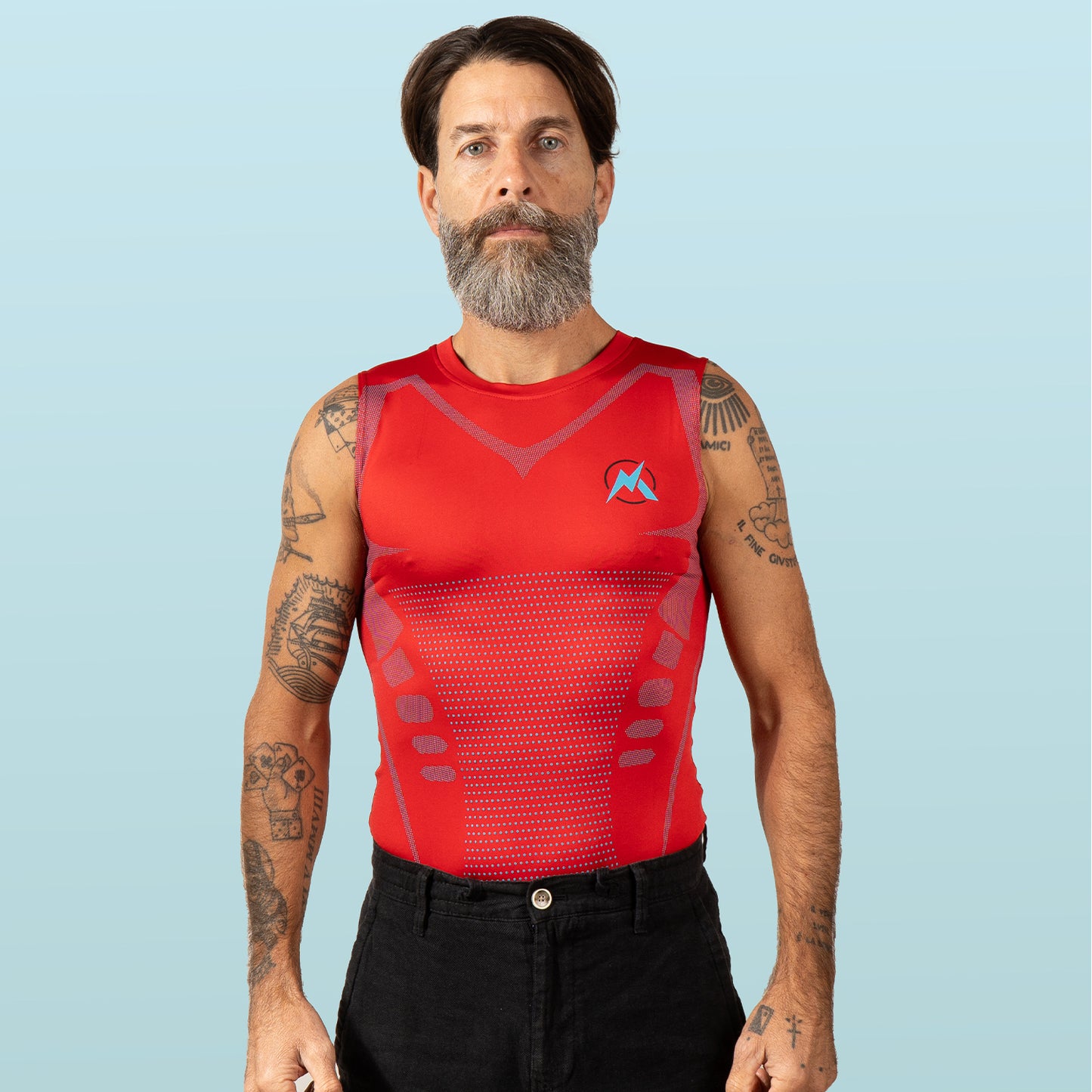
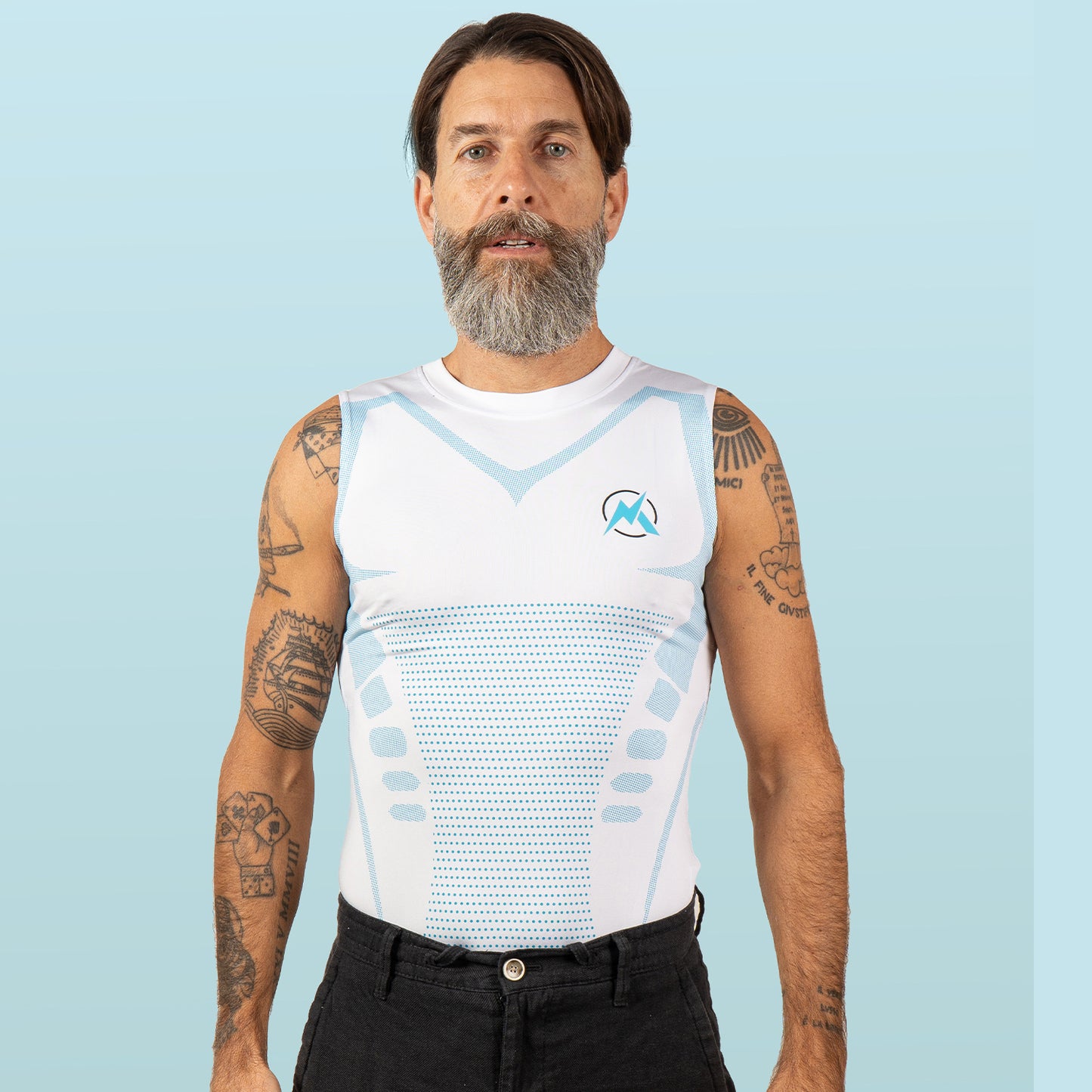
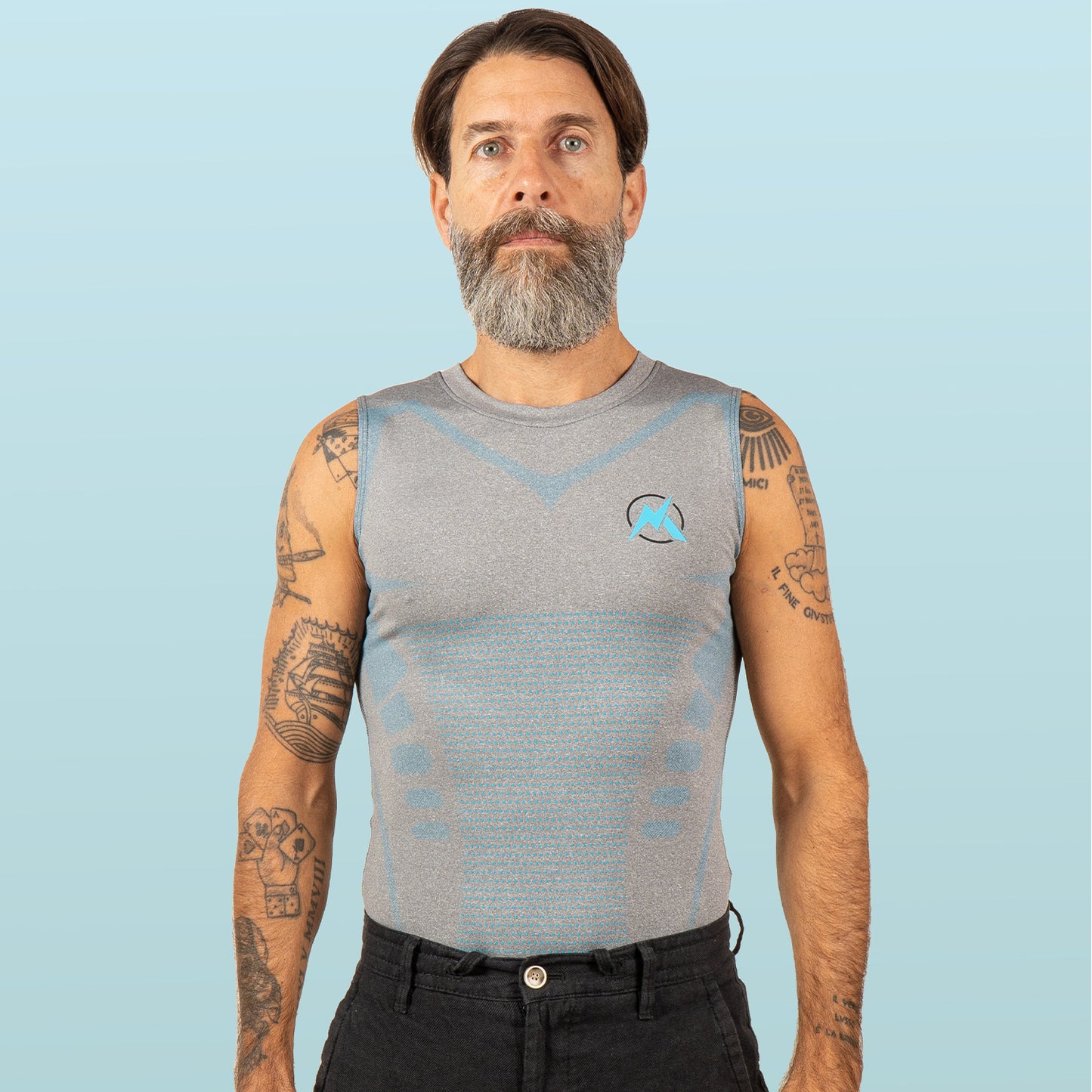
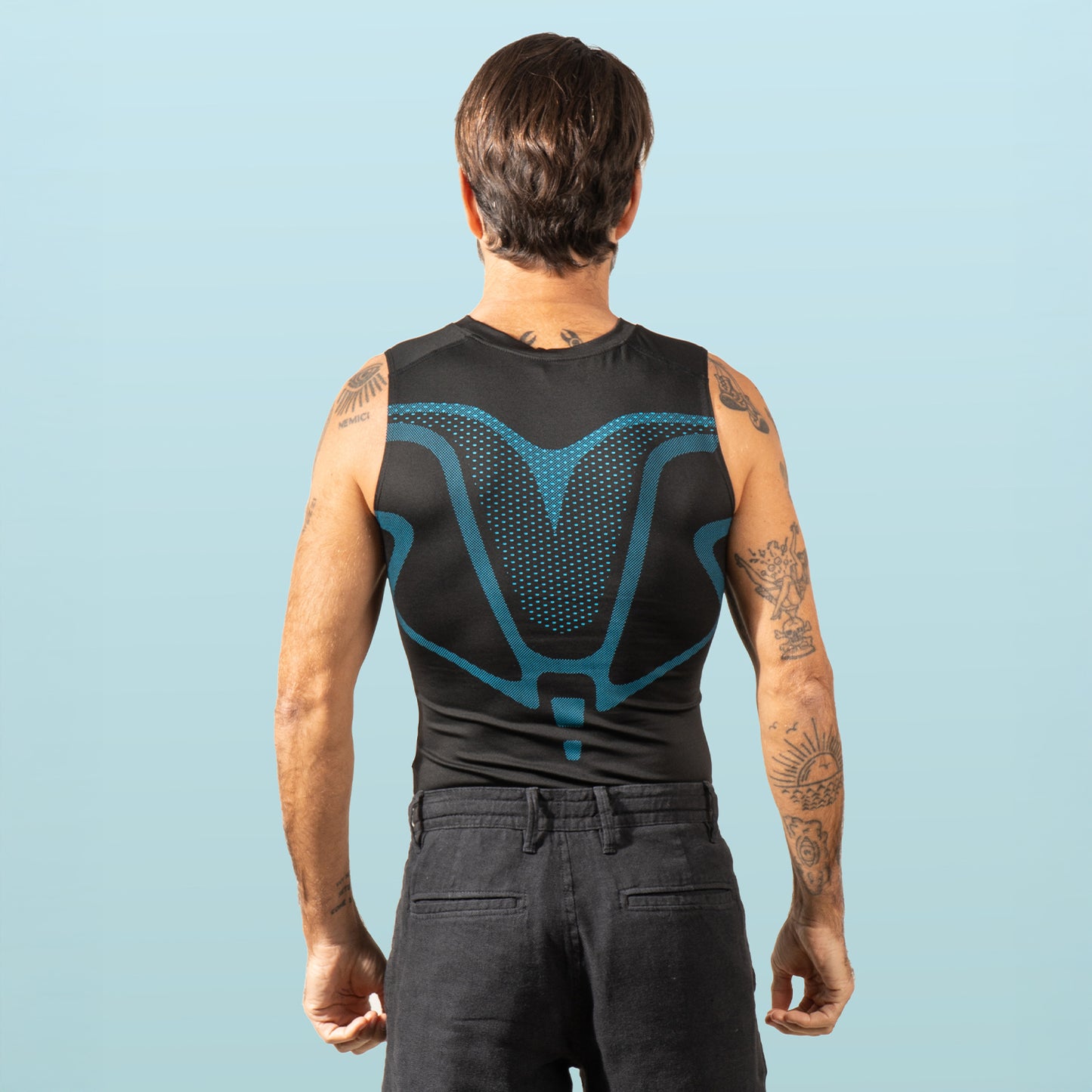
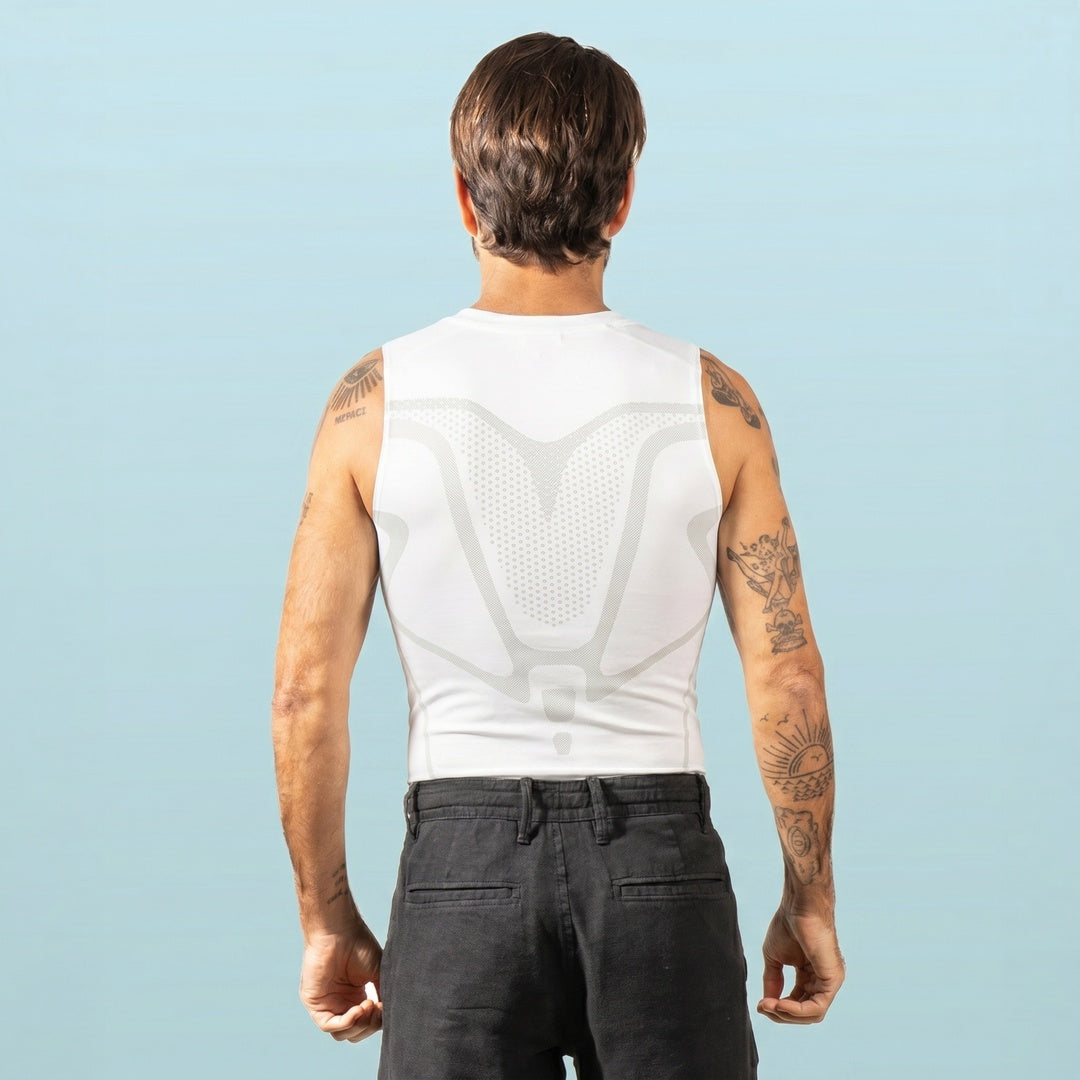
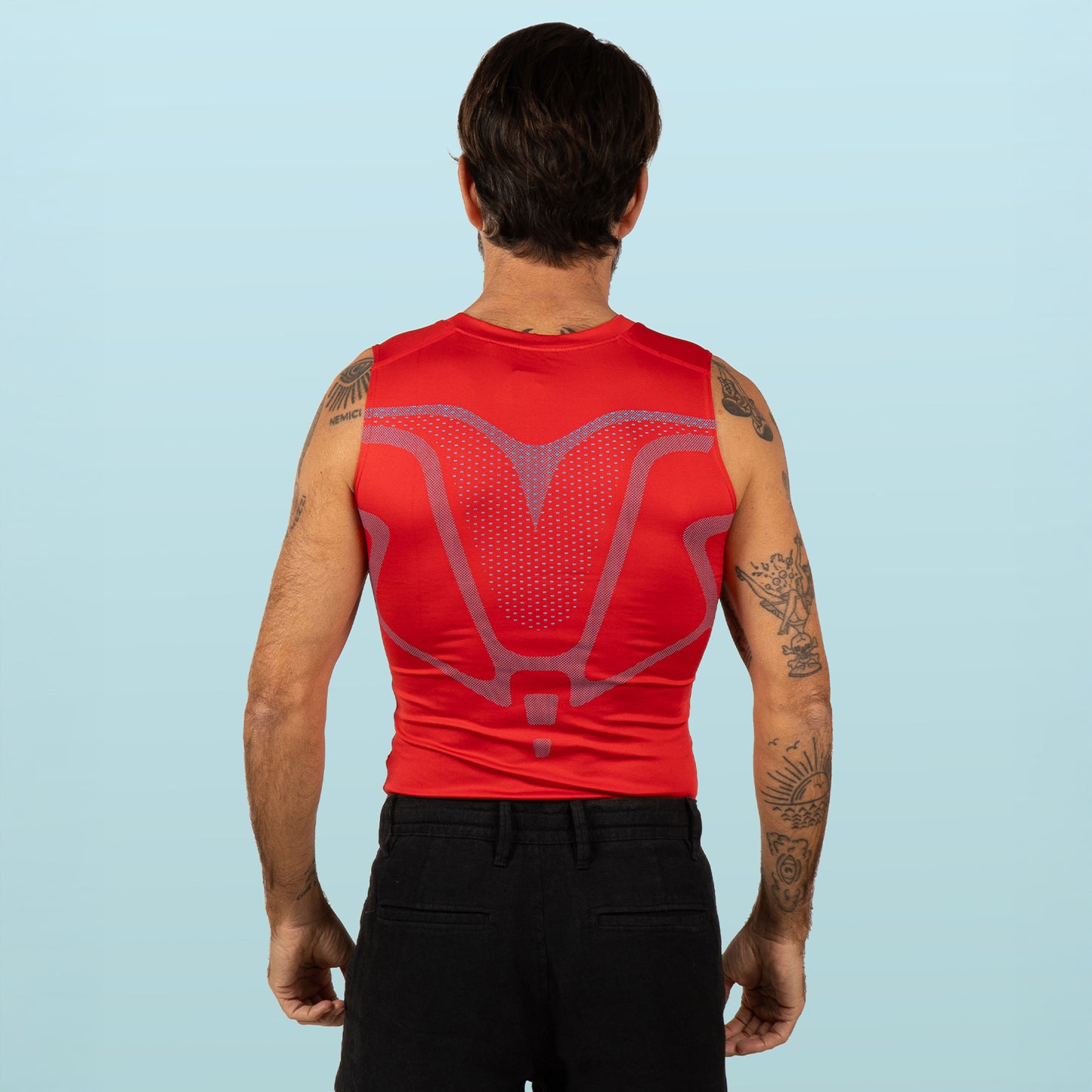
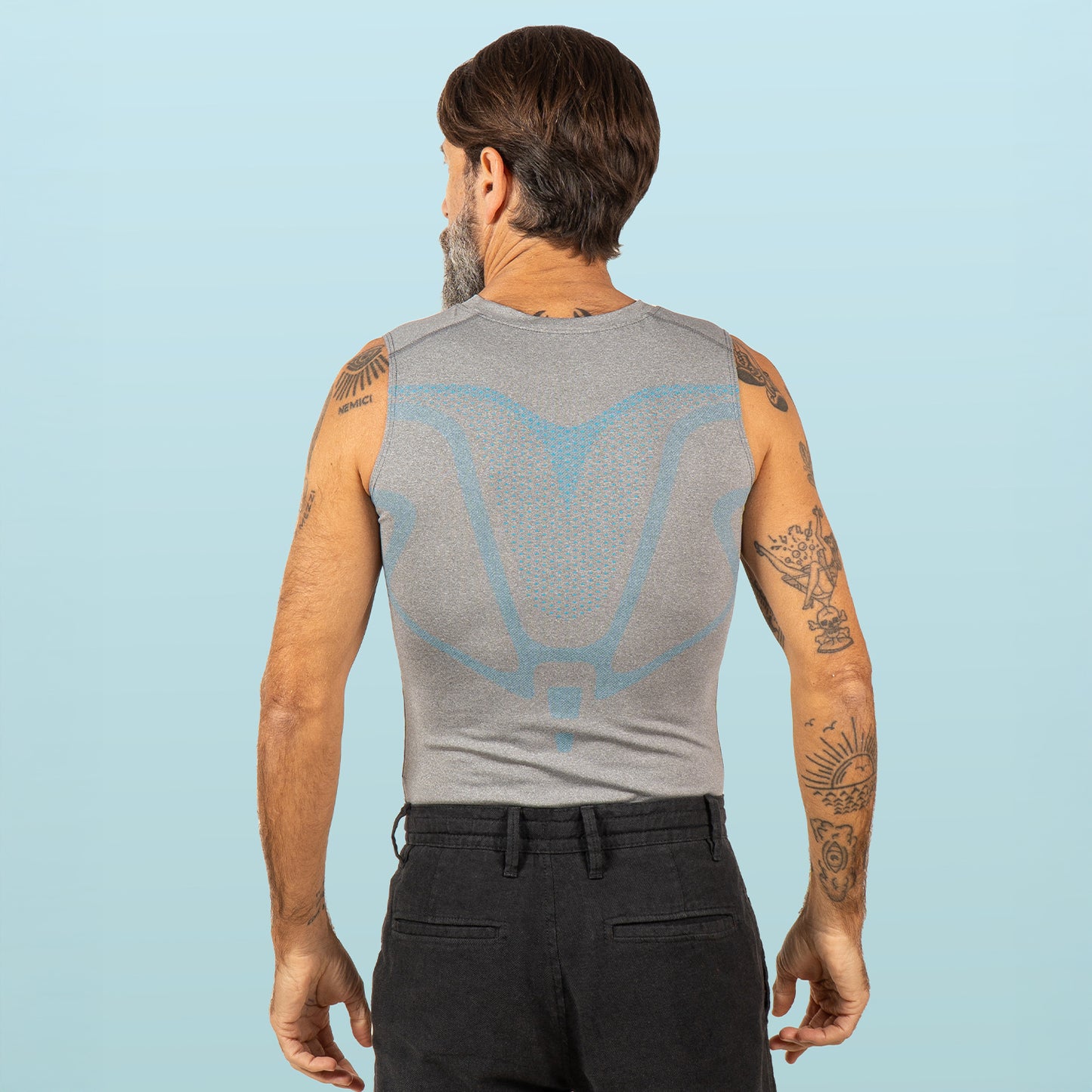
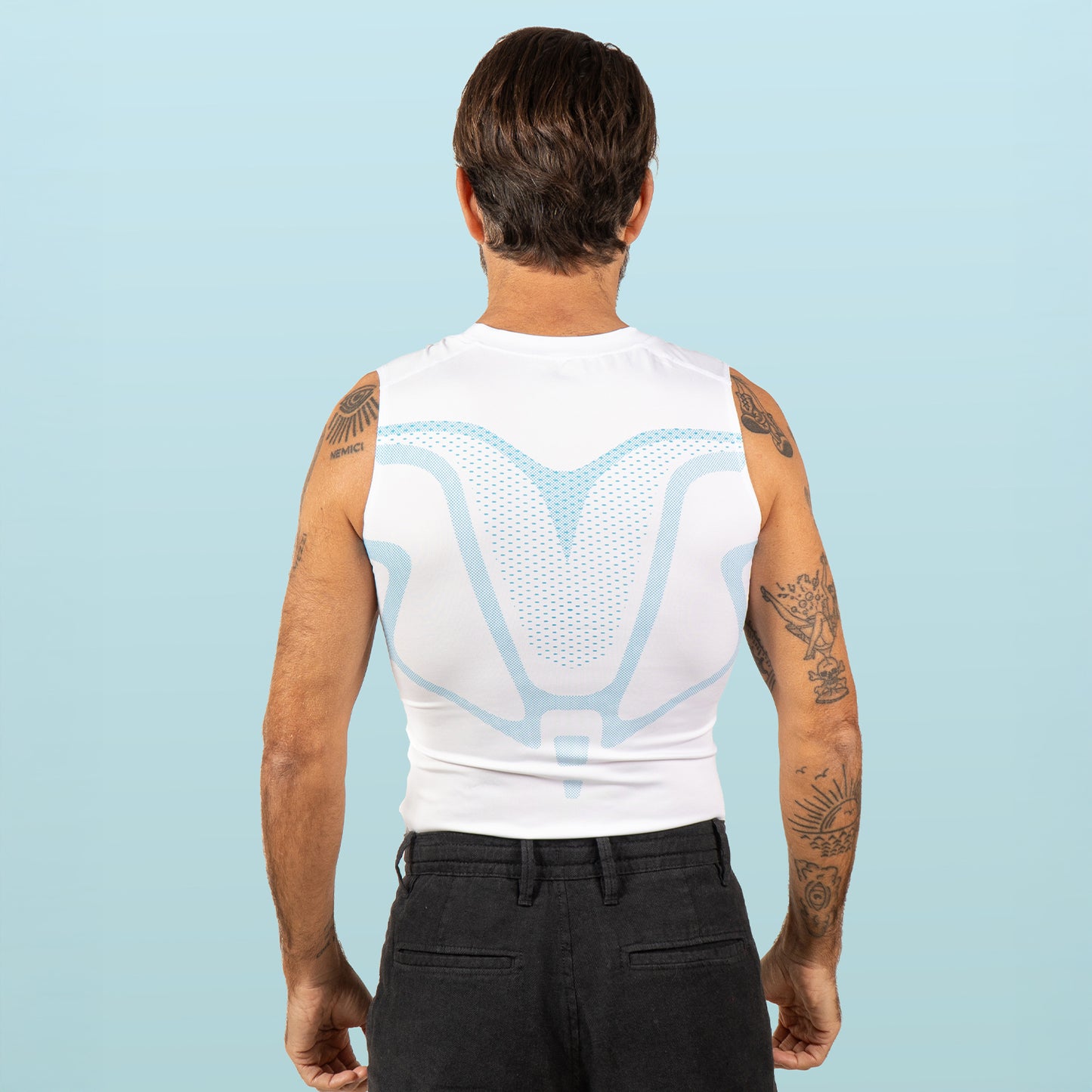
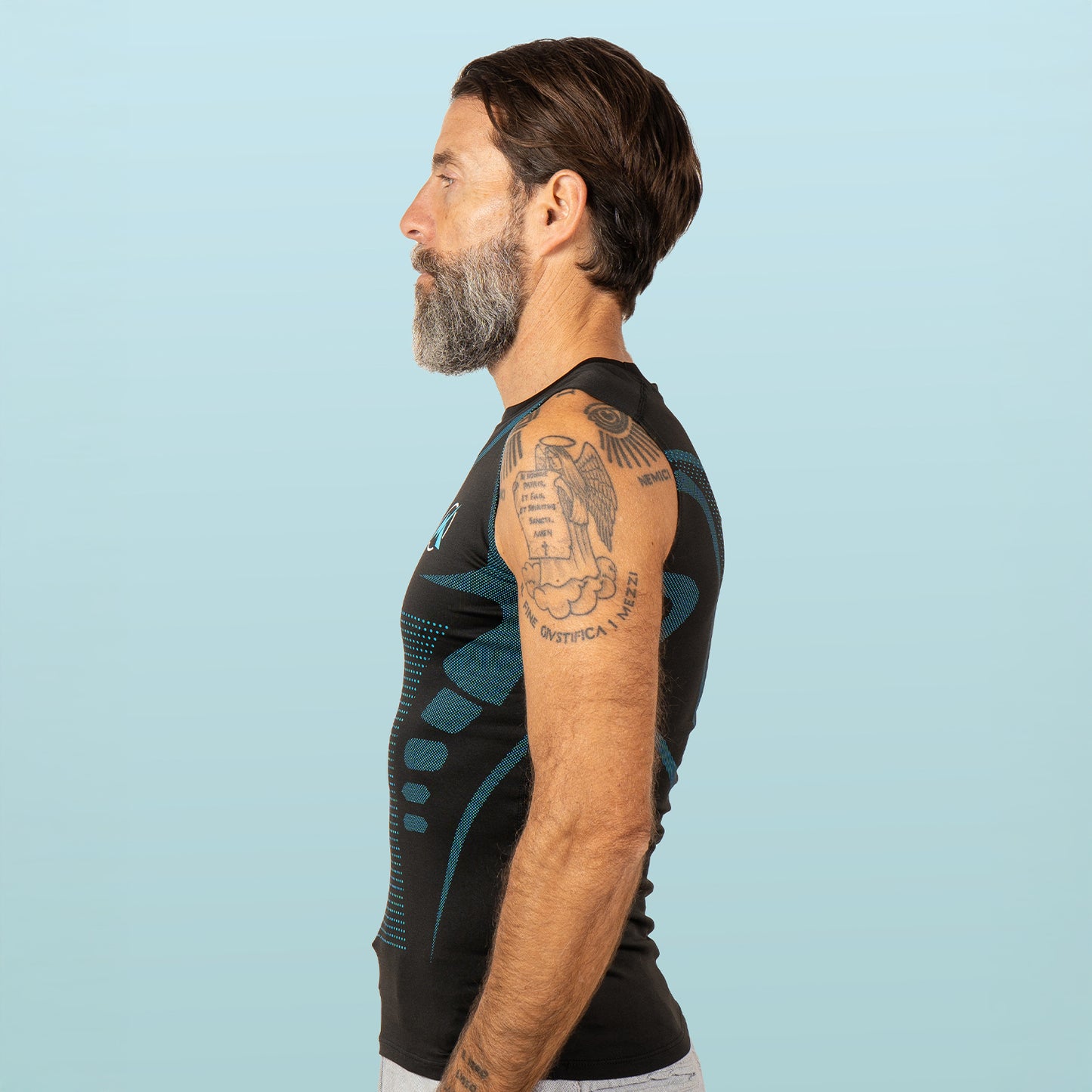
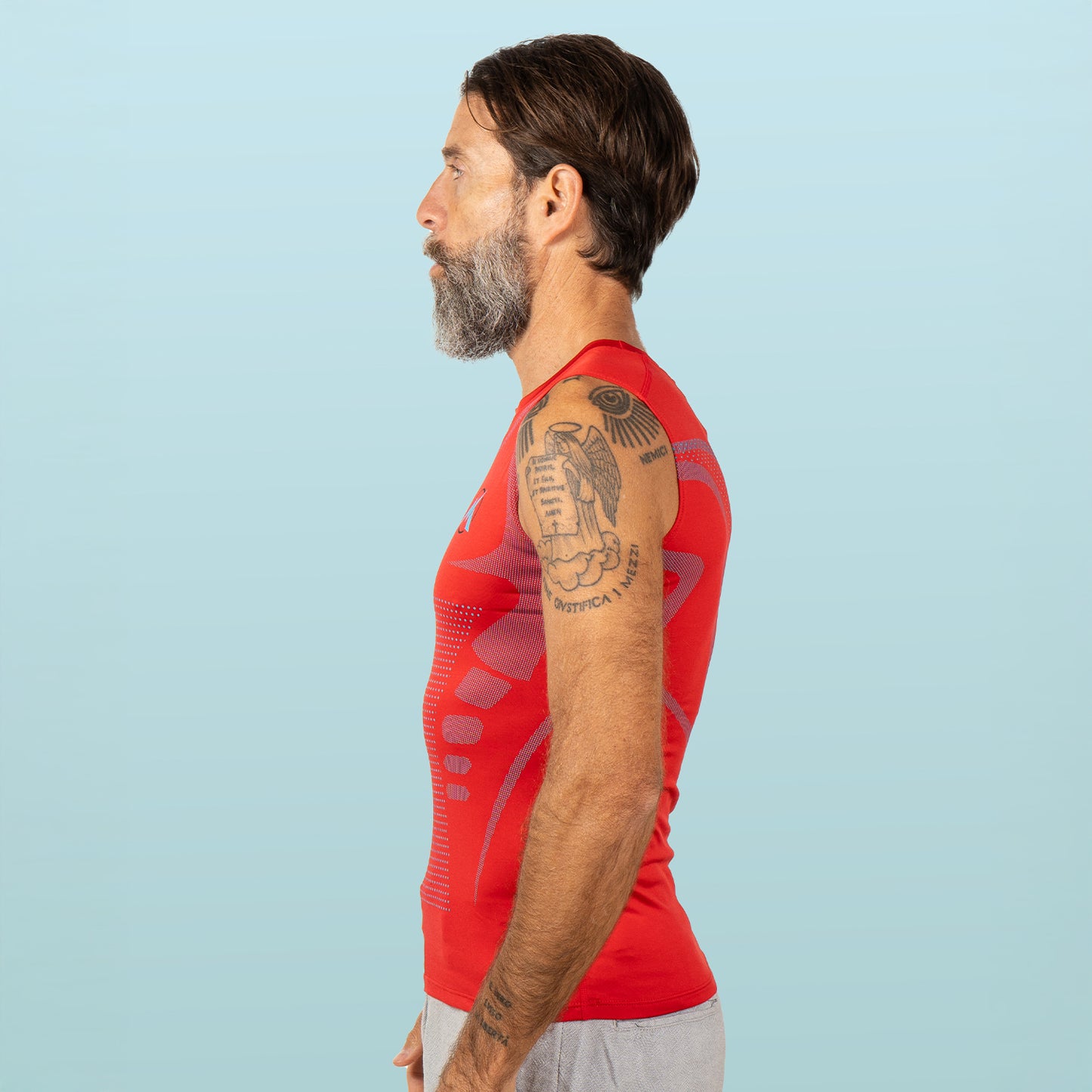
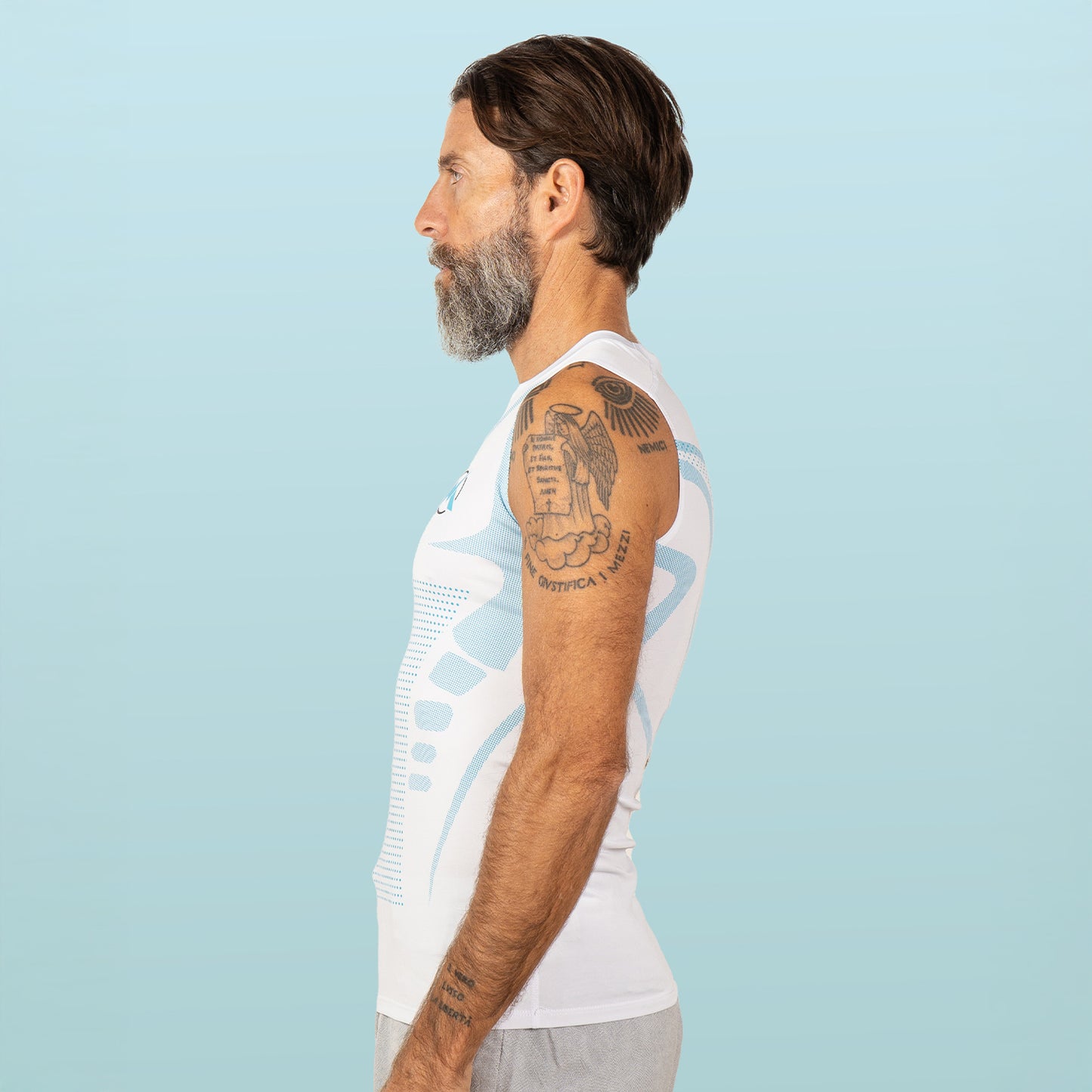
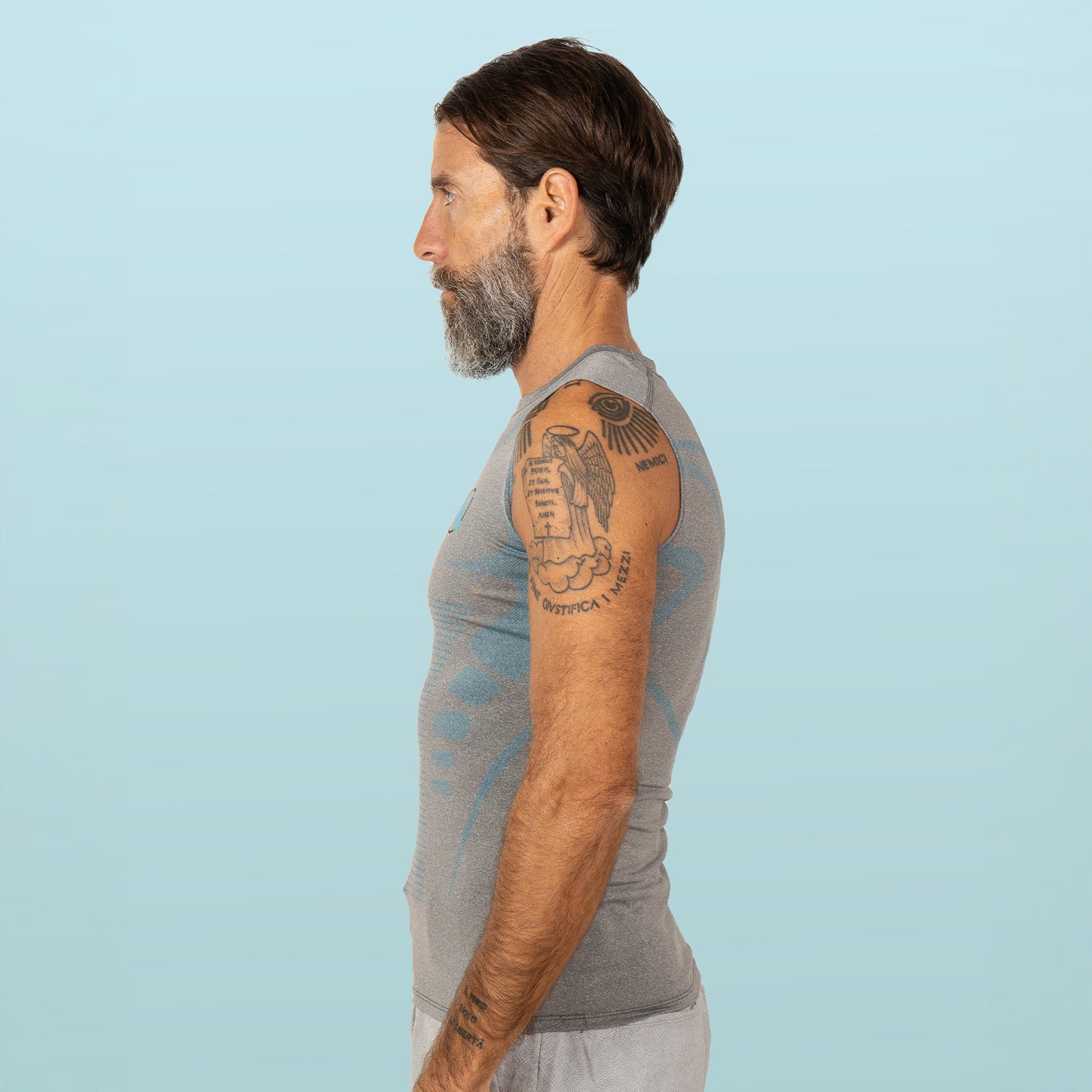
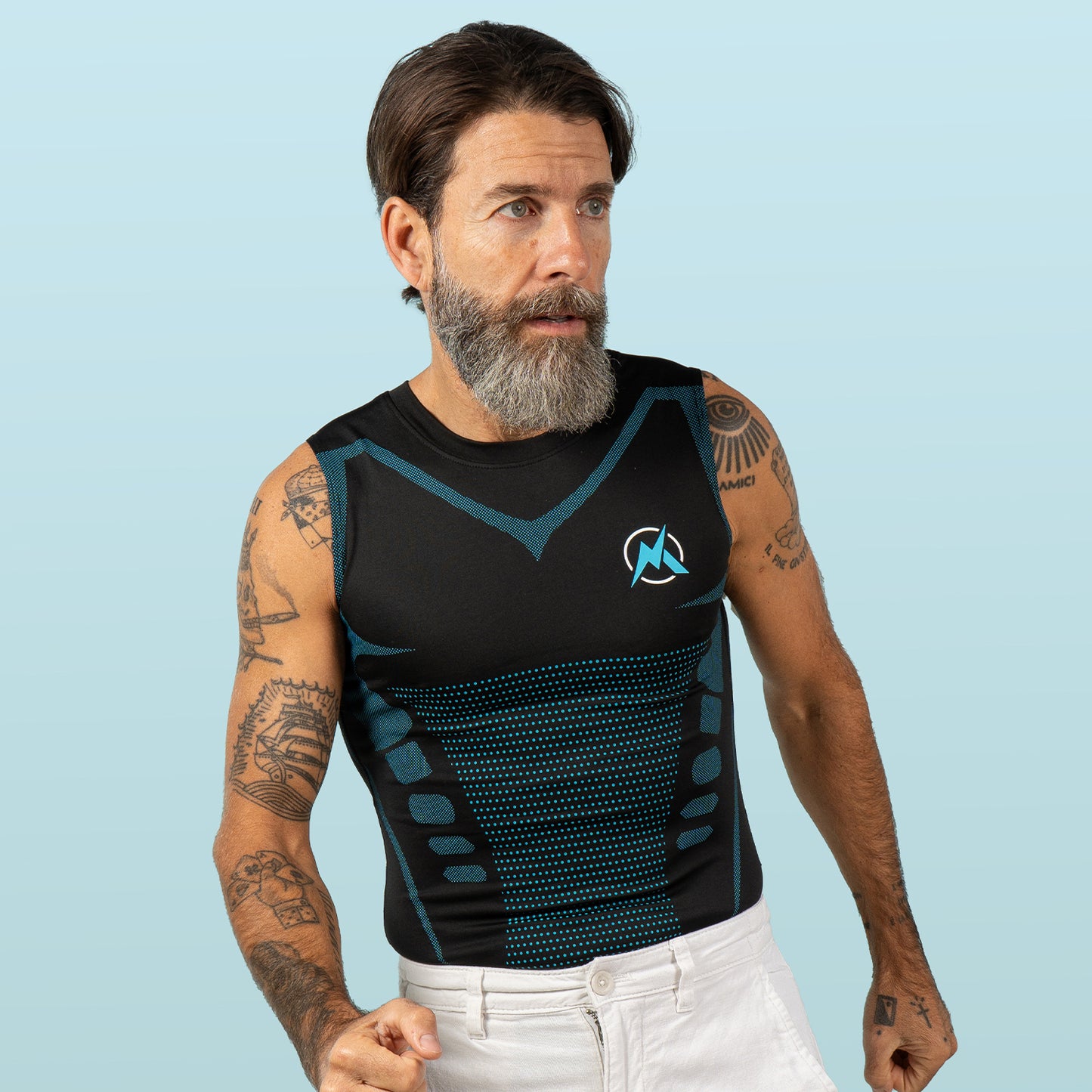
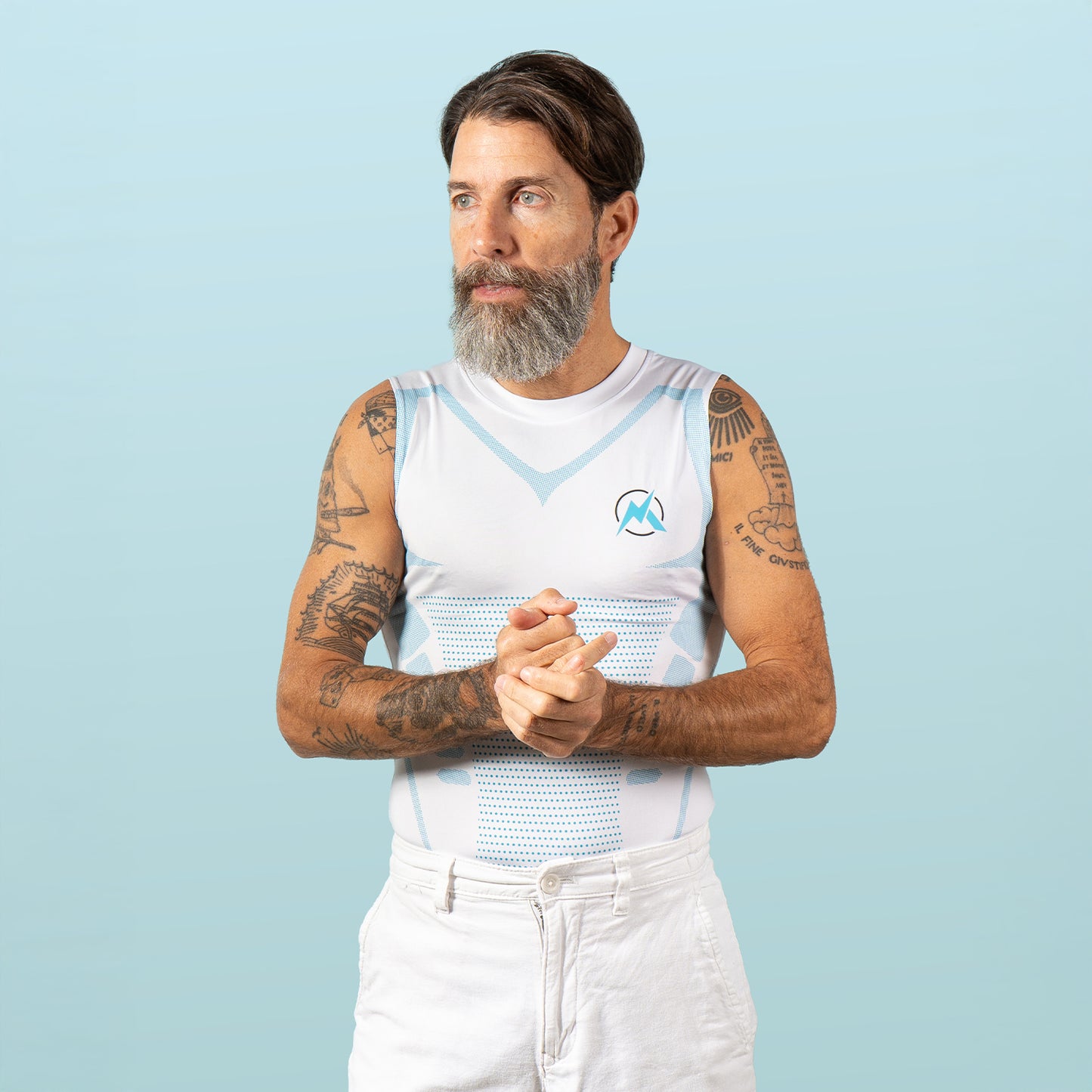
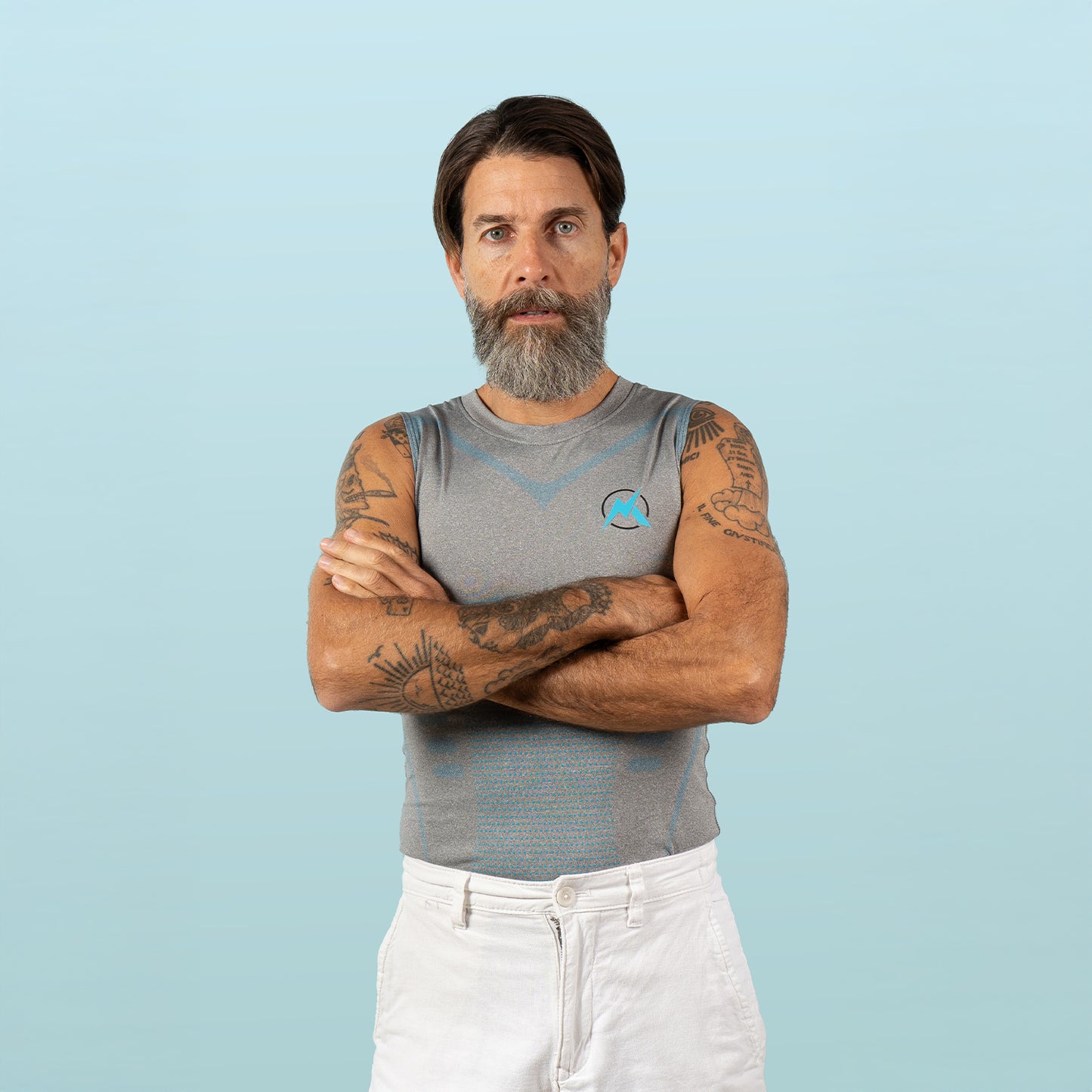
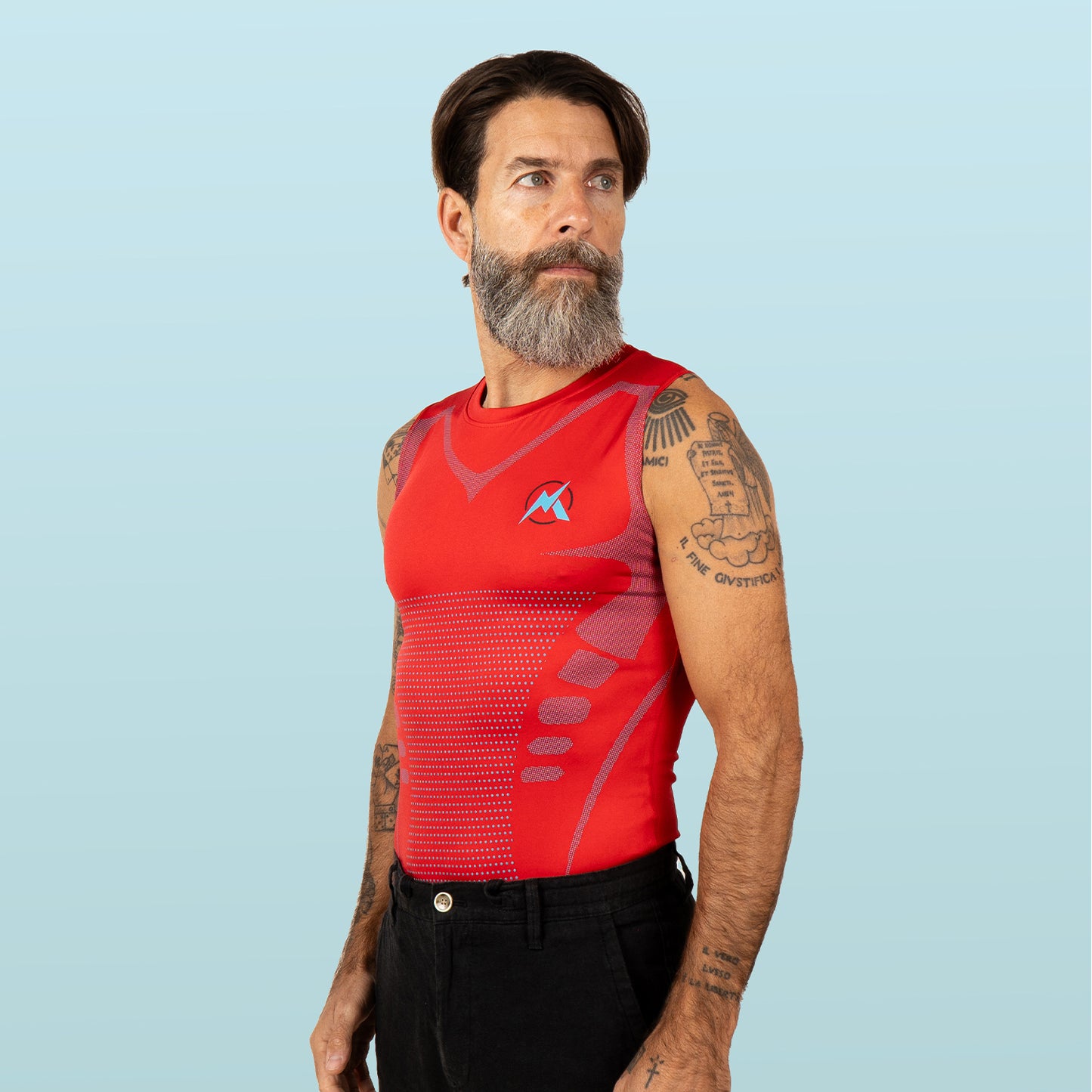
That last one is exactly what we built the Maynox VitaBoost for. It's a sleeveless compression tank designed for men over 45, made to wear under your dress shirt or polo. The fit lifts the chest, smooths the front silhouette, and gives your shoulder blades a constant low-grade nudge in the right direction. It's not a brace and it's not a corset. It's a base layer that quietly pulls you upright while you go about your day, so the muscle work in steps 1–3 actually has somewhere to land.

It's currently BUY 1 GET 1 FREE — two tanks for $15 (was $59.99). One for the office, one in the laundry. See the VitaBoost
For a structured five-minute version of all of this, the full breakdown is in our daily posture routine for men over 50. If you want the deeper why behind step one, we covered the underlying problem in why your shoulders round forward after 45.
What changes when posture changes (the realistic timeline)
You will not look like a different person in 24 hours. You will, however, feel like one inside a week. Here's the honest curve.
- Days 1–7. The doorway stretch feels uncomfortable. Good — that's the chest waking up. You'll start catching yourself standing taller in line at coffee or in elevators. The "phone reset" feels effortful.
- Weeks 2–3. Shirts start fitting differently across the upper chest. The collar gap on your dress shirts shrinks. Your wife or a coworker says you look tired less often, even though nothing else changed.
- Weeks 4–6. Photos read different. You'll get the first comment that lands without anyone naming what changed — usually some version of "you look good lately." This is the confidence loop turning over.
- 3 months. New posture is your default. You stop having to remember it. Your body holds it on its own.
Most men over 45 hit the visible inflection point inside three weeks if they stay honest with the routine. The full reset is a 90-day project, not a one-week sprint.
Three things to stop doing today
There are three habits that will actively undo the reset. You can do every step above and still go nowhere if any of these are running in the background.
- Stop "pulling your shoulders back" by squeezing them. Pinching the shoulder blades together flares your ribs and arches the lower back. The cue is "shoulders down and back," with the down doing most of the work.
- Stop sleeping on your stomach. It locks the neck to one side for hours and reinforces forward-head posture. Switch to side or back, with a pillow that supports the natural neck curve.
- Stop stacking more chest work onto a tight chest. For the next two months, every push exercise gets matched by two pulls. If you only fix one thing on this list, fix this one.
You can read more about the dressing side of this in our piece on how to look thinner in a dress shirt — most of the seven fixes there assume the posture work is already underway.
Bottom line
Posture and confidence aren't separate problems. They're two ends of the same loop. Stand tall and your body, your voice, your face, and the read other people have on you all shift in the same direction at once. Stay collapsed and they shift the other way, every day, whether you notice or not.
The fix is small and unglamorous. Five minutes of structured movement, fifty one-second phone resets, a base layer that holds the cue between reps. Three weeks to a visible change. Ninety days to a new default.
The mirror catches up faster than you'd guess. So does the room.
Try the Maynox VitaBoost — BUY 1 GET 1 FREE
This article is general information about posture, body image, and clothing — not medical advice. If you have ongoing pain, numbness, or a known spine, neck, or shoulder injury, see a physical therapist or your doctor before starting any new routine.
FAQ
Does posture really change how people see you?
Yes — and faster than most men expect. Strangers, coworkers, and family form their first read of you in roughly half a second, and posture carries more weight in that read than the clothes you have on. Two men with the same face and same outfit will get markedly different reactions if one stands tall and the other collapses forward. The effect is automatic and largely unconscious.
How long does it take to fix bad posture after 45?
A noticeable change in the mirror typically shows up between two and three weeks of daily five-minute work. The new posture starts holding on its own — meaning your body stays upright without you thinking about it — at around 8 to 12 weeks. Three months of consistent daily work is a realistic full-reset timeline for a man over 45.
Does standing tall actually make you feel more confident?
Posture and mood run on a two-way loop. Upright posture leads to deeper breathing, more relaxed neck and shoulder muscles, and a more open ribcage, all of which feed your brain calmer signals. Many men report feeling steadier and clearer within minutes of correcting their posture, and the effect compounds over weeks. It is not a magic mood switch — but it is a faster lever than most.
What is the fastest way to look more confident in photos?
Three small adjustments handle most of it. Shift your weight onto your back foot to drop the front shoulder. Drop your chin slightly, then push your forehead forward an inch — the so-called "turtle" tweak that defines the jawline. Pull your shoulders down and back, not pinched together. Photos catch posture more honestly than mirrors do, which is why fixes that work in pictures usually translate to real life.
Can a compression tank help me stand taller?
A compression tank does not "fix" posture on its own, but it gives a constant low-grade cue against the chest and upper back that nudges you upright while you go about your day. Many men over 45 report standing taller through their first month of compression wear simply because the tank itself feels like a hand on the chest and shoulder blades — a reminder the muscles slowly learn to follow on their own.