By Owen Blot · Founder, Maynox · Last updated June 6, 2026
- The sleep–belly loop, explained in 60 seconds
- The Mayo Clinic study: 9% more belly fat in 14 days
- What changes specifically after 45
- How many hours do you actually need
- The 4 sleep levers, ordered by ROI
- The visible lever most men miss
- What doesn't work (don't waste your time)
- The 7-day reset protocol
- FAQ
You wake up at 5:47 a.m. Your shirt is tighter than it was last week. You didn't eat more. You didn't drink more. You just slept like garbage for ten nights in a row.
This is not in your head.
For men 45 and up, the sleep–belly loop is one of the most under-discussed drivers of mid-life weight gain. It's not about willpower. It's about a hormonal cascade that makes your body store fat in the worst possible place — your gut — every time you short your sleep.
Here is the honest version of what's happening, what the research says, and what to actually fix tonight.
The sleep–belly loop, explained in 60 seconds
When you sleep less than 7 hours, three things happen at the same time:
- Cortisol rises. Your body reads short sleep as low-grade stress. Cortisol tells your fat cells to store — especially the ones deep inside your abdomen, around your organs.
- Ghrelin (the hunger hormone) rises. Leptin (the fullness hormone) falls. You eat more, especially carb-heavy snacks, and you feel less full when you do.
- Insulin sensitivity drops. Same calories, more fat storage. Your body becomes worse at handling sugar overnight.
The result is visceral fat — the dangerous kind that wraps around your liver and intestines, drives inflammation, and pushes your gut forward. It's not the soft stuff you can pinch. It's the firm "I look pregnant" gut that comes back even when you cut calories.
Cleveland Clinic puts it plainly: visceral fat is metabolically active. It releases inflammatory signals that make every other problem worse — insulin resistance, low testosterone, slower recovery.
The Mayo Clinic study: 9% more belly fat in 14 days, no diet change
In 2022, Mayo Clinic published a controlled trial on what sleep deprivation does to your gut.
Here's what they did. Healthy young adults were randomly assigned two conditions: 4 hours of sleep per night, or normal sleep, for 14 nights. They CT-scanned the participants' abdomens to measure fat distribution precisely.
The results:
- Total abdominal fat: +9% in the sleep-restricted group
- Visceral fat: +11% — the dangerous deep stuff
- Weight change: only +0.5 kg — basically invisible on the scale
Read that again. The scale barely moved. But the fat moved inward.
The takeaway is not "lose sleep, gain weight." It's lose sleep, redistribute fat to your gut. You can look "the same weight" and still look puffier in the mirror because of where the fat went.
And this was in young, lean, healthy subjects. If your sleep is already broken because you're 47, drinking too much wine on Thursdays, and waking up at 3 a.m. to pee — the effect compounds.
What changes specifically after 45
The Mayo study tested young adults. You are not a young adult. Here's what makes the sleep–belly loop worse after 45:
1. Testosterone drops, and sleep is where you make it
Testosterone declines roughly 1% per year after age 30, according to Mayo Clinic. By 45, you've lost about 15% of your 30-year-old levels. But here's the part most men miss: testosterone is produced primarily during deep sleep (slow-wave sleep). Fragment your sleep, and you fragment your T production.
Lower testosterone means more abdominal fat, less muscle, harder recovery. Less muscle means lower resting metabolism. The loop tightens.
2. Cortisol stays elevated longer
A 30-year-old with poor sleep clears cortisol quickly. A 50-year-old does not. The same bad night hits harder and lingers longer. Chronic elevated cortisol parks fat in your midsection on purpose — it's an evolutionary "famine prep" signal that you no longer need.
3. Sleep apnea quietly enters the picture
This is the part almost nobody talks about until it's a problem. Roughly 30% of men in their 40s and 50s have some form of obstructive sleep apnea, often undiagnosed.
It works like a feedback loop. Research published in Frontiers in Endocrinology found that men with moderate-to-severe sleep apnea have meaningfully lower testosterone. Less testosterone → more visceral fat → more snoring/apnea → less deep sleep → less testosterone. You can run this loop for a decade and just blame "getting older."
If your partner says you snore and stop breathing, or you wake up gasping, or you're exhausted after 7 hours in bed — this is not a vibe. This is a clinical thing. Get a sleep study. CPAP changes lives.
4. You're sleeping less in the first place
The CDC's NCHS Data Brief 559 reports that 30.5% of U.S. adults sleep less than 7 hours per night. Among middle-aged men, that number is higher. You're not lazy. You're just inside a category that, statistically, doesn't sleep enough.
How many hours do you actually need to fix this?
The honest answer: 7 to 9 hours. Not 6. Not "I'll catch up on the weekend." Catch-up sleep doesn't undo cortisol damage to your waistline.
The strongest signal in the research: men sleeping under 6 hours a night roughly double their risk of having a waist circumference over 102 cm (40 inches) compared to men sleeping 8–9 hours. That's the visceral fat threshold where cardiometabolic risk jumps.
More is not better. Past 9 hours, the curve flattens. The sweet spot is consistent 7–8.
The 4 sleep levers, ordered by ROI
Most "fix your sleep" articles dump 15 tips on you and you do none of them. Here are 4 levers ordered by speed-to-result.
Lever 1 — Tonight: cut alcohol and screens after 9 p.m.
This is the single highest-leverage move available to you tonight. Alcohol fragments your second half of sleep — that's the deep-sleep half, where you produce testosterone. Two glasses of wine with dinner steal 30–45 minutes of deep sleep.
Screens after 9 p.m. delay melatonin release. A Harvard Health analysis found late bedtime is associated with up to a 20% greater risk of large waist circumference, and 35–38% greater risk for people going to bed between 2–6 a.m.
Tonight's action: Last drink at 7 p.m. No screens after 9:30 p.m. Bedroom at 67°F.
Lever 2 — Week 2: fix your wind-down ritual
A 20-minute pre-sleep ritual moves your nervous system out of "deal with problems" mode and into "wind down" mode. This is the difference between falling asleep at 11:15 and lying there until 12:40.
Three options that work:
- Hot shower 90 minutes before bed (the post-shower core temperature drop signals sleep)
- 10 minutes of slow nasal breathing (4 in, 6 out) while reading
- Magnesium glycinate 30 minutes before bed (if your doctor OK's it)
Goal: consistently in bed by 10:30, asleep by 10:50.
Lever 3 — Week 4: screen for sleep apnea
If you've fixed Levers 1 and 2 and you still wake up exhausted, you may have undiagnosed sleep apnea. Symptoms:
- Loud snoring (especially your partner asking you to stop)
- Waking up gasping or with a dry mouth
- Morning headaches
- Daytime sleepiness despite "enough" hours
Ask your primary care doctor for a referral. Home sleep tests are now widely available and covered by most U.S. insurance. CPAP, when needed, is one of the most under-used interventions in male health.
Lever 4 — Month 3: protect total sleep volume
Once your sleep quality is fixed, the slow lever is total sleep volume. Push from 6.5 hours to 7.5 hours consistently. This is where the Mayo Clinic visceral fat numbers reverse — your body stops storing aggressively and starts pulling from visceral stores again.
By month 3, the mirror is different.

The visible lever most men miss: posture + compression as the "awake-you" counterweight
Here's the part nobody talks about. The sleep–belly loop is slow. Fixing it takes weeks. In the meantime, you still have to show up at the office, the wedding, the school pickup — looking your current weight, with your current posture.
That gap is what kills motivation. You can't see the visceral fat shrinking. You only see the dress shirt still pulling at the buttons.
There is one fast lever that fills the gap: compressing your midsection visually while you fix the metabolic stuff underneath.
This is what a 2022 Sports Medicine review of compression garment research calls proprioceptive feedback — the garment cues your body to hold itself in a more upright position, which both flattens your visible silhouette and reinforces the posture work you're doing while you're trying to lose the fat.
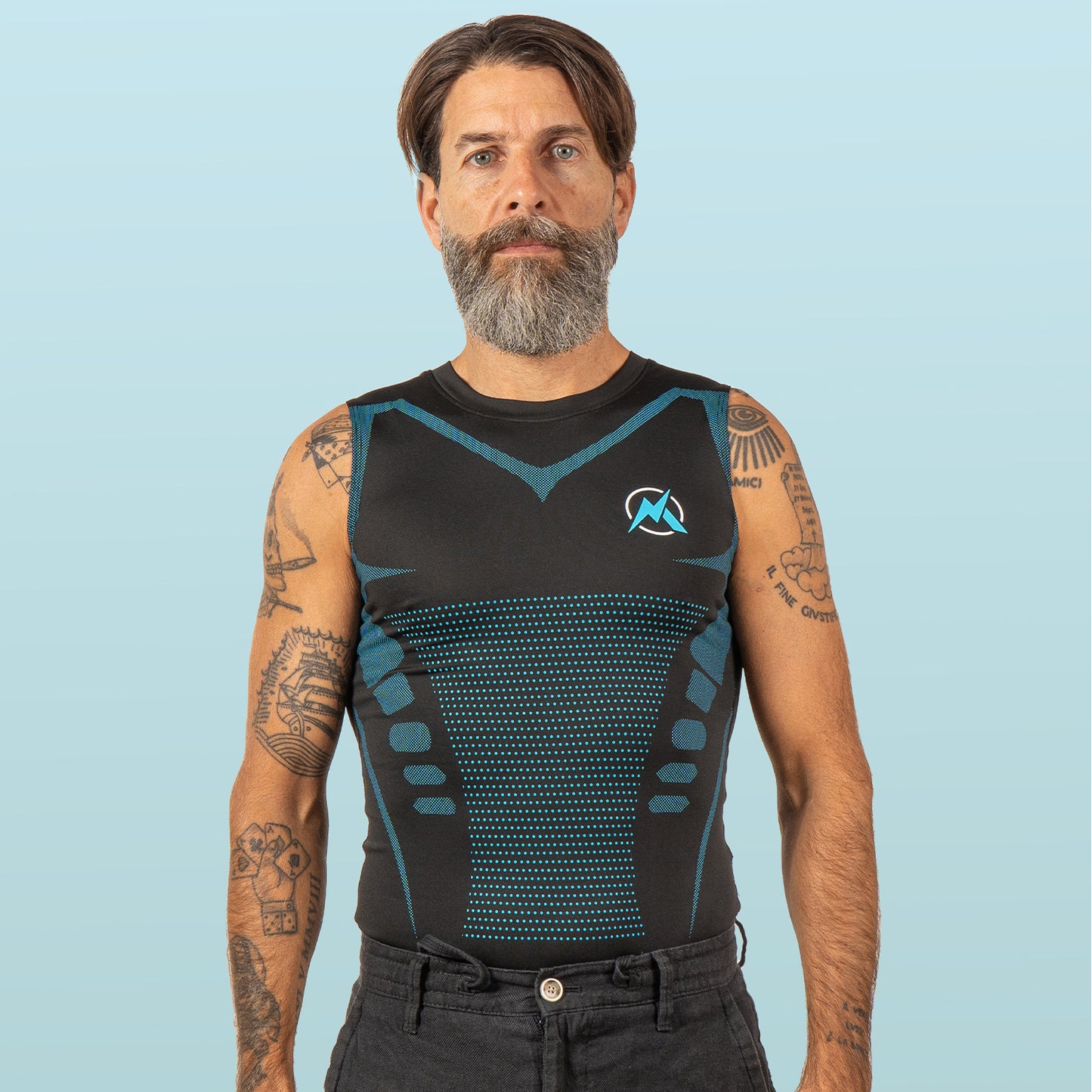
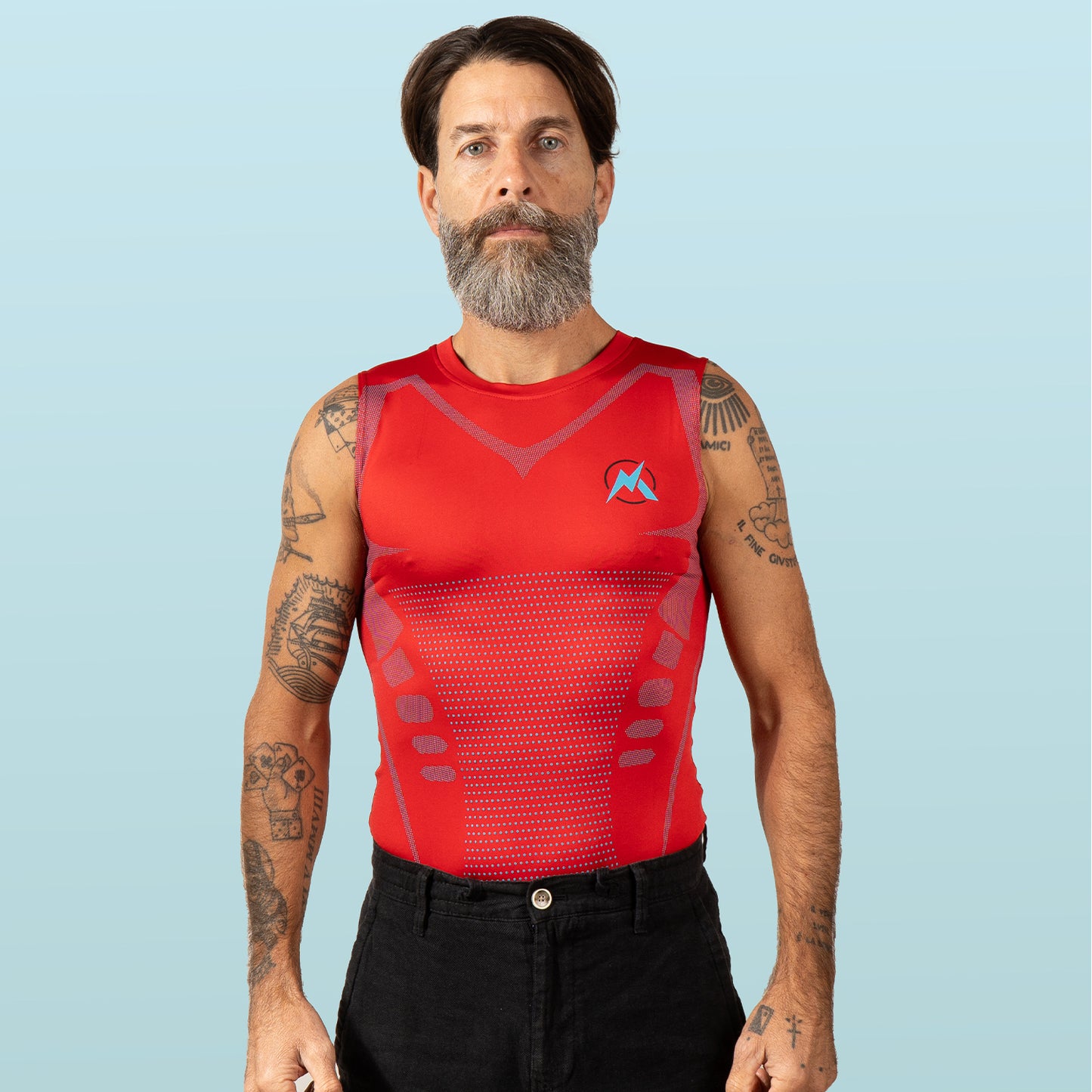
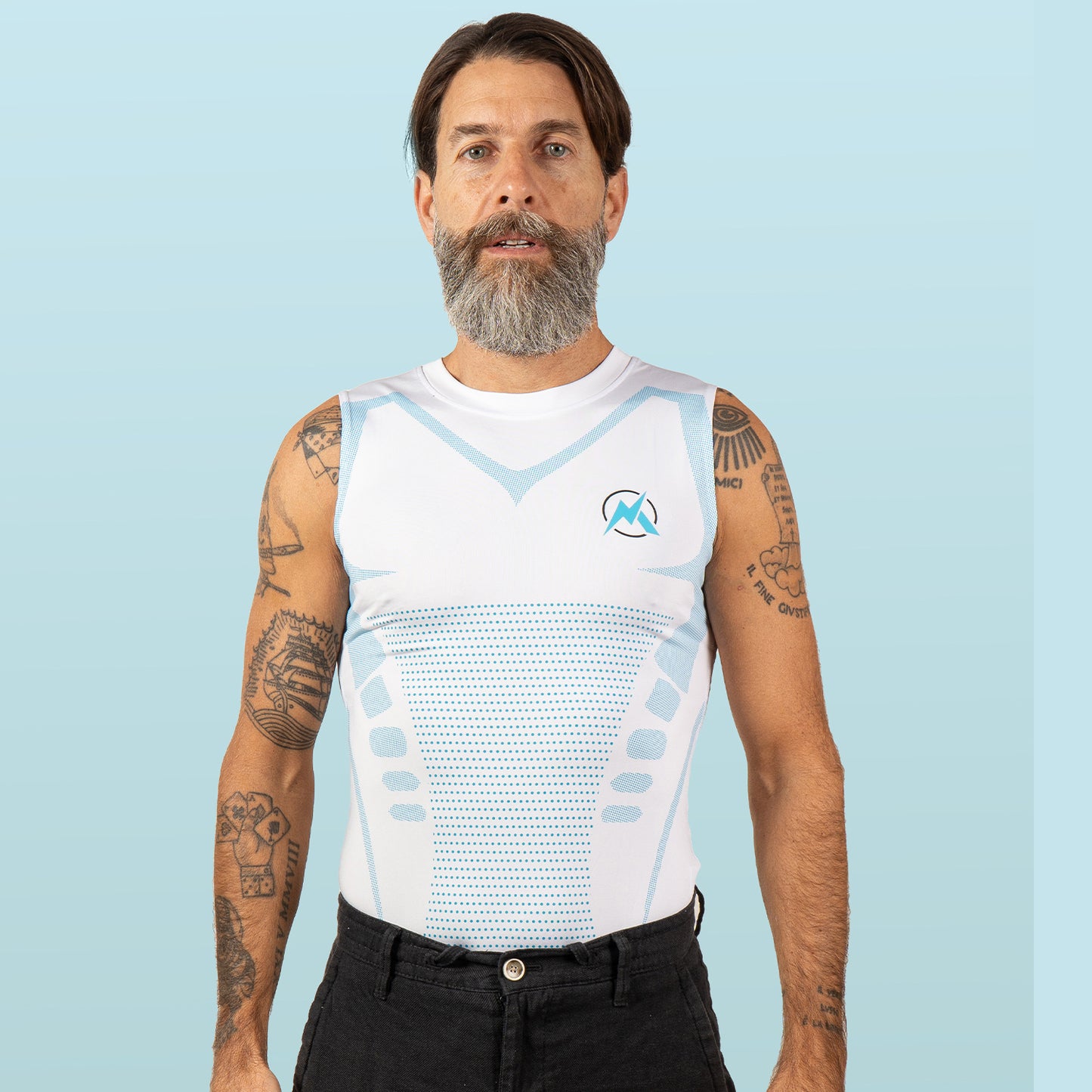
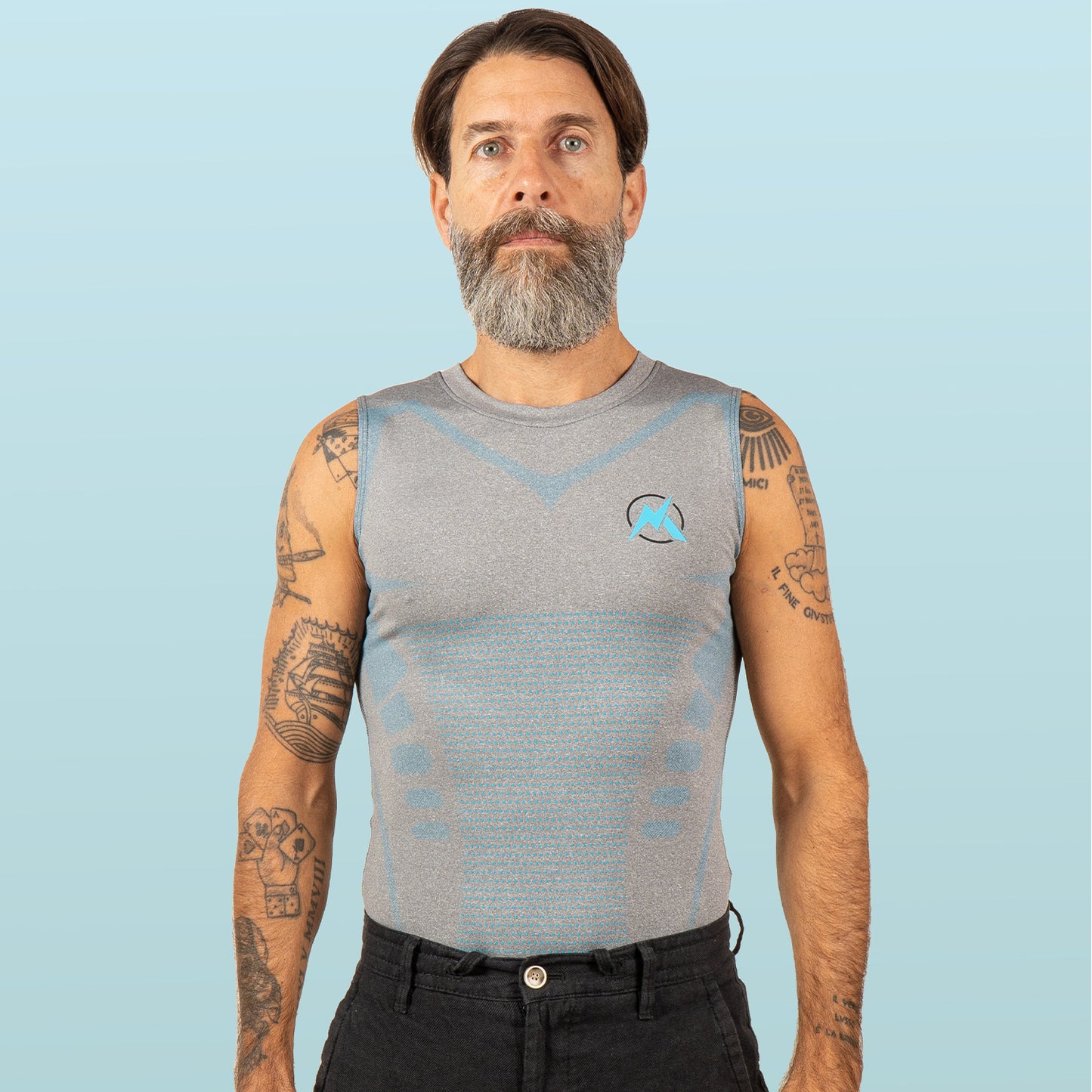
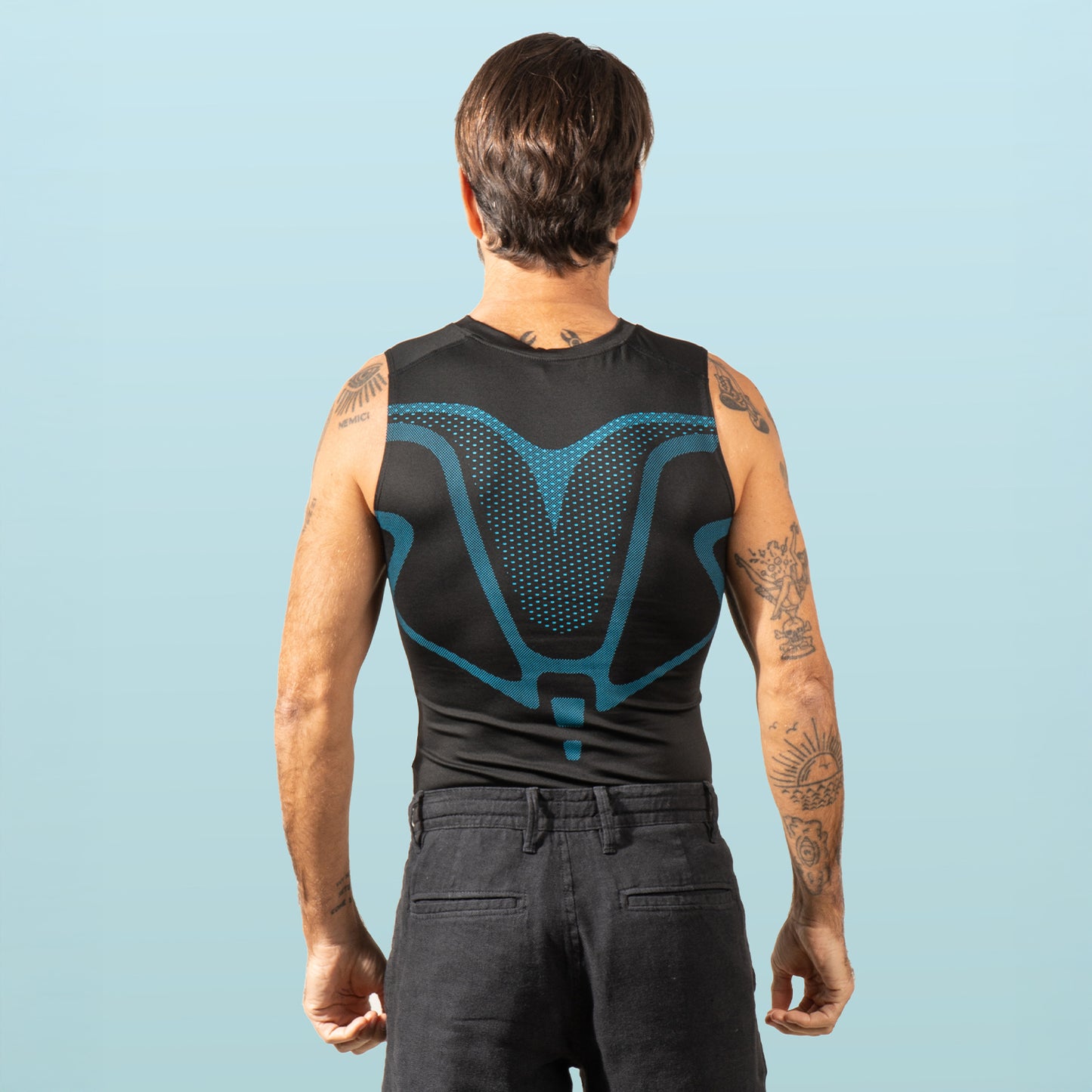
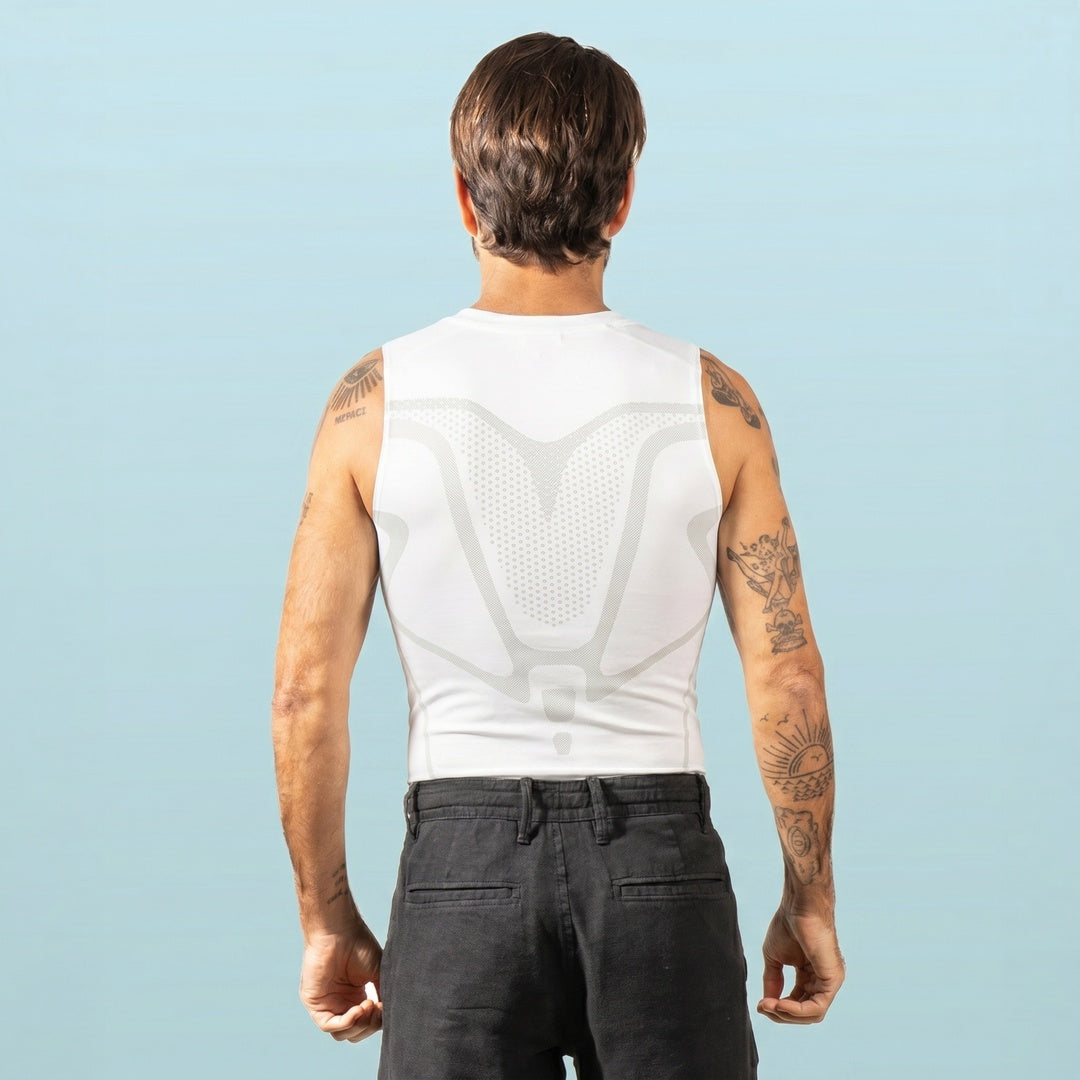
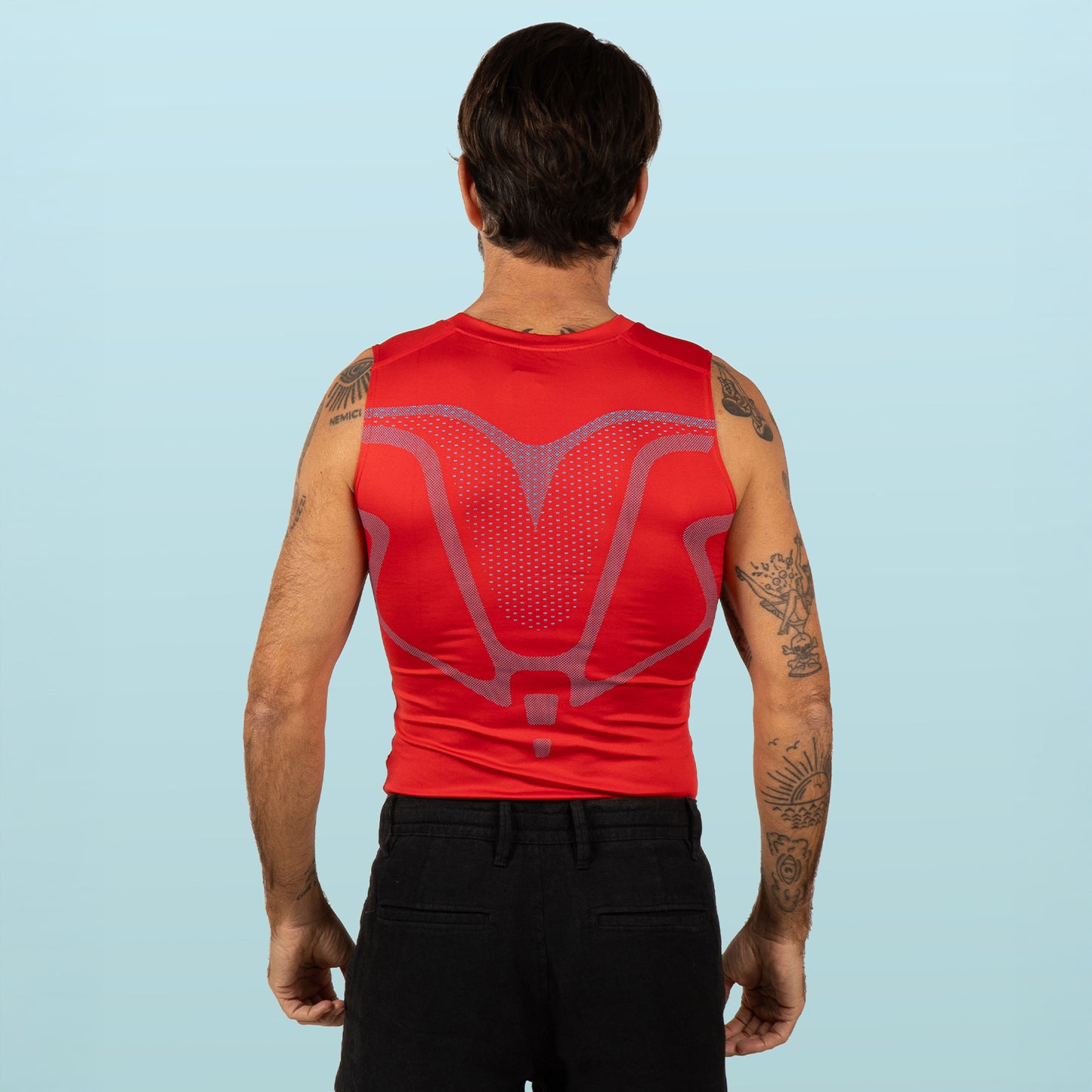
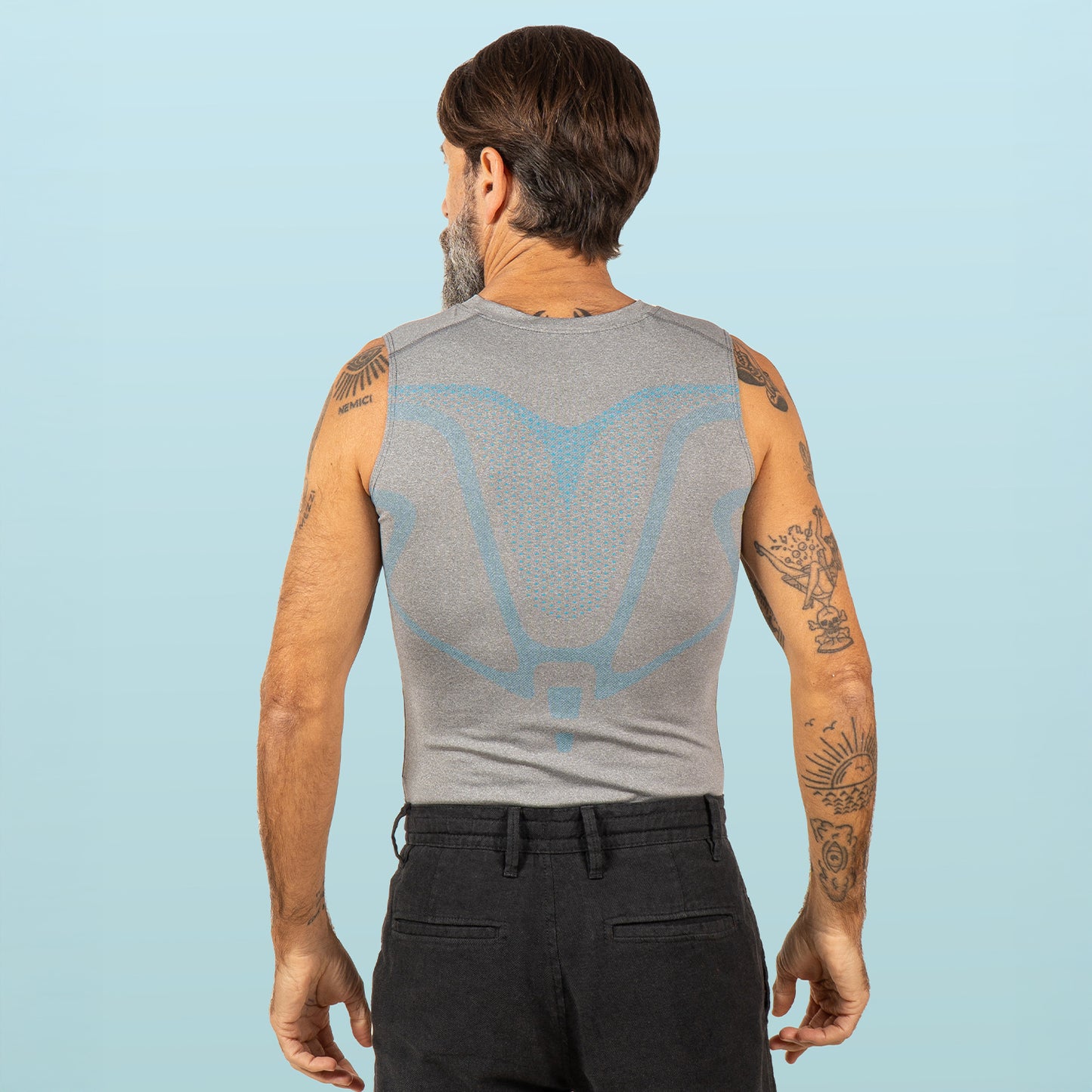
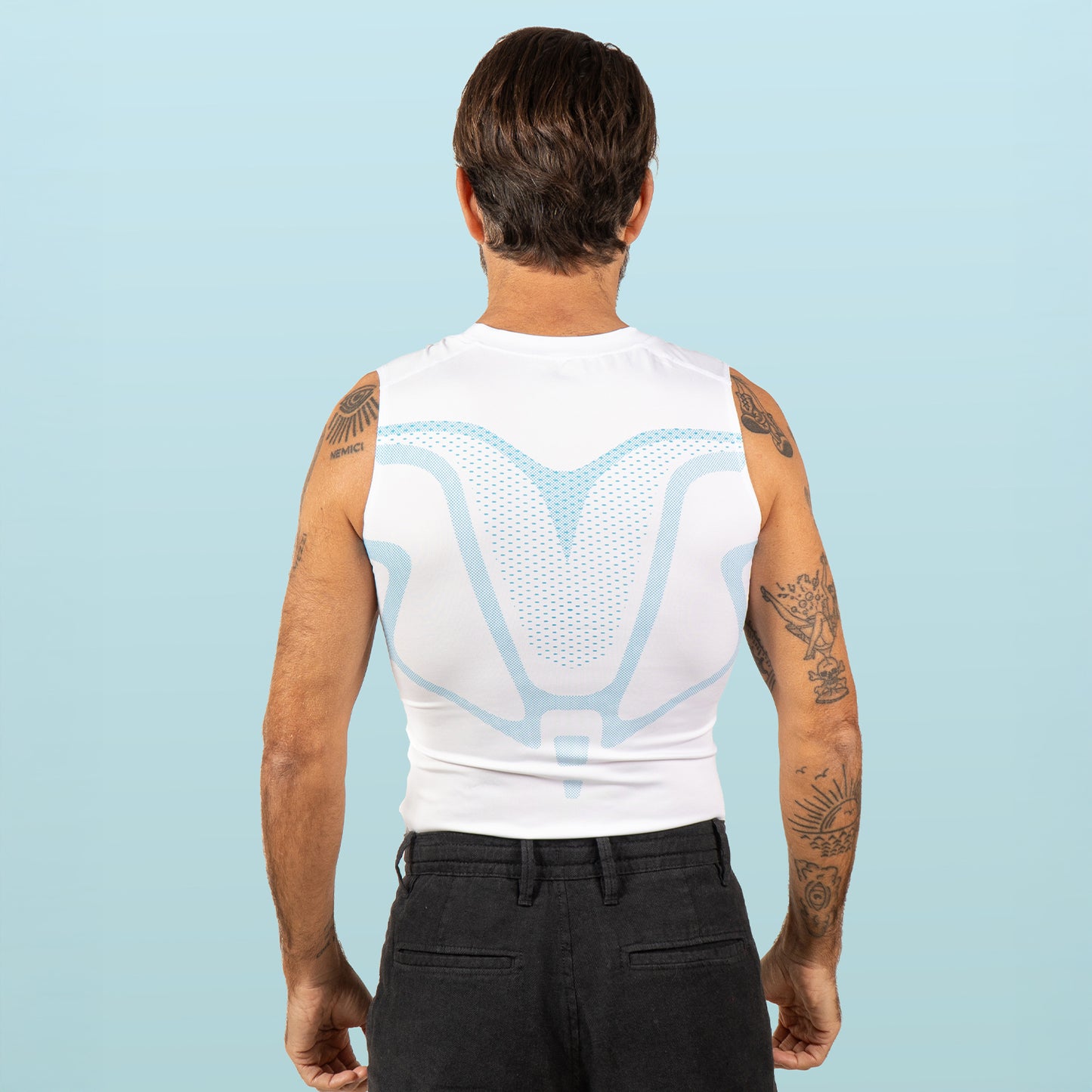
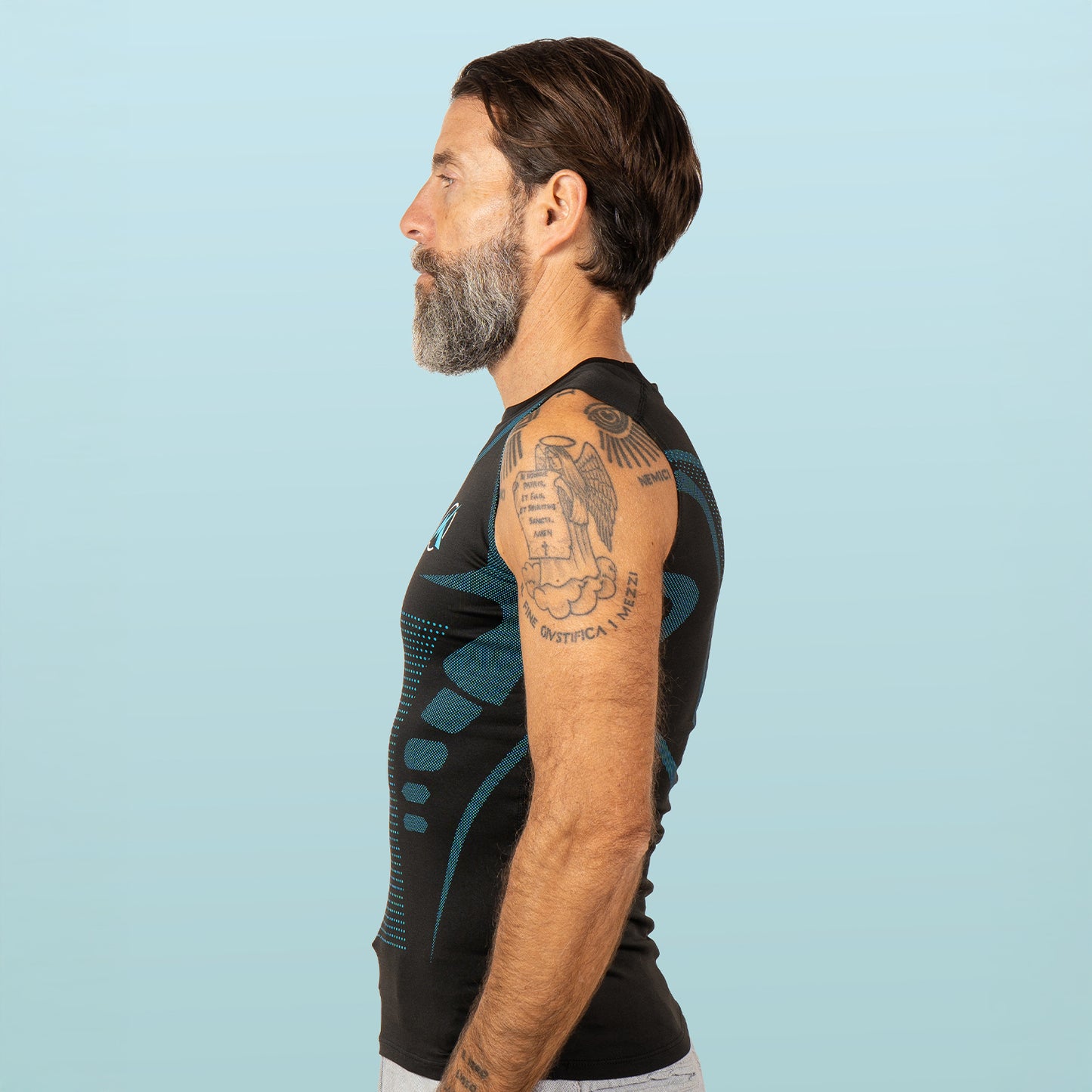
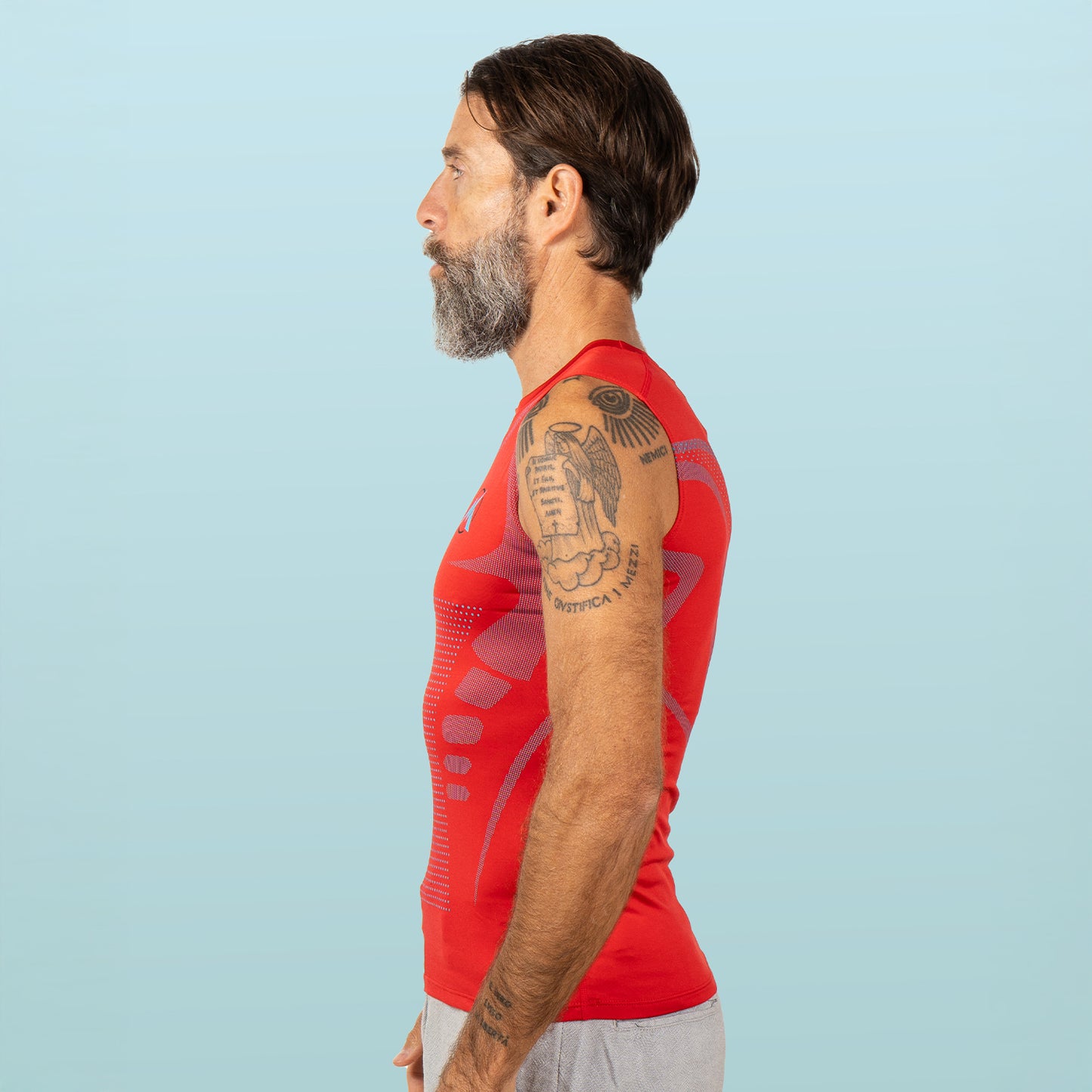
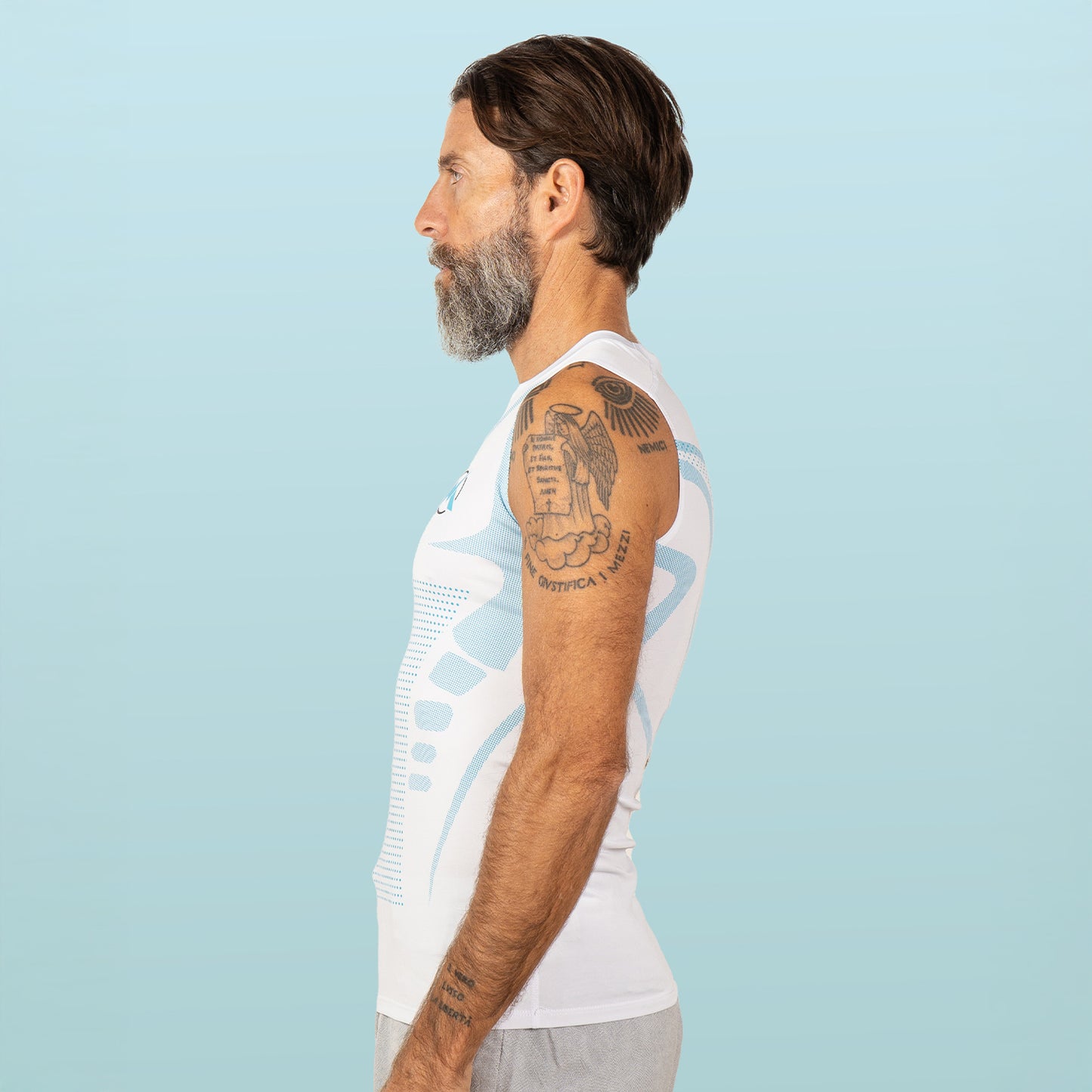
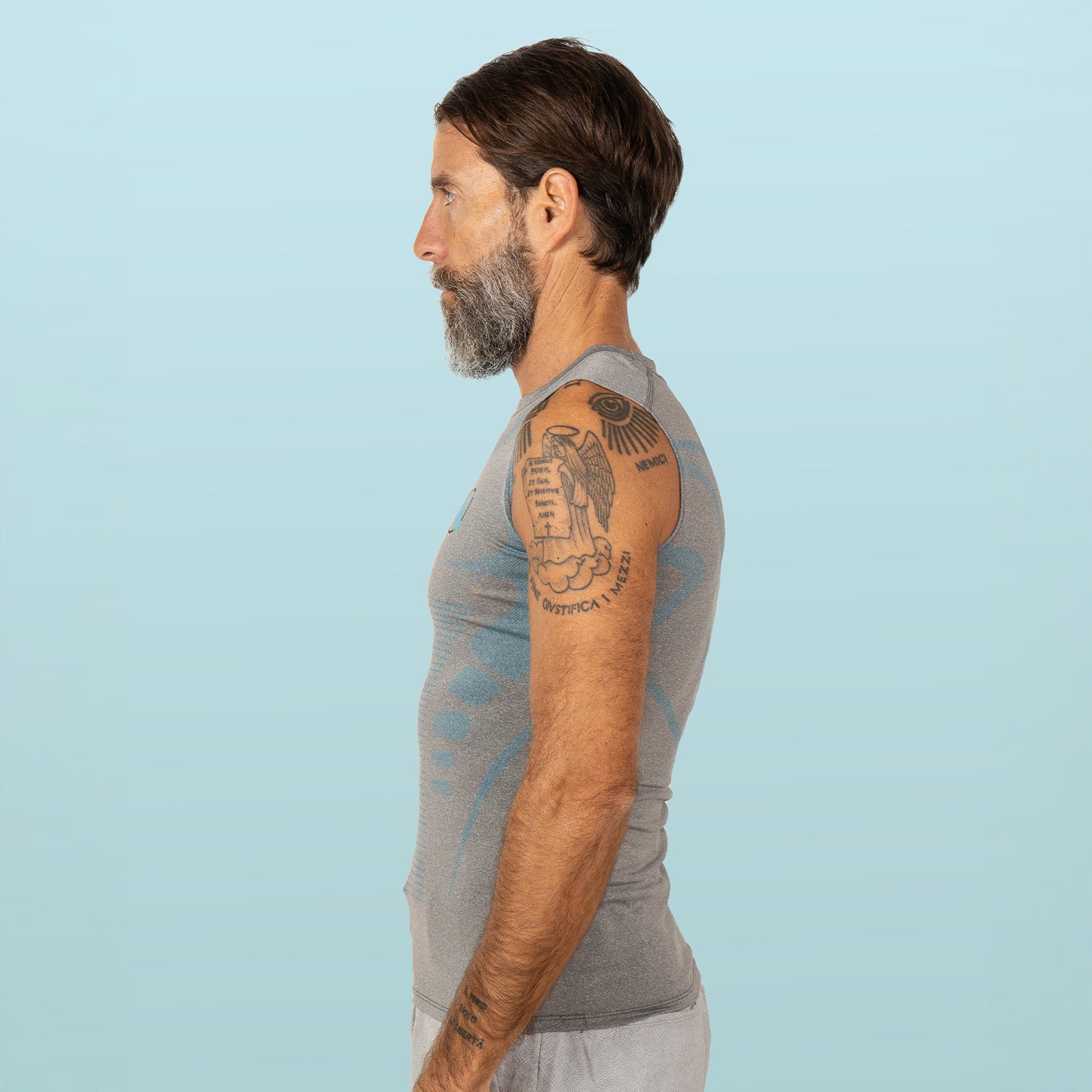
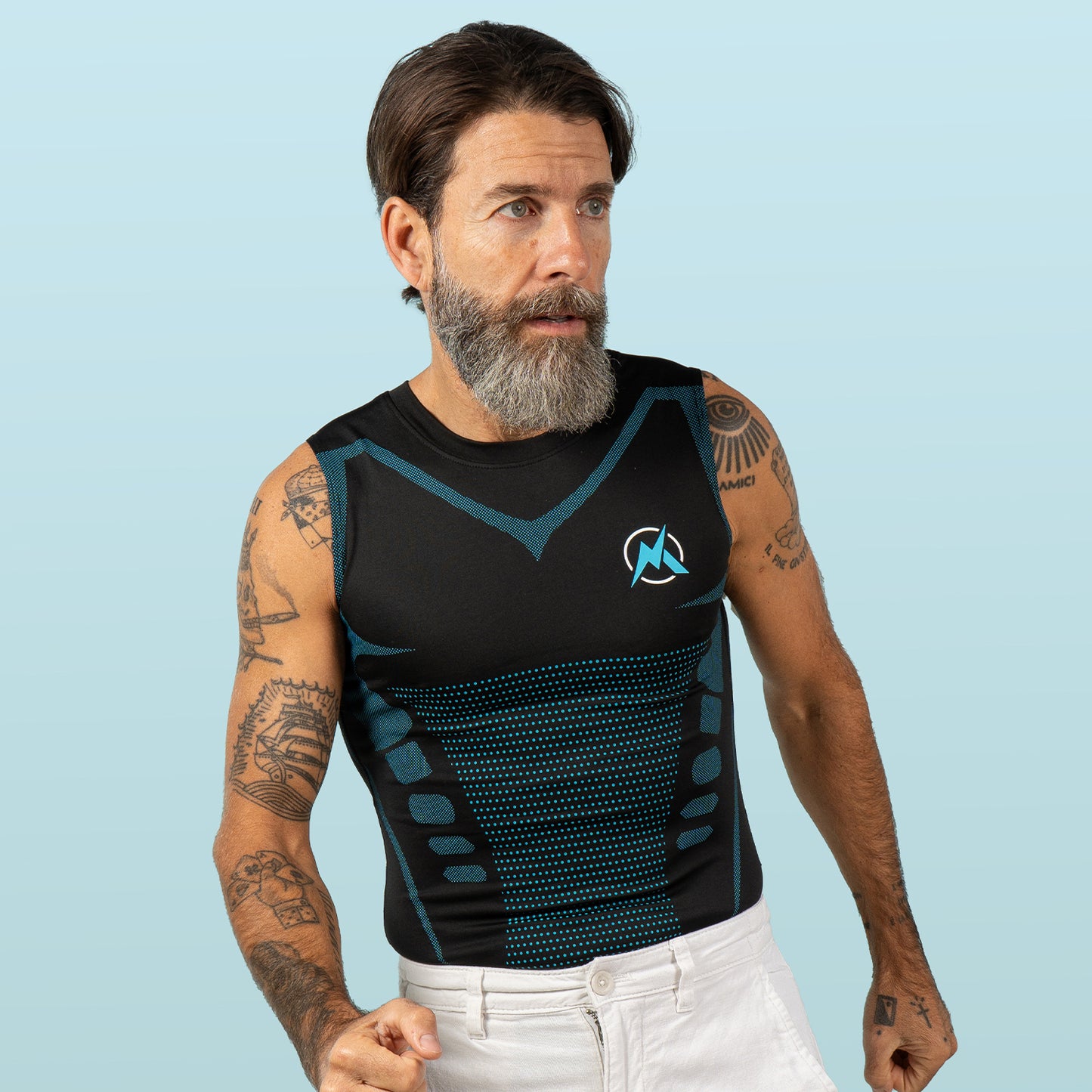
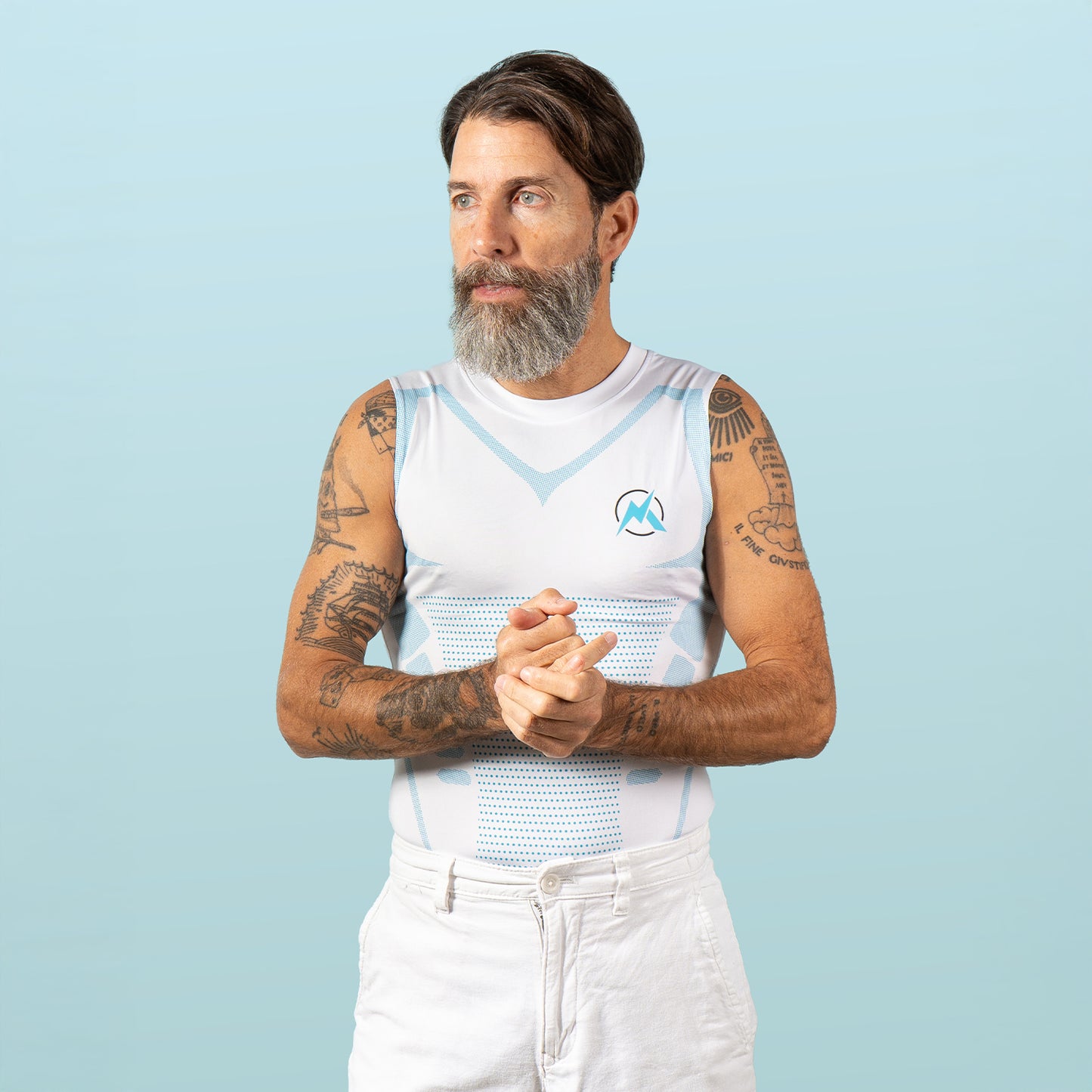
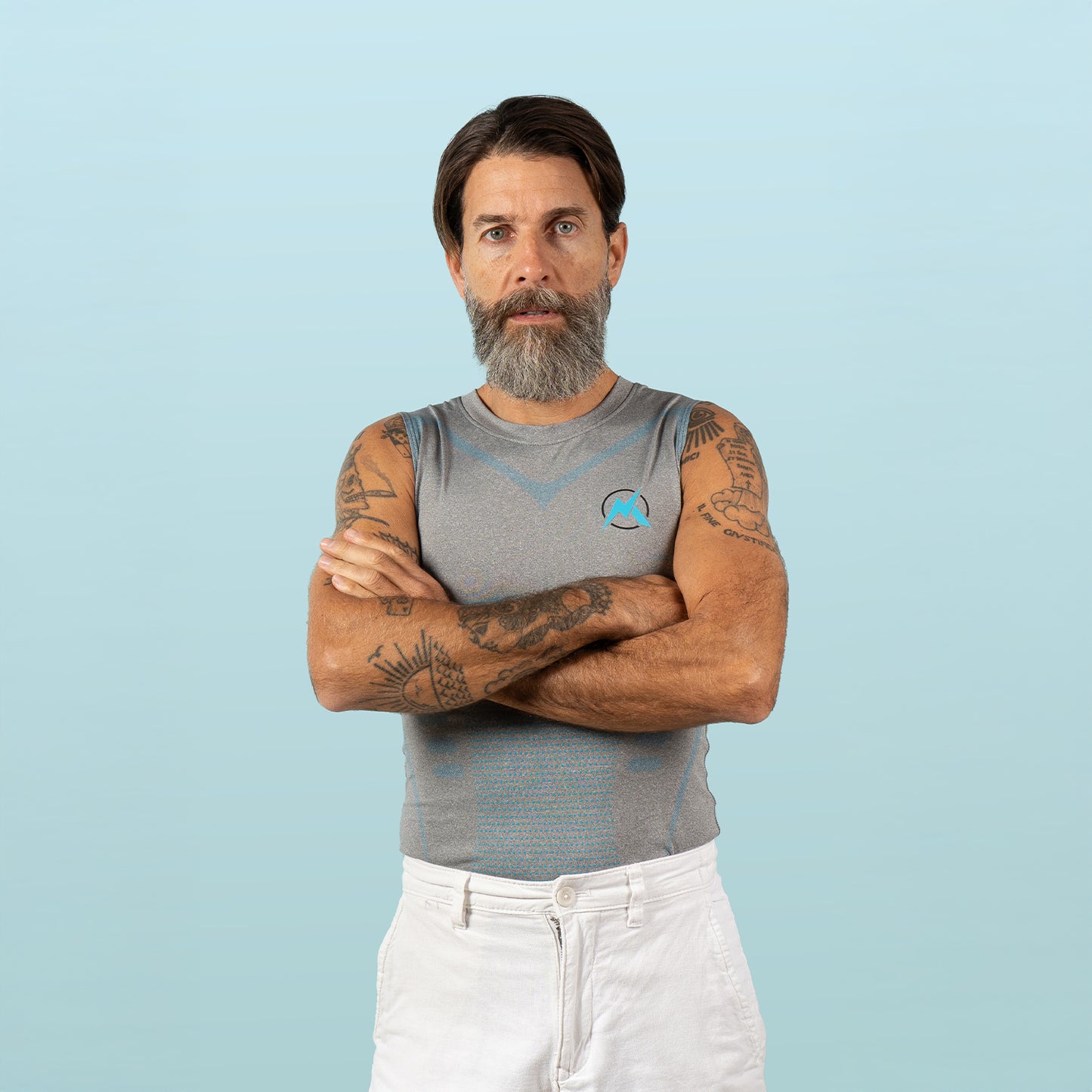
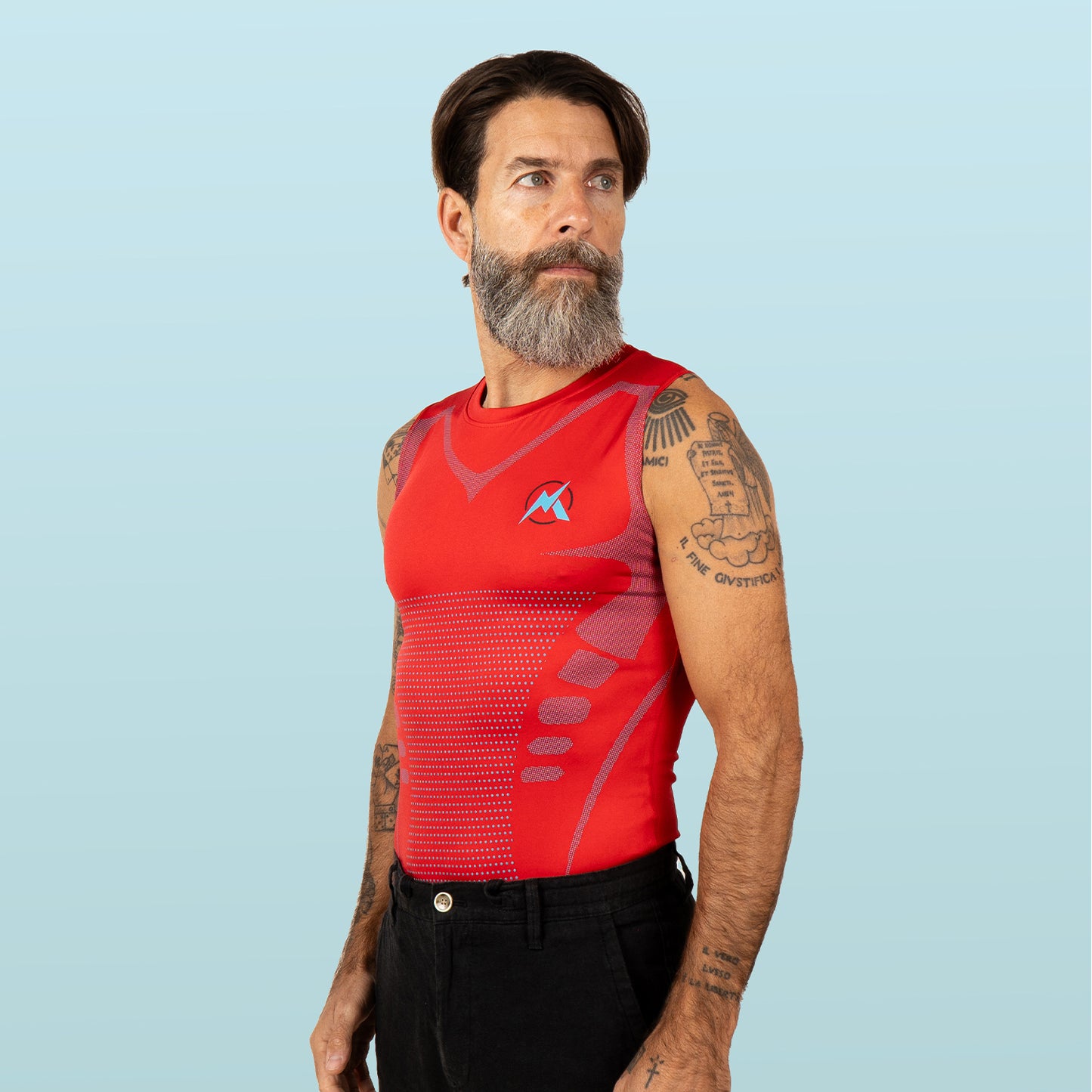
That is exactly what the VitaBoost compression tank was built for. Daily-wear sleeveless. Black. Sits under any shirt. Designed for men 40+, not for a 24-year-old gym influencer. It doesn't burn fat. Nothing you wear does. What it does is hold the line on how you look in the mirror tomorrow morning while your sleep work compounds over the next 12 weeks.
It's the "awake you" counterweight to the "asleep you" recovery work.
See VitaBoost — Buy 1 Get 1 Free
What doesn't work (don't waste your time)
- "Sleeping more on the weekend." It doesn't undo the weekday damage. Cortisol elevation from short weekday sleep stays in your system.
- Melatonin megadoses (5–10 mg). Sleep clinicians recommend 0.3–1 mg for adults. Higher doses don't make you sleep more — they often disrupt natural rhythm.
- OTC sleep aids long-term. Diphenhydramine (the active ingredient in most) is associated with morning grogginess and, in older adults, raised dementia risk.
- "Burning fat while you sleep" supplements. No supplement burns visceral fat. The mechanism doesn't exist. The Mayo data shows the fix is the sleep itself, not pills.
- TRT as a first move. Mayo Clinic is explicit that testosterone therapy without ruling out sleep apnea first can make sleep apnea worse, not better. Fix sleep before chasing T.
The 7-day reset protocol
You don't need a 90-day plan. You need 7 nights run cleanly. Here is the entire thing.
| Day | Action |
|---|---|
| 1 | Last drink by 7 p.m. No screens after 9:30 p.m. Bed by 10:30. Bedroom at 67°F. |
| 2 | Same. Add 10-min nasal breathing (4-in, 6-out) in bed. |
| 3 | Same. Add walk after dinner — 20 min, slow pace. |
| 4 | Same. No caffeine after noon. |
| 5 | Same. Audit snoring with your partner — are you stopping breathing? |
| 6 | Same. Notice mirror. Bloat down. Face less puffy. |
| 7 | Decide: is morning energy 30% better? If yes, lock the protocol. If no, sleep study referral. |
Run it. Don't optimize it. Just run the same 7 days.
Internal links worth reading next
If you want the broader picture on the body changes driving this loop, see how a man's body changes after 40 and why men get a belly after 40. For the morning-energy companion to this article, read why you feel tired all the time after 45. And for the visible counterweight, how to reverse a dad bod sequences the same fix-by-speed hierarchy applied to the gut directly.
The bottom line
The sleep–belly loop is real, measurable, and gets worse after 45. The fix is unglamorous: no alcohol after 7, no screens after 9:30, 7–8 hours in bed, and screen for sleep apnea if it's not improving in 30 days. The mirror change is slow. The "awake you" counterweight is fast: posture, base layer, walking taller in the meantime. Run the 7-day reset. Re-audit. Then push for month 3.
Frequently asked questions
Does lack of sleep cause belly fat in men?
Yes. A Mayo Clinic randomized trial found that 14 nights of restricted sleep (4 hours/night) increased visceral abdominal fat by 11% with no change in diet. The mechanism is hormonal: short sleep raises cortisol and ghrelin and lowers leptin, redirecting fat to the gut.
How many hours of sleep do I need to lose belly fat?
7 to 9 hours, consistently. Under 6 hours roughly doubles the risk of waist circumference over 40 inches in men. Past 9 hours, the benefit flattens. The sweet spot is 7.5 hours on a regular schedule.
Can sleep help you lose belly fat?
Sleep alone won't burn belly fat without other inputs, but you can't lose visceral fat efficiently while sleeping under 6 hours — the cortisol and insulin disruption blocks fat loss. Fixing sleep is a precondition for the rest of the work to land.
How does cortisol cause belly fat in men?
Cortisol signals your fat cells to store, and visceral fat cells in the abdomen have the most cortisol receptors. Chronically elevated cortisol from short sleep, stress, and aging parks fat specifically around your organs — the "stress belly" pattern.
Does sleep apnea cause belly fat?
Sleep apnea contributes to belly fat through a feedback loop: it lowers testosterone and fragments deep sleep, both of which drive visceral fat accumulation, which in turn worsens apnea by narrowing the airway. Treating apnea with CPAP often improves the loop in both directions.
Sources
- Mayo Clinic News Network — Lack of sleep increases unhealthy abdominal fat
- Cleveland Clinic — Visceral Fat
- Mayo Clinic — Testosterone therapy and aging
- Frontiers in Endocrinology (PMC8350060) — Obstructive Sleep Apnea Is Associated With Low Testosterone Levels
- CDC NCHS Data Brief 559 — Short sleep duration
- Harvard Health — Late bedtime, obesity, and big bellies
- Brown F. et al., Sports Medicine 2022 (PMC9023423) — Compression garments & proprioceptive feedback
Get VitaBoost — Buy 1 Get 1 Free ($59.99 → $15)
Maynox is a clothing brand. VitaBoost is a compression tank, not a medical device. We do not claim it treats, cures, or prevents any condition, including sleep apnea or visceral obesity. If you suspect sleep apnea, see your doctor.