By Owen Blot · Founder, Maynox · Last updated June 7, 2026
You catch yourself in a hotel elevator mirror on a Tuesday morning. The shoulders look tired. The shirt is bunched at the gut. The face isn't terrible — it just looks like it belongs to someone older than the one in your head.
You don't want to look 30. You want to stop looking older than you are.
That distinction matters. Most "look younger" advice for men over 50 sells fillers, $200 serums, or a tighter haircut. Almost none of it tells you which lever does the most visible work first. So you end up buying creams, ignoring your posture, and wondering why the mirror keeps winning.
Here is the honest playbook: how to look younger as a man over 50 without plastic surgery or Botox, ordered by what actually moves the dial — fast levers first, slow levers last, and the gimmicks you can safely ignore.
Why "looking younger" isn't vanity (it's a health signal)
Before we get into tactics, this matters. "Perceived age" is not just about ego.
In 2009, Danish researchers published a cohort study in the BMJ following 1,826 twins aged 70+. Trained assessors guessed each twin's age from photos. The result: twins judged to look older than their chronological age died sooner — and perceived age correlated with measurable molecular biomarkers, including leucocyte telomere length.
The authors' conclusion was blunt: perceived age is a robust biomarker of aging that predicts survival.
Translation: how old a stranger thinks you are isn't shallow — it's a rough read of how your body is actually doing. Posture, skin, body composition, energy. The visible signals are the same signals your cardiologist would care about.
This is why the plan below is not a beauty routine. It's a fix-the-underlying-systems plan that happens to make you look younger as a side effect.
What actually makes a man read as "older" after 50
Top-of-Google listicles love to say "wear sunscreen and avoid trendy clothes." That's not wrong. It's just not diagnostic.
Stop a stranger on the street and ask them why a man "looks 60." They won't say "fine lines." They'll point at five things:
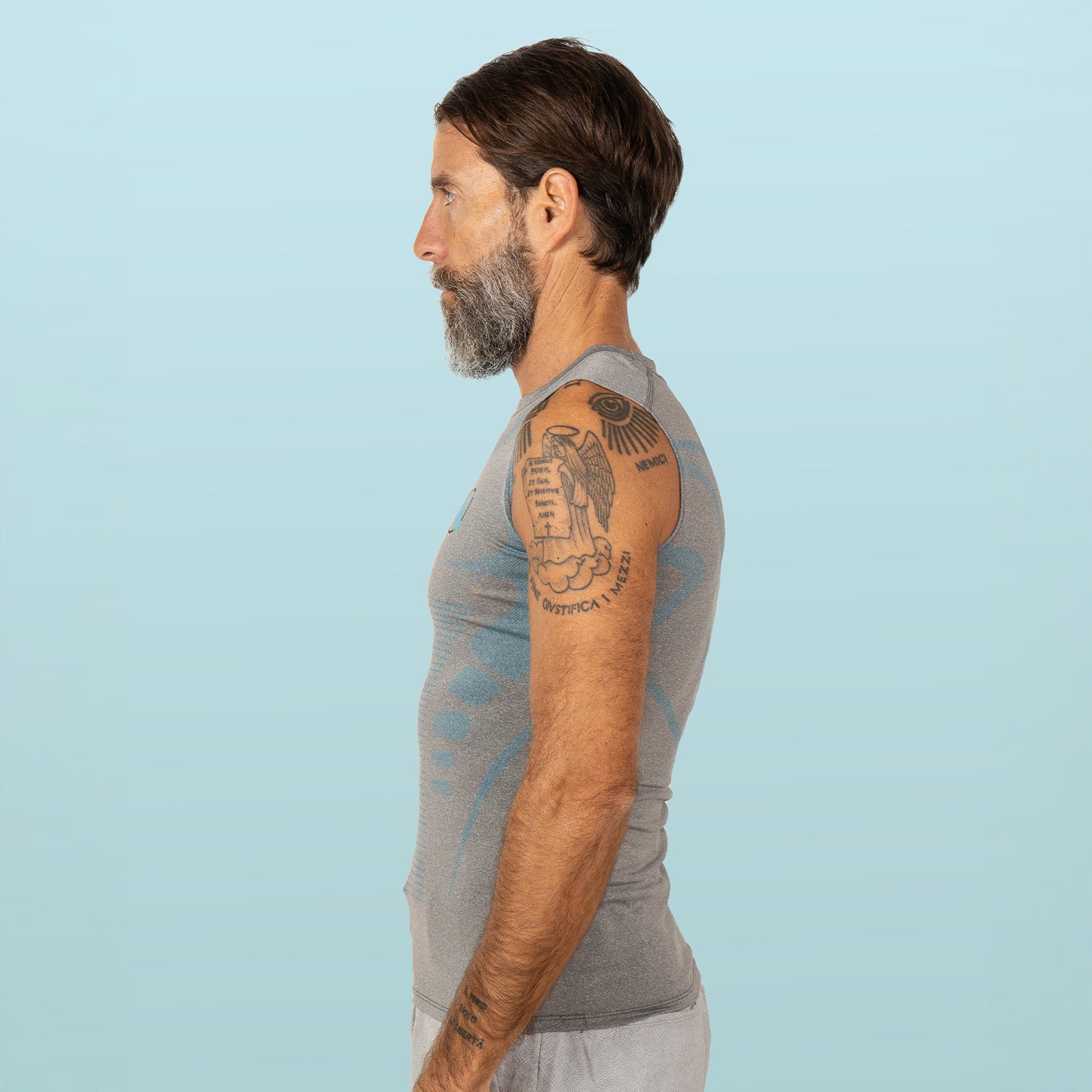
- Slouched shoulders and forward head. The single fastest read of "older man" in a side-view glance.
- A soft, heavy midsection that pushes a dress shirt out below the chest.
- Skin texture and sun damage — uneven tone, deeper crow's feet, dull surface.
- Hair that fights its situation — combover, dyed-too-dark, or grown too long over thinning areas.
- "Old-man" details — long brows, ear hair, yellowed teeth, a tired beard.
Notice what's not on that list: face wrinkles in isolation. A weathered face on an upright, well-built frame reads as "distinguished." The same face on a slouched, soft frame reads as "old." That's the whole game.
Up to 90% of visible skin aging is caused by sun exposure, not chronological aging. About 80% of adults experience posture problems at some point in their lives. And after age 30, men lose roughly 3-8% of muscle mass per decade if they don't fight it. Three big knobs. Most of the "aged" look comes from these.
The 4-lever plan, ordered by ROI
Most advice for men over 50 throws ten random tips at you and lets you sort them out. We're going to do the opposite: rank the levers by speed-to-visible-result and run them in that order.
Lever 1 — Posture and frame (Week 1 result)
This is the cheapest, fastest, most underrated lever in the entire plan. You can look five years younger by Friday without losing a pound, growing a hair, or buying a single cream.
The mechanism is simple. As men age, the head drifts forward over the shoulders, the upper back rounds, and the chest collapses. Cleveland Clinic notes that the human head weighs 10–12 lbs in neutral alignment but pulls roughly 27 lbs at 15° of forward flexion and up to 60 lbs at chin-to-chest. Your spine doesn't enjoy hauling that around all day — and your silhouette pays the visible price.
The fix is two-layered. First, a daily habit stack: stand tall when you fill the coffee maker, pull your shoulders back when you sit in your car, do 30 seconds of doorway pec stretches twice a day. (We covered the full habit stack in how to stand up straight.)
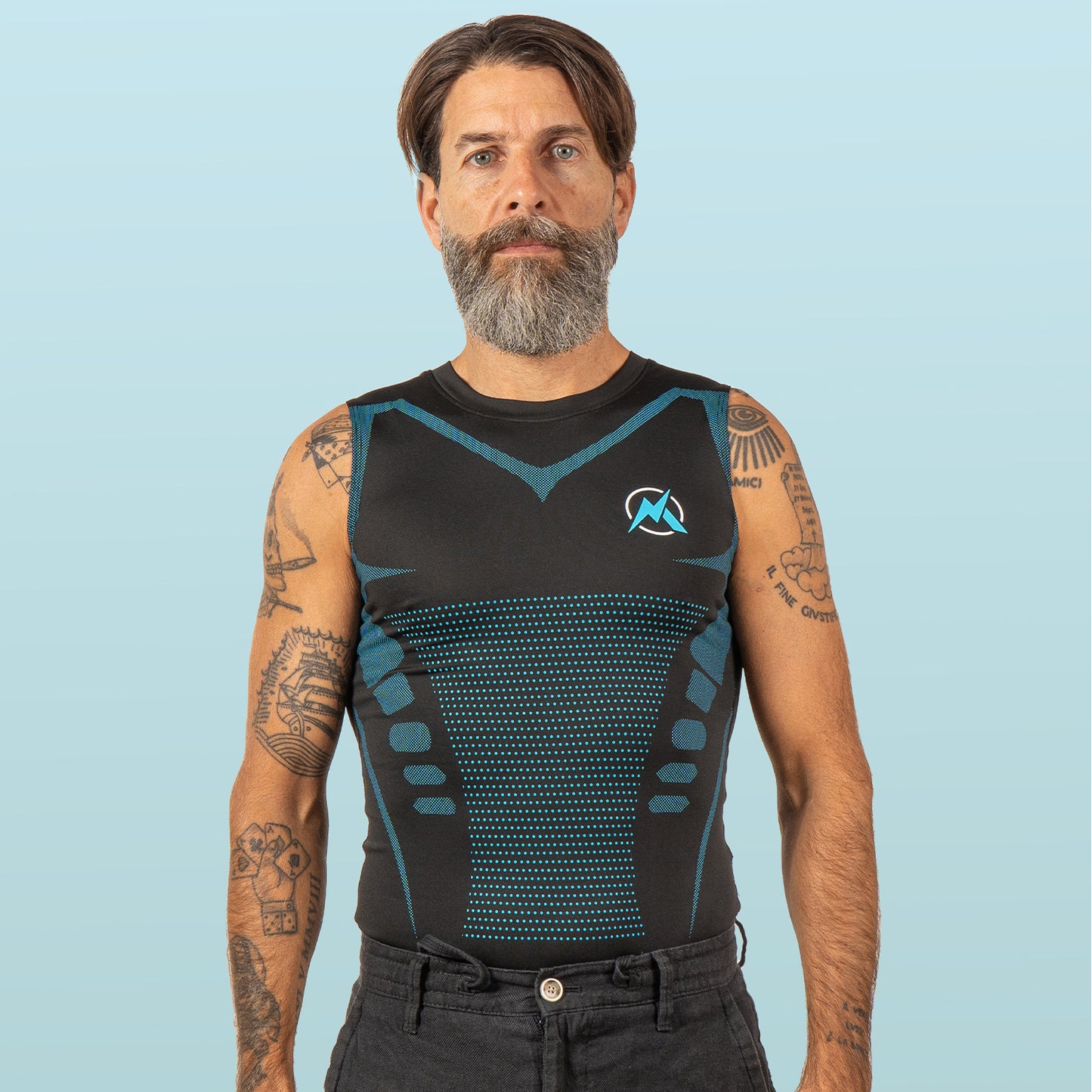
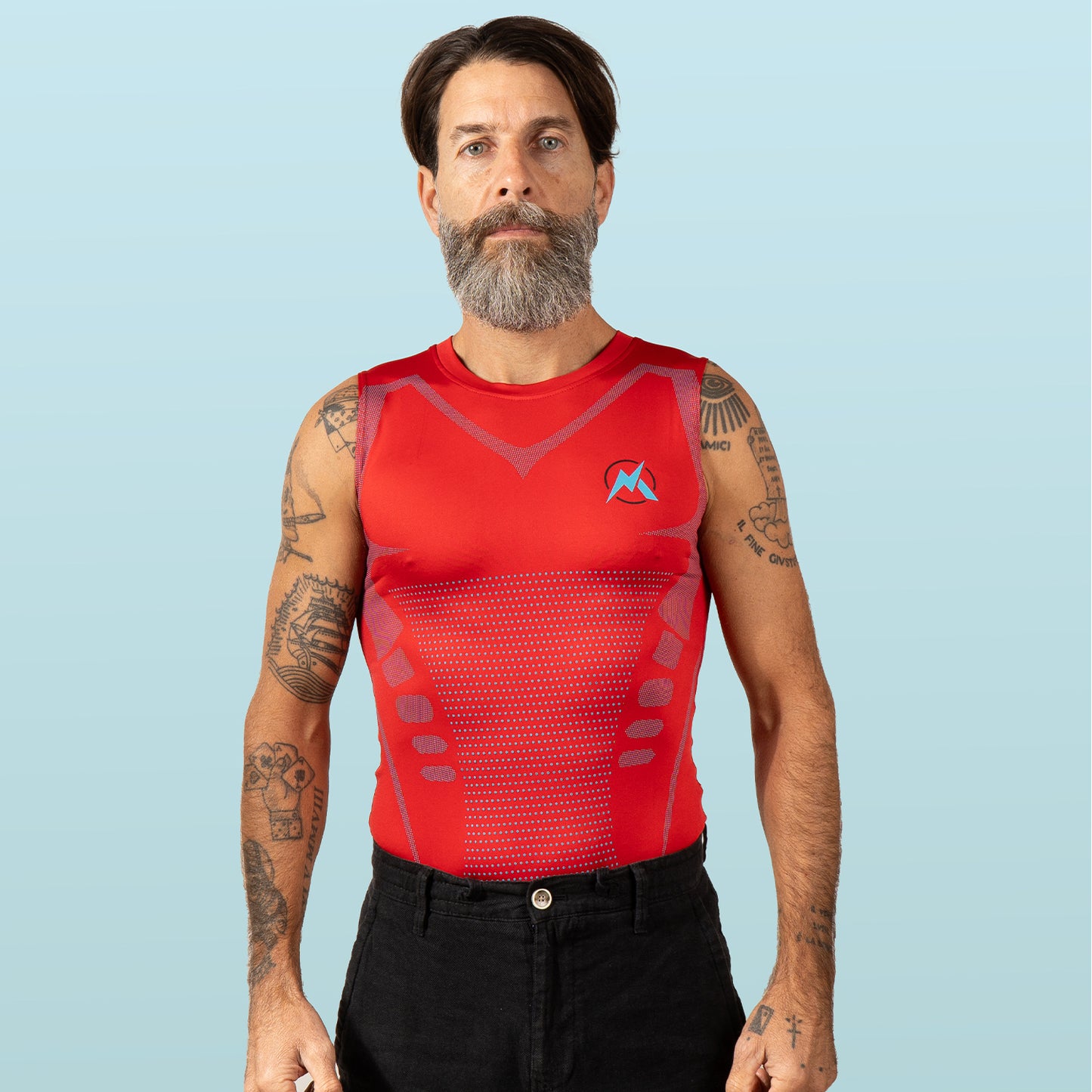
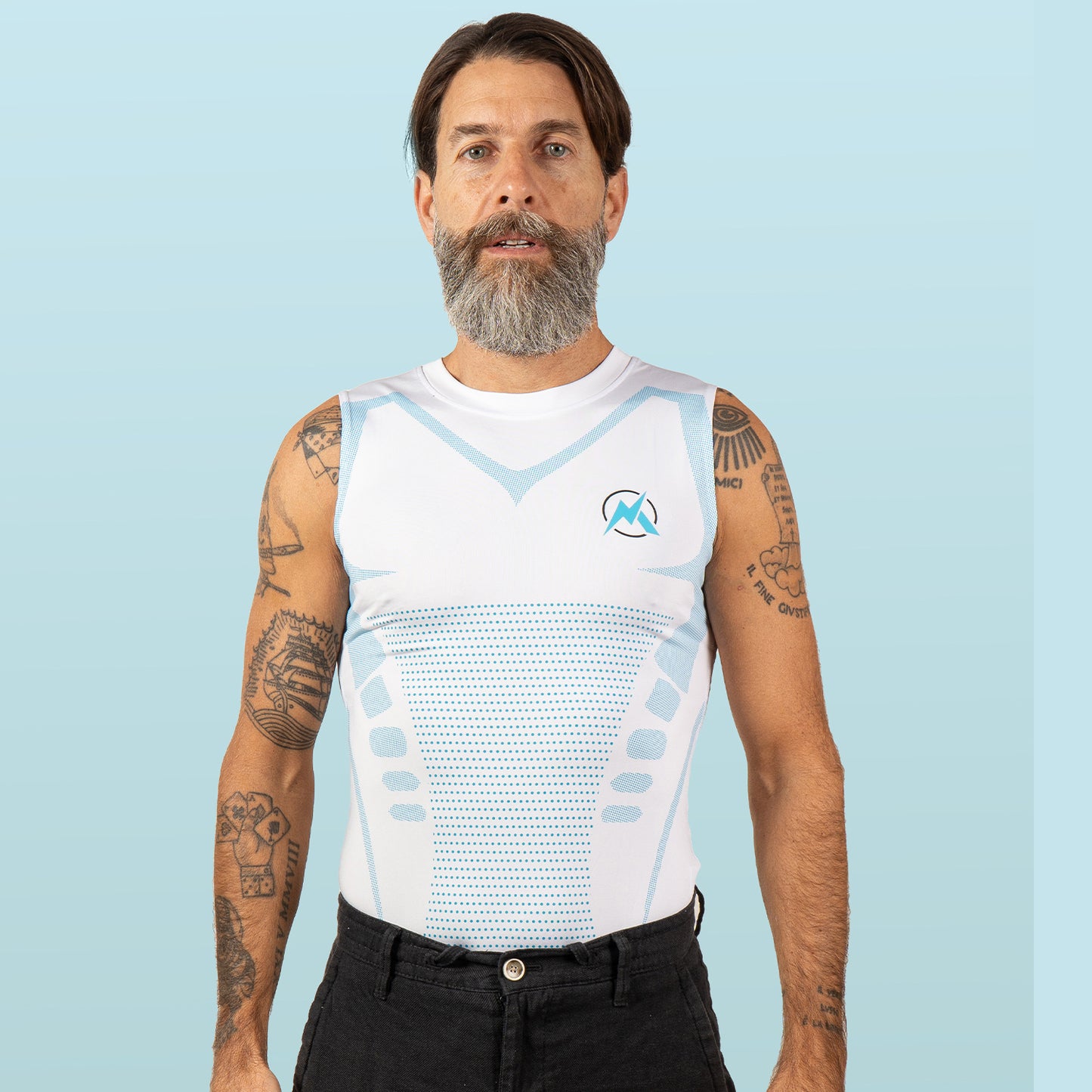
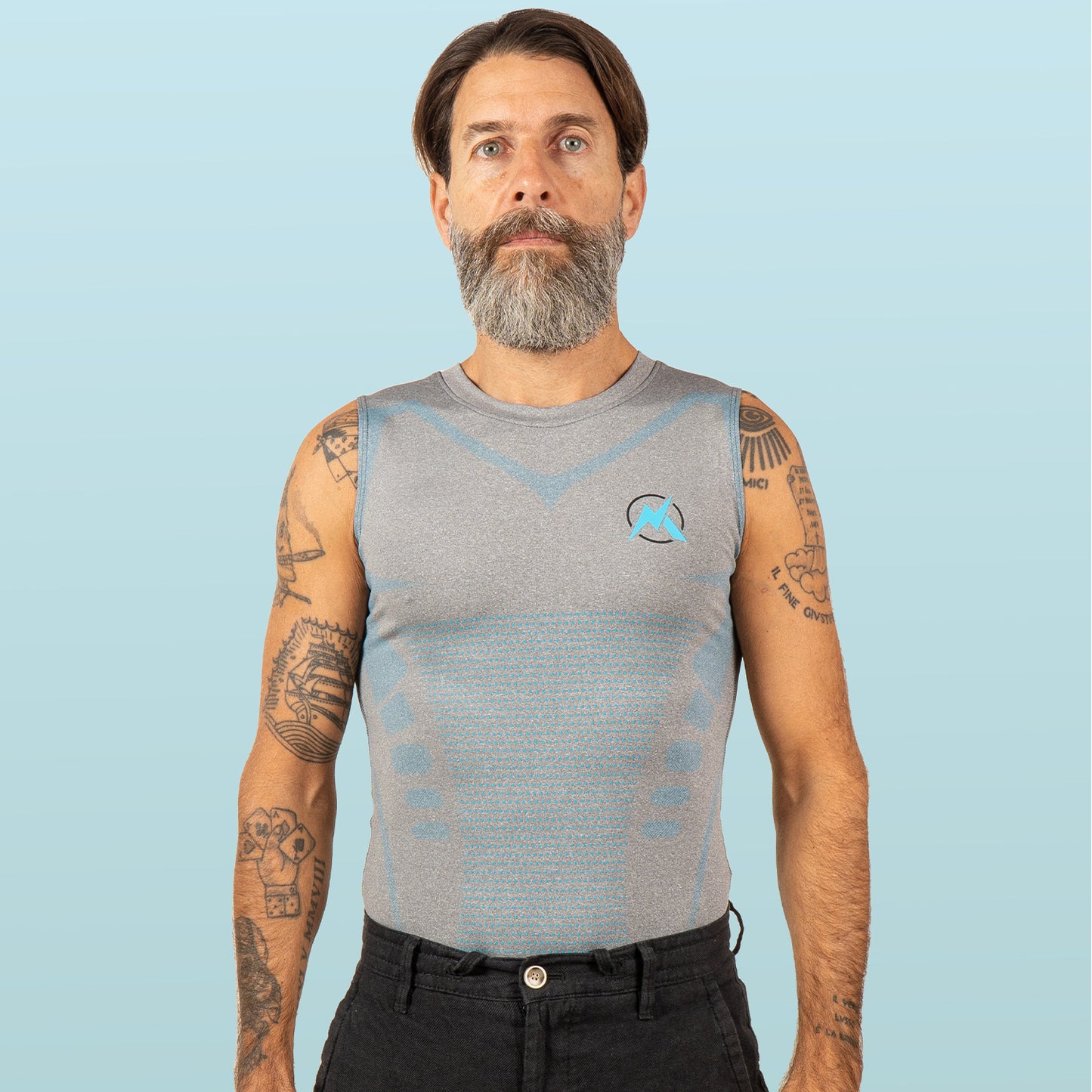
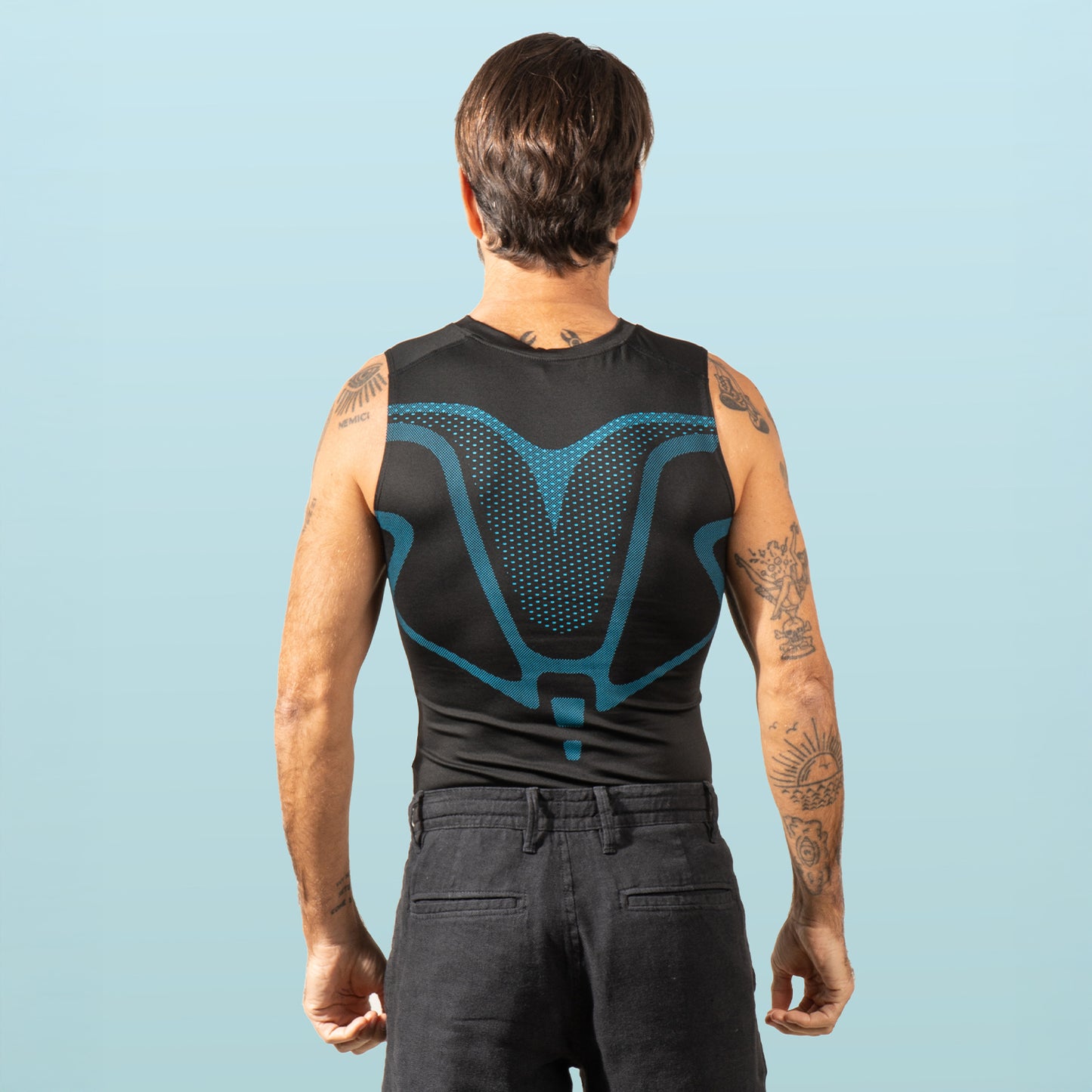
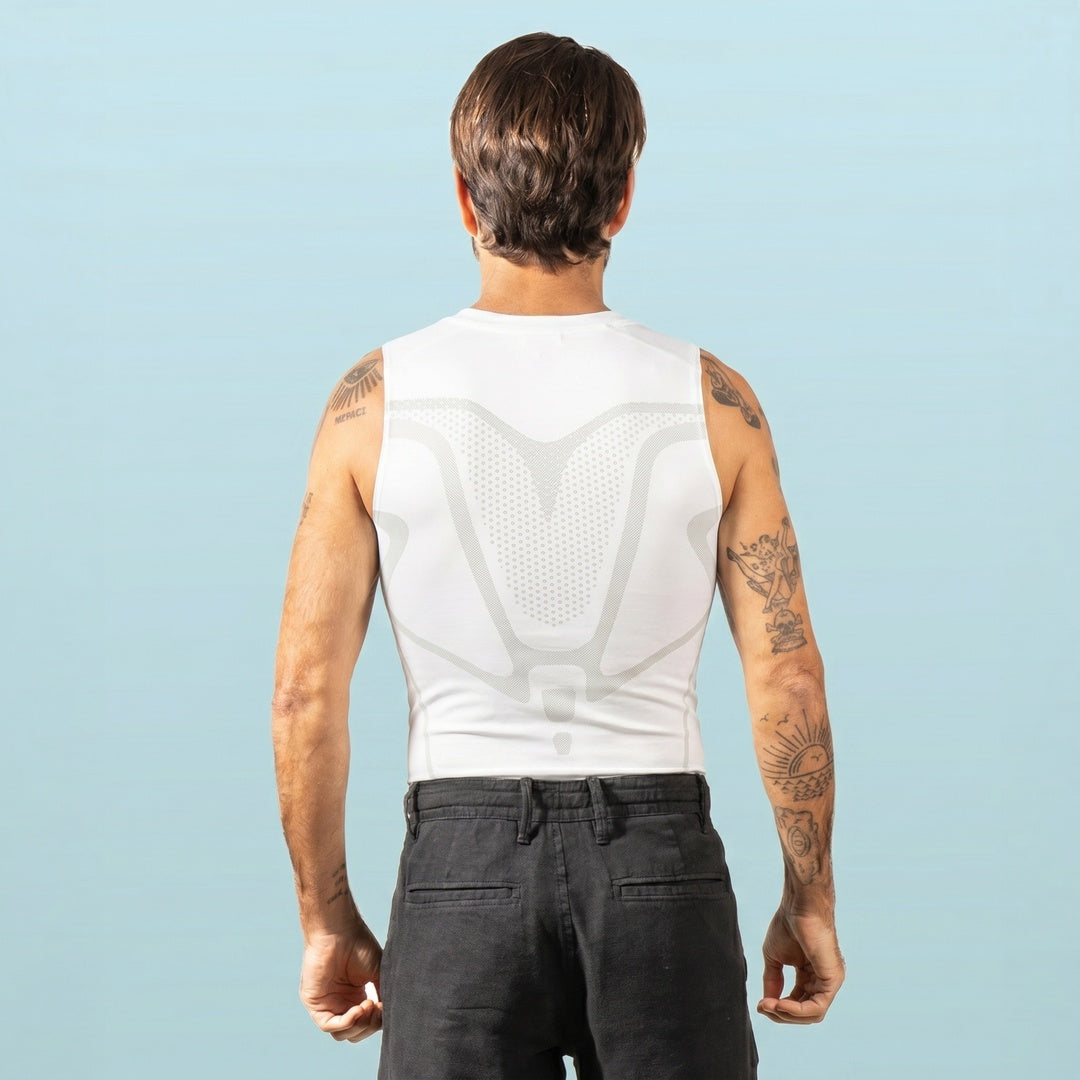
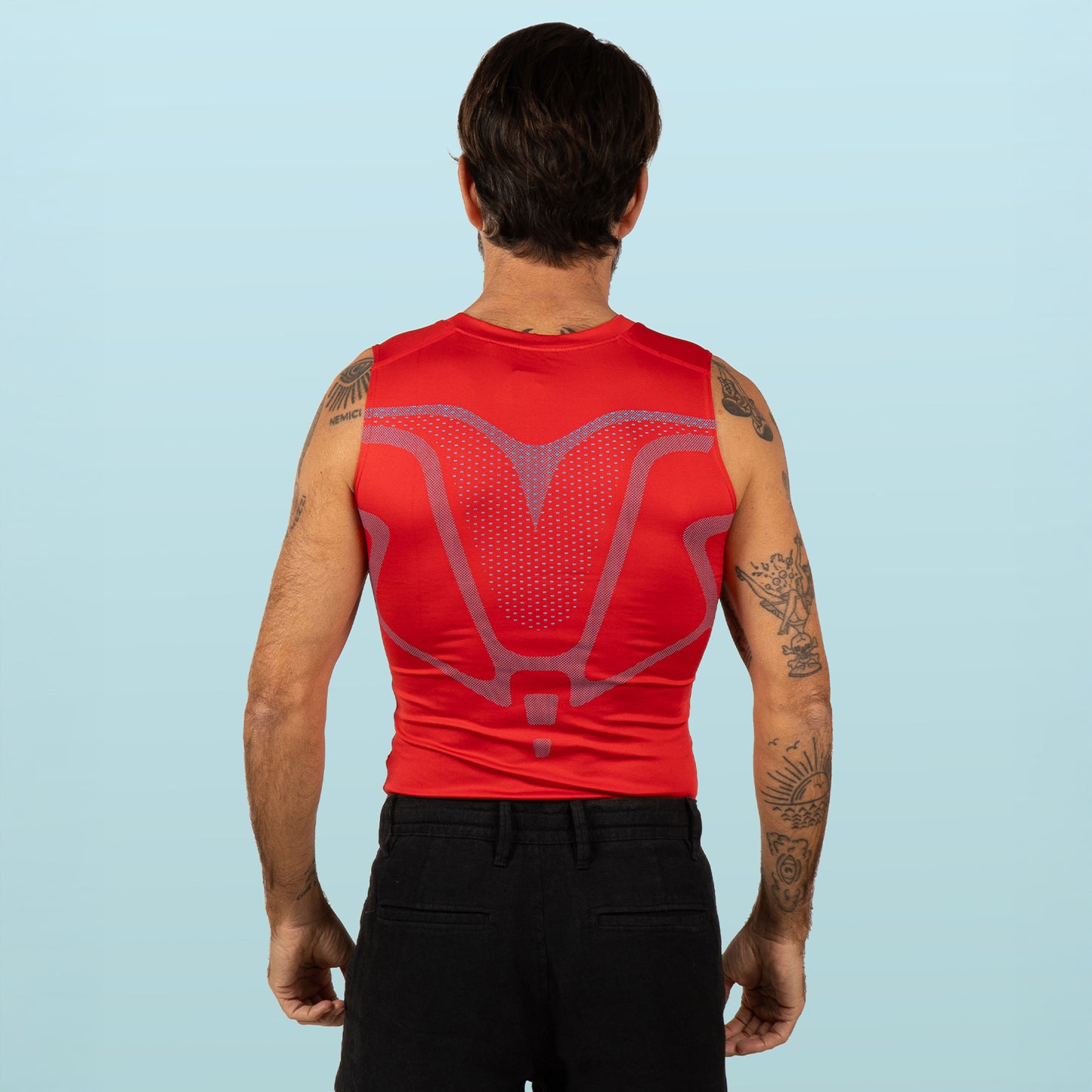
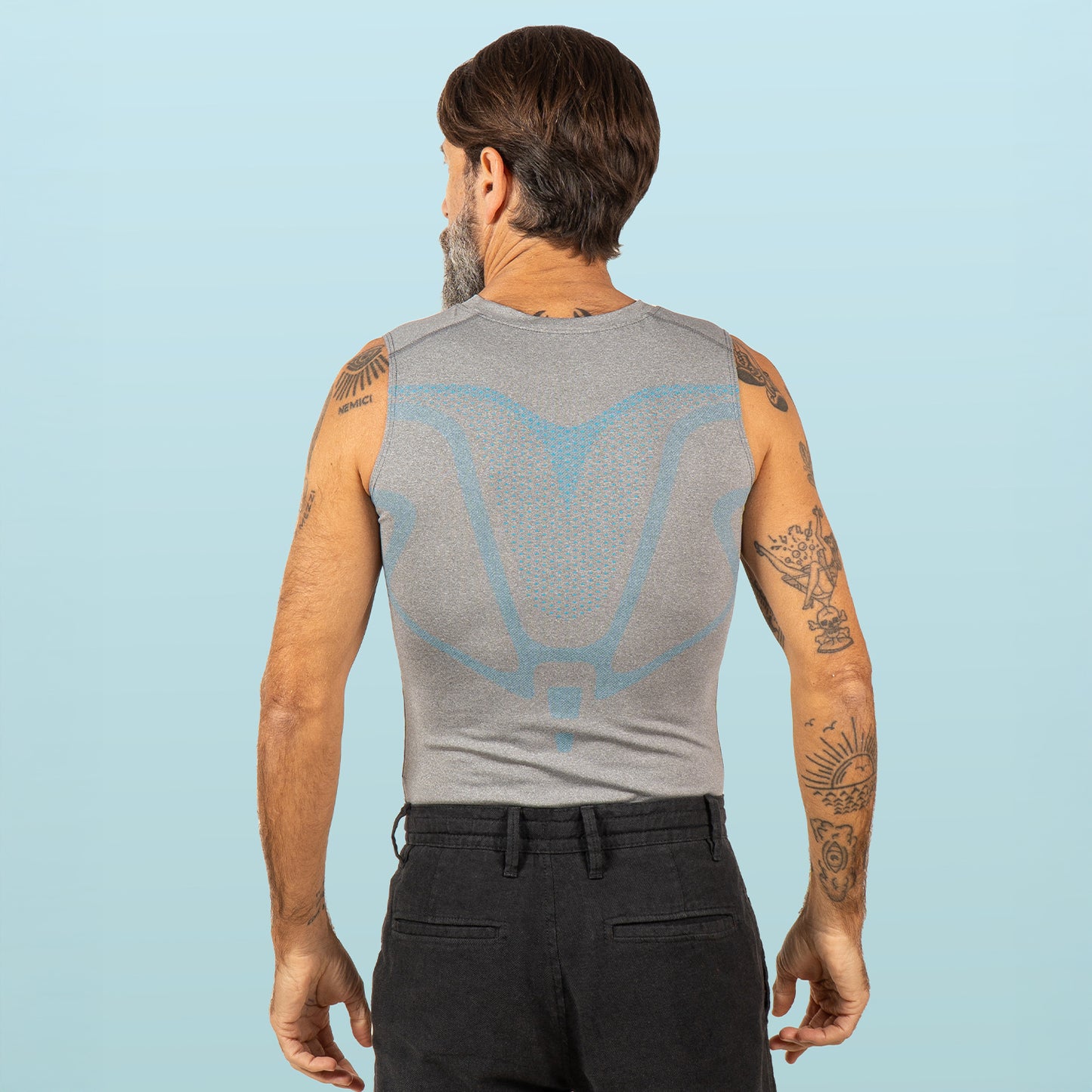
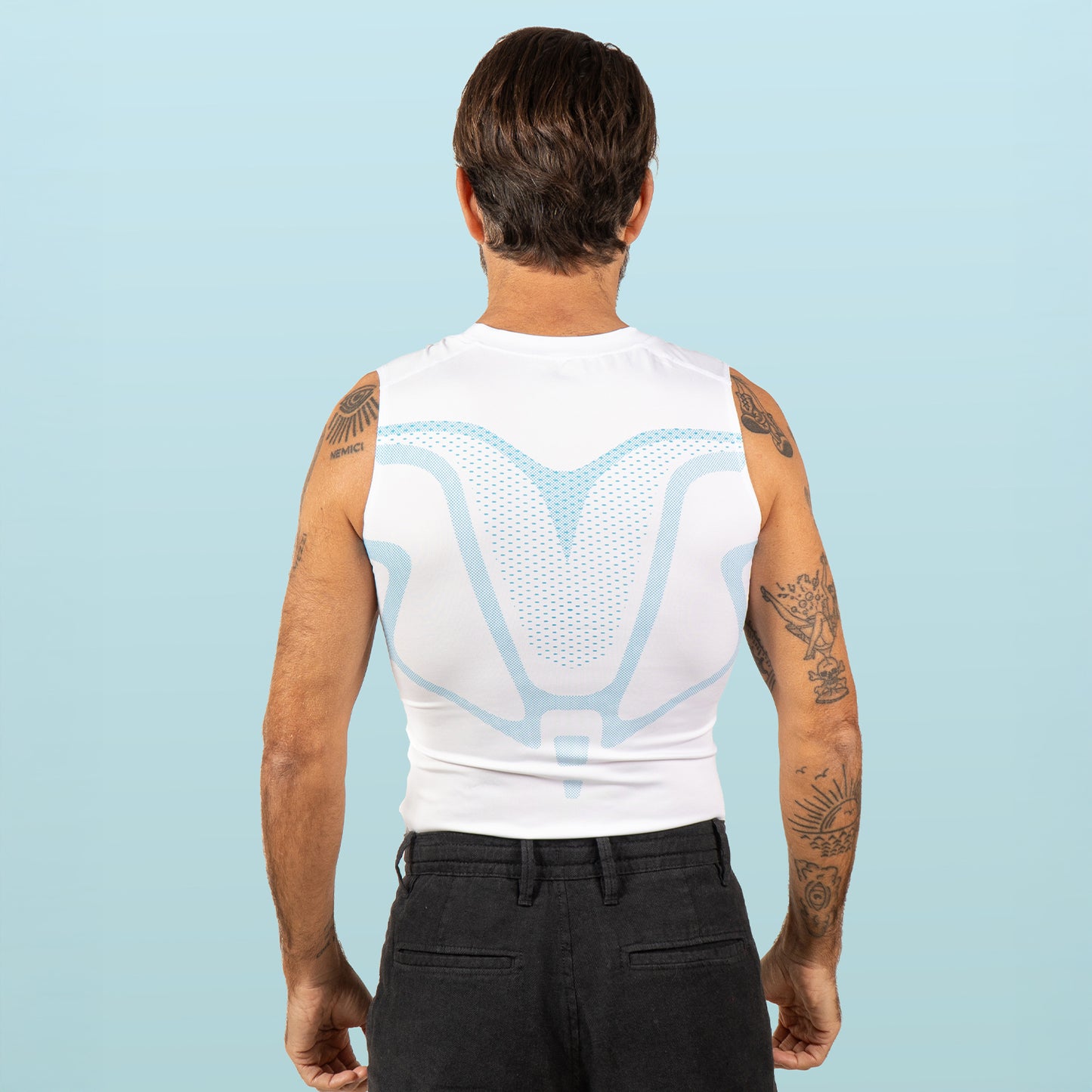
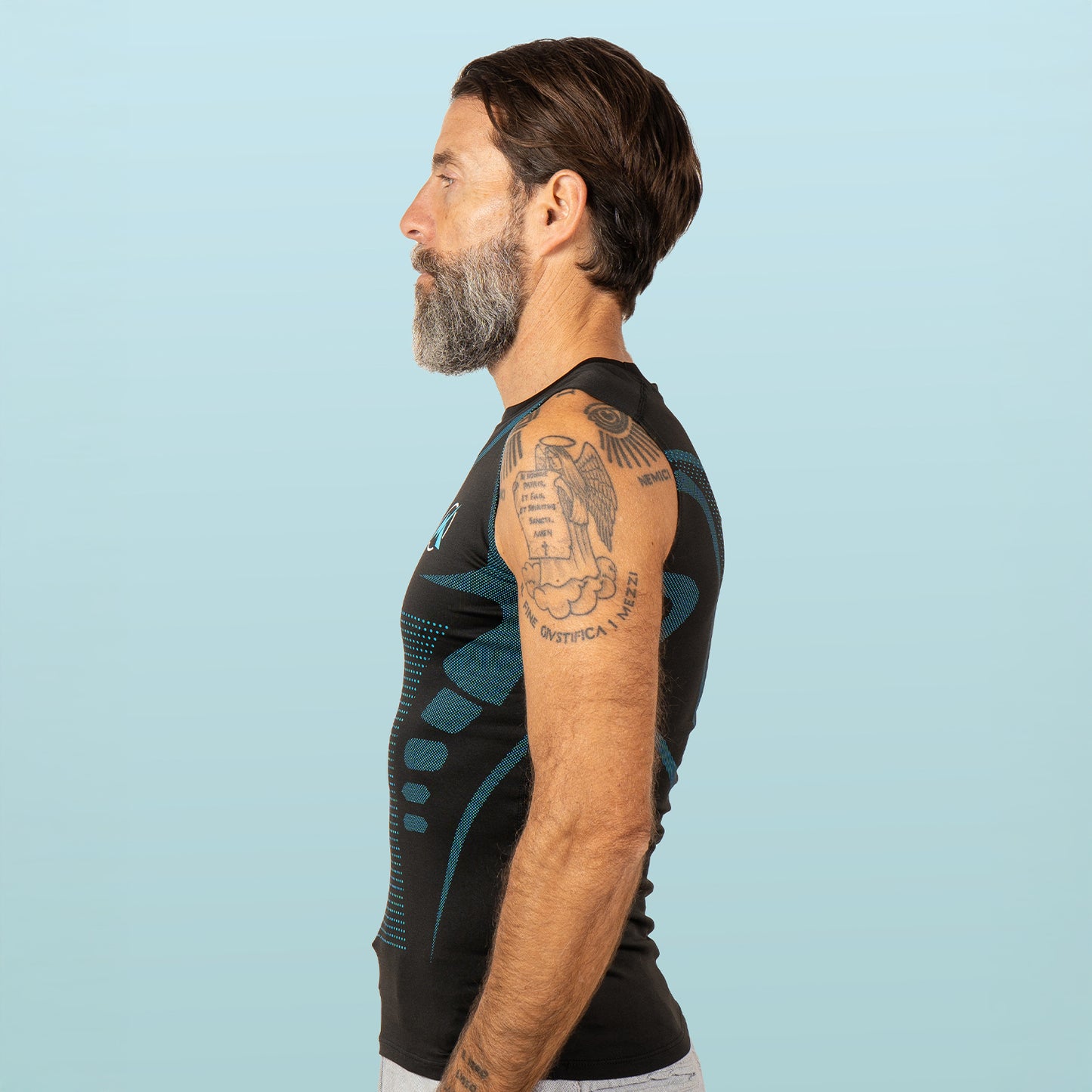
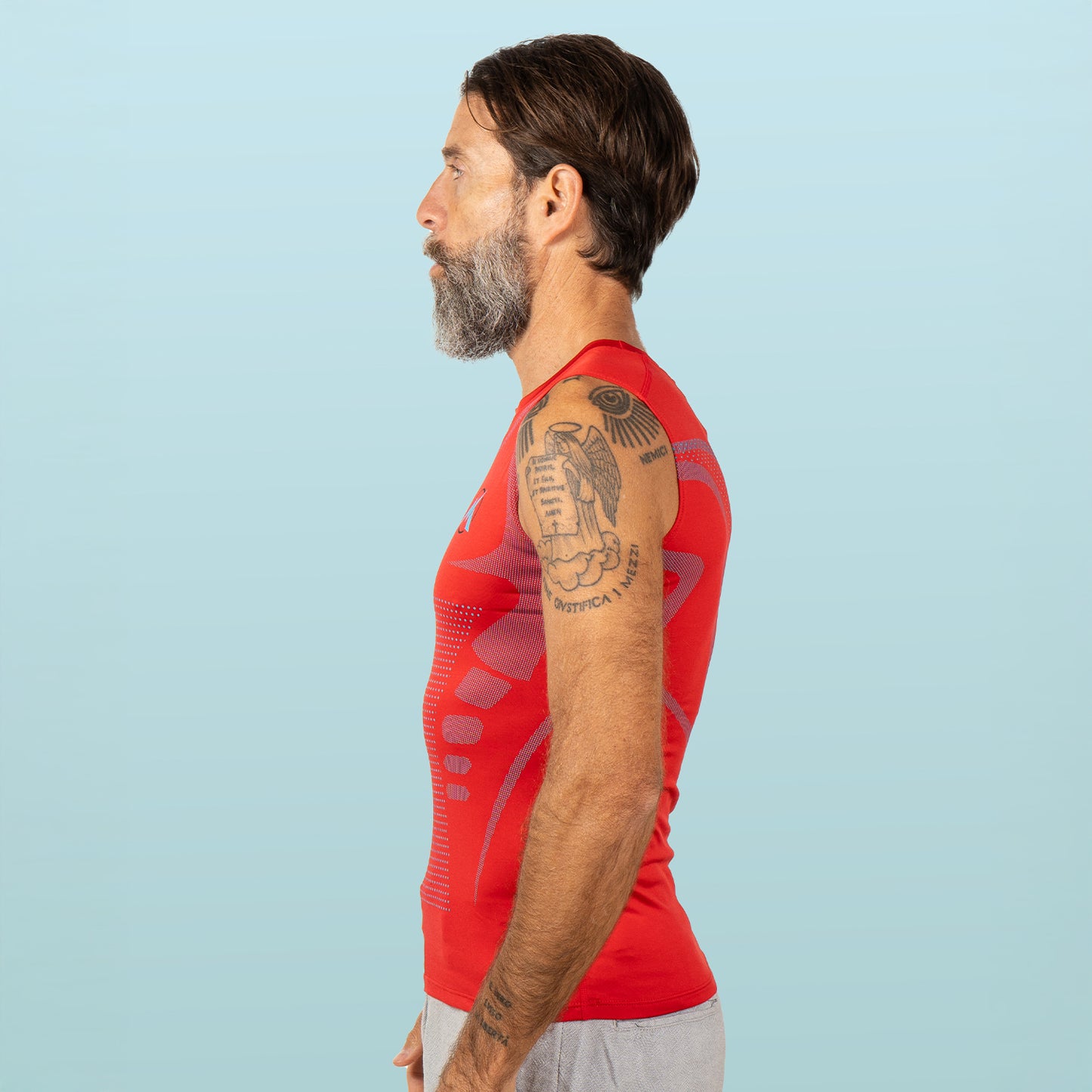
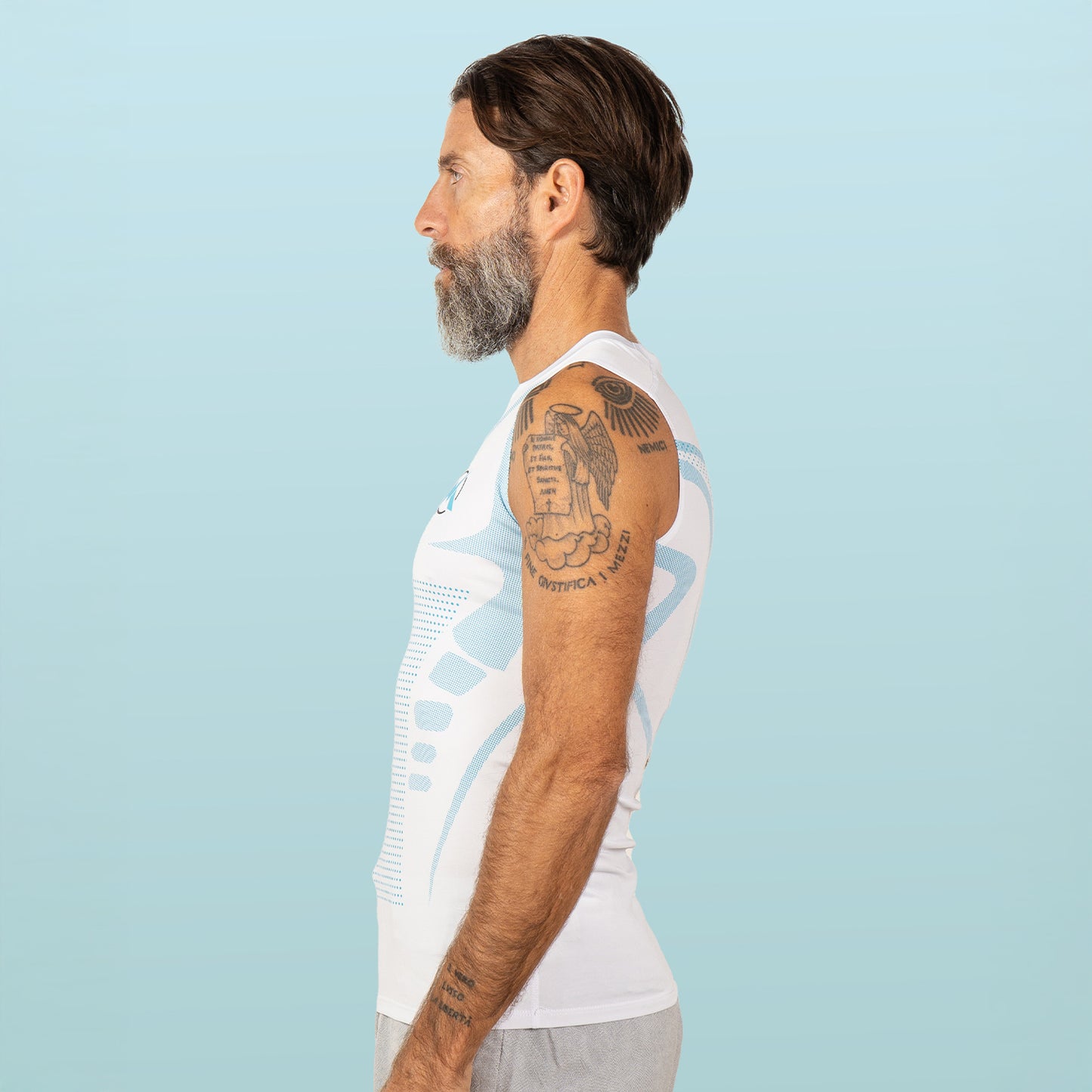
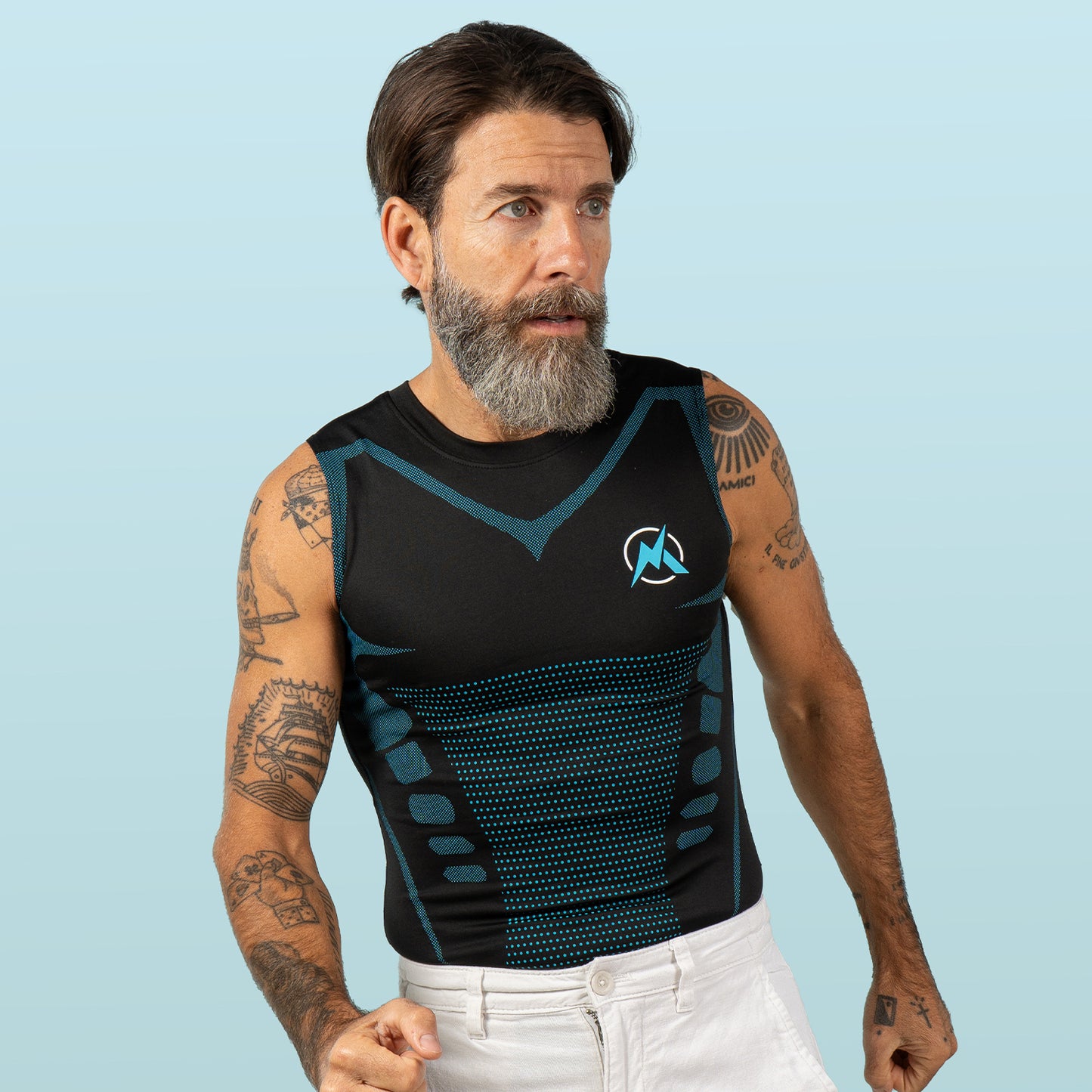
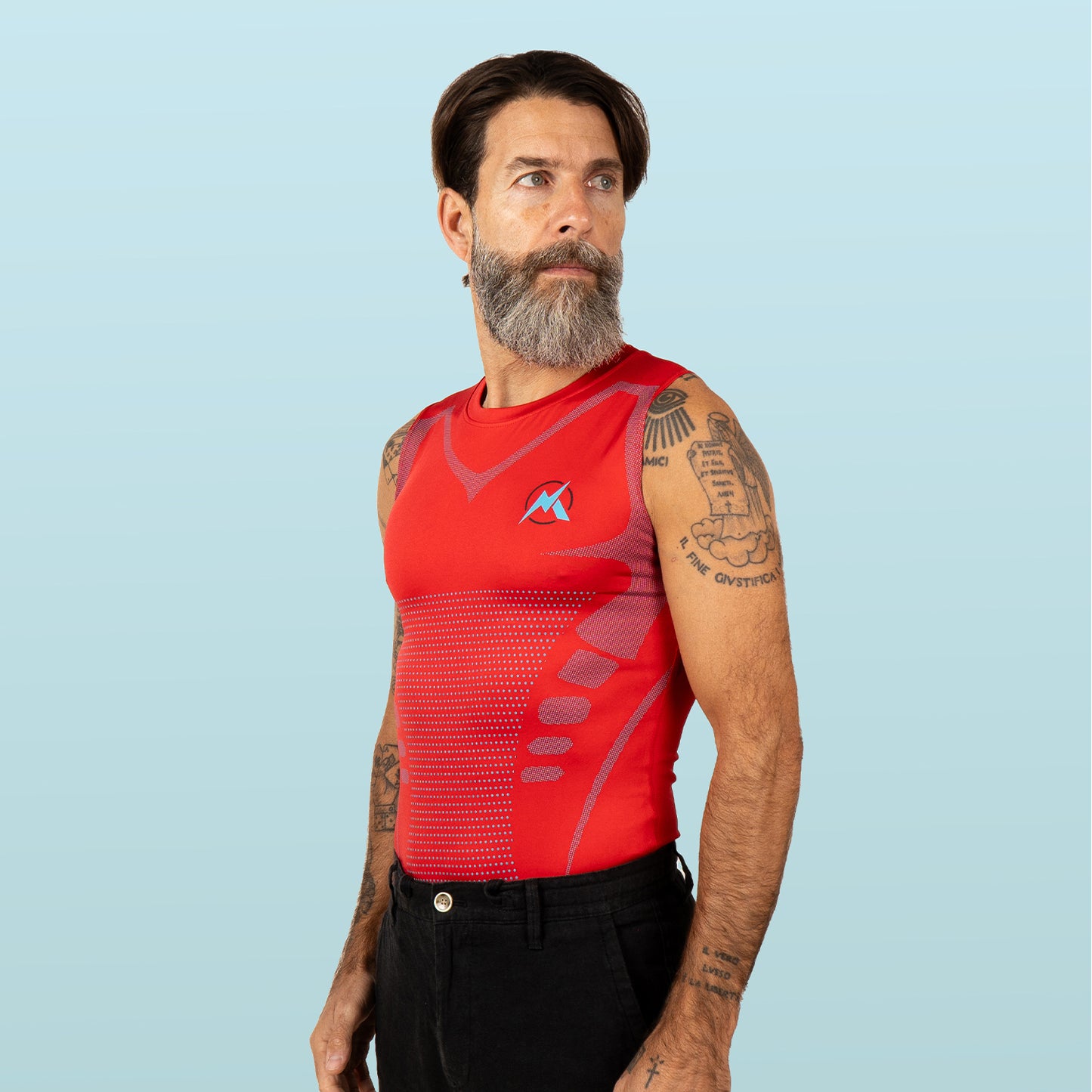
Second — and this is the accelerator — wear a compression base layer under your shirts. A 2022 Sports Medicine review by Brown et al. (PMC9023423) found compression garments provide proprioceptive feedback — your skin feels where you are in space, so your brain corrects posture in real time. You stand straighter automatically, without thinking.

Add a base layer in Week 1. Photograph yourself in profile before and after. You'll see it.
Lever 2 — Skin and sun (Week 2-4 result)
The skin lever doesn't need 12 products. It needs three things, every day, for the rest of your life:
- SPF 30+ every morning, even if it's cloudy, even if you only walk to the car. Up to 90% of visible aging is sun damage, and most of it is the boring cumulative UV you absorb on errands, not the dramatic beach day.
- A moisturizer with retinol or retinoid at night, 3 nights a week to start. Retinoids speed cell turnover and slow collagen breakdown. AARP's grooming guide singles them out as the most effective over-the-counter anti-aging ingredient.
- A gentle exfoliant once or twice a week — a washcloth scrub or a mild AHA cleanser. Dead skin sits on the surface longer at 50 than at 30. Removing it makes everything else work.
That's it. Skip the $200 serum. Skip the 7-step Korean routine. The marginal returns above this three-product baseline are tiny for most men. Spend the saved money on better sleep, better food, and a barber who knows your face.
Lever 3 — Body composition (Month 3 result)
The third lever is the slowest, but it's the one that determines how the first two land. Skin and posture on a strong frame look young. Skin and posture on a soft, deconditioned frame still look old.
Two things change after 40 and accelerate after 50:
- Sarcopenia — muscle loss of 3–8% per decade unless you actively resist it. By 55, a sedentary man may have lost a quarter of the muscle he had at 30.
- Testosterone decline — about 1% per year after age 30, per the Mayo Clinic. Lower T means less recovery, more visceral fat storage, less drive.
And here's the surprise: your basal metabolism does not crash at 50. A landmark 2021 study by Pontzer et al. in Science showed that daily energy expenditure stays largely stable from age 20 to 60. The "midlife metabolism slowdown" is a myth. What actually happens is you move less, sleep worse, and lose muscle — and muscle is what burns calories at rest.
The fix isn't a 5-day bro split. It's two strength sessions a week (45 minutes each), 8,000+ steps a day, 30g of protein at breakfast, and 7+ hours of sleep. We laid out the full week-by-week plan in build muscle after 50 and the 3-day sustainable workout in the best workout for men over 50.
It won't make you 25. It will make a stranger guess you're 47 when you're 55. That's the realistic and worthwhile target.
Lever 4 — Grooming, hair and style (instant)
This one is fast but small. Done right, it shaves 3–5 perceived years off. Done wrong, it adds them back.
- Hair: shorter than you think. If you're thinning, embrace it — a clean short cut or a buzz reads modern and confident. AARP's stylists are unanimous: combovers and ponytails add years.
- Eyebrows, ears, nose, neck: trim them. The "wild old man" details kill an otherwise sharp look.
- Beard: keep it short and shaped, or go clean. A long, untended beard with gray patches reads old; a precise stubble or a 1-cm shaped beard reads sharp.
- Teeth: a $25 whitening kit twice a year does more than most people admit.
- Style: neutral colors, dark straight-leg jeans or chinos, a well-fitted shirt over a base layer. Skip Coachella-trendy items. We unpacked the full slimmer-and-sharper wardrobe in how to dress at 50.
Goal: "sharp not young." Trying to dress like your 22-year-old nephew is the fastest way to age yourself five years in one outfit.
What plastic surgery and Botox can't fix
Surgery and injectables aren't villains. For some men, they're the right call. But marketed promises wildly outrun the reality of what they do — and most men in their 50s would get more bang from the cheaper levers above.
Here's the honest list of what a needle or a knife won't fix:
- Posture. No filler standing your spine up. Slumped shoulders make a freshly-Botoxed face look stranger, not younger.
- Body composition. Liposuction doesn't build muscle; it removes some fat in one zone. The dad-bod silhouette comes back if the underlying habits don't change. See how to reverse a dad bod for the honest plan.
- Energy and presence. A tired man with a smooth forehead still reads as a tired man. Sleep, breath, and the way you carry yourself dominate any cosmetic intervention.
- Skin from the inside. No injection compensates for sun damage you accumulate this summer. SPF every morning will beat any rescue procedure five years from now.
- Grooming. Bad haircut + good Botox = bad haircut you notice more.
If you've done the four levers and still want a tweak, that's a conversation with a board-certified dermatologist or surgeon. But run the cheap plan first. Most men never need to.
The first 30 days: a day-by-day reset
Plans only work if they're concrete. Here's the version that actually fits a working week.
Days 1–7 — Frame and skin baseline
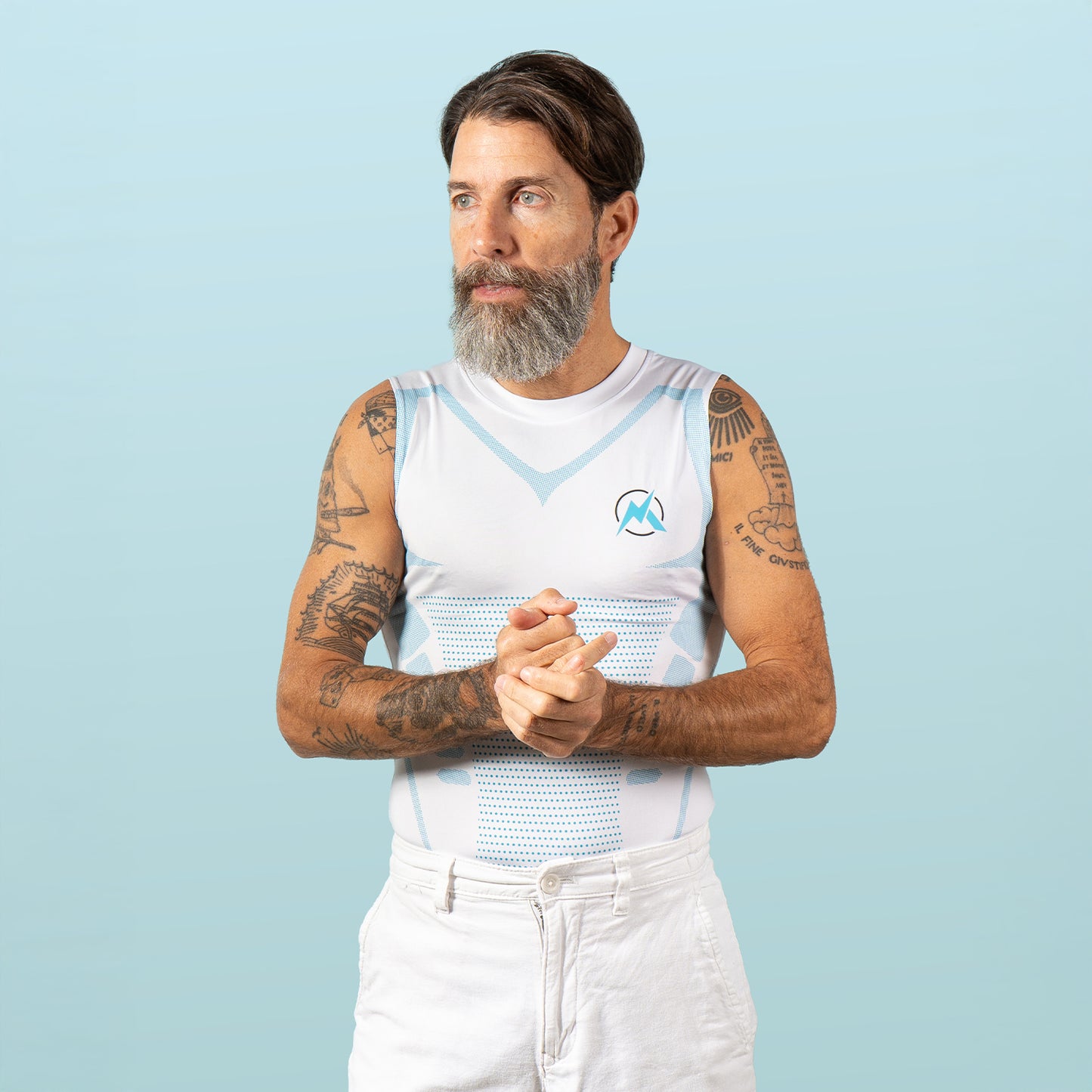
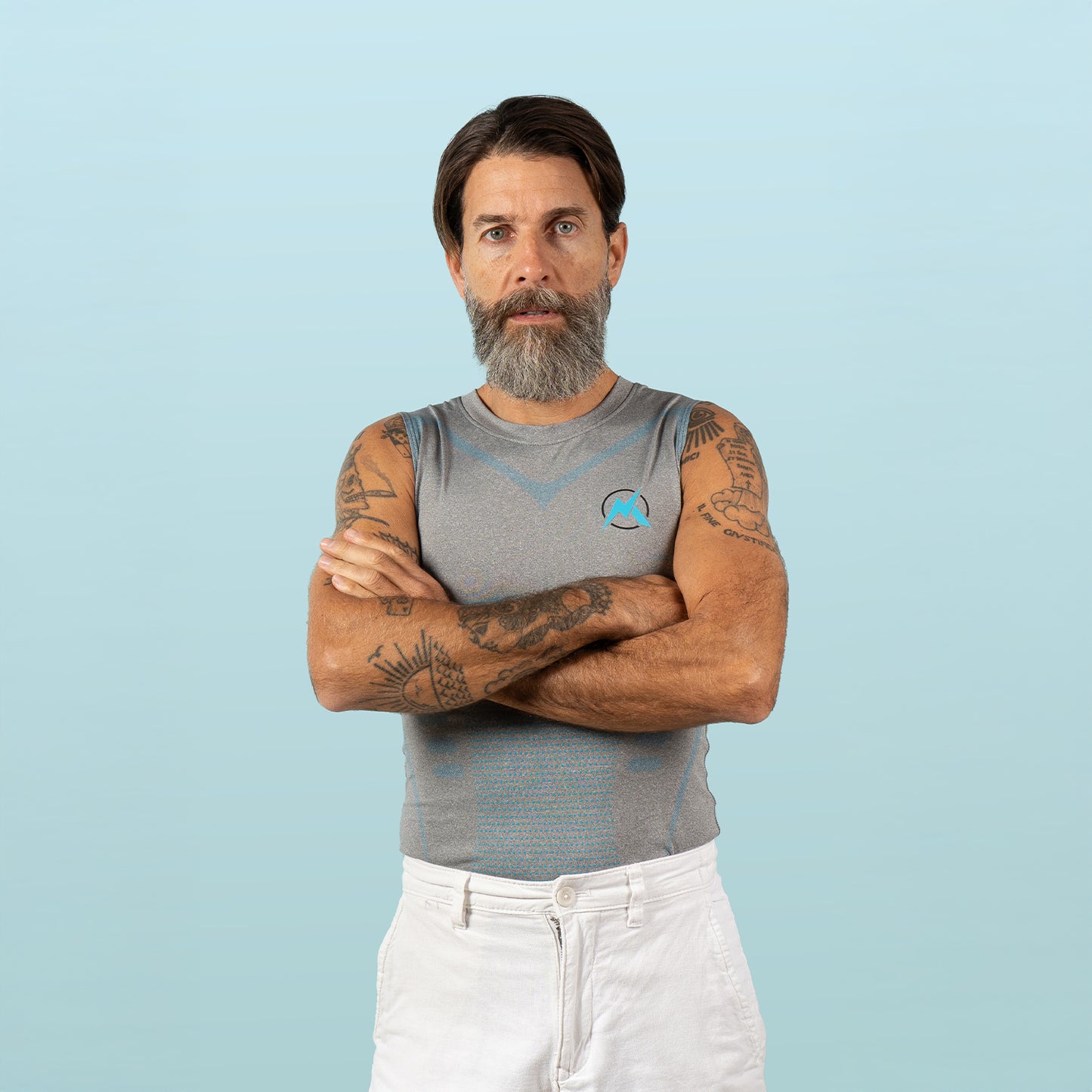
- Order a medium-compression sleeveless base layer. Wear it under your shirts every workday.
- Buy a sunscreen (SPF 30+, non-greasy) and an over-the-counter retinol moisturizer. Apply SPF every morning, retinol Mon/Wed/Fri nights.
- Habit-stack posture cues: stand tall while brushing teeth, while filling coffee, every time your phone unlocks.
- Take a side-view photo on Day 1. Tape it to the fridge.
Days 8–14 — Add strength
- Add 2 strength sessions (Mon + Thu): squat or hinge, push, pull, carry, core. 40 minutes total. No bro split.
- Hit 30g protein at breakfast (eggs + Greek yogurt, or a shake).
- Bed by the same time, 5 nights of 7.
Days 15–21 — Grooming sweep
- Book a barber for a shorter, modern cut. Ask them to handle your eyebrows, ears, and neck.
- Whitening kit, two weeks.
- Audit your wardrobe: donate 5 items that scream "trying too hard." Replace with two well-fitting basics.
Days 22–30 — Lock the system
- Take the Day-30 side-view photo. Compare.
- Pick one habit that broke and rebuild it. Don't try to rebuild more than one.
- Keep the base layer on workdays — the posture cue is doing work every hour.
You won't look 30 in 30 days. You'll look like the same man, run better. That's the goal.
What doesn't work (save your money)
- The $200 anti-aging serum. Marginal returns above a basic retinol + SPF baseline. Spend the money on sleep, protein, or a better mattress.
- Hair dye to your 30s color. Always reads as dyed. Pick a shade one or two notches below your natural — or own the gray.
- The combover. Everyone notices. No one is fooled. Cut it shorter.
- Trendy young-guy clothing. Slim-tapered cargos and oversized graphic tees age you instantly. Style experts are blunt about this.
- "T-boosters" from the gas station. Mayo Clinic notes the supplement claims are largely unsupported. If you suspect low testosterone, test it (and ferritin, vitamin D, B12) with a real doctor.
- Crash diets. Lose 15 lbs in 6 weeks, you look gaunt and older. Lose 15 lbs in 6 months while lifting, you look sharper.
- Hour-long cardio sessions instead of strength. Cardio is fine; substituting it for resistance training during sarcopenia decades is not.
Frequently asked questions
How can a man over 50 look 10 years younger?
You can realistically shave 5–8 perceived years in 60–90 days by stacking four levers in this order: fix posture (Week 1), start a daily SPF + retinol routine (Week 2), begin two weekly strength sessions (Month 1), sharpen grooming and wardrobe (instant). The single biggest gap between "looks 55" and "looks 47" is body composition and posture, not face cream.
Can you look younger after 50 without surgery?
Yes. Most of the visible signals strangers read as "older" — slouched shoulders, soft midsection, sun-damaged skin, dated grooming — are non-surgical fixes. A 2009 BMJ twin study (Christensen et al.) found perceived age is a strong biomarker of underlying health, and underlying health responds to posture, strength training, sleep, sun protection, and grooming long before it responds to a needle.
What makes a man look older after 50?
In order of visibility: forward-head posture and rounded shoulders, a heavy midsection that pushes a dress shirt out, sun-damaged skin texture, hair that fights its situation (combover, dyed-too-dark, grown too long over thinning patches), and "old man" details like long brows or ear hair. Face wrinkles in isolation rarely add years if the frame is upright and strong.
What is the best anti-aging routine for men over 50?
Morning: SPF 30+, every day, year-round. Night: gentle cleanser, then an OTC retinol moisturizer (start 3 nights a week). Weekly: light exfoliation. Then the harder work — strength training twice a week, 7+ hours of sleep, 30g of protein at breakfast, and standing tall. The skin routine alone changes the surface; the lifestyle changes the read.
At what age does a man start to look older?
The biological tipping point for most men is the early 40s, when sarcopenia, testosterone decline, and decades of cumulative sun damage start showing on the surface. But the perceived tipping point depends almost entirely on posture and body composition. Two 52-year-old men can look 8 years apart based on whether they stand tall and stay strong — independent of skin care.
The bottom line
Looking younger after 50 isn't a needle, a cream, or a vacation. It's four levers, run in the right order.
Posture first because it changes how you read this week. Skin second because it pays off over months. Body composition third because it determines whether the first two land. Grooming and style last because they polish what's underneath — they can't fix what isn't there.
Do the four. Skip the gimmicks. Take a side-view photo on Day 1 and Day 30. The man in the mirror will look like himself again — just sharper, more upright, more present.
Start with the lever you can run today — the silhouette one. A medium-compression base layer is the single fastest "look younger" move there is.
Get VitaBoost — Buy 1 Get 1 Free ($15)
Sources
- Christensen K. et al. BMJ 2009 — Perceived age as clinically useful biomarker of ageing: cohort study (Danish twin registry)
- Skin Cancer Foundation — Photoaging: up to 90% of visible skin aging caused by sun exposure
- NIH/PMC — Sarcopenia: muscle loss of 3–8% per decade after age 30
- Mayo Clinic — Testosterone declines ~1% per year after age 30
- Pontzer H. et al. Science 2021 — Daily energy expenditure stable from 20 to 60
- Cleveland Clinic — Tech Neck: head weight 10–12 lbs neutral, 27 lbs at 15°, 60 lbs at chin-to-chest
- NIH News in Health — 80%+ of adults experience posture issues at some point
- Brown F. et al. Sports Medicine 2022 — Compression garments and proprioceptive feedback
- AARP — Men's grooming and style tips for 50, 60, 70+
This article is educational. Maynox sells apparel, not medical devices. If you're considering cosmetic procedures or supplements for hormonal concerns, consult a board-certified dermatologist or your primary care physician.