By Owen Blot · Founder, Maynox · Last updated June 27, 2026
- The "tired dad in the corner" problem
- Why you walked in confident at 35 and feel like a backup extra at 55
- The 6 levers that decide how you read in any wedding photo
- The T-minus 90-minute day-of-wedding prep routine
- The event arc: how to carry yourself from ceremony to last song
- 5 mistakes that quietly kill your confidence before you even arrive
- What this stack can't fix (honest limits)
- Frequently asked questions
The "tired dad in the corner" problem
You've been to enough weddings to know how this goes.
You used to walk in like you owned the room. You weren't trying. The suit hung on you the way it was supposed to. You laughed louder, danced harder, took the photos with your wife, and at the end of the night you felt good.
Now you walk in and within ten minutes you find a wall. You're the one holding the drink and the small plate. You're scanning for someone to talk to. You hate the photos. You don't recognize the guy on your phone screen because the jacket pulls weird, the shoulders slope forward, and your chin is doing that thing where it disappears.
Search results will tell you to wear navy, polish your shoes, skip the novelty tie. That advice is fine. It's also not what's actually broken. The outfit was never the problem. The problem is that everything underneath the outfit has shifted in the last 10–15 years — your posture, your middle, your energy ration, your story about yourself in a crowd — and the suit is being asked to compensate for all of it.
This piece is the honest fix. Built for the 45-55 man who hasn't been to a wedding in two years, has a wedding in three weeks, and would rather not feel invisible.
Why you walked in confident at 35 and feel like a backup extra at 55
A short, unsentimental tour of what changed.
Posture drifts. Hours at a desk, hours on a phone, hours driving. Your chest closes, your shoulders round forward, your head migrates 2-3 inches in front of your spine. Cleveland Clinic documents that the average head weighs 10-12 lbs in neutral but climbs to 27 lbs of cervical load at a 15° forward tilt. That posture you wear into a wedding is not new — you've been training it 8 hours a day for a decade.
Muscle quietly leaves. NIH research shows men lose 3-8% of muscle mass per decade after 30 if they don't actively train. That's not a vanity stat. That's why your shoulders look softer in the photos and why the suit jacket drapes differently than it did in 2014.
The middle thickens. Even when your weight doesn't change much, fat redistributes. Cleveland Clinic confirms that visceral fat (the kind that sits behind the abdominal wall and pushes the belt outward) becomes metabolically active in midlife in a way it wasn't in your 30s. The result: the same suit that fit at 38 won't button cleanly at 52, and a fresh one won't either if it's cut for a flat front.
The story shifts. This one's not in a journal — it's in the mirror. At 35 you were "the husband, the dad, the guy on the way up". At 55 you're "the guy in the corner" unless you actively decide otherwise. The photos confirm it. The wedding doesn't, but you do.
None of this means the wedding is going to be miserable. It means you need a stack, not a suit. The honest confidence playbook for men over 50 goes deeper on the underlying mindset piece — this article is the wedding-day version of the same stack.
The 6 levers that decide how you read in any wedding photo
The order matters. Each lever has a different speed: some pay off in 5 seconds, some in 48 hours, some in a week. Stack them in this order, even if the wedding is Saturday.
Lever 1 — Posture (the fastest visual fix)
This is the single highest-ROI move on this list. Standing tall lengthens your line, opens your chest, drops your chin back over your spine, and shaves the equivalent of several pounds off your apparent weight before you change a single garment.
University of Toronto researchers Re and Rule (2015, ScienceDaily) documented that the apparent-weight difference observers actually notice in a man is roughly 8-9 lbs. Standing tall claws back a chunk of that visible "lighter" effect without a single calorie cut.
The cue is not "shoulders back". Shoulders back is what makes you look stiff in the photos. The cue is "tall through the crown, chest soft and open, chin parallel to the floor". Practice it the week before. Practice it in the mirror in your suit. Practice it the morning of, twice, before you walk out.
For a deeper protocol on actually making this stick, see how to stand up straight: the daily habit stack that actually sticks.
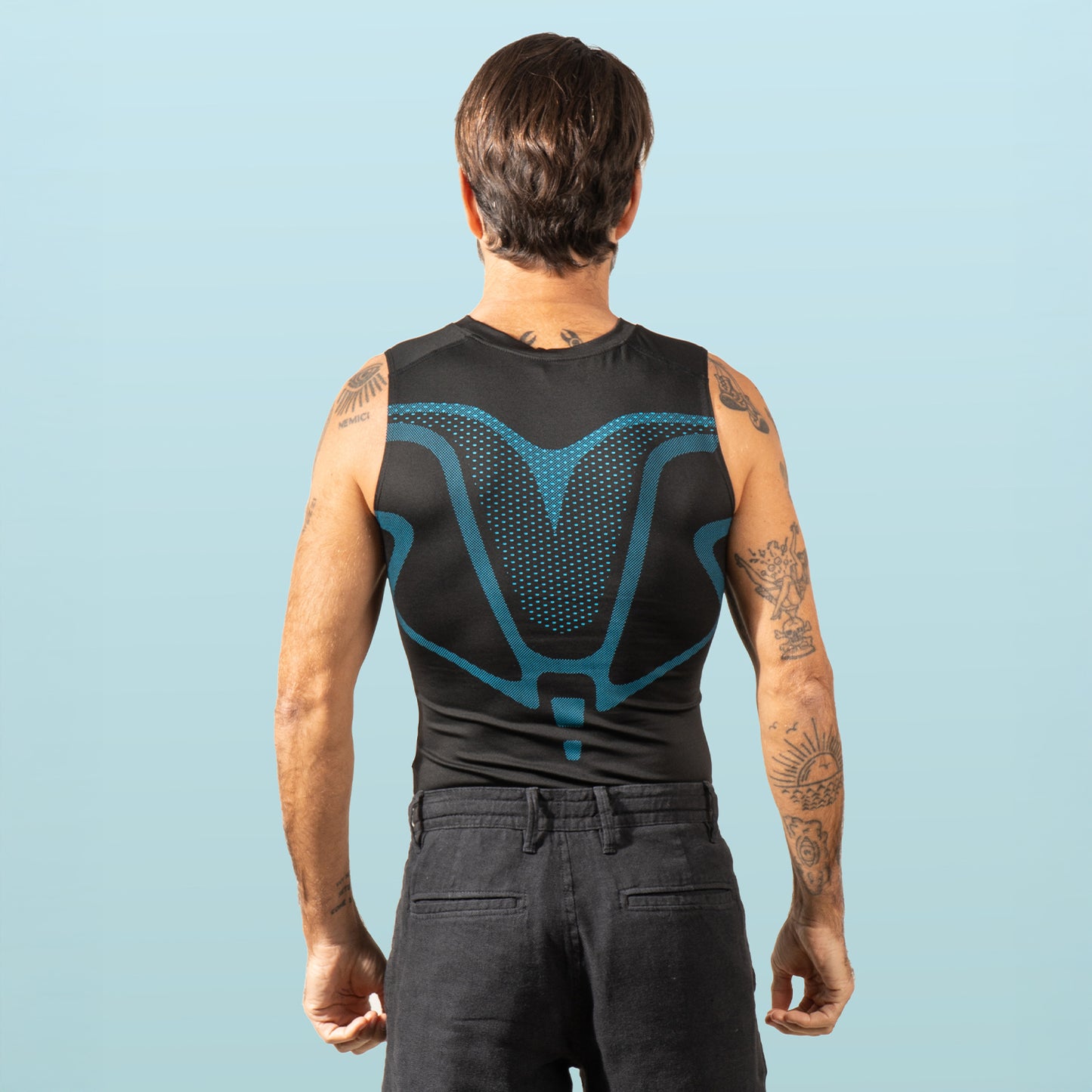
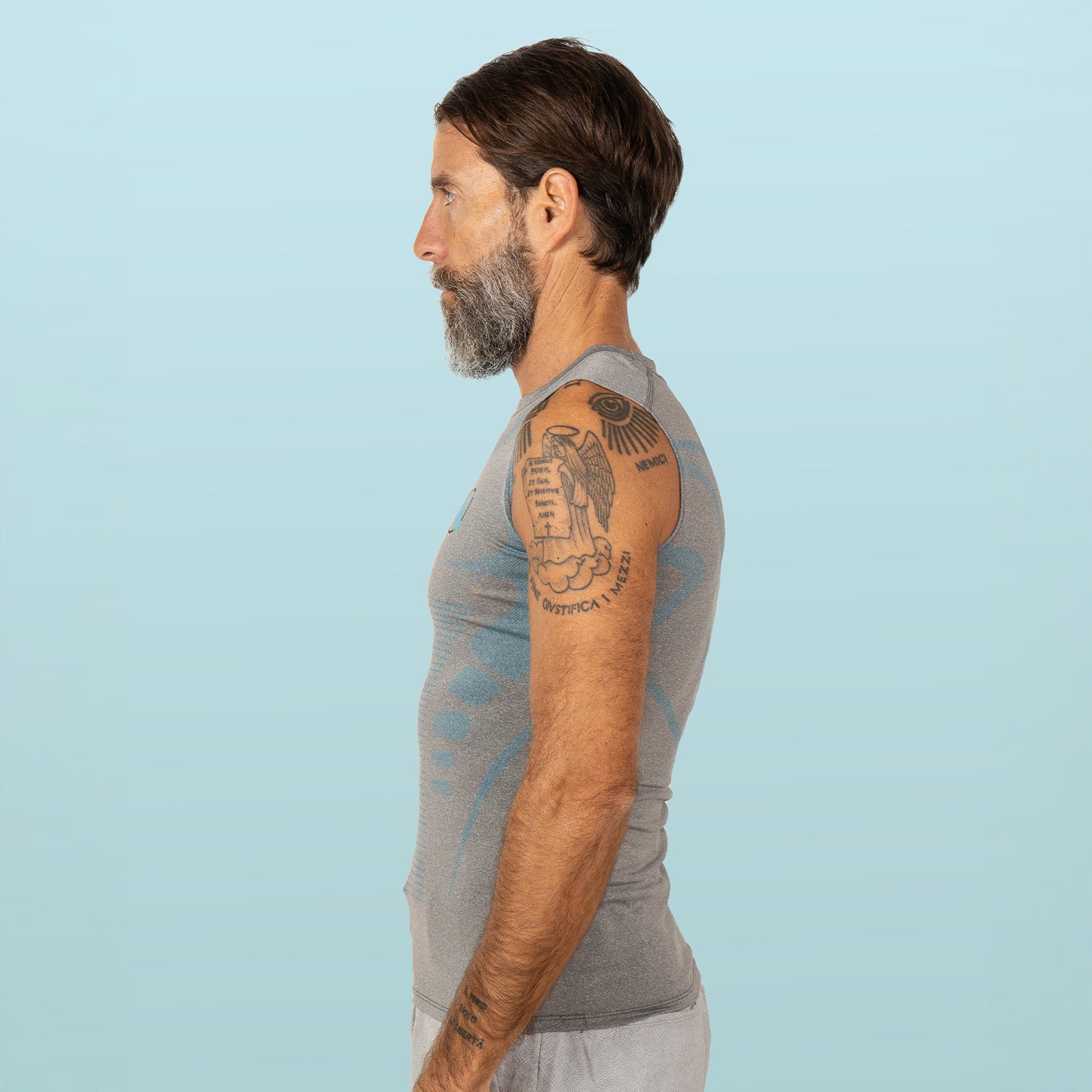
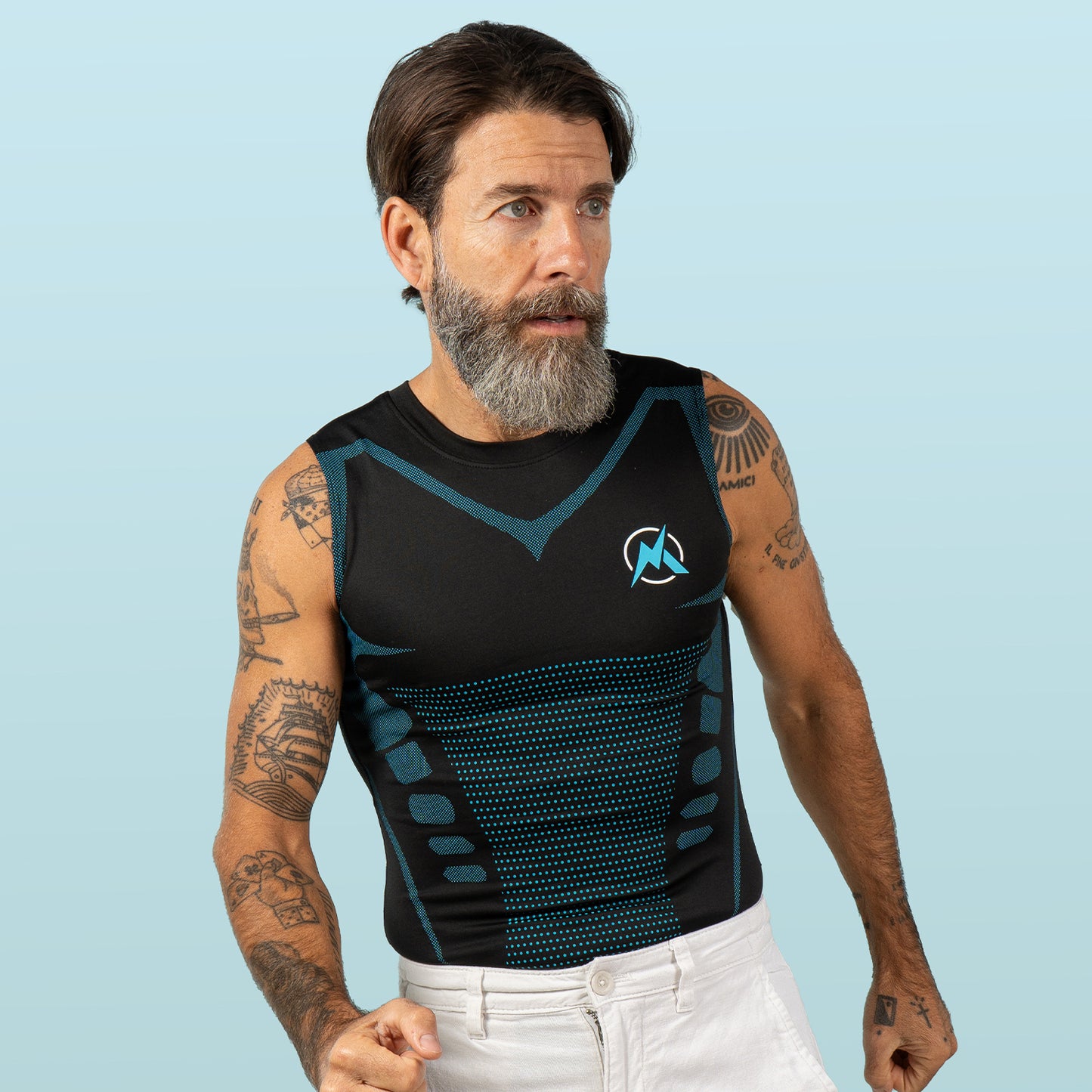
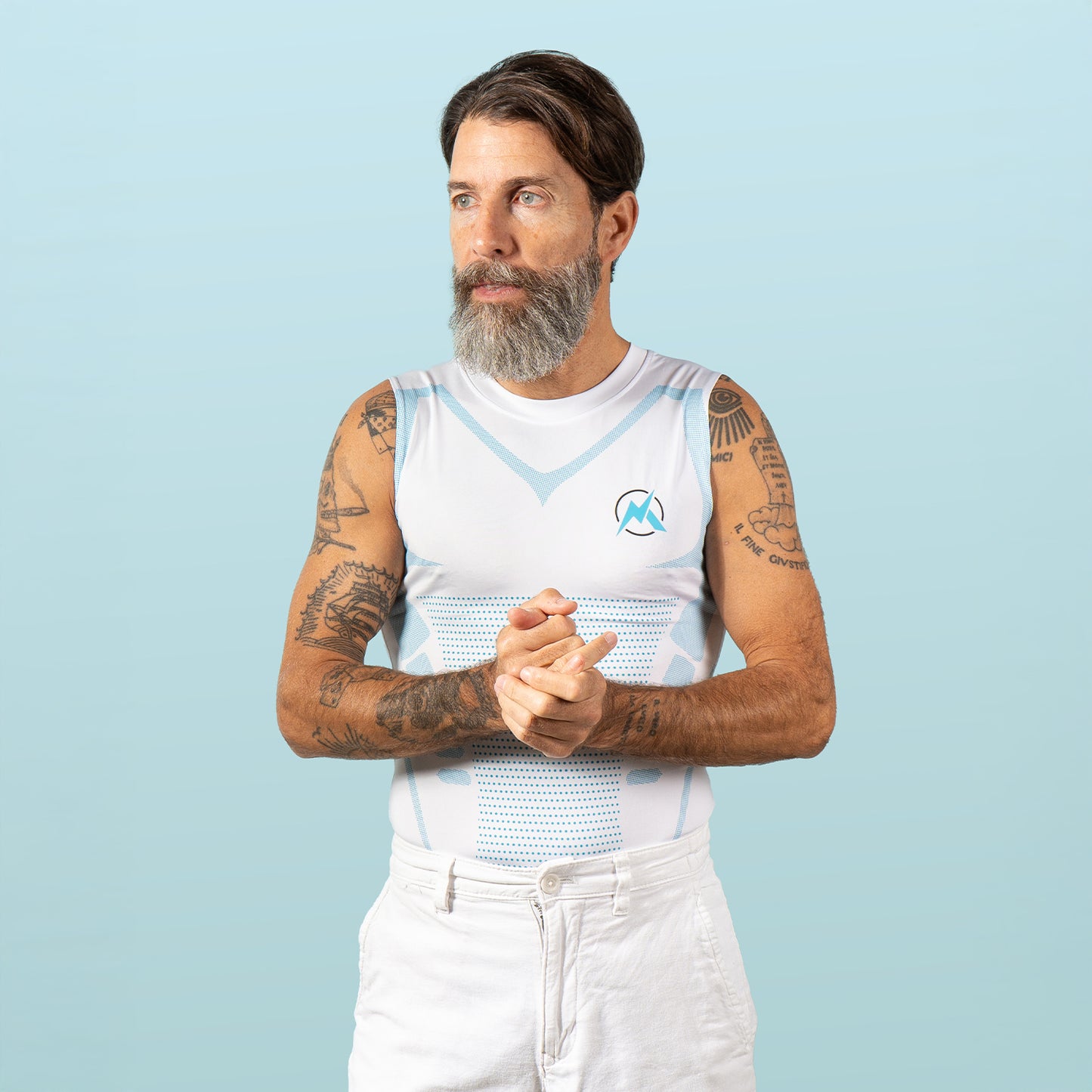
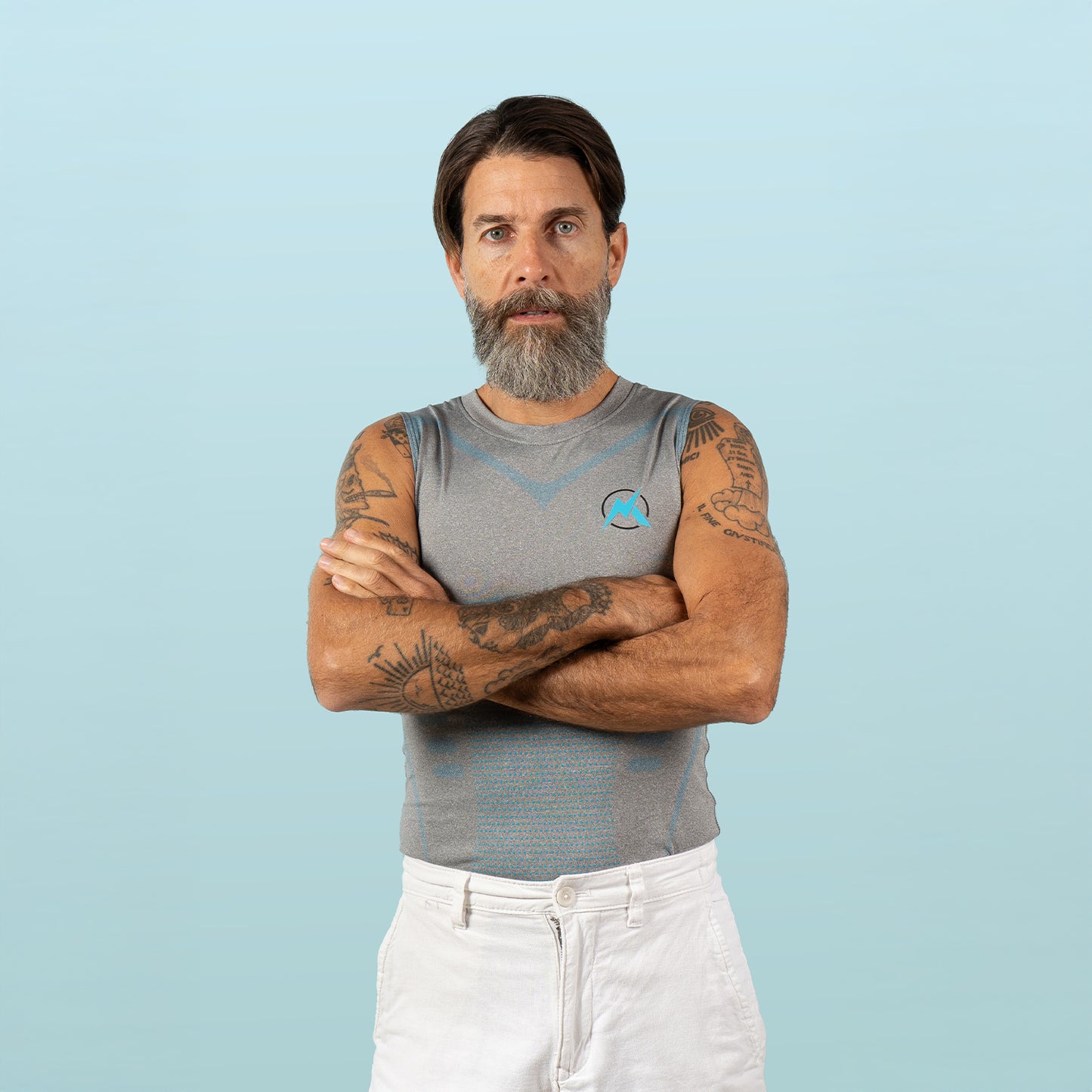
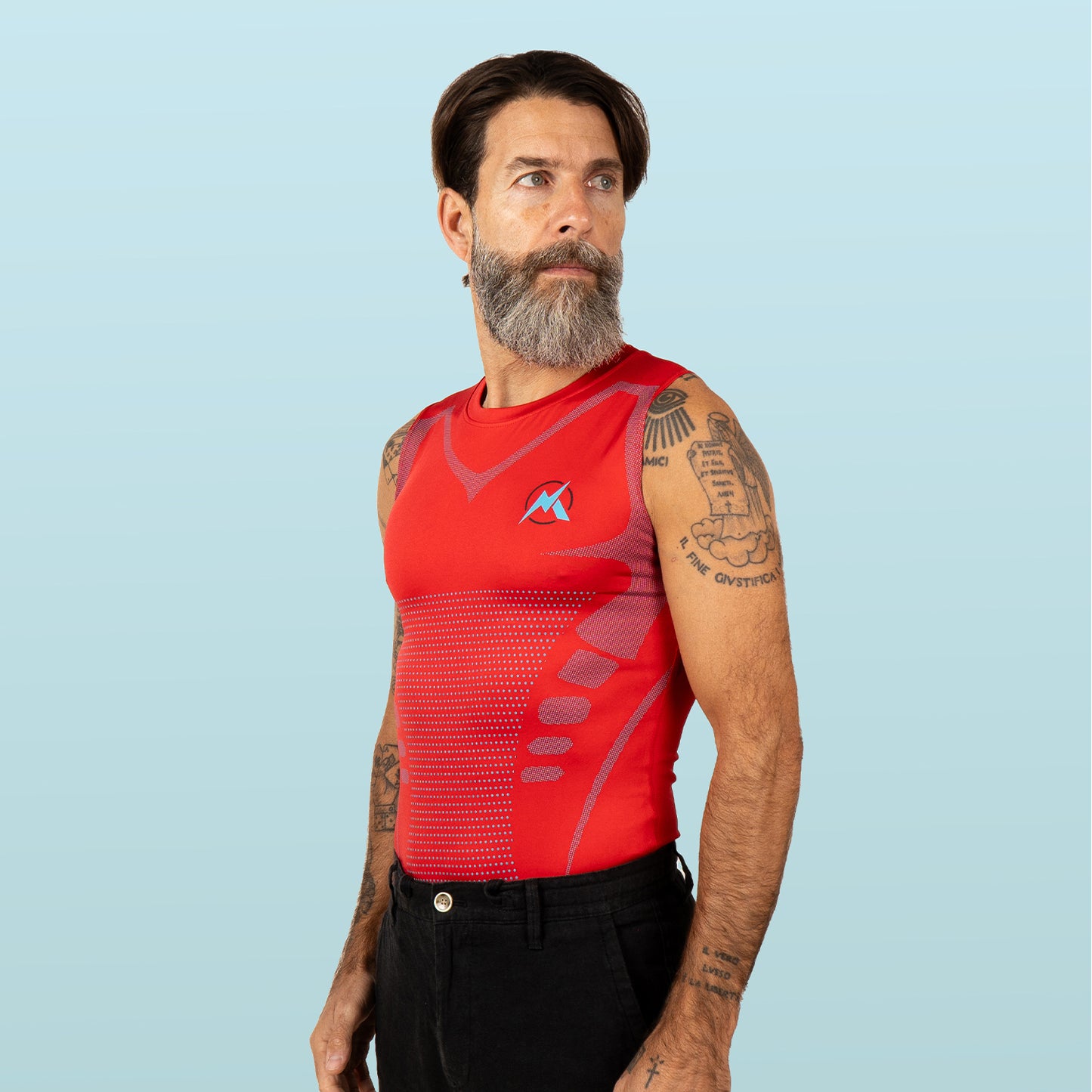
Lever 2 — Compression base layer (the foundation under the suit)
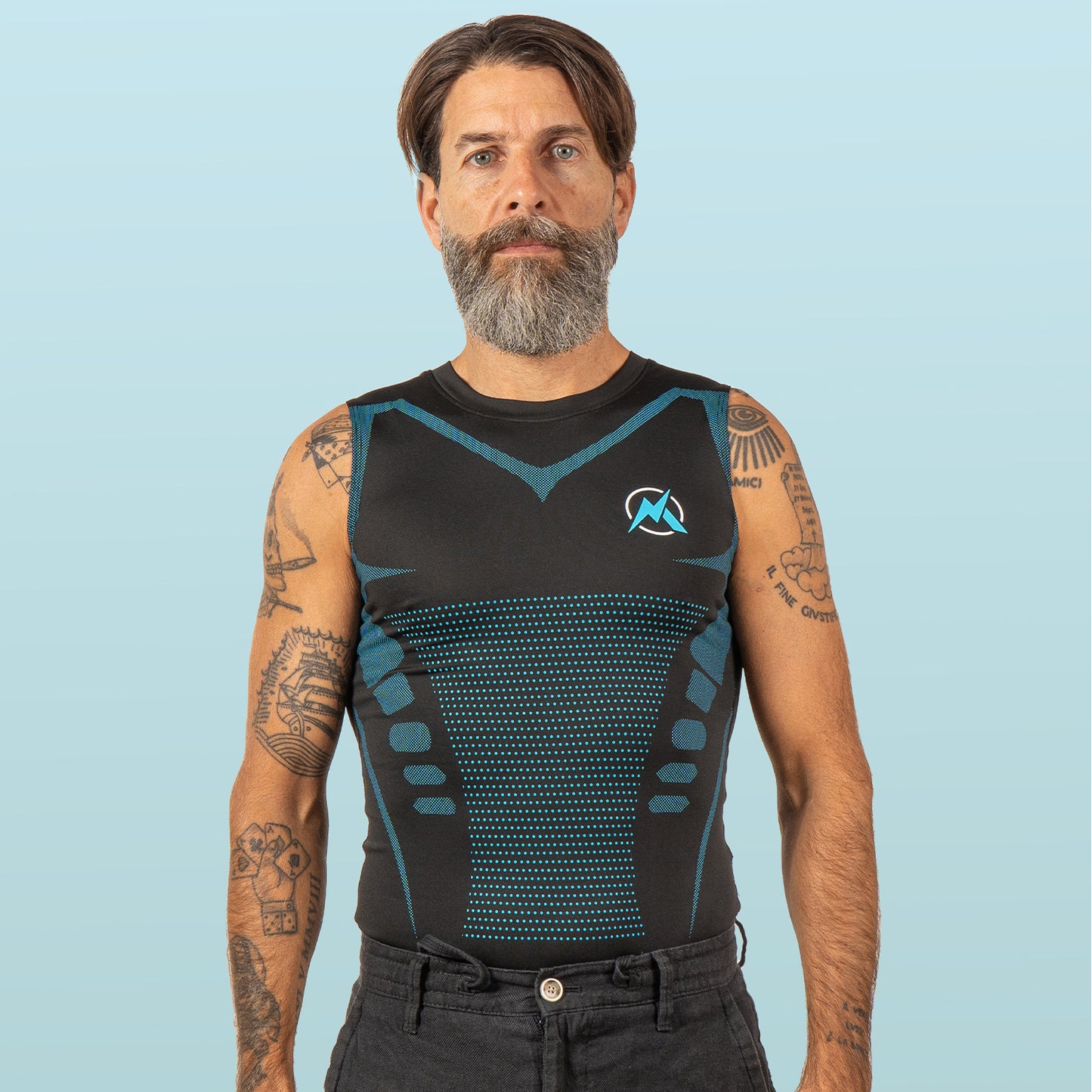
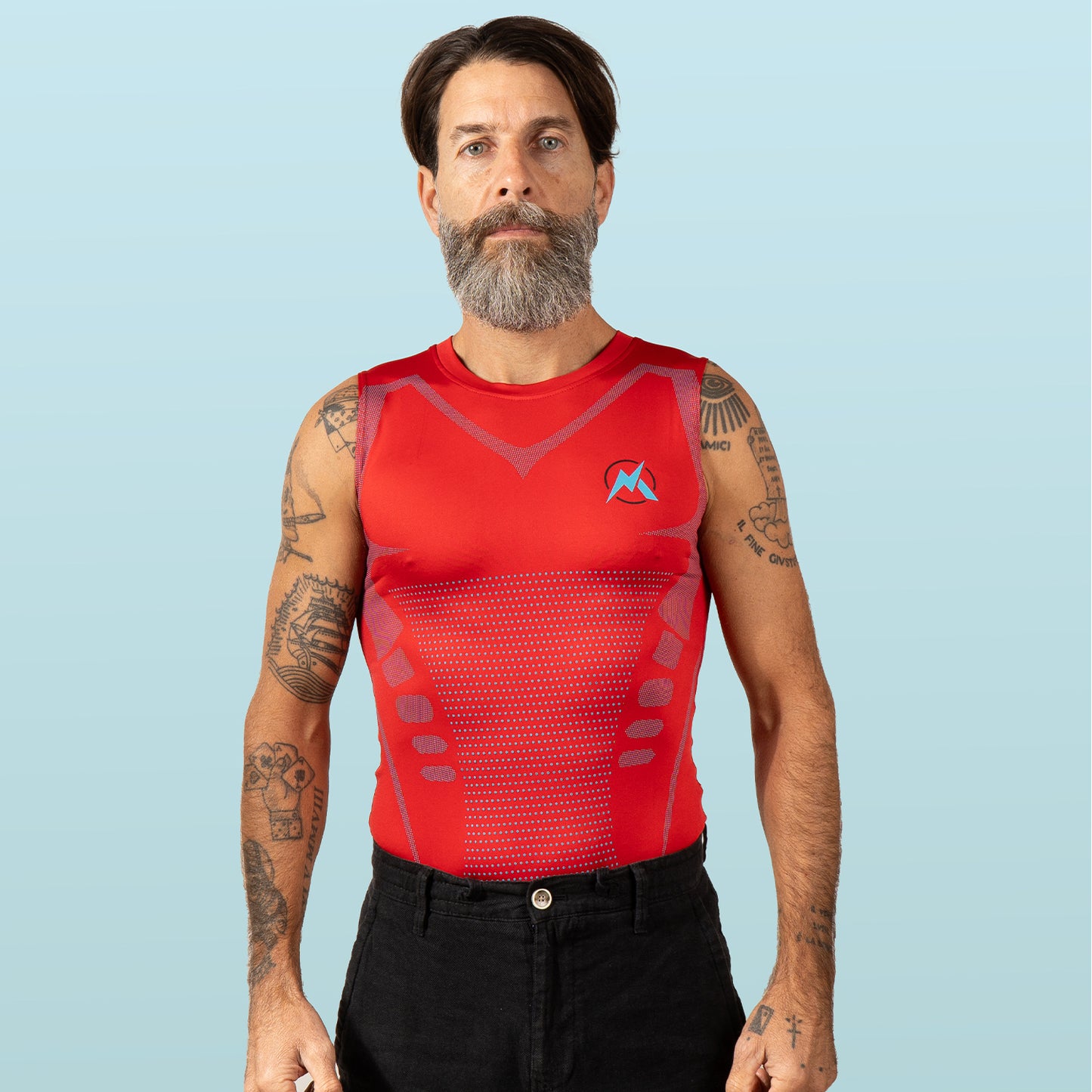
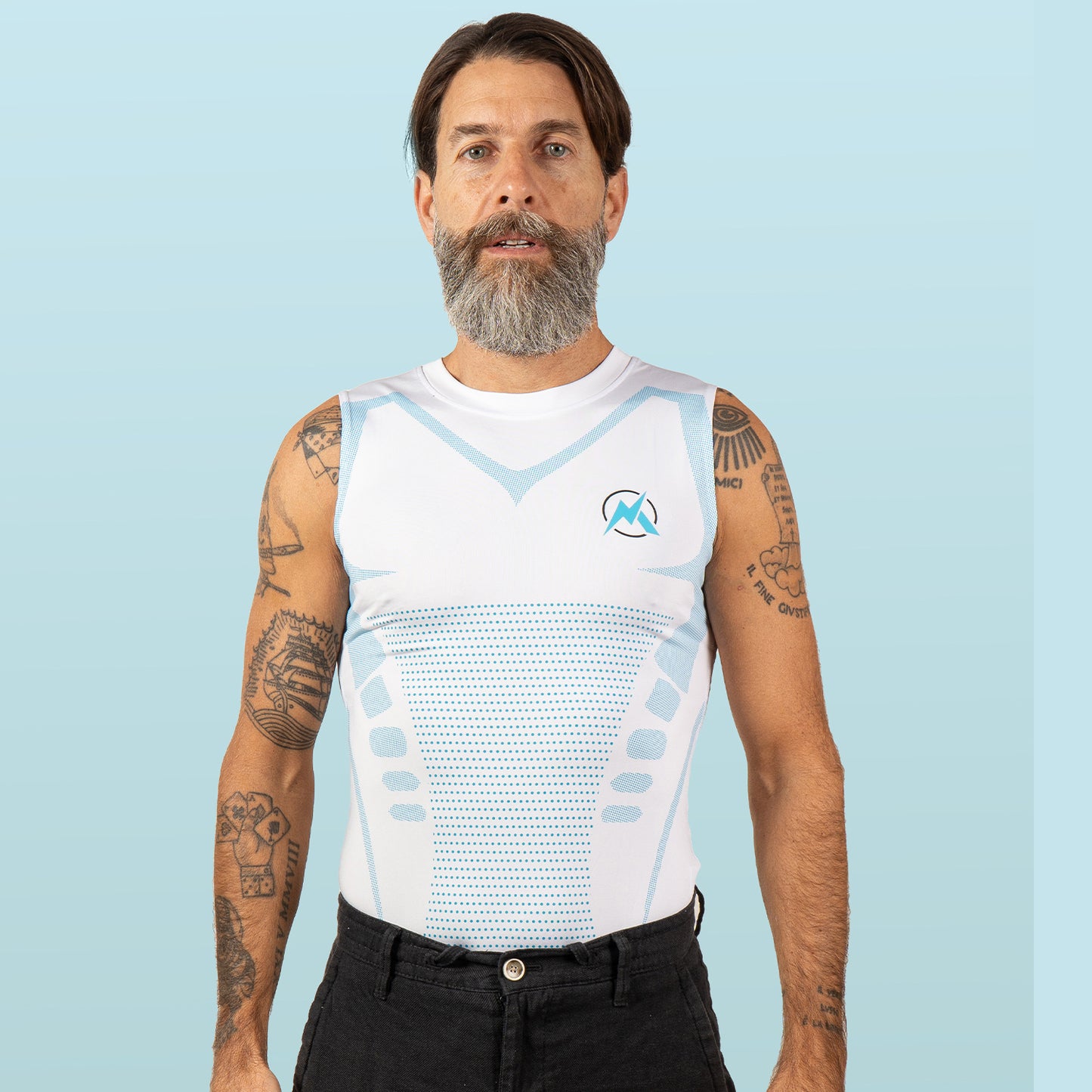
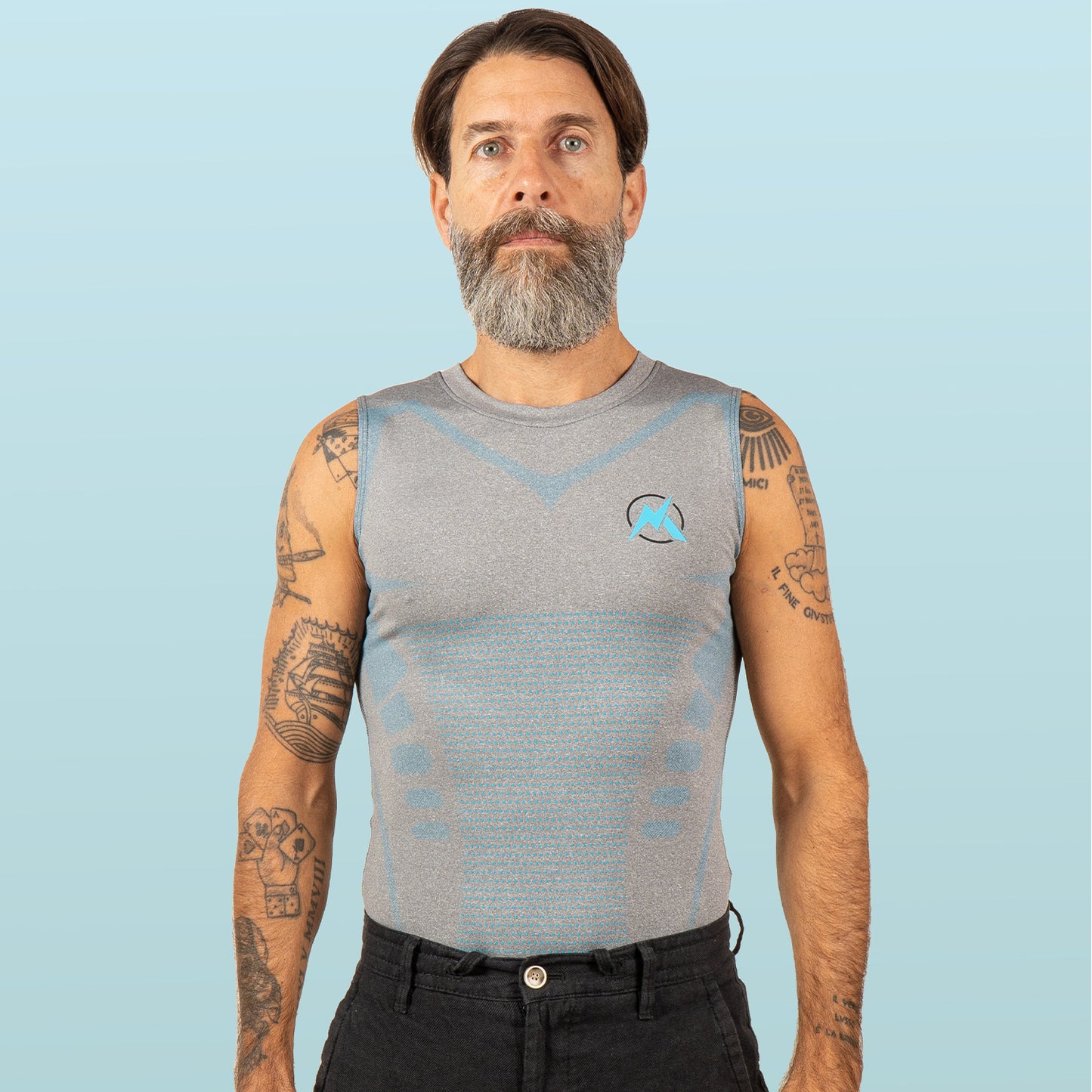
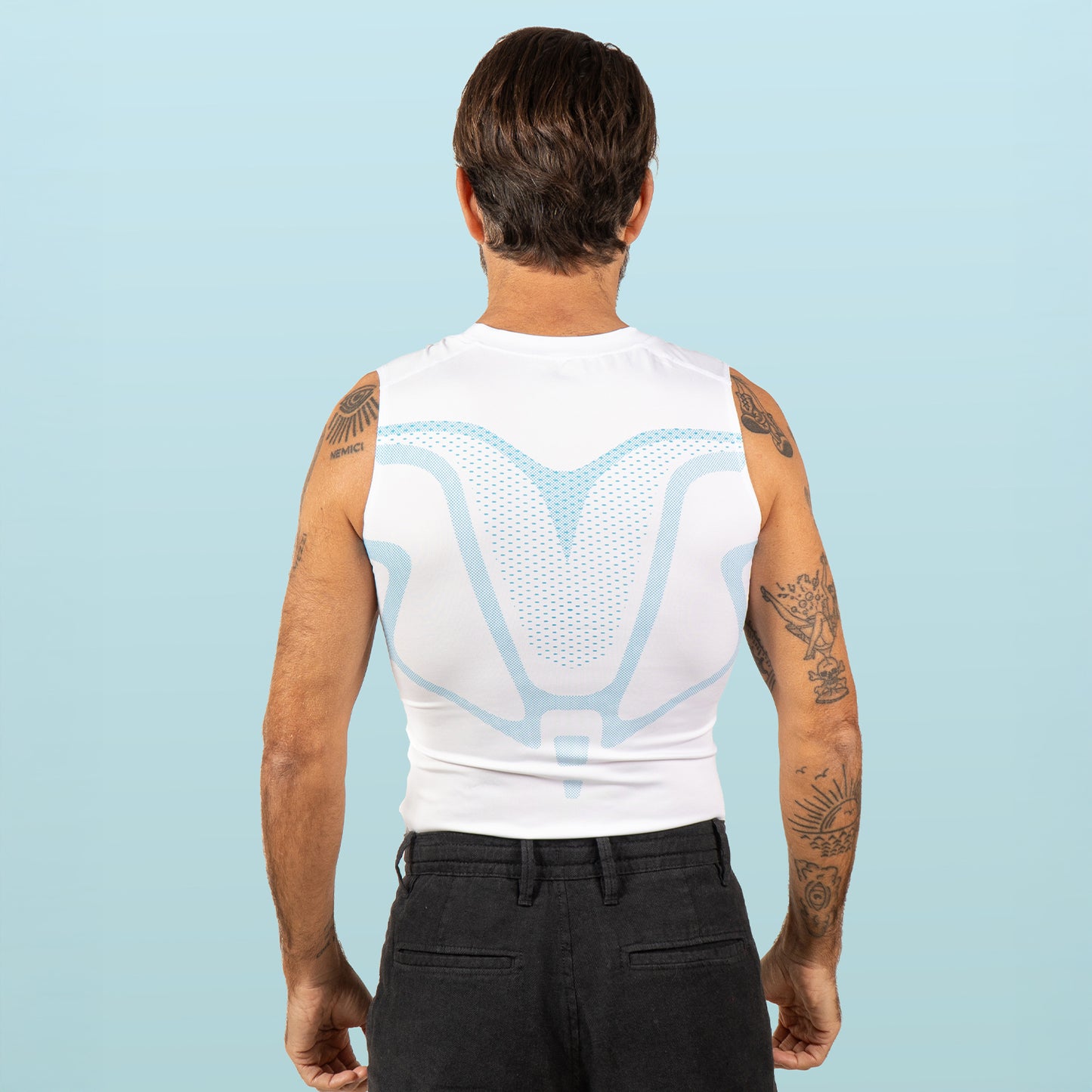
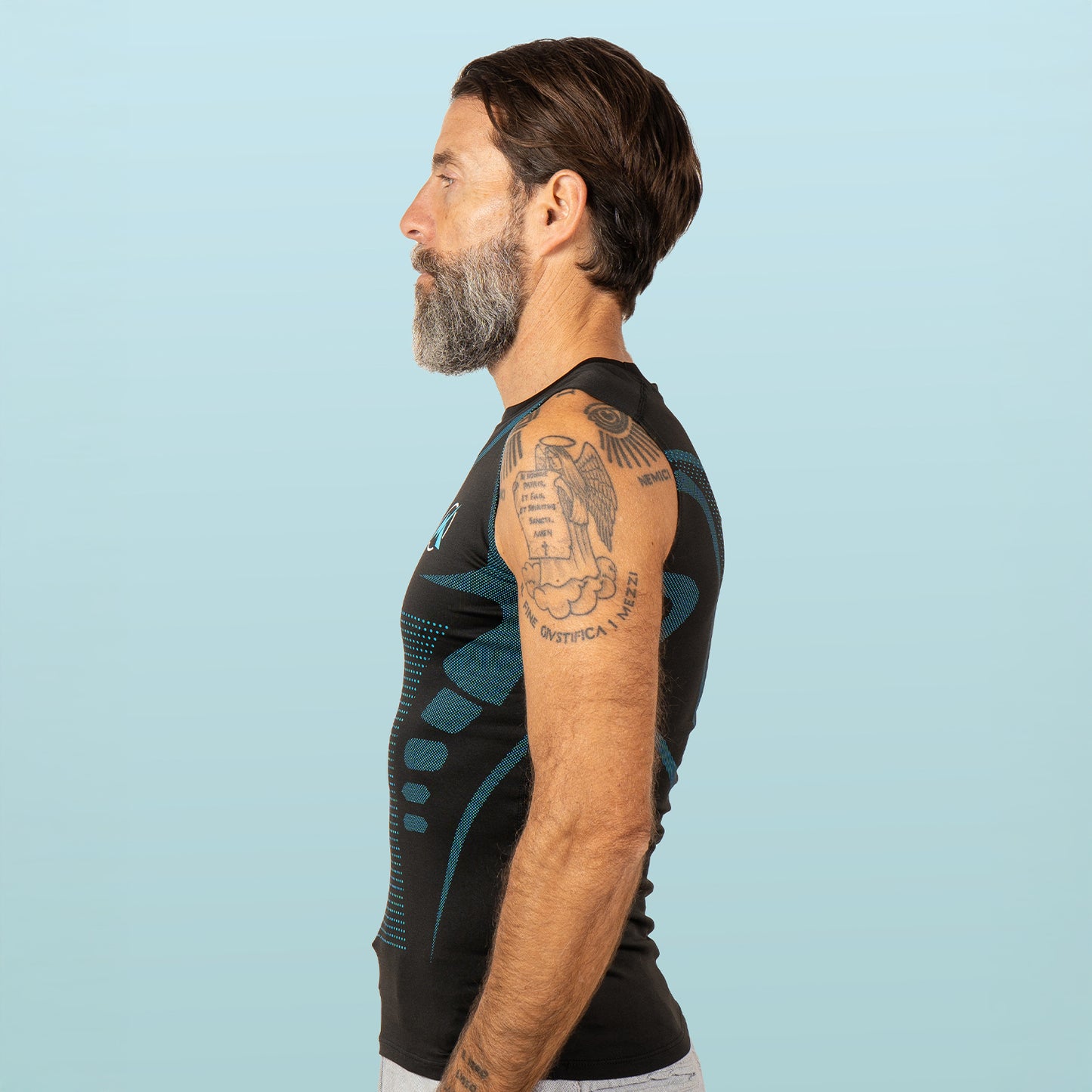
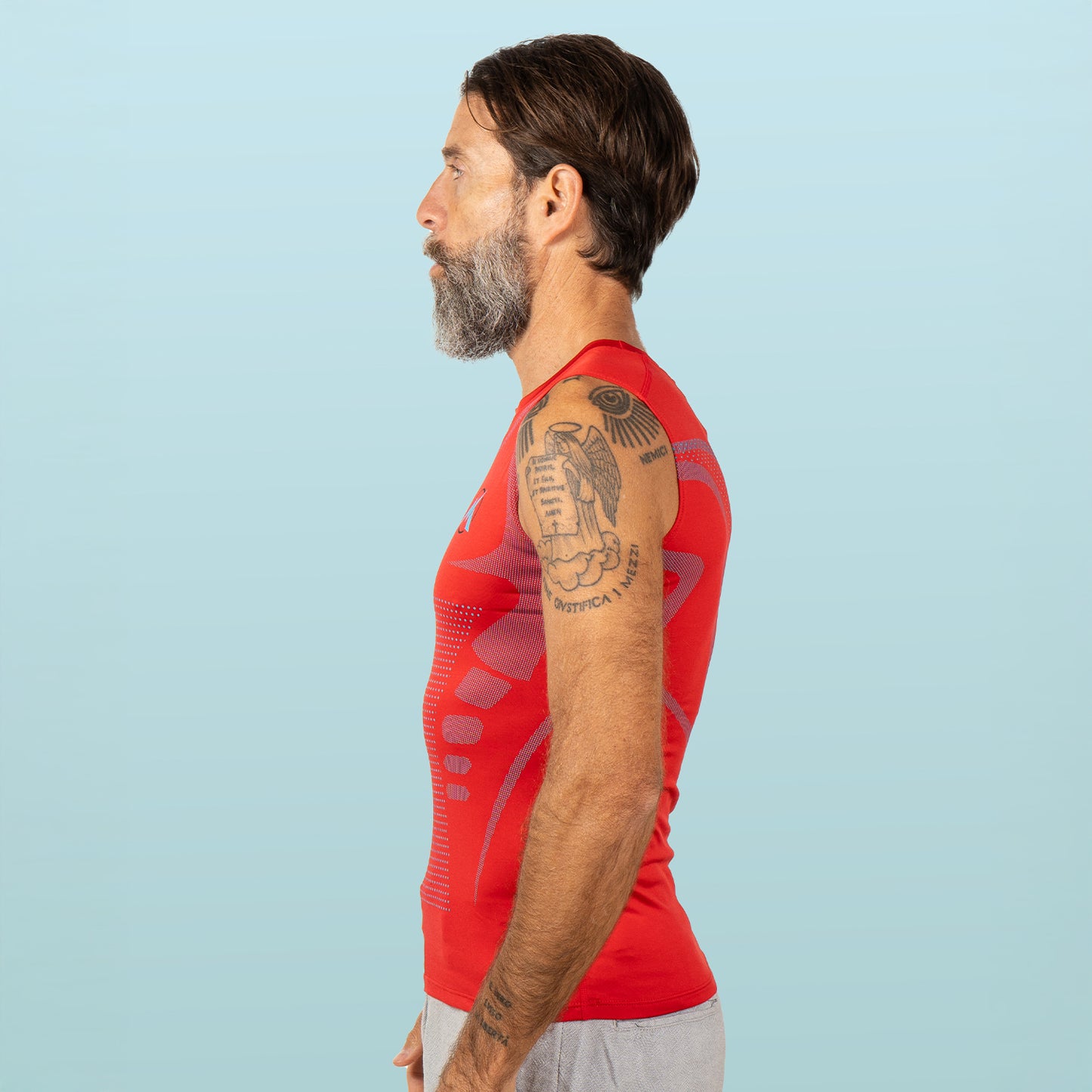
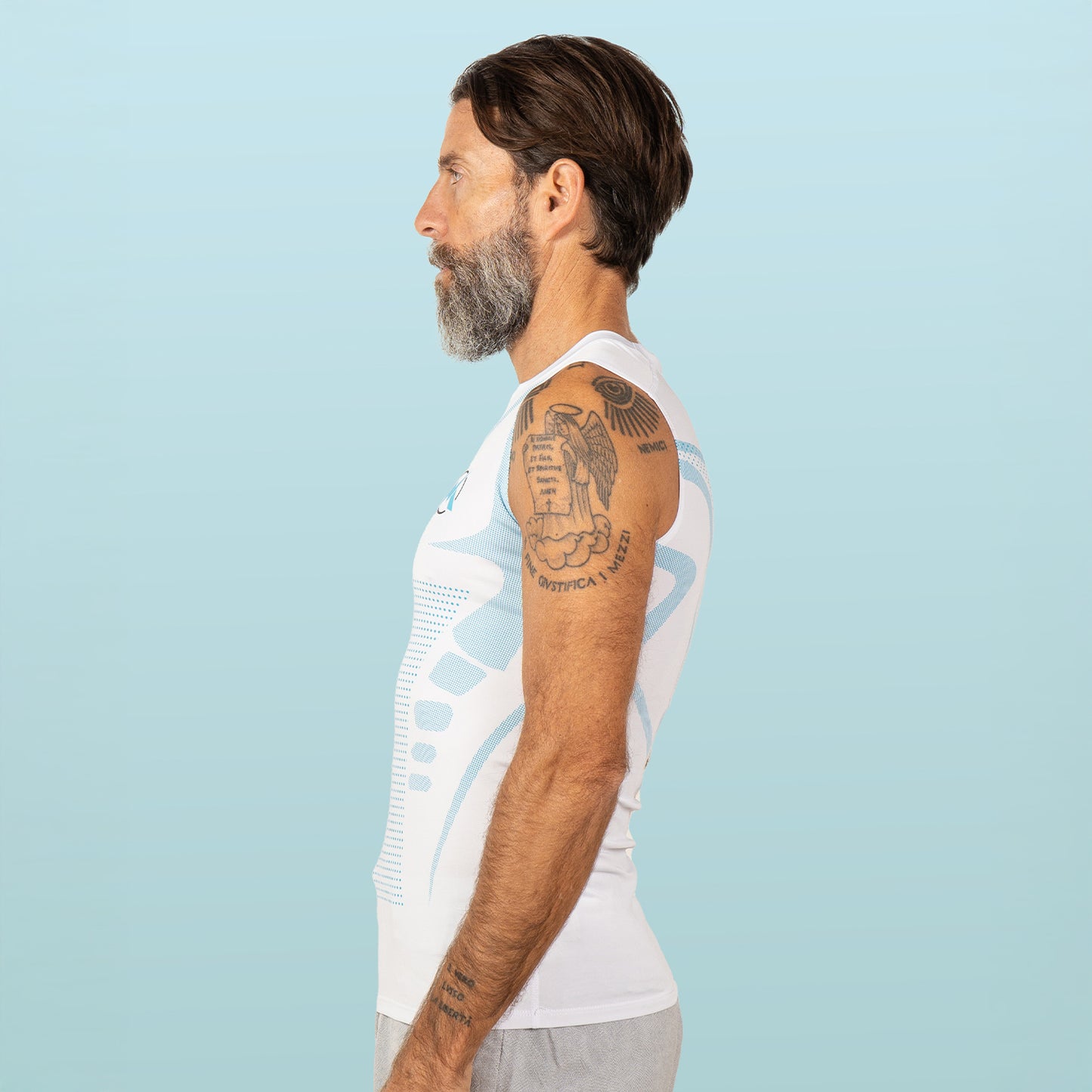
A compression tank under your dress shirt does three things no styling tip can:
- It smooths the soft-middle visual under a fitted shirt so the placket doesn't pull and the buttons don't gap.
- It gives your nervous system a tactile reminder to stay upright. Brown et al., Sports Medicine (2022) documented that compression garments produce a measurable proprioceptive feedback effect — your body becomes more aware of where it is in space, which translates into less mid-event slump.
- It prevents the dress shirt from clinging to your skin in the warm post-cocktail hour, which is when the "wet patches under the arms" photo gets taken.
What it won't do: melt fat. Wei et al., Life (2025), a 31-study pooled review of compression garments across 1,000+ participants, found no evidence that compression alone produces fat loss or permanent shape change. Don't sell yourself the dream. Sell yourself the smooth line under a $200 shirt.
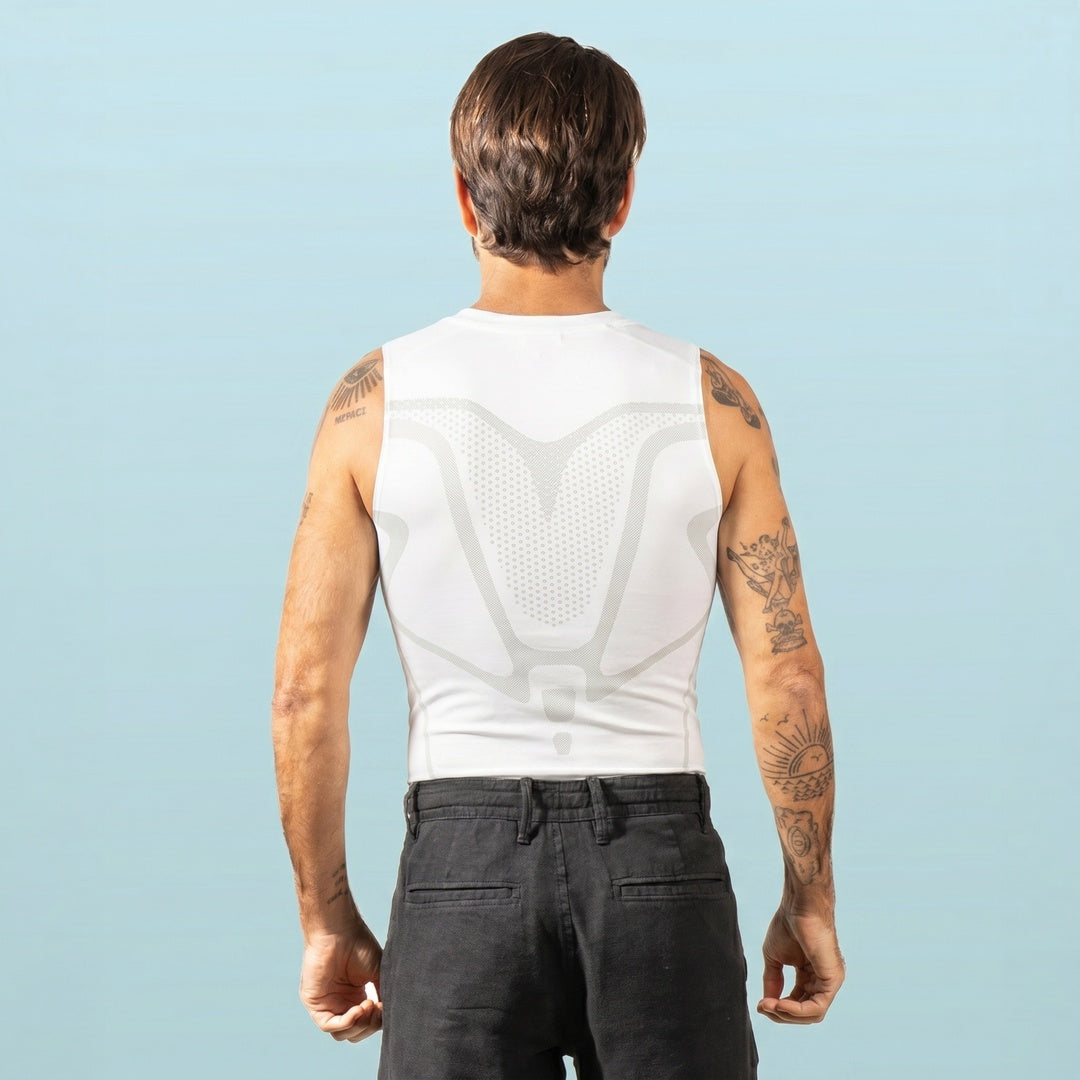
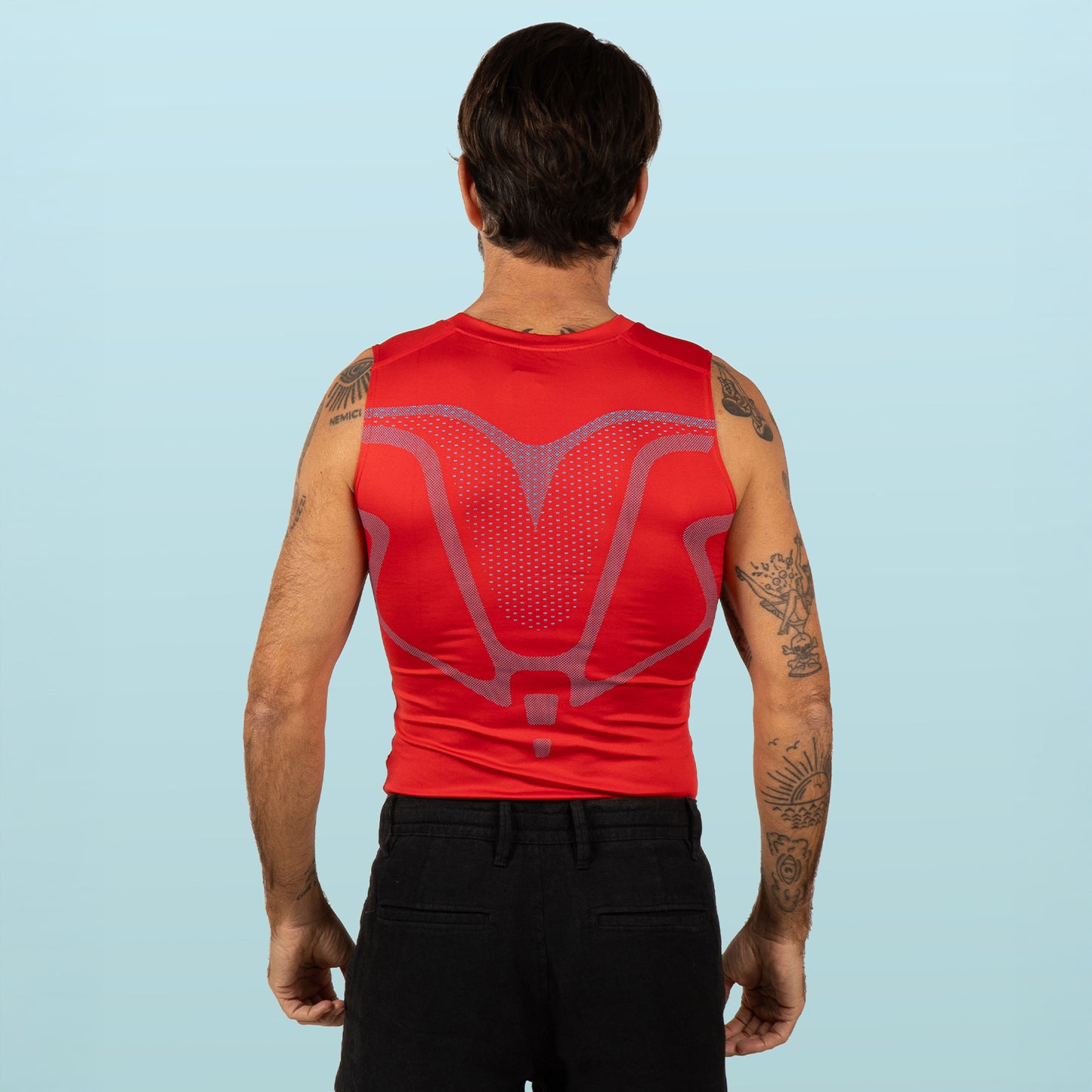
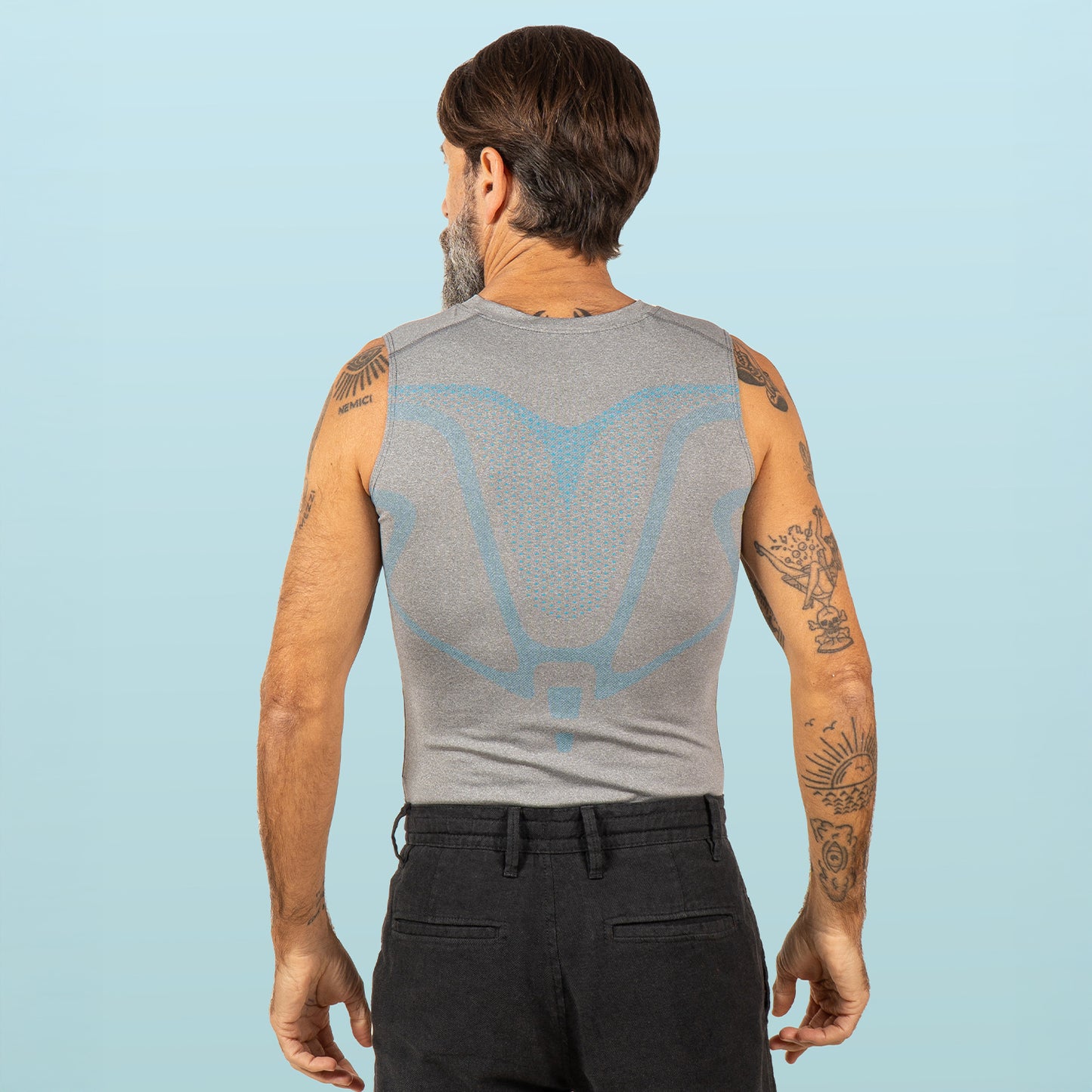
Spec: sleeveless, medium compression, color-matched to either your skin tone (under a white shirt) or black (under a darker shirt). Crew neck, never V-neck, so it doesn't show.

Get VitaBoost Now — Buy 1 Get 1 Free ($15)
Lever 3 — Suit fit math (the 3 thresholds)
You don't need a $2,000 suit. You need a $400 suit that hits three measurements correctly. Inexpensive and tailored beats luxury and ill-fitted, every time, in every photo.
The three measurements that matter at 50+:
- Shoulder seam: must end exactly at the bony edge of your shoulder. Not past it (looks droopy), not before it (looks rented). This one is non-negotiable. A tailor cannot fix a wrong shoulder seam easily.
- Jacket length: hits the top of your seat, not past it. A jacket that's too long shortens your legs and makes you look heavier. A jacket that's too short looks like you borrowed your son's.
- Pant waist: sits at your natural waist (just below the navel), not at the hip. Mid-rise wins over low-rise every time for a 50+ frame. Low-rise pants visually shorten you and push the belly over the belt. Mid-rise hides the soft middle the way it was supposed to.
Color: navy or charcoal. In summer, light grey is fine; tan reads younger but only on a leaner frame. Skip black unless the dress code asks for it. For the full color and silhouette playbook, see how to dress at 50 (men). And if the soft middle under the shirt is the main worry, how to hide a belly under a dress shirt goes deeper on the formal-wear angle.
Lever 4 — Grooming stack (the 20-minute upgrade)
This is where most 50+ men leave the most confidence on the table. A clean, current grooming pass adds more visible confidence than the next $200 of suit upgrade.
Do this the night before, not the morning of:
- Haircut 2-7 days out (not the day before — too sharp).
- Beard trimmed to a defined line, not a fade-out. If you don't wear a beard, a single clean shave the morning of.
- Eyebrows: 90 seconds with a small comb and clippers. The single most under-rated 50+ grooming move. Wild eyebrows age you faster than grey hair.
- Nose and ear hair: yes, you have it now. Yes, people see it in photos.
- Nails clipped and clean. You will shake hands all day.
- A neutral, light cologne — not the bottle you've worn since 2003. Something fresh, applied once, on the chest under the shirt, not the neck.
Lever 5 — Presence rules (how you stand, walk, talk)
This is the lever nobody writes about and the one that does the most work in real-time.
- Stand wide, not narrow. A slightly wider foot base looks grounded. Narrow feet look like you're about to apologize.
- Don't fold your arms. It reads as defensive in every photo. Hands relaxed at your sides or one hand holding a glass. Not both arms crossed, not both hands in pockets.
- Don't lean. Leaning on a wall ages you 10 years in any candid photo. Stand on both feet.
- Talk to the new people, not just the people you know. The "tired dad in the corner" problem is half clothing, half conversation gravity. Walk over. Introduce yourself. Ask them how they know the couple. That's 80% of being read as confident.
- Walk like you've been here before. Slow, even pace. Don't rush through rooms. Don't dart between tables. For more on the walk specifically, see how to walk with confidence as a man over 40.
Lever 6 — Mindset reframe ("favorite uncle" not "tired dad")
You are no longer trying to read as the groom. You're not trying to read as the cool young guest. Those characters were taken. Both of them will be at the wedding, looking like themselves.
You are the favorite uncle: the man with the easy laugh, the dry joke, the well-tailored suit, the open hand, the slightly silver temple, the one who actually asks the bride's parents how they're doing. That character commands the room differently. It does not compete with the 28-year-old groomsman's energy. It does not need to.
This isn't a posture sentence. It's an instruction set. Decide that's who you are before you walk in. The body language follows the decision.
The T-minus 90-minute day-of-wedding prep routine
The wedding starts at 4 pm. Here's what the 90 minutes before look like.
T-90 (2:30 pm) — Shower. Cold rinse the last 30 seconds. Cold water spikes alertness and tightens the skin around the eyes — you'll look more awake in the photos.
T-75 (2:45 pm) — Eat. Real food, not heavy. A turkey sandwich, an apple, water. Skipping lunch and arriving on champagne at 4:30 is the fastest way to become the "tired dad in the corner" by 6 pm.
T-60 (3:00 pm) — Compression tank on first, then the dress shirt. Smooth. No bunching. Tuck in fully.
T-50 (3:10 pm) — Pants on at natural waist. Belt on the second hole down from where you usually wear it (this single move tightens the silhouette and lifts the trouser break to where it should be).
T-45 (3:15 pm) — Grooming finish. Eyebrows, ears, nose, splash of cold water on the face, light cologne on the chest.
T-35 (3:25 pm) — Tie, jacket, shoes. Tie before jacket so you can see the knot in the mirror.
T-25 (3:35 pm) — Posture rehearsal in the mirror. Tall through the crown. Chest open. Chin parallel. Hold it for 30 seconds. Notice how the suit drapes when you do.
T-15 (3:45 pm) — Leave. Arrive early enough to walk slowly into the room, not late and rushed.
The point of the routine isn't ritual. It's that you walk in already 90 minutes into being the confident version of yourself. The first 30 seconds at a wedding decide how the rest of the night reads. Buy them with prep.
The event arc: how to carry yourself from ceremony to last song
A wedding is not one event. It's four micro-events, each with its own physical and energy demand. Most 50+ men start strong and burn out by hour three. Plan the arc.
Ceremony (the seated 30-40 minutes). You're in a chair. Posture slips here fastest. Sit forward on the chair, not slumped back. Both feet on the floor. Don't cross your legs — it pulls the jacket open and creases the pants. Camera-aware: you will be photographed in this hour without knowing it.
Cocktail hour (the standing 45 minutes). This is where the photos that end up on Instagram get taken. Stand wide, glass in one hand, the other relaxed. Don't park yourself at the bar. Move to three different conversations. Avoid the deep-dive 25-minute conversation with the one person you already know — it's confidence quicksand.
Dinner (the 90 seated minutes). Eat. Drink water between every glass of wine. The "tired dad in the corner" problem at 9 pm is almost always a hydration problem from 7 pm. Don't loosen the tie until dancing actually starts.
Dancing / last hour (the energy ration). You don't have to dance the whole hour. You do have to be present for it. Stand near the floor, laugh with the table, take the family photo when it's offered. Leave when it feels like the right time, not when the energy is gone and you're slumped at a side table.
5 mistakes that quietly kill your confidence before you even arrive
| Mistake | Why it kills | Fix |
|---|---|---|
| Buying a "younger" suit cut | Tight chest, short jacket, no-break pants on a 50+ frame read costume, not current | Classic mid-rise, jacket to the top of the seat, slight break on the trouser |
| Skipping breakfast and lunch | You arrive hungry, drink fast, crash by 7 pm | Eat real food at T-75. Hydrate. |
| Wearing the cologne you've worn since 2003 | Dates you instantly. Smells louder than you think. | Neutral, fresh, applied once on the chest. |
| Leaning on walls, folding arms, hands in pockets | Reads tired and defensive in every candid | Stand on both feet, one hand free. |
| Going alone to your same three friends all night | Confidence is conversation gravity. Same circle = same energy = corner | Three new conversations minimum before dinner. |
What this stack can't fix (honest limits)
This is not a "you'll look 35 again" plan. Two pieces of honesty:
Compression doesn't burn fat. As covered above and reinforced by Wei et al. 2025: 31 studies, no evidence of meaningful fat loss from compression alone. The visual smoothing is the deliverable. The actual shape change has to come from the longer plan — sleep, strength, protein, walking — which is its own conversation.
The "8-9 lb visible threshold" caps what posture and base layer can deliver. Re and Rule's research suggests that observers detect a weight change of about 8-9 lbs before they notice "you look different". Posture + a compression base layer + a properly cut suit can claim a chunk of that visible window — but not the whole thing. If you're carrying 30 lbs more than you'd like, the suit and the posture will move it from "tired" to "sharp", not from "tired" to "lean".
That's not a failure. That's a stack working at its honest top end.
The bottom line: A wedding at 55 is not a wedding at 35. You're not auditioning for the room. You already belong in it. The 6 levers above are how you walk in knowing that, instead of finding the wall and waiting it out.
Get the Base Layer — VitaBoost BOGO ($15)
Frequently asked questions
What should a 50 year old man wear to a wedding?
A well-fitted navy or charcoal suit, a crisp white or light blue dress shirt, leather shoes (brown for daytime, black for evening), and a knit or silk tie in a muted color. Skip the tie only if the dress code is explicitly casual. Skip novelty patterns, low-rise pants, and "younger" tight cuts.
Should a man over 50 wear a suit to a wedding?
For almost any wedding more formal than a beach ceremony, yes. A suit is the safest and most flattering choice for a 50+ frame because it provides structure (shoulder line, jacket length) that off-the-rack separates rarely deliver. Beach or backyard weddings can swap to a blazer with dress trousers, no tie.
What colors should a man over 50 wear to a wedding?
Navy, charcoal, and medium-to-dark grey are always safe. Light grey and tan work for summer or daytime weddings. Avoid black unless the dress code calls for it (black-tie or strict cocktail), and avoid trendy colors like pastel pink or olive unless you wear them regularly and own the look.
Can a man over 50 wear a tie to a wedding?
Yes. A knit tie in navy, burgundy, or dark green reads modern without trying too hard. Avoid novelty patterns, cartoon prints, and ties wider than 3 inches. For daytime or casual weddings you can skip the tie entirely with a crisp shirt and a tailored blazer.
What should you not wear to a wedding as a man over 50?
Avoid white (reserved for the couple), all-black unless the dress code requires it, novelty patterns, baggy jackets, low-rise pants, tight "trendy" cuts not built for a midlife frame, dirty shoes, and the cologne you've worn for 20 years. Also avoid jeans unless the invitation explicitly says casual.
Sources
- Cleveland Clinic — Tech Neck: head weight 10-12 lbs neutral vs 27 lbs at 15° forward tilt
- NIH/PMC — Sarcopenia and Age-Related Muscle Loss (3-8% per decade after 30)
- Cleveland Clinic — Visceral Fat: metabolic activity and midlife redistribution
- ScienceDaily / University of Toronto (Re & Rule 2015) — Apparent weight threshold ~8-9 lbs
- Brown et al., Sports Medicine 2022 (PMC9023423) — Compression garments and proprioceptive feedback
- Wei et al., Life 2025 (PMC11944185) — 31-study pooled review on compression garment effects
Walk Into the Next Wedding Sharper — Get VitaBoost (BOGO $15)