By Owen Blot · Founder, Maynox · Last updated June 16, 2026
- The Two Numbers That Matter (Per Day + Per Meal)
- Why Your Body Needs More Protein Now (Anabolic Resistance)
- What 30 Grams Actually Looks Like
- Breakfast Is the Biggest Miss
- The Best Protein Sources for Men Over 50
- A 14-Day Starter Protocol
- What Doesn't Work (The Honest Debunk)
- Protein Alone Won't Save You
- Frequently Asked Questions
You're 52. You've been eating "fine" your whole life. Same lunches, same dinners, maybe a beer at the end of the day. Same body? Not anymore. The arms got softer. The grip went weak. The chest you used to fill out a polo with starts to look concave under fluorescent light. And you can't figure out why — because nothing on the kitchen counter changed.
Something else changed. Around 50, your muscles stopped listening to the protein you've been giving them. The 20 grams in your turkey sandwich used to count. Now it barely registers. This is anabolic resistance, and it's the reason most men over 50 are walking around in a slow, invisible muscle-loss spiral while telling themselves they "get enough protein." You probably do — for a 30-year-old. You almost certainly don't — for the man you are now.
This is the no-nonsense protein intake guide for men over 50: the exact daily target, the per-meal threshold that actually triggers muscle synthesis, what 30 grams looks like on a plate, the breakfast problem nobody talks about, and a 14-day starter protocol you can run on Monday without buying a single supplement. No magic powders. No T-booster pitch. Just the math that works.
The Two Numbers That Matter (Per Day + Per Meal)
Every article on the internet gives you the daily number. Almost none give you the per-meal number. Both matter — and after 50, the per-meal one matters more.
Your daily target
The federal RDA is 0.8 g of protein per kg of body weight. That was set decades ago for the minimum needed to prevent deficiency in a generic adult — not the amount needed to keep a 55-year-old man from losing muscle. The current consensus from Stanford Lifestyle Medicine, the European Society for Clinical Nutrition and Metabolism (ESPEN), and peer-reviewed sarcopenia research is significantly higher.
For men over 50, target 1.2 to 1.6 g of protein per kg of body weight per day, according to Stanford Lifestyle Medicine's protein guidance for adults 50+. Translation:
- 150 lb (68 kg) man → 82 to 109 g/day
- 180 lb (82 kg) man → 98 to 131 g/day
- 200 lb (91 kg) man → 109 to 146 g/day
If you train hard or you're rebuilding muscle after a long sedentary stretch, push toward the high end (1.6 g/kg). If you're sedentary and just trying to hold the line, 1.2 g/kg is the floor.
Your per-meal target
Here's the part the AARP-style listicles skip. A landmark study cited by Stanford gave 20 grams of protein to men aged ~22 vs men aged ~71. The young group built muscle. The 70-year-old group's muscles didn't respond at all. It took 40 grams to get the same building signal.
That's anabolic resistance. After about age 50, your muscles need a bigger "knock at the door" — roughly 0.4 g of protein per kg of body weight per meal, or about 30-35 grams of high-quality protein for the average man over 50, to trigger meaningful muscle protein synthesis (MPS). Eat less than that in a sitting and the signal is weak. Eat more than that and the extra protein is still useful — but the threshold matters most.
The two-number rule: hit your daily total (1.2-1.6 g/kg), AND hit 30-35 grams of protein in at least three of your daily eating windows. Most men over 50 hit the first number while completely missing the second.
Why Your Body Needs More Protein Now (Anabolic Resistance)
You're not imagining the change. Three things stack on each other after 50:
1. Muscle loss is already underway. Skeletal muscle declines roughly 3 to 8 percent per decade after age 30, accelerating after 50, according to a National Institutes of Health review of sarcopenia (PMC2804956). By 60 you've often lost a quarter of the muscle you had at 30 — and you barely noticed.
2. Testosterone is slowly drifting down. Roughly 1 percent per year after age 30, according to Mayo Clinic's overview of testosterone in aging men. That doesn't cripple you, but it makes muscle building slower.
3. Anabolic resistance grows. Your muscles' sensitivity to the protein signal blunts with age. The same 20 g of protein that triggered muscle protein synthesis at 25 barely registers at 55. To overcome the resistance you need a louder signal — more protein per meal, ideally rich in leucine, the specific amino acid that flips the muscle-building switch. The threshold to fully trigger MPS in older adults is roughly 2.5 to 3 grams of leucine per meal, which corresponds to about 30 to 35 grams of a complete protein like beef, chicken, fish, eggs, whey, or dairy.
Translation in human terms: your body got harder of hearing. You have to talk louder, and you have to say the right word (leucine). One mumbled "hey" three times a day no longer works.
What 30 Grams Actually Looks Like
This is the part most articles refuse to do — operationalize the number. Here's what roughly 30 g of protein looks like across common foods, ordered by leucine density (the ones that hit hardest for muscle synthesis are at the top):
| Food | Portion | Protein | Notes |
|---|---|---|---|
| Whey isolate | 1 scoop (30 g) | 25-27 g | Fastest leucine spike; great post-workout or breakfast |
| Chicken breast (cooked) | 4 oz | 28-30 g | Lean, leucine-rich; cheap |
| Lean beef (cooked) | 4 oz | 28-30 g | Highest creatine + leucine combo |
| Salmon or canned tuna | 4-5 oz | 28-32 g | Omega-3 bonus |
| Greek yogurt (plain, 0%) | 1.5 cups | 27-30 g | Slow-digesting; pair with breakfast |
| Eggs | 4 large + 2 whites | 32 g | One of the highest-quality proteins; cheap |
| Cottage cheese (low-fat) | 1 cup | 26-28 g | Underrated; casein dominant, slow release |
| Tofu (extra firm) | 8 oz | 28-30 g | Complete plant protein; rare among plants |
| Lentils | 1.5 cups cooked | 27 g | Plant-based but lower leucine — pair with whey or dairy |
| Black beans + brown rice | 1.5 cups each | ~25 g | Plant combo; lower MPS trigger than animal |
Two practical rules men over 50 should bookmark:
- Animal protein and whey hit the leucine threshold faster than plant protein. You can build muscle on plants — but you need bigger portions and more variety. Don't trust a single half-cup of beans to do the job.
- A "scoop and a half" matters. One scoop of whey is ~20 g protein. That's the old threshold. Use 1.5 scoops or pair the scoop with milk/yogurt to clear the 30 g bar.
Breakfast Is the Biggest Miss
If your protein intake is failing, the failure is almost always at breakfast. The typical American breakfast pattern for a man over 50 looks something like this:
- Coffee + bagel + butter: ~8 g protein
- Coffee + yogurt cup (the small one) + granola: ~10 g protein
- Coffee + toast + jam: ~5 g protein
You skipped the 30 g threshold. Your muscles got nothing. You then "make up for it" with a giant 60-70 g protein dinner at 8 p.m. — but your body can't bank protein the way it banks calories. The extra at dinner doesn't replace what you didn't eat at breakfast.
The fix is mechanical, not heroic. Build one breakfast that hits 30 g and run it 5 days a week. You don't need willpower — you need a default.
Three breakfasts that clear 30 g in under 5 minutes:
- 3 eggs + 1 cup egg whites scrambled + handful spinach (~32 g protein)
- 1.5 cups Greek yogurt + 1 scoop whey + berries (~45 g protein)
- 2-egg omelet + 4 oz turkey sausage + slice cheese (~35 g protein)
You don't have to enjoy breakfast. You have to hit the number. If you've been eating a bagel for 20 years, the bagel is one of the reasons your arms got softer.
The Best Protein Sources for Men Over 50
You don't need a fancy stack. You need a rotation of complete-protein foods you'll actually eat. Eat protein first on the plate, then fill the rest of the plate with vegetables, fiber, and a smaller portion of starches.
Tier 1 — daily rotation:
- Eggs (cheap, complete, leucine-dense)
- Chicken breast and thighs
- Lean beef (round, sirloin, 93/7 ground)
- Salmon, tuna, sardines, cod
- Plain Greek yogurt, cottage cheese, milk
- Whey isolate or whey concentrate (the simplest gap-filler; pick a brand with no proprietary blend)
Tier 2 — useful additions:
- Tofu, tempeh, edamame (the only plant proteins that clear the leucine bar in one portion)
- Lentils, beans + grains (great for fiber + iron, treat as protein support, not protein lead)
- Cheese, nuts (count as fat-with-protein bonus, not your main source)
Whey isolate question: is it safe and useful? Yes for healthy adults with normal kidney function — and especially useful for men over 50 because the leucine bolus from whey triggers MPS faster than slow-digesting protein. Pick an unflavored or simple-flavored isolate with no proprietary "muscle blends" and ignore the marketing.
A 14-Day Starter Protocol
Forget the perfect diet. Run this for 14 days and you'll know if your "I get enough protein" story was a story.
Days 1-3 — Audit only
Don't change anything. Just write down what you eat and use a free protein-tracking app (Cronometer, MacroFactor, MyFitnessPal). At the end of Day 3 you'll know:
- Your daily protein average
- Which meal is below 25 g (almost certainly breakfast)
- Your gap to the 1.2-1.6 g/kg target
Days 4-7 — Lock the breakfast
Pick ONE 30 g breakfast from the list above. Eat it 5 days in a row. Don't fix anything else.
Days 8-10 — Add the snack
Insert a 20-25 g protein snack between lunch and dinner: 1 scoop whey + 8 oz milk, OR 1 cup Greek yogurt + handful almonds, OR string cheese + 2 hard-boiled eggs. This is the secret weapon — it pulls dinner pressure off and adds a fourth MPS trigger.
Days 11-14 — Tune the dinner
Make sure dinner protein clears 30-35 g. The simplest rule: a palm-and-a-half of cooked protein for any adult man over 50. That's roughly 6 oz of chicken, beef, or fish.
By the end of Day 14, you'll be at 110-130 g/day, distributed across 3-4 doses that each clear the anabolic threshold. That's the entire game.
What Doesn't Work (The Honest Debunk)
The protein conversation is polluted with bad advice aimed at men in their 50s. Here's what to ignore.
Myth 1: "High-protein diets destroy your kidneys." For adults with normal kidney function, there's no good evidence that protein intakes up to 2 g/kg/day cause kidney damage. Harvard Health's review on protein confirms this is a myth carried over from advice written for people with pre-existing kidney disease. If you have known kidney disease, follow your nephrologist's plan. If you don't, this fear is keeping you weak.
Myth 2: "Testosterone boosters fix muscle loss." They don't. The OTC supplement industry has sold "T-boosters" for 30 years and the Mayo Clinic's guidance on testosterone therapy is unambiguous: most over-the-counter T-boosters don't meaningfully raise testosterone, and prescription TRT is for diagnosed hypogonadism — not as a substitute for eating protein and lifting weights. Save your money.
Myth 3: "Soy protein feminizes men." Decades of research, including Harvard T.H. Chan School of Public Health summaries, do not support meaningful estrogenic effects of dietary soy in men at typical intakes. Tofu and tempeh are fine. The "soy boy" meme is internet noise, not science.
Myth 4: "One big dinner makes up for a low-protein day." Your body uses protein in pulses. A single 80 g dinner triggers MPS once. Four 25-30 g doses trigger it four times. Distribution wins.
Myth 5: "The bar / shake at 11 p.m. is doing real work." It can help if it's the only way you hit the daily total. But it's a downgrade from clearing the threshold at breakfast, lunch, and dinner. Late-night protein doesn't fix a low-protein morning.
Protein Alone Won't Save You
Protein without a reason for your body to build muscle is wasted. Eating 130 g of protein while sitting on the couch produces some maintenance — but you don't get visible strength, density, or shape back without a stress signal.
Here's the full lever stack for men over 50, in order of return on time:
1. Strength training, 2-3x/week. Two 30-45 minute sessions of resistance work — compound moves like rows, presses, squats or split squats, hinges, carries — is enough to drive measurable adaptation. Strength training combined with adequate protein is the most powerful anti-sarcopenia stack we know of (see also our build-muscle-after-50 guide and 3-day workout plan).
2. Protein distribution. Covered above. 30+ g at three meals.
3. Sleep. 7 to 9 hours. CDC NCHS data shows ~30% of US adults sleep less than 7 hours, and short sleep tanks both recovery and protein efficiency — covered in our always-tired-after-45 piece.
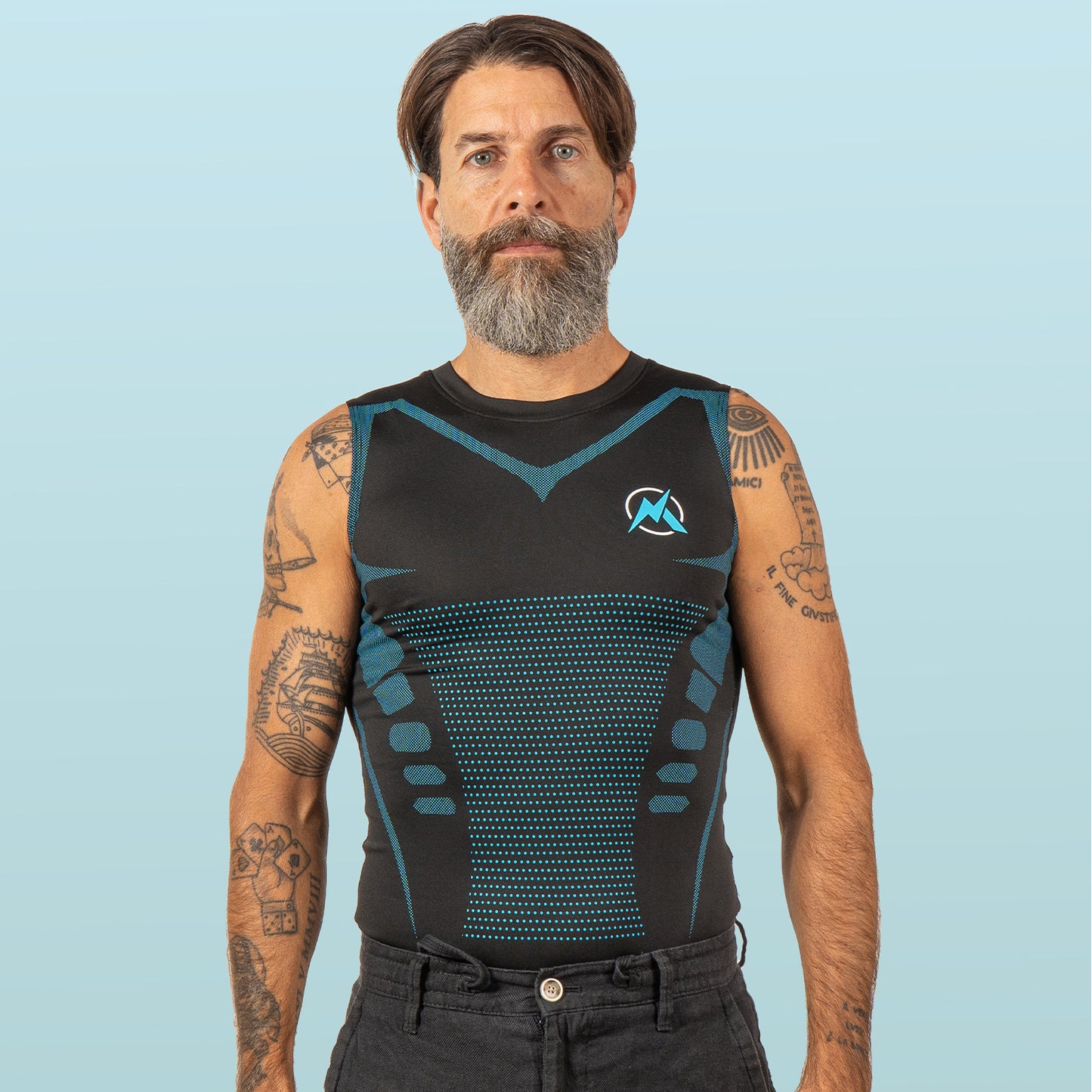
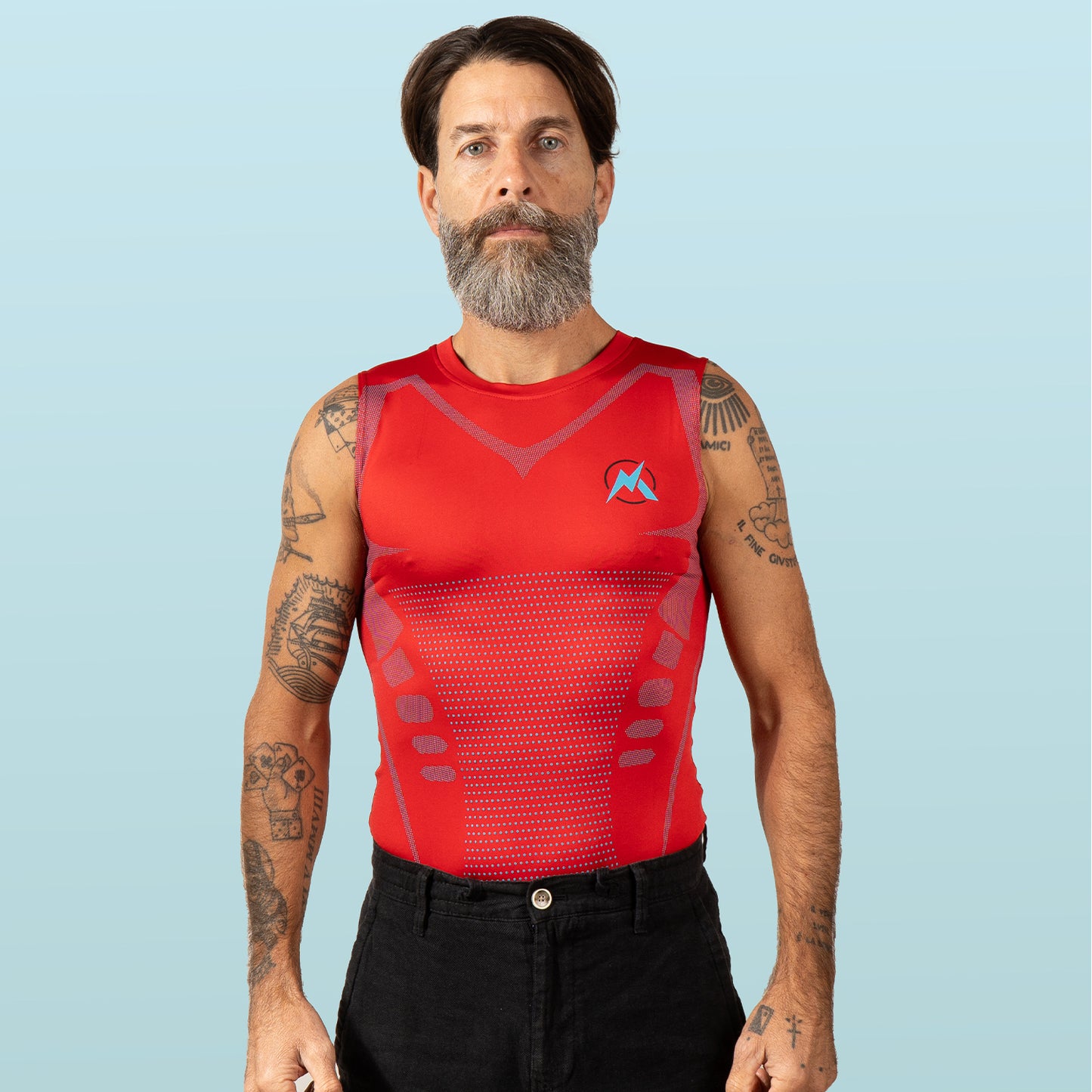
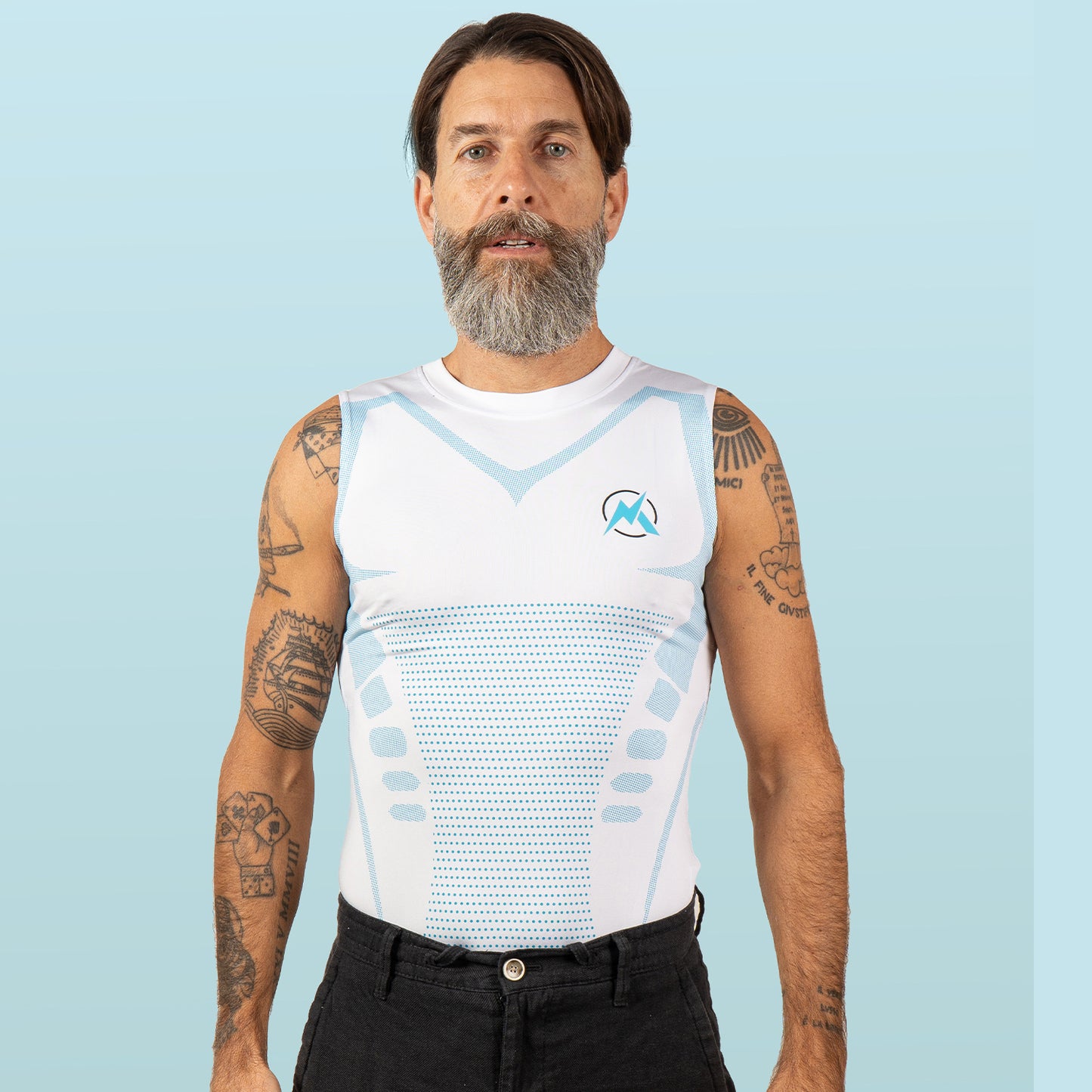
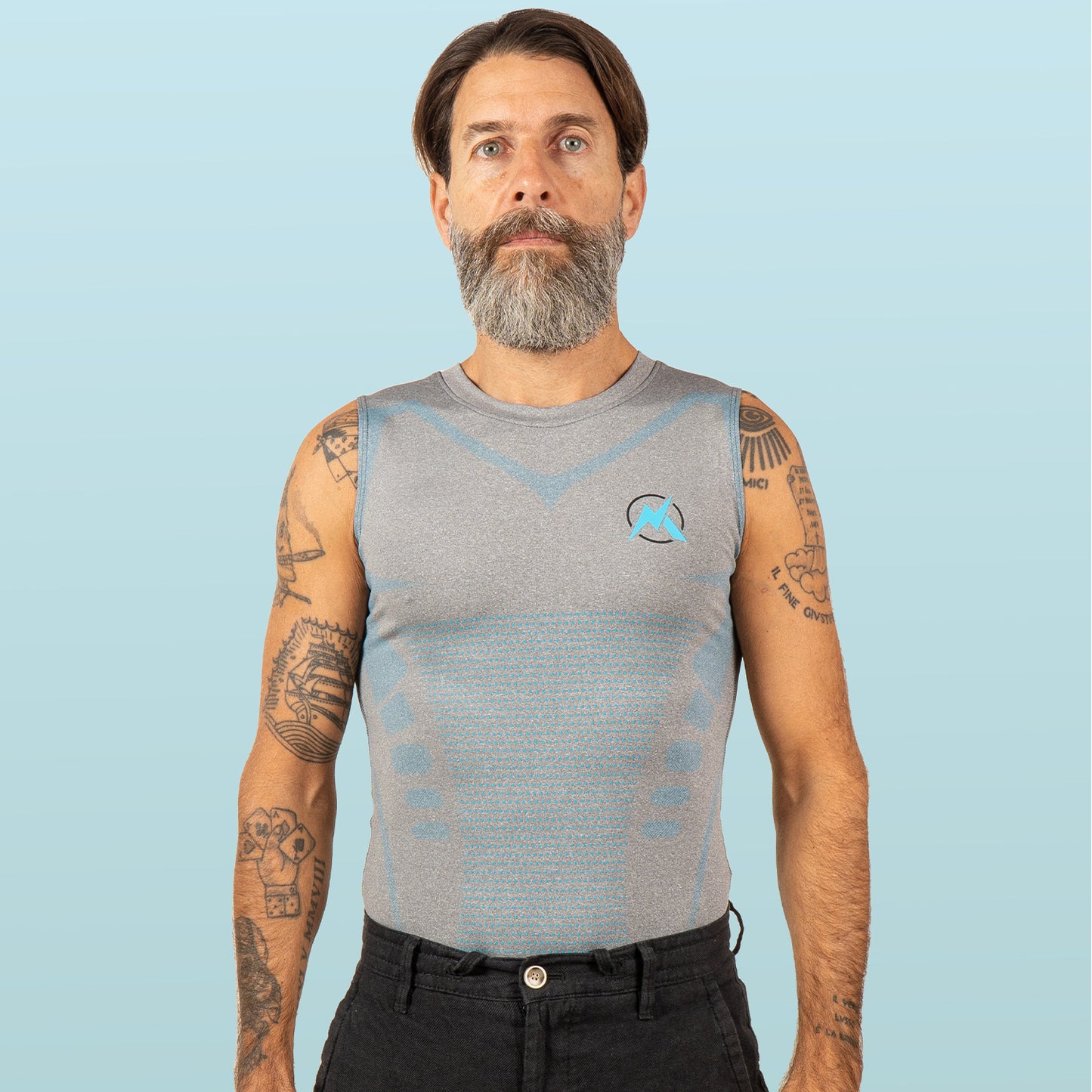
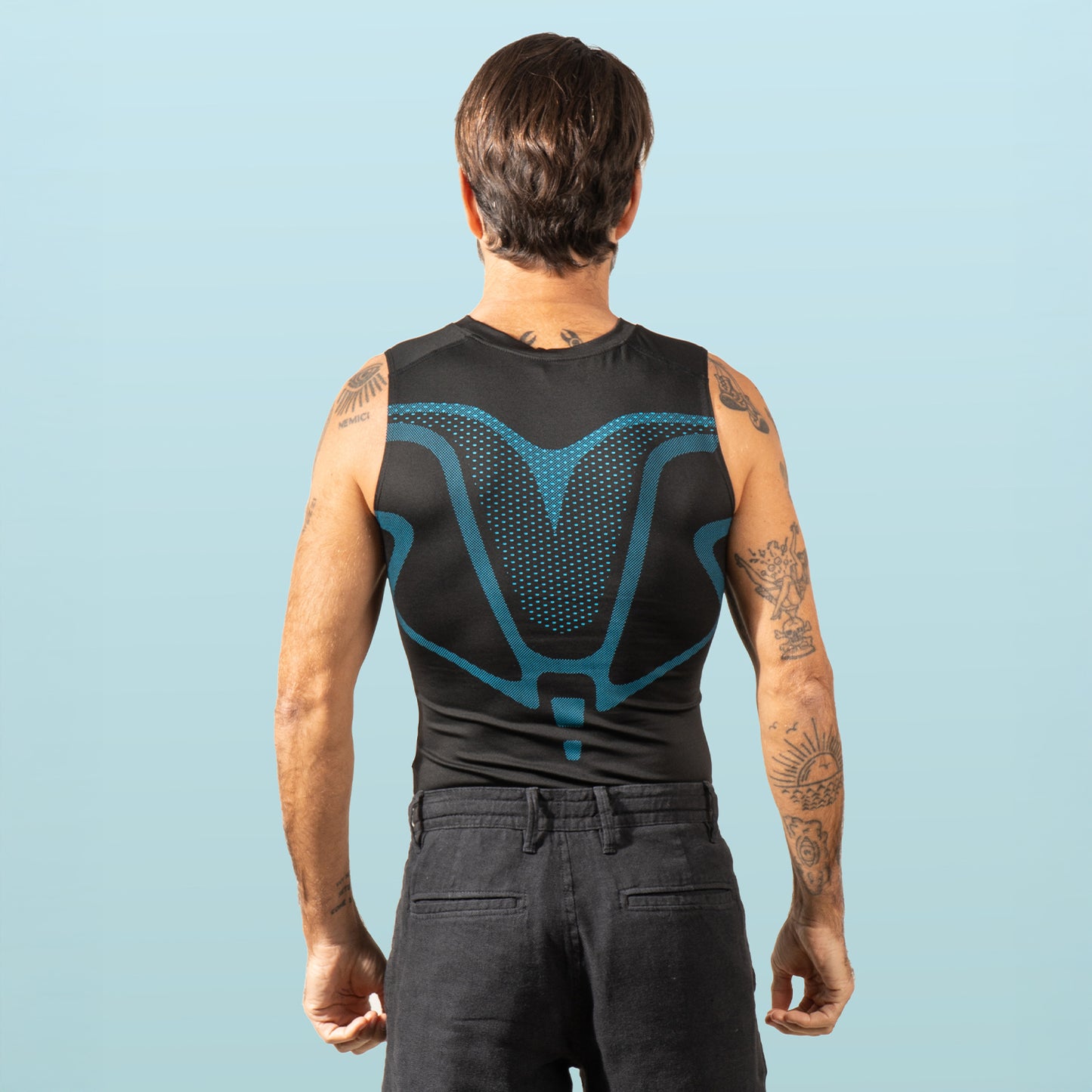
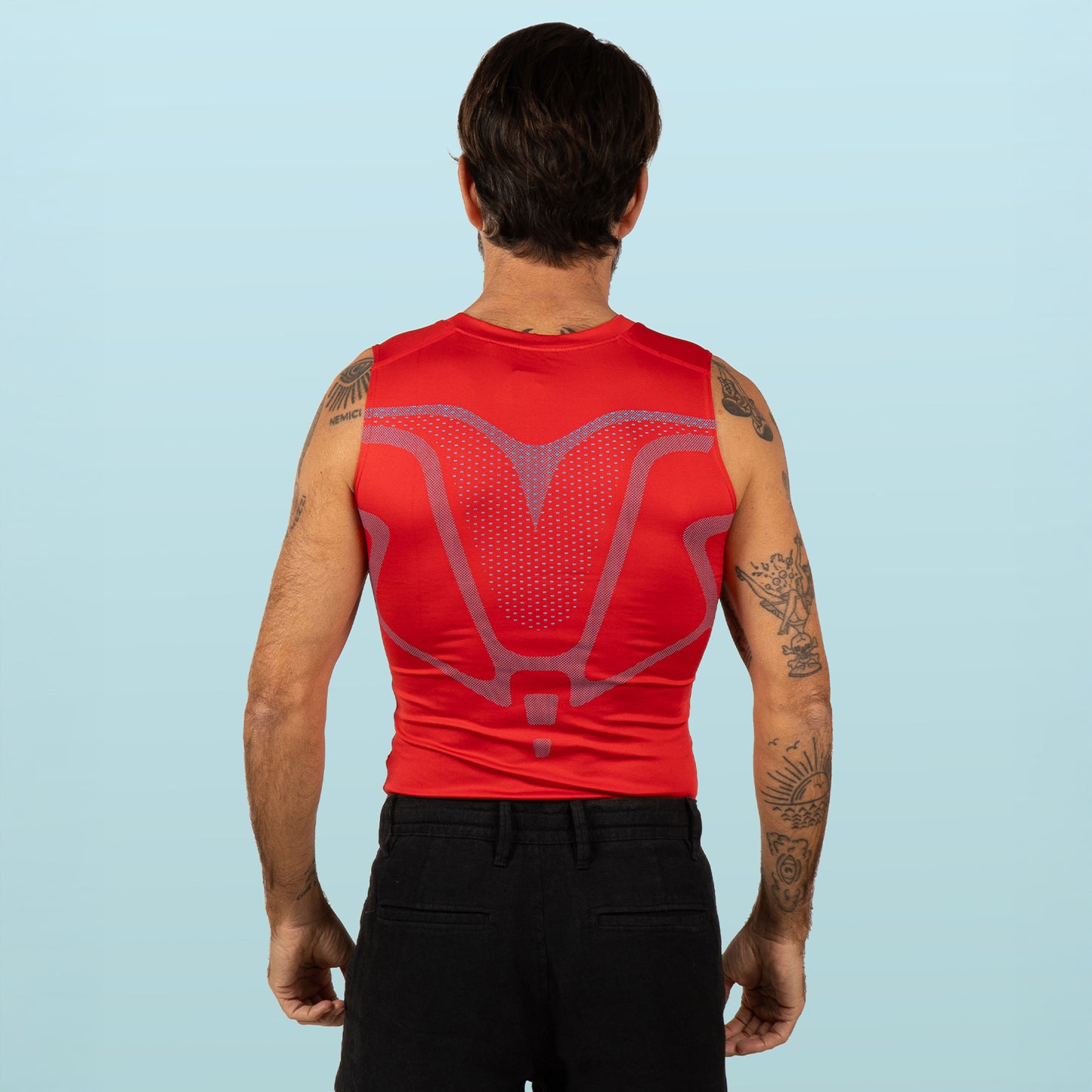
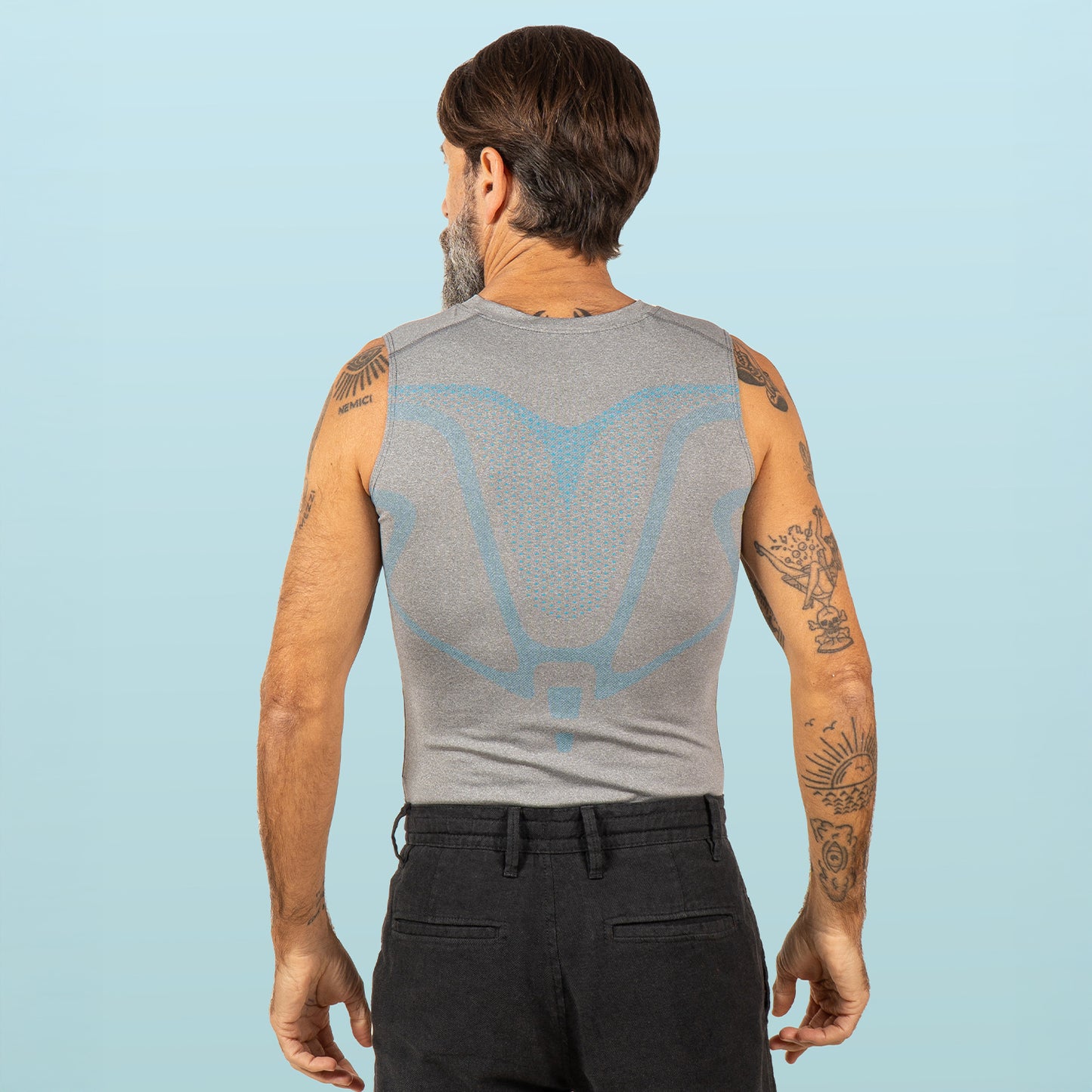
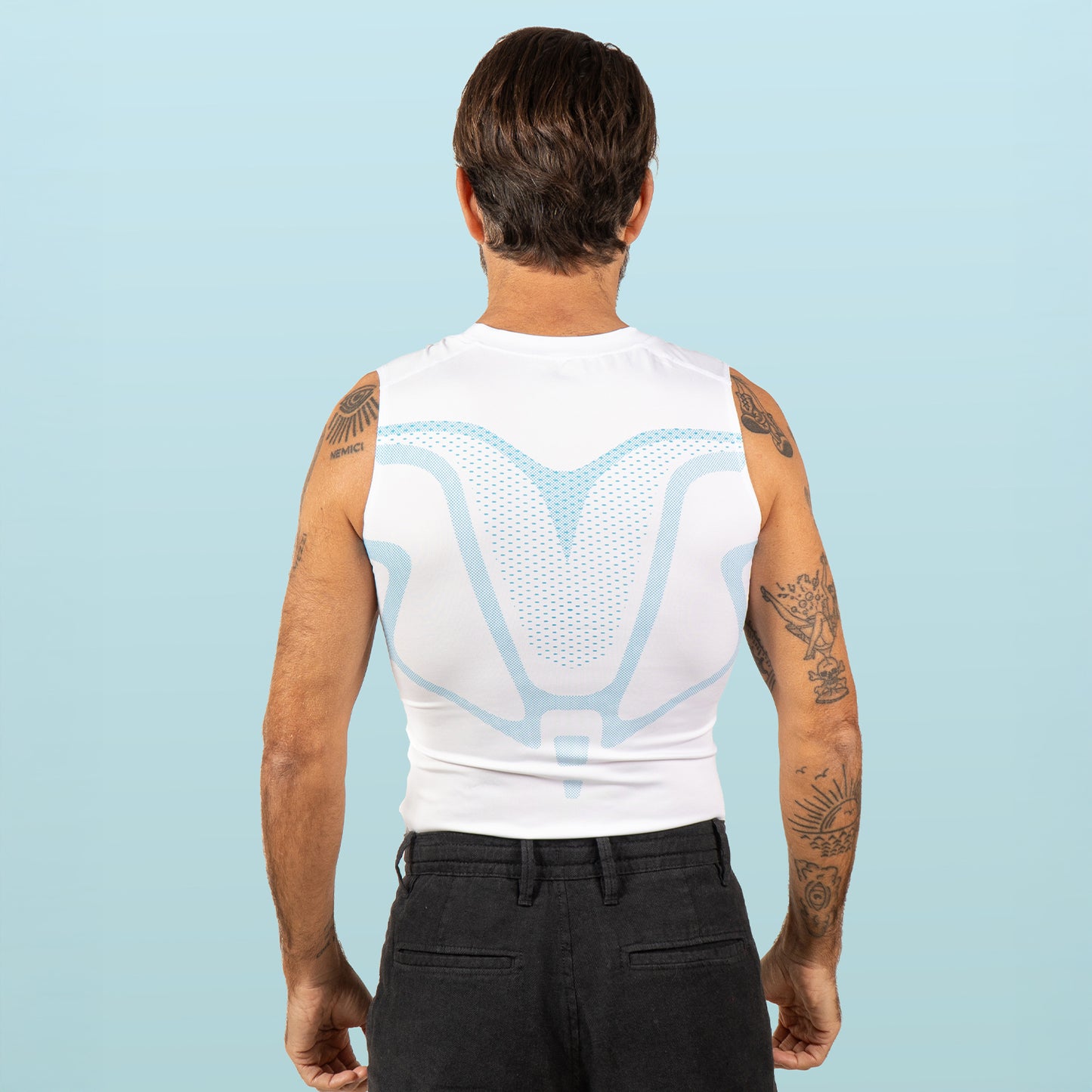
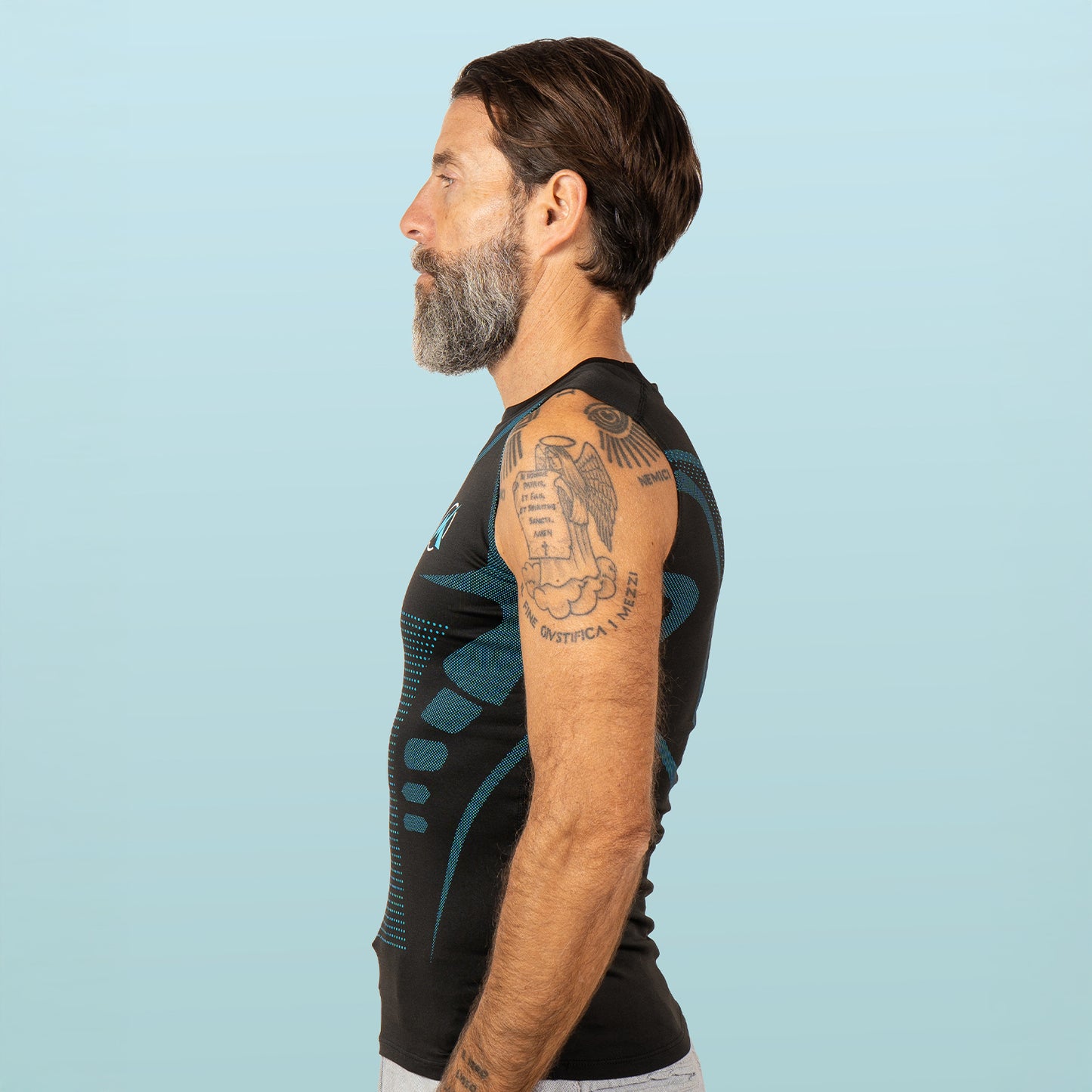
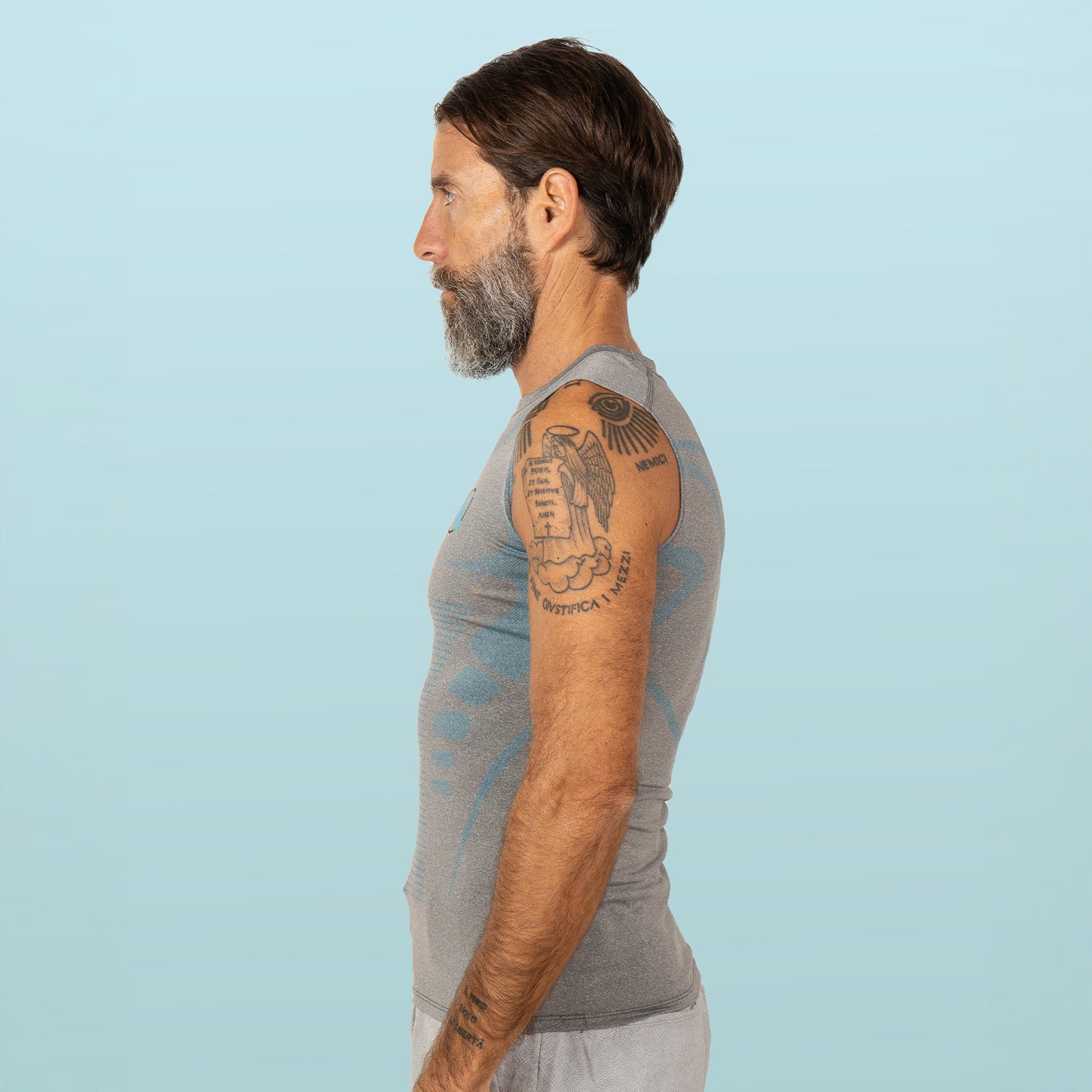
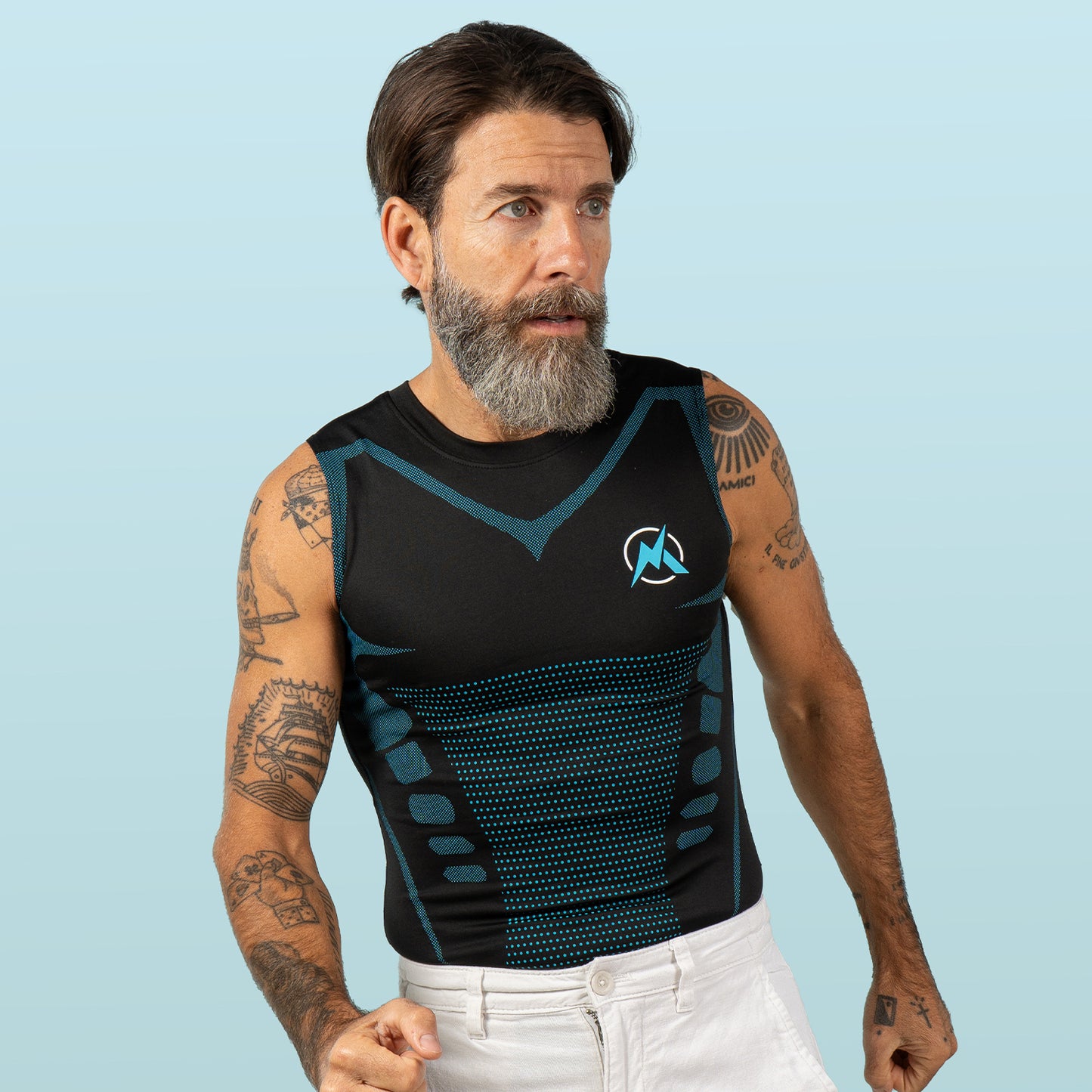
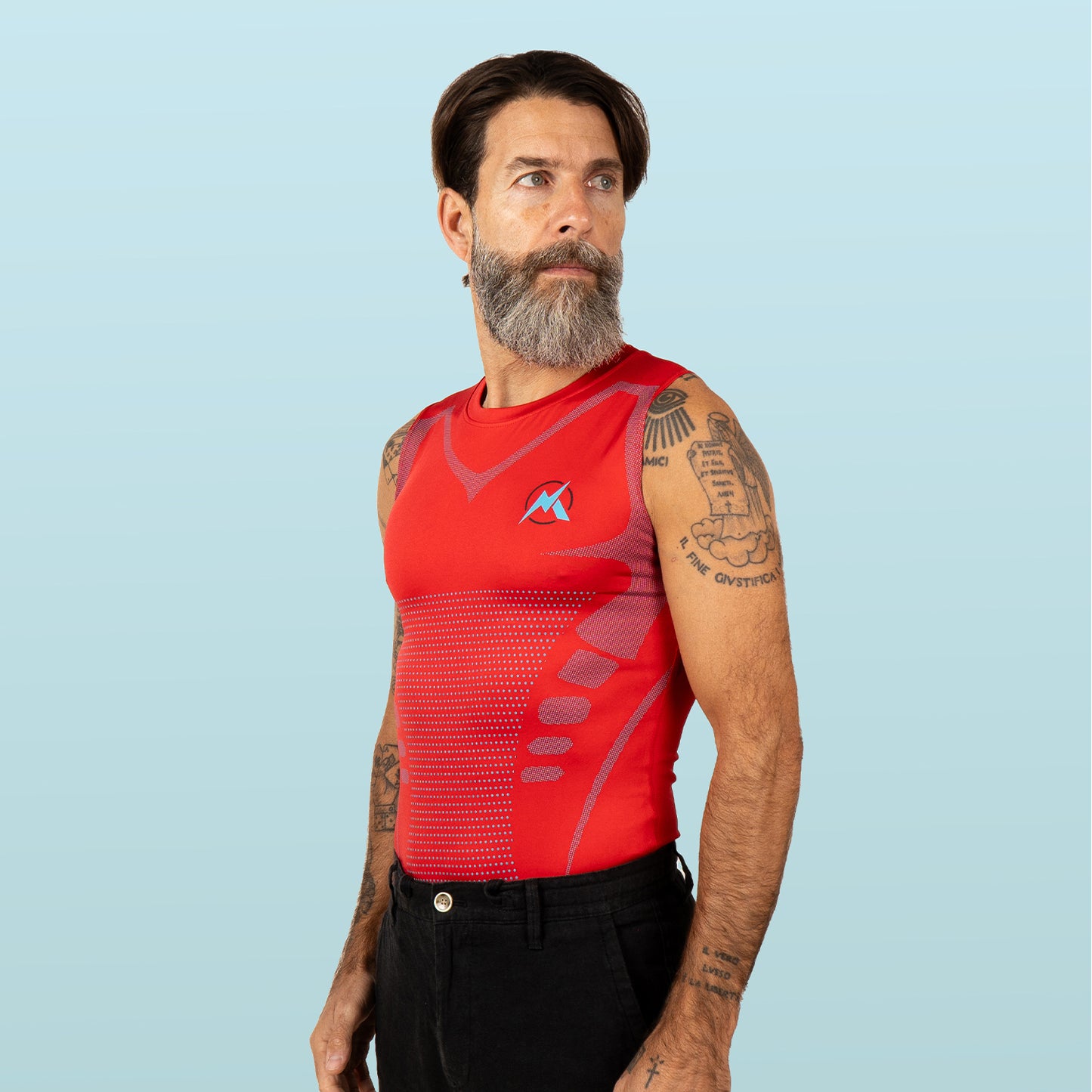
4. Posture and how you carry the body you're building. Even with the right protein and the right training, a slouched chest and rolled shoulders make a 50-year-old read 10 years older than he is. A consistent posture cue — whether through daily floor work, a habit-stack approach, or a compression base layer that gives your shoulders a real-time tactile cue — turns the strength you've built into visible presence. A peer-reviewed Sports Medicine review (PMC9023423) found compression garments provide measurable proprioceptive feedback that supports better postural alignment — the body becomes more aware of where it is.

Try VitaBoost — Buy 1 Get 1 Free
The protein conversation is incomplete without the posture conversation. Strong muscles you don't stand tall in still look like you gave up.
Frequently Asked Questions
How much protein does a man over 50 need per day?
For most men over 50, the evidence-based target is 1.2 to 1.6 grams of protein per kilogram of body weight per day — roughly 90 to 130 grams for a 165-180 lb man. The federal RDA of 0.8 g/kg is the minimum to prevent deficiency in a generic adult and is widely viewed as too low for men over 50.
How much protein should I eat per meal after 50?
At least 30 to 35 grams of high-quality protein per meal to overcome anabolic resistance. Below that threshold, the muscle-building signal is weak. Aim for three meals at this level plus one optional 20-25 g protein snack.
What is the best protein for men over 50?
Eggs, chicken, lean beef, fish, plain Greek yogurt, cottage cheese, and whey isolate are the highest-quality, leucine-rich options. Tofu, tempeh, and edamame are the strongest plant choices. Most men over 50 do well with a rotation of all of these — variety beats perfection.
Can too much protein hurt your kidneys?
For adults with normal kidney function, current evidence does not support kidney damage at protein intakes up to about 2 g/kg/day. If you have known kidney disease, follow your nephrologist's plan. For everyone else, the "protein damages kidneys" warning is a myth carried over from advice meant for renal patients.
Is whey protein safe for men over 50?
Yes for the vast majority of men. Whey isolate is one of the most effective ways to clear the per-meal leucine threshold, especially at breakfast. Pick a simple isolate or concentrate without proprietary blends, and treat it as a tool to fill protein gaps — not a replacement for whole-food protein.
Sources
- Stanford Lifestyle Medicine — Protein Needs for Adults 50+
- NIH/PMC2804956 — Sarcopenia and Skeletal Muscle Loss
- Mayo Clinic — Testosterone Therapy: Potential Benefits and Risks As You Age
- Harvard Health — When It Comes to Protein, How Much Is Too Much?
- Brown F. et al., Sports Medicine 2022 (PMC9023423) — Compression Garments and Proprioceptive Feedback
- CDC NCHS Data Brief 559 — Sleep Duration and Quality in US Adults
- Harvard T.H. Chan School of Public Health — Protein Is Important But We're Eating Too Much
Try VitaBoost — Buy 1 Get 1 Free
Medical disclaimer: This article is general nutrition information for healthy men over 50. It is not medical advice. If you have kidney disease, diabetes, heart disease, or any other diagnosed condition, consult your physician or a registered dietitian before changing your protein intake.