By Owen Blot · Founder, Maynox · Last updated June 16, 2026
- The counterintuitive truth: midlife is actually confidence's statistical peak
- The 4 forces that quietly collapse male confidence in your 40s
- The "low-confidence signature" strangers read in two seconds
- The honest 4-lever fix (ROI by speed)
- What doesn't work (the honest debunk)
- Your 4-week starter reset
- Frequently asked questions
You used to walk into a meeting and not think about it. Now you scan the room. You used to take a photo and post it. Now you delete two before sending one. You used to feel like yourself by default. Now you feel like the slower version of yourself.
You're 44. You haven't failed at anything obvious. The job is fine. The marriage is fine. The kids are fine. But something dimmed. And the worst part is you can't tell anyone, because saying "I lost my confidence" out loud sounds soft, and you've spent 25 years being the guy who doesn't sound soft.
Here's the part nobody tells you: what you call "losing confidence" is usually a stack of physical signals collapsing at once, not a personality failure. Your testosterone dropped. Your posture rolled forward six inches over a decade of laptops. Your sleep got 90 minutes shorter and 200% more interrupted. And somewhere in there, the visual you started losing fights with the one in the mirror.
The fix isn't a TED talk. It's a hardware reset. Here's what's actually breaking and the honest 4-lever way to get it back — for men 40-55, no TRT pitch, no "30-day transformation" lies.
The counterintuitive truth: midlife is actually confidence's statistical peak
You're going to hate this.
The biggest peer-reviewed meta-analysis on self-esteem across the lifespan — Orth et al., 191 studies, roughly 165,000 people, published via the American Psychological Association — found that self-esteem rises steadily from your teens, climbs through your 30s, and peaks around age 60 before declining. The APA published the finding in 2010 and it has held up.
In other words: statistically, men in their 40s should be more confident than they were at 25, not less.
So what's happening to you isn't "I'm getting old and losing confidence." What's happening is a gap between what your confidence should be and what you actually feel. That gap has a cause. It's not your age. It's the four levers below.
This reframe matters because it changes the assignment. If the problem were age, you'd have nothing to do. Age happens. But if the problem is a gap, a gap can be closed.
The 4 forces that quietly collapse male confidence in your 40s
These don't show up one at a time. They stack. Most men don't notice any single one — they just notice the result, which feels like "I'm not who I was."
Force 1 — Hormonal drift (the chemistry under everything)
Testosterone declines roughly 1% per year after age 30, per Mayo Clinic. By 45, you're running on about 15% less than at 30. By 55, around 25% less.
Testosterone isn't just sex drive. It's the chemical that makes risk feel doable. It's part of why your 30-year-old self walked into rooms without rehearsing them. When it drops, the same room feels louder. The same comment feels sharper. The same risk feels heavier.
This is biological, not character. And there's plenty you can do without injections (more on that in Lever 2).
Force 2 — Body and posture changes (what strangers read before you speak)
By 45, three things have happened to most desk-bound men:
- Sarcopenia has started. Muscle mass drops 3-8% per decade after 30, per NIH/PMC. That's not vanity — that's the difference between a frame that holds shape and one that softens.
- Posture has rolled forward. NIH News in Health reports that 80%+ of people experience back/posture issues in their lifetime. The Cleveland Clinic shows that head-forward "tech neck" multiplies effective head weight from 10-12 lbs neutral up to 27 lbs at 15° and 60 lbs at full slouch. Your spine learned the laptop.
- Body fat redistributed. Visceral fat (belly, not love handles) is metabolically active, per Cleveland Clinic, and it shows up the most in dress shirts and photos — exactly the contexts where you used to feel sharpest.
The visual you walks into the meeting two seconds before you do. When the visual reads "soft, slouched, tired," you have to earn back ground your 30-year-old self started ahead of.
Force 3 — Identity shift (the dopamine pipe got narrower)
Your 30s gave you constant feedback. Promotions. First house. First kid. First raise. Big visible wins.
Your 40s give you almost none. You're already promoted. The house is already bought. The kid is in middle school. The big visible wins compress into invisible maintenance work — staying employed, staying married, staying solvent. Maintenance feels like nothing even when it's everything.
That's not depression. That's the dopamine pipe getting narrower. You're doing more meaningful work for less measurable feedback. Confidence built on external wins runs dry without the wins. Identity that was tied to "the guy who climbs" has nothing to climb anymore.
Force 4 — Competence ceiling (the perceived-skill dip)
There's a finding that gets cited a lot in this space: men report a measurable drop in perceived skill competence between roughly 28 and 45, even when actual performance is unchanged. It's not that you got worse. It's that you started to see the room more clearly — including the younger people who are technically faster, the new tools you didn't grow up with, the gap between what you know and what you used to assume you knew.
The 28-year-old you didn't know what he didn't know. The 44-year-old you does. Visibility into your own limits is not a confidence problem — it's adulthood — but it feels like one until you reframe it.
The "low-confidence signature" strangers read in two seconds
Before we get to the fix, you need to see what's actually breaking on the outside.
Strangers don't read your résumé. They read the visual signature. The signature of a 44-year-old man whose confidence has slipped looks remarkably similar across the board:
- Shoulders rolled forward. Not slumped — just forward. Reads "compressed."
- Chin floats forward 1-2 inches. Tech neck. Reads "tired."
- Pec line goes soft. Sarcopenia + posture. Reads "deflated."
- Walk shortens. Stride drops. Cadence slows. Reads "hesitant."
- Eye contact gets shorter. Holds break under three seconds. Reads "unsure."
- Hand placement gets defensive. Pockets, crossed, fidgeting. Reads "small."
Each of these is a hardware signal, not a software one. And each is fixable in weeks, not years. The reason this matters: your brain reads your own body cues too. Standing tall changes how you feel inside the body that's standing tall. That's the hardware-to-software loop the 4-lever fix below leverages.
If you want to see how to consciously rebuild the walk and the visual presence layer first, start with our 5-lever walk guide for men over 40.
The honest 4-lever fix (ROI by speed)
Most "confidence" content gives you 10 abstract tips and calls it a day. That's why nothing changes. The fix is a stack, ordered by time-to-visible-result.
Lever 1 — Posture and frame (Week 1, fastest visible)
This is the single fastest controllable lever. Harvard Health notes that postural retraining can produce measurable change in 8-12 weeks of consistent work. But the visual result starts in Week 1.
Three things to do this week:
- Standing reset, three times a day. Heels together, glutes squeezed, shoulders rolled back and down, chin tucked half an inch. Hold 30 seconds. That's it.
- Anchor it to existing habits. Brushing teeth in the morning. Coffee brewing. Walking back from your car. Three anchors a day = 21 reps a week.
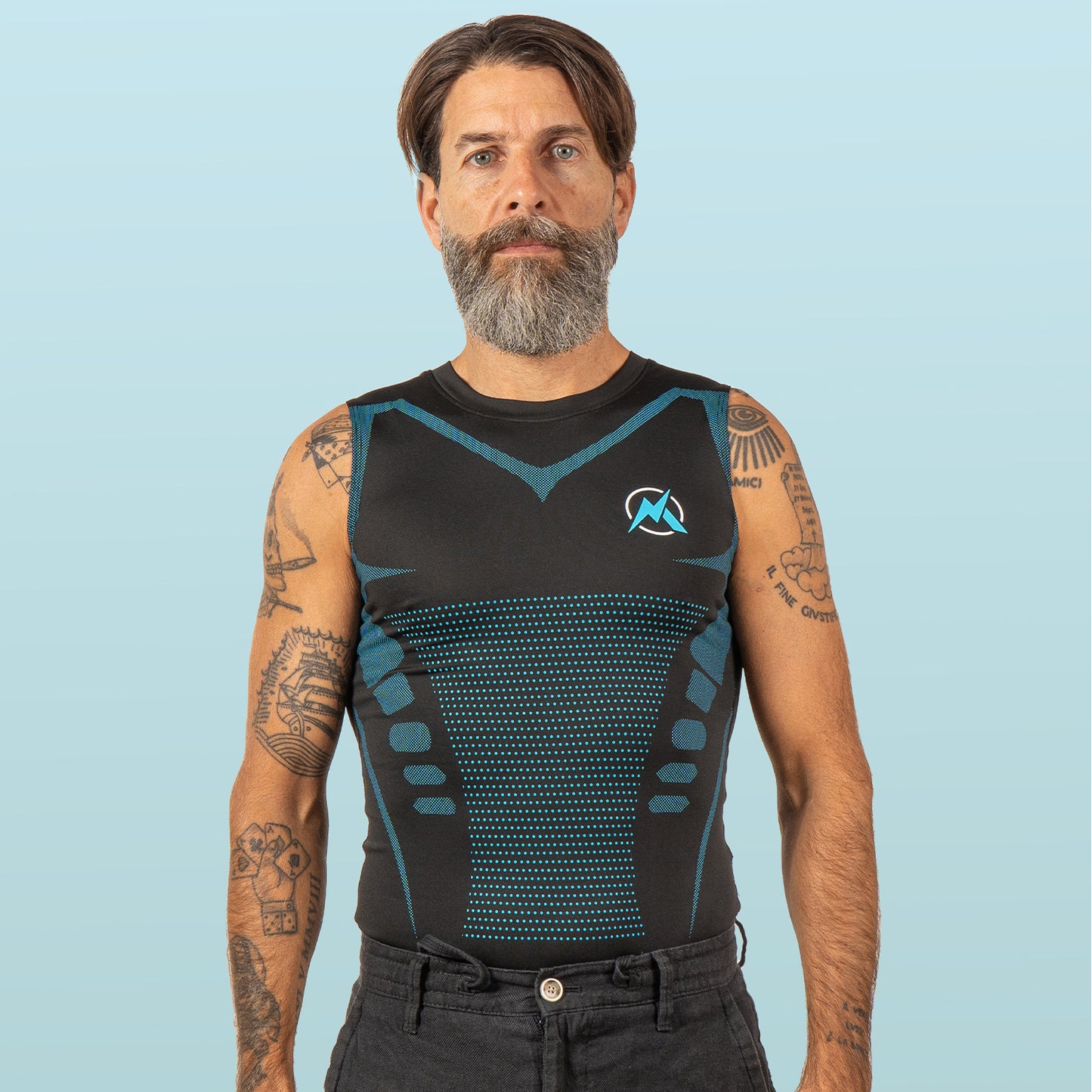
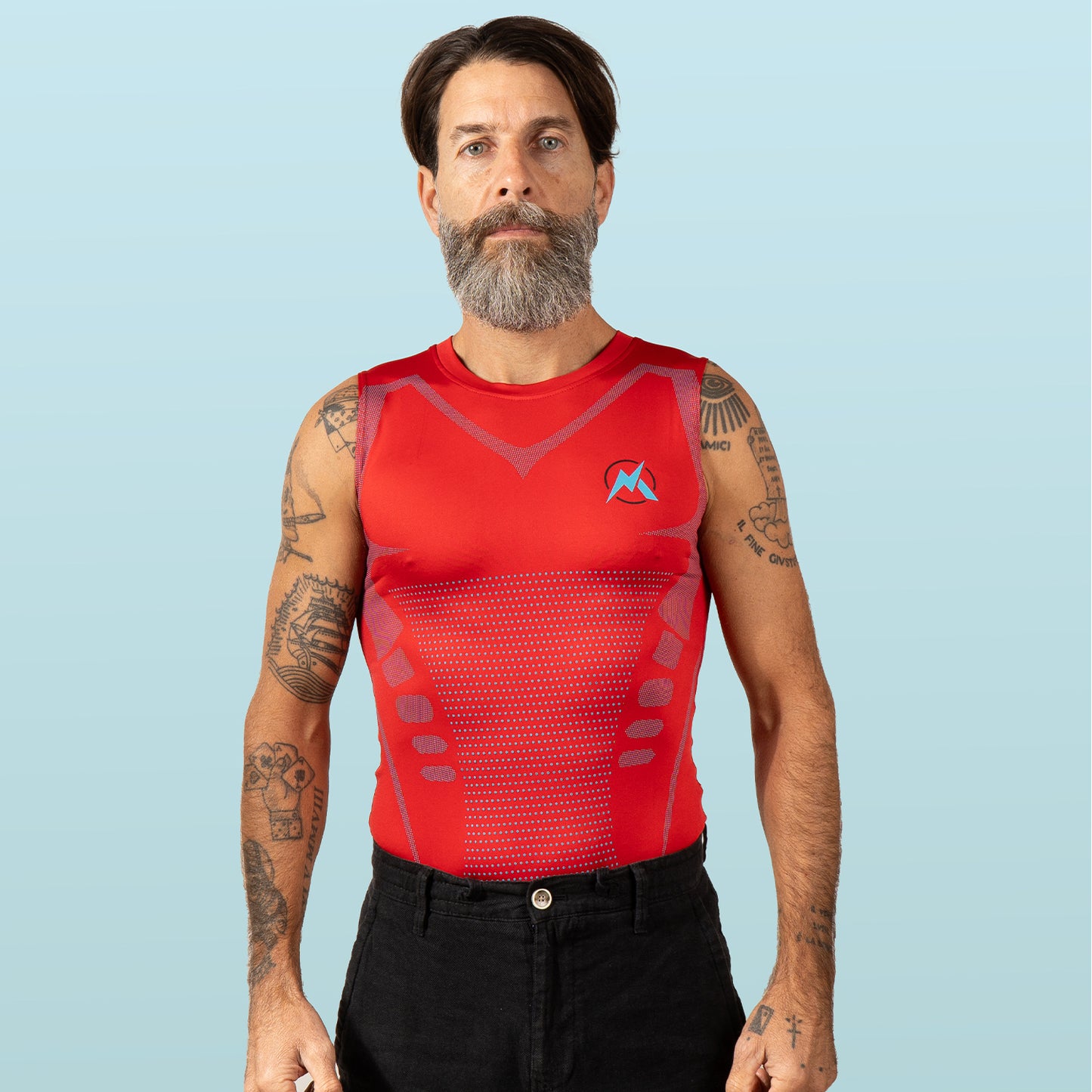
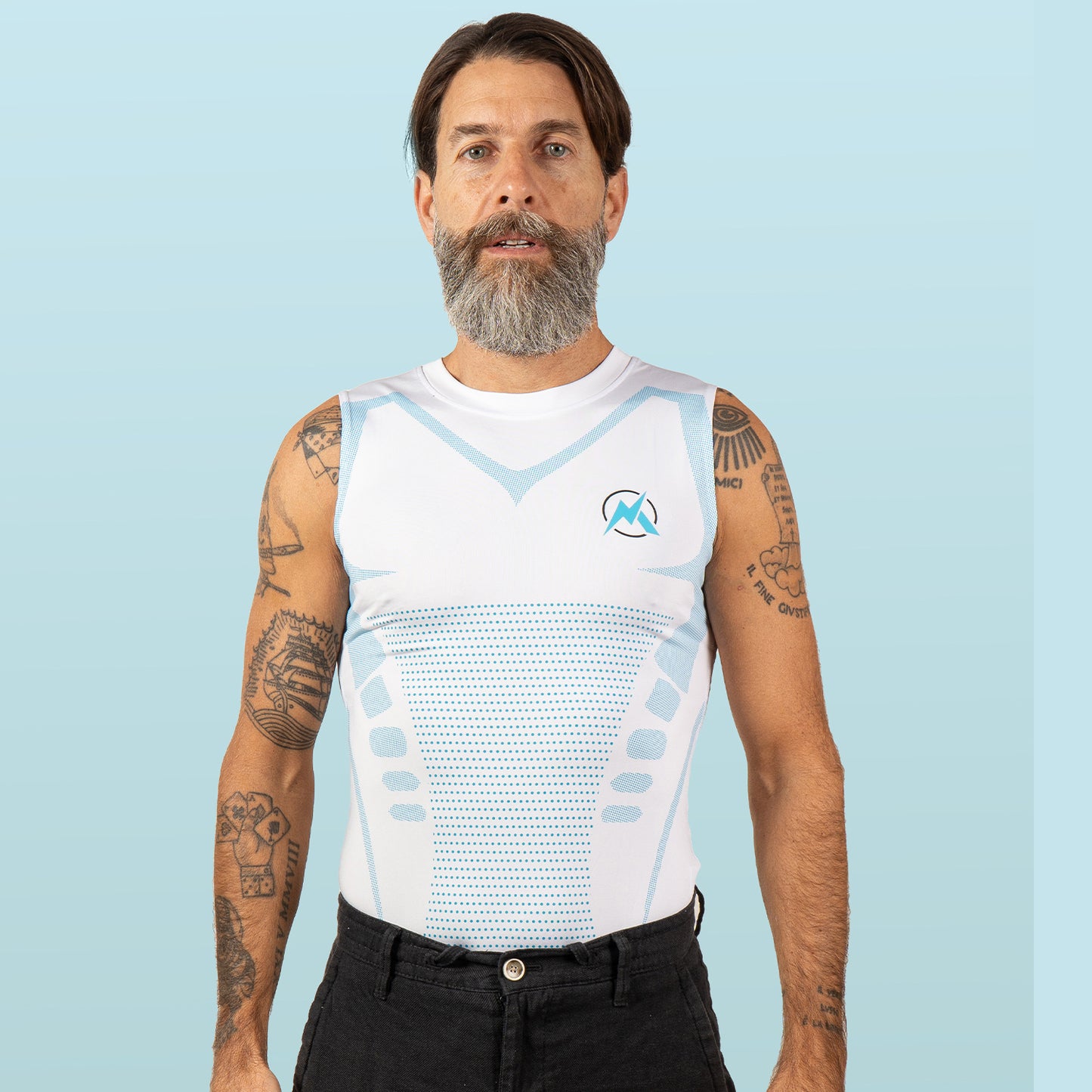
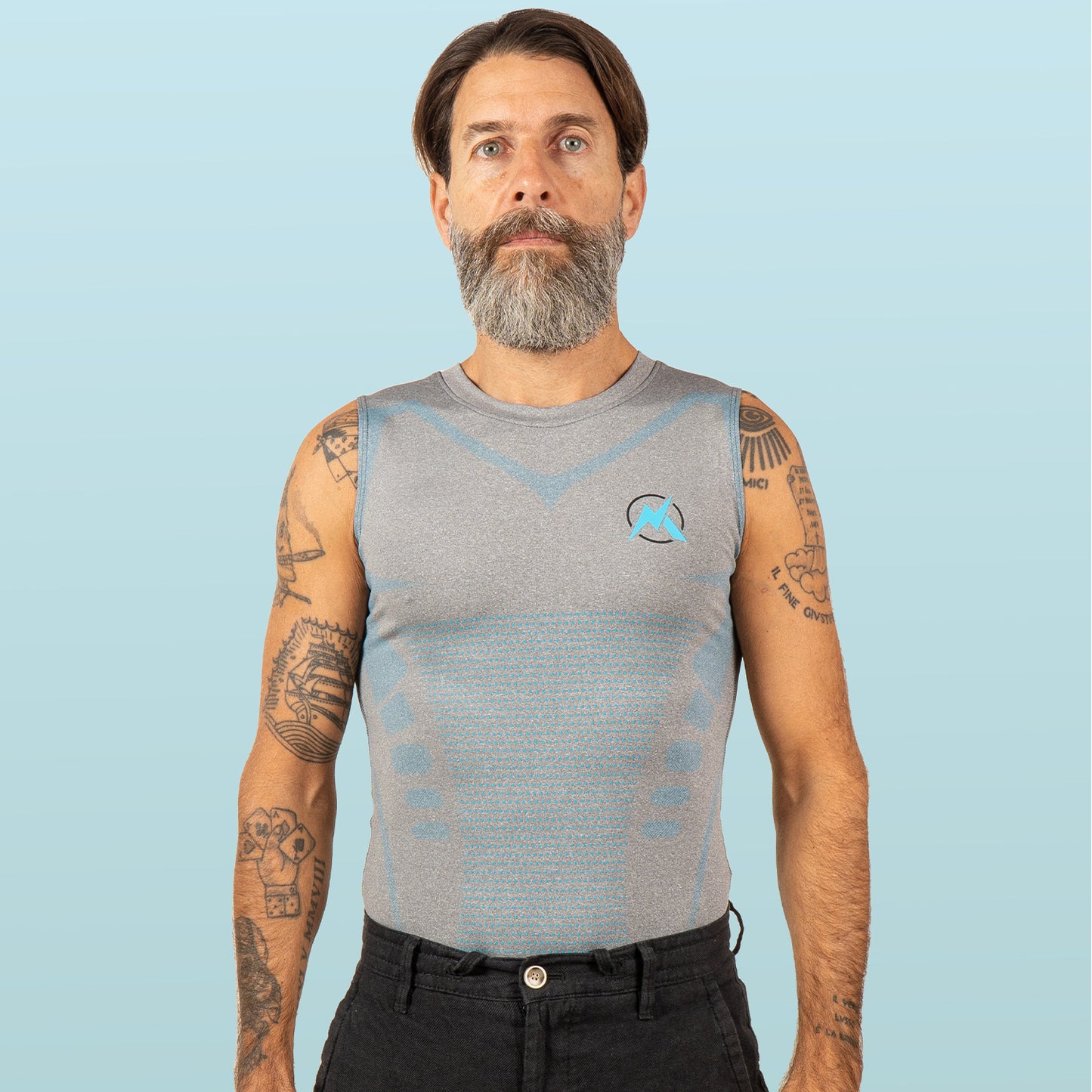
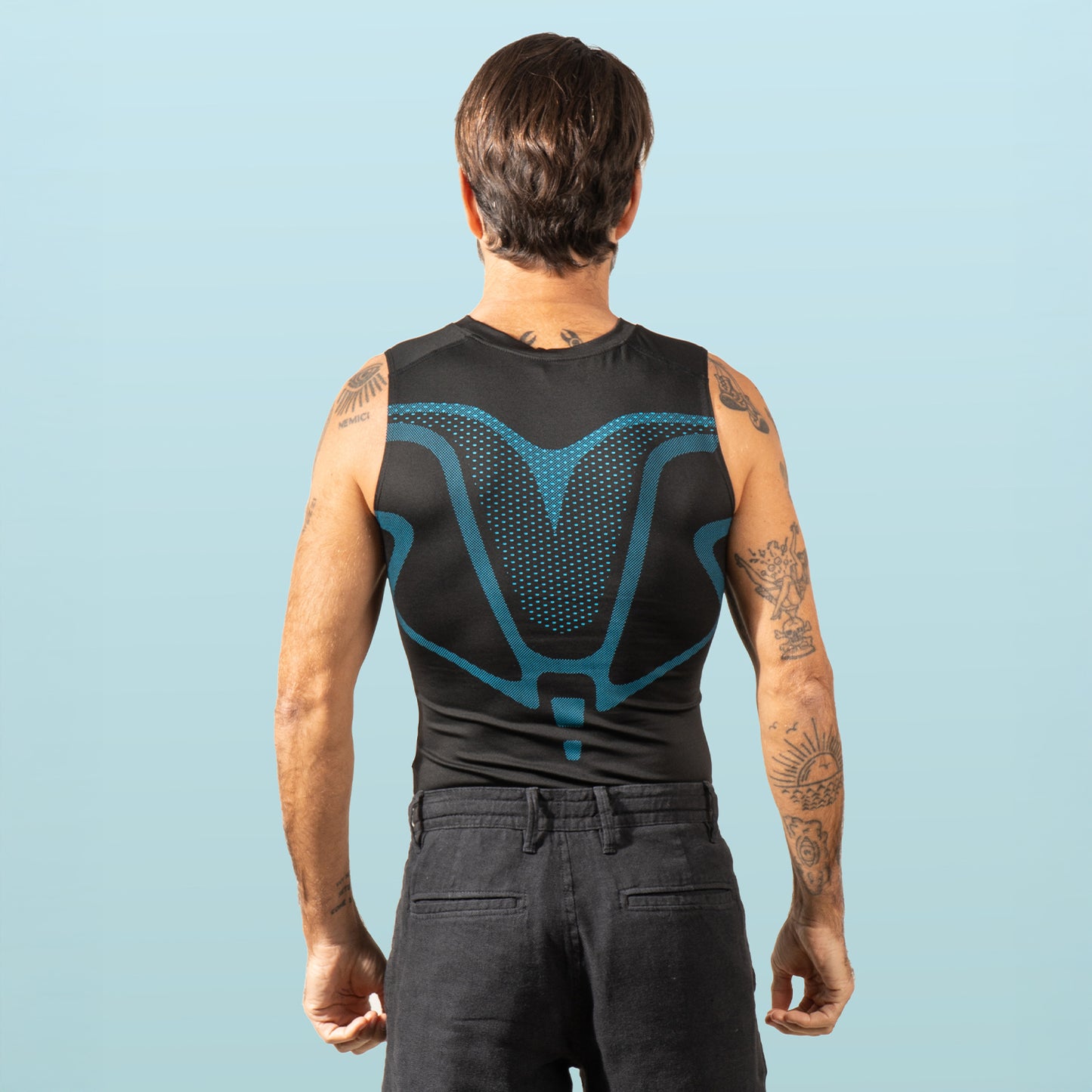
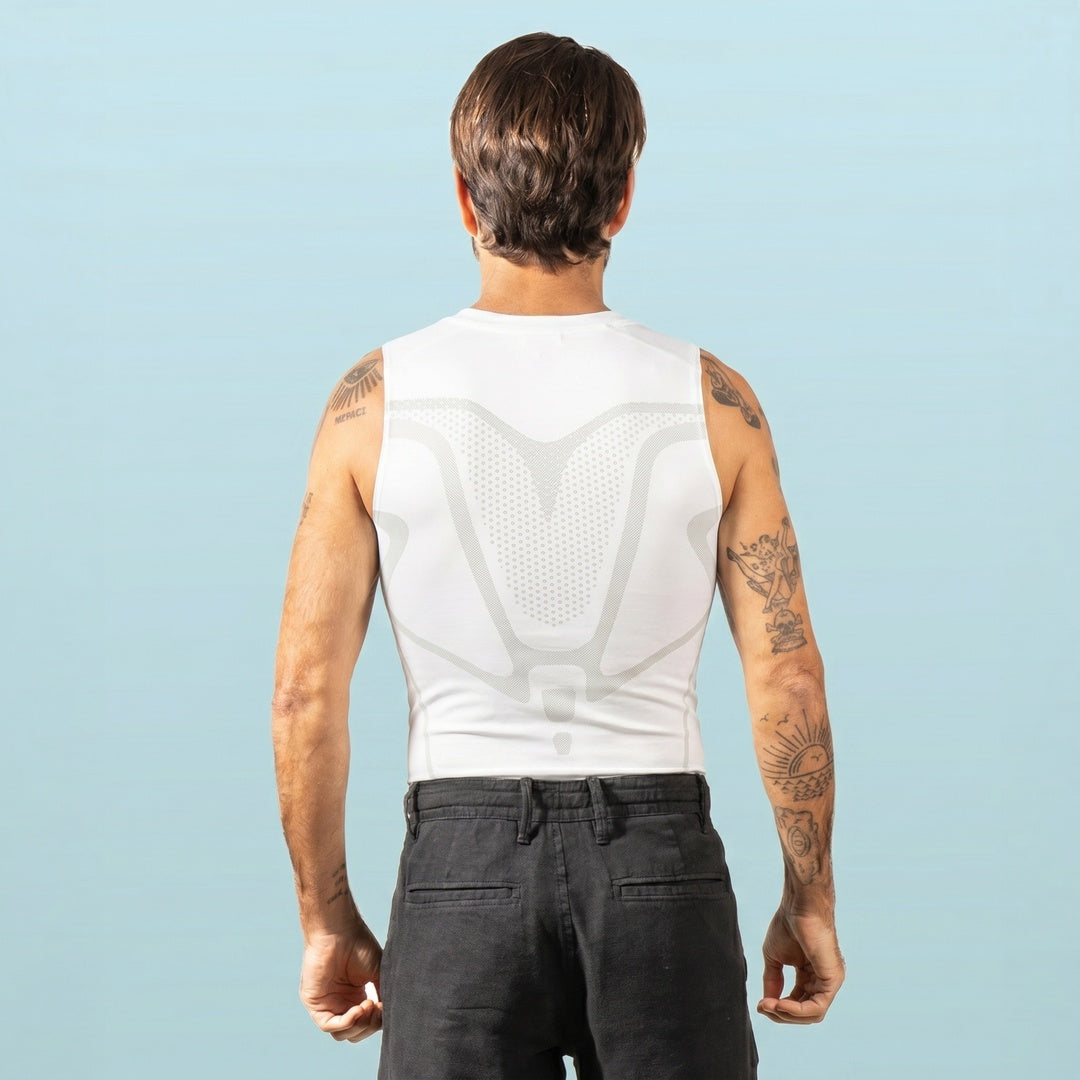
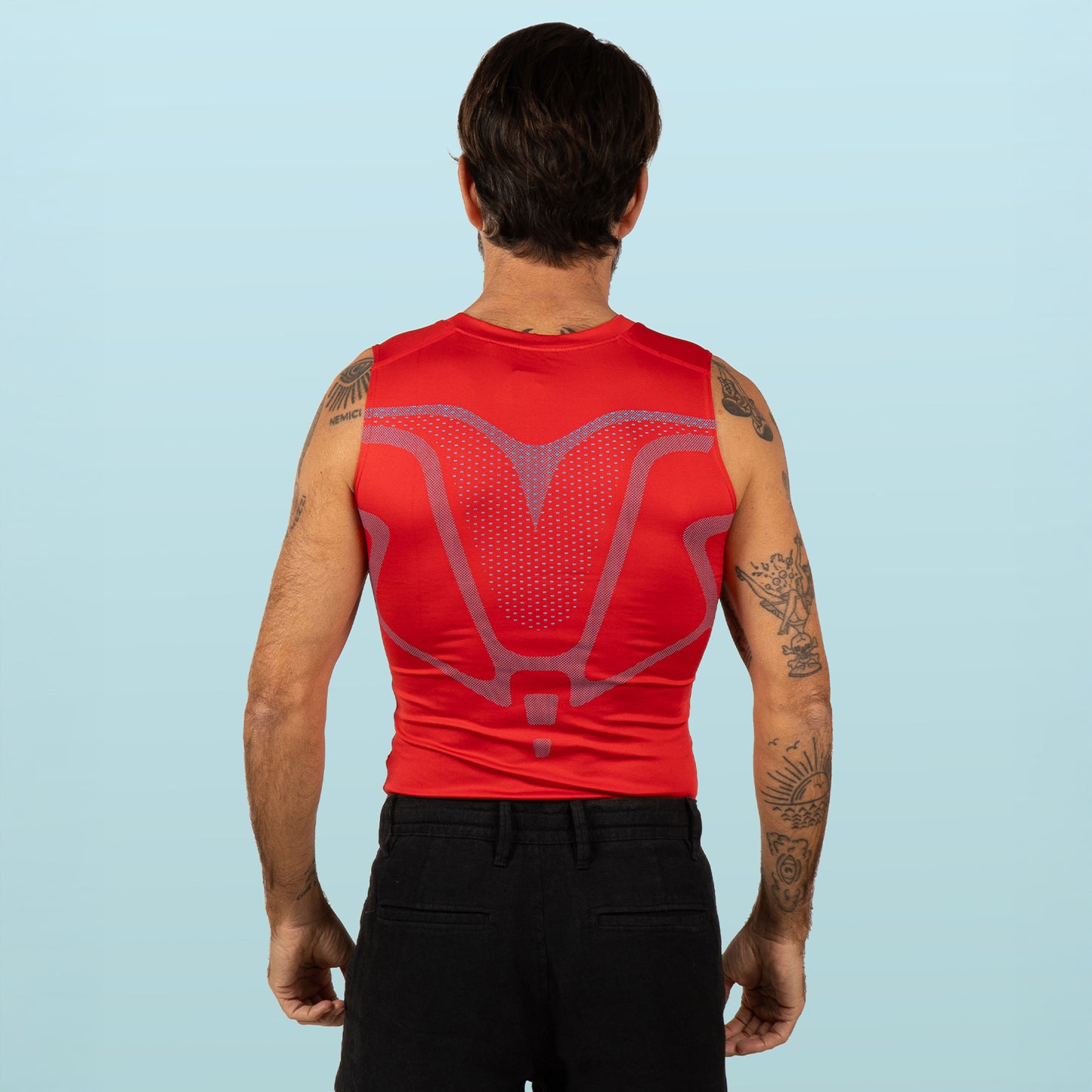
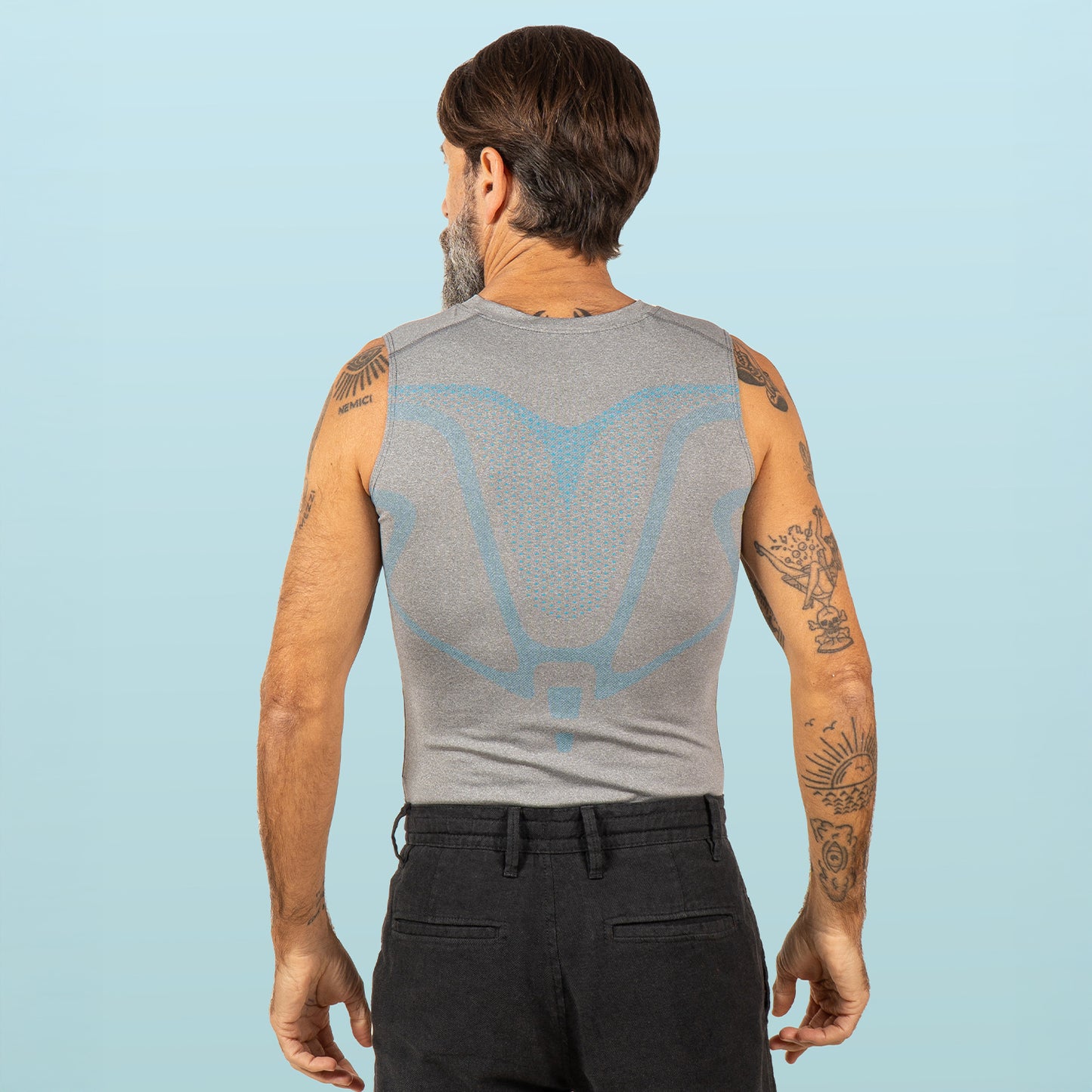
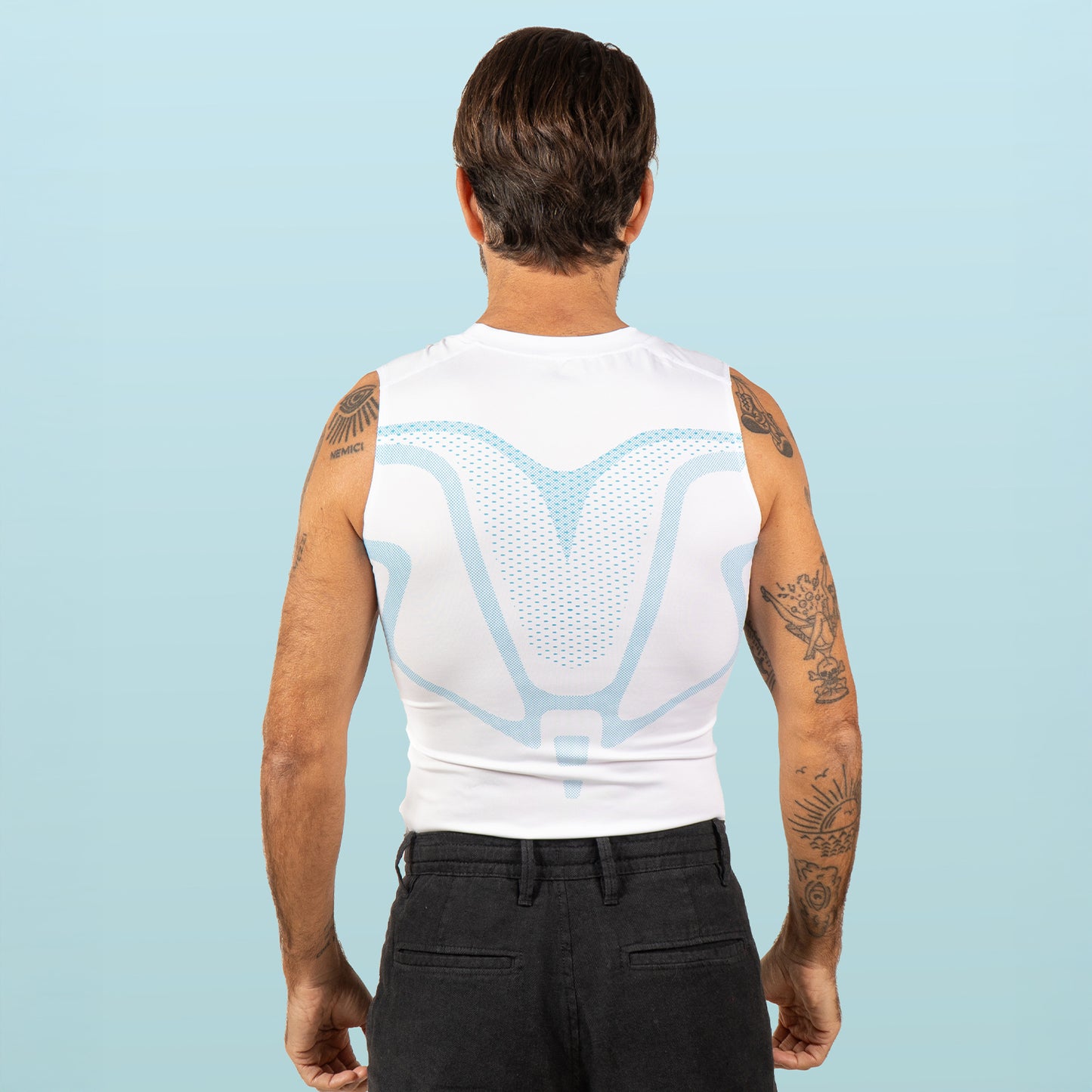
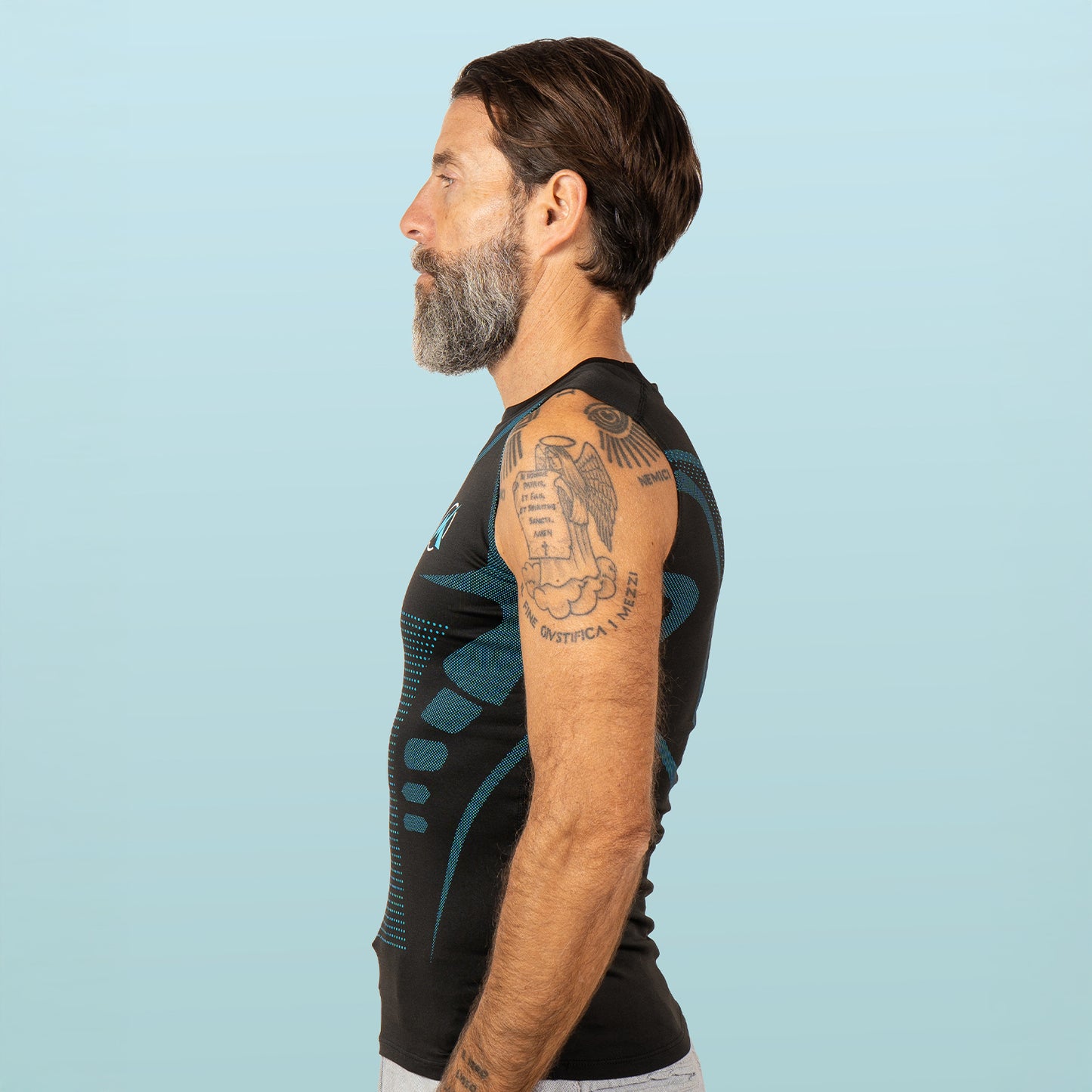
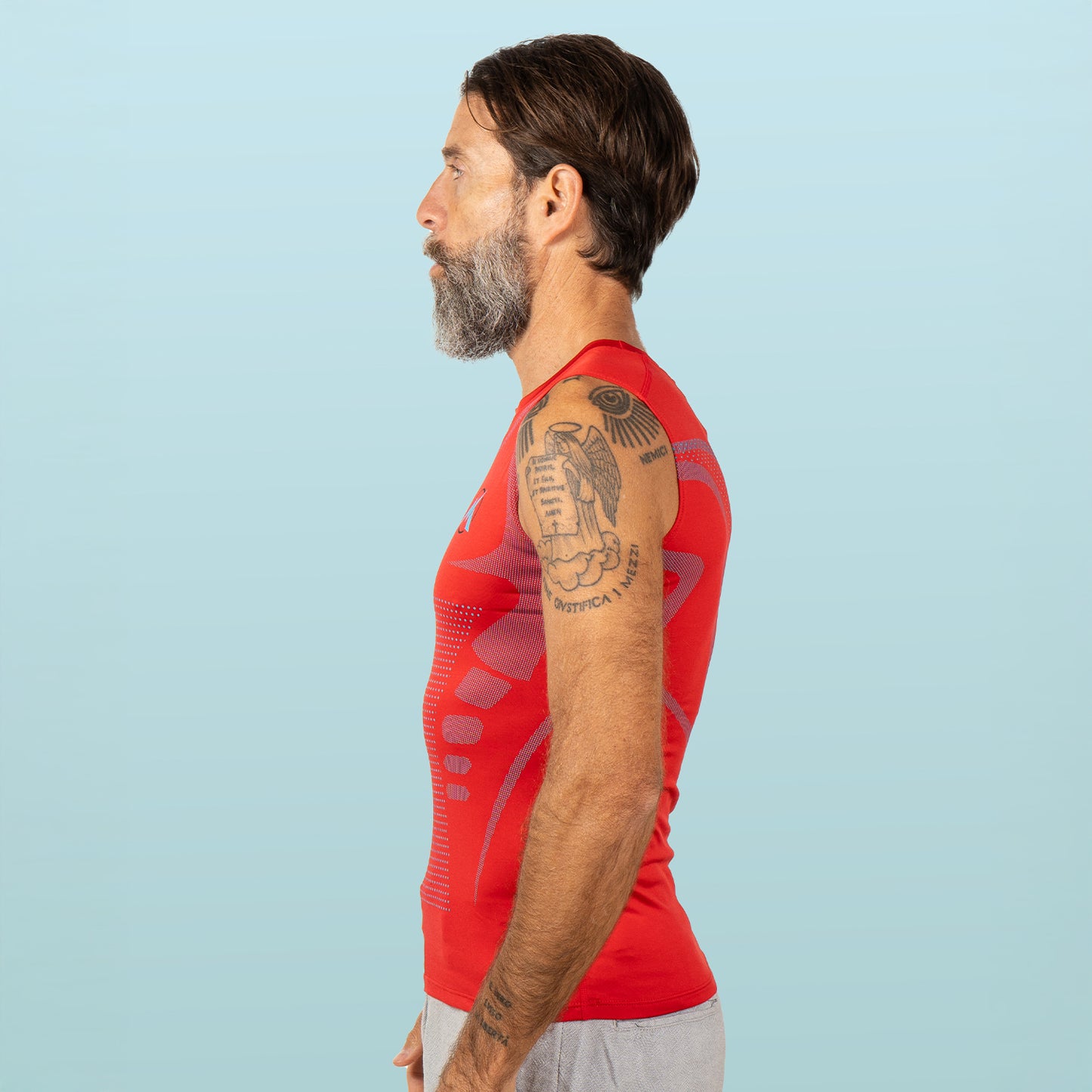
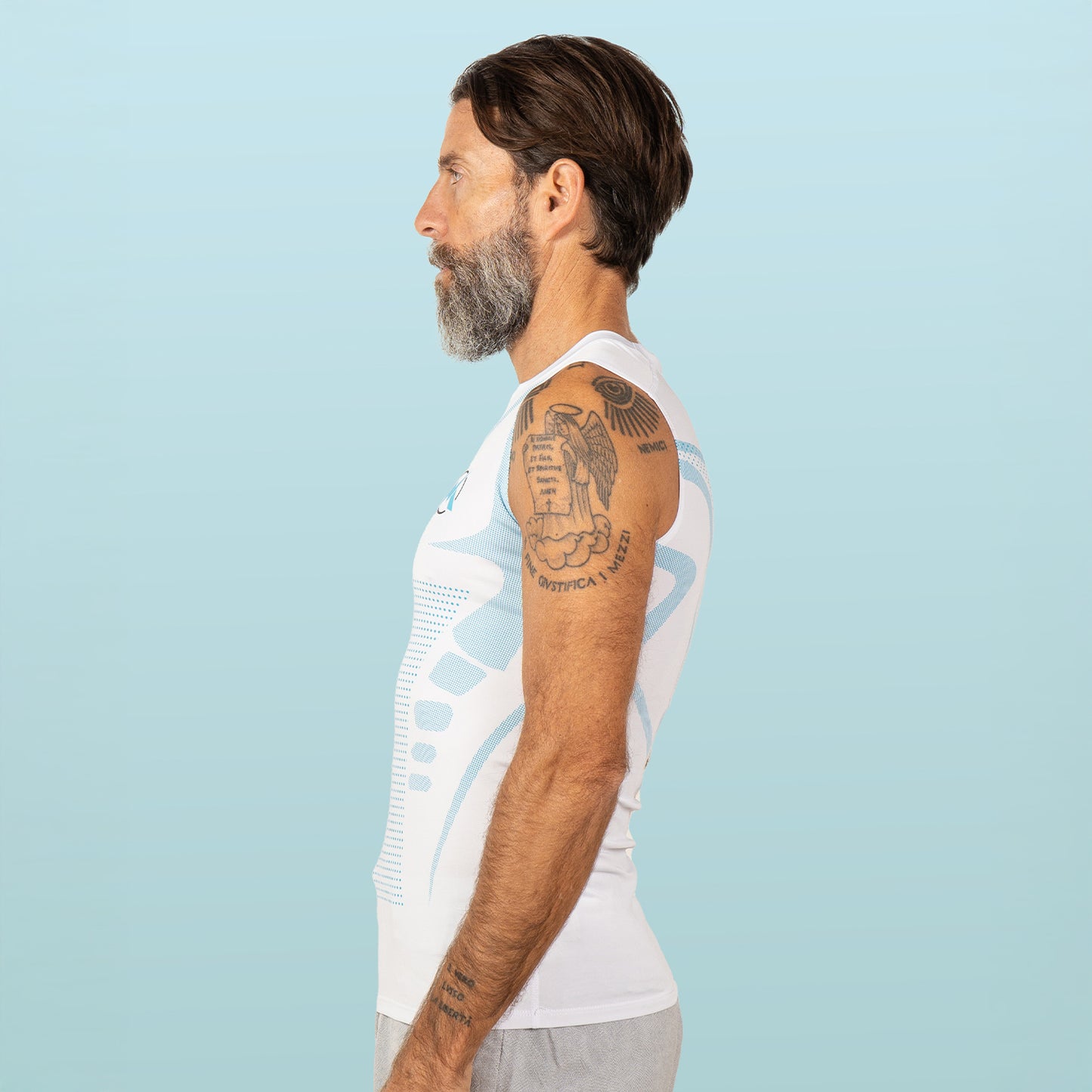
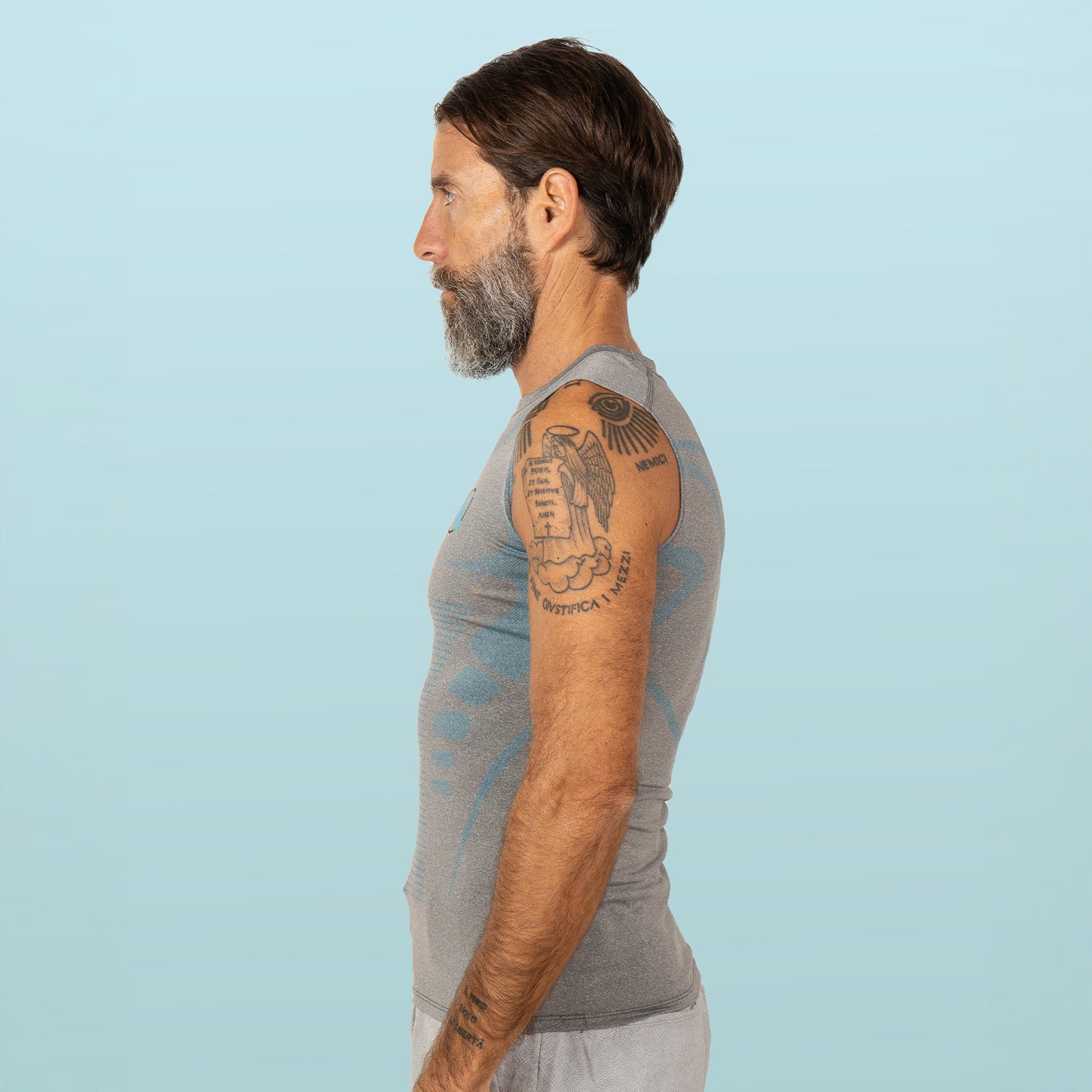
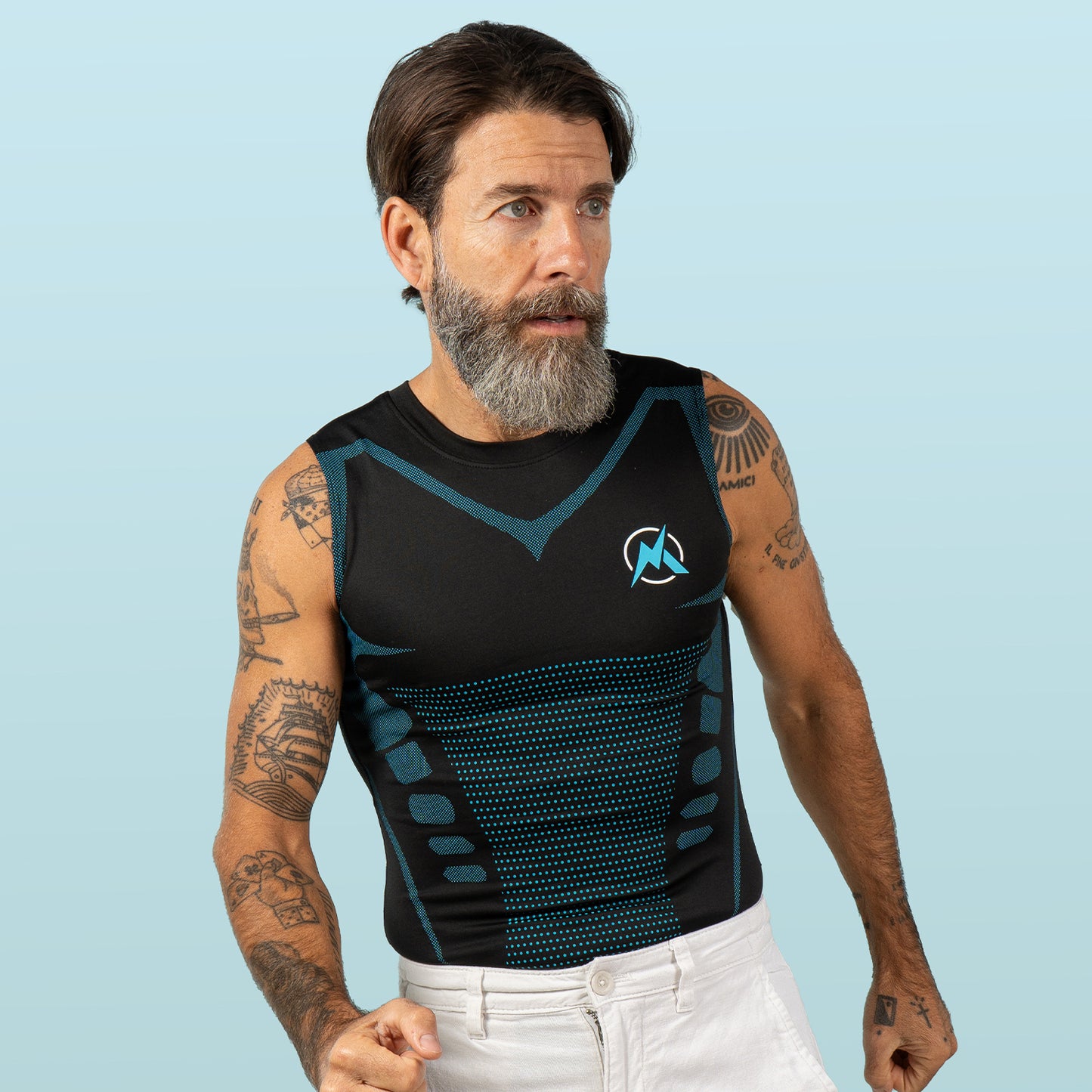
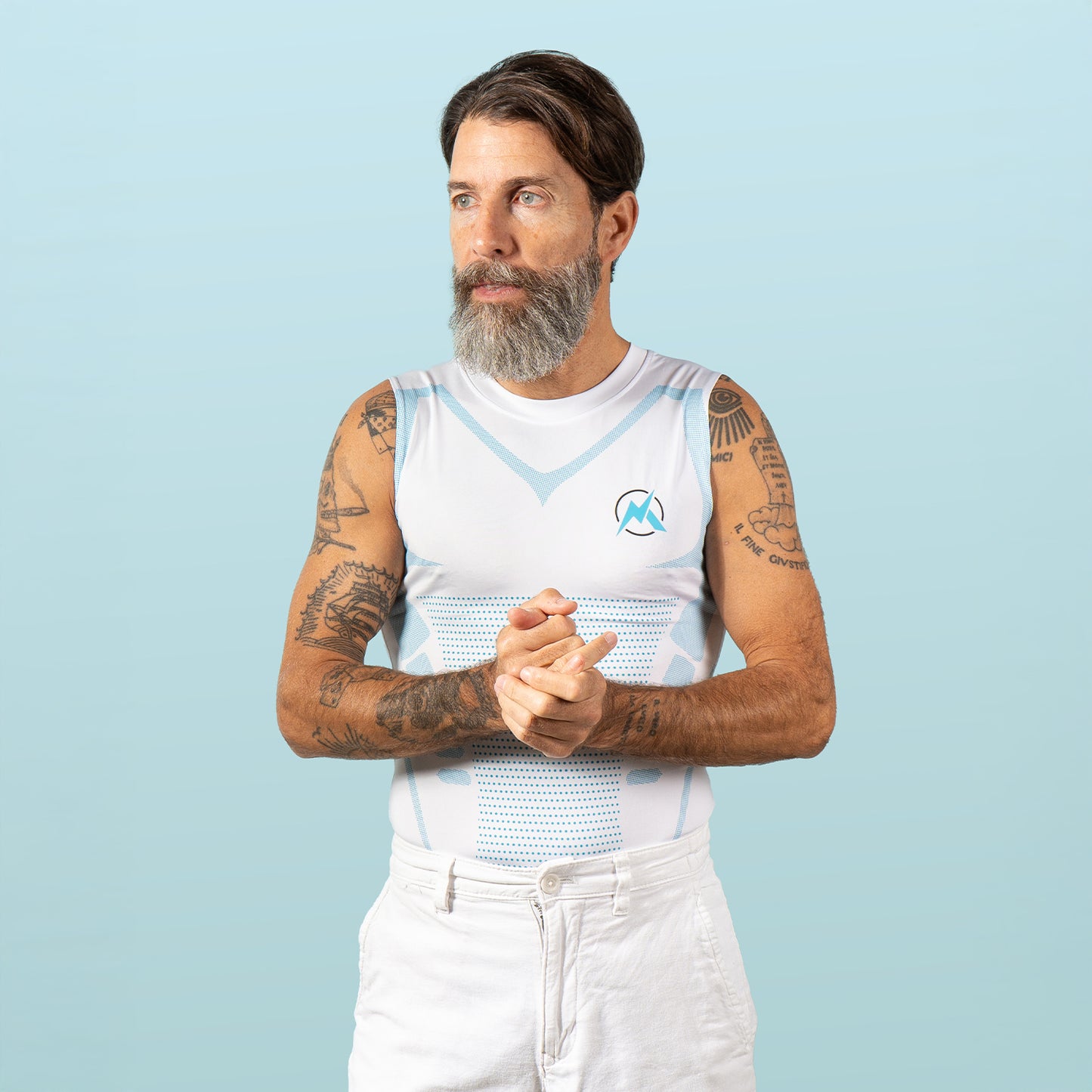
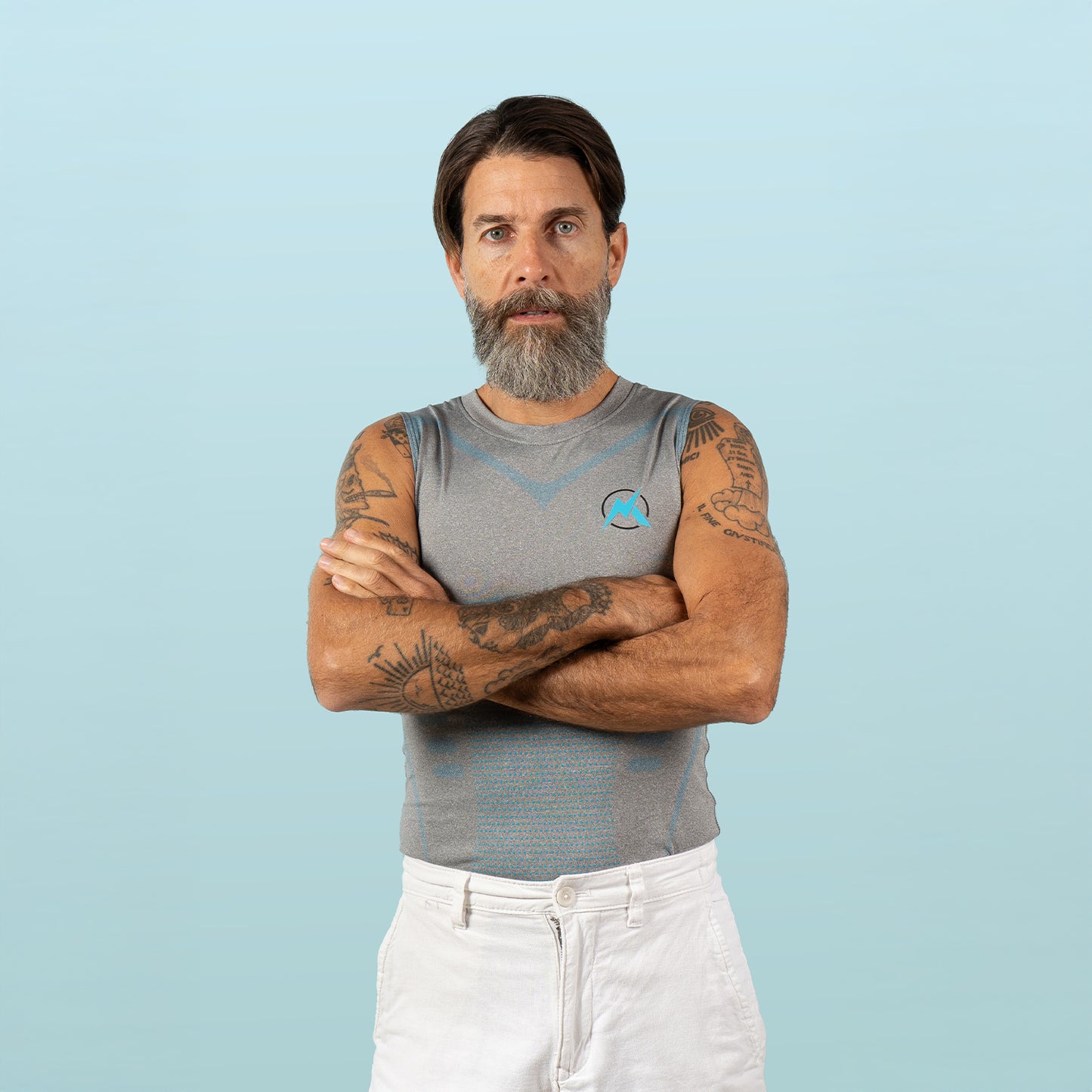
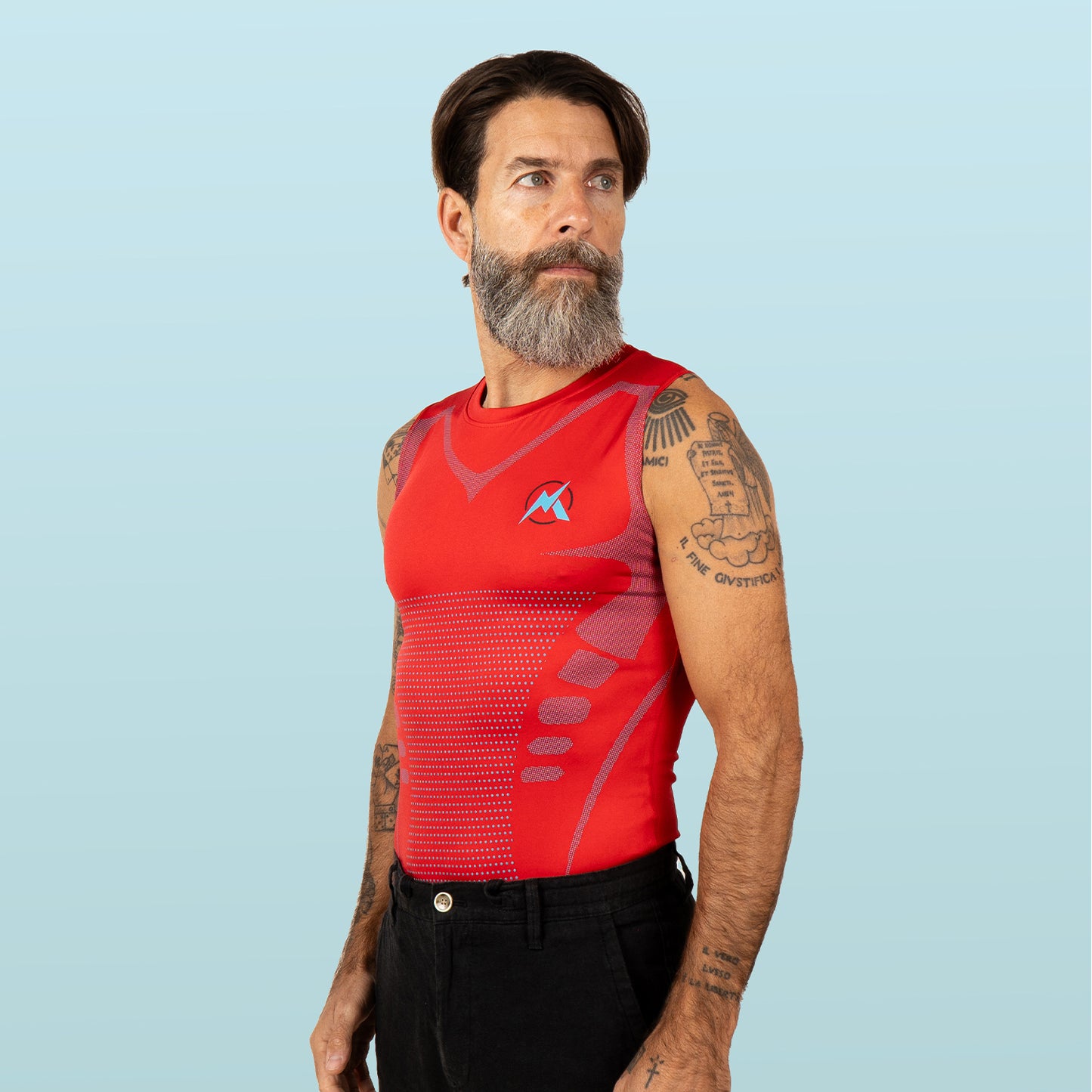
- Wear a compression base layer under your daily shirts. A medium-compression sleeveless tank pulls the shoulders back, locks the abdominal wall, and gives your brain proprioceptive feedback — the same kind of muscle-awareness cue documented in a Brown et al. Sports Medicine review on compression garments. It's a cue, not a cure. But it's the cue that runs all day, every day, without you having to think about it.
The compression piece matters specifically here because it bridges Week 1 to Week 12. The retraining takes weeks. The visible upgrade and the cue should start tomorrow.

If you want the full posture rebuild — not just the cue but the daily habit stack — our how-to-stand-up-straight playbook sequences the work.
Lever 2 — Sleep and hormone hygiene (Weeks 2-4)
Testosterone drops ~1% per year after 30. Bad sleep accelerates that drop. Per CDC NCHS Data Brief 559, 30.5% of US adults sleep less than 7 hours per night — and the men reading this almost certainly fall in that group.
Sleep is the single biggest lever on hormones you can pull without a prescription. Three rules:
- Bed by 11:00 p.m. The 1 a.m. scroll session is silently dismantling your testosterone, your cortisol curve, and your mood.
- No screens in bed. Phone outside the bedroom if you can swing it. If you can't, "do not disturb" + face down + airplane mode after 10:30.
- Get morning light within 30 minutes of waking. 10 minutes outside, no sunglasses. This is free.
Before you ever consider TRT, fix sleep first. Mayo Clinic is explicit that testosterone replacement carries real risks (cardiovascular, prostate, fertility) and that natural-aging declines aren't an automatic indication. Most men who think they need TRT actually need 90 more minutes of sleep and 20 more minutes of daylight.
If you're noticing the fatigue piece more than the confidence piece, our always-tired-after-45 breakdown sequences the energy levers in detail.
Lever 3 — Strength + protein (Months 2-3)
Sarcopenia is a confidence problem disguised as a physique problem. When the frame softens, the silhouette softens, the photos get worse, and the brain reads "fading."
The honest plan for a 45-year-old man is not five days a week in the gym. It's two strength sessions a week, 45 minutes each, plus a daily walk. That's it. Harvard Health has shown that even 20 minutes of daily strength training is associated with reduced abdominal fat gain in older men. Two real sessions per week beats five fake ones.
Pair it with protein: 0.7-1.0 g per pound of body weight per day. For most 40-something men that's 140-180 g a day. Eggs at breakfast, real protein at lunch, real protein at dinner. Not a powder cult — just hitting the number.
If you want the actual session-by-session 2-day template, our build-muscle-after-50 guide is the play.
Add the Week-1 frame lever to your stack →
Lever 4 — Values + small-wins stack (ongoing, compounds)
This is the part most "men's confidence" content leads with. We're leading with it last because without Levers 1-3, this one doesn't stick.
Once the hardware is moving in the right direction, two things start working:
- A short personal code. Pick 3-5 words. Honesty, discipline, presence, work, family — whatever yours are. Write them on a card. Read them at the start of every week. Not to perform. To remember.
- One kept promise per day. Small. Stupidly small. Make the bed. Do the workout. Call your mother. Don't open the app you said you wouldn't open. Confidence is the residue of kept promises, and the smallest ones compound.
The order matters: posture in Week 1, sleep in Weeks 2-4, strength + protein from Month 2, and the values/promise stack running underneath the whole thing. Reverse the order and most men quit by Week 3.
For the broader playbook on what confidence looks like later — once these levers are doing their work — our feel-confident-in-your-50s playbook takes the same thinking forward another decade.
What doesn't work (the honest debunk)
The confidence-for-men space sells five things that don't move the needle. Worth naming so you don't waste a year on them.
- "Fake it till you make it." It works for 90 seconds in a meeting. It doesn't survive a week. Your nervous system reads the gap between what you're projecting and what your body's doing, and the gap creates more anxiety, not less. Fix the hardware. Then the "faking" stops being faking.
- OTC testosterone boosters. Most don't move serum T meaningfully in healthy men. Save the $40/month.
- The crash transformation. "30 days to a new you" sells subscriptions. It doesn't change confidence. Confidence is built by 90 days of unremarkable consistency, not 30 days of theatrical effort.
- TRT as a shortcut. TRT is a legitimate medical intervention for clinically low testosterone confirmed by labs. It is not the right first move for a healthy 44-year-old who sleeps 5 hours. Fix the cheap levers first.
- The personality overhaul. New haircut, new wardrobe, new gym, new podcast obsession, new social-media phase. Strangers see right through theatrical reinvention. The interior work is quieter and slower and it's what actually shows.
Your 4-week starter reset
If you do nothing else, do this.
Week 1 — Frame. Three posture resets per day, anchored to existing habits. Wear a compression base layer under your shirts. Take one photo of yourself, side view, before bed Sunday — you'll need it for the comparison at Week 4.
Week 2 — Sleep. In bed by 11 p.m. Phone outside the bedroom. 10 minutes of morning light. Two strength sessions of 45 minutes each — push, pull, squat, hinge, carry.
Week 3 — Protein. Hit your number. Eggs at breakfast, real protein at lunch and dinner. Keep the two sessions and the walking. Keep the sleep wall.
Week 4 — Stack. Write your 3-5 word personal code on a card. One kept promise per day. Take the second side photo Sunday night. Compare to Week 1.
Most men who run the four weeks honestly see two things at Week 4: the photo looks different (sharper jaw, taller frame, less rounded shoulders), and the internal weather is different — fewer second-guessing loops, more default forward motion.
That's not a personality change. That's hardware doing its job.
The bottom line: the confidence you had at 35 isn't gone. It's underneath three things that piled up since then — drifted hormones, soft frame, narrowed dopamine pipe. Fix the hardware in the right order and the software follows.
Start with the Week-1 frame lever →
Frequently asked questions
Why do men lose confidence in their 40s?
Three forces stack at once: testosterone declines about 1% per year after 30, posture and body composition shift in ways strangers read as "tired," and the dopamine pipe from external wins narrows as career and family stabilize. It feels like a mindset problem. It's mostly a hardware problem disguised as one.
At what age are men most confident, statistically?
Per the APA's published meta-analysis of 191 studies (~165,000 people), self-esteem rises steadily from the teens and peaks around age 60 before declining. So a man in his 40s should be more confident than at 25, not less. What feels like "losing it" is usually a gap between your statistical peak and where you actually are.
Is losing confidence in your 40s the same as a midlife crisis?
No. A midlife crisis is broader — identity rupture, existential questioning, sometimes drastic life changes. Confidence loss is narrower: a slow erosion tied to physical signals and feedback patterns. The two can coexist, but the fix for a confidence dip is hardware-driven (sleep, posture, strength, protein) and doesn't require buying a motorcycle.
How do I regain confidence as a man in my 40s?
Work the levers in order of time-to-result: posture and frame in Week 1, sleep and hormone hygiene in Weeks 2-4, strength and protein from Month 2, and a values/small-wins stack running underneath. The order is the part most men get wrong — they start with mindset and quit when the hardware doesn't follow.
Does low testosterone cause loss of confidence in men over 40?
Testosterone affects mood, drive, and assertiveness, and it declines about 1% per year after 30, per Mayo Clinic. So yes, it's part of the picture. But Mayo is also explicit that natural-aging declines aren't an automatic indication for TRT, which carries real risks. Most men feel a confidence return when they fix sleep, training, and protein — without ever needing the prescription.
Sources
- American Psychological Association — Self-esteem declines sharply among older adults while middle-aged are most confident (Orth et al. meta-analysis, 191 studies)
- Mayo Clinic — Testosterone therapy: Potential benefits and risks as you age
- NIH/PMC — Sarcopenia: Etiology, Clinical Consequences, Intervention, and Assessment
- NIH News in Health — Getting It Straight: Improving your posture
- Cleveland Clinic — Tech Neck: head weight load by angle
- CDC NCHS Data Brief 559 — 30.5% of US adults sleep less than 7 hours
- Brown F. et al. — Compression Garments and Recovery (Sports Medicine 2022)
- Harvard Health — Regain your confidence